Books of Summer, 6–8: Elizabeth Berg, Patricia Lockwood & Wendy Mitchell
Although I have foodie lit as a background theme for the summer’s reading, my main goal is simply to read books that I own, especially recent acquisitions and long-time shelf-sitters (whereas last year, in slavish conformity to a theme, I substituted in a bunch of library books, review books and e-books). My latest batch includes a slightly twee novel, an outlandish poetry collection, and an uneven nonfiction swan song.
The Year of Pleasures by Elizabeth Berg (2005)
 From the cover, I was expecting this to be more foodie than it was. The protagonist does enjoy cooking for other people and reading cookbooks, though. Betta Nolan, 55 and recently widowed by cancer, drives from Boston to the Midwest and impulsively purchases a house in a Chicago suburb, something she and her late husband had fantasized about doing in retirement. It’s the kind of sweet little town where the only realtor is a one-woman operation and Betta as a newcomer automatically gets invited onto the local radio show. She also reconnects with her college roommates, tries dating, and mulls over her dream of opening a women’s boutique that sells silk scarves, handmade journals, essential oils and brownies.
While Berg is true to the shifting emotions that accompany grief, and gives Betta plenty of cute opportunities to make friends across the generations – with Lydia, the nonagenarian former owner of her house, now in a nursing home; Matthew, the fickle young man who does some odd jobs for her; and Benny, the next-door neighbor’s nine-year-old boy – I found the subplot about Matthew’s messy house and relationships silly, and Betta’s “What a Woman Wants” shop idea is so stereotyping I could feel myself rolling my eyes. Still, Berg’s novels, of which this was my fifth, are always reliably light and pleasant reads in an Anne Tyler vein. (Secondhand – 2nd & Charles) 
Motherland Fatherland Homelandsexuals by Patricia Lockwood (2014)
 One of the more bizarre books I’ve ever read. I loved both Priestdaddy and No One Is Talking About This, but had no idea what to expect from Lockwood’s poems. They’re somewhere between absurdist monologues and thought experiments, often choosing an object or abstraction to animate (“A Recent Transformation Tries to Climb the Stairs”) and generally sexualized to the max (“Nessie Wants to Watch Herself Doing It”). Though they’re in stanzas, they aren’t heavy on poetic techniques. Some tangential topics are Bambi, Canada, basketball, waterfalls, King Kong adaptations, American poetry, Shirley Temple, and childhood hobbies like Animorphs, Egyptology and Magic Eye puzzles.
But really, her poetry is only “about” things in the loosest sense; the repetition, wordplay and snark are paramount. If you’ve heard of one, it’s likely to be the lengthy “Rape Joke,” which went as viral as it’s possible for a poem to and is, ironically, probably the sincerest entry here. Presumably based on her own bad experience with a teenage boyfriend, it is heartbreakingly banal: “The rape joke is that he was your father’s high school student … The rape joke is that come on, you should have seen it coming. … The rape joke is that you asked why he did it. The rape joke is he said he didn’t know, like what else would a rape joke say?”
A couple of my favourites were “List of Cross-Dressing Soldiers” and “He Marries the Stuffed-Owl Exhibit at the Indiana Welcome Center”; “The Father and Mother of American Tit-Pics,” in which a resurrected Emily Dickinson and Walt Whitman swap genders, had some of the more outrageous lines: “Walt Whitman is the Number Two Beach Body every year, because look at the way he snapped back into shape only months after giving birth to American Poetry.” Not really like any other poetry I’ve ever read. (New purchase with Christmas money) 
One Last Thing: Conversations on Life, Death and Assisted Dying by Wendy Mitchell with Anna Wharton (2023)
“We talk so often about prolonging life, but we are actually prolonging death by not discussing the suffering part of it.”
Wendy Mitchell’s first two books, Somebody I Used to Know and What I Wish People Knew About Dementia, are valuable peeks into daily life with young-onset Alzheimer’s. She has been a dedicated activist and educator in the nine years since her diagnosis, and I admire the work she’s done to get dementia services into the public eye.
 The problem with her final book is that I’ve read so much about preparations for dying and the question of assisted suicide and she doesn’t bring much new to the discussion – apart from the specific viewpoint of someone deciding when and how to end their life when they don’t know what the future course of their illness looks like. Mitchell believes people should have this choice, but current UK law does not allow for assisted dying. A loophole is voluntarily stopping eating and drinking (VSED), which she deems her best option. She stopped attending assessments in 2017 and has filed forms with her GP refusing treatment – her nightmare situation is being reliant on care in hospital and she doesn’t want to become that future, dependent Wendy.
Like Henry Marsh’s farewell book, And Finally, this gives the impression of having been written in a hurry and rushed into print, and so could have been edited more. As it is, it’s fairly scattered, repetitive and unpolished. The interviews could all be streamlined and tidied up, and the one with Kathryn Mannix is split up in a confusing way.
For readers new to the topic, however, this could be a useful introduction to the issues. It’s up-to-date in that Mitchell attends a Death Café, meets an end-of-life doula, and talks through the different forms (power of attorney, advance directive and so on) with experts. I also thought the epilogue was a lovely touch: after going for a ‘wing walking’ airplane adventure, she imagines that, having taken a bus into York, she sees her pre-diagnosis self and tells her everything she would want her to know, good and bad, about the challenges to come. (Proof copy from Hungerford Bookshop Summer Reading Celebration) [Different subtitle on finished edition?] 
January Releases II: Nick Blackburn, Wendy Mitchell & Padraig Regan
The January new releases continue! I’ll have a final batch of three tomorrow. For today, I have an all-over-the-place meditation masquerading as a bereavement memoir, an insider’s look at what daily life with dementia is like, and a nonbinary poet’s debut.
The Reactor: A Book about Grief and Repair by Nick Blackburn
I’ll read any bereavement memoir going, and the cover commendations from Olivia Laing and Helen Macdonald made this seem like a sure bet. Unfortunately, this is not a bereavement memoir but an exercise in self-pity and free association. The book opens two weeks after Blackburn’s father’s death – “You have died but it’s fine, Dad.” – and proceeds in titled fragments of one line to a few paragraphs. Blackburn sometimes addresses his late father directly, but more often the “you” is himself. He becomes obsessed with the Chernobyl disaster (even travelling to Belarus), which provides the overriding, and overstretched, title metaphor – “the workings of grief are unconscious, invisible. Like radiation.”
 From here the author indulges in pop culture references and word association: Alexander McQueen’s fashion shows, Joni Mitchell’s music, Ingmar Bergman’s films, Salvador Dalí’s paintings and so on. These I at least recognized; there were plenty of other random allusions that meant nothing to me. All of this feels obfuscating, as if Blackburn is just keeping busy: moving physically and mentally to distract from his own feelings. A therapist focusing on LGBT issues, he surely recognizes his own strategy here. This seems like a diary you’d keep in a bedside drawer (there’s also the annoyance of no proper italicization or quotation marks for works of art), not something you’d try to get published as a bereavement memoir.
The bigger problem is there is no real attempt to convey a sense of his father. It would be instructive to go back and count how many pages actually mention his father. One page on his death; a couple fleeting mentions of his mental illness being treated with ECT and lithium. Most revealing of all, ironically, is the text of a postcard he wrote to his mother on a 1963 school trip to Austria. “I want to tell you more about my father, but honestly I feel like I hardly knew him. There was always his body and that was enough,” Blackburn writes. Weaselling out of his one task – to recreate his father for readers – made this an affected dud.
With thanks to Faber for the free copy for review.
What I Wish People Knew About Dementia: From Someone Who Knows by Wendy Mitchell
I loved Mitchell’s first book, Somebody I Used to Know. She was diagnosed with early-onset Alzheimer’s at age 58 in 2014. This follow-up, too, was co-written with Anna Wharton (they have each written interesting articles on their collaboration process, here and here). Whereas her previous work was a straightforward memoir, this has more of a teaching focus, going point by point through the major changes dementia causes to the senses, relationships, communication, one’s reaction to one’s environment, emotions, and attitudes.
 I kept shaking my head at all these effects that would never have occurred to me. You tend not to think beyond memory. Food is a major issue for Mitchell: she has to set iPad reminders to eat, and chooses the same simple meals every time. Pasta bowls work best for people with dementia as they can get confused trying to push food around a plate. She is extra sensitive to noises and may have visual and olfactory hallucinations. Sometimes she is asked to comment on dementia-friendly building design. For instance, a marble floor in a lobby looks like water and scares her, whereas clear signage and bright colours cheer up a hospital trip.
The text also includes anonymous input from her friends with dementia, and excerpts from recent academic research on what can help. Mitchell and others with Alzheimer’s often feel written off by their doctors – her diagnosis appointment was especially pessimistic – but her position is that the focus should be on what people can still do and adaptations that will improve their everyday lives. Mitchell lives alone in a small Yorkshire village and loves documenting the turning of the seasons through photographs she shares on social media. She notes that it’s important for people to live in the moment and continue finding activities that promote a flow state, a contrast to some days that pass in a brain haze.
This achieves just what it sets out to: give a picture of dementia from the inside. As it’s not a narrative, it’s probably best read in small doses, but there are some great stories along the way, like the epilogue’s account of her skydive to raise money for Young Dementia UK.
With thanks to Bloomsbury for the proof copy for review.
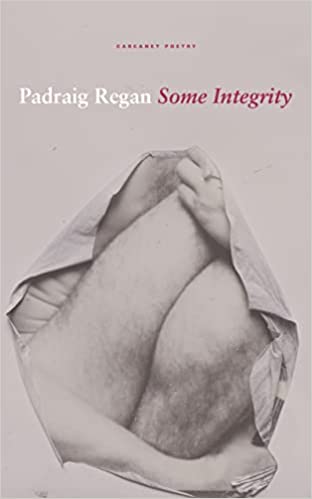
Some Integrity by Padraig Regan
The sensual poems in this debut collection are driven by curiosity, hunger and queer desire. Flora and foods are described as teasing mystery, with cheeky detail:
I’m thinking of how mushrooms will haunt a wet log like bulbous ghosts
The chicken is spatchcocked & nothing
like a book, but it lies open & creases
where its spine once was.
For as long as it take a single drop of condensation to roll its path
down the curve of a mojito glass before it’s lost in the bare wood of the table,
everything is held // in its hall of mirrors

 An unusual devotion to ampersands; an erotic response to statuary, reminiscent of Richard Scott; alternating between bold sexuality and masochism to the point of not even wanting to exist; a central essay on the Orlando nightclub shooting and videogames – the book kept surprising me. I loved the fertile imagery, and appreciated Regan’s exploration of a nonbinary identity:
Often I envy the Scandinavians for their months of sun,
unpunctuated. I think I want some kind of salad. I want to feel like a real boy, sometimes.
Thank you
for this chain of daisies to wear around my neck — it makes me look so pretty.
Highly recommended, especially to readers of Séan Hewitt and Stephen Sexton.
With thanks to Carcanet Press for the free copy for review.
Does one of these books appeal to you?
Nonfiction November: Fiction/Nonfiction Pairings
I’d never participated in Nonfiction November before because I tend to read at least 40% nonfiction anyway, but I couldn’t resist the temptation to put together some fiction and nonfiction pairings based on books I’ve read this year and last. (This week of the month-long challenge is posted by Sarah’s Book Shelves, a blog I love for its no-nonsense recommendations of what to read – and what not to read – from the recent U.S. releases.)
My primary example is two books that reveal what it’s really like to have Alzheimer’s disease. Mitchell’s, in particular, is a book that deserves more attention. When it came out earlier this year, it was billed as the first-ever “dementia memoir” (is that an oxymoron?) – except, actually, there had been one the previous year (whoops!): Memory’s Last Breath by Gerda Saunders, which I have on my Kindle and still intend to read. [See also Kate W.’s picks, which include a pair of books with a dementia theme.]
Still Alice by Lisa Genova (2007)
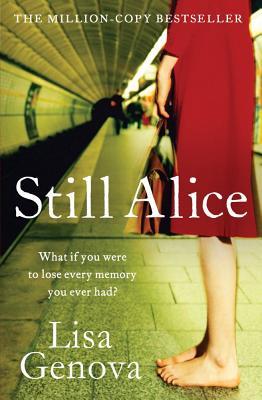 Genova’s writing, Jodi Picoult-like, keeps you turning the pages; I read 225+ pages in an afternoon. There’s true plotting skill to how Genova uses a close third-person perspective to track the mental decline of Harvard psychology professor Alice Howland, who has early-onset Alzheimer’s disease. “Everything she did and loved, everything she was, required language,” yet her grasp of language becomes ever more slippery even as her thought life remains largely intact. I also particularly enjoyed the descriptions of Cambridge and its weather, and family meals and rituals. There’s a certain amount of suspension of disbelief required – Would the disease really progress this quickly? Would Alice really be able to miss certain abilities and experiences once they were gone? – and ultimately I preferred the 2014 movie version, but this would be a great book to thrust at any caregiver or family member who’s had to cope with dementia in someone close to them.
My rating: 
 Other fictional takes on dementia that I can recommend: Unforgettable: Short Stories by Paulette Bates Alden, The Only Story by Julian Barnes, Everything Under by Daisy Johnson and Turn of Mind by Alice LaPlante.
&
Somebody I Used to Know by Wendy Mitchell with Anna Wharton (2018)
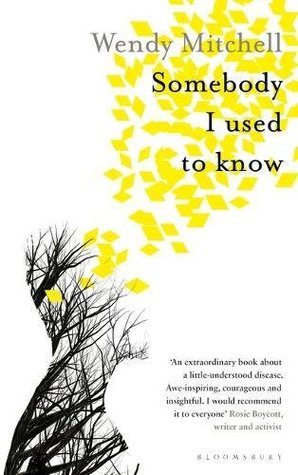 A remarkable insider’s look at the early stages of Alzheimer’s. Mitchell took several falls while running near her Yorkshire home, but it wasn’t until she had a minor stroke in 2012 that she and her doctors started taking her health problems seriously. In July 2014 she got the dementia diagnosis that finally explained her recurring brain fog. She was 58 years old, a single mother with two grown daughters and a 20-year career in NHS administration. Having prided herself on her good memory and her efficiency at everything from work scheduling to DIY, she was distressed that she couldn’t cope with a new computer system and was unlikely to recognize the faces or voices of colleagues she’d worked with for years. Less than a year after her diagnosis, she took early retirement – a decision that she feels was forced on her by a system that wasn’t willing to make accommodations for her.
The book, put together with the help of ghostwriter Anna Wharton, gives a clear sense of progression, of past versus present, and of the workarounds Mitchell uses to outwit her disease. The details and incidents are well chosen to present the everyday challenges of dementia. For instance, baking used to be one of Mitchell’s favorite hobbies, but in an early scene she’s making a cake for a homeless shelter and forgets she’s already added sugar; she weighs in the sugar twice, and the result is inedible. By the time the book ends, not only can she not prepare herself a meal; she can’t remember to eat unless she sets an alarm and barricades herself into the room so she won’t wander off partway through.
In occasional italicized passages Mitchell addresses her past self, running through bittersweet memories of all that she used to be able to do: “It amazes me now how you did it, because you didn’t have anyone to help you. You were Mum, Dad, taxi, chef, counsellor, gardener and housekeeper, all rolled into one.” Yet it’s also amazing how much she still manages to do as an ambassador for the Alzheimer’s Society and Dementia Friends. She crisscrosses the country to give speeches, attend conferences, and advise universities; she writes a blog and has appeared on radio to promote this book. Like many retired people, she’s found she’s busier than ever, and her engagements help her to feel purposeful and like she’s giving a positive impression of early-stage dementia. No matter that she has to rely on dozens of reminders to self in the form of Post-It notes, iPad alarms and a wall of photographs.
The story lines of this and Still Alice are very similar in places – the incidents while running, the inability to keep baking, and so on. And in fact, Mitchell reviewed the film and attended its London premiere, where she met Julianne Moore. Her book is a quick and enjoyable read, and will be so valuable to people looking to understand the experience of dementia. She is such an inspiring woman. I thank her for her efforts, and wish her well. This is one of my personal favorites for the shortlist of next year’s Wellcome Book Prize for medical reads.
My rating: 
 Other nonfiction takes on dementia that I can recommend: In Pursuit of Memory by Joseph Jebelli and The Summer of the Great-Grandmother by Madeleine L’Engle.
Additional pairings I would commend to you (all are books I have read and rated or above):


Talk before Sleep by Elizabeth Berg
&
Let’s Take the Long Way Home by Gail Caldwell and Truth and Beauty by Ann Patchett
- Celebrating the strength of female friendship, even in the face of life-threatening illness.


Bad News by Edward St. Aubyn
&
Portrait of an Addict as a Young Man by Bill Clegg
- Vivid portrayals of drug addiction.


Miss Smilla’s Feeling for Snow by Peter Høeg
&
This Cold Heaven by Gretel Ehrlich
- Armchair traveling in Greenland.


Sweetbitter by Stephanie Danler
&
Cork Dork by Bianca Bosker
- Glimpses into the high-class world of fine dining – and fine wine.
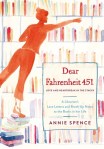 Dear Fahrenheit 451: Love and Heartbreak in the Stacks by Annie Spence is chock-full of recommendations and reading pairs. The Novel Cure is also good for this sort of thing, though it is (no surprise) overwhelmingly composed of fiction suggestions.
 Bookish Beck = Rebecca Foster. American transplant to England. Freelance proofreader and book reviewer.
 Bookish Beck