My Most Memorable Backlist Reads of 2021
Like many bloggers, I’m irresistibly drawn to the new books released each year. However, I consistently find that many of my most memorable reads were published years or decades ago. These 19 selections, in alphabetical order within genre, together with my Best of 2021 posts (fiction and nonfiction), make up the top 15% of my reading for the year. Three of the below were rereads.

(The three books not pictured were read electronically or from the library.)
Fiction
 America Is Not the Heart by Elaine Castillo: Set in the early 1990s in the Filipino immigrant neighbourhoods of the Bay Area in California, this is a complex, confident debut novel that throws you into an unfamiliar culture at the deep end. The characters shine and the dialogue feels utterly authentic in this fresh immigration story.
 Snow Falling on Cedars by David Guterson: The mystery element held me completely gripped – readers are just as in the dark as jurors until close to the end – but this is mostly a powerful picture of the lasting effects of racism. I was instantly immersed, whether in a warm courtroom with a snowstorm swirling outside or on a troop ship entering the Pacific Theater.
 Nothing but Blue Sky by Kathleen MacMahon: David is back on Spain’s Costa Brava, where he and his wife Mary Rose holidayed every summer for 20 years. This is a quiet novel about what goes unsaid in any marriage, and a deeply touching look at loss and what comes next. Grief, memory, fate: some of my favourite themes, elegantly treated.
 A Feather on the Breath of God by Sigrid Nunez: From the little I know of Nunez, this seems close to autofiction, especially in terms of her parents. Identifying the self by the key relationships and obsessions of a life makes sense, and this speaks to the universals of how we cope with a troublesome past. It cemented her as one of my favourite authors.
 Woman on the Edge of Time by Marge Piercy: An unusual and fascinating novel with hints of science fiction, but still grounded in the real world, this contrasts utopian and dystopian scenes experienced by a Latina woman who’s been confined to a mental hospital. It’s an intense cultural commentary from a writer ahead of her time on gender roles and the environment.
 My Dark Vanessa by Kate Elizabeth Russell: Obsessed with Lolita since she was a teenager, Russell decided to tell the teenage girl’s side of the story. She uses a dual timeline to great effect, creating an utterly immersive novel – as good a first-person narrative as anything Curtis Sittenfeld has ever written, and the ultimate #MeToo story.
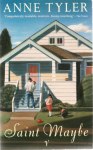 Saint Maybe by Anne Tyler: Ian Bedloe joins the puritanical Church of the Second Chance and drops out of college to help his parents raise his late brother’s three children. Anyone will be able to find themselves and their family in this story of the life chosen versus the life fallen into, and the difficult necessity of moving past regrets in the search for meaning.
 The Amateur Marriage by Anne Tyler: Unique in her oeuvre for how it bridges historical fiction and her more typical contemporary commentary. The Antons muddle their way through a volatile marriage for decades without figuring out how to change anything for the better. There is deep compassion for their foibles and how they affect the next generation.
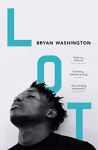 Lot by Bryan Washington: The musical equivalent might be a mixtape blasted from an open-top Corvette while touring the streets of Houston, Texas. Drug dealers, careworn immigrants, and prostitutes: Even the toughest guys have tender hearts in these 13 stories. Washington’s prose is earthy and slang-filled. The matter-of-fact phrasing made me laugh.
 Ethan Frome by Edith Wharton: I was so impressed by this condensed tragedy and the ambiance of a harsh New England winter. It struck me even more on a reread as a flawless parable of a man imprisoned by circumstance and punished for wanting more. A perfect example of how literature can encapsulate the human condition.
Poetry
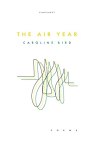 The Air Year by Caroline Bird: I read this with a big smile on my face, delighting in the clever and playful poems. The impermanence of relationships is a recurring theme. Dreams and miscommunication are also common elements, and lists grow increasingly absurd. I particularly liked where structure creates meaning, e.g. the mise en abyme of “Dive Bar.”
Nonfiction
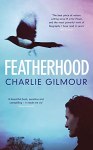 Featherhood by Charlie Gilmour: As an aimless twentysomething, Gilmour tried to rekindle a relationship with his unreliable poet father. Meanwhile, he was raising Benzene, a magpie that fell out of its nest. He makes elegant use of connections and metaphors; he’s so good at scenes, dialogue, and emotion – a truly natural writer.
 Spring in Washington by Louis J. Halle: From first migrant in February to last in June, the author traced the D.C. spring of 1945 mostly through the birds that he saw. More so than the specific observations of familiar places, though, I valued the philosophical outlook. For me this was an ideal combination of thoughtful prose and vicarious travel.
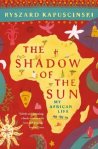 The Shadow of the Sun by Ryszard Kapuściński: This collection of essays spans decades and lots of African countries, yet feels like a cohesive narrative. Kapuściński saw many places right on the cusp of independence or in the midst of coup d’états. I appreciated how he never resorts to stereotypes or flattens differences. One of the few best travel books I’ve read.
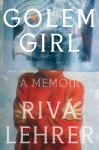 Golem Girl by Riva Lehrer: Lehrer has endured dozens of surgeries for spina bifida. Her touching family memoir is delivered in short, essay-like chapters, most named after books or films. It is also a primer in Disability theory and a miniature art gallery, filled with reproductions of her paintings. This inaugural Barbellion Prize winner is not to be missed.
 The Cost of Living by Deborah Levy: This sparse volume, the middle in an autobiographical trilogy, has Levy searching for the intellectual and physical freedom needed to reinvent her life after divorce. It is made up of conversations and memories; travels and quotations that have stuck with her. Each moment is perfectly chosen to reveal the self.
 Conundrum by Jan Morris: Morris was a trans pioneer; this transformed my understanding of gender when I first read it in 2006. Born James, Morris knew by age four that she was really a girl. A journalism career, marriage, five children, and two decades of hormone therapy preceded sex reassignment surgery. She paints hers as a spiritual quest toward her true identity.
 You’re Not Listening: What You’re Missing and Why It Matters by Kate Murphy: We all fail to listen properly sometimes, for various reasons. A New York Times journalist, Murphy does a lot of listening to her interview subjects. She also talks with representatives of so-called listening careers. This is a short, interesting, and genuinely helpful self-help book.
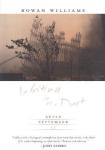 Writing in the Dust: After September 11 by Rowan Williams: Williams, then Archbishop of Wales, was in New York City on 9/11, just a few blocks from the World Trade Center. In the months that followed he pondered suffering, peacemaking, and the ways of God. He cautions against labelling the Other as Evil and responding with retribution. A superb book-length essay.
And if I really had to limit myself to just two favourites – my very best fiction and nonfiction reads of the year – they would be Snow Falling on Cedars and The Cost of Living.


What were your best backlist reads this year?
Merry Christmas!
(I’ll be back on the 27th with Love Your Library, then I have various year-end superlatives and statistics posts going through the 31st.)
Book Serendipity, September to October 2021
I call it Book Serendipity when two or more books that I read at the same time or in quick succession have something pretty bizarre in common. Because I have so many books on the go at once (usually 20–30), I suppose I’m more prone to such incidents. I’ve realized that, of course, synchronicity is really the more apt word, but this branding has stuck. This used to be a quarterly feature, but to keep the lists from getting too unwieldy I’ve shifted to bimonthly.
The following are in roughly chronological order.
- Young people studying An Inspector Calls in Somebody Loves You by Mona Arshi and Heartstoppers, Volume 4 by Alice Oseman.
- China Room (Sunjeev Sahota) was immediately followed by The China Factory (Mary Costello).


- A mention of acorn production being connected to the weather earlier in the year in Light Rains Sometimes Fall by Lev Parikian and Noah’s Compass by Anne Tyler.
- The experience of being lost and disoriented in Amsterdam features in Flesh & Blood by N. West Moss and Yearbook by Seth Rogen.
- Reading a book about ravens (A Shadow Above by Joe Shute) and one by a Raven (Fox & I by Catherine Raven) at the same time.


- Speaking of ravens, they’re also mentioned in The Elements by Kat Lister, and the Edgar Allan Poe poem “The Raven” was referred to and/or quoted in both of those books plus 100 Poets by John Carey.
- A trip to Mexico as a way to come to terms with the death of a loved one in This Party’s Dead by Erica Buist (read back in February–March) and The Elements by Kat Lister.
- Reading from two Carcanet Press releases that are Covid-19 diaries and have plague masks on the cover at the same time: Year of Plagues by Fred D’Aguiar and 100 Days by Gabriel Josipovici. (Reviews of both coming up soon.)


- Descriptions of whaling and whale processing and a summary of the Jonah and the Whale story in Fathoms by Rebecca Giggs and The Woodcock by Richard Smyth.
 An Irish short story featuring an elderly mother with dementia AND a particular mention of her slippers in The China Factory by Mary Costello and Blank Pages and Other Stories by Bernard MacLaverty.
- After having read two whole nature memoirs set in England’s New Forest (Goshawk Summer by James Aldred and The Circling Sky by Neil Ansell), I encountered it again in one chapter of A Shadow Above by Joe Shute.
- Cranford is mentioned in Corduroy by Adrian Bell and Cut Out by Michèle Roberts.
- Kenneth Grahame’s life story and The Wind in the Willows are discussed in On Gallows Down by Nicola Chester and The Elements by Kat Lister.


- Reading two books by a Jenn at the same time: Ghosted by Jenn Ashworth and The Other Mothers by Jenn Berney.
- A metaphor of nature giving a V sign (that’s equivalent to the middle finger for you American readers) in On Gallows Down by Nicola Chester and Light Rains Sometimes Fall by Lev Parikian.
- Quince preserves are mentioned in The Book of Difficult Fruit by Kate Lebo and Light Rains Sometimes Fall by Lev Parikian.
- There’s a gooseberry pie in Talking to the Dead by Helen Dunmore and The Book of Difficult Fruit by Kate Lebo.


- The ominous taste of herbicide in the throat post-spraying shows up in On Gallows Down by Nicola Chester and Damnation Spring by Ash Davidson.
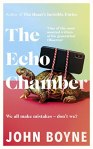
- People’s rude questioning about gay dads and surrogacy turns up in The Echo Chamber by John Boyne and the DAD anthology from Music.Football.Fatherhood.
- A young woman dresses in unattractive secondhand clothes in The Echo Chamber by John Boyne and Beautiful World, Where Are You by Sally Rooney.

- A mention of the bounty placed on crop-eating birds in medieval England in Orchard by Benedict Macdonald and Nicholas Gates and A Shadow Above by Joe Shute.
- Hedgerows being decimated, and an account of how mistletoe is spread, in On Gallows Down by Nicola Chester and Orchard by Benedict Macdonald and Nicholas Gates.
 Ukrainian secondary characters in Ghosted by Jenn Ashworth and The Echo Chamber by John Boyne; minor characters named Aidan in the Boyne and Beautiful World, Where Are You by Sally Rooney.
- Listening to a dual-language presentation and observing that the people who know the original language laugh before the rest of the audience in The Book of Difficult Fruit by Kate Lebo and Beautiful World, Where Are You by Sally Rooney.
- A character imagines his heart being taken out of his chest in Tender Is the Flesh by Agustina Bazterrica and The Book of Form and Emptiness by Ruth Ozeki.

- A younger sister named Nina in Talking to the Dead by Helen Dunmore and Sex Cult Nun by Faith Jones.
- Adulatory words about George H.W. Bush in The Echo Chamber by John Boyne and Thinking Again by Jan Morris.
- Reading three novels by Australian women at the same time (and it’s rare for me to read even one – availability in the UK can be an issue): Sorrow and Bliss by Meg Mason, The Performance by Claire Thomas, and The Weekend by Charlotte Wood.


- There’s a couple who met as family friends as teenagers and are still (on again, off again) together in Sorrow and Bliss by Meg Mason and Beautiful World, Where Are You by Sally Rooney.
- The Performance by Claire Thomas is set during a performance of the Samuel Beckett play Happy Days, which is mentioned in 100 Days by Gabriel Josipovici.
 Human ashes are dumped and a funerary urn refilled with dirt in Tender Is the Flesh by Agustina Bazterrica and Public Library and Other Stories by Ali Smith.
- Nicholas Royle (whose White Spines I was also reading at the time) turns up on a Zoom session in 100 Days by Gabriel Josipovici.
- Richard Brautigan is mentioned in both The Mystery of Henri Pick by David Foenkinos and White Spines by Nicholas Royle.


- The Wizard of Oz and The Railway Children are part of the plot in The Book Smugglers (Pages & Co., #4) by Anna James and mentioned in Public Library and Other Stories by Ali Smith.
What’s the weirdest reading coincidence you’ve had lately?
Noah’s Compass by Anne Tyler (2009)
This year I’ve been joining in Liz’s Anne Tyler readalong for most of the novels I own and hadn’t read yet. I’ve discovered a few terrific new-to-me ones: Earthly Possessions, Saint Maybe, The Amateur Marriage … but there have also been some slight duds. Alas, this one falls into the latter category. A Tyler novel is never less than readable, but a habit that I find irksome is on show here, and she’s used this story template more successfully before.
 In 2006, Liam Pennywell is forced to start a new life at age 60. After being laid off from his private school teaching job, he downsizes to a smaller apartment further out from central Baltimore. On his first night in the place, he’s assaulted by a would-be burglar and wakes up in hospital with no memory of the lost hours. As he tries to piece together what happened, his three daughters, grandson and ex-wife flit in and out of his life, tutting at his bachelor ways and later disapproving of his budding relationship with a much younger woman.
The focus on a hapless male trying to do better is a familiar setup for Tyler (Saint Maybe, The Accidental Tourist, A Patchwork Planet, The Beginner’s Goodbye, and Redhead by the Side of the Road, at least – have I missed any?). Liam especially reminded me of Michael in The Amateur Marriage: they feel they have been sleepwalking through life and wish they had appreciated it more and shaped it more through their decisions. As Liam says at one point, “It’s as if I’ve never been entirely present in my own life.” Dating Eunice is his only bid for freedom and happiness. But, in the book’s most memorable scene, a visit to his elderly father is a revelation to Liam: he never wanted to be like this man, but accidentally almost was.
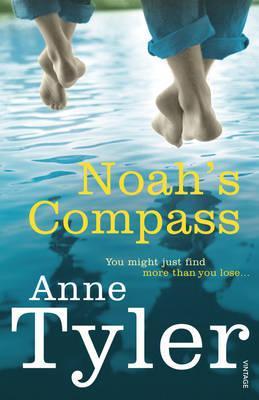
Much as I enjoy sinking into a Tyler novel (the closest I come to a ‘guilty pleasure’ read?), I get exasperated with the way she includes an ostensibly momentous event that doesn’t actually matter much, or only insomuch as it sets up the plot. (Clock Dance is the worst offender in this respect.) There is a suicide in the background, but the assault and memory loss soon fade into the background, to be replaced by well-worn, breezy dysfunctional family happenings. The title, from a Sunday school-based conversation Liam has with his grandson, is cute and meaningful in context – about a drifting life in search of direction – but won’t help as an aide-mémoire for the story. The same goes for the twee cover image on my Vintage paperback.
So, a rather forgettable one – which, unfortunately, has largely been my experience of Tyler’s later work (with the exception of the punchy Shakespearean fun of Vinegar Girl). But you can do much worse than pick up one of her paperbacks on a sunny afternoon.
See also Liz’s review. She’s as lukewarm as I am on this one. (Secondhand purchase from Thatcham Library sale trolley)
My rating: 
The 16 Tyler novels I’ve read, in order of preference (greatest to least), are:
Dinner at the Homesick Restaurant
Saint Maybe
The Amateur Marriage
Ladder of Years
The Accidental Tourist
Earthly Possessions
Breathing Lessons
Digging to America
Vinegar Girl
Back When We Were Grown-ups
Clock Dance
A Blue Spool of Thread
The Beginner’s Goodbye
Noah’s Compass
Redhead by the Side of the Road
The Clock Winder
 The only unread Tyler I have remaining on my shelves is A Patchwork Planet, which I started in July but didn’t get far with. I’ll try it again another time. And there’s not long to wait now for her NEW novel, French Braid, coming out in March. (Even though I’m sure she announced in 2015 that she was retiring, we’ll have had four novels since then.) The other one that this readalong project has piqued my interest in is Celestial Navigation. I don’t think I’ll bother with her first four novels, which she’d like to see struck from the record. Morgan’s Passing and Searching for Caleb I’m unsure about. Should I find them very cheap secondhand, I’d probably have a go.
Book Serendipity, July to August 2021
I call it Book Serendipity when two or more books that I read at the same time or in quick succession have something pretty bizarre in common. Because I have so many books on the go at once (usually 20–30), I suppose I’m more prone to such incidents. I’ve realized that, of course, synchronicity is really the more apt word, but this branding has stuck. This used to be a quarterly feature, but to keep the lists from getting too unwieldy I’ve shifted to bimonthly.
The following are in roughly chronological order.
- I read two novels about the disappearance of a 15-year-old girl at the same time: Heatstroke by Hazel Barkworth and When the Stars Go Dark by Paula McLain.
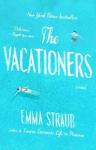
- Two novels in a row were set on a holiday in Spain: Nothing but Blue Sky by Kathleen MacMahon and The Vacationers by Emma Straub.
- I encountered mentions of the removal of the Edward Colston statue in God Is Not a White Man by Chine McDonald and I Belong Here by Anita Sethi on the same evening.
- Characters have the habit of making up names and backstories for strangers in Ruby by Ann Hood and Nothing but Blue Sky by Kathleen MacMahon.
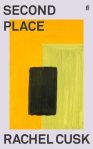
- The main female character says she works out what she thinks by talking in Second Place by Rachel Cusk and The Amateur Marriage by Anne Tyler.

- A passive mother is bullied by her controlling husband in Nothing but Blue Sky by Kathleen MacMahon and Female Friends by Fay Weldon.
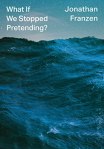
- Two reads in a row were a slim volume on the necessity of giving up denial: What White People Can Do Next by Emma Dabiri (re: racism) and What If We Stopped Pretending by Jonathan Franzen (re: climate change).

- Expressions of a strange sense of relief at disaster in Forecast by Joe Shute (re: flooding) and The Amateur Marriage by Anne Tyler (re: a car accident).
- The biomass ratios of livestock to humans to other mammals are cited in Silent Earth by Dave Goulson, The Anthropocene Reviewed by John Green, and Bewilderment by Richard Powers.
- Two Booker nominees referencing china crockery: An Island by Karen Jennings and China Room by Sunjeev Sahota (yep, it’s talking about the plates rather than the country).

- Teens sneak vodka in Heartstopper, Volume 3 by Alice Oseman and The Interestings by Meg Wolitzer.
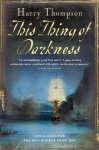
- Robert FitzRoy appears in The Glitter in the Green by Jon Dunn and Forecast by Joe Shute, and is the main subject of This Thing of Darkness by Harry Thompson, a doorstopper that has been languishing on my set-aside pile.
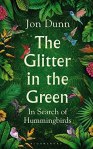

- Dave Goulson’s bumblebee research is mentioned in The Glitter in the Green by Jon Dunn, which I was reading at the same time as Goulson’s new book, Silent Earth.
- Reading two cancer memoirs that mention bucket lists at the same time: No Cure for Being Human by Kate Bowler and Year of Plagues by Fred D’Aguiar.


- Mentions of the damaging practice of clearing forest to plant eucalyptus in The Glitter in the Green by Jon Dunn and Forecast by Joe Shute.
- Mentions of mosquito coils being used (in Borneo or Australia) in Small Bodies of Water by Nina Mingya Powles and The Weekend by Charlotte Wood.

- Different words to the tune of Leonard Cohen’s “Hallelujah” in In Every Mirror She’s Black by Lola Akinmade Åkerström and How We Do Family by Trystan Reese.
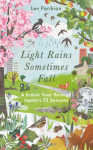 A brief mention of China and Japan’s 72 mini-seasons in Small Bodies of Water by Nina Mingya Powles: this will then be the setup for Light Rains Sometimes Fall by Lev Parikian, which I’ll be reading later in September.
- Beached whales feature in Fathoms by Rebecca Giggs and Small Bodies of Water by Nina Mingya Powles.
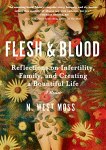
- A chapter in No Cure for Being Human by Kate Bowler is entitled “Flesh & Blood,” which is the title of the whole memoir by N. West Moss that I picked up next – and both are for Shelf Awareness reviews.
- A description of a sonogram appointment where the nurse calls the doctor in to interpret the results and they know right away that means the pregnancy is unviable, followed by an account of a miscarriage, in Flesh & Blood by N. West Moss and How We Do Family by Trystan Reese.

- Robin Wall Kimmerer and Robert Macfarlane quoted in Church of the Wild by Victoria Loorz and Small Bodies of Water by Nina Mingya Powles.
What’s the weirdest reading coincidence you’ve had lately?
The Amateur Marriage by Anne Tyler (2004)
 This year I’ve been joining in Liz’s Anne Tyler readalong for most of the novels I own and hadn’t read yet. Just this summer, I’ve discovered two new favourites: Saint Maybe and now The Amateur Marriage – which surprised me because it was her sixteenth novel and not part of what I consider to be her golden mid-period of the 1980s-90s. Both Saint Maybe and The Amateur Marriage are, like Dinner at the Homesick Restaurant (my absolute favourite and, I was gratified to discover, Tyler’s favourite, too), effectively linked short story collections in which the chapters are self-contained narratives set at a particular point in a dysfunctional family’s life, with each one often focusing on a different character.
The Amateur Marriage feels unique in Tyler’s oeuvre for how it bridges historical fiction and her more typical contemporary commentary. Spanning 60 years precisely, it opens with the Pearl Harbor attack in 1941. In this Baltimore neighbourhood full of Polish immigrants, a spontaneous patriotic parade breaks out. In the excitement, Pauline jumps off a tram and hits her head on a lamppost. Her friends rush her to the Antons’ general store for a bandage and when Michael Anton meets her their fate is sealed. Pauline assumes Michael is bound for war and, so as not to disappoint her, he signs up. After his discharge, they marry – though Pauline had a near change of heart because they have so little in common and do nothing but fight.
{SPOILERS FOLLOW}
“Not quite forever”
The Antons’ marriage continues in the same volatile vein – until it doesn’t. I was taken aback that a story about marriage kept going even when Michael + Pauline ended, and even after one of them was no more. About two-thirds of the way through the book, on their 30th wedding anniversary, they find that their reminiscences are mostly of bitter arguments. Pauline wryly shakes her head over their antics, but Michael says to Pauline, “It has not been fun. It’s been hell.” She goads him into leaving, and he does.
I’ve jokingly heard women saying of their husbands, “I’m training him for his second wife,” and that seems to me to be the spirit of the title. These two characters had no idea that ‘opposites attract’ but don’t make for a stable marriage, and have muddled their way through for decades without figuring out how to change anything for the better. I sensed Tyler’s deep compassion for their foibles and how they affect the next generation.
A major thread of the novel is their eldest daughter Lindy’s teenage rebellion and eventual disappearance, reminding me a lot of Mary Lawson’s A Town Called Solace. Michael and Pauline retrieve her young son, Pagan, from San Francisco and raise him themselves, partly via shared custody. This theme of unexpected grandparent responsibility is a link to Saint Maybe and especially (along with the West as a setting) Clock Dance. There is no rapturous reunion to come, but the remnant of the family does eventually get back together.
Michael and Pauline are quintessential Tyler characters: the one easygoing if slightly useless (“He wished he had inhabited more of his life, used it better, filled it fuller”); the other highly strung and contrary, yet strong and efficient – “the ones who kept the planet spinning.” Michael never ceases to admire Pauline, even when he stops being married to her. In the penultimate chapter, the family swaps “Pauline stories” that exemplify how maddening but lovable she could be. You have someone in your family who’s just like that, right?
{END OF SPOILERS}
My U.S. paperback appends an interview with Tyler that I found illuminating. She knows that she doesn’t tend to break new ground with her fiction: “face it, I always write more or less the same sort of story,” she admits. During this reading project I’ve been debating whether this is a bad thing. Does it make her later work redundant? Does it mean she only had a limited store of good ideas? Are her characters types rather than three-dimensional creations? Marcie at Buried in Print loves the connections between the novels. I’m sure Liz does, too, but she’s also acknowledged that she finds individual plots strangely unmemorable.
I haven’t fully answered the above questions for myself. There are certainly Tyler books that I like more than others, but they have all been comforting and (mostly) compulsive reading. Her characters and situations feel so true to life that we don’t observe from the outside, but journey alongside and within them. (Secondhand purchase from 2nd & Charles, Hagerstown, MD, USA) See also Liz’s review.
Favourite lines:
“Was it possible to dislike your own wife? Well, no, of course not. This was just one of those ups-and-downs that every couple experienced.”
“so much about their parents had been embarrassing. Or did all children feel that way? But it seemed to George that the Antons’ lives were more extreme than other people’s. … People didn’t stay on an even keel in the Anton family. They did exaggerated things like throwing out their clothes or running away from home”
Another readalike: Larry’s Party by Carol Shields
My rating: 
The 15 Tyler novels I’ve read, in order of preference (greatest to least), are:
Dinner at the Homesick Restaurant
Saint Maybe
The Amateur Marriage
Ladder of Years
The Accidental Tourist
Earthly Possessions
Breathing Lessons
Digging to America
Vinegar Girl
Back When We Were Grown-ups
Clock Dance
A Blue Spool of Thread
The Beginner’s Goodbye
Redhead by the Side of the Road
The Clock Winder
Next up for me will be Noah’s Compass later in September.
Book Serendipity, May to June 2021
I call it Book Serendipity when two or more books that I read at the same time or in quick succession have something pretty bizarre in common. Because I have so many books on the go at once (usually 20‒30), I suppose I’m more prone to such incidents. I’ve realized that, of course, synchronicity is really the more apt word, but this branding has stuck.
The following are in roughly chronological order.
- Sufjan Stevens songs are mentioned in What Is a Dog? by Chloe Shaw and After the Storm by Emma Jane Unsworth.
- There’s a character with two different coloured eyes in The Mothers by Brit Bennett and Painting Time by Maylis de Kerangal.
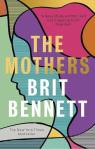

- A description of a bathroom full of moisturizers and other ladylike products in The Mothers by Brit Bennett and The Interior Silence by Sarah Sands.
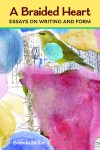
- A description of having to saw a piece of furniture in half to get it in or out of a room in A Braided Heart by Brenda Miller and After the Storm by Emma Jane Unsworth.

- The main character is named Esther Greenwood in the Charlotte Perkins Gilman short story “The Unnatural Mother” in the anthology Close Company and The Bell Jar by Sylvia Plath. Indeed, it seems Plath may have taken her protagonist’s name from the 1916 story. What a find!
- Reading two memoirs of being in a coma for weeks and on a ventilator, with a letter or letters written by the hospital staff: Many Different Kinds of Love by Michael Rosen and Coma by Zara Slattery.


- Reading two memoirs that mention being in hospital in Brighton: Coma by Zara Slattery and After the Storm by Emma Jane Unsworth.
- Reading two books with a character named Tam(b)lyn: My Cousin Rachel by Daphne du Maurier and Coma by Zara Slattery.
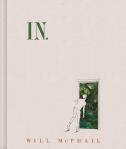
- A character says that they don’t miss a person who’s died so much as they miss the chance to have gotten to know them in Featherhood by Charlie Gilmour and In by Will McPhail.

- A man finds used condoms among his late father’s things in The Invention of Solitude by Paul Auster and Featherhood by Charlie Gilmour.
- An absent husband named David in Open House by Elizabeth Berg and Ruby by Ann Hood.
- The murder of Thomas à Becket featured in Murder in the Cathedral by T.S. Eliot (read in April) and Heavy Time by Sonia Overall (read in June).


- Adrienne Rich is quoted in (M)otherhood by Pragya Agarwal and Heavy Time by Sonia Overall.
- A brother named Danny in Immediate Family by Ashley Nelson Levy and Saint Maybe by Anne Tyler.
- The male lead is a carpenter in Early Morning Riser by Katherine Heiny and Saint Maybe by Anne Tyler.
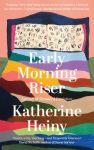
- An overbearing, argumentative mother who is a notably bad driver in Early Morning Riser by Katherine Heiny and Blue Shoe by Anne Lamott.
- That dumb 1989 movie Look Who’s Talking is mentioned in (M)otherhood by Pragya Agarwal and Early Morning Riser by Katherine Heiny.
- In the same evening, I started two novels that open in 1983, the year of my birth: The Other Black Girl by Zakiya Dalila Harris and Malibu Rising by Taylor Jenkins Reid.


- “Autistic” is used as an unfortunate metaphor for uncontrollable or fearful behavior in Open House by Elizabeth Berg and Blue Shoe by Anne Lamott (from 2000 and 2002, so they’re dated references rather than mean-spirited ones).
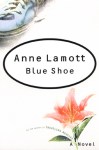 A secondary character mentions a bad experience in a primary school mathematics class as being formative to their later life in Blue Shoe by Anne Lamott and Saint Maybe by Anne Tyler (at least, I think it was in the Tyler; I couldn’t find the incident when I went back to look for it. I hope Liz will set me straight!).
- The panopticon and Foucault are referred to in Great Circle by Maggie Shipstead and I Live a Life Like Yours by Jan Grue. Specifically, Jeremy Bentham’s panopticon is the one mentioned in the Shipstead, and Bentham appears in The Cape Doctor by E.J. Levy.
What’s the weirdest reading coincidence you’ve had lately?
20 Books of Summer, #6–8: Aristide, Hood, Lamott
This latest batch of colour-themed summer reads took me from a depleted post-pandemic landscape to the heart of dysfunctional families in Rhode Island and California.
Under the Blue by Oana Aristide (2021)
Fans of Station Eleven, this one’s for you: the best dystopian novel I’ve read since Mandel’s. Aristide started writing this in 2017, and unknowingly predicted a much worse pandemic than Covid-19. In July 2020, Harry, a middle-aged painter inhabiting his late nephew’s apartment in London, finally twigs that something major is going on. He packs his car and heads to his Devon cottage, leaving its address under the door of the cute neighbour he sometimes flirts with. Hot days stack up and his new habits of rationing food and soap are deeply ingrained by the time the gal from #22, Ash – along with her sister, Jessie, a doctor who stocked up on medicine before fleeing her hospital – turn up. They quickly sink into his routines but have a bigger game plan: getting to Uganda, where their mum once worked and where they know they will be out of range of Europe’s at-risk nuclear reactors. An epic road trip ensues.
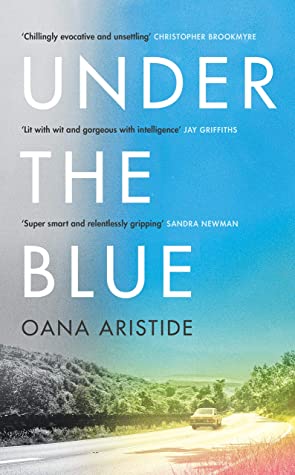 It gradually becomes clear that Harry, Ash and Jessie are among mere thousands of survivors worldwide, somehow immune to a novel disease that spread like wildfire. There are echoes of Cormac McCarthy’s The Road in the way that they ransack the homes of the dead for supplies, and yet there’s lightness to their journey. Jessie has a sharp sense of humour, provoking much banter, and the places they pass through in France and Italy are gorgeous despite the circumstances. It would be a privilege to wander empty tourist destinations were it not for fear of nuclear winter and not finding sufficient food – and petrol to keep “the Lioness” (the replacement car they steal; it becomes their refuge) going. While the vague sexual tension between Harry and Ash persists, all three bonds are intriguing.
In an alternating storyline starting in 2017, Lisa and Paul, two computer scientists based in a lab at the Arctic Circle, are programming an AI, Talos XI. Based on reams of data on history and human nature, Talos is asked to predict what will happen next. But when it comes to questions like the purpose of art and whether humans are worth saving, the conclusions he comes to aren’t the ones his creators were hoping for. These sections are set out as transcripts of dialogues, and provide a change of pace and perspective. Initially, I was less sure about this strand, worrying that it would resort to that well-worn trope of machines gone bad. Luckily, Aristide avoids sci-fi clichés, and presents a believable vision of life after the collapse of civilization.
The novel is full of memorable lines (“This absurd overkill, this baroque wedding cake of an apocalypse: plague and then nuclear meltdowns”) and scenes, from Harry burying a dead cow to the trio acting out a dinner party – just in case it’s their last. There’s an environmentalist message here, but it’s subtly conveyed via a propulsive cautionary tale that also reminded me of work by Louisa Hall and Maja Lunde. (Public library) 
Ruby by Ann Hood (1998)
Olivia had the perfect life: fulfilling, creative work as a milliner; a place in New York City and a bolthole in Rhode Island; a new husband and plans to try for a baby right away. But then, in a fluke accident, David was hit by a car while jogging near their vacation home less than a year into their marriage. As the novel opens, 37-year-old Olivia is trying to formulate a letter to the college girl who struck and killed her husband. She has returned to Rhode Island to get the house ready to sell but changes her mind when a pregnant 15-year-old, Ruby, wanders in one day.
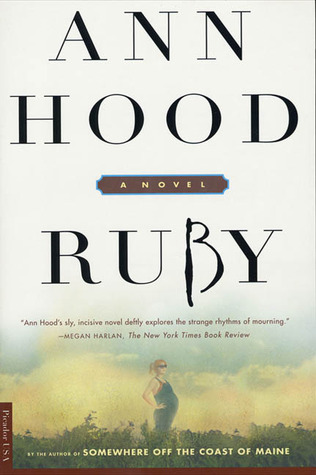 At first, I worried that the setup would be too neat: Olivia wants a baby but didn’t get a chance to have one with David before he died; Ruby didn’t intend to get pregnant and looks forward to getting back her figure and her life of soft drugs and petty crime. And indeed, Olivia suggests an adoption arrangement early on. But the outworkings of the plot are not straightforward, and the characters, both main and secondary (including Olivia’s magazine writer friend, Winnie; David’s friend, Rex; Olivia’s mother and sister; a local lawyer who becomes a love interest), are charming.
It’s a low-key, small-town affair reminiscent of the work of Anne Tyler, and I appreciated how it sensitively explores grief, its effects on the protagonist’s decision-making, and how daunting it is to start over (“The idea of that, of beginning again from nothing, made Olivia feel tired.”). It was also a neat touch that Olivia is the same age as me, so in some ways I could easily imagine myself into her position.
This was the ninth book I’ve read by Hood, an author little known outside of the USA – everything from grief memoirs to a novel about knitting. Ironically, its main themes of adoption and bereavement were to become hallmarks of her later work: she lost her daughter in 2002 and then adopted a little girl from China. (Secondhand purchase, June 2021)
[I’ve read another novel titled Ruby – Cynthia Bond’s from 2014.]
Blue Shoe by Anne Lamott (2002)
I’m a devoted reader of Lamott’s autobiographical essays about faith against the odds (see here), but have been wary of trying her fiction, suspecting I wouldn’t enjoy it as much. Well, it’s true that I prefer her nonfiction on the whole, but this was an enjoyably offbeat novel featuring the kind of frazzled antiheroine who wouldn’t be out of place in Anne Tyler’s work.
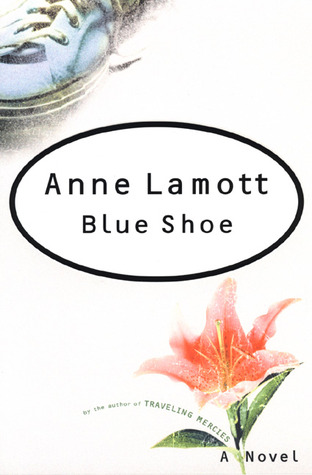 Mattie Ryder has left her husband and returned to her Bay Area family home with her young son and daughter. She promptly falls for Daniel, the handyman she hires to exterminate the rats, but he’s married, so she keeps falling into bed with her ex, Nicky, even after he acquires a new wife and baby. Her mother, Isa, is drifting ever further into dementia. A blue rubber shoe that Mattie finds serves as a totem of her late father – and his secret life. She takes a gamble that telling the truth, no matter what the circumstances, will see her right.
As in Ruby, I found the protagonist relatable and the ensemble cast of supporting characters amusing. Lamott crafts some memorable potted descriptions: “She was Jewish, expansive and yeasty and uncontained, as if she had a birthright for outrageousness” and “He seemed so constrained, so neatly trimmed, someone who’d been doing topiary with his soul all his life.” She turns a good phrase, and adopts the same self-deprecating attitude towards Mattie that she has towards herself in her memoirs: “She usually hoped to look more like Myrna Loy than an organ grinder’s monkey when a man finally proclaimed his adoration.”
At a certain point – maybe two-thirds of the way through – my inward reply to a lot of the novel’s threads was “okay, I get it; can we move on?” Yes, the situation with Isa is awful; yes, something’s gotta give with Daniel and his wife; yes, the revelations about her father seem unbearable. But with a four-year time span, it felt like Mattie was stuck in the middle for far too long. It’s also curious that she doesn’t apply her zany faith (a replica of Lamott’s) to questions of sexual morality – though that’s true of more liberal Christian approaches. All in all, I had some trouble valuing this as a novel because of how much I know about Lamott’s life and how closely I saw the storyline replicating her family dynamic. (Secondhand purchase, c. 2006 – I found a signed hardback in a library book sale back in my U.S. hometown for $1.) 
Hmm, altogether too much blue in my selections thus far (4 out of 8!). I’ll have to try to come up with some more interesting colours for my upcoming choices.
Next books in progress: The Other’s Gold by Elizabeth Ames and God Is Not a White Man by Chine McDonald.
Read any of these? Interested?
Saint Maybe by Anne Tyler (1991)
This year I’ve been joining in Liz’s Anne Tyler readalong for the novels I own and hadn’t read yet – I have one each lined up for the next three months as well. Saint Maybe was Tyler’s twelfth novel and forms part of what I consider to be her golden mid-period. It’s most like Dinner at the Homesick Restaurant, my absolute favourite, in that both might be classed as linked short story collections: each chapter is a standalone narrative with knockout first and last lines; together they build a careful picture of a dysfunctional family over the years.
 As the novel opens in the 1960s, Ian Bedloe is a lazy teenager contemplating college. When his older brother Danny marries Lucy, mother to Agatha and Thomas, Ian can’t help but comment on the timing of his sister-in-law’s third pregnancy. Danny didn’t realize he’s not the father of this new baby, Daphne, and the newfound knowledge pushes him over the edge. Lucy also fails to cope, and Ian is consumed with guilt at how he inadvertently caused the collapse of their family. In an effort to atone, he joins the puritanical Church of the Second Chance and drops out of college to help his parents raise the three children. Others have to convince him that life is not just about penance and that he deserves happiness, too.
This is one of those books where every character, no matter how minor, shines. I particularly loved Reverend Emmett, whose well-meaning doctrines have been taken further than he intended; Rita, whom the family hires to declutter the house (she’s reminiscent of the dog trainer in The Accidental Tourist); and Daphne, who turns into a rebellious teen for whom Ian will always have a soft spot. Ian’s parents could have faded into the background, but the book probes their grief and their feelings of purposelessness in retirement. My only slight qualm was about how Tyler describes the foreigners who live nearby: Middle Eastern graduate students at Johns Hopkins, they’re there simply to provide comic relief with their harebrained home maintenance schemes; the depiction is good-natured, yet seems dated.
In a few other Tyler novels, I’ve been put off by what can seem like flippancy or inconsequentiality. The works of hers that I love best emphasize both the humour and the sadness: the absurdity and tragedy of these ordinary suburban lives. Here, I especially noted the double-edged portrait of the nature of childcare: Ian “wondered how people endured children on a long-term basis—the monotony and irritation and confinement of them,” yet “They were all that gave his life color, and energy, and …well, life.” I also kept finding personal resonances – for instance, the whole theme of the short homily the pastor delivered at my mother’s wedding ceremony was second chances, my stepfather has a failing old dog like the Bedloes’ Beastie, and the account of Church summer camp rang all too true.
At the sentence level as well as the plot level, this is a very strong showing from Tyler, and a close second to Dinner at the Homesick Restaurant for me. I reckon anyone will be able to find themselves and their family in this story of the life chosen versus the life fallen into, and the difficult necessity of moving past regrets in the search for meaning. (Source: Charity shop) See also Liz’s review.
Favourite lines:
Bee (Ian’s mother): “We’ve had such extraordinary troubles, and somehow they’ve turned us ordinary. That’s what’s so hard to figure. We’re not a special family anymore. … We’ve turned uncertain. We’ve turned into worriers.”
“‘Mess up, I say!’ Daphne crowed. ‘Fall flat on your face! Make every mistake you can think of! Use all the life you’ve got.’”
“When is something philosophical acceptance and when is it dumb passivity? When is something a moral decision and when is it scar tissue?”
My rating:
The 14 Tyler novels I’ve read, in order of preference (greatest to least), are:
Dinner at the Homesick Restaurant
Saint Maybe
Ladder of Years
The Accidental Tourist
Earthly Possessions
Breathing Lessons
Digging to America
Vinegar Girl
Back When We Were Grown-ups
Clock Dance
A Blue Spool of Thread
The Beginner’s Goodbye
Redhead by the Side of the Road
The Clock Winder
Next up for me will be A Patchwork Planet in late July.
20 Books of Summer 2021 (Colour Theme) & Other Reading Plans
It’s my fourth year participating in Cathy’s 20 Books of Summer challenge. Three years ago, I read only books by women; two years ago, I did an animal theme; last year, all my choices were related to food and drink. This year it’s all about colour: the word colour, or one mentioned in a title or in an author’s name, or – if I get really stuck – a particularly vibrant one on a book cover. My options range from short stories to biography, with a couple of novels in translation and a couple of children’s classics to reread on the piles.
As usual, I will prioritize books from my own shelves, but this time I will also allow myself to include library and/or Kindle reads. For instance, I have a hold placed on Nothing but Blue Sky by Kathleen MacMahon, which was on the Women’s Prize longlist.
Here are the initial stacks I’m choosing from:

 One that’s not pictured but that I definitely plan to read and review over the summer is God Is Not a White Man by Chine McDonald, which came out earlier this month.
Tomorrow I’m flying out to the USA as my mother is getting remarried in mid-June. I’m not completely at ease about travelling, especially as on this occasion it has involved expensive private Covid testing and quarantine periods at either end, but I am looking forward to the fun aspects of travel, like downtime in an airport with nothing to do but read. For this purpose, the first two books for my challenge that I’ve packed are the novel Purple Hibiscus by Chimamanda Ngozi Adichie and the short story collection Emerald City by Jennifer Egan.


This week and next, the Hay Festival is taking place. I went nuts and booked myself onto eight different literary talks, three of which have already aired, with two more coming up this evening. Then there will be a few to keep me occupied during my first few days of quarantine next week. It’s a fantastic program and all the online events are free (though you can donate), so do take a look if you haven’t already. I’ll try to write up at least some of these events.

Liz’s Anne Tyler readalong is continuing throughout this year, and I happen to own one novel that’s scheduled for each of the next three months: Saint Maybe for June, A Patchwork Planet for July, and An Amateur Marriage for August. The last two I’ll be rescuing from boxes in my sister’s basement.
I always like reading with the seasons, so this is my summery stack:

I’ll start with Three Junes. Others I will contemplate getting out from the library include Heatstroke by Hazel Barkworth, The Summer before the Dark by Doris Lessing, and August by Callan Wink.
 In mid-June I’m on the blog tour for Mary Jane by Jessica Anya Blau, a novel that’s perfect for the season’s reading – nostalgic for a teen girl’s music-drenched 1970s summer, and reminiscent of Curtis Sittenfeld’s work.
I have also managed to amass a bunch of books about fathers and fatherhood, so I’ll do at least one “Three on a Theme” post to tie in with Father’s Day.
Are you joining in the summer reading challenge? What’s the first book on the docket?
Do you spy any favourites on my piles? Which ones should I be sure to read?
Earthly Possessions by Anne Tyler (1977)
This year I’m joining in Liz’s readalong for all of the Anne Tyler novels that I own and haven’t read yet – or at least the ones I can access; others are marooned in a box in the States. Earthly Possessions was Tyler’s seventh novel and is refreshingly different from the 12 of her books I’d read previously. (Liz’s review is here, and Cathy has also recently reviewed it here.) The action begins in a typical Maryland setting but soon hits the road. After years of coasting along unhappily, Charlotte Emory, 35, has finally decided to leave her preacher husband and their two children, and is at the bank in Clarion (a fictional town) to withdraw money for the journey. Jake Simms, recently escaped from the county jail, is here to get cash, too, and Charlotte is his sole hostage in the bungling robbery that follows.
The first-person narration struck me as rare for Tyler – though I’d have to go back to all the others I’ve read to confirm that they’re in the third-person omniscient, as in my memory – and the structure is very effective, alternating chapters about Jake and Charlotte’s hapless road trip to Florida with extended flashbacks to Charlotte’s earlier life, from childhood right up to the moment she decided to leave Saul. Her family background is similar to Daisy’s in Carol Shields’s The Stone Diaries: both characters had an overweight mother who didn’t realize she was pregnant until all of a sudden she gave birth to a daughter. After her father’s death, Charlotte felt obliged to take over his photographic studio and she and her mother had lodgers in their unusual turreted home beside a gas station. One of these lodgers was Saul.
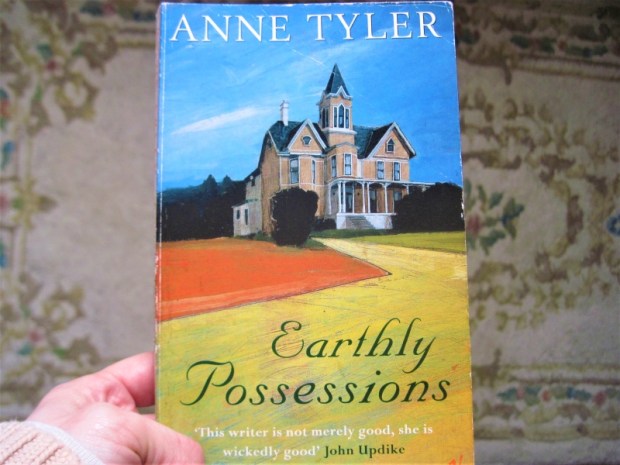
The title contrasts Saul’s heavenly concerns with the mess of life on earth. Charlotte is a Marie Kondo disciple avant la lettre, purging her home of superfluous furniture and cutting herself off from unnecessary people.
“My life has been a history of casting off encumbrances, paring down to the bare essentials, stripping for the journey. Possessions make me anxious.”
“I gave up hope. Then in order not to mind too much I loosened my roots, floated a few feet off, and grew to look at things with a faint, pleasant humorousness that spiced my nose like the beginnings of a sneeze. … My world began to seem…temporary. I saw that I must be planning to leave, eventually.”
A passive woman reaching a breaking point and leaving the life she’s been stuck in is a setup that anticipates Ladder of Years, one of my favourites from Tyler, and the protagonists’ emotional circuit and eventual destination are similar. Themes from The Clock Winder, and from her work in general, recur: a big, quirky family; mental illness; brothers squabbling over a woman; secrets; and bereavement. I enjoyed the touch of reverse Stockholm syndrome as Jake comes to rely on Charlotte for help with placating his pregnant girlfriend. And I was delighted to see a little mention of a character who “suffered one of his lapses and lost three hundred dollars at the Bowie Racetrack” – I grew up in Bowie and my parents lived on Race Track Road, just down from the (now derelict) track, for 13 years.
I’d never heard of this novel before I found it at a charity shop a few years ago. It ended up being a real gem, covering a lot of literal and psychological ground in its 200 small-format pages and doing something a bit different from the standard Tyler narrative while still staying true to her trademark themes and bittersweet sense of humour. I heartily recommend this one.
Favourite lines:
“I saw that all of us lived in a sort of web, criss-crossed by strings of love and need and worry.”
“Oh, I’ve never had the knack of knowing I was happy right while the happiness was going on.”
My rating:
The 13 Tyler novels I’ve read, in order of preference (greatest to least), are:
Dinner at the Homesick Restaurant
Ladder of Years
The Accidental Tourist
Earthly Possessions
Breathing Lessons
Digging to America
Vinegar Girl
Clock Dance
Back When We Were Grown-ups
A Blue Spool of Thread
The Beginner’s Goodbye
Redhead by the Side of the Road
The Clock Winder
Next up for me will be Saint Maybe in late June.
 Bookish Beck = Rebecca Foster. American transplant to England. Freelance proofreader and book reviewer.
 Bookish Beck