Knausgaard for the Sally Rooney Generation: Stubborn Archivist by Yara Rodrigues Fowler
I would have loved to see this debut novel on the Women’s Prize longlist the other week. It’s such a hip, fresh approach to fiction – the last book to have struck me as truly ‘novel’ in the same way was Lincoln in the Bardo.
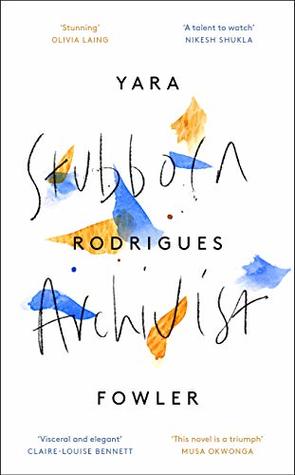 Broadly speaking, this is autofiction: like the author, the protagonist was born in London to a Brazilian mother and an English father. In the tradition of Karl Ove Knausgaard, Yara Rodrigues Fowler audaciously includes the mundane details of everyday life – things like a friend coming for Sunday roast, struggling with IBS, packing for a trip to Brazil, and trying to be grateful for having half-decent work and a place to live with her parents in Tooting. She also recounts lots of conversations, some momentous – as when she confronts an ex about a non-consensual sexual encounter – but most pretty inane; all conveyed with no speech marks.
The book opens with fragmentary, titled pieces that look almost like poems in stanzas. That experimentation with how the words are set out on the page continues throughout the book. Some pages contain just a few lines, or a single short paragraph that reads like a prose poem. Even where there are more conventional sections of a few pages, Fowler deliberately eschews commas and hyphens to create a sort of breathless, run-on pace. This makes the text feel artless, like a pure stream of memory and experience has been channeled directly onto the page, and yet you can be sure that a lot of hard work was involved.
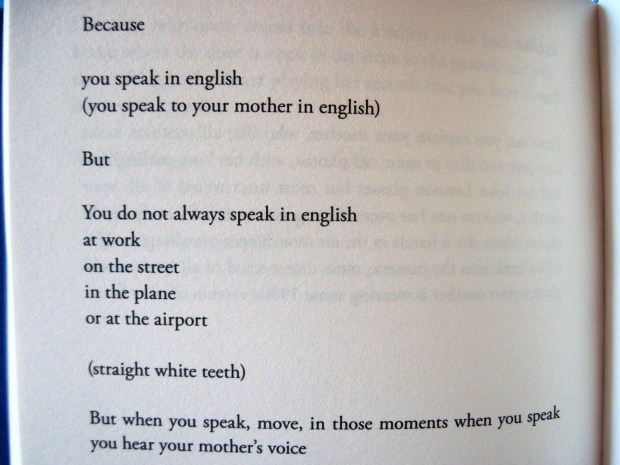
The perspective moves smoothly between the third and the second person, referring to the protagonist by turns as “she” and “you.” Sometimes she’s “the baby,” going grocery shopping with Vovó (Grandmother) Cecília in Brazil and asking for bedtime stories, or observing Aunt Ana Paula’s relationship with a classmate when she comes to live with them in London for a time. This stubborn archivist is equally convinced of the value of her family history and of her twentysomething life of relationships, parties, and a good-enough job.
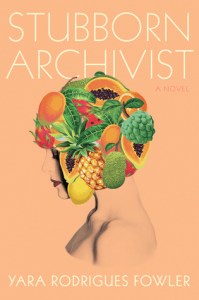
I love the U.S. cover!
Navigating two cultures (and languages), being young and adrift, and sometimes seeing her mother in herself: there’s a lot to sympathize with in the main character. If you’re a fan of Sally Rooney’s work (especially Conversations with Friends), you’ll want to pick this up as soon as you can, even if you don’t expect to relate to someone of Fowler’s generation. Stubborn Archivist impressed me enough to earn the first entry on my “Best of 2019” shelf.
My rating: 
Stubborn Archivist was published in the UK by Fleet on February 21st. My thanks to the publisher for the free copy for review. It will be published in the USA by Mariner Books on July 16th.
First Encounter: Karl Ove Knausgaard
 For years I felt behind the curve because I had not yet read the two prime examples of European autofiction: Elena Ferrante and Karl Ove Knausgaard. It seemed like everyone was raving about them, calling their work revelatory and even compulsive (Zadie Smith has famously likened Knausgaard’s autobiographical novels to literary “crack”). Well, my first experience of Ferrante (see my review of My Brilliant Friend), about this time last year, was underwhelming, so that tempered my enthusiasm for trying Knausgaard. However, I had a copy of A Death in the Family on the shelf that I’d bought with a voucher, so I was determined to give him a go.
I read this first part of the six-volume “My Struggle” series over the course of about two months. That’s much longer than I generally spend with a book, and unfortunately reflects the fact that it was the opposite of compelling for me; at times I had to force myself to pick it up from a stack of far more inviting books and read just five or 10 pages so I’d see some progress. Now, a couple of weeks after finally reading the last page, I can say that I’m glad I tried Knausgaard to see what the fuss is all about, but I think it unlikely that I’ll read any of his other books.
Written in 2008, when he was 39, this is Knausgaard’s record of his childhood and adolescence – specifically his relationship with his father, a distant and sometimes harsh man who drank himself to an early death. And yet at least half the book is about other things, with the father – whether alive or dead – as just a shadow in the background. I found it so curious what Knausgaard chooses to focus on in painstaking detail versus what he skates over.
For instance, he spends ages on the preparations for a New Year’s Eve party he attended in high school: acquiring the booze, the lengths he had to go to in hiding it and lugging it through a snowy night, and so on. He gives a broader idea of his school years through some classroom scenes and word pictures of friends he was in an amateur rock band with and girls he had crushes on, but these are very brief compared to the 50 pages allotted to the party.
Part Two feels like a significant improvement. It opens at the time of composition, with Karl Ove the writer and family man in his office in Sweden – a scene we briefly saw around 30 pages into Part One. I like these interludes perhaps best of all because they make a space for his philosophical musings about writing and parenthood:
Even if the feeling of happiness [fatherhood] gives me is not exactly a whirlwind but closer to satisfaction or serenity, it is happiness all the same. Perhaps, even, at certain moments, joy. And isn’t that enough? Isn’t it enough? Yes, if joy had been the goal it would have been enough. But joy is not my goal, never has been, what good is joy to me? The family is not my goal, either. … The question of happiness is banal, but the question that follows is not, the question of meaning.
Writing is drawing the essence of what we know out of the shadows. That is what writing is about. Not what happens there, not what actions are played out there, but the there itself.
At about the book’s halfway point we finally delve into the title event. About a decade previously Karl Ove got a call from his older brother, Yngve, telling him that their father was dead. Almost instantly he found himself trying to construct a narrative around this fact, assessing his thoughts to see if they had the appropriate gravity:
this is a big, big event, it should fill me to the hilt, but it isn’t doing that, for here I am, staring at the kettle, annoyed that it hasn’t boiled yet. Here I am, looking out and thinking how lucky we were to get this flat … and not that dad’s dead, even though that is the only thing that actually has any meaning.

Karl Ove Knausgaard at Turku Book Fair, 2011. By Soppakanuuna (Own work) [CC BY-SA 3.0 (http://creativecommons.org/licenses/by-sa/3.0) or GFDL (http://www.gnu.org/copyleft/fdl.html)%5D, via Wikimedia Commons.
What puzzles me, once again, is Knausgaard’s fixation on detail. He describes every meal he and Yngve shared with their grandmother, their every conversation, what he ate, how he slept, what he wore, what he cleaned and how and when. How could he possibly remember all of this, unless the journal that he mentions keeping at the time was truly exhaustive? And why does it all matter anyway? Does this slavish recreation fulfill the same role that obsessive action did back then: displacing his feelings about his father?
This is all the more unusual to me given the numerous asides where the author/narrator denigrates his memory:
I remembered hardly anything from my childhood. That is, I remembered hardly any of the events in it. But I did remember the rooms where they took place.
nostalgia is not only shameless, it is also treacherous. What does anyone in their twenties really get out of a longing for their childhood years? For their own youth? It was like an illness.
Now I had burned all the diaries and notes I had written, there was barely a trace of the person I was until I turned twenty-five, and rightly so; no good ever came out of that place.
Why did I remember this so well? I usually forgot almost everything people, however close they were, said to me.
The best explanation I can come up with is that this is not a work of memory. It’s more novel than it is autobiography. It’s very much a constructed object. Early in Part Two he reveals that when he first tried writing about his father’s death he realized he was too close to it; he had to step back and “force [it] into another form, which of course is a prerequisite for literature.” Style and theme, he believes, should take a backseat to form.
Ultimately, then, I think of this book as an experiment in giving a literary form to his father’s life and death, which affected him more than he’d ever, at least consciously, acknowledged. Even if I found the narrative focus strange at times, I recognize that it makes for precise vision: I could clearly picture each scene in my head, most taking place in an airy house with wood paneling and shag pile carpeting matching its 1970s décor. Maybe what I’m saying is: this would make a brilliant film, but I don’t think I have the patience for the rest of the books.
My rating: 
Whether or not you’ve read Knausgaard, do you grasp his appeal? Should I persist with his books?
Mixed Feelings about Elena Ferrante
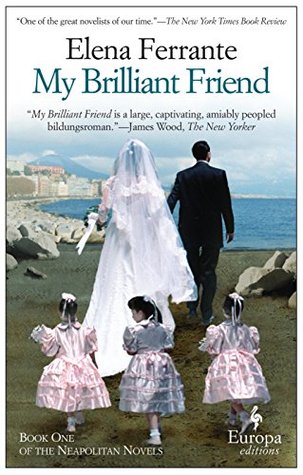
I paid my 40 pence and waited in what felt like an endless holds queue to get my hands on a public library copy of My Brilliant Friend, the first of Elena Ferrante’s four Neapolitan novels. For months I’d been eager to try out this literary phenomenon in translation. I read about the first 100 pages and then my interest started to tail off. Aware of the impending due date, I skimmed the rest – so this doesn’t count towards my year’s reading list.
What went wrong? I didn’t dislike the book; in fact, I found it to be an accomplished psychological study of a female friendship and how it changes over time. Yet there were some factors that kept me at a distance. I’ll give a quick synopsis before listing pros and cons.
 The Story:
Elena, in her sixties, gets a call from the son of her childhood best friend, Lila. His mother and all her possessions have vanished from her home. Elena recalls Lila’s longtime desire to disappear without a trace, and decides she won’t let her: she sits down to her computer to write the story of their friendship, a bulwark against failing memory and deliberate sabotage.
From here Elena, a novelist in her own right (often assumed to be an autobiographical stand-in for Ferrante), returns to the girls’ childhood in 1940s and 1950s Naples, a place of organized crime, domestic violence, and what seems like surprising social backwardness. Neapolitan dialect contrasts with educated Italian. Lila and Elena have a low-key academic rivalry until Lila has to quit school to help her father, a shoemaker. Even then Lila finds ways to show her friend up, maxing out her whole family’s library cards and learning Latin and Greek on her own time. Lila is always one step ahead of Elena, whether in her studies or in attracting boys’ attention. This volume concludes with Lila’s wedding at the age of 16.
What I Loved:
- The psychological acuity Ferrante brings to the relationship between Elena and Lila. Their friendship has a shifting dynamic, vacillating between jealousy and support as they move from childhood through puberty. The novel powerfully captures Elena’s hesitation and Lila’s brazenness, often in piercing one-liners:
she did her best to make me understand that I was superfluous in her life.
In general I was the pretty one, while she was skinny, like a salted anchovy, she gave off an odor of wildness
Lila acted … on me like a demanding ghost
only what Lila touched became important.
- The choice between education and a trade. Money and class have a lot to do with it, but both girls long for a Woolfian “room of one’s own” and even talk of writing novels together one day. Although Lila finds fulfillment designing shoes, it’s plain she envies Elena’s chance to complete high school. “My brilliant friend” is what Lila calls Elena late on in the novel, but it’s what Elena has always thought of Lila too.
- The Naples setting: Don Achille’s murder; setting off fireworks on New Year’s; the sense that the community is on the up and up when someone they know publishes a book. A few of my favorite lines describe the girls’ neighborhood:
We didn’t know the origin of that fear-rancor-hatred-meekness that our parents displayed toward the Carraccis and transmitted to us, but it was there, it was a fact, like the neighborhood, its dirty-white houses, the fetid odor of the landings, the dust of the streets.
What I Struggled with:
- A lack of context. Footnotes would have been intrusive, but perhaps a short introduction from the translator or an English-language critic could have helped set the scene and given some sociological details that would aid in my understanding of mid-twentieth-century Italy. Even just within the first chapter of Only in Naples by Katherine Wilson, a memoir I’m currently reading, there’s more basic information about Italy to help orient foreigners.
- The confusing names. The central characters are known by multiple names – for example, Lila’s full name is Raffaella Cerullo – and nicknames aren’t always intuitive; it reminded me of the variations in War & Peace. Thank goodness for the three-page index of characters.
- Short shrift given to Elena’s odd relationship with her mother. I felt there was a lot more that could have been explored. Perhaps that is a matter for another volume.
- Repetition in the day to day, especially regarding Elena’s schooling. I wondered whether all four, or at least two, of the books might have been condensed into one 400-page novel.
- Minor punctuation and translation issues. I only marked out one passage that sounded false to my ear (“I’ve kept a place for you.” / “Go away, my mother has understood everything.”), but the punctuation drove me a little nutty. I dislike lots of phrases being strung together with commas – as in the anchovy sentence above; I always look for a semicolon!
In general, I avoid series fiction. I hate being saddled with a sense of obligation, and I don’t like feeling that a story is unfinished. That doesn’t mean a book’s last pages can’t be open-ended, but I’d prefer to imagine my own future for the characters rather than have to read about it in another book or three or 14. While I seriously doubt I will pick up another of the Neapolitan novels, I could possibly be persuaded to pick up one of her stand-alone novellas. Naomi at Consumed by Ink wrote a very appealing review of The Lost Daughter, for instance. Although this long-awaited literary experiment was a touch disappointing, I’m still eager to try another model of “autofiction” in translation, Karl Ove Knausgaard.
My rating: 
Further reading: Meghan O’Rourke’s 2014 Guardian article about Elena Ferrante’s growing popularity and mysterious persona.
Have I given Elena Ferrante a fair shake? If not, what should I try next?
Paulette Bates Alden: An Underrated Author
I first came across Paulette Alden’s work last June, when she contacted me to ask if I’d like to review her new short story collection, Unforgettable. It’s a self-published book available through Kindle, and in all honesty, given my experience reviewing self-published material for Kirkus and Foreword, I wasn’t expecting much. What a pleasant surprise, then, to find that these were excellent, literary short stories with a strong voice and sense of place. Since then I have read two more Alden books: Crossing the Moon, her memoir of infertility, and Feeding the Eagles, her first short story collection, which shares a protagonist with Unforgettable. Here, in the order in which I have read them, are Alden’s published works:
Unforgettable
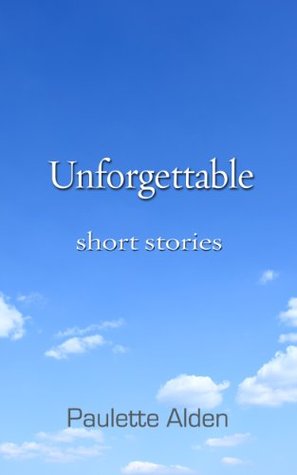 Nine linked stories focus on the life of Miriam Batson, a writer and adjunct professor at a Minnesota college. Now in her late forties, Miriam faces the challenge of caring for her aging mother. Indeed, the final five stories are inspired by Alden’s experience as a caregiver for her late mother, who suffered from dementia. Although it is intriguing to ponder just how autobiographical these stories might be, ultimately it makes little difference to a reader’s enjoyment. The close third-person perspective creates such intimate knowledge of the main character that one cannot help but feel sympathy for her professional and personal struggles.
The opening story, “The Student,” is among the strongest. Miriam learns that Brian, one of the students in her advanced short story class, has attempted suicide – in three different ways. Horror cedes to compassion as she realizes how he must have been suffering, even while keeping up a cheerful exterior in class. As she visits Brian in the hospital during his recovery, Miriam is taken aback by her feelings for him. Hesitant to borrow spiritual language, she still senses that she and Brian have a soul connection. At the same time, she realizes that no relationship is entirely one thing or another; their teacher-student dynamic may resemble a parent-child link, but sex keeps creeping in unexpectedly.
In “Sorrow,” told in the present tense, Miriam learns of the death of one of her black nannies and returns to South Carolina to pay her respects. Filled with memories of segregation, this story shares the social conscience of Kathryn Stockett’s The Help. “Enormously Valuable” returns to the first story’s academic setting, with Miriam receiving notification that someone else – a less experienced man – has gotten the teaching job she applied for. She decides to take legal advice to determine whether this is a case of sex discrimination. This story tips over into melodrama slightly, but is still an affecting look at career disappointment. The themes of bureaucracy and petty infighting in a university English department recall John Williams’s Stoner.
“Swimming, Snow” was commissioned as the Minnesota Center for Book Arts’ 1993 Winter Book. Miriam slowly starts to heal after her father’s death, thanks to the therapeutic effects of activities like massage, classical music, and sex. This one is a perfect segue into the collection’s last five stories, which together reflect on Alden’s experiences as a caregiver during her mother’s final years with dementia.
The title story, the last in the collection, does indeed have a stand-alone feel, combining all the emotions of the previous four into the most shrewdly crafted of the tales, rich with symbolism. It opens with Miriam driving to a monastery for a writing retreat. Although it is April, it is snowing, and Nat King Cole’s song “Unforgettable” is on the radio. Ironically, that title is also the name given to her mother’s nursing home’s remodeling campaign. Miriam has been taking beginner’s Italian lessons; her bewilderment is an echo of her mother’s confusion about language. In addition, Easter is coming up the following week, and the symbology of death and restoration plays a significant role. Miriam can no longer deny that her mother will be dead soon, yet she feels that she will live on – perhaps even through Miriam’s work: “Writing is her religion, her resurrection. Long after her mother is gone, she will have this moment. Her mother will rise from the dead and live again in those words.”
Alden tenderly conveys the overwhelming difficulties and small joys of being the primary caregiver for a loved one with serious health problems. You do not have to share any of Miriam’s experiences to value her insight and admire her courage. I daresay every reader will find at least one aspect of these stories to be, as the title suggests, simply unforgettable.
My rating: 
Crossing the Moon
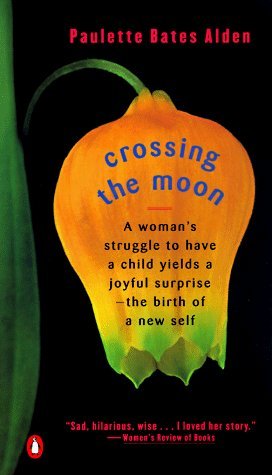 Frank and tender, this is a wonderful memoir about women’s reproductive choices – or the way life sometimes takes those choices out of your hands. Alden was happily married, with a beloved cat named Cecil and her first short story collection coming out soon. At age 39, she still hadn’t thought all that much about motherhood, but suddenly decision time was on her. Despite her ambivalence (“I might never have a child, and the irony is not lost on me, that I’m not even sure I want one”), she went ahead with multiple rounds of infertility treatment, only conceding defeat and grieving her loss when she was 42.
All along she was resisting multiple voices: that of her Southern upbringing, which said all women were supposed to have children; that of feminism, which told her she wasn’t supposed to want what all women are supposed to have. There was also her own inner suspicion that the life she already had was the one she wanted. “From the very start, I had seen writing and motherhood as mutually exclusive.”
I found this a very touching story of learning to love the life you have. “It came to me that it really was a choice between two good things – having a child and not having a child. Our life without a child seemed good to me. I caught a glimpse that it was what was right for us, for the best.”
My rating: 
 Feeding the Eagles
Miriam Batson first appeared in this 1983 collection published by Graywolf Press. Of the 11 stories here, seven are in the third person and four in the first person. They dart back and forth in time: sometimes Miriam is married and back in South Carolina visiting her parents and sister; other times she’s a young graduate student on the way back to California. It was particularly interesting for me, having read Alden’s memoir, to trace the autobiographical roots of many of the stories. I even spotted a couple of lines taken word for word from life: “‘I’ll tell you what I think,’ [Miriam’s] mother says slowly. ‘I think people who don’t have children are the most selfish people in the world.’”
These stories are strong on symbolism and often have memorable endings. For instance, the title phrase seems odd but in context is a beautiful image of turning failure into a positive. Miriam and her husband Ted have gone out fishing from their Minnesota cabin. Ted throws a big fish back, hoping the hook injury wasn’t too deep, but a while later they see it floating on its side. They’re feeling a little guilty – until an eagle drops in and snatches the dead fish. “‘Now you don’t have to feel so bad,’ Ted says. ‘We’re feeding the eagles.’” Elsewhere, Miriam’s grandmother’s wig is a peculiar token of family inheritance, while a snake encountered at a campground is a reminder of excessive sensuality.
As in Unforgettable and Crossing the Moon, the overarching theme of the book is a woman’s identity and how this shifts through life. Miriam is a daughter, a wife, a grown sister, a writer. She is not a mother, a decision that defines her as much as any other. But even within these roles, time creeps in and changes things. With her elderly parents facing bankruptcy, Miriam realizes, “It occurred to me for the first time that maybe my father didn’t know what was going on.” That sense of a turning of the generations, of the child taking on the responsible parent guise, is undoubtedly true to life.
Another central theme is how places of safety and familiarity lose their capacity to reassure us. For Miriam/Alden, the South becomes increasingly foreign but still has a metaphorical hold on her. “Stretching out around us in every direction are the flat Midwestern plains, and it comes to me that I will not live my life as I have always imagined I would—without even thinking of it—in South Carolina.” All the same, as she drives to the old family cabin in South Carolina before it passes out of their hands for good, she thinks how “all of the roads of her life lead back to this one.”
On this reading the story that meant most to me was “At the Beach,” in which Miriam and her sister Linda take a rare vacation together and marvel at how their parents are aging. “Just so you take them in in their old age,” Miriam jokes, but beneath the quip lies deep concern. I could recognize my sister and myself – now separated by an ocean but not so much anymore by the eight years between us – in this sentence: “It seems we talk more now that we are older, now that we live so far apart and have so little time together.”
One thing I love about Alden’s books is how she seems to see life in discrete parts but also, looking back nostalgically, as a coherent narrative that leads logically and inevitably to the present. This makes for a gently bittersweet tone, but I come away sensing gratitude. As my favorite lines from Crossing the Moon have it, “who can say what is ‘best’? Maybe it’s possible to get to a place where what is best is simply what is.”
My rating:
 The Answer to Your Question
I haven’t read this one yet, but I have a copy on my e-reader and am saving it for a rainy day treat. On the surface it sounds completely different from anything else Alden has written. The blurb describes a page-turning thriller about a man who has been accused of murdering four women and his librarian mother’s quest to figure out whether he really did it and why. It won the Kindle Book Review Best Indie Book of 2013 in the suspense category. I feel sure that it will have the same psychological acuity as Alden’s other books.
Who are some of your favorite lesser-known authors? Share them in the comments below!
 Bookish Beck = Rebecca Foster. American transplant to England. Freelance proofreader and book reviewer.
 Bookish Beck