The Clock Winder by Anne Tyler (1972)
This year I’m joining in Liz’s Anne Tyler readalong for all of the Tyler novels that I own and haven’t read yet (at least the ones I can access; others are marooned in a box in the States). The Clock Winder was Tyler’s fourth novel and the first to take place in Baltimore, her trademark setting. It’s the earliest of her works that I’ve read. (See also Liz’s review.)
When I reviewed Clock Dance back in 2018, I wondered if there could be a connection between the two novels beyond their titles. A clock, of course, symbolizes the passage of time, so invites us to think about how the characters change and what stays the same over the years. But there is, in fact, another literal link: in both books, there is a fairly early mention of a gun – and, if you know your Chekhov quotes, that means it’s going to go off. Whereas in Clock Dance the gunshot has no major consequences, here it’s a method of suicide. So the major thing to surprise me about The Clock Winder is that it goes to a dark place that Tyler’s fiction rarely visits, though an additional later threat comes to nothing.
 As the novel opens in 1960, Pamela Emerson fires the Black handyman who has worked for her for 25 years. “The house had outlived its usefulness,” what with Mr. Emerson dead these three months and all seven children grown up and moved out. Mrs. Emerson likes to keep up appearances – her own hair and makeup, and the house’s porch furniture, which a passerby helps her move. This helpful stranger is Elizabeth Abbott, a Baptist preacher’s daughter from North Carolina who is taking on odd jobs to pay for her senior year of college. Mrs. Emerson hires Elizabeth as her new ‘handyman’ for $40 a week. One of her tasks is to wind all the clocks in the house. Though she’s a tall tomboy, Elizabeth attracts a lot of suitors – including two of the Emerson sons, Timothy and Matthew.
We meet the rest of the Emerson clan at the funeral for the aforementioned suicide. There’s a very good post-funeral meal scene reminiscent of Carol Shields’s party sequences: disparate conversations reveal a lot about the characters. “We’re event-prone,” Matthew writes in a letter to Elizabeth. “But sane, I’m sure of that. Even Andrew [in a “rest home” for the mentally ill] is, underneath. Probably most families are event-prone, it’s just that we make more of it.” In the years to come, Elizabeth tries to build a life in North Carolina but keeps being drawn back into the Emersons’ orbit: “Life seemed to be a constant collision … everything recurred. She would keep running into Emersons until the day she died”.
The main action continues through 1965 and there is a short finale set in 1970. While I enjoyed aspects of the characters’ personalities and interactions, the decade span felt too long and the second half is very rambly. A more condensed timeline might have allowed for more of the punchy family scenes Tyler is so good at, even this early in her career. (There is a great left-at-the-altar scene in which the bride utters “I don’t” and flees!) Still, Elizabeth is an appealing antihero and the setup is out of the ordinary. I liked comparing Baltimore then and now: in 1960 you get a turkey being slaughtered in the backyard for Thanksgiving, and pipe smoking in the grocery store. It truly was a different time. One nice detail that persists is the 17-year cicadas.
You can see the seeds of some future Tyler elements here: large families, sibling romantic rivalries, secrets, ageing and loss. The later book I was reminded of most was Back When We Were Grown-ups, in which a stranger is accepted into a big, bizarre family and has to work out what role she is to play. A Tyler novel is never less than readable, but this ended up being my least favorite of the 12 I’ve read so far, so I doubt I’ll read the three that preceded it. Those 12, in order of preference (greatest to least), are:
Dinner at the Homesick Restaurant
Ladder of Years
The Accidental Tourist
Breathing Lessons
Digging to America
Vinegar Girl
Clock Dance
Back When We Were Grown-ups
A Blue Spool of Thread
The Beginner’s Goodbye
Redhead by the Side of the Road
The Clock Winder
Source: Charity shop
My rating: 
Next up for me will be Earthly Possessions in mid-April.
A Look Back at 2020’s Reading Projects, Including Rereads
Major bookish initiatives:
- Coordinated a Not the Wellcome Prize blog tour to celebrate 2019’s health-themed books – in case you missed it, the winner was Sinéad Gleeson for Constellations.
- Co-hosted Novellas in November with Cathy (746 Books).
- Hosted Library Checkout each month.


Reading challenges joined:
- 12 blog tours
- Six Degrees of Separation: I started participating in February and did nine posts this year
- Paul Auster Reading Week
- Reading Ireland month
- Japanese Literature Challenge
- 1920 Club
- 20 Books of Summer
- Women in Translation Month
- Robertson Davies Weekend
- Women’s Prize winners (#ReadingWomen)
- 1956 Club
- R.I.P.
- Nonfiction November
- Margaret Atwood Reading Month
This works out to one blog tour, one reading project, and one regular meme per month – manageable. I’ll probably cut back on blog tours next year, though; unless for a new release I’m really very excited about, they’re often not worth it.


Buddy reads:
 Crossing to Safety with Laila (Big Reading Life)
- 6 Carol Shields novels plus The Trick Is to Keep Breathing, Deerbrook, and How to Be Both with Marcie (Buried in Print)
- A Visit from the Goon Squad and The Idea of Perfection with Laura T.
- Mother’s Milk with Annabel
- 666 Charing Cross Road with Liz
Self-set reading challenges:
- Seasonal reading
- Classic of the Month (14 in total; it’s only thanks to Novellas in November that I averaged more than one a month)
- Doorstopper of the Month (just 3; I’d like to try to get closer to monthly in 2021)
- Wainwright Prize longlist reading
- Bellwether Prize winners (read 2, DNFed 1)
- Short stories in September (8 collections)
- Young Writer of the Year Award shortlist reading
- Thematic roundups – I’m now calling these “Three on a Theme” and have done 2 so far
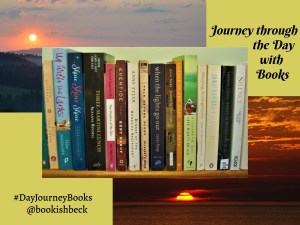
- Journey through the Day with Books (3 new reviews this year):
- Zennor in Darkness by Helen Dunmore
 Rise and Shine by Anna Quindlen
- [Up with the Larks by Tessa Hainsworth – DNF]
- [Shine Shine Shine by Lydia Netzer – DNF]
- Three-Martini Lunch by Suzanne Rindell – existing review
- The Shadow of the Sun by Ryszard Kapuściński – read part of
- Eventide by Kent Haruf
- Dinner at the Homesick Restaurant by Anne Tyler – existing review
- Talk before Sleep by Elizabeth Berg – existing review
- When the Lights Go Out by Carys Bray
- Journey by Moonlight by Antal Szerb
- Voyage in the Dark by Jean Rhys
- Late Nights on Air by Elizabeth Hay – existing review
- Sleeping Arrangements by Laura Shaine Cunningham
- The House of Sleep by Jonathan Coe
- Bodies in Motion and at Rest by Thomas Lynch – read but not reviewed
- Silence by Shūsaku Endō
- Arctic Dreams by Barry Lopez – read part of
- The Four in a Row Challenge – I failed miserably with this one. I started an M set but got bogged down in Tales of the City by Armistead Maupin (also a bibliotherapy self-prescription for Loneliness from The Novel Cure), which I had as a bedside book for much of the year, so only managed 1.5 out of 4; I also started an H quartet but set both Tinkers and Plainsong aside. Meanwhile, Debbie joined in and completed her own 4 in a Row. Well done! I like how simple this challenge is, so I’m going to use it next year as an excuse to read more from my shelves – but I’ll be more flexible and allow lots of substitutions in case I stall with one of the four books.

Rereading
At the end of 2019, I picked out a whole shelf’s worth of books I’d been meaning to reread. I kept adding options over the year, so although I managed a respectable 16 rereads in 2020, the shelf is still overflowing!

Many of my rereads have featured on the blog over the year, but here are two more I didn’t review at the time. Both were book club selections inspired by the Black Lives Matter movement. (We held a rally and silent protest in a park in the town centre in June.)
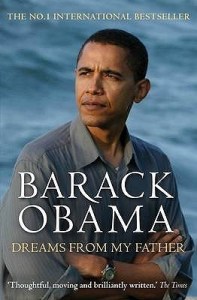 Dreams from My Father by Barack Obama: Remember when there was a U.S. president who thought deeply, searched his soul, and wrote eloquently? I first read this memoir in 2006, when Obama was an up-and-coming Democratic politician who’d given a rousing convention speech. I remembered no details, just the general sweep of Hawaii to Chicago to Kenya. On this reread I engaged most with the first third, in which he remembers a childhood in Hawaii and Indonesia, gives pen portraits of his white mother and absentee Kenyan father, and works out what it means to be black and Christian in America. By age 12, he’d stopped advertising his mother’s race, not wanting to ingratiate himself with white people. By contrast, “To be black was to be the beneficiary of a great inheritance, a special destiny, glorious burdens that only we were strong enough to bear.” The long middle section on community organizing in Chicago nearly did me in; I had to skim past it to get to his trip to Kenya to meet his paternal relatives – “Africa had become an idea more than an actual place, a new promised land”.
 now
now
 The Immortal Life of Henrietta Lacks by Rebecca Skloot: This Wellcome Book Prize winner about the use of a poor African-American woman’s cells in medical research was one of the first books to turn me onto health-themed reads. I devoured it in a few days in 2010. Once again, I was impressed at the balance between popular science and social history. Skloot conveys the basics of cell biology in a way accessible to laypeople, and uses recreated scenes and dialogue very effectively. I had forgotten the sobering details of the Lacks family experience, including incest, abuse, and STDs. Henrietta had a rural Virginia upbringing and had a child by her first cousin at age 14. At 31 she would be dead of cervical cancer, but the tissue taken from her at Baltimore’s Johns Hopkins hospital became an immortal cell line. HeLa is still commonly used in medical experimentation. Consent was a major talking point at our book club Zoom meeting. Cells, once outside a body, cannot be owned, but it looks like exploitation that Henrietta’s descendants are so limited by their race and poverty. I had forgotten how Skloot’s relationship and travels with Henrietta’s unstable daughter, Deborah, takes over the book (as in the film). While I felt a little uncomfortable with how various family members are portrayed as unhinged, I still thought this was a great read.
  then / now
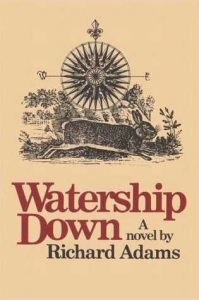 I had some surprising rereading DNFs. These were once favorites of mine, but for some reason I wasn’t able to recapture the magic: Middlesex by Jeffrey Eugenides, Everything Is Illuminated by Jonathan Safran Foer, Gilead by Marilynne Robinson, and On Beauty by Zadie Smith. I attempted a second read of John Fowles’s postmodern Victorian pastiche, The French Lieutenant’s Woman, on a mini-break in Lyme Regis, happily reading the first third on location, but I couldn’t make myself finish once we were back home. And A Visit from the Goon Squad by Jennifer Egan was very disappointing a second time; it hasn’t aged well. Lastly, I’ve been stalled in Watership Down for a long time, but do intend to finish my reread.
In general, voice- and style-heavy fiction did not work so well for me on rereading. Autobiographical essays by Anne Lamott and Abigail Thomas worked best, but I also succeeded at rereading some straightforward novels and short stories. Next year, I’d like to aim for a similar number of rereads, with a mixture of memoirs and fiction, including at least one novel by David Lodge. I’d also be interested in rereading earlier books by Ned Beauman and Curtis Sittenfeld if I can find them cheap secondhand.
What reading projects did you participate in this year?
Done much rereading lately?
20 Books of Summer: Bourdain, Ozeki and More
Over halfway through the summer and my numbers are looking poor. It’s not that I’m not reading a ton – in general, I am – it’s just that I’m having trouble finishing any foodie books. I’m in the middle of two food-related memoirs plus Cakes and Ale by W. Somerset Maugham, and have recently started buddy-reading Mother’s Milk by Edward St Aubyn with Annabel, so more reviews will be along eventually, but I predict August will be a scramble.
Today I review an in-your-face tell-all about the life of a chef, and a novel set between Japan and the United States that exposes the seamy side of meat production. A lite road trip and an iffy California classic follow as bonuses.
Kitchen Confidential: Adventures in the Culinary Underbelly by Anthony Bourdain (2000)
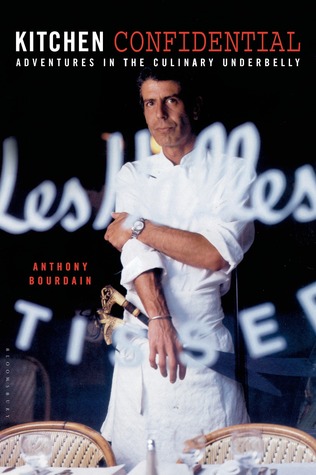 (20 Books of Summer, #5) “Get that dried crap away from my bird!” That random line about herbs is one my husband and I remember from a Bourdain TV program and occasionally quote to each other. It’s a mild curse compared to the standard fare in this flashy memoir about what really goes on in restaurant kitchens. His is a macho, vulgar world of sex and drugs. In the “wilderness years” before he opened his Les Halles restaurant, Bourdain worked in kitchens in Baltimore and New York City and was addicted to heroin and cocaine. Although he eventually cleaned up his act, he would always rely on cigarettes and alcohol to get through ridiculously long days on his feet.
From “Appetizer” to “Coffee and a Cigarette,” the book is organized like a luxury meal. Bourdain charts his development as a chef, starting with a childhood summer in France during which he ate vichyssoise and oysters for the first time and learned that food “could be important … an event” and describing his first cooking job in Provincetown and his time at the Culinary Institute of America. He also discusses restaurant practices and hierarchy, and home cook cheats and essentials. (I learned that you should never order fish in a restaurant on a Monday – it’ll be left over from Thursday’s order.) The pen portraits of his crazy sous-chef and baker are particularly amusing; other subjects include a three-star chef he envies and the dedicated Latino immigrants who are the mainstay of his kitchen staff.
My dad is not a reader but he is a foodie, and he has read Bourdain’s nonfiction (and watched all his shows), so I felt like I was continuing a family tradition in reading this. I loved my first taste of Bourdain’s writing: he’s brash, passionate, and hilariously scornful of celebrity chefs and vegetarianism (“the enemy of everything good and decent in the human spirit, an affront to all I stand for, the pure enjoyment of food”). Being in charge of a restaurant sounds manic, yet you can see why some would find it addictive. How ironic, though, to find a whole seven references to suicide in this book. Sometimes he’s joking; sometimes he’s talking about chefs he’s heard about who couldn’t take the pressure. Eighteen years after this came out, he, too, would kill himself.
(See also this article about rereading Bourdain in the 20th anniversary year of Kitchen Confidential.)
Source: Local swap shop (free)
My rating: 
(These two are linked by a late chapter in the Bourdain, “Mission to Tokyo,” in which he advises on a new Les Halles offshoot in Japan and gorges himself on seafood delights.)
My Year of Meats by Ruth Ozeki (1998)
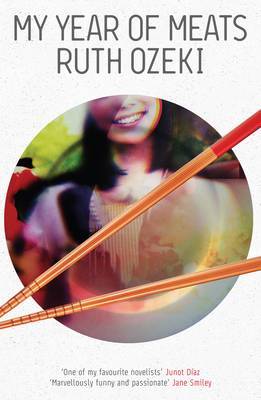 (20 Books of Summer, #6) I don’t know what took me so long to read another novel by Ruth Ozeki after A Tale for the Time Being, one of my favorite books of 2013. This is nearly as fresh, vibrant and strange. Set in 1991, it focuses on the making of a Japanese documentary series, My American Wife, sponsored by a beef marketing firm. Japanese American filmmaker Jane Takagi-Little is tasked with finding all-American families and capturing their daily lives – and best meat recipes. The traditional values and virtues of her two countries are in stark contrast, as are Main Street/Ye Olde America and the burgeoning Walmart culture.
There is a clear message here about cheapness and commodification, but Ozeki filters it through the wrenching stories of two women with fertility problems: Jane, whose reproductive system was damaged by DES, a synthetic estrogen her mother took during pregnancy to prevent a miscarriage; and Akiko, the wife of Jane’s boss, who struggles with an eating disorder and domestic violence.
Jane starts sneaking controversial subjects into her shoots: a lesbian couple, a family formed by interracial adoption, and a five-year-old who has already undergone puberty due to the hormones used on her family’s cattle feedlot. What is “natural,” and what gets branded alien or invasive? From the kudzu that strangles the South to a murdered Japanese exchange student, Ozeki probes the related issues of nativism and racism. Her two protagonists’ stories – one in the first person; the other in the third person – come together in a surprising manner as Jane decides that she has a more pressing obligation than creating a diverting television show.
This is a bold if at times discomforting novel. At first it brought to mind the exaggerated comedy of Julian Barnes’s England, England and Jane Smiley’s Moo, but as it grew darker it reminded me more of Han Kang’s The Vegetarian. It’s tricky, when a work of fiction tackles ethical or environmental matters, to balance storytelling and consciousness-raising, but Ozeki pulls it off with style. The only aspect that didn’t mean much to me, perhaps simply because of my unfamiliarity, was the excerpts from The Pillow Book of Shōnagon. How sad to think that I only have one more Ozeki awaiting me, All Over Creation. She averages a book every 5‒10 years; we can only hope that another is on the way soon.
Source: Charity shop
My rating: 
I picked up another two food-adjacent books that didn’t work for me, though I ended up skimming them to the end.
America Unchained: A Freewheeling Roadtrip in Search of Non-Corporate USA by Dave Gorman (2008)
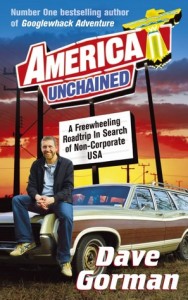 (20 Books of Summer, #7) I read the first couple of chapters, in which he plans his adventure, and then started skimming. I expected this to be a breezy read I would race through, but the voice was neither inviting nor funny. I also hoped to find more about non-chain supermarkets and restaurants – that’s why I put this on the pile for my foodie challenge in the first place – but, from a skim, it mostly seemed to be about car trouble, gas stations and fleabag motels. The only food-related moments are when Gorman (a vegetarian) downs three fast food burgers and orders of fries in 10 minutes and, predictably, vomits them all back up; and when he stops at an old-fashioned soda fountain for breakfast.
Source: Free bookshop
Tortilla Flat by John Steinbeck (1935)
 (20 Books of Summer, #8) I read the first 25 pages and then started skimming. This is a story of a group of friends – paisanos, of mixed Mexican, Native American and Caucasian blood – in Monterey, California. During World War I, Danny serves as a mule driver and Pilon is in the infantry. When discharged from the Army, they return to Tortilla Flat, where Danny has inherited two houses. He lives in one and Pilon is his tenant in the other (though Danny will never see a penny in rent). They’re a pair of loveable scamps, like Huck Finn all grown up, stealing wine and chickens left and right.
Steinbeck novels seem to fall into two camps for me. This is one of his inconsequential, largely unlikable novellas (like The Pearl and The Red Pony, which I studied in school – I’m lucky they didn’t put me off Steinbeck forever), whereas The Grapes of Wrath and East of Eden are masterful. It may also have something to do with the slight air of condescension towards characters of a different race: Steinbeck renders their speech with “thee” and “thou,” trying to imitate a Romance language’s informal pronouns, but it feels dated and alienating.
Source: Free bookshop
20 Books of Summer, #7–10: Auster, Darlington, Durrell, Jansma
Owls and leopards and dogs – oh my! My animal-themed reading project continues. I’m more than halfway through in that I’m in the middle of quite a few more books, but finishing and reviewing them all before the 3rd of September may still prove to be a challenge.
Timbuktu by Paul Auster (1999)
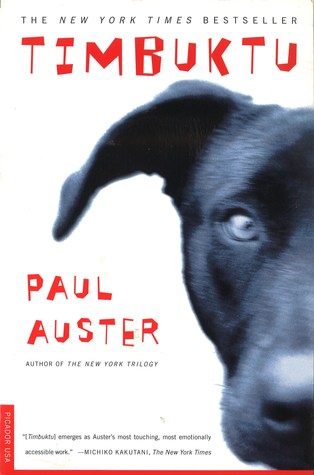 My first from Auster – and not, I take it, representative of his work in general. Never mind, though; I enjoyed it, and it was a good follow-up to Fifteen Dogs. Like the Alexis novel, this gives an intimately imagined dog’s perspective, taking seriously the creature’s whole life story. The canine protagonist is Mr. Bones, who’s accompanied his mentally unstable writer owner, Willy G. Christmas, from New York City down to Baltimore, where, one August Sunday, Willy wants to find his old high school English teacher before he dies.
What took me by surprise is that Auster doesn’t stick with Willy, but has Mr. Bones move on to two more living situations: first he’s the secret friend of 10-year-old Henry Chow, whose parents run a Chinese restaurant, then he’s a family pet in suburban Virginia. Although his English comprehension is advanced, he isn’t able to reproduce its sounds like some of the dogs in Fifteen Dogs can, so he can’t tell these new owners his real name and has to accept being called first “Cal” and then “Sparky.” In dreams he still hears Willy’s voice. He assumes Willy is now in the afterlife (“Timbuktu”), and longs to rejoin him.
The novel is tender as well as playful and funny – I loved the passage where Mr. Bones wakes up to pain but doesn’t realize he’s been castrated:
How was he to know that those missing parts had been responsible for turning him into a father many times over? Except for his ten-day affair with Greta, the malamute from Iowa City, his romances had always been brief—impetuous couplings, impromptu flings, frantic rolls in the hay—and he had never seen any of the pups he had sired. And even if he had, how would he have been able to make the connection? Dick Jones had turned him into a eunuch, but in his own eyes he was still the prince of love, the lord of the canine Romeos, and he would go on courting the ladies until his last, dying breath. For once, the tragic dimension of his own life eluded him.
Owl Sense by Miriam Darlington (2018)
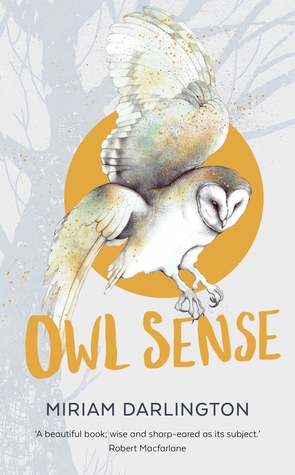 Initially the idea was to see all of Britain’s resident owls, but as often happens, the project expanded until Darlington was also taking trips to Serbia to find a Long-Eared Owl, Finland for a Eurasian Eagle Owl, and France for a Pygmy Owl; and going on a fruitless twitch to see a vagrant Snowy Owl in Cornwall. Each chapter considers a different species and includes information on its anatomy, geographical distribution, conservation status, and any associated myths and anecdotes (The Secret Life of the Owl by John Lewis-Stempel does much the same thing, but with less richness). She has closer encounters with some than with others: when volunteering with the Barn Owl Trust, she gets to ring chicks and collects pellets for dissection. But even the most fleeting sightings can be magical.
The book also subtly weaves in what was happening in Darlington’s life at the time, especially her son Benji’s struggles. On the autistic spectrum, he suddenly started having physical problems that were eventually explained by non-epileptic seizures. I would have welcomed more personal material, but that just speaks to my love of memoir. This feels slightly hurried and not quite as editorially polished as her master work, Otter Country, but it’s still well worth reading if you have any interest in birds or nature conservation. (I’ve only seen two owls in the wild: Barn and Tawny.)
Fillets of Plaice by Gerald Durrell (1971)
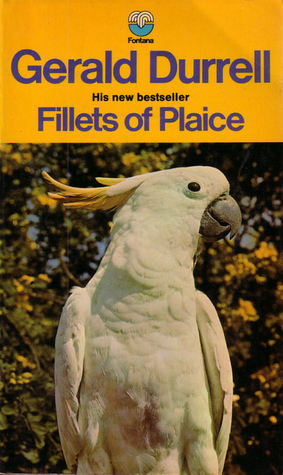 This is a pleasant miscellany of leftover essays that didn’t make it into any of Durrell’s other books. The best is “The Birthday Party,” about an incident from the Corfu years: Larry insisted on taking the fridge along on Mother’s birthday outing to an island, and their boat ran out of petrol. In “A Transport of Terrapins,” teenage Gerry works as a lowly pet shop assistant in London even though he knows twice as much as his boss; and meets other eccentric fellows, such as a bird collector and a retired colonel who has a house full of model figures for war gaming.
“A Question of Promotion” is set on one of the animal-collecting expeditions to Cameroon and turned me off a little with its colonial attitude: Durrell talks to the natives in condescending pidgin as he helps prepare a feast for the District Commissioner’s visit. In “A Question of Degrees” he visits two hospitals for a cataclysmic nosebleed, while “Ursula” is about a girlfriend who couldn’t open her mouth without uttering a malapropism. Entertaining scraps for diehard fans; if you’re new to Durrell, though, start with My Family and Other Animals and Menagerie Manor. 
The Unchangeable Spots of Leopards by Kristopher Jansma (2013)
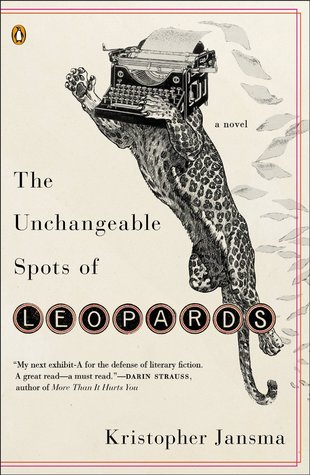 I’d meant to read Jansma’s debut ever since Why We Came to the City, his terrific novel about five university friends negotiating life in New York City during the recession, came out in 2016. I assumed the leopards of the title would be purely metaphorical – a reference to people not being able to change their inborn nature – and they are, but they’re also surprisingly literal in the one chapter set in Africa.
Jansma’s deliciously unreliable narrator, never named but taking on various aliases in these linked short stories, is a trickster, constantly reworking his life into fiction. He longs to be a successful novelist, but keeps losing his works in progress. We think we know the basics of his identity – he’s the son of a single mother who worked as a flight attendant; he grew up in North Carolina emulating the country club and debutante class; at Berkshire College he met his best friend and rival Julian McGann in creative writing class and fell for Julian’s friend Evelyn, the great unrequited love of his life – but Part II introduces doubt by calling the characters different names. Are these the ‘real’ people, or the narrator’s fictionalized versions?
The characters go on a bizarre odyssey that moves the setting from New York City to Nevada to Dubai to Sri Lanka to Ghana to Iceland to Luxembourg, finally ending up back in the very airport terminal where it started. As I remembered from Why We Came to the City, Jansma interleaves Greek mythology and allusions to other writers, especially F. Scott Fitzgerald. The coy way in which he layers fiction on fiction reminded me of work by John Boyne and Tom Rachman; other recommended readalikes are The Goldfinch and Orchid & the Wasp.
America Reading & Book Haul, Etc.
The wedding of a college friend – who I calculated I’ve known at least half my life – was the excuse we needed to book a trip back to the States for the last two weeks of May. Along with the classy nuptials in the Fell’s Point area of Baltimore, we enjoyed a day’s sightseeing in Philadelphia, a couple of outings to watch birds and other wildlife on Cape May (a migration hotspot in New Jersey), two meet-ups with other friends, and plenty of relaxation time with my mom and sister, including a Memorial Day picnic at my mom’s retirement community and a tour of Antietam Battlefield. It was much hotter than anticipated, including some days in the high 80s or even 90s, and the hayfever, ticks and mosquitoes were bad, too, but we survived.


While back in Maryland I continued the intermittent downsizing process I’ve been going through for a while now. After being on the market for nearly a year, my family home finally sold and went to closing while we were over there. So that provided a scrap of closure, but my current estrangement from my father (we don’t even know where he’s living) means there’s a lot of continuing uncertainty.
In any case, I managed to reduce the number of boxes I’m storing with my sister from 29 to 20 by recycling lots of my old schoolwork, consolidating my mementos, reselling one box of books and donating another, donating a box of figurines and decorative bottles to a thrift store, displaying some at my mom’s place, giving away a few trinkets to a friend’s kids, and packing a bunch of stuff – photo albums and decorations as well as 64 books – in our various suitcases and hand luggage to take back to the UK.


And I also acquired more books, of course! A whopping 46 of these were free: eight review copies were waiting for me at my mom’s place; three were from the outdoor free bin at 2nd & Charles, a secondhand bookstore; one was found in a Little Free Library near our friends’ place in New Jersey (Emerald City by Jennifer Egan, not pictured); and the rest were from The Book Thing of Baltimore, a legendary volunteer-run free bookshop. I mostly raided the biography section for an excellent selection of women’s life writing; the fiction is unalphabetized so harder to find anything in, but I picked up a few novels, too. My only purchases were new (remainder) copies of one novel and one memoir from Dollar Tree. Total book spending on the trip: just $2.12.
What I Read:
Two that I’d already started but finished on the plane ride over:
 The Florist’s Daughter by Patricia Hampl: (As featured in my spring reading list.) “Love and flowers, death and flowers.” Poetic writing about small-town Minnesota life, a tense relationship with her late mother, and her late father’s flower shop.
 - The Girls by Lori Lansens: I love reading about sister relationships, and the Darlen girls’ situation is an extreme case of love and jealousy given that they literally can’t get away from each other. Not as good as the two other conjoined-twin novels I’ve read, Chang and Eng by Darin Strauss and Cutting for Stone by Abraham Verghese, but I would read more from Lansens, a solid Oprah Book Club sort of author.
Three review books that will be featuring here in the near future:
- Goulash by Brian Kimberling
- Sorry I’m Late, I Didn’t Want to Come: An Introvert’s Year of Living Dangerously by Jessica Pan
- Mother Ship by Francesca Segal
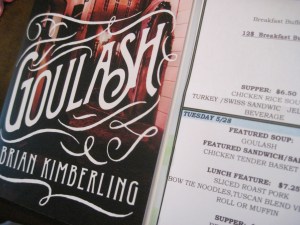
A few quick reads:
 A Certain Loneliness: A Memoir by Sandra Gail Lambert: (A proof copy passed on by an online book reviewing friend.) A memoir in 29 essays about living with the effects of severe polio. Most of the pieces were previously published in literary magazines. While not all are specifically about the author’s disability, the challenges of life in a wheelchair seep in whether she’s writing about managing a feminist bookstore or going on camping and kayaking adventures in Florida’s swamps. I was reminded at times of Constellations by Sinéad Gleeson.
  No Happy Endings: A Memoir by Nora McInerny: (Borrowed from my sister.) I didn’t appreciate this as much as the author’s first memoir, It’s Okay to Laugh, though it’s in the same style: lots of short, witty but bittersweet essays reflecting on life’s losses. Within a year of being widowed by cancer, she met a new partner and soon was – surprise! – pregnant with his baby. Together they formed a blended family of four children ranging from 0 to 15 and two wounded adults. McInerny also writes about her newfound spirituality and feminism. The problem with the essay format is that she cycles through aspects of the same stories multiple times.
  Native Guard by Natasha Trethewey: (Free from 2nd & Charles.) Trethewey writes beautifully disciplined verse about her mixed-race upbringing in Mississippi, her mother’s death and the South’s legacy of racial injustice. She occasionally rhymes, but more often employs forms that involve repeated lines or words. The title sequence concerns a black Civil War regiment in Louisiana. Two favorites from this Pulitzer-winning collection by a former U.S. poet laureate were “Letter” and “Miscegenation”; stand-out passages include “In my dream, / the ghost of history lies down beside me, // rolls over, pins me beneath a heavy arm” (from “Pilgrimage”) and “I return / to Mississippi, state that made a crime // of me — mulatto, half-breed” (from “South”).
 I also read the first half or more of: The Music Shop by Rachel Joyce, my June book club book; Hungry by Jeff Gordinier, a journalist’s travelogue of his foodie journeys with René Redzepi of Noma fame, coming out in July; and the brand-new novel In West Mills by De’Shawn Charles Winslow – these last two are for upcoming BookBrowse reviews.
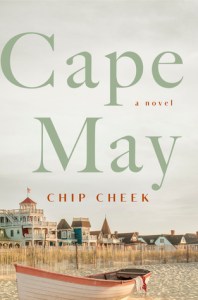
But the book I was most smug to have on my reading list for the trip was the recent novel Cape May by Chip Cheek. What could be more perfect for reading on location? I asked myself. Unfortunately, it stood out for the wrong reasons. In October 1957 a young pair of virgins, Effie and Henry, travel from Georgia to New Jersey for an off-season honeymoon in her uncle’s vacation home. They’re happy enough with each other but underwhelmed with the place (strangely, this matched my experience of Cape May), and even consider going home early until they fall in with Clara, a friend of Effie’s cousin; Clara’s lover, Max; and Max’s younger sister, Alma. Effie and Henry join the others for nightly drunken revelry.
[SPOILERS!] As the weeks pass Effie, ill and dejected, almost seems to disappear as Cheek delves into Henry’s besotted shenanigans, described in unnecessarily explicit sexual detail. When Effie makes a bid or two for her own sexual freedom late on, it only emphasizes the injustice of spending so much time foregrounding Henry’s perspective. Despite the strength of the period atmosphere and seaside location, this ends up being dull and dated. If you’re after a typically ‘trashy’ beach read and don’t mind lots of sex scenes, you may get on with it better than I did. 

Reading a few pages of Cape May over an ice-cold G&T at the wedding reception.
Bonus bookishness:
Vineland, New Jersey was on the way from our friends’ house to Cape May, so we stopped to take my proof copy of Barbara Kingsolver’s Unsheltered to its spiritual home. Alas, Vineland is an utterly boring small American town. However, Mary Treat at least appears on a painted mural on a building on the main street. The Historical Society, where Kingsolver did her research, was closed, but we photographed the outside.


What’s the last book you read ‘on location’? Did it work out well for you?
Clock Dance by Anne Tyler: Well…
A few years back I read a rare interview with Anne Tyler in which she described getting together with her lady friends of a certain age to watch The Wire and experience how some other Baltimore residents live. The gangs-and-drugs world of The Wire, of course, could hardly be more different from the safe semi-suburban spaces Tyler’s characters inhabit.
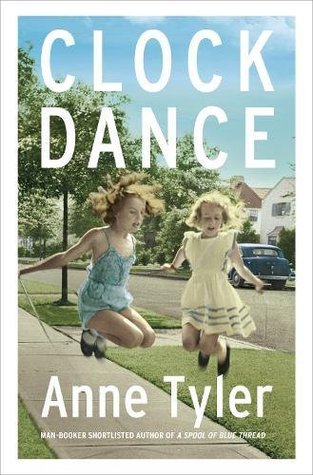 However, if you’ve heard one thing about Tyler’s new novel, Clock Dance, her twenty-second, I expect it’s that a character gets shot. Finally, a realistic look at the condition of Baltimore, I thought! To my frustration, though, Tyler does just what she did in her previous novel, the Booker-shortlisted A Spool of Blue Thread, and immediately defuses what could have been a hot-button issue. Sure, her characters have dysfunctional family problems aplenty, but nothing ever gets too out of hand. So in Spool son Denny’s confession that he thinks he’s gay is never given serious consideration, and in Clock Dance the Chekhovian gun we (perhaps) encounter early on in the novel does indeed return to be used in the contemporary-set section, but – and I’m sorry if this strikes you as a spoiler – it’s only a shot in the leg, the result of some kids playing around with a gun, and the unwitting victim is fine.
Essentially Clock Dance is three stories followed by a short novel: glimpses into four periods of Willa Drake’s life. In 1967 she’s 11 and her angry mother Alice, who’s reminiscent of Pearl Tull from Dinner at the Homesick Restaurant, gets fed up and leaves – but soon comes back. (You see what I mean about dangling life-changing traumas in front of us but then instantly neutralizing them?) In 1977 Willa is a college junior and flies home over spring break to introduce her boyfriend to her parents. He wants her to give up her linguistic studies and join him in California, where he has a job. On to 1997, when Willa suddenly becomes a widow and has to learn to survive one day at a time. Fast forward to 2017, when the remarried Willa, now based in Arizona, gets a call informing her that her son’s ex-girlfriend has been shot and she needs to come look after her and her daughter and dog in Baltimore.
 It’s somewhat ironic that I just read Breathing Lessons earlier in the summer: Clock Dance is awfully similar to Tyler’s 1988 Pulitzer winner in that both protagonists are trying to make things right with their daughter-in-law and granddaughter figures. In Willa’s case, her son never married Denise and isn’t the father of nine-year-old Cheryl, but Willa still feels a grandmotherly concern and, as she seems to be the only person the neighbor knew to call in an emergency, she agrees to fly out with her second husband, a humourless retired lawyer and golfer named Peter. They will stay in Denise’s home on Dorcas Road in Baltimore for as long as she is in the hospital. Peter is impatient with the situation, but Willa feels purposeful for the first time in years, and before long she’s starting to think about Dorcas Road, with its lovably quirky set of neighbors, as home. Could she make her own useful life here?
Tyler is surprisingly good on modern children and technology, and there are some terrific individual scenes, like the fairly awkward dinner Willa has with her elder son, Sean, and Elissa, the woman he left Denise for. But at times the dialogue didn’t ring true for me, with some 1950s vocabulary like darn, gosh, pussyfoot, hoodlum, and jeepers, plus (I checked this in the Kindle book) a whopping 188 sentences start with some variation on “Well, …” That works out to more than once every other page, a tic Tyler’s editor should have ironed out.
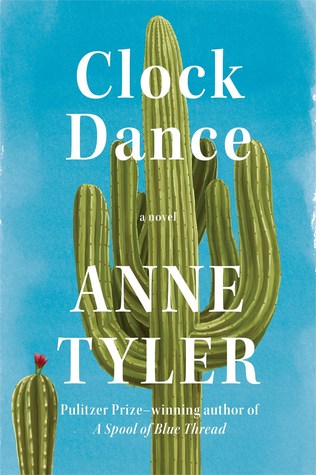
The U.S. edition of Clock Dance, which features a cactus on the cover, tries to make more of the partial Arizona setting, though most of the book is set in Tyler’s familiar small-town Pennsylvania and Baltimore. Willa admires saguaro cacti – “She loved their dignity, their endurance” – and Peter also buys one from the hospital gift shop, as a sort of symbol of resilience and adaptation to one’s surroundings. The U.K. cover, by contrast, goes for nostalgic Americana and reminded me of this passage from Breathing Lessons:
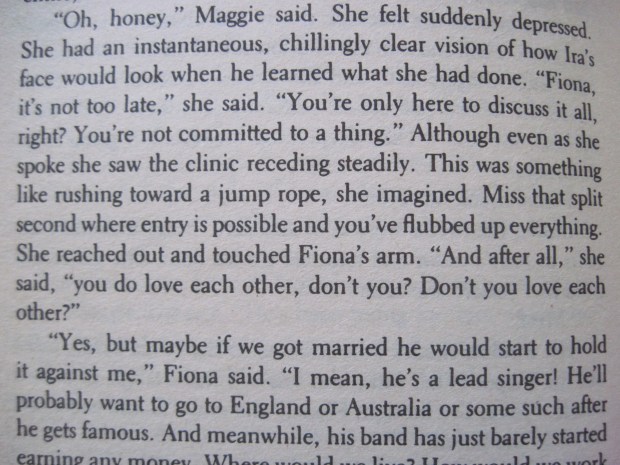
(An early Tyler novel is called The Clock Winder, but I imagine the similarity in the titles is just incidental.)

The story behind the title: Cheryl and friends perform what they call a “clock dance,” wherein two girls stand behind a third and they all move their arms in rhythmic jerks like a clock face. Willa imagines her own ‘clock dance’ would be a mad whirl from stage left to right: a race against time. Her efforts to redirect her life before it’s too late are heartening, but overall I didn’t sense strong enough themes in this novel; in particular, I would have preferred if Tyler had been consistent in checking in with Willa every decade and making each vignette truly count.
Of the eight Tyler novels I’ve read so far, here’s how I’d rank them (from best to least good). You’ll see that this latest one falls somewhere in the middle.
Dinner at the Homesick Restaurant
The Accidental Tourist
Breathing Lessons
Vinegar Girl
Clock Dance
Back When We Were Grown-ups
A Blue Spool of Thread
The Beginner’s Goodbye
My rating:
Clock Dance is released in the UK today, July 12th, by Chatto & Windus and came out on the 10th from Knopf Doubleday in the USA. My thanks to the publisher for a free copy for review.
20 Books of Summer, #1–3: Hadley, Timms & Tyler
I’ve been reading sophisticated short stories, a food/travel memoir, and a prize-winning slice of cozy Americana.
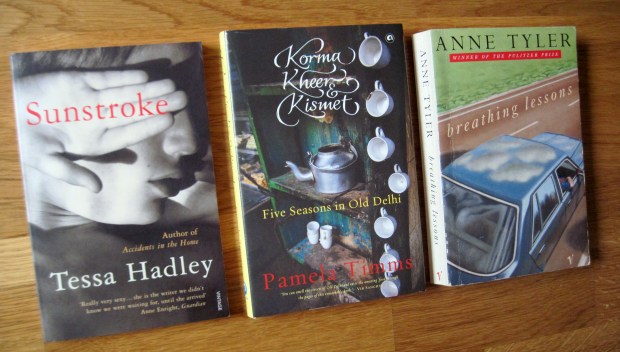
Sunstroke and Other Stories by Tessa Hadley (2007)
Everything is running away so fast; your deepest responsibility is to snatch at all the living you can.
Here’s a little something I wrote as an introduction to a review of Hadley’s most recent short story collection: “When I think of Tessa Hadley’s books, I picture a certain quality of light. I see piercing yellow shafts of sunlight filling airy, wood-floored rooms and lowering over suburban English gardens to create languid summer evenings. I think of childhood’s sense of possibility and adolescence’s gently scary feeling of new freedoms opening up. And, even when the story lines are set in the present day, I imagine the calm sophistication of 1950s–70s fashions: smart sweater sets and skirts, or flowing hippie dresses.” This volume is from a decade earlier and is not quite as strong, but that distinct atmosphere is still there.
 Each story pivots on a particular relationship: A mother fends off her son’s spurned lover; a teenager helps her older sister recover from a miscarriage; a woman hosts her former brother-in-law. Several stories revisit the same place or situation decades later. Claudia flirted with Graham when he was a teenager and she a grown woman; in “Phosphorescence” he tests whether there’s still any power in that connection 25 years later. In “A Card Trick” Gina goes back to a writer’s home she visited with family friends 25 years ago and reflects on how life has failed to live up to expectations. In “Matrilineal” Nia shares the comfort of a bed with her mother twice: once as a little girl the night they run away from her father, and again 40 years later in a hotel in New York City.
My two favorites were “The Surrogate,” in which a young woman falls for her professor – and for a pub customer who happens to look like him; and “Exchanges,” about two women on the cusp of middle age whose lives have diverged.
Korma, Kheer and Kismet: Five Seasons in Old Delhi by Pamela Timms (2014)
The only diary I’ve ever religiously maintained is my food journal.
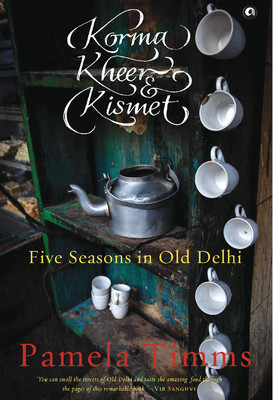 Timms is a Scottish journalist and food blogger who moved to India in 2005 when her husband got a job as a foreign correspondent. She delights in the street food stalls of Old Delhi, where you can get a hearty and delicious meal of mutton curry or fried vegetable dumplings for very little money. Often the snacks are simple – the first roasted sweet potatoes of the season or a big bowl of rice pudding made with buffalo milk and flavored with cardamom – but something about snatching sustenance while you’re on the go can make it the best thing you’ve ever tasted. It takes some searching to avoid the “pizza-fication” of Indian cuisine and discover an authentic hole-in-the-wall. Timms relies on local knowledge to locate hidden treasures and probes the owners until she gets recipes to recreate at home.
There isn’t a strong narrative to the book, but the food descriptions are certainly mouth-watering. Timms also captures the “magnificent mayhem of the spice market” and the extremes of the climate – a Delhi summer is like “being trapped inside a tandoor for three months of the year.” I reckon “Mr Naseem’s Sheer Khurma” will be fairly easy and so worth trying as a light dessert to follow a curry feast. Made with whole milk, ground rice, dried fruits and nuts, it’s a sweet custard traditionally used to break the Ramadan fast.
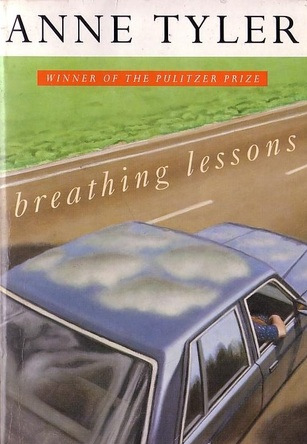
Breathing Lessons by Anne Tyler (1988)
“Was there a certain conscious point in your life when you decided to settle for being ordinary?”
Tyler won the Pulitzer Prize for this one. I’d rate it third out of the seven of her novels I’ve read so far, after Dinner at the Homesick Restaurant and The Accidental Tourist. (In general I seem to like her 1980s work the best.) The main action takes place all on one day, as Maggie Moran and her husband Ira travel from Baltimore up to Pennsylvania to attend the funeral of her childhood friend’s husband and pay a visit to their son’s ex-wife and their granddaughter.
 Of course, circadian narratives are so clever because they manage to interleave sufficient flashbacks to fill in the background. So we learn how 48-year-old Maggie – a precursor of Rebecca Davitch from Back When We Were Grown-ups and Abby Whitshank from A Spool of Blue Thread and the epitome of the exuberant, slightly ditzy, do-gooding heroine – has always meant well but through a combination of misunderstandings and fibs has botched things. She settled on Ira almost out of embarrassment: she’d heard a rumor he’d been killed in military training and sent his father an effusive condolence letter. When their son Jesse got Fiona pregnant, Maggie convinced Fiona to give him a chance based on a sentimental story about him that she perhaps half believed, and now, years later, she’s trying to do the same.
I loved the funeral scene itself – Serena is determined to recreate her wedding to Max, note for note – but I wearied of a sequence in which Maggie and Ira help an older African-American gentleman with car trouble. This is very much the Maggie show, so your reaction to the novel will largely depend on how well you’re able to tolerate her irksome habits. (Really, does she have to confuse the brake and the accelerator TWICE in one day?) Ira is the usual Tylerian standoffish husband, and Jesse the standard layabout progeny. What I found strangest was how little Tyler bothers to develop the character of the Moran daughter, Daisy.
Still, I enjoyed this. It’s a story about the mistakes we make, the patterns we get stuck in, and the ways we try to put things right. Sometimes it works; sometimes it doesn’t. Ultimately, we’re all making up this life business as we go along.
(I’ll also be reviewing Anne Tyler’s new novel, Clock Dance, on July 12th.)
America Reading & Book Haul, Etc.
On Wednesday we got back from two weeks in the States. We were so busy catching up with family and friends we hadn’t seen in a year and a half or more that my reading really slowed down: aside from the three books I took on the plane and finished within my first week, I only read another two books (not counting two during the trip back). Alas, I seem to be in a bit of a rut: everything I read was 3 stars. I haven’t finished anything I’d rate higher than that since late May. I do hope I can break that pattern before June ends!
What I Read:
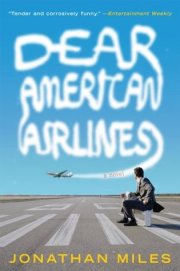 In Dear American Airlines by Jonathan Miles, Bennie Ford writes an extended letter during an unexpected overnight layover in Chicago, ostensibly to demand his $392.68 back, but really to tell his life story. His daughter is getting married in California tomorrow; it’s Bennie’s chance to make things right after years of estrangement. Will he make it to the wedding or not? The structure of the book means it doesn’t particularly matter, and I stopped caring a little bit as it went on. The sections of a novel Bennie is translating from the Polish felt irrelevant to me. Still, amusing, and a good one to read in the airport and on a plane.
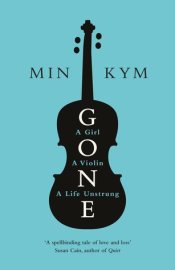 Gone: A Girl, a Violin, a Life Unstrung by Min Kym: I’m completely unmusical, so I enjoyed learning about what it’s like to be a violin virtuoso and a child prodigy, and what it means to fall in love with an instrument. Kym also puts things into the context of being a Korean immigrant to London. The central event of the book is having her Stradivarius, worth hundreds of thousands of pounds, stolen from a train station café in late 2010. It’s a brief and fairly immersive story, but the style is melodramatic and choppy at times.
 Back When We Were Grown-ups was my fifth Anne Tyler novel. Rebecca is in her fifties and the pillar of the large Davitch family, even though she only married into it six years before her husband’s sudden death. The Davitches are always renting out their home for their party business, and Rebecca has over the years developed a joyous persona that she’s not sure is really her true self. What would life have been like if she hadn’t become a stepmother to Joe’s three girls but instead married her college sweetheart, Will? While this is funny and warm, and a cozy read in the best possible way, it didn’t really stand out for me.
Three Singles to Adventure by Gerald Durrell, first published in 1954, tells of his animal collecting in Guiana, South America. The highlight is pipa toad reproduction and birth.
 Grief Cottage by Gail Godwin is a very atmospheric read, set on a South Carolina island with a haunted cottage where a family was swept away by a hurricane. However, I thought the rhythm of the young narrator’s languid summer days caring for his great-aunt became tedious, and I struggled to buy how self-aware he was meant to be of his fragile mental state at the age of 11. It’s reminiscent of John Irving (quirky secondary characters and so on) but without the same spark. I was sent a review copy for BookBrowse but found I couldn’t recommend it with 4 stars or higher.
To my surprise, I completely went off Kindle reading on this trip until the flight back, when I raced through Salmon Doubts by Adam Sacks, a sweet but inconsequential graphic novel about the salmon’s life cycle. I also started the poetry collection Fast by Jorie Graham but left it unfinished.
Two more DNFs from the trip were The Reluctant Fundamentalist by Mohsin Hamid and Between the World and Me by Ta-Nehisi Coates. I may try again with both in the future. Alas, library reading was a total wash: Hourglass by Dani Shapiro didn’t arrive in time, I abandoned the Coates, and I didn’t feel in the mood for advice letters so ended up not even starting Tiny Beautiful Things by Cheryl Strayed.
 My enjoyable read on the long journey back was Mennonite in a Little Black Dress by Rhoda Janzen. Janzen gave the Mennonite tradition she’d forsaken a second look after her life fell apart in her early forties: her husband left her for Bob, whom he met on a gay dating site; and she was in a serious car accident. It’s more in the form of linked autobiographical essays than a straight memoir, so she keeps cycling round to some of the same themes, and it gets less laugh-out-loud funny as it goes on. Still, I was impressed by how the author has managed to pull what’s good from experiences most would consider disastrous. (I also read the first third of Hotel du Lac by Anita Brookner.)
Now that I’m home I’ve started a huge pile of review books and library books and instead of the 1–3 books at a time I was reading while we were away I’m back up to my more usual 14.
What I Bought:
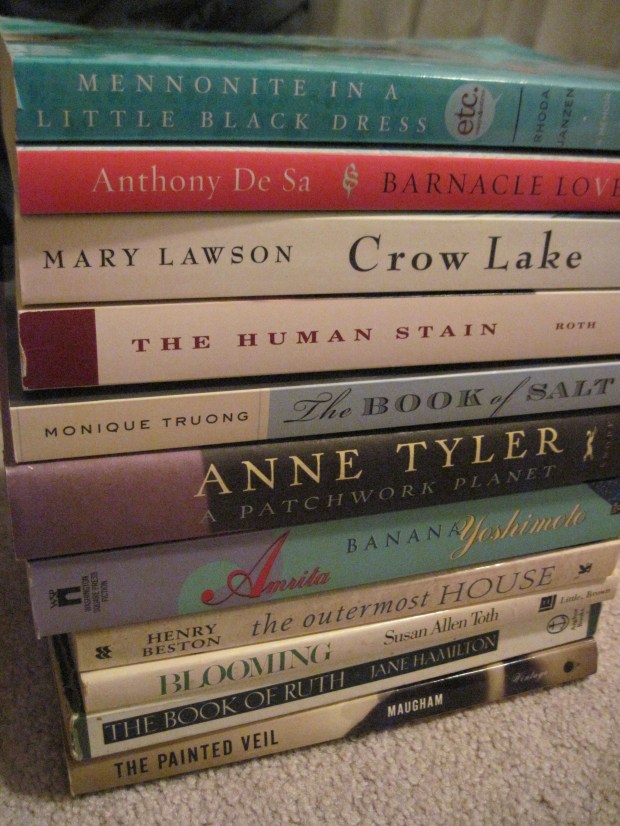
Day 2: A stop at my parents’ local Dollar Tree to stock up on greetings cards for the year’s events (2 for $1!) also brought some unexpectedly good book finds. [Not pictured: a paperback of Jonathan Franzen’s Freedom, our favorite of his novels.] Total spend: $3.18.
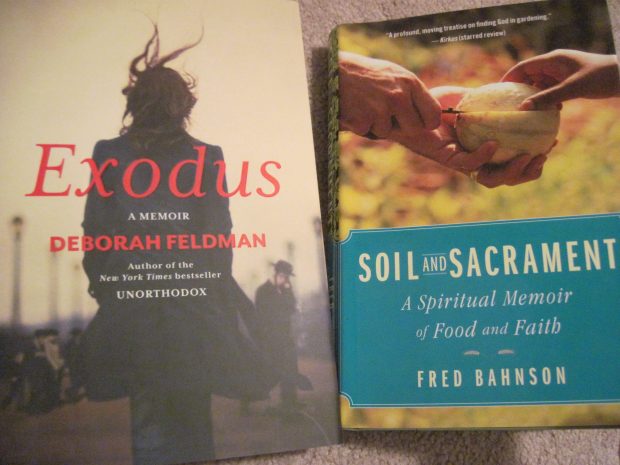
Day 4: The obligatory visit to Wonder Book & Video in Frederick, Maryland, one of my happy places.
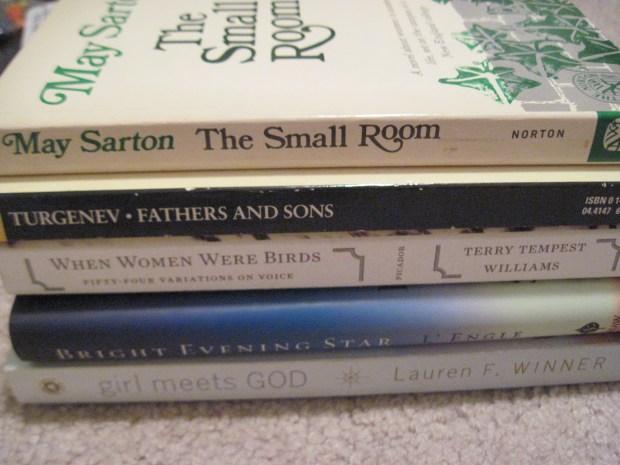
Day 5: A trip to bookstore chain 2nd & Charles in Hagerstown, MD. Total spend (minus my trade-in of various books and CDs): $5.19.
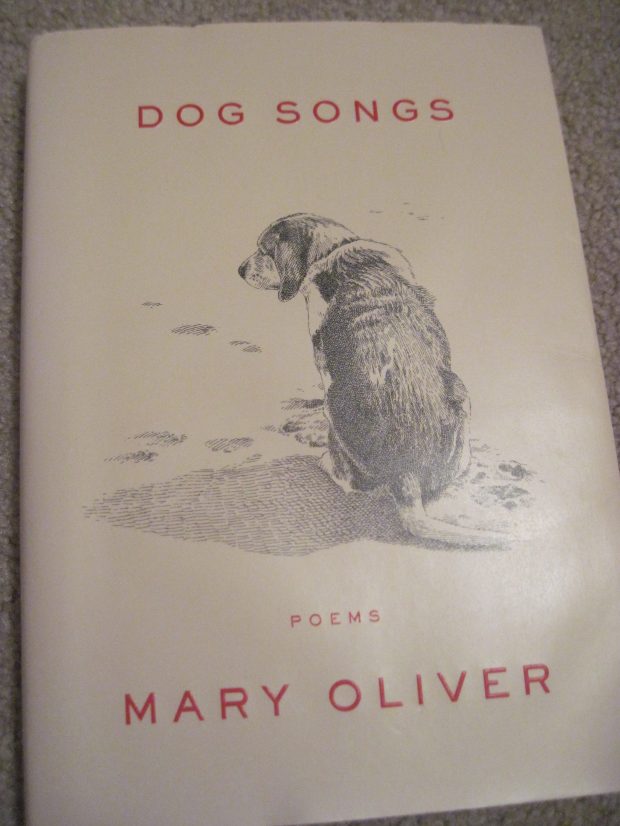
Day 6: A book of Mary Oliver poems from the Goodwill store in Westminster, MD.
Day 14: Some bargains from a thrift store in Rehoboth Beach, Delaware, where we met up with my friend and her family while they were on holiday. Total spend: $4.50.

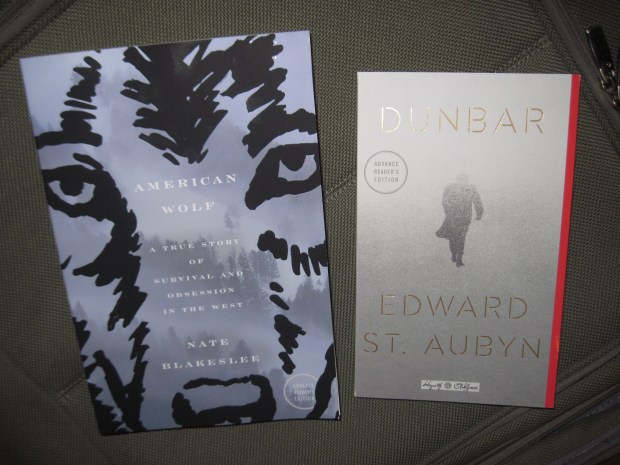
I also managed to snag a couple of Crown ARCs that are not out until October.
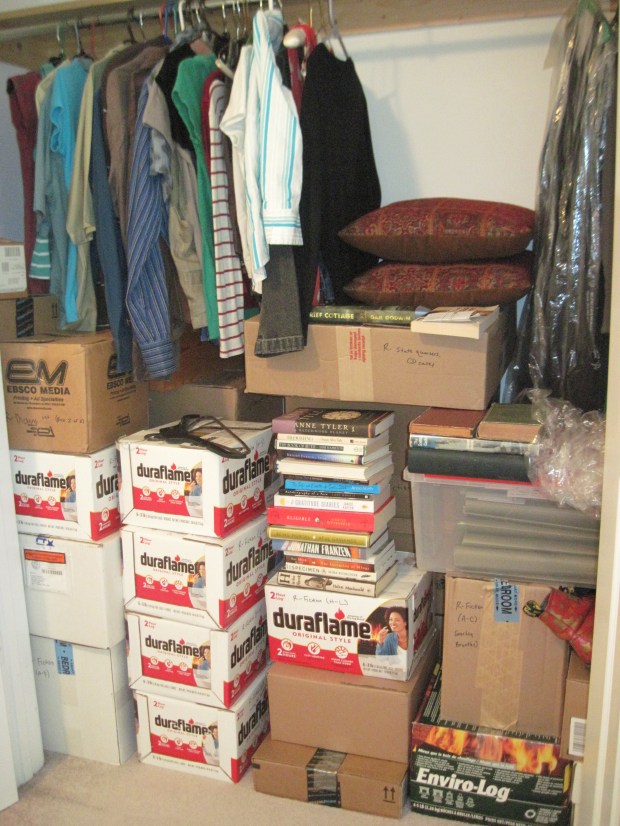
The state of my closet back in the States (most of those boxes contain books):
Other Bookish Sightings:
A Little Free Library at my parents’ local organic supermarket. I dropped off a few proof copies before I left.

The Peabody Library of Johns Hopkins University in Baltimore.

A trip to Mermaid Books in Williamsburg, Virginia (overpriced – no purchases), where I spotted an amusing cover on Anne Tyler’s first novel – she still has the same hairdo!


Ephemera in two of my purchases.


Other highlights of the trip:
- Meeting my sister’s fiancé (!) and his kids.
- Going to an alpaca farm with my sister and nephews.
- Surprising my mom with her early 70th birthday gift: a mother–daughters trip to the Kennedy Center in Washington, D.C. for dinner and a showing of Shear Madness, a long-running improvisational murder mystery with audience participation.
- Exploring Williamsburg (and Jamestown Island) for the first time since I was a kid.
- A day trip to Cape May, New Jersey – a place to go back to, methinks.
- Plus all our meet-ups, however brief, with friends.
- Not forgetting the total of seven cats and two dogs we got to spend time with.
- Two weeks of doing absolutely no work. I didn’t miss it for a second.
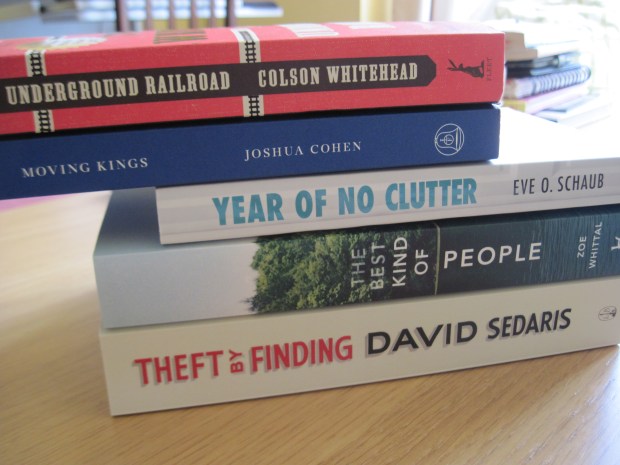
One last book haul photo: These were the review copies (top two) and giveaway books awaiting me when I got back to the UK. (I won the Schaub from Liz’s blog; I’m on a great run with Goodreads giveaways at the moment: along with these Sedaris and Whittal titles, I have new books by Cathy Rentzenbrink and Anne de Courcy on the way.)
How has your summer reading been going?
Book Thing of Baltimore Update
Back in December I shared my excitement upon discovering The Book Thing of Baltimore on a trip back to visit my family in the States. Run entirely through volunteers and donations, it’s an unassuming warehouse where you can go and get as many FREE books as you want. I was in heaven there, as you might imagine.
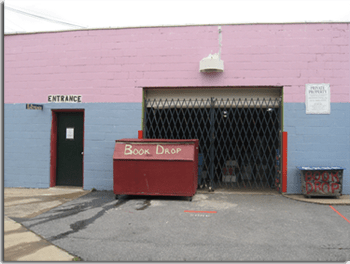
The unassuming shop front for Book Thing. (From their website)
Well, on March 2nd Book Thing suffered a fire that has temporarily closed it down. Books + fire = incredibly sad. Their space is currently unusable and much of the stock was destroyed.
Here’s a great LitHub article about Book Thing and the post-fire strategy. Clean-up efforts are still underway and it’s unclear how soon they can think about reopening.
If you’re local, keep an eye on their Facebook page to see how you can help out. Or, no matter where you are, you can join me in giving a donation via their home page.
“Our mission is to put unwanted books into the hands of those who want them,” they say. I hope they’ll be able to do just that again very soon.
When Is a Bookshop Not a Bookshop?
The answer to the riddle: when all the books are free! Christmas came early on Sunday when I visited a place I long knew of but had never visited: The Book Thing of Baltimore. It’s an entirely not-for-profit venture run with the help of volunteers and donations. “Our mission is to put unwanted books into the hands of those who want them,” says their website. My hubby and I were going into the city to meet friends for the day, so I suggested a quick run to Book Thing, a hidden treasure on an unassuming concrete lot that’s only open on the weekends.
The unassuming shop front for Book Thing. (From their website)
I brought along a backpack crammed full of unwanted books from my old bedroom to donate, thinking that I would pick up just two or three in return. I was expecting one disorganized room full of pretty crummy books. To my delight, it was an enormous four-room warehouse with an amazing selection. A wonderful place to wander around and pick up things at random, but not great for seeking out particular titles given that the books – notably, fiction and biographies – are in no discernible alphabetical order.
Are you at all surprised to learn that I came away with a backpack just as overstuffed as I came with? At one point, as I was stacking up some terrific animal-themed books, my husband said, “You do realize you can only take what you can fit in your backpack? We’re going back by train!” My refrain was “but they’re all free!” I ended up with 31 books in total.
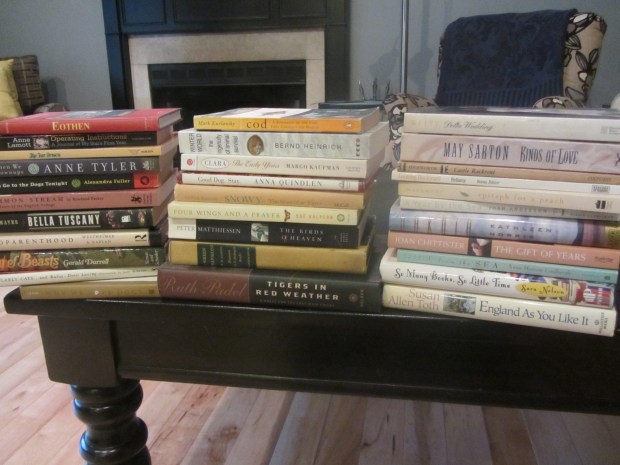
The haul.
I was especially thrilled with: The Fur Person, May Sarton’s book about cats, which I’d been hoping to find secondhand on this trip; Tigers in Red Weather, Ruth Padel’s travel book about searching for the world’s few remaining tigers in all their known habitats – I’d already read it but my husband hasn’t; Dakota by Kathleen Norris, a new favorite theology writer; Sara Nelson’s So Many Books, So Little Time (how apt!); and A Year by the Sea by Joan Anderson, which I’d never heard of but should fit right into my interest in women’s diaries.
Lest you think I’m some selfish book fiend, note that the pile on the left in the photograph below is for giving away to family and friends this Christmas. (Yes, I am aware that the pile of books we are keeping dwarfs the gift stack. Sigh.)
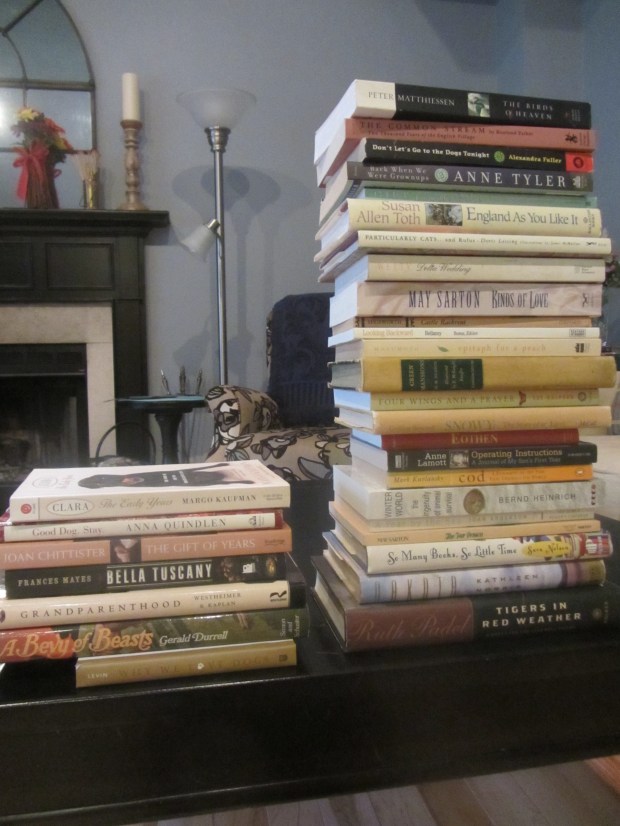
Dueling stacks.
All in all, it was a great day in Baltimore. We had a terrific lunch at City Café; browsed part of the amazing (and also free!) Walters Art Museum; toured the central campus of Johns Hopkins University, where my friend is a PhD student; walked through a small park; observed the shops and eateries of hipster Hampden; and saw the famous Christmas lights on 34th Street. They call it “Charm City,” and on Sunday it more than lived up to its name.
Book Thing is as sprawling as my favorite bookshop, Wonder Book (Frederick, Maryland), but you needn’t hand over any money. It’s as varied and tempting as any public library, but you don’t have to bring the books back. Nothing says “Merry Christmas” like free books!
 Bookish Beck = Rebecca Foster. American transplant to England. Freelance proofreader and book reviewer.
 Bookish Beck