Book Serendipity, June to Mid-August 2024
I call it “Book Serendipity” when two or more books that I read at the same time or in quick succession have something in common – the more bizarre, the better. This is a regular feature of mine every couple of months. Because I usually have 20–30 books on the go at once, I suppose I’m more prone to such incidents. People frequently ask how I remember all of these coincidences. The answer is: I jot them on scraps of paper or input them immediately into a file on my PC desktop; otherwise, they would flit away!
The following are in roughly chronological order.
- A self-induced abortion scene in Recipe for a Perfect Wife by Karma Brown and Sleeping with Cats by Marge Piercy.
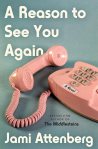
- A woman who cleans buildings after hours, and a character named Tova who lives in the Seattle area in A Reason to See You Again by Jami Attenberg and Remarkably Bright Creatures by Shelby Van Pelt.

- Flirting with a surf shop employee in Sandwich by Catherine Newman and Remarkably Bright Creatures by Shelby Van Pelt.
- Living in Paris and keeping ticket stubs from all films seen in Paris Trance by Geoff Dyer and The Invention of Hugo Cabret by Brian Selznick.
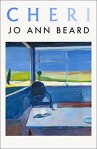
- A schefflera (umbrella tree) is mentioned in Cheri by Jo Ann Beard and Company by Shannon Sanders.

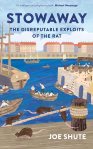
- The Plague by Albert Camus is mentioned in Knife by Salman Rushdie and Stowaway by Joe Shute.
- Making egg salad sandwiches is mentioned in Cheri by Jo Ann Beard and Sandwich by Catherine Newman.
- Pet rats in Stowaway by Joe Shute and Happy Death Club by Naomi Westerman. Rats are also mentioned in Mammoth by Eva Baltasar, The Tale of Despereaux by Kate DiCamillo, and The Colour by Rose Tremain.

- Eels feature in Our Narrow Hiding Places by Kristopher Jansma, Late Light by Michael Malay, and The Colour by Rose Tremain.
- Atlantic City, New Jersey is a location in Florence Adler Swims Forever by Rachel Beanland and Company by Shannon Sanders.
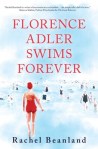 The father is a baker in Florence Adler Swims Forever by Rachel Beanland and Our Narrow Hiding Places by Kristopher Jansma.
- A New Zealand setting (but very different time periods) in Greta & Valdin by Rebecca K Reilly and The Colour by Rose Tremain.
- A mention of Melanie Griffith’s role in Working Girl in I’m Mostly Here to Enjoy Myself by Glynnis MacNicol and Happy Death Club by Naomi Westerman.
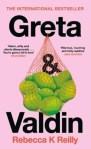 Ermentrude/Ermyntrude as an imagined alternate name in Greta & Valdin by Rebecca K Reilly and a pet’s name in Stowaway by Joe Shute.
- A poet with a collection that was published on 6 August mentions a constant ringing in the ears: Joshua Jennifer Espinoza (I Don’t Want to Be Understood) and Keith Taylor (What Can the Matter Be?).
- A discussion of the original meaning of “slut” (a slovenly housekeeper) vs. its current sexualized meaning in Girlhood by Melissa Febos and Sandi Toksvig’s introduction to the story anthology Furies.
- An odalisque (a concubine in a harem, often depicted in art) is mentioned in I’m Mostly Here to Enjoy Myself by Glynnis MacNicol and The Shark Nursery by Mary O’Malley.
- Reading my second historical novel of the year in which there’s a disintegrating beached whale in the background of the story: first was Whale Fall by Elizabeth O’Connor, then Come to the Window by Howard Norman.
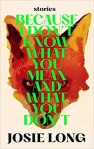 A short story in which a woman gets a job in online trolling in Because I Don’t Know What You Mean and What You Don’t by Josie Long and in the Virago Furies anthology (Helen Oyeyemi’s story).
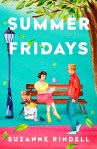
- Her partner, a lawyer, is working long hours and often missing dinner, leading the protagonist to assume that he’s having an affair with a female colleague, in Recipe for a Perfect Wife by Karma Brown and Summer Fridays by Suzanne Rindell.
- A fierce boss named Jo(h)anna in Summer Fridays by Suzanne Rindell and Test Kitchen by Neil D.A. Stewart.

- An OTT rendering of a Scottish accent in Greta & Valdin by Rebecca K Reilly and Test Kitchen by Neil D.A. Stewart.
- A Padstow setting and a mention of Puffin Island (Cornwall) in The Cove by Beth Lynch and England as You Like It by Susan Allen Toth.
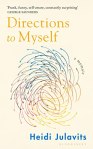
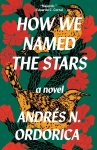
- A mention of the Big and Little Dipper (U.S. names for constellations) in Directions to Myself by Heidi Julavits and How We Named the Stars by Andrés N. Ordorica.
- A mention of Binghamton, New York and its university in We Are Animals by Jennifer Case and We Would Never by Tova Mirvis.
- A character accidentally drinks a soapy liquid in We Would Never by Tova Mirvis and one story of The Man in the Banana Trees by Marguerite Sheffer.
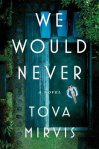 The mother (of the bride or groom) takes over the wedding planning in We Would Never by Tova Mirvis and Summer Fridays by Suzanne Rindell.
- The ex-husband’s name is Jonah in The Mourner’s Bestiary by Eiren Caffall and We Would Never by Tova Mirvis.
- The husband’s name is John in Dot in the Universe by Lucy Ellmann and Liars by Sarah Manguso.
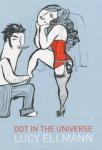
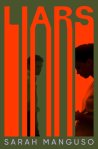
- An affair is discovered through restaurant receipts in Summer Fridays by Suzanne Rindell and Test Kitchen by Neil D.A. Stewart.
- A mention of eating fermented shark in The Museum of Whales You Will Never See by A. Kendra Greene and Test Kitchen by Neil D.A. Stewart.
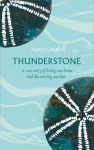
- A mention of using one’s own urine as a remedy in Thunderstone by Nancy Campbell and Terminal Maladies by Okwudili Nebeolisa.

- The main character tries to get pregnant by a man even though one of the partners is gay in Mammoth by Eva Baltasar and Until the Real Thing Comes Along by Elizabeth Berg.
- Motherhood is for women what war is for men: this analogy is presented in We Are Animals by Jennifer Case, Parade by Rachel Cusk, and Want, the Lake by Jenny Factor.
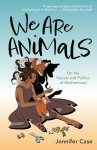 Childcare is presented as a lifesaver for new mothers in We Are Animals by Jennifer Case and Liars by Sarah Manguso.
- A woman bakes bread for the first time in Mammoth by Eva Baltasar and A Year of Biblical Womanhood by Rachel Held Evans.
- A gay couple adopts a Latino boy in Greta & Valdin by Rebecca K Reilly and one story of There Is a Rio Grande in Heaven by Ruben Reyes, Jr.
 A husband who works on film projects in A Year of Biblical Womanhood by Rachel Held Evans and Liars by Sarah Manguso.
- A man is haunted by things his father said to him years ago in Parade by Rachel Cusk and one story in There Is a Rio Grande in Heaven by Ruben Reyes, Jr.
- Two short story collections in a row in which a character is a puppet (thank you, magic realism!): The Man in the Banana Trees by Marguerite Sheffer, followed by There Is a Rio Grande in Heaven by Ruben Reyes, Jr.

- A farm is described as having woodworm in Mammoth by Eva Baltasar and Parade by Rachel Cusk.
- Sebastian as a proposed or actual name for a baby in Signs, Music by Raymond Antrobus and Birdeye by Judith Heneghan.
What’s the weirdest reading coincidence you’ve had lately?
A Week in Italy and What I Read
We’re relieved to be back in the balmy UK after a sweltering week in northern Italy. Though our sixth-floor Airbnb apartment in Milan suited our needs perfectly, it was a challenge to keep it minimally comfortable. Eventually we worked out that it was essential to get up by 6:30 a.m. to close the balcony doors and shutter. The bedroom happened to be shaded, so I could set up my laptop in there and work until noon, when it was time to close out the heat of the day on that side. In the afternoons I read and napped on the divan, and then sometime between 6 and 10 p.m., depending on how sunny it had been during the day, we could fling the windows and doors wide open again. Fans helped, but we still passed some horribly muggy nights.


My husband was at his conference for four of the days, so we only braved the city centre itself on Monday morning, touring the Duomo and climbing the steps to the roof. This was well worth doing for views over the city. Afterwards we walked through the associated museum (mostly underground, and blissfully cool with air conditioning) and Galleria Vittorio Emanuele II, a luxurious nineteenth-century shopping arcade filled with designer fashions.


Two day trips by train got us out of the city and into slightly cooler temperatures: on Wednesday we explored Varenna and Bellagio on Lake Como, and on Saturday we took a bus and cable car from Lecco into the mountains at Piani d’Erna. We took full advantage of one-euro espressos and glasses of wine, and ate lots of pizza, pasta and gelato.

After much deliberation, this is the book stack I actually packed for our trip. I got through the first half of the Orwell, an excellent account of working as a dishwasher in Paris hotels and having to scrape together enough money to ward off starvation. I’ll be writing it up as my Classic of the Month in a couple of weeks. I also read Sunburn by Laura Lippman, which I’ll hold in reserve for a summer-themed post, and (on Kindle) So Many Rooms by Laura Scott, a debut poetry collection coming out in October that I’ll review here at a later date.
Two of my other Kindle reads ended up being perfect for the setting:
From Scratch: A Memoir of Love, Sicily, and Finding Home by Tembi Locke: This was the perfect book for me to read during the week in Italy. Not only is it set largely in Sicily, but it ticks a lot of boxes in terms of my reading interests: food, travel, bereavement, and the challenges of being an American overseas. During a semester abroad in Florence, Locke (an actress I was previously unfamiliar with) met and fell in love with Saro Gullo, an Italian chef. His parents could hardly accept him marrying someone from outside of Sicily, let alone a black woman from Texas, and refused to attend their wedding. But as the years passed they softened towards Locke, who gradually became accepted in Saro’s hometown of Aliminusa.
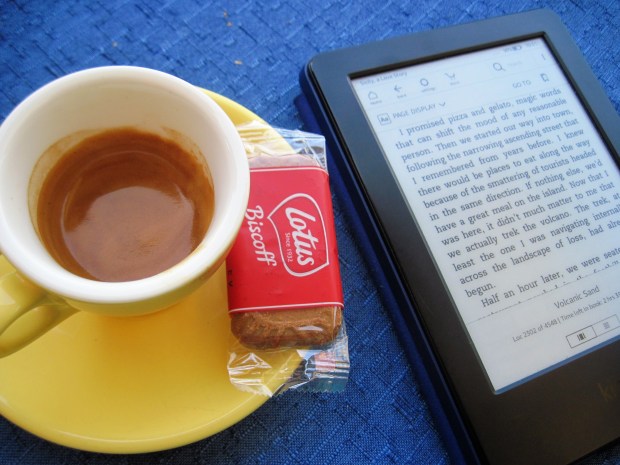
In fact, after Saro’s death from bone cancer in 2012, she became like a second daughter to Saro’s mother. The book focuses on the three summers in a row when she and her adopted daughter Zoela traveled to the family home in Sicily to stay with Nonna. I particularly appreciated the exploration of what it’s like to live between countries and cultures. This is one of three Reese Witherspoon book club books I’ve read so far (along with Where the Crawdads Sing and Daisy Jones and the Six), and all have been great – Reese’s recommendations are proving as reliable as Oprah’s. 
 A mudslide blocked the route we should have taken back from Milan to Paris, so we rebooked onto trains via Switzerland. This plus the sub-Alpine setting for our next-to-last day made the perfect context for racing through Where the Hornbeam Grows: A Journey in Search of a Garden by Beth Lynch in just two days. Lynch moved from England to Switzerland when her husband took a job in Zurich. Suddenly she had to navigate daily life, including frosty locals and convoluted bureaucracy, in a second language. The sense of displacement was exacerbated by her lack of access to a garden. Gardening had always been a whole-family passion, and after her parents’ death their Sussex garden was lost to her. Two years later she and her husband moved to a cottage in western Switzerland and cultivated a garden idyll, but it wasn’t enough to neutralize their loneliness.
Much of what Lynch has to say about trying to find genuine connections as an expatriate rang true for me. Paradise Lost provides an unexpected frame of reference as Lynch asks what it means for a person or a plant to be transplanted somewhere new, and what it takes to thrive. Her elegant writing reminded me of Diana Athill’s and Penelope Lively’s, and the exploration of the self through gardens is reminiscent of Allan Jenkins’s Plot 29.
Other successful reads:
 Confessions of a Bookseller by Shaun Bythell: This picks up right where The Diary of a Bookseller left off and carries through the whole of 2015. Again it’s built on the daily routines of buying and selling books, including customers’ and colleagues’ quirks, and of being out and about in a small town. I wished I was in Wigtown instead of Milan! Because of where I was reading the book, I got particular enjoyment out of the characterization of Emanuela (soon known as “Granny” for her poor eyesight and myriad aches and gripes), who comes over from Italy to volunteer in the bookshop for the summer. Bythell’s break-up with “Anna” is a recurring theme in this volume, I suspect because his editor/publisher insisted on an injection of emotional drama.
 City of Girls by Elizabeth Gilbert: There’s a fun, saucy feel to this novel set mostly in 1940s New York City. Twenty-year-old Vivian Morris comes to sew costumes for her Aunt Peg’s rundown theatre and falls in with a disreputable lot of actors and showgirls. When she does something bad enough to get her in the tabloids and jeopardize her future, she retreats in disgrace to her parents’ – but soon the war starts and she’s called back to help with Peg’s lunchtime propaganda shows at the Brooklyn Navy Yard. The quirky coming-of-age narrative reminded me a lot of classic John Irving, while the specifics of the setting made me think of Wise Children, All the Beautiful Girls and Manhattan Beach. The novel takes us to 2010, when Vivian is 90 and still brazenly independent. I was somewhat underwhelmed – while it’s a fairly touching story of how to absorb losses and make an unconventional family, I wondered if it had all meant much. I’ll be expanding this into a Shiny New Books review.
 Judgment Day by Sandra M. Gilbert: English majors will know Gilbert best for her landmark work of criticism, The Madwoman in the Attic (co-written with Susan Gubar). I had no idea that she writes poetry. This latest collection has a lot of interesting reflections on religion, food and art, as well as elegies to those she’s lost. Raised Catholic, Gilbert married a Jew, and the traditions of Judaism still hold meaning for her after husband’s death even though she’s effectively an atheist. “Pompeii and After,” a series of poems describing food scenes in paintings, from da Vinci to Hopper, is particularly memorable.
Not-so-successful reads:
 Vintage 1954 by Antoine Laurain: Dreadful! I would say: avoid this sappy time-travel novel at all costs. I thought the setup promised a gentle dose of fantasy, and liked the fact that the characters could meet their ancestors and Paris celebrities during their temporary stay in 1954. But the characters are one-dimensional stereotypes, and the plot is far-fetched and silly. I know many others have found this delightful, so consider me in the minority…
As well as a few DNFs…
What Dementia Teaches Us about Love by Nicci Gerard: I’ve read a lot of books about dementia, both clinical and anecdotal, and this doesn’t add anything new. (11%)
The Great Railway Bazaar by Paul Theroux: I read the first 32 pages, up to when Theroux arrives in northern Italy. He mostly describes his fellow passengers, as well as the details of meals and sleeping arrangements on trains. The writing struck me as old-fashioned, and I couldn’t imagine getting through another nearly 350 pages of it.
Out of the Woods by Luke Turner: Attempts to fuse nature and sexuality in a way that’s reminiscent of Hidden Nature by Alys Fowler. The writing didn’t draw me in at all. (5%)
 Bookish Beck = Rebecca Foster. American transplant to England. Freelance proofreader and book reviewer.
 Bookish Beck