Literary Wives Club: Lessons in Chemistry by Bonnie Garmus (2022)
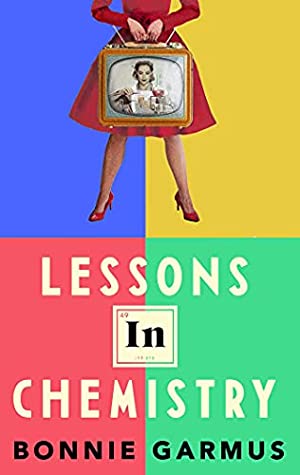
Like pretty much every other woman over 30 on the planet, I read Lessons in Chemistry when it first came out. I was happy for my book club to select it for a later month when I was away; it made a decent selection but I had no need to revisit it, then or now. I think it still holds the record for the longest reservation queue in my library system. I enjoyed this feel-good feminist story well enough but found certain elements hokey, such as Six-Thirty the dog’s preternatural intelligence and Elizabeth Zott’s neurodivergent-like bluntness and lack of sentimentality.
My original review: Elizabeth Zott is a scientist through and through, applying a chemist’s mindset to her every venture, including cooking, rowing and single motherhood in the 1950s. When she is fired from her job in a chemistry lab and gets a gig as a TV cooking show host instead, she sees it as her mission to treat housewives as men’s intellectual equals, but there are plenty of people who don’t care for her unusual methods and free thinking. I was reminded strongly of The Atomic Weight of Love and The Rosie Project, as well as novels by Katherine Heiny and especially John Irving with the deep dive into backstory and particular pet subjects, and the orphan history for Zott’s love interest. This was an enjoyable tragicomedy. You have to cheer for the triumphs she and other female characters win against the system of the time. However, the very precocious child (and dog) stretch belief, and the ending was too pat for me. (Public library) 
The main question we ask about the books we read for Literary Wives is:
What does this book say about wives or about the experience of being a wife?
Elizabeth is deeply in love with Calvin Evans yet refuses to be his wife. She spurns marriage because she correctly intuits that it will limit her prospects, this being the 1960s. “I’m going to be a scientist. Successful women scientists don’t marry,” she tells her mother. Forasmuch as she assumes her television audience to be traditional housewives, she rejects their situation for herself. A single mother, a minor celebrity, a scientific researcher: none of these roles would be compatible with marriage. (Though there’s another ultimate reason why she stays unmarried.)
A supporting character, her neighbour Harriet, offers a counterpoint or cautionary tale. She’s trapped in a marriage to an odious man she despises. “Because while she was stuck forever being Mrs. Sloane—she was a Catholic—she never wanted to turn into a Mr. Sloane.”
Almost all of the books we read for the club, whether contemporary or historical, present marriage in at least a somewhat negative light, or warn that there are many things that can go wrong…
See Kate’s, Kay’s and Naomi’s reviews, too!
Coming up next, in June: The Constant Wife by W. Somerset Maugham. This is the first play we’ve done and my first Maugham in a while, so I’m looking forward to it.
Prize Updates: McKitterick Prize Winner and Wainwright Prize Longlists
It was my second year as a first-round manuscript judge for the McKitterick Prize; have a look at my rundown of the shortlist here.
 The winner, Louise Kennedy, and runner-up, Liz Hyder, were announced on 29 June. (Nominee Aamina Ahmad won a different SoA Award that night, the Gordon Bowker Volcano Prize for a novel focusing on the experience of travel away from home.) Other recipients included Travis Alabanza, Caroline Bird, Bonnie Garmus and Nicola Griffith. For more on all of this year’s SoA Award winners, see their website.


I’m a big fan of the Wainwright Prize for nature and conservation writing, and have been following it particularly closely since 2020, when I happened to read most of the nominees. In 2021 I also managed to read quite a lot from the longlists; 2022, the first year of an additional prize for children’s literature, saw me reading about a third of the total nominees.
This is the third year that I’ve been part of an “academy” of bloggers, booksellers, former judges and previously shortlisted authors asked to comment on a very long list of publisher submissions. I’m delighted that a few of my preferences made it through to the longlists.
My taste generally runs more to the narrative nature writing than the popular science or travel-based books. I find I’ve read just two from the Nature list (Bersweden and Huband) and one each from Conservation (Pavelle) and Children’s (Hargrave) so far.

The 2023 James Cropper Wainwright Prize for Nature Writing longlist:
- The Swimmer: The Wild Life of Roger Deakin, Patrick Barkham (Hamish Hamilton)
- The Flow: Rivers, Water and Wildness, Amy-Jane Beer (Bloomsbury)
- Where the Wildflowers Grow, Leif Bersweden (Hodder)
- Twelve Words for Moss, Elizabeth-Jane Burnett (Allen Lane)
- Cacophony of Bone, Kerri ní Dochartaigh (Canongate)
- Sea Bean, Sally Huband (Hutchinson)
- Ten Birds that Changed the World, Stephen Moss (Faber)
- A Line in the World: A Year on the North Sea Coast, Dorthe Nors, translated by Caroline Waight (Pushkin)
- The Golden Mole: And Other Living Treasure, Katherine Rundell, illustrated by Talya Baldwin (Faber)
- Belonging: Natural Histories of Place, Identity and Home, Amanda Thomson (Canongate)
- Why Women Grow: Stories of Soil, Sisterhood and Survival, Alice Vincent (Canongate)
- Landlines, Raynor Winn (Penguin)

The 2023 James Cropper Wainwright Prize for Writing on Conservation longlist:
- Sarn Helen: A Journey Through Wales, Past, Present and Future, Tom Bullough, illustrated by Jackie Morris (Granta)
- Beastly: A New History of Animals and Us, Keggie Carew (Canongate)
- Rewilding the Sea: How to Save Our Oceans, Charles Clover (Ebury)
- Birdgirl, Mya-Rose Craig (Jonathan Cape)
- The Orchid Outlaw, Ben Jacob (John Murray)
- Elixir: In the Valley at the End of Time, Kapka Kassabova (Jonathan Cape)
- Rooted: How Regenerative Farming Can Change the World, Sarah Langford (Viking)
- Black Ops and Beaver Bombing: Adventures with Britain’s Wild Mammals, Fiona Mathews and Tim Kendall (Oneworld)
- Forget Me Not, Sophie Pavelle (Bloomsbury)
- Fen, Bog, and Swamp: A Short History of Peatland Destruction and its Role in the Climate Crisis, Annie Proulx (Fourth Estate)
- The Lost Rainforests of Britain, Guy Shrubsole (HarperCollins)
- Nomad Century: How to Survive the Climate Upheaval, Gaia Vince (Allen Lane)

The 2023 James Cropper Wainwright Prize for Children’s Writing on Nature and Conservation longlist:
- The Earth Book, Hannah Alice (Nosy Crow)
- The Light in Everything, Katya Balen, illustrated by Sydney Smith (Bloomsbury)
- Billy Conker’s Nature-Spotting Adventure, Conor Busuttil (O’Brien)
- Protecting the Planet: The Season of Giraffes, Nicola Davies, illustrated by Emily Sutton (Walker)
- Blobfish, Olaf Falafel (Walker)
- A Friend to Nature, Laura Knowles, illustrated by Rebecca Gibbon (Welbeck)
- Spark, M G Leonard (Walker)
- A Wild Child’s Book of Birds, Dara McAnulty (Macmillan)
- Leila and the Blue Fox, Kiran Millwood Hargrave, illustrated by Tom de Freston (Hachette Children’s Group)
- The Zebra’s Great Escape, Katherine Rundell, illustrated by Sara Ogilvie (Bloomsbury)
- Archie’s Apple, Hannah Shuckburgh, illustrated by Octavia Mackenzie (Little Toller)
- Grandpa and the Kingfisher, Anna Wilson, illustrated by Sarah Massini (Nosy Crow)
It’s impressive that women writers are represented so well this year: 9/12 for Nature, 8/12 for Conservation, and 8/12 for Children’s. Amusingly, Katherine Rundell is on TWO of the lists. There are also, refreshingly, several BIPOC authors, and – I think for the first time ever – a work in translation (A Line in the World by Dorthe Nors, which I have as a set-aside proof copy and will get back into at once).
Here is where I have to admit that quite a number of the nominees, overall, are books I DNFed, authors whose work I’ve tried before and not enjoyed, or books I’ve been turned off of by the reviews. I’ll not mention these by name just now, and will leave any predictions for a future date when I’ve read a few more of the nominees. It seems that I’m most likely to catch up with the majority of the children’s longlist, if anything.
The shortlists will be announced on 10 August, and winners will be announced on 14 September at a 10th Anniversary live event held as part of the Kendal Mountain Festival in Cumbria (tickets available here).
See any nominees you’ve read? Who would you like to see shortlisted?
Cover Love: My 13 Favourite Book Covers of 2022
As I did in 2019, 2020, and 2021, I’ve picked out some favourite book covers from the year’s new releases. Fewer have stood out to me this year for some reason, so it’s just a baker’s dozen here, and all of them are from books I’ve actually read.
Usually it’s the flora and fauna covers that get me. Not so many of those this year, though!

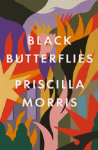
Instead, it was mostly about colour blocks and textures.



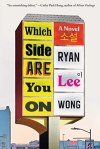
And a few of my favourites feature partial images of female bodies:

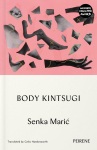

I also appreciate the use of a blocky 1980s-reminiscent font on these two. It’s appropriate to the contents in each case. Powell’s poems are loosely inspired by/structured like an old-school hip-hop album, and Zevin’s novel is about the love of vintage video games.
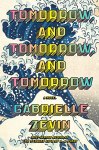
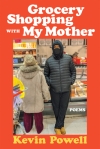
What cover trends have you noticed this year? Which ones tend to grab your attention?
Book Serendipity, May to Mid-August 2022
This is a regular feature of mine every few months. I call it “Book Serendipity” when two or more books that I read at the same time or in quick succession have something in common – the more bizarre, the better. Because I usually have 20–30 books on the go at once, I suppose I’m more prone to such incidents. The following are in roughly chronological order.
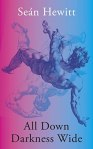
- Not only did the opening scene of All Down Darkness Wide by Seán Hewitt share with Falling Angels by Tracy Chevalier a graveyard setting, but more specifically an angel statue whose head falls off.

- SPOILER: {The protagonist has a backstory of a mother who drowned, presumably by suicide, in Secrets of the Sea House by Elisabeth Gifford and The Dance Tree by Kiran Millwood Hargrave.}
- I started reading two e-books on the same day that had Taylor Swift lyrics as an epigraph: Bad Vibes Only by Nora McInerny and Tracy Flick Can’t Win by Tom Perrotta. I have never knowingly heard a Taylor Swift song.
- Rescuing insects from a swimming pool in Fledgling by Hannah Bourne-Taylor and In the Quaker Hotel by Helen Tookey.
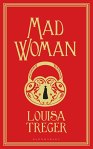
- Reading two feminist works of historical fiction in which the protagonist refuses to marry (even though it’s true love) at the same time: Lessons in Chemistry by Bonnie Garmus and Madwoman by Louisa Treger (about Nellie Bly).
- Two London-set books featuring a daughter named Mabel, one right after the other: This Is Not a Pity Memoir by Abi Morgan and Bridget Jones: Mad about the Boy by Helen Fielding.
- In Jenn Shapland’s My Autobiography of Carson McCullers I came across the fact that McCullers married the same man twice. Just a few days before, I’d seen that same odd fact about Hilary Mantel in her Wikipedia bio.
- A character named Clodagh in Black Narcissus by Rumer Godden and “Rainbows” by Joseph O’Neill, one of the entries in The Best Short Stories 2022: The O. Henry Prize Winners.
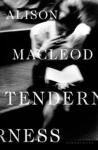
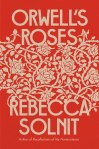
- Reading two books about an English author who died young of TB at the same time: Tenderness by Alison MacLeod (about D.H. Lawrence) and Orwell’s Roses by Rebecca Solnit.
- Reading two novels that mention the shipwreck of the Batavia at the same time: The Night Ship by Jess Kidd (where it’s a major element) and Cloudstreet by Tim Winton (just a tiny reference that nonetheless took me aback). According to Wikipedia, “Batavia was a ship of the Dutch East India Company. Built in Amsterdam in 1628 as the company’s new flagship, she sailed that year on her maiden voyage for Batavia, capital of the Dutch East Indies. On 4 June 1629, Batavia was wrecked on the Houtman Abrolhos, a chain of small islands off the western coast of Australia.”
- David Lack’s Swifts in a Tower is mentioned in Swifts and Us by Sarah Gibson (no surprise there) but also in From the Hedgerows by Lew Lewis.
- There’s a child nicknamed Chub in Damnation Spring by Ash Davidson and Cloudstreet by Tim Winton (which both also at least started off being buddy reads with Marcie of Buried in Print!).
- Two novels in quick succession in which the discovery of a horse skeleton sparks the action in one story line: The Last Wild Horses by Maja Lunde and (coming up soon – I have a library reservation placed) Horse by Geraldine Brooks.
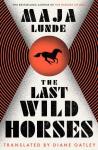
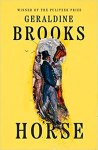
- Unst, Shetland as a setting in Orchid Summer by Jon Dunn, Sightlines by Kathleen Jamie, Julia and the Shark by Kiran Millwood Hargrave, and Where the Wildflowers Grow by Leif Bersweden.
- “Quiet as it’s kept” (a quote from the opening line of Toni Morrison’s The Bluest Eye) is borrowed in a poem in No Country for Eight-Spot Butterflies by Julian Aguon and one in the anthology American Wildflowers: A Literary Field Guide, ed. Susan Barba (“A Siren Patch of Indigo” by Cyrus Cassells).
- I didn’t recognize the word “swingeing” in The Reindeer Hunters by Lars Mytting and encountered it again the same day in Brief Lives by Anita Brookner before I had a chance to look it up (it means extreme or severe).
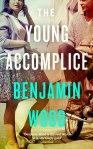
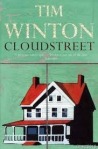
- A 1950s setting and a main character who is a man with missing fingers/arm in Cloudstreet by Tim Winton and The Young Accomplice by Benjamin Wood.
What’s the weirdest reading coincidence you’ve had lately?
Love Your Library, July 2022
Margaret posted about books picked at random while volunteering at the library, and the way a certain type of cover can draw you in or fit your mood. I’ve certainly experienced this, too!
I’ve noticed that, lately, my library system has been making an effort to cover gaps in its holdings, purchasing books to boost its collections of LGBTQ and postcolonial literature: reissues of novels by Caribbean and Indigenous (e.g. Maori) authors, more by trans people, Black British authors from the Virago Modern Classics series, etc. They also tend to buy up writers’ back catalogues, especially if reprinted as a uniform series – I keep hoping they’ll do this for Sarah Hall. Though I volunteer at the library twice a week, I don’t have insider knowledge; it’s still a mystery to me how and why some books get ordered and some don’t.
Since last month…
READ
- Orchid Summer by Jon Dunn

- Lessons in Chemistry by Bonnie Garmus
- Secrets of the Sea House by Elisabeth Gifford
- This Is Not a Pity Memoir by Abi Morgan (for book club)

- The Summer of the Bear by Bella Pollen
- Transitions: Our Stories of Being Trans, ed. Juno Roche et al.

- Stormy Petrel by Mary Stewart
- Madwoman by Louisa Treger – reviewing for Shelf Awareness
And from the university library:
- The Daughter of Time by Josephine Tey
From whence this amusing quote about library books:
“No T. More in any of the bookshops, so tried Public Library. Can’t think why one never thinks of Public Libraries. Probably because books expected to be soupy. Think this looks quite clean and unsoupy. You get fourteen days. Sounds like a sentence rather than a loan.”
(I sometimes get perfume-y books, but not soupy ones. How about you?)
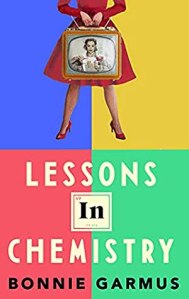 I’ll zero in on one of these, Lessons in Chemistry, because there are 50 reservations after me in the queue – that must be a record for my small library system! Bonnie Garmus made her authorial debut at age 64; you can be sure she’ll be in the running for the next Paul Torday Memorial Prize (awarded by the Society of Authors to a first novel by a writer over 60). Elizabeth Zott is a scientist through and through, applying a chemist’s mindset to her every venture, including cooking, rowing and single motherhood in the 1950s. When she is fired from her job in a chemistry lab and gets a gig as a TV cooking show host instead, she sees it as her mission to treat housewives as men’s intellectual equals, but there are plenty of people who don’t care for her unusual methods and free thinking. I was reminded strongly of The Atomic Weight of Love and The Rosie Project, as well as novels by Katherine Heiny and especially John Irving what with the deep dive into backstory and particular pet subjects, and the orphan history for Zott’s love interest. This was an enjoyable tragicomedy. You have to cheer for the triumphs she and other female characters win against the system of the time. However, her utter humourlessness/guilelessness felt improbable, the very precocious child (and dog) stretch belief, and the ending was too pat for me.
CURRENTLY READING
Continuing with my flora and summer themes; continuing to linger in Scotland; reading about the amazing birds filling our skies (and nesting in our eaves):
- Where the Wildflowers Grow by Leif Bersweden
- Bridget Jones: Mad About the Boy by Helen Fielding (for book club)
- Swifts and Us by Sarah Gibson
- Black Narcissus by Rumer Godden
- Tenderness by Alison MacLeod
- Where the World Ends by Geraldine McCaughrean
- Golden Boys by Phil Stamper
- The False Rose by Jakob Wegelius
- Summer by Edith Wharton
What have you been reading or reviewing from the library recently?

Share a link to your own post in the comments. Feel free to use the above image. The hashtag is #LoveYourLibrary.
What to Read during a Heat Wave
The short answer is whatever you want. A longer answer: you could get stuck into heat-themed and summer-set books; escape by reading about a holiday destination, whether you can get there or not; will yourself cool by reading about icy places; and/or sink into a stack of lighter reading material.
I’ll be employing some or all of these strategies as the mercury climbs. I keep thinking I’ll just give up on work one of these days – my new study has a big window that traps the midday sun, but it remains bearable as long as I use blackout curtains and a desk fan – and read on a couch all afternoon. That hasn’t happened yet, but on Tuesday peak temperatures (of 36 °C) are expected here in the UK, so I may well carry out my threat.
Here’s what I’m reading now in each of those categories, along with some earlier reads I can recommend (with excerpts from my reviews and a link to the full text):
Embrace the Heat
My current reads:
Contemporary
 Golden Boys by Phil Stamper: Four gay high school students in small-town Ohio look forward to a summer of separate travels for jobs and internships and hope their friendships will stay the course. With alternating first-person passages and conversation threads, this YA novel is proving to be a sweet, fun page turner and the perfect follow-up to the Heartstopper series (my summer crush from last year).
Classic
 Summer by Edith Wharton: An adopted young woman (and half-hearted librarian) named Charity Royall gets a shot at romance when a stranger arrives in her New England town. I’m only 30 pages in so far, but this promises to be a great read – but please not as tragic as Ethan Frome? (Apparently, Wharton called it a favourite among her works, and referred to it as “the Hot Ethan,” which I’m going to guess she meant thermally.)
My top recommendations:
Contemporary
 Heatstroke by Hazel Barkworth: From the first word (“Languid”) on, this drips with hot summer atmosphere, with connotations of discomfort and sweaty sexuality. Rachel is a teacher of adolescents as well as the mother of a 15-year-old, Mia. When Lily, a pupil who also happens to be one of Mia’s best friends, goes missing, Rachel is put in a tough spot…
 A Crime in the Neighbourhood by Suzanne Berne: Marsha remembers the summer of 1972, when her father left her mother for Aunt Ada and news came of a young boy’s sexual assault and murder in the woods behind a mall. “If you hadn’t known what had happened in our neighborhood, the street would have looked like any other suburban street in America.”
 Heat by Bill Buford: You know what they say: if you can’t stand the heat, get out of the kitchen (eat some cold salads instead!). Buford traces TV chef Mario Batali’s culinary pedigree through Italy and London, and later spends stretches of several months in Italy as an apprentice to a pasta-maker and a Tuscan butcher. Exactly what I want from food writing.
 Heat Wave by Penelope Lively: Pauline, a freelance copyeditor in her fifties, has escaped from London to spend a hot summer at World’s End, the Midlands holiday cottage complex she shares with her daughter and her family. The increasing atmospheric threats (drought or storms; combine harvesters coming ever nearer) match the tensions in the household.
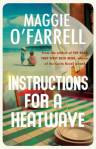 Instructions for a Heatwave by Maggie O’Farrell: Another spot-on tale of family and romantic relationships. The language is unfailingly elegant. It opens with the heat as the most notable character: “It inhabits the house like a guest who has outstayed his welcome: it lies along corridors, it circles around curtains, it lolls heavily on sofas and chairs.”
- This is set during the UK heatwave of 1976, which lives on in collective memory and legend in this country even though its temperature record has been topped (but not the length of the streak). I’ve since tried two other novels set during the summer of ’76 but neither took (maybe you’ll get on better with them?): Water Shall Refuse Them by Lucie McKnight Hardy and In the Place of Fallen Leaves by Tim Pears.
 Or try the American summer of 1975 instead, with Mary Jane by Jessica Anya Blau, a juicy coming-of-age novel set in Baltimore.
Classic
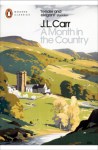 A Month in the Country by J. L. Carr: Tom Birkin, a First World War veteran whose wife has left him, arrives in Oxgodby to uncover the local church’s wall painting of the Judgment Day. “There was so much time that marvelous summer.” There is something achingly gorgeous about this Hardyesque tragicomic romance, as evanescent as ideal summer days.
 The Go-Between by L. P. Hartley: Twelve-year-old Leo Colston is invited to spend the several July weeks leading up to his birthday at his school friend Marcus Maudsley’s home, Brandham Hall. The heat becomes a character in its own right, gloweringly presiding over the emotional tension caused by secrets, spells and betrayals.
 In a Summer Season by Elizabeth Taylor: The title is not only literal, when much of the action takes place, but a metaphor for the fleeting nature of happiness (as well as life itself). Kate remembers pleasant days spent with her best friend and their young children: “It was a long summer’s afternoon and it stood for all the others now. … Their friendship was as light and warming as the summer’s air.”
Escape on Holiday
I try to read on location whenever possible, but if it’s a staycation for you this year, you can still transport yourself somewhere exciting or tropical through fiction.
My current read:
 Mustique Island by Sarah McCoy: “A sun-splashed romp with a rich divorcée and her two wayward daughters in 1970s Mustique, the world’s most exclusive private island [in the Caribbean], where Princess Margaret and Mick Jagger were regulars and scandals stayed hidden from the press.”
My top recommendations:
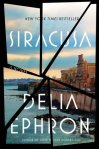 Siracusa by Delia Ephron: A snappy literary thriller about two American couples who holiday together on the Sicilian island of Siracusa. Shifting between the perspectives of the four main characters, it looks back to ask what went disastrously wrong on that trip. A delicious story ripe for a cinematic adaptation.
 Nothing but Blue Sky by Kathleen MacMahon: Set in Aiguaclara, a hidden gem on Spain’s Costa Brava where David and Mary Rose holidayed every summer for 20 years. Most of the book remembers their life together and their previous vacations here. Grief, memory, fate: some of my favourite themes, elegantly treated.
 A Theatre for Dreamers by Polly Samson: Set on the Greek island of Hydra in 1960, this zeroes in on several authors, including a young poet from Canada named Leonard Cohen. We see all of the real-life characters from the perspective of a starry-eyed 17-year-old narrator. You can feel the Mediterranean heat soaking up through your sandals.
 The Vacationers by Emma Straub: Perfect summer reading; perfect vacation reading. Straub writes great dysfunctional family novels featuring characters so flawed and real you can’t help but love and laugh at them. Here, Franny and Jim Post borrow a friend’s home in Mallorca for two weeks, hoping sun and relaxation will temper the memory of Jim’s affair.
Read Yourself Cool
Will reading about snow and ice actually make you feel any cooler? It can’t hurt.
My current reads:
I had a vague Antarctica reading theme going for a while, but have yet to get back into two set-aside reads, Empire Antarctica by Gavin Francis and Lean Fall Stand by Jon McGregor (or pick up Snow Widows by Katherine MacInnes and South Pole Station by Ashley Shelby). Maybe next week!
My top recommendations:
 Among the Summer Snows by Christopher Nicholson: After the death from cancer of his wife Kitty, a botanical illustrator, Nicholson set off for Scotland’s Cairngorms and Ben Nevis in search of patches of snow that persist into summer. “Summer snow is a miracle, a piece of out-of-season magic: to see it is one thing, to make physical contact with it is another.”
 The Still Point by Amy Sackville: A sweltering summer versus an encasing of ice; an ordinary day versus decades of futile waiting. Sackville explores these contradictions only to deflate them, collapsing time such that a polar explorer’s wife and her great-great-niece can inhabit the same literal and emotional space despite being separated by more than a century.
Keep it Light
I’m more likely to read genre fiction (crime, especially) during the summer, it seems. I recently read The Daughter of Time by Josephine Tey for book club, for instance – but it was so permeated in Plantagenet history that it wasn’t your standard detective drama at all.
I also like to pick up lighter reads that edge towards women’s fiction. I’ve been starting my days with passages from these two, though it might make more sense to read them later in the day as a reward for getting through parts of weightier books.
My current reads:
 Bridget Jones: Mad About the Boy by Helen Fielding: I’d never read this second sequel from 2013, so we’re doing it for our August book club – after some darker reads, people requested something light! Bridget is now a single mother in her early 50s, but some things never change, like constant yo-yo dieting and obsessive chronicling of the stats of her life.
 Lessons in Chemistry by Bonnie Garmus: This year’s It book. I’m nearly halfway through and enjoying it, if not as rapturously as so many. Katherine Heiny meets John Irving is the vibe I’m getting. Elizabeth Zott is a scientist through and through, applying a chemist’s mindset to her every venture, including cooking, rowing and single motherhood in the 1950s.
My top recommendations:
 Sunburn by Laura Lippman: While on a beach vacation in 1995, a woman walks away from her husband and daughter and into a new life as an unattached waitress. I liked that I recognized many Maryland/Delaware settings. Quick and enjoyable. (I’ve never been hotter than during the July week we spent in Milan in 2019. This is one of the books I read on that trip.)
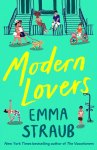 Modern Lovers by Emma Straub: Short chapters flip between all the major characters’ perspectives, showing that she completely gets each one of them. The novel is about reassessing as one approaches adulthood or midlife, about reviving old dreams and shoring up flagging relationships. Nippy and funny and smart and sexy. So many lines ring true. (Yes, a second entry from Straub: she writes such accessible and addictive literary fiction.)
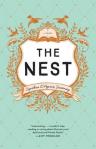 The Nest by Cynthia D’Aprix Sweeney: The four dysfunctional Plumb siblings must readjust their expectations when the truth comes out. This also affects their trust fund, “the nest.” A nest is, of course, also a home, so for as much as this seems to be about money, it is really more about family and how we reclaim our notion of home after a major upheaval.
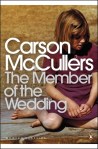 This article on the Penguin website has a few more ideas, including To Kill a Mockingbird (you think we’ve got it bad? Try a summer in the American South!), Atonement, and poetry. I took up one of Alice Vincent’s recommendations right away: since I’m reading My Autobiography of Carson McCullers by Jenn Shapland, it made sense to get a copy of McCullers’s The Member of the Wedding out from the public library. Already on the first page you’re steeped in a sweltering Georgia summer (like McCullers, my dad is from Columbus):
It happened that green and crazy summer when Frankie was twelve years old. … The sidewalks of the town were grey in the early morning and at night, but the noon sun put a glaze on them, so that the cement burned and glittered like glass. The sidewalks finally became too hot for Frankie’s feet. … The world seemed to die each afternoon and nothing moved any longer. At last the summer was like a green sick dream, or like a silent crazy jungle under glass.
 Bookish Beck = Rebecca Foster. American transplant to England. Freelance proofreader and book reviewer.
 Bookish Beck