Reviews Roundup, November–December
One of my goals with this blog is to have one convenient place where I can gather together all my writing that has appeared in disparate online locations. To that end, once a month I provide links to all book reviews I’ve published elsewhere, with a rating (below each description) and a taster so you can decide whether to read more. A few exceptions: I won’t point out my Kirkus Indie, BlueInk or Publishers Weekly reviews since I don’t get a byline.
The Bookbag
 In Search of Mary: The Mother of All Journeys by Bee Rowlatt: A BBC journalist and mother of four sets out, baby in tow, to trace the steps of Mary Wollstonecraft in Norway and France. A follow-up trip to California is a little off-topic, but allows Rowlatt to survey the development of feminism over the last few centuries. This isn’t as successful a bibliomemoir as many I’ve read in recent years, such as Rebecca Mead’s My Life in Middlemarch or Samantha Ellis’s How to Be a Heroine, but for readers interested in engaging in the ongoing debate about how women can balance work life with motherhood, and especially for any women who have attempted traveling with children, it’s a fun, sassy travelogue.

Foreword Reviews
 Italy Invades: How Italians Conquered the World by Christopher Kelly and Stuart Laycock: Proceeding alphabetically from Afghanistan to Zimbabwe, the authors give a comprehensive picture of Italians’ global reach through one- to five-page snapshots. There are many familiar names here, such as Caesar, Garibaldi and Marco Polo. Along with exploration, some major reasons for historical crossover were trade, war, colonialism and immigration. At times it feels as if the authors are grasping at straws; better to skip one-paragraph write-ups altogether and focus instead on the countries that have extensive links with Italy. Nonetheless, this is a lively, conversational book full of surprising facts.

Why You Won’t Go to Hell by Benjamin Vande Weerdhof Andrews: In a well-structured argument, Andrews prizes empirical thinking, rejects the supernatural, and affirms the possibility of godless morality. His central thesis is that religion doesn’t evolve to keep pace with society and so holds humanity back. The book’s tone is too often defensive, often in response to included website comments, and there are some failures of accuracy and fairness. Ultimately, though, this could be an inspirational book for atheists or believers, prompting both groups to question their assumptions and be willing to say “I don’t know.” Readers of Sam Harris and Christopher Hitchens will be particularly drawn to the book, but others should take a chance on it too.

 Cultured Food for Health by Donna Schwenk: When Schwenk started eating cultured foods in 2002, she had diabetes, high blood pressure, and a premature newborn. Keen to see if good bacteria could help with her medical problems, she started introducing the “healing powerhouse” of kefir (a fermented milk product resembling thin yogurt), kombucha (bubbly tea), and cultured vegetables into her diet, and soon reaped the rewards. About a quarter of the book is background information about probiotic foods. Bullet-pointed lists of health benefits, along with an alphabetical inventory of the diseases that cultured foods can treat, should prove helpful. The rest of the book is devoted to recipes, most vegetarian.
Three Simple Questions: Being in the World, But Not of It by Charlie Horton: Horton, trained as a social worker, was diagnosed with cerebellar degeneration in 1988. It has gradually affected his speech and movement. Despite having lived with disability for nearly three decades, he declares, “the world I live in is rich, and my spirit is young.” Here he documents how he deals with depression and physical limitations through guided meditations that bring him closer to God. Although he comes from a Christian perspective, he writes about spirituality in such inclusive terms that his work should speak to people of any faith.
Middle Passage: The Artistic Life of Lawrence Baker by Louis B. Burroughs, Jr.: This ghostwritten autobiography of an African-American artist is not only an evocative, eventful life story that moves from the Jim Crow South to the North, but also a forceful artist’s manifesto. Burroughs writes in Baker’s voice, a decision that works surprisingly well. The title is a powerful reference to the slave trade. Indeed, Burroughs consciously crafts Baker’s autobiography as an “up from slavery” narrative reminiscent of Richard Wright and Maya Angelou – with ‘slavery’ in this case being poverty and racism.
Nudge
 40 Sonnets by Don Patterson: All but one of the poems in this new book have the sonnet’s traditional 14 lines; “The Version” is a short prose story about writing an untranslatable poem. However, even in the more conventional verses, there is a wide variety of both subject matter and rhyme scheme. Topics range from love and death to a phishing phone call and a footpath blocked off by Dundee City Council. A few favorites were “A Powercut,” set in a stuck elevator; “Seven Questions about the Journey,” an eerie call-and-response; and “Mercies,” a sweet elegy to an old dog put to sleep. There weren’t quite enough stand-outs here for my liking, but I appreciated the book as a showcase for just how divergent in form sonnets can be.
 Without You There Is No Us by Suki Kim: This is a quietly gripping book even though not much of moment happens over Kim’s five months teaching young men at a missionary-run college in Pyongyang. She was in a unique position in that students saw her as ethnically one of their own but she brought an outsider’s perspective to bear on what she observed. Just before she flew back to the States in 2011, Kim Jong-Il died, an event she uses as a framing device. It could have represented a turning point for the country, but instead history has repeated itself with Kim Jong-un. Kim thus ends on a note of frustration: she wants better for these young men she became so fond of. A rare glimpse into a country that carefully safeguards its secrets and masks its truth.
 Alive, Alive Oh!: And Other Things that Matter by Diana Athill: Diana Athill turns 98 on December 21st. Apart from “Dead Right,” however, this collection is not primarily concerned with imminent death. Instead Athill is still grateful to be alive: marveling at a lifetime of good luck and health and taking joy in gardening, clothing, books, memories and friendships. Six of the 10 essays originally appeared elsewhere. The collection highlight is the title piece, about a miscarriage she suffered in her forties. Another stand-out is “The Decision,” about moving into a retirement home in her nineties. This doesn’t live up to her best memoirs, but is an essential read for a devoted fan, and a consolation given she will likely not publish anything else (though you never know). [For first-time Athill readers, I’d recommend starting with Somewhere Towards the End, followed by Stet, about her work as a literary editor.]
I also post reviews of most of my casual reading and skimming on Goodreads:
The Weightless World by Anthony Trevelyan: This debut novel blends postcolonial bureaucracy with steampunk zaniness. The setup is familiar enough: businessmen head overseas to take financial advantage of a former colony, puzzle over unfamiliar customs, and by the end are chastened but gain a clearer sense of values. Narrator Steven Strauss is the personal assistant to Raymond Ess, an entrepreneur with a history of mental illness. Their aviation company has gone bust; Strauss is to accompany Ess to India and keep him occupied by looking for an anti-gravity machine. Not anchored by either current events or convincing fantasy, the plot suffers in comparison to works by Geoff Dyer or Nick Harkaway. Despite entirely serviceable writing and a gravity-defying theme, it never really takes off.

 My Confection: Odyssey of a Sugar Addict by Lisa Kotin: 1978. Twenty-one-year-old mime goes to macrobiotic rehab to recover from sugar addiction. Fails. Shows signs of being a sex addict as well. Pared down to headlines, that’s how this fairly rambling memoir about Kotin’s relationships with food, family, lovers, and career opens. I kept waiting for a turn, some moment of revelation, when Kotin’s binge eating would be solved. Still, her recreation of her obsessive younger self can be pretty funny and charming, and her family sounds a bit like the Sedaris clan. I found this a bit dated, but others may find the time period and Jewish family background more evocative.
 Good on Paper by Rachel Cantor: I’m going to chalk this one up to blurb inflation. The writing is lively and the plot well crafted, with quirky postmodern touches, but the novel as a whole did not live up to my absurdly high expectations: it’s really nothing like A.S. Byatt’s Possession. It’s 1999 and Shira Greene is a failed translator from the Italian, now working as a temp in New York City and raising her daughter Andi with the help of her gay, Pakistani co-parent, Ahmad. One day she gets a call from Romei, a Nobel Prize-winning Italian poet who wants her to translate his new work, a version of Dante’s Vita Nuova that focuses on his relationship with his ill wife – and eventually starts to comment on Shira’s own life in surprising ways.
Water Sessions by James Lasdun: Wonderful poems from a severely underrated writer. The British Lasdun has relocated to small-town upstate New York, where he’s learned the spiritual worth of manual labor. There are such interesting rhyme schemes and half-rhymes throughout. One of the most striking poems, “Thing One and Thing Two,” compares human and animal sexuality in a rather disturbing way. The title sequence is a dialogue between a patient and a therapist, discussing what went wrong in a relationship and how arguments are never ‘about’ the thing that started it.
 The Secret Chord by Geraldine Brooks: A retelling of the life of King David from the perspective of the prophet Nathan. The naming takes some getting used to, but the stories – from gory massacres to moments of triumph – are recognizable from the Old Testament. What makes Brooks’s take unique is the different points of view it shows and the ways it subtly introduces doubt about David’s carefully cultivated image. It’s sensual historical fiction, full of rich descriptive language. Strangely unmemorable for me, perhaps because the storyline is just too familiar. Brooks doesn’t offer a radical reinterpretation but sows small seeds of doubt about the hero we think we know. (Full review in Jan/Feb 2016 issue of Third Way magazine.)
 When I Die: Lessons from the Death Zone by Philip Gould: Gould may be familiar to British readers as a key strategist of the New Labour movement and one of Tony Blair’s advisors. In 2008 he was diagnosed with esophageal cancer and chose to pay for private treatment at New York’s Sloan-Kettering hospital instead of going for a radical operation through the NHS – a fateful decision. Gould’s own account is fairly short, about 140 pages, but it’s supplemented by short reminiscences from his wife and two daughters. Daughter Georgia’s, especially, is a very good blow-by-blow of his final week. All royalties from the book went to the National Oesophago-Gastric Cancer Fund.
 Twain’s End by Lynn Cullen: “Twain’s End” was a possible name for the Clemens house in Connecticut, but it’s also a tip of the hat to Howards End and an indication of the main character’s impending death. In January 1909, when the novel opens, Samuel Clemens, 74, is busy dictating his autobiography and waiting for Halley’s Comet, the heavenly body that accompanied his birth, to see him back out. His secretary, Isabel Lyon, is 45 and it’s no secret that the two of them are involved. I love how the novel shifts between the perspectives of several strong female characters yet still gives a distinct portrait of Clemens/Twain. Interestingly, I found that it helped to have visited the Twain house in Connecticut – I could truly picture all the scenes, especially those set in the billiard room and conservatory.
 Meadowland: The Private Life of an English Field by John Lewis-Stempel: Lewis-Stempel is a proper, third-generation Herefordshire farmer, but also a naturalist with a poet’s eye. His day job might involve shooting rabbits, cutting hay and delivering lambs, but he still finds the time to notice and appreciate wildlife. He knows his field’s flowers, insects and birds as well as he knows his cows; he gets quiet and close enough to the ground to watch a shrew devouring beetles. June and July are the stand-out chapters, with some truly magical moments. When his mower breaks on a stone, he has to cut the hay by hand, returning him to a centuries-gone model of hard labor. All delivered in the loveliest prose.

Did You Ever Have a Family by Bill Clegg: A strong debut novel about personal and community responses to tragedy. Clegg’s multivocal approach works quite well, though there are perhaps a few too many voices diluting the mixture. I like how the revelations of what really happened that night before the wedding to cause the fatal house fire come gradually, making you constantly rethink who was responsible and what it all means. The small-town Connecticut setting is a good one, but I’d question the decision to set so much of the book in Washington, where the bereaved June drives on a whim. For a tragic story, it’s admirably lacking in melodrama.
 A Homemade Life: Stories and Recipes from My Kitchen Table by Molly Wizenberg: Foodoir extraordinaire! I liked this even better than Delancey, which is a terrific book about opening a pizza restaurant in Seattle with her husband. Here we get the prequel: the death of her father Burg from cancer, time spent living in Paris, building a new life in Seattle, starting her now-famous food blog (Orangette), and meeting her husband Brandon through it. Each brief autobiographical essay is perfectly formed and followed by a relevant recipe, capturing precisely how food is tied up with her memories. Wizenberg’s very fond of salad, but also of cake, and every recipe is full-on in terms of flavors and ingredients.
Ellen Foster by Kaye Gibbons: This was a random library book sale purchase, chosen almost entirely for the title. I set aside my usual dislike of child narrators and found an enjoyable voice-driven novella about a feisty ten-year-old who loses both her parents (good riddance to her father, at least) and finds her own unconventional family after cycling through the homes of some truly horrid relatives. Just as an example, her maternal grandmother sends her out to work picking cotton. The book is set in the South, presumably in the 1970s or 80s, so it’s alarming to see how strong racial prejudice still was.
 The Ecco Book of Christmas Stories, edited by Alberto Manguel: I read this over several years, a handful each holiday season. There are some very unusual choices, including some that really have hardly anything to do with Christmas (e.g. one by Bessie Head). Still, it’s a nice book to have to hand, even if just to skip through. Manguel strikes a good balance between well-known short story writers, authors you might never think to associate with Christmas, and fairly obscure works in translation. Four favorites: “A Christmas Memory,” Truman Capote (overall favorite); “Christmas Is a Sad Season for the Poor,” John Cheever; “The Zoo at Christmas,” Jane Gardam; and “O’Brien’s First Christmas,” Jeanette Winterson.
Reviews Roundup, March–April
One of my goals with this blog is to have one convenient place where I can gather together all my writing that has appeared in disparate online locations. To that end, once a month – or maybe more often – I’ll provide links to all the book reviews I’ve published elsewhere, with a short taster and a rating (below) so you can decide whether to click to read more. (A couple of exceptions: I won’t point out my Kirkus Indie or BlueInk reviews since I don’t get a byline.)
BookBrowse
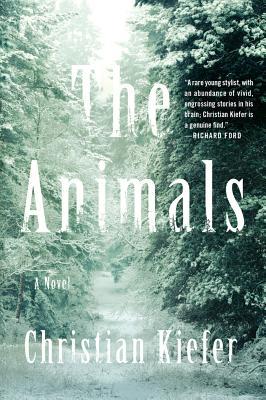 The Animals by Christian Kiefer [BookBrowse is a subscription service, but an excerpt is available for free on the website]: Kiefer’s second novel contrasts wildness and civilization through the story of a man who runs an animal refuge to escape from his criminal past.

The Bookbag
 The Sunlit Night by Rebecca Dinerstein: A debut novel as charming as it is quirky. Two young adults from Brooklyn meet in the far north of Norway, where one is an artist’s apprentice and the other is burying a beloved father. Bittersweet family backstories and burgeoning romance make this a winner.

Beauty and Chaos: Slices and Morsels of Tokyo Life by Michael Pronko (& interview): The pleasant and diverse travel essays in this collection draw on Pronko’s 15 years living in Japan. A long-term resident but still an outsider, he is perfectly placed to notice the many odd and wonderful aspects of Tokyo life.
The Blind Man of Hoy: A True Story by Red Szell: Red Széll started losing his sight at age 19. In 2013 he became the first blind person to climb the Old Man of Hoy, off the Orkney Islands. An inspirational rock-climbing adventure.

 Adeline: A Novel of Virginia Woolf by Norah Vincent: Set in 1925–1941 and focusing on Virginia Woolf’s marriage and later career, this is a remarkable picture of mental illness from the inside. For the depth of its literary reference and psychological insight, this is my favorite novel of 2015 so far.
Nudge
On Immunity: An Inoculation by Eula Biss: This wide-ranging work of nonfiction explores the facts, myths and metaphors of vaccination. Biss powerfully captures the modern phenomenon of feeling simultaneously responsible and powerless.
Chaplin and Company by Mave Fellowes: An aspiring mime buys a London canal boat and finds her father in this debut novel. Fellowes writes good descriptive passages and handles past and present capably. However, I was unsure whether Chaplin and Company overall has much narrative verve. What I will take away is an offbeat, bittersweet coming-of-age story.

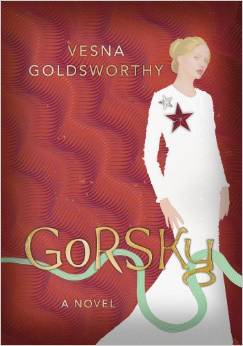 Gorsky by Vesna Goldsworthy: An updated version of The Great Gatsby set amongst contemporary London’s über-rich Russians. The novel is wise about the implications of class and immigration. However, as a whole it doesn’t work as well as some updated classics, such as The Innocents (Francesca Segal). In a sense, Goldsworthy’s literary debt is too obvious.

Quite a Good Time to Be Born: A Memoir, 1935-1975 by David Lodge [more personal musings and an overview of the book’s content]: David Lodge, one of Britain’s most celebrated comic novelists, surveys 40 years of personal and social change.
Better Than Before: Mastering the Habits of Our Everyday Lives by Gretchen Rubin: The author of The Happiness Project returns with a thorough guide to making and breaking habits, offering different strategies for different personality types.
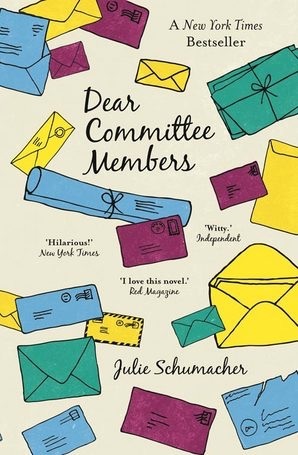 Dear Committee Members by Julie Schumacher: A very funny epistolary novel in the form of letters of recommendation written by a grouchy English professor. English graduates and teachers in particular will get a kick out of this, but I daresay anyone who has ever been fed up with bureaucracy at work will sympathize with Fitger.
The Last Asylum: A Memoir of Madness in Our Time by Barbara Taylor: Taylor was once a mental patient at Friern Hospital. This is an arresting vision of madness from the inside, as well as a history of England’s asylum system.
We Love This Book
 It’s What I Do: A Photographer’s Life of Love and War by Lynsey Addario: Photojournalist Lynsey Addario remembers a decade on the frontline of conflicts in the Middle East and Africa and strives for balance in her work and personal life. Journalists face real danger every day. It’s all here: bombs, car accidents, dehydration, beatings, and sexual assault. Yet all the risks over the years have been worth it “to convey beauty in war.”
Hausfrau by Jill Alexander Essbaum: Essbaum’s arresting debut novel reads like a modern retelling of Madame Bovary, with its main character a desperate housewife in Zurich. As deplorable as Anna’s actions may be, she is an entirely sympathetic tragic heroine. Watch her trajectory with horror but you cannot deny there is a little of Anna in you.
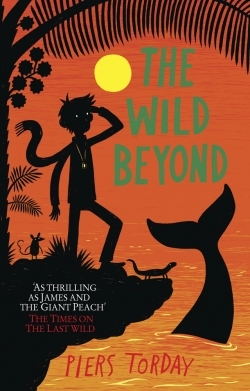 The Wild Beyond by Piers Torday: the suspenseful finale to “The Last Wild,” a fantasy trilogy for younger readers. The environmentalist message is not subtle but it is powerful and should inspire older children. Blending hints of Pullman and Tolkien with up-to-the-minute dystopian themes, this is an inventive take on the classic quest narrative.
The Time in Between: A Memoir of Hunger and Hope by Nancy Tucker: Nancy Tucker suffered from anorexia and bulimia for nearly a decade. Written in an original blend of styles, her eating disorder memoir is wrenching but utterly absorbing. You won’t find epiphanies or happy endings here, just a messy, ongoing recovery process – but 21-year-old Tucker narrates it exquisitely.
Quadrapheme literary magazine
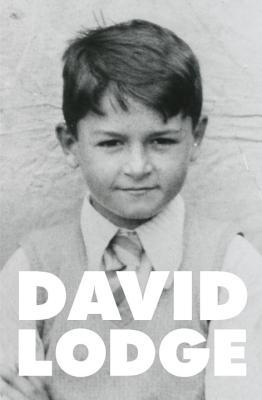 Quite a Good Time to Be Born: A Memoir, 1935-1975 by David Lodge [more of an essay about the context and sociological themes]: Even readers less familiar with Lodge’s work may be interested in the book’s insights into the social changes of post-war Britain. Lodge has not had a conventionally exciting life, and he knows it. From the title onward, his focus is more on his time period than his own uniqueness. He appears as an Everyman who superseded his working-class origins and expectations through hard work and luck.
Shiny New Books
 Reading the World: Confessions of a Literary Explorer by Ann Morgan: Not just another bibliomemoir. A better balance could have been struck between recycled blog content and academic musings on postcolonial literature and censorship. An interest in the politics of literature in translation would be a boon to anyone attempting this.
Foreword Reviews (self-published titles)
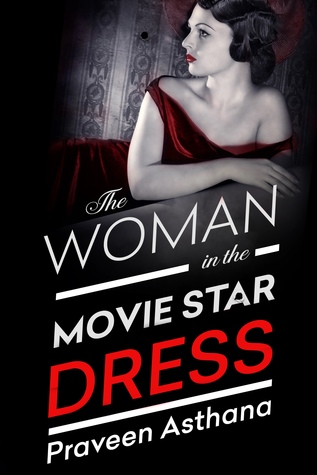 The Woman in the Movie Star Dress by Praveen Asthana: In this carefully plotted novel, a young Native American finds self-assurance and explores her sexuality by trying on the clothing – and personae – of Hollywood actresses. Spirited characters and dialogue make this an enjoyable read for classic film lovers.
Silence by Deborah Lytton: Lytton’s second novel for young adults concerns the unlikely match between a Broadway-bound singer who experiences temporary deafness after an accident and a pianist with a speech impediment and a traumatic past. It is a touching story about the forces that so often threaten us into silence and the struggle to find a voice anyway.
 Woody Allen: Reel to Real by Alex Sheremet: Woody Allen fans will prize this comprehensive, readable rundown of his oeuvre. This is an exhaustive study, ideal for established Allen enthusiasts and film students rather than the average moviegoer looking for an introduction.
I also post reviews of most of my casual reading on Goodreads.
The Mermaid’s Child by Jo Baker: This was Baker’s second novel, originally published in 2004. It doesn’t nearly live up to Longbourn, but it’s a fairly intriguing blend of historical fiction and fantasy. Malin’s father was a ferryman; her absent mother, so he swears, was a mermaid. Curiously timeless and placeless.
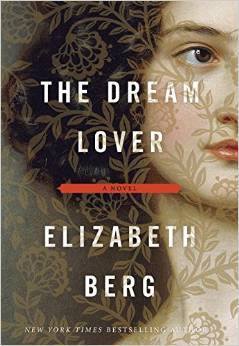 The Dream Lover: A Novel of George Sand by Elizabeth Berg: This historical novel about George Sand is a real slow burner. Berg makes the mistake of trying to be too comprehensive about Sand’s life; it would be better to just choose illustrative vignettes or representative love affairs (e.g. with Chopin) rather than include them all. There are two different timelines, 1831–1876 and 1804–1831, but together they’re still just a chronological slog.
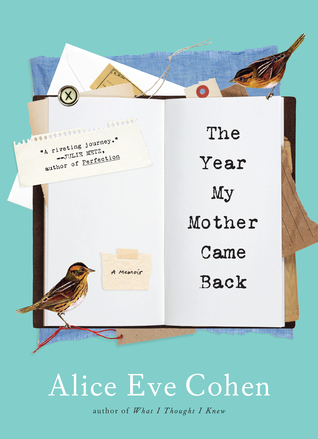 The Year My Mother Came Back by Alice Eve Cohen: There’s some gentle magic realism to this mother-daughter memoir. In the difficult year that forms the kernel of the memoir, Cohen’s younger daughter, Eliana, had a leg-lengthening surgery; her adopted older daughter, Julia, met her birth mother, Zoe; and Cohen herself underwent a lumpectomy and radiation for breast cancer. During radiation sessions, when she had to lie face-down, perfectly still, for 10 minutes at a time, her mother – dead for 20 years – would appear and talk to her.
A Sting in the Tale: My Adventures with Bumblebees by Dave Goulson: A wholly engaging tour through everything we know and are still trying to learn about bumblebees. I saw Goulson, founder of the UK’s Bumblebee Conservation Trust, speak at a nature conference in November and found him to be just as enthusiastic and well-informed in person. His occasional anthropomorphisms are unfailingly endearing.
 Black River by S.M. Hulse: Back in the town of Black River, Montana after his wife’s agonizing death, Wesley Carver must face the trauma he experienced as a prison guard when he was held hostage and tortured during an inmate riot. Now his attacker is up for parole, and Wes plans to attend the hearing and discourage the jury. At first you might think you’re reading a revenge story, but this is something subtler and sweeter than that. (What a shame that Hulse had to go by her initials, rather than Sarah, to be taken seriously in this genre, even though she’s on a level with Philipp Meyer.)
Trumbull Ave. by Michael Lauchlan: I didn’t like this quite as much as the other Made in Michigan books I’ve read, but Lauchlan does a good job of contrasting pastoral and post-industrial views of Detroit through free verse, as in “Detroit Pheasant,” the poem that gives the collection its cover image.
What Ridiculous Things We Could Ask of Each Other by Jeffrey Schultz: I enjoyed these poems set in a seemingly post-apocalyptic urban wasteland. They’re full of black humor, sarcasm and realistically pessimistic views of the American future. They’re very densely structured, usually in complete sentences of free verse.
 Bookish Beck = Rebecca Foster. American transplant to England. Freelance proofreader and book reviewer.
