The Best Books from the First Half of 2025
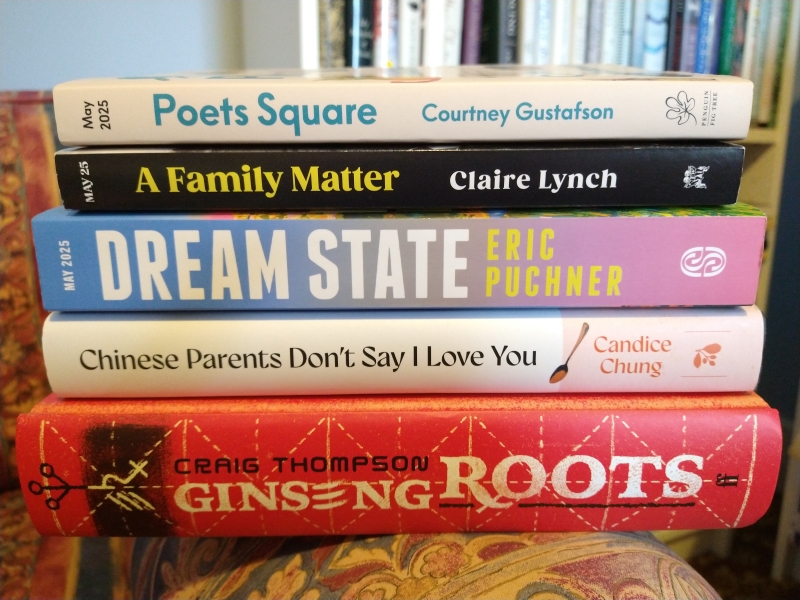
Hard to believe it, but it’s that time of year already. It’s the ninth year in a row that I’ve been making a first-half superlatives list. It remains to be seen how many of these will make it onto my overall best-of year rundown, but for now, these are my 16 favourite 2025 releases that I’ve read so far (representing the top ~21% of my current-year reading). Pictured below are the ones I read in print; all the others were e-copies. Links are to my full reviews.
Fiction
 Spent: A Comic Novel by Alison Bechdel: Alison has writer’s block and is consumed with anxiety about the state of the world. “Who can draw when the world is burning?” Then she has an idea for a book – or maybe a reality TV series – called $UM that will wean people off of capitalism. That creative journey is mirrored here. Through Alison’s ageing hippie friends and their kids, Bechdel showcases alternative ways of living. Even the throwaway phrases are hilarious. It’s a gleeful and zeitgeist-y satire, yet draws to a touching close.
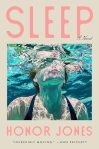 Sleep by Honor Jones: A breathtaking character study of a woman raising young daughters and facing memories of childhood abuse. Margaret’s 1990s New Jersey upbringing seems idyllic, but upper-middle-class suburbia conceals the perils of a dysfunctional family headed by a narcissistic, controlling mother. Jones crafts unforgettable, crystalline scenes. There are subtle echoes throughout as the past threatens to repeat. Reminiscent of Sarah Moss and Evie Wyld, and astonishing for its psychological acuity, this promises great things from Jones.
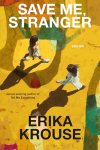 Save Me, Stranger by Erika Krouse: Twelve first-person narratives voiced by people in crisis, for whom encounters with strangers tender the possibility of transformation. In the title story, the narrator is taken hostage in a convenience store hold-up. Others are set in Thailand and Japan as well as various U.S. states. Krouse focuses on young women presented with dilemmas and often eschews tidy endings, leaving characters on the brink and allowing readers to draw inferences. Fans of Danielle Evans and Lauren Groff have a treat in store.
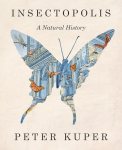 Insectopolis: A Natural History by Peter Kuper: “If insects were to vanish, the environment would collapse into chaos.” (E. O. Wilson) After an unspecified apocalypse, only insects remain. Group by group, they guide readers through an empty New York Public Library exhibit, interacting within and across species. It’s a sly blend of science, history, stories and silliness. There are interludes about insects in literature and unsung heroines of entomology. Informative and entertaining at once; what could be better? Welcome our insect overlords!
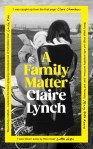 A Family Matter by Claire Lynch: In her research into UK divorce cases in the 1980s, Lynch learned that 90% of lesbian mothers lost custody of their children. Her earnest, delicate debut novel, which bounces between 2022 and 1982, imagines such a situation through close portraits of three family members. Maggie knew only that her mother, Dawn, abandoned her when she was little. Lynch’s compassion is equal for all three characters. This confident, tender story of changing mores and steadfast love is the new Carol for our times.
 Are You Happy? by Lori Ostlund: Nine short fictions form a stunning investigation into how violence and family dysfunction reverberate. “The Peeping Toms” and “The Stalker” are a knockout pair featuring Albuquerque lesbian couples under threat by male acquaintances. Characters are haunted by loss and grapple with moral dilemmas. Each story has the complexity and emotional depth of a novel. Freedom versus safety for queer people is a resonant theme in an engrossing collection ideal for Alice Munro and Edward St. Aubyn fans.
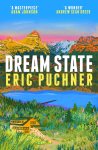 Dream State by Eric Puchner: It starts as a glistening romantic comedy about t Charlie and Cece’s chaotic wedding at a Montana lake house in summer 2004. First half the wedding party falls ill with norovirus, then the best man, Garrett, falls in love with the bride. The rest examines the fallout of this uneasy love triangle as it stretches towards 2050 and imagines a Western USA smothered in smoke from near-constant forest fires. Still, there are funny set-pieces and warm family interactions. Cross Jonathan Franzen and Maggie Shipstead.
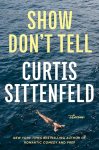 Show Don’t Tell by Curtis Sittenfeld: Sittenfeld’s second collection features characters negotiating principles and privilege in midlife. Split equally between first- and third-person perspectives, the 12 contemporary storylines spotlight everyday marital and parenting challenges. Dual timelines offer opportunities for hindsight on the events of decades ago. Nostalgic yet clear-eyed, these witty stories exploring how decisions determine the future are perfect for fans of Rebecca Makkai, Kiley Reid, and Emma Straub.
Nonfiction
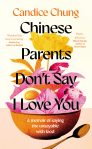 Chinese Parents Don’t Say I Love You: A memoir of saying the unsayable with food by Candice Chung: A vibrant essay collection spotlighting food and family. Chung reconnects with her semi-estranged parents by taking them along on restaurant review gigs for a Sydney newspaper. Fresh from a 13-year relationship with “the psychic reader,” she starts dating again and quickly falls in deep with “the geographer.” The essays range in time and style, delicately contrasting past and present, singleness and being partneredr.
 Poets Square: A Memoir in 30 Cats by Courtney Gustafson: Working for a food bank, trapped in a cycle of dead-end jobs and rising rents: Gustafson saw firsthand how broken systems and poverty wear people down. She’d recently started feeding and getting veterinary care for a feral cat colony in her Tucson, Arizona neighbourhood. With its radiant portraits of individual cats and its realistic perspective on personal and collective problems, this is a cathartic memoir and a probing study of building communities of care in times of hardship.
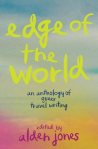 Edge of the World: An Anthology of Queer Travel Writing, ed. Alden Jones: Sixteen authors of diverse sexual orientations and genders contrast here and there and then and now as they narrate sensory memories and personal epiphanies. In these pieces, time abroad sparks clarity. There’s power in queer solidarity, whether one is in Berlin or Key West. Alex Marzano-Lesnevich’s piece is the highlight. A stellar anthology of miniature travelogues that are as illuminating about identity as they are about the places they feature.
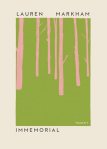 Immemorial by Lauren Markham: An outstanding book-length essay that compares language, memorials, and rituals as strategies for coping with climate anxiety and grief. The dichotomies of the physical versus the abstract and the permanent versus the ephemeral are explored. Forthright, wistful, and determined, the book treats grief as a positive, as “fuel” or a “portal.” Hope is not theoretical in this setup, but solidified in action. This is an elegant meditation on memory and impermanence in an age of climate crisis.
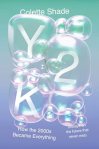 Y2K: How the 2000s Became Everything (Essays on the Future that Never Was) by Colette Shade: Shade’s debut collection contains 10 perceptive essays that contrast the promise and political pitfalls of “the Y2K Era” (1997–2008). The author recalls the thrill of early Internet use and celebrity culture. Consumerism was a fundamental doctrine but the financial crash prompted a loss of faith in progress. Outer space motifs, reality television, Smashmouth lyrics: it’s a feast of millennial nostalgia. Yet this hard-hitting work of cultural criticism, recommended to Jia Tolentino fans, reminisces only to burst bubbles.
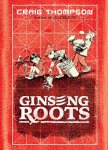 Ginseng Roots by Craig Thompson: A book about everything, by way of ginseng. It begins with Thompson’s childhood summers working on American ginseng farms with his siblings in Marathon, Wisconsin. As an adult, he travels first to Midwest ginseng farms and festivals and then through China and Korea to learn about the plant’s history, cultivation, lore, and medicinal uses. Roots are symbolic of a family story that unfolds in parallel. Both expansive and intimate, this is a surprising gem from one of the best long-form graphic storytellers.
Poetry
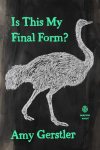 Is This My Final Form? by Amy Gerstler: This delightfully odd collection amazes with its range of voices and techniques. It leaps from surrealism to elegy as it ponders life’s unpredictability. The language of transformation is integrated throughout. Aging and the seasons are examples of everyday changes. Elsewhere, speakers fall in love with the bride of Frankenstein or turn to dinosaur urine for a wellness regimen. Monologues and sonnets recur. Alliteration plus internal and end rhymes create satisfying resonance.
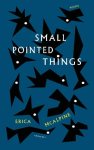 Small Pointed Things by Erica McAlpine: McAlpine’s second collection is full of flora and fauna imagery. The title phrase comes from the opening poem, “Bats and Swallows” – in the “gloaming,” it’s hard to tell the difference between the flying creatures. The verse is bursting with alliteration and end rhymes. She expands the view through conversations, theories and travel. What-ifs, consequences and regrets; mythical allusions, elegies and the concerns of motherhood. Just my sort of poetry: sweet on the ear, rooted in nature and the everyday.
Which of these grab your attention? What other 2025 releases should I catch up on?
Book Serendipity, Mid-April to Mid-June
I call it “Book Serendipity” when two or more books that I read at the same time or in quick succession have something in common – the more bizarre, the better. This is a regular feature of mine every couple of months. Because I usually have 20–30 books on the go at once, I suppose I’m more prone to such incidents. People frequently ask how I remember all of these coincidences. The answer is: I jot them down on scraps of paper or input them immediately into a file on my PC desktop; otherwise, they would flit away!
The following are in roughly chronological order.
- Raising a wild animal but (mostly) calling it by its species rather than by a pet name (so “Pigeon” and “the leveret/hare”) in We Should All Be Birds by Brian Buckbee and Raising Hare by Chloe Dalton.
- Eating hash cookies in New York City in Women by Chloe Caldwell and How to Be Somebody Else by Miranda Pountney.
- A woman worries she’s left underclothes strewn about a room she’s about to show someone in one story of Single, Carefree, Mellow by Katherine Heiny and Days of Light by Megan Hunter.
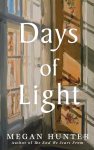 The dialogue is italicized in Women by Chloe Caldwell and Days of Light by Megan Hunter.
- The ‘you know it when you see it’ definition (originally for pornography) is cited in Moderation by Elaine Castillo and Bookish by Lucy Mangan.
- Women (including the protagonist) weightlifting in a gym in Moderation by Elaine Castillo and All Fours by Miranda July.
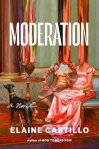
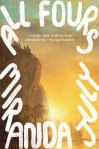
- Miranda July, whose All Fours I was also reading at the time, was mentioned in Chinese Parents Don’t Say I Love You by Candice Chung.
- A sibling story and a mystical light: late last year into early 2025 I read The Snow Queen by Michael Cunningham, and then I recognized this type of moment in Days of Light by Megan Hunter.
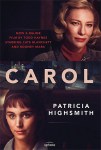
- A lesbian couple with a furniture store in Carol [The Price of Salt] by Patricia Highsmith and one story of Are You Happy? by Lori Ostlund.
- Not being able to see the stars in Las Vegas because of light pollution was mentioned in The Wild Dark by Craig Childs, then in Moderation by Elaine Castillo.
- A gynaecology appointment scene in All Fours by Miranda July and How to Be Somebody Else by Miranda Pountney.
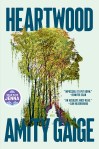
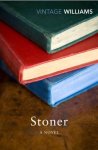
- An awkwardly tall woman in Heartwood by Amity Gaige, How to Be Somebody Else by Miranda Pountney, and Stoner by John Williams.
- The 9/11 memorial lights’ disastrous effect on birds is mentioned in The Wild Dark by Craig Childs and How to Be Somebody Else by Miranda Pountney.
- A car accident precipitated by an encounter with wildlife is key to the denouement in the novellas Women by Chloe Caldwell and Wild Boar by Hannah Lutz.
- The plot is set in motion by the death of an older brother by drowning, and pork chops are served to an unexpected dinner guest, in Bug Hollow by Michelle Huneven and Days of Light by Megan Hunter, both of which I was reading for Shelf Awareness review.
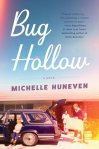
- Kids running around basically feral in a 1970s summer, and driving a box of human ashes around in Case Histories by Kate Atkinson and Bug Hollow by Michelle Huneven.
- A character becomes a nun in Case Histories by Kate Atkinson and Days of Light by Megan Hunter.
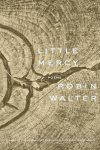
- Wrens nesting just outside one’s front door in Lifelines by Julian Hoffman and Little Mercy by Robin Walter.

- ‘The female Woody Allen’ is the name given to a character in Women by Chloe Caldwell and then a description (in a blurb) of French author Nolwenn Le Blevennec.
- A children’s birthday party scene in Single, Carefree, Mellow by Katherine Heiny and Friends and Lovers by Nolwenn Le Blevennec. A children’s party is also mentioned in Case Histories by Kate Atkinson and A Family Matter by Claire Lynch.
- A man who changes his child’s nappies, unlike his father – evidence of different notions of masculinity in different generations, in Case Histories by Kate Atkinson, What My Father and I Don’t Talk About, edited by Michele Filgate, and one piece in Beyond Touch Sites, edited by Wendy McGrath.
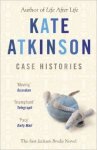
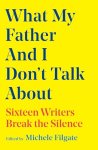
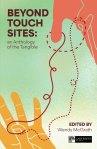
- What’s in a name? Repeated names I came across included Pansy (Case Histories by Kate Atkinson and Days of Light by Megan Hunter), Olivia (Case Histories by Kate Atkinson and A Family Matter by Claire Lynch), Jackson (Case Histories by Kate Atkinson and So Far Gone by Jess Walter), and Elias (Good Girl by Aria Aber and Dream State by Eric Puchner).
- The old wives’ tale that you should run in zigzags to avoid an alligator appeared in Alligator Tears by Edgar Gomez and then in The Girls Who Grow Big by Leila Mottley, both initially set in Florida.
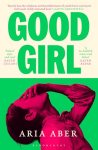
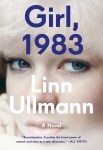
- A teenage girl is groped in a nightclub in Good Girl by Aria Aber and Girl, 1983 by Linn Ullmann.
- Discussion of the extinction of human and animal cultures and languages in both Nature’s Genius by David Farrier and Lifelines by Julian Hoffman, two May 2025 releases I was reading at the same time.
- In Body: My Life in Parts by Nina B. Lichtenstein, she mentions Linn Ullmann – who lived on her street in Oslo and went to the same school (not favourably – the latter ‘stole’ her best friend!); at the same time, I was reading Linn Ullmann’s Girl, 1983! And then, in both books, the narrator recalls getting a severe sunburn.
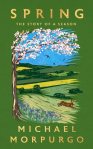 On the same day, I read about otter sightings in Lifelines by Julian Hoffman and Spring by Michael Morpurgo. The next day, I read about nesting swallows in both books.
- The Salish people (Indigenous to North America) are mentioned in Lifelines by Julian Hoffman, Dream State by Eric Puchner (where Salish, the town in Montana, is also a setting), and So Far Gone by Jess Walter.
- Driving into a compound of extremists, and then the car being driven away by someone who’s not the owner, in Dream State by Eric Puchner and So Far Gone by Jess Walter.
- A woman worries about her (neurodivergent) husband saying weird things at a party in The Honesty Box by Lucy Brazier and Normally Weird and Weirdly Normal by Robin Ince.
- Shooting raccoons in Ginseng Roots by Craig Thompson and So Far Gone by Jess Walter. (Raccoons also feature in Dream State by Eric Puchner.)
- A graphic novelist has Hollywood types adding (or at least threatening to add) wholly unsuitable supernatural elements to their plots in Spent by Alison Bechdel and Ginseng Roots by Craig Thompson.
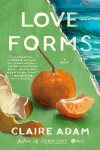
- A novel in which a character named Dawn has to give up her daughter in the early 1980s, one right after the other: A Family Matter by Claire Lynch, followed by Love Forms by Claire Adam.
- A girl barricades her bedroom door for fear of her older brother in Love Forms by Claire Adam and Sleep by Honor Jones.
- A scene of an only child learning that her mother had a hysterectomy and so couldn’t have any more children in Dream Count by Chimamanda Ngozi Adichie and Other People’s Mothers by Julie Marie Wade.
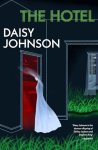
- An African hotel cleaner features in Dream Count by Chimamanda Ngozi Adichie and The Hotel by Daisy Johnson.

- Annie Dillard’s essay “Living Like Weasels” is mentioned in Nature’s Genius by David Farrier and The Dry Season by Melissa Febos.
- A woman assembles an inventory of her former lovers in Dream Count by Chimamanda Ngozi Adichie and The Dry Season by Melissa Febos.
What’s the weirdest reading coincidence you’ve had lately?
April Releases by Chung, Ellis, Gaige, Lutz, McAlpine and Rubin
April felt like a crowded publishing month, though May looks to be twice as busy again. Adding this batch to my existing responses to books by Jean Hannah Edelstein & Emily Jungmin Yoon plus Richard Scott, I reviewed nine April releases. Today I’m featuring a real mix of books by women, starting with two foodie family memoirs, moving through a suspenseful novel about a lost hiker, a sparse Scandinavian novella, and a lovely poetry collection with themes of nature and family, and finishing up with a collection of aphorisms. I challenged myself to write just a paragraph on each for simplicity and readability.

Chinese Parents Don’t Say I Love You: A memoir of saying the unsayable with food by Candice Chung
“to love is to gamble, sometimes gastrointestinally … The stomach is a simple animal. But how do we settle the heart—a flailing, skittish thing?”
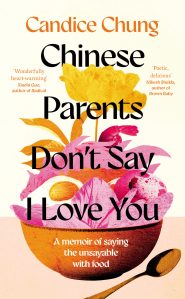 I got Caroline Eden (Cold Kitchen) and Nina Mingya Powles (Tiny Moons) vibes from this vibrant essay collection spotlighting food and family. The focus is on 2019–2021, a time of huge changes for Chung. She’s from Hong Kong via Australia, and reconnects with her semi-estranged parents by taking them along on restaurant review gigs for a Sydney newspaper. Fresh from a 13-year relationship with “the psychic reader,” she starts dating again and quickly falls in deep with “the geographer.” Sharing meals in restaurants and at home kindles closeness and keeps their spirits up after Covid restrictions descend. But when he gets a job offer in Scotland, they have to make decisions about their relationship sooner than intended. Although there is a chronological through line, the essays range in time and style, including second-person advice column (“Faux Pas”) and choose-your-own adventure (“Self-Help Meal”) segments alongside lists, message threads and quotes from the likes of Deborah Levy. My favourite piece was “The Soup at the End of the Universe.” Chung delicately contrasts past and present, singleness and being partnered, and different mental health states. The essays meld to capture a life in transition and the tastes and bonds that don’t alter.
With thanks to Elliott & Thompson for the free copy for review.
Chopping Onions on My Heart: On Losing and Preserving Culture by Samantha Ellis
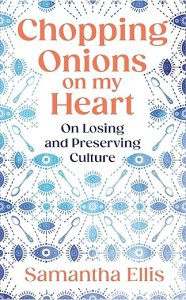 Ellis was distressed to learn that her refugee parents’ first language, Judeo-Iraqi Arabic, is in danger of extinction. Her own knowledge of it is piecemeal, mostly confined to its colourful food-inspired sayings – for example, living “eeyam al babenjan (in the days of the aubergines)” means that everything feels febrile and topsy-turvy. She recounts her family’s history with conflict and displacement, takes a Zoom language class, and ponders what words, dishes, and objects she would save on an imaginary “ark” that she hopes to bequeath to her son. Along the way, she reveals surprising facts about Ashkenazi domination of the Jewish narrative. “Did you know the poet [Siegfried Sassoon] was an Iraqi Jew?” His great-grandfather even invented a special variety of mango pickle. All of the foods described sound delicious, and some recipes are given. Ellis’s writing is enthusiastic and she braids the book’s various strands effectively. I wasn’t as interested in the niche history as I wanted to be, but I did appreciate learning about an endangered culture and language.
With thanks to Chatto & Windus (Vintage/Penguin) for the proof copy for review.
Heartwood by Amity Gaige
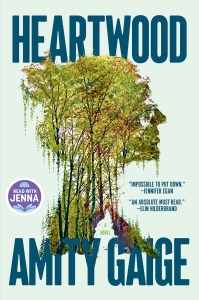 This was on my Most Anticipated list after how much I’d enjoyed Sea Wife when we read it for Literary Wives club. In July 2022, 42-year-old nurse Valerie Gillis, nicknamed “Sparrow,” goes missing in the Maine woods while hiking the Appalachian Trail. An increasingly desperate search ensues as the chances of finding her alive diminish with each day. The shifting formats – letters, transcripts, news reports, tip line messages – hold the interest. However, the chapters voiced by Lt. Bev, the warden who heads the mission, are much the most engaging, and it’s a shame that her delightful interactions with her sisters and nieces are so few and come so late. The third-person passages about Lena Kucharski in her Connecticut retirement home are intriguing but somehow feel like they belong in a different book. Gaige attempts to bring the threads together through three mother–daughter pairs, which struck me as heavy-handed. Mostly, this hits the sweet spot between mystery and literary fiction (apart from some red herrings), but because I wasn’t particularly invested in the characters, even Valerie, this fell a little short of my expectations. (Read via Edelweiss)
Wild Boar by Hannah Lutz (2016; 2025)
[Translated from Swedish by Andy Turner]
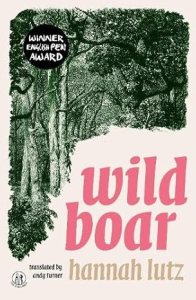 “I have seen them, the wild boar, they have found their way into my dreams!” Ritve travels from Finland to the forests of southern Sweden to track the creatures. Glenn, who appraises project applications for the council, has boar wander onto his property in the middle of the night. Mia, recipient of a council grant for her Recollections of a Sigga Child proposal, brings her ailing grandfather to record his memories for the local sound archive. As midsummer approaches, these three characters plus a couple of their partners will have encounters with the boar and with each other. Short sections alternate between their first-person perspectives. There is a strong sense of place and how migration poses challenges for both the human and more-than-human worlds. But it’s over before it begins. I found myself frustrated by how little happens, how stingily the characters reveal themselves, and how the boar, ultimately, are no more than a metaphor or plot device – a frequent complaint of mine when animals are central to a narrative. This might appeal to fans of Melissa Harrison’s fiction. In any case, I congratulate The Emma Press on their first novel, which won an English PEN Award.
With thanks to The Emma Press for the free copy for review.
Small Pointed Things by Erica McAlpine
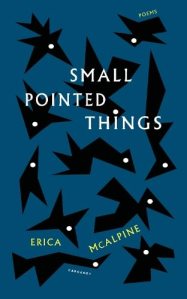 McAlpine is an associate professor of English at Oxford. Her second poetry collection is full of flora and fauna imagery. The title phrase comes from the opening poem, “Bats and Swallows” – in the “gloaming,” it’s hard to tell the difference between the flying creatures. The verse is bursting with alliteration and end rhymes, as just this first one shows (emphasis mine): “we couldn’t see / from where we stood in soft shadows / any signs that they were swallows // or bats”; “One seemed almost iridescent / as I tried to track / its crescent / flight across the hill.” Other poems consider moths, manatees, bees, swans and ladybirds; snowdrops and a cedar tree. Part II expands the view through conversations, theories and travel. What-ifs, consequences and regrets seep in. Parts III and IV incorporate mythical allusions, elegies and the concerns of motherhood. Sometimes the rhyme scheme adheres to a particular form. For instance, I loved “Triolet on My Mother’s 74th Birthday” – “You cannot imagine one season in another. … You cannot imagine life without your mother.” This is just my sort of poetry, sweet on the ear and rooted in nature and the everyday. A sample poem:
“Clementines”
New Year’s Day – another turning
of the sphere, with all we planned
in yesteryear as close to hand
as last night’s coals left unmanned
in the fire, still orange and burning.
It is the season for clementines
and citrus from Seville
and whatever brightness carries us until
leaves and petals once more fill
the treetops and the vines.
If ever you were to confess
some cold truth about love’s
dwindling, now would be the time – less
in order for things to improve
than for the half-bitter happiness
of peeling rinds
during mid-winter
recalling days that are behind
us and doors we cannot re-enter
and other doors we couldn’t find.
With thanks to Carcanet Press for the advanced e-copy for review.
Secrets of Adulthood: Simple Truths for Our Complex Lives by Gretchen Rubin
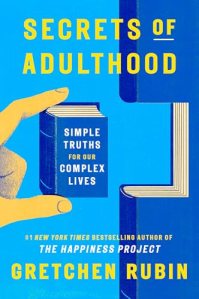 Rubin is one of the best self-help authors out there: Her books are practical, well-researched and genuinely helpful. She understands human nature and targets her strategies to suit different personality types. If you know her work, you’re likely aware of her fondness for aphorisms. “Sometimes, a single sentence can provide all the insight we need,” she believes. Here she collects her own pithy sayings relating to happiness, self-knowledge, relationships, work, creativity and decision-making. Some of the aphorisms were familiar to me through her previous books or her social media. They’re straightforward and sensible, distilling down to a few words truths we might be aware of but hadn’t truly absorbed. Like the great aphorists throughout history, Rubin relishes alliteration, repetition and contrasts. Some examples:
Accept yourself, and expect more from yourself.
I admire nature, and I am also nature. I resent traffic, and I am also traffic.
Work is the play of adulthood. If we’re not failing, we’re not trying hard enough.
Don’t wait until you have more free time. You may never have more free time.
This is not as meaty as her other work, and some parts feel redundant, but that’s the nature of the project. It would make a good bedside book for nibbles of inspiration. (Read via Edelweiss)
Which of these appeal to you?
 Bookish Beck = Rebecca Foster. American transplant to England. Freelance proofreader and book reviewer.
 Bookish Beck