Book Serendipity, April‒Early July
I call it serendipitous when two or more books that I read at the same time or in quick succession have something pretty bizarre in common. Because I have so many books on the go at once (usually around 20), I suppose I’m more prone to such incidents than some. I also list these occasional reading coincidences on Twitter. The following are in rough chronological order. (January to March appeared in this post.)
- Characters named Sonny in Pew by Catherine Lacey, My Father’s Wake by Kevin Toolis, and Sacred Country by Rose Tremain.
- A double dose via Greenery via Tim Dee – while reading it I was also reading Other People’s Countries by Patrick McGuinness, whom he visits in Belgium; and A Cold Spring by Elizabeth Bishop, referenced in a footnote.


- A red thread is worn as a bracelet for its emotional or spiritual significance in The Book of Longings by Sue Monk Kidd and Plan B by Anne Lamott.
- The Library of Alexandria features in Footprints by David Farrier and The Book of Longings by Sue Monk Kidd.
- The Artist’s Way is mentioned in At Hawthorn Time by Melissa Harrison and Traveling Mercies by Anne Lamott.
- Characters sleep in a church in Pew by Catherine Lacey and Abide With Me by Elizabeth Strout. (And both novels have characters named Hilda.)


- Coins being flung away among some trees in In the Springtime of the Year by Susan Hill and The Book of Longings by Sue Monk Kidd (literally the biblical 30 pieces of silver in the Kidd, which is then used as a metaphor in the Hill).
- Rabbit-breeding projects in When the Lights Go Out by Carys Bray and Parable of the Sower by Octavia E. Butler.


- Mentions of the Great Barrier Reef in When the Lights Go Out by Carys Bray and Footprints by David Farrier.
- The same very specific fact – that Seamus Heaney’s last words, in a text to his wife, were “Noli timere” – was mentioned in Curlew Moon by Mary Colwell and Greenery by Tim Dee.
- Klondike ice cream bars appeared in both Small Victories by Anne Lamott and The Fixed Stars by Molly Wizenberg.

- The metaphor of a rising flood only the parent or the child will survive is used in both Exit West by Mohsin Hamid and What We Carry by Maya Lang.
- The necessity of turning right to save oneself in a concentration camp setting is mentioned in both Man’s Search for Meaning by Viktor Frankl and Fugitive Pieces by Anne Michaels.
- An English child is raised in North Africa in Oleander, Jacaranda by Penelope Lively and The Child in Time by Ian McEwan.
- The Bristol Stool Chart appeared in both Gulp by Mary Roach and The Bad Doctor by Ian Williams.


- A Greek island setting in both Exit West by Mohsin Hamid and Fugitive Pieces by Anne Michaels (plus, earlier, in A Theatre for Dreamers by Polly Samson).
- Both Writers & Lovers by Lily King and Mother: A Memoir by Nicholas Royle mention Talking Heads within the first 20 pages.
- A trip to North Berwick in the early pages of Mother: A Memoir by Nicholas Royle, and hunting for cowrie shells on the beach – so familiar from Evie Wyld’s The Bass Rock, read the previous month. (Later, more collecting of cowrie shells in Oleander, Jacaranda by Penelope Lively.)
- Children’s authors are main characters in The Crow Road by Iain Banks and The Child in Time by Ian McEwan.

- A character is killed by a lightning strike in The Crow Road by Iain Banks and Writers & Lovers by Lily King.
- Characters named Ash in The Crow Road by Iain Banks and The Fixed Stars by Molly Wizenberg.
 A brother steals the main character’s object of affection in The Crow Road by Iain Banks and Sacred Country by Rose Tremain.
- A minor character in Parable of the Sower by Octavia E. Butler is called Richard Rohr … meanwhile, I was reading a book by Richard Rohr, The Universal Christ.
- A maternity ward setting in The Pull of the Stars by Emma Donoghue and The Bell in the Lake by Lars Mytting.
- A love triangle is a central element in Writers & Lovers by Lily King and The Bell in the Lake by Lars Mytting.


- Reading a book by a Galloway (The Trick Is to Keep Breathing by Janice Galloway) and a book about Galloway (Native: Life in a Vanishing Landscape by Patrick Laurie) simultaneously.
- Attending college in L.A. in The Vanishing Half by Brit Bennett and Dreams from My Father by Barack Obama.
- Two books that reference the same Darwin quote: Into the Tangled Bank by Lev Parikian, and “The Entangled Bank” is the title of the final poem in Red Gloves by Rebecca Watts.


- Characters with the surname Savage in The Box Garden by Carol Shields and Islands of Mercy by Rose Tremain.
- A character is taught how to eat oysters in The Vanishing Half by Brit Bennett and Kitchen Confidential by Anthony Bourdain.
- A Louisiana setting in The Vanishing Half by Brit Bennett and Property by Valerie Martin.
- Characters named Stella in The Vanishing Half by Brit Bennett and The Group by Lara Feigel.


- The last line of the book has a character saying “Come in” in Americanah by Chimamanda Ngozi Adichie and Ankomst by Gøhril Gabrielsen.
- Currently reading four books with mixed-race narrators: (Black/white) The Girl Who Fell from the Sky by Heidi Durrow, Dreams from My Father by Barack Obama, Memorial Drive by Natasha Trethewey; and (Japanese/white) My Year of Meats by Ruth Ozeki.
- Currently reading two novels in which a pair of orphaned sisters are taken in by relatives (Deerbrook by Harriet Martineau and Rise and Shine by Anna Quindlen). Plus two more novels with orphan characters: The Girl Who Fell from the Sky and My Year of Meats.
-
- In two of these four (not telling which, though you can safely assume it’s not the Victorian novel!), they are orphans because both parents were killed in a car accident. I feel like this is a fictional setup that I encounter all the time (cf. All the Beautiful Girls, The Monsters of Templeton, Saint Maybe) that can’t be that common in real life?
-


- Vassar as an alma mater in Kitchen Confidential by Anthony Bourdain and The Group by Mary McCarthy.
- Punahou School (Honolulu, Hawaii) is the author’s alma mater in The Noonday Demon by Kathleen Norris and Dreams from My Father by Barack Obama.
What’s the weirdest reading coincidence you’ve had lately?
The Best Books from the First Half of 2020
My top 10 releases of 2020 thus far, in alphabetical order within genre (nonfiction is dominating the year for me!), are:
Fiction
 The Vanishing Half by Brit Bennett: Like some lost mid-career gem from Toni Morrison, this novel is meaty with questions of racial and sexual identity. Light-skinned African American twins Stella and Desiree Vignes’ paths divide in 1954, with Stella passing as white. Both are desperate to escape from Mallard, Louisiana. The twins’ decisions affect the next generation, too. It’s perceptive and beautifully written, with characters whose struggles feel genuine and pertinent. The themes of self-reinvention and running from one’s past resonate.
 Writers & Lovers by Lily King: Following a breakup and her mother’s sudden death, Casey Peabody is drowning in grief and debt. Between waitressing shifts, she chips away at the novel she’s been writing for six years. Life gets complicated, especially when two love interests appear. We see this character at rock bottom but also when things start to go well at long last. I felt I knew Casey through and through, and I cheered for her. An older, sadder Sweetbitter, perhaps as written by Elizabeth Strout. It gives you all the feels, as they say.
 Weather by Jenny Offill: A blunt, unromanticized, wickedly funny novel about how eco-anxiety permeates everyday life, Weather is in the same aphoristic style as Offill’s Dept. of Speculation. Lizzie is married with a young son and works in a NYC university library. She takes on a second job as PA to her former professor, who runs a podcast on environmental issues. Set either side of Trump’s election, the novel amplifies many voices prophesying doom. Offill’s observations are spot on. Could there be a more perfect book for 2020?
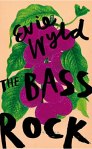 The Bass Rock by Evie Wyld: There’s no avoiding violence for the women and children of this novel. It’s a sobering theme, certainly, but Wyld convinced me that hers is an accurate vision and a necessary mission. The novel cycles through its three strands in an ebb and flow pattern that seems appropriate to the coastal setting and creates a sense of time’s fluidity. Themes and elements keep coming back, stinging a little more each time. An elegant, time-blending structure and an unrelenting course – that indifferent monolith is the perfect symbol.
Nonfiction
 Dear Life: A Doctor’s Story of Love and Loss by Rachel Clarke: I’ve read so many doctors’ memoirs and books about death and dying; it takes a truly special one like this to stand out. Clarke specializes in palliative medicine and alternates her patients’ stories with her own in a very natural way. A major theme is her relationship with her father, who was also a doctor, and how she absorbed his lessons of empathy and dedication. A passionate and practical book, encouraging readers to be sure they and older relatives have formalized their wishes.
 The Lost Family: How DNA Testing Is Upending Who We Are by Libby Copeland: Gone are the days when people interested in family history had to trawl through microfilm and wait months to learn anything new; nowadays a DNA test can find missing relatives within days. But there are troubling aspects to this new industry, including privacy concerns, notions of racial identity, and criminal databases. Copeland spoke to scientists and 400 laypeople who sent off saliva samples. A thought-provoking book with all the verve and suspense of fiction.
 Greenery: Journeys in Springtime by Tim Dee: From the Cape of Good Hope to the Arctic Circle, Dee tracks the spring as it travels north. From first glimpse to last gasp, moving between his homes in two hemispheres, he makes the season last nearly half the year. His main harbingers are migrating birds, starting with swallows. The book is steeped in allusions and profound thinking about deep time and what it means to be alive in an era when nature’s rhythms are becoming distorted. A fresh, masterful model of how to write about nature.
 Footprints: In Search of Future Fossils by David Farrier: Blending human and planetary history, environmental realism and literary echoes, Farrier, a lecturer in English literature, tells the story of the human impact on the Earth. Each chapter is an intricate blend of fact, experience and story. We’ll leave behind massive road networks, remnants of coastal megacities, plastics, carbon and methane in the permafrost, the fossilized Great Barrier Reef, nuclear waste, and jellyfish-dominated oceans. An invaluable window onto the deep future.
 Losing Eden: Why Our Minds Need the Wild by Lucy Jones: While nature’s positive effect on human mental health is something we know intuitively and can explain anecdotally, Jones wanted to investigate the scientific mechanism behind it. She makes an empirical enquiry but also attests to the personal benefits nature has. Losing Eden is full of common sense and passion, cramming masses of information into 200 pages yet never losing sight of the big picture. Like Silent Spring, on which it is patterned, I can see this leading to real change.
 Diary of a Young Naturalist by Dara McAnulty: McAnulty is the UK’s answer to Greta Thunberg: a leader in the youth environmental movement and an impassioned speaker on the love of nature. This is a wonderfully observant and introspective account of his fifteenth year: of disruptions – moving house and school, of outrage at the state of the world and at individual and political indifference, of the complications of being autistic, but also of the joys of everyday encounters with wildlife. Impressive perspective and lyricism.

The ones I own in print (not pictured: 2 read on Kindle; 1 read via the library).
 The 4.5- or 5-star backlist books that I’ve read this year but haven’t yet written about on here in some way are:
- Kindred by Octavia E. Butler
- Love Medicine by Louise Erdrich
- Small Ceremonies by Carol Shields
What are some of the best books you’ve read so far this year?
What 2020 releases do I need to catch up on right away?
Three May Releases: Climate Change, a Son’s Elegy, and Sexual Fluidity
I’m still averaging four new releases per month: a nicely manageable number. In addition to Lily King’s Writers & Lovers, in May I’ve read a novel about eco-anxiety and marital conflict, a memoir of losing a mother to grief and dementia, and an account of a shift in sexuality. I had a somewhat mixed reaction to all three books, but see if one or more catches your eye anyway.
When the Lights Go Out by Carys Bray
Perhaps if this had come out two or three years ago, it could have felt fresh. As it is, it felt like a retread of familiar stories about eco-grief and -anxiety among the middle classes (such as Weather and Unsheltered). Emma Abram is an average suburban mother of two in the north of England, upcycling fabrics and doing her best with other little green initiatives around the house since she got laid off from her job when the local library closed. She feels guilty a lot of the time, but what else can she do?
Nero fiddled while Rome burned; she will sew while the polar ice melts and the seas surge.
She couldn’t un-birth the children, un-earth the disposable nappies or un-plumb the white goods.
 Such sentiments also reminded me of the relatable, but by no means ground-breaking, contents of Letters to the Earth.
Emma’s husband Chris, though, has taken things to an extreme: as zealous as he once was about his childhood faith, he now is about impending climate change. One day, a week or so before Christmas, she is embarrassed to spot him by the roadside in town, holding up a signboard prophesying environmental doom. “In those days, Chris had been spreading the Good News. Now he is spreading the Bad News.” He thinks cold-weather and survivalist gear makes appropriate gifts; he raises rabbits for meat; he makes Emma watch crackpot documentaries about pandemic preparation. (Oh, the irony! I was sent this book in December.)
Part of the problem was to do with my expectations: from the cover and publicity materials I thought this was going to be a near-future speculative novel about a family coping with flooding and other literal signs of environmental apocalypse. Instead, it is a story about a marriage in crisis. (I cringed at how unsubtly this line put it: “The climate of her marriage [has] been changing, and she has been in denial about it for a long time.”) It is also, like Unless, about how to relate to a family member who has, in your opinion, gone off the rails.
Nothing wrong with those themes, of course, but my false assumptions meant that I spent well over 200 pages waiting for something to happen, thinking that everything I had read thus far was backstory and character development that, in a more eventful novel, would have been dispatched within, say, the first 40 pages. I did enjoy the seasonal activity leading up to Christmas Eve, and the portrayal of Chris’s widowed, pious mother. But compared to A Song for Issy Bradley, one of my favorite books of 2014, this was a disappointment.
My thanks to Hutchinson for the proof copy for review. This came out in e-book and audio on May 7th but the print edition has been delayed until November 12th.
Mother: A Memoir by Nicholas Royle
“A memoir is about what survives. But it is also about what is enigmatic and irretrievable. Cryptic and unknown.”
 A few years ago I read Royle’s An English Guide to Birdwatching, one of the stranger novels I’ve ever come across (it brings together a young literary critic’s pet peeves, a retired couple’s seaside torture by squawking gulls, the confusion between the two real-life English novelists named Nicholas Royle, and bird-themed vignettes). It was joyfully over-the-top, full of jokes and puns as well as trenchant observations about modern life.
I found that same delight in the vagaries of language and life in Mother: A Memoir. Royle’s mother, Kathleen, had Alzheimer’s and died in 2003. At least to start with, she was aware of what was happening to her: “I’m losing my marbles,” she pronounced one day in the kitchen of the family home in Devon. Yet Royle pinpoints the beginning of the end nearly two decades earlier, when his younger brother, Simon, died of a rare cancer. “From that death none of us recovered. But my mother it did for. She it by degrees sent mad.”
In short, titled sections that function almost like essays, Royle traces his mother’s family history and nursing career, and brings to life her pastimes and mannerisms. She passed on to Royle, a professor of English and creative writing at the University of Sussex, a love of literature and of unusual words and sayings. She was often to be found with a crossword puzzle in front of her, she devoured books (devoting a whole summer to the complete works to date of Doris Lessing, for instance), and she gave advice on her son’s early stories.
The narrative moves back and forth in time and intersperses letters, lists and black-and-white photographs. Royle often eschews punctuation and indulges in wordplay. “These details matter. The matter of my mater. Matador killing metaphor.” I found that I remained at arm’s length from the book – admiring it rather than becoming as emotionally engaged with it as I wanted to be – but it’s certainly not your average memoir, and it’s always refreshing to find (auto)biographical work that does something different.
My thanks to Myriad Editions for the free copy for review.
The Fixed Stars by Molly Wizenberg
Wizenberg is the author of two terrific food-themed memoirs. I particularly loved A Homemade Life, which chronicles the death of her father Burg from cancer, her time living in Paris, building a new life in Seattle, starting her famous food blog (Orangette), and meeting her husband, Brandon. Her follow-up, Delancey, was about the ups and downs of them opening a pizza restaurant and bar in Seattle while she was pregnant with June.
By contrast, The Fixed Stars was an uncomfortable read in more ways than one. For one thing, it unpicks the fairy tale of what had looked like a pretty ideal marriage and entrepreneurial partnership. It turns out Wizenberg wasn’t wholly on board with their little restaurant empire and found the work overwhelming. It was all Brandon’s dream, not hers. (She admits to these facts in Delancey, but it was the success, not the doubt, that I remembered.)
And then, in the summer of 2015, Wizenberg was summoned for jury duty and found herself fascinated by one of the defense attorneys, a woman named Nora who wore a man’s suit and a butch haircut. The author had always considered herself straight, had never been attracted to a woman before, but this crush wouldn’t go away. She and Brandon tried an open marriage so that she could date Nora and he could see other people, too, but it didn’t work out. Brandon didn’t want her to fall in love with anyone else, but that was just what was happening.
 Wizenberg announced her coming-out and her separation from Brandon on her blog, so I was aware of all this for the last few years and via Instagram followed what came next. I knew her new spouse is a non-binary person named Ash who was born female but had top surgery to remove their breasts. (At first I was assumed Nora was an alias for Ash, but they are actually different characters. After things broke down with Nora, a mutual friend set her up with Ash.) The other source of discomfort for me here was the explicit descriptions of her lovemaking with Nora – her initiation into lesbian sex – though she draws a veil over this with Ash.
I’m not sure if the intimate details were strictly necessary, but I reminded myself that a memoir is a person’s impressions of what they’ve done and what has happened to them, molded into a meaningful shape. Wizenberg clearly felt a need to dig for the why of her transformation, and her answers range from her early knowledge of homosexuality (an uncle who died of AIDS) to her frustrations about her life with Brandon (theirs really was a happy enough marriage, and a markedly amicable divorce, but had its niggles, like any partnership).
I appreciated that, ultimately, Wizenberg leaves her experience unlabeled. She acknowledges that hers is a messy story, but an honest one. While she entertains several possibilities – Was she a closeted lesbian all along? Or was she bisexual? Can sexual orientation change? – she finds out that sexual fluidity is common in women, and that all queer families are unique. An obvious comparison is with Maggie Nelson’s The Argonauts, which is a bit more profound and original. But the mourning for her marriage and the anguish over what she was doing to her daughter are strong elements alongside the examination of sexuality. The overarching metaphor of star maps is effective and reminded me of Constellations by Sinéad Gleeson.
There were points in the narrative where I was afraid the author would resort to pat answers about what was ‘meant to be’ or to depicting villains versus heroic actions, but instead she treats this all just as something that happened and that all involved coped with as best they could, hopefully making something better in the end. It’s sensitively told and, while inevitably different from her other work, well worth reading for anyone who’s been surprised where life has led.
I read an advanced e-copy from Abrams Press via Edelweiss. A Kindle edition came out on May 12th, but the hardback release has been pushed back to August 4th.
What recent releases can you recommend?
Some Books about Marriage
My pre-Valentine’s Day reading involved a lot of books with “love”, “heart”, “romance”, etc. in the title (here’s the post that resulted). I ended up with a number of leftovers, plus some incidental reads from late in 2019, that focused on marriage – whether it’s happy or troubled, or not technically a marriage at all.
Marriage: A Duet by Anne Taylor Fleming (2003)
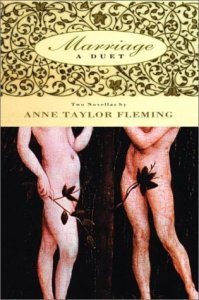 Two novellas in one volume. In “A Married Woman,” Caroline Betts’s husband, William, is in a coma after a stroke or heart attack. As she and her adult children visit him in the hospital and ponder the decision they will have to make, she remains haunted by the affair William had with one of their daughter’s friends 15 years ago. Although at the time it seemed to destroy their marriage, she stayed and they built a new relationship.
I fully expected the second novella, “A Married Man,” to give William’s perspective (like in Carol Shields’s Happenstance), but instead it’s a separate story with different characters, though still set in California c. 2000. Here the dynamic is flipped: it’s the wife who had an affair and the husband who has to try to come to terms with it. David and Marcia Sanderson start marriage therapy at New Beginnings and, with the help of Prozac and Viagra, David hopes to get past his bitterness and give in to his wife’s romantic overtures.
Fleming is a careful observer of how marriages change over time and in response to shocks, but overall I found the tone of these tales abrasive and the language slightly raunchy. 
Not quite about a marriage, but a relationship so lovely that I can’t resist including it…
Our Souls at Night by Kent Haruf (2015)
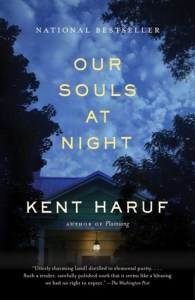 Understated, bittersweet, realistic. Perfect. I’d long meant to try Kent Haruf’s work and even had the first two Plainsong trilogy books on the shelf, but this novella, picked up secondhand at a bargain price from a charity warehouse, demanded to be read first. Fans of Elizabeth Strout’s work will find in Haruf’s Holt, Colorado an echo of her Crosby, Maine – fictional towns where ordinary folk live out their quiet triumphs and sorrows. From the first line, which opens in medias res, Haruf draws you in, making you feel as if you’ve known these characters forever: “And then there was the day when Addie Moore made a call on Louis Waters.” She has a proposal for her neighbor. She’s a widow; he’s a widower. They’re both lonely and prone to melancholy thoughts about how they could have done better by their families (“life hasn’t turned out right for either of us, not the way we expected,” Louis says). Would he like to come over to her house at nights to talk and sleep? Just two ageing creatures huddling together for comfort; no hanky-panky expected or desired.
So that’s just what they do. Before long, though, they come up against the disapproval of locals and family, especially when Addie’s grandson comes to stay and they join Louis to make a makeshift trio. The matter-of-fact prose, delivered without speech marks, belies a deep undercurrent of emotion in this story about the everyday miracle of human connection. There’s even a neat little reference to Haruf’s Benediction at the start of Chapter 34 (again like Strout, who peppered Olive, Again with cameo appearances from characters introduced in her earlier books). I also loved that the characters live on Cedar Street – I grew up on a Cedar Street. This gets my highest recommendation. 
State of the Union: A Marriage in Ten Parts by Nick Hornby (2019)
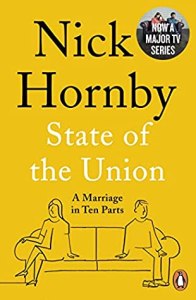 Hornby has been making quite a name for himself in film and television. State of the Union is also a TV series, and reads a lot like a script because it’s composed mostly of the dialogue between Tom and Louise, an estranged couple who each week meet up for a drink in the pub before their marriage counseling appointment. There’s very little descriptive writing, and much of the time Hornby doesn’t even need to add speech attributions because it’s clear who’s saying what in the back and forth.
The crisis in this marriage was precipitated by Louise, a gerontologist, sleeping with someone else after her sex life with Tom, an underemployed music writer, dried up. They rehash their life together, what went wrong, and what might happen next in 10 snappy chapters that are funny but also cut close to the bone. What married person hasn’t wondered where the magic went as midlife approaches? (Tom: “I hate to be unromantic, but convenient placement is pretty much the definition of marital sex.”) 
Two-Part Invention: The Story of a Marriage by Madeleine L’Engle (1988)
 The fourth and final volume of the autobiographical Crosswicks Journal. This one focuses on L’Engle’s 40-year marriage to Hugh Franklin, an actor best known for his role as Dr. Charles Tyler in All My Children between 1970 and 1983. In the book’s present day, the summer of 1986, she’s worried about Hugh when his bladder cancer, which starts off seeming treatable, leads to every possible complication and deterioration. Her days are divided between home, work (speaking engagements; teaching workshops at a writers’ conference) and the hospital.
Drifting between past and present, she remembers how she and Hugh met in the 1940s NYC theatre world, their early years of marriage, becoming parents to Josephine and Bion and then, when close friends died suddenly, adopting their goddaughter, and taking on the adventure of renovating Crosswicks farmhouse in Connecticut and temporarily running the local general store. As usual, L’Engle writes beautifully about having faith in a time of uncertainty. (The title refers not just to marriage, but also to Bach pieces that she, a devoted amateur piano player, used for practice.)
A wonderful passage about marriage:
“Our love has been anything but perfect and anything but static. Inevitably there have been times when one of us has outrun the other and has had to wait patiently for the other to catch up. There have been times when we have misunderstood each other, demanded too much of each other, been insensitive to the other’s needs. I do not believe there is any marriage where this does not happen. The growth of love is not a straight line, but a series of hills and valleys. I suspect that in every good marriage there are times when love seems to be over. Sometimes these desert lines are simply the only way to the next oasis, which is far more lush and beautiful after the desert crossing than it could possibly have been without it.”
The Wife by Meg Wolitzer (2003)
 My latest book club read. On a flight to Finland, where her supposed genius writer of a husband, Joe Castleman, will accept the prestigious Helsinki Prize, Joan finally decides to leave him. When she first met Joe in 1956, she was a student at Smith College and he was her (married) creative writing professor, even though he’d only had a couple of stories published in middling literary magazines. Joan was a promising author in her own right, but when Joe left his first wife for her and she dropped out of college, she willingly took up a supporting role instead, and has remained in it for decades.
Ever since his first novel, The Walnut, a thinly veiled account of leaving Carol for Joan, Joe has produced books “populated by unhappy, unfaithful American husbands and their complicated wives.” Add on the fact that he’s Jewish and you have a Saul Bellow or Philip Roth type, a serial womanizer who’s publicly uxorious.
Alternating between the trip to Helsinki and telling scenes from earlier in their marriage, this short novel is deceptively profound. The setup may feel familiar, but Joan’s narration is bitingly funny and the points about the greater value attributed to men’s work are still valid. There’s also a juicy twist I never saw coming, as Joan decides what role she wants to play in perpetuating Joe’s literary legacy. My second by Wolitzer; I’ll certainly read more. 
Plus a DNF:
The Story of a Marriage by Andrew Sean Greer (2008)
 In 1953 in San Francisco, Pearlie Cook learns two major secrets about her husband Holland after his old friend shows up at their door. Greer tries to present another fact about the married couple as a big surprise, but had planted so many clues, starting on page 9, that I’d already guessed it and wasn’t shocked at the end of Part I as I was supposed to be. Greer writes perfectly capably, but I wasn’t able to connect with this one and didn’t love Less as much as most people did. I don’t think I’ll be trying another of his books. (I read 93 pages out of 195.)
Have you read any books about marriage recently?
Short Story Collections Read Recently
This is the third year in a row that I’ve made a concerted effort to read more short stories in the alliterative month of September; see also my 2016 and 2017 performances. (I actually finished Sarah Hall’s collection in late August, but I’m going to cheat and include it anyway.) That makes for four volumes in total read recently. Surprisingly, I had my best luck with two that were published back in the early 1990s.
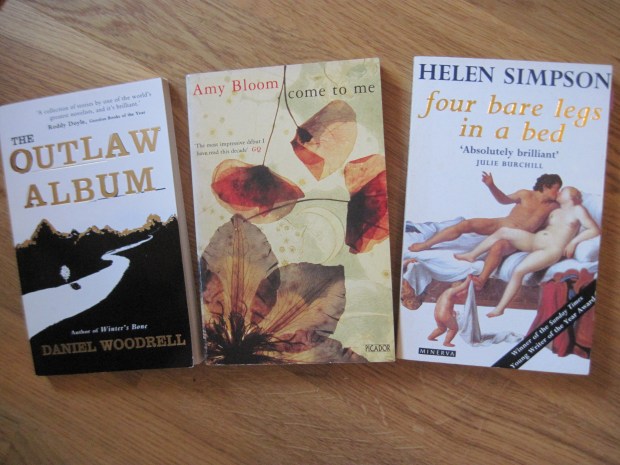
I read Sarah Hall’s book from the library; these three were bargains from my local charity warehouse, the Community Furniture Project.
Like many devoted novel readers, I struggle with short stories because they can feel fragmentary or open-ended, and it takes that much more effort to keep up with multiple settings and groups of characters. Yet I also get frustrated when the narrative voice and themes are too similar across a whole set of tales.
However, when done well short stories can be marvelous, of course. I enjoyed K.J. Orr’s article on short stories in the September 7th issue of the Times Literary Supplement. Among the virtues of the short story, she lists the following:
- “the capacity to stoke questions of definition and instability, resolution and irresolution … ; to deliver its conundrums to the reader in a state of compression”
- “The unpredictability involved means that picking up a new short story always feels to me a moment full of possibilities.”
- “The short story can combine complexity and uncertainty with ebullience and humour. It can take on subjects and situations that risk seeming clichéd and open them to wonder. It can put the familiar and the strange in conversation.”
And yet sometimes the quality of the writing, or at least the intensity of my engagement, can vary wildly within a story collection, which often makes the books difficult to rate and respond to as a whole. That’s what I found with these first two.
Madame Zero by Sarah Hall (2017)
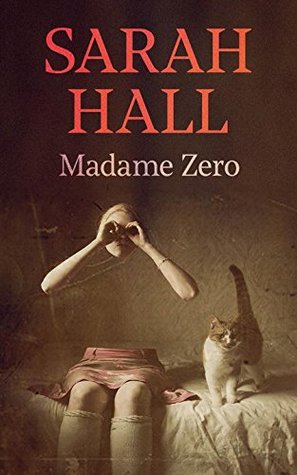 Three corkers; two pretty good; four been-there-read-that. My favorites were the first and last stories, “Mrs Fox” and “Evie” (winner of the BBC National Short Story Prize 2013 and shortlisted for the Sunday Times EFG Private Bank Short Story Award 2013, respectively). Both concern a fairly average marriage derailed when the wife undergoes a transformation. In the former Sophia literally turns into a fox and her husband scrambles for a way to make the relationship last. In “Evie,” Richard’s wife develops a voracious appetite for sweets and sex, and starts talking gibberish. This one is very explicit, but if you can get past that I found it both painful and powerful. I also especially liked “Case Study 2,” about a psychologist’s encounter with a boy who’s been brought up in a commune. It has faint echoes of T.C. Boyle’s “The Wild Child.”
“Wilderness” focuses on an intense episode of fear of heights during a trip to South Africa. In “Luxury Hour,” a new mother meets up with an old lover near the swimming pool they used to frequent and wonders where and why their lives diverged. This one reminded me of the first chapter of Rachel Cusk’s Transit.
As for the rest? “Goodnight Nobody” was completely forgettable, and the other three are in the vague speculative/post-apocalyptic vein that’s been done to death: “Theatre 6” = Red Clocks; “Later, His Ghost” = The Road et al.; “One in Four” = Station Eleven et al. I admire Hall’s writing in general, but The Wolf Border remains the best thing I’ve read by her.
My rating: 
The Outlaw Album: Stories by Daniel Woodrell (2011)
 Based on the first six stories, I was planning a 5-star rating. (How can you resist this opening line? “Once Boshell finally killed his neighbor he couldn’t seem to quit killing him.”) But the second half of the book ended up being much less memorable; I wouldn’t say it wasn’t worth reading, but I got very little out of four of the stories, and the other two were okay but somewhat insubstantial. By contrast, the first two stories, “The Echo of Neighborly Bones” and “Uncle,” are gritty little masterpieces of violence and revenge.
I also particularly liked “Black Step” and “Night Stand,” about traumatized soldiers back from war (Woodrell himself was a Marine). Each has a creepy segment where the veteran gives sarcastic answers to the unspecified typical questions they always get; we have to infer that these are: How many people did you kill? What’s it like to kill someone? and What do you do with the bodies? There’s a nice balance between first- and third-person voices; lyrical and unlearned prose; and speech marks and none. I will definitely read more by Woodrell.
My rating: 
I thoroughly loved these next two debut collections. In each case I’d read one or two previous books by the author and not been wild about the writing (White Houses; In-Flight Entertainment and Cockfosters), but these two have convinced me to try more of their work.
Come to Me by Amy Bloom (1993)
 Bloom was a practicing psychotherapist, so it’s no surprise she has deep insight into her characters’ motivations. This is a wonderful set of stories about people who love who they shouldn’t love. In “Song of Solomon,” a new mother falls for the obstetrician who delivered her baby; in “Sleepwalking,” a woman gives in to the advances of her late husband’s son from a previous marriage; in “Light Breaks Where No Sun Shines,” adolescent Susan develops crushes on any man who takes an interest in her. My favorite was probably “Love Is Not a Pie,” in which a young woman rethinks her impending marriage during her mother’s funeral, all the while remembering the unusual sleeping arrangement her parents had with another couple during their joint summer vacations. The title suggests that love is not a thing to be apportioned out equally until it’s used up, but a more mysterious and fluid entity.
Linked short stories can be a useful halfway-house for readers who prefer novels and are still unsure about reading stories. Happily, then, the heart of this collection is five pieces that orbit around the same characters. In “Hyacinths” we meet David as a boy in Manitoba and get a glimpse of him as an adult. In the next story we encounter his second wife, Galen, and her lover, Henry. “Silver Water” is about a mental health crisis with David and Galen’s daughter, and the next two stories are about Henry, his wife Marie, and the other bonds they form.
Although I read the book quickly while on holiday and so haven’t marked out any particular quotes, convincing dialogue and insightful observations are on almost every page. I was reminded most of short stories I’ve read by Elizabeth McCracken and Carol Shields.
My rating: 
Four Bare Legs in a Bed and Other Stories by Helen Simpson (1990)
 Simpson won the inaugural Sunday Times Young Writer of the Year Award for this in 1991. Her protagonists are women disillusioned with the norms of marriage and motherhood. They ditch their safe relationships, or carry on brazen affairs; they fear pregnancy, or seek it out on their own terms. The feminist messages are never strident because they are couched in such brisk, tongue-in-cheek narratives. For instance, in “Christmas Jezebels” three sisters in 4th-century Lycia cleverly resist their father’s attempts to press them into prostitution and are saved by the bishop’s financial intervention; in “Escape Clauses” a middle-aged woman faces the death penalty for her supposed crimes of gardening naked and picnicking on private property, while her rapist gets just three months in prison because she was “asking for it.” (Nearly three decades on, it’s still so timely it hurts.)
I loved “The Bed,” a kind of fairy tale about a luxurious bed solving all a woman’s problems; “What Are Neighbours For,” in which each woman cattily plans what she can get out of the others; “Labour,” a brief five-act play set in a hospital delivery room; and “Zoë and the Pedagogues,” about a woman learning to drive who has two very different teachers (perhaps inevitably, this recalled Mirror, Shoulder, Signal by Dorthe Nors). “An Interesting Condition,” which takes place in an antenatal class, is like Curtis Sittenfeld’s “Bad Latch,” while multiple stories reminded me of Shena Mackay, especially “Send One Up for Me,” about a woman tiptoeing around her boarding house and trying not to anger the landlady.
My rating:
Are you a short story fan? Read any good ones recently?
Culling My Goodreads TBR
You could say my Goodreads to-read shelf has gotten out of hand. As of July 17th it was at 7190 titles. That includes pretty much every book I’ve ever heard about and thought “yeah, maybe I’ll read that someday.” Inspired by Eleanor’s “Down the TBR Hole” posts, I decided something needed to be done – but not just 5–10 titles at a time or I’d be at this forever. So in the last couple weeks I’ve looked through a few hundred or so entries on my TBR each day, starting with the ones that were added longest ago.
My culling strategies were as follows:
Remove:
- Any duplicates – it’s possible to add multiple editions of a book (especially print vs. Kindle) without realizing it.
- Anything I don’t recognize in the slightest, even after a brief refresher on the blurb.
- Anything that doesn’t look like something I would read; yes, I’m afraid this involves judging the book by its cover.
- Anything labeled #1, or that I know is a sequel – I don’t generally read series.
- Most of what came up in searches for “murder,” “kill,” “detect,” “body,” “blood” or “mystery” – just facing facts here: I don’t ever read crime fiction. If a murder is incidental to a plot, fine, but I don’t search out mysteries.
- Any book I already own in print or e-format; the book itself serves as the reminder that I intend to read it. [Exception: I maintain “Kindle priority” and “priority advanced 2017 read” shelves.]
Get down to just one to-find-next title for each author. I already know I’ll read anything by Wendell Berry or Margaret Atwood, so I don’t need 10 titles on my TBR; I’ll keep the one I’m most keen on at the moment. Likewise, I discovered three titles each by Ivan Doig, Helen Garner and Tom Drury on the TBR but can’t remember how I even heard of these authors; I cut down to one title apiece. [Exceptions:
- If an author has written in very different genres, I’ll retain two books to showcase the diversity, perhaps one fiction and one nonfiction.
- If it’s an author I know I want to read everything by and there’s just a handful more books that I need to find to complete the set (e.g. Carol Shields and Marcus Borg), I’ll keep them all on the list so I know to look out for them.]
Transfer some reference-type books (e.g. philosophy/ethics books, essay collections, anthologies and cookbooks) to my “to skim only” shelf.
Say goodbye to an author who’s disappointed me in the past (Marina Endicott), who I’ve decided I might not be interested in after all (Russell Banks), or whom I’ve gone off (Howard Jacobson).
Scan through for notably low average ratings.
- For any book where this is below, say, 3.4, I’ll look back at the blurb and scan through the reviews, especially those by friends, and decide on a case-by-case basis whether I want to keep it on the list.
- Any book with a rating significantly below 3.0 gets deleted as a matter of course. There is the potential here for deleting some books that are polarizing and I might just love, but it’s a risk I’m willing to take; if I’m meant to read a book in my lifetime, it’ll happen somehow. [At one point, to hurry things along, I organized the to-read shelf by ascending average rating and (after getting past a bunch of 0.00 ratings for pre-release or unrated books) managed to cull a good number of books with a 2.-something average.]
This has turned out to be a much more laborious process than I’d hoped, mostly because you can only delete one title at a time and always have to click “OK” to verify. It would go so much faster if I could select 10 or 20 titles to delete at once. Yet it’s ended up being a rewarding undertaking because I’ve rediscovered many books I’d completely forgotten about. Along the way I’m adding loads to my thematic shelves and have updated my “priority to find” list. I’ve also created various new shelves like “parenting,” “dementia” and “Nancy Pearl recommendation”.
After working on this off and on for two weeks – keeping a Goodreads window open all day while doing other computer work – I managed to get the TBR down to 5498 titles. So I’ve cut the original list down by about 23.5%. However, I still have 91 pages of results to sift through. It’s a bit depressing that after all the effort I’ve put in I still have so much to do when I get back from America. At the same time, it’s quite the addictive little task. The idea is that ultimately the TBR will be significantly shorter and more targeted to my tastes.
I shall report back when I’m finally finished!
How do you keep your (virtual or physical) TBR shelf under control?
Blog Tour: My Mourning Year by Andrew Marshall
Andrew G. Marshall is the author of 18 self-help books about relationships. He has written for newspapers, appeared on television and radio programs, and worked as a marriage therapist. However, he has shared little about his own experience of relationships until now. Twenty years have passed since the death of his long-term partner, Thomas Hartwig. Sharing this diary of Thom’s death with several friends and family members who’d suffered recent bereavements seemed to help, so he’s hoping that in book form it can be of wider benefit to those who are in the midst of grief.
Marshall met Thom, then the headmaster of a German language school, on a holiday to Spain in September 1989. They alternated between Germany and England every other weekend for years, and in 1995 Thom finally relocated to join Marshall near Brighton. Thom had plans to start an interior design business, but fell ill just six months later. By early 1997, he had a diagnosis of liver failure and was given weeks to live. They traveled to Germany to get Thom a second opinion and, despite his resolution to die back in England, he breathed his last at the German hospital on March 9th, aged 43.
The above constitutes a brief Part One, while the rest of the book recounts the first full year after Thom’s death. Marshall tracks the changes in several areas of his life:
Family Life: “People become counselors to make sense of their difficult families, and of course I am no exception,” Marshall notes. He grew up in a conservative middle-class family in Bedford and didn’t come out until he was nearly 30. Hugely disappointed that his parents and sister didn’t make it to Thom’s memorial service, Marshall moves from not talking to his family at all to making tentative overtures of reconciliation. There’s a particularly touching scene where he confronts his parents about the way they repressed emotion while he was growing up and hears the words “I love you” from his father for the first time.
 Career: For part of his mourning year, Marshall worked on the Agony television program as an “agony uncle.” He took a break from Relate counseling, but continued to write freelance articles, many of them touching on illness and death, and contributed a “Revelations” celebrity profile column to the Independent, in which he interviewed authors and pop stars about life’s turning points. Two of my favorite moments in the book arise from this: Jim Crace (promoting Quarantine) tells how he realized the emptiness of atheism when burying his father; and Carol Shields’s Larry’s Party provides Marshall’s gateway into literary fiction, which he’d never attempted before.
Home Life: “There is something terribly sad about the clutter we accumulate,” Marshall sighs. “I was loved and I did love, but now all I had was this debris.” Thom moved to England with 87 packing cases; even at the hospital in Germany there were two bags of stuff to look through. Back in England, though Marshall tries to navigate around “Thom-shaped holes” in his life, especially near holidays, he realizes this relationship hasn’t ended: he kisses his lover’s ashes goodnight, and heeds Thom’s late advice to replace the vacuum cleaner. Meanwhile he goes on short vacations, sees friends, dogsits, and even tries counseling – but finds it’s “like watching a conjurer saw a lady in half, but knowing how he does it.”
Spirituality: Marshall has several experiences he has trouble explaining. For instance, at certain points he smells vanilla all around him and chooses to take it as a sign of Thom’s enduring presence – a trace of the vanilla candle that burned beside his deathbed. He also has some psychic messages conveyed, by both friends and strangers, and attends a spiritualist service. But it is an interview with forensics expert Kathy Reichs that helps him to once and for all detach the idea of Thom’s dead body from that of his spirit.
Self-Expression: Writing the “Revelations” column and this diary proved better therapy for Marshall than traditional counseling sessions. Towards the end of this book he also takes an introduction to playwriting course, and in the intervening years several of the plays he has written have been performed around the UK.
Love: After Thom’s death, Marshall was desperate for physical comfort, and temporarily found it with Peter, whom he met at a gay sauna. I admired Marshall’s honesty about this fling; it must have been tempting to excise it from the record to make himself look better. But their relationship never went beyond a few dates. This sad story has a happy coda, though: In 2001 Marshall met Ignacio, who became his civil partner in 2008 and his husband in 2015.
I’ve read many bereavement memoirs, but the diary format makes this one a unique blend of momentous occasions – Princess Diana’s funeral and the preparations for a catered dinner party on the anniversary of Thom’s death – and the challenges of everyday life. I would not hesitate to recommend it to anyone who has experienced or is currently enduring bereavement; it will be reassuring to read about the flux in Marshall’s emotions and see an example of how to rebuild after loss.
Perhaps this is the reality of mourning: you never get over the loss but reassemble the daily minutiae into a new life. At the beginning it feels like a box of flat-pack furniture with the instructions in Swedish, but finally you discover that tab A can slide into slot B. Eventually you own something quite functional – even though there are always a few screws left over and it never looks as good as it does in the catalogue.
Whether the clairvoyants are correct and Thom has become my guardian spirit is not important[;] he is always with me. I have integrated his personality into mine and in that way he lives on through me.
(For more on the author, and Thom, see the book’s website.)
My Mourning Year will be released by RedDoor Publishing on Thursday, April 20th. Thanks to Anna Burtt for the review copy.
My rating:
A CanLit Classic: The Stone Angel by Margaret Laurence
Hagar Shipley has earned the right to be curmudgeonly. Now 90 years old, she has already lived with her son Marvin and his wife Doris for 17 years when they spring a surprise on her: they want to sell the house and move somewhere smaller, and they mean to send her to Silver Threads nursing home. What with a recent fall, gallbladder issues and pesky constipation, the old woman’s health is getting to be more than Doris can handle at home. But don’t expect Hagar to give in without a fight.
This is one of those novels where the first-person voice draws you in immediately. “I am rampant with memory,” Hagar says, and as the book proceeds she keeps lapsing back, seemingly involuntarily, into her past. While in a doctor’s waiting room or in the derelict house by the coast where she runs away to escape the threat of the nursing home, she loses the drift of the present and in her growing confusion relives episodes from earlier life.
Many of these are melancholy: her mother’s early death and her difficult relationship with her father, an arrogant, self-made shopkeeper (“Both of us were blunt as bludgeons. We hadn’t a scrap of subtlety between us”); her volatile marriage to Bram, a common fellow considered unworthy of her (“Twenty-four years, in all, were scoured away like sand-banks under the spate of our wrangle and bicker”); and the untimely deaths of both a brother and a son.

The stone angel of the title is the monument on Hagar’s mother’s grave, but it is also an almost oxymoronic description for our protagonist herself. “The night my son died I was transformed to stone and never wept at all,” she remembers. Hagar is harsh-tongued and bitter, always looking for someone or something to blame. Yet she recognizes these tendencies in herself and sometimes overcomes her stubbornness enough to backtrack and apologize. What wisdom she has is hard won through suffering, but she’s still standing. “She’s a holy terror,” son Marvin describes her later in the novel: another paradox.
Originally from 1964, The Stone Angel was reprinted in the UK in September as part of the Apollo Classics series. It’s the first in Laurence’s Manawaka sequence of five novels, set in a fictional town based on her hometown in Manitoba, Canada. It could be argued that this novel paved the way for any number of recent books narrated by or about the elderly and telling of their surprise late-life adventures: everything from Jonas Jonasson’s The Hundred-Year-Old Man Who Climbed Out of the Window and Disappeared to Emma Hooper’s Etta and Otto and Russell and James. I was also reminded of Jane Smiley’s Midwest novels, and wondered if Carol Shields’s The Stone Diaries was possibly intended as an homage.
I loved spending time in Hagar’s company, whether she’s marveling at how age has crept up on her—
I feel that if I were to walk carefully up to my room, approach the mirror softly, take it by surprise, I would see there again that Hagar with the shining hair, the dark-maned colt off to the training ring
trying to picture life going on without her—
Hard to imagine a world and I not in it. Will everything stop when I do? Stupid old baggage, who do you think you are? Hagar. There’s no one like me in this world.
or simply describing a spring day—
The poplar bluffs had budded with sticky leaves, and the frogs had come back to the sloughs and sang like choruses of angels with sore throats, and the marsh marigolds were opening like shavings of sun on the brown river where the tadpoles danced and the blood-suckers lay slimy and low, waiting for the boys’ feet.
It was a delight to experience this classic of Canadian literature.
(The Apollo imprint will be publishing the second Manawaka book, A Jest of God, in March.)
With thanks to Blake Brooks at Head of Zeus/Apollo for the free copy for review.
My rating: 
What I’ve Been Reading Recently
My own paper books! Really! Not exclusively; I still find Kindle books easiest to read during lunches and on the cross trainer. Still, I’m pleased with the progress I’ve made towards my summer resolution of reading my own books. In August I’ll have to get to grips with some of those doorstoppers I’ve been meaning to pick up. Below I give brief write-ups of what I’ve gotten through lately and recall how these books came into my collection to start with.
 June by Gerbrand Bakker: It seemed to make sense to read this during the month of June. I loved Bakker’s The Twin, but struggled to connect with this one. The first chapter and the last three (starting with “June”) are the best – I felt that the core 1969 material about the Queen’s visit and the family’s tragedy would make for a great short story or novella, but the bulk of the novel is languid contemporary moping about the ongoing effects on the Kaans. It took me forever to figure out who all the characters were and keep them straight (brothers Jan and Johan, for instance), and the way the perspective drifts from one to another doesn’t help with that. Matriarch Anna, with her habit of going up and lying in the hayloft when life gets to be too much for her, was my favorite character.
[Bought in a local charity shop for 20 pence.] 
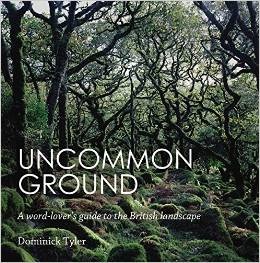 Uncommon Ground by Dominick Tyler: This is like a photographic companion to Robert Macfarlane’s Landmarks. Journeying around Britain, Tyler illustrates different geographical features, many of them known by archaic or folksy names. Some are just record shots, while others are true works of art. I especially liked the more whimsical terms: “Monkey’s birthday” for simultaneous rain and sunshine, and “Witches’ knickers” for plastic scraps waving from a tree or fence.
[I won a copy in a Guardian giveaway.] 
 Wave by Sonali Deraniyagala: The author was vacationing with her family at a national park on the southeast coast of her native Sri Lanka in December 2004 when the Boxing Day tsunami hit, killing her parents, husband, and two sons. Job-like, Deraniyagala gives shape to her grief and lovingly remembers a family life now gone forever as she tours her childhood home in Colombo and her London house. It’s not until over six years later that she feels “I can rest … with the impossible truth of my loss, which I have to compress often and misshape, just so I can bear it—so I can cook or teach or floss my teeth.” This is a wonderful tribute to everyone she lost. Her husband and sons, especially, come through clearly as individuals you feel that you know. Although it’s not a focus of the memoir, Sri Lanka’s natural beauty and food culture struck me – this would be an appealing place to visit.
[Borrowed from a friend in America.]
 Out of Sheer Rage by Geoff Dyer: This is a book about D.H. Lawrence in the same way that Charlie Kaufman’s Adaptation is a film of The Orchid Thief. In other words, it’s not particularly about Lawrence at all; it’s just as much, if not more, about Geoff Dyer – his laziness, his procrastination, his curmudgeonly attitude, his futile search for the perfect places to read Lawrence’s works and write about Lawrence, his failure to feel the proper reverence at Lawrence sites, and so on. While I can certainly sympathize with Dyer’s wry comments about his work habits (“I hate doing anything in life that requires an effort”; “better reading than writing”; “all things in which I am interested … [are] a source of stress and anxiety”), I liked best the parts of the book where he actually writes about Lawrence. (Expanded review on Goodreads.)
[Bought – I think in the Hay Cinema Bookshop – for £2.99.] 
 The Middlesteins by Jami Attenberg: I was surprised how much I loved this. On the face of it it’s a fairly conventional dysfunctional family novel à la Jonathan Franzen, set among a Jewish family in Chicago. The main drama is provided by the mother, Edie, who seems to be slowly eating herself to death: she gorges herself on snacks and fast food several times a day even though she’s facing a third major surgery for diabetes. Her husband, Richard, ditched her in her time of need, leaving their adult children to pick up the slack. Every character is fully rounded (pun intended?) and the family interactions feel perfectly true to life. This isn’t really an ‘issues’ book, yet it deals with obesity in a much more subtle and compassionate way than Lionel Shriver’s Big Brother. (Expanded review on Goodreads.)
[In last year’s Christmas stocking, from the Waynesboro, Pennsylvania Dollar Tree.]
 The Republic of Love by Carol Shields: Not one of my favorites from Shields, but still enjoyable and reminiscent of Anne Tyler’s The Accidental Tourist. Her chapters alternate between the perspectives of radio disc jockey Tom Avery and folklorist Fay McLeod, two Winnipeg lonely hearts who each have their share of broken relationships behind them. It’s clear they’re going to meet and fall in love, but Shields is careful to interrogate myths of love at first sight and happily ever after. I especially liked the surprising interconnectedness of everyone in Winnipeg, the subplot about Fay’s parents’ marriage, and the habit of recording minor characters’ monologues. My major points of criticism would be that Tom sometimes feels like a caricature and I wasn’t entirely sure what the mermaid material was meant to achieve. (Expanded review on Goodreads.)
[In poor condition, so free from the Oxfam bookshop where I volunteered in Romsey in 2007–8.]
 Not That Kind of Girl: A Memoir by Carlene Bauer: Lena Dunham forever rendered this memoir obscure by stealing the title. I read it because I adored Bauer’s debut novel, Frances and Bernard. This could accurately be described as a spiritual memoir, and I think will probably appeal most to readers who grew up in a restrictive religious setting. A bookish, introspective adolescent, Bauer was troubled by how her church and Christian school denied the validity of secular art, including the indie rock she loved and the literature she lost herself in. All the same, Christian notions of purity and purpose stuck with her throughout her college days in Baltimore and then when she was trying to make it in publishing in New York City. This book resonated with my experience in many ways. What Bauer does best is to capture a fleeting mindset and its evolution into a broader way of thinking. (Expanded review on Goodreads.)
[Bought cheap on Amazon USA to qualify for super saver shipping.] 
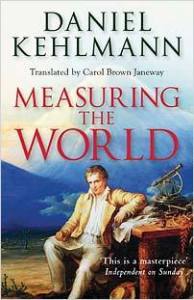

A statue of Alexander von Humboldt, in the grand stairwell of the Natural History Museum in Vienna.
Measuring the World by Daniel Kehlmann: “Whenever things were frightening, it was a good idea to measure them.” This is a delightful historical picaresque about two late-eighteenth-century German scientists: Alexander von Humboldt, who valiantly explored South America and the Russian steppes, and Carl Friedrich Gauss, a misanthropic mathematician whose true genius wasn’t fully realized in his surveying and astronomical work. Both difficult in their own way, the men represent different models for how to do science: an adventurous one who goes on journeys of discovery, and one who stays at home looking at what’s right under his nose. I especially loved Gauss’s hot-air balloon ride and Humboldt’s attempt to summit a mountain. The lack of speech marks somehow adds to the dry wit.
[Purchased via a donation to the Book-Cycle of Exeter.]
What have you been reading recently?
Reviews Roundup, October–November
One of my goals with this blog is to have one convenient place where I can gather together all my writing that has appeared in disparate online locations. To that end, once a month I provide links to all book reviews I’ve published elsewhere, with a rating (below each description) and a taster so you can decide whether to read more. A few exceptions: I won’t point out my Kirkus Indie, BlueInk or Publishers Weekly reviews since I don’t get a byline.
This month you may recognize a few books I already previewed in my posts on books as beautiful objects and library books read in October.
The Bookbag
Charlotte Brontë’s Secret Love by Jolien Janzing: Charlotte and Emily Brontë’s time in Belgium – specifically, Charlotte’s passion for her teacher, Constantin Heger – is the basis for this historical novel. The authoritative yet inviting narration is a highlight, but some readers may be uncomfortable with the erotic portrayal; it doesn’t seem to fit the historical record, which suggests an unrequited love affair. My other issue with the book is a couple of subplots that only seem to have minor significance.

In Fidelity by Jack Wilson: In this 1970s-set novel, the central couple’s relationship is tested by illness and extramarital sexual experiences. Moving from New England to Nigeria and back, the story asks what loyalty really requires when a once-strong connection has faded over time. Strongly reminiscent of John Updike in Part One, this is the male view of adultery. Something about the self-justifying tone stuck in my craw. A more balanced book would give the wife’s perspective, too, as Carol Shields did in Happenstance, or like Lauren Groff recently did to great success in Fates and Furies.

BookBrowse
 The Tsar of Love and Techno by Anthony Marra [subscription service]: This collection of tightly linked short stories, an intimate look at Russia and Chechnya in wartime and afterwards, reveals how politics, family, and art intertwine. Ranging from 1937 to 2013, the pieces show how fear and propaganda linger in the post-Stalinist era. In art as much as in politics, it can be difficult to distinguish airbrushed history from bitter reality. Just as he did in his excellent debut novel, A Constellation of Vital Phenomena, Marra renders unspeakable tragedies bearable because of his warm and witty writing. All his characters’ voices are well-realized and inviting, and he comes up with terrific one-liners.

BookTrib
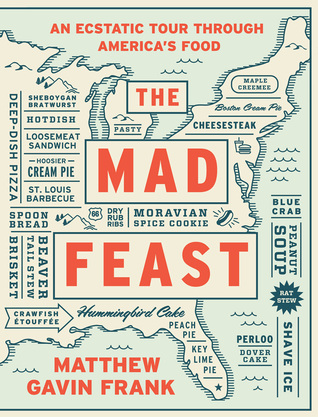 Mad Feast by Matthew Gavin Frank: This is the cookbook David Foster Wallace might have written. In an off-the-wall blend of memoir, travel, history and fiction, Frank proceeds region by region, choosing for each American state one beloved dish and interrogating its origins as well as its metaphors and associations. It’s a mixed bag of familiar foods and ones that only locals are likely to know about. Each chapter ends with a recipe for the signature plate, whether from a Lutheran church or a posh restaurant. Frank’s digressive, anecdotal approach takes some getting used to. If you appreciate the style of writers like Geoff Dyer, Maggie Nelson and Will Self, this should be your next food-themed read.
For Books’ Sake
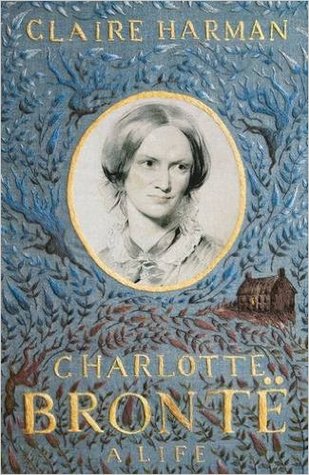 Charlotte Brontë: A Life by Claire Harman: With her bicentennial approaching in April 2016, it’s the perfect time to revisit Charlotte Brontë’s timeless stories. One of the things Harman’s biography does best is trace how the Brontës’ childhood experiences found later expression in fiction. A chapter on the publication of Jane Eyre is a highlight. Diehard fans might not encounter lots of new material, but Harman does make a revelation concerning Charlotte’s cause of death – not TB, as previously believed, but hyperemesis gravidarum (extreme morning sickness). This will help you appreciate afresh a “poet of suffering” whose novels were “all the more subversive because of [their] surface conventionality.”

Cockfosters by Helen Simpson: Simpson’s sixth story collection is full of wry, incisive reflections on aging, loss, regrets, gender roles, and a changing relationship to sex. Most of Simpson’s characters are in their late forties, a liminal time when they’re caught between older parents and still-needy children. Many pieces are dialogue-driven, like scenes in plays. In “Kentish Town,” book club members meet to discuss Dickens’s The Chimes. Simpson weaves in discussion of the plot with commentary on the state of the nation as the ladies set the world to rights and make New Year’s resolutions. It’s a perfect story to read in the run-up to Christmas. The overall stand-out is “Erewhon,” named for Samuel Butler’s 1872 satirical utopian novel. It quickly becomes clear that gender roles are reversed in its fictional world.
Foreword Reviews
 Addiction Is Addiction by Raju Hajela, Paige Abbott and Sue Newton: This comprehensive, well-organized guide discusses the features of addictive thinking and feeling, suggests holistic recovery methods, and offers useful definitions, diagrams, and case studies. The authors are affiliated with Health Upwardly Mobile Inc., Calgary, Alberta. Tracing the history of addiction back to the eighteenth century, when it was first known as “alcoholic disease syndrome,” they present an expert view of the disease’s symptoms and outlook. Strongly recommended to those who have participated in groups like Alcoholics Anonymous or Narcotics Anonymous.
Kirkus
Indie Spotlight: Books about Religion: Self-publishing allows writers to tell their full stories. An article based on interviews with four indie religion authors and mini-reviews of their books.
Nudge
Notes on Suicide by Simon Critchley: Critchley is a philosophy professor at New York’s New School for Social Research. Although he reassures readers with his first line that “This book is not a suicide note,” he also hints that its writing was inspired by personal trouble: “my life has dissolved over the past year or so, like sugar in hot tea.” Not suicidal himself, then, but sympathetic to those who are driven to self-murder. This concise essay illuminates arguments surrounding suicide, with points of reference ranging from Greek philosophers to Robin Williams. Overall, though, it feels cursory and inconclusive.
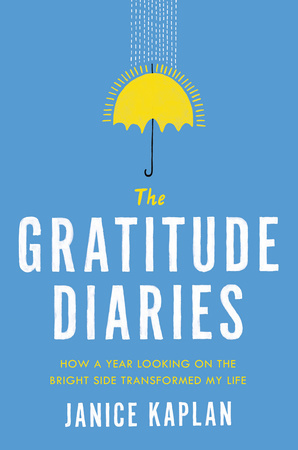 The Gratitude Diaries by Janice Kaplan: We can all do with a little encouragement to appreciate what we already have. In so many areas of life – finances, career, relationship, even the weather – we’re all too often hoping for more or better than what we are currently experiencing. Here Kaplan undertakes a year-long experiment to see if gratitude can improve every aspect of her life. She draws her information from interviews with researchers and celebrities, quotes from philosophers, and anecdotes from her own and friends’ lives. It’s easy, pleasant reading I’d recommend to fans of Gretchen Rubin.
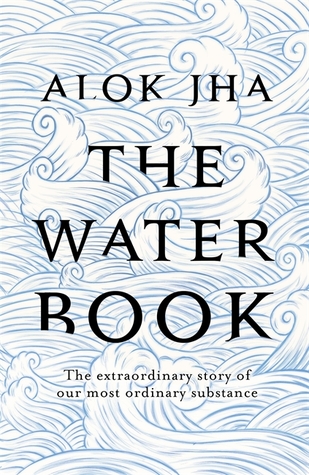 The Water Book by Alok Jha: An interdisciplinary look at water’s remarkable properties and necessity for life on earth. For the most part, Jha pitches his work at an appropriate level. However, if it’s been a while since you studied chemistry at school, you may struggle. Part IV, on the search for water in space, is too in-depth for popular science and tediously long. In December 2013 Jha was part of a month-long Antarctic expedition. He uses the trip as an effective framing device, but I would have liked more memoiristic passages. All in all, I was hoping for less hard science and more reflection on water’s importance to human culture.
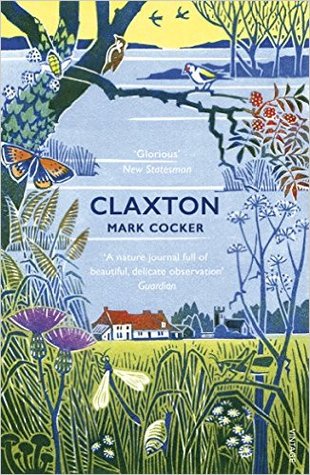 Claxton: Field Notes from a Small Planet by Mark Cocker: Mark Cocker is the Guardian’s country diarist for Norfolk. The short pieces in this book are reprints of his columns, some expanded or revised. I would advise keeping this as a bedside or coffee table book from which you read no more than one or two entries a week, so that you always stay in chronological sync. You’ll appreciate the book most if you experience nature along with Cocker, rather than reading from front cover to back in a few sittings. The problem with the latter approach is that there is inevitable repetition of topics across years. All told, after spending a vicarious year in Claxton, you’ll agree: “How miraculous that we are all here, now, in this one small place.”
 A Mile Down by David Vann: Vann, better known for fiction, tells the real-life story of his ill-fated journeys at sea. He hired a Turkish crew to build him a boat of his own, and before long shoddy workmanship, language difficulties, bureaucracy, and debts started to make it all seem like a very bad idea. Was he cursed? Would he follow his father into suicide? The day-to-day details of boat-building and sailing can be tedious, and there’s an angry tone that’s unpleasant; Vann seems to think everybody else was incompetent or a crook. However, he does an incredible job of narrating two climactic storms he sailed through.
Wasafiri
The Triumph of the Snake Goddess by Kaiser Haq: Beginning with the creation of the world and telling climactic tales of the snake goddess Manasa’s interactions with humans, Haq crafts a uniquely playful set of sacred stories that bear striking similarities to those from other religious traditions. Like Greek myths, the Manasa stories are full of shape-shifting and mistaken identity; rape and incest; jealousy and revenge; and over-the-top exploits of warring gods. She even wears snakes in her hair, like Medusa. Many parallels can also be drawn with the Hebrew and Christian scriptures. Haq’s rendering of the creation account, in particular, resembles the language of Genesis. This book will appeal to students of comparative religion, but can be read with equal enjoyment by laymen in search of engaging storytelling.
I also post reviews of most of my casual reading and skimming on Goodreads.
Mrs. Stevens Hears the Mermaids Singing by May Sarton: Although I’m a huge fan of Sarton’s memoirs, this was my first taste of her fiction. I was underwhelmed: it’s slight and strangely unfeminist. Part of the problem may be that I know so much about Sarton that I couldn’t help but see all the autobiographical detail here. Most of the novel’s action takes place in one day, as Mrs. Stevens awaits the arrival of two interviewers and reflects on past love affairs (some with women) and the meaning of the Muse. For me, Sarton’s journals are a better source of deep thoughts on the writer’s vocation, the value of solitude and the memory of love. This was seen as Sarton’s coming-out book, although it’s not at all sexually explicit.
 Running on the March Wind by Lenore Keeshig: Keeshig is a First Nations Canadian; these poems are full of images of Nanabush the Trickster, language from legal Indian acts, and sly subversion of stereotypes – cowboys and Indians, the only good Indian is a dead Indian (in “Making New”), the white man’s burden, and so on. In places I found these more repetitive and polemical than musical, though I did especially like the series of poems on trees.
The Cartographer Tries to Map a Way to Zion by Kei Miller: Kei Miller is a Jamaican writer who uses island patois and slang, and Rastafarian images and language, alongside standard English. Here he sets up (especially with the long, multi-part title poem) a playful contrast between the cartographer, emblem of civilization and unbiased science, and the rastaman, who takes an altogether more laidback approach to mapping his homeland. This was the perfect poetry collection to be reading in tandem with A Brief History of Seven Killings (see below).
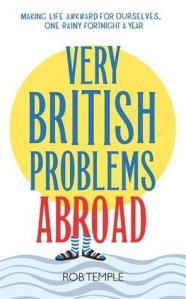 Very British Problems Abroad by Rob Temple: This is possibly ever so slightly funnier than the original (Very British Problems). A lot of it rings true. Once again the fact that the book originated as tweets means you can’t read too much of it at a time or the one-liners grow tiresome. A couple of my favorites were: “The feeling of dread as you approach the campsite and only then remembering that last year you said you’d never, ever do this again” and “Noticing an avalanche heading your way and hoping your umbrella’s up to the job.”
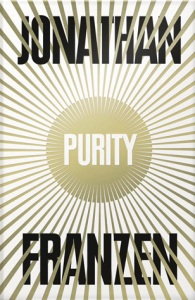 Purity by Jonathan Franzen: By starting and ending with Purity ‘Pip’ Tyler, Franzen emphasizes his debt to Dickens: shades of both Bleak House and Great Expectations are there in the discovery of true parentage and unexpected riches. This is strong on the level of character and theme. Secrecy, isolation and compassion are recurring topics. East Germany, Bolivia and Oakland, California: Franzen doesn’t quite pull all his settings and storylines together, but this is close. With a more dynamic opening section, it might have been 5 stars.
 A Brief History of Seven Killings by Marlon James: This is an edgy, worthwhile Booker pick, but not for the faint-hearted. For the most part, James alternates patois and standard speech, but nearly every section is packed with local slang and expletives. Whether in monologue or dialogue, the many voices form a captivating chorus. The novel is in five parts, each named after a popular song or album of the time. James’s scope, especially as he follows Josey Wales to the Bronx, is too wide. All the narrative switches, once so dynamic, grow tiresome. At 350 pages this would have been a 5-star read. Nevertheless, I’ll be watching the HBO miniseries. (Full review to appear in December 2015 issue of Third Way magazine.)
 Kitchens of the Great Midwest by J. Ryan Stradal: One of my favorite debuts of 2015. Stradal has revealed that his grandmother’s Lutheran church cookbook was the inspiration for this culinary-themed novel that takes place over the course of 30 years. His unique structure takes what are essentially short stories from different perspectives and time periods and links them loosely through Eva Thorvald. Eva’s pop-up supper club gains fame thanks to her innovative adaptations of traditional Midwestern foods like venison or Scandinavian lutefisk; it charges $5,000 a head. I loved almost all of Stradal’s ordinary, flawed characters. If you want a peek at how average Americans live (apart from the $5,000 meals), you’ll find it here.
 The Japanese Lover by Isabel Allende: Allende is a wonderful storyteller. This isn’t up to the level of her South American novels (e.g. The House of the Spirits), and in elaborating both Alma’s and Irina’s stories there’s a bit too much telling rather than showing, but I thoroughly enjoyed the book all the same – I devoured it in just a few days. Allende is sensitive to both the process of aging and the various strategies for dealing with traumatic events from the past.
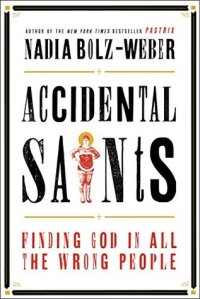 Accidental Saints: Finding God in All the Wrong People by Nadia Bolz-Weber: I knew of Nadia Bolz-Weber through Greenbelt Festival. She’s a foul-mouthed, tattooed, fairly orthodox Lutheran pastor. This brief, enjoyable memoir is about how she keeps believing despite her own past issues and the many messed-up and outwardly unlovable people who show up at her church, House for All Sinners and Saints in Denver. In my favorite section, she zeroes in on one Holy Week and shows the whole range of emotions and trauma that religion can address. The Ash Wednesday chapter is the overall highlight.
 The Road to Little Dribbling: Adventures of an American in Britain by Bill Bryson: Bryson’s funniest book for many years. It meant a lot to me since I am also an American expat in England. Two points of criticism, though: although he moves roughly from southeast to northwest in the country, the stops he makes are pretty arbitrary, and his subjects of mockery are often what you’d call easy targets. Do we really need Bryson’s lead to scorn litterbugs and reality television celebrities? Still, I released many an audible snort of laughter while reading.
 Shaler’s Fish by Helen Macdonald: I was a huge fan of Macdonald’s memoir, H is for Hawk, so was excited to read her poetry collection, originally published in 2001 but to be reissued by Atlantic Monthly Press. Unfortunately, despite the occasional bird and nature imagery (e.g. in “Monhegan”), I found these poems largely inaccessible. Perhaps it was the sprinkling of archaic vocabulary and spellings, or the general lack of punctuation apart from annoying slashes and ampersands.

Portrait of an Addict as a Young Man: A Memoir by Bill Clegg: One of the finest memoirs I’ve come across (and I read a heck of a lot of them). Through this book I followed literary agent Bill Clegg on dozens of taxi rides between generic hotel rooms and bar toilets and New York City offices and apartments; together we smoked innumerable crack pipes and guzzled dozens of bottles of vodka while letting partners and family members down and spiraling further down into paranoia and squalor. Every structural and stylistic decision works: the present tense, short paragraphs, speech set out in italics, occasional flashback chapters distanced through third-person narration. Clegg achieves a perfect balance between his feelings at the time – being out of control and utterly enslaved to his next hit – and the hindsight that allows him to see what a pathetic figure he was becoming.
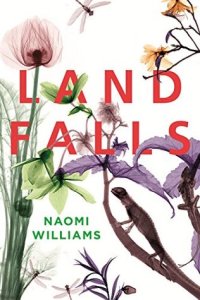 Landfalls by Naomi J. Williams: An enjoyable novel of eighteenth-century maritime adventure, based on a true story and reminiscent of Matthew Kneale’s English Passengers and Peter Carey’s Parrot and Olivier in America. Williams moves between the perspectives of various crew members and outsiders, sometimes employing first person and sometimes third. Key chapters are set in South America, California, Alaska, Macao, and the Solomon Islands. I especially enjoyed a chapter from the point-of-view of a native Alaskan girl – one of the few times the novel focuses on female experience.
 Dept. of Speculation by Jenny Offill: Not as innovative or profound as I was expecting given the rapturous reviews from so many quarters. It’s an attempt to tell an old, old story in a new way: wife finds out her husband is cheating. Offill’s style is fragmentary and aphoristic. Some of the facts and sayings are interesting, but most just sit there on the page and don’t add to the story. What I did find worthwhile was tracing the several tense and pronoun changes: from first-person, past tense into present tense, then to third-person and back to first-person for the final page.
 As Far As I Know by Roger McGough: A bit silly for my tastes; lots of puns and other plays on words. In style they feel like children’s poems, but with vocabulary and themes more suited to adults. I did like “Indefinite Definitions,” especially BRUPT: “A brupt is a person, curt and impolite / Brusque and impatient / Who thinks he’s always right.” The whole series is like that: words with the indefinite article cut off and an explanation playing on the original word’s connotations. From the “And So to Bed” concluding cycle, I loved Camp bed: “A la Recherche du Temps Perdu / on the bedside table / Gardenia on the pillow / Silk pyjamas neatly folded.”
 The Penguin Lessons: What I Learned from a Remarkable Bird by Tom Michell: Marley & Me with a penguin. Well, sort of. A sweet if slight story about the author keeping a Magellanic penguin as a pet while teaching in an Argentina boarding school in the 1970s. On a vacation to Uruguay the twentysomething rescued a penguin from an oil spill and named him Juan Salvado. The uproarious process of cleaning the oil-sodden bird, achieved with a bidet, string bag, and plenty of dish soap, was my favorite passage. However, I’m hesitant about anthropomorphizing, and the language can be stiff – I would have dated this to the 1950s by the speech. Also, there’s precious little evidence of Argentina’s political upheaval.
 Bookish Beck = Rebecca Foster. American transplant to England. Freelance proofreader and book reviewer.
 Bookish Beck