Thoughts on the Women’s Prize and Carol Shields Prize Longlists
Yesterday was my 9th blog anniversary! I love that it coincides with International Women’s Day.

It’s traditionally also been the day of the Women’s Prize longlist announcement, but the past two years they’ve brought it forward to pre-empt news of the Carol Shields Prize for Fiction longlist. It’s hard not to see these prizes as being in competition, though the CSP is only for U.S. and Canadian residents; also considers short story collections, graphic novels, and work in translation; and is more deliberate about including trans and nonbinary authors.
Like last year, their lists are extremely different. In 2023 there was no crossover; this year only one novel appears on both (Brotherless Night). Although it’s easier for me to feel engaged with the WP, I’m drawn to reading much more from the CSP list.
Women’s Prize
Of my predictions, only 1 was correct, compared to last year’s 4. I got none of my personal wishes, as in 2023. I guess making a wish list is a kiss of death! Once again, we have a mix of new and established authors, with a full half of the list being debut work. Nine of the authors are BIPOC. I’ve read 2 of the nominees and would be agreeable to reading up to 6 more. My library always buys the entire longlist, so I’ll eventually get the chance to read them, but not soon enough to add to the conversation.

Read:
 The Wren, The Wren by Anne Enright (CORRECT PREDICTION): Enright’s astute eighth novel traces the family legacies of talent and trauma through the generations descended from a famous Irish poet. The novel switches between Nell’s funny, self-deprecating narration and third-person vignettes about her mother, Carmel. Cycles of abandonment and abuse characterize the McDaraghs. Enright convincingly pinpoints the narcissism and codependency behind their love-hate relationships.
 Western Lane by Chetna Maroo: Easy to warm to even if you’ve never played and know nothing about squash. A debut novella that is illuminating on what is expected of young Gujarati women in England; on sisterhood and a bereaved family’s dynamic; but especially on what it is like to feel sealed off from life by grief. This offbeat, delicate coming-of-age story eschews literary fireworks. In place of stylistic flair is the sense that each word and detail has been carefully placed.
Will read:
Enter Ghost by Isabella Hammad – requested from the library
8 Lives of a Century-Old Trickster by Mirinae Lee – on my Kindle from NetGalley
Interested in reading:
In Defence of the Act by Effie Black – queer novella, suicide theme
And Then She Fell by Alicia Elliott – Indigenous Canadian, postpartum depression theme
Soldier Sailor by Claire Kilroy – Irish author, new motherhood theme
The Blue, Beautiful World by Karen Lord – Black sci-fi author
Maybe:
Brotherless Night by V.V. Ganeshananthan – see below
Not interested in reading:
Hangman by Maya Binyam – meh
The Maiden by Kate Foster – not keen on historical mysteries, and this looks very commercial
Restless Dolly Maunder by Kate Grenville – will read more Grenville, but not this one any time soon
River East, River West by Aube Rey Lescure – have read mixed reviews
Nightbloom by Peace Adzo Medie – disliked her debut novel
Ordinary Human Failings by Megan Nolan – enjoyed her first novel, but DNFed this
A Trace of Sun by Pam Williams – nah
See also the reactions posts from Eric and Laura.
Predictions:
I’d expect to see two or three of the Irish writers on the shortlist, plus probably Western Lane, Enter Ghost, and a couple of other wildcards (but not the SF novel). Enter Ghost, set in Palestine, would certainly be a timely winner…
What comes next:
Shortlist (6 titles) on 24 April and winner on 13 June.
Carol Shields Prize
After I badgered the administrators for six months about Q&A responses that never materialized, they kindly offered me digital review copies of any of the nominees that I’m not able to easily access in the UK. This is, in general, a more rigorous list of highbrow literary fiction, with some slight genre diversity thanks to Catton and Makkai (plus a mixture of historical and contemporary fiction, three story collections, and one book in translation); 10 of 15 authors are BIPOC. There are further details about all the nominees on the website.

Read:
 I Have Some Questions for You by Rebecca Makkai – When an invitation comes from her boarding school alma mater, Granby, to teach a two-week course on podcasting, Bodie indulges her obsession with the 1995 murder of her former roommate. Makkai has taken her cues from the true crime genre and constructed a convincing mesh of evidence and theories. She so carefully crafts her pen portraits, and so intimately involves us in Bodie’s psyche, that it’s impossible not to get invested. This is timely, daring, intelligent, enthralling storytelling. (Delighted to see this nominated as I hoped the WP would recognize it last year.)
Skimmed and didn’t care for:
Birnam Wood by Eleanor Catton
Loot by Tania James
Will read:
Land of Milk and Honey by C. Pam Zhang – requested from the library
Know little or nothing about but will happily read if I get a chance:
Cocktail: Stories by Lisa Alward
Dances by Nicole Cuffy
Daughter by Claudia Dey
Between Two Moons by Aisha Abdel Gawad
You Were Watching from the Sand: Short Stories by Juliana Lamy
The Future by Catherine Leroux, translated by Susan Ouriou – has just won Canada Reads
A Council of Dolls by Mona Susan Power
Chrysalis: Stories by Anuja Varghese
Less interested in reading:
Brotherless Night by V. V. Ganeshananthan – Sri Lankan civil war setting
Coleman Hill by Kim Coleman Foote – Fictionalized family memoir with 9 POVs
A History of Burning by Janika Oza – Big Indian-Ugandan multigenerational story
Predictions:
Not the first clue. Come back to me after I’ve read a few more.
What comes next:
Shortlist (5 titles) on 9 April and winner on 13 May.
What have you read, or might you read, from the longlists?
Book Serendipity, October to December 2023
I call it “Book Serendipity” when two or more books that I read at the same time or in quick succession have something in common – the more bizarre, the better. This is a regular feature of mine every couple of months. Because I usually have 20–30 books on the go at once, I suppose I’m more prone to such incidents. The following are in roughly chronological order.
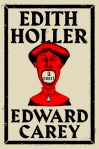
- A woman turns into a spider in Edith Holler by Edward Carey and The Human Origins of Beatrice Porter and Other Essential Ghosts by Soraya Palmer.

- Expulsion from Eden scenes (one literal, after the Masaccio painting; another more figurative by association) in Conversation Among Stones by Willie Lin and North Woods by Daniel Mason.
- Reading my second 2023 release featuring a theatre fire (after The House Is on Fire by Rachel Beanland, which I actually read last year): Edith Holler by Edward Carey.
- The protagonist cuts their foot in The Rituals by Rebecca Roberts and The Last House on Needless Street by Catriona Ward.


- On the same evening, I started two novels where the protagonist’s parents both died in a car crash: The Witches by Roald Dahl and Family Meal by Bryan Washington. This is something I encounter ALL THE TIME in fiction (versus extremely rarely in life) and it’s one of my major pet peeves. I can excuse it more in the children’s book as the orphan trope allows for adventures, but for the most part it just seems lazy to me. The author has decided they don’t want to delve into a relationship with parents at all, so they cut it out in the quickest and easiest possible way.
- A presumed honour killing in Behind You Is the Sea by Susan Muaddi Darraj and The Hundred and Ninety-Nine Steps by Michel Faber.


- A Houston, Texas setting in The Only Way Through Is Out by Suzette Mullen and Family Meal by Bryan Washington.
- Daniel Clowes, whose graphic novel Monica I was also in the middle of at the time, was mentioned in Robin Ince’s Bibliomaniac.
- The author/speaker warns the squeamish reader to look away for a paragraph in Robin Ince’s Bibliomaniac (recounting details of a gross-out horror plot) and one chapter of Daniel Mason’s North Woods.


- A mentally ill man who lives at the end of a lane in Daniel Mason’s North Woods and The Last House on Needless Street by Catriona Ward.
- Reading Last House before the Mountain by Monika Helfer and The Last House on Needless Street by Catriona Ward at the same time.
- The Daedalus myth (via Aeschylus or Brueghel, or just in general) is mentioned in Last House before the Mountain by Monika Helfer, The Ghost Orchid by Michael Longley, and Absolutely and Forever by Rose Tremain.
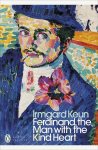
- A character goes to live with their aunt and uncle in Western Lane by Chetna Maroo and The House of Doors by Tan Twan Eng (both Booker-longlisted), but also The Woman in Black by Susan Hill, Train Dreams by Denis Johnson, and The Story Girl by L.M. Montgomery. I came across all five instances within a few days! Later I also encountered a brief mention of this in Ferdinand by Irmgard Keun. How can this situation be so uncommon in life but so common in fiction?!


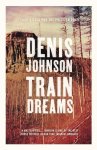

- The outdated terms “Chinaman” and “coolie” appear frequently in Train Dreams by Denis Johnson and The House of Doors by Tan Twan Eng.
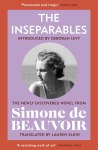
- A 15-year-old declares true love in The Inseparables by Simone de Beauvoir and Absolutely and Forever by Rose Tremain.
- A French character named Pascal in The Inseparables by Simone de Beauvoir and The Garrick Year by Margaret Drabble.

- A minor character called Mrs Biggs in Harriet Said… by Beryl Bainbridge and The House of Doors by Tan Twan Eng.
- The Chinese zither (guzheng) is mentioned in Dear Chrysanthemums by Fiona Sze-Lorrain, which I read earlier in the year, and The House of Doors by Tan Twan Eng.
- Oscar Wilde’s trial is mentioned in The House of Doors by Tan Twan Eng, as it was in The New Life by Tom Crewe, which I read earlier in the year – in both it was a cautionary case for older homosexual characters (based on real people: W. Somerset Maugham vs. John Addington Symonds) who were married to women but had a live-in male secretary generally known to be their lover. At the same time as I was reading The House of Doors, I was rereading Wilde’s De Profundis, which was written from prison.


- In Fifty Days of Solitude Doris Grumbach mentions reading Bear by Marian Engel. I read both during Novellas in November.
- Living funerals are mentioned in Ferdinand by Irmgard Keun and The Ritual Effect by Michael Norton.
- A character insists that lilac not be included in a bouquet in In the Sweep of the Bay by Cath Barton and Bright Young Women by Jessica Knoll.


- A woman has a lover named Frances in Bright Young Women by Jessica Knoll and The Cancer Journals by Audre Lorde.
- The final word of the Fanny Howe poem in Raised by Wolves (the forthcoming 50th anniversary poetry anthology from Graywolf Press) is “theophanies.” At the same time, I was reading the upcoming poetry collection Theophanies by Sarah Ghazal Ali.


- The Cancer Journals by Audre Lorde, which I’d read the month before, was a major influence on the cancer memoir All In by Caitlin Breedlove.
- Two foodie memoirs I read during our city break, A Waiter in Paris by Edward Chisholm and The Sweet Life in Paris by David Lebovitz, both likened a group of young men to a Dolce & Gabbana ad. (Chisholm initially lived at Porte des Lilas, the next Metro stop up from where we stayed in Mairie des Lilas.)
- A French slang term for penis, “verge,” is mentioned in both The Sweet Life in Paris by David Lebovitz and Learning to Drive by Katha Pollitt.


What’s the weirdest reading coincidence you’ve had lately?
Novellas in November 2023: That’s a Wrap!
This was Cathy’s and my fourth year co-hosting Novellas in November. We’ve done our best to keep up with your posts, collected via four Inlinkz post parties. We had 52 bloggers take part this year, contributing a total of 175 posts. You can look back at them all here. See also Cathy’s wrap-up post.
Claire Keegan continued to get lots of love this year, and it was great to see people engaging with our weekly prompts and buddy reads, and cleverly combining challenges with German Lit Month, Nonfiction November and Beryl Bainbridge Reading Week. Other books highlighted more than once included Cheri by Jo Ann Beard, They by Kay Dick, Train Dreams by Denis Johnson and Two Lives by William Trevor.
We’d love to get your feedback about what worked well or less well this month…
- Did you like having the prompts? Or would you rather go back to themes?
- Was it good to have a choice of buddy reads? Or do you prefer having just one?
- Did Inlinkz work okay for hosting the link-up?
Thank you all for being so engaged with #NovNov23! We’ll see you back here next year.
The Booker Prize 2023 Ceremony
Yesterday evening Eleanor Franzen of Elle Thinks and I had the enormous pleasure of attending the Booker Prize awards ceremony at Old Billingsgate in London. I won tickets through “The Booker Prize Book Club” Facebook group, which launched just 10 or so weeks ago but has already garnered over 6000 members from around the world. They ran a competition for shortlist book reviews and probably did not attract nearly as many entries as they expected to. This probably worked to my advantage, but as it’s the only prize I can recall winning for my writing, I am going to take it as a compliment nonetheless! I submitted versions of my reviews of If I Survive You and Western Lane – the only shortlistees that I’ve read – and it was the latter that won us tickets.
We arrived at the venue 15 minutes before the doors opened, sheltering from the drizzle under an overhang and keeping a keen eye on arrivals (Paul Lynch and sodden Giller Prize winner Sarah Bernstein, her partner wearing both a kilt and their several-week-old baby). Elle has a gift for small talk and we had a nice little chat with Jonathan Escoffery and his 4th Estate publicist before they were whisked inside. His head was spinning from the events of the week, including being part of a Booker delegation that met Queen Camilla.


There was a glitzy atmosphere, with a photographer-surrounded red carpet and large banners for each shortlisted novel along the opposite wall, plus an exhibit of the hand-bound editions created for each book. We enjoyed some glasses of champagne and canapés (the haddock tart was the winner) and collared Eric Karl Anderson of Lonesome Reader. It was lovely to catch up with him and Eleanor and do plenty of literary celebrity spotting: Graeme Macrae Burnet, Eleanor Catton, judge Mary Jean Chan, Natalie Haynes, Alan Hollinghurst, Anna James, Jean McNeil, Johanna Thomas-Corr (literary editor of the Sunday Times) and Sarah Waters. Later we were also able to chat with Julianne Pachico, our Sunday Times Young Writer Award shadow panel winner from 2017. She has recently gotten married and released her third novel.
We were allocated to Table 11 in the front right corner. Also at our table were some Booker Prize editorial staff members, the other competition winner (for a video review) and her guest, an Instagram influencer, a Reading Agency employee, and several more people. The three-course dinner was of a very high standard for mass catering and the wine flowed generously. I thoroughly enjoyed my meal. Afterward we had a bit of time for taking red carpet photos and one of Eleanor with the banner for our predicted winner, Prophet Song.


Some of you may have watched the YouTube livestream, or listened to the Radio 4 live broadcast. Nazanin Zaghari-Ratcliffe’s speech was a highlight. She spoke about the secret library at the Iranian prison where she was held for six years. Doctor Thorne by Anthony Trollope, War and Peace by Leo Tolstoy, The Handmaid’s Tale by Margaret Atwood (there was a long waiting list among the prisoners and wardens, she said), and especially The Return by Hisham Matar meant a lot to her. From earlier on in the evening, I also enjoyed judge Adjoa Andoh’s dramatic reading of an excerpt from Possession in honour of the late Booker winner A.S. Byatt, and Shehan Karunatilaka’s tongue-in-cheek reflections on winning the Booker – he warned the next winner that they won’t write a word for a whole year.


There was a real variety of opinion in the room as to who would win. Earlier in the evening we’d spoken to people who favoured Western Lane, This Other Eden and The Bee Sting. But both Elle and I were convinced that Prophet Song would take home the trophy, and so it did. Despite his genuine display of shock, Paul Lynch was well prepared with an excellent speech in which he cited the apocrypha and Albert Camus. In a rapid-fire interview with host Samira Ahmed, he added that he can still remember sitting down and weeping after finishing The Mayor of Casterbridge, age 15 or 16, and hopes that his work might elicit similar emotion. I’m not sure that I plan on reading it myself, but from what I’ve heard it’s a powerfully convincing dystopian novel that brings political and social collapse home in a realistic way.
All in all, a great experience for which I am very grateful! (Thanks to Eleanor for all the photos.)
Have you read Prophet Song? Did you expect it to win the Booker Prize?
#NovNov23 Buddy Reads Reviewed: Western Lane & A Room of One’s Own
This year we set two buddy reads for Novellas in November: one contemporary work of fiction and one classic work of short nonfiction. Do let us know if you’ve been reading them and what you think!
A version of the below review, submitted via their Facebook book club group, won me a pair of tickets to this year’s Booker Prize ceremony!
You may also wish to have a look at the excellent reading guide on the Booker website.
Western Lane by Chetna Maroo (2023)
In the same way that you don’t have to love baseball or video games to enjoy The Art of Fielding or Tomorrow, and Tomorrow, and Tomorrow, it’s easy to warm to Western Lane even if you’ve never played squash. Debut author Chetna Maroo assumes reader unfamiliarity with her first line: “I don’t know if you have ever stood in the middle of a squash court – on the T – and listened to what is going on next door.” As Gopi looks back to the year that she was eleven – the year after she lost her mother – what she remembers is the echo of a ball hitting a wall. That first year of mourning, which was filled with compulsive squash training, reverberates just as strongly in her memory.
To make it through, Pa tells his three daughters, “You have to address yourself to something.” That something will be their squash hobby, he decides, but ramped up to the level of an obsession. Having lost my own mother just over a year ago, I could recognize in these characters the strategies people adopt to deflect grief. Keep busy. Go numb. Ignore your feelings. Get angry for no particular reason. Even within this small family, there’s a range of responses. Pa lets his electrician business slip; fifteen-year-old Mona develops a mild shopping addiction; thirteen-year-old Khush believes she still sees their mother.
Preparing for an upcoming squash tournament gives Gopi a goal to work towards, and a crush on thirteen-year-old Ged brightens long practice days. Maroo emphasizes the solitude and concentration required, alternating with the fleeting elation of performance. Squash players hover near the central T, from which most shots can be reached. Maroo, too, sticks close to the heart. Like all the best novellas, hers maintains a laser focus on character and situation. A child point-of-view can sound precocious or condescending. That is by no means the case here. Gopi’s perspective is convincing for her age at the time, yet hindsight is the prism that reveals the spectrum of intense emotions she experienced: sadness, estrangement from her immediate family, and rejection on the one hand; first love and anticipation on the other.
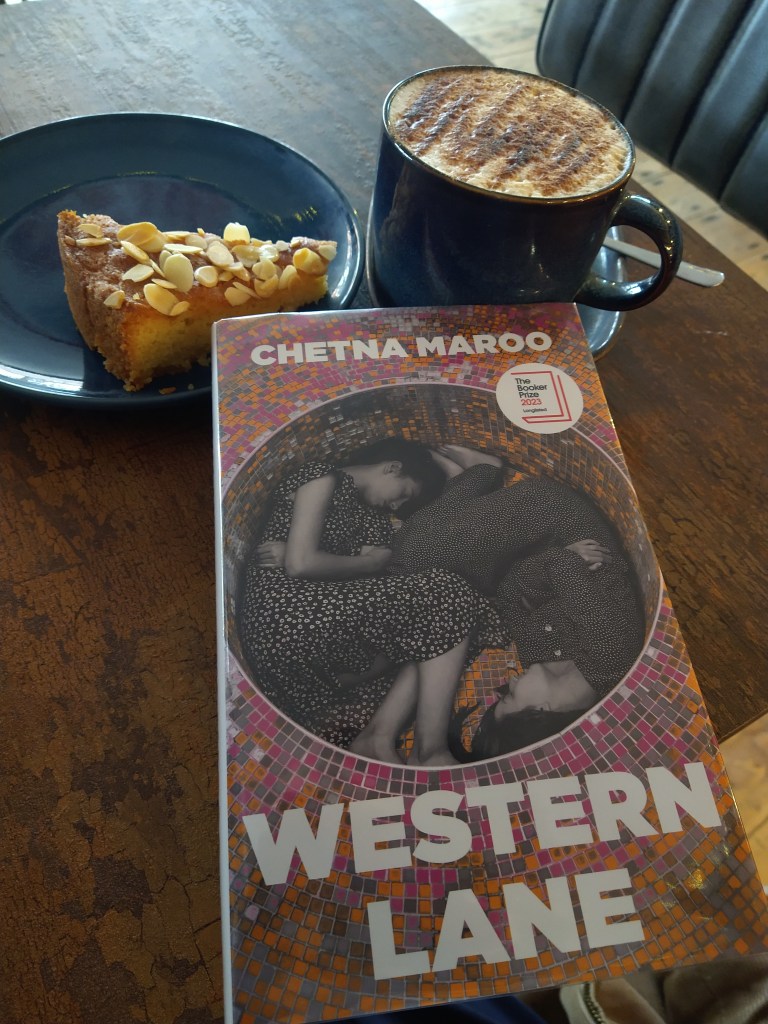
This offbeat, delicate coming-of-age story eschews the literary fireworks of other Booker Prize nominees. In place of stylistic flair is the sense that each word and detail has been carefully placed. Less is more. Rather than the dark horse in the race, I’d call it the reader favourite: accessible but with hidden depths. There are cinematic scenes where little happens outwardly yet what is unspoken between the characters – the gazes and tension – is freighted with meaning. (I could see this becoming a successful indie film.)
she and my uncle stood outside under the balcony of my bedroom until much later, and I knelt above them with my blanket around me. The three of us looked out at the black shapes of the rose arbour, the trees, the railway track. Stars appeared and disappeared. My knees began to ache. Below me, Aunt Ranjan wanted badly to ask Uncle Pavan how things stood now and Uncle Pavan wanted to tell her, but she wasn’t sure how to ask and he wasn’t sure how to begin. Soon, I thought, it would be morning, and night, and morning again, and it wouldn’t matter, except to someone watching from so far off that they couldn’t know yet.
The novella is illuminating on what is expected of young Gujarati women in England; on sisterhood and a bereaved family’s dynamic; but especially on what it is like to feel sealed off from life by grief. “I think there’s a glass court inside me,” Gopi says, but over the course of one quietly momentous year, the walls start to crack. (Public library) [161 pages] 
A Room of One’s Own by Virginia Woolf (1929)
Here’s the thing about Virginia Woolf. I know she’s one of the world greats. I fully acknowledge that her books are incredibly important in the literary canon. But I find her unreadable. The last time I had any success was when I was in college. Orlando and To the Lighthouse both blew me away half a lifetime ago, but I’ve not been able to reread them or force my way through anything else (and I have tried: Mrs Dalloway, The Voyage Out and The Waves). In the meantime, I’ve read several novels about Woolf and multiple Woolf-adjacent reads (ones by Vita Sackville-West, or referencing the Bloomsbury Group). So I thought a book-length essay based on lectures she gave at Cambridge’s women’s colleges in 1928 would be the perfect point of attack.
Hmm. Still unreadable. Oh well!
 In the end I skimmed A Room of One’s Own for its main ideas – already familiar to me, as was some of the language – but its argumentation, reliant as much on her own made-up examples as on literary history, failed to move me. Woolf alternately imagines herself as Mary Carmichael, a lady novelist trawling an Oxbridge library and the British Museum for her forebears; and as a reader of Carmichael’s disappointingly pedestrian Life’s Adventure. If only Carmichael had had the benefit of time and money, Woolf muses, she might have been good. As it is, it would take her another century to develop her craft. She also posits a sister for Shakespeare and probes the social conditions that made her authorship impossible.
This is important to encounter as an early feminist document, but I would have been okay with reading just the excerpts I’d already come across.
Some favourite lines:
“I thought how unpleasant it is to be locked out; and I thought how it is worse perhaps to be locked in”
“A very queer, composite being thus emerges. Imaginatively she [the woman in literature] is of the highest importance; practically she is completely insignificant. She pervades poetry from cover to cover; she is all but absent from history.”
“Poetry depends upon intellectual freedom. And women have always been poor, not for two hundred years merely, but from the beginning of time. Women have had less intellectual freedom than the sons of Athenian slaves. Women, then, have not had a dog’s chance of writing poetry. That is why I have laid so much stress on money and a room of one’s own.”
(Secondhand purchase many years ago) [114 pages]
Getting Ready for Novellas in November!

Novellas: “all killer, no filler”
~Joe Hill
For the fourth year in a row, Cathy of 746 Books and I are celebrating the art of the short* book by co-hosting Novellas in November as a month-long challenge. This time we have five prompts, adapted from ones commonly used for Nonfiction November. (*A reminder that we suggest 200 pages as the upper limit for a novella.)
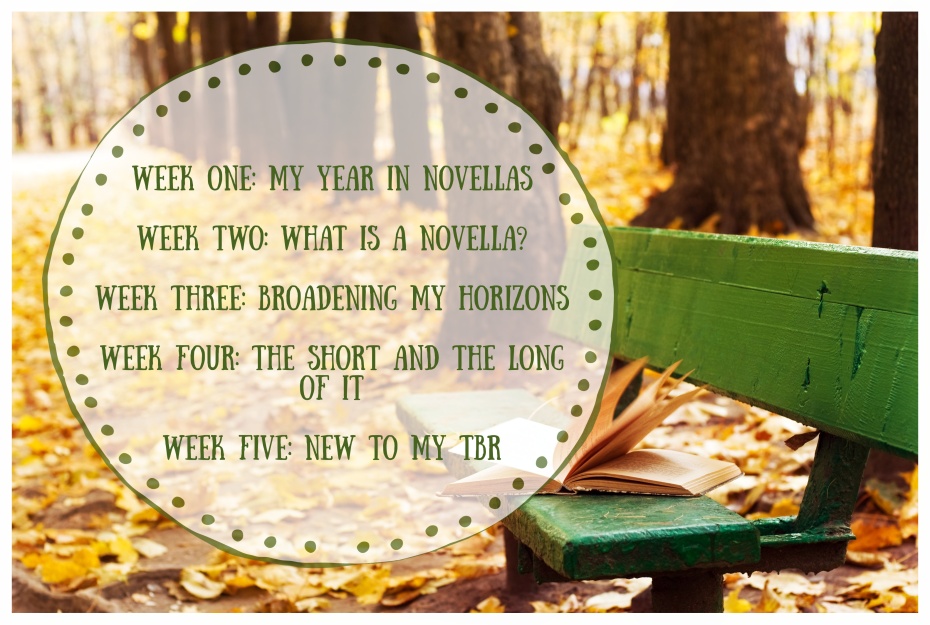
Here’s the schedule:
Week 1 (starts Wednesday 1 November): My Year in Novellas
- During this partial week, tell us about any novellas you have read since last NovNov.
Week 2 (starts Monday 6 November): What Is a Novella?
- Ponder the definition, list favourites, or choose ones you think best capture the ‘spirit’ of a novella.
Week 3 (starts Monday 13 November): Broadening My Horizons
- Pick your top novellas in translation and think about new genres or authors you’ve been introduced to through novellas.
Week 4 (starts Monday 20 November): The Short and the Long of It
- Pair a novella with a nonfiction book or novel that deals with similar themes or topics.
Week 5 (starts Monday 27 November): New to My TBR
- In the last few days, talk about the novellas you’ve added to your TBR since the month began.
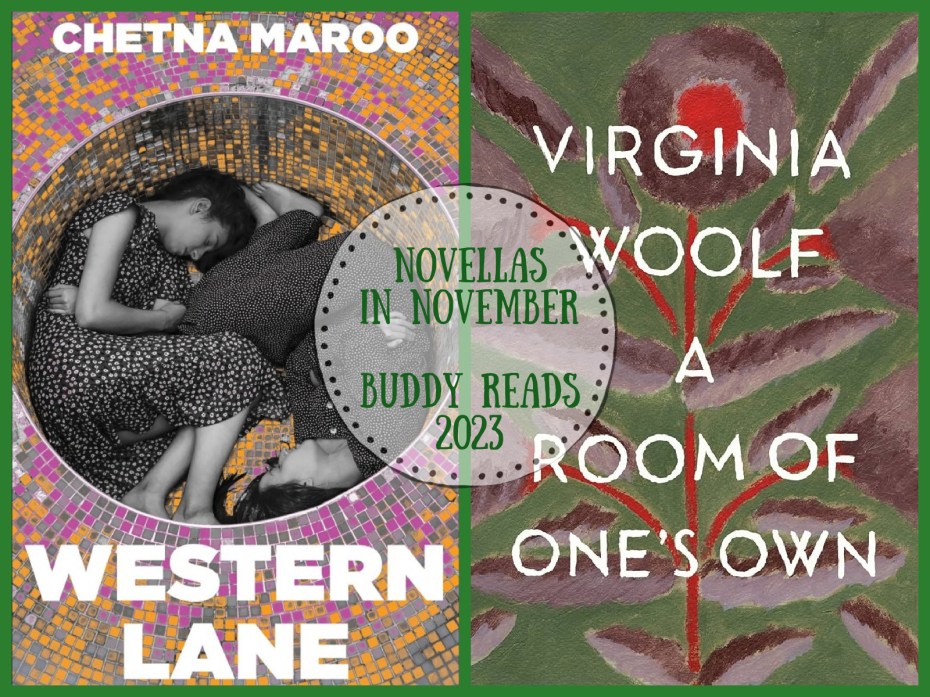
We also have two buddy read options, one contemporary and one classic. Please join us in reading one or both at any time in November!
Western Lane by Chetna Maroo (2023) is on this year’s Booker Prize longlist; whether or not it advances to the shortlist on Thursday, it promises to be a one-of-a-kind debut novel about an eleven-year-old girl coming to terms with the loss of her mother and becoming deeply involved in the world of competitive squash.
A Room of One’s Own by Virginia Woolf (1929), an extended essay about the conditions necessary for women’s artistic achievement, is based on lectures she delivered at Cambridge’s women’s colleges. This feminist classic is in print or can be freely read online (Internet Archive or Project Gutenberg Canada).
It’s always a busy month in the blogging world, what with Nonfiction November, German Literature Month, and Margaret Atwood Reading Month. Why not search your shelves and/or local library for novellas that count towards multiple challenges? You might also consider participating in Annabel’s Beryl Bainbridge Reading Week (the 18th through 26th) as most of Bainbridge’s novels were under 200 pages.
We’re looking forward to having you join us! From 1 November there will be a pinned post on my site from which you can join the link-up. Keep in touch via Twitter (@cathy746books) and Instagram (@cathy_746books), and feel free to use the terrific feature images Cathy has made plus our new hashtag, #NovNov23.
 Bookish Beck = Rebecca Foster. American transplant to England. Freelance proofreader and book reviewer.
 Bookish Beck