Three on a Theme: Books on Communes by Crossman, Heneghan & Twigg
Communal living always seems like a great idea but rarely works out well. Why? The short answer: Because people. A longer answer: Political ideals are hard to live out in the everyday when egos clash, practical arrangements become annoying, and lines of privacy or autonomy get crossed. All three books I review today are set in the aftermath of utopian failure. Susanna Crossman, who grew up in an English commune, looks back at 15 years of an abnormal childhood. The community in Birdeye is set to collapse after two founding members announce their departure, leaving one ageing woman and her disabled daughter. And in Spoilt Creatures, from a decade’s distance, Iris narrates the disastrous downfall of Breach House.
Home Is Where We Start: Growing up in the Fallout of the Utopian Dream by Susanna Crossman
For Crossman’s mother, “the community” was a refuge, a place to rebuild their family’s life after divorce and the death of her oldest daughter in a freak accident. For her three children, it initially was a place of freedom and apparent equality between “the Adults” and “the Kids” – who were swiftly indoctrinated into hippie opinions on the political matters of the day. “There is no difference between private and public conversations, between the inside and the outside. No euphemisms. Vaginas are discussed over breakfast alongside domestic violence and nuclear bombs.” Crossman’s present-tense recreation of her precocious eight-year-old perspective is canny, as when she describes watching Charles and Diana’s wedding on television:
It was beautiful, but I know marriage is a patriarchal institution, a capitalist trap, a snare. You can read about it in Spare Rib, or if you ask community members, someone will tell you marriage is legalized rape. It is a construction, and that means it’s not natural, and is part of the social reproduction of gender roles and women’s unpaid domestic labour.
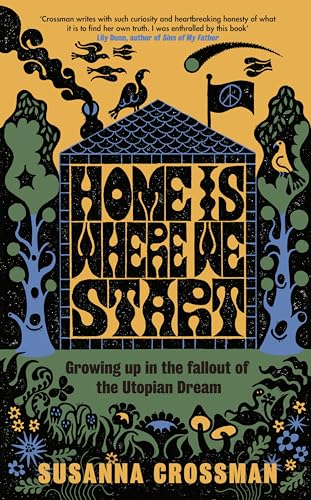 Their mum, now known only as “Alison,” often seemed unaware of what the Kids got up as they flitted in and out of each other’s units. Crossman once electrocuted herself at a plug. Another time she asked if she could go to an adult man’s unit for an offered massage. Both times her mother was unfazed.
The author is now a clinical arts therapist, so her recreation is informed by her knowledge of healthy child development and the long-term effects of trauma. She knows the Kids suffered from a lack of routine and individually expressed love. Community rituals, such as opening Christmas presents in the middle of a circle of 40 onlookers, could be intimidating rather than welcoming. Her molestation and her sister’s rape (when she was nine years old, on a trip to India ‘supervised’ by two other adults from the community) were cloaked in silence.
Crossman weaves together memoir and psychological theory as she examines where the utopian impulse comes from and compares her own upbringing with how she tries to parent her three daughters differently at home in France. Through vignettes based on therapy sessions with patients, she shows how play and the arts can help. (I’d forgotten that I’ve encountered Crossman’s writing before, through her essay on clowning for the Trauma anthology.) I somewhat lost interest as the Kids grew into teenagers. It’s a vivid and at times rather horrifying book, but the author doesn’t resort to painting pantomime villains. Behind things were good intentions, she knows, and there is nuance and complexity to her account. It’s a great mix of being back in the moment and having the hindsight to see it all clearly.
With thanks to Fig Tree (Penguin) for the proof copy for review.
Birdeye by Judith Heneghan
Like Crossman’s community, the Birdeye Colony is based in a big crumbling house in the countryside – but this time in the USA; the Catskills of upstate New York, to be precise. Liv Ferrars has been the de facto leader for nearly 50 years, since she was a young mother to twins. Now she’s a sixty-seven-year-old breast cancer survivor. To her amazement, her book, The Attentive Heart, still attracts visitors, “bringing their problems, their pain and loneliness, hoping to be mended, made whole.”
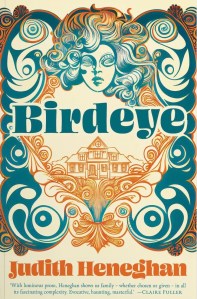 One of the ur-plots is “a stranger comes to town,” and that’s how Birdeye opens, with the arrival of a young man named Conor who’s read and admired Liv’s book, and seems to know quite a lot about the place. When Indian American siblings Sonny and Mishti, the only others who have been there almost from the beginning, announce that they’re leaving, it seems Birdeye is doomed. But Liv wonders if Conor can be part of a new generation to take it on.
It’s a bit of a sleepy book, with a touch of suspense as secrets emerge from Birdeye’s past. I was slightly reminded of May Sarton’s Kinds of Love. I most appreciated the character study of Liv and her very different relationships with her daughters, who are approaching fifty: Mary is a capable lawyer in London, while Rose suffered oxygen deprivation at birth and is severely intellectually disabled. Since Liv’s illness, Mary has pressured her to make plans for Rose’s future and, ultimately, her own. The duty of care we bear towards others – blood family; the chosen family of friends and comrades, even pets – arises as a major theme. I’d recommend this to those who love small-town novels.
With thanks to Salt Publishing for the free copy for review.
& 20 Books of Summer, #20:
Spoilt Creatures by Amy Twigg
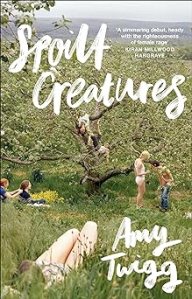 Alas, this proved to be another disappointment from the Observer’s 10 best new novelists feature (following How We Named the Stars by Andrés N. Ordorica). The setup was promising: in 2008, Iris reeling from her break-up from Nathan and still grieving her father’s death in a car accident, goes to live at Breach House after a chance meeting with Hazel, one of the women’s commune’s residents. “Breach House was its own ecosystem, removed from the malfunctioning world of indecision and patriarchy.” Any attempts to mix with the outside world go awry, and the women gain a reputation as strange and difficult. I never got a handle on the secondary characters, who fill stock roles (the megalomaniac leader, the reckless one, the disgruntled one), and it all goes predictably homoerotic and then Lord of the Flies. The dual-timeline structure with Iris’s reflections from 10 years later adds little. An example of the commune plot done poorly, with shallow conclusions rather than deeper truths at play.
With thanks to Tinder Press for the free copy for review.
On this topic, I have also read:
Novels:
Arcadia by Lauren Groff
The Blithedale Romance by Nathaniel Hawthorne
On my TBR:
O Sinners by Nicole Cuffy
We Burn Daylight by Bret Anthony Johnston
Nonfiction:
Heaven Is a Place on Earth by Adrian Shirk
Five Final Novellas: Adichie, Glück, Jhabvala, Victory for Ukraine, Woodson (#NovNov22)
We’ll wrap up Novellas in November and give some final statistics tomorrow. Today, I have mini reviews of another five novellas I read this month: one short nonfiction reread and then fiction ranging from India in the 1920s to short stories in comics about the war in Ukraine.
Notes on Grief by Chimamanda Ngozi Adichie (2021)
[85 pages]
 This came out in May last year – I pre-ordered it from Waterstones with points I’d saved up, because I’m that much of a fan – and it’s rare for me to reread something so soon, but of course it took on new significance for me this month. Like me, Adichie lived on a different continent from her family and so technology mediated her long-distance relationships. She saw her father on their weekly Sunday Zoom on June 7, 2020 and he appeared briefly on screen the next two days, seeming tired; on June 10, he was gone, her brother’s phone screen showing her his face: “my father looks asleep, his face relaxed, beautiful in repose.”
My experience of my mother’s death was similar: everything was sudden; my sister was the one there at the hospital, while all I could do was wait by the phone/laptop for news. So these details were particularly piercing, but the whole essay resonated with me as she navigates the early days of grief and remembers what she most admires about her father, including his piety, record-keeping and pride in her. (How lucky I am that Covid travel restrictions were no longer a factor; they delayed his memorial service.) My original review is here. Cathy also reviewed it. If you wish, you can read the New Yorker piece it arose from here. 
Marigold and Rose: A Fiction by Louise Glück (2022)
[52 pages]
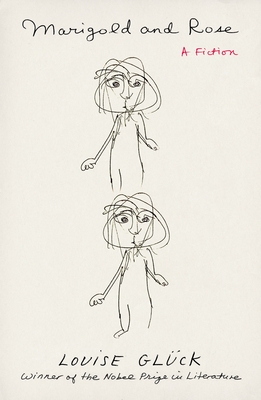 The first (and so far only) fiction by the poet and 2020 Nobel Prize winner, this is a curious little story that imagines the inner lives of infant twins and closes with their first birthday. Like Ian McEwan’s Nutshell, it ascribes to preverbal beings thoughts and wisdom they could not possibly have. Marigold, the would-be writer of the pair, is spiky and unpredictable, whereas Rose is the archetypal good baby.
Marigold did not like people. She liked Mother and Father; everyone else had not yet been properly inspected. Rose did like people and she intended them to like her. … Everyone understood that Marigold lived in her head and Rose lived in the world.
Now every day was like the days when the twins did not perform well at naptime. Then Mother and Father would begin to look tired and harassed. Mother explained that babies got tired too; often, they cried because they were tired. I don’t cry because I’m tired, Marigold thought. I cry because something has disappointed me.
As a psychological allegory, this tracks personality development and the growing awareness of Mother and Father as separate people with their own characteristics, some of which each girl replicates. But I failed to find much of a point. 
With thanks to Carcanet Press for the free e-copy for review.
Heat and Dust by Ruth Prawer Jhabvala (1975)
[181 pages]
 A lesser-known Booker Prize winner that we read for our book club’s women’s classics subgroup. My reading was interrupted by the last-minute trip back to the States, so I ended up finishing the last two-thirds after we’d had the discussion and also watched the movie. I found I was better able to engage with the subtle story and understated writing after I’d seen the sumptuous 1983 Merchant Ivory film: the characters jumped out for me much more than they initially had on the page, and it was no problem having Greta Scacchi in my head.
In 1923, Olivia is a bored young officer’s wife in India who becomes infatuated with the Nawab, an Indian prince involved in some dodgy dealings. In the novel’s present day, Olivia’s step-granddaughter (never named; in the film she’s called Anne, played by Julie Christie and changed to a great-niece for some reason) is also in India, enjoying the hippie freedom and rediscovering Olivia’s life through the letters she wrote to her sister. Both novel and film cut quickly and often between the two time periods to draw increasingly overt parallels between the women’s lives, culminating in unexpected pregnancies and difficult decisions to be made. I enjoyed the atmosphere (see also The Painted Veil and China Room) and would recommend the film, but I doubt I’ll seek out more by Jhabvala. (Public library) 
PEREMOHA: Victory for Ukraine (2022)
[96 pages]
 Various writers and artists contributed these graphic shorts, so there are likely to be some stories you enjoy more than others. “The Ghost of Kyiv” is about a mythical hero from the early days of the Russian invasion who shot down six enemy planes in a day. I got Andy Capp vibes from “Looters,” about Russian goons so dumb they don’t even recognize the appliances they haul back to their slum-dwelling families. (Look, this is propaganda. Whether it comes from the right side or not, recognize it for what it is.) In “Zmiinyi Island 13,” Ukrainian missiles destroy a Russian missile cruiser. Though hospitalized, the Ukrainian soldiers involved – including a woman – can rejoice in the win. “A pure heart is one that overcomes fear” is the lesson they quote from a legend. “Brave Little Tractor” is an adorable Thomas the Tank Engine-like story-within-a-story about farm machinery that joins the war effort. A bit too much of the superhero, shoot-’em-up stylings (including perfectly put-together females with pneumatic bosoms) for me here, but how could any graphic novel reader resist this Tokyopop compilation when a portion of proceeds go to RAZOM, a nonprofit Ukrainian-American human rights organization? (Read via Edelweiss)
Another Brooklyn by Jacqueline Woodson (2016)
[175 pages]
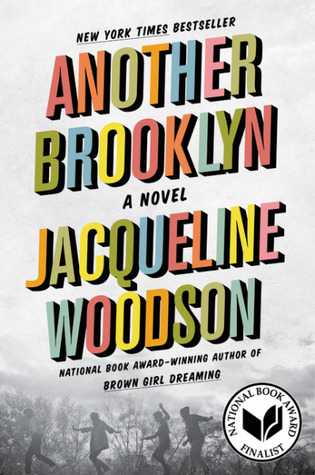 August looks back on her coming of age in 1970s Bushwick, Brooklyn. She lived with her father and brother in a shabby apartment, but friendship with Angela, Gigi and Sylvia lightened a gloomy existence: “as we stood half circle in the bright school yard, we saw the lost and beautiful and hungry in each of us. We saw home.” As in Very Cold People, though, this is not an untroubled girlhood. Male threat is everywhere, and if boyfriends bring sexual awakening they are also a constant goad to do more than girls are ready for. In short, flitting paragraphs, Woodson explores August’s past – a childhood in Tennessee, her uncle who died in the Vietnam War, her father’s growing involvement with the Nation of Islam. What struck me most, though, was August’s coming to terms with her mother’s death, a fact she doesn’t even acknowledge at first, and the anthropological asides about other cultures’ death rituals. This was my second from Woodson after the Women’s Prize-longlisted Red at the Bone, and I liked them about the same. A problem for me was that Brown Girls, which, with its New York City setting and focus on friendships between girls of colour, must have at least partially been inspired by Another Brooklyn, was better. (Public library)
In total, I read 17 novellas this November, though if you add in the ones I’d read in advance and then reviewed over the course of the month, I managed 24. All things considered, I think that’s a great showing. The 5-star stand-outs for me were The Hero of This Book and Body Kintsugi, but Up at the Villa was also a great read.
The Story of My Life by Helen Keller (#NovNov Nonfiction Buddy Read)
For nonfiction week of Novellas in November, our buddy read is The Story of My Life by Helen Keller (1903). You can download the book for free from Project Gutenberg here if you’d still like to join in.

Keller’s story is culturally familiar to us, perhaps from the William Gibson play The Miracle Worker, but I’d never read her own words. She was born in Alabama in 1880; her father had been a captain in the Confederate Army. An illness (presumed to be scarlet fever) left her blind and deaf at the age of 19 months, and she describes herself in those early years as mischievous and hot-tempered, always frustrated at her inability to express herself. The arrival of her teacher, Anne Sullivan, when Helen was six years old transformed her “silent, aimless, dayless life.”
I was fascinated by the glimpses into child development and education. Especially after she learned Braille, Keller loved books, but she believed she learned just as much from nature: “everything that could hum or buzz, or sing, or bloom, had a part in my education.” She loved to sit in the family orchard and would hold insects or fossils and track plant and tadpole growth. Her first trip to the ocean (Chapter 10) was a revelation, and rowing and sailing became two of her chief hobbies, along with cycling and going to the theatre and museums.

Helen Keller with Annie Sullivan. (Public domain, via Wikimedia Commons.)
At age 10 Keller relearned to speak – a more efficient way to communicate than her usual finger-spelling. She spent winters in Boston and eventually attended the Cambridge School for Young Ladies in preparation for starting college at Radcliffe. Her achievements are all the more remarkable when you consider that smell and touch – senses we tend to overlook – were her primary ones. While she used a typewriter to produce schoolwork, a teacher spelling into her hand was still her main way to intake knowledge. Specialist textbooks for mathematics and multiple languages were generally not available in Braille. Digesting a lesson and completing homework thus took her much longer than it did her classmates, but still she felt “impelled … to try my strength by the standards of those who see and hear.”
It was surprising to find, at the center of the book, a detailed account of a case of unwitting plagiarism (Chapter 14). Eleven-year-old Keller wrote a story called “The Frost King” for a beloved teacher at the Perkins Institution for the Blind. He was so pleased that he printed it in one of their publications, but it soon came to his attention that the plot was very similar to “The Frost Fairies” in Birdie and His Friends by Margaret T. Canby. The tale must have been read to Keller long ago but become so deeply buried in the compost of a mind’s memories that she couldn’t recall its source. Some accused Keller and Sullivan of conspiring, and this mistrust more than the incident itself cast a shadow over her life for years to come. I was impressed by Keller discussing in depth something that it would surely have been more comfortable to bury. (I’ve sometimes had the passing thought that if I wrote a memoir I would structure it around my regrets or most embarrassing moments. Would that be penance or masochism?)
This short memoir was first serialized in the Ladies’ Home Journal. Keller was only 23 and partway through her college degree at the time of publication. An initial chronological structure later turns more thematic and the topics are perhaps a little scattershot. I would attribute this, at least in part, to the method of composition: it would be difficult to make large-scale edits on a manuscript because everything she typed had to be spelled back to her for approval. Minor line edits would be easy enough, but not big structural changes. (I wonder if it’s similar with work that’s been dictated, like May Sarton’s later journals.)

Helen Keller in graduation cap and gown. (PPOC, Library of Congress. Public domain, via Wikimedia Commons.)
Keller went on to write 12 more books. It would be interesting to follow up with another one to learn about her travels and philanthropic work. For insight into a different aspect of her life – bearing in mind that it’s fiction – I recommend Helen Keller in Love by Rosie Sultan. In a couple of places Keller mentions Laura Bridgman, her less famous predecessor in the deaf–blind community; Kimberly Elkins’ 2014 What Is Visible is a stunning novel about Bridgman.
For such a concise book – running to just 75 pages in my Dover Thrift Editions paperback – this packs in so much. Indeed, I’ve found more to talk about in this review than I might have expected. The elements that most intrigued me were her early learning about abstractions like love and thought, and her enthusiastic rundown of her favorite books: “In a word, literature is my Utopia. Here I am not disenfranchised. No barrier of the senses shuts me out from the sweet, gracious discourse of my book-friends.”
It’s possible some readers will find her writing style old-fashioned. It would be hard to forget you’re reading a work from nearly 120 years ago, given the sentimentality and religious metaphors. But the book moves briskly between anecdotes, with no filler. I remained absorbed in Keller’s story throughout, and so admired her determination to obtain a quality education. I know we’re not supposed to refer to disabled authors’ work as “inspirational,” so instead I’ll call it both humbling and invigorating – a reminder of my privilege and of the force of the human will. (Secondhand purchase, Barter Books) 
Also reviewed by:
Keep in touch via Twitter (@bookishbeck / @cathy746books) and Instagram (@bookishbeck / @cathy_746books). We’ll add any of your review links in to our master posts. Feel free to use the terrific feature image Cathy made and don’t forget the hashtag #NovNov.
Recapping the Not the Wellcome Prize Blog Tour Reviews
It’s hard to believe the Not the Wellcome Prize blog tour is over already! It has been a good two weeks of showcasing some of the best medicine- and health-themed books published in 2019. We had some kind messages of thanks from the authors, and good engagement on Twitter, including from publishers and employees of the Wellcome Trust. Thanks to the bloggers involved in the tour, and others who have helped us with comments and retweets.
This weekend we as the shadow panel (Annabel of Annabookbel, Clare of A Little Blog of Books, Laura of Dr. Laura Tisdall, Paul of Halfman, Halfbook and I) have the tough job of choosing a shortlist of six books, which we will announce on Monday morning. I plan to set up a Twitter poll to run all through next week. The shadow panel members will vote to choose a winner, with the results of the Twitter poll serving as one additional vote. The winner will be announced a week later, on Monday the 11th.

First, here’s a recap of the 19 terrific books we’ve featured, in chronological blog tour order. In fiction we’ve got: novels about child development, memory loss, and disturbed mental states; science fiction about AI and human identity; and a graphic novel set at a small-town medical practice. In nonfiction the topics included: anatomy, cancer, chronic pain, circadian rhythms, consciousness, disability, gender inequality, genetic engineering, premature birth, sleep, and surgery in war zones. I’ve also appended positive review coverage I’ve come across elsewhere, and noted any other awards these books have won or been nominated for. (And see this post for a reminder of the other 56 books we considered this year through our mega-longlist.)

 Notes Made While Falling by Jenn Ashworth & The Remarkable Life of the Skin by Monty Lyman: Simon’s reviews
*Monty Lyman was shortlisted for the 2019 Royal Society Science Book Prize.
[Bookish Beck review of the Ashworth]
[Halfman, Halfbook review of the Lyman]
Exhalation by Ted Chiang & A Good Enough Mother by Bev Thomas: Laura’s reviews


 Constellations by Sinéad Gleeson & War Doctor by David Nott: Jackie’s reviews
*Sinéad Gleeson was shortlisted for the 2020 Rathbones Folio Prize.
[Rebecca’s Goodreads review of the Gleeson]
[Kate Vane’s review of the Gleeson]
[Lonesome Reader review of the Gleeson]
[Rebecca’s Shiny New Books review of the Nott]
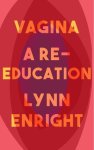
Vagina: A Re-education by Lynn Enright: Hayley’s Shiny New Books review
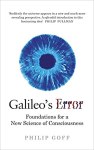
Galileo’s Error by Philip Goff: Peter’s Shiny New Books review

 Mother Ship by Francesca Segal & The Lady Doctor by Ian Williams: Rebecca’s reviews
[A Little Blog of Books review of the Segal]
[Annabookbel review of the Williams]
Chasing the Sun by Linda Geddes & The Nocturnal Brain by Guy Leschziner: Paul’s reviews
[Bookish Beck review of the Geddes]


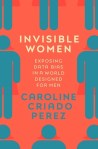 Invisible Women by Caroline Criado-Pérez: Katie’s review
*Caroline Criado-Pérez won the 2019 Royal Society Science Book Prize.
[Liz’s Shiny New Books review]
The Faculty of Dreams by Sara Stridsberg: Kate’s review

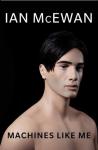
Machines Like Me by Ian McEwan: Kate’s review

 Hacking Darwin by Jamie Metzl & The Memory Police by Yoko Ogawa: Annabel’s reviews
*Yoko Ogawa is shortlisted for this year’s International Booker Prize.
[Lonesome Reader review of the Ogawa]

 The Body by Bill Bryson & The World I Fell Out Of by Melanie Reid: Clare’s reviews
[Bookish Beck review of the Bryson]
[Rebecca’s Goodreads review of the Reid]
And there we have it: the Not the Wellcome Prize longlist. I hope you’ve enjoyed following along with the reviews. Look out for the shortlist, and your chance to vote for the winner, here and via Twitter on Monday.
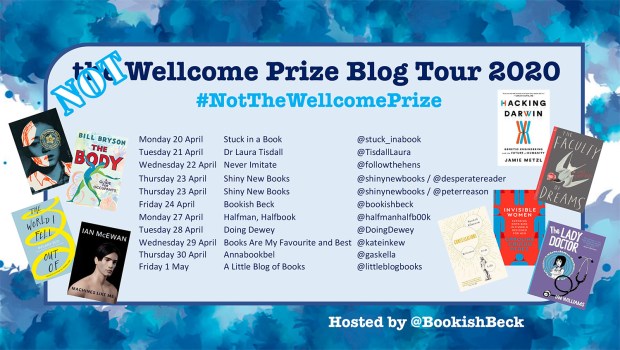
Which book(s) are you rooting for?
“Why We Sleep” … And Why Can’t I Wake Up?
Why We Sleep: The New Science of Sleep and Dreams by Matthew Walker
I’d heard about this book but didn’t feel compelled to get hold of it until David Lodge, one of my favorite authors, named it his book of 2017 in the TLS year-end roundup. I got an e-copy from NetGalley but then found the physical book on the bestsellers display in my local library and found that a more conducive format for skimming. It’s a fairly long and dense book, with smallish type and scientific figures, so I knew I was unlikely to read the whole thing, but enjoyed mining it for fascinating information about evolution, neuroscience and child development.
 We often hear that sleep, diet and exercise are the three pillars of health, but Walker, a professor of neuroscience at the University of California, Berkeley, goes further: he believes sleep is the platform on which diet and exercise rest. Getting 7–9 hours of sleep a night is not some luxury to aim for but an absolute essential for the brain to process new information and prepare for receiving more the next day. Dreaming is like overnight therapy, and fuels creativity. Sleep deprivation has been associated with dementia and cancer: it’s no accident that Margaret Thatcher and Ronald Reagan, who prided themselves on getting by on just five hours of sleep a night, both developed Alzheimer’s. Just a few nights of insufficient sleep can weaken the immune system and increase the risks of developing a serious illness. It’s no wonder Walker calls sleep loss an epidemic.
Here are some other facts I gleaned:
- During primate evolution, the transition to sleeping on the ground instead of in trees meant we could sleep more deeply – not having to worry about falling out – and the resulting increase in REM sleep and dreams contributed to the development of complex culture and creativity.
- Fetuses are asleep most of the time; they kick in their sleep. Alcohol use during pregnancy or breastfeeding can lead to a decline in the offspring’s sleep quality or quantity.
- People with autism get 30–50% less REM sleep than neurotypical people.
- The postprandial slump in energy many of us experience is evolutionarily inbuilt, and suggests that a short nap (30–40 minutes) would be natural and beneficial. For instance, some African tribespeople still regularly nap at the hottest point of the day.
Walker’s sleep tips are mostly common-sense stuff you will have heard before. His #1 piece of advice is to have a sleep schedule, always going to sleep and waking up at the same time. (“Catching up” on weekends doesn’t work, though napping before 3 p.m. can.) Set an alarm for bedtime so you’ll stick to it, he suggests.
My rating: 
Making It Personal
I like my sleep, and I like my lie-ins. It’s one of many reasons why I don’t have kids. But I hoped that the older I got the better I’d be about waking up in the mornings. That hasn’t seemed to be the case. The past couple of weeks have been abnormal in that my husband has been working from home, too – he’s been on strike from the university and/or keeping clear of the snow – but on an average weekday, when the alarm goes off at a time starting with a 6, I feel like I could sleep for hours more. I usually cover my head with a pillow and stay in bed with the cat curled against my legs for an extra half-hour while my husband showers and starts getting things ready; only when I hear the tea being poured do I finally extricate myself from the covers and lurch downstairs to eat breakfast and make our sandwiches for the day.
 One of my bibliotherapy prescriptions was The Artist’s Way by Julia Cameron, a 12-week set of readings and exercises – chiefly 20 minutes of automatic writing each morning and creative “dates” you take yourself on. For the former, you set your alarm half an hour early each day and fill three longhand pages with whatever comes to mind. It’s not a journal; it’s more a way of processing what’s going on in your life, gradually moving from mundane thoughts about daily pressures to more creative stuff. But if I can’t wake up for our regular alarm, how in the world would I get up even earlier to commit to this creative exercise? I’ve wondered if I could cheat a bit and do the pages after a short nap in the early afternoons, but I think the idea really is to put down whatever comes into your head first thing every morning.
I can see that this would be a good discipline, especially as I come up to my fifth anniversary of freelancing and take stock of my career. I just don’t know if I can make myself do it.
Have you read anything about sleep, creativity or mindfulness recently?
Also on my TBR to be skimmed:
 24/7: Late Capitalism and the Ends of Sleep by Jonathan Crary
- The Business of Sleep: How Sleeping Better Can Transform Your Career by Vicki Culpin, a TEDx speaker and professor of organizational behavior [forthcoming on May 8th from Bloomsbury Business]
- The Secret World of Sleep: The Surprising Science of the Mind at Rest by Penelope A. Lewis
- Dreamland: Adventures in the Strange Science of Sleep by David K. Randall
 Bookish Beck = Rebecca Foster. American transplant to England. Freelance proofreader and book reviewer.
 Bookish Beck