June Releases by Fiona Mozley, Heather Sellers & Myfanwy Tristram
This month I have a fiction–poetry–nonfiction trio covers fake memories, Florida’s beauty and weirdness, and the past 50 years of protests in the UK. I also excerpt my reviews of five June releases I read in advance for Shelf Awareness, including one that’s in the running for my Book of the Year.
Awake Awake by Fiona Mozley
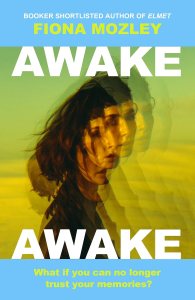 When writer Mary Mooney dives into her memories during appointments with her therapist, Sita, most of what comes up is the everyday stuff of her childhood in York: mild shenanigans with her younger brother, Jos; her friends Amelia and Eve plus Eric, a newcomer from New York City; and their wider circle. Early on, though, she warns readers that she’s untrustworthy. “In recent years, I have had difficulties with my memory,” she confesses. “It was not a sickness of forgetting. I did not have too few memories, but too many,” some of which couldn’t possibly be real – the best example being her conviction that her grandfather assassinated Hitler. She also tells Sita of a hotel fire and her rudeness to a couple of right-wing writers and journalists – things one does in dreams but not generally in real life.
The focus is on Mary and her peers’ formative teen years around the start of the Iraq War. In the final chapter, she offers a where-are-they-now for her closest friends. “Most of this is a verifiable journey through a life I really lived,” she notes, but “from hereon the fabrications begin.” This should have been an exciting revisiting of recent history in the company of an unreliable narrator, but everything about the novel is so dull that it was impossible to stay interested. It feels like pedestrian autofiction (insomuch as Mozley is from York and came of age in the same period as Mary, who is nominated for a major award for her first novel) drawing on a Blair-years upbringing. Mozley’s Elmet, which was shortlisted for the Booker Prize and the Sunday Times Young Writer of the Year Award, is one of my favourite debut novels of the last decade, so it’s a real shame that her subsequent work hasn’t lived up to that potential. Hot Stew (2021) was a DNF for me, a caricature-heavy London state-of-the-nation novel, and Awake Awake reads like a half-baked debut, not a world-class novelist’s third. Unless I hear rave reviews about a return to form in future, that’s it for me with Mozley.
With thanks to John Murray Publishers for the free copy for review.
Women in Tampa Talking about Alligators by Heather Sellers
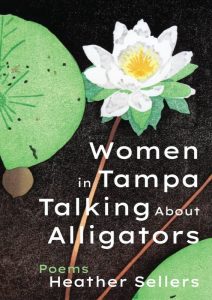 With such a title, how could you not want to read it?! In her fifth poetry collection, Sellers, a Florida native, recounts conversations with her neighbours, backyard sightings, and boat trips through swamp country. An appreciation of beauty rubs shoulders with awareness that it is threatened by climate breakdown and the state’s existential identity crisis. She describes Florida as “the thumbs-down thumb”; it “hangs on, for now, bobbing, / as she lowers into the dull warm blue sea.” Lovely poems about birds spin delightfully unexpected imagery: “watching the great white egret / stiletto across the jasmine fence, / black patent legs shining”. But they also contain barbs about the polluting influence of modern life (spot the alliteration and internal and slant rhymes):
Someone’s silvery phone gleaming underwater.
A fleet of rays flew between our little boats, skin kites on roller skates.
We discovered the things slung around the channel marker
was not a bird, just a plastic sack: the common, grey Florida Wal-Mart bag.
Cormorants dove into the chests of mangrove.
High above, paragraphs of frigates cursive-d land, land, land.
As winter and summer swap, the advantages and downsides of living in an identikit suburb mostly inhabited by retirees from elsewhere become clear. Nature is red in tooth and claw even in her garden, where crows prey on baby mockingbirds. Alligators are everywhere, and when “removed” for being a “nuisance” – in other words, interfering with human activity – their end reveals our inhumane priorities. “No? Seriously? They are euthanized? Euthanized for what, for living?” This is a terrific free verse collection at the intersection of the edenic and the diminished everyday. I would definitely read more by Sellers.
Published by Lynx House Press. With thanks to publicist Jeffrey Yamaguchi for the free e-copy for review.
Noisy Valley: The Art of Protest by Myfanwy Tristram
This is not a comprehensive history of protest but a snapshot of it over the past half-century or so, focussing on the Rhondda Valley in South Wales (not far from Cardiff), where a surprising number originated. The frame story is an exhibit of Tristram’s protest drawings at the Workers Gallery in Ynyshir, where she meets those featured. Each story is then expounded in turn, based on interviews with someone who led the protest or participated in it. We learn of miners’ strikes, a protest against a hospital closure, outrage over toxic runoff from a landfill, and a campaign to save Northern Meadows. One impetus was the worrying trend in the UK (and elsewhere) of governments cracking down on peaceful protests with overly harsh punishments.
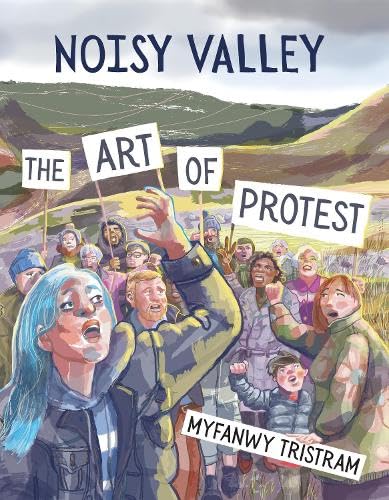
I was surprised to find that two of the chapters had local relevance for me: the Greenham Common women’s peace camp and the Aldermaston marches (part of the Campaign for Nuclear Disarmament). I was additionally taken aback to spot Martyn Joseph, a Welsh singer-songwriter we’re familiar with from Greenbelt Festival, turning up to sing a new bespoke version of “This Land Is Your Land” for a protest. I’m not fond of the talking heads approach to graphic nonfiction (also seen in Sexuality: A Graphic Guide and Trans History) or of the particular style here – monochrome in the main text with a few full-colour pages plus in the asides on the history of protest and changing regulations. I preferred the spreads focusing on landscapes. However, this is a worthwhile project and I particularly appreciated the below quote, which captures my feeling about the environmental marches I’ve been on in London.
You might find this a bit weird, but I never really thought that protest ever achieves its purpose. We still have nuclear weapons, you know. But it is worthwhile. My feeling is that protest is wonderful because it brings people together as a social group. The meeting of hearts and minds. I would argue that’s very positive.
~David Hurn, Aldermaston photographer
With thanks to SelfMadeHero for the free copy for review.
Reviewed for Shelf Awareness:
 The Daffodil Days by Helen Bain: A remarkable debut novel about the last years of Sylvia Plath’s life. I’ve already discussed it here.
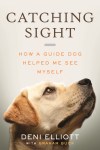 Catching Sight: How a Guide Dog Helped Me See Myself by Deni Elliott with Graham Buck: Elliott was diagnosed as legally blind as an adult, though she’d always had limited vision. She explores her relationships with five very different dogs and introduces the process of training guide dogs in this heartwarming story of human–animal connection and resilience.
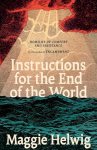 Instructions for the End of the World: Homilies of Comfort and Resistance by Maggie Helwig: Helwig is the rector of inner-city Toronto’s St. Stephen-in-the-Fields. Her stirring sermons espouse a practical, progressive theology and affirm the power of solidarity and the commitment to social justice in turbulent times (including the pandemic years).
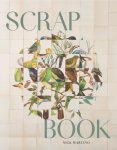 Scrap Book by Nick Martino: Martino’s formally inventive debut poetry collection draws on his mother’s journals and 1980s Polaroids to capture a Midwestern family dynamic overshadowed by divorce and his father’s incarceration.
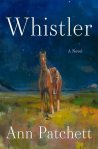 Whistler by Ann Patchett: Patchett is a master on the subject of family dysfunction, and her tenth novel, a stepdaughter–stepfather love story, is as wise as ever on secrets, traumatic memories, and storytelling. This is one of my top three books of 2026 so far, along with Brawler and John of John.
Which of these June releases have you read, or will you seek out now? What am I missing out on?
May Releases by Siri Hustvedt, Will Maclean & More
This month’s overarching theme is creepy and/or haunted houses! My main reviews are of a collage-style bereavement memoir and a slice of English horror. I also excerpt my reviews of four more May releases read in advance for Shelf Awareness, including one that’s in the running for my Book of the Year.
Ghost Stories by Siri Hustvedt
Paul Auster died of non-small cell lung cancer on April 30, 2024. His widow, Siri Hustvedt, wears his old clothes and still occasionally smells his cigar smoke in their Brooklyn home. “I’m living in a haunted house,” she writes, one “inhabited by a ghost Paul and I made together, a ‘we’ that doesn’t exist anymore.” This isn’t a straightforward bereavement memoir recounting the relationship followed by the loved one’s decline and death. Instead, it moves back and forth between past and present and incorporates various documents. There are glimpses of her state of mind as she keeps up with routines to get through the days but still experiences life as unreal and outside of time.
One section reprints 12 e-mail updates she sent to friends and family during Paul’s illness. She weaves through fragments of his shocking family history (familiar from The Invention of Solitude), certain events that have been memorialized in his books (such as the car accident he wrote about in Winter Journal), and brief tales of his work and its reception. There’s also Paul’s incomplete series of letters to his newborn grandson, Miles, in which he tells the boy the stories he thinks he should know about his ancestors. A notable one was about 9/11, which happened to be the day their daughter Sophie started at a new high school; she passed under the World Trade Center on the subway half an hour before the first attack.
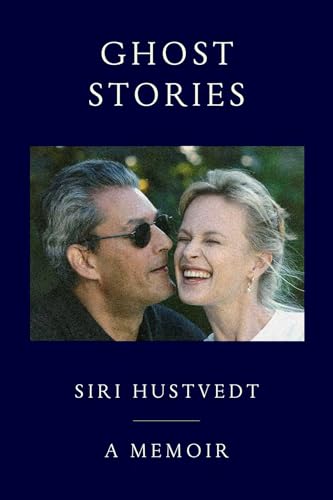 For those of us who have read both Auster and Hustvedt, it’s particularly interesting to read about how their work intersects. “We both liked the idea of our fictional worlds kissing, as it were,” she notes. She describes their connection as “intellectual-erotic” and predicts that, given another 100 years together, they would have merged into one person. Their influence on each other’s work was mutual, she insists, rather than one-sided from Paul to her as misogynistic detractors have assumed. She’s always been more the intellectual anyway, with a literature PhD and amateur interests in neurology and philosophy; and he ‘borrowed’ her character Iris Vegan (from The Blindfold) for one of his later novels, Leviathan.
The book grows increasingly political towards its close. Paul didn’t live to see “45” re-elected as 47. Hustvedt decries the rise of anti-intellectualism and, at Paul’s memorial service nearly 10 months after his death, quoted her father’s prescient words: “when fascism comes to America, they’ll call it Americanism.” It doesn’t seem like alarmism to ask what the current regime in the US and elsewhere portends for writers committed to humanism, nuance, and more or less overt voicing of outrage (as in one of Paul’s late books, a short text accompanying his son-in-law’s photographic series on gun violence in America).
This whetted my appetite to read more by Auster and fulfils her stated goal “to bring something of the man back on the page.” I can thoroughly recommend it to fans of either or both authors, as well as those interested in grief stories and the current literary scene. (Read via Edelweiss)
Solace House by Will Maclean
I hadn’t heard of Maclean’s first novel, The Apparition Phase, which was on the McKitterick Prize shortlist (before my involvement with the Prize), but I was drawn to the descriptions of his second. The cover puff from Nicholas Binge – “The Secret History meets The Haunting of Hill House” – can’t be topped, and the promotional materials’ references to Piranesi and Possession are equally accurate. In the summer of 1993, Alex Lane is 19, broke and wondering what to do with himself. He seems to be the only student left at The Ridge. Except for that pale young man he’s seen screaming at a window opposite his room…
The Student Welfare Office offers him a job on a team clearing out two Victorian properties the university has acquired or is hoping to acquire. One is Marshlands, a former mental hospital, while Solace House was the private residence of the Flaynes, the last of whom recently died at age 101. Alex finds “a lifeboat of easy camaraderie” with his seven co-workers: Clive, a loud, confident stoner; Malcolm, who’s beautiful and gay; Helen, who’s super-religious; Ruth, a Goth; Leo, a mystical researcher; Adam, a weird (traumatized rich kid; and Ella, who’s clever and alluring. But none of them is prepared for what they find at Solace House. Edwin Flayne was a hoarder and the rooms are so full that they can’t move. One is completely covered in mirrors; another has creepy effigies around a table; the hall is plastered with strange paintings; and a series of ledgers with the ravings of a madman. Alex and Ella save from the burn pile one that contains an epic poem of utopian visions and musings on the disappearance of Flayne’s mother.
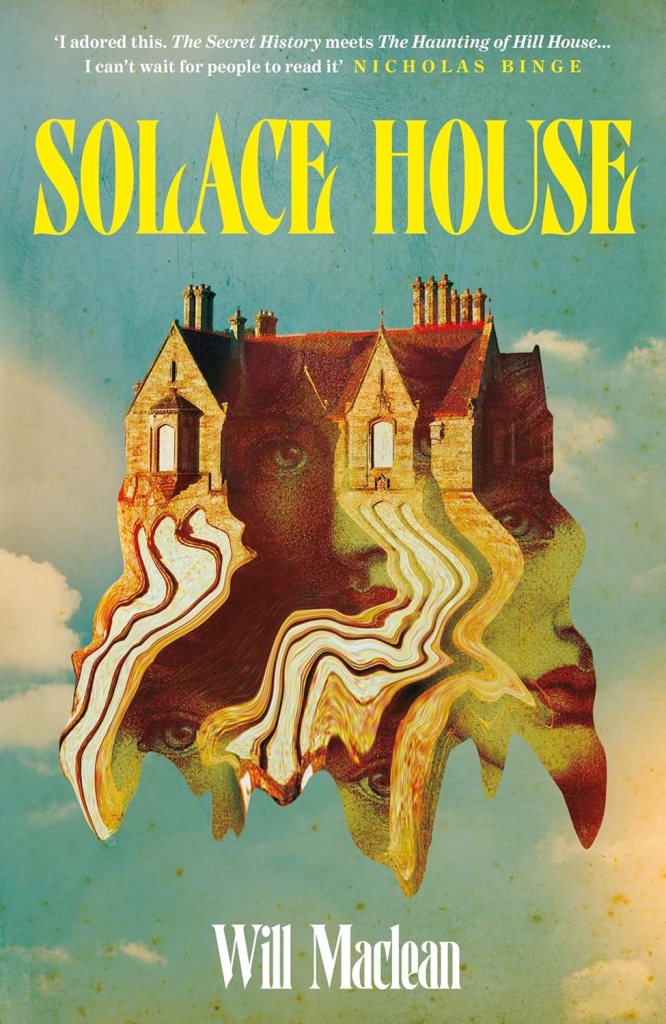
Flayne’s interest in the esoteric is only matched by Leo’s; add on some magic mushrooms and it’s a heady combination of the surreal as the team explores a cave on the property that the Flaynes considered a Thin Place. While high, Leo issues what seems to be a prophecy of the order in which they’ll all die. All along, we’re kept wondering how Alex’s parents both died on “The Last Day” at the hands of “The Annihilator.” He regurgitates fictional orphan plots to try to get Ella off his case, but she (and we) know he’s holding something back.
Although I wearied of the pastiche poetry that heads each chapter and at some point stopped reading it, it does have ultimate significance. (And bully to Maclean for adding “all written by me, rather than AI, before anyone asks” to his Acknowledgements.) Midway through, I was thinking to myself this should have been in the third person to legitimize the horror, as it can otherwise shade into silliness. Part IV jumps ahead in time and subverts what’s gone before, making Alex question not just the last four years of his life but the entire course of it. And now I knew why it had to be in the first person, so reliant is it on individual experience. Time, identity and memory all come into question.
At first I was disappointed, thinking that with this section Maclean had undermined the eerie power of what went before, but there’s another switchback still to come. The book is a little overlong at just under 500 pages, and sags a bit in the final 100, but it kept surprising me and it comes to a satisfying conclusion. I also got the sense of an author having fun with the 1990s nostalgia and student behaviour. I would certainly seek out his debut.
With thanks to Atlantic Books for the free copy for review.
Reviewed for Shelf Awareness:
 Memory House by Elaine Kraf: In this posthumous fifth novel, a novelist enters a commune for failed artists. Magic realism and metafiction coalesce in another of this unsung genius’ typically weird explorations of memory, creativity, and sexuality. It all appears to add up to a metaphorical journey, with a symbolic death and rebirth for those re-entering Society.
 Mother Tongue by Sara Nović: Nović’s fourth book is a defiant memoir of parenthood achieved in spite of the troubled histories of deaf education, religious indoctrination, and international adoption. This is a fierce defense of deafness as a culture rather than a disability to be eradicated, and a beautiful exploration of the legacies of language and love.
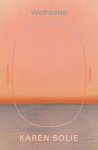 Wellwater by Karen Solie: The Canadian poet Karen Solie’s intricate sixth collection (which won the T. S. Eliot Prize), gilds the natural and human worlds with religious imagery and an environmentalist conscience. The work toggles between the material and the abstract; quotidian experiences fuel meditations on concepts such as intuition, kindness, and fate.
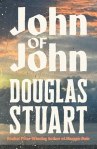 John of John by Douglas Stuart: In Douglas Stuart’s superb third novel set on the Isle of Harris (Outer Hebrides), a young man seeks to reconcile his sexuality and artistic goals with his family’s expectations and devout upbringing. Intriguing in its particularities but timeless in wisdom, it offers hope that relinquishing shame creates freedom to be true to oneself. (I also got to interview Douglas Stuart! This is one of my top three books of 2026 so far, along with Brawler and Whistler – forthcoming in June.)
April Releases by Victoria Bennett, Ben Lerner and Barbara Yelin
A memoir of gardening to come to terms with midlife and a new island home, a work of autofiction about memory and technology, and an arresting graphic novel tracing the life of a child Holocaust survivor: it was a real variety last month. (But then again, I say that every month, don’t I?)
The Apothecary by the Sea: A Year in an Orkney Garden by Victoria Bennett
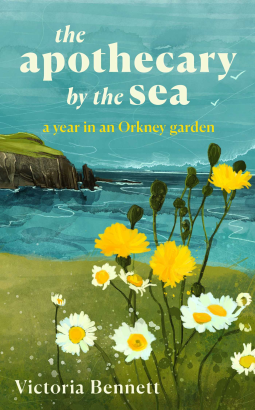 I’ve been hankering to get back to the Orkney Islands after two decades but haven’t managed it yet; reading about it was the next-best thing. There’s a similar make-do attitude to Bennett’s second book, which is about adapting to the unexpected and being in tune with nature. After being forced out of their rented home in Cumbria (and, disastrously, having to raze the abundant garden they’d made there), Bennett and her husband and son resettled in South Ronaldsay. Moving to Orkney was a long-held dream that allowed the couple to become property owners for the first time in their fifties. Chronic illness restricts what she can do, but over the course of a little over a year, she slowly, steadily turns their little outdoor space into a bountiful apothecary garden when not out exploring a new landscape.
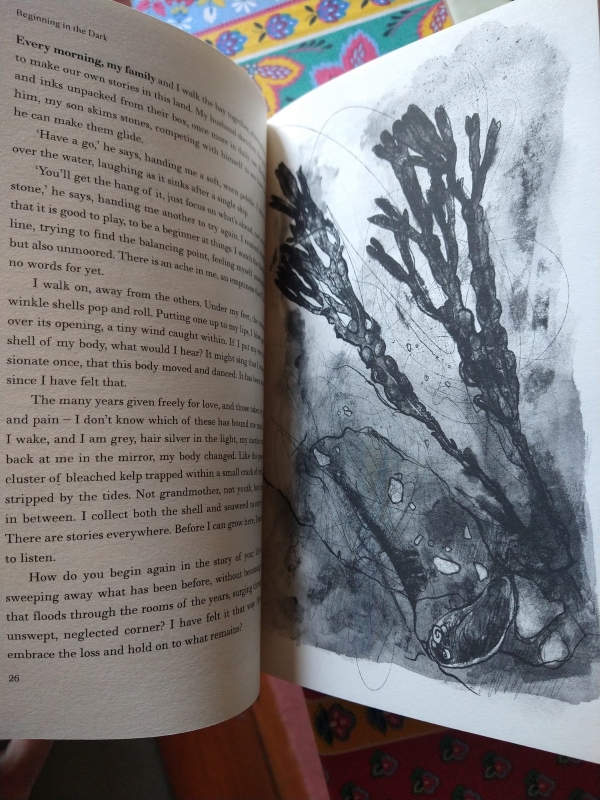
I loved Bennett’s 2023 debut memoir, All My Wild Mothers. Both employ a similar structure of short chapters named after plants with medicinal uses. However, the first book is a lot richer, distilling as it does the experiences and wisdom of an entire life. The format is fresh there, whereas this sequel needed new strategies to set it apart. It’s so short – with sections of gardening tips, further plant rundowns, and recipes for padding – that I suspected the author and publisher were scratching around for enough material to fill a book. The editing is also lacking this time around; dangling modifiers and minor typos abound. This could have been more substantial had Bennett waited a few more years to develop an intimate knowledge of Orkney and make connections with people to draw on. Still, there are reassuring sentiments about accepting one’s limitations, welcoming the changes of age, and setting humble goals (“The garden, like life, is not perfect. Start with what you have”), and the black-and-white illustrations by Bennett’s husband, Adam Clarke, are gorgeous. Though it’s fairly niche, I can, offhand, think of several people to whom I would recommend Bennett’s work.
Written while listening to Doing This for Love, the fab new album by Kris Drever, everyone’s favourite Orkney singer.
With thanks to Elliott & Thompson for the free copy for review.
{SPOILERS IN THE NEXT TWO}
Transcription by Ben Lerner
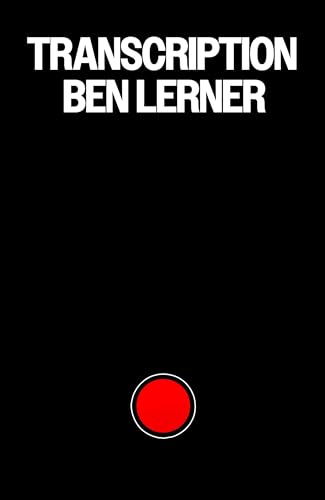
The UK cover
You know what you’re in for with a Ben Lerner work, in much the same way as when you pick up something by Rachel Cusk, Katie Kitamura or Deborah Levy. The narrator resembles Lerner in that he is a 45-year-old writer who graduated from Brown University and has spent significant time in Madrid. The novella opens with him on a train to Providence, Rhode Island to write a long profile of his mentor, a German writer named Thomas. Thomas is turning 90 and there is a sense that this is to be his “exit interview” – yet he’s as sharp as ever, describing his early life as if composed of film scenes.
There is a strong emphasis on the visual here, but also on the oral. Thomas’s first memory is of hearing Hitler’s voice on the radio, and the narrator fully intended to record this conversation, but dropped his phone in the sink at the hotel and now it won’t turn on. He decides this evening will just be a pre-chat, and tomorrow they’ll get into things properly. For some reason, though, he can’t admit his technological failure to Thomas and instead brings his dead phone out, puts it face down on the table, and pretends that this is all on the record.

I prefer the U.S. cover, as per usual!
The book is in three long sections, named after different hotels. The second is set in Madrid, where, a few years later, the narrator gives a talk as part of a Festschrift for Thomas. He’s turned the story about his phone into a self-deprecating joke, but it turns out that his conference co-organizer, Rosa, is not the only one angry with him for what she perceives as falsifying Thomas’s last testament. This causes him to second-guess himself.
The third section is, ostensibly, a conversation between the narrator and Thomas’s son, Max – except the former can hardly get a word in edgewise (as was the case with Thomas, too), so it’s really more of a monologue. And, strangely, the subject is Max’s young daughter Emmie’s extreme food issues: a sort of pre-anorexia. Except Thomas would philosophize his granddaughter’s struggle, or query her screen time. Max remembers that when Thomas was hospitalized with Covid, apparently near death, he poured out many warm words to his father. Then Thomas recovered. On their first post-Covid visit, Max recorded his father’s speech without telling him he was doing so – an ironic counterpart to the narrator’s actions.
The themes drew me in, and the writing is addictively lucid. But what does it all mean? Lerner’s repeated references to father-and-son glassmakers and their beautiful glass flowers indicate his interest in questions of talent, (metaphorical) inheritance and legacy. The narrator’s version of Thomas’s memories being presented as gospel raises the question of whether fiction is the more appropriate vehicle for biography. There is also a message about overreliance on technology. The narrator feels helpless without his phone, even for one night: He can’t communicate with his family or confirm his walking route with online maps. But I wasn’t sure how Max’s daughter fits in, except perhaps as an emblem of multigenerational mental health struggles. This was an odd little book that I might like to discuss in a book club but found stubbornly unsatisfying to ponder on my own. (Read via Edelweiss)
Emmie Arbel: The Colour of Memory by Barbara Yelin (2023; 2026)
[Translated from German by Helge R. Dascher]
Edited by Charlotte Schallié and Alexander Korb
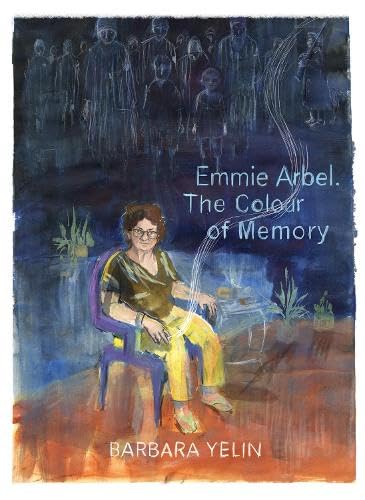 Barbara Yelin’s Irmina was the subject of an early review on my blog (just over 10 years ago!); I called it “one of the most visually stunning graphic novels I’ve ever come across” and noted that it was “based on a fascinating family story.” Such is even truer of this illustrated biography of a child Holocaust survivor. Yelin met Emmie Arbel at Ravensbrück Memorial in 2019 and over the next several years they had many conversations in person and online, which Yelin has memorialized in this solemn, powerful graphic novel. Emmie was born in the Netherlands in 1937 and first sent to a transport camp at age five. She then spent time in Ravensbrück and Bergen-Belsen, where her mother died. After the war, she and her brothers were displaced persons in Sweden before returning to the Netherlands to live with a foster family. Since then she has had a career, raised three daughters, divorced, retired early, lost a daughter, and traveled extensively but mostly lived in Israel. Yelin recreates scenes from Emmie’s life but mostly recounts recent conversations (and so is herself a repeated presence in the book). The narrative moves back and forth in time in imitation of memory. Emmie’s ever-present cigarette is a crutch as she tries to find words for the unspeakable.
A key motivation for this book is to face the facts that survival is not a one-time event and that trauma is complex and ongoing. In Emmie’s case, her foster father (himself a Holocaust survivor) molested her for years. The memory of rape remained locked inside until a breakdown in 1977, when she started seeing a therapist – which, she insists, saved her life.
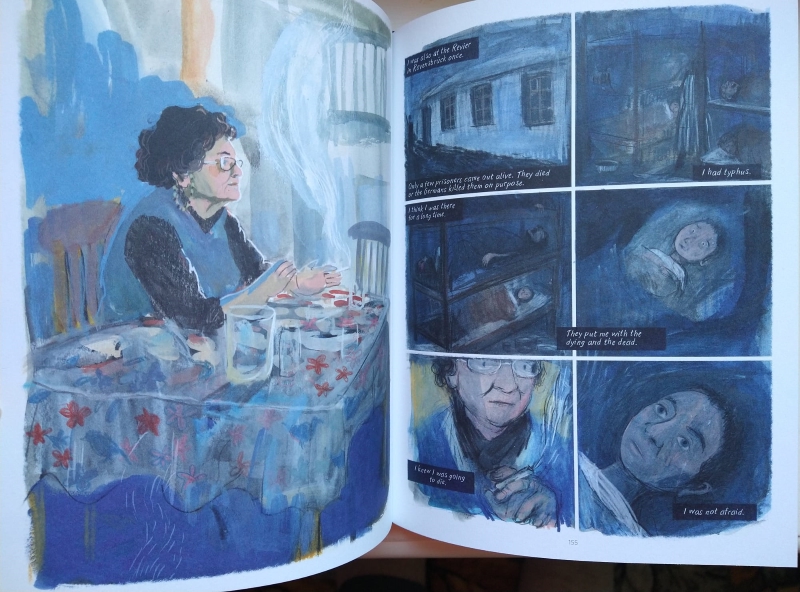
The colour palette is appropriately sombre: lots of dark blue and grey shading into black, which is the colour of memory for Emmie. And yet there is vibrant colour in the depiction of Emmie’s home and garden in Tiv’on, and in her interactions with her children and grandchildren. I can’t revisit particular spreads of this book without crying. One is the final few pages before the epilogue, in which Emmie remembers lying in a camp with typhus.
“They put me with the dying and the dead. I knew I was going to die. I was not afraid. I think I remember how it felt to be dying. It was a good feeling. There was no pain, no hunger, no noise. Nothing. It was quiet and good. But I live.”
This is a work of real courage, of speaking out in spite of a suspicion that all is bleak and meaningless.
“Humiliation. I was not a human being. I was a number, you know. I feel like no one can understand what I’m feeling. But if I don’t talk about it, the others can’t understand. They can’t understand what happened. And it must not happen again. And that’s why I have to speak.”
With thanks to SelfMadeHero for the free copy for review.
February Releases by Nick Acheson, Charlotte Eichler and Nona Fernández (#ReadIndies)
Three final selections for Read Indies. I’m pleased to have featured 16 books from independent publishers this month. And how’s this for neat symmetry? I started the month with Chase of the Wild Goose and finish with a literal wild goose chase as Nick Acheson tracks down Norfolk’s flocks in the lockdown winter of 2020–21. Also appearing today are nature- and travel-filled poems and a hybrid memoir about Chilean and family history.

The Meaning of Geese: A thousand miles in search of home by Nick Acheson
I saw Nick Acheson speak at New Networks for Nature 2021 as the ‘anti-’ voice in a debate on ecotourism. He was a wildlife guide in South America and Africa for more than a decade before, waking up to the enormity of the climate crisis, he vowed never to fly again. Now he mostly stays close to home in North Norfolk, where he grew up and where generations of his family have lived and farmed, working for Norfolk Wildlife Trust and appreciating the flora and fauna on his doorstep.
 This was indeed to be a low-carbon initiative, undertaken on his mother’s 40-year-old red bicycle and spanning September 2021 to the start of the following spring. Whether on his own or with friends and experts, and in fair weather or foul, he became obsessed with spending as much time observing geese as he could – even six hours at a stretch. Pink-footed geese descend on the Holkham Estate in their thousands, but there were smaller flocks and rarer types as well: from Canada and greylag to white-fronted and snow geese. He also found perspective (historical, ethical and geographical) by way of Peter Scott’s conservation efforts, chats with hunters, and insight from the Icelandic researchers who watch the geese later in the year, after they leave the UK. The germane context is woven into a month-by-month diary.
The Covid-19 lockdowns spawned a number of nature books in the UK – for instance, I’ve also read Goshawk Summer by James Aldred, Birdsong in a Time of Silence by Steven Lovatt, The Consolation of Nature by Michael McCarthy, Jeremy Mynott and Peter Marren, and Skylarks with Rosie by Stephen Moss – and although the pandemic is not a major element here, one does get a sense of how Acheson struggled with isolation as well as the normal winter blues and found comfort and purpose in birdwatching.
Tundra bean, taiga bean, brent … I don’t think I’ve seen any of these species – not even pinkfeet, to my recollection – so wished for black-and-white drawings or colour photographs in the book. That’s not to say that Acheson is not successful at painting word pictures of geese; his rich descriptions, full of food-related and sartorial metaphors, are proof of how much he revels in the company of birds. But I suspect this is a book more for birders than for casual nature-watchers like myself. I would have welcomed more autobiographical material, and Wintering by Stephen Rutt seems the more suitable geese book for laymen. Still, I admire Acheson’s fervour: “I watch birds not to add them to a list of species seen; nor to sneer at birds which are not truly wild. I watch them because they are magnificent”.
With thanks to Chelsea Green Publishing for the free copy for review.
Swimming Between Islands by Charlotte Eichler
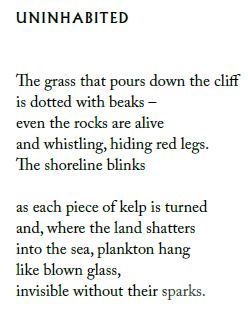
 Eichler’s debut collection was inspired by various trips to cold and remote places, such as to Lofoten 10 years ago, as she explains in a blog post on the Carcanet website. (The cover image is her painting Nusfjord.) British and Scandinavian islands and their wildlife provide much of the imagery and atmosphere. You can sink into the moss and fog, lulled by alliteration. A glance at some of the poem titles reveals the breadth of her gaze: “Brimstones” – “A Pheasant” (a perfect description in just two lines) – “A Meditation of Small Frogs” – “Trapping Moths with My Father.” There are also historical vignettes and pen portraits. The scenes of childhood, as in the four-part “What Little Girls Are Made Of,” evoke the freedom of curiosity about the natural world and feel autobiographical yet universal.
With thanks to Carcanet Press for the free copy for review.
Voyager: Constellations of Memory—A Memoir by Nona Fernández (2019; 2023)
[Translated from the Spanish by Natasha Wimmer]
Our archive of memories is the closest thing we have to a record of identity. … Disjointed fragments, a pile of mirror shards, a heap of the past. The accumulation is what we’re made of.
 When Fernández’s elderly mother started fainting and struggling with recall, it prompted the Chilean actress and writer to embark on an inquiry into memory. Astronomy provides the symbolic language here, with memory a constellation and gaps as black holes. But the stars also play a literal role. Fernández was part of an Amnesty International campaign to rename a constellation in honour of the 26 people “disappeared” in Chile’s Atacama Desert in 1973. She meets the widow of one of the victims, wondering what he might have been like as an older man as she helps to plan the star ceremony. This oblique and imaginative narrative ties together brain evolution, a medieval astronomer executed for heresy, Pinochet administration collaborators, her son’s birth, and her mother’s surprise 80th birthday party. NASA’s Voyager probes, launched in 1977, were intended as time capsules capturing something of human life at the time. The author imagines her brief memoir doing the same: “A book is a space-time capsule. It freezes the present and launches it into tomorrow as a message.”
With thanks to Daunt Books for the free copy for review.
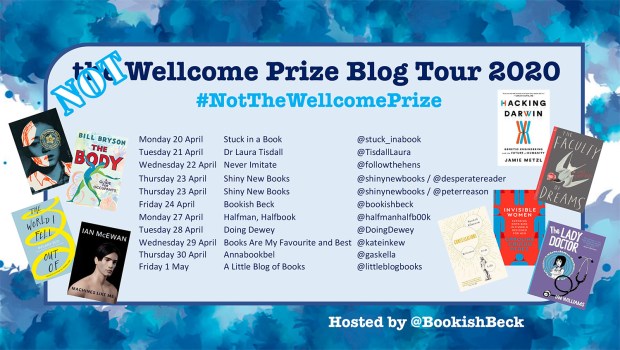
Recapping the Not the Wellcome Prize Blog Tour Reviews
It’s hard to believe the Not the Wellcome Prize blog tour is over already! It has been a good two weeks of showcasing some of the best medicine- and health-themed books published in 2019. We had some kind messages of thanks from the authors, and good engagement on Twitter, including from publishers and employees of the Wellcome Trust. Thanks to the bloggers involved in the tour, and others who have helped us with comments and retweets.
This weekend we as the shadow panel (Annabel of Annabookbel, Clare of A Little Blog of Books, Laura of Dr. Laura Tisdall, Paul of Halfman, Halfbook and I) have the tough job of choosing a shortlist of six books, which we will announce on Monday morning. I plan to set up a Twitter poll to run all through next week. The shadow panel members will vote to choose a winner, with the results of the Twitter poll serving as one additional vote. The winner will be announced a week later, on Monday the 11th.

First, here’s a recap of the 19 terrific books we’ve featured, in chronological blog tour order. In fiction we’ve got: novels about child development, memory loss, and disturbed mental states; science fiction about AI and human identity; and a graphic novel set at a small-town medical practice. In nonfiction the topics included: anatomy, cancer, chronic pain, circadian rhythms, consciousness, disability, gender inequality, genetic engineering, premature birth, sleep, and surgery in war zones. I’ve also appended positive review coverage I’ve come across elsewhere, and noted any other awards these books have won or been nominated for. (And see this post for a reminder of the other 56 books we considered this year through our mega-longlist.)

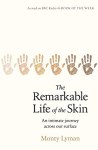 Notes Made While Falling by Jenn Ashworth & The Remarkable Life of the Skin by Monty Lyman: Simon’s reviews
*Monty Lyman was shortlisted for the 2019 Royal Society Science Book Prize.
[Bookish Beck review of the Ashworth]
[Halfman, Halfbook review of the Lyman]
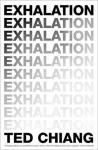
Exhalation by Ted Chiang & A Good Enough Mother by Bev Thomas: Laura’s reviews


 Constellations by Sinéad Gleeson & War Doctor by David Nott: Jackie’s reviews
*Sinéad Gleeson was shortlisted for the 2020 Rathbones Folio Prize.
[Rebecca’s Goodreads review of the Gleeson]
[Kate Vane’s review of the Gleeson]
[Lonesome Reader review of the Gleeson]
[Rebecca’s Shiny New Books review of the Nott]
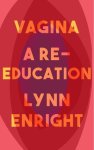
Vagina: A Re-education by Lynn Enright: Hayley’s Shiny New Books review
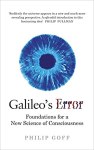
Galileo’s Error by Philip Goff: Peter’s Shiny New Books review

 Mother Ship by Francesca Segal & The Lady Doctor by Ian Williams: Rebecca’s reviews
[A Little Blog of Books review of the Segal]
[Annabookbel review of the Williams]
Chasing the Sun by Linda Geddes & The Nocturnal Brain by Guy Leschziner: Paul’s reviews
[Bookish Beck review of the Geddes]


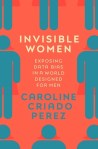 Invisible Women by Caroline Criado-Pérez: Katie’s review
*Caroline Criado-Pérez won the 2019 Royal Society Science Book Prize.
[Liz’s Shiny New Books review]
The Faculty of Dreams by Sara Stridsberg: Kate’s review

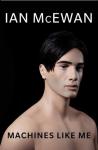
Machines Like Me by Ian McEwan: Kate’s review

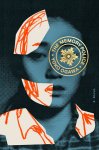 Hacking Darwin by Jamie Metzl & The Memory Police by Yoko Ogawa: Annabel’s reviews
*Yoko Ogawa is shortlisted for this year’s International Booker Prize.
[Lonesome Reader review of the Ogawa]

 The Body by Bill Bryson & The World I Fell Out Of by Melanie Reid: Clare’s reviews
[Bookish Beck review of the Bryson]
[Rebecca’s Goodreads review of the Reid]
And there we have it: the Not the Wellcome Prize longlist. I hope you’ve enjoyed following along with the reviews. Look out for the shortlist, and your chance to vote for the winner, here and via Twitter on Monday.
 Bookish Beck = Rebecca Foster. American transplant to England. Freelance proofreader and book reviewer.
