Book Serendipity, August to September 2023
I call it “Book Serendipity” when two or more books that I read at the same time or in quick succession have something in common – the more bizarre, the better.
In Diary of a Tuscan Bookshop, Alba Donati remarks on this phenomenon: “Jung called these coincidences ‘synchronicities’, postulating that the universe possessed its own form of intelligence, which generated harmonies. A universe that detects and brings together the elements it feels are seeking each other in the endless swirl of life. Chance be damned.”
This is a regular feature of mine every couple of months. Because I usually have 20–30 books on the go at once, I suppose I’m more prone to such incidents. The following are in roughly chronological order.
- A memoir that opens with a little girl being injured in a bicycle accident: Some of Us Just Fall by Polly Atkin and Pharmakon by Almudena Sánchez.
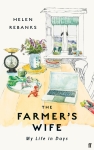
- Telling stories through embroidery in Cross-Stitch by Jazmina Barrera and The Farmer’s Wife by Helen Rebanks.

- A small boy nicknamed “Willmouse” (real name: William) in Mary and the Birth of Frankenstein by Anne Eekhout and The Greengage Summer by Rumer Godden.
- An account of a routine sonogram that ends with the technician leaving the doctor to deliver bad news in Reproduction by Louisa Hall and The Unfamiliar by Kirsty Logan.
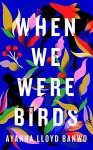
- Black dreadlocks/braid/ponytail being cut off in When We Were Birds by Ayanna Lloyd Banwo, The Wren, The Wren by Anne Enright, and Rebecca, Not Becky by Christine Platt and Catherine Wigginton Greene.

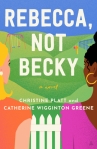
- Wondering how to arm a Black daughter against racist microaggressions in Rebecca, Not Becky by Christine Platt and Catherine Wigginton Greene and Ordinary Notes by Christina Sharpe.
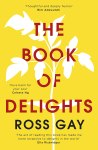
- Countering the commodification or romanticization of Black suffering in The Book of Delights by Ross Gay and Ordinary Notes by Christina Sharpe.

- An account of how the foot and mouth disease outbreak of 2001 affected the UK, especially northwest England, in Making the Beds for the Dead by Gillian Clarke and The Farmer’s Wife by Helen Rebanks.
- I encountered the quote from Elaine Scarry’s The Body in Pain about pain being inexpressible in Reproduction by Louisa Hall and The Invisible Kingdom by Meghan O’Rourke on the same day. It’s also referenced in Mary Jean Chan’s Bright Fear.
- A mention of eating frogs’ legs in The Book of Delights by Ross Gay and La Vie by John Lewis-Stempel.
- I read about the effects of heavy metal pollution on the body in The Invisible Kingdom by Meghan O’Rourke and Windswept by Annie Worsley in the same evening.
- Composer Erik Satie is mentioned in Making the Beds for the Dead by Gillian Clarke and August Blue by Deborah Levy.
- Stendhal syndrome and Florence are mentioned in The Wren, The Wren by Anne Enright and Pharmakon by Almudena Sánchez.
- Swallows nesting in an old Continental building in Diary of a Tuscan Bookshop by Alba Donati and La Vie by John Lewis-Stempel.
- France being all about the rules and a “Putain de merde” exclamation to bad news in Dirt by Bill Buford and La Vie by John Lewis-Stempel.

- A character named Nomi in Friends and Strangers by J. Courtney Sullivan and one called Noemi in Diary of a Tuscan Bookshop by Alba Donati.
- Epigenetics (trauma literally determining the genetic traits that are passed on) is discussed in The Invisible Kingdom by Meghan O’Rourke and Pharmakon by Almudena Sánchez.
- Women of a certain age in Tuscany in The Three Graces by Amanda Craig and Diary of a Tuscan Bookshop by Alba Donati.
- Audre Lorde is quoted in Tremor by Teju Cole, Bibliomaniac by Robin Ince, The Invisible Kingdom by Meghan O’Rourke, Alone by Daniel Schreiber, and Ordinary Notes by Christina Sharpe.
- A Galway Kinnell poem is mentioned/quoted in The Dead Peasant’s Handbook by Brian Turner and Otherwise by Julie Marie Wade.
- The Bamiyan Buddhas are mentioned in Tremor by Teju Cole and The Dead Peasant’s Handbook by Brian Turner.


- Both The Three Graces by Amanda Craig and The Story of Lucy Gault by William Trevor open with a man shooting someone from his bedroom window.
- Linked short story collections about two children’s relationship with their Jamaican father, and mention of a devastating hurricane, in If I Survive You by Jonathan Escoffery and The Human Origins of Beatrice Porter and Other Essential Ghosts by Soraya Palmer. (Dual review coming up tomorrow!)
- Characters named Ben and Mara in The Whispers by Ashley Audrain and one story in Kate Doyle’s I Meant It Once.
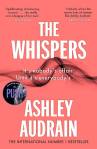
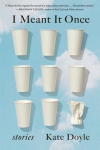
- Occasional uncut pages in my copies of I Meant It Once by Kate Doyle and The Unfamiliar by Kirsty Logan.
- A Florida setting and mention of the Publix supermarket chain in If I Survive You by Jonathan Escoffery and Arms and Legs by Chloe Lane.
- A down-at-heel English seaside town near Scarborough features in The Seaside by Madeleine Bunting and Penance by Eliza Clark.
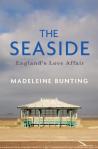

- A fictional northern town with “Crow” in the name: Crow-on-Sea in Penance by Eliza Clark and Crows Bank in Weyward by Emilia Hart.
- Claw-machine toys are mentioned in Penance by Eliza Clark and Directions to Myself by Heidi Julavits.
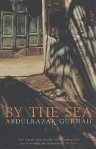
- Reading books by two Nobel Prize winners at the same time: Abdulrazak Gurnah (By the Sea) and Alice Munro (Hateship, Friendship, Courtship, Loveship, Marriage).
- Reading my second 2023 release featuring North Carolina ghost lights (after All of Us Together in the End by Matthew Vollmer, which I actually read last year): The Caretaker by Ron Rash.
- Reading my second 2023 release featuring a cat named Virginia Woolf (after Tell the Rest by Lucy Jane Bledsoe, which I actually read last year): one of the short stories in I Meant It Once by Kate Doyle.
- A character named Shay in Everyone but Myself by Julie Chavez, The Human Origins of Beatrice Porter and Other Essential Ghosts by Soraya Palmer and The Caretaker by Ron Rash.

What’s the weirdest reading coincidence you’ve had lately?
Nonfiction and Poetry Review Catch-Up: Carson, Dixon, McLaren, Sharpe
Today I’m finally writing up four review copies that came my way quite a while ago (last year in one case). A bereavement memoir about a friend lost to opiate addiction, a nature-rich poetry collection, a practical book about being part of positive movements whether led by religion or not, and an eye-opening work of cultural criticism about Black art and suffering.
The Dead Are Gods: A Memoir by Eirinie Carson (2023)
When I was back in the States in May for my sister’s nursing school graduation, I got a chance to talk to her best friend, who is a library assistant. During the never-ending reading-out of names (it was a whole-college ceremony, as opposed to the one earlier in the day just for the nursing cohort), I read Hello Beautiful on my Kindle, tucked inside the graduation program; this friend openly read a library copy of The Dead Are Gods on her lap. When I teased her that at least I kept my book hidden, like I do at church inside the hymn book, she said (re: church), “Or you could just … not go?” (On which, see the McLaren review below!)
 Anyway, it was nice to see this book out and about in the world, and it reminded me to belatedly pick up my review copy once I got back. As a bereavement memoir, the book is right in my wheelhouse, though I’ve tended to gravitate towards stories of the loss of a family memoir or spouse, whereas Carson is commemorating her best friend, Larissa, who died in 2018 of a heroin overdose, age 32, and was found in the bath in her Paris flat one week later.
Carson wrote this three years afterward, yet the feeling is still raw. Addressing Larissa as “you” for much of the book, she loops through their history in short chapters that hop around like memory does. They met as teenagers in London and bonded over being Black models and rock music fans. After their wild years, their paths started to drift apart. Carson moved to California and married and had children; Larissa relocated to Paris and, apparently, kept partying. Her dependency came as news to Carson – all the more ironic because her father, too, is a heroin addict and mostly not present in her life.
Anyone who has suffered a loss will find much that resonates here, no matter the circumstances or timing. Carson puzzles over the difficulty of making a narrative out of death and grief (“How should I remember you? Am I doing it right? Is this enough?”), of even comprehending the bare facts of permanent absence. She’s working towards understanding, and desperate to let people know about the marvel that was Larissa. Apart from in the title chapter, the language does not stand out so much as the relatable emotion. (And it’s hard to take their pet name- and typo-strewn e-mails seriously.) Still, I marked out lots of passages to save: “It is frustrating when the one person who could answer all of your many, many questions is the dead person. … Searching for meaning in the most meaningless event in our lives feels a little stupid but I still search.”
With thanks to Melville House for the proof copy for review.
A Whistling of Birds by Isobel Dixon (illus. Douglas Robertson) (2023)
 Dixon was a new name for me, but the South African poet, now based in Cambridge, has published five collections. I was drawn to this latest one by its acknowledged debt to D.H. Lawrence: the title phrase comes from one of his essays, and the book as a whole is said to resemble his Birds, Beasts and Flowers, which is in its centenary year. I’m more familiar with Lawrence’s novels than his verse, but I do own his Collected Poems and was fascinated to find here echoes of his mystical interest in nature as well as his love for the landscape of New Mexico. England and South Africa are settings as well as the American Southwest.
Snakes, bees, bats and foxes are some of the creatures that scamper through the text. There are poems for marine life, fruit and wildflowers. You get a sense of the seasons turning, and the natural wonders to prize from each. Dixon’s poetry is formal yet playful, the structures and line and stanza lengths varying. “Tirrick” is full of wordplay relating to Arctic terns; phrases flit across the page to mimic flight in “the bats”; “Hummingbird ~” mixes Latin names with vivid descriptions: “the oil spill of God’s glory / taking wing” and “sweet-wrapper glamour scrap / hovering shadow-gloss”.
There are portraits and elegies; moments where the speaker is present versus fable-like omniscient warnings or teasing. I particularly loved “River Mother” (an ode to a pregnant crab), “The Guests” (about a “festival of frogs” after rain), the praying mantis depicted in “A Missionary in Neon Green” (“Soul on stilts, / a gog-eyed alien”), and the everyday ecstasy of “On First Spotting a Snake’s Head Fritillary.” The book is in collaboration with Scottish artist Douglas Robertson, who provided 12 black-and-white illustrations, and is a real gem.
With thanks to Nine Arches Press for the free copy for review.
Do I Stay Christian? A Guide for the Doubters, the Disappointed and the Disillusioned by Brian McLaren (2022)
McLaren is one of the important gurus in my life. This follows on closely from his previous book, Faith after Doubt, which I reviewed last year. You might think that the title question is only rhetorical and the answer is a firmly implied Yes. But what’s refreshing is that the author genuinely does not have a secret agenda. He doesn’t mind whether you continue to consider yourself Christian or not; what he does care about is inviting people into a spiritual life that includes working towards a regenerative future, the only way the human race is going to survive. And he believes that people of all faiths and none can be a part of that.
 But first to address the central question: Part One is No and Part Two is Yes; each is allotted 10 chapters and roughly the same number of pages. McLaren has absolute sympathy with those who decide that they cannot in good conscience call themselves Christians. He’s not coming up with easily refuted objections, straw men, but honestly facing huge and ongoing problems like patriarchal and colonial attitudes, the condoning of violence, intellectual stagnation, ageing congregations, and corruption. From his vantage point as a former pastor, he acknowledges that today’s churches, especially of the American megachurch variety, feature significant conflicts of interest around money. He knows that Christians can be politically and morally repugnant and can oppose the very changes the world needs.
And yet. He believes Christianity can still be a force for good, and it would be a shame to give up on the wealth of its (comparatively short) history and the paragon that is Jesus (whom he provocatively describes as “an indigenous man who prepared for his public ministry with a forty-day vision quest”). The arguments in this section are more emotional, whereas in the previous section they were matter-of-fact. However, McLaren poses a middle option between leaving the religion dramatically and remaining meekly; he calls it “staying defiantly.” My husband and I read this as a buddy read, and that will be an important concept for us: how can we challenge the status quo of our church, our denomination, this too often staid faith?
Part Three, “How,” offers ideas for how to build a resilient faith that prioritizes harmony with the environment and with others while sidelining economic concerns. He may not believe in literal hell, but he’s as end-times-oriented as any fire-and-brimstone preacher when he insists, “we have to prepare ourselves to live good lives of defiant joy in the midst of chaos and suffering. This can be done. It has been done by billions of our ancestors and neighbours.” He ends with a supremely practical piece of advice: ask yourself “whether your current context will allow the highest and best use of your gifts and time.” Lucid and well argued, this is a book I’d recommend to anyone questioning the value of Christianity.
With thanks to Hodder & Stoughton for the free copy for review.
Ordinary Notes by Christina Sharpe (2023)
This work of cultural criticism takes the form of 248 numbered micro-essays, some as short as one line and others up to a few pages. The central topics are Black art and Black suffering – specifically, how the latter is depicted. The book kept slapping me awake, because her opinions were not what I was expecting. Her responses to her 2018 visits to two landmarks in Montgomery, Alabama, the Legacy Museum and the National Memorial for Peace and Justice, give a taste of her outlook. The museum draws a direct line between slavery and mass incarceration; the memorial documents all known cases of lynching, and she’s in its graveyard when a white woman comes up to her, crying and apologizing. When people ask Sharpe why she didn’t reply, she says, “she tries to hand me her sorrow … to super-add her burden to my own. It is not mine to bear.”
 Many of these early notes question the purpose of reliving racial violence. For instance, Sharpe is appalled to watch a Claudia Rankine video essay that stitches together footage of beatings and murders of Black people. “Spectacle is not repair.” She later takes issue with Barack Obama singing “Amazing Grace” at the funeral of slain African American churchgoers because the song was written by a slaver. The general message I take from these instances is that one’s intentions do not matter; commemorating violence against Black people to pull at the heartstrings is not just in poor taste, but perpetuates cycles of damage.
The book is a protest, strident yet calm, but also a celebration of the Black humanities and an elegy to her late mother, who prepared her to live as a confident, queer woman of colour in a white world. Sharpe decries the notion that art by BIPOC is only of sociological interest, to inform white people about “identity” – this is both a simplification and a means of othering.
Books—poetry, fiction, nonfiction, theory, memoir, biography, mysteries, plays—have always helped me locate myself, tethered me, helped me to make sense of the world and to act in it. I know that books have saved me. By which I mean that books always give me a place to land in difficult times. They show me Black worlds of making and possibility.
And she mainly credits her mother for introducing her to the literature that would sustain her: “My mother wanted me to build a life that was nourishing and Black. … My mother gifted me a love of beauty, a love of works. She gave me every Black book that she could find.” I loved the account of their Sunday afternoon teas, when they had cake and each read aloud a short piece they had memorized by the likes of Gwendolyn Brooks or Langston Hughes.
I found the straightforward autobiographical material, particularly the grief over the loss of her mother, more emotionally resonant than much of the book’s theorizing. The scholarly register can occasionally be off-putting, e.g., “I write these ordinary things to detail the everyday sonic and haptic vocabularies of living life under these brutal regimes.” The other media include letters, headlines, lists, and photographs, creating an overall collage effect. That the book occasionally made me uncomfortable is, no doubt, proof that I needed to read it.
With thanks to Daunt Books for the free copy for review.
Book Serendipity, Mid-April through Early June
I call it “Book Serendipity” when two or more books that I read at the same time or in quick succession have something in common – the more bizarre, the better. This is a regular feature of mine every few months. Because I usually have 20–30 books on the go at once, I suppose I’m more prone to such incidents. The following are in roughly chronological order.
- Fishing with dynamite takes place in Glowing Still by Sara Wheeler and In Memoriam by Alice Winn.
- Egg collecting (illegal!) is observed and/or discussed in Sea Bean by Sally Huband and The Jay, the Beech and the Limpetshell by Richard Smyth.

- Deborah Levy’s Things I Don’t Want to Know is quoted in What I’d Rather Not Think About by Jente Posthuma and Glowing Still by Sara Wheeler. I then bought a secondhand copy of the Levy on my recent trip to the States.
- “Piss-en-lit” and other folk names for dandelions are mentioned in The House of the Interpreter by Lisa Kelly and The Furrows by Namwali Serpell.
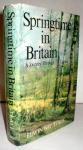
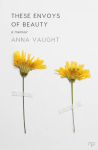
- Buttercups and nettles are mentioned in The House of the Interpreter by Lisa Kelly and Springtime in Britain by Edwin Way Teale (and other members of the Ranunculus family, which includes buttercups, in These Envoys of Beauty by Anna Vaught).

- The speaker’s heart is metaphorically described as green in a poem in Lo by Melissa Crowe and The House of the Interpreter by Lisa Kelly.
- Discussion of how an algorithm can know everything about you in Tomb Sweeping by Alexandra Chang and I’m a Fan by Sheena Patel.
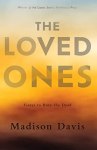
- A brother drowns in The Loved Ones: Essays to Bury the Dead by Madison Davis, What I’d Rather Not Think About by Jente Posthuma, and The Furrows by Namwali Serpell.


A few cases of a book recalling a specific detail from an earlier read:
- This metaphor in The Chosen by Elizabeth Lowry links it to The Marriage Portrait by Maggie O’Farrell, another work of historical fiction I’d read not long before: “He has further misgivings about the scalloped gilt bedside table, which wouldn’t look of place in the palazzo of an Italian poisoner.”
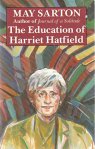
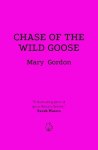
- This reference in The Education of Harriet Hatfield by May Sarton links it back to Chase of the Wild Goose by Mary Louisa Gordon (could it be the specific book she had in mind? I suspect it was out of print in 1989, so it’s more likely it was Elizabeth Mavor’s 1971 biography The Ladies of Llangollen): “Do you have a book about those ladies, the eighteenth-century ones, who lived together in some remote place, but everyone knew them?”
- This metaphor in Things My Mother Never Told Me by Blake Morrison links it to The Chosen by Elizabeth Lowry: “Moochingly revisiting old places, I felt like Thomas Hardy in mourning for his wife.”
- A Black family is hounded out of a majority-white area by harassment in The Education of Harriet Hatfield by May Sarton and Ordinary Notes by Christina Sharpe.
 Wartime escapees from prison camps are helped to freedom, including with the help of a German typist, in My Father’s House by Joseph O’Connor and In Memoriam by Alice Winn.
- A scene of eating a deceased relative’s ashes in 19 Claws and a Black Bird by Agustina Bazterrica and The Loved Ones by Madison Davis.
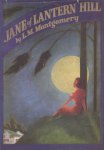
- A girl lives with her flibbertigibbet mother and stern grandmother in “Wife Days,” one story from How Strange a Season by Megan Mayhew Bergman, and Jane of Lantern Hill by L.M. Montgomery.
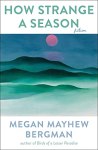
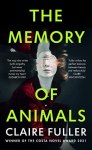
- Macramé is mentioned in How Strange a Season by Megan Mayhew Bergman, The Memory of Animals by Claire Fuller, Floppy by Alyssa Graybeal, and Sidle Creek by Jolene McIlwain.
- A fascination with fractals in Floppy by Alyssa Graybeal and one story in Sidle Creek by Jolene McIlwain. They are also mentioned in one essay in These Envoys of Beauty by Anna Vaught.
- I found disappointed mentions of the fact that characters wear blackface in Laura Ingalls Wilder’s Little Town on the Prairie in Monsters by Claire Dederer and, the very next day, Ordinary Notes by Christina Sharpe.

- Moon jellyfish are mentioned in the Blood and Cord anthology edited by Abi Curtis, Floppy by Alyssa Graybeal, and Sea Bean by Sally Huband.
- A Black author is grateful to their mother for preparing them for life in a white world in the memoirs-in-essays I Can’t Date Jesus by Michael Arceneaux and Ordinary Notes by Christina Sharpe.
- The children’s book The Owl Who Was Afraid of the Dark by Jill Tomlinson is mentioned in The Jay, the Beech and the Limpetshell by Richard Smyth and These Envoys of Beauty by Anna Vaught.
- The protagonist’s father brings home a tiger as a pet/object of display in The Marriage Portrait by Maggie O’Farrell and The Memory of Animals by Claire Fuller.

- Bloor Street, Toronto is mentioned in Jane of Lantern Hill by L.M. Montgomery and Ordinary Notes by Christina Sharpe.
- Ralph Waldo Emerson’s thinking about the stars is quoted in Jane of Lantern Hill by L.M. Montgomery and These Envoys of Beauty by Anna Vaught.
- Wondering whether a marine animal would be better off in captivity, where it could live much longer, in The Memory of Animals by Claire Fuller (an octopus) and Sea Bean by Sally Huband (porpoises).
 Martha Gellhorn is mentioned in The Collected Regrets of Clover by Mikki Brammer and Monsters by Claire Dederer.
- Characters named June in “Indigo Run,” the novella-length story in How Strange a Season by Megan Mayhew Bergman, and The Cats We Meet Along the Way by Nadia Mikail.
- “Explicate!” is a catchphrase uttered by a particular character in Girls They Write Songs About by Carlene Bauer and The Lake Shore Limited by Sue Miller.
- It’s mentioned that people used to get dressed up for going on airplanes in Fly Girl by Ann Hood and The Lights by Ben Lerner.

- Green-Wood Cemetery in Brooklyn is a setting in The Lights by Ben Lerner and Grave by Allison C. Meier.
- Last year I read Tomorrow, and Tomorrow, and Tomorrow by Gabrielle Zevin, in which Oregon Trail re-enactors (in a video game) die of dysentery; this is also a live-action plot point in “Pioneers,” one story in Lydia Conklin’s Rainbow Rainbow.
- A bunch (4 or 5) of Italian American sisters in Circling My Mother by Mary Gordon and Hello Beautiful by Ann Napolitano.
What’s the weirdest reading coincidence you’ve had lately?
 Bookish Beck = Rebecca Foster. American transplant to England. Freelance proofreader and book reviewer.
 Bookish Beck