Recommended March Releases: Broder, Fuller, Lamott, Polzin
Three novels that range in tone from carnal allegorical excess to quiet, bittersweet reflection via low-key menace; and essays about keeping the faith in the most turbulent of times.
Milk Fed by Melissa Broder
Rachel’s body and mommy issues are major and intertwined: she takes calorie counting and exercise to an extreme, and her therapist has suggested that she take a 90-day break from contact with her overbearing mother. Her workdays at a Hollywood talent management agency are punctuated by carefully regimented meals, one of them a 16-ounce serving of fat-free frozen yogurt from a shop run by Orthodox Jews. One day it’s not the usual teenage boy behind the counter, but his overweight older sister, Miriam. Miriam makes Rachel elaborate sundaes instead of her usual abstemious cups and Rachel lets herself eat them even though it throws her whole diet off. She realizes she’s attracted to Miriam, who comes to fill the bisexual Rachel’s fantasies, and they strike up a tentative relationship over Chinese food and classic film dates as well as Shabbat dinners at Miriam’s family home.

If you’re familiar with The Pisces, Broder’s Women’s Prize-longlisted debut, you should recognize the pattern here: a deep exploration of wish fulfilment and psychological roles, wrapped up in a sarcastic and sexually explicit narrative. Fat becomes not something to fear but a source of comfort; desire for food and for the female body go hand in hand. Rachel says, “It felt like a miracle to be able to eat what I desired, not more or less than that. It was shocking, as though my body somehow knew what to do and what not to do—if only I let it.”
With the help of her therapist, a rabbi that appears in her dreams, and the recurring metaphor of the golem, Rachel starts to grasp the necessity of mothering herself and becoming the shaper of her own life. I was uneasy that Miriam, like Theo in The Pisces, might come to feel more instrumental than real, but overall this was an enjoyable novel that brings together its disparate subjects convincingly. (But is it hot or smutty? You tell me.)
With thanks to Bloomsbury for the proof copy for review.
Unsettled Ground by Claire Fuller
At a glance, the cover for Fuller’s fourth novel seems to host a riot of luscious flowers and fruit, but look closer and you’ll see the daisies are withering and the grapes rotting; there’s a worm exiting the apple and flies are overseeing the decomposition. Just as the image slowly reveals signs of decay, Fuller’s novel gradually unveils the drawbacks of its secluded village setting. Jeanie and Julius Seeder, 51-year-old twins, lived with their mother, Dot, until she was felled by a stroke. They’d always been content with a circumscribed, self-sufficient existence, but now their whole way of life is called into question. Their mother’s rent-free arrangement with the landowners, the Rawsons, falls through, and the cash they keep in a biscuit tin in the cottage comes nowhere close to covering her debts, let alone a funeral.

During the Zoom book launch event, Fuller confessed that she’s “incapable of writing a happy novel,” so consider that your warning of how bleak things will get for her protagonists – though by the end there are pinpricks of returning hope. Before then, though, readers navigate an unrelenting spiral of rural poverty and bad luck, exacerbated by illiteracy and the greed and unkindness of others. One of Fuller’s strengths is creating atmosphere, and there are many images and details here that build the picture of isolation and pathos, such as a piano marooned halfway to a derelict caravan along a forest track and Jeanie having to count pennies so carefully that she must choose between toilet paper and dish soap at the shop.
Unsettled Ground is set in a fictional North Wessex Downs village not far from where I live. I loved spotting references to local places and to folk music – Jeanie and Julius might not have book smarts or successful careers, but they inherited Dot’s love of music and when they pick up a fiddle and guitar they tune in to the ancient magic of storytelling. Much of the novel is from Jeanie’s perspective and she makes for an out-of-the-ordinary yet relatable POV character. I found the novel heavy on exposition, which somewhat slowed my progress through it, but it’s comparable to Fuller’s other work in that it focuses on family secrets, unusual states of mind, and threatening situations. She’s rapidly become one of my favourite contemporary novelists, and I’d recommend this to you if you’ve liked her other work or Fiona Mozley’s Elmet.
With thanks to Penguin Fig Tree for the proof copy for review.
Dusk, Night, Dawn: On Revival and Courage by Anne Lamott
These are Lamott’s best new essays (if you don’t count Small Victories, which reprinted some of her greatest hits) in nearly a decade. The book is a fitting follow-up to 2018’s Almost Everything in that it tackles the same central theme: how to have hope in God and in other people even when the news – Trump, Covid, and climate breakdown – only heralds the worst.
One key thing that has changed in Lamott’s life since her last book is getting married for the first time, in her mid-sixties, to a Buddhist. “How’s married life?” people can’t seem to resist asking her. In thinking of marriage she writes about love and friendship, constancy and forgiveness, none of which comes easy. Her neurotic nature flares up every now and again, but Neal helps to talk her down. Fragments of her early family life come back as she considers all her parents were up against and concludes that they did their best (“How paltry and blocked our family love was, how narrow the bandwidth of my parents’ spiritual lives”).

Opportunities for maintaining quiet faith in spite of the circumstances arise all the time for her, whether it’s a variety show that feels like it will never end, a four-day power cut in California, the kitten inexplicably going missing, or young people taking to the streets to protest about the climate crisis they’re inheriting. A short postscript entitled “Covid College” gives thanks for “the blessings of COVID: we became more reflective, more contemplative.”
The prose and anecdotes feel fresher here than in several of the author’s other recent books. I highlighted quote after quote on my Kindle. Some of these essays will be well worth rereading and deserve to become classics in the Lamott canon, especially “Soul Lather,” “Snail Hymn,” “Light Breezes,” and “One Winged Love.”
I read an advanced digital review copy via NetGalley. Available from Riverhead in the USA and SPCK in the UK.
Brood by Jackie Polzin

Polzin’s debut novel is a quietly touching story of a woman in the Midwest raising chickens and coming to terms with the shape of her life. The unnamed narrator is Everywoman and no one at the same time. As in recent autofiction by Rachel Cusk and Sigrid Nunez, readers find observations of other people (and animals), a record of their behaviour and words; facts about the narrator herself are few and far between, though it is possible to gradually piece together a backstory for her. At one point she reveals, with no fanfare, that she miscarried four months into pregnancy in the bathroom of one of the houses she cleans. There is a bittersweet tone to this short work. It’s a low-key, genuine portrait of life in the in-between stages and how it can be affected by fate or by other people’s decisions.
See my full review at BookBrowse. I was also lucky enough to do an interview with the author.
I read an advanced digital review copy via Edelweiss. Available from Doubleday in the USA. To be released in the UK by Picador tomorrow, April 1st.
What recent releases can you recommend?
Recent Literary Awards & Online Events: Folio Prize and Claire Fuller
Literary prize season is in full swing! The Women’s Prize longlist, revealed on the 10th, contained its usual mixture of the predictable and the unexpected. I correctly predicted six of the nominees, and happened to have already read seven of them, including Claire Fuller’s Unsettled Ground (more on this below). I’m currently reading another from the longlist, Luster by Raven Leilani, and I have four on order from the library. There are only four that I don’t plan to read, so I’ll be in a fairly good place to predict the shortlist (due out on April 28th). Laura and Rachel wrote detailed reaction posts on which there has been much chat.
Rathbones Folio Prize
This year I read almost the entire Rathbones Folio Prize shortlist because I was lucky enough to be sent the whole list to feature on my blog. The winner, which the Rathbones CEO said would stand as the “best work of literature for the year” out of 80 nominees, was announced on Wednesday in a very nicely put together half-hour online ceremony hosted by Razia Iqbal from the British Library. The Folio scheme also supports writers at all stages of their careers via a mentorship scheme.
It was fun to listen in as the three judges discussed their experience. “Now nonfiction to me seems like rock ‘n’ roll,” Roger Robinson said, “far more innovative than fiction and poetry.” (Though Sinéad Gleeson and Jon McGregor then stood up for the poetry and fiction, respectively.) But I think that was my first clue that the night was going to go as I’d hoped. McGregor spoke of the delight of getting “to read above the categories, looking for freshness, for excitement.” Gleeson said that in the end they had to choose “the book that moved us, that enthralled us.”
All eight authors had recorded short interview clips about their experience of lockdown and how they experiment with genre and form, and seven (all but Doireann Ní Ghríofa) were on screen for the live announcement. The winner of the £30,000 prize, author of an “exceptional, important” book and teller of “a story that had to be told,” was Carmen Maria Machado for In the Dream House. I was delighted with this result: it was my first choice and is one of the most remarkable memoirs I’ve read. I remember reading it on my Kindle on the way to and from Hungerford for a bookshop event in early March 2020 – my last live event and last train ride in over a year and counting, which only made the reading experience more memorable.

I like what McGregor had to say about the book in the media release: “In the Dream House has changed me – expanded me – as a reader and a person, and I’m not sure how much more we can ask of the books that we choose to celebrate.”
There are now only two previous Folio winners that I haven’t read, the memoir The Return by Hisham Matar and the novel Lost Children Archive by Valeria Luiselli, so I’d like to get those two out from the library soon and complete the set.
Other literary prizes
 The following day, the Dylan Thomas Prize shortlist was announced. Still in the running are two novels I’ve read and enjoyed, Pew by Catherine Lacey and My Dark Vanessa by Kate Elizabeth Russell, and one I’m currently reading (Luster). Of the rest, I’m particularly keen on Kingdomtide by Rye Curtis, and I would also like to read Alligator and Other Stories by Dima Alzayat. I’d love to see Russell win the whole thing. The announcement will be on May 13th. I hope to participate in a shortlist blog tour leading up to it.
I also tuned into the Edward Stanford Travel Writing Awards ceremony (on YouTube), which was unfortunately marred by sound issues. This year’s three awards went to women: Dervla Murphy (Edward Stanford Outstanding Contribution to Travel Writing), Anita King (Bradt Travel Guides New Travel Writer of the Year; you can read her personal piece on Syria here), and Taran N. Khan for Shadow City: A Woman Walks Kabul (Stanford Dolman Travel Book of the Year in association with the Authors’ Club).
Other prize races currently in progress that are worth keeping an eye on:
- The Jhalak Prize for writers of colour in Britain (I’ve read four from the longlist and would be interested in several others if I could get hold of them)
- The Republic of Consciousness Prize for work from small presses (I’ve read two; Doireann Ní Ghríofa gets another chance – fingers crossed for her)
- The Walter Scott Prize for historical fiction (next up for me: The Dictionary of Lost Words by Pip Williams, to review for BookBrowse)
Claire Fuller
Yesterday evening, I attended the digital book launch for Claire Fuller’s Unsettled Ground (my review will be coming soon). I’ve read all four of her novels and count her among my favorite contemporary writers. I spotted Eric Anderson and Ella Berthoud among the 200+ attendees, and Claire’s agent quoted from Susan’s review – “A new novel from Fuller is always something to celebrate”! Claire read a passage from the start of the novel that introduces the characters just as Dot starts to feel unwell. Uniquely for online events I’ve attended, we got a tour of the author’s writing room, with Alan the (female) cat asleep on the daybed behind her, and her librarian husband Tim helped keep an eye on the chat.
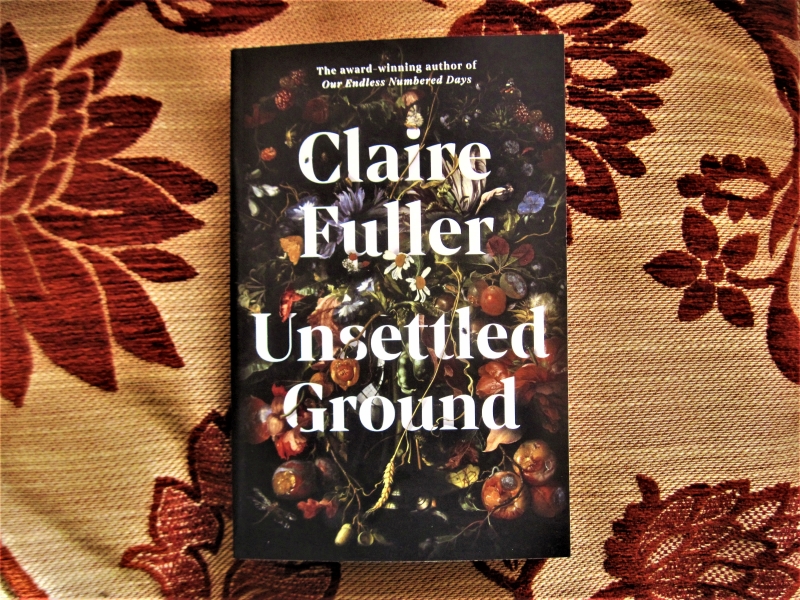
After each novel, as a treat to self, she buys a piece of art. This time, she commissioned a ceramic plate from Sophie Wilson with lines and images from the book painted on it. Live music was provided by her son Henry Ayling, who played acoustic guitar and sang “We Roamed through the Garden,” which, along with traditional folk song “Polly Vaughn,” are quoted in the novel and were Claire’s earworms for two years. There was also a competition to win a chocolate Easter egg, given to whoever came closest to guessing the length of the new novel in words. (It was somewhere around 89,000.)
Good news – she’s over halfway through Book 5!
Recent Online Events: Melanie Finn, Church Times Festival, Gavin Francis
It’s coming up on the one-year anniversary of the first UK lockdown and here we are still living our lives online. The first hint I had of how serious things were going to get was when a London event with Anne Tyler I was due to attend in March 2020 with Eric and Laura T. was cancelled, followed by … everything else. Oh well.
This February was a bountiful month for online literary conversations. I’m catching up now by writing up my notes from a few more events (after Saunders and Ishiguro) that helped to brighten my evenings and weekends.
Melanie Finn in Conversation with Claire Fuller
(Exile in Bookville American online bookstore event on Facebook, February 2nd)
I was a big fan of Melanie Finn’s 2015 novel Shame (retitled The Gloaming), which I reviewed for Third Way magazine. Her new book, The Hare, sounds appealing but isn’t yet available in the UK. Rosie and Bennett, a 20-years-older man, meet in New York City. Readers soon enough know that he is a scoundrel, but Rosie doesn’t, and they settle together in Vermont. A contemporary storyline looking back at how they met contrasts the romantic potential of their relationship with its current reality.
 Fuller said The Hare is her favorite kind of novel: literary but also a page-turner. (Indeed, the same could be said of Fuller’s books.) She noted that Finn’s previous three novels are all partly set in Africa and have a seam of violence – perhaps justified – running through. Finn acknowledged that everyday life in a postcolonial country has been a recurring element in her fiction, arising from her own experience growing up in Kenya, but the new book marked a change of heart: there is so much coming out of Africa by Black writers that she feels she doesn’t have anything to add. The authors agreed you have to be cruel to your characters.
Finn believes descriptive writing is one of her strengths, perhaps due to her time as a journalist. She still takes inspiration from headlines. Now that she and her family (a wildlife filmmaker husband and twin daughters born in her forties) are rooted in Vermont, she sees more nature writing in her work. They recovered a clear-cut plot and grow their own food; they also forage in the woods, and a hunter shoots surplus deer and gives them the venison. Appropriately, she read a tense deer-hunting passage from The Hare. Finn also teaches skiing and offers much the same advice as about writing: repetition eventually leads to elegance.
I was especially interested to hear the two novelists compare their composition process. Finn races through a draft in two months, but rewriting takes her a year, and she always knows the ending in advance. Fuller’s work, on the other hand, is largely unplanned; she starts with a character and a place and then just writes, finding out what she’s created much later on. (If you’ve read her Women’s Prize-longlisted upcoming novel, Unsettled Ground, you, too, would have noted her mention of a derelict caravan in the woods that her son took her to see.) Both said they don’t really like writing! Finn said she likes the idea of being a writer, while Fuller that she likes having written – a direct echo of Dorothy Parker’s quip: “I hate writing. I love having written.” Their fiction makes a good pairing and the conversation flowed freely.
Church Times Festival of Faith and Literature, “Light in Darkness,” Part I
(February 20th)
I’d attended once in person, in 2016 (see my write-up of Sarah Perry and more), when this was still known as Bloxham Festival and was held at Bloxham School in Oxfordshire. Starting next year, it will take place in central Oxford instead. I attended the three morning events of Part I; there’s another virtual program taking place on Saturday the 17th of April.
Rachel Mann on The Gospel of Eve
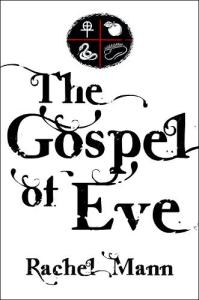 Mann opened with a long reading from Chapter 1 of her debut novel (I reviewed it here) and said it is about her “three favorite things: sex, death, and religion,” all of which involve a sort of self-emptying. Mark Oakley, dean of St John’s College, Cambridge, interviewed her. He noted that her book has been likened to “Dan Brown on steroids.” Mann laughed but recognizes that, though she’s a ‘serious poet’, her gift as a novelist is for pace. She’s a lover of thrillers and, like Brown, gets obsessed with secrets. Although she and her protagonist, Kitty, are outwardly similar (a rural, working-class background and theological training), she quoted Evelyn Waugh’s dictum that all characters should be based on at least three people. Mann argued that the Church has not dealt as well with desire as it has with friendship. She thinks the best priests, like novelists, are genuine and engage with other people’s stories.
Francis Spufford on Light Perpetual
Mann then interviewed Spufford about his second novel, which arose from his frequent walks to his teaching job at Goldsmiths College in London. A plaque on an Iceland commemorates a World War II bombing that killed 15 children in what was then a Woolworths. He decided to commit an act of “literary resurrection” – but through imaginary people in a made-up, working-class South London location. The idea was to mediate between time and eternity. “All lives are remarkable and exceptional if you look at them up close,” he said. The opening bombing scene is delivered in extreme slow motion and then the book jumps on in 15-year intervals, in a reminder of scale. He read a passage from the end of the book when Ben, a bus conductor who fell in love with a Nigerian woman who took him to her Pentecostal Church, is lying in a hospice bed. It was a beautiful litany of “Praise him” statements, a panorama of everyday life: “Praise him at food banks,” etc. It made for a very moving moment.
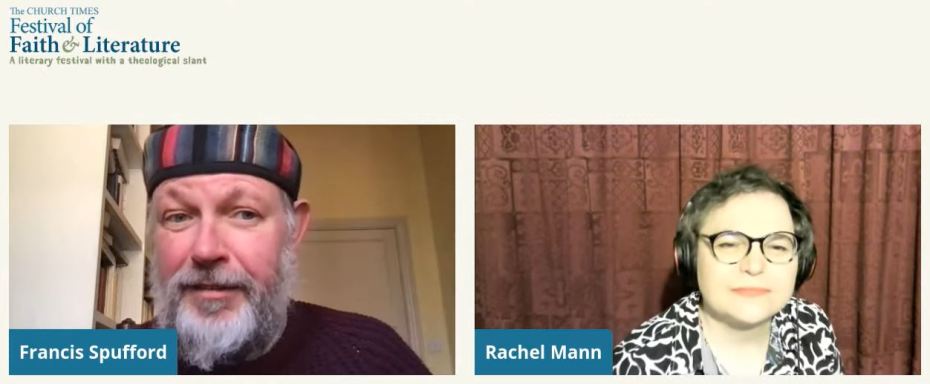
Mark Oakley on the books that got him through the pandemic
Oakley, in turn, was interviewed by Spufford – everyone did double duty as speaker and questioner! He mentioned six books that meant a lot to him during lockdown. Three of them I’d read myself and can also recommend: Vesper Flights by Helen Macdonald (my nonfiction book of 2020), Tongues of Fire by Seán Hewitt (one of my top five poetry picks from 2020), and Life’s Too Short to Pretend You’re Not Religious by David Dark. His top read of all, though, is a book I haven’t read but would like to: Featherhood by Charlie Gilmour (see Susan’s review). Rounding out his six were The Act of Living by Frank Tallis, about the psychology of finding fulfillment, and The Hunted by Gabriel Bergmoser, a bleak thriller set in the Outback. He read a prepared sermon-like piece on the books rather than just having a chat about them, which made it a bit more difficult to engage.
Spufford asked him if his reading had been about catharsis. Perhaps for some of those choices, he conceded. Oakley spoke of two lessons learned from lockdown. One is “I am an incarnational Christian” in opposition to the way we’ve all now been reduced to screens, abstract and nonmobile. And secondly, “Don’t be prosaic.” He called literalism a curse and decried the thinness of binary views of the world. “Literature is always challenging your answers, asking who you are when you get beyond what you’re good at.” I thought that was an excellent point, as was his bottom line about books: “It’s not how many you get through, but how many get through to you.”
Gavin Francis in Conversation with Louise Welsh
(Wellcome Collection event, February 25th)
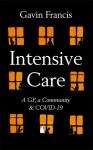
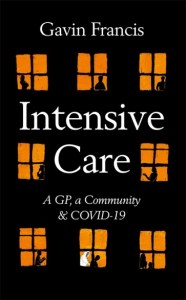 Francis, a medical doctor, wrote Intensive Care (I reviewed it here) month by month and sent chapters to his editor as he went along. Its narrative begins barely a year ago and yet it was published in January – a real feat given the usual time scale of book publishing. It was always meant to have the urgent feel of journalism, to be a “hot take,” as he put it, about COVID-19. He finds writing therapeutic; it helps him make sense of and process things as he looks back to the ‘before time’. He remembers first discussing this virus out of China with friends at a Burns Night supper in January 2020. Francis sees so many people using their “retrospecto-scopes” this year and asking what we might have done differently, if only we’d known.
He shook his head over the unnatural situations that Covid has forced us all into: “we’re gregarious mammals” and yet the virus is spread by voice and touch, so those are the very things we have to avoid. GP practices have had to fundamentally change how they operate, and he foresees telephone triage continuing even after the worst of this is over. He’s noted a rise in antidepressant use over the last year. So the vaccine, to him, is like “liquid hope”; even if not 100% protective, it does seem to prevent deaths and ventilation. Vaccination is like paying for the fire service, he said: it’s not a personal medical intervention but a community thing. This talk didn’t add a lot for me as I’d read the book, but for those who hadn’t, I’m sure it would have been an ideal introduction – and I enjoyed hearing the Scottish accents.
Bookish online events coming up soon: The Rathbones Folio Prize announcement on the 24th and Claire Fuller’s book launch for Unsettled Ground on the 25th.
Have you attended any online literary events recently?
Book Serendipity, Early 2021
I call it Book Serendipity when two or more books that I read at the same time or in quick succession have something pretty bizarre in common. Because I have so many books on the go at once (usually 20‒30), I suppose I’m more prone to such incidents.
Josh Cohen’s How to Live. What to Do, a therapist’s guide to literature, explains why this might happen:
More than one writer – the French poet Stéphane Mallarmé, the Argentinian writer Jorge Luis Borges – has advanced the exhilarating idea that each book is an infinitesimally small piece of one single, endless Book. I’ve always felt that this idea, unlikely as it might sound, makes perfect sense if you read enough novels [also nonfiction, for me]. The incidents, descriptions, phrases and images in the book you’re reading will always recall the incidents in another, and those in turn will call up the incidents in another, so that even as you’re reading one book, you’re reading countless others.
The following are in roughly chronological order.
- Mother‒baby swimming sessions in Some Body to Love by Alexandra Heminsley and The Still Point of the Turning World by Emily Rapp.


- [I think it would be a spoiler to even name them, but two novels I read simultaneously in January featured 1) a marriage / close relationship between a man and a woman – even though the man is gay; and 2) a character who beat his wife and then died in a convenient ‘accident’. One was published in 1997 and the other in 2020.]
- Stomas appeared in Dazzling Darkness by Rachel Mann and First Time Ever by Peggy Seeger late in my 2020 reading, and then in early 2021 in Pain: The Science of the Feeling Brain by Abdul-Ghaaliq Lalkhen and Love’s Work by Gillian Rose.
- An account of the author’s experience of ovarian hyperstimulation syndrome in Hormonal by Eleanor Morgan and I Miss You when I Blink by Mary Laura Philpott.
- Salmon fishing takes place in Snow Falling on Cedars by David Guterson and Kings of the Yukon by Adam Weymouth.


- The medical motto “see one, do one, teach one” appears in Breathtaking by Rachel Clarke and Complications by Atul Gawande.
- Filipino medical staff feature in America Is Not the Heart by Elaine Castillo and Breathtaking by Rachel Clarke.
- Twin Peaks is mentioned in The Fragments of My Father by Sam Mills and the anthology Trauma: Essays on Art and Mental Health; a different essay in the latter talks about Virginia Woolf’s mental health struggle, which is a strand in the former.
- St. Teresa of Ávila is mentioned in Heart by Gail Godwin and Sanatorium by Abi Palmer.

- The same Rachel Long poem appears in her debut collection, My Darling from the Lions, and The Emma Press Anthology of Love – but under different titles (“Portent” vs. “Delayed Gratification”).
- There’s a matriarch named Dot in Unsettled Ground by Claire Fuller and The Magician’s Assistant by Ann Patchett.
- There’s an Alaska setting in The Quality of Silence by Rosamund Lupton and Kings of the Yukon by Adam Weymouth.
- Becoming a mother is described as a baptism in Sanctuary by Emily Rapp Black and The Fragments of My Father by Sam Mills.


- While reading America Is Not the Heart by Elaine Castillo, I saw Castillo mentioned in the Acknowledgements of My Darling from the Lions by Rachel Long.
- Polar explorers’ demise is discussed in Ex Libris by Anne Fadiman and The Still Point by Amy Sackville.
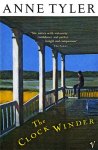
- “Butterfingers” / “butter-fingered” is used in America Is Not the Heart by Elaine Castillo and The Clock Winder by Anne Tyler.
- There’s a mention of someone eating paper torn from books (the horror!) in Ex Libris by Anne Fadiman and The Clock Winder by Anne Tyler.
- I was reading three pre-releases at once, each of 288 pages: Milk Fed by Melissa Broder, Unsettled Ground by Claire Fuller, and A Town Called Solace by Mary Lawson.
- The Jewish golem myth is the overarching metaphor of Milk Fed by Melissa Broder and Golem Girl by Riva Lehrer.
- There’s a ceremony to pay respects to those who donated their bodies for medical school dissection in Maybe You Should Talk to Someone by Lori Gottlieb and Golem Girl by Riva Lehrer.
- An old woman with dementia features in The Living Sea of Waking Dreams by Richard Flanagan, Keeper by Andrea Gillies, and The Clock Winder by Anne Tyler.


- A mother dies of cancer on Christmas Day in This Party’s Dead by Erica Buist and The Fragments of My Father by Sam Mills.
- The main character does stand-up comedy in Milk Fed by Melissa Broder and This Party’s Dead by Erica Buist.
- Winning a goldfish at a carnival in The Air Year by Caroline Bird, A Feather on the Breath of God by Sigrid Nunez, and Anna Vaught’s essay in the Trauma anthology.
- ECT (electroconvulsive therapy) is mentioned in Adventures in Human Being by Gavin Francis and Woman on the Edge of Time by Marge Piercy.


- There’s a father who is non-medical hospital staff in The Push by Ashley Audrain (a cleaner) and A Feather on the Breath of God by Sigrid Nunez (a kitchen worker).
- There’s a character named Hart in The Wild Laughter by Caoilinn Hughes and The Birth House by Ami McKay.
- Cannibalism is a point of reference, a major metaphor, or a (surreal) reality in Mother for Dinner by Shalom Auslander, Eat or We Both Starve by Victoria Kennefick, and Light Perpetual by Francis Spufford.
- Infertility and caring for animals were two big themes shared by Brood by Jackie Polzin and Catalogue Baby by Myriam Steinberg. This became clearer when I interviewed both authors in February. Also, both women have shocks of pink hair in their publicity photos!


- A young woman works at a hotel in The Distance between Us by Maggie O’Farrell and My Dark Vanessa by Kate Elizabeth Russell (and The Glass Hotel by Emily St. John Mandel, which I read late last year).
What’s the weirdest reading coincidence you’ve had lately?
Book Serendipity, Late 2020 into 2021
I call it Book Serendipity when two or more books that I read at the same time or in quick succession have something pretty bizarre in common. Because I have so many books on the go at once (20+), I suppose I’m more prone to such incidents than some. I also list some of my occasional reading coincidences on Twitter. The following are in chronological order.
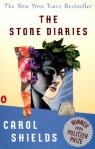
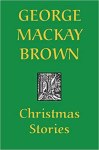
- The Orkney Islands were the setting for Close to Where the Heart Gives Out by Malcolm Alexander, which I read last year. They showed up, in one chapter or occasional mentions, in The Frayed Atlantic Edge by David Gange and The Stone Diaries by Carol Shields, plus I read a book of Christmas-themed short stories (some set on Orkney) by George Mackay Brown, the best-known Orkney author. Gavin Francis (author of Intensive Care) also does occasional work as a GP on Orkney.

- The movie Jaws is mentioned in Mr. Wilder and Me by Jonathan Coe and Landfill by Tim Dee.
- The Sámi people of the far north of Norway feature in Fifty Words for Snow by Nancy Campbell and The Mercies by Kiran Millwood Hargrave.
- Twins appear in Mr. Wilder and Me by Jonathan Coe and Tennis Lessons by Susannah Dickey. In Vesper Flights Helen Macdonald mentions that she had a twin who died at birth, as does a character in Miss Benson’s Beetle by Rachel Joyce. A character in The Light Years by Elizabeth Jane Howard is delivered of twins, but one is stillborn. From Wrestling the Angel by Michael King I learned that Janet Frame also had a twin who died in utero.
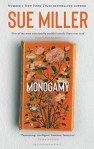
- Fennel seeds are baked into bread in The Mercies by Kiran Millwood Hargrave and The Strays of Paris by Jane Smiley. Later, “fennel rolls” (but I don’t know if that’s the seed or the vegetable) are served in Monogamy by Sue Miller.


- A mistress can’t attend her lover’s funeral in Here Is the Beehive by Sarah Crossan and Tennis Lessons by Susannah Dickey.
- A sudden storm drowns fishermen in a tale from Christmas Stories by George Mackay Brown and The Mercies by Kiran Millwood Hargrave.
 Silver Spring, Maryland (where I lived until age 9) is mentioned in one story from To Be a Man by Nicole Krauss and is also where Peggy Seeger grew up, as recounted in her memoir First Time Ever. Then it got briefly mentioned, as the site of the Institute of Behavioral Research, in Livewired by David Eagleman.
- Lamb is served with beans at a dinner party in Monogamy by Sue Miller and Larry’s Party by Carol Shields.
- Trips to Madagascar in Landfill by Tim Dee and Lightning Flowers by Katherine E. Standefer.
 Hospital volunteering in My Year with Eleanor by Noelle Hancock and Leonard and Hungry Paul by Ronan Hession.
- A Ronan is the subject of Emily Rapp’s memoir The Still Point of the Turning World and the author of Leonard and Hungry Paul (Hession).
- The Magic Mountain (by Thomas Mann) is discussed in Scattered Limbs by Iain Bamforth, The Still Point of the Turning World by Emily Rapp, and Snow by Marcus Sedgwick.
- Frankenstein is mentioned in The Biographer’s Tale by A.S. Byatt, The Still Point of the Turning World by Emily Rapp, and Snow by Marcus Sedgwick.


- Rheumatic fever and missing school to avoid heart strain in Foreign Correspondence by Geraldine Brooks and Unsettled Ground by Claire Fuller. Janet Frame also had rheumatic fever as a child, as I discovered in her biography.
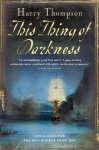
- Reading two novels whose titles come from The Tempest quotes at the same time: Owls Do Cry by Janet Frame and This Thing of Darkness by Harry Thompson.

- A character in Embers by Sándor Márai is nicknamed Nini, which was also Janet Frame’s nickname in childhood (per Wrestling the Angel by Michael King).
- A character loses their teeth and has them replaced by dentures in America Is Not the Heart by Elaine Castillo and The Light Years by Elizabeth Jane Howard.
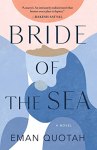
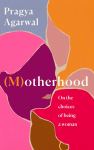
Also, the latest cover trend I’ve noticed: layers of monochrome upturned faces. Several examples from this year and last. Abstract faces in general seem to be a thing.




What’s the weirdest reading coincidence you’ve had lately?
Another Birthday & An “Overhaul” of Previous Years’ Gifted Books
I thought a Wednesday would be a crummy day to have a birthday on, but actually it was great – the celebrations have extended from the weekend before to the weekend after, giving me a whole week of treats. Last Saturday we planned a last-minute trip to Oxford when I won a pair of free tickets to the Oxford Playhouse’s comedy club, their first live event since March. It featured three acts plus a compere and was headlined by Flo & Joan, a musical sister act we’d seen before at Greenbelt 2018. Beforehand, we had excellent pizzas at Franco Manca. Oxford felt busy, but we wore masks to queue at the restaurant and for the whole time in the Playhouse, where there were several seats left between parties plus every other row was empty.
My husband was able to work from home on the day itself, even though he’s been having a manically busy couple of weeks of in-person teaching and labs on campus, so we got to share a few meals: a leisurely pancake breakfast; fresh-baked maple, walnut and pear upside-down cake, a David Lebovitz recipe from Ready for Dessert (recreated here); and a French-influenced dinner at The Blackbird, a local pub we’d not tried before. In between I did some reading (of course), helped hunt in the garden for invertebrates for the labs, and did a video chat with my mom and sister in the States.


Today, since he had a bit more time free, he has made me Mexican food, one of my favorite cuisines and something I don’t get to have very often, plus a second cake from a Lebovitz recipe (luckily, the remnants of the last one had already gone in the freezer), this time a flourless chocolate cake topped with cacao nibs.
Just three books came in as gifts this year, though I might buy a few more with birthday money and vouchers. (A proof copy of Claire Fuller’s new novel, forthcoming in January, happened to arrive on my birthday, so I’ll call that four books as presents!) I also received chocolate, posh local drink, and the latest Alanis album.


An Overhaul of Previous Years’ Gifted Books
For a bit of fun, I thought I’d go back through the previous birthday book hauls I’ve posted about and see how many of the books I’ve read: 2015, 2016, 2017, 2018 and 2019.
Simon of Stuck in a Book runs a regular blog feature he calls “The Overhaul,” where he revisits a book haul from some time ago and takes stock of what he’s read, what he still owns, etc. (here’s the most recent one). With permission, I’ve borrowed the title and format.
Date of haul: October 2015
Number of books purchased: 7 [the bottom 3 pictured were bought for other people]
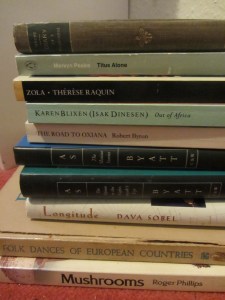
Had already read: 2 (the Byatt story collections, one of which I reread earlier this year)
Read since: 2 (reviews of the Jerome and Zola appeared on the blog)
Still to read: 3 – It’s high time I got around to the Byron and Dinesen books after five years sat on my shelves! I DNFed the first Gormenghast book, though, so may end up jettisoning the whole trilogy.
Date of haul: October 2016
Number of books purchased/received: 6
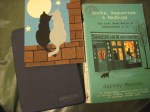
Read: ALL 6! I am so proud about this. Reviews of the Brown, Taylor, and Welch have appeared on the blog.
Still own: Just 2 – I resold the Brown and Holloway after reading them, gave the Mercer to a friend, and donated the Taylor proof.
Date of haul: October 2017
Number of books received: 11

Read: 4 (reviews of the Cox, Hay, and Hoffman appeared on the blog)
DNFed and resold: 2
Still to read: 5
Date of haul: October 2018
Number of books received: 10

Read: 8! Another fine showing; only the Giffels and Winner remain to be read. Reviews of the Groff, one L’Engle, and Manyika & Richardson appeared on the blog.
Still own: 8 – I resold the Hood and Petit after reading them.
Date of haul: October 2019
Number of books received: 14
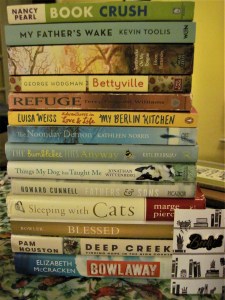
Read: Only 2. Hmm. (I reviewed the Weiss, and the Houston appeared on my Best of 2019 runners-up list.)
Currently reading/skimming, or set aside temporarily: 4
DNFed and resold: 3. D’oh.
Still to read: 5
Are you good about reading gifted books quickly?
What catches your eye from my stacks?
R.I.P. Classics for Halloween: The Haunting of Hill House, Dr. Jekyll & Mr. Hyde
I’ve enjoyed my second year participating in the Readers Imbibing Peril challenge. The highlights from my spooky October of reading were the classic ghost stories from my first installment and the Shirley Jackson novel below.
As this goes live I’m preparing to catch a train to York for the New Networks for Nature conference. Ever since the year I did my Master’s at Leeds, York is a place I’ve often contrived to be in late October or early November. What with ghost tours and fireworks for Bonfire Night, its cobbled streets are an atmospheric place to spend chilly evenings.
The Haunting of Hill House by Shirley Jackson (1959)
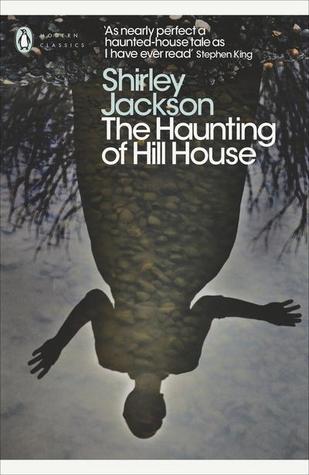 The only thing I’d read by Jackson before is “The Lottery,” which I studied in a high school English class. I’d long meant to read one of her full-length books, so I snapped this up when it came into the free bookshop where I volunteer.
Dr. Montague, an anthropologist, assembles a small team to live at Hill House one summer and record any evidence that it is indeed haunted. Joining him are Luke Sanderson, the flippant heir to the house; Theodora (“Theo”), rumoured to have psychic abilities; and Eleanor Vance, a diffident 32-year-old who experienced an unexplained event when she was a child and now, after the recent death of the mother for whom she was a nurse for years, determines to have an adventure all of her own. As the four become familiar with the house’s history of tragedies and feuds, their attempts to explore the house and grounds leave them feeling disoriented and, later, terrified.
Things really heat up at about the halfway point. There’s a feeling that the house has power –
“the evil is the house itself, I think … it is a place of contained ill will” (Dr. Montague)
“It’s the house. I think it’s biding its time.” (Eleanor)
– what could it make them all do? I don’t often read from the suspense or horror genre, but I did find this gripping and frightening, and I never saw the ending coming. Hard to believe the book is 60 years old.
(I wondered if Claire Fuller could have taken this as partial inspiration for Bitter Orange, in which a thirtysomething woman who was her mother’s carer for many years until the older woman’s death undertakes a summer of study at a dilapidated house.) 
The Strange Case of Dr. Jekyll and Mr. Hyde by Robert Louis Stevenson (1886)
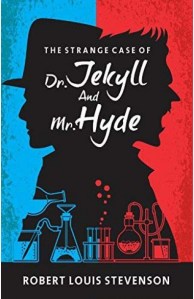 As with The Picture of Dorian Gray, which I attempted in 2017, I think the problem here was that the story was too culturally familiar to me. Everyone knows the basics of Jekyll & Hyde: a respectable doctor occasionally transforms into a snarling boor and commits acts of violence. The only thing that was murky for me was exactly how this happens. (Jekyll has been experimenting with drugs that will provoke mystical experiences and a taste of the dark side of humanity; to become Hyde he takes a potion of his own devising. At first the metamorphosis is something he can control, but eventually he starts becoming Hyde without any warning, until it seems there’s no returning to his normal life.)
The novella is mostly from the point of view of Mr. Utterson, Jekyll’s lawyer friend, who drew up his will leaving everything to Hyde. Utterson has always been uncomfortable with the terms of the will, but even more so as he hears of Hyde knocking over a young girl and beating a gentleman to death in the street. The third-person narrative is interspersed with documents including letters and confessions, a bit like in Dracula. For its first readers this must have been a thrilling read full of shocking revelations, but I found my mind wandering. I’ve tried a few Stevenson books now; I think this was probably my last. 
(Available as a free download from Project Gutenberg.)
Happy Halloween!
Best Fiction & Poetry of 2018
Below I’ve chosen my top 12 fiction releases from 2018 (eight of them happen to be by women!). Many of these books have already featured on my blog in some way over the course of the year. To keep things simple, as with my nonfiction selections, I’m limiting myself to two sentences per title: the first is a potted summary; the second tells you why you should read it. I’ve also highlighted my three favorites from the year’s poetry releases.
 Orchid & the Wasp by Caoilinn Hughes: From the Iraq War protests to the Occupy movement in New York City, we follow antiheroine Gael Foess as she tries to get her brother’s art recognized. This debut novel is a potent reminder that money and skills don’t get distributed fairly in this life.
 Bitter Orange by Claire Fuller: Fuller’s third novel tells the suspenseful story of the profligate summer of 1969 spent at a dilapidated English country house. The characters and atmosphere are top-notch; this is an absorbing, satisfying novel to swallow down in big gulps.
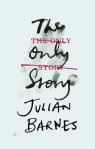 The Only Story by Julian Barnes: It may be a familiar story – a May–December romance that fizzles out – but, as Paul believes, we only really get one love story, the defining story of our lives. The picture of romantic youth shading into cynical but still hopeful middle age really resonates, as do the themes of unconventionality, memory, addiction and pity.
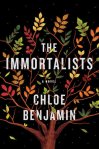 The Immortalists by Chloe Benjamin: Summer 1969: four young siblings escape a sweltering New York City morning by visiting a fortune teller who can tell you the day you’ll die; in the decades that follow, they have to decide what to do with this advance knowledge: will it spur them to live courageous lives, or drive them to desperation? This compelling family story lives up to the hype.
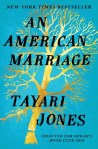 An American Marriage by Tayari Jones: Roy and Celestial only get a year of happy marriage before he’s falsely accused of rape and sentenced to 12 years in prison in Louisiana. This would make a great book club pick: I ached for all the main characters in their impossible situation; there’s a lot to probe about their personalities and motivations, and about how they reveal or disguise themselves through their narration and letters.
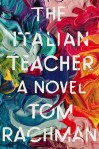 The Italian Teacher by Tom Rachman: Charles “Pinch” Bavinsky is an Italian teacher; as a boy in Rome in the 1950s–60s he believed he’d follow in the footsteps of his sculptor mother and his moderately famous father, Bear Bavinsky, who paints close-ups of body parts, but along the way something went wrong. This is a rewarding novel about the desperation to please, or perhaps exceed, one’s parents and the legacy of artists in a fickle market.
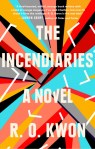 The Incendiaries by R. O. Kwon: A sophisticated, unsettling debut novel about faith and its aftermath, fractured through the experience of three people coming to terms with painful circumstances. Kwon spent 10 years writing this book, and that time and diligence come through in how carefully honed the prose is: such precise images; not a single excess word.
 Unsheltered by Barbara Kingsolver: Kingsolver’s bold eighth novel has a dual timeline that compares the America of the 1870s and the recent past and finds that they are linked by distrust and displacement. There’s so much going on that it feels like it encompasses all of human life; it’s by no means a subtle book, but it’s an important one for our time, with many issues worth pondering and discussing.
 Southernmost by Silas House: In House’s sixth novel, a Tennessee preacher’s family life falls apart when he accepts a gay couple into his church. We go on a long journey with Asher Sharp: not just a literal road trip from Tennessee to Florida, but also a spiritual passage from judgment to grace in this beautiful, quietly moving novel of redemption and openness to what life might teach us.
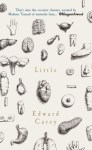 Little by Edward Carey: This is a deliciously macabre, Dickensian novel about Madame Tussaud, who started life as Anne Marie Grosholtz in Switzerland in 1761. From a former monkey house to the Versailles palace and back, Marie must tread carefully as the French Revolution advances and a desire for wax heads is replaced by that for decapitated ones.
 Motherhood by Sheila Heti: Chance, inheritance, and choice vie for pride of place in this relentless, audacious inquiry into the purpose of a woman’s life. The book encapsulates nearly every thought that has gone through my mind over the last decade as I’ve faced the intractable question of whether to have children.
 Florida by Lauren Groff: There’s an oppressive atmosphere throughout these 11 short stories, with violent storms reminding the characters of an uncaring universe, falling-apart relationships, and the threat of environmental catastrophe. Florida feels innovative and terrifyingly relevant; any one of its stories is a bracing read; together they form a masterpiece. (I never would have predicted that a short story collection would be my favorite fiction read of the year!)

My 2018 fiction books of the year (the ones I own in print, anyway).
Poetry selections:
-
 Three Poems by Hannah Sullivan: These poem-essays give fragmentary images of city life and question the notion of progress and what meaning a life leaves behind. “The Sandpit after Rain” stylishly but grimly juxtaposes her father’s death and her son’s birth.
-
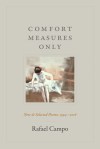 Comfort Measures Only: New and Selected Poems, 1994–2016 by Rafael Campo: Superb, poignant poetry about illness and the physician’s duty. A good bit of this was composed in response to the AIDS crisis; it’s remarkable how Campo wrings beauty out of clinical terminology and tragic situations.
-
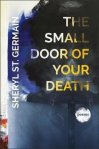 The Small Door of Your Death by Sheryl St. Germain: St. Germain’s seventh collection is in memory of her son Gray, who died of a drug overdose in 2014, aged 30. She turns her family history of alcohol and drug use into a touchpoint and affirms life’s sensual pleasures – everything from the smell of brand-new cowboy boots to luscious fruits.
What were some of your top fiction (or poetry) reads of the year?
Tomorrow I’ll be naming some runners-up (both fiction and nonfiction).
Bitter Orange by Claire Fuller
 A perfect heatwave read, Claire Fuller’s third novel tells the suspenseful story of the profligate summer of 1969 spent at a dilapidated English country house. Frances Jellico, who seems to be on her deathbed in a care home, recalls for the chaplain, her friend Victor Wylde, the August 20 years ago when she stayed at Lyntons, a neoclassical mansion in Hampshire, to report on the garden architecture for the new American owner, a Mr. Liebermann. Frances was an awkward 39-year-old at that time; having spent 10 years caring for her ill mother up to her recent death, she’d never had a romantic relationship or even a real friendship. So when she got to Lyntons and met Peter Robertson, who was to survey the house and its fittings, and his girlfriend Cara Calace, a melodramatic Anglo-Irish woman who tried to pass as Italian, Frances instantly latched on to their attractively hedonistic lifestyle and felt, for the first time, as if she had people who cared about her and genuinely liked her.
I was a relative latecomer to Fuller’s work, but Swimming Lessons turned out to be one of my favorite novels of last year and I quickly caught up on her debut, Our Endless Numbered Days (2015), which won the Desmond Elliott Prize. If you’re familiar with her first novel you’ll know she’s a master of the unreliable narrator, and here there are two: Frances herself, but also Cara, who tells Frances about her past in Ireland in long monologues that start to beggar belief. Peter warns Frances that Cara is a fantasist, but Frances wants to accept her new friend’s superstition-laced stories. She’s more than half in love with both Peter and Cara. As the trio have lavish picnics on the house’s grounds and ransack the forgotten on-site museum for furniture for their bedrooms and clothes to play dress-up in, the foreshadowing makes you wonder how long it will be before this dissolute interlude shades into tragedy.
Bitter Orange reminded me most of the lowering Gothic feel of books by Daphne du Maurier and Iris Murdoch (especially The Italian Girl, but there’s also a mention of a fish’s severed head, and a couple of times Frances says she feels as if she’s in a play), but I’d also recommend it to readers who’ve enjoyed recent work by Emma Donoghue, Tessa Hadley, Sarah Perry and Sarah Waters. I didn’t enjoy it quite as much as Fuller’s two previous books: it feels a bit less original, and the symbolism of the orange tree and the various animal appearances is rather heavy-handed. But the characters and atmosphere are top-notch. It’s an absorbing, satisfying novel to swallow down in big gulps on a few of these hot summer days.
Favorite lines:
“It seemed threatening now, the empty rooms and dusty spaces sinister, when so recently I had thought it beautiful. I couldn’t help but believe it was playing tricks on me, trying to send me mad or drive me away.”
“I had thought I would like living life to the maximum, I had thought I would enjoy being unconstrained and reckless, but I learned that it is terrifying to look into the abyss.”
My rating:
Bitter Orange is released today, August 2nd, by Fig Tree (Penguin) in the UK. [It will come out on October 9th from Tin House in the USA and House of Anansi in Canada.] My thanks to the publisher for a free copy for review.
My Most Anticipated Releases of the Second Half of 2018
Here are 30 books that are on my radar for the months of July through November (I haven’t heard about any December titles yet), plus one bonus book that I’ve already read. This is by no means a full inventory of what’s coming out, or even of what I have available through NetGalley and Edelweiss; instead, think of it as a preview of the books I actually intend to read, in release date order. The quoted descriptions are from the publisher blurbs on Goodreads. If I already have access to the book in some way, I’ve noted that.
The first half of the year seemed to be all about plants. This time around I have plenty of memoirs, some medical and some bookish; birds and watery imagery; and some religious and philosophical themes.
[By the way, here’s how I did with my most anticipated releases of the first half of the year:
- 17 out of 30 read; of those 8 were at least somewhat disappointing (d’oh!)
- 5 unfinished
- 1 currently reading
- 1 lost interest in
- 1 I still intend to read
- 5 I didn’t manage to find]
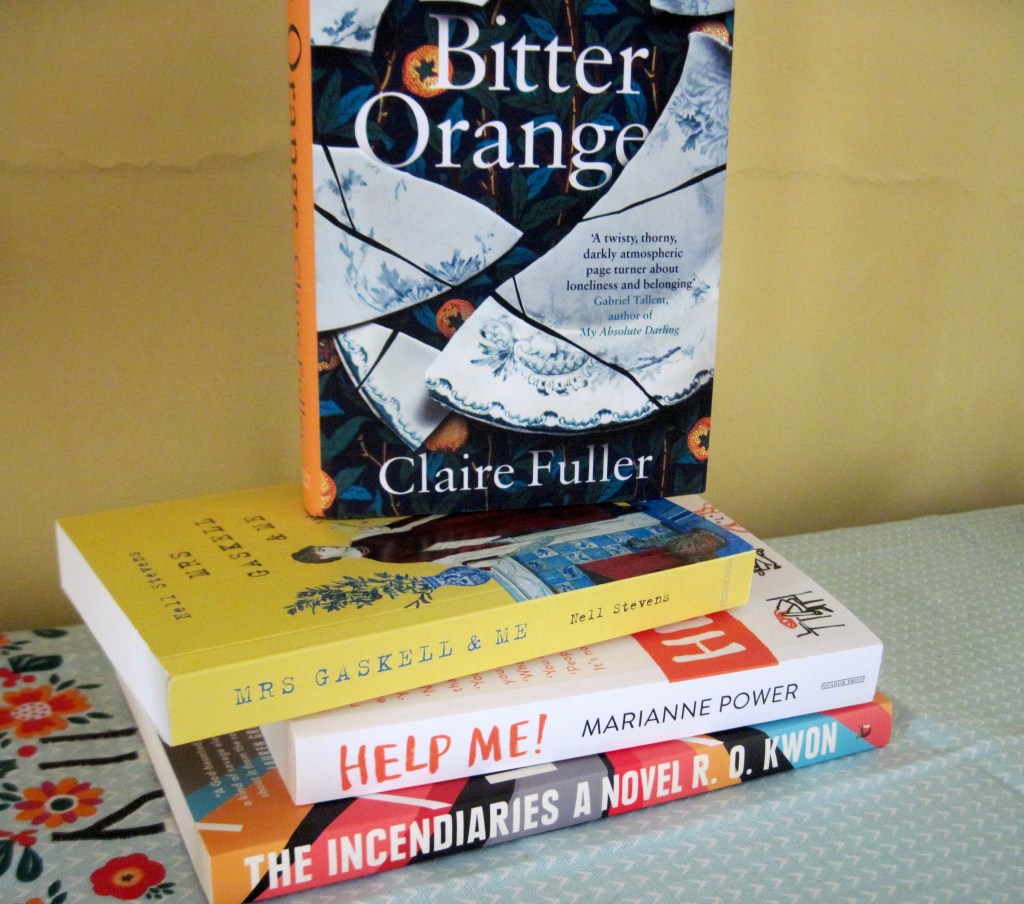
The upcoming titles I happen to own in print.
July
 No One Tells You This: A Memoir by Glynnis MacNicol [July 10, Simon & Schuster]: “If the story doesn’t end with marriage or a child, what then? This question plagued Glynnis MacNicol on the eve of her 40th birthday. … Over the course of her fortieth year, which this memoir chronicles, Glynnis embarks on a revealing journey of self-discovery that continually contradicts everything she’d been led to expect.” (NetGalley download)
 The Lost Chapters: Finding Recovery and Renewal One Book at a Time by Leslie Schwartz [July 10, Blue Rider Press]: “Leslie Schwartz’s powerful, skillfully woven memoir of redemption and reading, as told through the list of books she read as she served a 90-day jail sentence. … Incarceration might have ruined her, if not for the stories that comforted her while she was locked up.”
 The Bumblebee Flies Anyway: Gardening and Surviving Against the Odds by Kate Bradbury [July 17, Bloomsbury Wildlife]: “Finding herself in a new home in Brighton, Kate Bradbury sets about transforming her decked, barren backyard into a beautiful wildlife garden. She documents the unbuttoning of the earth and the rebirth of the garden, the rewilding of a tiny urban space.”
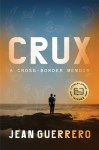 Crux: A Cross-Border Memoir by Jean Guerrero [July 17, One World]: “A daughter’s quest to find, understand, and save her charismatic, troubled, and elusive father, a self-mythologizing Mexican immigrant who travels across continents—and across the borders between imagination and reality; and spirituality and insanity—fleeing real and invented persecutors.”
The Incendiaries by R.O. Kwon [July 31, Riverhead]: “A shocking novel of violence, love, faith, and loss, as a young woman at an elite American university is drawn into acts of domestic terrorism by a cult tied to North Korea. … The Incendiaries is a fractured love story and a brilliant examination of the minds of extremist terrorists, and of what can happen to people who lose what they love most.” (Print ARC for blog review at UK release on Sept. 6 [Virago])
August
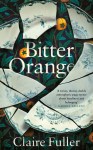 Bitter Orange by Claire Fuller [Aug. 2, Penguin Fig Tree]: I’ve loved Fuller’s two previous novels. This one is described as “a suspenseful story about deception, sexual obsession and atonement” set in 1969 in a run-down English country house. I don’t need to know any more than that; I have no doubt it’ll be brilliant in an Iris Murdoch/Gothic way. (Print ARC for blog review on release date)
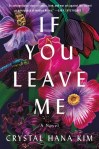 If You Leave Me by Crystal Hana Kim [Aug. 7, William Morrow]: “An emotionally riveting debut novel about war, family, and forbidden love—the unforgettable saga of two ill-fated lovers in Korea and the heartbreaking choices they’re forced to make in the years surrounding the civil war that continues to haunt us today.” This year’s answer to Pachinko? And another botanical cover to boot! (Edelweiss download)
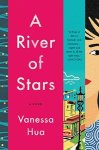 A River of Stars by Vanessa Hua [Aug. 14, Ballantine Books]: “In a powerful debut novel about motherhood, immigration, and identity, a pregnant Chinese woman makes her way to California and stakes a claim to the American dream. … an entertaining, wildly unpredictable adventure, told with empathy and wit” Sounds like The Leavers, which is a Very Good Thing.
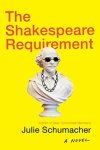 The Shakespeare Requirement by Julie Schumacher [Aug. 14, Doubleday]: A sequel to the very funny epistolary novel Dear Committee Members! “Now is the fall of his discontent, as Jason Fitger, newly appointed chair of the English Department of Payne University, takes aim against a sea of troubles, personal and institutional.” (Edelweiss download)
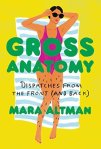 Gross Anatomy: Dispatches from the Front (and Back) by Mara Altman [Aug. 21, G.P. Putnam’s Sons]: “By using a combination of personal anecdotes and fascinating research, Gross Anatomy holds up a magnifying glass to our beliefs, practices, biases, and body parts and shows us the naked truth—that there is greatness in our grossness.” (PDF from publisher; to review for GLAMOUR online)
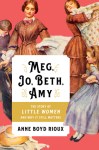 Meg, Jo, Beth, Amy: The Story of Little Women and Why It Still Matters by Anne Boyd Rioux [Aug. 21, W. W. Norton Company]: This is the bonus one I’ve already read, as part of my research for my Literary Hub article on rereading Little Women at its 150th anniversary. (That’s also the occasion for this charming book.) Rioux unearths Little Women’s origins in Alcott family history, but also traces its influence through to the present day. She also makes a strong feminist case for it. My short Goodreads review is here. (Edelweiss download)
September
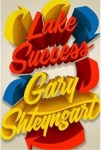 Lake Success by Gary Shteyngart [Sept. 4, Random House]: I read his memoir but am yet to try his fiction. “When his dream of the perfect marriage, the perfect son, and the perfect life implodes, a Wall Street millionaire takes a cross-country bus trip in search of his college sweetheart and ideals of youth. … [a] biting, brilliant, emotionally resonant novel very much of our times.” (Edelweiss download; for Pittsburgh Post-Gazette review)
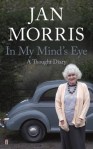 In My Mind’s Eye: A Thought Diary by Jan Morris [Sept. 6, Faber & Faber]: One of my most admired writers. “A collection of diary pieces that Jan Morris wrote for the Financial Times over the course of 2017.” I have never before in my life kept a diary of my thoughts, and here at the start of my ninth decade, having for the moment nothing much else to write, I am having a go at it. Good luck to me.
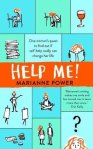 Help Me!: One Woman’s Quest to Find Out if Self-Help Really Can Change Her Life by Marianne Power [Sept. 6, Picador]: “[F]or a year she vowed to test a book a month, following its advice to the letter, taking the surest road she knew to a perfect Marianne. As her year-long plan turned into a demented roller coaster where everything she knew was turned upside down, she found herself confronted with a different question: Self-help can change your life, but is it for the better?” (Print ARC)
 Normal People by Sally Rooney [Sept. 6, Faber & Faber]: Much anticipated follow-up to Conversations with Friends. “Connell and Marianne both grow up in the same town in rural Ireland. The similarities end there; they are from very different worlds. But they both get places to study at university in Dublin, and a connection that has grown between them despite the social tangle of school lasts long into the following years.”
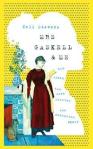 Mrs. Gaskell & Me by Nell Stevens [Sept. 6, Picador]: “In 2013, Nell Stevens is embarking on her PhD … and falling drastically in love with a man who lives in another city. As Nell chases her heart around the world, and as Mrs. Gaskell forms the greatest connection of her life, these two women, though centuries apart, are drawn together.” I was lukewarm on her previous book, Bleaker House, but I couldn’t resist the Victorian theme of this one! (Print ARC to review for Shiny New Books)
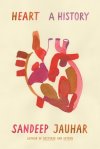 Heart: A History by Sandeep Jauhar [Sept. 18, Farrar, Straus and Giroux]: “Deftly alternating between key historical episodes and his own work, Jauhar tells the colorful and little-known story of the doctors who risked their careers and the patients who risked their lives to know and heal our most vital organ. … Affecting, engaging, and beautifully written.” (Edelweiss download)
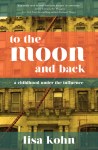 To the Moon and Back: A Childhood under the Influence by Lisa Kohn [Sept. 18, Heliotrope Books]: “Lisa was raised as a ‘Moonie’—a member of the Unification Church, founded by self-appointed Messiah, Reverend Sun Myung Moon. … Told with spirited candor, [this] reveals how one can leave behind such absurdity and horror and create a life of intention and joy.”
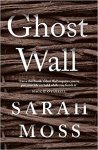 Ghost Wall by Sarah Moss [Sept. 20, Granta]: I’ve read Moss’s complete (non-academic) oeuvre; I’d read her on any topic. This novella sounds rather similar to her first book, Cold Earth, which I read recently. “Teenage Silvie is living in a remote Northumberland camp as an exercise in experimental archaeology. … Behind and ahead of Silvie’s narrative is the story of a bog girl, a sacrifice, a woman killed by those closest to her, and as the hot summer builds to a terrifying climax, Silvie and the Bog girl are in ever more terrifying proximity.” (NetGalley download)
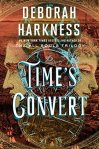 Time’s Convert (All Souls Universe #1) by Deborah Harkness [Sept. 25, Viking]: I was a sucker for Harkness’s A Discovery of Witches and its sequels, much to my surprise. (The thinking girl’s Twilight, you see. I don’t otherwise read fantasy.) Set between the American Revolution and contemporary London, this fills in the backstory for some of the vampire characters.
October
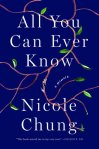 All You Can Ever Know: A Memoir by Nicole Chung [Oct. 2, Catapult]: “Nicole Chung was born severely premature, placed for adoption by her Korean parents, and raised by a white family in a sheltered Oregon town. … With warmth, candor, and startling insight, Chung tells of her search for the people who gave her up, which coincided with the birth of her own child.” (Edelweiss download)
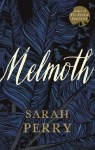 Melmoth by Sarah Perry [Oct. 2, Serpent’s Tail]: Gothic fantasy / historical thriller? Not entirely sure. I just know that it’s the follow-up by the author of The Essex Serpent. (I choose to forget that her first novel exists.) Comes recommended by Eleanor Franzen and Simon Savidge, among others. (Edelweiss download)
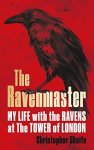 The Ravenmaster: Life with the Ravens at the Tower of London by Christopher Skaife [Oct. 2, 4th Estate]: More suitably Gothic pre-Halloween fare! “Legend has it that if the Tower of London’s ravens should perish or be lost, the Crown and kingdom will fall. … [A]fter decades of serving the Queen, Yeoman Warder Christopher Skaife took on the added responsibility of caring for these infamous birds.” I briefly met the author when he accompanied Lindsey Fitzharris to the Wellcome Book Prize ceremony.
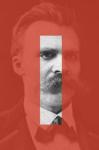 I Am Dynamite!: A Life of Friedrich Nietzsche by Sue Prideaux [Oct. 4, Faber & Faber]: “Friedrich Nietzsche’s work forms the bedrock of our contemporary thought, and yet a shroud of misunderstanding surrounds the philosopher behind these proclamations. The time is right for a new take on Nietzsche’s extraordinary life, whose importance as a thinker rivals that of Freud or Marx.” (For a possible TLS review?)
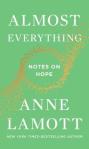 Almost Everything: Notes on Hope by Anne Lamott [Oct. 16, Riverhead]: I haven’t been too impressed with Lamott’s recent stuff, but I’ll still read anything she publishes. “In this profound and funny book, Lamott calls for each of us to rediscover the nuggets of hope and wisdom that are buried within us that can make life sweeter than we ever imagined. … Almost Everything pinpoints these moments of insight as it shines an encouraging light forward.”
 The Library Book by Susan Orlean [Oct. 16, Simon & Schuster]: The story of a devastating fire at Los Angeles Public Library in April 1986. “Investigators descended on the scene, but over 30 years later, the mystery remains: Did someone purposefully set fire to the library—and if so, who? Weaving her life-long love of books and reading with the fascinating history of libraries and the sometimes-eccentric characters who run them, … Orlean presents a mesmerizing and uniquely compelling story as only she can.” (Edelweiss download)
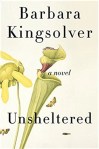 Unsheltered by Barbara Kingsolver [Oct. 18, Faber & Faber]: Kingsolver is another author I’d read anything by. “[T]he story of two families, in two centuries, who live at the corner of Sixth and Plum, as they navigate the challenges of surviving a world in the throes of major cultural shifts.” 1880s vs. today, with themes of science and utopianism – I’m excited! (Edelweiss download)
 Nine Pints: A Journey through the Money, Medicine, and Mysteries of Blood by Rose George [Oct. 23, Metropolitan Books]: “Rose George, author of The Big Necessity [on human waste], is renowned for her intrepid work on topics that are invisible but vitally important. In Nine Pints, she takes us from ancient practices of bloodletting to modern ‘hemovigilance’ teams that track blood-borne diseases.”
November
 The End of the End of the Earth: Essays by Jonathan Franzen [Nov. 13, Farrar, Straus and Giroux]: “[G]athers essays and speeches written mostly in the past five years … Whether exploring his complex relationship with his uncle, recounting his young adulthood in New York, or offering an illuminating look at the global seabird crisis, these pieces contain all the wit and disabused realism that we’ve come to expect from Franzen.”
 A River Could Be a Tree by Angela Himsel [Nov. 13, Fig Tree Books]: “How does a woman who grew up in rural Indiana as a fundamentalist Christian end up a practicing Jew in New York? … Ultimately, the connection to God she so relentlessly pursued was found in the most unexpected place: a mikvah on Manhattan’s Upper West Side. This devout Christian Midwesterner found her own form of salvation—as a practicing Jewish woman.”
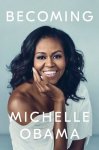 Becoming by Michelle Obama [Nov. 13, Crown]: “In her memoir, a work of deep reflection and mesmerizing storytelling, Michelle Obama invites readers into her world, chronicling the experiences that have shaped her—from her childhood on the South Side of Chicago to her years as an executive balancing the demands of motherhood and work, to her time spent at the world’s most famous address.”
 Bookish Beck = Rebecca Foster. American transplant to England. Freelance proofreader and book reviewer.
 Bookish Beck