Sandwich by Catherine Newman (Blog Tour)
Catherine Newman’s second novel for adults, Sandwich, takes place during a week on Cape Cod, a popular Massachusetts beach resort. Rachel, nicknamed “Rocky,” is a fiftysomething mother to two young adults, Jamie and Willa. She and her husband Nick have been renting the same cottage for their family’s summer vacations for 20 years. Although Rocky narrates most of the novel in the first person, in the Prologue she paints the scene for the reader in the third person: “They’ve been coming here for so many years that there’s a watercolor wash over all of it now … pleasant, pastel memories of taffy, clam strips, and beachcombing.”
 Also present are Maya, Jamie’s girlfriend; Rocky’s ageing parents; and Chicken the cat (can you imagine taking your cat on holiday?!). With such close quarters, it’s impossible to keep secrets. Over the week of merry eating and drinking, much swimming, and plenty of no-holds-barred conversations, some major drama emerges via both the oldies and the youngsters. And it’s not just present crises; the past is always with Rocky. Cape Cod has developed layers of emotional memories for her. She’s simultaneously nostalgic for her kids’ babyhood and delighted with the confident, intelligent grown-ups they’ve become. She’s grateful for the family she has, but also haunted by inherited trauma and pregnancy loss.
There couldn’t be more ideal reading for women in the so-called “sandwich generation” who have children growing towards independence as well as parents starting to struggle with infirmity. (The contemporary storyline of Barbara Kingsolver’s Unsheltered, which coincidentally is about a character named Willa, is comparable in that respect.) Newman is frank about Willa’s lesbianism and Rocky’s bisexuality, and she doesn’t hold back about the difficulties of menopause, either. Rocky is challenged to rethink her responsibilities as a daughter, wife and mother when she’s surrounded by equally strong-willed people who won’t do what she wants them to. The novel is so quirky, funny and relatable that it’s impossible not to sympathize with Rocky even if, like me, you’re in a very different life situation.

I like the U.S. cover so much more!
One observation I would make is that Rocky is virtually identical to Ash in Newman’s debut, We All Want Impossible Things, and to the author in real life (as I know from subscribing to her Substack). If you read even the most basic information about her, it’s clear that it’s all autofiction. That’s not an issue for me as I don’t think inventing is inherently superior to drawing from experience; some authors write what they know in a literal sense and that’s okay. So, for her fans, more of the same will be no problem at all. But it is a very particular voice: intense, scatty, purposely outrageous. Rocky is a protagonist who says things like, “How am I a feminist, an advocate for reproductive rights, Our Bodies, Ourselves, hear me roar, blah blah, and I am only just now learning about vaginal atrophy?” (A companion nonfiction read would be Nina Stibbe’s Went to London, Took the Dog.)
In outlook Newman reminds me a lot of Anne Lamott, who is equally forthright and whose books similarly juxtapose life’s joy and sorrows, especially in this late passage: “this may be the only reason we were put on this earth. To say to each other, I know how you feel.”
This is a sweet, fun, chatty book that’s about a summer break – and would be perfect to read on a summer break.
With thanks to Anne Cater of Random Things Tours and Doubleday for the free e-copy for review.
Buy Sandwich from Bookshop.org [affiliate link]
I was delighted to help close out the blog tour for Sandwich. See below for details of where the other reviews have appeared.

20 Books of Summer, #6–8: Aristide, Hood, Lamott
This latest batch of colour-themed summer reads took me from a depleted post-pandemic landscape to the heart of dysfunctional families in Rhode Island and California.
Under the Blue by Oana Aristide (2021)
Fans of Station Eleven, this one’s for you: the best dystopian novel I’ve read since Mandel’s. Aristide started writing this in 2017, and unknowingly predicted a much worse pandemic than Covid-19. In July 2020, Harry, a middle-aged painter inhabiting his late nephew’s apartment in London, finally twigs that something major is going on. He packs his car and heads to his Devon cottage, leaving its address under the door of the cute neighbour he sometimes flirts with. Hot days stack up and his new habits of rationing food and soap are deeply ingrained by the time the gal from #22, Ash – along with her sister, Jessie, a doctor who stocked up on medicine before fleeing her hospital – turn up. They quickly sink into his routines but have a bigger game plan: getting to Uganda, where their mum once worked and where they know they will be out of range of Europe’s at-risk nuclear reactors. An epic road trip ensues.
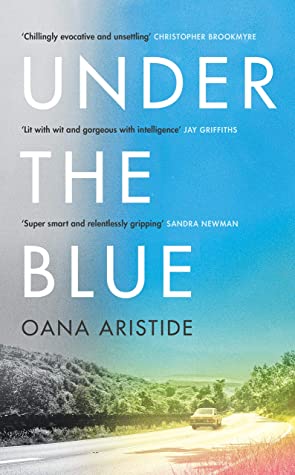 It gradually becomes clear that Harry, Ash and Jessie are among mere thousands of survivors worldwide, somehow immune to a novel disease that spread like wildfire. There are echoes of Cormac McCarthy’s The Road in the way that they ransack the homes of the dead for supplies, and yet there’s lightness to their journey. Jessie has a sharp sense of humour, provoking much banter, and the places they pass through in France and Italy are gorgeous despite the circumstances. It would be a privilege to wander empty tourist destinations were it not for fear of nuclear winter and not finding sufficient food – and petrol to keep “the Lioness” (the replacement car they steal; it becomes their refuge) going. While the vague sexual tension between Harry and Ash persists, all three bonds are intriguing.
In an alternating storyline starting in 2017, Lisa and Paul, two computer scientists based in a lab at the Arctic Circle, are programming an AI, Talos XI. Based on reams of data on history and human nature, Talos is asked to predict what will happen next. But when it comes to questions like the purpose of art and whether humans are worth saving, the conclusions he comes to aren’t the ones his creators were hoping for. These sections are set out as transcripts of dialogues, and provide a change of pace and perspective. Initially, I was less sure about this strand, worrying that it would resort to that well-worn trope of machines gone bad. Luckily, Aristide avoids sci-fi clichés, and presents a believable vision of life after the collapse of civilization.
The novel is full of memorable lines (“This absurd overkill, this baroque wedding cake of an apocalypse: plague and then nuclear meltdowns”) and scenes, from Harry burying a dead cow to the trio acting out a dinner party – just in case it’s their last. There’s an environmentalist message here, but it’s subtly conveyed via a propulsive cautionary tale that also reminded me of work by Louisa Hall and Maja Lunde. (Public library) 
Ruby by Ann Hood (1998)
Olivia had the perfect life: fulfilling, creative work as a milliner; a place in New York City and a bolthole in Rhode Island; a new husband and plans to try for a baby right away. But then, in a fluke accident, David was hit by a car while jogging near their vacation home less than a year into their marriage. As the novel opens, 37-year-old Olivia is trying to formulate a letter to the college girl who struck and killed her husband. She has returned to Rhode Island to get the house ready to sell but changes her mind when a pregnant 15-year-old, Ruby, wanders in one day.
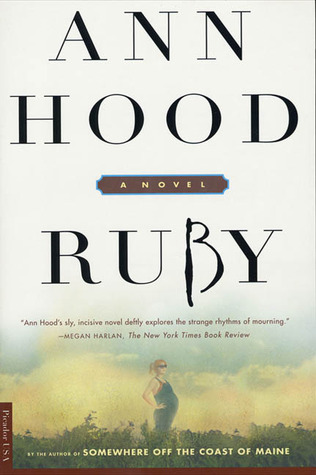 At first, I worried that the setup would be too neat: Olivia wants a baby but didn’t get a chance to have one with David before he died; Ruby didn’t intend to get pregnant and looks forward to getting back her figure and her life of soft drugs and petty crime. And indeed, Olivia suggests an adoption arrangement early on. But the outworkings of the plot are not straightforward, and the characters, both main and secondary (including Olivia’s magazine writer friend, Winnie; David’s friend, Rex; Olivia’s mother and sister; a local lawyer who becomes a love interest), are charming.
It’s a low-key, small-town affair reminiscent of the work of Anne Tyler, and I appreciated how it sensitively explores grief, its effects on the protagonist’s decision-making, and how daunting it is to start over (“The idea of that, of beginning again from nothing, made Olivia feel tired.”). It was also a neat touch that Olivia is the same age as me, so in some ways I could easily imagine myself into her position.
This was the ninth book I’ve read by Hood, an author little known outside of the USA – everything from grief memoirs to a novel about knitting. Ironically, its main themes of adoption and bereavement were to become hallmarks of her later work: she lost her daughter in 2002 and then adopted a little girl from China. (Secondhand purchase, June 2021)
[I’ve read another novel titled Ruby – Cynthia Bond’s from 2014.]
Blue Shoe by Anne Lamott (2002)
I’m a devoted reader of Lamott’s autobiographical essays about faith against the odds (see here), but have been wary of trying her fiction, suspecting I wouldn’t enjoy it as much. Well, it’s true that I prefer her nonfiction on the whole, but this was an enjoyably offbeat novel featuring the kind of frazzled antiheroine who wouldn’t be out of place in Anne Tyler’s work.
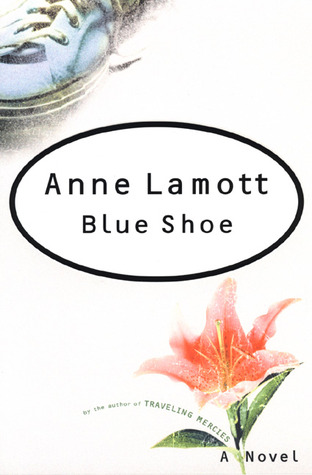 Mattie Ryder has left her husband and returned to her Bay Area family home with her young son and daughter. She promptly falls for Daniel, the handyman she hires to exterminate the rats, but he’s married, so she keeps falling into bed with her ex, Nicky, even after he acquires a new wife and baby. Her mother, Isa, is drifting ever further into dementia. A blue rubber shoe that Mattie finds serves as a totem of her late father – and his secret life. She takes a gamble that telling the truth, no matter what the circumstances, will see her right.
As in Ruby, I found the protagonist relatable and the ensemble cast of supporting characters amusing. Lamott crafts some memorable potted descriptions: “She was Jewish, expansive and yeasty and uncontained, as if she had a birthright for outrageousness” and “He seemed so constrained, so neatly trimmed, someone who’d been doing topiary with his soul all his life.” She turns a good phrase, and adopts the same self-deprecating attitude towards Mattie that she has towards herself in her memoirs: “She usually hoped to look more like Myrna Loy than an organ grinder’s monkey when a man finally proclaimed his adoration.”
At a certain point – maybe two-thirds of the way through – my inward reply to a lot of the novel’s threads was “okay, I get it; can we move on?” Yes, the situation with Isa is awful; yes, something’s gotta give with Daniel and his wife; yes, the revelations about her father seem unbearable. But with a four-year time span, it felt like Mattie was stuck in the middle for far too long. It’s also curious that she doesn’t apply her zany faith (a replica of Lamott’s) to questions of sexual morality – though that’s true of more liberal Christian approaches. All in all, I had some trouble valuing this as a novel because of how much I know about Lamott’s life and how closely I saw the storyline replicating her family dynamic. (Secondhand purchase, c. 2006 – I found a signed hardback in a library book sale back in my U.S. hometown for $1.) 
Hmm, altogether too much blue in my selections thus far (4 out of 8!). I’ll have to try to come up with some more interesting colours for my upcoming choices.
Next books in progress: The Other’s Gold by Elizabeth Ames and God Is Not a White Man by Chine McDonald.
Read any of these? Interested?
Nonfiction Review Books Roundup: Hay, Hope et al., Lee, Long, McLaren, Zuckerman
I’m continuing with the Nonfiction November focus by catching up on six nonfiction review books I’ve been sent over the last half a year. We’ve got a record of elderly parents’ decline, letters and poems written about the climate crisis, a family memoir set between Taiwan and Canada, a widow’s mushroom-hunting quest, a work of ecotheology that reflects on travels in the Galápagos Islands, and a defense of an entirely secular basis for morality. You can’t say I don’t read a variety, even within nonfiction! See if one or more of these tempts you.
All Things Consoled: A Daughter’s Memoir by Elizabeth Hay
 Gordon and Jean Hay stumbled into their early nineties in an Ottawa retirement home starting in 2009. Elizabeth Hay is one of four children, but caregiving fell to her for one reason and another, and it was a fraught task because of her parents’ prickly personalities: Jean was critical and thrifty to the point of absurdity, spooning thick mold off apple sauce before serving it and needling Elizabeth for dumping perfectly good chicken juice a year before; Gordon had a terrible temper and a history of corporal punishment of his children and of his students when he was a school principal. Jean’s knee surgery and subsequent infection finally put paid to their independence; her mind was never the same and she could no longer paint.
There are many harsh moments in this memoir, but almost as many wry ones, with Hay picking just the right anecdotes to illustrate her parents’ behavior and the shifting family dynamic. She never looks away, no matter how hard it all gets. Her father’s rage against the dying of the light contrasts with her mother’s fade into confusion – lightened by the surprisingly poetic turns of phrase she came out with despite her dementia and aphasia. The title phrase, for instance, was her attempt at “all things considered.” I would wholeheartedly recommend this to readers of Hay’s novels, but anyone can appreciate the picture of complicated love and grief. (See also Susan’s review.)
With thanks to MacLehose Press for the free copy for review.
Letters to the Earth: Writing to a Planet in Crisis, edited by Anna Hope et al.
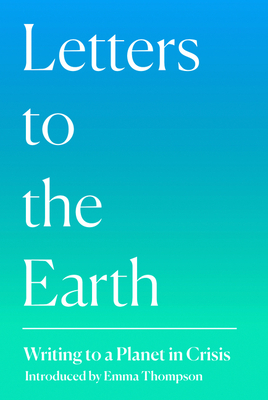 Culture Declares Emergency launched in April to bring the arts into the conversation about the climate emergency. Letters to the Earth compiles 100 short pieces by known and unknown names alike. Alongside published authors, songwriters, professors and politicians are lots of ordinary folk, including children as young as seven. The brief was broad: to write a letter in response to environmental crisis, whether to or from the Earth, to future generations (there are wrenching pieces written to children: “What can I say, now that it’s too late? … that I’m sorry, that I tried,” writes Stuart Capstick), to the government or to other species.
There are certainly relatable emotions here, especially the feeling of helplessness. “We take the train, go vegan, refuse plastic, buy less and less. But that is tiny. We are tiny,” novelist Jo Baker writes. I loved retired bishop Richard Holloway’s wry letter calling the author of Genesis to account for unhelpful language of dominion, Rob Cowen’s poem to a starling, and Anna Hope’s essay about parenting in a time of uncertainty. Unfortunately, much of the rest is twee or haranguing, e.g. “Forest fires are scorching INNOCENT wildlife. Plastic is strangling INNOCENT turtles and dolphins,” a 12-year-old writes. This was put together in a matter of months, and it shows. There is not enough tonal variety, a lot of overwriting has crept through, and errors, especially in the kids’ work, remain uncorrected. Perhaps six to 10 pieces stood out to me overall. I’d recommend the Extinction Rebellion handbook instead.
With thanks to Alison Menzies / William Collins for the free copy for review.
Two Trees Make a Forest: On Memory, Migration and Taiwan by Jessica J. Lee
 I loved Turning, Lee’s 2017 memoir about swimming in one of Berlin’s lakes per week for a year, so I jumped at the chance to read her follow-up, which delves into her maternal line’s history in Taiwan. She travels to Taipei for three months to brush up on her Chinese, write and hike. Interspersed with the lush descriptions of her walks are reflections on Taiwan’s history and on the hidden aspects of her grandfather Gong’s past that only came to light after Lee’s grandmother, Po, died and she and her mother discovered an autobiographical letter he’d written before he drifted into dementia. Nature, language, history and memory flow together in a delicate blend of genres – “I moved from the human timescale of my family’s story through green and unfurling dendrological time,” she writes.
This has got to be one of the most striking title and cover combinations of the year. Along with Chinese characters, the book includes some looping text and Nico Taylor’s maps and illustrations of Taiwanese flora and fauna. While you will likely get more out of this if you have a particular interest in Asian history, languages and culture, it’s impressive how Lee brings the different strands of her story together to form a hybrid nature memoir that I hope will be recognized by next year’s Wainwright Prize and Young Writer of the Year Award shortlists. She’d also be a perfect New Networks for Nature speaker.
With thanks to Virago for the free copy for review.
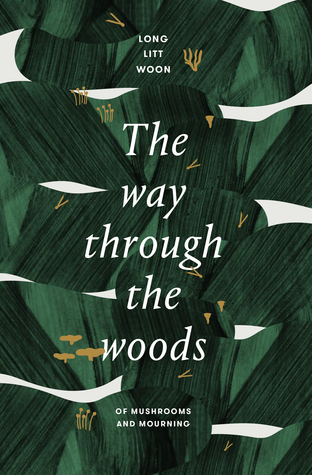
The Way through the Woods: Of Mushrooms and Mourning by Long Lit Woon
 [Trans. from the Norwegian by Barbara J. Haveland]
I couldn’t resist the sound of a bereavement memoir crossed with a mushroom hunting guide. When Long met her husband, Eiolf Olsen, she was an 18-year-old Malaysian exchange student in Stavanger, Norway. Meeting Eiolf changed the whole course of her life, keeping her in Europe for good; decades later, her life changed forever once again when Eiolf dropped dead at work one morning. “If anyone had told me that mushrooms would be my lifeline, the thing that would help me back onto my feet and quite literally back onto life’s track, I would have rolled my eyes. What had mushrooms to do with mourning?” she writes.
 The answer to that rhetorical question is nothing much, at least not inherently, so this ends up becoming a book of two parts, with the bereavement strand (printed in green and in a different font – green is for grief? I suppose) engaging me much more than the mushroom-hunting one, which takes her to Central Park and the annual Telluride, Colorado mushroom festival as well as to Norway’s woods again and again – “In Norway, outdoor life is tantamount to a religion.” But the quest for wonder and for meaning is a universal one. In addition, if you’re a mushroom fan you’ll find gathering advice, tasting notes, and even recipes. I fancy trying the “mushroom bacon” made out of oven-dried shiitakes.
With thanks to Scribe for the free copy for review.
God Unbound: Theology in the Wild by Brian McLaren
 McLaren was commissioned to launch a series that was part travel guide, part spiritual memoir and part theological reflection. Specifically, he was asked to write about the Galápagos Islands because he’d been before and they were important to him. He joins a six-day eco-cruise that tours around the island chain off Ecuador, with little to do except observe the birds, tortoises and iguanas, and swim with fish and sea turtles. For him this is a peaceful, even sacred place that reminds him of the beauty that still exists in the world despite so much human desecration. Although he avoids using his phone except to quickly check in with his wife, modernity encroaches unhelpfully through a potential disaster with his laptop.
I was surprised to see that McLaren leaves the Galápagos at the midpoint – whatever could fill the rest of the book, I wondered? He starts by reassessing Darwin, so often painted as a villain by Evangelical Christianity but actually a model of close, loving attention to nature. He also recalls how some of his most intense spiritual experiences have arisen from time in nature. McLaren’s books have been pivotal to my spiritual journey as we’ve both gradually become more liberal and environmentalist. His definition of God might horrify traditionalists, but holds appeal for me: “a centering singularity whose gravity holds me in insistent orbit, pulling me deeper into mystery, pondering who I am and what my life means.” This is an unusual but gently entrancing book full of photos and quotes from other thinkers including John Muir, Pope Francis and Richard Rohr. It’s an ideal introduction to ecotheology.
With thanks to Canterbury Press for the free copy for review.
What It Means to Be Moral: Why Religion Is Not Necessary for Living an Ethical Life by Phil Zuckerman
 From one end of the spectrum (progressive Christianity) to the other (atheism). Here’s a different perspective from a sociology professor at California’s Pitzer College. Zuckerman’s central argument is that humanism and free choice can fuel ethical behavior; since there’s no proof of God’s existence and theists have such a wide range of beliefs, it’s absurd to slap a “because God says so” label on our subjective judgments. Morals maintain the small communities our primate ancestors evolved into, with specific views (such as on homosexuality) a result of our socialization. Alas, the in-group/out-group thinking from our evolutionary heritage is what can lead to genocide. Instead of thinking in terms of ‘evil’, though, Zuckerman prefers Dr. Simon Baron-Cohen’s term, “empathy erosion.”
To tackle violent crime, Zuckerman contends, we need a more equal society, with the Scandinavian countries a model of how to achieve that through higher taxes, social services and the rehabilitation of prisoners. He uses a lot of relatable examples from history and from his own experience, as well as theoretical situations, to think through practical morality. I found his indictment of American Christianity accurate – how does it make sense for people who say they follow the way of Jesus to fight against equality, tolerance and scientific advances and instead advocate guns, the death penalty and Trump? Well, indeed.
It might seem odd for me to recommend this alongside the McLaren, but there is much to be gained from both viewpoints. Zuckerman’s work overlaps a fair bit with another I’ve read on the topic, Richard Holloway’s Godless Morality – even a bishop agrees we needn’t take our societal ethics straight from the Bible! I can’t go along fully with Zuckerman because I think progressive religion has been and can continue to be a force for good, but I would agree that atheists can be just as moral as people of faith – and often more so.
With thanks to Counterpoint Press for sending a proof copy for review.
 Bookish Beck = Rebecca Foster. American transplant to England. Freelance proofreader and book reviewer.
 Bookish Beck