New Networks for Nature 2020 (Online)
 It’s not November without a New Networks for Nature conference. Originally 2020’s was scheduled to take place in Norwich in July; it was then postponed to the usual November in hopes of an in-person meeting, but ultimately had to be online this year, like so much else. This was my sixth time taking part in this interdisciplinary gathering of authors, academics, and activists (I’ve also written about the 2015, 2016, 2018, and 2019 conferences). The UEA organizers, Jean McNeil and Jos Smith, with New Networks stalwart John Fanshawe, did an excellent job of creating three virtual events for people to engage with from home.
Two pre-recorded panels brought together writers from different fields to reflect on nature literature and the environmental crisis. First up was “New Perspectives on Nature Writing,” picking up on a perennial conference theme.
 I was delighted to hear Jessica J. Lee speak – I’ve reviewed both of her nature-infused memoirs, Turning and Two Trees Make a Forest, and in last year’s feedback I suggested her as a future speaker (I’m sure I’m not solely responsible!). After a PhD in environmental history, she moved into more personal writing. Questions of home, place, language, and identity were natural for her as a third-generation migrant. She initially felt alone as a person of colour in nature writing, but when she founded the Willowherb Review she quickly learned that it wasn’t that POC weren’t out there; it was that they did not have opportunities to publish – she has had 300+ submissions per issue to the online literary magazine, which welcomes work from all genres by authors of colour.

(Clockwise from top left) Smith, Arshi, McNeil, Lee.
Also on the panel were Mona Arshi, a Punjabi poet based in London, and McNeil, a creative writing professor. Arshi has been a human rights lawyer and is the current poet-in-residence at Cley Marshes, Norfolk, in association with the Wildlife Trusts and UEA. She has had to try to absorb the landscape via video and sound recordings since COVID-19 has limited her in-person visits. She read a sonnet she wrote about her last trip there in September. All three panellists spoke about land being in some ways beyond language, though.
 Jean McNeil’s Ice Diaries is a memoir of a year in residence with the British Antarctic Survey, a very male, scientific world. Antarctica is “no one’s country,” she remarked, though it’s the fifth-largest continent; it’s as if the land has no memory of people. She observed that it’s impossible to write about Antarctica without giving a sense of the journey (so she includes travel writing) and mentioning death. Raised without technology by back-to-the-land parents in Canada, McNeil has been active in the environmental movement in Brazil, Central America, and Africa (as a safari guide). Ice Diaries was already on my TBR, but I’m impressed by her breadth of experience and want to explore her varied work.
 The second panel, “States of Emergency,” included an academic, a playwright, the CEO of an environmental charity, and a philosopher and activist. I was intrigued by UEA’s Rebecca Tillett’s brief opening address about contemporary North American indigenous responses to climate change in fiction (her research speciality). Her primary example was the Moon of the Crusted Snow by Waubgeshig Rice, a postapocalyptic thriller in which the Wendigo, a figure from First Nations folklore, embodies capitalism as it consumes people with greed.

(Clockwise from top left) Waters , McNeil, Reed, Tillett, Thornton.
UEA-based playwright Steve Waters is planning outdoor theatre projects at nature reserves. James Thornton, the CEO of ClientEarth, spoke about starting with the science, the “grammar of the Earth.” His team has prevented new coal-fired stations in Europe and encouraged NGOs in China to sue polluting companies. Philosophy professor Rupert Reed was, until recently, an Extinction Rebellion spokesman. He noted that the climate emergency feels too slow and too long – a marathon, not a sprint; people don’t realize how profoundly our way of life and future are threatened. Alas, COVID-19 is not having the desired effect of turning people’s attention to the greater, ongoing emergency. He counselled acceptance and adaptation, stating that hope and action must go hand in hand. Thornton recalled the Dalai Lama telling him early in his career that he needed to get beyond anger because angry people don’t come up with viable solutions. The anger has to be turned into a positive vision.
There were live Q&A sessions for these two panels, but we weren’t able to watch. However, we did attend Saturday’s live keynote event featuring Tim Dee and Kathleen Jamie, two of the finest nature writers working today. Speaking from Cape Town, where he has been stranded since the start of the pandemic, Dee said that his current writing is about birds that are new to him but familiar to his neighbours. He explained that he admires and understands the world through birds, “who carry no bags or passports and are at home wherever they are.” In his work he explores how we are “made by places,” often returning to a place to reprocess his experiences there (e.g. Hungary in his latest book, Greenery). His notebooks, which are often just lists of birds seen, help him to “reinflate” a place when writing about it later.


Jamie agreed that her work also has this quality of “afterwardness” – finding the meaning of an experience long after the moment. She came across as down-to-earth, shrugging off McNeil’s question about transcendence and remarking that a sign above her desk reads “Nay narrative!” What is left for a lyric poet who loses faith in lyricism? For Jamie, the answer is prose poetry, as in “Tree on the Hill,” recently published in the LRB. Her poetry has always been local but her longform nonfiction has only ever come from other places, so while she’s been stuck in Fife she’s been unable to progress. But she never has any idea of what she’s writing, she said; she and her editor work out a theme once a whole book exists (for instance, the linking metaphor for Surfacing – unearthing archaeological evidence and memories).
Dee called himself a materialist – “no ideas but in things” – with language being what we clothe things in. He always double-checks his (sometimes elaborate) metaphors by putting them back onto a bird to ensure they fit. Jamie said she used to believe language was humans’ “fall” and would try to maintain a “pre-language state” for as long as possible every morning, but ultimately she changed her mind, accepting that language is what makes us human; it’s what we do. She acknowledges that nature writing like hers is not going to achieve things in the way that environmental activism can, but she hopes that bringing non-human creatures into the culture (as if it were an ark) can be a way of advocating for them all the same.

 A brilliant programme, capped off with some visual and musical delights: “Where Song Began,” a one-hour cello and violin response/accompaniment to Australian birdsong created by Simone Slattery and Anthony Albrecht in January; and a brief virtual tour of the Nature Writing Collection in the British Archive for Contemporary Writing at UEA, which includes the papers of the late Roger Deakin and of (alive and kicking!) Mark Cocker, a UEA graduate. The archive contains Deakin’s drafts and pitches (Waterlog’s working title was “The Waters of the Wondrous Isle,” and he imagined it as an aquatic Rural Rides), photos, and even his Speedo bathing suit; along with Cocker’s field notebooks and fan mail.
The two panels, musical event, and archive tour are freely available on the NNN website, and you can watch the Dee/Jamie discussion back here.
Four More Short Nonfiction Books for Novellas for November
Short nonfiction turns up in every genre. Today I have a feminist manifesto, some miniature travel essays, a memoir of the writing life, and a book of environmentalist speeches.
Dear Ijeawele, or A Feminist Manifesto in Fifteen Suggestions by Chimamanda Ngozi Adichie (2017)
[63 pages]
 My fourth book this year by Adichie, who is also making a repeat appearance on one of my nonfiction novellas lists; I reviewed “We Should All Be Feminists” in 2017. While this builds on the TED talk that fueled that essay, it is more successful for me because of the frame: a long letter to a childhood friend who had just had a baby girl and wanted advice about how to raise her as a feminist. Adichie’s premises are that women matter equally and that if you can’t reverse the genders in a scenario and get acceptable results (e.g. ‘women should leave men who cheat,’ but we don’t necessarily demand the opposite), an argument is sexist.
Even when her points seem obvious – gender roles are nonsense, don’t hold up marriage as the pinnacle of achievement, downplay appearance – they are beautifully expressed, and there are lots of tactics that wouldn’t have occurred to me in the context of feminism: Normalize differences between people. Teach a girl to love reading – “Books will help her understand and question the world, help her express herself”. And beware of how language is used: if people deride a woman for ambition where they wouldn’t criticize a man, their problem is not with ambition but with women. Hillary Clinton and Kamala Harris come to mind…
Go ahead and buy a stack of this book to have on hand the next time a friend has a baby (boy or girl). Adichie wasn’t a mother when she wrote it, but in her Introduction she says that, looking back after the birth of her daughter, it still rang true and gave her plenty to live up to. 
[By the way, did you hear that Adichie is the Women’s Prize’s Winner of Winners for Half of a Yellow Sun? Her novel came out at #2 in my ranking of all 25 winners, so I’m pleased!]
A Time to Keep Silence by Patrick Leigh Fermor (1957)
[95 pages]
 Three brief essays about visits to monasteries: The Abbey of St. Wandrille de Fontanelle (Benedictine) and La Grande Trappe (Cistercian) in France, and the rock monasteries of Cappadocia in Turkey. I’ve read a fair bit about the monastic life, so I found little that was new in Fermor’s accounts of austere daily routines and religious history. I had more interest in the rock monasteries where some Church Fathers were based, simply because Turkey is a relatively unfamiliar setting for me, but despite Fermor’s rich descriptive gifts, this piece was, at nine pages, little more than a sketch. Alas, this was a disappointment.
The Cost of a Best Seller by Frances Parkinson Keyes (1953)
[118 pages]
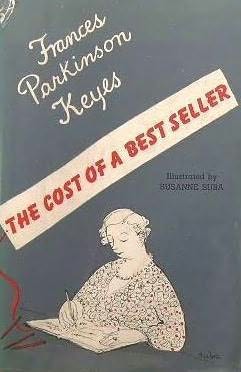 I picked up a £1 dustjacketless copy on a whim from the outdoor clearance area at the Hay Cinema Bookshop in September and started reading it immediately, off and on as a bedside book. Keyes is a twentieth-century author whose dozens of potboilers sold in their millions, but she has been largely forgotten since. Imagine my surprise, then, when her best-known novel, Dinner at Antoine’s (1948), turned up on a recent Book Riot list of New Orleans-themed literature – though mostly for the reference to the still-popular title restaurant.
When Keyes began writing, a mother of three young children in an attic room, it was to supplement her husband’s income, but the work soon became an obsession and allowed her to maintain her independence after her husband, a U.S. senator, died. Not until 17 years after the publication of her first novel did she have her first bestseller. She depicts fame as a double-edged sword: It allowed her to travel in Europe and to Louisiana, where she later made her home, but also made heavy demands on her time, requiring responses to annoying letters, hours spent signing books, and attendance at literary lunches. For someone with back problems, these commitments could be literally as well as figuratively painful.
Keyes has the popular fiction writer’s bitterness about never getting critical recognition. This memoir was pleasant enough, but hasn’t induced me to read any more by her. Readers fond of her work might get something more out of it. For the most part, it doesn’t feel dated, but one detail really got to me: Whenever she needed to ensure that she wouldn’t be disturbed, she would go work in the old slave quarters of her New Orleans mansion. Yipes! 
No One Is Too Small to Make a Difference by Greta Thunberg (2019)
[68 pages]
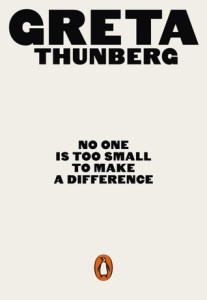 “Our house is on fire. … I want you to panic.” Starting with a speech she gave on a climate march in Stockholm in September 2018 and ending with her address to the UK parliament in April 2019, this punchy pamphlet of rhetoric makes it clear why the teenage Thunberg has rapidly become such an important public figure. She attributes her bluntness to her Asperger’s: the way her mind works, she sees climate breakdown as a simple, black and white issue – either we care or we don’t; either we stop emitting carbon or we don’t; either we find new ways of doing things now, or we stand by and watch it all go to ruin. She calls governments and international bodies to account for their inaction and lack of commitment, and for subsidizing fossil fuels and encouraging consumerism as usual.
Peppering in key statistics and accepted scientific guidelines but staying at a lay level, she calls on the world’s decision-makers to create hope for young people and others who will be most affected by global warming but don’t have a seat at the table. I admire Thunberg’s bravery as well as her words. The only issue with a wee book like this one is that the same points and language recur in multiple speeches, so there is inevitable repetition. 
It’s been Nonfiction week here on Novellas in November. #NovNov meets #NonficNov!

Starting Monday: Literature in Translation week, which Cathy is hosting.
Thinking about the Future with David Farrier & Roman Krznaric (Hay Festival)
My last of three digital Hay Festival* talks this year was by Roman Krznaric, a School of Life philosopher with a background in politics and gardening. I discovered him through Greenbelt Festival eight years ago and have since enjoyed several of his books on the topics of empathy, finding purposeful work, and models for living well. His talk on his upcoming book, The Good Ancestor: How to Think Long Term in a Short Term World, was an ideal follow-up to one of the top three 2020 nonfiction works I’ve read so far:
Footprints: In Search of Future Fossils by David Farrier
Look on my Works, ye Mighty, and despair!
Nothing beside remains. Round the decay
Of that colossal Wreck, boundless and bare
The lone and level sands stretch far away.
~from “Ozymandias” by Percy Bysshe Shelley
In May 2013 a set of fossil human footprints was found at Happisburgh in Norfolk. At 850,000 years old, they were the oldest outside of Africa. In the same month, atmospheric CO2 passed 400 ppm for the first time. It’s via such juxtapositions of past and future, and longevity versus precariousness, that Farrier’s book – a sophisticated lattice of human and planetary history, environmental realism and literary echoes – tells the story of the human impact on the Earth.
Unusually, Farrier is not a historian or a climate scientist, but a senior lecturer in English literature at the University of Edinburgh specializing in nature and place writing, especially in relation to the Anthropocene. That humanities focus allowed him to craft a truly unique, interdisciplinary work in which the canon both foreshadows and responds to environmental collapse. On a sabbatical in Australia, he also gets to hold an ice core taken by an icebreaker, swim above coral reefs and visit a uranium mine exempted from protection in a national park.
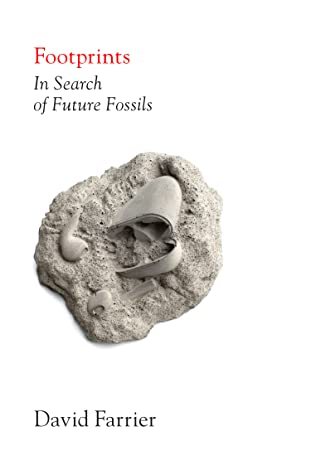 He travels not just through space, but also through time, tracing a plastic bottle from algal bloom to oil to factory to river/landfill to ocean; he thinks about how cultural memory can preserve vanished landscapes; he imagines propitiatory rites arising around radioactive waste to explain poisoned lakes and zinc-lined coffins; and he wonders how to issue appropriate warnings to the future when we don’t even know if English, or language in general, will persist (a nuclear waste storage site in Carlsbad uses a combination of multilingual signs, symbols, monoliths and planned oral tradition, while one in Finland is unmarked).
Each chapter is an intricate blend of fact, experience and story. For example, “The Insatiable Road” is about cars and the concrete landscapes they zip through – all made possible by oil. Farrier wins a chance to be among the first to cross the new Forth Bridge on foot and finds himself awed by the human achievement. Yet he knows that, in a car, the bridge will be crossed in seconds and soon taken for granted. Whether as a driver or a passenger, we have become detached from the journey and from the places we are travelling through. The road trip, a standard element of twentieth-century art and literature, has lost its lustre. “Really, we have conceded so much,” he writes. “Most of us live and wander only where road networks permit us to, creeping along their edges and lulled into deafness by their constant roar.” Ben Okri’s legend provides the metaphor of a famished road that swallows all in its path.
What will the human species leave behind? “The entire atmosphere now bears the marks of our passage … Perhaps no one will be around to read our traces, but nonetheless we are, everywhere, constantly, and with the most astonishing profligacy, leaving a legacy that will endure for hundreds of thousands or even hundreds of millions of years to come.” That legacy includes the concrete foundations of massive road networks, the remnants of megacities on coastal plains, plastics that will endure for many centuries, carbon and methane locked up in permafrost, the 2300-km fossil of the dead Great Barrier Reef, nuclear waste in isolation plants, jellyfish-dominated oceans and decimated microbial life.
Thinking long term doesn’t come naturally. In the same way that multiple books of 2019 (Time Song, Surfacing, Underland) helped us think about the place of humanity in reference to deep time, Footprints offers an invaluable window onto the deep future. Its dichotomies of hubris and atonement, and culpability versus indifference, are essential to ponder. It was always going to be sobering to read about how we have damaged our only home, but I never found this to be a needlessly depressing book; it is clear-eyed and forthright, but also meditative and beautifully constructed. Life on the planet continues in spite of our alterations, but all the diminishment was unavoidable, and perhaps some of it is remediable still.
My rating: 
 Related reading: Notes from an Apocalypse by Mark O’Connell. I’m only up to page 36 and at the moment it’s just him watching loads of crackpot preppers’ videos on YouTube, but already I think that Footprints should have had this book’s spot on the Wainwright Prize for Writing on Global Conservation longlist (a new prize run in addition to the standard UK nature writing one) for being more directly engaged with conservation issues rather than just humorously commenting on the end-of-the-world mindset.
Roman Krznaric at Hay Festival
 Krznaric’s discussion of being a “good ancestor” resonated in connection with the long-term thinking of Farrier’s book. “This is the age of the tyranny of the now,” he began, but “humankind has colonized the future” as well, treating it as a tempus nullius where we can dump our ecological waste and tech failures. Yet long-termism is needed more than ever as a way of planning for environmental challenges (and pandemics and the like). Future generations have no say in the decisions we make now that will affect them. To put this in perspective, he showed an image of three spheres, proportionally sized: one represented the 100 billion dead, one was the 7.7 billion currently living, and one was the 6.75 trillion in unborn generations (if the current birth rate continues).
It was Jonas Salk, creator of the polio vaccine, who asked, “Are we being good ancestors?” Krznaric invited the audience to come up with examples (in the chat window on the sidebar) of long-term projects through which people are trying to help future generations, such as the Svalbard Seed Depository, the Green New Deal, the 10,000-Year Clock (inside a mountain in the Texas desert), the Long Play piece of music to last 1,000 years, rewilding, archives and libraries, and tree planting. He had also opened the talk with his own modest contribution: he and his partner ‘gave’ their 11-year-old twins their votes in the latest election.
Krznaric elaborated on four of his book’s six ways of thinking about the future: 1) Rethink human nature by using the “acorn brain” (long-term thinking) rather than the “marshmallow brain” (instant gratification). 2) Embark on projects with long time horizons (“cathedral thinking”). 3) Think in terms of legacies, whether familial or transcendent – leaving a gift to the citizens of the future (e.g. The Future Library of 100 books not published or read until 2114). 4) Create a politics for the future, e.g. the citizen assembly movement.
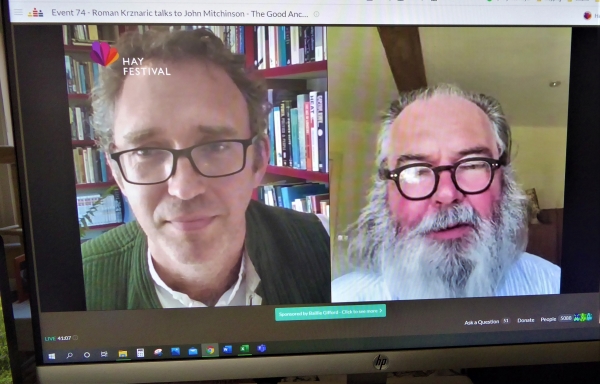
Roman Krznaric at the digital Hay Festival. Q&A led by John Mitchinson (right).
In the case of the UK, Krznaric advocates abolishing the House of Lords, replacing it with a citizens’ assembly and a Minister for the Future, and establishing legal rights for future generations. He noted that globally we’re at a “devil’s fork” where there’s a danger of authoritarian regulations continuing around the world after quarantine ends, endangering the future of social democracy. Instead, we need grassroots activism and “doughnut economics.” He pictures devolution of power away from central governments, with progressive cities becoming new loci of power. Individual actions like vowing not to fly and installing solar panels can inspire peers, but only collective action can tackle environmental breakdown.
 Related reading: I’ll be reviewing Eric Holthaus’s forthcoming book The Future Earth: A Radical Vision for What’s Possible in the Age of Warming for BookBrowse later this month. The meteorologist and science journalist fleshes out some of Krznaric’s ideas, such as a citizen assembly and the cyclical economy, in his proposal for the drastic changes needed over the next three decades.
*You can access the recorded Hay Festival talks by paying a £10 annual subscription here.
Have you read anything about the deep future?
Three May Releases: Climate Change, a Son’s Elegy, and Sexual Fluidity
I’m still averaging four new releases per month: a nicely manageable number. In addition to Lily King’s Writers & Lovers, in May I’ve read a novel about eco-anxiety and marital conflict, a memoir of losing a mother to grief and dementia, and an account of a shift in sexuality. I had a somewhat mixed reaction to all three books, but see if one or more catches your eye anyway.
When the Lights Go Out by Carys Bray
Perhaps if this had come out two or three years ago, it could have felt fresh. As it is, it felt like a retread of familiar stories about eco-grief and -anxiety among the middle classes (such as Weather and Unsheltered). Emma Abram is an average suburban mother of two in the north of England, upcycling fabrics and doing her best with other little green initiatives around the house since she got laid off from her job when the local library closed. She feels guilty a lot of the time, but what else can she do?
Nero fiddled while Rome burned; she will sew while the polar ice melts and the seas surge.
She couldn’t un-birth the children, un-earth the disposable nappies or un-plumb the white goods.
 Such sentiments also reminded me of the relatable, but by no means ground-breaking, contents of Letters to the Earth.
Emma’s husband Chris, though, has taken things to an extreme: as zealous as he once was about his childhood faith, he now is about impending climate change. One day, a week or so before Christmas, she is embarrassed to spot him by the roadside in town, holding up a signboard prophesying environmental doom. “In those days, Chris had been spreading the Good News. Now he is spreading the Bad News.” He thinks cold-weather and survivalist gear makes appropriate gifts; he raises rabbits for meat; he makes Emma watch crackpot documentaries about pandemic preparation. (Oh, the irony! I was sent this book in December.)
Part of the problem was to do with my expectations: from the cover and publicity materials I thought this was going to be a near-future speculative novel about a family coping with flooding and other literal signs of environmental apocalypse. Instead, it is a story about a marriage in crisis. (I cringed at how unsubtly this line put it: “The climate of her marriage [has] been changing, and she has been in denial about it for a long time.”) It is also, like Unless, about how to relate to a family member who has, in your opinion, gone off the rails.
Nothing wrong with those themes, of course, but my false assumptions meant that I spent well over 200 pages waiting for something to happen, thinking that everything I had read thus far was backstory and character development that, in a more eventful novel, would have been dispatched within, say, the first 40 pages. I did enjoy the seasonal activity leading up to Christmas Eve, and the portrayal of Chris’s widowed, pious mother. But compared to A Song for Issy Bradley, one of my favorite books of 2014, this was a disappointment.
My thanks to Hutchinson for the proof copy for review. This came out in e-book and audio on May 7th but the print edition has been delayed until November 12th.
Mother: A Memoir by Nicholas Royle
“A memoir is about what survives. But it is also about what is enigmatic and irretrievable. Cryptic and unknown.”
 A few years ago I read Royle’s An English Guide to Birdwatching, one of the stranger novels I’ve ever come across (it brings together a young literary critic’s pet peeves, a retired couple’s seaside torture by squawking gulls, the confusion between the two real-life English novelists named Nicholas Royle, and bird-themed vignettes). It was joyfully over-the-top, full of jokes and puns as well as trenchant observations about modern life.
I found that same delight in the vagaries of language and life in Mother: A Memoir. Royle’s mother, Kathleen, had Alzheimer’s and died in 2003. At least to start with, she was aware of what was happening to her: “I’m losing my marbles,” she pronounced one day in the kitchen of the family home in Devon. Yet Royle pinpoints the beginning of the end nearly two decades earlier, when his younger brother, Simon, died of a rare cancer. “From that death none of us recovered. But my mother it did for. She it by degrees sent mad.”
In short, titled sections that function almost like essays, Royle traces his mother’s family history and nursing career, and brings to life her pastimes and mannerisms. She passed on to Royle, a professor of English and creative writing at the University of Sussex, a love of literature and of unusual words and sayings. She was often to be found with a crossword puzzle in front of her, she devoured books (devoting a whole summer to the complete works to date of Doris Lessing, for instance), and she gave advice on her son’s early stories.
The narrative moves back and forth in time and intersperses letters, lists and black-and-white photographs. Royle often eschews punctuation and indulges in wordplay. “These details matter. The matter of my mater. Matador killing metaphor.” I found that I remained at arm’s length from the book – admiring it rather than becoming as emotionally engaged with it as I wanted to be – but it’s certainly not your average memoir, and it’s always refreshing to find (auto)biographical work that does something different.
My thanks to Myriad Editions for the free copy for review.
The Fixed Stars by Molly Wizenberg
Wizenberg is the author of two terrific food-themed memoirs. I particularly loved A Homemade Life, which chronicles the death of her father Burg from cancer, her time living in Paris, building a new life in Seattle, starting her famous food blog (Orangette), and meeting her husband, Brandon. Her follow-up, Delancey, was about the ups and downs of them opening a pizza restaurant and bar in Seattle while she was pregnant with June.
By contrast, The Fixed Stars was an uncomfortable read in more ways than one. For one thing, it unpicks the fairy tale of what had looked like a pretty ideal marriage and entrepreneurial partnership. It turns out Wizenberg wasn’t wholly on board with their little restaurant empire and found the work overwhelming. It was all Brandon’s dream, not hers. (She admits to these facts in Delancey, but it was the success, not the doubt, that I remembered.)
And then, in the summer of 2015, Wizenberg was summoned for jury duty and found herself fascinated by one of the defense attorneys, a woman named Nora who wore a man’s suit and a butch haircut. The author had always considered herself straight, had never been attracted to a woman before, but this crush wouldn’t go away. She and Brandon tried an open marriage so that she could date Nora and he could see other people, too, but it didn’t work out. Brandon didn’t want her to fall in love with anyone else, but that was just what was happening.
 Wizenberg announced her coming-out and her separation from Brandon on her blog, so I was aware of all this for the last few years and via Instagram followed what came next. I knew her new spouse is a non-binary person named Ash who was born female but had top surgery to remove their breasts. (At first I was assumed Nora was an alias for Ash, but they are actually different characters. After things broke down with Nora, a mutual friend set her up with Ash.) The other source of discomfort for me here was the explicit descriptions of her lovemaking with Nora – her initiation into lesbian sex – though she draws a veil over this with Ash.
I’m not sure if the intimate details were strictly necessary, but I reminded myself that a memoir is a person’s impressions of what they’ve done and what has happened to them, molded into a meaningful shape. Wizenberg clearly felt a need to dig for the why of her transformation, and her answers range from her early knowledge of homosexuality (an uncle who died of AIDS) to her frustrations about her life with Brandon (theirs really was a happy enough marriage, and a markedly amicable divorce, but had its niggles, like any partnership).
I appreciated that, ultimately, Wizenberg leaves her experience unlabeled. She acknowledges that hers is a messy story, but an honest one. While she entertains several possibilities – Was she a closeted lesbian all along? Or was she bisexual? Can sexual orientation change? – she finds out that sexual fluidity is common in women, and that all queer families are unique. An obvious comparison is with Maggie Nelson’s The Argonauts, which is a bit more profound and original. But the mourning for her marriage and the anguish over what she was doing to her daughter are strong elements alongside the examination of sexuality. The overarching metaphor of star maps is effective and reminded me of Constellations by Sinéad Gleeson.
There were points in the narrative where I was afraid the author would resort to pat answers about what was ‘meant to be’ or to depicting villains versus heroic actions, but instead she treats this all just as something that happened and that all involved coped with as best they could, hopefully making something better in the end. It’s sensitively told and, while inevitably different from her other work, well worth reading for anyone who’s been surprised where life has led.
I read an advanced e-copy from Abrams Press via Edelweiss. A Kindle edition came out on May 12th, but the hardback release has been pushed back to August 4th.
What recent releases can you recommend?
Best of 2019: Nonfiction
For me, 2019 has been a more memorable year for nonfiction than for fiction. Like I did last year, I’ve happened to choose 12 favorite nonfiction books – though after some thematic grouping this has ended up as a top 10 list. Bodies, archaeology, and the environmental crisis are recurring topics, reflecting my own interests but also, I think, something of the zeitgeist.
Let the countdown begin!
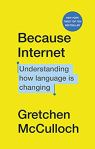 Because Internet: Understanding how language is changing by Gretchen McCulloch: Surprisingly fascinating stuff, even for a late adopter of technology. The Internet popularized informal writing and quickly incorporates changes in slang and cultural references. The book addresses things you may never have considered, like how we convey tone of voice through what we type and how emoji function as the gestures of the written word. Bursting with geeky enthusiasm.
-
 Surfacing by Kathleen Jamie: A fusion of autobiography with nature and travel writing – two genres that are too often dominated by men. Jamie has a particular interest in birds, islands, archaeology and the oddities of the human body, all subjects that intrigue me. There is beautiful nature writing to be found in this volume, as you might expect, but also relatable words on the human condition.
-
 Mother Ship by Francesca Segal: A visceral diary of the first eight weeks in the lives of the author’s daughters, who were born by Caesarean section at 29 weeks in October 2015 and spent the next two months in the NICU. Segal describes with tender precision the feeling of being torn between writing and motherhood, and crafts twinkly pen portraits of others she encountered in the NICU, including the staff but especially her fellow preemie mums.
-
 Surrender: Mid-Life in the American West by Joanna Pocock: Prompted by two years spent in Missoula, Montana and the disorientation felt upon a return to London, this memoir-in-essays varies in scale from the big skies of the American West to the smallness of one human life and the experience of loss and change. This is an elegantly introspective work that should engage anyone interested in women’s life writing and the environmental crisis.
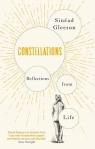
- (A tie) Constellations by Sinéad Gleeson / The Undying by Anne Boyer / Notes Made while Falling by Jenn Ashworth: Trenchant autobiographical essays about female pain. All three feel timely and inventive in how they bring together disparate topics to explore the possibilities and limitations of women’s bodies. A huge theme in life writing in the last couple of years and a great step toward trauma and chronic pain being taken seriously. (See also Notes to Self by Emilie Pine and the forthcoming Pain Studies by Lisa Olstein.)


-
 Time Song: Searching for Doggerland by Julia Blackburn: Deep time is another key topic this year. Blackburn follows her curiosity wherever it leads as she does research into millions of years of history, including the much shorter story of human occupation. The writing is splendid, and the dashes of autobiographical information are just right, making her timely/timeless story personal. This would have been my Wainwright Prize winner.
-
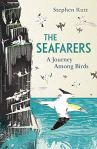 The Seafarers: A Journey among Birds by Stephen Rutt: The young naturalist travelled the length and breadth of the British Isles – from Skomer to Shetland – courting encounters with seabirds. Discussion of the environmental threats that hit these species hardest, such as plastic pollution, makes for a timely tie-in to wider issues. The prose is elegantly evocative, and especially enjoyable because I’ve been to a lot of the island locations.
-
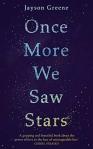 Once More We Saw Stars by Jayson Greene: In 2015 the author’s two-year-old daughter, Greta, was fatally struck in the head by a brick that crumbled off an eighth-story Manhattan windowsill. Music journalist Greene explores all the ramifications of grief. I’ve read many a bereavement memoir and can’t remember a more searing account of the emotions and thoughts experienced moment to moment. The whole book has an aw(e)ful clarity to it.
-
 The Body: A Guide for Occupants by Bill Bryson: Bryson is back on form indulging his layman’s curiosity. Without ever being superficial or patronizing, he gives a comprehensive introduction to every organ and body system. He delights in our physical oddities, and his sense of wonder is contagious. Shelve this next to Being Mortal by Atul Gawande in a collection of books everyone should read – even if you don’t normally choose nonfiction.
-
 Irreplaceable: The Fight to Save Our Wild Places by Julian Hoffman: Species and habitat loss are hard to comprehend even when we know the facts. This exquisitely written book is about taking stock, taking responsibility, and going beyond the numbers to tell the stories of front-line conservation work. Irreplaceable is an elegy of sorts, but, more importantly, it’s a call to arms. It places environmentalism in the hands of laypeople and offers hope that in working together in the spirit of defiance we can achieve great things. So, if you read one 2019 release, make it this one.
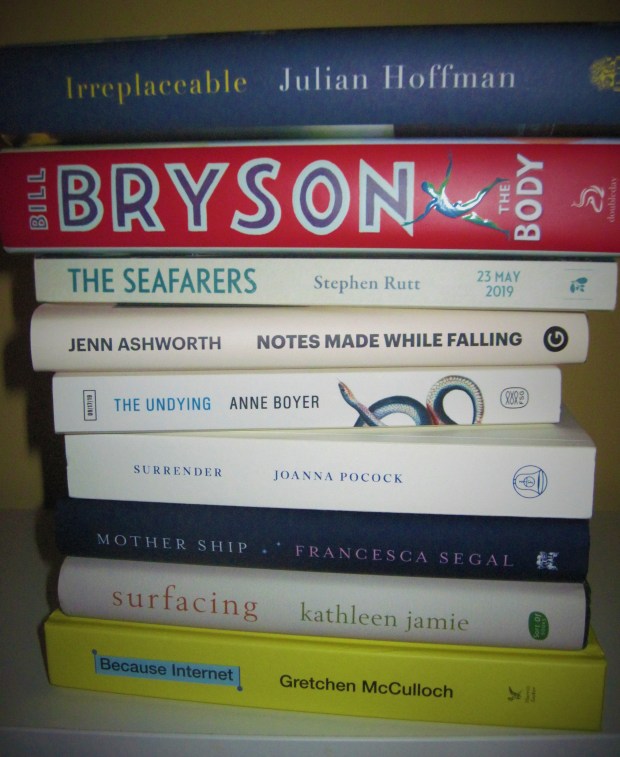
(Books not pictured were read from the library or on Kindle.)
What were some of your top nonfiction reads of the year?
Upcoming posts:
28th: Runners-up
29th: Other superlatives and some statistics
30th: Best backlist reads
31st: The final figures on my 2019 reading
Reviews Roundup, January–February
One of my goals with this blog is to have one convenient place where I can gather together all my writing that has appeared in disparate online locations. To that end, once a month I provide links to all book reviews I’ve published elsewhere, with a rating (below each description) and a taster so you can decide whether to read more. A few exceptions: I won’t point out my Kirkus Indie, BlueInk or Publishers Weekly reviews since I don’t get a byline. Meanwhile, I’ve done my first review for the Pittsburgh Post-Gazette – exciting!
The Bookbag
The Noise of Time by Julian Barnes: “Art is the whisper of history, heard above the noise of time.” Through a fictionalized biography of the Russian composer Shostakovich, Barnes questions how art can withstand political oppression. Knowing Barnes’s penchant for stylistic experimentation, this was never going to be a straightforward, chronological life story. Instead, as he so often does, he sets up a tripartite structure, focusing on three moments when Shostakovich has a reckoning with Power. The book is full of terrific one-liners (“Integrity is like virginity: once lost, never recoverable”), but there are not many memorable scenes to latch on to.

Motions and Moments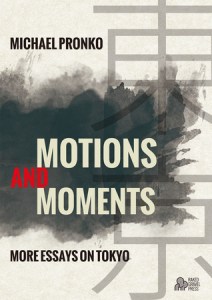 : More Essays on Tokyo (& interview) by Michael Pronko: Pronko’s third collection of essays about his adopted city is an eloquent tribute to a place full of contradictions and wonders. Compared to his earlier collection, Beauty and Chaos, I sense Pronko is now more comfortable in his surroundings, perhaps happier to include himself in ‘we’ rather than looking on passively at ‘them’. For instance – inspired by Japanese women’s perfect outfits – he consciously tries to dress better, and he’s taken to eating ramen and sleeping on a futon, just like a native. The highlight is a set of pieces written in the aftermath of the 2011 earthquake / tsunami.

BookBrowse
 The Portable Veblen by Elizabeth McKenzie: Veblen, named after the late-nineteenth-century Norwegian-American economist, is one of the oddest heroines you’ll ever meet. She thinks squirrels are talking to her and kisses flowers. But McKenzie doesn’t just play Veblen for laughs; she makes her a believable character well aware of her own psychological backstory. I suspect the squirrel material could be a potential turn-off for readers who can’t handle too much whimsy. Over-the-top silly in places, this is nonetheless a serious account of the difficulty of Veblen and Paul, her neurology researcher fiancé, blending their dysfunctional families and different ideologies – which is what marriage is all about.
 Weathering by Lucy Wood: This atmospheric debut novel is set in a crumbling house by an English river and stars three generations of women – one of them a ghost. Ada has returned to her childhood home after 13 years to scatter her mother Pearl’s ashes, sort through her belongings, and get the property ready to sell. In a sense, then, this is a haunted house story. Yet Wood introduces the traces of magical realism so subtly that they never feel jolting. Like the river, the novel is fluid, moving between the past and present with ease. The vivid picture of the English countryside and clear-eyed look at family dynamics remind me most of Tessa Hadley (The Past) and Polly Samson (The Kindness).
Foreword Reviews
When We Were Invincible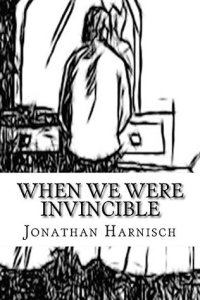 by Jonathan Harnisch: In this short novel, a young man wrestles with depression and Tourette’s syndrome, which together drive him to the point of suicide. A series of dreams and chance meetings, along with the possibility of romance and faith in God, pull him back from the edge. The book successfully introduces philosophical themes and gives a sympathetic picture of mental illness. However, it is weaker at filling in background and providing transitions, and there are many awkward, unlikely lines of dialogue. Recommended to fans of The Curious Incident of the Dog in the Night-Time.

Nudge
 The Life and Death of Sophie Stark by Anna North: The twisty, clever story of a doomed filmmaker – perfect for fans of Hausfrau. Who is Sophie Stark? A New York City-based indie director whose four documentary-style movies are “almost more like life than life itself.” Bisexual and with certain traits of high-functioning autism, Sophie is easily misunderstood. She’s a rebel who doesn’t conform to social niceties. The book is told through five first-person reminiscences from the people closest to her. In this respect the novel’s format recalls Kitchens of the Great Midwest. My favorite sections, though, are the reviews of her films, all by the same critic.
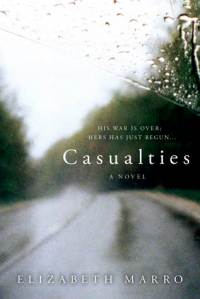 Casualties by Betsy Marro: A powerful, melancholy debut novel about how war affects whole families, not just individual soldiers. As in Bill Clegg’s Did You Ever Have a Family, which Casualties resembles in tone if not in style, a bereaved mother sets off on a journey. Ruth’s unlikely companion on the road trip east is a Gulf War amputee who appears little more than a conman but genuinely wants to clean up his act so he can reconcile with his teenage daughter. At times the road trip scenario felt a little far-fetched to me, and Casey too obvious a replacement son figure. Yet as both he and Ruth ponder how much they have lost and the small things they can try to put right, they together form a touching picture of the various ways war’s effects can linger.
Pittsburgh Post-Gazette
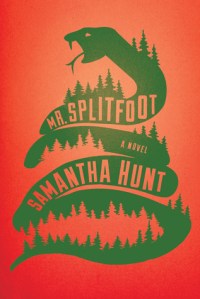 Mr. Splitfoot by Samantha Hunt: “All stories are ghost stories,” Samantha Hunt proclaims in her quirky third novel about the crossover between motherhood and mysticism. In a dual storyline that takes in fundamentalist cults, unlikely mediums and a pregnant woman’s pilgrimage, Hunt asks whether one can ever believe in the unseen. Mr. Splitfoot has the offbeat charm of Scarlett Thomas’s work. While the plot ultimately feels like a bit of a jumble, its vision of unexpected love and loyalty remains compelling. “The End’s always coming,” but it is how one lives in the face of brutality and impending extinction that matters.
I also post reviews of most of my casual reading and skimming on Goodreads:
 Rush Oh! by Shirley Barrett: A debut novel in which an Australian whaler’s daughter looks back at 1908, a catastrophic whaling season but also her first chance at romance. I felt that additional narrators, such as a whaleman or an omniscient voice, would have allowed for more climactic scenes. Still, I found this gently funny, especially the fact that the family’s cow and horse are inseparable and must be together on any outing. There are some great descriptions of whales, too.
 Felicity by Mary Oliver: I was disappointed with my first taste of Mary Oliver’s poetry. So many readers praise her work to the skies, and I’ve loved excerpts I’ve read elsewhere. However, I found these to be rather simplistic and clichéd, especially poems’ final lines, e.g. “Soon now, I’ll turn and start for home. / And who knows, maybe I’ll be singing.” or “Late, late, but now lovely and lovelier. / And the two of us, together—a part of it.” I’ll definitely try more of her work, but I’ll look out for an older, classic collection.
 Paulina & Fran by Rachel B. Glaser: Full of blunt, faux-profound sentences and smutty, two-dimensional characters. Others may rave about it, but this wasn’t for me. I get that it is a satire on female friendship and youth entitlement. But I hated how the main characters get involved in a love triangle, and once they leave college any interest I had in them largely disappeared. Least favorite lines: “Paulina. She’s like Cleopatra, but more squat.” / “She’s more like Humphrey Bogart” and “She craved the zen-ness of being rammed.”

 Noah’s Wife by Lindsay Starck: I kept wanting to love this book, but never quite did. It’s more interesting as a set of ideas – a town where it won’t stop raining, a minister losing faith, homeless zoo animals sheltering with ordinary folk – than as an executed plot. My main problem was that the minor characters take over so that you never get to know the title character, who remains nameless. There’s also a ton of platitudes towards the end. It reminded me most of The Readers of Broken Wheel Recommend and Not Forgetting the Whale (another cozy environmental dystopia based around biblical allusions).
 Spill Simmer Falter Wither by Sara Baume: This sounded like a charmingly offbeat story about a loner and his adopted dog setting off on a journey. As it turns out, this debut is much darker than expected, but what saves it from being unremittingly depressing is the same careful attention to voice you encounter in fellow Irish writers like Donal Ryan and Anne Enright. It’s organized into four sections, with the title’s four verbs as headings. In a novel low on action, the road trip is much the most repetitive section, extending to the language as well. Even so, Baume succeeds in giving a compassionate picture of a character whose mental state comes into question. (Full review in March 2016 issue of Third Way magazine.)
 Medium Hero by Korby Lenker: Lenker is an indie musician, and the 27 autobiographical stories in his debut collection are about the everyday challenges of being on the road versus trying to pay the bills. Many feature “Korby” or “Simon” as fictional stand-ins, and recurring locations include his hometown of Twin Falls, Idaho and his adopted home of Nashville. As the title suggests, Lenker has no illusions about being famous or out of the ordinary. Most of the time he just tries to be a decent guy, the kind who prays for family members in distress even though he’s not sure he believes in God. Lest that sound too serious, though, there are also stories about peeing his pants and the perils of being a metrosexual.
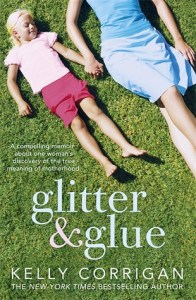 Glitter and Glue by Kelly Corrigan: Slides down like ice cream. And I say that even though the whole basis for this memoir feels rather thin. Corrigan frames it around five months in the early 1990s when she worked as a nanny for two Australian kids whose mother died of cancer. For a young woman fresh out of college, it was like a trial run for being a mother, and also gave her a new appreciation for everything her own mother had done for her during her Philadelphia Catholic upbringing. If Corrigan’s father was the ‘glitter’ of the family, her mother was the ‘glue’ – holding everything together in the background. This is impressively reconstructed, dialogue and all, from letters, journals and photos.
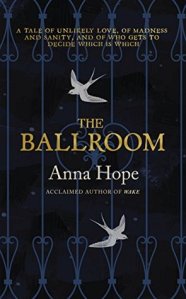 The Ballroom by Anna Hope: This novel was inspired by the story of the author’s great-great-grandfather, an Irishman who was a patient at Menston Asylum in West Yorkshire from 1909 to 1918. The novel zeroes in on the long, hot summer of 1911, focusing through alternating close third-person chapters on John Mulligan, a new patient named Ella Fay, and Dr. Charles Fuller, who wants to put his mental hospital at the frontline of eugenics research. Ultimately I didn’t like this quite as much as Wake, but I think it cements Anna Hope’s reputation as a solid historical fiction writer. I hope with her next book she’ll move beyond the years around World War I to consider a less-chronicled era.
 Life without a Recipe by Diana Abu-Jaber: The Jordanian–American writer reflects on how various food cultures have sustained her through a life that hasn’t always turned out as expected. Three marriages, a move from Portland to Florida, a winding path to motherhood in her forties, and her father’s death from leukemia are some of the main events. Like Sasha Martin’s Life from Scratch, this is more about family and personal history than it is about food (and there are no recipes). Still, food is the stuff of memories, and it is what binds her to two strong characters: her Jordanian father Bud with his stuffed grape leaves, and her maternal grandmother Grace with her frequent baking and the pastries they consumed together in Paris.
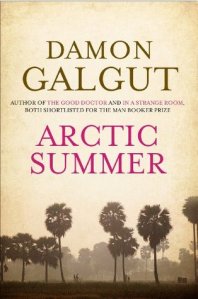 Arctic Summer by Damon Galgut: This fictionalized account of the life of E.M. Forster focuses on the drawn-out composition of A Passage to India, which he began in 1913 but wouldn’t complete and publish until 1924. In between he broke off to write his explicitly homosexual novel Maurice (only published posthumously), spent three years working in Egypt during the war, and served as a secretary to an Indian maharajah. As fictionalized biographies of authors go, I’d rate this somewhere between David Lodge’s A Man of Parts (H.G. Wells) and Colm Tóibín’s superior The Master (Henry James); all three share a heavy focus on the author’s sexuality. “Buggery in the colonies. It wasn’t noble” is one of my favorite random snippets from this novel, and sums up, for me, its slightly prurient aftertaste.
 Bookish Beck = Rebecca Foster. American transplant to England. Freelance proofreader and book reviewer.
 Bookish Beck