Polishing off My 20 Books of Summer with Hay, Jones & Markham
I finished off strong with a few books I’ve been meaning to read for months or years.
Late Nights on Air by Elizabeth Hay (2007)
 (This was a Twitter buddy read with Naomi of Consumed by Ink and Penny of Literary Hoarders.) I read my first novel by Hay, A Student of Weather, last year. It was wonderfully rewarding even though it took me a month to read. By contrast, I read the Giller Prize-winning Late Nights on Air in half that time. Most of it is set in 1975–7 in Yellowknife, a small city in Canada’s Northwest Territories. Here winter lasts for eight months and you can still meet with snow and frozen lakes in early July. A tight-knit cast gathers around the local radio station: Harry and Gwen, refugees from Ontario starting new lives; Dido, an alluring Dutch newsreader; Ralph, the freelance book reviewer; menacing Eddie; and pious Eleanor.
Everyone is in love with everyone else, so you get these layers of unrequited romance and a sense of exposure: not just to the elements, but to the vulnerabilities of admitting one’s feelings and risking professional failure. The novel is also about appearances and assumptions – “You don’t look anything like how you sound,” Gwen says to Harry – and the dangers of obsession. Four of the station employees set out one summer to recreate the six-week journey of Arctic explorer John Hornby, a trip that ends up being as wondrous as it is fraught. Hay’s foreshadowing is a bit heavy-handed, and I found the final chapters after the expedition a slight letdown, but overall this is a marvellous story of quiet striving and dislocation. I saw bits of myself in each of the characters, and I loved the extreme setting, both mosquito-ridden summer and bitter winter. I need to read the rest of Hay’s oeuvre stat.
Favorite passages:
Harry’s professional advice to Gwen: “Radio was like poetry, he told her. At its best it could be, while television was like a blockbuster novel: one made you think and feel, the other dulled your mind. … ‘To be any good you have to believe it’s hard. It’s called creative tension. … And you won’t be any good until you’re dedicated to something outside yourself.’ … I learned that a mistake is just something you go on from.”
“Something blossoms in an unlikely place. An oasis of trees miles above the treeline. An arctic river warmer than any other water they’d come upon. The four of them bathed in the waters of the Thelon, wading out into it, almost swimming. On shore they towelled themselves dry and dressed, and there was no feeling to equal the splendour of warm clothes on river-cold skin.”
My rating: 
I ran out of time for Half of a Yellow Sun by Chimamanda Ngozi Adichie so substituted in…
An American Marriage by Tayari Jones (2018)
(If it’s good enough for Barack Obama and Oprah Winfrey, it’s good enough for me!)
 The title feels like an echo of An American Tragedy. It’s both monolithic and generic, as if saying: Here’s a marriage; make of it what you will. Is it representative of the average American situation, or is it exceptional? Roy and Celestial only get a year of happy marriage before he’s falsely accused of rape and sentenced to 12 years in prison in Louisiana. Through their alternating first-person narration and their letters back and forth while Roy is incarcerated, we learn more about this couple: how their family circumstances shaped them, how they met, and how they drift apart as Celestial turns to her childhood friend, Andre, for companionship. When Roy is granted early release, he returns to Georgia to find Celestial and see what might remain of their marriage. I ached for all three main characters: It’s an impossible situation. The novel ends probably the only way it could, on a realistic yet gently optimistic note. Life goes on, if not how you expect, and there will be joys still to come.
This would make a great book club pick: there’s a lot to probe about the characters’ personalities and motivations, and about how they reveal or disguise themselves through their narration. I found it remarkable how the letters, which together make up not even one-fifth of the text, enhance the raw honesty of the book. There are other marriages on display besides Roy and Celestial’s, their range providing a snapshot of African-American lower-middle- and upper-middle-class life in the South. I especially liked the use of two totem objects, Roy’s tooth and the hickory tree outside Celestial’s childhood home (what you see on the cover).
Favorite lines:
Celestial: “I believed that our marriage was a fine-spun tapestry, fragile but fixable. We tore it often and mended it, always with a silken thread, lovely but sure to give way.”
Andre: “I don’t believe that blood makes a family; kin is the circle you create, hands held tight.”
Celestial: “Our marriage was a sapling graft that didn’t have time to take.”
Roy: “mostly my life is good, only it’s a different type of good from what I figured on.”
My rating: 
An American Marriage was published in the UK by Oneworld on April 5th. My thanks to the publisher for the free copy for review.
West With the Night by Beryl Markham (1942)
 (Another Twitter buddy read, with Laila of Big Reading Life.) I’ve meant to pick this up ever since I read Paula McLain’s fantastic novel about Beryl Markham, Circling the Sun. I loved Markham’s memoir even more. She writes so vividly about the many adventures of her life in Africa: hunting lions, training race horses, and becoming one of the continent’s first freelance pilots, delivering mail and locating elephant herds.
It took me a while to get used to the structure – this is a set of discrete stories rather than a chronological narrative – but whether she’s reflecting on the many faces of Africa or the peculiar solitude of night flights, the prose is just stellar. Ernest Hemingway once asserted in a letter that Markham could “write rings around all of us who consider ourselves as writers,” and I certainly enjoyed this more than anything I’ve read by Hemingway.
The text is bookended by two momentous flights: it opens with Markham scrambling to deliver oxygen to an injured miner, and ends with her completing the first east–west solo flight across the Atlantic in 1936. Her engine cut out multiple times; it’s no less than a miracle that she survived to crash land in Nova Scotia. Laila and I agree that Markham’s life is so exciting it’s crying out for a movie version. In the meantime, I’d like to read some more about her circle – Denys Finch Hatton; and Baron von Blixen and his wife Karen (aka Danish writer Isak Dinesen, famous for Out of Africa). In my Circling the Sun review for BookTrib, I wrote that “Markham was the kind of real-life action adventure heroine you expect to find in Indiana Jones movies,” and that sense was only confirmed by her own account.
Favorite passages:
“to fly in unbroken darkness without even the cold companionship of a pair of ear-phones or the knowledge that somewhere ahead are lights and life and a well-marked airport is something more than just lonely. It is at times unreal to the point where the existence of other people seems not even a reasonable possibility. The hills, the forests, the rocks, and the plains are one with the darkness, and the darkness is infinite. The earth is no more your planet than is a distant star—if a star is shining; the plane is your planet and you are its sole inhabitant.”
“I saw how a man can be master of a craft, and how a craft can be master of an element. I saw the alchemy of perspective reduce my world, and all my other life, to grains in a cup. I learned to watch, to put my trust in other hands than mine. And I learned to wander. I learned what every dreaming child needs to know—that no horizon is so far that you cannot get above it or beyond it.”
My rating:
So how did I do on my first-ever #20BooksofSummer challenge? In that I read and reviewed (more than) 20 books by women that I owned in print, it was a smashing success. However, I only read 7 of the books I’d intended to, substituting in the rest from my review pile, books I owned in America, and others that grabbed my attention more than those I’d picked out in early June. Looks like I’m not great at sticking with the specific reading plans I set!
At any rate, as bonuses, here are the additional books by women that I read in print from my own shelves over the summer, not counting ones already reviewed on the blog (in chronological order, with ratings and links to any Goodreads reviews):
- Blue Horses, Mary Oliver

- The Egg and I, Betty Macdonald
- Eye of the Shoal: A Fish-watcher’s Guide to Life, the Ocean and Everything, Helen Scales
- The Partly Cloudy Patriot, Sarah Vowell

- Talk before Sleep, Elizabeth Berg
- The Incendiaries, R.O. Kwon [blog tour review coming on Monday]

- The Artist’s Way: A Spiritual Path to Higher Creativity, Julia Cameron
- Gross Anatomy: My Curious Relationship with the Female Body (The Top Half and the Bottom Half), Mara Altman [Glamour UK review coming soon]
- Questions of Travel, Elizabeth Bishop
- Writers & Company, Eleanor Wachtel

- Help Me!: One woman’s quest to find out if self-help really can change her life, Marianne Power
- Mrs Gaskell & Me: Two Women, Two Love Stories, Two Centuries Apart, Nell Stevens
I’d call that a result!
What have been the best books of the summer? Of the final 20, The Invisible Bridge by Julie Orringer was the winner, followed closely by The Life and Loves of Lena Gaunt by Tracy Farr, Late Nights on Air by Elizabeth Hay, and West With the Night by Beryl Markham. There were no real duds. I’m still very interested in all but one of the books I chose back in June, so I’ll see how many of the rest I can fit into this autumn and winter’s reading.
How was your summer of reading? Did you meet any goals you set?
Recommended May Releases
May and June are HUGE months for new releases. I’ve been doing enough early reading via NetGalley and Edelweiss that I’ve found plenty to recommend to you for next month. From a novel voiced by one of Hemingway’s wives to a physicist’s encouragement to waste more time, I hope there will be something here for everyone.
The Pisces by Melissa Broder
[Coming from Hogarth Press (USA) on the 1st and Bloomsbury (UK) on the 3rd]
 At first I thought this was one of those funny, quirky but somewhat insubstantial novels about a thirtysomething stuck with a life she isn’t sure she wants – something along the lines of Goodbye, Vitamin, The Portable Veblen, or All Grown Up. Then I thought it was just a crass sex comedy. But the further I read the deeper it all seemed to become: tropes from Greek myth and the fluidity of gender roles made me think of You Too Can Have a Body Like Mine, another debut novel that surprised me for its profundity. Lucy, a thirty-eight-year-old PhD student, agrees to spend a summer dog-sitting for her yoga entrepreneur sister in Venice Beach, California while she undertakes therapy for the twin problems of low self-esteem and love addiction. If you know one thing about this book, it’s that there’s sex with a merman. Ultimately, though, I’d say it’s about “the prison of the body” and choosing which of the different siren voices calling us to listen to. I found it outrageous but rewarding.
My rating:
How to Be a Perfect Christian by Adam Ford and Kyle Mann
[Coming from Multnomah (USA) on the 1st]
 The Babylon Bee is a Christian version of The Onion, so you know what you’re getting here: a very clever, pitch-perfect satire of evangelical Christianity today. If, like me, you grew up in a nondenominational church and bought into the subculture hook, line and sinker (Awana club, youth group, courtship, dc Talk albums, the whole shebang), you will find that so much of this rings true. The book is set up as a course for achieving superficial perfection through absolute “conformity to the status quo of the modern church.” Sample advice: find an enormous church that meets your needs, has a great coffee bar and puts on a laser-lit worship performance to rival “an amusement park for cats or a Def Leppard concert”; master the language of Christianese (“Keeping it in prayer” pretty much covers your bases); and bring as little as you can to the church potluck (a 25-pack of napkins) but consume as much as is anatomically possible. So, a lot of fun, just a little overlong because you get the joke early on.
My rating:
The Ensemble by Aja Gabel
[Coming from Riverhead (USA) on the 15th]
 In May 1994, the members of the Van Ness String Quartet are completing their final graduate recital at a San Francisco conservatory and preparing for the Esterhazy quartet competition in the Canadian Rockies. These four talented musicians – Jana, first violin; Brit, second violin; Henry, viola; and Daniel, cello – have no idea what the next 15 years will hold for them: a cross-country move, romances begun and lost, and career successes and failures. Drawing on her own history as a violinist and cellist, Aja Gabel infuses her debut novel with the simultaneous uncertainty and euphoria of both the artistic life and early adulthood in general. An alternating close third-person perspective gives glimpses into the main characters’ inner lives, and there are evocative descriptions of classical music. I think The Ensemble will mean even more to those readers who are involved in music, but anyone can relate to the slow fade from youth into middle age and the struggle to integrate art with the rest of life.
My rating:
Tropic of Squalor by Mary Karr
[Coming from Harper (USA) on the 8th]
 Mary Karr is mostly known as a memoirist, but this is actually her fifth poetry collection. Death is a major theme, with David Foster Wallace’s suicide and 9/11 getting multiple mentions. Karr also writes self-deprecatingly about her Texas childhood. Best of all is the multi-part “The Less Holy Bible”: a sort of Devil’s Dictionary based loosely around the books of the Bible, it bounces between Texas and New York City and twists biblical concepts into commonsense advice. Not one for those who are quick to cry heresy, perhaps, but I enjoyed it very much, especially “VI. Wisdom: The Voice of God”: “Ninety percent of what’s wrong with you could be cured with a hot bath, / says God through the manhole covers, but you want magic, to win / the lottery you never bought a ticket for. … Don’t look for initials in the geese honking / overhead or to see through the glass even darkly. It says the most obvious shit, / i.e. Put down that gun, you need a sandwich.”
My rating:
In Praise of Wasting Time by Alan Lightman
[Coming from Simon & Schuster / TED (USA and UK) on the 15th]
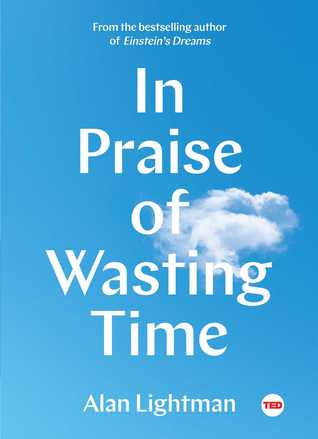 Lightman, a physicist and MIT professor, argues that only in unstructured time can we rediscover our true identity and recover our carefree childhood creativity. This work-as-play model goes against the modern idea that time is money and every minute must be devoted to a project. “For any unexpected opening of time that appears during the day, I rush to patch it, as if a tear in my trousers. … I feel compelled to find a project, to fill up the hole.” Yet there is another way of approaching time, as he discovered when doing research in a village in Cambodia. He realized that the women he talked to didn’t own watches and thus had no real sense of how long any task took them. This sharp, concise treatise ruminates on the cultural forces that have enslaved us in the West to productivity. (In short, he blames the Internet, but specifically smartphones.) Lightman insists on the spiritual benefits of free time and solitude. “With a little determination, each of us can find a half hour a day to waste time,” he asserts.
My rating:
Love and Ruin by Paula McLain
[Coming from Ballantine Books (USA) and Fleet (UK) on the 1st]
 This is the weakest of the three McLain novels I’ve read, but when we’re talking about a writer of this caliber that isn’t much of a criticism. It’s strange to me that, having written a novel from the perspective of Hadley Richardson, Ernest Hemingway’s first wife, McLain would choose to tell the story of another Hemingway wife – this time Martha Gellhorn, a war reporter and author in her own right. If I set aside this misgiving, though, and just assess the quality of the writing, there are definitely things to praise, such as the vivid scenes set during the Spanish Civil War, the dialogues between Martha and Hem, the way he perhaps fills in for her dead father, her fondness for his sons, and her jealousy over his growing success while her books sink like stones. I especially liked their first meeting in a bar in Key West, and the languid pace of their life in Cuba. I read such books because I’m intrigued about the appeal of a great man, but here I got a little bogged down with the many settings and events.
My rating:
What May books do you have on the docket? Have you already read any that you can recommend?
I Spy TBR Challenge
I spotted this recently on Ex Urbanis and it was too fun to pass up. (I believe the meme started on YouTube, but I’ve been unable to trace the chain back to the very beginning.) There are 20 categories; for each one choose at least one title or cover that fits in some way.
I decided to limit myself to books on my to-read shelves, but had to cheat for two categories and pick books I’ve already read. Some were so easy I could have picked out at least 5–10 books that fit the bill, while others were quite a challenge.
The idea is to gather up all the books within five minutes, but because I had to go up and down the stairs and survey shelves in multiple rooms it took me just over 15! See how fast you can find something for each prompt.
Food

Transport
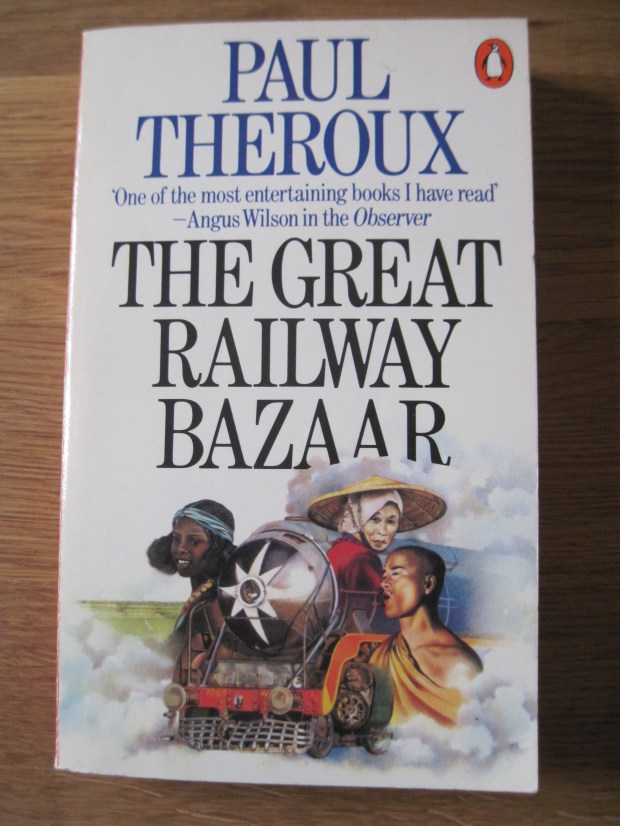
Weapon – This one was really tough, since I don’t read crime fiction. But I finally managed to find a surgeon’s memoir with a scalpel on the cover.
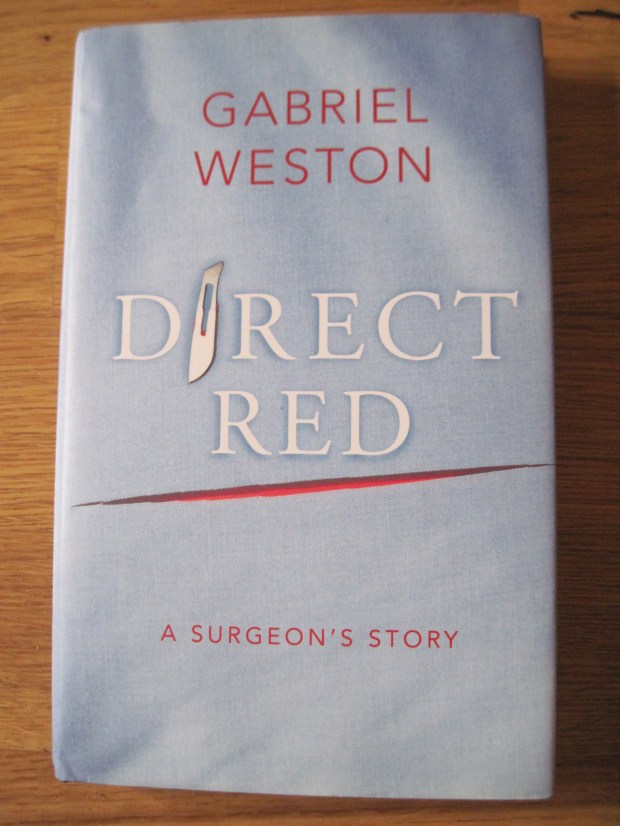
Animal – I could easily have found 15+ for this one, thanks to my husband’s nature books, but I stuck with fiction.
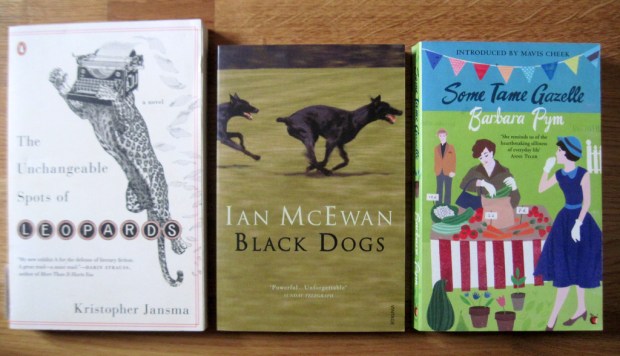
Number

Something You Read
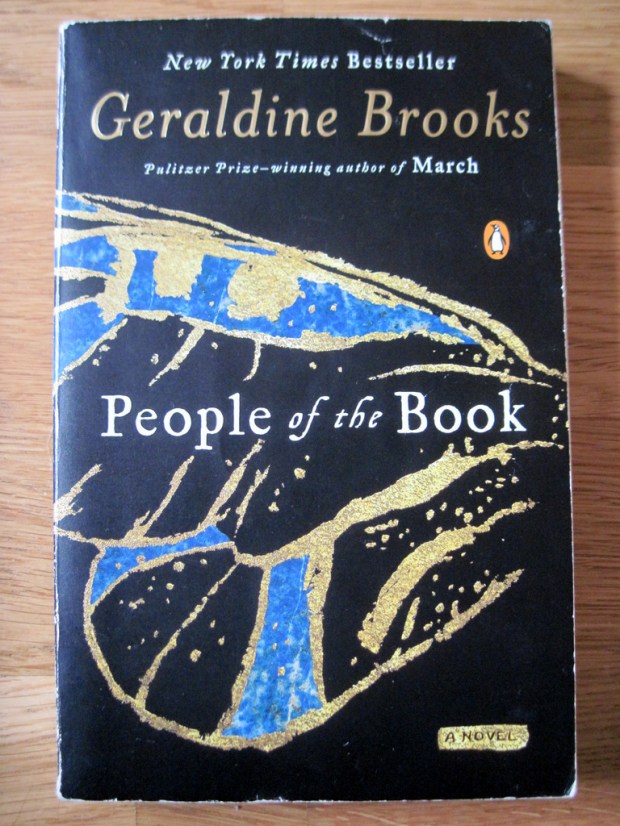
Body of Water
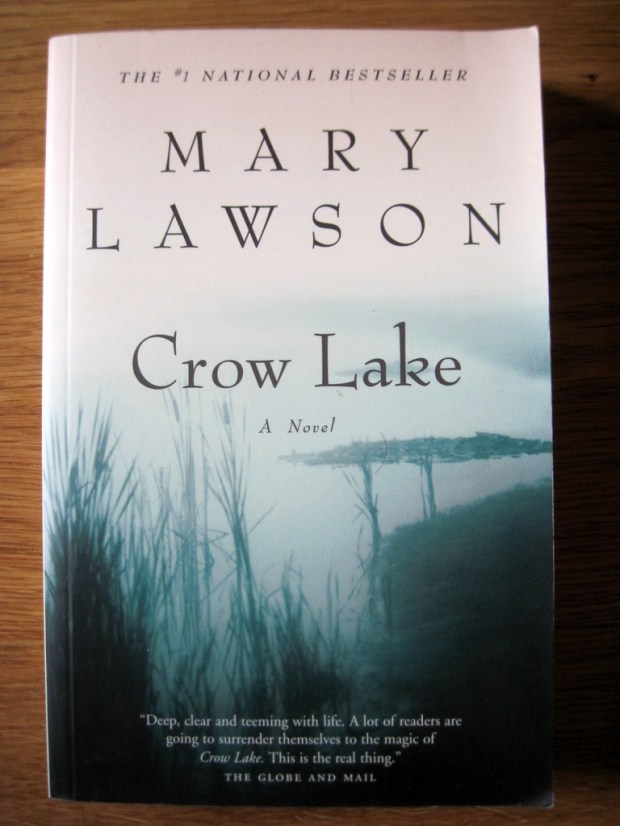
Product of Fire – Another really difficult one, so I cheated with this May Sarton memoir I’ve already read.
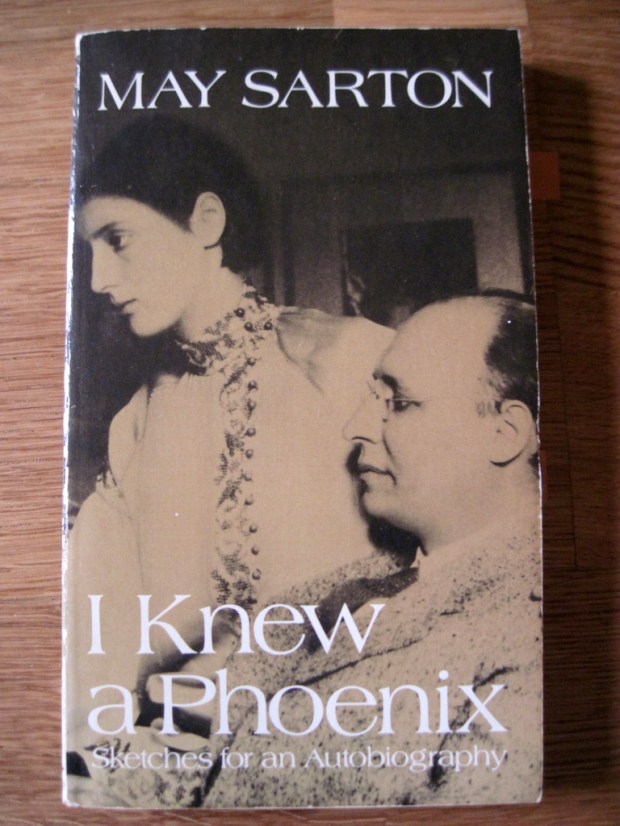
Royalty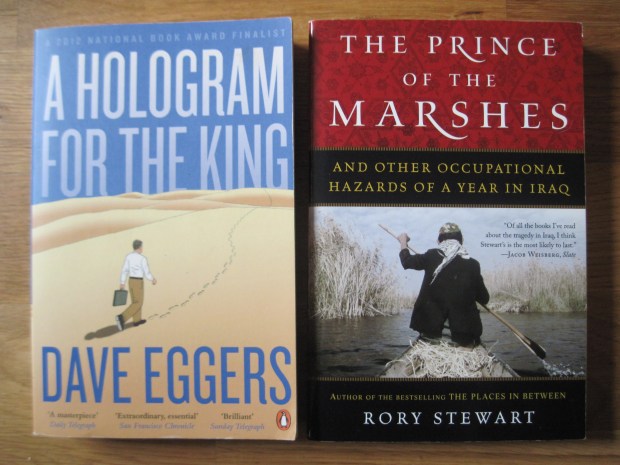
Architecture
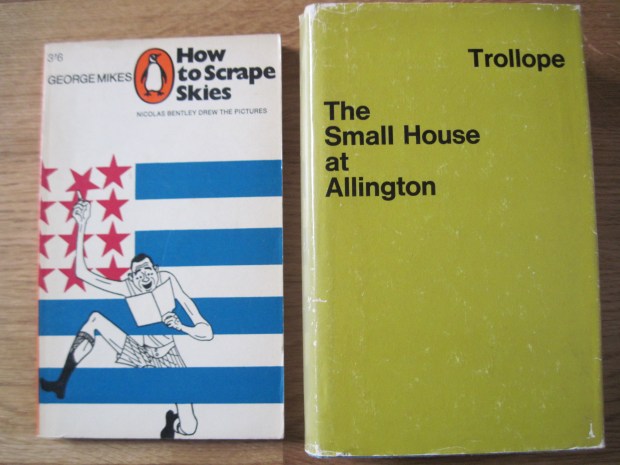
Clothing – Another cheat of sorts: all I could find was the cover of Bill Bryson’s memoir, which I’ve already read.

Family Member
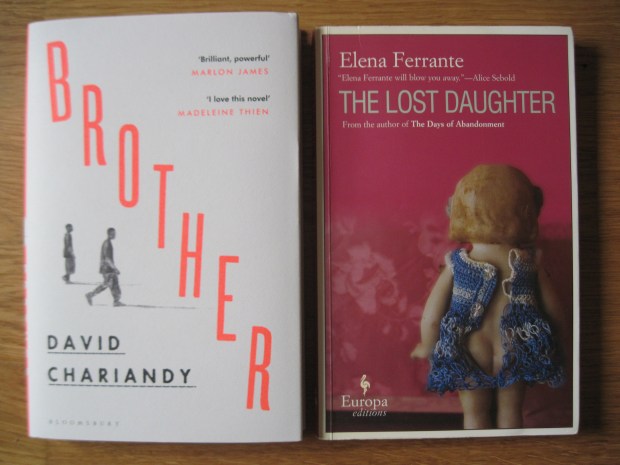
Time of Day

Music
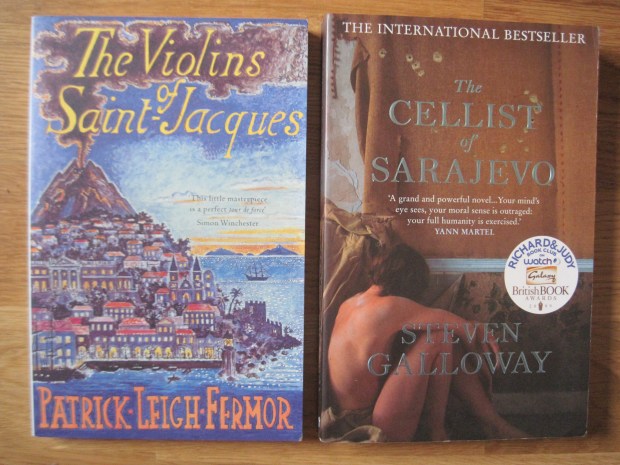
Paranormal Being
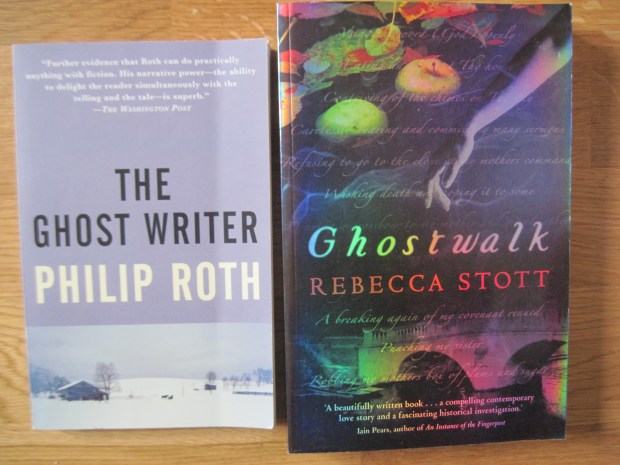
Occupation
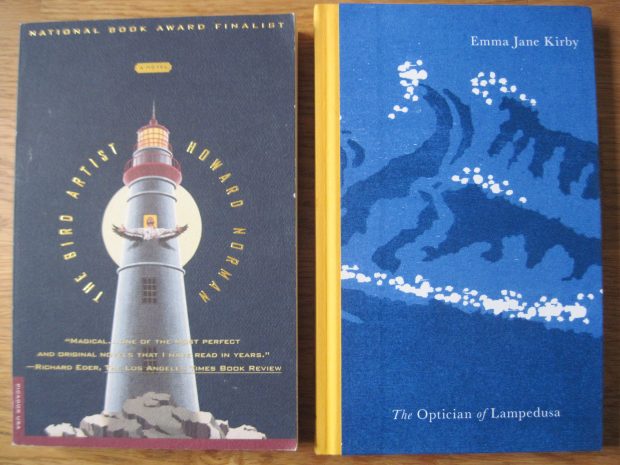
Season
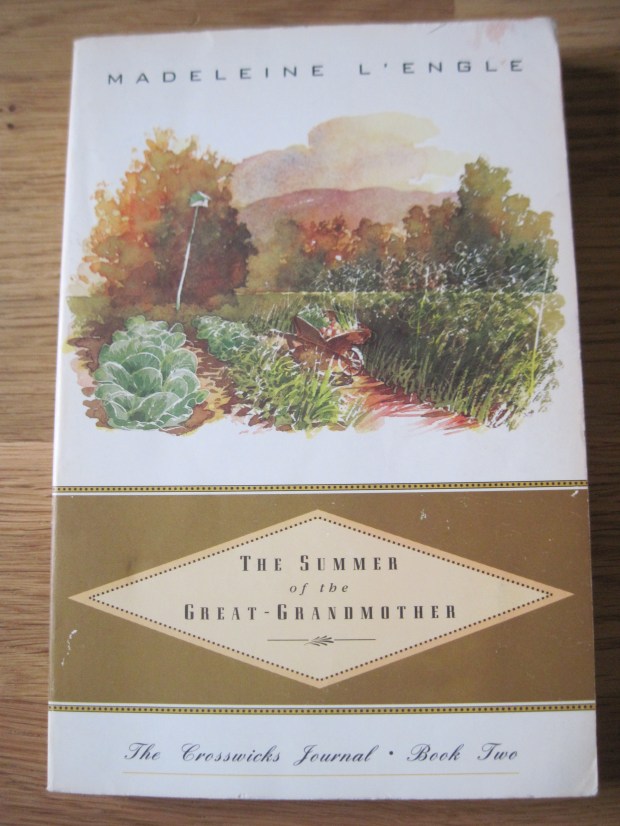
Color – Another one I could have amassed tons for. (Partially cut off is Ernest Hemingway’s Green Hills of Africa.)
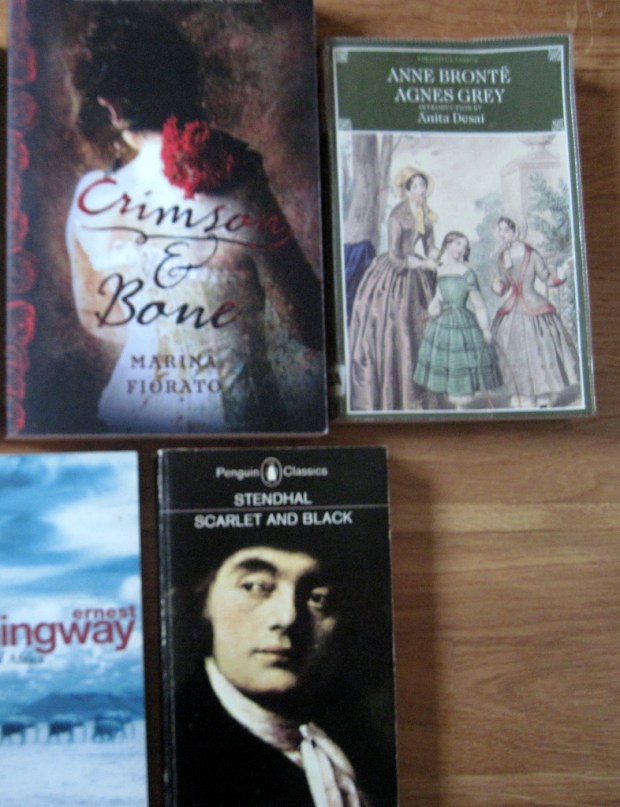
Celestial Body

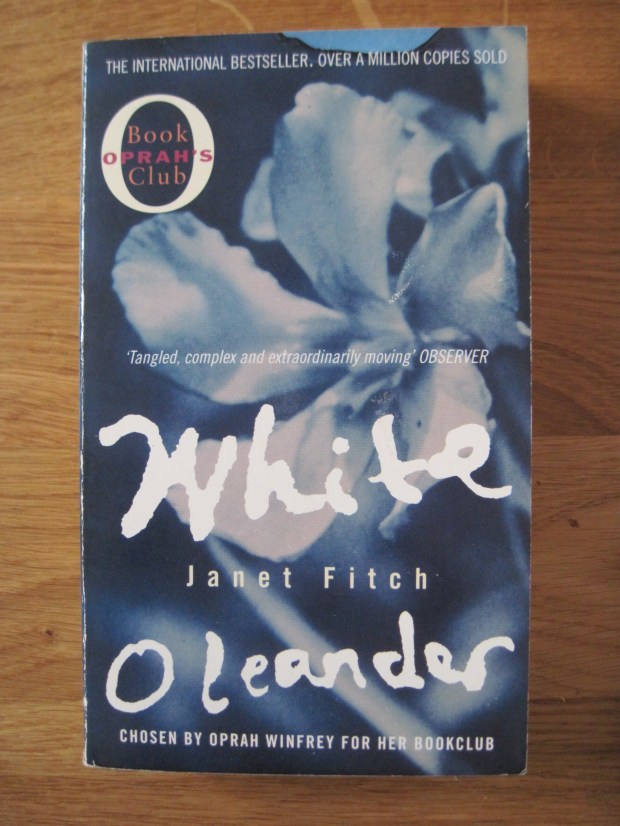
Something that Grows
Blog Tour: The Secret Life of Mrs. London by Rebecca Rosenberg
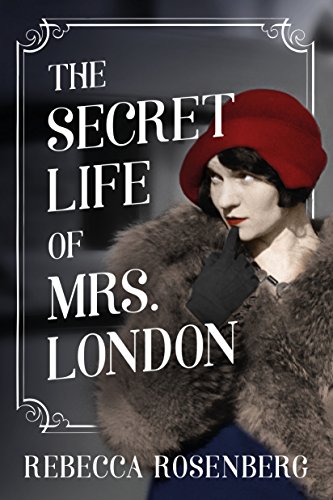
 I have a weakness for novels about history’s famous wives, whether that’s Zelda Fitzgerald, the multiple Mrs. Hemingways, or the First Ladies of the U.S. presidents. A valuable addition to that delightful sub-genre of fiction is The Secret Life of Mrs. London, the recent debut novel by California lavender farmer Rebecca Rosenberg. I’m pleased to be closing out the blog tour today with a mini review. So many thorough reviews have already appeared that I won’t attempt to compete with them, but will just share a few reasons why I found this a worthwhile read.
Set in 1915 to 1917, this is the story of the last couple of years of Jack London’s life, narrated by his second wife, Charmian, who was five years his senior. The novel opens in California at the Londons’ Beauty Ranch and Wolf House complex and also travels to Hawaii and New York City. Events are condensed and fictionalized, but true to life – thanks to the biography Charmian wrote of Jack and the author’s access to her journals and their letters.
Here are a few things I particularly liked about the novel:
 A fantastic opening scene: September 1915: Charmian decides to fix Jack’s hangover with strong coffee and a boxing match – with her! – while their Japanese servant, Nakata, and their house guests look on with bemusement. “Nothing breathes vigor into a marriage like a boxing match.”
- A glimpse into Jack London’s lesser-known writings: I’ve only ever read White Fang and The Call of the Wild, as a child. But in addition to his adventure stories he also wrote realist/sociopolitical novels and science fiction. At the time when the novel opens, he’s working on The Star Rover. This has inspired me to look into some of his more obscure work.
- The occasional clash of the spouses’ ambitions: Charmian considers it her duty to hold Jack to his promise of writing 1,000 words a day. However, she is an aspiring writer herself, and she often needles Jack to talk to his publisher about accepting her books. (She eventually published two travel books, The Log of the Snark (1915), about their years sailing the Pacific, and Our Hawaii (1917), as well as her biography of her late husband, The Book of Jack London, in 1921.)
- Charmian’s longing for motherhood: Jack London had an ex-wife and two daughters, Joan and Becky. In 1910 Charmian gave birth to a daughter, Joy, who soon died. Even though she is 43 by the time the book opens, she still wants to try again for a baby. Her hopes and disappointments are a poignant part of the story.
- Cameos from other historical figures: Harry Houdini and his wife, especially, have a large part to play in the novel, particularly in the last quarter.
I wasn’t so keen on the sex scenes, which are fairly frequent. However, I can recommend this to fans of Nancy Horan’s work.
My rating:
The Secret Life of Mrs. London was published by Lake Union Publishing on January 30th. I read an e-copy via NetGalley.
Literary Blind Spots: Hemingway and Fitzgerald
 Despite being educated through university level in the United States, I’m better acquainted with British literature than American, in part due to my own predilections. Ernest Hemingway and F. Scott Fitzgerald are two of the American authors I’ve most struggled with. For one thing, their novels’ titles are interchangeable, abstract quotations that I can never keep straight. Which is which? The Sun Also Rises is the bullfighting one, right? And is A Farewell to Arms the other one I’ve read? Fitzgerald is an even worse offender as titles go, with The Great Gatsby the only one that actually refers to its contents.
 For the record, I recognize The Great Gatsby as a masterpiece, and I absolutely loved A Moveable Feast, Hemingway’s memoir of life in Paris. I also enjoy reading about the Hemingways (Paula McLain’s The Paris Wife and Naomi Wood’s Mrs. Hemingway) and the Fitzgeralds (Therese Anne Fowler’s Z: A Novel of Zelda Fitzgerald and R. Clifton Spargo’s Beautiful Fools). But when I’ve tried to go deeper into the authors’ work, it hasn’t been an unmitigated success. The above two Hemingway novels are just okay for me. The Sun Also Rises struck me as having a thin plot, two-dimensional characters and repetitious dialogue.
When I eagerly approached Tender Is the Night last year – having recently read a novel about the real-life couple who inspired Fitzgerald’s portrait of Dick and Nicole Diver, Gerald and Sara Murphy (Villa America by Liza Klaussmann) – I pulled out a lot of great individual lines but had trouble following the basic plot and only really enjoyed the early chapters of Book Two. Here are some of those pearls of prose:
The delight in Nicole’s face—to be a feather again instead of a plummet, to float and not to drag. She was a carnival to watch—at times primly coy, posing, grimacing and gesturing—sometimes the shadow fell and the dignity of old suffering flowed down into her finger tips.
somehow Dick and Nicole had become one and equal, not apposite and complementary; she was Dick too, the drought in the marrow of his bones. He could not watch her disintegrations without participating in them.
Well, you never knew exactly how much space you occupied in people’s lives.
women marry all their husbands’ talents and naturally, afterwards, are not so impressed with them as they may keep up the pretense of being.
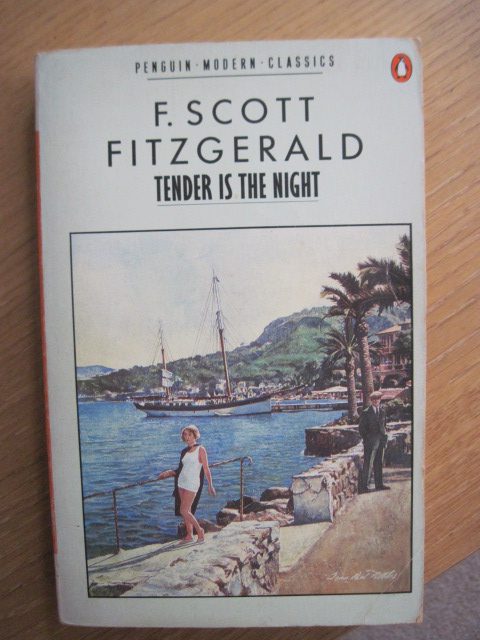
Imagine my surprise when I learned from a note at the end of my Penguin paperback that Fitzgerald made a major revision that rearranged the action into chronological order, thus opening with Book Two. That text, edited by Malcolm Cowley, appeared in 1951 and was printed by Penguin from 1955. However, the version I have – as reprinted from 1982 onwards – goes back to Fitzgerald’s first edition. Would I have had a more favorable reaction to the novel if I’d encountered it in its revised version? Somehow I think so.
Is there a Hemingway or Fitzgerald novel that will change my opinion about these literary lions? Share your favorites.
Six Books I Abandoned Recently
Sigh. It keeps happening. A book that looks unmissable ends up disappointing me and I abandon it partway through. Here’s six I dropped recently: two from the library, two e-copies I was meant to review but found I couldn’t recommend, and two that couldn’t hold my interest on our European holiday. Below I give brief write-ups of the abandonees. As always, I’d be interested to hear if you’ve read any of them and thought they were worth persisting with.
 You Are Having a Good Time: Stories by Amie Barrodale
I only managed the first two stories. Barrodale writes in a flat, affectless style full of unconnected sentences; her themes are of Hollywood and the emptiness of modern life. This reminded me most of Miranda July, so if you’re a big fan of hers I’d say go for it. Otherwise, don’t bother. [Read the first 21%.]
My rating: 
 Sweet Home by Carys Bray
These gently magical short stories equate parenthood with peril: a child is always somehow lost or on the verge of being lost. “Just in Case” is wonderfully macabre, and I was glad to discover how A Song for Issy Bradley got its start (with “Scaling never”). The fragility of memory is another theme, with one story narrated by a woman with dementia. The title story has a Hansel and Gretel fairytale feel to it. I enjoyed the first half well enough, but didn’t feel compelled to continue; I definitely prefer Bray’s full-length work, and this needed to go back to the library anyway. [Read the first 96 pages out of 178.]
My rating: 
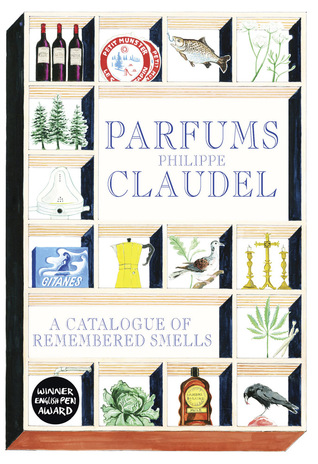 Parfums: A Catalogue of Remembered Smells by Philippe Claudel
[translated from the French by Euan Cameron]
I loved the idea behind this: a memoir in the form of short essays built around scent memories. Cinnamon brings the Christmas season to mind, aftershave reminds him of his father, and garlic and cannabis dredge up different aspects of his growing-up years. There’s some beautifully poetic language here. A favorite line was “The child that I am is allowed to breathe in these smells of dead pollen, widowed woolens and orphaned linen so that one day he can piece them together into a narrative and resurrect lives lost through wars, illnesses and accidents.” But ultimately I got a bit tired of more of the same. Perhaps if I’d kept it as a bedside book and just read a few pieces at a time instead of attempting to read it straight through, it would have worked better for me. [Read the first 86 pages out of 173.]
My rating:
 Absalom’s Daughters by Suzanne Feldman
Three generations of black women – Cassie, Lil Ma and Grandmother – live on Negro Street above the laundry where they work in Heron-Neck, Mississippi. Cassie learns that her father is a white man, William Forrest, whose daughter Judith is near her age. They know they’re sisters and when they hear their worthless pater has received an inheritance they concoct a scheme to go get their nest egg. Alas, the Southern dialect feels false to me, and I wasn’t taken with any of the characters. (Great piece of trivia: Feldman used to write science fiction under the pen name “Severna Park,” which is a town in Maryland.) [Read the first 18%.]
My rating: 
 The Hemingway Thief by Shaun Harris
I thought this would be a fun, light-hearted literary mystery to read on European trains. Henry Cooper, a writer of vampire romances, takes a sabbatical to Mexico to figure out what he really wants to do. Here he unexpectedly wanders into intrigue when a Hemingway manuscript turns up in a small-time criminal’s hotel room. I never warmed to the uninspired hardboiled-lite style and it took far too long for the story to get going. [Read the first 17%.]
My rating:
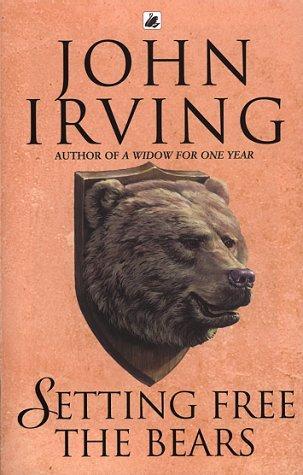 Setting Free the Bears by John Irving
This was Irving’s debut, and although you can see seeds of the Dickensian characterization at which he excels in his best work, it was just not good overall. Neither Siggy nor Graff held my interest, and the dialogue feels stiff and unrealistic. There’s also some downright strange wording: “I could peek how the helmet nearly covered her eyes”; “the rain still puddled the courtyard”; “When his spongy ribs whomped the cobbles, the horse said, ‘Gnif!’” I couldn’t decide if this was Irving trying to show that the story is set abroad or if it was just evidence of bad writing. My husband is enough of an Irving fan to have gobbled the book up by the time we reached Austria, but I decided it wasn’t going to get much better. That’s a shame, as I would have liked to get to them, you know, actually setting free the bears at the Vienna Zoo. [Read the first 75 pages out of 384.]
My rating:
Reviews Roundup, August–September
One of my goals with this blog is to have one convenient place where I can gather together all my writing that has appeared in disparate online locations. To that end, once a month I’ll provide links to all the book reviews I’ve published elsewhere, with a rating (below each description) and a short taster so you can decide whether to click to read more. A couple of exceptions: I won’t point out my Kirkus Indie or BlueInk reviews since I don’t get a byline.
The Bookbag
 Dandelion Angel by C.B. Calico (& interview): This was inspired by a non-fiction work, Understanding the Borderline Mother by Christine Ann Lawson. The four mother/daughter relationships in this Germany-set novel – all marked to some extent by dysfunction, physical and/or verbal abuse, and borderline personality disorder – are based on Lawson’s metaphorical classifications: the hermit, the queen, the waif, and the witch. Looping back through her four storylines in three complete cycles, Calico shows how mental illness is rooted in childhood experiences and can go on to affect a whole family.

The Last Pilot by Benjamin Johncock: Cinematic descriptions of the California desert setting plus excellent characters and dialogue enliven this debut novel about a fictional test pilot and his family troubles during America’s Space Race. Johncock is British, but you can tell he’s taken inspiration from stories about the dawn of the astronaut age. If I allowed myself small points of criticism, I would say that it’s a challenge to accept the passage of time in the final 50 pages, and that a keen interest in astronauts is probably a boon to keep readers going through the test flight portions, which to me were less compelling than the domestic drama of Jim, Grace and Florence.
 Home Is Burning by Dan Marshall: At age 25, Dan Marshall went home to Salt Lake City to care for a father with ALS and a mother with leukemia. He and his four hapless siblings (a Sedaris-like clan) approached caregiving with sarcasm and dirty humor. Gleefully foul-mouthed, his memoir lacks introspective depth. He hardly ventures deeper than initial descriptions like “My gay brother, Greg” and “My adopted Native American sister, Michelle.” And even when his sentiments about his father are sincere, they are conveyed via what sound like clichés: “I wanted my poor dad to get better, not worse.” But to my surprise, Marshall made me cry in the end.

Of Orcas and Men by David Neiwert: Inspired by personal sightings near his home in Seattle, Neiwert set out to learn everything he could about orcas. The result is a thorough study of whales’ behavior and interactions with humanity from native mythology through modern-day aquarium shows. Some specialist interest would probably be helpful to those attempting this book, although there are plenty of black-and-white photographs to keep even casual readers interested. “Recovering our humanity may be the real gift of the orcas, what they can teach us. It’s our choice whether to listen.”

BookBrowse
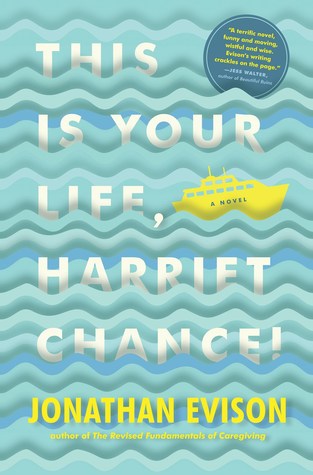 This Is Your Life, Harriet Chance! by Jonathan Evison [a subscription service, but an excerpt is available for free]: A widow in her seventies relives the ups and downs of her life while on an Alaskan cruise to scatter her husband’s ashes. Chapters alternate between a third-person account of the cruise and a second-person survey of Harriet’s past, delivered in the format of TV’s This Is Your Life. The narration is fresh and effective because the gradual revelations undermine Harriet’s elderly persona in such surprising ways. She is an out-of-the-ordinary but believable protagonist who, like all of us, has a mixture of victories and disappointments behind her. This is a charming novel about learning to reckon with the past.
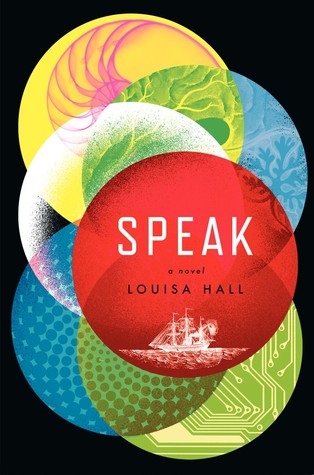 Speak by Louisa Hall [subscription service, but the full text of my review will be available for free during the week starting September 25th as part of Editor’s Choice]: Hall interweaves disparate time periods and voices to track the development of artificial intelligence. The fact that all six narratives are in different documentary formats – memoirs, letters, the transcript of a dialogue, a diary, and so on – means they are easy to distinguish. One might argue that two of them (Alan Turing’s letters and Mary’s shipboard diary) are unnecessary, and yet these are by far the most enjoyable. They prove Hall has an aptitude for historical fiction, a genre she might choose to pursue in the future. A remarkable book interrogating how the languages we converse in and the stories we tell make us human.
BookTrib
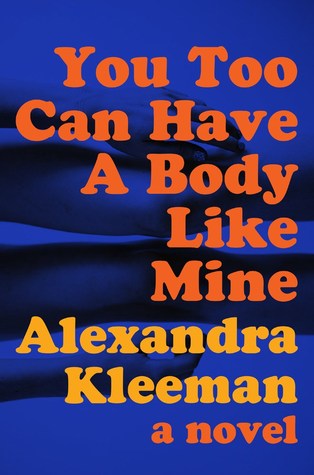 You Too Can Have a Body Like Mine by Alexandra Kleeman: Think of Alexandra Kleeman as an heir to Dave Eggers and Douglas Coupland, with a hefty dollop of Margaret Atwood thrown in. Her first novel is a full-on postmodern satire bursting with biting commentary on consumerism and conformity. Television and shopping are the twin symbolic pillars of a book about the commodification of the body. In a culture of self-alienation where we buy things we don’t need, have no idea where food comes from and desperately keep up the façade of normalcy, Kleeman’s is a fresh voice advocating the true sanity of individuality. Don’t miss her incredible debut.

Foreword Reviews
Conflict Communication by Rory Miller: Based on “ConCom,” the police verbal de-escalation program Miller developed with Marc MacYoung, this book aims to introduce readers to more conscious methods of verbal communication that will sidestep instinctive reactions and promote peaceful solutions. The advice is practical and intuitive, yet picks up on tiny details that most people would not notice. Concise, helpful, and well-organized, this is strongly recommended for readers interested in the psychology of violence and improving communication skills.
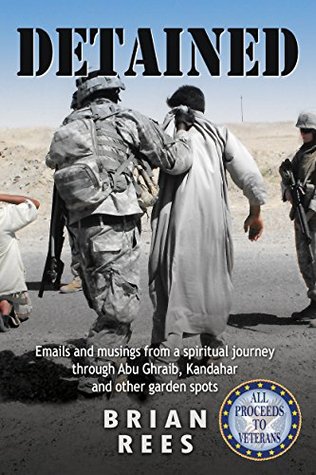 Detained by Brian Rees: Rees intersperses witty e-mail updates from his tours of Iraq and Afghanistan with clued-in commentary about war tactics, terrorism, Islam, and the benefits of transcendental meditation (TM) for soldiers with PTSD. The mixture of formats and topics generally works well, though the spiritual material deserves its own book. There’s no denying Rees’s expertise, and his fluid writing keeps the pages turning. This could make a fascinating companion volume for fans of recent war fiction such as The Yellow Birds, Redeployment, and War of the Encyclopaedists.
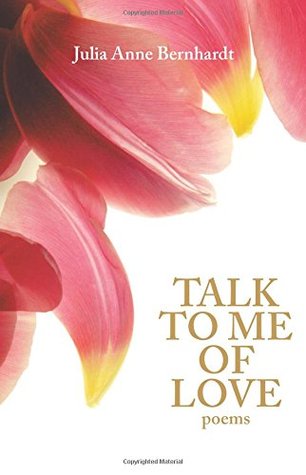 Talk to Me of Love by Julia Anne Bernhardt: The poems in Bernhardt’s first collection range from erotic to spiritual as they investigate love in all its forms. Repetition, rhyme, and mantras produce hypnotic sonic effects and support the central message of the epigraph: “God is in the detail.” The everyday and the eternal mix here. This well-structured collection celebrates different types of love through meditative verse. The themes’ strength is enough to recommend it to readers of Jo Shapcott and Julia Copus.
The Hidden Treasure of Dutch Buffalo Creek by Jackson Badgenoone: Otherworldly ghost writers (the “Neverborn”) compose biographies for ordinary people in this playfully metafictional novel. James is a strong central character whose memories from the 1950s through the present give a sense of history’s sweep, while vivid descriptive language enlivens the settings. Although well written, the book as a whole is an unusual amalgam of spiritualism, historical nostalgia, and technology. James’s story might have been better told as a simple coming-of-age novel with flashbacks.
Nudge
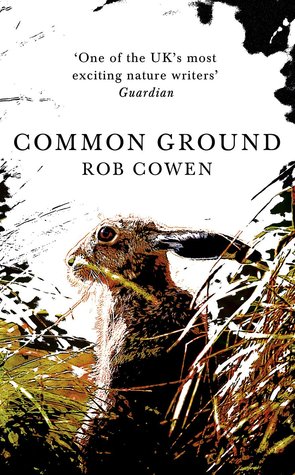 Common Ground by Rob Cowen: An unassuming patch of edge-land outside Harrogate is Cowen’s nature paradise, providing him with wildlife encounters and imaginative scenarios. Essentially, what Cowen does is give profiles of the edge-land’s inhabitants: animal and human, himself included. For instance, he creates an account of the life and death of a fox; elsewhere, he crafts a first-person narrative by a deer being hunted in medieval times. These fictions emulating Watership Down or Tarka the Otter, though well written, are out of place. When the book avoids melodramatic anthropomorphizing, it is very beautiful indeed.
We Love This Book
 Where My Heart Used to Beat by Sebastian Faulks: In Faulks’s thirteenth novel, his trademark themes of war, love and memory coalesce through the story of a middle-aged psychiatrist discovering the truth about his father’s death. Reminiscent of Birdsong as well as John Fowles’s The Magus and Ernest Hemingway’s A Farewell to Arms, this does not have the power of Faulks’s previous work but is a capable study of how war stories and love stories translate into personal history. [A few extra thoughts at Goodreads.]

I also post reviews of most of my casual reading and skimming on Goodreads.
 How to Write a Novel by Melanie Sumner: Our would-be novelist is Aris (short for Aristotle) Thibodeau, 12.5 years old and as precocious as Flavia de Luce. Diane is her single mother, and Max her downright weird younger brother. Using Write a Novel in 30 Days!, Aris is turning her family’s life story into fiction. In some ways they are very out of place here in Kanuga, Georgia. The child’s wry look at family dysfunction reminded me of Sue Townsend’s The Secret Diary of Adrian Mole, Aged 13 ¾. I would probably read something else from Sumner, so long as it wasn’t quite as silly and YA geared as this.
The Art of Memoir by Mary Karr: I would recommend this to anyone who reads and/or secretly wants to write memoirs; for the latter group, there is a wealth of practical advice here, on topics such as choosing the right carnal details (not sexual – or not only sexual – but physicality generally), correcting your facts and misconceptions, figuring out a structure, and settling on your voice. Along the way Karr discusses a number of favorite memoirs in detail, sometimes even line by line: Wild by Cheryl Strayed, Stop-Time by Pat Conroy, A Childhood by Harry Crews, Maya Angelou’s books, Speak, Memory by Nabokov, and so on.

Emblems of the Passing World: Poems after Photographs by August Sander by Adam Kirsch: A charming mix of historical photographs (1910s–1950s Germany) and poems. Kirsch uses his poetry to bring these one-dimensional figures to life, imagining the stories behind their generic titles (“Office Worker” or “Farming Family”) and sometimes slyly questioning the political and status connotations of such designations. One of my favorites was “Student of Philosophy.” This book could draw people whose interests usually run more to nonfiction – especially social history – into giving poetry a try. Releases November 17th.
 Browsings by Michael Dirda: Dirda wrote this pleasant set of bibliophilic essays for the American Scholar website in 2012–13. He’s the American equivalent of the UK’s John Sutherland: an extremely well-read doyen of the classics with a special love for Victorian and Edwardian genre fiction, often as revived by small presses and specialist societies. At times Dirda’s interests can be a bit obscure for the average reader, and some of the essays feel redundant. Still, it’s easy to relate to his addictive book purchasing and hoarding.
The Communist Manifesto by Karl Marx and Friedrich Engels: I read this on the train to Manchester, appropriate reading when approaching one of the UK’s biggest centers of Victorian industry and the place where Marx and Engels met to discuss ideas in the mid-1840s. Like Darwin’s Origin of Species, another seminal Victorian text, this has so many familiar lines and wonderful metaphors that have entered into common discourse that I simply assumed it was composed in English. My eyes glaze over at politics or economics, so I valued this more for its language than for its ideas. Part II, “Proletarians and Communists,” is the most focused part if you want to sample it.
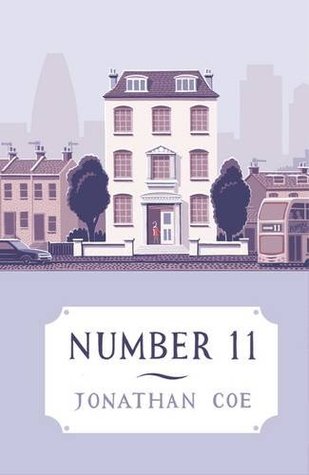 Number 11 by Jonathan Coe: This is a funny and mildly disturbing state-of-England and coming-of-age novel. I’d only read one previous book by Coe, Expo 58; this is a better example of his usual pattern: multiple, loosely linked storylines. Here the theme is the absurdity of modern culture, encompassing many aspects: unjust wars, the excesses of the uber-rich, the obsession with celebrity, and suspicion and exclusion of those who are different from us. The number 11 keeps popping up, too. My favorite parts were a Survivor-type reality television show and a laughably over-the-top prize ceremony banquet. Releases November 11th.
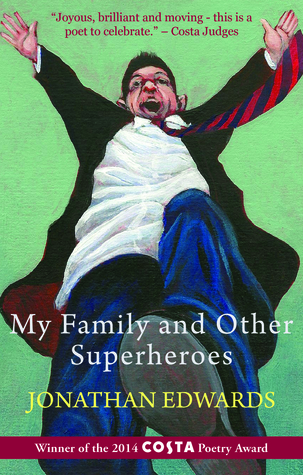 My Family and Other Superheroes by Jonathan Edwards: Edwards displays his proud Welsh heritage with poems reflecting on his family tree and the country’s landscape. One of my favorites was “View of Valleys Village from a Hill,” in which the narrator, with a God’s-eye view of his family, envisions messing around with them. The witty “In John F. Kennedy International Airport” imagines that Wales has been abolished and recreated in miniature in a small Kansas museum (a bit like Julian Barnes’s England, England).
The Whole & Rain-domed Universe by Colette Bryce: Many of these poems are about the author’s Irish family inheritance, both literal and figurative, as in “Heritance”: “From her? Resilience. Generosity. / A teacher’s gravitas. / Irish stew. A sense / of the ridiculous. High ceilings.” I loved the first line of “Signature” – “When I finally gave up and became my mother.” It’s particularly nice how enjambment often makes the thought go just that one line beyond what you expect. I’d read more from Bryce.
I Do Love a Good Book List
In the same way that I love following literary prize races (see my post on that topic from a couple weeks ago), I adore a good book list. This includes everything from an inspirational lifetime reading menu such as 1001 Books You Must Read Before You Die to those gimmicky “5 Novels About…” or “10 Books for People Who Like…” lists you get on websites like BuzzFeed and the Huffington Post.
Every time a new ‘Best Books Ever’ type of checklist comes out, I gleefully scan through to figure out how many I’ve already read. Usually the disappointing results smack me back and remind me that for all my voracious reading, I still haven’t read many of the classics everyone’s supposed to have read by my age.
Here for your delectation (if you like this sort of thing) is a sampling of the book lists I’ve bookmarked over the years, with my running total noted in brackets after each:
THE BEST OF THE BEST
The 100 Greatest Novels of All Time, as chosen by the Guardian in 2003 [33]
1000 novels everyone must read, as chosen by the Guardian in 2009 (interestingly, they divide it up by genre: Love Stories, Crime Fiction, Comedy, Family & Self, State of the Nation, Science Fiction & Fantasy, and War & Travel) [155 + 2 in progress]
The 100 greatest non-fiction books, as chosen by the Guardian in 2011 [7]
Vintage 21, a set of 21 modern classics chosen in 2011 [14]
100 novels everyone should read, as chosen by the Telegraph in April [29]
The 100 best novels written in English, as chosen by Robert McCrum in the Guardian last week [34]
PARTICULAR TIMES OF LIFE
65 Books You Need To Read in Your 20s, from BuzzFeed (alas, it’s too late for many of us) [13, 12 of which I think I read in my 20s]
25 Books to Help You Survive Your Mid-20s, from Bustle (ditto) [9, all read in my 20s, I think]
Conversely, here’s 15 Books You Should Definitely Not Read in Your 20s from Flavorwire (well, that’s alright, then) [I disobeyed them on 4 counts]
21 Books Every Woman Should Read By 35, from Bustle (I’ve got 3.13 years to work on it) [5; I left The Flamethrowers unfinished]
11 Novels That Expectant Parents Should Read Instead of Parenting Books, from Electric Literature (my mother may be reading this, so I must hastily add that THIS SITUATION DOES NOT APPLY TO ME!) [6]
SPECIFIC AUTHORS
The Best Hemingway Novels, on Publishers Weekly [2 out of 6, but A Moveable Feast is my favorite from him]
The 13 Best John Steinbeck Books, on Publishers Weekly [3]
The 10 Best Mark Twain Books, on Publishers Weekly [just 1!]
23 Contemporary Writers You Should Have Read by Now, on Reader’s Digest [I’ve read 3, Elizabeth Spencer, Percival Everett and Pamela Erens]
Beyond Murakami: 7 Japanese Authors to Read, on Book Riot [none so far]
SPECIFIC GENRES
20 Classic Novels You’ve Never Heard of, from QwikLit [I’ve heard of plenty of these, but only read 1]
12 Fiction Books That Will Shape Your Theology, from RELEVANT Magazine [3]
The 10 Best Books Shorter Than 150 Pages, on Publishers Weekly [2]
10 Best Southern Gothic Books, on Publishers Weekly [none so far]
10 Novels with Multiple Narratives, on Publishers Weekly [2]
The 10 Best Short Story Collections You’ve Never Read, on Publishers Weekly [they got that right; none so far]
The top 10 novels about childbirth, on the Guardian (again, NOT APPLICABLE TO ME!) [7]
I also highly recommend Nancy Pearl’s Book Lust series of four books, each one divided into themes.
ONE LAST LIST
Not a book list, but it may be useful for all you bibliophiles:
The 25 Best Websites for Literature Lovers, by Flavorwire
Do you love book lists as much as I do? Are you addicted to counting how many you’ve read from a checklist?
How do you fare on the lists above?
Review: The House of Hawthorne by Erika Robuck
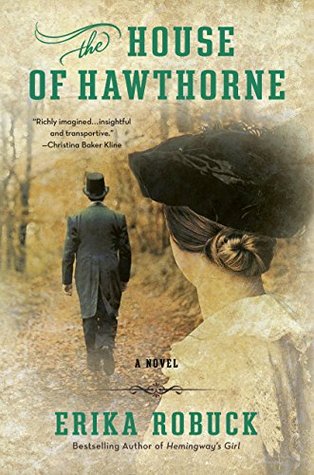 We often resent books we’re forced to read in school, but The Scarlet Letter wasn’t like that for me. Even though it was assigned reading for high school, I could instantly sense how important it was in the history of American literature. The tragic story of Hester Prynne and her judgmental community is one that stays with me half a lifetime later. I reread it in college for a Hawthorne & Melville course, for which I also read The Blithedale Romance, The House of the Seven Gables, and several of Nathaniel Hawthorne’s best short stories.
My more-than-average interest in Hawthorne, combined with my love of historical fiction about “famous wives” (see my BookTrib articles on the subject, including one specifically about the Hemingway and Fitzgerald wives) meant that I was eager to read Erika Robuck’s latest. She’s made a name for herself with novels about some of history’s famous women, including Zelda Fitzgerald, Edna St. Vincent Millay and one of the Hemingway wives, but somehow I’ve never read anything by her until now.
“Time flies over us, but leaves its shadow behind.”
(one of Robuck’s epigraphs, from Hawthorne’s The Marble Faun)

Nathaniel Hawthorne in 1840 (from Wikimedia Commons).
The novel is from the first-person perspective of Sophia Peabody, later the wife of Nathaniel Hawthorne. The Peabodys were an artistic, intellectual family who encouraged Sophia to cultivate her talent as a painter and sculptor, but illness often held her back: she suffered from debilitating headaches and turned to morphine and mesmerism for relief. The story begins and ends in the spring of 1864, when Nathaniel, suffering from a stomach ailment, sets off on a final journey without Sophia. In between these bookends, the novel spans the 1830s through the 1860s, taking in Sophia’s sojourn in Cuba as a young woman, her and Nathaniel’s courtship, and the challenges of parenthood and making a living from art.
My favorite portions of the novel were set in Concord, Massachusetts, that haven for writers and Transcendentalists. Ralph Waldo Emerson, Henry David Thoreau and Herman Melville all play minor roles. It’s especially amusing to see Melville, Hawthorne’s ardent admirer, overstep the boundaries of polite society and become an irksome stalker. What I did not realize from previous biographical reading about the Hawthornes is that they nearly always struggled for money. They rented Emerson’s uncle’s house in Concord but were evicted when they fumbled to make payments. Nathaniel’s jobs in the Custom House and as the U.S. Consul in Liverpool (appointed by President Franklin Pierce, who was a personal friend and whose biography he wrote) were undertaken out of financial desperation rather than interest.
The Hawthornes’ time in Europe was another highlight of the novel for me. They encounter the Brownings and finally get a chance to see all the Italian art that has inspired Sophia over the years. Their oldest daughter, Una, also falls ill with malaria, which provides some great dramatic scenes in later chapters. I warmed to this late vision of Sophia as a devoted mother, whereas I struggled to accept her as a vibrant young woman and a randy wife. Her constant complaints about headaches are annoying, and I wasn’t convinced that the Cuba chapters were relevant to the novel as a whole; Robuck tries to link Sophia’s observations of slavery there with the abolitionist sentiments of the 1860s, but Sophia’s devotion to the antislavery cause was only ever half-hearted, so I didn’t believe the experience in Cuba could have affected her that deeply. Her unconsummated lust for Fernando is also, I suppose, meant to prefigure her abiding passion for Nathaniel – which is described in frequent, cringe-worthy sex scenes and flowery lines like “In his gaze, I feel our souls rise up to meet each other.”
Ultimately, my disconnection from Sophia as narrator meant that I would prefer to read about the Hawthornes in biographies, of which there are plenty. Two novels I would recommend that incorporate many of the same historical figures are Miss Fuller by April Bernard and What Is Visible by Kimberly Elkins (about the deaf-blind Laura Bridgman – who has a tiny cameo here). Beautiful Fools by R. Clifton Spargo uses a Cuba setting to better effect in telling the story of Scott and Zelda Fitzgerald’s last holiday. I preferred all three of these to The House of Hawthorne. However, I’m certainly up for trying more of Robuck’s fiction.
My rating:
I received early access to this book through the Penguin First to Read program.
 Bookish Beck = Rebecca Foster. American transplant to England. Freelance proofreader and book reviewer.
