Review: Salt Creek by Lucy Treloar
Salt Creek is one of the very best works of historical fiction I’ve read. All the harder, then, to believe that it’s Lucy Treloar’s debut novel. Since its initial release in Australia in 2015, it has gone on to be shortlisted for the Walter Scott Prize for historical fiction and the Miles Franklin Award for Australian novels. We have Claire McAlpine of Word by Word to thank for helping this book find a publisher in the UK. I can particularly recommend it to fans of The Essex Serpent and English Passengers, and there are also resonances with Rebecca Winterer’s Australia-set The Singing Ship.
 Hester Finch is looking back from the 1870s – when she is a widowed teacher settled in England – to the eight ill-fated years her family spent at Salt Creek, a small (fictional) outpost in South Australia, in the 1850s–60s. Her luckless father tried whaling in Adelaide before turning to cheese-making as his next far-fetched money-making venture. From Quaker stock, Papa believed the natives should be well treated and even all but adopted an aboriginal boy named Tully, getting him to bathe and wear clothes and educating him alongside his seven children. However, as Hester hints starting early on in the novel, having a white family monopolizing resources put an impossible strain on relations with the natives.
It seems an inevitable irony of reviewing – or maybe it’s just me? – that the books you love the most are the hardest to write about. However can I do this book justice? I wonder about lots of 5-star books. It’s easier to put together a review when you have some mixture of positive and negative things to say, but I have no faults to find with Salt Creek. It flawlessly evokes its time period and somewhat bleak setting. Hester’s narration is as lyrical as it is nostalgic and matter-of-fact, and I sympathized with her desperation not to be drawn into a Victorian housewife’s cycle of endless pregnancies. The characterization is spot on, especially for figures like Papa or Tully who could have easily been reduced to stereotypes.
Most of all, this is the piercing story of a clash of cultures and the secret prejudices that underpin our beliefs. You might think notions of dominion and looking after ‘poor natives’ are outdated, but just listen in to what particular groups have to say about the environment and intervention abroad and you’ll realize that this is as relevant as ever. Salt Creek comes with my highest recommendation.
Some favorite lines:
“Poor Papa. He pitted himself against the land, yet it was impervious to all his learning and effort and incantatory prayers. The land had its own drives and they ran against Papa’s, blunting all his purposes.”
“I would not have a baby or that would be my life. There would be another and another and nothing left of my self; my life being decided for me.”
“Memories are just the survivors of complete events and are not easy to interpret; in the recalling they can be used to create a story that is only partially true or not true at all.”
“It seemed as if every part of the lagoon had a name and a story and a meaning. The stories were all around us wherever we went. There was scarcely a place without one and it felt as if we were nothing but one more story inside this world and the stories were without number.”
“The longer I looked the more that impression of civilization seemed an illusion.”
With thanks to Gallic Books for the free copy for review.
My rating:
Madness Is Better than Defeat by Ned Beauman
I’ve been a Ned Beauman fan ever since I read his debut, Boxer, Beetle, in 2011. Born in 1985, the Londoner is now the author of four novels and was named one of Granta’s 20 best British novelists under the age of 40. His books are madcap and complex; three out of four have historical settings (all broadly in the World War II era), but this is definitely not historical fiction as we know it. If I tell you that some common elements in his work are Nazis, pharmaceuticals and gay sex, and that his first two books reminded me most of Nick Harkaway, you’ll get some idea of the niche he’s working in.
 Madness Is Better than Defeat takes its title from a line in Orson Welles’s never-filmed screenplay of Heart of Darkness. We open in 1959 with Zonulet, a 43-year-old alcoholic CIA officer, writing a tell-all memoir about what happened when two parties set out to find a Mayan temple in Honduras in 1938. Sadistic business magnate Elias Coehorn, Sr. sent his feckless son, Elias Jr., to dismantle the temple and bring it back to New York City, while Arnold Spindler, chairman of Kingdom Pictures, tasked Jervis Whelt with directing a movie on location at the temple: Hearts in Darkness, a comedy about a spoiled society boy who’s sent on an archaeological dig to a Mayan temple and opens a nightclub when he gets there.
The scene is set for a clash of cultures: the New York faction bent on destruction versus the Los Angeles crew intent on creation. They’re joined by Joan Burlingame, a stuffy Cambridge anthropologist, and Leland Trimble, a gossip journalist who was formerly Zonulet’s colleague at the New York Evening Mirror. To start with the screwball plot is uncannily similar to that of Hearts in Darkness itself, and it seems the stalemate between the two groups will be mined purely for comic potential. But as the years pass and the deadlock continues, this becomes more of a psychological study of a community in isolation, rather like The Lord of the Flies or T.C. Boyle’s The Terranauts.
Alliances are formed and broken based on blackmail over the characters’ past and present indiscretions; routines and workarounds are developed (though an attempt to recreate Bloody Marys and Eggs Benedict fails); soon a whole new generation is being raised with little knowledge of what’s happened outside this jungle for more than a decade; all they have to go on is false information about the outcome of World War II conveyed by an ex-Nazi.
They spoke in American accents and they had all been taught a sort of eschatology in which they would one day return with their parents to Hollywood or New York. But they belonged to the rainforest and to the temple. And the geometry of the latter … was so primal to them that any talk of disassembly or reassembly struck them as abstract, almost paradoxical.
One of the hardest things to believe about the story line – so you’ll simply have to suspend your disbelief – is that no one was overly concerned when these two groups failed to reappear after assignments that were meant to last only a matter of weeks. Not until Zonulet gets to Honduras in 1956 to learn more about a secret CIA guerrilla training camp in the area is there sustained interest in what became of these exiled Americans, and it’s another two years before their jungle idyll comes to an explosive end.
What we have here is a twist on the Mummy’s Curse trope, with the temple causing many to lose their minds or their lives. I wish the novel could have retained its initial screwball charm without going quite so dark and strange, but that’s Beauman for you. I also thought that this was a good 100–150 pages too long, with many more secondary characters, subplots and asides than necessary. Ironically, even after nearly 500 pages, its conclusion left me wondering about some loose ends. But the writing is consistently amusing, particularly the voices captured in letters or diaries and the wacky metaphors:
- “The sky in the west was mixing an Old-Fashioned”
- “All her blood had thickened in her head like the last of the catsup”
- “They were so slathered in mulch that their two bodies together might have been some octopod newly burped from a mudpot.”
- “To describe the truck as temperamental would have been condescending; rather, I had the impression it had been earnestly wrestling with a deep crisis of personal faith about the very principle of internal combustion as a motive power.”
If you’re new to Ned Beauman, I’d suggest starting with The Teleportation Accident, my favorite of his novels. From there you could move on to Boxer, Beetle or Glow; this one can wait until you’re a confirmed admirer.
My rating: 
Madness Is Better than Defeat is published in the UK today, August 24th, by Sceptre and will be available in the USA in February. With thanks to Ruby Mitchell for the free review copy.
Blog Tour: The Floating Theatre by Martha Conway (Review & Excerpt)
The Floating Theatre, Martha Conway’s fourth novel, opens with a bang – literally. April 1838: twenty-two-year-old seamstress May Bedloe and her cousin, the actress Comfort Vertue, are on the St. Louis-bound steamboat Moselle when its boilers explode (a real-life disaster) and they must evacuate posthaste. Afterwards Comfort accepts a new role giving abolitionist speeches; May takes her sewing skills on board Captain Hugo Cushing’s Floating Theatre, where she will be a Jill of all trades: repairing costumes, printing tickets, publicizing the show in towns along the Ohio River where they moor for performances, and so on.
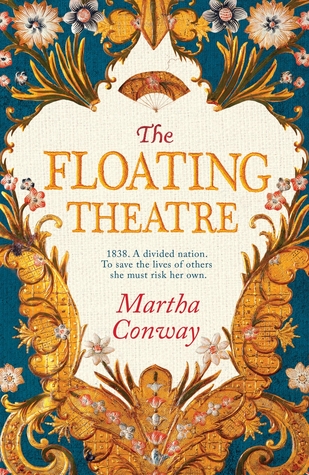 Conway gives a vivid sense of nineteenth-century theater life, both off-stage and on-, including just the right amount of historical detail so you can picture everything that’s going on. May is a delightfully no-nonsense narrator – she’d probably be diagnosed with Asperger’s nowadays for her literal approach and her initial inability to lie – and she’s supported by a wonderfully Dickensian cast of actors and crew members. The gripping plot takes on a serious dimension as May, too, gets drawn into the abolition movement: soon she’s helping to deliver runaway slaves from one side of the river to freedom on the other.
In America this was published as The Underground River, more clearly advertising its Underground Railroad theme. As it happens, I prefer this to Colson Whitehead’s The Underground Railroad, a novel to which it will inevitably be compared. (For one thing, Conway has a much more nuanced slave catcher character.) This is terrific historical fiction I can heartily recommend.
My rating: 
The Floating Theatre was released in the UK by Zaffre, an imprint of Bonnier Publishing, on June 15th. My thanks to Imogen Sebba for the free copy for review.
An exclusive extract from The Floating Theatre:
Two figures were standing on the lower deck at the stern of the boat. One of them might have been Hugo, but as I got closer I saw that the other one was certainly not Helena—it was Thaddeus Mason, eating popcorn from a red-and-white striped bag.
“What ho, May!” Thaddeus called out when he saw me, as if he were practicing for a nautical part. I noticed he no longer wore his arm in a sling. The other man turned as I came up the gangplank; like Thaddeus, he wore his hair long, but his coloring was darker and he was half a head taller. There was a band of black crepe around his straw hat, and his shirtsleeves were rolled up past his elbows. Thaddeus introduced me.
“Captain Hugo Cushing,” the man said in a British accent, touching his hat.
“May and I were on the Moselle together,” Thaddeus told him—was that to be his introduction for me from now on? But he went on to say that Hugo’s sister Helena had been on the Moselle, too. “Do you remember the singer at dinner? Helena Cushing, of Hugo and Helena’s Floating Theatre?” Thaddeus took off his hat. “Sadly, she was not as fortunate as we were.”
I looked at Hugo and tried to think of something kind to say. I remembered the singer in her pink dress with the light shining behind her.
“The captain let her on to perform,” Hugo said. “We often made a few extra dollars this way. She was going to get off at the stop after Fulton. I was just pushing off to meet up with her there when the sky broke up with the explosion.”
“Oh,” I said. “That is—that’s very bad…” I trailed off awkwardly, but Thaddeus came in with a string of platitudes, which he spoke with great conviction and aplomb—a terrible disaster, an immense misfortune, the captain was a dastardly fellow.
“Where do you go?” I asked Hugo when Thaddeus finished. “Or do you stay here?”
He looked at me blankly.
“On this boat. Your theatre. Where do you perform?”
“Oh, well then, down along the Ohio, of course. We dock at a different town every day, put on a show, and then the next morning pull up and head for the next town. We go all the way to the Mississippi playing towns until the weather turns. Then we get pushed back up the river—I hire a steamer.” I could see that his boat, a flatboat, had no steam power of its own. “Fourth year at it,” he told me. “My sister and I put it all together. But now…” He made a gesture which I took to understand that for him, like me, his old partnership was over.
“And if that weren’t enough, his boat was damaged by the explosion,” Thaddeus added. “The captain was just telling me. Part of the Moselle’s paddle box shot in like a cannonball.”
“Even worse, my leather boat pump got punctured,” Hugo said. “Don’t know how I’m going to fix it, and a new one costs twenty dollars more than I have.”
“How much does a new one cost?” I asked.
He looked at me as if I were a fool. “Twenty dollars.”
“Where is your company?” Thaddeus asked him. “Maybe you could take up a collection.”
“They skittered off into town. Probably drinking their way into even more uselessness. Damn actors. Excuse me,” he said, but I wasn’t sure he meant the apology for me since he was looking out at the river. I wasn’t offended in any case. I had seen actors humiliate themselves in a variety of ways over the years.
I was delighted to be asked to participate in the blog tour for The Floating Theatre. See below for details of where other reviews and features have appeared.

Catching Up on Prize Winners: Alderman, Grossman & Whitehead
Sometimes I love a prize winner and cheer the judges’ ruling; other times I shake my head and puzzle over how they could possibly think this was the best the year had to offer. I’m late to the party for these three recent prize-winning novels. I’m also a party pooper, I guess, because I didn’t particularly like or dislike a one of them. (Reviews are in the order in which I read the books. My rating for all three =  )
)
A Horse Walks into a Bar by David Grossman
(Winner of the Man Booker International Prize)
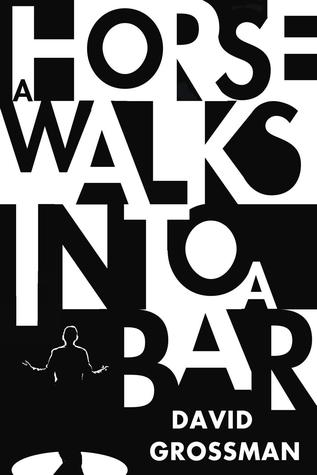 “Why the long face? Did someone die? It’s only stand-up comedy!” Except that for the comedian himself, Dovaleh Greenstein, this swan song of a show in the Israeli town of Netanya devolves into the story of the most traumatic day of his life. Grossman has made what seems to me an unusual choice of narrator: Avishai Lazar, a widower and Supreme Court justice, and Dov’s acquaintance from adolescence – they were in the same military training camp. Dov has invited him here to bear witness, and by the end we know Avishai will produce a written account of the evening.
Although it could be said that Avishai’s asides about the past, and about the increasingly restive crowd in the club, give us a rest from Dov’s claustrophobic monologue, in doing so they break the spell. This would be more hard-hitting as a play or a short story composed entirely of speech; in one of those formats, Dov’s story might keep you spellbound through a single sitting. Instead, I found that I had to force myself to read even five or 10 pages at a time. There’s no doubt Grossman can weave a clever tale about loss, and there are actually some quite funny jokes in here too, but overall I found this significantly less powerful than the author’s previous work, Falling Out of Time.
The Underground Railroad by Colson Whitehead
(Winner of the Pulitzer Prize, National Book Award and Arthur C. Clarke Award; longlisted for the Man Booker Prize)
 Following Cora on her fraught journey from her Georgia plantation through the Carolinas and Tennessee to Indiana is enjoyable enough, with the requisite atrocities like lynchings and rapes thrown in to make sure it’s not just a picaresque cat-and-mouse battle between her and Arnold Ridgeway, the villainous slavecatcher. But I’m surprised that such a case has been made for the uniqueness of this novel based on a simple tweak of the historical record: Whitehead imagines the Underground Railroad as an actual subterranean transport system. This makes less of a difference than you might expect; if anything, it renders the danger Cora faces more abstract. The same might be said for the anachronistic combination of enlightened and harsh societies she passes through: by telescoping out to show the range of threats African-Americans faced between the Civil War and the 1930s, the novel loses immediacy.
Ultimately, I felt little attachment to Cora and had to force myself to keep plodding through her story. My favorite parts were little asides giving other characters’ backstories. There’s no doubt Whitehead can shape a plot and dot in apt metaphors (I particularly liked “Ajarry died in the cotton, the bolls bobbing around her like whitecaps on the brute ocean”). However, I kept thinking, Haven’t I read this story before? (Beloved, Ruby, The Diary of Anne Frank; seen on screen in Twelve Years a Slave, Roots and the like.) This is certainly capably written, but doesn’t stand out for me compared to Homegoing, which was altogether more affecting.
The Power by Naomi Alderman
(Winner of the [Bailey’s] Women’s Prize)
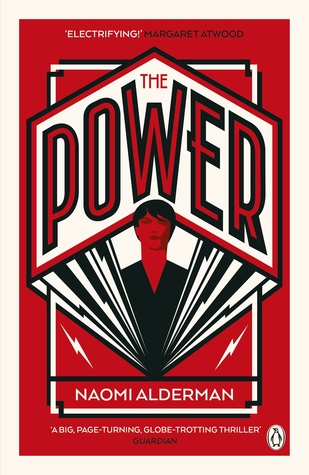 I read the first ~120 pages and skimmed the rest. Alderman imagines a parallel world in which young women realize they wield electrostatic power that can maim or kill. In an Arab Spring-type movement, they start to take back power from their oppressive societies. You’ll cheer as women caught up in sex trafficking fight back and take over. The movement is led by Allie, an abused child who starts by getting revenge on her foster father and then takes her message worldwide, becoming known as Mother Eve.
Alderman has cleverly set this up as an anthropological treatise-cum-historical novel authored by “Neil Adam Armon” (an anagram of her own name), complete with documents and drawings of artifacts. “The power to hurt is a kind of wealth,” and in this situation of gender reversal women gradually turn despotic. They are soldiers and dictators; they inflict genital mutilation and rape on men.
I enjoyed the passages mimicking the Bible, but felt a lack of connection with the characters and didn’t get a sense of years passing even though this is spread over about a decade. This is most like Margaret Atwood’s MaddAddam trilogy – Alderman’s debt to Atwood is explicit, in the dedication as well as the acknowledgments – so if you really like those books, by all means read this one. My usual response to such speculative fiction, though, even if it describes a believable situation, is: what’s the point? As with “Erewhon,” the best story in Helen Simpson’s collection Cockfosters, the points about gender roles are fairly obvious.
I’d be interested to hear if you’ve read any of these books – or plan to read them – and believe they were worthy prize winners. If so, set me straight!
Summer Reads: The Women of the Castle and The Nest
What do you look for in your summer reading? Terms like “beach read” tend to connote light, frothy stories—especially from genres like romance, mystery, and chick lit—but for me a summer read is any book that happens to be totally absorbing, whatever its length. These two novels I recently read are perfect for the summer because you can sink right into them. Whether a trio of widows in postwar Germany or a dysfunctional family in modern-day New York City, the characters and setting come fully to life and tempt you to settle in on a sofa or a beach towel and stay for a while.
The Women of the Castle by Jessica Shattuck
Like Virginia Baily’s Early One Morning and Caroline Lea’s When the Sky Fell Apart, this is a female-centered World War II story that focuses on a lesser-known aspect of history. The main characters are three German women, Marianne, Benita and Ania, who were aligned with different sides in the Nazism vs. Resistance conflict but have all suffered grave losses. These widows band together to raise their children at Burg von Lingenfels, the dilapidated ancestral castle of Marianne’s late husband’s family, but as the years pass regrets and unburied secrets start to come between them.
 Apart from a short prologue from 1938 and a final section that jumps ahead to 1991, the novel is mainly set in 1945–50. I appreciated the look at postwar Germany, a period you rarely encounter in fiction. Refugees, rape victims, and Russian soldiers are everywhere, while American propaganda heaps shame on Germans for supporting Hitler. As with Barbara Yelin’s Irmina, though, there’s an acknowledgment here that it was never a clear-cut matter of pure evil or utter ignorance; “They had known but not known,” is how Shattuck puts it.
What is most intriguing to watch are the shifting relationships between the three main characters. Marianne, as the widow of one of the conspirators in the plot to assassinate Hitler, feels a compulsion to rescue her fellow widows from work camps and to keep the history of the Resistance alive. When her friends disappoint her—Benita falls in love with a former Nazi officer; Ania admits to a past she’d rather forget—Marianne doesn’t know how to absorb the shocks without judgment. A black-and-white thinker, she has trouble seeing life’s gray areas. Only in her old age is she finally able to realize that people are not simply “good or bad, true or false. They have been laid bare, a collection of choices and circumstances.”
You might think that all the WWII stories have been told by now, yet this novel feels fresh and revelatory. I found it both melancholy and hopeful, with strong characters and a haunting atmosphere:
The next week, a heatwave settled over Burg Lingenfels, a shaggy animal brushing against the hills, panting along the river, quieting the birds and making the castle sweat. The ditches were alive with milkweed, nettles, and creeping phlox. In the warmth, the forest looked soft and dense, a black lump against blue sky.
My rating:
The Women of the Castle was released in the UK by Zaffre, an imprint of Bonnier Publishing, on May 18th. My thanks to Imogen Sebba for the free copy for review.
The Nest by Cynthia D’Aprix Sweeney
Leo Plumb has really blown it this time. He’s had problems with drugs and womanizing before, but this time he got behind the wheel of a car after his cousin’s wedding reception with coke and alcohol in his system and a nineteen-year-old waitress, Matilda Rodriguez, at his side. Matilda is injured in the ensuing accident, and after her hefty payout it looks like the four Plumb siblings’ collective trust fund, “the nest,” will be severely diminished.
 They’re all counting on this money: Melody to send her twin daughters to a good college; Jack to save his floundering antiques business; and Bea to keep her afloat until she can write a long-delayed novel to follow up on the success of her “Archie” short stories (based on a figure suspiciously similar to Leo).
The short chapters switch between the siblings as they tweak their plans for the future. The novel also spends time with Melody’s twins, Nora and Louise, who at 16 are just figuring out what they want from their lives; and with Matilda and her new friend Vinnie as they cope with permanent injuries. All of these characters feel like real people who might be in your neighborhood or your extended family. I especially liked Stephanie, the old girlfriend Leo returns to after his wife finally kicks him out.
In places this reminded me of Ann Patchett’s Commonwealth, Delia Ephron’s Siracusa, and especially Hannah Rothschild’s The Improbability of Love due to a subplot about a stolen sculpture. There’s a rather silly set piece involving the sculpture later on; leaving that aside, I thought this was a compelling story about what happens when the truth comes out and we must readjust our expectations. Realistic rather than rosy, this is a novel about letting go. A nest is, of course, also a home, so for as much as this seems to be about money, it is really more about family and how we reclaim our notion of home after a major upheaval.
My rating:
The Nest was released in paperback in the UK by The Borough Press on June 1st. My thanks to Emilie Chambeyron for the free copy for review.
Books in Brief: Five I Loved Recently
Here are mini-reviews of five books I loved recently: two I originally reviewed for other websites and three stellar library reads; three works of historical fiction and two nonfiction books.
Known and Strange Things: Essays
By Teju Cole
 This collects 55 short pieces under three headings: literature, visual arts, and travel. Alongside straightforward book reviews are essays in which Cole engages with his literary heroes. A 400-page book of disparate essays is a hard ask, and even photography aficionados may struggle through the long middle section. All the same, patience is rewarded by Part III, “Being There,” in which he deftly blends memoir and travelogue. Again and again he reflects on displacement and ambiguity. Born in Michigan but raised in Nigeria, Cole returned to the States for college. Though erudite and wide-ranging, these essays are not quite as successful as, say, Julian Barnes’s or Geoff Dyer’s in making any and every topic interesting to laymen. Still, Cole proves himself a modern Renaissance man, interweaving experience and opinion in rigorous yet conversational pieces that illuminate the arts. (See my full review on the Pittsburgh Post-Gazette website.)
Winter
By Christopher Nicholson
 A perfect novel about a few months of Thomas Hardy’s later life. On the surface it’s the story of a rather odd love triangle: the octogenarian Hardy was infatuated with Gertrude Bugler, a local Dorset actress who had agreed to play his Tess on the London stage; his neurotic second wife, Florence, got wind of his feelings and jealously decided to sabotage Gertie. Underneath, I found this to be a deeply moving book about fear – of death, but also of not having lived the way you wanted and meant to. The perspective moves between Florence and Gertie in the first person and an omniscient third-person narrator. Chapters 1, 6 and 8, in particular, are a pitch-perfect pastiche of Hardy’s style. A bleak country winter is the perfect setting for a story of personal decay and a marriage grown cold. This brought back vivid memories of my visit to Hardy’s house in 2004 and coincided with my own vision of who Hardy was.
The Complete Maus
By Art Spiegelman
 The only graphic novel to win the Pulitzer Prize, this brings the Holocaust home in a fresh way. Like Animal Farm, it uses the conceit of various animal associations: Jews are mice, Poles are pigs, Nazis are cats, and Americans are dogs. Spiegelman draws what, from a distance of decades, his father Vladek remembers about his almost unbelievable series of escapes, including time in Auschwitz. Spiegelman gives the book an extra dimension by including his 1970s/80s recording sessions with his father as a framing story for most chapters. The narration is thus in Vladek’s own broken English, and we see how exasperating Spiegelman finds him – for pinching pennies and being racist against blacks, for instance – even as he’s in awe of his story. You can see how this paved the way for comic artists like Roz Chast and Alison Bechdel. I recommend it to absolutely anyone, graphic novel fan or no.
Golden Hill
By Francis Spufford
 Bawdy, witty, vivid historical fiction; simply brilliant. You’ll never doubt for a second that you are in 1746 New York – an English colony with a heavy Dutch influence, and slavery still the standard. The novel opens suddenly as twenty-four-year-old Richard Smith arrives from London with a promissory note for £1000. He won’t explain how he came by the money or what he intends to do with it, but the order seems legitimate. This puts the merchant Mr. Lovell in rather a bind, because that kind of cash simply can’t be come by. Before he can finally get his money, Smith will fall in and out of love, fight a duel, and be arrested twice – all within the space of two months. In a book full of fantastic scenes, Smith and Septimus’ narrow escape via the rooftops on Pope Day stands out. The finest thing about the novel, though, is the authentic eighteenth-century diction. Spufford writes very good creative nonfiction, with five books to date, but with his debut novel he’s hit a home run.
Resolution
By A.N. Wilson
 From a prolific author of both fiction and nonfiction, a meticulously researched novel about George Forster, one of the naturalists on Captain Cook’s second voyage. Rather than giving a simple chronological account of the journey and its aftermath, Wilson employs a sophisticated structure that alternates vignettes from the voyage with scenes from about 10 years later, when George is unhappily married to Therese and struggling to find suitable work. This is the second novel I’ve read by Wilson, after The Potter’s Hand. I find his fiction to be thoroughly convincing as well as engaging. This reminded me most of Measuring the World by Daniel Kehlmann, another rip-roaring tale of exploration with prose emulating the more detached narrative style of the eighteenth century. Recommended to any readers of historical fiction and adventure stories. (See my full review at The Bookbag.)
Have you read any of these? Which one takes your fancy?
Mini Reviews Roundup for the Summer
Here’s a quick look at some of the book reviews I’ve had published elsewhere on the web over the past few months, with a taster so you can decide whether to read more by clicking on the link. These are all 4-star reads I can highly recommend.
The Bookbag
Trio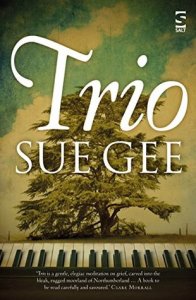 by Sue Gee: Sue Gee’s tenth novel is a sensitive portrait of life’s transience and the things that give us purpose. In the late 1930s, a widowed history teacher in Northumberland finds a new lease on life when he falls for one of the members of a local trio of musicians. My favorite passages of the book are descriptive ones, often comprised of short, evocative phrases; I also loved the banter between the musicians. The novel has a reasonably simple plot. We delve into the past to discover each main character’s backstory and some unexpected romantic entanglements, but in the 1930s storyline there aren’t a lot of subplots to distract from the main action. I was reminded in places of Downton Abbey: the grand hall and its village surroundings, the build-up to war, the characters you come to love and cheer for. [Thanks to Elle for piquing my interest in this one.]
How to Set a Fire and Why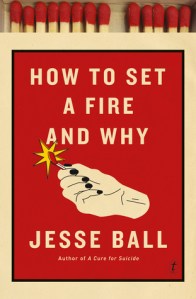 by Jesse Ball: Lucia Stanton is a cynical 14-year-old misfit who lives with her elderly aunt in a garage. At first she only supports the idea of arson, but events draw her into getting personally involved. This is one of those fairly rare novels that stand out immediately for the first-person voice. Lucia reminded me of Holden Caulfield or of Mim Malone from David Arnold’s Mosquitoland. She’s like a cynical philosopher. For as heartbreaking as her family history is, she was always either making me laugh or impressing me with her wisdom. Although this is his sixth novel, I hadn’t heard much about Jesse Ball prior to picking it up. His skill at creating the interior world of a troubled 14-year-old girl leads me to believe that the rest of his work would be well worth a look.
BookBrowse
[Non-subscribers can read excerpts of my reviews]
Imagine Me Gone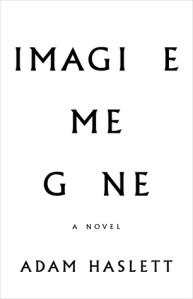 by Adam Haslett: Mental illness plagues two generations of an Anglo-American family in Haslett’s moving second novel. Narration duties are split between the five members: father John, mother Margaret, and siblings Alec, Michael, and Celia. By giving each main character a first-person voice, Haslett offers readers a full picture of how mental illness takes a toll not only on sufferers but also on those who love and care for them. John’s descriptions of what mental illness is like are among the most striking passages in the book. Michael’s sections are wonderfully humorous, a nice counterbalance to some of the aching sadness. The multiple points of view fit together beautifully in this four-decade family symphony, although I sometimes felt that Celia was one main character too many – her story doesn’t contribute very much to the whole. A powerful read for fans of family stories.
Dinner with Edward by Isabel Vincent: In this heartwarming memoir, a journalist tells how friendship with an elderly gentleman rekindled her appetite for life. New to NYC and with a faltering marriage, Isabel received an unusual request from her friend Valerie: Would she look in on Valerie’s father, Edward? In his nineties, he’d recently been widowed and Valerie was worried about him losing the will to live. If he could have a guest to cook for and entertain, it might give him a new sense of purpose. As it turned out, it was a transformative friendship for the author as much as for Edward. Each chapter opens with a mouth-watering menu. Although Edward is now deceased, when we see him for the final time, he is still alive and well. This is a nice way to leave things – rather than with a funeral, which might have altered the overall tone.
Nudge
Ruby by Cynthia Bond: When Ruby Bell returns to Liberty Township, her east Texas hometown, in 1964, her fellow black folk turn her into a victim of derision. The churchgoing men of the town get the idea that they can use her body however they want. In part this is because her mental health is deteriorating, and the more she struggles to stifle traumatic memories the stranger she acts. The only one who continues to see Ruby as a human being rather than a demon or a subhuman object is Ephram Jennings. I found their relationship, reminiscent of that between Sethe and Paul D. in Toni Morrison’s Beloved, very touching. The novel moves fluidly between the past and present to give all of the central characters’ backstories – most of them unremittingly tragic. As difficult as some of the later scenes are to take, you feel entranced into continuing because of the touches of magic realism. Out of the darkness Bond weaves enchanting language and scenes. I highly recommend this to fans of Ayana Mathis’s The Twelve Tribes of Hattie and Angela Flournoy’s The Turner House.
The Hatred of Poetry by Ben Lerner: This fluid essay asks how poetry navigates between the personal and the universal. Socrates famously wanted to ban poets, fearing poetry might be turned to revolutionary purposes. Lerner wonders whether poetry still has a political role. Whitman’s goal was to create a new American verse style. But was it realistic for him to think that he could speak for everyone? The same might be asked about the poets who read at presidential inaugurations. Can different races and genders speak to and for each other, or is it only white males who are assumed to be able to pronounce on humanity’s behalf? Those are some of the questions addressed in this conversational yet unabashedly highbrow essay. Lerner’s points of reference range from Keats and Dickinson to Claudia Rankine, with ample quotations and astute commentary.
Pittsburgh Post-Gazette
Before the Fall by Noah Hawley: The key is in the title: perhaps playing on the theological implications of “the Fall” and Scott and JJ’s “salvation” from a plane crash, the novel toggles between build-up and aftermath. Disasters bring disparate people together to make superb fictional setups. Crucially, Hawley doesn’t make the mistake of conflating characters under easy labels like “victims” and “survivors.” Instead, he renders them all individuals with complete backstories. Some of their potted histories are relevant, while others throw up red herrings in the ensuing enquiry. Readers’ task is to weigh up what is happenstance and what is destiny. This lies somewhere on the continuum between crime and literary fiction; if it’s not quite Jonathan Franzen, nor is it Robert Ludlum. It’s a pretty much ideal summer vacation read – though you might think twice about taking it on a plane.
To the Bright Edge of the World by Eowyn Ivey
Eowyn Ivey’s intricate second novel weaves together diaries, letters, photographs, and various other documents and artifacts to tell the gently supernatural story of an exploratory mission along Alaska’s Wolverine River in 1885 and its effects through to the present day. If you have read Ivey’s 2012 debut, The Snow Child, you’ll remark once again on her skill in bringing the bleak beauty of Alaska to life on the page and blending magic realism and folktales with a nonetheless realistic view of history.
In March 1885 Lieutenant Colonel Allen Forrester sets out with a small team – including brash Sergeant Bradley Tillman, melancholy photographer Lieutenant Andrew Pruitt, native guides, and Samuelson, a trapper who serves as a go-between – to navigate a previously unmapped portion of Alaska. Back at Vancouver Barracks he’s left his wife of four months, Sophie. Bold and curious, she intended to travel into Alaska with Allen until she learned she was pregnant. Now she passes the months of her confinement – and raises eyebrows among the military wives – by pursuing her amateur hobbies of birdwatching and photography.
 Through alternating passages from journals by Allen and Sophie, Ivey contrasts the big adventures of surveying new territory with the smaller adventures of domestic life. Along their perilous journey Allen and his men encounter many legends and incidents they cannot explain: shape-shifters, like the women who morph into flocks of geese or the shaman who takes the form of a half-lame raven; a baby born out of a tree trunk; and a prehistoric creature that guards a lake. As Allen writes in a letter to Sophie towards the end of his journey:
I can find no means to account for what we have witnessed, except to say that I am no longer certain of the boundaries between man & beast, of the living and & dead. It has been a strange experience indeed. All that I have taken for granted, of what is real & true, has been called into question.
A framing story sets the historical narrative in the context of the present day: Walter Forrester has sent his great-uncle Allen’s letters and journal to a small Alaska museum for safekeeping. Initially the young curator, Joshua Sloan, is annoyed at the unwanted donation and the extra work it creates for him, but gradually – right alongside the novel’s readers – he starts to be sucked into the story the documents reveal. Through their correspondence, Josh and Walt develop a touching friendship despite their differences.
Ivey fits the pieces of her epistolary together in a sophisticated manner and makes you care about each of the characters. Sophie and Pruitt, especially, have traumatic backstories that help you understand their behavior. Sophie reminded me most of Meridian Wallace in Elizabeth J. Church’s The Atomic Weight of Love – both are self-taught scientists with a deep love for birds and a determination to live interesting lives even if others disapprove. The novel also brings to mind Maggie O’Farrell’s This Must Be the Place in that it skips back and forth in time and intersperses a central narrative with other documents, including an auction catalogue of relevant objects.
I found Sophie’s voice instantly more engaging than Allen’s shorthand-like style, and it took me a while – maybe 60–80 pages – to warm up to the storyline and characters. I would have appreciated an Author’s Note at the end of the book explaining what, if anything, was based on a true story and which documents are authentic. (As it is, I assume that all the characters are fictional but the explorers’ journey is based on the historical record.) Nonetheless, I can highly recommend this rollicking adventure tale to fans of historical fiction and magic realism.
With thanks to Katie Brown at Tinder Press for the free review copy.
My rating: 
The Essex Serpent by Sarah Perry
This exquisite work of historical fiction explores the gaps – narrower than one might think – between science and superstition and between friendship and romantic love. The Essex Serpent was a real-life legend from the latter half of the seventeenth century, but Perry’s second novel has fear of the sea creature re-infecting Aldwinter, her invented Essex village, in the 1890s. Mysterious deaths and disappearances are automatically attributed to the Serpent who dwells in the depths of the Blackwater. This atmosphere of paranoia triggers some schoolgirls to erupt in frenzied delusions as in The Crucible. It is unclear whether the Church should tolerate a source of mystery or dismiss it all as nonsense – after all, there’s a winged serpent carved onto one of the pews at the parish church.
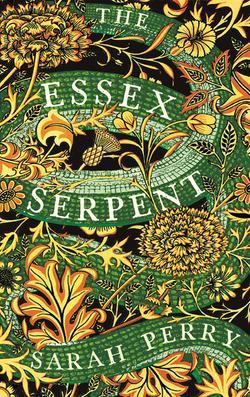 In a domestic counterpart to all these supernatural goings-on, we gain entry into two middle-class households. Cora Seaborne’s abusive husband, Michael, has recently died of throat cancer, leaving her to raise their odd (autistic, I wondered?) eleven-year-old son Francis on her own. She has an amateur interest in fossils to rival Mary Anning’s, so when she hears of a cache near Colchester she leaves London for Essex, bringing along Frankie and her companion, Martha. Mutual friends put her in touch with Will Ransome, the vicar of Aldwinter, sure that he and his family – consumptive wife Stella and children Joanna, James and John – will be able to show her around the coast.
Despite an inauspicious first meeting, which sees Cora and Will, still unknown to each other, hauling a drowning sheep out of a lake, theirs soon becomes a close, easy friendship. Cora feels she can speak her mind about the faith she lost and the new marvels she finds in nature:
I had faith, the sort I think you might be born with, but I’ve seen what it does and I traded it in. It’s a sort of blindness, or a choice to be mad – to turn your back on everything new and wonderful – not to see that there’s no fewer miracles in the microscope than in the gospels!
She holds her own in cerebral debates with Will as he deplores his parishioners’ fantasies about the Serpent. Is there really such a big difference between his faith – “all strangeness and mystery – all blood, and brimstone,” Cora teases – and the Serpent legend? In seeming contradiction to his career path, Will is more suspicious than many of the other characters of things he doesn’t understand and can’t explain away, like hypnosis and a Fata Morgana.
The novel’s nuanced treatment of faith and doubt is enhanced by references to Victorian science, including fossil hunting and early medical procedures. Dr. Luke Garrett, Michael’s surgeon, is one of Cora’s best friends back in London; she calls him “The Imp.” In one of the most striking passages of the entire book, he performs rudimentary heart surgery on the young victim of a stab wound. Perry fills in the novel’s background with a plethora of apt Victorian themes, including housing reform and London crime. For a book of 440 pages, it has a large cast and a fairly epic scope. Although there are places where subplots and minor characters might have been expanded upon, Perry wisely refrains from stuffing the novel with evidence of her research. Indeed, it’s a restrained book overall, yet breaks out into effusiveness in just the right places, as in Stella’s mystical adoration of the color blue.
Descriptive passages and the letters passing between the characters give a clear sense of the months passing, yet there is also something timelessly English about the narrative – Dickensian in places (Our Mutual Friend) and Hardyesque in others (Far from the Madding Crowd). I especially loved this picture of the June countryside:
Essex has her bride’s gown on: there’s cow parsley frothing by the road and daisies on the common, and the hawthorn’s dressed in white; wheat and barley fatten in the fields, and bindweed decks the hedges.
Cross this cozy pastoral vision with the Gothic nature of the Serpent craze and you get quite a unique atmosphere. The vague, unexplained sense of menace didn’t work for me at all in Perry’s previous novel, After Me Comes the Flood, but here it’s just right.
It was no doubt true in the late Victorian period that “men and women can’t be friends because the sex part always gets in the way” (as famously declared in When Harry Met Sally). No one is sure what to make of a sexually available, self-assured female like Cora. The different kinds of Greek love, from philia to eros, keep shading into each other here. Like the water that forms the book’s metaphorical substrate, the relationships ebb and flow. Yet there’s no denigrating any connection as just friendship; in fact, friendship is enough to rescue one character from suicide. Like Hanya Yanagihara’s A Little Life, the novel asks whether love is ever enough to save us – and gives a considerably more optimistic answer.

My proof copy didn’t have quite such a gorgeous cover but did come intriguingly wrapped in snakeskin ribbon…
The fact that I have an MA in Victorian literature means I’m drawn to Victorian-set novels but also highly critical about their authenticity. While reading this, though, I thoroughly believed that I was in 1890. Moreover, Perry adroitly illuminates the situation of the independent “New Woman” and the quandary of science versus religion (which were the joint subjects of my dissertation: women’s faith and doubt narratives in Victorian fiction).
I’m delighted, especially having seen Perry speak at Bloxham Festival in February (see my write-up for more on her background and the inspirations behind this novel), to have liked The Essex Serpent three times as much as her debut. It has an elegant, evocative writing style reminiscent of A.S. Byatt and Penelope Fitzgerald. Something holds me back from the full 5 stars – too diffuse? Too much staying on the surface of things? Not quite intimate enough, especially about Cora’s inner life? – but I still declare myself mightily impressed. The Essex Serpent counts as one of my favorite novels of 2016 so far. You can see why Serpent’s Tail (how perfect is her publisher’s name?!) rushed this one into publication a few weeks early. Expect to see it on the Booker Prize shortlist and any other award list you care to mention.
With thanks to Anna-Marie Fitzgerald at Serpent’s Tail for the free review copy.
My rating: 
Reviews Roundup, April–May
Every month I compile the book reviews I’ve published elsewhere, with a rating (below each description) and a taster so you can decide whether to click on the link to read more.
The Bookbag
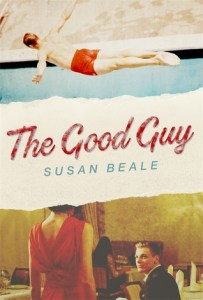 The Good Guy by Susan Beale: You might think there’s nothing new to add to the suburban-angst-and-adultery storyline. What Beale does so beautifully in this debut novel is to put you right into the minds of the three main characters. This is a story about the differences between what’s easy and what’s right, and the quest to make amends wherever possible. It’s also a cautionary tale: be careful what you wish for, because that boring life you were so eager to escape may just be what you wanted after all. I also love the range of settings, from the dazzling Shoppers’ World mall to a beach house on Cape Cod. This is a delicious, slightly gossipy summer read with a Mad Men feel to it. I’d especially recommend this to fans of The Longest Night and Tigers in Red Weather. Releases June 16th.

 Invincible Summer by Alice Adams: Four Bristol University friends navigate the highs and lows of life in the 20 years following graduation. Like in One Day, the narrative checks in on the characters nearly every summer. As happens in real life, even the closest friends gradually drift apart. Job situations and relationships change, and external events like the financial collapse of 2008 take a toll. Compared to some other similar recent novels (e.g. Why We Came to the City by Kristopher Jansma), this debut somewhat lacks sparkle. Releases June 2nd in the UK and June 28th in the USA.

This Must Be the Place by Maggie O’Farrell: O’Farrell’s globe-trotting seventh novel opens in 2010 with Daniel Sullivan, an American linguistics professor in Donegal. Spreading outward from Ireland and reaching into every character’s past and future, this has all O’Farrell’s trademark insight into family and romantic relationships, as well as her gorgeous prose and precise imagery. The disparate locations and the title suggest our nomadic modern condition. It’s the widest scope she has attempted yet; that’s both a good and a bad thing. I did wonder if there were a few too many characters and plot threads.
BookBrowse
(A subscriber service, so I can only make excerpts available.)
 The Atomic Weight of Love by Elizabeth J. Church: In Church’s debut, an amateur ornithologist learns about love and sacrifice through marriage to a Los Alamos physicist and a relationship with a Vietnam veteran. Torn between two men who mean so much to her, Meri has to consider what her true duties are. “There was no good solution. No clear way out, no approach that would earn the Good Housekeeping Seal of Approval,” she wryly observes. I instantly warmed to Meri as a narrator and loved following her unpredictable life story. Church reveals the difficulty a woman of that time had in choosing her own path and making it fit into men’s plans, and shows how love, as the title suggests, can be a burden but also a thing of reassuring substance. Meri longs, like one of her beloved birds, to take flight into her dreams. Whether she gets there, and how, is a bittersweet trip but one you’ll be glad you went along for.
 The North Water by Ian McGuire: A gritty tale of adventure and murder set aboard a mid-nineteenth-century whaling ship. Archaic adjectives pile up in a clever recreation of Victorian prose: “The men, empurpled, reeking, drenched in the fish’s steaming, expectorated gore.” Much of the novel is bleak and brutal like that. There are a lot of “F” and “C” words, too; this is so impeccably researched that I don’t doubt the language is accurate. McGuire never shies away from gory detail, whether that’s putrid smells, bodily fluids, animal slaughter, or human cruelty. I thought the novel’s villain was perhaps too evil, with no redeeming features. Still, this is a powerful inquiry into human nature and the making of ethical choices in extreme circumstances. From the open seas to the forbidding polar regions, this is a journey worth taking.
Foreword Reviews
Rediscovering the Immune System as an Integrated Organ by Peter Bretscher: A rigorous introduction to current immunological thought. Vocabulary terms are given in bold italics and defined in context on first use, and each chapter ends with a helpful synopsis. However, these summaries are almost as dense as the text itself, and the many acronyms are difficult to keep straight. Unlike a textbook, though, the book also contains welcome snippets of autobiography. Bretscher traces not just the evolution of immunological knowledge, but also the development of his own thinking. This will be an invaluable resource for students in search of a nonstandard immunology primer. With research under way into vaccinations against AIDS, tuberculosis, and cancer, the field has a bright future.
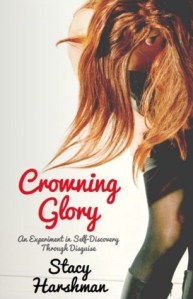 Crowning Glory: An experiment in self-discovery through disguise by Stacy Harshman: In 2005, Harshman decided to embark on a sociological experiment-cum-personal challenge: each week for six weeks she donned a different wig, and with the help of her assistant, Bonnie, she carefully recorded the reactions she received from onlookers and potential partners. Each day she chose three New York City locales, taking in events like lunch, happy hour, and late night socializing. Recalling the time she was hospitalized for a psychotic break in 2000, she marvels at how changing hairstyles could help her feel self-assured and sexy. The book is an appealing cross between a scientific study and a spy story.
Nudge
 All at Sea by Decca Aitkenhead: In May 2014, Aitkenhead, a Guardian writer, was on vacation with her partner Tony Wilkinson and their two young sons in Jamaica. A beautiful sunny morning turned disastrous when Tony swam out to rescue their son Jake and drowned. After the tragic events of the first chapter, this wrenching memoir retreats to consider the 10 years she and Tony (a former criminal and crack addict) spent as “the most implausible couple I have ever known.” More than half the book is devoted to the aftermath of Tony’s death, described in a matter-of-fact style that still manages to convey the depth of Aitkenhead’s pain. This is a unique combination of a journalist’s forthright storytelling and the ‘magical thinking’ Joan Didion introduced. Releases in the States on August 16th.
 Diary of a Short-Sighted Adolescent by Mircea Eliade: This rediscovered Romanian classic is what you might get if a teenage Adrian Mole was studying for a philosophy degree. Before picking this up I knew of Eliade as a commentator on world religions. I didn’t realize he also wrote novels. This is particularly special in that it’s a lost manuscript he wrote as a teenager; it was only discovered in a Bucharest attic after his death in the 1980s. The novel’s chief detriments – the repetitive nature of the sections about his schooling, and his obsessive introspection – are also, ironically, what make it most true to the adolescent experience. I’d recommend it to fans of My Brilliant Friend and Melanie Sumner’s How to Write a Novel.

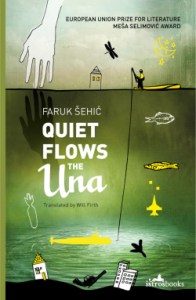 Quiet Flows the Una by Faruk Šehić: This autobiographical novel by a Bosnian poet and former soldier is full of poetic language and nature imagery. The narrator transcends his sordid war memories through his magical approach to life. Actual war scenes only come much later in the book; even then they are conveyed in such an abstract style that they seem more like hallucinations than remembered events. The lyrical writing about his beloved river provides a perfect counterpoint to the horror and absurdity of war. “We made this town, Bosanska Krupa, of black mire, yellow sand and green water borrowed from the Una. The tall towers of our town tickle God’s feet.” What most impressed me about passages like that one is the alliteration that shines through even after translation. I would highly recommend this to readers of Anthony Marra and Daniel Kehlmann.
 Shelter by Jung Yun: A Korean-American family faces up to violence past and present in this strong debut. Finances and relationships just keep going from bad to worse, as the novel’s tripartite structure suggests: “Dawn” cedes to “Dusk,” which descends into “Night.” You wonder just how terrible things can get – will this really reach the Thomas Hardy levels of tragedy it seems to portend? – until, in the incredible last 10 pages, Yun pulls back from violence and offers the hope of redemption. I did wonder if there were a few too many secondary characters. However, the Korean-American culture of honor and shame makes a perfect setting. I would recommend this to fans of David Vann and Richard Ford.
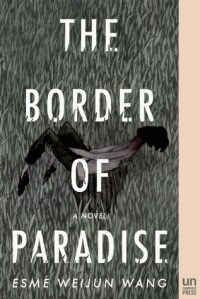 The Border of Paradise by Esmé Weijun Wang: Mental illness haunts an Asian-American family in this offbeat multi-generational saga. Wang’s debut novel opens in 1968 with David Nowak reporting from the motel room where he plans to kill himself. Succeeding portions of the novel are narrated from other perspectives: David’s wife Jia-Hui, aka Daisy, whom he met in Taiwan; then their son William and his half-sister Gillian. Jia-Hui’s narrative is the most entrancing. Presented as a translation, it includes occasional foreign characters or blank spaces where she couldn’t quite catch what someone was saying in English. Her sections are full of foreboding about the family legacy of madness. I was reminded most of A Reunion of Ghosts and All My Puny Sorrows. Something about this book left a slightly bitter aftertaste for me, but there’s no doubt Wang has fine plotting, character building, and prose skills.
 The Story of a Seagull and the Cat Who Taught Her to Fly by Luis Sepúlveda: Zorba, a fat black cat, will be alone this summer while his boy’s family go on holiday – convenient given the adventure that’s about to befall him. Kengah, an exhausted and oil-drenched seagull, lands on his balcony and lays a final, precious egg. She makes Zorba promise he will not eat the egg but will look after her baby and teach it to fly. He enlists his motley group of fellow cats at the port of Hamburg to help him figure out how to raise a chick. Sepúlveda, a Chilean author, was jailed under the Pinochet regime and was later on the crew of a Greenpeace ship. The environmental message here is noticeable but not overpowering. Geared towards confident nine- to eleven-year-olds, this might also be read aloud with younger children.
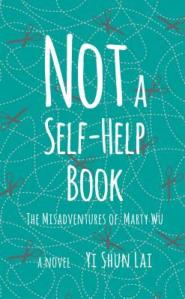 Not a Self-Help Book: The Misadventures of Marty Wu by Yi Shun Lai: Marty Wu is an advertising account executive for a NYC retirees’ magazine but dreams of opening her own costume shop. This debut novel is her Bridget Jones-esque diary, often written in a kind of shorthand style contrasting her goals with her seemingly inevitably failures, as in: “Crap. Is 4:00 a.m. Have breakfast meeting. Must sleep.” She’s constantly quoting to herself the advice and wisdom she’s gleaned from various motivational books she picked up in hopes of self-improvement. Lai writes engagingly about the contrasts between Taiwan and the States, especially the complexities of family roles. This is a lighthearted, summery read. Watch Marty ditch self-help books and start living the life she wants anyway.
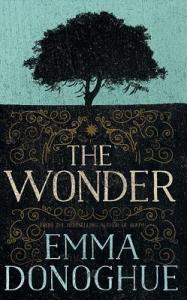 The Wonder by Emma Donoghue: A nurse investigates the case of an Irish girl surviving without food for months: miracle or hoax? The novel draws on about 50 historical cases of “Fasting Girls” that occurred in Europe and North America in the 16th to 20th centuries. It sets up a particularly effective contrast between medicine and superstition. Donoghue writes convincing, vivid historical fiction, peppering the text with small details about everything from literature to technology. This is the fifth book I’ve read by her, and it’s by far my favorite. With the two-week time limit and the fact that most scenes take place in the cabin – with just a handful set in other village locales like the bog and the pub where Lib stays – this has something of the flavor of a locked-room mystery. Releases September 20th.
Football by Jean-Philippe Toussaint: A nostalgic tour through a soccer fan’s highlights. Over the years Toussaint has realized what he loves about the sport: its seasonality (the World Cup “comes round every four years with the regularity of a leap-year seasonal fruit”) and the rituals of attending a match. On the other hand, he recognizes downsides, such as temporary permission given to chauvinism and the fact that it doesn’t age well – it’s an instant thing; one doesn’t tend to watch repeats. My favorite chapter, set in 2014, is less about sports and more about a hard time in the author’s personal life: he had recently lost his father and finished a ten-year novel sequence, leaving him unsure what to do next. I enjoyed his introspective passages about the writing life and the sense of purpose it gives his struggles. I was not the ideal reader, given my general antipathy to sports and my unfamiliarity with the author. All the same, I can see how this would appeal to fans of Fever Pitch.
 Bookish Beck = Rebecca Foster. American transplant to England. Freelance proofreader and book reviewer.
 Bookish Beck