Best Backlist Reads of 2018
Like a lot of book bloggers, I’m irresistibly drawn to the shiny new books released each year. However, I’ve noticed recently that many of my most memorable reads were published years or even decades ago. In 2018 I even came across a handful of books that are for me among the very best representatives of their genre, whether that’s nature, travel, family memoir, historical fiction or science fiction. The below selections are in alphabetical order by author name, and account for all the rest of my 4.5- and 5-star ratings of the year (another 27!).

My best backlist reads of the year (most of the ones I own in print, anyway).
Fiction
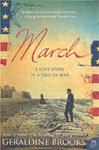 March by Geraldine Brooks (2005): The best Civil War novel I’ve read. The best slavery novel I’ve read. One of the best historical novels I’ve ever read, period. Brooks’s second novel uses Little Women as its jumping-off point but is very much its own story. The whole is a perfect mixture of what’s familiar from history and literature and what Brooks has imagined.
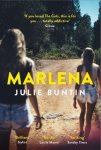 Marlena by Julie Buntin (2017): The northern Michigan setting pairs perfectly with the novel’s tone of foreboding: you have a sense of these troubled teens being isolated in their clearing in the woods, and from one frigid winter through a steamy summer and into the chill of the impending autumn, they have to figure out what in the world they are going to do with their terrifying freedom. It’s basically a flawless debut, one I can’t recommend too highly.
 Reading in the Dark by Seamus Deane (1996): Ireland’s internecine violence is the sinister backdrop to this family’s everyday sorrows, including the death of a child and the mother’s shaky mental health. The book captures all the magic, uncertainty and heartache of being a child, in crisp scenes I saw playing out in my mind.
 The Life and Loves of Lena Gaunt by Tracy Farr (2013): Lena Gaunt: early theremin player, grande dame of electronic music, and opium addict. I loved how Farr evokes the strangeness and energy of theremin music, and how sound waves find a metaphorical echo in the ocean’s waves – swimming is Lena’s other great passion.
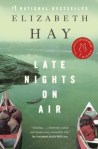 Late Nights on Air by Elizabeth Hay (2007): A tight-knit cast gathers around the local radio station in Yellowknife, a small city in Canada’s Northwest Territories: Harry and Gwen, refugees from Ontario starting new lives; Dido, an alluring Dutch newsreader; Ralph, the freelance book reviewer; menacing Eddie; and pious Eleanor. This is a marvellous story of quiet striving and dislocation; I saw bits of myself in each of the characters, and I loved the extreme setting, both mosquito-ridden summer and bitter winter.
 The Leavers by Lisa Ko (2017): An ambitious and satisfying novel set in New York and China, with major themes of illegal immigration, searching for a mother and a sense of belonging, and deciding what to take with you from your past. This was hand-picked by Barbara Kingsolver for the 2016 PEN/Bellwether Prize for Socially Engaged Fiction.
 The Invisible Bridge by Julie Orringer (2010): Hungarian Jew Andras Lévi travels from Budapest to Paris to study architecture, falls in love with an older woman who runs a ballet school, and – along with his parents, brothers, and friends – has to adjust to the increasingly strict constraints on Jews across Europe in 1937–45. It’s all too easy to burn out on World War II narratives these days, but this is among the very best I’ve read.
 The Sparrow by Mary Doria Russell (1996): For someone like me who struggles with sci-fi at the best of times, this is just right: the alien beings are just different enough from humans for Russell to make fascinating points about gender roles, commerce and art, but not so peculiar that you have trouble believing in their existence. All of the crew members are wonderful, distinctive characters, and the novel leaves you with so much to think about: unrequited love, destiny, faith, despair, and the meaning to be found in life.
 Salt Creek by Lucy Treloar (2015): Hester Finch is looking back from the 1870s – when she is a widowed teacher settled in England – to the eight ill-fated years her family spent at Salt Creek, a small (fictional) outpost in South Australia, in the 1850s–60s. This is one of the very best works of historical fiction I’ve read; it’s hard to believe it’s Treloar’s debut novel.
 Christmas Days: 12 Stories and 12 Feasts for 12 Days by Jeanette Winterson (2016): I treated myself to this new paperback edition with part of my birthday book token and it was a perfect read for the week leading up to Christmas. The stories are often fable-like, some spooky and some funny. Most have fantastical elements and meaningful rhetorical questions. Winterson takes the theology of Christmas seriously. A gorgeous book I’ll return to year after year.
Poetry
 Available Light by Marge Piercy (1988): The subjects are diverse: travels in Europe, menstruation, identifying as a Jew as well as a feminist, scattering her father’s ashes, the stresses of daily life, and being in love. Some of my favorites were about selectively adhering to the lessons her mother taught her, how difficult it is for a workaholic to be idle, and wrestling the deity for words.
Nonfiction
 Deep Country: Five Years in the Welsh Hills by Neil Ansell (2011): One of the most memorable nature/travel books I’ve ever read; a modern-day Walden. Ansell’s memoir is packed with beautiful lines as well as philosophical reflections on the nature of the self and the difference between isolation and loneliness.
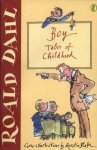 Boy by Roald Dahl (1984): Pranks and larks and holidays: these are all here; so is crushing homesickness and a bitter sense of injustice at being at the mercy of sadistic adults. Nearly 60 years later, Dahl could use memory and imagination to fully inhabit his childhood self and give a charming survey of the notable events of his life up to age 20.
 This Cold Heaven: Seven Seasons in Greenland by Gretel Ehrlich (2001): I thoroughly enjoyed my armchair trek across a frigid island nation in the company of Gretel Ehrlich, who traveled here repeatedly between 1995 and 2001 and intersperses her journeys with those of her historical model, Inuit–Danish explorer Knud Rasmussen, whose seven Arctic expeditions took in the west coast of Greenland and the far north of the North American continent. Every time she finds a fresh way to write about ice and sun glare and frigid temperatures.
 Ali: A Life by Jonathan Eig (2017): It’s a riveting account of outliving segregation and developing a personal style and world-beating confidence; it’s a sobering tale of facing consequences and having your own body fail you. I’m the furthest thing from a sports fan you could imagine, but I approached this as a book about a cultural icon and read it with a spirit of curiosity about how Eig would shape this life story and separate the facts from the legend. I loved it.
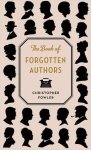 The Book of Forgotten Authors by Christopher Fowler (2017): A charming introduction to 99 more or less obscure writers. Each profile is a perfectly formed mini-biography with a survey of the author’s major work: in just two or three pages, Fowler is able to convey all a writer’s eccentricities and why their output is still worth remembering.
 To the Is-Land: An Autobiography by Janet Frame (1982): This is some of the best writing about childhood and memory that I’ve ever read, infused with music, magic and mystery. The prose alternates between dreamy and matter-of-fact as Frame describes growing up in New Zealand one of five children in the Depression and interwar years.
 Leaving Before the Rains Come by Alexandra Fuller (2015): This poignant sequel to Don’t Let’s Go to the Dogs Tonight is a portrait of Fuller’s two-decade marriage, from its hopeful beginnings to its acrimonious end. What I most appreciated about the book was Fuller’s sense of being displaced: she no longer feels African, but nor does she feel American.
 West With the Night by Beryl Markham (1942): Markham writes so vividly about the many adventures of her life in Africa: hunting lions, training race horses, and becoming one of the continent’s first freelance pilots, delivering mail and locating elephant herds. Whether she’s reflecting on the many faces of Africa or the peculiar solitude of night flights, the prose is just stellar.
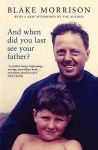 And When Did You Last See Your Father? by Blake Morrison (1993): An extraordinary memoir based around the author’s relationship with his father. Alternating chapters give glimpses into earlier family life and narrate Morrison’s father’s decline and death from cancer. This is simply marvelously written, not a bad line in the whole thing.
 The Seabird’s Cry: The Lives and Loves of Puffins, Gannets and Other Ocean Voyagers by Adam Nicolson (2017): This is an extraordinarily well-written and -researched book (a worthy Wainwright Prize winner) about the behavior, cultural importance, and current plight of the world’s seabirds. Each chapter takes up a different species and dives deep into everything from its anatomy to the legends surrounding it, simultaneously conveying the playful, intimate real lives of the birds and their complete otherness.
 The Long Goodbye: A Memoir of Grief by Meghan O’Rourke (2011): I read a whole lot of bereavement memoirs; this has been one of the very best. O’Rourke tells her story with absolute clarity – a robust, plain-speaking style that matches her emotional transparency. The heart of the book is her mother’s death from colorectal cancer on Christmas Day 2008, but we also get a full picture of the family life that preceded it and the first couple of years of aftermath.
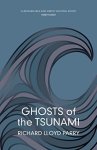 Ghosts of the Tsunami: Death and Life in Japan’s Disaster Zone by Richard Lloyd Parry (2017): Eighteen and a half thousand people died in the earthquake and tsunami that hit Japan in March 2011. It’s not really possible to get your head around a tragedy on that scale so, wisely, Parry focuses on a smaller story within the story: 74 died at Okawa primary school because the administration didn’t have a sufficient disaster plan in place. This is a stunning portrait of a resilient people, but also a universal story of the human spirit facing the worst.
 Lots of Candles, Plenty of Cake by Anna Quindlen (2012): A splendid memoir-in-essays that dwells on aging, parenting and female friendship. Some of its specific themes are marriage, solitude, the randomness of life, the process of growing into your own identity, and the special challenges her generation (roughly my mother’s) faced in seeking a work–life balance. Her words are witty and reassuring, and cut right to the heart of the matter in every case.
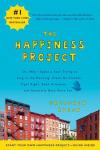 The Happiness Project: Or, Why I Spent a Year Trying to Sing in the Morning, Clean My Closets, Fight Right, Read Aristotle, and Generally Have More Fun by Gretchen Rubin (2009): Probably the best self-help book I’ve read; dense (in the best possible way) with philosophy, experience and advice. What I appreciated most is that her approach is not about undertaking extreme actions to try to achieve happiness, but about finding contentment in the life you already have by adding or tweaking small habits – especially useful for pessimists like me.
 In the Days of Rain: A daughter. A father. A cult by Rebecca Stott (2017): This was a perfect book for my interests, and just the kind of thing I would love to write someday. It’s a bereavement memoir that opens with Stott’s father succumbing to pancreatic cancer and eliciting her promise to help finish his languishing memoir; it’s a family memoir that tracks generations through England, Scotland and Australia; and it’s a story of faith and doubt, of the absolute certainty experienced inside the Exclusive Brethren (a Christian sect that numbers 45,000 worldwide) and how that cracked until there was no choice but to leave.
 Writers & Company by Eleanor Wachtel (1993): Erudite and fascinating author interviews from Wachtel’s weekly Canadian Broadcasting Corporation radio program. Whether I’d read anything by these authors (or even heard of them) or not, I found each Q&A chock-full of priceless nuggets of wisdom about creativity, mothers and daughters, drawing on autobiographical material, the writing process, and much more.
And if I really had to limit myself to just two books – my very best fiction and nonfiction reads of the year – they would be March by Geraldine Brooks and And When Did You Last See Your Father? by Blake Morrison.

What were your best backlist reads this year?
A Retrospective of 2018’s Events, Reading Projects and Themes
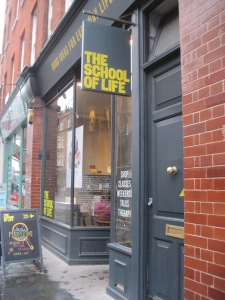 In January I had the tremendous opportunity to have a free personalized bibliotherapy appointment with Ella Berthoud at the School of Life in London. I’ve since read three of her prescriptions plus parts of a few others, but I still have several more awaiting me in the early days of 2019, and will plan to report back at some point on what I got out of all of them.
In March to April I ran a Wellcome Book Prize shadow panel for the second time. This year it was much more successful; I plan to do it again next year, too. (I actually proffered myself as an official judge for next year’s prize and got a very kind but entirely noncommittal e-mail back from the chairwoman, which I will have to take as victory enough.)
 Early April saw us visiting Wigtown, Scotland’s book town, for the first time. It was a terrific trip, but thus far I have not been all that successful at reading the 13 books that I bought! (Just two and a quarter so far.)
I reviewed three novels for Liz Dexter’s Iris Murdoch Readalong project: A Severed Head in March, The Italian Girl in June, and The Nice and the Good in September. In February I’ll pop back in with one more paperback that I own, The Sacred and Profane Love Machine. November was Margaret Atwood Reading Month, hosted by Marcie of Buried in Print and Naomi of Consumed by Ink, and provided me with a good excuse to read her first two novels.
 I did some “buddy reads” for the first time: Andrea Levy’s Small Island with Canadian blogger friends, including Marcie and Naomi; and West With the Night with Laila of Big Reading Life and Late Nights on Air with Naomi as well as Penny of Literary Hoarders during 20 Books of Summer, which I took part in for the first time. In May my mother and I read W. Somerset Maugham’s The Painted Veil and shared reading notes via e-mail. (A planned buddy read of The Left Hand of Darkness with Annabel and Laura was, alas, a fail.)
Besides the official Wellcome Book Prize blog tour in April, I participated in another 11 blog tours, averaging out at one a month. I’m going to scale back on these next year because I have too often found, after I accepted, that the book was a dud and I had to just run an extract because I could see I wasn’t going to get through it and write a review.
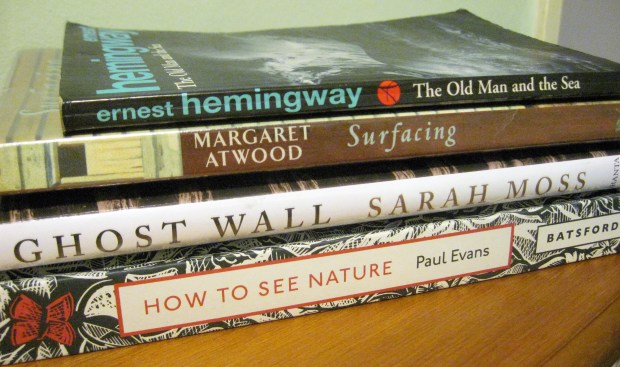
I joined my neighborhood book club in September and have attended every month since then. Our first four selections were Ladder of Years by Anne Tyler, The Gracekeepers by Kirsty Logan, Noonday by Pat Barker, and Number 11 by Jonathan Coe. I’d already read the Logan and Coe years ago and didn’t fancy rereading them, so wasn’t able to participate as much in those months, but was still glad to go along for the socializing. My husband even read the Coe and came to December’s meeting (was it just for the mince pies and mulled wine?!). We’ve set our first four reads for 2019 – the three below, in order from left to right, plus Ernest Hemingway’s The Garden of Eden, which I’ll borrow from the university library.

 In October I won tickets to see a production of Angela Carter’s Wise Children at the Old Vic in London. Just a few weeks later I won tickets to see Barbara Kingsolver in conversation about Unsheltered at the Southbank Centre. I don’t often make it into London, so it was a treat to have bookish reasons to go and blogging friends to meet up with (Clare of A Little Blog of Books joined me for both, and Laura T. was also at the Kingsolver event).
November was mostly devoted to novellas, for the third year in a row. Although I didn’t officially participate in Nonfiction November, I still enjoyed coming up with some fiction/nonfiction pairings and an “expert’s” list of women’s religious memoirs.
My husband wrote pretty much his entire PhD thesis this year and on Friday the 14th had his graduation ceremony. I was the moral support / proofreader / preparer of simple meals during the months when he was in the throes of writing up, so I will consider myself as sharing in the accomplishment. Congratulations, Dr. Foster!
This month and into January I’ll be reading the last few nominees for the National Book Critics Circle’s John Leonard Prize.

When the list of finalists was released, I was relieved to see I’d already read four out of seven (and three of those were ones I’d nominated); the other three – the Adjei-Brenyah and Brinkley stories and There There – were books I was keen to read but hadn’t managed to get hold of. About 80 of us NBCC members are reading the shortlist and voting for the best first book of the year by January 8th. Plus I’m technically up for an NBCC prize myself, in that I nominated myself (that’s how it works) for the 2018 Nona Balakian Citation for Excellence in Reviewing and sent in an application with five of my best reviews from the year.
The Ones that Got Away
 Two posts I planned but never got around to putting together would have commemorated the 50th anniversary of Thomas Merton’s death (I own several of his books but am most interested in reading The Seven-Storey Mountain, which celebrated its 70th birthday in October) and the 40th anniversary of the publication of The Snow Leopard by the late Peter Matthiessen. Perhaps I’ll try these authors for the first time next year instead.
Final Book Serendipity Incidents
In the second half of the year I started keeping track of all my weird reading coincidences, posting about them on Twitter or Instagram before collecting them into a blog post a couple months ago. Here are a few that popped up since then or recalled earlier reads from the year:
- Two protagonists named Willa: Anne Tyler’s Clock Dance and Barbara Kingsolver’s Unsheltered
- Two novels featuring bog people: Anne Youngson’s Meet Me at the Museum and Sarah Moss’s Ghost Wall
- Two dogs named Flash: Ben Crane’s Blood Ties and Andrew Marshall’s The Power of Dog
- Multiple sclerosis is an element in Christian Donlan’s The Unmapped Mind: A Memoir of Neurology, Incurable Disease and Learning How to Live, Jennifer Richardson’s Americashire and Michelle Obama’s Becoming (her father had it)
- The ideas of Freud are mentioned in a 1910s setting in Nancy Horan’s Loving Frank, Annabel Abbs’s Frieda and Daniel Mason’s The Winter Soldier
- Mermaids (or ‘mermaids’) and/or mermen appear in Imogen Hermes Gowar’s The Mermaid and Mrs Hancock, Melissa Broder’s The Pisces, Daniel Mason’s The Winter Soldier, and a series of poems in Miriam Darlington’s Windfall
- Bohemian writer dies young of tuberculosis (or similar) in novels about their wives: Annabel Abbs’s Frieda (D.H. Lawrence) and Nancy Horan’s Under the Wide and Starry Sky (Robert Louis Stevenson)
- Two books that mention the Indonesian practice of keeping dead relatives as mummies and bringing them out on occasion for ritual celebrations: From Here to Eternity by Caitlin Doughty and The Hot Young Widows Club by Nora McInerny
- Two books that include a trip to Lourdes for healing: Heal Me by Julia Buckley and Constellations by Sinéad Gleeson
- Two books that mention the irony of some of the most well-loved modern Christmas songs being written by Jews: In Mid-Air by Adam Gopnik and Christmas Days by Jeanette Winterson
Surprise Themes from My Year’s Reading
A few of these make sense – cults fit with my interest in narratives of religious experience, and it doesn’t take a psychologist to see that my relationship with my father has been an ongoing issue in recent years (I wonder how the numbers would compare for books about mothers?) – but most are completely random.
I decided a theme had to show up at least three times to make the list. Some topics I enjoyed so much I’ll keep reading about them next year. Within a category the books are in rough chronological order of my reading, and I include skims, DNFs and books in progress.
 Fathers (absent/difficult) + fatherhood in general: Educated by Tara Westover, And When Did You Last See Your Father? by Blake Morrison, The Italian Teacher by Tom Rachman, In the Days of Rain by Rebecca Stott, Implosion by Elizabeth W. Garber, Little Women by Louisa May Alcott & March by Geraldine Brooks, The Unmapped Mind by Christian Donlan, Never Mind and Bad News by Edward St. Aubyn, The Reading Promise by Alice Ozma, How to Build a Boat by Jonathan Gornall, Lake Success by Gary Shteyngart, Normal People by Sally Rooney, Rosie by Rose Tremain, My Father and Myself by J.R. Ackerley, Everything Under by Daisy Johnson, Ghost Wall by Sarah Moss, Surfacing by Margaret Atwood, Heart Berries by Terese Marie Mailhot, Blood Ties by Ben Crane, To Throw Away Unopened by Viv Albertine, Small Fry by Lisa Brennan-Jobs
Addiction: The Leavers by Lisa Ko, Mayhem by Sigrid Rausing, The Only Story by Julian Barnes, The Small Door of Your Death by Sheryl St. Germain, Writing and Madness in a Time of Terror by Afarin Majidi, Marlena by Julie Buntin, Ninety Days by Bill Clegg, Bad News by Edward St. Aubyn, Pretend I’m Dead by Jen Beagin, Heart Berries by Terese Marie Mailhot
 Greenland: A Wilder Time by William E. Glassley, This Cold Heaven by Gretel Ehrlich, Miss Smilla’s Feeling for Snow by Peter Høeg, On Balance by Sinéad Morrissey (the poem “Whitelessness”), Cold Earth by Sarah Moss, Crimson by Niviaq Korneliussen, The Library of Ice by Nancy Campbell
Cults: Educated by Tara Westover, Harmony by Carolyn Parkhurst, In the Days of Rain by Rebecca Stott, The Incendiaries by R.O. Kwon, A River Could Be a Tree by Angela Himsel
Trees: Ladders to Heaven by Mike Shanahan, The Overstory by Richard Powers, The Man Who Planted Trees by Jean Giono, The Wood and The Secret Life of the Oak by John Lewis-Stempel
 Flying: Skybound by Rebecca Loncraine, West With the Night by Beryl Markham, Going Solo by Roald Dahl, Skyfaring by Mark Vanhoenacker
The Anglo experience in Africa: Free Woman: Life, Love and Doris Lessing by Lara Feigel, Leaving Before the Rains Come by Alexandra Fuller, West With the Night by Beryl Markham, Going Solo by Roald Dahl
Korean-American women: The Incendiaries by R.O. Kwon, If You Leave Me by Crystal Hana Kim, All You Can Ever Know by Nicole Chung, Famous Adopted People by Alice Stephens, Digging to America by Anne Tyler
 New Zealand: The Garden Party and Other Stories by Katherine Mansfield, To the Is-Land by Janet Frame, Dunedin by Shena Mackay
Life in the White House: Living History by Hillary Rodham Clinton, All the Presidents’ Pastries by Roland Mesnier, Becoming by Michelle Obama
Lighthouses: Stargazing: Memoirs of a Young Lighthouse Keeper by Peter Hill, The Bird Artist by Howard Norman, Under the Wide and Starry Sky by Nancy Horan (about Robert Louis Stevenson, whose family built lighthouses)

More lighthouse books ready for next year.
Butterflies: Four Wings and a Prayer by Sue Halpern, Magdalena Mountain by Robert Michael Pyle, Mama Amazonica by Pascale Petit

More butterfly books ready for next year.
What were some of the highlights of your bookish year?
What odd coincidences and recurring themes have you spotted in your year’s reading?
Season’s Readings: What I’ll Be Reading This Christmas
With part of my birthday book token I treated myself to the new paperback edition of Jeanette Winterson’s Christmas Days, which I’ll read off and on over the holidays this year and next, probably. I recently finished Rachel Joyce’s wintry short story collection and started Madeleine L’Engle’s third Crosswicks Journal, An Irrational Season. The first two chapters are set at Advent and Christmas and the rest later in the liturgical year; I’ve set the book aside to come back to in January. L’Engle is a great author to read if you’d like some liberal, non-threatening theology at this time of year. I particularly recommend her Christmas-themed book that I read last year. (Mini-reviews of the Joyce and L’Engle are below.)
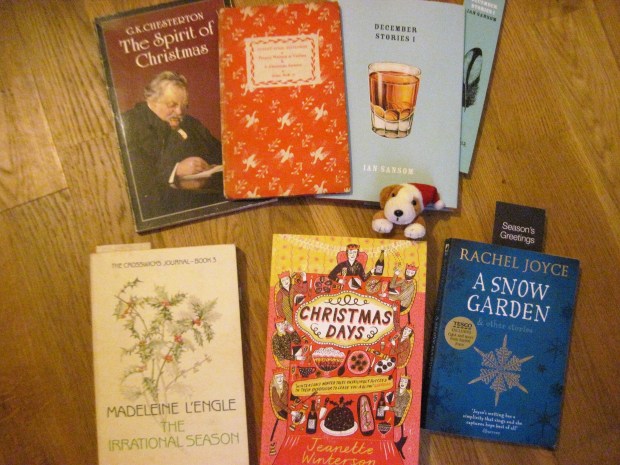
I also have a signed copy of Ian Sansom’s December Stories I that I won in a giveaway on Cathy’s blog, so I’ll be dipping into plenty of seasonally appropriate short stories this year. Earlier this year I picked up copies of the G.K. Chesterton collection (signed by the anthology editor) and the Robert Louis Stevenson volume (which contains prayers plus a sermon written during his time in Samoa) free at church from the theological library of a woman who’d died and donated her books to the church family.


A Snow Garden and Other Stories by Rachel Joyce
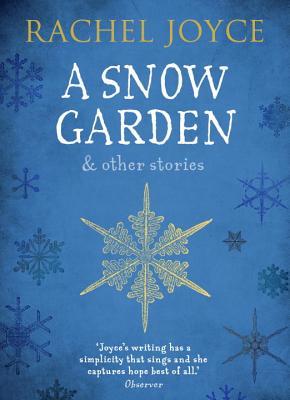 Two stand-outs were “The Boxing Day Ball,” a prequel to The Unlikely Pilgrimage of Harold Fry, describing how Harold and Maureen met, and “A Faraway Smell of Lemon,” in which a woman mourning the end of her relationship wanders into a cleaning supplies store and learns the simple lesson that everybody hurts. (“Life is hard sometimes” – fair enough, but can we say it without a cliché?) “I’ll Be Home for Christmas” is about the boy formerly known as Tim, now the mega pop star X. All he wants is a quiet few days back home, but he can’t seem to escape his reputation. Characters and little elements from previous stories reappear in later ones. My favorite was probably the title story, about a father trying to make the holidays perfect for his sons after his breakdown and divorce.
Joyce chooses to write about ordinary and forgotten people, but sometimes her vision of chavvy types doesn’t quite ring true, and when she isn’t being melancholy she’s twee. “Christmas Day at the Airport” was so contrived it made me groan. While I don’t think any of her books are truly great, they’re pleasant, relatable and easy to read.
My rating: 
Favorite lines:
“There is much to do, much to prepare, much to mend, but it cannot be done in a day and sometimes it is better to do one small thing.” (from “A Faraway Smell of Lemon”)
“The truth was, there were no instructions when you got married. There was no manual in the birthing suite that explained how to bring up a happy child. No one said, you do this, and then you do this, and after that this will happen. You made it up as you went along.” (from “The Marriage Manual”)
Bright Evening Star: Mystery of the Incarnation by Madeleine L’Engle
 “The story of Jesus’ birth has been oversentimentalized until it no longer has the ring of truth, and once we’d sentimentalized it we could commercialize it and so forget what Christmas is really about.” L’Engle believes in the power of storytelling, and in this short volume of memoir she retells the life story of Jesus and recalls her own experiences with suffering and joy: losing her father young (his lungs damaged by poison gas in WWI) and the death of her husband of 40 years versus the sustaining nature of family love and late-life friendships. Chapters 4 and 5 are particular highlights.
L’Engle was not at all your average American Christian: raised in the Episcopal tradition, she didn’t even encounter Evangelicalism until her mid-forties, and she doesn’t understand the focus on creationism and sexual morality. She also writes about free will and the adoration of Mary and how A Wrinkle in Time (rejected by many a publisher) was her fable of light in the midst of darkness. The title comes from The New Zealand Prayer Book, which also gives helpful alternate names for the persons of the Trinity: Earth Maker, Pain Bearer, Life Giver. This isn’t a particularly Christmas-y book, but it still lends itself to being read a chapter at a time during Advent.
My rating: 
Some other favorite lines:
“Christ, in being born as Jesus, broke into time for us, so that time will never be the same again.”
“Family can be a movable feast. It can be a group of friends sitting around the dining table for an evening. It can be one or two people coming to stay with me for a few nights or a few weeks. It should be the church, and I am grateful that my church is a small church.”
Are you reading any particularly wintry or Christmasy books this year?
November Reading Plans: Novellas, Margaret Atwood and More
This is my third year joining Laura Frey and others in reading novellas in November. Laura has put together a history of the challenge here; it has had various incarnations but has no particular host or rules. Join us if you like! (#NovNov) The definition of a novella seems to be loose – it’s based more on word count than page count – so it’s up to you what you’d like to classify as one. I generally limit myself to books of 150 pages or fewer, though in some cases I’d probably go as high as 180-some. I’ve trawled my shelves and library pile and have four stacks to select from: fiction, classics, novella-length nonfiction, and slightly longer novels (160–190 pages) that I’ll keep around as backups but likely won’t get to.


Between what I have in these stacks, holds I’m waiting on at the library (West by Carys Davies, The Glorious Life of the Oak by John Lewis-Stempel and Holloway by Robert Macfarlane), and some additional choices on my e-readers (Lady into Fox by David Garnett, Heart Berries by Terese Marie Mailhot and Childhood: Two Novellas by Gerard Reve), I easily have enough for a book a day. In a future year maybe I’d be able to clear my schedule such that I could indeed read one novella per day, but I have so many review books on the go that I won’t aim for that. Besides, I’m not the kind of reader who’d sit down and read a 160-page book in one sitting; I’d be more likely to read 20 pages each in eight different books.
This is the pile I’ll be starting later today. (The Evans looks long but is 164 pages of text with various full- and half-page black-and-white illustrations dotted through.)
I got a headstart on Novellas in November with this Canongate volume published today.
Courage Calls to Courage Everywhere by Jeanette Winterson
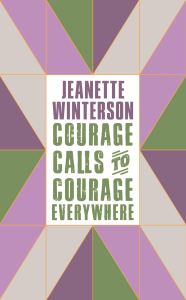 Last year it was Mary Beard’s Women and Power; in 2018 this is the Christmas gift to slip into every feminist book-lover’s stocking. Adapted from Winterson’s Richard Dimbleby Lecture and supplemented by the text of Emmeline Pankhurst’s 1913 speech “Freedom or Death,” this is a slim, attractive volume that feels timely if insubstantial. Winterson gives a potted history of suffragism and argues that female brains are not wired differently; it’s just social programming that tells us so. Gender imbalances in university admissions and the job market continued into the 1970s, so it’s no surprise, she says, that women are still catching up 40 years later – and she supports measures that could be labeled as positive discrimination.
From the #MeToo movement she makes what seems like an odd swerve into discussing AI because computer science/Silicon Valley is very male-dominated and she wants to be sure women have a respected role in the future. My reaction to this was the same as to Beard’s book and Chimamanda Ngozi Adichie’s We Should All Be Feminists: you can’t (and I don’t) dispute what the author has to say; for the most part the points are compelling and well made. Yet I don’t necessarily feel that I learned anything, or saw something familiar in a new way.
Favorite lines:
“When prejudice and bad science are no longer in the way, women always prove themselves as capable as men.”
“that’s how it is with patriarchy – we don’t notice the all-male panels, the movies where women are just the love interest, the number of male presenters on TV and radio […] and we do need parity, because women are one half of the population.”
My rating:
Other November reading plans…
 Margaret Atwood Reading Month
One of my longer novellas is a library copy of Surfacing (1972), which will be my first of two reads for the Margaret Atwood Reading Month hosted by Marcie and Naomi. I also own a copy of The Edible Woman (1969) and look forward to trying both of these early works.
Young Writer of the Year Award
Being involved with the Sunday Times/PFD Young Writer of the Year Award was one of my highlights of 2017. I’m excited for this year’s shadow panelists, several of whom are longtime blogging friends, and look forward to following along with the shortlist reads even though I can’t attend this year’s events. With any luck I will already have read at least one or two of the nominees (fingers crossed for Daisy Johnson and Fiona Mozley) so that there’s only a couple more to discover.
John Leonard Prize committee
In May I joined the National Book Critics Circle. One of the awards they give annually is the John Leonard Prize for the best first book in any genre. The pool of nominees is based on member recommendations, and a volunteer panel of members (as many as are interested!) then reads the 5–7 finalists and votes for a winner by January 8th. I signed up to be on the panel, so I’m committed to reading all the finalists in e-book format within about six weeks. Again, I hope to find that I’ve already read at least a few of the nominees. Regardless, it will be a fun project to keep me busy over our two weeks in America for the holidays.

Any reading plans for November? Will you be joining in with novellas or Margaret Atwood’s books?
Tidings by Ruth Padel & Other Christmassy Reading
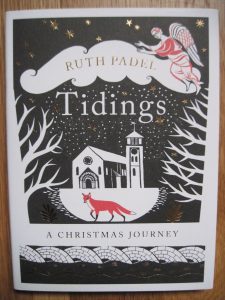 Ruth Padel is one of my favorite poets, so I jumped at the chance to read her new book-length holiday poem, Tidings: A Christmas Journey. Set across one Christmas Eve and Christmas day and narrated by Charoum, the Angel of Silence, the poem switches between Holly, a seven-year-old girl excited for Christmas, and Robin, a forty-four-year-old homeless man who follows a fox to a Crisis Centre. Here he gets a hot meal and some human kindness to make up for the usual bleakness of the holidays:
Christmas is the salt mine.
Salt in the wound, a nothing-time.
I was loved once. Who by? Can’t remember.
I especially liked the fragments that juxtapose this contemporary London story with centuries of history:
Up here the evening glides over golden moss
on the flat-top tomb of Mary Wollstonecraft
&
Pagan Christmas fizzes and teems with ghosts,
midwinter fires, mummers and waites, Yule
logs and mistletoe.
The poem also journeys to Jerusalem and Rome to survey a whole world of Christmas traditions, then and now.
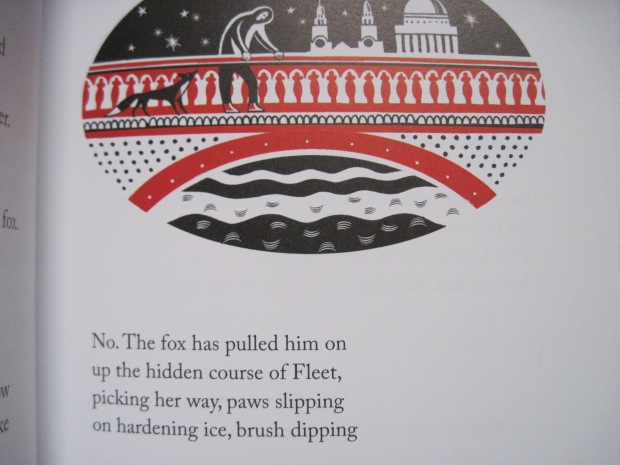
It’s a lovely little volume, with the red, black and white theme offset by touches of gold. The illustrations are gorgeous, but the story line disappointed me: starting with the character names, it all felt rather clichéd. Padel has treated urban foxes much more successfully in her collection The Soho Leopard, and apart from a very few instances – like the above quotes – the verse struck me as largely undistinguished, even awkward (like the out-of-place clinical vocabulary in “Love, / and the lack of it, can change the limbic brain”). This means that, for me, this book fails to earn a place as a Christmas classic I’ll reread year after year.
Tidings was published in the UK by Chatto & Windus on November 3rd. My thanks to Cat Mitchell of Random House for the free review copy.
My rating:
Other Christmassy Reading
 This year I’m resuming my place in Waiting on the Word, Malcolm Guite’s selection of religious-slanted poems to read from the start of Advent through Epiphany. For those who want to explore the history and interpretation of Christmas, I can recommend The First Christmas by the late Marcus Borg, one of my favorite progressive theologians.
As I have for the past several years, I’ll dip into The Ecco Book of Christmas Stories, edited by Alberto Manguel. My favorites are by Truman Capote, John Cheever, Jane Gardam and Jeanette Winterson (who has a brand-new, full-length Christmas story collection out this year). I’ll also sample some Russian classics via A Very Russian Christmas, which has short stories from Tolstoy, Chekhov and more.
 In addition, I have Cleveland Amory’s The Cat Who Came for Christmas and The Cat Who Stayed for Christmas out from the library, which should make for some very cozy reading under the cat. I’ll browse the numerous Christmas-themed poems in U.A. Fanthorpe’s Collected Poems, another library book. And I may even deign to try Hogfather, one from my husband’s beloved Discworld series by the late Terry Pratchett.
[See also this wonderful list of Christmas reading suggestions from Heaven Ali.]
Are you reading anything special this Christmas season?
Reviews Roundup, November–December
One of my goals with this blog is to have one convenient place where I can gather together all my writing that has appeared in disparate online locations. To that end, once a month I provide links to all book reviews I’ve published elsewhere, with a rating (below each description) and a taster so you can decide whether to read more. A few exceptions: I won’t point out my Kirkus Indie, BlueInk or Publishers Weekly reviews since I don’t get a byline.
The Bookbag
 In Search of Mary: The Mother of All Journeys by Bee Rowlatt: A BBC journalist and mother of four sets out, baby in tow, to trace the steps of Mary Wollstonecraft in Norway and France. A follow-up trip to California is a little off-topic, but allows Rowlatt to survey the development of feminism over the last few centuries. This isn’t as successful a bibliomemoir as many I’ve read in recent years, such as Rebecca Mead’s My Life in Middlemarch or Samantha Ellis’s How to Be a Heroine, but for readers interested in engaging in the ongoing debate about how women can balance work life with motherhood, and especially for any women who have attempted traveling with children, it’s a fun, sassy travelogue.

Foreword Reviews
 Italy Invades: How Italians Conquered the World by Christopher Kelly and Stuart Laycock: Proceeding alphabetically from Afghanistan to Zimbabwe, the authors give a comprehensive picture of Italians’ global reach through one- to five-page snapshots. There are many familiar names here, such as Caesar, Garibaldi and Marco Polo. Along with exploration, some major reasons for historical crossover were trade, war, colonialism and immigration. At times it feels as if the authors are grasping at straws; better to skip one-paragraph write-ups altogether and focus instead on the countries that have extensive links with Italy. Nonetheless, this is a lively, conversational book full of surprising facts.

Why You Won’t Go to Hell by Benjamin Vande Weerdhof Andrews: In a well-structured argument, Andrews prizes empirical thinking, rejects the supernatural, and affirms the possibility of godless morality. His central thesis is that religion doesn’t evolve to keep pace with society and so holds humanity back. The book’s tone is too often defensive, often in response to included website comments, and there are some failures of accuracy and fairness. Ultimately, though, this could be an inspirational book for atheists or believers, prompting both groups to question their assumptions and be willing to say “I don’t know.” Readers of Sam Harris and Christopher Hitchens will be particularly drawn to the book, but others should take a chance on it too.

 Cultured Food for Health by Donna Schwenk: When Schwenk started eating cultured foods in 2002, she had diabetes, high blood pressure, and a premature newborn. Keen to see if good bacteria could help with her medical problems, she started introducing the “healing powerhouse” of kefir (a fermented milk product resembling thin yogurt), kombucha (bubbly tea), and cultured vegetables into her diet, and soon reaped the rewards. About a quarter of the book is background information about probiotic foods. Bullet-pointed lists of health benefits, along with an alphabetical inventory of the diseases that cultured foods can treat, should prove helpful. The rest of the book is devoted to recipes, most vegetarian.
Three Simple Questions: Being in the World, But Not of It by Charlie Horton: Horton, trained as a social worker, was diagnosed with cerebellar degeneration in 1988. It has gradually affected his speech and movement. Despite having lived with disability for nearly three decades, he declares, “the world I live in is rich, and my spirit is young.” Here he documents how he deals with depression and physical limitations through guided meditations that bring him closer to God. Although he comes from a Christian perspective, he writes about spirituality in such inclusive terms that his work should speak to people of any faith.
Middle Passage: The Artistic Life of Lawrence Baker by Louis B. Burroughs, Jr.: This ghostwritten autobiography of an African-American artist is not only an evocative, eventful life story that moves from the Jim Crow South to the North, but also a forceful artist’s manifesto. Burroughs writes in Baker’s voice, a decision that works surprisingly well. The title is a powerful reference to the slave trade. Indeed, Burroughs consciously crafts Baker’s autobiography as an “up from slavery” narrative reminiscent of Richard Wright and Maya Angelou – with ‘slavery’ in this case being poverty and racism.
Nudge
 40 Sonnets by Don Patterson: All but one of the poems in this new book have the sonnet’s traditional 14 lines; “The Version” is a short prose story about writing an untranslatable poem. However, even in the more conventional verses, there is a wide variety of both subject matter and rhyme scheme. Topics range from love and death to a phishing phone call and a footpath blocked off by Dundee City Council. A few favorites were “A Powercut,” set in a stuck elevator; “Seven Questions about the Journey,” an eerie call-and-response; and “Mercies,” a sweet elegy to an old dog put to sleep. There weren’t quite enough stand-outs here for my liking, but I appreciated the book as a showcase for just how divergent in form sonnets can be.
 Without You There Is No Us by Suki Kim: This is a quietly gripping book even though not much of moment happens over Kim’s five months teaching young men at a missionary-run college in Pyongyang. She was in a unique position in that students saw her as ethnically one of their own but she brought an outsider’s perspective to bear on what she observed. Just before she flew back to the States in 2011, Kim Jong-Il died, an event she uses as a framing device. It could have represented a turning point for the country, but instead history has repeated itself with Kim Jong-un. Kim thus ends on a note of frustration: she wants better for these young men she became so fond of. A rare glimpse into a country that carefully safeguards its secrets and masks its truth.
 Alive, Alive Oh!: And Other Things that Matter by Diana Athill: Diana Athill turns 98 on December 21st. Apart from “Dead Right,” however, this collection is not primarily concerned with imminent death. Instead Athill is still grateful to be alive: marveling at a lifetime of good luck and health and taking joy in gardening, clothing, books, memories and friendships. Six of the 10 essays originally appeared elsewhere. The collection highlight is the title piece, about a miscarriage she suffered in her forties. Another stand-out is “The Decision,” about moving into a retirement home in her nineties. This doesn’t live up to her best memoirs, but is an essential read for a devoted fan, and a consolation given she will likely not publish anything else (though you never know). [For first-time Athill readers, I’d recommend starting with Somewhere Towards the End, followed by Stet, about her work as a literary editor.]
I also post reviews of most of my casual reading and skimming on Goodreads:
The Weightless World by Anthony Trevelyan: This debut novel blends postcolonial bureaucracy with steampunk zaniness. The setup is familiar enough: businessmen head overseas to take financial advantage of a former colony, puzzle over unfamiliar customs, and by the end are chastened but gain a clearer sense of values. Narrator Steven Strauss is the personal assistant to Raymond Ess, an entrepreneur with a history of mental illness. Their aviation company has gone bust; Strauss is to accompany Ess to India and keep him occupied by looking for an anti-gravity machine. Not anchored by either current events or convincing fantasy, the plot suffers in comparison to works by Geoff Dyer or Nick Harkaway. Despite entirely serviceable writing and a gravity-defying theme, it never really takes off.

 My Confection: Odyssey of a Sugar Addict by Lisa Kotin: 1978. Twenty-one-year-old mime goes to macrobiotic rehab to recover from sugar addiction. Fails. Shows signs of being a sex addict as well. Pared down to headlines, that’s how this fairly rambling memoir about Kotin’s relationships with food, family, lovers, and career opens. I kept waiting for a turn, some moment of revelation, when Kotin’s binge eating would be solved. Still, her recreation of her obsessive younger self can be pretty funny and charming, and her family sounds a bit like the Sedaris clan. I found this a bit dated, but others may find the time period and Jewish family background more evocative.
 Good on Paper by Rachel Cantor: I’m going to chalk this one up to blurb inflation. The writing is lively and the plot well crafted, with quirky postmodern touches, but the novel as a whole did not live up to my absurdly high expectations: it’s really nothing like A.S. Byatt’s Possession. It’s 1999 and Shira Greene is a failed translator from the Italian, now working as a temp in New York City and raising her daughter Andi with the help of her gay, Pakistani co-parent, Ahmad. One day she gets a call from Romei, a Nobel Prize-winning Italian poet who wants her to translate his new work, a version of Dante’s Vita Nuova that focuses on his relationship with his ill wife – and eventually starts to comment on Shira’s own life in surprising ways.
Water Sessions by James Lasdun: Wonderful poems from a severely underrated writer. The British Lasdun has relocated to small-town upstate New York, where he’s learned the spiritual worth of manual labor. There are such interesting rhyme schemes and half-rhymes throughout. One of the most striking poems, “Thing One and Thing Two,” compares human and animal sexuality in a rather disturbing way. The title sequence is a dialogue between a patient and a therapist, discussing what went wrong in a relationship and how arguments are never ‘about’ the thing that started it.
 The Secret Chord by Geraldine Brooks: A retelling of the life of King David from the perspective of the prophet Nathan. The naming takes some getting used to, but the stories – from gory massacres to moments of triumph – are recognizable from the Old Testament. What makes Brooks’s take unique is the different points of view it shows and the ways it subtly introduces doubt about David’s carefully cultivated image. It’s sensual historical fiction, full of rich descriptive language. Strangely unmemorable for me, perhaps because the storyline is just too familiar. Brooks doesn’t offer a radical reinterpretation but sows small seeds of doubt about the hero we think we know. (Full review in Jan/Feb 2016 issue of Third Way magazine.)
 When I Die: Lessons from the Death Zone by Philip Gould: Gould may be familiar to British readers as a key strategist of the New Labour movement and one of Tony Blair’s advisors. In 2008 he was diagnosed with esophageal cancer and chose to pay for private treatment at New York’s Sloan-Kettering hospital instead of going for a radical operation through the NHS – a fateful decision. Gould’s own account is fairly short, about 140 pages, but it’s supplemented by short reminiscences from his wife and two daughters. Daughter Georgia’s, especially, is a very good blow-by-blow of his final week. All royalties from the book went to the National Oesophago-Gastric Cancer Fund.
 Twain’s End by Lynn Cullen: “Twain’s End” was a possible name for the Clemens house in Connecticut, but it’s also a tip of the hat to Howards End and an indication of the main character’s impending death. In January 1909, when the novel opens, Samuel Clemens, 74, is busy dictating his autobiography and waiting for Halley’s Comet, the heavenly body that accompanied his birth, to see him back out. His secretary, Isabel Lyon, is 45 and it’s no secret that the two of them are involved. I love how the novel shifts between the perspectives of several strong female characters yet still gives a distinct portrait of Clemens/Twain. Interestingly, I found that it helped to have visited the Twain house in Connecticut – I could truly picture all the scenes, especially those set in the billiard room and conservatory.
 Meadowland: The Private Life of an English Field by John Lewis-Stempel: Lewis-Stempel is a proper, third-generation Herefordshire farmer, but also a naturalist with a poet’s eye. His day job might involve shooting rabbits, cutting hay and delivering lambs, but he still finds the time to notice and appreciate wildlife. He knows his field’s flowers, insects and birds as well as he knows his cows; he gets quiet and close enough to the ground to watch a shrew devouring beetles. June and July are the stand-out chapters, with some truly magical moments. When his mower breaks on a stone, he has to cut the hay by hand, returning him to a centuries-gone model of hard labor. All delivered in the loveliest prose.

Did You Ever Have a Family by Bill Clegg: A strong debut novel about personal and community responses to tragedy. Clegg’s multivocal approach works quite well, though there are perhaps a few too many voices diluting the mixture. I like how the revelations of what really happened that night before the wedding to cause the fatal house fire come gradually, making you constantly rethink who was responsible and what it all means. The small-town Connecticut setting is a good one, but I’d question the decision to set so much of the book in Washington, where the bereaved June drives on a whim. For a tragic story, it’s admirably lacking in melodrama.
 A Homemade Life: Stories and Recipes from My Kitchen Table by Molly Wizenberg: Foodoir extraordinaire! I liked this even better than Delancey, which is a terrific book about opening a pizza restaurant in Seattle with her husband. Here we get the prequel: the death of her father Burg from cancer, time spent living in Paris, building a new life in Seattle, starting her now-famous food blog (Orangette), and meeting her husband Brandon through it. Each brief autobiographical essay is perfectly formed and followed by a relevant recipe, capturing precisely how food is tied up with her memories. Wizenberg’s very fond of salad, but also of cake, and every recipe is full-on in terms of flavors and ingredients.
Ellen Foster by Kaye Gibbons: This was a random library book sale purchase, chosen almost entirely for the title. I set aside my usual dislike of child narrators and found an enjoyable voice-driven novella about a feisty ten-year-old who loses both her parents (good riddance to her father, at least) and finds her own unconventional family after cycling through the homes of some truly horrid relatives. Just as an example, her maternal grandmother sends her out to work picking cotton. The book is set in the South, presumably in the 1970s or 80s, so it’s alarming to see how strong racial prejudice still was.
 The Ecco Book of Christmas Stories, edited by Alberto Manguel: I read this over several years, a handful each holiday season. There are some very unusual choices, including some that really have hardly anything to do with Christmas (e.g. one by Bessie Head). Still, it’s a nice book to have to hand, even if just to skip through. Manguel strikes a good balance between well-known short story writers, authors you might never think to associate with Christmas, and fairly obscure works in translation. Four favorites: “A Christmas Memory,” Truman Capote (overall favorite); “Christmas Is a Sad Season for the Poor,” John Cheever; “The Zoo at Christmas,” Jane Gardam; and “O’Brien’s First Christmas,” Jeanette Winterson.
Reviews Roundup, September–October
One of my goals with this blog is to have one convenient place where I can gather together all my writing that has appeared in disparate online locations. To that end, once a month I’ll provide links to all the book reviews I’ve published elsewhere, with a rating (below each description) and a short taster so you can decide whether to click to read more. A couple of exceptions: I won’t point out my Kirkus Indie, BlueInk or Publishers Weekly reviews since I don’t get a byline.
The Bookbag
Rising Strong by Brené Brown: Brown, a qualitative researcher in the field of social work, encourages readers to embrace vulnerability and transform failure and shame through a simple process of re-evaluating the stories we tell ourselves. The gimmicky terminology and frequent self-referencing grated on me a bit, but I appreciated how the book made me reconsider events from my own life. It’s the ideas that carry Rising Strong, so as long as you come to it expecting a useful tool rather than a literary experience you shouldn’t be disappointed. Genuinely helpful self-help.

 Life After You by Lucie Brownlee: With honesty and humor, Brownlee reconstructs the two years following her husband’s sudden death. My sister is still a new widow, so I read this expecting it to resonate with her situation, and it certainly does. I had an issue with the title and marketing, though. When originally published last year, the book had the title Me After You. That’s been changed to sound a little less like a Jojo Moyes novel, but the cover is more chick lit than ever, which doesn’t really match the contents of the book.
The Glass Girl by Sandy Hogarth (& interview): Moving between Australia and England and spanning several decades of Ruth Bishop’s life, this debut novel explores the psychological effects of sexual trauma and betrayal. The middle of the book feels a little meandering, and the chronology is sometimes over-complicated. However, Ruth’s is a warm first-person voice, and the ending hints at welcome resolution to unanswered questions. My favorite aspect of the novel, though, is the frequent observations of the natural world.

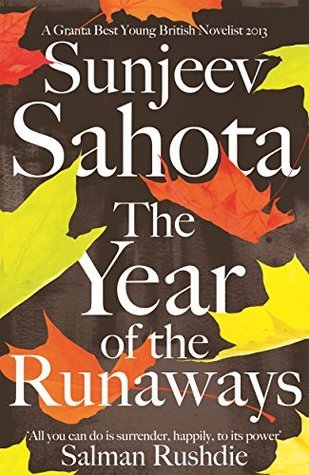 The Year of the Runaways by Sunjeev Sahota: With multilingual slang and several Sikh characters, Sahota’s second novel illuminates aspects of the South Asian experience that might be unfamiliar. Daily life is a struggle for Tochi, Randeep and Avtar: they work multiple jobs to make ends meet, serving at Crunchy Fried Chicken, cleaning sewers, or building a luxury hotel in Leeds. The fourth protagonist is Randeep’s visa-wife, Narinder. Through flashbacks we discover each one’s past. It’s a harrowing read, but you can’t help but sympathize with the four runaways as they make and dissolve connections over the year.
The Gap of Time by Jeanette Winterson: This contemporary ‘cover version’ of The Winter’s Tale links a London financier, a Parisian singer, and a blended family in New Orleans. Winterson creates clear counterparts for each Shakespeare characters, often tweaking names so they are recognizable but more modern. Inventive and true to the themes and imagery (time, adoption; angels, bears, statues) of the original, but ultimately adds little to one’s experience of Shakespeare. I’ll hope for better things from the rest of the Hogarth Shakespeare series. (Still to come: Margaret Atwood on The Tempest, Howard Jacobson on The Merchant of Venice and Anne Tyler on The Taming of the Shrew, among others.)
BookBrowse
 After the Parade by Lori Ostlund [subscription service, but the full text of my review will be available for free during the week of October 20th as part of Editor’s Choice]: Ostlund’s debut novel explores trauma and loneliness through the past and present of the protagonist, an ESL teacher who has just left his long-term partner, as well as the stories of those he meets. Although set over a six-month period, the novel is so full of flashbacks that it feels dense with the weight of the past. At times this can seem more like a set of short stories, only loosely connected through Aaron. Still, the overarching theme is strong and resonant: “after the parade,” after everything has changed irrevocably, you must keep going, pushing past the sadness to build a new life.
BookTrib
 The Best Small Fictions 2015, ed. by Tara L. Masih and Robert Olen Butler: In this very strong anthology of flash fiction, stories range from Tweet length to a few pages, but are always under 1,000 words. Titles and first lines carry a lot of weight. One of the best openers is “I didn’t recognize her without her head” (“Before She Was a Memory,” Emma Bolden). In genre the stories run the gamut from historical fiction to whimsical fantasy. You’ll be introduced to a wealth of fresh and existing talent. There are literally dozens of stand-outs here, but if I had to choose a top 3, they’d be “A Notice from the Office of Reclamation” by J. Duncan Wiley, “The Lunar Deep” by David Mellerick Lynch, and (overall favorite) “Something Overheard” by Yennie Cheung.
For Books’ Sake
 Fates and Furies by Lauren Groff: An incisive study of a marriage, beautifully written and rich with allusions to Shakespeare and Greek mythology. Short, verbless sentences pile up to create exquisite descriptions, as in “Sunset. House on the dunes like a sun-tossed conch. Pelicans thumb-tacked in the wind.” However, I was less sure about the necessity of the bracketed phrases, which seem to represent a Greek chorus giving omniscient commentary, and the use of slang and nicknames can grate. Groff makes it onto a short list of women I expect to produce the Great American Novel.
Foreword Reviews
 When All Goes Quiet by Augustinus F. Lodewyks: This religious memoir should interest those who are curious about how spiritual experience can infiltrate everyday life. “When all goes quiet, I know that Heaven is trying to show me its glory,” Lodewyks writes. In autobiographical vignettes, he vividly expresses his mystical visions, particularly those featuring Jesus, the Virgin Mary and angels, who tend to appear in times of crisis and during events of ritual significance like weddings, funerals and religious pilgrimages. Some will still object to the overt proselytizing, especially in the book’s last quarter.

The Blessing of Movement by Deborah Konrad: Konrad’s story is an inspirational memoir about life with disability and caring for dying relatives. Her sister Sandra became a quadriplegic in her twenties. Throughout the book, Konrad investigates the secret strength that underlay “the sunny disposition of the pretty paralyzed woman.” She concludes that it was all about thankfulness, as proven by Sandra’s gratitude journal. Konrad’s own life undeniably gets sidelined, though; more self-reflection would provide a good match for her insights into her sister’s character.
 DNA of Mathematics by Mehran Basti: Drawing on his academic specialty in mathematics, Basti explores how scientific theories have been used and misused through history. The book lacks focus due to frequent unrelated asides. It may be difficult to grant credibility to a scientist who dismisses the big bang because it was theorized through “semi-broken scientific methods” and seems to have a personal vendetta against Stephen Hawking. Most importantly, the mathematics that forms the book’s basis is never fully explained.

From Hell to Heaven, One Man’s Journey by Gustav Daffy: This book was inspired by an acrimonious divorce and other family troubles; although Christian faith helped Gustav adjust his thinking, many of the poems still feel like the angry outpourings of a man with an ax to grind. Moreover, formulaic rhyming and poor spelling and grammar mar this overlong collection. It would take a professional copyeditor to hone this into a concise set of linguistically and stylistically acute poems. However, the author’s in-the-moment reactions are easy to relate to.
Shiny New Books
 Grief Is the Thing with Feathers by Max Porter: It may seem perverse to twist Emily Dickinson’s words about hope into a reflection on bereavement, but Porter’s exceptional debut does just that: tweak poetic forebears – chiefly Poe’s “The Raven” and Ted Hughes’s Crow – to create a hybrid response to loss. The novella is composed of three first-person voices: Dad, Boys and Crow (the soul of the book: witty, onomatopoeic, often macabre). Dad and his two young sons are adrift in mourning; the boys’ mum died after an unspecified accident in their London flat. The three narratives resemble monologues in a play, with short lines laid out on the page more like stanzas of a poem.
We Love This Book
 A Slanting of the Sun by Donal Ryan: The Irish author of the novels The Spinning Heart (winner of the Guardian First Book Award in 2013) and The Thing About December, returns with 20 jolting, voice-driven short stories suffused with loneliness and anger. Nineteen of the 20 are in the first person, echoing the chorus of voices that made The Spinning Heart so effective. Many of the narrators speak in thick dialect and run-on sentences, which helps to immerse you in the rhythms of Irish speech. In a book full of lonely people, it is the moments of connection – however fleeting – that matter. For example, in “Long Puck,” one of the best stories, a Catholic priest posted to Syria initiates interfaith hurling matches that temporarily lift everyone’s spirits.
I also post reviews of most of my casual reading and skimming on Goodreads.
 The River by Helen Humphreys: Humphreys has lived along Ontario’s Napanee River for over a decade. I was expecting a blend of personal reflection and natural observations, but instead the book is mostly composed of brief fictional passages illuminating a handful of species. I liked the passages about the heron best – Humphreys successfully imagines the life of a plume hunter and contrasts it with the excitement of two women involved in the foundation of a bird conservation charity. However, much of the book felt like unconnected vignettes, not building to any kind of grander picture of a location.

The Mountain Can Wait by Sarah Leipciger: The novel opens and closes with a hit-and-run, but in between those momentous peaks it’s a quieter tale of a single father trying to guide his son and daughter into young adulthood in the wilds of Canada’s west and islands. Tom Berry’s work is not cutting trees down but planting them – an interesting adaptation of a traditional woodsman’s activity to a new eco age. I found the story a little sleepy but loved Leipciger’s writing, especially her account of the daily drudgery of manual labor and her descriptions of wilderness scenery.
 Decline of the Animal Kingdom by Laura Clarke: Bizarre, in-your-face poetry from a 30-year-old Canadian: business jargon, YouTube videos, fast food…and, yes, animals. Many of the poems feature mules and lions, including weird dialogues between a mule and its supervisor / domestic partner / psychiatrist. With plays on words and sexualized vocabulary, Clarke considers inter-species altruism and the inevitable slide towards extinction. Two favorite lines: “You forget you live parallel to violence” (from “Carnivora”); “The Tasmanian tiger live-tweets its extinction from the Hobart zoo in 1933” (from “Extirpation”).
Do No Harm: Stories of Life, Death and Brain Surgery by Henry Marsh: “Terrible job, neurosurgery. Don’t do it.” Lucky for us, Henry Marsh reports back from the frontlines of brain surgery so we don’t have to. He’s nearing retirement age after a career divided between a London hospital and medical missions to Ukraine. The punchy chapters are named after conditions he has treated or observed. Marsh comes across as having a hot temper, exhibiting extreme frustration with NHS bureaucracy. At the same time, he gets very emotional over his patients declining and dying, and experiences profound guilt over operations that go wrong or were ultimately unnecessary.

 In the Flesh by Adam O’Riordan: My favorite poems in O’Riordan’s debut collection were about Victorian Manchester, 1910s suffragettes and the Wordsworths, this last based on the author’s year in residence at their Lake District cottage. I also liked “The Corpse Garden” – about the outdoor forensic lab in Knoxville, Tennessee – and a couple of multi-part poems that seem to enliven family history. It’s the vocabulary and alliteration that make these poems; there are only a handful of rhyming couplets.
A Circle of Quiet by Madeleine L’Engle: If, like me, you only knew L’Engle through her Wrinkle in Time children’s series, this journal should come as a revelation. I didn’t know she wrote any nonfiction for adults. The Crosswicks books cannot be called simple memoirs, however; there’s so much more going on. In this journal (published 1972) of a summer spent at their Connecticut farmhouse, L’Engle muses on theology, purpose, children’s education, the writing life, the difference between creating stories for children and adults, neighbors and fitting into a community, and much besides.
 A View of the Harbour by Elizabeth Taylor: My third Taylor – not as good as Mrs. Palfrey, but better than Angel. It’s about the everyday family and romantic entanglements of a small English harbor village in the 1940s. Beth is a preoccupied writer who doesn’t notice that her husband, the local doctor, is carrying on an affair with her best friend, the divorcée Tory, who is also their next-door neighbor. As always, Taylor has great insight into the human psyche and unlikely relationships. The plot is low on thrills for sure, but it’s pleasant reading, especially if you’re on holiday at the seaside (I started reading it on the coast near Dublin).
Amazing Grace: A Vocabulary of Faith by Kathleen Norris: This makes the shortlist of books I would hand to skeptics to show them there might be something to this Christianity nonsense after all. Norris spent 20 years away from the faith but gradually made her way back, via the simple Presbyterianism of her Dakota relatives but also through becoming an oblate at a Benedictine monastery – two completely different expressions of the same faith. In few-page essays, she gives each word or phrase a rich backstory through anecdote, scripture and lived philosophy, ensuring that it’s not just religious jargon anymore.
 Undermajordomo Minor by Patrick deWitt: What The Sisters Brothers did for the Western, this does for the Gothic fairytale. It’s not quite as fun or successful as the previous book, but has a nicely campy Dracula or Jane Eyre feel. Lucien “Lucy” Minor, a compulsive liar, sets out to find adventure and romance as undermajordomo of a castle in the quaint German countryside. Here he meets pickpockets, a periodically insane baron, a randy maiden, and a strapping rival who’s a soldier in the absurdist local conflict. DeWitt’s understated humor is not as clearly on display here; there’s also, strangely, quite a bit of sex.
Sentenced to Life by Clive James: James, an Australian critic and all-round man of letters, was first diagnosed with leukemia in 2010. After a setback in 2013, he’s rallied, but these poems are certainly infused with a sense of imminent mortality. The incessant ABAB rhyming in the early poems set up a jaunty rhythm I didn’t find appropriate to the subject matter; I much prefer the later unrhymed poems. “Plot Points” is my favorite, artfully linking disparate historical moments.
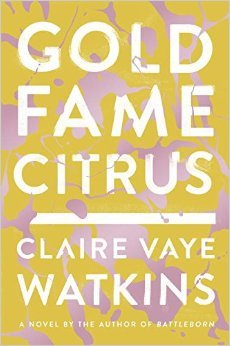 Gold Fame Citrus by Claire Vaye Watkins: Gold, fame, citrus: reasons people once came to California. Now, only a desperate remnant remains in this waterless wasteland. Luz and Ray squat in a starlet’s abandoned mansion and live off of Luz’s modeling money – she was once the environmental movement’s poster child, “Baby Dunn.” When they take charge of a baby called Ig, however, their priorities change. They set off for the strangely beautiful sea of dunes, the Amargosa, leaving behind the ‘frying pan’ of exposure to the elements for the ‘fire’ of a desert cult. There is some absolutely beautiful prose. This is the book that California (Edan Lepucki) wanted to be.
Satin Island by Tom McCarthy: U. is a corporate anthropologist in London, coming off the success of the Koob–Sassen contract and facing the blank page of the Great Report he’s tasked with writing. Not much happens here; the book is more about his anthropological observations and the things he fixates on, like oil spills, a sabotaged parachutist, and Satin Island – a place he encounters in a dream and then, by word association, likens to Staten Island, a destination he doesn’t quite make it to. For me the most interesting parts were about narrative. I found this too clever for its own good; not Booker Prize material.
 Bookish Beck = Rebecca Foster. American transplant to England. Freelance proofreader and book reviewer.
 Bookish Beck