First Encounter: Maggie Nelson
Maggie Nelson is the author of four volumes of poetry and five wide-ranging works of nonfiction that delve into the nature of violence and sexuality. From what I’d heard about her writing, I knew to expect an important and unconventional thinker with a distinctive, lyrical style. As of early June, Vintage has made some of her backlist, including The Red Parts: Autobiography of a Trial and Bluets, available for the first time in the UK.
I read The Red Parts for The Bookbag. Here’s an excerpt from my full review:
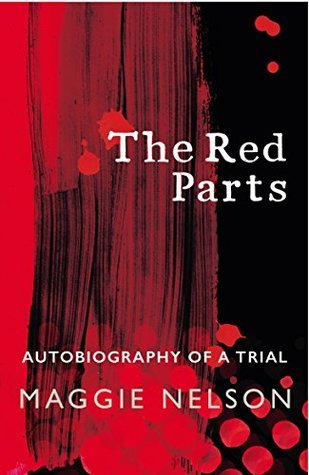 Nelson’s aunt was murdered in Michigan in 1969. Thirty-five years later, just as Nelson had completed writing a poetry collection about her, the case was reopened when new DNA evidence emerged. Most authors would quickly zero in on the trial itself, giving a blow-by-blow of the lawyers’ questioning and witnesses’ statements. Although Nelson does document important developments in the month-long trial, and describes autopsy photographs in blunt detail, her account is much more diffuse than one might expect. Interspersed with Jane’s history are other dark memories: Nelson’s father’s sudden death, her sister’s wild years, aborted love affairs. The title phrase tangentially refers to the words of Jesus in the New Testament, traditionally printed in red, so it has a sort of dual meaning: this is a (futile) search for the gospel truth about her aunt’s death, and also a conscious dive into the parts of life that frighten us. This fluid, engrossing narrative is no ordinary true crime story, but a meditative reflection on loss and identity.
My rating: 
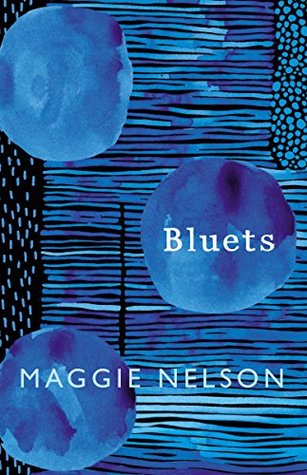 Bluets is a fragmentary record of Nelson’s arbitrary obsession with the color blue. It’s composed of 240 short numbered essays of about a paragraph each; some are just one or two sentences. At one point Nelson refers to these as “propositions,” but really they are more like metaphorical musings. Blue takes on so many meanings: with the connotation of “depressed”, it applies to her loneliness and sense of loss after the breakdown of a relationship (she continues addressing her former partner as “you” here) and a friend’s serious accident:
Loneliness is solitude with a problem. Can blue solve the problem, or can it at least keep me company within it?
Mostly I have felt myself becoming a servant of sadness. I am still looking for the beauty in that.
Then there’s blues music (Billie Holiday), seedy sex (“blue movies”), Joan Mitchell’s 1973 abstract painting Les Bluets, Novalis’ blue flower (which gives the title to a Penelope Fitzgerald novel), and so on. Nelson likens herself to a male bowerbird lining her nest with blue – sometimes literally, as with the collection of “blue amulets” that she keeps on a windowsill so sunlight can pass through the glass and illuminate the stones. I recalled that Sarah Perry lists Bluets as one inspiration for The Essex Serpent, in which the character Stella is fascinated with the color blue and keeps a similar trove of trinkets.
Bluets is a difficult work to characterize, but it seems closest in style to Jenny Offill’s Dept. of Speculation, which is also built on loosely linked aphorisms. The problem with books like these is that individual lines may stand out as profound but don’t contribute to an overall story line or argument. Moreover, Nelson’s forthrightness about sex, which edges towards crassness and feels out of place in this dreamily academic text, took me some getting used to.
Two more favorite lines:
I walked around Brooklyn and noticed that the faded periwinkle of the abandoned Mobil gas station on the corner was suddenly blooming.
If I were today on my deathbed, I would name my love of the color blue and making love with you as two of the sweetest sensations I knew on this earth.
My rating: 
Many thanks to Cat Mitchell of Penguin Random House for the free review copy.
The Red Parts was the more straightforward and satisfying read of this pair, but Bluets is certainly an original and artful bedside book. I would certainly read more by Nelson; I’m particularly interested in The Argonauts (2015), a memoir about forming her unconventional family – her partner, Harry Dodge, is transgender.
Have you read anything by Maggie Nelson? Do her books appeal?
Reviews Roundup, February–March
One of my goals with this blog was to have one convenient place where I could gather together all my writing that appears in disparate online locations. To that end, once a month I provide links to all book reviews I’ve published elsewhere, with a rating (below each description) and a taster so you can decide whether to read more. A few exceptions: I don’t point out my Kirkus Indie, BlueInk or Publishers Weekly reviews since I don’t get a byline. Meanwhile, I’ve done my first article for the Los Angeles Review of Books – exciting!
The Bookbag
Three-Martini Lunch by Suzanne Rindell: Brings the late 1950s, specifically the bustling, cutthroat New York City publishing world, to life through the connections between three young people who collide over a debated manuscript. The three first-person voices fit together like a dream. It’s an expert evocation of Beat culture and post-war paranoia over Communism and homosexuality. Walking into Eden’s office, especially, you’ll think you’ve landed on the set of Mad Men. This classy, well-plotted follow-up will win Rindell even more fans and tide us all over until the film version of The Other Typist – produced by and starring Keira Knightley – appears. Releases May 19th in the UK.

 Why We Came to the City by Kristopher Jansma: Five university friends strive to make their lives count against the indifferent backdrop of recession-era New York City. When one of them falls ill, they pull together like a family. The tone of the novel lies somewhere between A Little Life and the sitcom Friends (a Mexican version of which the characters watch obsessively). Even as his characters realize that they are not special and not in control of their lives, Jansma never lets his book descend too far into gloom. Narrowly misses out on 5 stars from me because the storyline loses momentum in Part Two. Rich with emotion and literary allusions (from Walden to The Iliad), this is my favorite novel of the year so far.
Waltzing in Vienna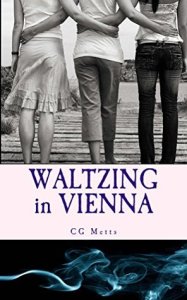 by C.G. Metts (& interview): Three girlfriends – a singer staging a comeback, a psychology professor reawakening to sexuality after being widowed, and a socialite Southern Belle – are reunited in Charleston, South Carolina in their early forties. Remembering their wild college days, they wonder how to make midlife count. There’s a fun Sex and the City or Ya-Ya Sisterhood vibe to this recommended debut novel. I liked the mixture of nostalgia and gentle feminism, and I think this may also inspire readers to see South Carolina’s coastal landscape for themselves. The title phrase is the friends’ shorthand for smoking marijuana together.

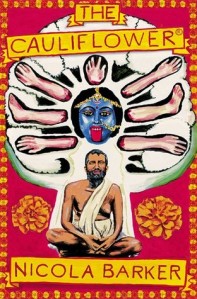 The Cauliflower® by Nicola Barker: Put simply, this is a fictionalized biography of the largely illiterate Hindu guru Sri Ramakrishna (1836–1886). That may sound dry as dust, but Barker makes it a playful delight by skipping around in time and interspersing aphorisms, imagined film scenes, questions and answers, and even a recipe with the narrative chapters. The kernel of the story – set in 1857 at the Dakshineswar Kali Temple, six miles north of Calcutta – is narrated in the first person by the guru’s nephew, Hriday. Scripture of all types (the Bible is also cited) is a relevant, joyful echo here rather than a dull set of rules. Bizarre but very readable. Releases April 21st.
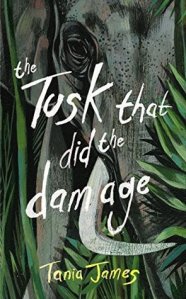 The Tusk That Did the Damage by Tania James: This composite picture of the state of wildlife conservation in India is told from three perspectives: an elephant named the Gravedigger, a poacher, and a documentary filmmaker. James ably intersperses three voices as she explores how people fail to live up to their ideals and make harmful assumptions. Despite these attributes, it was one of those books I had to force myself through. Perhaps it was the environmental agenda: if a book is going to wear its message so openly, it has to live up to it in terms of the writing. I might have preferred it if the whole novel had been from Emma’s point of view, with one climactic encounter with the Gravedigger to make the poaching question immediate and not simply academic.

BookBrowse
Dog Run Moon: Stories by Callan Wink [subscription service]: Wink’s debut story collection, set mostly under Montana’s open skies, stars a motley cast of aimless young men, ranchers, Native Americans, and animals live and dead. He plays around with Western stereotypes in intriguing ways. A few of the tales are a bit less compelling, and I would have preferred more variety in narration (8 of 9 are third person), but the stand-outs more than make up for it. My two favorites were “Runoff” (there’s a double meaning to the title) and “Exotics,” in which all the characters are lured by the life they don’t currently have.
 For Books’ Sake
Interview with Rachel B. Glaser, author of Paulina & Fran [my review of which was in last month’s roundup]
Foreword Reviews
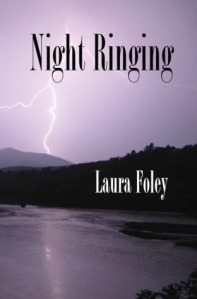 Night Ringing by Laura Foley: Foley’s strong fifth collection ruminates on romance and family via autobiographical free verse. One of the collection highlights is “In the Honda Service Area,” which unexpectedly unites modern technology with ancient literature. While a woman describes her impending hip replacement surgery to a friend, Foley tries to concentrate on Homer’s Iliad. The collection is dedicated to Foley’s partner, Clara Giménez, and lesbian romance is a subtle undercurrent. Especially recommended for fans of Jane Hilberry and Adrienne Rich.
The Temple of Paris by Laura DeBruce: This second volume in Laura DeBruce’s Quicksilver Legacy trilogy is a fast-paced fantasy adventure novel. In the previous book, the author introduced the “Immortals,” centuries-old creatures who are impervious to disease and aging due to a magic elixir. If Hana, the teenage protagonist, can learn how to use the elixir in her possession correctly, she can save her mother from a potentially fatal blood disorder. Although the complicated plot might be challenging for those new to the series, older teens will appreciate the rollicking story and the chance for vicarious European sightseeing.

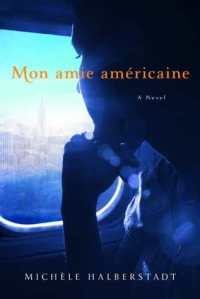 Mon amie américaine by Michèle Halberstadt: After years of heavy smoking and migraines, a brain aneurysm plunges forty-year-old Molly into a coma. The novel is presented as Michèle’s confessional letter to her American friend Molly, addressed in the second person. During Molly’s coma and after she wakes up, Michèle ponders their unlikely friendship and also frets over her threatened marriage. The novella is like a cross between Jenny Offill’s Dept. of Speculation and Jean-Dominique Bauby’s The Diving-Bell and the Butterfly, and bears tantalizing traces of deliberate homage to Pedro Almodóvar’s coma-themed Talk to Her: an understated dual account of betrayal and disability.
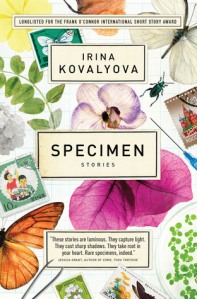 Specimen: Stories by Irina Kovalyova: “People like to pretend that our genes define the truth for us. But I assure you that’s not the case,” a character insists in the title story. Diverse in setting and form, these nine stories, long-listed for the Frank O’Connor International Short Story Award, contrast the scientific understanding of genetics with deeper wisdom about the bonds of love and family. Nestling science into rich psychological narratives, Kovalyova’s work is reminiscent of that of Andrea Barrett and A. S. Byatt; in fact, the latter is directly referenced in one story. She also channels Anthony Marra and Adam Johnson by affirming love’s survival in spite of repressive situations.
Of Crime and Passion by Jonathan Harnisch: In this novella, a proud young man seeks to transcend his underprivileged upbringing by worming his way into the homes of the rich and seducing powerful women. At its heart, the book is about the ongoing conflict between economic and social classes. With the melodramatic action and old-fashioned dialogue, though, it is easy to imagine this coming-of-age tale working better in the form of a play.
Hakai Magazine
(a Canadian publication highlighting coastal ecosystems)
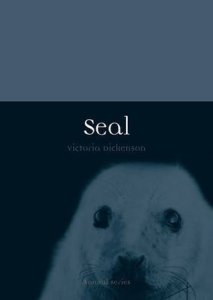 Seal by Victoria Dickenson: “It is hard to imagine a creature more distant from the human species in bodily form, habits, and habitat than the seal,” Dickenson writes in her introduction, “yet our mutual regard tells of a long, shared history of interaction.” Seal is the latest in the 80-strong Animal series from Reaktion Books. Like other volumes, this gives a brief discussion of the featured animal’s evolutionary biology, followed by an interdisciplinary survey of how it has entered human culture throughout history. In the final two chapters—the highlight of an occasionally dry book—Dickenson gives a balanced account of the history of hunting seals.
Los Angeles Review of Books
“Rediscovering an Overlooked Woman Novelist”: A dual review of Constance Fenimore Woolson: Portrait of a Lady Novelist by Anne Boyd Rioux () and Miss Grief and Other Stories (), a new selection of Woolson’s short fiction.
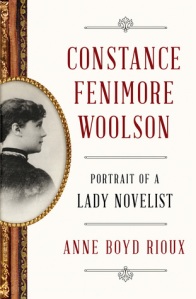
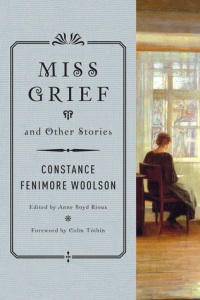 Constance Fenimore Woolson (1840–1894) is most often remembered for her connection to male writers; her great-uncle was pioneering American novelist James Fenimore Cooper, and in her later years as an expatriate in Europe she associated with Henry James, fueling rumors of a romance between them. Deserving to be known in her own right, Woolson represents key junctures between realism and regionalism, and between American and European styles. Gives a remarkable picture of a bold, bright woman who paved the way for writers such as Edith Wharton, E. M. Forster, and Willa Cather, and who arguably might be hailed in the same breath as Henry James and George Eliot.
Nudge
My quick response to Instructions for a Heatwave, for a Maggie O’Farrell retrospective: Another spot-on tale of family and romantic relationships – O’Farrell always gets the emotional tenor just right. You may spot hints of Rachel Joyce’s The Unlikely Pilgrimage of Harold Fry or Bernhard Schlink’s The Reader, but the psychological and linguistic precision is all O’Farrell’s own. Her descriptive language is unfailingly elegant. I love how she opens with the heat as the most notable character: “It inhabits the house like a guest who has outstayed his welcome: it lies along corridors, it circles around curtains, it lolls heavily on sofas and chairs.”
Pretentiousness: Why It Matters by Dan Fox: This wide-ranging essay discusses pretentiousness as it relates to class, taste, and modern art. Fox grew up outside of Oxford but now lives in New York City, where he is the co-editor of frieze. From its Latin etymology we learn that pretentious means “to stretch before,” so to hold something in front of you like a mask. He thus starts off by talking about acting techniques and rhetoric, then broadens this out to themes of authenticity and self-discovery. The most interesting part of the book concerns class connotations. This is a somewhat meandering work, and though it has good individual lines it is not always riveting.
 Third Way magazine
I’ve reviewed books, mostly fiction, for them for the last 2.5 years; sadly, the April 2016 issue will be the final one. It’s a shame; the progressive Christian perspective on popular culture is a niche it will be hard to fill.
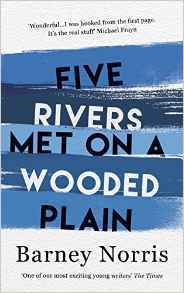
Five Rivers Met on a Wooded Plain by Barney Norris: Barney Norris is a playwright in his twenties, so it’s no surprise that there’s something a little staged to his debut novel. The lives of the book’s five narrators collide one night when a car hits a moped in Salisbury town center. We hear from each protagonist in turn as they reflect on their losses and wonder whether religion – represented by Salisbury Cathedral and the scripture and rituals of Christianity – might help. Rita is the liveliest and most engaging character, difficult as her expletive-strewn narrative might be to traverse. Like David Nicholls, Norris prizes emotional connection and delivers a theatrical plot. If he can avoid the more clichéd aspects of a novel like One Day, he could have a long career in fiction ahead of him. Releases April 21st.
I also post reviews of most of my casual reading and skimming on Goodreads:
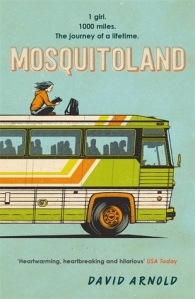 Mosquitoland by David Arnold: I don’t read a whole lot of YA, but the voice of this one captured me right away. Like Hazel in The Fault in Our Stars, Mim (Mary Iris Malone) is a lovably sarcastic oddball – she describes herself as “a young Ellen Page” à la Juno – with some hidden issues that come out over the course of the book. Here Mim’s journey takes the form of a road trip from Mississippi, where she lives with her father and new stepmother, back to Ohio to be with her sick mother. She meets a kooky cast of secondary characters along the way, narrowly escapes danger, and even gets a chance at romance.
A Change of World: Poems by Adrienne Rich: This is a forthcoming Norton reissue of Rich’s first collection from 1951. I’d always thought of her as a later, feminist poet, so it was jolting to see an introduction from W.H. Auden – that made it feel like a real generational crossover. It’s a very impressive debut, full of mannered, rhyme-rich verse. Two favorites were “Walden 1950” (“Thoreau, lank ghost, comes back to visit Concord, / Finds the town like all towns, much the same— / A little less remote, less independent”) and “The Innocents.” I’ll be interested to read some of her later work and see if she loosened up with form. Releases June 21st.
 The Shadow Hour by Kate Riordan: A clever dual-timeline novel with a pleasing Gothic flavor. In 1922 Grace Fairford takes up a governess position at Fenix House near Cheltenham, the very place where her grandmother, Harriet Jenner, worked in 1878. Every few chapters the perspective shifts from Grace (first person) to Harriet (third person). The novel is full of coincidences and the sense of history repeating itself. Riordan’s writing is capable, sometimes clichéd, but the echoes of Jane Eyre and The Turn of the Screw make this a delicious guilty-pleasure read.
Life’s Too Short to Pretend You’re Not Religious by David Dark: Etymologically, the word “religion” means to bind together again. Simply put, Dark’s thesis is that we’re all connected: we are in relationship with the people around us and can’t pretend otherwise. What we need is a shared vision for our shared life, and that involves engaging with other people. No pie-in-the-sky theology here; Dark affirms Daniel Berrigan’s assertion that “the actual world is our only world,” so things like climate change, gun control, immigration, and foreign policy are religious issues because they affect us all in this life. Together we have to imagine another story that isn’t capitalism and American imperialism as usual.
Adios, Cowboy by Olja Savičević Ivančević: In summer 2009, Dada (aka Rusty) returns to her Croatian hometown to care for her mother. Going home facing up to the fact of her brother’s death – when he was 18 he threw himself under a train. “One has to sit down beside one’s demon and mollify it until it’s calm – that’s all, perhaps, that can be done,” she muses. Now for the title: Dada’s late father, brother, and friends (“the Iroquois Brothers”) were all big on cowboys and Indians. When news comes that a spaghetti western actor/director named Ned Montgomery will be passing through town, it causes Dada to think about her father and her brother and, what’s more, about the workings of her own memory.
Now Go Out There: (and Get Curious) by Mary Karr: There’s not much to this Syracuse University commencement speech. Leftovers of sob-story autobiography and clichéd advice cobbled together. Disappointing given how much I loved Karr’s recent The Art of Memoir. For a truly inspirational graduation address, I recommend David Foster Wallace’s This Is Water.

 How to Be Here: A Guide to Creating a Life Worth Living by Rob Bell: Bell left his pastoral role to become a motivational speaker so, unsurprisingly, this book is closer to self-help than theology. He’s good pals with Elizabeth Gilbert, and this book would make a great companion piece to her Big Magic. It’s about how to find what gets you out of bed in the morning and live mindfully. As always, his formatting – bite-size paragraphs, stretching out phrases with line breaks – is slightly annoying. I didn’t learn a whole lot; it was more a case of being reminded of things I knew deep down. He prefaces most chapters with an anecdote about his creative ventures, some of which were utter failures.
And my highest recommendation goes to…
The Summer Guest by Alison Anderson: The kernel of the novel is a true story: for two summers in the late 1880s, Chekhov stayed at the Lintvaryovs’ guest house in Luka, Ukraine. One strand of the narration is a journal kept during those years by Zinaida, the family’s eldest daughter, a doctor dying of a brain tumor. Zina’s story is offset by those of two contemporary women. Katya, a Russian émigré in London who’s trying to keep her failing publishing house afloat, sends the never-before-published diary to Ana, a translator based near the French border with Switzerland. There’s a touch of mystery here: where was the diary found? And what became of the novel Chekhov mentions he had in progress? Ana’s search for answers takes her to the Lintvaryov estate, even though Ukraine in 2014 is a hotbed of unrest. Having recently watched the BBC War & Peace miniseries with rapt interest and seen a Tchaikovsky symphony performance, it was the perfect time to get lost in an intricate, playful novel about how Russian literature still resonates. I’ll certainly be looking up Anderson’s other novels.
Reviews Roundup, October–November
One of my goals with this blog is to have one convenient place where I can gather together all my writing that has appeared in disparate online locations. To that end, once a month I provide links to all book reviews I’ve published elsewhere, with a rating (below each description) and a taster so you can decide whether to read more. A few exceptions: I won’t point out my Kirkus Indie, BlueInk or Publishers Weekly reviews since I don’t get a byline.
This month you may recognize a few books I already previewed in my posts on books as beautiful objects and library books read in October.
The Bookbag
Charlotte Brontë’s Secret Love by Jolien Janzing: Charlotte and Emily Brontë’s time in Belgium – specifically, Charlotte’s passion for her teacher, Constantin Heger – is the basis for this historical novel. The authoritative yet inviting narration is a highlight, but some readers may be uncomfortable with the erotic portrayal; it doesn’t seem to fit the historical record, which suggests an unrequited love affair. My other issue with the book is a couple of subplots that only seem to have minor significance.

In Fidelity by Jack Wilson: In this 1970s-set novel, the central couple’s relationship is tested by illness and extramarital sexual experiences. Moving from New England to Nigeria and back, the story asks what loyalty really requires when a once-strong connection has faded over time. Strongly reminiscent of John Updike in Part One, this is the male view of adultery. Something about the self-justifying tone stuck in my craw. A more balanced book would give the wife’s perspective, too, as Carol Shields did in Happenstance, or like Lauren Groff recently did to great success in Fates and Furies.

BookBrowse
 The Tsar of Love and Techno by Anthony Marra [subscription service]: This collection of tightly linked short stories, an intimate look at Russia and Chechnya in wartime and afterwards, reveals how politics, family, and art intertwine. Ranging from 1937 to 2013, the pieces show how fear and propaganda linger in the post-Stalinist era. In art as much as in politics, it can be difficult to distinguish airbrushed history from bitter reality. Just as he did in his excellent debut novel, A Constellation of Vital Phenomena, Marra renders unspeakable tragedies bearable because of his warm and witty writing. All his characters’ voices are well-realized and inviting, and he comes up with terrific one-liners.

BookTrib
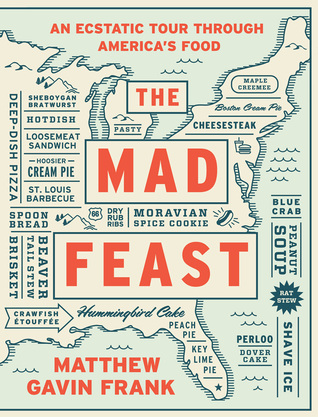 Mad Feast by Matthew Gavin Frank: This is the cookbook David Foster Wallace might have written. In an off-the-wall blend of memoir, travel, history and fiction, Frank proceeds region by region, choosing for each American state one beloved dish and interrogating its origins as well as its metaphors and associations. It’s a mixed bag of familiar foods and ones that only locals are likely to know about. Each chapter ends with a recipe for the signature plate, whether from a Lutheran church or a posh restaurant. Frank’s digressive, anecdotal approach takes some getting used to. If you appreciate the style of writers like Geoff Dyer, Maggie Nelson and Will Self, this should be your next food-themed read.
For Books’ Sake
 Charlotte Brontë: A Life by Claire Harman: With her bicentennial approaching in April 2016, it’s the perfect time to revisit Charlotte Brontë’s timeless stories. One of the things Harman’s biography does best is trace how the Brontës’ childhood experiences found later expression in fiction. A chapter on the publication of Jane Eyre is a highlight. Diehard fans might not encounter lots of new material, but Harman does make a revelation concerning Charlotte’s cause of death – not TB, as previously believed, but hyperemesis gravidarum (extreme morning sickness). This will help you appreciate afresh a “poet of suffering” whose novels were “all the more subversive because of [their] surface conventionality.”

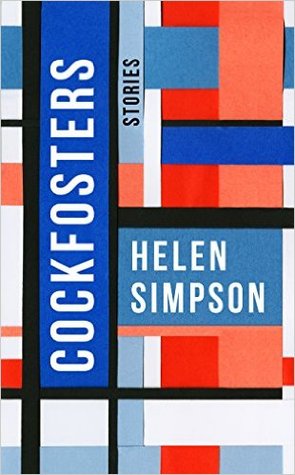
Cockfosters by Helen Simpson: Simpson’s sixth story collection is full of wry, incisive reflections on aging, loss, regrets, gender roles, and a changing relationship to sex. Most of Simpson’s characters are in their late forties, a liminal time when they’re caught between older parents and still-needy children. Many pieces are dialogue-driven, like scenes in plays. In “Kentish Town,” book club members meet to discuss Dickens’s The Chimes. Simpson weaves in discussion of the plot with commentary on the state of the nation as the ladies set the world to rights and make New Year’s resolutions. It’s a perfect story to read in the run-up to Christmas. The overall stand-out is “Erewhon,” named for Samuel Butler’s 1872 satirical utopian novel. It quickly becomes clear that gender roles are reversed in its fictional world.
Foreword Reviews
 Addiction Is Addiction by Raju Hajela, Paige Abbott and Sue Newton: This comprehensive, well-organized guide discusses the features of addictive thinking and feeling, suggests holistic recovery methods, and offers useful definitions, diagrams, and case studies. The authors are affiliated with Health Upwardly Mobile Inc., Calgary, Alberta. Tracing the history of addiction back to the eighteenth century, when it was first known as “alcoholic disease syndrome,” they present an expert view of the disease’s symptoms and outlook. Strongly recommended to those who have participated in groups like Alcoholics Anonymous or Narcotics Anonymous.
Kirkus
Indie Spotlight: Books about Religion: Self-publishing allows writers to tell their full stories. An article based on interviews with four indie religion authors and mini-reviews of their books.
Nudge
Notes on Suicide by Simon Critchley: Critchley is a philosophy professor at New York’s New School for Social Research. Although he reassures readers with his first line that “This book is not a suicide note,” he also hints that its writing was inspired by personal trouble: “my life has dissolved over the past year or so, like sugar in hot tea.” Not suicidal himself, then, but sympathetic to those who are driven to self-murder. This concise essay illuminates arguments surrounding suicide, with points of reference ranging from Greek philosophers to Robin Williams. Overall, though, it feels cursory and inconclusive.
 The Gratitude Diaries by Janice Kaplan: We can all do with a little encouragement to appreciate what we already have. In so many areas of life – finances, career, relationship, even the weather – we’re all too often hoping for more or better than what we are currently experiencing. Here Kaplan undertakes a year-long experiment to see if gratitude can improve every aspect of her life. She draws her information from interviews with researchers and celebrities, quotes from philosophers, and anecdotes from her own and friends’ lives. It’s easy, pleasant reading I’d recommend to fans of Gretchen Rubin.
 The Water Book by Alok Jha: An interdisciplinary look at water’s remarkable properties and necessity for life on earth. For the most part, Jha pitches his work at an appropriate level. However, if it’s been a while since you studied chemistry at school, you may struggle. Part IV, on the search for water in space, is too in-depth for popular science and tediously long. In December 2013 Jha was part of a month-long Antarctic expedition. He uses the trip as an effective framing device, but I would have liked more memoiristic passages. All in all, I was hoping for less hard science and more reflection on water’s importance to human culture.
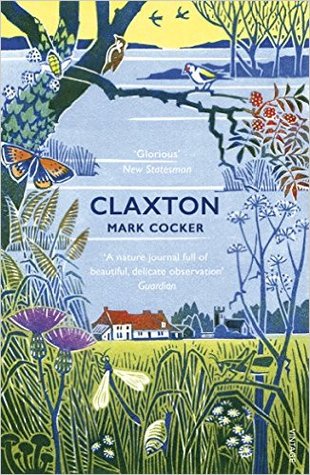 Claxton: Field Notes from a Small Planet by Mark Cocker: Mark Cocker is the Guardian’s country diarist for Norfolk. The short pieces in this book are reprints of his columns, some expanded or revised. I would advise keeping this as a bedside or coffee table book from which you read no more than one or two entries a week, so that you always stay in chronological sync. You’ll appreciate the book most if you experience nature along with Cocker, rather than reading from front cover to back in a few sittings. The problem with the latter approach is that there is inevitable repetition of topics across years. All told, after spending a vicarious year in Claxton, you’ll agree: “How miraculous that we are all here, now, in this one small place.”
 A Mile Down by David Vann: Vann, better known for fiction, tells the real-life story of his ill-fated journeys at sea. He hired a Turkish crew to build him a boat of his own, and before long shoddy workmanship, language difficulties, bureaucracy, and debts started to make it all seem like a very bad idea. Was he cursed? Would he follow his father into suicide? The day-to-day details of boat-building and sailing can be tedious, and there’s an angry tone that’s unpleasant; Vann seems to think everybody else was incompetent or a crook. However, he does an incredible job of narrating two climactic storms he sailed through.
Wasafiri
The Triumph of the Snake Goddess by Kaiser Haq: Beginning with the creation of the world and telling climactic tales of the snake goddess Manasa’s interactions with humans, Haq crafts a uniquely playful set of sacred stories that bear striking similarities to those from other religious traditions. Like Greek myths, the Manasa stories are full of shape-shifting and mistaken identity; rape and incest; jealousy and revenge; and over-the-top exploits of warring gods. She even wears snakes in her hair, like Medusa. Many parallels can also be drawn with the Hebrew and Christian scriptures. Haq’s rendering of the creation account, in particular, resembles the language of Genesis. This book will appeal to students of comparative religion, but can be read with equal enjoyment by laymen in search of engaging storytelling.
I also post reviews of most of my casual reading and skimming on Goodreads.
Mrs. Stevens Hears the Mermaids Singing by May Sarton: Although I’m a huge fan of Sarton’s memoirs, this was my first taste of her fiction. I was underwhelmed: it’s slight and strangely unfeminist. Part of the problem may be that I know so much about Sarton that I couldn’t help but see all the autobiographical detail here. Most of the novel’s action takes place in one day, as Mrs. Stevens awaits the arrival of two interviewers and reflects on past love affairs (some with women) and the meaning of the Muse. For me, Sarton’s journals are a better source of deep thoughts on the writer’s vocation, the value of solitude and the memory of love. This was seen as Sarton’s coming-out book, although it’s not at all sexually explicit.
 Running on the March Wind by Lenore Keeshig: Keeshig is a First Nations Canadian; these poems are full of images of Nanabush the Trickster, language from legal Indian acts, and sly subversion of stereotypes – cowboys and Indians, the only good Indian is a dead Indian (in “Making New”), the white man’s burden, and so on. In places I found these more repetitive and polemical than musical, though I did especially like the series of poems on trees.
The Cartographer Tries to Map a Way to Zion by Kei Miller: Kei Miller is a Jamaican writer who uses island patois and slang, and Rastafarian images and language, alongside standard English. Here he sets up (especially with the long, multi-part title poem) a playful contrast between the cartographer, emblem of civilization and unbiased science, and the rastaman, who takes an altogether more laidback approach to mapping his homeland. This was the perfect poetry collection to be reading in tandem with A Brief History of Seven Killings (see below).
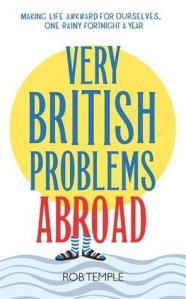 Very British Problems Abroad by Rob Temple: This is possibly ever so slightly funnier than the original (Very British Problems). A lot of it rings true. Once again the fact that the book originated as tweets means you can’t read too much of it at a time or the one-liners grow tiresome. A couple of my favorites were: “The feeling of dread as you approach the campsite and only then remembering that last year you said you’d never, ever do this again” and “Noticing an avalanche heading your way and hoping your umbrella’s up to the job.”
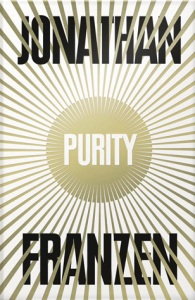 Purity by Jonathan Franzen: By starting and ending with Purity ‘Pip’ Tyler, Franzen emphasizes his debt to Dickens: shades of both Bleak House and Great Expectations are there in the discovery of true parentage and unexpected riches. This is strong on the level of character and theme. Secrecy, isolation and compassion are recurring topics. East Germany, Bolivia and Oakland, California: Franzen doesn’t quite pull all his settings and storylines together, but this is close. With a more dynamic opening section, it might have been 5 stars.
 A Brief History of Seven Killings by Marlon James: This is an edgy, worthwhile Booker pick, but not for the faint-hearted. For the most part, James alternates patois and standard speech, but nearly every section is packed with local slang and expletives. Whether in monologue or dialogue, the many voices form a captivating chorus. The novel is in five parts, each named after a popular song or album of the time. James’s scope, especially as he follows Josey Wales to the Bronx, is too wide. All the narrative switches, once so dynamic, grow tiresome. At 350 pages this would have been a 5-star read. Nevertheless, I’ll be watching the HBO miniseries. (Full review to appear in December 2015 issue of Third Way magazine.)
 Kitchens of the Great Midwest by J. Ryan Stradal: One of my favorite debuts of 2015. Stradal has revealed that his grandmother’s Lutheran church cookbook was the inspiration for this culinary-themed novel that takes place over the course of 30 years. His unique structure takes what are essentially short stories from different perspectives and time periods and links them loosely through Eva Thorvald. Eva’s pop-up supper club gains fame thanks to her innovative adaptations of traditional Midwestern foods like venison or Scandinavian lutefisk; it charges $5,000 a head. I loved almost all of Stradal’s ordinary, flawed characters. If you want a peek at how average Americans live (apart from the $5,000 meals), you’ll find it here.
 The Japanese Lover by Isabel Allende: Allende is a wonderful storyteller. This isn’t up to the level of her South American novels (e.g. The House of the Spirits), and in elaborating both Alma’s and Irina’s stories there’s a bit too much telling rather than showing, but I thoroughly enjoyed the book all the same – I devoured it in just a few days. Allende is sensitive to both the process of aging and the various strategies for dealing with traumatic events from the past.
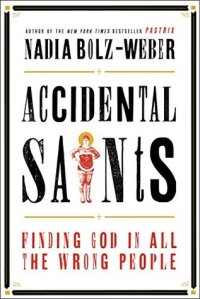 Accidental Saints: Finding God in All the Wrong People by Nadia Bolz-Weber: I knew of Nadia Bolz-Weber through Greenbelt Festival. She’s a foul-mouthed, tattooed, fairly orthodox Lutheran pastor. This brief, enjoyable memoir is about how she keeps believing despite her own past issues and the many messed-up and outwardly unlovable people who show up at her church, House for All Sinners and Saints in Denver. In my favorite section, she zeroes in on one Holy Week and shows the whole range of emotions and trauma that religion can address. The Ash Wednesday chapter is the overall highlight.
 The Road to Little Dribbling: Adventures of an American in Britain by Bill Bryson: Bryson’s funniest book for many years. It meant a lot to me since I am also an American expat in England. Two points of criticism, though: although he moves roughly from southeast to northwest in the country, the stops he makes are pretty arbitrary, and his subjects of mockery are often what you’d call easy targets. Do we really need Bryson’s lead to scorn litterbugs and reality television celebrities? Still, I released many an audible snort of laughter while reading.
 Shaler’s Fish by Helen Macdonald: I was a huge fan of Macdonald’s memoir, H is for Hawk, so was excited to read her poetry collection, originally published in 2001 but to be reissued by Atlantic Monthly Press. Unfortunately, despite the occasional bird and nature imagery (e.g. in “Monhegan”), I found these poems largely inaccessible. Perhaps it was the sprinkling of archaic vocabulary and spellings, or the general lack of punctuation apart from annoying slashes and ampersands.

Portrait of an Addict as a Young Man: A Memoir by Bill Clegg: One of the finest memoirs I’ve come across (and I read a heck of a lot of them). Through this book I followed literary agent Bill Clegg on dozens of taxi rides between generic hotel rooms and bar toilets and New York City offices and apartments; together we smoked innumerable crack pipes and guzzled dozens of bottles of vodka while letting partners and family members down and spiraling further down into paranoia and squalor. Every structural and stylistic decision works: the present tense, short paragraphs, speech set out in italics, occasional flashback chapters distanced through third-person narration. Clegg achieves a perfect balance between his feelings at the time – being out of control and utterly enslaved to his next hit – and the hindsight that allows him to see what a pathetic figure he was becoming.
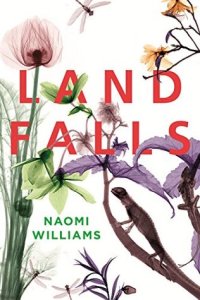 Landfalls by Naomi J. Williams: An enjoyable novel of eighteenth-century maritime adventure, based on a true story and reminiscent of Matthew Kneale’s English Passengers and Peter Carey’s Parrot and Olivier in America. Williams moves between the perspectives of various crew members and outsiders, sometimes employing first person and sometimes third. Key chapters are set in South America, California, Alaska, Macao, and the Solomon Islands. I especially enjoyed a chapter from the point-of-view of a native Alaskan girl – one of the few times the novel focuses on female experience.
 Dept. of Speculation by Jenny Offill: Not as innovative or profound as I was expecting given the rapturous reviews from so many quarters. It’s an attempt to tell an old, old story in a new way: wife finds out her husband is cheating. Offill’s style is fragmentary and aphoristic. Some of the facts and sayings are interesting, but most just sit there on the page and don’t add to the story. What I did find worthwhile was tracing the several tense and pronoun changes: from first-person, past tense into present tense, then to third-person and back to first-person for the final page.
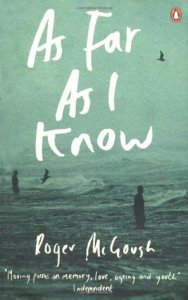 As Far As I Know by Roger McGough: A bit silly for my tastes; lots of puns and other plays on words. In style they feel like children’s poems, but with vocabulary and themes more suited to adults. I did like “Indefinite Definitions,” especially BRUPT: “A brupt is a person, curt and impolite / Brusque and impatient / Who thinks he’s always right.” The whole series is like that: words with the indefinite article cut off and an explanation playing on the original word’s connotations. From the “And So to Bed” concluding cycle, I loved Camp bed: “A la Recherche du Temps Perdu / on the bedside table / Gardenia on the pillow / Silk pyjamas neatly folded.”
 The Penguin Lessons: What I Learned from a Remarkable Bird by Tom Michell: Marley & Me with a penguin. Well, sort of. A sweet if slight story about the author keeping a Magellanic penguin as a pet while teaching in an Argentina boarding school in the 1970s. On a vacation to Uruguay the twentysomething rescued a penguin from an oil spill and named him Juan Salvado. The uproarious process of cleaning the oil-sodden bird, achieved with a bidet, string bag, and plenty of dish soap, was my favorite passage. However, I’m hesitant about anthropomorphizing, and the language can be stiff – I would have dated this to the 1950s by the speech. Also, there’s precious little evidence of Argentina’s political upheaval.
 Bookish Beck = Rebecca Foster. American transplant to England. Freelance proofreader and book reviewer.
 Bookish Beck