August Releases: Sarah Manguso (Fiction), Sarah Moss (Memoir), and Carl Phillips (Poetry)
Today I feature a new-to-me poet and two women writers whose careers I’ve followed devotedly but whose latest books – forthright yet slippery; their genre categories could easily be reversed – I found very emotionally difficult to read. Gruelling, almost, but admirable. Many rambling thoughts ensue. Then enjoy a nice poem.
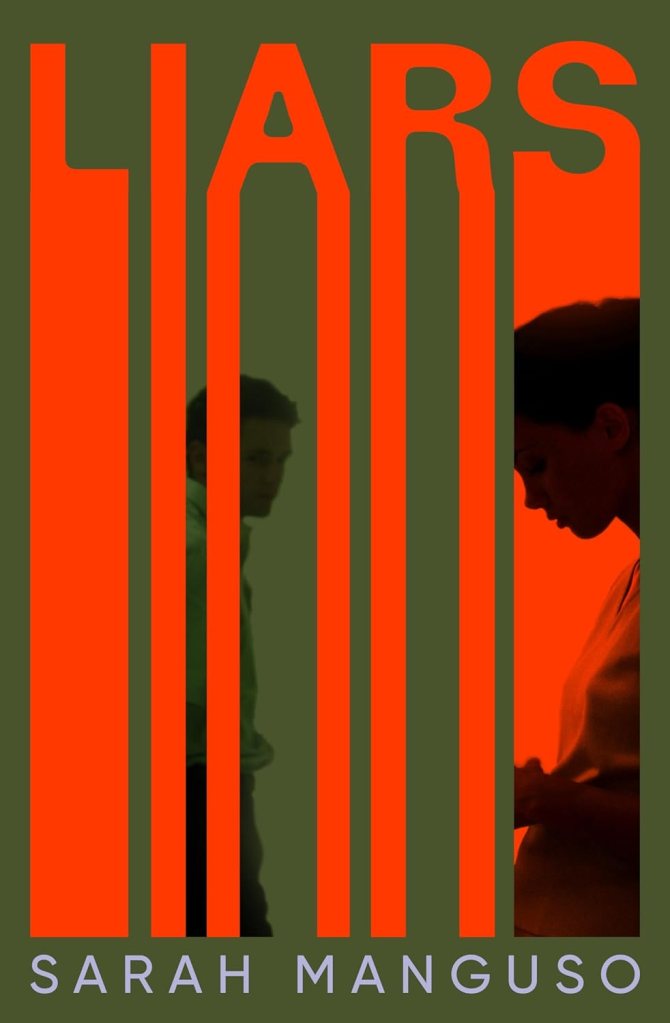
Liars by Sarah Manguso
As part of a profile of Manguso and her oeuvre for Bookmarks magazine, I wrote a synopsis and surveyed critical opinion; what follow are additional subjective musings. I’ve read six of her nine books (all but the poetry and an obscure flash fiction collection) and I esteem her fragmentary, aphoristic prose, but on balance I’m fonder of her nonfiction. Had Liars been marketed as a diary of her marriage and divorce, Manguso might have been eviscerated for the indulgence and one-sided presentation. With the thinnest of autofiction layers, is it art?
Jane recounts her doomed marriage, from the early days of her relationship with John Bridges to the aftermath of his affair and their split. She is a writer and academic who sacrifices her career for his financially risky artistic pursuits. Especially once she has a baby, every domestic duty falls to her, while he keeps living like a selfish stag and gaslights her if she tries to complain, bringing up her history of mental illness. The concise vignettes condense 14+ years into 250 pages, which is a relief because beneath the sluggish progression is such repetition of type of experiences that it could feel endless. John’s last name might as well be Doe: The novel presents him – and thus all men – as despicable and useless, while women are effortlessly capable and, by exhausting themselves, achieve superhuman feats. This is what heterosexual marriage does to anyone, Manguso is arguing. Indeed, in a Guardian interview she characterized this as a “domestic abuse novel,” and elsewhere she has said that motherhood can be unlinked from patriarchy, but not marriage.
Let’s say I were to list my every grievance against my husband from the last 17+ years: every time he left dirty clothes on the bedroom floor (which is every day); every time he loaded the dishwasher inefficiently (which is every time, so he leaves it to me); every time he failed to seal a packet or jar or Tupperware properly (which – yeah, you get the picture) – and he’s one of the good guys, bumbling rather than egotistical! And he’d have his own list for me, too. This is just what we put up with to live with other people, right? John is definitely worse (“The difference between John and a fascist despot is one of degree, not type”). But it’s not edifying, for author or reader. There may be catharsis to airing every single complaint, but how does it help to stew in bitterness? Look at everything I went through and validate my anger.
There are bright spots: Jane’s unexpected transformation into a doting mother (but why must their son only ever be called “the child”?), her dedication to her cat, and the occasional dark humour:
So at his worst, my husband was an arrogant, insecure, workaholic, narcissistic bully with middlebrow taste, who maintained power over me by making major decisions without my input or consent. It could still be worse, I thought.
Manguso’s aphoristic style makes for many quotably mordant sentences. My feelings vacillated wildly, from repulsion to gung-ho support; my rating likewise swung between extremes and settled in the middle. I felt that, as a feminist, I should wholeheartedly support a project of exposing wrongs. It’s easy to understand how helplessness leads to rage, and how, considering sunk costs, a partner would irrationally hope for a situation to improve. So I wasn’t as frustrated with Jane as some readers have been. But I didn’t like the crass sexual language, and on the whole I agreed with Parul Sehgal’s brilliant New Yorker review that the novel is so partial and the tone so astringent that it is impossible to love. 
With thanks to Picador for the proof copy for review.
And a quote from the Moss memoir (below) to link the two books: “Homes are places where vulnerable people are subject to bullying, violence and humiliation behind closed doors. Homes are places where a woman’s work is never done and she is always guilty.”
20 Books of Summer, #19:
My Good Bright Wolf by Sarah Moss
I’ve reviewed this memoir for Shelf Awareness (it’s coming out in the USA from Farrar, Straus and Giroux on October 22nd) so will only give impressions, in rough chronological order:
Sarah Moss returns to nonfiction – YES!!!
Oh no, it’s in the second person. I’ve read too much of that recently. Fine for one story in a collection. A whole book? Not so sure. (Kirsty Logan got away with it, but only because The Unfamiliar is so short and meant to emphasize how matrescence makes you other.)
 The constant second-guessing of memory via italicized asides that question or refute what has just been said; the weird nicknames (her father is “the Owl” and her mother “the Jumbly Girl”) – in short, the deliberate artifice – at first kept me from becoming submerged. This must be deliberate and yet meant it was initially a chore to pick up. It almost literally hurt to read. And yet there are some breathtakingly brilliant set pieces. Oh! when her mother’s gay friend Keith buys her a chocolate éclair and she hides it until it goes mouldy.
Once she starts discussing her childhood reading – what it did for her then and how she views it now – the book really came to life for me. And she very effectively contrasts the would-be happily ever after of generally getting better after eight years of disordered eating with her anorexia returning with a vengeance at age 46 – landing her in A&E in Dublin. (Oh! when she reads War and Peace over and over on a hospital bed and defiantly uses the clean toilets on another floor.) This crisis is narrated in the third person before a return to second person.
The tone shifts throughout the book, so that what threatens to be slightly cloying in the childhood section turns academically curious and then, somehow, despite the distancing pronouns, intimate. So much so that I found myself weeping through the last chapters over this lovely, intelligent woman’s ongoing struggles. As an overly cerebral person who often thinks it’s pesky to have to live in a body, I appreciated her probing of the body/mind divide; and as she tracks where her food issues came from, I couldn’t help but think about my sister’s years of eating disorders and my mother’s fear that it was all her fault.
Beyond Moss’s usual readers, I’d also recommend this to fans of Laura Freeman’s The Reading Cure and Noreen Masud’s A Flat Place.
Overall: shape-shifting, devastating, staunchly pragmatic. I’m not convinced it all hangs together (and I probably would have ended it at p. 255), but it’s still a unique model for transmuting life into art. 
With thanks to Picador for the free copy for review.
Scattered Snows, to the North by Carl Phillips
 Phillips is a prolific poet I’d somehow never heard of. In fact, he won the Pulitzer Prize last year for his selected poetry volume. He’s gay and African American, and in his evocative verse he summons up landscapes and a variety of weather, including as a metaphor for emotions – guilt, shame, and regret. Looking back over broken relationships, he questions his memory.
Will I remember individual poems? Unlikely. But the sense of chilly, clear-eyed reflection, yes. (Sample poem below) 
With thanks to Carcanet for the advanced e-copy for review.
Record of Where a Wind Was
Wave-side, snow-side,
little stutter-skein of plovers
lifting, like a mind
of winter—
We’d been walking
the beach, its unevenness
made our bodies touch,
now and then, at
the shoulders mostly,
with that familiarity
that, because it sometimes
includes love, can
become confused with it,
though they remain
different animals. In my
head I played a game with
the waves called Weapon
of Choice, they kept choosing
forgiveness, like the only
answer, as to them
it was, maybe. It’s a violent
world. These, I said, I choose
these, putting my bare hands
through the air in front of me.
Any other August releases you’d recommend?
The 2019 Wellcome Book Prize: Shadow Panel and Wish List
On Tuesday the longlist for the 2019 Wellcome Book Prize will be announced. For the third year in a row I’m running a shadow panel, and it’s composed of the same four wonderful book bloggers who joined me last year: Paul Cheney of Halfman, Halfbook, Annabel Gaskell of Annabookbel, Clare Rowland of A Little Blog of Books, and Dr. Laura Tisdall.
This year we’re going to do things slightly differently: we plan to split up the longlist, taking two to three titles each, so that between us we will have read them all and can announce our own preferred shortlist before the official shortlist is announced in March. At that point we’ll catch up by (re)reading the six shortlisted books, each reviewing the ones we haven’t already. Essentially, I’m adding an extra stage of shadow panel judging, simply because I can. I hope it will be fun – and also less onerous, in that we should get a leg-up on the shortlist and not have to read all six books in March‒April, which has proved to be a challenge in the past.
My Wellcome Prize hopefuls are all the fiction or nonfiction titles I’ve read on a medical theme that were published in the UK in calendar year 2018. I have put asterisks beside the 12 books in this post that I predict for the longlist. (The combination of wishful thinking and likelihood means that these are not exclusively my personal favorites.)

Below is a list of the books I’ve already featured on the blog in some way, with links to my coverage and a few-word summary of their relevance.
Nonfiction
Gross Anatomy by Mara Altman: Female body woes
*Beneath the Skin: Great Writers on the Body: Essays on organs
*All that Remains by Sue Black: Forensic anthropology
Everything Happens for a Reason by Kate Bowler: Living with advanced cancer
Heal Me by Julia Buckley: Tackling chronic pain
*The Unmapped Mind by Christian Donlan: Adjusting to life with MS
From Here to Eternity by Caitlin Doughty: Funerary rites around the world
This Really Isn’t About You by Jean Hannah Edelstein: A genetic disease in the family
Natural Causes by Barbara Ehrenreich: Questioning the wellness culture
On Smaller Dogs and Larger Life Questions by Kate Figes: Pondering breast cancer
Shapeshifters by Gavin Francis: Instances of bodily change
The Reading Cure by Laura Freeman: Healing from an eating disorder
Nine Pints by Rose George: The story of blood
Waiting for the Last Bus by Richard Holloway: Ageing and death
*Heart: A History by Sandeep Jauhar: Heart disease and treatments
Sick by Porochista Khakpour: Chronic Lyme disease
Human Errors by Nathan Lents: Flawed bodies; evolutionary adaptations
Skybound by Rebecca Loncraine: Breast cancer; flying lessons
Amateur by Thomas Page McBee: Memoir of F2M transformation
*Face to Face by Jim McCaul: Tales of facial surgery
*Somebody I Used to Know by Wendy Mitchell: A firsthand account of early Alzheimer’s
*That Was When People Started to Worry by Nancy Tucker: Mental illness from the inside
*The Language of Kindness by Christie Watson: Nursing as a vocation
Fiction
Little by Edward Carey: Anatomical models in wax (thanks to Clare for the reminder!)
Orchid & the Wasp by Caoilinn Hughes: Non-epileptic seizures
*The Winter Soldier by Daniel Mason: Neurology, surgery during WWI
The Way of All Flesh by Ambrose Parry: Medicine in 1840s Edinburgh
Other eligible books that I have read but not happened to mention on the blog:
 In Shock by Rana Awdish: The doctor became the patient when Awdish, seven months pregnant, was rushed into emergency surgery with excruciating pain due to severe hemorrhaging into the space around her liver, later explained by a ruptured tumor. Having experienced brusque, cursory treatment, even from colleagues at her Detroit-area hospital, she was convinced that doctors needed to do better. This memoir is a gripping story of her own medical journey and a fervent plea for compassion from medical professionals.
 Doctor by Andrew Bomback: Part of the Bloomsbury Object Lessons series, this is a wide-ranging look at what it’s like to be a doctor. Bomback is a kidney specialist; his wife is also a doctor, and his father, fast approaching retirement, is the kind of old-fashioned, reassuring pediatrician who knows everything. Even the author’s young daughter likes playing with a stethoscope and deciding what’s wrong with her dolls. In a sense, then, Bomback uses fragments of family memoir to compare the past, present and likely future of medicine.
 A Moment of Grace by Patrick Dillon [skimmed]: A touching short memoir of the last year of his wife Nicola Thorold’s life, in which she battled acute myeloid leukemia. Dillon doesn’t shy away from the pain and difficulties, but is also able to summon up some gratitude.
 Get Well Soon: Adventures in Alternative Healthcare by Nick Duerden: British journalist Nick Duerden had severe post-viral fatigue after a run-in with possible avian flu in 2009 and was falsely diagnosed with ME / CFS. He spent a year wholeheartedly investigating alternative therapies, including yoga, massage, mindfulness and meditation, visualization, talk therapy and more. He never comes across as bitter or sorry for himself. Instead, he considered fatigue a fact of his new life and asked what he could do about it. So this ends up being quite a pleasant amble through the options, some of them more bizarre than others.
 *Sight by Jessie Greengrass [skimmed]: I wanted to enjoy this, but ended up frustrated. As a set of themes (losing a parent, choosing motherhood, the ways in which medical science has learned to look into human bodies and minds), it’s appealing; as a novel, it’s off-putting. Had this been presented as a set of autobiographical essays, perhaps I would have loved it. But instead it’s in the coy autofiction mold where you know the author has pulled some observations straight from life, gussied up others, and then, in this case, thrown in a bunch of irrelevant medical material dredged up during research at the Wellcome Library.
 *Brainstorm: Detective Stories From the World of Neurology by Suzanne O’Sullivan: Epilepsy affects 600,000 people in the UK and 50 million worldwide, so it’s an important condition to know about. It is fascinating to see the range of behaviors seizures can be associated with. The guesswork is in determining precisely what is going wrong in the brain, and where, as well as how medicines or surgery could address the fault. “There are still far more unknowns than knowns where the brain is concerned,” O’Sullivan writes; “The brain has a mind of its own,” she wryly adds later on. (O’Sullivan won the Prize in 2016 for It’s All in Your Head.)
 I’m also currently reading and enjoying two witty medical books, The Mystery of the Exploding Teeth and Other Curiosities from the History of Medicine by Thomas Morris, and Chicken Unga Fever by Phil Whitaker, his collected New Statesman columns on being a GP.
Four additional books I have not read but think might have a chance of making the longlist:
Primate Change: How the World We Made Is Remaking Us by Vybarr Cregan-Reid
 The Beautiful Cure: Harnessing Your Body’s Natural Defences by Daniel M. Davis
Because I Come from a Crazy Family: The Making of a Psychiatrist by Edward M. Hallowell
*She Has Her Mother’s Laugh: The Powers, Perversions, and Potential of Heredity by Carl Zimmer
Look out for the announcement of the longlist on Tuesday afternoon! I’ll report back, perhaps on Wednesday, with some reactions and the shadow panel’s reviewing strategy.
Have you read, or are you interested in, any of these books?
Can you think of other 2018 releases that might be eligible for the Wellcome Book Prize?
The Reading Cure: How Books Restored My Appetite by Laura Freeman
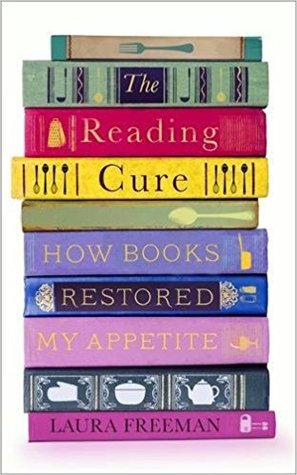 A debut memoir with food, medical and literary themes and a bibliotherapy-affirming title – this book ticks a whole lot of boxes for me. The very day I saw it mentioned on Twitter I requested a copy, and it was a warming, cozy read for the dark days of late December. As a teenager, freelance journalist Laura Freeman suffered from anorexia, and ever since she has struggled to regain a healthy relationship with food. This is decidedly not an anorexia memoir; if that’s what you’re looking for, you’ll want to pick up Nancy Tucker’s grueling but inventive The Time in Between. Instead, it’s about the lifelong joy of reading and how books have helped Freeman in the years that she has been haltingly recovering a joy of eating.
If asked to name a favorite food, Freeman writes that it would be porridge – or, if she was really pressed, perhaps her mother’s roast chicken dinner. But it’s been so long since she’s thought of food in terms of pleasure that written accounts of feasting from the likes of M.F.K. Fisher or Parson Woodforde might as well be written in a foreign language. When in 2012 she decided to read the whole of Charles Dickens’s oeuvre in his bicentenary year, she was struck afresh by the delight his characters take in meals.
While I was reading Dickens something changed. I didn’t want to be on the outside, looking at pictures, tasting recipes at one remove, seeing the last muffin go to someone else. I began to want to want food. To share it, savour it, to have it without guilt.
This nascent desire for a broader and more sumptuous food repertoire fuels the author through her voracious reading: of war writers like Siegfried Sassoon and Robert Graves with their boiled eggs and cocoa; of travel writers Laurie Lee and Patrick Leigh Fermor and their enthusiastic acceptance of whatever food came their way on treks; and of rediscovered favorite children’s books from The Secret Garden through the Harry Potter series with the characters’ greedy appetite for sweets. Other chapters are devoted to Virginia Woolf, whose depression and food issues especially resonate for Freeman; food writers; famous gluttons; and the specific challenge of chocolate, which she can’t yet bring herself to sample because it’s “so tangled up in my mind with ideas of sin, greed and loss of control.”
It’s these psychological and emotional aspects of food that Freeman is so good at capturing. She recognizes a tendency to all-or-nothing thinking that makes her prey to clean eating fads and exclusion diets. Today she still works to stifle the voices that tell her she’ll never be well and she doesn’t deserve to eat; she also tries to block out society’s contradictory messages about fat versus thin, healthy versus unhealthy, this diet versus that one. Channeling Dickens, she advises, “Don’t make a Marshalsea prison of rules for yourself – no biscuits at tea, no meat in the week, no pudding, not ever. Don’t trap yourself in lonely habits.”
Freeman’s taste in both food and literature seems a trifle old-fashioned, leaning towards jolly ol’ English stuff, but that’s because this is about comfort reading as much as it is about rediscovering comfort eating. Her memoir delicately balances optimism with reality, and encourages us to take another look at the books we love and really notice all those food scenes. Maybe our favorite writers have been teaching us how to eat well all along.
My rating:
The Reading Cure: How Books Restored My Appetite is published in the UK by Weidenfeld & Nicolson. My thanks to Virginia Woolstencroft for the review copy.
Some Early Recommendations for 2018
I took some time out this December to start reading the 2018 releases I was most looking forward to. In early January I’ll preview another 25 or 30 titles I’m interested in, but for now here are eight books coming out in the first half of next year that I can heartily recommend, with ~130-word mini reviews to give you a taste of them. (These are in alphabetical order by author, with the publication details noted beneath the title.)
Because We Are Bad: OCD and a Girl Lost in Thought by Lily Bailey
[Coming on March 15th from Canbury Press (UK) and on April 3rd from Harper Collins US]
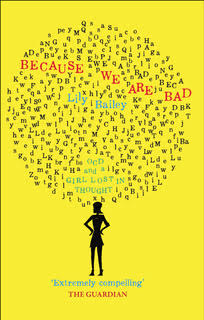 “For as long as I could remember, I wasn’t me, I was we.” Lily Bailey had a sort of imaginary friend while she was growing up, but instead of a comforting presence it was a critical voice pushing her to be ultra-conscious of how her behavior appeared to others. This went on for years until she was finally diagnosed with severe Obsessive Compulsive Disorder. Despite Prozac and CBT, she later landed in a psychiatric unit. She captures this inpatient stay with great verve, recalling the chorus of other patients’ voices and different nurses’ strategies. This memoir tracks Bailey’s life up until age 20, but her recreation of childhood and the first-person plural sections are the strongest. I’d recommend this to readers interested in learning more about OCD and mental health issues in general. (Full blog review scheduled for March 15th.)
The Immortalists by Chloe Benjamin
[Coming on January 9th from Tinder Press (UK) / G.P. Putnam’s (USA)]
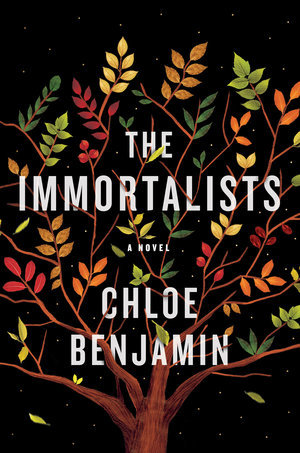 Summer 1969: four young siblings escape a sweltering New York City morning by visiting a fortune teller who can tell you the day you’ll die. In the decades that follow, they have to decide what to do with this advance knowledge: will it spur them to live courageous lives, or drive them to desperation? This compelling family story lives up to the hype. I can imagine how much fun Benjamin had researching and writing it as she’s able to explore four distinct worlds: Daniel, a military doctor, examines Iraq War recruits; Klara becomes a magician in Las Vegas; Varya researches aging via primate studies; and Simon is a dancer in San Francisco. The settings, time periods, and career paths are so diverse that you get four novels’ worth of interesting background. (See my full review at The Bookbag.)
Everything Happens for a Reason: And Other Lies I’ve Loved by Kate Bowler
[Coming on February 6th from Random House (USA)]
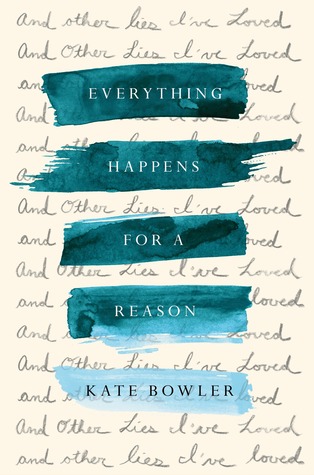 This was the 2018 title I was most looking forward to reading. It combines two of my niche interests: medical (especially cancer) memoirs, and the prosperity gospel, which I grew up with in the church my parents attend in America. An assistant professor at Duke Divinity School, Bowler was fascinated by the idea that you can claim God’s blessings, financial and otherwise, as a reward for righteous behavior and generosity to the church. But if she’d been tempted to set store by this notion, that certainty was permanently fractured when she was diagnosed with stage IV colon cancer in her mid-thirties. Bowler writes tenderly about suffering and surrender, about living in the moment with her husband and son while being uncertain of the future. Her writing reminds me of Anne Lamott’s and Nina Riggs’s.
The Reading Cure: How Books Restored My Appetite by Laura Freeman
[Coming on February 22nd from Weidenfeld & Nicolson (UK)]
A memoir with food, medical and literary themes and a bibliotherapy-affirming title – this debut ticks lots of boxes for me. As a teenager, Freeman suffered from anorexia. This is not an anorexia memoir, though; instead, it’s about the lifelong joy of reading and how books have helped her haltingly recover the joy of eating. Her voracious reading took in the whole of Charles Dickens’s oeuvre, war writers like Siegfried Sassoon and Robert Graves (boiled eggs and cocoa); travel writers Laurie Lee and Patrick Leigh Fermor and their enthusiastic acceptance of whatever food came their way on treks; and rediscovered children’s classics from The Secret Garden through to the Harry Potter series. This is about comfort reading as much as it is about rediscovering comfort eating, and it delicately balances optimism with reality. (Full blog review scheduled for February 1st.)
Everything Here Is Beautiful by Mira T. Lee
[Coming on January 16th from Pamela Dorman Books (USA)]
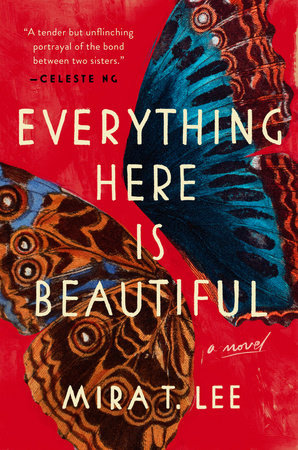 Lucia Bok has been many people: a globe-trotting Chinese-American journalist, a shopkeeper’s wife in New York City, an illegal immigrant’s girlfriend, and a mother making the best of primitive conditions in Ecuador. Her schizophrenia means she throws herself wholeheartedly into each role but, as her mind turns against her, eventually finds herself unable to cope. We hear from Lucia herself as well as her older sister, ex-husband and boyfriend – in both first-person and third-person passages – over the course of 25 years to get an intimate picture of how mental illness strains families and how blame gets parceled out. Lucia’s first-person narration was most effective for me: “I take only one kind of medication now. They adjust the dosage. Sometimes I still slosh around, dense and slushy like a watermelon; other times I’m flat, defizzed.”
Junk by Tommy Pico
[Coming on May 8th from Tin House Books (USA)]
 Junk food, junk shops, junk mail; junk as in random stuff; junk as in genitals. These are the major elements of Pico’s run-on, stream-of-consciousness poem, the third in his Teebs trilogy (after IRL and Nature Poem). The overarching theme is being a homosexual Native American in Brooklyn. You might think of Pico as a latter-day Ginsberg. His text-speak and sexual explicitness might ordinarily be off-putting for me, but there’s something about Pico’s voice that I really like. He vacillates between flippant and heartfelt in a way that seems to capture something about the modern condition.
Sample lines:
“the lights go low across the / multiplex Temple of // canoodling and Junk food”
“Haven’t figured out how to be NDN and not have / suspicion coursing thru me like cortisol”
Indecent by Corinne Sullivan
[Coming on March 6th from St. Martin’s Press (USA)]
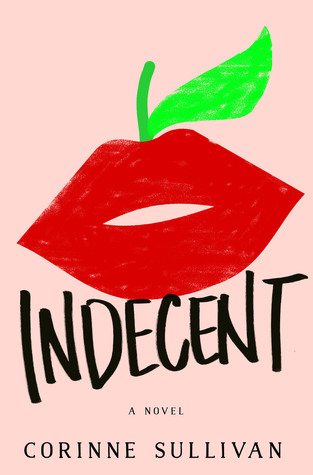 Expect a cross between Prep (Curtis Sittenfeld) and Notes on a Scandal (Zoe Heller). Imogene Abney, 22, is an apprentice teacher at Vandenberg School for Boys in New York State. She’s young and pretty enough to be met with innuendo and disrespect from her high school charges; she’s insecure enough about her acne to feel rejected by other apprentices. But Adam Kipling, who goes by “Kip,” seems different from any of the other people she’s thrown together with at Vandenberg. A fourth-year student, he’s only five years younger than she is, and he really seems to appreciate her for who she is. Their relationship proceeds apace, but nothing stays a secret for long around here. Being in Imogene’s head can feel a little claustrophobic because of her obsessions, but this is a racy, pacey read.
From Mother to Mother by Émilie Vast
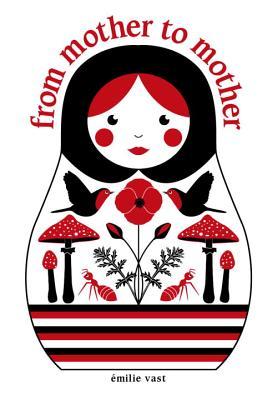 [Coming on March 20th from Charlesbridge Publishing (USA)]
This sweet, simple picture book for very young children (it will actually be a board book, though I read it as an e-book) was originally published in French. Based on Russian nesting dolls, it introduces the idea of ancestry, specifically multiple generations of women. I imagine a mother with a child sitting on her knee. Holding this book in one hand and a photo album in the other, she points to all the family members who have passed down life and love. Each two-page spread has a different color motif and incorporates flora and fauna on the design of the doll.
 I’m also currently partway through, and enjoying, Educated by Tara Westover [Coming on February 20th from Random House (USA) and February 22nd from Hutchinson (UK)], a striking memoir about being raised off grid in Idaho as the youngest of seven children of religious/survivalist parents – and never going to a proper school.
Coming tomorrow (my last post of the year): Some year-end statistics and 2018 reading goals.
 Bookish Beck = Rebecca Foster. American transplant to England. Freelance proofreader and book reviewer.
 Bookish Beck