20 Books of Summer 2024 Retrospective
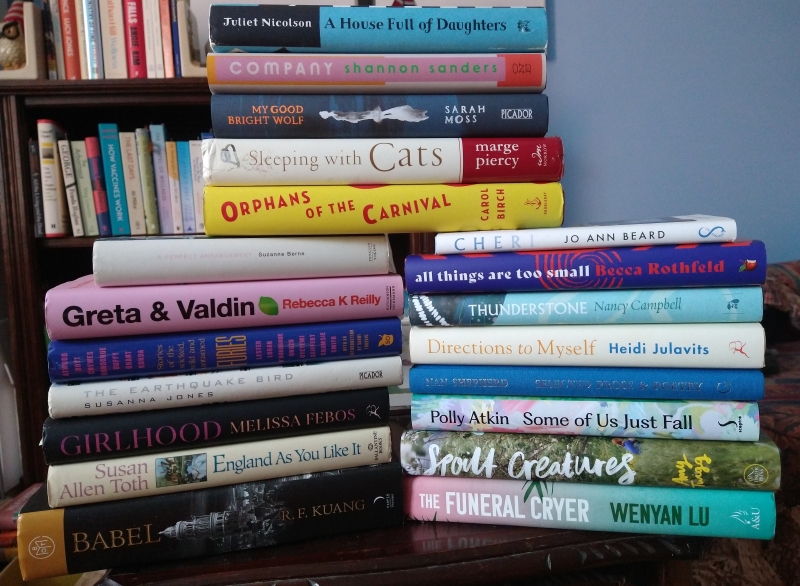
That’s a wrap! It was my seventh year in a row participating. I managed to read and review all 20 books by yesterday. Only eight of the books I earmarked in my plans (plus two more that were DNFs) made it into my final stacks, but I don’t really consider that a problem.

With what I substituted in, I ended up achieving 1 reread and getting through 7 review copies, 3 of which had been languishing in my set-aside piles for a long time. I stuck to my pledge to read only a) books that I owned in hardback and b) books by women. I read roughly half and half fiction and non- (11 vs. 9).
Unfortunately, a lot of my selections this year happened to be lackluster: there were 5 books that I rated at 2.5 stars or below, and another 6 that merited 3 stars. Those 11 make for a pretty low average rating across the 20.
By contrast, I had a few 4-star highlights: Company by Shannon Sanders, Sleeping with Cats by Marge Piercy, and My Good Bright Wolf by Sarah Moss (if anyone in the UK would like my proof copy of this last one, let me know and I’ll post it to you).
It was also fun tying into the Reading the Meow week and connecting reviews with events such as an online conference about Vita Sackville-West and the new album by the Bookshop Band.
I’ve cleared 16 of 23 (including the several DNFs) books from my shelves by reselling them or donating them to my neighbourhood Little Free Library. I’ll surely appreciate that extra space to accommodate the constant stream of incomers.
Next year I think I need to make the challenge even more open, because it seems that as soon as I ‘assign’ myself 20 books, I lose interest in most of them. Again, I want to limit myself to books from my shelves, but I won’t specify anything else. I’ll just let myself pick up whatever interests me at the time – bearing in mind that in the summers I like to indulge in juicy fiction that’s toward the popular end of literary.
How did your summer reading go?
Book Serendipity, June to Mid-August 2024
I call it “Book Serendipity” when two or more books that I read at the same time or in quick succession have something in common – the more bizarre, the better. This is a regular feature of mine every couple of months. Because I usually have 20–30 books on the go at once, I suppose I’m more prone to such incidents. People frequently ask how I remember all of these coincidences. The answer is: I jot them on scraps of paper or input them immediately into a file on my PC desktop; otherwise, they would flit away!
The following are in roughly chronological order.
- A self-induced abortion scene in Recipe for a Perfect Wife by Karma Brown and Sleeping with Cats by Marge Piercy.
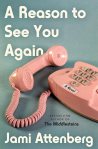
- A woman who cleans buildings after hours, and a character named Tova who lives in the Seattle area in A Reason to See You Again by Jami Attenberg and Remarkably Bright Creatures by Shelby Van Pelt.
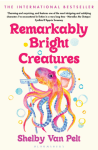
- Flirting with a surf shop employee in Sandwich by Catherine Newman and Remarkably Bright Creatures by Shelby Van Pelt.
- Living in Paris and keeping ticket stubs from all films seen in Paris Trance by Geoff Dyer and The Invention of Hugo Cabret by Brian Selznick.
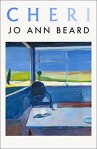
- A schefflera (umbrella tree) is mentioned in Cheri by Jo Ann Beard and Company by Shannon Sanders.

- The Plague by Albert Camus is mentioned in Knife by Salman Rushdie and Stowaway by Joe Shute.
- Making egg salad sandwiches is mentioned in Cheri by Jo Ann Beard and Sandwich by Catherine Newman.
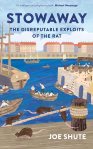
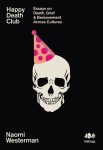
- Pet rats in Stowaway by Joe Shute and Happy Death Club by Naomi Westerman. Rats are also mentioned in Mammoth by Eva Baltasar, The Tale of Despereaux by Kate DiCamillo, and The Colour by Rose Tremain.
- Eels feature in Our Narrow Hiding Places by Kristopher Jansma, Late Light by Michael Malay, and The Colour by Rose Tremain.
- Atlantic City, New Jersey is a location in Florence Adler Swims Forever by Rachel Beanland and Company by Shannon Sanders.
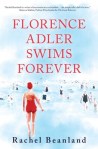 The father is a baker in Florence Adler Swims Forever by Rachel Beanland and Our Narrow Hiding Places by Kristopher Jansma.
- A New Zealand setting (but very different time periods) in Greta & Valdin by Rebecca K Reilly and The Colour by Rose Tremain.
- A mention of Melanie Griffith’s role in Working Girl in I’m Mostly Here to Enjoy Myself by Glynnis MacNicol and Happy Death Club by Naomi Westerman.
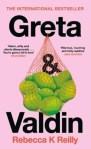 Ermentrude/Ermyntrude as an imagined alternate name in Greta & Valdin by Rebecca K Reilly and a pet’s name in Stowaway by Joe Shute.
- A poet with a collection that was published on 6 August mentions a constant ringing in the ears: Joshua Jennifer Espinoza (I Don’t Want to Be Understood) and Keith Taylor (What Can the Matter Be?).
- A discussion of the original meaning of “slut” (a slovenly housekeeper) vs. its current sexualized meaning in Girlhood by Melissa Febos and Sandi Toksvig’s introduction to the story anthology Furies.
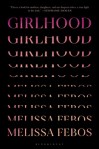
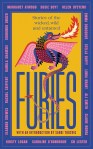
- An odalisque (a concubine in a harem, often depicted in art) is mentioned in I’m Mostly Here to Enjoy Myself by Glynnis MacNicol and The Shark Nursery by Mary O’Malley.
- Reading my second historical novel of the year in which there’s a disintegrating beached whale in the background of the story: first was Whale Fall by Elizabeth O’Connor, then Come to the Window by Howard Norman.
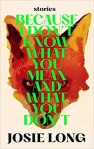 A short story in which a woman gets a job in online trolling in Because I Don’t Know What You Mean and What You Don’t by Josie Long and in the Virago Furies anthology (Helen Oyeyemi’s story).
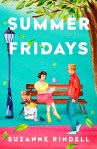
- Her partner, a lawyer, is working long hours and often missing dinner, leading the protagonist to assume that he’s having an affair with a female colleague, in Recipe for a Perfect Wife by Karma Brown and Summer Fridays by Suzanne Rindell.
- A fierce boss named Jo(h)anna in Summer Fridays by Suzanne Rindell and Test Kitchen by Neil D.A. Stewart.
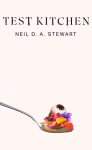
- An OTT rendering of a Scottish accent in Greta & Valdin by Rebecca K Reilly and Test Kitchen by Neil D.A. Stewart.
- A Padstow setting and a mention of Puffin Island (Cornwall) in The Cove by Beth Lynch and England as You Like It by Susan Allen Toth.
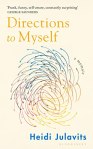
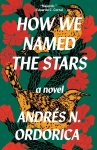
- A mention of the Big and Little Dipper (U.S. names for constellations) in Directions to Myself by Heidi Julavits and How We Named the Stars by Andrés N. Ordorica.
- A mention of Binghamton, New York and its university in We Are Animals by Jennifer Case and We Would Never by Tova Mirvis.
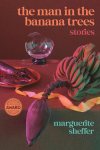
- A character accidentally drinks a soapy liquid in We Would Never by Tova Mirvis and one story of The Man in the Banana Trees by Marguerite Sheffer.
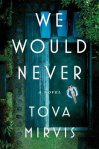 The mother (of the bride or groom) takes over the wedding planning in We Would Never by Tova Mirvis and Summer Fridays by Suzanne Rindell.
- The ex-husband’s name is Jonah in The Mourner’s Bestiary by Eiren Caffall and We Would Never by Tova Mirvis.
- The husband’s name is John in Dot in the Universe by Lucy Ellmann and Liars by Sarah Manguso.
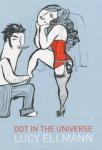
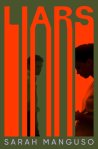
- An affair is discovered through restaurant receipts in Summer Fridays by Suzanne Rindell and Test Kitchen by Neil D.A. Stewart.
- A mention of eating fermented shark in The Museum of Whales You Will Never See by A. Kendra Greene and Test Kitchen by Neil D.A. Stewart.
- A mention of using one’s own urine as a remedy in Thunderstone by Nancy Campbell and Terminal Maladies by Okwudili Nebeolisa.
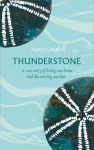
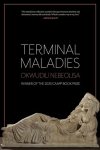
- The main character tries to get pregnant by a man even though one of the partners is gay in Mammoth by Eva Baltasar and Until the Real Thing Comes Along by Elizabeth Berg.
- Motherhood is for women what war is for men: this analogy is presented in We Are Animals by Jennifer Case, Parade by Rachel Cusk, and Want, the Lake by Jenny Factor.
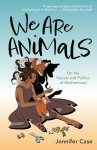 Childcare is presented as a lifesaver for new mothers in We Are Animals by Jennifer Case and Liars by Sarah Manguso.
- A woman bakes bread for the first time in Mammoth by Eva Baltasar and A Year of Biblical Womanhood by Rachel Held Evans.
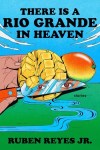
- A gay couple adopts a Latino boy in Greta & Valdin by Rebecca K Reilly and one story of There Is a Rio Grande in Heaven by Ruben Reyes, Jr.
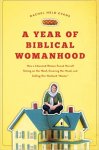 A husband who works on film projects in A Year of Biblical Womanhood by Rachel Held Evans and Liars by Sarah Manguso.
- A man is haunted by things his father said to him years ago in Parade by Rachel Cusk and one story in There Is a Rio Grande in Heaven by Ruben Reyes, Jr.
- Two short story collections in a row in which a character is a puppet (thank you, magic realism!): The Man in the Banana Trees by Marguerite Sheffer, followed by There Is a Rio Grande in Heaven by Ruben Reyes, Jr.
- A farm is described as having woodworm in Mammoth by Eva Baltasar and Parade by Rachel Cusk.
- Sebastian as a proposed or actual name for a baby in Signs, Music by Raymond Antrobus and Birdeye by Judith Heneghan.
What’s the weirdest reading coincidence you’ve had lately?
#ReadingtheMeow2024 and 20 Books of Summer, 2: Sleeping with Cats by Marge Piercy
Reviews of books about cats have been a standard element on my blog over the years, and the second annual Reading the Meow challenge, hosted by Mallika of Literary Potpourri, was a good excuse to pick up some more. Tomorrow I’ll review two cat-themed novels; today I have a 2002 memoir that I have been meaning to read for ages.
I discovered Piercy through her poetry, then read Woman on the Edge of Time, a feminist classic that contrasts utopian and dystopian views of the future. Like May Sarton (whom Piercy knew), she devotes equal energy to both fiction and poetry and is an inveterate cat lady. Piercy is still publishing and blogging at 88; I have much to catch up on from her back catalogue. A précis of her life is almost stranger than fiction: she grew up in poverty in Detroit, joining a teen gang and discovering her sexuality first with other girls (“The first time I had an orgasm—I was eleven—I was astonished and also I had a feeling of recognition. Of course, that’s it. As if that was what I had been expecting or looking for”) then with men; had a couple abortions, including one self-administered, then got sterilized; honed her writing craft at college; married three times – briefly to a Frenchman, an unhappy open arrangement, and now for 40+ years to fellow writer Ira Wood; and wrote like a dervish yet has remained on the periphery of the literary establishment and thus struggled financially.
Political activism has been a constant for Piercy, whether protesting the Vietnam War or supporting women’s reproductive rights. She and Wood also nurtured a progressive Jewish community around their Cape Cod home. Again like Sarton, she has always embraced the term feminist but been more resistant to queerness. A generational thing, perhaps; nowadays we would surely call Piercy bisexual or at least sexually fluid, but she’s more apt to dismiss her teen girlfriends and her later affairs with women as a phase. The personal life and career mesh here, though there is more of a focus on the former, such that I haven’t really gotten a clear idea of which of her novels I might want to try. Each chapter ends with one of her poems (wordy, autobiographical free verse), giving a flavour of her work in other genres. She portrays herself as a nomad who wandered various cities before settling into an unexpectedly homely and seasonal existence: “I am a stray cat who has finally found a good home.”

I admired Piercy’s self-knowledge here: her determination to write (including to keep her late mother alive in her) and to preserve the solitude necessary to her work –
I know I am an intense, rather angular passionate woman, not easy to like, not easy to live with, even for myself. Convictions, causes jostle in me. My appetites are large. I have learned to protect my work time and my privacy fiercely. I have been a better writer than a person, and again and again I made that choice. Writing is my core. I do not regret the security I have sacrificed to serve it.
and her conviction that motherhood was not for her –
I did not want children. I never felt I would be less of a woman, but I feared I would be less of a writer if I reproduced. I didn’t feel anything special about my genetic composition warranted replicating it. … I liked many of my friends’ children as they grew older: I was a good aunt. But I never desired to possess them or have one of my own. … I have never regretted staying childless. My privacy, my time for work … are precious. I feel my life is full enough.
“There were no role models for a woman like me,” she felt at the end of college, but she can in her turn be a role model of the female artist’s life, socially engaged and willing to take risks.
As to the title: There is, of course, special delight here for cat lovers. Piercy has had cats since she was a child, and in the Cape Cod era has usually kept a band of five or so. In the interludes we meet some true characters: Arofa the Siamese, Cho-Cho who lived to 21, mother and son Dinah and Oboe, alpha male Jim Beam, and many more. Of course, they age and fall ill and there are some goodbye scenes. She mostly describes these unsentimentally – if you’ve read Doris Lessing on cats, I’d say the attitude is similar. There are extremes of both love and despair: she licks a kitten to bond with her; she euthanizes one beloved cat herself. She wrote this memoir at 65 and felt that her cats were teaching her how to age.
There is a sadness to living with old cats; also a comfort and pleasure, for you know each other thoroughly and the trust is almost absolute. … The knowledge of how much I will miss them is always with me, but so is the sense of my own time flowing out, my life passing and the necessity to value it as I value them. Old cats are precious.
Even those unfamiliar with Piercy’s work might enjoy reading a perspective on the radical movements of the 1960s and 70s. This was right up my street because of her love of cats, her defence of the childfree life, and her interest in identity and memory. Because she doesn’t talk in depth about her oeuvre, you needn’t have read anything else of hers to appreciate reading this. I hope you have a cat who will nap on your lap as you do so. (Secondhand, a gift from my wish list) 

Book Serendipity, April to May 2024
I call it “Book Serendipity” when two or more books that I read at the same time or in quick succession have something in common – the more bizarre, the better. Of course, the truer term would be synchronicity, but the branding has stuck. In Liz Jensen’s Your Wild and Precious Life, she mentions that Carl Jung coined the term “synchronicity” for what he described as “a meaningful coincidence of two or more events where something other than the probability of chance is involved.” I like thinking that it’s not just a matter of luck.
This is a regular feature of mine every couple of months. I would normally have waited until the end of June, but I had way too many coincidences stored up! Because I usually have 20–30 books on the go at once, I suppose I’m more prone to finding them. People frequently ask how I remember all of these incidents. The answer is: I jot them down on scraps of paper or input them immediately into a file on my PC desktop; otherwise, they would flit away.
The following are in roughly chronological order.
- Reading two King Lear updates at the same time: Private Rites by Julia Armfield and Daughter by Claudia Dey. The former has been specifically marketed as a “lesbian Lear,” but I had no idea that the latter also features two sisters plus a younger half-sister and their interactions with a larger-than-life father.

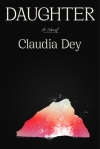
- Eating beans straight out of the tin in The Waterfall by Margaret Drabble and Of Mice and Men by John Steinbeck.
- Dead mice in Of Mice and Men by John Steinbeck and Stone Yard Devotional by Charlotte Wood.

-

- Screenshot
- Cloth holding the jaw of a corpse closed in one story from Barcelona by Mary Costello and A Woman’s Story by Annie Ernaux.
- Others see a character’s wife as a whore but the husband is oblivious in The Shipping News by E. Annie Proulx and Of Mice and Men by John Steinbeck.
 Setting up a game of solitaire in The Snow Hare by Paula Lichtarowicz and Of Mice and Men by John Steinbeck.
- Main character called Mona in Daughter by Claudia Dey and Mona of the Manor by Armistead Maupin.
- Being surprised at an older man still having his natural hair colour in one story of Barcelona by Mary Costello (where he’s aged 76) and Life in the Balance by Jim Down (where it’s Alan Bennett, at 84!).
- A character named Anjali in Brotherless Night by V.V. Ganeshananthan and Moral Injuries by Christie Watson.
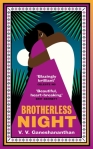

- A character named Cherry in Daughter by Claudia Dey and one story of This Is Why We Can’t Have Nice Things by Naomi Wood.
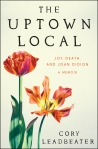
- My second memoir in two months in which a twentysomething son dies suddenly of a presumed heart problem: Fi by Alexandra Fuller, followed by Your Wild and Precious Life by Liz Jensen. (And a third in which his young friend died in the same way: The Uptown Local by Cory Leadbeater.) Also, Fuller and Jensen both see signs of their sons’ continued presence in bird sightings.
- Scratches on the inside of a coffin as proof of being buried alive in one story of Barcelona by Mary Costello and Life in the Balance by Jim Down.


- Surprise that one didn’t know the exact moment that a loved one died in one story of Barcelona by Mary Costello and Your Wild and Precious Life by Liz Jensen.
- Discussion of the meaning of brain stem death and a mention of meningococcal sepsis in Life in the Balance by Jim Down and Moral Injuries by Christie Watson.
- A scene set in a Denny’s diner in The Whole Staggering Mystery by Sylvia Brownrigg and After Dark by Haruki Murakami.


- A description of halal butchery in Barcelona by Mary Costello and Between Two Moons by Aisha Abdel Gawad.
- A mention of ballet choreographer George Balanchine in Dances by Nicole Cuffy and The Uptown Local by Cory Leadbeater.
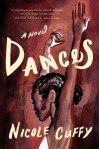
- A woman has an affair with a female postal worker in Mona of the Manor by Armistead Maupin and The Shipping News by Annie Proulx, both of which I DNFed.
- A character named Magdalena in Cloistered by Catherine Coldstream and The Snow Hare by Paula Lichtarowicz. The latter goes by Lena, which is also the name of the main character in Jungle House by Julianne Pachico. And there’s a character named Lina in Between Two Moons by Aisha Abdel Gawad.


- Being presented with powdered milk in Cloistered by Catherine Coldstream and Whale Fall by Elizabeth O’Connor.
- First I read a novel about a convent plagued by mice (Stone Yard Devotional by Charlotte Wood). Then I read a memoir about a convent plagued by feral cats (Cloistered by Catherine Coldstream).
- Buffalo, New York as a setting in Consent by Jill Ciment and The Age of Loneliness by Laura Marris. It’s also mentioned in Enter Ghost by Isabella Hammad.

- Watching pigeons on one’s balcony in Keep by Jenny Haysom, Your Wild and Precious Life by Liz Jensen, and The Uptown Local by Cory Leadbeater.
 The family’s pet chicken is cooked for dinner in Coleman Hill by Kim Coleman Foote and The Snow Hare by Paula Lichtarowicz.
- The mother is named Gloria in Consent by Jill Ciment and Cold Spring Harbor by Richard Yates (and The War for Gloria by Atticus Lish, a DNF).
- A character named Anton in The Snow Hare by Paula Lichtarowicz and Jungle House by Julianne Pachico.
- A cat named Dog in The Door-to-Door Bookstore by Carsten Henn and a dog named Tiger in Jungle House by Julianne Pachico.
- Two nature books that feature wild cold-water swimming (though don’t they all these days?!): In All Weathers by Matt Gaw and Your Wild and Precious Life by Liz Jensen.

- Two nature books that mention W.H. Hudson: In All Weathers by Matt Gaw and North with the Spring by Edwin Way Teale.
 A large anonymous donation to a church in Slammerkin by Emma Donoghue and Excellent Women by Barbara Pym (£10–11, which was much more in the 18th century of the former than in the 1950s of the latter).
- A mention of Poughkeepsie, New York in Birdeye by Judith Heneghan and Woman of Interest by Tracy O’Neill.
- A 1950s scene of perusing a lipstick display in Recipe for a Perfect Wife by Karma Brown and Excellent Women by Barbara Pym.

- A woman with a broken leg worries about how her garden will fare in Recipe for a Perfect Wife by Karma Brown and Remarkably Bright Creatures by Shelby Van Pelt.
- The same silent film image of a spaceship entering the moon’s eye (from Georges Méliès’s A Trip to the Moon) appears in Knife by Salman Rushdie and The Invention of Hugo Cabret by Brian Selznick. (I think this is the uncanniest coincidence of all this time!)

- A cleric who wears a biretta in Excellent Women by Barbara Pym and Daughters of the House by Michèle Roberts.
- A Black single mother who believes in the power of crystals in Company by Shannon Sanders and Another Word for Love by Carvell Wallace.

- An older woman really doesn’t want to leave her home but is moving into a retirement facility in Keep by Jenny Haysom and Remarkably Bright Creatures by Shelby Van Pelt. (There’s also a young woman who refuses to leave her house in Recipe for a Perfect Wife by Karma Brown.)
 A man throws his tie over his shoulder before eating in Recipe for a Perfect Wife by Karma Brown and Keep by Jenny Haysom.
- A mother writing a bad check becomes an important plot point in Remarkably Bright Creatures by Shelby Van Pelt and Another Word for Love by Carvell Wallace.
 A scene of self-induced abortion in Recipe for a Perfect Wife by Karma Brown and Sleeping with Cats by Marge Piercy.
- The Yiddish word feh (an expression of disappointment) appears in Feh by Shalom Auslander (no surprise there!) but also in A Reason to See You Again by Jami Attenberg, both of which are pre-release books I am reading for Shelf Awareness reviews.

What’s the weirdest reading coincidence you’ve had lately?
My Most Memorable Backlist Reads of 2021
Like many bloggers, I’m irresistibly drawn to the new books released each year. However, I consistently find that many of my most memorable reads were published years or decades ago. These 19 selections, in alphabetical order within genre, together with my Best of 2021 posts (fiction and nonfiction), make up the top 15% of my reading for the year. Three of the below were rereads.

(The three books not pictured were read electronically or from the library.)
Fiction
 America Is Not the Heart by Elaine Castillo: Set in the early 1990s in the Filipino immigrant neighbourhoods of the Bay Area in California, this is a complex, confident debut novel that throws you into an unfamiliar culture at the deep end. The characters shine and the dialogue feels utterly authentic in this fresh immigration story.
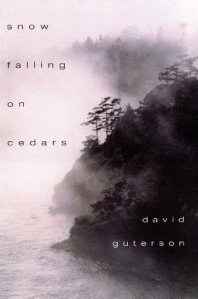
 Snow Falling on Cedars by David Guterson: The mystery element held me completely gripped – readers are just as in the dark as jurors until close to the end – but this is mostly a powerful picture of the lasting effects of racism. I was instantly immersed, whether in a warm courtroom with a snowstorm swirling outside or on a troop ship entering the Pacific Theater.
 Nothing but Blue Sky by Kathleen MacMahon: David is back on Spain’s Costa Brava, where he and his wife Mary Rose holidayed every summer for 20 years. This is a quiet novel about what goes unsaid in any marriage, and a deeply touching look at loss and what comes next. Grief, memory, fate: some of my favourite themes, elegantly treated.
 A Feather on the Breath of God by Sigrid Nunez: From the little I know of Nunez, this seems close to autofiction, especially in terms of her parents. Identifying the self by the key relationships and obsessions of a life makes sense, and this speaks to the universals of how we cope with a troublesome past. It cemented her as one of my favourite authors.
 Woman on the Edge of Time by Marge Piercy: An unusual and fascinating novel with hints of science fiction, but still grounded in the real world, this contrasts utopian and dystopian scenes experienced by a Latina woman who’s been confined to a mental hospital. It’s an intense cultural commentary from a writer ahead of her time on gender roles and the environment.
 My Dark Vanessa by Kate Elizabeth Russell: Obsessed with Lolita since she was a teenager, Russell decided to tell the teenage girl’s side of the story. She uses a dual timeline to great effect, creating an utterly immersive novel – as good a first-person narrative as anything Curtis Sittenfeld has ever written, and the ultimate #MeToo story.
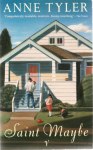 Saint Maybe by Anne Tyler: Ian Bedloe joins the puritanical Church of the Second Chance and drops out of college to help his parents raise his late brother’s three children. Anyone will be able to find themselves and their family in this story of the life chosen versus the life fallen into, and the difficult necessity of moving past regrets in the search for meaning.
 The Amateur Marriage by Anne Tyler: Unique in her oeuvre for how it bridges historical fiction and her more typical contemporary commentary. The Antons muddle their way through a volatile marriage for decades without figuring out how to change anything for the better. There is deep compassion for their foibles and how they affect the next generation.
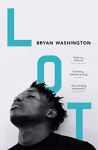 Lot by Bryan Washington: The musical equivalent might be a mixtape blasted from an open-top Corvette while touring the streets of Houston, Texas. Drug dealers, careworn immigrants, and prostitutes: Even the toughest guys have tender hearts in these 13 stories. Washington’s prose is earthy and slang-filled. The matter-of-fact phrasing made me laugh.
 Ethan Frome by Edith Wharton: I was so impressed by this condensed tragedy and the ambiance of a harsh New England winter. It struck me even more on a reread as a flawless parable of a man imprisoned by circumstance and punished for wanting more. A perfect example of how literature can encapsulate the human condition.
Poetry
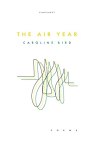 The Air Year by Caroline Bird: I read this with a big smile on my face, delighting in the clever and playful poems. The impermanence of relationships is a recurring theme. Dreams and miscommunication are also common elements, and lists grow increasingly absurd. I particularly liked where structure creates meaning, e.g. the mise en abyme of “Dive Bar.”
Nonfiction
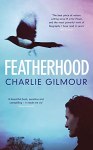 Featherhood by Charlie Gilmour: As an aimless twentysomething, Gilmour tried to rekindle a relationship with his unreliable poet father. Meanwhile, he was raising Benzene, a magpie that fell out of its nest. He makes elegant use of connections and metaphors; he’s so good at scenes, dialogue, and emotion – a truly natural writer.
 Spring in Washington by Louis J. Halle: From first migrant in February to last in June, the author traced the D.C. spring of 1945 mostly through the birds that he saw. More so than the specific observations of familiar places, though, I valued the philosophical outlook. For me this was an ideal combination of thoughtful prose and vicarious travel.
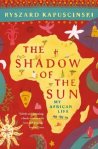 The Shadow of the Sun by Ryszard Kapuściński: This collection of essays spans decades and lots of African countries, yet feels like a cohesive narrative. Kapuściński saw many places right on the cusp of independence or in the midst of coup d’états. I appreciated how he never resorts to stereotypes or flattens differences. One of the few best travel books I’ve read.
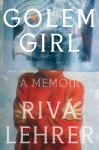 Golem Girl by Riva Lehrer: Lehrer has endured dozens of surgeries for spina bifida. Her touching family memoir is delivered in short, essay-like chapters, most named after books or films. It is also a primer in Disability theory and a miniature art gallery, filled with reproductions of her paintings. This inaugural Barbellion Prize winner is not to be missed.
 The Cost of Living by Deborah Levy: This sparse volume, the middle in an autobiographical trilogy, has Levy searching for the intellectual and physical freedom needed to reinvent her life after divorce. It is made up of conversations and memories; travels and quotations that have stuck with her. Each moment is perfectly chosen to reveal the self.
 Conundrum by Jan Morris: Morris was a trans pioneer; this transformed my understanding of gender when I first read it in 2006. Born James, Morris knew by age four that she was really a girl. A journalism career, marriage, five children, and two decades of hormone therapy preceded sex reassignment surgery. She paints hers as a spiritual quest toward her true identity.
 You’re Not Listening: What You’re Missing and Why It Matters by Kate Murphy: We all fail to listen properly sometimes, for various reasons. A New York Times journalist, Murphy does a lot of listening to her interview subjects. She also talks with representatives of so-called listening careers. This is a short, interesting, and genuinely helpful self-help book.
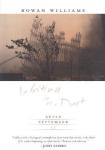 Writing in the Dust: After September 11 by Rowan Williams: Williams, then Archbishop of Wales, was in New York City on 9/11, just a few blocks from the World Trade Center. In the months that followed he pondered suffering, peacemaking, and the ways of God. He cautions against labelling the Other as Evil and responding with retribution. A superb book-length essay.
And if I really had to limit myself to just two favourites – my very best fiction and nonfiction reads of the year – they would be Snow Falling on Cedars and The Cost of Living.

What were your best backlist reads this year?
Merry Christmas!
(I’ll be back on the 27th with Love Your Library, then I have various year-end superlatives and statistics posts going through the 31st.)
The 1976 Club: Woman on the Edge of Time & The Takeover
It’s my fourth time participating in one of Simon and Karen’s reading weeks (after last year’s 1920 Club and 1956 Club and April’s 1936 Club). I start with a novel I actually read for my book club’s short-lived feminist classics subgroup way back in March but didn’t manage to review before now, and then have another I picked up especially for this challenge. Both were from the university library.

Woman on the Edge of Time by Marge Piercy
An unusual and fascinating novel with hints of science fiction, but still grounded in the real world (in a way that would attract fans of Octavia E. Butler’s Kindred and Parable duology), this contrasts utopian and dystopian scenes experienced by a Latina woman who’s been confined to a mental hospital. At 37, Connie Ramos has had a tough life marked by deprivation and domestic violence; “it was a crime to be born poor as it was a crime to be born brown.” She finds herself in conversation with Luciente, a plant geneticist who claims to be visiting from the future – coastal Massachusetts in 2137 – and has heard rumors of this prior Age of Greed and Waste. Luciente senses that Connie is a “catcher,” receptive to the wavelength of other times and places.
 When drawn into Luciente’s future, Connie thinks of it more as a peasant past because of the animal husbandry and agriculture, but comes to appreciate how technology and gender equality contribute to a peaceful society and environmentally restored landscape. I was intrigued by the dynamic Piercy imagines: everyone is of indeterminate gender (the universal pronouns are “person” and “per” – how about it? Both less confusing and more aesthetically pleasing than they/them!); embryos are cultured in machines and the resulting children raised communally with three honorary named “mother” figures. People choose their own names and change them in response to rites of passage. There’s no government or police. Free love reigns. “Our notions of evil center around power and greed” rather than sex, Connie is told.
With Connie and her fellow inmates facing mind-altering surgery in the ‘real’ world, Luciente’s community becomes a blessed escape. But on one of her time travels, she ends up in a dystopian future New York City instead. From 126 floors up, all that’s visible through the smoggy air is other towers. Everyone is genetically modified and everything is owned by corporations. Which scenario represents the authentic evolution of human society?
The way Piercy intersperses these visions with life at the mental hospital, and closes with excerpts from Connie’s patient notes, forces you to question whether they might all be hallucinations. We didn’t come to any firm conclusion during our Zoom discussion. The others found Connie’s life unremittingly bleak, but I love me a good mental hospital narrative. While I wearied a bit of the anthropological detail as the novel went on, I thought it an intense cultural commentary from a writer ahead of her time on gender roles and the environment (small-scale food production, foraging, renewable energy and reusing/recycling are givens in her utopia, and she questions the nonsensical reliance on cars. Why didn’t we listen to the prophets of the 1970s when we maybe had a chance to turn things around?!).
My rating: 
The Takeover by Muriel Spark
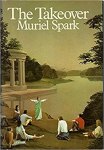 Had I read this in manuscript with no author name attached, I might have declared it to have been written by Iris Murdoch for the clutch of amoral characters, the love triangles, the peculiar religious society, the slight meanness of the attitude, and the detachment of the prose. Maggie Radcliffe is a rich American who owns three houses in the vicinity of Rome, one of which she rents out to Hubert Mallindaine, an effete homosexual who alleges that he is descended from the goddess Diana and founds a cult in her honour. He holds to this belief as fiercely as he defends his right to remain at Nemi even when Maggie decides she wants him out and employs lawyers to start eviction proceedings. There are odd priests, adulterous family members, scheming secretaries, and art and jewellery thieves, too. I wouldn’t say I’m a fan, but I liked this, my fourth novel by Spark, better than the rest. Italian bureaucracy makes for an amusing backdrop to what is almost a financial farce with an ensemble cast.
My rating: 
Another 1976 release I’ve reviewed this year: The Easter Parade by Richard Yates.
Six Degrees of Separation: Second Place to Woman on the Edge of Time
The last Six Degrees of Separation post I did was back in April; I’ve fallen out of the habit since then. But this month an idea seized me and I’m back! This time we begin with Second Place by Rachel Cusk, which is on the Booker Prize longlist. (See Kate’s opening post.)

When I saw Cusk speak at the online Hay Festival, I learned that Second Place (my review) was loosely inspired by Mabel Dodge Luhan’s 1932 memoir Lorenzo in Taos, about the time when D.H. Lawrence came to visit her in New Mexico. Thoughts of Lawrence in Taos inevitably take me back to my first (and only) academic conference in 2005, hosted by the D.H. Lawrence Society of North America in Santa Fe, with a fieldtrip out to his Taos ranch.
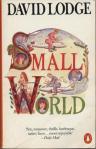 #1 One of the books I read ‘in preparation’ for attending that conference was Small World by David Lodge, a comedic novel about professors on the international conference circuit. I’ve included it as one of the Landmark Books of My Life.
 #2 Flights and “small world” connections also fill the linked short story collection Turbulence by David Szalay.
 #3 If you can bear to remember the turbulence of recent history, UnPresidented by Jon Sopel is a breezy diary of the 2020 U.S. election. We were lucky enough to have the author, a BBC presenter and brother of one of our members, join our book club discussion on Zoom.
 #4 That punning title reminded me of A Sting in the Tale by Dave Goulson, his first and probably best work of popular science – all of his books since have been very similar, but that’s no problem because his enthusiasm for insect life is infectious and he writes with the wit and charm of Gerald Durrell.
#5 Goulson’s latest book, which I’ve recently reviewed for Shelf Awareness, is called Silent Earth, about the grave threats that insects face (pesticides, invasive species, climate change and much more). It’s the second book I’ve read in recent years (the first was Losing Eden by Lucy Jones) that is explicitly based on or inspired by Silent Spring by Rachel Carson. Like Carson’s book, these seek to effect real societal change.


#6 Carson, Goulson and Jones all conjure up dystopian scenarios of unimaginable natural loss to spur readers into action. A feminist classic my book club read earlier in the year, Woman on the Edge of Time by Marge Piercy, contrasts utopian and dystopian scenes experienced by a Latina woman who’s been confined to a mental hospital. Will society evolve into a utopian vision of subsistence living and absolute gender equality, or move towards further isolation and urban barrenness? It’s an unusual and fascinating novel with hints of science fiction, but grounded in the real world. I still haven’t managed to review it, but next month’s 1976 Club may be just the excuse I need. Do give it a try!

Cycling round from one feminist novel to another, I’ve also featured a couple of personal favourites, some recent works, and a classic of nature writing.
Where will your chain take you? Join us for #6Degrees of Separation! (Hosted on the first Saturday of each month by Kate W. of Books Are My Favourite and Best.) Next month’s R.I.P.-appropriate starting point is the short story “The Lottery” by Shirley Jackson.
Have you read any of my selections? Are you tempted by any you didn’t know before?
Book Serendipity, Mid-March to Early May 2021
In early April, the publisher Canongate ran a newsletter competition for one reader to win a stack of their recent releases. All you had to do was reply with your favourite word. On Twitter they gave a rundown of the most popular responses. Turning up several times each were petrichor, mellifluous, and oleaginous. Most frequent of all was serendipity: I was one of 15 to submit it! And one of those entries, but not mine, won. Anyway, fun little story there.
I call it Book Serendipity when two or more books that I read at the same time or in quick succession have something pretty bizarre in common. Because I have so many books on the go at once (usually 20‒30), I suppose I’m more prone to such incidents. I’ve realized that, of course, synchronicity is really the more apt word, but this branding has stuck.
The following are in roughly chronological order.
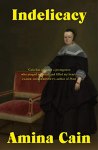
- A white peacock is mentioned in Indelicacy by Amina Cain and The Mermaid of Black Conch by Monique Roffey, both of which were on the 2021 Rathbones Folio Prize shortlist.

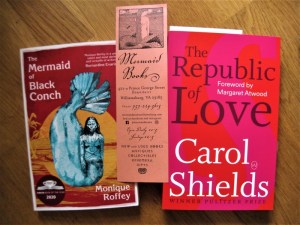
- Speaking of that Rathbones Folio Prize shortlist, four of the eight were paperbacks with French flaps.
- The main character takes ballet lessons in Indelicacy by Amina Cain and A Feather on the Breath of God by Sigrid Nunez.
- Mermaids! A big theme in The Mermaid of Black Conch by Monique Roffey (of course) and The Republic of Love by Carol Shields, but they’re also mentioned in the opening story of The Office of Historical Corrections by Danielle Evans and are main characters in “The Pangs of Love” by Jane Gardam in the anthology Close Company.
- The Brothers Grimm story about brothers who have been transformed into swans and their sister who sews shirts out of nettles to turn them back is reworked in The Charmed Wife by Olga Grushin and used as a metaphor in Dusk, Night, Dawn by Anne Lamott.
- An electric carving knife is mentioned as a means of suicide (yipes!) in The Inevitable by Katie Engelhart and Woman on the Edge of Time by Marge Piercy.
- A discussion of the distinction between the fear of dying and the fear of being dead in This Party’s Dead by Erica Buist and The Inevitable by Katie Engelhart.
- Two novels in a row in which an older man is appalled by the squalor of his young girlfriend’s apartment, and she calls him “daddy” during sex (double yipes!), made the Dylan Thomas Prize shortlist: Luster by Raven Leilani and My Dark Vanessa by Kate Elizabeth Russell.


- Architect husbands in The Push by Ashley Audrain and The Art of Falling by Danielle McLaughlin (and, last year, in A Celibate Season by Blanche Howard and Carol Shields), as well as a female architect as a main character in The Living Sea of Waking Dreams by Richard Flanagan earlier this year.
- The next-to-last essay in the Trauma anthology quotes from The Bell Jar by Sylvia Plath, which I was also reading at the time.
- A mention of the eels in London absorbing cocaine from the Thames in the final essay in the Trauma anthology; I then moved right on to the last 40 pages of Nobody Is Talking About This by Patricia Lockwood and the same bizarre fact was mentioned. A week and a half later, there it was again, this time in Asylum Road by Olivia Sudjic.
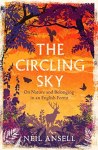
- A mention of sailors’ habit of getting tattoos of swallows in The Circling Sky by Neil Ansell (who has a swallow tattoo, even though he’s not a sailor) and Birdsong in a Time of Silence by Steven Lovatt.

- A father and teenage child wander an unfamiliar city and enter a sex shop together (yipes yet again!) in Three O’Clock in the Morning by Gianrico Carofiglio and Ten Days by Austin Duffy.
- A mention of the same University of Virginia study in which people self-administered electric shocks to alleviate the boredom of sitting alone with their thoughts in Rooted by Lyanda Lynn Haupt and You’re Not Listening by Kate Murphy.
- Basho’s poetry and George Monbiot’s Feral are both cited in The Circling Sky by Neil Ansell and Rooted by Lyanda Lynn Haupt.
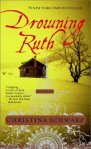
- A dead sister named Mattie in Consent by Annabel Lyon and Drowning Ruth by Christina Schwarz.

- A young Black female protagonist and the same family dynamic (the mother committed suicide and the father is in the Marines/Navy) in The Mothers by Brit Bennett and Luster by Raven Leilani.
- On the same night, I read about two pets encountering snow for the first time: a cat in Close Encounters of the Furred Kind by Tom Cox and a dog in Open Water by Caleb Azumah Nelson.
- A character is described as being as wide as they are tall in Mother for Dinner by Shalom Auslander and The Absolute Book by Elizabeth Knox.


- A character is known as Seventh in Mother for Dinner by Shalom Auslander and the story “The Pangs of Love” by Jane Gardam in the Close Company anthology. Plus, there’s Septimus in Mrs Dalloway by Virginia Woolf, which I’m reading concurrently with those two.
What’s the weirdest reading coincidence you’ve had lately?
Book Serendipity, Early 2021
I call it Book Serendipity when two or more books that I read at the same time or in quick succession have something pretty bizarre in common. Because I have so many books on the go at once (usually 20‒30), I suppose I’m more prone to such incidents.
Josh Cohen’s How to Live. What to Do, a therapist’s guide to literature, explains why this might happen:
More than one writer – the French poet Stéphane Mallarmé, the Argentinian writer Jorge Luis Borges – has advanced the exhilarating idea that each book is an infinitesimally small piece of one single, endless Book. I’ve always felt that this idea, unlikely as it might sound, makes perfect sense if you read enough novels [also nonfiction, for me]. The incidents, descriptions, phrases and images in the book you’re reading will always recall the incidents in another, and those in turn will call up the incidents in another, so that even as you’re reading one book, you’re reading countless others.
The following are in roughly chronological order.
- Mother‒baby swimming sessions in Some Body to Love by Alexandra Heminsley and The Still Point of the Turning World by Emily Rapp.


- [I think it would be a spoiler to even name them, but two novels I read simultaneously in January featured 1) a marriage / close relationship between a man and a woman – even though the man is gay; and 2) a character who beat his wife and then died in a convenient ‘accident’. One was published in 1997 and the other in 2020.]
- Stomas appeared in Dazzling Darkness by Rachel Mann and First Time Ever by Peggy Seeger late in my 2020 reading, and then in early 2021 in Pain: The Science of the Feeling Brain by Abdul-Ghaaliq Lalkhen and Love’s Work by Gillian Rose.
- An account of the author’s experience of ovarian hyperstimulation syndrome in Hormonal by Eleanor Morgan and I Miss You when I Blink by Mary Laura Philpott.
- Salmon fishing takes place in Snow Falling on Cedars by David Guterson and Kings of the Yukon by Adam Weymouth.


- The medical motto “see one, do one, teach one” appears in Breathtaking by Rachel Clarke and Complications by Atul Gawande.
- Filipino medical staff feature in America Is Not the Heart by Elaine Castillo and Breathtaking by Rachel Clarke.
- Twin Peaks is mentioned in The Fragments of My Father by Sam Mills and the anthology Trauma: Essays on Art and Mental Health; a different essay in the latter talks about Virginia Woolf’s mental health struggle, which is a strand in the former.
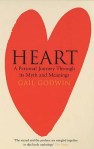
- St. Teresa of Ávila is mentioned in Heart by Gail Godwin and Sanatorium by Abi Palmer.

- The same Rachel Long poem appears in her debut collection, My Darling from the Lions, and The Emma Press Anthology of Love – but under different titles (“Portent” vs. “Delayed Gratification”).
- There’s a matriarch named Dot in Unsettled Ground by Claire Fuller and The Magician’s Assistant by Ann Patchett.
- There’s an Alaska setting in The Quality of Silence by Rosamund Lupton and Kings of the Yukon by Adam Weymouth.
- Becoming a mother is described as a baptism in Sanctuary by Emily Rapp Black and The Fragments of My Father by Sam Mills.


- While reading America Is Not the Heart by Elaine Castillo, I saw Castillo mentioned in the Acknowledgements of My Darling from the Lions by Rachel Long.
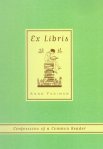
- Polar explorers’ demise is discussed in Ex Libris by Anne Fadiman and The Still Point by Amy Sackville.
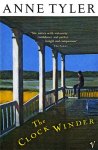
- “Butterfingers” / “butter-fingered” is used in America Is Not the Heart by Elaine Castillo and The Clock Winder by Anne Tyler.
- There’s a mention of someone eating paper torn from books (the horror!) in Ex Libris by Anne Fadiman and The Clock Winder by Anne Tyler.
- I was reading three pre-releases at once, each of 288 pages: Milk Fed by Melissa Broder, Unsettled Ground by Claire Fuller, and A Town Called Solace by Mary Lawson.
- The Jewish golem myth is the overarching metaphor of Milk Fed by Melissa Broder and Golem Girl by Riva Lehrer.
- There’s a ceremony to pay respects to those who donated their bodies for medical school dissection in Maybe You Should Talk to Someone by Lori Gottlieb and Golem Girl by Riva Lehrer.
- An old woman with dementia features in The Living Sea of Waking Dreams by Richard Flanagan, Keeper by Andrea Gillies, and The Clock Winder by Anne Tyler.


- A mother dies of cancer on Christmas Day in This Party’s Dead by Erica Buist and The Fragments of My Father by Sam Mills.
- The main character does stand-up comedy in Milk Fed by Melissa Broder and This Party’s Dead by Erica Buist.
- Winning a goldfish at a carnival in The Air Year by Caroline Bird, A Feather on the Breath of God by Sigrid Nunez, and Anna Vaught’s essay in the Trauma anthology.
- ECT (electroconvulsive therapy) is mentioned in Adventures in Human Being by Gavin Francis and Woman on the Edge of Time by Marge Piercy.


- There’s a father who is non-medical hospital staff in The Push by Ashley Audrain (a cleaner) and A Feather on the Breath of God by Sigrid Nunez (a kitchen worker).
- There’s a character named Hart in The Wild Laughter by Caoilinn Hughes and The Birth House by Ami McKay.
- Cannibalism is a point of reference, a major metaphor, or a (surreal) reality in Mother for Dinner by Shalom Auslander, Eat or We Both Starve by Victoria Kennefick, and Light Perpetual by Francis Spufford.
- Infertility and caring for animals were two big themes shared by Brood by Jackie Polzin and Catalogue Baby by Myriam Steinberg. This became clearer when I interviewed both authors in February. Also, both women have shocks of pink hair in their publicity photos!


- A young woman works at a hotel in The Distance between Us by Maggie O’Farrell and My Dark Vanessa by Kate Elizabeth Russell (and The Glass Hotel by Emily St. John Mandel, which I read late last year).
What’s the weirdest reading coincidence you’ve had lately?
Best Backlist Reads of 2018
Like a lot of book bloggers, I’m irresistibly drawn to the shiny new books released each year. However, I’ve noticed recently that many of my most memorable reads were published years or even decades ago. In 2018 I even came across a handful of books that are for me among the very best representatives of their genre, whether that’s nature, travel, family memoir, historical fiction or science fiction. The below selections are in alphabetical order by author name, and account for all the rest of my 4.5- and 5-star ratings of the year (another 27!).

My best backlist reads of the year (most of the ones I own in print, anyway).
Fiction
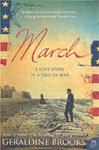 March by Geraldine Brooks (2005): The best Civil War novel I’ve read. The best slavery novel I’ve read. One of the best historical novels I’ve ever read, period. Brooks’s second novel uses Little Women as its jumping-off point but is very much its own story. The whole is a perfect mixture of what’s familiar from history and literature and what Brooks has imagined.
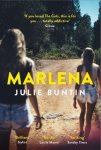 Marlena by Julie Buntin (2017): The northern Michigan setting pairs perfectly with the novel’s tone of foreboding: you have a sense of these troubled teens being isolated in their clearing in the woods, and from one frigid winter through a steamy summer and into the chill of the impending autumn, they have to figure out what in the world they are going to do with their terrifying freedom. It’s basically a flawless debut, one I can’t recommend too highly.
 Reading in the Dark by Seamus Deane (1996): Ireland’s internecine violence is the sinister backdrop to this family’s everyday sorrows, including the death of a child and the mother’s shaky mental health. The book captures all the magic, uncertainty and heartache of being a child, in crisp scenes I saw playing out in my mind.
 The Life and Loves of Lena Gaunt by Tracy Farr (2013): Lena Gaunt: early theremin player, grande dame of electronic music, and opium addict. I loved how Farr evokes the strangeness and energy of theremin music, and how sound waves find a metaphorical echo in the ocean’s waves – swimming is Lena’s other great passion.
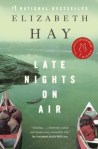 Late Nights on Air by Elizabeth Hay (2007): A tight-knit cast gathers around the local radio station in Yellowknife, a small city in Canada’s Northwest Territories: Harry and Gwen, refugees from Ontario starting new lives; Dido, an alluring Dutch newsreader; Ralph, the freelance book reviewer; menacing Eddie; and pious Eleanor. This is a marvellous story of quiet striving and dislocation; I saw bits of myself in each of the characters, and I loved the extreme setting, both mosquito-ridden summer and bitter winter.
 The Leavers by Lisa Ko (2017): An ambitious and satisfying novel set in New York and China, with major themes of illegal immigration, searching for a mother and a sense of belonging, and deciding what to take with you from your past. This was hand-picked by Barbara Kingsolver for the 2016 PEN/Bellwether Prize for Socially Engaged Fiction.
 The Invisible Bridge by Julie Orringer (2010): Hungarian Jew Andras Lévi travels from Budapest to Paris to study architecture, falls in love with an older woman who runs a ballet school, and – along with his parents, brothers, and friends – has to adjust to the increasingly strict constraints on Jews across Europe in 1937–45. It’s all too easy to burn out on World War II narratives these days, but this is among the very best I’ve read.
 The Sparrow by Mary Doria Russell (1996): For someone like me who struggles with sci-fi at the best of times, this is just right: the alien beings are just different enough from humans for Russell to make fascinating points about gender roles, commerce and art, but not so peculiar that you have trouble believing in their existence. All of the crew members are wonderful, distinctive characters, and the novel leaves you with so much to think about: unrequited love, destiny, faith, despair, and the meaning to be found in life.
 Salt Creek by Lucy Treloar (2015): Hester Finch is looking back from the 1870s – when she is a widowed teacher settled in England – to the eight ill-fated years her family spent at Salt Creek, a small (fictional) outpost in South Australia, in the 1850s–60s. This is one of the very best works of historical fiction I’ve read; it’s hard to believe it’s Treloar’s debut novel.
 Christmas Days: 12 Stories and 12 Feasts for 12 Days by Jeanette Winterson (2016): I treated myself to this new paperback edition with part of my birthday book token and it was a perfect read for the week leading up to Christmas. The stories are often fable-like, some spooky and some funny. Most have fantastical elements and meaningful rhetorical questions. Winterson takes the theology of Christmas seriously. A gorgeous book I’ll return to year after year.
Poetry
 Available Light by Marge Piercy (1988): The subjects are diverse: travels in Europe, menstruation, identifying as a Jew as well as a feminist, scattering her father’s ashes, the stresses of daily life, and being in love. Some of my favorites were about selectively adhering to the lessons her mother taught her, how difficult it is for a workaholic to be idle, and wrestling the deity for words.
Nonfiction
 Deep Country: Five Years in the Welsh Hills by Neil Ansell (2011): One of the most memorable nature/travel books I’ve ever read; a modern-day Walden. Ansell’s memoir is packed with beautiful lines as well as philosophical reflections on the nature of the self and the difference between isolation and loneliness.
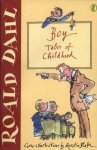 Boy by Roald Dahl (1984): Pranks and larks and holidays: these are all here; so is crushing homesickness and a bitter sense of injustice at being at the mercy of sadistic adults. Nearly 60 years later, Dahl could use memory and imagination to fully inhabit his childhood self and give a charming survey of the notable events of his life up to age 20.
 This Cold Heaven: Seven Seasons in Greenland by Gretel Ehrlich (2001): I thoroughly enjoyed my armchair trek across a frigid island nation in the company of Gretel Ehrlich, who traveled here repeatedly between 1995 and 2001 and intersperses her journeys with those of her historical model, Inuit–Danish explorer Knud Rasmussen, whose seven Arctic expeditions took in the west coast of Greenland and the far north of the North American continent. Every time she finds a fresh way to write about ice and sun glare and frigid temperatures.
 Ali: A Life by Jonathan Eig (2017): It’s a riveting account of outliving segregation and developing a personal style and world-beating confidence; it’s a sobering tale of facing consequences and having your own body fail you. I’m the furthest thing from a sports fan you could imagine, but I approached this as a book about a cultural icon and read it with a spirit of curiosity about how Eig would shape this life story and separate the facts from the legend. I loved it.
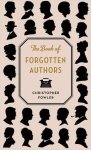 The Book of Forgotten Authors by Christopher Fowler (2017): A charming introduction to 99 more or less obscure writers. Each profile is a perfectly formed mini-biography with a survey of the author’s major work: in just two or three pages, Fowler is able to convey all a writer’s eccentricities and why their output is still worth remembering.
 To the Is-Land: An Autobiography by Janet Frame (1982): This is some of the best writing about childhood and memory that I’ve ever read, infused with music, magic and mystery. The prose alternates between dreamy and matter-of-fact as Frame describes growing up in New Zealand one of five children in the Depression and interwar years.
 Leaving Before the Rains Come by Alexandra Fuller (2015): This poignant sequel to Don’t Let’s Go to the Dogs Tonight is a portrait of Fuller’s two-decade marriage, from its hopeful beginnings to its acrimonious end. What I most appreciated about the book was Fuller’s sense of being displaced: she no longer feels African, but nor does she feel American.
 West With the Night by Beryl Markham (1942): Markham writes so vividly about the many adventures of her life in Africa: hunting lions, training race horses, and becoming one of the continent’s first freelance pilots, delivering mail and locating elephant herds. Whether she’s reflecting on the many faces of Africa or the peculiar solitude of night flights, the prose is just stellar.
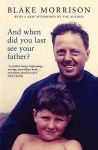 And When Did You Last See Your Father? by Blake Morrison (1993): An extraordinary memoir based around the author’s relationship with his father. Alternating chapters give glimpses into earlier family life and narrate Morrison’s father’s decline and death from cancer. This is simply marvelously written, not a bad line in the whole thing.
 The Seabird’s Cry: The Lives and Loves of Puffins, Gannets and Other Ocean Voyagers by Adam Nicolson (2017): This is an extraordinarily well-written and -researched book (a worthy Wainwright Prize winner) about the behavior, cultural importance, and current plight of the world’s seabirds. Each chapter takes up a different species and dives deep into everything from its anatomy to the legends surrounding it, simultaneously conveying the playful, intimate real lives of the birds and their complete otherness.
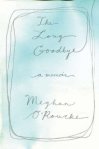 The Long Goodbye: A Memoir of Grief by Meghan O’Rourke (2011): I read a whole lot of bereavement memoirs; this has been one of the very best. O’Rourke tells her story with absolute clarity – a robust, plain-speaking style that matches her emotional transparency. The heart of the book is her mother’s death from colorectal cancer on Christmas Day 2008, but we also get a full picture of the family life that preceded it and the first couple of years of aftermath.
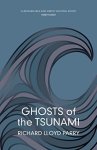 Ghosts of the Tsunami: Death and Life in Japan’s Disaster Zone by Richard Lloyd Parry (2017): Eighteen and a half thousand people died in the earthquake and tsunami that hit Japan in March 2011. It’s not really possible to get your head around a tragedy on that scale so, wisely, Parry focuses on a smaller story within the story: 74 died at Okawa primary school because the administration didn’t have a sufficient disaster plan in place. This is a stunning portrait of a resilient people, but also a universal story of the human spirit facing the worst.
 Lots of Candles, Plenty of Cake by Anna Quindlen (2012): A splendid memoir-in-essays that dwells on aging, parenting and female friendship. Some of its specific themes are marriage, solitude, the randomness of life, the process of growing into your own identity, and the special challenges her generation (roughly my mother’s) faced in seeking a work–life balance. Her words are witty and reassuring, and cut right to the heart of the matter in every case.
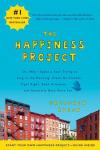 The Happiness Project: Or, Why I Spent a Year Trying to Sing in the Morning, Clean My Closets, Fight Right, Read Aristotle, and Generally Have More Fun by Gretchen Rubin (2009): Probably the best self-help book I’ve read; dense (in the best possible way) with philosophy, experience and advice. What I appreciated most is that her approach is not about undertaking extreme actions to try to achieve happiness, but about finding contentment in the life you already have by adding or tweaking small habits – especially useful for pessimists like me.
 In the Days of Rain: A daughter. A father. A cult by Rebecca Stott (2017): This was a perfect book for my interests, and just the kind of thing I would love to write someday. It’s a bereavement memoir that opens with Stott’s father succumbing to pancreatic cancer and eliciting her promise to help finish his languishing memoir; it’s a family memoir that tracks generations through England, Scotland and Australia; and it’s a story of faith and doubt, of the absolute certainty experienced inside the Exclusive Brethren (a Christian sect that numbers 45,000 worldwide) and how that cracked until there was no choice but to leave.
 Writers & Company by Eleanor Wachtel (1993): Erudite and fascinating author interviews from Wachtel’s weekly Canadian Broadcasting Corporation radio program. Whether I’d read anything by these authors (or even heard of them) or not, I found each Q&A chock-full of priceless nuggets of wisdom about creativity, mothers and daughters, drawing on autobiographical material, the writing process, and much more.
And if I really had to limit myself to just two books – my very best fiction and nonfiction reads of the year – they would be March by Geraldine Brooks and And When Did You Last See Your Father? by Blake Morrison.

 Bookish Beck = Rebecca Foster. American transplant to England. Freelance proofreader and book reviewer.
 Bookish Beck