Book Serendipity, September through Mid-November
I call it “Book Serendipity” when two or more books that I read at the same time or in quick succession have something in common – the more bizarre, the better. This is a regular feature of mine every couple of months. Because I usually have 20–30 books on the go at once, I suppose I’m more prone to such incidents. People frequently ask how I remember all of these coincidences. The answer is: I jot them down on scraps of paper or input them immediately into a file on my PC desktop; otherwise, they would flit away.
Thanks to Emma and Kay for posting their own Book Serendipity moments! (Liz is always good about mentioning them as she goes along, in the text of her reviews.)
The following are in roughly chronological order.
- An obsession with Judy Garland in My Judy Garland Life by Susie Boyt (no surprise there), which I read back in January, and then again in Beard: A Memoir of a Marriage by Kelly Foster Lundquist.
- Leaving a suicide note hinting at drowning oneself before disappearing in World War II Berlin; and pretending to be Jewish to gain better treatment in Aimée and Jaguar by Erica Fischer and The Lilac People by Milo Todd.
- Leaving one’s clothes on a bank to suggest drowning in The Covenant of Water by Abraham Verghese, read over the summer, and then Benbecula by Graeme Macrae Burnet.
- A man expecting his wife to ‘save’ him in Amanda by H.S. Cross and Beard: A Memoir of a Marriage by Kelly Foster Lundquist.
 A man tells his story of being bullied as a child in Goodbye to Berlin by Christopher Isherwood and Beard by Kelly Foster Lundquist.
- References to Vincent Minnelli and Walt Whitman in a story from Touchy Subjects by Emma Donoghue and Beard by Kelly Foster Lundquist.
- The prospect of having one’s grandparents’ dining table in a tiny city apartment in Beard by Kelly Foster Lundquist and Wreck by Catherine Newman.
- Ezra Pound’s dodgy ideology was an element in The Dime Museum by Joyce Hinnefeld, which I reviewed over the summer, and recurs in Swann by Carol Shields.
- A character has heart palpitations in Andrew Miller’s story from The BBC National Short Story Award 2025 anthology and Endling by Maria Reva.
- A (semi-)nude man sees a worker outside the window and closes the curtains in one story of Cathedral by Raymond Carver and one from Good and Evil and Other Stories by Samanta Schweblin.
- The call of the cuckoo is mentioned in The Edge of Silence by Neil Ansell and Of All that Ends by Günter Grass.
 A couple in Italy who have a Fiat in Of All that Ends by Günter Grass and Caoilinn Hughes’s story from The BBC National Short Story Award 2025 anthology.
- Balzac’s excessive coffee consumption was mentioned in Au Revoir, Tristesse by Viv Groskop, one of my 20 Books of Summer, and then again in The Writer’s Table by Valerie Stivers.
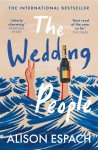
- The main character is rescued from her suicide plan by a madcap idea in The Wedding People by Alison Espach and Endling by Maria Reva.
- The protagonist is taking methotrexate in Sea, Poison by Caren Beilin and Wreck by Catherine Newman.

- A man wears a top hat in Benbecula by Graeme Macrae Burnet and one story of Cathedral by Raymond Carver.
- A man named Angus is the murderer in Benbecula by Graeme Macrae Burnet and Swann by Carol Shields.
 The thing most noticed about a woman is a hair on her chin in the story “Pluck” in Touchy Subjects by Emma Donoghue and Swann by Carol Shields.
- The female main character makes a point of saying she doesn’t wear a bra in Sea, Poison by Caren Beilin and Find Him! by Elaine Kraf.
- A home hairdressing business in one story of Cathedral by Raymond Carver and Emil & the Detectives by Erich Kästner.
- Painting a bathroom fixture red: a bathtub in The Diary of a Nobody by George Grossmith, one of my 20 Books of Summer; and a toilet in Find Him! by Elaine Kraf.
- A teenager who loses a leg in a road accident in individual stories from A Wild Swan by Michael Cunningham and the Racket anthology (ed. Lisa Moore).
- Digging up the casket of a loved one in the wee hours features in Pet Sematary by Stephen King, one of my 20 Books of Summer; and one story of Pretty Monsters by Kelly Link.
- A character named Dani in the story “The St. Alwynn Girls at Sea” by Sheila Heti and The Silver Book by Olivia Laing; later, author Dani Netherclift (Vessel).
 Obsessive cultivation of potatoes in Benbecula by Graeme Macrae Burnet and The Martian by Andy Weir.
- The story of Dante Gabriel Rossetti digging up the poems he buried with his love is recounted in Sharon Bala’s story in the Racket anthology (ed. Lisa Moore) and one of the stories in Pretty Monsters by Kelly Link.
- Putting French word labels on objects in Alone in the Classroom by Elizabeth Hay and Find Him! by Elaine Kraf.
 A man with part of his finger missing in Find Him! by Elaine Kraf and Lessons from My Teachers by Sarah Ruhl.
- In Minor Black Figures by Brandon Taylor, I came across a mention of the Italian film director Pier Paolo Pasolini, who is a character in The Silver Book by Olivia Laing.
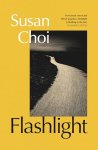
- A character who works in an Ohio hardware store in Flashlight by Susan Choi and Buckeye by Patrick Ryan (two one-word-titled doorstoppers I skimmed from the library). There’s also a family-owned hardware store in Alone in the Classroom by Elizabeth Hay.
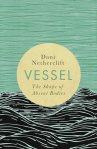
- A drowned father – I feel like drownings in general happen much more often in fiction than they do in real life – in The Homecoming by Zoë Apostolides, Flashlight by Susan Choi, and Vessel by Dani Netherclift (as well as multiple drownings in The Covenant of Water by Abraham Verghese, one of my 20 Books of Summer).
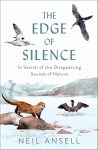
- A memoir by a British man who’s hard of hearing but has resisted wearing hearing aids in the past: first The Quiet Ear by Raymond Antrobus over the summer, then The Edge of Silence by Neil Ansell.
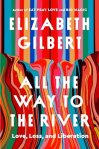 A loved one is given a six-month cancer prognosis but lives another (nearly) two years in All the Way to the River by Elizabeth Gilbert and Lessons from My Teachers by Sarah Ruhl.
- A man’s brain tumour is diagnosed by accident while he’s in hospital after an unrelated accident in Flashlight by Susan Choi and Saltwash by Andrew Michael Hurley.
- Famous lost poems in What We Can Know by Ian McEwan and Swann by Carol Shields.
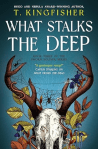
- A description of the anatomy of the ear and how sound vibrates against tiny bones in The Edge of Silence by Neil Ansell and What Stalks the Deep by T. Kingfisher.
- Notes on how to make decadent mashed potatoes in Beard by Kelly Foster Lundquist, Death of an Ordinary Man by Sarah Perry, and Lessons from My Teachers by Sarah Ruhl.
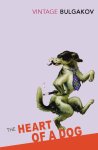
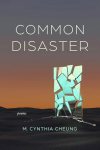
- Transplant surgery on a dog in Russia and trepanning appear in The Heart of a Dog by Mikhail Bulgakov and the poetry collection Common Disaster by M. Cynthia Cheung.
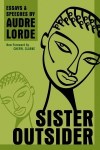
- Audre Lorde, whose Sister Outsider I was reading at the time, is mentioned in Lessons from My Teachers by Sarah Ruhl. Lorde’s line about the master’s tools never dismantling the master’s house is also paraphrased in Spent by Alison Bechdel.
- An adult appears as if fully formed in a man’s apartment but needs to be taught everything, including language and toilet training, in The Heart of a Dog by Mikhail Bulgakov and Find Him! by Elaine Kraf.
 Two sisters who each wrote a memoir about their upbringing in Spent by Alison Bechdel and Vessel by Dani Netherclift.
- The fact that ragwort is bad for horses if it gets mixed up into their feed was mentioned in Ghosts of the Farm by Nicola Chester and Understorey by Anna Chapman Parker.
- The Sylvia Plath line “the O-gape of complete despair” was mentioned in Vessel by Dani Netherclift, then I read it in its original place in Ariel later the same day.
- A mention of the Baba Yaga folk tale (an old woman who lives in the forest in a hut on chicken legs) in Common Disaster by M. Cynthia Cheung and Woman, Eating by Claire Kohda. [There was a copy of Sophie Anderson’s children’s book The House with Chicken Legs in the Little Free Library around that time, too.]
- Coming across a bird that seems to have simply dropped dead in Victorian Psycho by Virginia Feito, Vessel by Dani Netherclift, and Rainforest by Michelle Paver.
- Contemplating a mound of hair in Vessel by Dani Netherclift (at Auschwitz) and Year of the Water Horse by Janice Page (at a hairdresser’s).
- Family members are warned that they should not see the body of their loved one in Vessel by Dani Netherclift and Rainforest by Michelle Paver.
- A father(-in-law)’s swift death from oesophageal cancer in Year of the Water Horse by Janice Page and Death of an Ordinary Man by Sarah Perry.
- I saw John Keats’s concept of negative capability discussed first in My Little Donkey by Martha Cooley and then in Understorey by Anna Chapman Parker.
- I started two books with an Anne Sexton epigraph on the same day: A Portable Shelter by Kirsty Logan and Slags by Emma Jane Unsworth.
- Mentions of Martin Luther King, Jr.’s assassination in Q’s Legacy by Helene Hanff and Sister Outsider for Audre Lorde, both of which I was reading for Novellas in November.
- Mentions of specific incidents from Samuel Pepys’s diary in Q’s Legacy by Helene Hanff and Gin by Shonna Milliken Humphrey, both of which I was reading for Nonfiction November/Novellas in November.
- Starseed (aliens living on earth in human form) in Beautyland by Marie-Helene Bertino and The Conspiracists by Noelle Cook.
- Reading nonfiction by two long-time New Yorker writers at the same time: Life on a Little-Known Planet by Elizabeth Kolbert and Joyride by Susan Orlean.
- The breaking of a mirror seems like a bad omen in The Spare Room by Helen Garner and The Bell Jar by Sylvia Plath.
 The author’s husband (who has a name beginning with P) is having an affair with a lawyer in Catching Sight by Deni Elliott and Joyride by Susan Orlean.
- Mentions of Lewis Hyde’s book The Gift in Lessons from My Teachers by Sarah Ruhl and The Serviceberry by Robin Wall Kimmerer; I promptly ordered the Hyde secondhand!
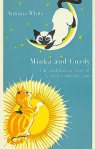
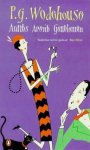
- The protagonist fears being/is accused of trying to steal someone else’s cat in Minka and Curdy by Antonia White and Aunts Aren’t Gentlemen by P.G. Wodehouse, both of which I was reading for Novellas in November.
What’s the weirdest reading coincidence you’ve had lately?
Book Serendipity, Mid-June through August
I call it “Book Serendipity” when two or more books that I read at the same time or in quick succession have something in common – the more bizarre, the better. This is a regular feature of mine every couple of months. Because I usually have 20–30 books on the go at once, I suppose I’m more prone to such incidents. People frequently ask how I remember all of these coincidences. The answer is: I jot them down on scraps of paper or input them immediately into a file on my PC desktop; otherwise, they would flit away!
The following are in roughly chronological order.
- A description of the Y-shaped autopsy scar on a corpse in Pet Sematary by Stephen King and A Truce that Is Not Peace by Miriam Toews.
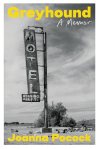
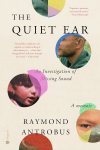
- Charlie Chaplin’s real-life persona/behaviour is mentioned in The Quiet Ear by Raymond Antrobus and Greyhound by Joanna Pocock.
- The manipulative/performative nature of worship leading is discussed in Don’t Forget We’re Here Forever by Lamorna Ash and Jarred Johnson’s essay in the anthology Queer Communion: Religion in Appalachia. I read one scene right after the other!
- A discussion of the religious impulse to celibacy in Don’t Forget We’re Here Forever by Lamorna Ash and The Dry Season by Melissa Febos.
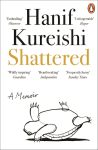
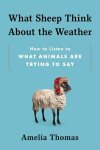
- Hanif Kureishi has a dog named Cairo in Shattered; Amelia Thomas has a son by the same name in What Sheep Think About the Weather.
- A pilgrimage to Virginia Woolf’s home in The Dry Season by Melissa Febos and Writing Creativity and Soul by Sue Monk Kidd.
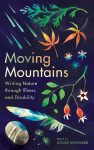
- Water – Air – Earth divisions in the Nature Matters (ed. Mona Arshi and Karen McCarthy Woolf) and Moving Mountains (ed. Louise Kenward) anthologies.
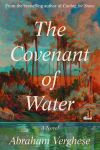 The fact that humans have two ears and one mouth and so should listen more than they talk is mentioned in What Sheep Think about the Weather by Amelia Thomas and The Covenant of Water by Abraham Verghese.
- Inappropriate sexual comments made to female bar staff in The Most by Jessica Anthony and Isobel Anderson’s essay in the Moving Mountains (ed. Louise Kenward) anthology.
- Charlie Parker is mentioned in The Most by Jessica Anthony and The Quiet Ear by Raymond Antrobus.
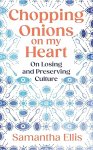
- The metaphor of an ark for all the elements that connect one to a language and culture was used in Chopping Onions on My Heart by Samantha Ellis, which I read earlier in the year, and then again in The Quiet Ear by Raymond Antrobus.
- A scene of first meeting their African American wife (one of the partners being a poet) and burning a list of false beliefs in The Dry Season by Melissa Febos and The Quiet Ear by Raymond Antrobus.
- The Kafka quote “a book must be the axe for the frozen sea inside us” appears in Shattered by Hanif Kureishi and Writing Creativity and Soul by Sue Monk Kidd. They also both quote Dorothea Brande on writing.
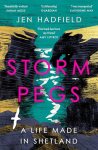
- The simmer dim (long summer light) in Shetland is mentioned in Storm Pegs by Jen Hadfield and Sally Huband’s piece in the Moving Mountains (ed. Louise Kenward) anthology (not surprising as they both live in Shetland!).
- A restaurant applauds a proposal or the news of an engagement in The Homemade God by Rachel Joyce and Likeness by Samsun Knight.
- Noticing that someone ‘isn’t there’ (i.e., their attention is elsewhere) in Woodworking by Emily St. James and Palaver by Bryan Washington.
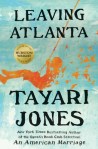
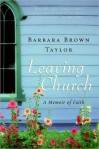
- I was reading Leaving Atlanta by Tayari Jones and Leaving Church by Barbara Brown Taylor – which involves her literally leaving Atlanta to be the pastor of a country church – at the same time. (I was also reading Leave the World Behind by Rumaan Alam.)
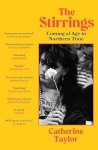
- A mention of an adolescent girl wearing a two-piece swimsuit for the first time in Leave the World Behind by Rumaan Alam, The Summer I Turned Pretty by Jenny Han, and The Stirrings by Catherine Taylor.
- A discussion of John Keats’s concept of negative capability in My Little Donkey by Martha Cooley and What Sheep Think About the Weather by Amelia Thomas.
- A mention of JonBenét Ramsey in Leave the World Behind by Rumaan Alam and the new introduction to Leaving Atlanta by Tayari Jones.
- A character drowns in a ditch full of water in Leaving Atlanta by Tayari Jones and The Covenant of Water by Abraham Verghese.
 A girl dares to question her grandmother for talking down the girl’s mother (i.e., the grandmother’s daughter-in-law) in Cekpa by Leah Altman and Leaving Atlanta by Tayari Jones.
- A woman who’s dying of stomach cancer in The Covenant of Water by Abraham Verghese and Book of Exemplary Women by Diana Xin.
- A woman’s genitals are referred to as the “mons” in Leave the World Behind by Rumaan Alam and The Covenant of Water by Abraham Verghese.
- A girl doesn’t like her mother asking her to share her writing with grown-ups in People with No Charisma by Jente Posthuma and one story of Book of Exemplary Women by Diana Xin.
- A girl is not allowed to walk home alone from school because of a serial killer at work in the area, and is unprepared for her period so lines her underwear with toilet paper instead in Leaving Atlanta by Tayari Jones and The Stirrings by Catherine Taylor.
 When I interviewed Amy Gerstler about her poetry collection Is This My Final Form?, she quoted a Walt Whitman passage about animals. I found the same passage in What Sheep Think About the Weather by Amelia Thomas.
- A character named Stefan in The Dime Museum by Joyce Hinnefeld and Palaver by Bryan Washington.
- A father who is a bad painter in The Dime Museum by Joyce Hinnefeld and The Homemade God by Rachel Joyce.
- The goddess Minerva is mentioned in The Dime Museum by Joyce Hinnefeld and The Stirrings by Catherine Taylor.
- A woman finds lots of shed hair on her pillow in In Late Summer by Magdalena Blažević and The Dig by John Preston.
 An Italian man who only uses the present tense when speaking in English in The Homemade God by Rachel Joyce and Beautiful Ruins by Jess Walter.
- The narrator ponders whether she would make a good corpse in People with No Charisma by Jente Posthuma and Terminal Surreal by Martha Silano. The former concludes that she would, while the latter struggles to lie still during savasana (“Corpse Pose”) in yoga – ironic because she has terminal ALS.
- Harry the cat in The Wedding People by Alison Espach; Henry the cat in Calls May Be Recorded by Katharina Volckmer.
- The protagonist has a blood test after rapid weight gain and tiredness indicate thyroid problems in Voracious by Małgorzata Lebda and The Stirrings by Catherine Taylor.
- It’s said of an island that nobody dies there in Somebody Is Walking on Your Grave by Mariana Enríquez and Beautiful Ruins by Jess Walter.
- A woman whose mother died when she was young and whose father was so depressed as a result that he was emotionally detached from her in The Wedding People by Alison Espach and People with No Charisma by Jente Posthuma.
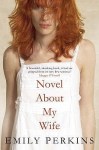 A scene of a woman attending her homosexual husband’s funeral in The Homemade God by Rachel Joyce and Novel About My Wife by Emily Perkins.
- There’s a ghost in the cellar in In Late Summer by Magdalena Blažević, The Covenant of Water by Abraham Verghese and Book of Exemplary Women by Diana Xin.
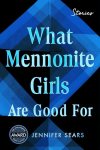
- Mention of harps / a harpist in The Wedding People by Alison Espach, The Homemade God by Rachel Joyce, and What Mennonite Girls Are Good For by Jennifer Sears.
- “You use people” is an accusation spoken aloud in The Dry Season by Melissa Febos and Beautiful Ruins by Jess Walter.
- Let’s not beat around the bush: “I want to f*ck you” is spoken aloud in The Wedding People by Alison Espach and Novel About My Wife by Emily Perkins; “Want to/Wanna f*ck?” is also in The Wedding People by Alison Espach and in Bigger by Ren Cedar Fuller.
 A young woman notes that her left breast is larger in Voracious by Małgorzata Lebda and Woodworking by Emily St. James. (And a girl fondles her left breast in one story of Book of Exemplary Women by Diana Xin.)
- A shawl is given as a parting gift in How to Cook a Coyote by Betty Fussell and one story of What Mennonite Girls Are Good For by Jennifer Sears.
- The author has Long Covid in Alec Finlay’s essay in the Moving Mountains anthology, and Pluck by Adam Hughes.
- An old woman applies suncream in Kate Davis’s essay in the Moving Mountains anthology, and How to Cook a Coyote by Betty Fussell.
- There’s a leper colony in What Mennonite Girls Are Good For by Jennifer Sears and The Covenant of Water by Abraham Verghese.
- There’s a missionary kid in South America in Bigger by Ren Cedar Fuller and What Mennonite Girls Are Good For by Jennifer Sears.
 A man doesn’t tell his wife that he’s lost his job in Novel About My Wife by Emily Perkins and The Summer House by Philip Teir.
- A teen brother and sister wander the woods while on vacation with their parents in Leave the World Behind by Rumaan Alam and The Summer House by Philip Teir.
- Using a famous fake name as an alias for checking into a hotel in one story of Single, Carefree, Mellow by Katherine Heiny and Seascraper by Benjamin Wood.
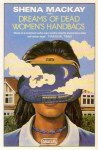
- A woman punches someone in the chest in the title story of Dreams of Dead Women’s Handbags by Shena Mackay and Novel About My Wife by Emily Perkins.
What’s the weirdest reading coincidence you’ve had lately?
December Reading Plans & Year-End Goals
Somehow the end of the year is less than four weeks away, so it’s time to start getting realistic about what I can read before 2018 begins. I wish I was the sort of person who was always reading books 4+ months before the release date and setting trends, but I’ve only read three 2018 releases so far, and it’s doubtful I’ll get to more than another handful before the end of the year. Any that I do read and can recommend I will round up briefly in a couple weeks or so.
I’m at least feeling pleased with myself for resuming and/or finishing all but two of the 14 books I had on hold as of last month; one I finally DNFed (The Unseen by Roy Jacobsen) and another I’m happy to put off until the new year (Paradise Road: Jack Kerouac’s Lost Highway and My Search for America by Jay Atkinson – since he’s recreating the journey taken for On the Road, I should look over a copy of that first). Ideally, the plan is to finish all the books I’m currently reading to clear the decks for a new year.
Some other vague reading plans for the month:
I might do a Classic of the Month (I’m currently reading The Awakening by Kate Chopin) … but a Doorstopper isn’t looking likely unless I pick up Hillary Clinton’s Living History. However, there are a few books of doorstopper length pictured in the piles below.
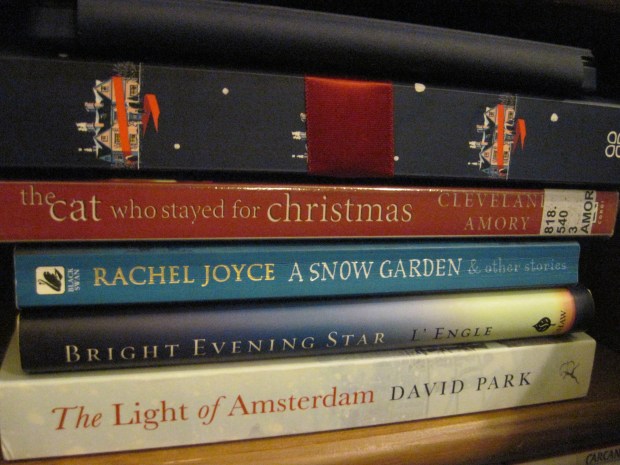
Christmas-themed books. The title-less book with the ribbon is Seven Days of Us by Francesca Hornak, a Goodreads giveaway win. I think I’ll start that plus the Amory today since I’m going to a carol service this evening. On Kindle: A Very Russian Christmas, a story anthology I read about half of last year and might finish this year.
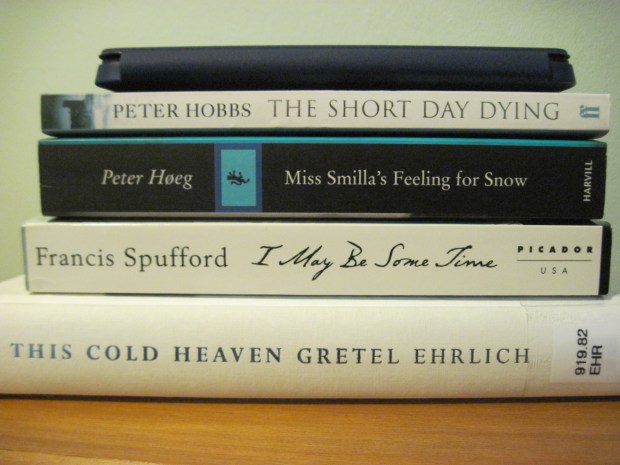
Winter-themed books. On Kindle: currently reading When the Professor Got Stuck in the Snow by Dan Rhodes; Winter by Karl Ove Knausgaard is to be read. (The subtitle of Spufford’s book is “Ice and the English Imagination”.)
As the holidays approach, I start to daydream about what books I might indulge in during the time off. (I’m giving myself 11 whole days off of editing, though I may still have a few paid reviews to squeeze in.) The kinds of books I would like to prioritize are:
Absorbing reads. Books that promise to be thrilling (says the person who doesn’t generally read crime thrillers); books I can get lost in (often long ones). On Kindle: The Bear and the Nightingale by Katherine Arden.
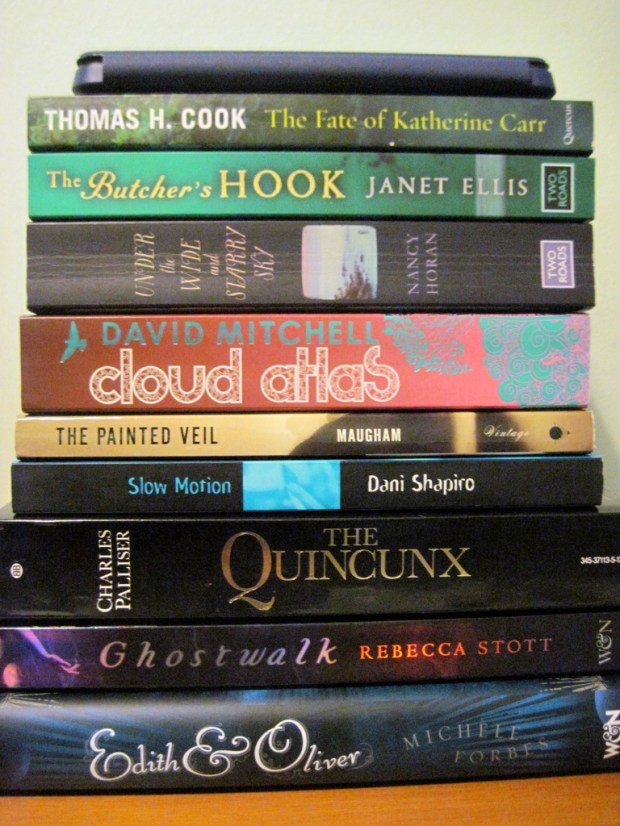
Cozy reads. Animal books, especially cat books, generally fall into this category, as do funny books and children’s books. My mother and I love Braun’s cat mysteries; I read them all starting when I was about 11. I’ve never reread any, so I’d like to see how they stand up years later. Goodreads has been trying to recommend me Duncton Wood for ages, which is funny as I’ve had my eye on it anyway. My husband read the series when he was a kid and we still own some well-worn copies. Given how much I loved Watership Down and Brian Jacques’ novels as a child, I’m hoping it’s a pretty safe bet.

Books I’ve been meaning to read for ages. ’Nuff said. On Kindle: far too many.

And, as always, I’m in the position of wishing I’d gotten to many more of this year’s releases. In fact, there are at least 22 books from 2017 on my e-readers that I still intend to read:
- A Precautionary Tale: How One Small Town Banned Pesticides, Preserved Its Food Heritage, and Inspired a Movement by Philip Ackerman-Leist
- In the Midst of Winter by Isabel Allende
 The Floating World by C. Morgan Babst
- The Day that Went Missing by Richard Beard
- The Best American Series taster volume (skim only?)
- The Heart’s Invisible Furies by John Boyne*
- Guesswork: A Memoir in Essays by Martha Cooley
- The Night Brother by Rosie Garland
- Difficult Women by Roxane Gay
- The Twelve-Mile Straight by Eleanor Henderson
- Eco-Dementia by Janet Kauffman [poetry]
- The Rules Do Not Apply by Ariel Levy
- A Stitch of Time: The Year a Brain Injury Changed My Language and Life by Lauren Marks
- Hug Everyone You Know: A Year of Community, Courage, and Cancer by Antoinette Truglio Martin
 Homing Instinct: Early Motherhood on a Midwestern Farm by Sarah Menkedick
- One Station Away by Olaf Olafsson
- Ghosts of the Tsunami: Death and Life in Japan’s Disaster Zone by Richard Lloyd Parry
- Memory’s Last Breath: Field Notes on My Dementia by Gerda Saunders
- See What I Have Done by Sarah Schmidt
- What She Ate: Six Remarkable Women and the Food That Tells Their Stories by Laura Shapiro
- Midnight at the Bright Ideas Bookstore by Matthew J. Sullivan
- Sing, Unburied, Sing by Jesmyn Ward*
* = The two I most want to read, and thus will try hardest to get to before the end of the year. But the Boyne sure is long.
[The 2017 book I most wanted to read but never got hold of in any form was The Resurrection of Joan Ashby by Cherise Wolas.]
Are there any books from my stacks or lists that you want to put in a good word for?
How does December’s reading look for you?
Some Accidental Thematic Overlaps in My Recent Reading
Five of the books I’ve read recently (most of them while traveling to and from the States) have shared an overarching theme of loss, with mental illness, alcoholism, suicide, and dogs as subsidiary topics running through two or more of them. I hadn’t deliberately chosen these books for their commonalities, so it was uncanny to see the same elements keep popping up. I wanted to come up with some kind of impressively complex Venn diagram to show off these unexpected connections but couldn’t quite manage it, so you’ll have to imagine it instead.
Mental Illness
The Archivist by Martha Cooley
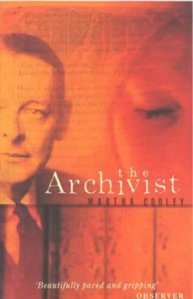 Matthias Lane is the archivist of the Mason Room, a university collection of rare books and literary papers. One of its treasures is a set of letters that passed between T.S. Eliot and his friend Emily Hale (held at Princeton in real life). Matt is haunted by memories of his late wife, Judith, a poet incarcerated in a mental hospital for over five years. A reckoning comes for Matt when he’s approached by Roberta Spire, a graduate student determined to view the Eliot–Hale letters even though they’re legally sealed until 2020. The more time Matt spends with Roberta, the more similarities start to arise between her and Judith; and between his situation and Eliot’s when the latter also put his wife away in a mental hospital. The novel asks what we owe the dead: whether we conform to their wishes or make our own decisions.
The Summer without Men by Siri Hustvedt
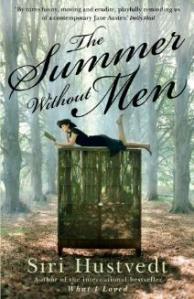 Thirty years on, poet Mia Fredricksen’s husband Boris asks her for a pause in their marriage so he can explore his feelings for his young French lab assistant. First things first: Mia goes crazy and ends up in a mental hospital for a short time. But then she sucks it up and goes back to her Minnesota hometown to teach poetry writing to teen girls for a summer, getting sucked into a bullying drama. This is a capable if not groundbreaking story of the shifts that occur in a long marriage and the strange things we all do as we face down the possibility of death. There are also wry comments about the unappreciated talents of the female artist. However, compared to the other two novels I’ve read from Hustvedt, this seemed feeble. Still, a quick and enjoyable enough read.
The Dogs of Babel by Carolyn Parkhurst
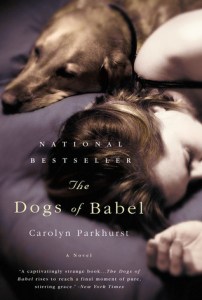 A delicious debut novel intellectual enough to bypass labels like ‘women’s fiction’ and ‘mystery’. One thing that sets it apart is how successfully Parkhurst writes from the perspective of a male narrator, Paul Iverson, who’s been knocked for six by the sudden death of his wife Lexy, a mask designer. While he was at the university where he teaches linguistics, she climbed to the top of the apple tree in their backyard and – what? fell? or jumped? The only ‘witness’ was their Rhodesian Ridgeback, Lorelei; in his grief Paul uses his sabbatical to research efforts to teach dogs to communicate, hoping one day Lorelei might tell all. Woven through are scenes from Paul and Lexy’s courtship and marriage; though Lexy occasionally struggled with her mental health, their dialogue is fun and zippy, like you might hear on The Gilmore Girls.
Suicide
The Archivist by Martha Cooley & The Dogs of Babel by Carolyn Parkhurst


Alcoholism
Don’t Let’s Go to the Dogs Tonight by Alexandra Fuller
 A classic memoir that conjures up all the sights, sounds, smells and feelings of Africa on the cusp of a colonial to postcolonial transition. Fuller’s family were struggling tobacco and cattle farmers in Rhodesia (Zimbabwe), Malawi and Zambia. She had absorbed the notion that white people were there to benevolently shepherd the natives, but came to question it when she met Africans for herself. While giving a sense of the continent’s political shifts, she mostly focuses on her own family: the four-person circus that was Bobo (that’s her), Van (older sister Vanessa), Dad, and Mum (an occasionally hospitalized manic-depressive alcoholic who lost three children) – not to mention an ever-changing menagerie of horses, dogs and other pets. This really takes you away to another place and time, as the best memoirs do, and the plentiful black-and-white photos are a great addition.
Let’s Take the Long Way Home by Gail Caldwell
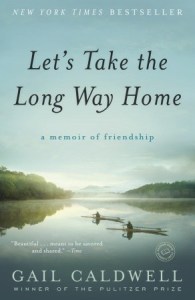 If you loved Ann Patchett’s Truth and Beauty, pick this up immediately. It’s a similar story of best friends: one who dies and one who survives. Caldwell’s best friend was Caroline Knapp (author of Drinking: A Love Story, among other nonfiction), whom she met via puppy ownership in Cambridge, Massachusetts. They were both single and childless, full-time authors with a history of alcoholism. Besides long walks with their dogs, they loved swimming and rowing together. In 2002 Caroline was diagnosed with stage-four lung cancer, inoperable and already metastasized. Despite all their proactive optimism, she was dead a matter of weeks later. In this moving and accessible short memoir, Caldwell drifts through her past, their friendship, Caroline’s illness, and the years of grief that followed the loss of Caroline and then her beloved Samoyed, Clementine, sharing what she learned about bereavement.
Dogs
The Dogs of Babel, Don’t Let’s Go to the Dogs Tonight & Let’s Take the Long Way Home


 Bookish Beck = Rebecca Foster. American transplant to England. Freelance proofreader and book reviewer.
 Bookish Beck