Short Stories in September, Part II: Tove Jansson, Brandon Taylor, Eley Williams
Each September I make a special effort to read short stories, which otherwise tend to languish on my shelves and TBR unread. After my first four reviewed last week, I have another three wonderfully different collections, ranging from bittersweet children’s fantasy in translation to offbeat, wordplay-filled love notes via linked stories suffused with desire and desperation.
Tales from Moominvalley by Tove Jansson (1962; 1963)
[Trans. from the Swedish by Thomas Warburton]
 I only discovered the Moomins in my late twenties, but soon fell in love with the quirky charm of Jansson’s characters and their often melancholy musings. Her stories feel like they can be read on multiple levels, with younger readers delighting in the bizarre creations and older ones sensing the pensiveness behind their quests. There are magical events here: Moomintroll discovers a dragon small enough to be kept in a jar; laughter is enough to bring a fearful child back from literal invisibility. But what struck me more was the lessons learned by neurotic creatures. In “The Fillyjonk who believed in Disasters,” the title character fixates on her belongings—
“we are so very small and insignificant, and so are our tea cakes and carpets and all those things, you know, and still they’re important, but always they’re threatened by mercilessness…”
—but when a gale and a tornado come and sweep it all away, she experiences relief and joy:
“the strange thing was that she suddenly felt quite safe. It was a very strange feeling, and she found it indescribably nice. But what was there to worry about? The disaster had come at last.”
My other favourite was “The Hemulen who loved Silence.” After years as a fairground ticket-taker, he can’t wait to retire and get away from the crowds and the noise, but once he’s obtained his precious solitude he realizes he needs others after all. The final story, “The Fir Tree,” is a lovely Christmas one in which the Moomins, awoken midway through their winter hibernation, get caught up in seasonal stress and experience the holiday for the first time. (Public library) 
Filthy Animals by Brandon Taylor (2021)
Real Life was one of my five favourite novels of 2020, and we are in parallel fictional territory here. Lionel, the protagonist in four of the 11 stories, is similar to Wallace insomuch as both are gay African Americans at a Midwestern university who become involved with a (straight?) white guy. The main difference is that Lionel has just been released from hospital after a suicide attempt. A mathematician (rather than a biochemist like Wallace), he finds numbers soothingly precise in comparison to the muddle of his thoughts and emotions.
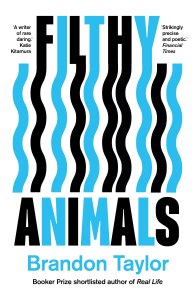 In the opening story, “Potluck,” he meets Charles, a dancer who’s dating Sophie, and the three of them shuffle into a kind of awkward love triangle where, as in Real Life, sex and violence are uncomfortably intertwined. It’s a recurring question in the stories, even those focused around other characters: how does tenderness relate to desire? In the throes of lust, is there room for a gentler love? The troubled teens of the title story are “always in the thick of violence. It moves through them like the Holy Ghost might.” Milton, soon to be sent to boot camp, thinks he’d like to “pry open the world, bone it, remove the ugly hardness of it all.”
Elsewhere, young adults face a cancer diagnosis (“Mass” and “What Made Them Made You”); a babysitter is alarmed by her charge’s feral tendencies (“Little Beast”); and same-sex couples renegotiate their relationships (Simon and Hartjes in “As Though That Were Love” and Sigrid and Marta in “Anne of Cleves,” one of my favourites). While the longer Lionel/Charles/Sophie stories, “Potluck” and “Proctoring,” are probably the best and a few others didn’t make much of an impression, the whole book has an icy angst that resonates. Taylor is a confident orchestrator of scenes and conversations, and the slight detachment of the prose only magnifies his characters’ longing for vulnerability (Marta says to Sigrid before they have sex for the first time: “I’m afraid I’ll mess it up. I’m afraid you’ll see me.” To which Sigrid replies, “I see you. You’re wonderful.”). (New purchase, Forum Books)
 A bonus story: “Oh, Youth” was published in Kink (2021), an anthology edited by Garth Greenwell and R.O. Kwon. I requested this from NetGalley just so I could read the stories by Carmen Maria Machado and Brandon Taylor. All of Taylor’s work feels of a piece, such that his various characters might be rubbing shoulders at a party – which is appropriate because the centrepiece of Real Life is an excruciating dinner party, Filthy Animals opens at a potluck, and “Oh, Youth” is set at a dinner party.
Grisha is here with Enid and Victor, his latest summer couple. He’s been a boytoy for hire since his architecture professor, Nate, surprised him by inviting him into his open marriage with Brigid. “His life at the time was a series of minor discomforts that accumulated like grit in a socket until rotation was no longer possible.” The liaisons are a way to fund a more luxurious lifestyle and keep himself in cigarettes.
While Real Life brought to mind Virginia Woolf, Taylor’s stories recall E.M. Forster or Thomas Mann. In other words, he’s the real deal: a blazing talent, here to stay.
Attrib. and Other Stories by Eley Williams (2017)
 After enjoying her debut novel, The Liar’s Dictionary, this time last year, I was pleased to find Williams’s first book in a charity shop last year. Her stories are brief (generally under 10 pages) and 15 of the 17 are first-person narratives, often voiced by a heartbroken character looking for the words to describe their pain or woo back a departed lover. A love of etymology is patent and, as in Ali Smith’s work, the prose is enlivened by the wordplay.
The settings range from an art gallery to a beach where a whale has washed up, and the speakers tend to have peculiar careers like an ortolan chef or a trainer of landmine-detecting rats. My favourite was probably “Synaesthete, Would Like to Meet,” whose narrator is coached through online dating by a doctor.
 I found a number of the stories too similar and thin, and it’s a shame that the hedgehog featured on the cover of the U.S. edition has to embody human carelessness in “Spines,” which is otherwise one of the standouts. But the enthusiasm and liveliness of the language were enough to win me over. (Secondhand purchase from the British Red Cross shop, Hay-on-Wye – how fun, then, to find the line “Did you know Timbuktu is twinned with Hay-on-Wye?”)
I’ll have one more set of short story reviews coming up before the end of the month, with a few other collections then spilling into October for R.I.P.
The Best Books from the First Half of 2021
Hard to believe we’ve already crossed the midpoint of the year. My top 20 releases of 2021 thus far, in alphabetical order within genre (fiction is dominating this year!), are below. I link to those I’ve already reviewed in full here or on Goodreads:
Fiction
 Under the Blue by Oana Aristide: Fans of Station Eleven, this one’s for you: the best dystopian novel I’ve read since Mandel’s. Aristide started writing in 2017, and unknowingly predicted a much worse pandemic than Covid-19. In July 2020, Harry and sisters Ash and Jessie are among mere thousands of survivors worldwide. Their plan is to flee England for Uganda, out of range of Europe’s at-risk nuclear reactors. An epic road trip ensues. A propulsive cautionary tale that also reminded me of work by Louisa Hall and Maja Lunde.
 The Push by Ashley Audrain: Blythe Connor, living alone with her memories, ponders what went wrong with her seemingly perfect family: a handsome architect husband, Fox, and their daughter Violet and baby son Sam. How much of what happened was because of Violet’s nature, and how much was Blythe’s fault for failing to be the mother the girl needed? The fact that her experience with Sam was completely different makes her feel ambivalent about motherhood. A cracking psychological thriller with an unreliable narrator.
 A Lie Someone Told You About Yourself by Peter Ho Davies: Davies’ minimalist approach – short sections skating over the months and years, wryly pulling out representative moment – crystallizes fatherhood, illuminating its daily heartaches and joys. The tone is just right in this novella, showing both sides of parenthood and voicing things you aren’t allowed to think, or at least not to admit to, starting with abortion, which would-be fathers aren’t expected to have strong feelings about. I loved the rumination on the role that chance plays in a life.
 The Living Sea of Waking Dreams by Richard Flanagan: Extinction, personal and global, is at the heart of this timely and enchanting story. It starts off as a family drama. Francie, the 86-year-old matriarch, is in a Tasmanian hospital after a brain bleed. Her three middle-aged children can’t bear to let her go. In an Australia blighted by bushfires, species loss mirrors Francie’s physical and mental crumbling. Smartphone addiction threatens meaningful connection. And then characters start to literally disappear, part by part…
 Mrs Death Misses Death by Salena Godden: Grief Is the Thing with Feathers meets Girl, Woman, Other would be my marketing shorthand for this one. Poet Salena Godden’s debut novel is a fresh and fizzing work, passionate about exposing injustice but also about celebrating simple joys, and in the end it’s wholly life-affirming despite a narrative stuffed full of deaths real and imagined. The novel balances the cosmic and the personal through Wolf’s family story. Unusual, musical, and a real pleasure to read.
 Early Morning Riser by Katherine Heiny: This tickled my funny bone. A cross between Kitchens of the Great Midwest and Olive Kitteridge, it’s built of five extended episodes, crossing nearly two decades in the lives of Jane and Duncan and lovingly portraying the hangers-on who compose their unusual family constellation in Boyne City, Michigan. All the characters are incorrigible but wonderful. Bad things happen, but there’s a core of love as Heiny explores marriage and parenting. A good-natured book that feels wise and bittersweet.
 No One Is Talking About This by Patricia Lockwood: This starts as a flippant skewering of modern life. A woman who became a social media star by tweeting quips like “Can a dog be twins?” reflects on life on “the portal” and under “the dictator.” Midway through the book, she gets a wake-up call when her mother summons her back to the Midwest for a family emergency. It’s the about-face that makes this novel, forcing readers to question the value of a digital existence based on glib pretence. Funny, but with an ache behind it.
 In by Will McPhail: Alternately laugh-out-loud funny and gentle. This debut graphic novel is a spot-on picture of modern life in a generic city. Nick never knows the right thing to say. The bachelor artist’s well-intentioned thoughts remain unvoiced; all he can manage is small talk. That starts to change when he meets Wren, a Black doctor who sees past his pretence. If only he can find the magic words that elicit honesty, he might make real connections with other human beings. A good old-fashioned story, with a wide emotional range.
 Detransition, Baby by Torrey Peters: A sparkling, sexy comedy with a tender heart beneath the zingers. Peters has set herself up as the Jane Austen of the trans community, tracing the ins and outs of relationships with verve and nuance. For me this was a valuable book simply for normalizing trans sexuality. The themes are universal, after all: figuring out who you are and what the shape of your life will be. I admire when authors don’t pander to readers by making things easy for those who are unfamiliar with a culture. Great lines abound.
 Brood by Jackie Polzin: Polzin’s debut is a quietly touching story of a woman in the Midwest raising chickens and coming to terms with the shape of her life. The unnamed narrator is Everywoman and no one at the same time. At one point she reveals, with no fanfare, that she miscarried four months into pregnancy in the bathroom of one of the houses she cleans. There is a bittersweet tone to this short work. It’s a low-key, genuine portrait of life in the in-between stages and how it can be affected by fate or by other people’s decisions.
Nonfiction
 The Circling Sky by Neil Ansell: Hoping to reclaim an ancestral connection, Ansell visited the New Forest some 30 times between January 2019 and January 2020, observing the unfolding seasons and the many uncommon and endemic species its miles house. He weaves together his personal story, the shocking history of forced Gypsy relocation into forest compounds starting in the 1920s, and the unfairness of land ownership in Britain. The New Forest is a model of both wildlife-friendly land management and freedom of human access.
 The Inevitable by Katie Engelhart: Engelhart spends time with doctors and patients who are caught up in the assisted dying argument, chiefly in Western Europe and the United States. Each case is given its own long chapter, like an extended magazine profile. The stories are wrenching, but compassionately told. The author explores the nuances of each situation, crafting expert portraits of suffering people and the medical professionals who seek to help them, and adding much in the way of valuable context. A voice of reason and empathy.
 The Screaming Sky by Charles Foster: A Renaissance man as well versed in law and theology as he is in natural history, Foster is obsessed with swifts and ashamed of his own species: for looking down at their feet when they could be watching the skies; for the “pathological tidiness” that leaves birds and other creatures no place to live. He delivers heaps of information on the birds but refuses to stick to a just-the-facts approach. The book quotes frequently from poetry and the prose is full of sharp turns of phrase and whimsy.
 Intensive Care by Gavin Francis: Francis, an Edinburgh physician, reflects on “the most intense months I have known in my twenty-year career.” He journeys back through 2020, from the January day when he received a bulletin about a “novel Wuhan coronavirus” to November, when he learned of promising vaccine trials but also a rumored third wave and winter lockdown. An absorbing first-hand account of a medical crisis, it compassionately bridges the gap between experts and laymen. The best Covid chronicle so far.
 A Still Life by Josie George: Over a year of lockdowns, many of us became accustomed to spending most of the time at home. But for Josie George, social isolation is nothing new. Chronic illness long ago reduced her territory to her home and garden. The magic of A Still Life is in how she finds joy and purpose despite extreme limitations. Opening on New Year’s Day and travelling from one winter to the next, the book is a window onto George’s quiet existence as well as the turning of the seasons. (Reviewed for TLS.)
 Dusk, Night, Dawn by Anne Lamott: Lamott’s best new essays in nearly a decade. The central theme is how to have hope in God and in other people even when the news – Trump, Covid, and climate breakdown – only heralds the worst. One key thing that has changed for her is getting married for the first time, in her mid-sixties, to a Buddhist. In thinking of marriage, she writes about friendship, constancy, and forgiveness, none of which comes easy. Opportunities for maintaining quiet faith in spite of the circumstances arise all the time.
 A Braided Heart by Brenda Miller: Miller, a professor of creative writing, delivers a master class on the composition and appreciation of autobiographical essays. In 18 concise pieces, she tracks her development as a writer and discusses the “lyric essay”—a form as old as Seneca that prioritizes imagery over narrative. These innovative and introspective essays, ideal for fans of Anne Fadiman, showcase the interplay of structure and content. (Coming out on July 13th from the University of Michigan Press. My first review for Shelf Awareness.)
 Sanctuary by Emily Rapp Black: A continuation of The Still Point of the Turning World, about the author’s son Ronan, who died of Tay-Sachs disease at age three. In the months surrounding his death, she split from her husband and raced into another relationship that led to her daughter, Charlie. Rapp Black questions the sorts of words she got branded with: “brave,” “resilient.” Sanctuary is full of allusions and flashbacks, threading life’s disparate parts into a chaotic tapestry. It’s measured and wrought, taming fire into light and warmth.
Poetry
 Pilgrim Bell by Kaveh Akbar: An Iranian American poet imparts the experience of being torn between cultures and languages, as well as between religion and doubt, in this gorgeous collection of confessional verse. Food, plants, animals, and the body supply the book’s imagery. Wordplay and startling juxtapositions lend lightness to a wistful, intimate collection that seeks belonging and belief. (Coming out on August 3rd from Graywolf Press. Reviewed for Shelf Awareness.)
 Eat or We Both Starve by Victoria Kennefick: In this audacious debut collection, the body is presented as a battleground: for the brain cancer that takes the poet’s father; for disordered eating that entwines with mummy issues; for the restructuring of pregnancy. Families break apart and fuse into new formations. Cannibalism and famine metaphors dredge up emotional states and religious doctrines. There’s a pleasingly morbid cast to the book, but it also has its lighter moments. Rich with imagery and alliteration, this is just my kind of poetry.
What are some of the best books you’ve read so far this year?
What 2021 releases do I need to catch up on right away?
Booker Prize 2020: Two More Shortlist Reviews and a Prediction
The 2020 Booker Prize will be announced on Thursday the 19th. (Delayed from the 17th, the date on my commemorative bookmark, so as not to be overshadowed by the release of the first volume of Barack Obama’s presidential memoirs.) After I reviewed Burnt Sugar and correctly predicted half of the shortlist in this post, I’ve managed to finish another two of the novels on the shortlist, along with two more from the longlist. As sometimes happens with prize lists – thinking also of the Women’s Prize race in 2019 – this year’s shortlist fell into rough pairs: two stark mother–daughter narratives, two novels set in Africa, and two gay coming-of-age stories.

The New Wilderness by Diane Cook
In a striking opening to a patchy novel, Bea goes off to the woods to give birth alone to a stillborn daughter. It’s such a different experience to when she birthed Agnes in a hospital eight years ago. Now, with coyotes and buzzards already circling, there’s no time for sentimentality; she turns her back on the baby and returns to the group. Bea is part of a wilderness living experiment that started out with 20 volunteers, but illness and accidents have since reduced their number.
 Back in the toxic, overcrowded City, Bea was an interior decorator and her partner a professor of anthropology. Bea left to give Agnes a better chance at life; like so many other children, she had become ill from her polluted surroundings. Now she is a bright, precocious leader in the making, fully participating in the community’s daily chores. Settlement tempts them, but the Rangers enforce nomadism. Newcomers soon swell their numbers, and there are rumors of other groups, too. Is it even a wilderness anymore if so many people live in it?
The cycles of seasons and treks between outposts make it difficult to get a handle on time’s passing. It’s a jolt to realize Agnes is now of childbearing age. Only when motherhood is a possibility can she fully understand her own mother’s decisions, even if she determines to not repeat the history of abandonment. The blurb promised a complex mother–daughter relationship, but this element of the story felt buried under the rigor of day-to-day survival.
It is as if Cook’s primary interest was in how humans would react to being returned to primitive hunter–gatherer conditions – she did a lot of research into Native American practices, for instance, and she explores the dynamics of sex and power and how legends arise. As a child I was fascinated by Native cultures and back-to-the-land stories, so I enjoyed the details of packing lists, habits, and early rituals that form around a porcelain teacup.
But for me some nuts and bolts of storytelling were lacking here: a propulsive plot, a solid backstory, secondary characters that are worthwhile in their own right and not just stereotypes and generic roles. The appealing description induced me to overcome my usual wariness about dystopian novels, but a plodding pace meant it took me months to read. A lovely short epilogue narrated by Agnes made me wonder how much less tedious this chronicle might have been if told in the first person by Bea and Agnes in turn. I’ll try Cook’s story collection, Man V. Nature, to see if her gifts are more evident in short form.
My rating: 
My thanks to Oneworld for the free copy for review.
Real Life by Brandon Taylor
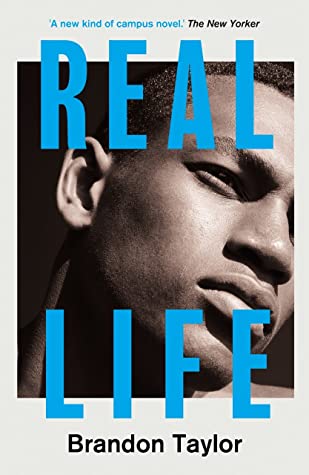 Over the course of one late summer weekend, Wallace questions everything about the life he has built. As a gay African American, he has always been an outsider at the Midwestern university where he’s a graduate student in biochemistry. Though they vary in background and include several homosexuals, some partnered and some unattached, most of his friends are white, and he’s been so busy that he’s largely missed out on evening socializing by the lake – and skipped his father’s funeral (though there are other reasons for that as well).
Tacit prejudice comes out into the open in ugly ways in these few days. When he finds his nematode experiments sabotaged, a female colleague at his lab accuses him of misogyny, brandishing his identity as a weapon against him: “you think that you get to walk around because you’re gay and black and act like you can do no wrong.” Then, in a deliciously awkward dinner party scene, an acquaintance brings up Wallace’s underprivileged Alabama upbringing as if it explains why he’s struggling to cope in his academic career.
Meanwhile, Wallace has hooked up with a male – and erstwhile straight – friend, and though there is unwonted tenderness in this relationship, there is also a hint of menace. The linking of sexuality and violence echoes the memories of abuse from Wallace’s childhood, which tumble out in the first-person stream of consciousness of Chapter 5. Other male friends, too, are getting together or breaking apart over mismatched expectations. Kindness is possible, but built-in injustice and cruelty, whether vengeful or motiveless, too often take hold.
There are moments when Wallace seems too passive or self-pitying, but the omniscient narration emphasizes that all of the characters have hidden depths and that emotions ebb and flow. What looks like despair on Saturday night might feel like no big deal come Monday morning. I so admired how this novel was constructed: the condensed timeframe, the first and last chapters in the past tense (versus the rest in the present tense), the contrast between the cerebral and the bodily, and the thematic and linguistic nods to Virginia Woolf. A very fine debut indeed.
My rating: 
I also read two more of the longlisted novels from the library:
Such a Fun Age by Kiley Reid
 Such a fun book! I’d read the first chapter earlier in the year and set it aside, thinking it was too hip for me. I’m glad I decided to try again – it was a great read, so assured and contemporary. Once I got past a slightly contrived first chapter, I found it completely addictive. The laser-precision plotting and characterization reminded me of Jennifer Egan, Jonathan Franzen and Zadie Smith at their peak, but the sassy voice is all Reid’s own. There are no clear villains here; Alix Chamberlain could easily have filled that role, but I felt for her and for Kelley as much as I did for Emira. The fact that I didn’t think anyone was completely wrong shows how much nuance Reid worked in. The question of privilege is as much about money as it is about race, and these are inextricably intertwined.
Love and Other Thought Experiments by Sophie Ward
 An intriguing set of linked short stories that combine philosophy and science fiction. Rachel and Eliza are preparing to have a baby together when an ant crawls into Rachel’s eye and she falls ill. Eliza wants to believe her partner but, as a scientist, can’t affirm something that doesn’t make sense (“We don’t need to resort to the mystical to describe physical processes,” she says). Other chapters travel to Turkey, Brazil and Texas – and even into space. It takes 60+ pages to figure out, but you can trust all the threads will converge around Rachel and her son, Arthur, who becomes an astronaut. I was particularly taken by a chapter narrated by the ant (yes, really) as it explores Rachel’s brain. Each section is headed by a potted explanation of a thought experiment from philosophy. I wasn’t entirely sure what to make of the alternative future of the two final chapters. Still, I was impressed with the book’s risk-taking and verve. It’s well worth making a rare dip into sci-fi for this one.
Back in September I still thought Hilary Mantel would win the whole thing, but since her surprise omission from the shortlist I’ve assumed the prize will go to Shuggie Bain by Douglas Stuart. This was a DNF for me, but I’ll try it again next year in case it was just a matter of bad timing (like the Reid and The Go-Between – two books I attempted a second time this year and ended up loving). Given that it was my favorite of the ones I read, I would be delighted to see Real Life win, but I think it unlikely. My back-up prediction is The Shadow King by Maaza Mengiste, which I would consider reserving from the library if it wins.

Have you read anything from the Booker shortlist?
Which book do you expect to win?
Classics of the Month: Cold Comfort Farm and Crossing to Safety
These were terrific reads. A comic novel set on a Sussex farm and a look back at banner years in the friendship of two couples. Both:
Cold Comfort Farm by Stella Gibbons (1932)
 I’d heard so much about this over the years. It was one I had to be in just the right mood for, though – I’d picked up my secondhand copy and read the first few pages on four different occasions before it finally took. If you recognize the phrase “something nasty in the woodshed” or know of a fictional plant called sukebind, you’ll appreciate the extent to which the story has entered into popular culture.
When Flora Poste’s parents die of the “influenza or Spanish Plague” (oh dear), she’s left an orphan at age 20. Her best option seems to be moving in with relatives she’s never met: Aunt Ada Doom and the Starkadder cousins of Cold Comfort Farm in Howling, Sussex. They’re a delightful collection of eccentrics: mad Aunt Ada shut away in her room; her son Amos, a fire-and-brimstone preacher; cousin Seth, with his movie star looks and multiple children by the servant girl; cousin Elfine, a fey innocent in a secret relationship with the local landowner’s son, who’s dumb but rich; and so on.
Relying on her London sophistication and indomitable optimism, Flora sets out to improve everything and everyone at the crumbling farm. The blurb calls this a “parody of the melodramatic rural novels of the time,” but I thought of it more as a skewering of Victorian stereotypes, not least in that the farming folk speak like Thomas Hardy’s rustics (Reuben: “‘I ha’ scranleted two hundred furrows come five o’clock down i’ the bute.’ It was a difficult remark, Flora felt, to which to reply. Was it a complaint?”). Meanwhile, Mr. Mybug, with his obsession with sex, is a caricature of a D.H. Lawrence protagonist.
It may take a little while to adjust to the book’s sense of humor, which struck me as surprisingly edgy for its time. Gibbons expresses no great outrage about Seth’s illegitimate offspring, for instance; instead, the babies’ grandmother has the enterprising idea of training them up to be a jazz band. There is also plenty of pure silliness, like the cows being named Graceless, Pointless, Feckless and Aimless and one of them spontaneously losing legs. I especially liked that Flora’s London friend Mrs. Smiling collects brassieres and that Flora always samples novels to make sure they don’t contain a childbirth scene. This non sequitur also amused me at the same time as it puzzled me: Flora “liked Victorian novels. They were the only kind of novel you could read while you were eating an apple.”
Crossing to Safety by Wallace Stegner (1987)
 (A buddy read with Laila of Big Reading Life for her Classics Club challenge.) Right from the start, I was thoroughly invested in this lovely, bittersweet story of two faculty couples, Larry and Sally Morgan and Sid and Charity Lang. Much of the action is split between Wisconsin in the 1930s and Vermont in the 1970s, the novel’s present day. Larry, the narrator, had a brief academic career in Madison but moved on to write novels. Sid longed to be a poet but didn’t have the skill, so remained in academia despite a tiny publication record.
Charity is the quartet’s stubborn mother hen, organizing everyone and tailoring everything to her own plans (don’t we all have a friend like that?). The Langs have wealth and class on their side, whereas the Morgans are described as having the intellect and talent. I found it odd that Stegner gave Charity such an obviously metaphorical name – starting with a big dinner party, the Langs lavish gifts and money on the Morgans in the name of friendship.
The novel sets up various counterparts and doubles, so Sally’s polio in the 1930s finds a parallel in the 1970s story line, when a terminally ill Charity is orchestrating her grand farewell. For all its challenges, Larry describes that first year in Madison as an idyllic time with “Two Adams and two Eves, an improvement on God’s plan.” Later on they all take a glorious sabbatical year together in Florence, too. New England, the Midwest and Italy make for an attractive trio of settings. There are also some great sequences that happen to reveal a lot about the friends’ dynamic, including an ill-fated sailboat outing and a hiking trip.
Nostalgic and psychologically rich, this is a quiet, beautifully written character study that would suit fans of Elizabeth Hay and May Sarton (though she was writing a decade and more earlier, this reminded me a lot of her small-town novel Kinds of Love and, eventually, A Reckoning). I’ll try more by Stegner.
Favorite lines:
“a chilly Octoberish smell of cured leaves rose from the ground, the indescribable smell of fall and football weather and the new term that is the same almost everywhere in America.”
Sid and Charity as “the people who above any other two on earth made us feel good, wanted, loved, important, and happy.”
“she was the same old Charity. She saw objectives, not obstacles, and she did not let her uncomplicated confidence get clouded by other people’s doubts, or other people’s facts, or even other people’s feelings.”
See also Susan’s review.
Short Story Collections Read Recently
This is the fourth year in a row that I’ve made a concerted effort to read more short stories in the alliterative month of September. (See also my 2016, 2017 and 2018 performances.) Short story collections are often hit and miss for me, and based on a few recent experiences I seem to be prone to DNFing them after two stories – when I’ve had my fill of the style and content. I generally have better luck with linked stories like Olive Kitteridge and its sequel, because they rely on a more limited set of characters and settings, and you often get intriguingly different perspectives on the same situations.
So far this year, I’ve read just five story collections – though that rises to 13 if I count books of linked short stories that are often classed as novels (Barnacle Love, Bottled Goods, Jesus’ Son, The Lager Queen of Minnesota, Olive Kitteridge, Olive, Again, That Time I Loved You and The Unchangeable Spots of Leopards). Twelve is my minimum goal for short story collections in a year – the equivalent of one per month – so I’m pleased to have surpassed that, and will continue to pick up the occasional short story collection as the year goes on.
The first two books I review here were hits with me, while the third disappointed me a bit.
The Assassination of Margaret Thatcher by Hilary Mantel (2014)
 Four of these 10 stories first appeared in the London Review of Books, and another four in the Guardian. Most interestingly, the opening story, “Sorry to Disturb,” about a bored housewife trying to write a novel while in Saudi Arabia with her husband in 1983–4, was published in the LRB with the subtitle “A Memoir.” That it’s one of the best few ‘stories’ here doesn’t negate Mantel’s fictional abilities so much as prove her talent for working in the short form.
My other few favorites were the very short ones, about a fatal discovery of adultery, an appalling accident on a holiday in Greece, and a sighting of a dead father on a train. I also enjoyed “How Shall I Know You?” in which an author is invited to give a talk to a literary society. I especially liked the jokey pep talks to self involving references to other authors: “come now, what would Anita Brookner do?” and “for sure A.S. Byatt would have managed it better.” Other topics include children’s horror at disability, colleague secrets at a Harley Street clinic, and a sister’s struggle with anorexia. The title story offers an alternative history in which Thatcher is assassinated by the IRA upon leaving an eye hospital after surgery.
In her stories Mantel reminds me most of Tessa Hadley. It’s high time I read another Mantel novel; most likely that will be the third Thomas Cromwell book, due out next year.
My rating:
In the Driver’s Seat by Helen Simpson (2005)
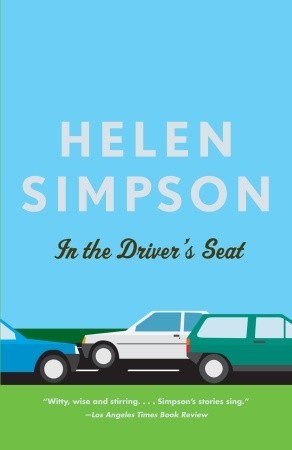 I liked this even more than Simpson’s first book, Four Bare Legs in a Bed, which I reviewed last year. The themes include motherhood (starting, in a couple of cases, in one’s early 40s), death versus new beginnings, and how to be optimistic in a world in turmoil. There’s gentle humor and magic to these stories that tempers some of the sadness. I especially liked “The Door,” about a grieving woman looking to restore her sense of security after a home break-in, “The Green Room,” a Christmas Carol riff (one of two Christmas-themed stories here) in which a woman is shown how her negative thoughts and obsession with the past are damaging her, and “Constitutional,” set on a woman’s one-hour circular walk during her lunch break and documenting her thoughts about everything from pregnancy to a nonagenarian friend’s funeral. [The UK title of the collection is Constitutional.]
In two stories, “Every Third Thought” and “If I’m Spared,” a brush with death causes a complete change of outlook – but will it last? “The Year’s Midnight” creates a brief connection between frazzled mums at the swimming pool in the run-up to the holidays. “Up at a Villa” and the title story capture risky moments that blend fear and elation. In “The Tree,” which is funny and cringeworthy all at the same time, a man decides to take revenge on the company that ripped off his forgetful old mother. Prize for the best title goes to “The Phlebotomist’s Love Life,” though it’s the least interesting story of the 11.
(Found in a Little Free Library at the supermarket near my parents’ old house.)
Some favorite lines:
“the inevitable difficulty involved in discovering ourselves to others; the clichés and blindness and inadvertent misrepresentations”
“Always a recipe for depression, Christmas, when complex adults demanded simple joy without effort, a miraculous feast of stingless memory.”
“You shouldn’t be too interested in the past. You yourself now are the embodiment of what you have lived. What’s done is done.”
My rating: 
The Lager Queen of Minnesota by J. Ryan Stradal (2019)
I had sky-high hopes for Stradal’s follow-up after Kitchens of the Great Midwest (it was on my Most Anticipated list for the second half of the year). Theoretically, a novel about three pie-baking, beer-making female members of a Minnesota family should have been terrific. Like Kitchens, this is female-centered, on a foodie theme, set in the Midwest and structured as linked short stories. Here the chapters are all titled after amounts of money; they skip around in time between the 1950s and the present day and between the perspectives of Edith Magnusson, her estranged younger sister Helen Blotz, and Edith’s granddaughter, Diana Winter.
 Edith and Helen have a rivalry as old as the Bible, based around an inheritance that Helen stole to reopen her husband’s family brewery, instead of sharing it with Edith. Ever since, Edith has had to work minimum-wage jobs at nursing homes and fast food restaurants to make ends meet. When Diana comes to live with her as a teenager, she, too, works hard to contribute to the family, but then gets caught up in a dodgy money-making scheme. It’s in penance for this error that she starts working at a local brewery, but beer soon becomes as much of an obsession for Diana as it once was for her great-aunt Helen.
I had a few problems with the book’s setup: Helen is portrayed as a villain, and never fully sheds that stereotypical designation; meanwhile, Edith is passive and boring, just a bit “wet” (in British slang). Edith and Diana suffer more losses than seems likely or fair, and there are too many coincidences involved in Diana’s transformation into a master brewer. I also found it far-fetched that a brewery would hire her as a 19-year-old and let her practice making many, many batches of lager, all while she’s still underage. None of the characters fully came alive for me, though Diana was the closest. The ending wasn’t as saccharine as I expected, but still left me indifferent. I did like reading about the process of beer-making and flavor development, though, even though I’m not a beer drinker.
My rating:
Short story DNFs this year (in chronological order):
Mr Wrong by Elizabeth Jane Howard – I read the two shortest stories, “Summer Picnic” and “The Proposition.” The former was pleasantly like Elizabeth Taylor or Tessa Hadley lite; I got zero out of the latter.
 I Want to Show You More by Jamie Quatro – I read the first two stories. “Decomposition,” about a woman’s lover magically becoming a physical as well as emotional weight on her and her marriage, has an interesting structure as well as second-person narration, but I fear the collection as a whole will just be a one-note treatment of a woman’s obsession with her affair.
Multitudes: Eleven Stories by Lucy Caldwell – I read the first two stories. I enjoyed the short opener, “The Ally Ally O,” which describes a desultory ride in the car with mother and sisters with second-person narration and no speech marks. I should have given up on “Thirteen,” though, a tired story of a young teen missing her best friend.
The Country Ahead of Us, the Country Behind by David Guterson – I read “Angels in the Snow” (last Christmas) and “Wood Grouse on a High Promontory Overlooking Canada” (the other week). Both were fine but not particularly memorable; a glance at the rest suggests that they’ll all be about baseball and hunting. If I wanted to read about dudes hunting I’d turn to Ernest Hemingway or David Vann. Nevertheless, I’ll keep this around in case I want to try it again after reading Snow Falling on Cedars this winter.
Currently reading:
 Ship Fever by Andrea Barrett – Elegant stories about history, science and human error. Barrett is similar to A.S. Byatt in her style and themes, which are familiar to me from my reading of Archangel. This won a National Book Award in 1996.
- Descent of Man by T. Coraghessan Boyle – Even in this slim volume, there are SO MANY stories, and all so different from each other. Some I love; some are meh. I’m tempted to leave a few unread, though then I can’t count this towards my year total…
- Sum: Tales from the Afterlives by David Eagleman – A bibliotherapy prescription for reading aloud. My husband and I read a few stories to each other, but I’m going it alone for the rest. This is fairly inventive in the vein of Alan Lightman’s Einstein’s Dreams, yet I find it repetitive.
Future prospects:
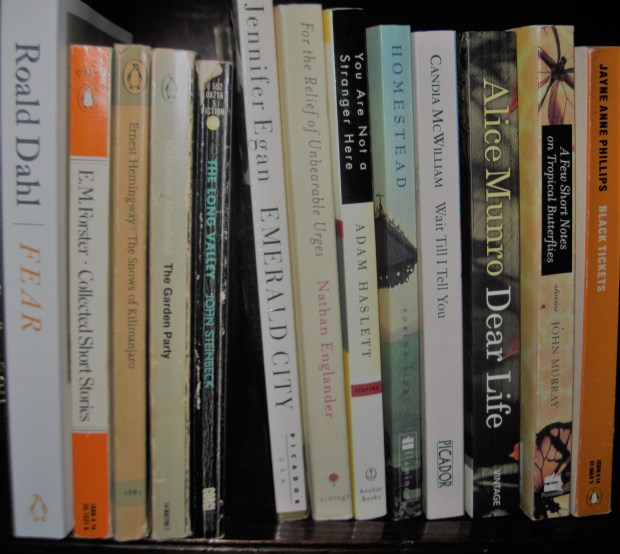
See also Laura’s excellent post about her favorite individual short stories.
Are you a short story fan? Read any good ones recently?
Four Recent Review Books: Butler, Hunt, Paralkar and Vestre
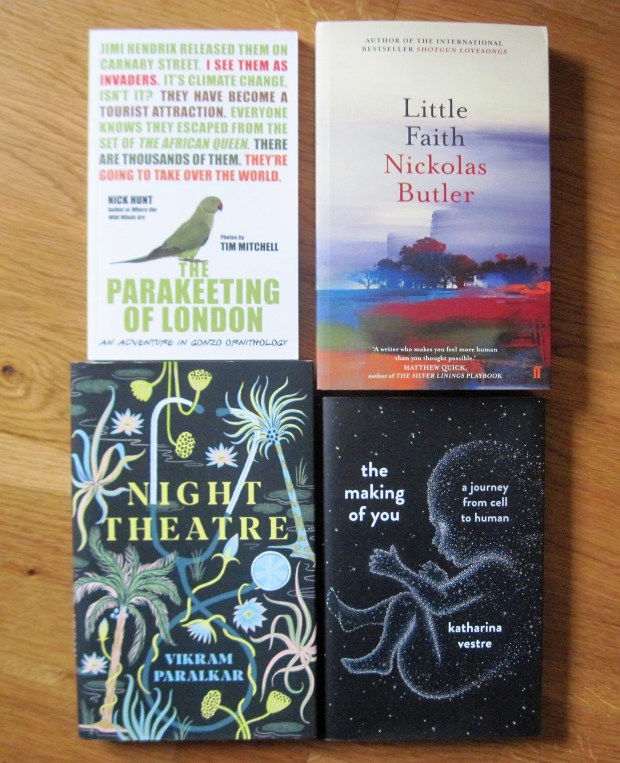
Four February–April releases: A quiet novel about the clash of religion and reason; a birdwatching odyssey in London; a folktale-inspired story of the undead descending on an Indian medical clinic; and a layman’s introduction to fetal development – you can’t say I don’t read a wide variety of books! See if any of these tempt you.
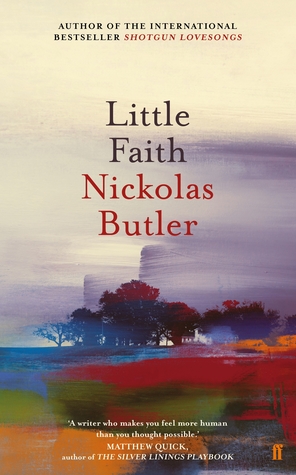
Little Faith by Nickolas Butler
Butler follows in Kent Haruf’s footsteps with this quiet story of ordinary Midwesterners facing a series of small crises. Lyle Hovde works at a local Wisconsin orchard but is more interested in spending time with Isaac, his five-year-old grandson. Lyle has been an atheist since he and Peg lost a child in infancy, making it all the more ironic that their adopted daughter, Shiloh, has recently turned extremely religious. She attends a large non-denominational church that meets in an old movie theatre and is engaged to Pastor Steven*, whose hardline opinions are at odds with his hipster persona.
 Steven and Shiloh believe Isaac has a healing gift – perhaps he can even help Lyle’s old pal, Hoot, who’s just been diagnosed with advanced cancer? The main story line reminded me most of Emily Fridlund’s History of Wolves (health and superstition collide) and Carolyn Parkhurst’s Harmony (the dangers of a charismatic leader). It’s all well and good to have faith in supernatural healing, but not if it means rejecting traditional medicine.
This is the epitome of a slow burner, though: things don’t really heat up until the final 35 pages, and there were a few chapters that could have been cut altogether. The female characters struck me as underdeveloped, but I did have a genuine warm feeling for Lyle. There are some memorable scenes, like Lyle’s heroic effort to save the orchard from an ice storm – a symbolic act that’s more about his desperation to save his grandson from toxic religion. But mostly this is a book to appreciate for the slow, predictable rhythms of a small-town life lived by the seasons. 
[*So funny because that’s my brother-in-law’s name! I’ve also visited a Maryland church that meets in a former movie theatre. I was a part of somewhat extreme churches and youth groups in my growing-up years, but luckily nowhere that would have advocated foregoing traditional medicine in favor of faith healing. There were a few false notes here that told me Butler was writing about a world he wasn’t familiar with.]
A favorite passage:
“‘Silent Night’ in a darkened country chapel was, to Lyle, more powerful than any atomic bomb. He was incapable of singing it without feeling his eyes go misty, without feeling that his voice was but one link in a chain of voices connected over the generations and centuries, that line we sometimes call family. Or memory itself.”
With thanks to Faber & Faber for the free copy for review.
The Parakeeting of London: An Adventure in Gonzo Ornithology by Nick Hunt
 Rose-ringed parakeets were first recorded in London in the 1890s, but only in the last couple of decades have they started to seem ubiquitous. I remember seeing them clustered in treetops and flying overhead in various Surrey, Kent and Berkshire suburbs we’ve lived in. They’re even more noticeable in London’s parks and cemeteries. “When did they become as established as beards and artisan coffee?” Nick Hunt wonders about his home in Hackney. He and photographer Tim Mitchell set out to canvass public opinion about London’s parakeets and look into conspiracy theories about how they escaped (Henry VIII and Jimi Hendrix are rumored to have released them; the set of The African Queen is another purported origin) and became so successful an invasive species.
A surprising cross section of the population is aware of the birds, and opinionated about them. Language of “immigrants” versus “natives” comes up frequently in the interviews, providing an uncomfortable parallel to xenophobic reactions towards human movement – “people had a tendency to conflate the avian with the human, turning the ornithological into the political. Invading, colonizing, taking over.” This is a pleasant little book any Londoner or British birdwatcher in general would appreciate.
With thanks to Paradise Road for the free copy for review.
Night Theatre by Vikram Paralkar
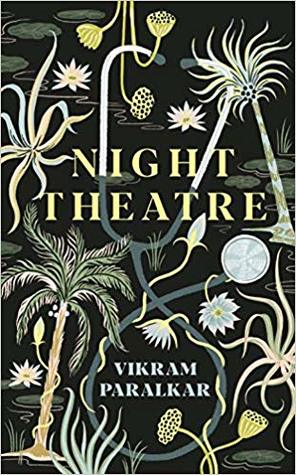 This short novel has an irresistible (cover and) setup: late one evening a surgeon in a rural Indian clinic gets a visit from a family of three: a teacher, his pregnant wife and their eight-year-old son. But there’s something different about this trio: they’re dead. They each bear hideous stab wounds from being set upon by bandits while walking home late from a fair. In the afterlife, an angel reluctantly granted them a second chance at life. If the surgeon can repair their gashes before daybreak, and as long as they stay within the village boundaries, their bodies will be revivified at dawn.
Paralkar draws on dreams, folktales and superstition, and the descriptions of medical procedures are vivid, as you would expect given the author’s work as a research physician at the University of Pennsylvania. The double meaning of the word “theatre” in the title encompasses the operating theatre and the dramatic spectacle that is taking place in this clinic. But somehow I never got invested in any of these characters and what might happen to them; the précis is more exciting than the narrative as a whole. 
A favorite passage:
“Apart from the whispering of the dead in the corridor, the silence was almost deliberate – as if the crickets had been bribed and the dogs strangled. The village at the base of the hillock was perfectly still, its houses like polyps erupting from the soil. The rising moon had dusted them all with white talc. They appeared to have receded in the hours after sunset, abandoning the clinic to its unnatural deeds.”
With thanks to Serpent’s Tail for the free copy for review.
The Making of You: A Journey from Cell to Human by Katharina Vestre
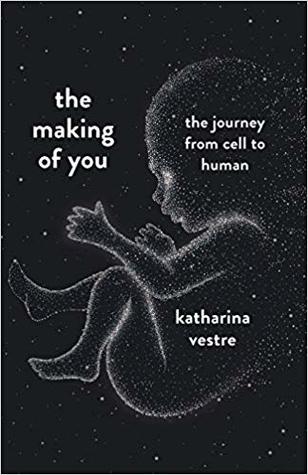 A sprightly layman’s guide to genetics and embryology, written by Doctoral Research Fellow at the University of Oslo Department of Biosciences. Addressed in the second person, as the title suggests, the book traces your development from the sperm Leeuwenhoek studied under a microscope up to labor and delivery. Vestre looks at all the major organs and the five senses and discusses what can go wrong along with the normal quirks of the body.
I learned all kinds of bizarre facts. For instance, did you know that sperm have a sense of smell? And that until the 1960s pregnancy tests involved the death of a mouse or rabbit? Who knew that babies can remember flavors and sounds experienced in utero?
Vestre compares human development with other creatures’, including fruit flies (with whom we share half of our DNA), fish and alligators (which have various ways of determining gender), and other primates (why is it that they stay covered in fur and we don’t?). The charming style is aimed at the curious reader; I rarely felt that things were being dumbed down. Most chapters open with a fetal illustration by the author’s sister. I’m passing this on to a pregnant friend who will enjoy marveling at everything that’s happening inside her.
A representative passage:
“This may not sound terribly impressive; I promised you dramatic changes, and all that’s happened is that a round plate has become a triple-decker cell sandwich. But you’re already infinitely more interesting than the raspberry you were a short while ago. These cells are no longer confused, needy newcomers with no idea where they are or what they’re supposed to do. They have completed a rough division of labour. The cells on the top layer will form, among other things, skin, hair, nails, eye lenses, nerves and your brain. From the bottom layer you’ll get intestines, liver, trachea and lungs. And the middle layer will become your bones, muscles, heart and blood vessels.”
With thanks to Wellcome Collection/Profile Books for the free copy for review.
Would you be interested in reading one or more of these?
20 Books of Summer #15: Twister by Genanne Walsh
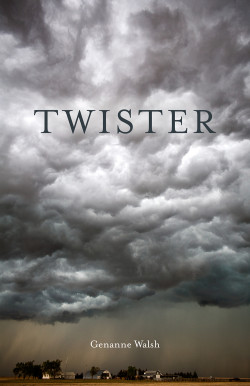 As the members of a small Midwestern town go about their daily business, it’s impossible to forget that a tornado is on its way. We begin with Rose, an ornery woman who, especially after the death of her soldier son Lance shook the town, has kept herself to herself. Perry Brown repeatedly proposes buying her farm so that he can expand his own operation, but she spurns all offers. Estranged from her stepsister Stella, Rose only has her dog Fergus for company. Short meteorological and historical overviews serve as tense interludes, moving from the general to the particular and providing brief transitions between character portraits.
The successive chapters are simultaneous, interlocking stories that all take place in the immediate run-up to the storm touching down. We meet Scottie Dunleavy, an odd fellow who runs a shoe repair shop and leaves secret messages on the soles of people’s footwear. From Louise Logan, a gossipy bank teller, we learn how Rose and Stella fell out; through the eyes of Perry’s wife Nina we see just how tenuous Rose’s solitary existence has become.
After cycling through the perspectives of eight main characters, the book returns to the past in Part II, which starts with the meeting and marriage of Stella’s mother and Rose’s father and moves forward to the near present. The chapters turn choppier as the news of Lance’s death approaches. “Everyone shrank” after the loss of this hometown boy, Walsh writes; like the tornado, his death is an inescapable reality the narrative keeps moving towards.
I love small-town tales where you get to know all the neighbors and their secrets. Twister called to mind for me works by Jane Smiley and Anne Tyler, with Rose also somewhat reminiscent of Hagar in Margaret Laurence’s The Stone Angel. Casualties by Elizabeth Marro is another readalike, focusing on a bereaved mother and her soldier son’s backstory.
Twister was a novel I read slowly, just 10 or 15 pages at a sitting, to savor Walsh’s prose. It’s not a book to race through for the plot but one to linger over as you appreciate the delicacy of the characterization and the electric descriptions of the impending storm:
“If all warnings fail, here is what to look for: the sky turns green, greenish black, brackish. Hail falls. There is a sound that some liken to a freight train, a jet engine, a thousand souped-up Buicks drag racing across a sky. Debris falls from on high—frogs, playing cards, plywood, mud, rock.”
“Warm air rushes ecstatic through the center, pulling and turning, forcing cold air out and down in waves, feeding the dance. Cold coils, pulling inward, more of it and stronger until the warm air snuffs out, the funnel choked, thinning and lifting away. It stretches into a long ribbon, harmless now, twirling across the sky.”
My rating:
Twister, Genanne Walsh’s debut novel, was published by Black Lawrence Press in 2015 and won the publisher’s Big Moose Prize. My thanks to the author for sending a free copy for review.
Now in November by Josephine Johnson
I’d never heard of this 1935 Pulitzer Prize winner before I saw a large display of titles from publisher Head of Zeus’s new imprint, Apollo, at Foyles bookshop in London the night of the Diana Athill event. Apollo, which launched with eight titles in April, aims to bring lesser-known classics out of obscurity: by making “great forgotten works of fiction available to a new generation of readers,” it intends to “challenge the established canon and surprise readers.” I’ll be reviewing Howard Spring’s My Son, My Son for Shiny New Books soon, and I’m tempted by the Eudora Welty and Christina Stead titles. Rounding out the list are two novels set in Eastern Europe, a Sardinian novel in translation, and an underrated Western.
 Missouri-born Johnson was just 24 years old when she published Now in November. The novel is narrated by the middle Haldmarne daughter, Marget, looking back at a grueling decade on the family farm. She recognizes how unsuited her father, Arnold, was to farming: “He hadn’t the resignation that a farmer has to have – that resignation which knows how little use to hope or hate.” The remaining members of this female-dominated household are mother Willa, older sister Kerrin and younger sister Merle. Half-feral Kerrin is a creature apart. She’s always doing something unpredictable, like demonstrating knife-throwing to disastrous effect or taking over as the local schoolteacher, a job she’s not at all right for.
The arrival of Grant Koven, a neighbor in his thirties hired to help Arnold with hard labor, seems like the only thing that might break the agricultural cycle of futile hope and disappointment. Marget quickly falls in love with him, but it takes her a while to realize that her sisters are smitten too. They all keep hoping their fortunes will change:
‘This year will have to be different,’ I thought. ‘We’ve scrabbled and prayed too long for it to end as the others have.’ The debt was still like a bottomless swamp unfilled, where we had gone year after year, throwing in hours of heat and the wrenching on stony land, only to see them swallowed up and then to creep back and begin again.
Yet as drought settles in, things only get worse. The fear of losing everything becomes a collective obsession; a sense of insecurity pervades the community. The Ramseys, black tenant farmers with nine children, are evicted. Milk producers go on strike and have to give the stuff away before it sours. Nature is indifferent and neither is there a benevolent God at work: when the Haldmarnes go to church, they are refused communion as non-members.
Marget skips around in time to pinpoint the central moments of their struggle, her often fragmentary thoughts joined by ellipses – a style that seemed to me ahead of its time:
if anything could fortify me against whatever was to come […] it would have to be the small and eternal things – the whip-poor-wills’ long liquid howling near the cave… the shape of young mules against the ridge, moving lighter than bucks across the pasture… things like the chorus of cicadas, and the ponds stained red in evenings.
Michael Schmidt, the critic who selected the first eight Apollo books, likens Now in November to the work of two very different female writers: Marilynne Robinson and Emily Brontë. What I think he is emphasizing with those comparisons is the sense of isolation and the feeling that struggle is writ large on the landscape. The Haldmarne sisters certainly wander the nearby hills like the Brontë sisters did the Yorkshire moors.

The cover image, reproduced in full on the endpapers, is Jackson Pollock’s “Man with Hand Plow,” c. 1933.
As points of reference I would also add Jane Smiley’s A Thousand Acres and Joan Chase’s During the Reign of the Queen of Persia (resurrected by NYRB Classics in 2014), which also give timeless weight to the female experience of Midwest farming. Like the Smiley, Now in November stars a trio of sisters and makes conscious allusions to King Lear. Kerrin reads the play and thinks of their father as Lear, while Marget quotes it as a prophecy that the worst is yet to come: “I remembered the awful words in Lear: ‘The worst is not so long as we can say “This is the worst.”’ Already this year, I’d cried, This is enough! uncounted times, and the end had never come.”
Johnson lived to age 80 and published another 11 books, but nothing ever lived up to the success of her first. This is an atmospheric and strangely haunting novel. The plot is simple enough, but the writing elevates it into something special. The plaintive tone, the folksy metaphors, and the philosophical earnestness all kept me eagerly traveling along with Marget to see where this tragic story might lead. Apollo has done the literary world a great favor in bringing this lost classic to light.
With thanks to Blake Brooks at Head of Zeus for the free copy.
My rating: 
 Bookish Beck = Rebecca Foster. American transplant to England. Freelance proofreader and book reviewer.
 Bookish Beck