Book Serendipity, August to October 2024
I call it “Book Serendipity” when two or more books that I read at the same time or in quick succession have something in common – the more bizarre, the better. This is a regular feature of mine every couple of months. Because I usually have 20–30 books on the go at once, I suppose I’m more prone to such incidents. People frequently ask how I remember all of these coincidences. The answer is: I jot them down on scraps of paper or input them immediately into a file on my PC desktop; otherwise, they flit away!
The following are in roughly chronological order.
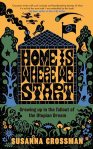
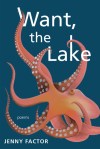
- The William Carlos Williams line “no ideas but in things” is quoted in Home Is Where We Start by Susanna Crossman and echoed with a slight adaptation in Want, the Lake by Jenny Factor.
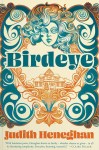
- A woman impulsively stops into a tattoo parlour in We Are Animals by Jennifer Case and Birdeye by Judith Heneghan.
- Cleaning up a partner’s bristles from the sink in 300 Arguments by Sarah Manguso and The Echoes by Evie Wyld.
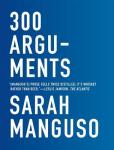

- Sarah Manguso, by whom I was reading two books for a Bookmarks article, was quoted in Some of Us Just Fall by Polly Atkin.
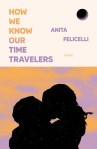
- Someone is annoyed at their spouse making a mess cooking lemon preserves in How We Know Our Time Travelers by Anita Felicelli and Liars by Sarah Manguso, both of which are set in California.
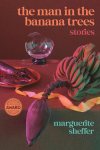
- Rumpelstiltskin is referenced in one short story of a speculative collection: How We Know Our Time Travelers by Anita Felicelli and The Man in the Banana Trees by Marguerite Sheffer.
- A father who is hard of hearing, and an Australian woman looking for traces of her grandmother’s life in England in The House with All the Lights On by Jessica Kirkness and The Echoes by Evie Wyld.
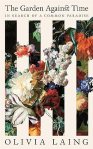
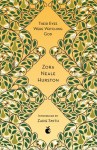
- A character named Janie or Janey in Their Eyes Were Watching God by Zora Neale Hurston and The Echoes by Evie Wyld. The Pre-Raphaelite model Janey is also mentioned in The Garden Against Time by Olivia Laing.
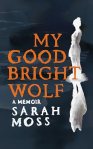 Contrasting one’s childhood love of the Little House on the Prairie books with reading them as an adult and being aware of the racial and colonial implications in Home Is Where We Start by Susanna Crossman and My Good Bright Wolf by Sarah Moss.
- A mention of Little Women in A Perfect Arrangement by Suzanne Berne and My Good Bright Wolf by Sarah Moss.
- A character grew up in a home hair-dressing business in A Perfect Arrangement by Suzanne Berne and Home Is Where We Start by Susanna Crossman.
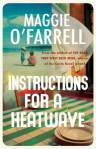
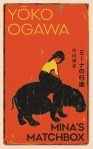
- The discovery of an old pram in an outbuilding in Instructions for a Heatwave by Maggie O’Farrell and Mina’s Matchbox by Yōko Ogawa.
- An Irish woman named Aoife in My Good Bright Wolf by Sarah Moss and Instructions for a Heatwave by Maggie O’Farrell.
- Cooking then throwing out entire meals in My Good Bright Wolf by Sarah Moss and The Echoes by Evie Wyld. (Also throwing out a fresh meal in Birdeye by Judith Heneghan. Such scenes distress me!)
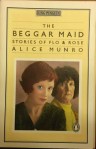 A new lover named Simon in one story of The Beggar Maid by Alice Munro and The Echoes by Evie Wyld.
- A character writes a recommendation letter for someone who then treats them vindictively, because they assumed the letter was negative when it wasn’t, in A Perfect Arrangement by Suzanne Berne and one story of The Beggar Maid by Alice Munro.
- After her parents’ divorce, the author never had a designated bedroom in her father’s house in Home Is Where We Start by Susanna Crossman and The Garden Against Time by Olivia Laing.
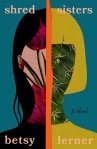 Reading The Bell Jar as a teenager in Shred Sisters by Betsy Lerner and My Good Bright Wolf by Sarah Moss.
- A contentious Town Hall meeting features in A Perfect Arrangement by Suzanne Berne and Birdeye by Judith Heneghan.
- The wife is pregnant with twins in A Perfect Arrangement by Suzanne Berne and The Year of Living Biblically by A.J. Jacobs. (There are also twins in Birdeye by Judith Heneghan. In general, I find that they occur far more often in fiction than in real life!)
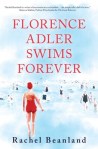
- 1930s Florida as a setting in Florence Adler Swims Forever by Rachel Beanland and Their Eyes Were Watching God by Zora Neale Hurston.
- Dorothy Wordsworth and her journals are discussed in Some of Us Just Fall by Polly Atkin and My Good Bright Wolf by Sarah Moss.
- Wordsworth’s daffodils are mentioned in Signs, Music by Raymond Antrobus and My Good Bright Wolf by Sarah Moss.
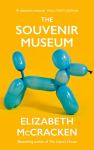
- “F*ck off” is delivered in an exaggerated English accent in Birdeye by Judith Heneghan and The Souvenir Museum by Elizabeth McCracken.
- The main character runs a country store in Their Eyes Were Watching God by Zora Neale Hurston and The Beggar Maid by Alice Munro.
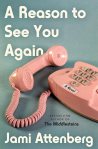 Reading a second novel this year in which the younger sister of a pair wants to go into STEM and joins the Mathletes in high school: first was A Reason to See You Again by Jami Attenberg; later was Shred Sisters by Betsy Lerner.
- An older sister who has great trouble attending normal school and so is placed elsewhere (including a mental institution) for a total of two years in Learning to Think by Tracy King and Shred Sisters by Betsy Lerner.
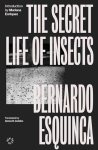
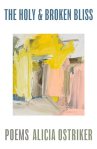
- The idea of trees taking revenge on people for environmental destruction in one story of The Secret Life of Insects by Bernardo Esquinca and one poem of The Holy & Broken Bliss by Alicia Ostriker.
- An illiterate character in Instructions for a Heatwave by Maggie O’Farrell and Also Here by Brooke Randel.
-
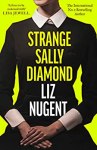 Controversy over throwing a dead body into the trash in Birdeye by Judith Heneghan and Strange Sally Diamond by Liz Nugent.
- A publishing assistant who wears a miniskirt and Doc Martens in Shred Sisters by Betsy Lerner and Summer Fridays by Suzanne Rindell.
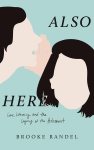
- Ancestors’ experience in Auschwitz in Also Here by Brooke Randel and Transgenesis by Ava Winter.
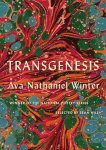
- The protagonist finds it comforting when her boyfriend lies down with his full weight on her in Shred Sisters by Betsy Lerner and The Echoes by Evie Wyld.
- A woman badgers her ex-husband about when his affair with his high school/college sweetheart started (before or after the divorce) in Shred Sisters by Betsy Lerner and Liars by Sarah Manguso.
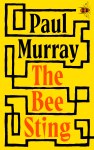 I encountered an Irish matriarch who married the ‘wrong’ brother, not Frank, in The Bee Sting by Paul Murray earlier in the year, and then in Instructions for a Heatwave by Maggie O’Farrell.
- A boy is playing in the family car on the driveway when it rolls backwards and kills someone in A Perfect Arrangement by Suzanne Berne and Tell Me Everything by Elizabeth Strout.
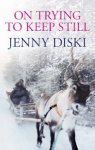
- Quantoxhead, Somerset is mentioned in On Trying to Keep Still by Jenny Diski and A House Unlocked by Penelope Lively.
- Tapeworms are mentioned in On Trying to Keep Still by Jenny Diski and one story of The Best Short Stories 2023: The O. Henry Prize Winners, ed. Lauren Groff.
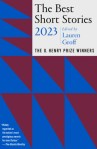
- A description of horrific teeth in one story of The Best Short Stories 2023: The O. Henry Prize Winners, ed. Lauren Groff, and one story of The Long Swim by Terese Svoboda.
- A character researches potato blight, and another keeps his smoking a secret from his wife, in one story of The Best Short Stories 2023: The O. Henry Prize Winners, ed. Lauren Groff, and Tell Me Everything by Elizabeth Strout.
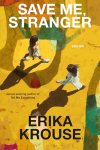 A piano gets mauled out of anger in one story of Save Me, Stranger by Erika Krouse and Strange Sally Diamond by Liz Nugent.
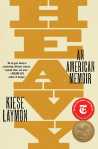
- Men experiencing eating disorders in Heavy by Kiese Laymon and Heartstopper Volumes 3 and 4 by Alice Oseman.
- Black people deliberately changing their vocabulary and speech register when talking to white people in James by Percival Everett and Heavy by Kiese Laymon.
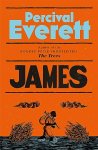
- My second book of the year in which a woman from centuries ago who magically appears in the present requests to go night clubbing: first The Ministry of Time by Kaliane Bradley, then Isabella & Blodwen by Rachael Smith.
- Characters named Sadie in James by Percival Everett, The Souvenir Museum by Elizabeth McCracken, and Still Life at Eighty by Abigail Thomas.
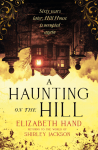
- Creepy hares in horror: A Haunting on the Hill by Elizabeth Hand and What Moves the Dead by T. Kingfisher. There were weird rabbits in I’m the King of the Castle by Susan Hill, too.
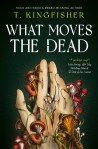
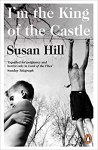
- I read two scenes of a calf being born, one right after the other: in Dangerous Enough by Becky Varley-Winter, then I’m the King of the Castle by Susan Hill.
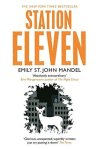
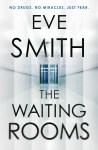
- I read about an animal scratch leading to infection leading to death in a future with no pharmaceuticals in Station Eleven by Emily St. John Mandel in the morning and then in the afternoon heard Eve Smith mention the same thing happening due to antibiotic resistance in her novel The Waiting Rooms. Forget about R.I.P.; this is the stuff that scares me…
What’s the weirdest reading coincidence you’ve had lately?
Six Degrees of Separation: From Ruth Ozeki to Ruth Padel
This month we begin with The Book of Form and Emptiness by Ruth Ozeki, which recently won the Women’s Prize for Fiction. It happens to be my least favourite of her books that I’ve read so far, but I was pleased to see her work recognised nonetheless. (See also Kate’s opening post.)

 #1 One of the peripheral characters in Ozeki’s novel is an Eastern European philosopher who goes by “The Bottleman.” I had to wonder if he was based on avant-garde Slovenian philosopher Slavoj Žižek. Back in 2010, when I was working at a university library in London and had access to nearly any book I could think of – and was still committed to trying to read the sorts of books I thought I should enjoy rather than what I actually did – I skimmed a couple of Žižek’s works, including First as Tragedy, Then as Farce (2009), which arose from 9/11 and the global financial crisis and questions whether we can ever stop history repeating itself without undermining capitalism.
 #2 In searching my archives for farces I’ve read, I came across one I took notes on but never wrote up back in 2013: Japanese by Spring by Ishmael Reed (1993), an academic comedy set at “Jack London College” in Oakland, California. The novel satirizes almost every ideology prevalent in the 1960s–80s: multiculturalism, racism, xenophobia, nationalism, feminism, affirmative action and various literary critical methods. Reed sets up exaggerated and polarized groups and opinions. (You know it’s not to be taken entirely seriously when you see character names like Chappie Puttbutt, President Stool and Professor Poop, short for Poopovich.) The college is sold off to the Japanese and Ishmael Reed himself becomes a character. There are some amusing lines but I ended up concluding that Reed wasn’t for me. If you’ve enjoyed work by Paul Beatty and Percival Everett, he might be up your street.
 #3 “Call me Ishmael” – even if, like me, you have never gotten through Moby-Dick by Herman Melville (1851), you probably know that famous opening line. I took an entire course on Nathaniel Hawthorne and Melville as an undergraduate and still didn’t manage to read the whole thing! Even my professor acknowledged that Melville could have done with a really good editor to rein in his ideas and cut out some of his digressions.
 #4 A favourite that I can recommend instead is Moby-Duck by Donovan Hohn (2011). It’s just the kind of random, wide-ranging nonfiction I love: part memoir, part travelogue, part philosophical musing on human culture and our impact on the environment. In 1992 a pallet of “Friendly Floatees” bath toys fell off a container ship in a storm in the North Pacific. Over the next two decades those thousands of plastic animals made their way around the world, informing oceanographic theory and delighting children. Hohn’s obsessive quest for the origin of the bath toys and the details of their high seas journey takes on the momentousness of his literary antecedent. He visits a Chinese factory and sees plastics being made; he volunteers on a beach-cleaning mission in Alaska. (I’d not seen the Ozeki cover that appears in Kate’s post, but how pleasing to note that it also has a rubber duck on it!)
 #5 Alongside Moby-Duck on my “uncategorizable” Goodreads shelf is The Snow Leopard by Peter Matthiessen (1978), one of my Books of Summer from 2019. A nature/travel classic that turns into something more like a spiritual memoir, it’s about a trip to Nepal in 1973, with Matthiessen joining a zoologist to study Himalayan blue sheep – and hoping to spot the elusive snow leopard. He had recently lost his partner to cancer, and relied on his Buddhist training to remind himself of tenets of acceptance and transience.
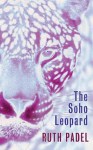 #6 Ruth Padel is one of my favourite contemporary poets and a fixture at the New Networks for Nature conference I attend each year. She has a collection named The Soho Leopard (2004), whose title sequence is about urban foxes. The natural world and her travels are always a major element of her books. From one Ruth to another, then, by way of philosophy, farce, whaling, rubber ducks and mountain adventuring.
Where will your chain take you? Join us for #6Degrees of Separation! (Hosted on the first Saturday of each month by Kate W. of Books Are My Favourite and Best.) Next month’s starting point is a wildcard: use the book you finished with this month (or, if you haven’t done an August chain, the last book you’ve read).
Have you read any of my selections? Tempted by any you didn’t know before?
Booker Prize Longlist Thoughts and Reading Plan
Yesterday the 2022 Booker Prize longlist was announced.

It’s an intriguing selection that for the most part avoids the usual suspects – although a few of these authors have previously been shortlisted, they’re not from the standard crop of staid white men. The website is making much of two pieces of trivia: that the longlist includes the youngest and oldest authors ever (Leila Mottley at 20 and Alan Garner at 87); and that Small Things Like These is the shortest book to be nominated.
I happen to have read two from the longlist so far, and I’m surprised by how many of the rest I want to read. I’ll go through each of the ‘Booker Dozen’ of 13 below (the brief summaries are from the Booker Prize announcement e-mail):
Glory by NoViolet Bulawayo
“This energetic and exhilarating joyride … is the story of an uprising, told by a vivid chorus of animal voices that help us see our human world more clearly.”
- Zimbabwean author Bulawayo was shortlisted for her debut novel, We Need New Names, in 2013. I’ve never been drawn to read that one, and have to wonder why we needed an extended Animal Farm remake…
Trust by Hernan Diaz
“A literary puzzle about money, power, and intimacy, Trust challenges the myths shrouding wealth, and the fictions that often pass for history.”
- I’m looking forward to this one after all the buzz from its U.S. release, and have a copy on the way to me from Picador.
The Trees by Percival Everett
“A violent history refuses to be buried in … Everett’s striking novel, which combines an unnerving murder mystery with a powerful condemnation of racism and police violence.”
- Susan is a fan of Everett’s. He’s known for his satirical fiction, whereas the only book of his that I happen to have read was poetry – not representative of his work. I’d happily read this if given the chance, but Everett’s stuff is hard to find over here.
Booth by Karen Joy Fowler
“Fowler’s epic novel about an ill-fated family of thespians, drinkers and dreamers, whose most infamous son is destined to commit a terrible and violent act.”
- I reviewed this for BookBrowse earlier in the year. (It’s Fowler’s second nomination, after We Are All Completely Beside Ourselves, a very different novel.) The present-tense narration helps it be less of a dull group biography, and there are two female point-of-view characters. The issues of racial equality, political divisions and mistrust of the government are just as important in our own day. However, the foreshadowing is sometimes heavy-handed, the extended timeline means there is some skating over of long periods, and the novel as a whole is low on scenes and dialogue, with Fowler conveying a lot of information through exposition. I gave it a tepid
 .
.
Treacle Walker by Alan Garner
“This latest fiction from a remarkable and enduring talent brilliantly illuminates an introspective young mind trying to make sense of the world around him.”
- Garner is a beloved fantasy writer in the UK. Though I didn’t care for The Owl Service when I read it in 2019, given that this is just over 150 pages, there would be no harm in taking a chance on it.
Seven Moons of Maali Almeida by Shehan Karunatilaka
“Karunatilaka’s rip-roaring epic is a searing, mordantly funny satire set amid the murderous mayhem of a Sri Lanka beset by civil war.”
- This is the sort of Commonwealth novel I’m wary of, fearing Rushdie-like indulgence. My library system tends to order all the Booker nominees, so I would gladly borrow this and try the early pages to see how I get on.
Small Things Like These by Claire Keegan
“Keegan’s tender tale of hope and quiet heroism is both a celebration of compassion and a stern rebuke of the sins committed in the name of religion.”
- I read and reviewed this late last year and appreciated it as a spare and heartwarming yuletide fable. A coal merchant in 1980s Ireland comes to value his quiet family life all the more when he sees how difficult existence is for the teen mothers sent to work in the local convent’s laundry service. I was familiar with the Magdalene Laundries from the movie The Magdalene Sisters and found this a fairly predictable narrative, with the nuns cartoonishly villainous. So I’m not as enthusiastic as many others have been, but feel like a Scrooge for saying so.
Case Study by Graeme Macrae Burnet
“Graeme Macrae Burnet offers a dazzlingly inventive – and often wickedly humorous – meditation on the nature of sanity, identity and truth itself.”
- Macrae Burnet was a dark horse in the 2016 Booker race for the terrific His Bloody Project. This new novel was one of Clare’s top picks for the longlist and sounds like a clever and playful book about a psychoanalyst and his patient; again the author blends fact and fiction and relies on ‘found documents’. I have it on request from the library.
The Colony by Audrey Magee
“In … Magee’s lyrical and brooding fable, two outsiders visit a small island off the west coast of Ireland, with unforeseen and haunting consequences.”
- One of Clare and Susan’s joint correct predictions (Susan’s review). On the face of it, it sounds too similar to one I read from last year’s longlist, An Island. I can’t say I’m particularly interested, though if this were to be shortlisted I might have a go.
Maps of Our Spectacular Bodies by Maddie Mortimer
“Under attack from within, Lia tries to keep the landscapes of her past, her present and her body separate. But time and bodies are porous, and unpredictable.”
- This Desmond Elliott Prize winner was already on my TBR for its medical theme and is one of two nominees I’m most excited about. It potentially sounds long and challenging, but has been received well by my Goodreads friends. I’ll hope my library system acquires a copy soon.
Nightcrawling by Leila Mottley
“At once agonising and mesmerising, Nightcrawling presents a haunting vision of marginalised young people navigating the darkest corners of an adult world.”
- Like many, I had this brought to my attention anew by Ruth Ozeki’s shout-out during her Women’s Prize acceptance speech (Mottley was her student). I’d already heard some chatter about it from its Oprah’s Book Club selection. The subject matter – sex workers in Oakland, California – will be tough, but I hope the prose and storytelling will make up for it. I have it on request from the library.
After Sappho by Selby Wynn Schwartz
“A joyous reimagining of the lives of a brilliant group of feminists, sapphists, artists and writers from the past, as they battle for control over their lives, for liberation and for justice.”
- The other novel I’m most excited about. It was totally new to me but sounds fantastic. It only came out this month, so I’ll see if Galley Beggar might be willing to send out a review copy.
Oh William! by Elizabeth Strout
“Strout returns to her beloved heroine Lucy Barton in a luminous novel about love, loss, and the family secrets that can erupt and bewilder us at any time.”
- I DNFed this one after just 20 or so pages last year, finding Lucy too annoyingly scatter-brained this time around (I’d enjoyed My Name Is Lucy Barton but not read the sequel). But I’m willing to give it another try, so have placed a library hold.
There we have it: 2 read, 4 I have immediate plans to read, 3 I’m keen to read if I can find them, 4 I’m less likely to read – but, unlike in most years, there are no entries I’m completely uninterested in or averse to reading.
Earlier this year my book club took part in a Women’s Prize shadowing project run by the Reading Agency. They’re organizing a similar thing on behalf of the Booker Prize, but the six groups (for six shortlisted books) will be chosen by the Prize organizers this time, so we’ve been encouraged to apply again. It’s a better deal in that members of successful groups will be invited to attend the shortlist party and then the awards ceremony. I’ll meet up with my co-leader later this week to work on our application.
What have you read from the longlist? Which book(s) do you most want to find?
Reviews Roundup, July–August
One of my goals with this blog is to have one convenient place where I can gather together all my writing that has appeared in disparate online locations. To that end, once a month I’ll provide links to all the book reviews I’ve published elsewhere, with a rating (below each description) and a short taster so you can decide whether to click to read more. A couple of exceptions: I won’t point out my Kirkus Indie or BlueInk reviews since I don’t get a byline.
The Bookbag
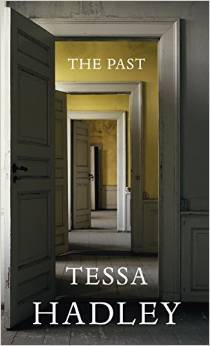 The Past by Tessa Hadley: Four adult siblings gather at their grandfather’s Devon vicarage for one last summer holiday before the house is sold. Their interactions, past and present, skirt the edges of tragedy and show the secrets and psychological intricacies any family harbors. Hadley writes beautifully subtle stories of English family life. Here she channels Elizabeth Bowen with a setup borrowed from The House in Paris: the novel is divided into three parts, titled “The Present,” “The Past,” and “The Present.” That structure allows for a deeper look at what the house and a neighboring cottage have meant to the central family. Hadley writes great descriptive prose and has such insight into family dynamics. Releases September 3rd.

 Between Gods by Alison Pick: At a time of transition – preparing for her wedding and finishing her first novel, set during the Holocaust – the author decided to convert to Judaism, the faith of her father’s Czech family. There are so many things going on in this sensitive and engrossing memoir: depression, her family’s Holocaust history, her conversion, career struggles, moving to Toronto, adjusting to marriage, and then pregnancy and motherhood following soon after – leading full circle to a time of postpartum depression. That said, this book is exactly what you want from a memoir: it vividly depicts a time of tremendous change, after which the subject is still somehow the same person, or perhaps more herself than ever.
BookBrowse
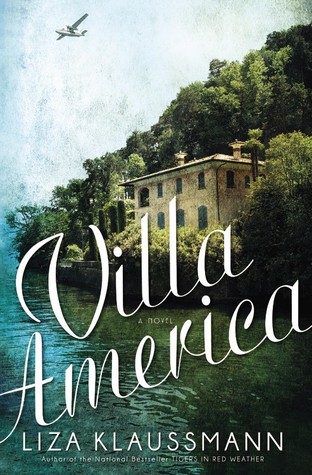 Villa America by Liza Klaussmann [the full text of my review is available for free this week as part of Editor’s Choice]: In her second novel, Klaussmann explores the glittering, tragic lives of Gerald and Sara Murphy, real-life models for F. Scott Fitzgerald’s Tender Is the Night. The book is slow to start with, with the first third unnecessarily devoted to Gerald’s and Sara’s childhoods and courtship. It is not until the Murphys are established in France and receive visits from fellow artists that the book really comes to life. It is easy to see why the Murphys attracted hangers-on. Yet beneath the façade of glamour, there is real sadness and struggle. Gerald’s uncertain sexuality is a tacit issue between him and Sara, and sickness strikes the family with cruel precision. The novel set up a beautiful contrast between happiness and tragedy.
Foreword Reviews
Stop the Diet, I Want to Get Off! by Lisa Tillinger Johansen: Yo-yo dieters and newbies alike should pick up Johansen’s witty book before wasting any time, money, or heartache on ineffective fad diets. Surveying diets old and new in a conversational style, Johansen gives the merits and dangers of each and suggests realistic principles for healthy eating and exercise. She bases her advice on solid facts, but cannily avoids the dry, scientific tone some experts might use. Instead, she uses chatty, informal language and personal stories to enliven her writing.
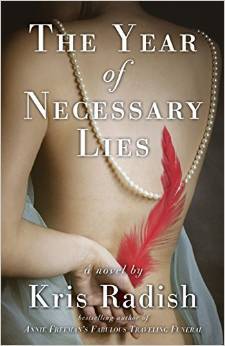 The Year of Necessary Lies by Kris Radish: Radish’s tenth novel highlights women’s role in the Audubon Society campaign to eradicate feathers from ladies’ hats. Her fictional heroine, Julia Briton, is a composite portrait of the many courageous women who stood up to plume hunters and the fashion industry alike in the early years of the twentieth century. “I did not simply want to survive, but to live with great passion and to do something that made a difference in the world,” Julia declares. Recommended for fans of Sue Monk Kidd’s The Invention of Wings.

Nudge
Now and at the Hour of Our Death by Susana Moreira Marques: In 2011 Marques, a freelance journalist, spent five months visiting the dying through a Portuguese home palliative care project. The resulting book falls into two parts: “Travel Notes about Death,” one-line aphorisms and several-paragraph anecdotes; and “Portraits,” case studies and interview transcripts from three families facing the death of a loved one. The lack of a straightforward narrative and the minimal presence of the author mean that the book overall feels disjointed. Nonetheless, it is a thought-provoking look at hospice services and emotions surrounding death. Releases September 3rd.
 Caught by Lisa Moore: A classic cat-and-mouse story in which a Canadian drug smuggler escapes from prison to score another load of marijuana from Colombia. Moore paints Slaney and Hearn as “modern-day folk heroes,” and her writing elevates what could have been a plain crime story into real literature. From the title onwards, the book is heavy with foreshadowing as Moore exploits the dramatic irony that readers know the police have a sting operation trailing Slaney the whole way. Indeed, the most remarkable thing about the novel is how it maintains tension even though the outcome seems inevitable. “The best stories … we’ve known the end from the beginning.” To my surprise, Caught is not just a good old-fashioned adventure story, but also has the epic, tragic weight of Homer’s Odyssey.
Field Notes from the Edge by Paul Evans: A book full of unexpected nuggets of information and inspiration: in addition to the travel notes and field observations, Evans (who writes a Guardian country diary from Wenlock Edge, Shropshire) incorporates personal anecdote, folk songs, myths and scientific advances. His central idea is that we have lost our connection with nature due to fear – “ecophobia,” the opposite of which is E.O. Wilson’s “biophilia.” How do we overcome that fear? Mostly by doing just what Evans does: spending time in nature, finding beauty and developing an affinity for particular places and species.
Shiny New Books
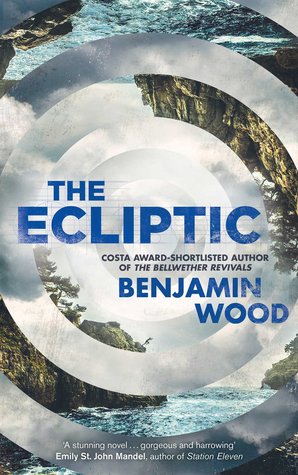 The Ecliptic by Benjamin Wood: Portmantle is a mysterious artists’ retreat center on a Turkish island. Our narrator, Elspeth Conroy (aka Knell), is a Scottish painter who came to Portmantle in 1962 after some struggles with mental illness. The first third of the novel is tremendously gripping and Gothic. The core of the book, nearly 200 pages, is a flashback to Elspeth’s life before. At last, after what feels like too long a digression, we come full circle back to Portmantle. I didn’t warm to The Ecliptic quite as much as I did to Wood’s debut, The Bellwether Revivals. Still, it’s really interesting to see how he alternates between realism and surrealism here. The parts that feel most real and immediate and the parts that are illusory are difficult to distinguish between. An odd, melancholy, shape-shifting novel.
We Love This Book
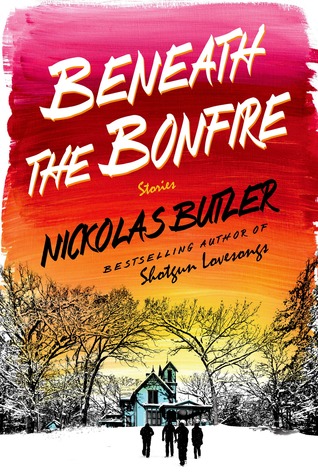 Beneath the Bonfire by Nickolas Butler: Ten tales of moral complexity in America’s gritty heartland. Fire and recreational drugs are powerful forces linking these Wisconsin-set stories. Opener “The Chainsaw Soirée” sets the tone by describing a failed utopia reminiscent of Lauren Groff’s Arcadia. The stand-out is “Morels,” in which three stoned friends go foraging for mushrooms in their dying rural community. The title’s similarity to “morals” is no coincidence: when the trio are involved in a hit-and-run they have to decide what to stand for. Unsentimental but lyrically composed, these stories will appeal to fans of Ron Rash.
 Among the Ten Thousand Things by Julia Pierpoint: Pierpont’s ambitiously structured debut novel explores how infidelity affects a whole New York City family. In short sections of matter-of-fact statements Pierpont gives a what-happened-next for each of the characters over the next decade or so. But “it’s the between-time that lasted,” Pierpoint argues as she returns to that summer of revelations for a closer look. The climactic events of the holiday contrast childhood innocence and adulthood; when you’re on the cusp, certain experiences can push you over the brink from one to the other. This offbeat take on the dysfunctional family novel should interest fans of Nicole Krauss or Rebecca Dinerstein (The Sunlit Night). [Few extra thoughts at Goodreads.]

I also post reviews of most of my casual reading and skimming on Goodreads.
 F: A Novel by Daniel Kehlmann: What does F stand for? Faith, finances, fraud, forgery, family and Fate all play a role in Kehlmann’s fourth novel available in English translation. F is also for the Friedlands: Arthur the unreliable patriarch; Martin, a portly Catholic priest who doesn’t believe in God; and his twin half-brothers, Eric and Ivan, a mentally ill businessman and a homosexual painter who forges his mentor’s masterworks. Reading this brilliant, funny spoof on the traditional family saga is like puzzling out a Rubik’s Cube: it is a multi-faceted narrative with many meanings that only become clear the deeper you go. (Full review in September/October 2015 issue of Third Way magazine.)

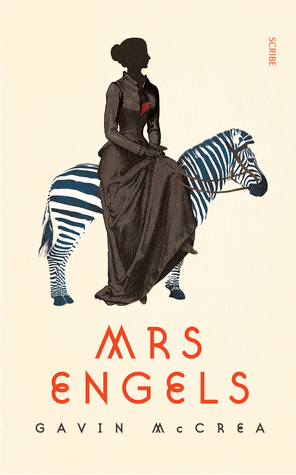 Mrs. Engels by Gavin McCrea: I generally love Victorian-set historical fiction and books about famous wives, so I was surprised by how little I liked this novel about Lizzie Burns, the illiterate, working-class Irish woman who was Frederick Engels’ longtime partner. The novel flits between 1870–1, when Lizzie and Frederick were newly arrived in London and involved in helping the poor and Franco-Prussian War refugees, and their earlier years in Manchester. Lizzie is a no-nonsense first-person narrator, and her coarse, questionably grammatical speech fits with her background. Unfortunately, I never warmed to Lizzie or felt that she was giving a truly intimate look at her own life. This novel had such potential to bring an exciting, revolutionary time to life, but it never fulfilled its promise for me. Releases in the States on October 13th.

Rank by Aaron McCollough: Some nice alliteration and pleasant imagery of flora, fauna and musical instruments. However, I struggled to find any overarching meaning in these run-on poems. In fact, I could not tell you what a single one of them is actually about. Story is just as important as sound in poetry, I feel, and in that respect this collection was lacking. Releases September 1st.
Trout’s Lie by Percival Everett: “The line of time / Is past. / The line folds back, / Splits. / Two lines now, future, present. The past / Is a circle of / Abstraction, regret.” There is a lot of repetition and wordplay in these poems. The title piece uses a line in Italian from Dante – translating to “in the middle of our life’s path” – that forms another recurring theme: being stuck between times or between options and having to decide which way to go. These read quickly, with the run-on phrases flowing naturally from topic to topic. I’m not sure this was the best introduction to a prolific author I’d never heard of; I’ll have to look into his other work. Releases October 15th.
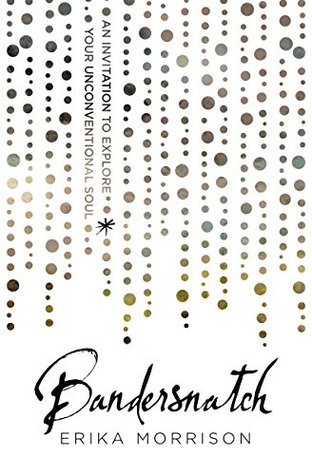 Bandersnatch by Erika Morrison: This is Christian self-help, an ideal read for fans of Glennon Doyle Melton and Rob Bell. The title, a creature from Lewis Carroll’s imagination, is Morrison’s shorthand for a troublemaker. She argues that as Christians we should be following Jesus down the road of “positive nonconformity”: taking an avant-garde approach to life, turning ordinary moments into divine opportunities through spiritual alchemy, taking an interest in the least of these with kingdom anthropology, and making the everyday trials of marriage and parenthood our works of art. I liked the book best when Morrison illustrated her points with stories from her own life. Overall I found the book repetitive, and the language can definitely be hippy-dippy in places. Releases October 6th.

Family Values by Wendy Cope: Cope mostly uses recognizable forms (villanelles, sonnets, etc.): this is interesting to see in contemporary poetry, but requires a whole lot of rhyming, most of it rather twee (e.g. “tuppence/comeuppance”), which gives the whole collection the feeling of being written for children. My two favorites were “Lissadell,” about a vacation to Ireland, and “Haiku,” perfect in its simplicity:
A perfect white wine
is sharp, sweet and cold as this:
birdsong in winter.
 Bookish Beck = Rebecca Foster. American transplant to England. Freelance proofreader and book reviewer.
 Bookish Beck