This Year’s “Snow” and “Winter” Reads
Longtime readers will know how much I enjoy reading with the seasons. Although it’s just starting to feel like there’s a promise of spring here in the south of England, I understand that much of North America is still cold and snowy, so I hope these recent reads of mine will feel topical to some of you – and the rest of you might store some ideas away for next winter.
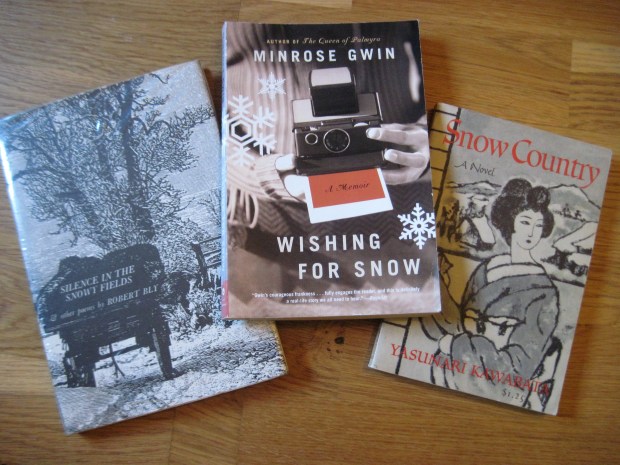
(The Way Past Winter has already gone back to the library.)
Silence in the Snowy Fields and Other Poems by Robert Bly (1967)
 Even when they’re in stanza form, these don’t necessarily read like poems; they’re often more like declaratory sentences, with the occasional out-of-place exclamation. But Bly’s eye is sharp as he describes the signs of the seasons, the sights and atmosphere of places he visits or passes through on the train (Ohio and Maryland get poems; his home state of Minnesota gets a whole section), and the small epiphanies of everyday life, whether alone or with friends. And the occasional short stanza hits like a wisdom-filled haiku, such as “There are palaces, boats, silence among white buildings, / Iced drinks on marble tops among cool rooms; / It is good also to be poor, and listen to the wind” (from “Poem against the British”).
Favorite wintry passages:
How strange to think of giving up all ambition!
Suddenly I see with such clear eyes
The white flake of snow
That has just fallen in the horse’s mane!
(“Watering the Horse” in its entirety)
The grass is half-covered with snow.
It was the sort of snowfall that starts in late afternoon,
And now the little houses of the grass are growing dark.
(the first stanza of “Snowfall in the Afternoon”)
My rating: 
Wishing for Snow: A Memoir by Minrose Gwin (2004)
 One of the more inventive and surprising memoirs I’ve read. Growing up in Mississippi in the 1920s–30s, Gwin’s mother wanted nothing more than for it to snow. That wistfulness, a nostalgia tinged with bitterness, pervades the whole book. By the time her mother, Erin Clayton Pitner, a published though never particularly successful poet, died of ovarian cancer in the late 1980s, their relationship was a shambles. Erin’s mental health was shakier than ever – she stole flowers from the church altar, frequently ran her car off the road, and lived off canned green beans – and she never forgave Minrose for having had her committed to a mental hospital. Poring over Erin’s childhood diaries and adulthood vocabulary notebook, photographs, the letters and cards that passed between them, remembered and imagined conversations and monologues, and Erin’s darkly observant unrhyming poems (“No place to hide / from the leer of the sun / searching out every pothole, / every dream denied”), Gwin asks of her late mother, “When did you reach the point that everything was in pieces?”
My rating: 
The Way Past Winter by Kiran Millwood Hargrave (2018)
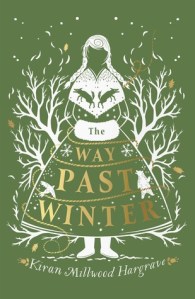 It has been winter for five years, and Sanna, Mila and Pípa are left alone in their little house in the forest – with nothing but cabbages to eat – when their brother Oskar is lured away by the same evil force that took their father years ago and has been keeping spring from coming. Mila, the brave middle daughter, sets out on a quest to rescue Oskar and the village’s other lost boys and to find the way past winter. Clearly inspired by the Chronicles of Narnia and especially Katherine Arden’s Winternight trilogy, this middle grade novel is set in an evocative, if slightly vague, Russo-Finnish past and has more than a touch of the fairy tale about it. I enjoyed it well enough, but wouldn’t seek out anything else by the author.
Favorite wintry passage:
“It was a winter they would tell tales about. A winter that arrived so sudden and sharp it stuck birds to branches, and caught the rivers in such a frost their spray froze and scattered down like clouded crystals on the stilled water. A winter that came, and never left.”
My rating:
Snow Country by Yasunari Kawabata (1937; English translation, 1956)
[Translated from the Japanese by Edward G. Seidensticker]
 The translator’s introduction helped me understand the book better than I otherwise might have. I gleaned two key facts: 1) The mountainous west coast of Japan is snowbound for months of the year, so the title is fairly literal. 2) Hot springs were traditionally places where family men travelled without their wives to enjoy the company of geishas. Such is the case here with the protagonist, Shimamura, who is intrigued by the geisha Komako. Her flighty hedonism seems a good match for his, but they fail to fully connect. His attentions are divided between Komako and Yoko, and a final scene that is surprisingly climactic in a novella so low on plot puts the three and their relationships in danger. I liked the appropriate atmosphere of chilly isolation; the style reminded me of what little I’ve read from Marguerite Duras. I also thought of Silk by Alessandro Baricco and Memoirs of a Geisha by Arthur Golden – perhaps those were to some extent inspired by Kawabata?
Favorite wintry passage:
“From the gray sky, framed by the window, the snow floated toward them in great flakes, like white peonies. There was something quietly unreal about it.”
My rating:
I’ve also been slowly working my way through The Snow Leopard by Peter Matthiessen, a spiritual quest memoir with elements of nature and travel writing, and skimming Francis Spufford’s dense book about the history of English exploration in polar regions, I May Be Some Time (“Heat and cold probably provide the oldest metaphors for emotion that exist.”).

On next year’s docket: The Library of Ice by Nancy Campbell (on my Kindle) and Snow Falling on Cedars by David Guterson
Last year I had a whole article on perfect winter reads published in the Nov/Dec issue of Bookmarks magazine. Buried in Print spotted it and sent this tweet. If you have access to the magazine via your local library, be sure to have a look!

Have you read any particularly wintry books recently?
A Retrospective of 2018’s Events, Reading Projects and Themes
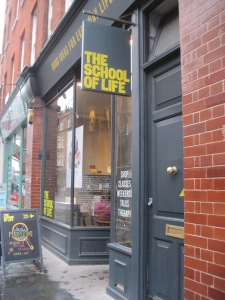 In January I had the tremendous opportunity to have a free personalized bibliotherapy appointment with Ella Berthoud at the School of Life in London. I’ve since read three of her prescriptions plus parts of a few others, but I still have several more awaiting me in the early days of 2019, and will plan to report back at some point on what I got out of all of them.
In March to April I ran a Wellcome Book Prize shadow panel for the second time. This year it was much more successful; I plan to do it again next year, too. (I actually proffered myself as an official judge for next year’s prize and got a very kind but entirely noncommittal e-mail back from the chairwoman, which I will have to take as victory enough.)
 Early April saw us visiting Wigtown, Scotland’s book town, for the first time. It was a terrific trip, but thus far I have not been all that successful at reading the 13 books that I bought! (Just two and a quarter so far.)
I reviewed three novels for Liz Dexter’s Iris Murdoch Readalong project: A Severed Head in March, The Italian Girl in June, and The Nice and the Good in September. In February I’ll pop back in with one more paperback that I own, The Sacred and Profane Love Machine. November was Margaret Atwood Reading Month, hosted by Marcie of Buried in Print and Naomi of Consumed by Ink, and provided me with a good excuse to read her first two novels.
 I did some “buddy reads” for the first time: Andrea Levy’s Small Island with Canadian blogger friends, including Marcie and Naomi; and West With the Night with Laila of Big Reading Life and Late Nights on Air with Naomi as well as Penny of Literary Hoarders during 20 Books of Summer, which I took part in for the first time. In May my mother and I read W. Somerset Maugham’s The Painted Veil and shared reading notes via e-mail. (A planned buddy read of The Left Hand of Darkness with Annabel and Laura was, alas, a fail.)
Besides the official Wellcome Book Prize blog tour in April, I participated in another 11 blog tours, averaging out at one a month. I’m going to scale back on these next year because I have too often found, after I accepted, that the book was a dud and I had to just run an extract because I could see I wasn’t going to get through it and write a review.
I joined my neighborhood book club in September and have attended every month since then. Our first four selections were Ladder of Years by Anne Tyler, The Gracekeepers by Kirsty Logan, Noonday by Pat Barker, and Number 11 by Jonathan Coe. I’d already read the Logan and Coe years ago and didn’t fancy rereading them, so wasn’t able to participate as much in those months, but was still glad to go along for the socializing. My husband even read the Coe and came to December’s meeting (was it just for the mince pies and mulled wine?!). We’ve set our first four reads for 2019 – the three below, in order from left to right, plus Ernest Hemingway’s The Garden of Eden, which I’ll borrow from the university library.

 In October I won tickets to see a production of Angela Carter’s Wise Children at the Old Vic in London. Just a few weeks later I won tickets to see Barbara Kingsolver in conversation about Unsheltered at the Southbank Centre. I don’t often make it into London, so it was a treat to have bookish reasons to go and blogging friends to meet up with (Clare of A Little Blog of Books joined me for both, and Laura T. was also at the Kingsolver event).
November was mostly devoted to novellas, for the third year in a row. Although I didn’t officially participate in Nonfiction November, I still enjoyed coming up with some fiction/nonfiction pairings and an “expert’s” list of women’s religious memoirs.
My husband wrote pretty much his entire PhD thesis this year and on Friday the 14th had his graduation ceremony. I was the moral support / proofreader / preparer of simple meals during the months when he was in the throes of writing up, so I will consider myself as sharing in the accomplishment. Congratulations, Dr. Foster!
This month and into January I’ll be reading the last few nominees for the National Book Critics Circle’s John Leonard Prize.

When the list of finalists was released, I was relieved to see I’d already read four out of seven (and three of those were ones I’d nominated); the other three – the Adjei-Brenyah and Brinkley stories and There There – were books I was keen to read but hadn’t managed to get hold of. About 80 of us NBCC members are reading the shortlist and voting for the best first book of the year by January 8th. Plus I’m technically up for an NBCC prize myself, in that I nominated myself (that’s how it works) for the 2018 Nona Balakian Citation for Excellence in Reviewing and sent in an application with five of my best reviews from the year.
The Ones that Got Away
 Two posts I planned but never got around to putting together would have commemorated the 50th anniversary of Thomas Merton’s death (I own several of his books but am most interested in reading The Seven-Storey Mountain, which celebrated its 70th birthday in October) and the 40th anniversary of the publication of The Snow Leopard by the late Peter Matthiessen. Perhaps I’ll try these authors for the first time next year instead.
Final Book Serendipity Incidents
In the second half of the year I started keeping track of all my weird reading coincidences, posting about them on Twitter or Instagram before collecting them into a blog post a couple months ago. Here are a few that popped up since then or recalled earlier reads from the year:
- Two protagonists named Willa: Anne Tyler’s Clock Dance and Barbara Kingsolver’s Unsheltered
- Two novels featuring bog people: Anne Youngson’s Meet Me at the Museum and Sarah Moss’s Ghost Wall
- Two dogs named Flash: Ben Crane’s Blood Ties and Andrew Marshall’s The Power of Dog
- Multiple sclerosis is an element in Christian Donlan’s The Unmapped Mind: A Memoir of Neurology, Incurable Disease and Learning How to Live, Jennifer Richardson’s Americashire and Michelle Obama’s Becoming (her father had it)
- The ideas of Freud are mentioned in a 1910s setting in Nancy Horan’s Loving Frank, Annabel Abbs’s Frieda and Daniel Mason’s The Winter Soldier
- Mermaids (or ‘mermaids’) and/or mermen appear in Imogen Hermes Gowar’s The Mermaid and Mrs Hancock, Melissa Broder’s The Pisces, Daniel Mason’s The Winter Soldier, and a series of poems in Miriam Darlington’s Windfall
- Bohemian writer dies young of tuberculosis (or similar) in novels about their wives: Annabel Abbs’s Frieda (D.H. Lawrence) and Nancy Horan’s Under the Wide and Starry Sky (Robert Louis Stevenson)
- Two books that mention the Indonesian practice of keeping dead relatives as mummies and bringing them out on occasion for ritual celebrations: From Here to Eternity by Caitlin Doughty and The Hot Young Widows Club by Nora McInerny
- Two books that include a trip to Lourdes for healing: Heal Me by Julia Buckley and Constellations by Sinéad Gleeson
- Two books that mention the irony of some of the most well-loved modern Christmas songs being written by Jews: In Mid-Air by Adam Gopnik and Christmas Days by Jeanette Winterson
Surprise Themes from My Year’s Reading
A few of these make sense – cults fit with my interest in narratives of religious experience, and it doesn’t take a psychologist to see that my relationship with my father has been an ongoing issue in recent years (I wonder how the numbers would compare for books about mothers?) – but most are completely random.
I decided a theme had to show up at least three times to make the list. Some topics I enjoyed so much I’ll keep reading about them next year. Within a category the books are in rough chronological order of my reading, and I include skims, DNFs and books in progress.
 Fathers (absent/difficult) + fatherhood in general: Educated by Tara Westover, And When Did You Last See Your Father? by Blake Morrison, The Italian Teacher by Tom Rachman, In the Days of Rain by Rebecca Stott, Implosion by Elizabeth W. Garber, Little Women by Louisa May Alcott & March by Geraldine Brooks, The Unmapped Mind by Christian Donlan, Never Mind and Bad News by Edward St. Aubyn, The Reading Promise by Alice Ozma, How to Build a Boat by Jonathan Gornall, Lake Success by Gary Shteyngart, Normal People by Sally Rooney, Rosie by Rose Tremain, My Father and Myself by J.R. Ackerley, Everything Under by Daisy Johnson, Ghost Wall by Sarah Moss, Surfacing by Margaret Atwood, Heart Berries by Terese Marie Mailhot, Blood Ties by Ben Crane, To Throw Away Unopened by Viv Albertine, Small Fry by Lisa Brennan-Jobs
Addiction: The Leavers by Lisa Ko, Mayhem by Sigrid Rausing, The Only Story by Julian Barnes, The Small Door of Your Death by Sheryl St. Germain, Writing and Madness in a Time of Terror by Afarin Majidi, Marlena by Julie Buntin, Ninety Days by Bill Clegg, Bad News by Edward St. Aubyn, Pretend I’m Dead by Jen Beagin, Heart Berries by Terese Marie Mailhot
 Greenland: A Wilder Time by William E. Glassley, This Cold Heaven by Gretel Ehrlich, Miss Smilla’s Feeling for Snow by Peter Høeg, On Balance by Sinéad Morrissey (the poem “Whitelessness”), Cold Earth by Sarah Moss, Crimson by Niviaq Korneliussen, The Library of Ice by Nancy Campbell
Cults: Educated by Tara Westover, Harmony by Carolyn Parkhurst, In the Days of Rain by Rebecca Stott, The Incendiaries by R.O. Kwon, A River Could Be a Tree by Angela Himsel
Trees: Ladders to Heaven by Mike Shanahan, The Overstory by Richard Powers, The Man Who Planted Trees by Jean Giono, The Wood and The Secret Life of the Oak by John Lewis-Stempel
 Flying: Skybound by Rebecca Loncraine, West With the Night by Beryl Markham, Going Solo by Roald Dahl, Skyfaring by Mark Vanhoenacker
The Anglo experience in Africa: Free Woman: Life, Love and Doris Lessing by Lara Feigel, Leaving Before the Rains Come by Alexandra Fuller, West With the Night by Beryl Markham, Going Solo by Roald Dahl
Korean-American women: The Incendiaries by R.O. Kwon, If You Leave Me by Crystal Hana Kim, All You Can Ever Know by Nicole Chung, Famous Adopted People by Alice Stephens, Digging to America by Anne Tyler
 New Zealand: The Garden Party and Other Stories by Katherine Mansfield, To the Is-Land by Janet Frame, Dunedin by Shena Mackay
Life in the White House: Living History by Hillary Rodham Clinton, All the Presidents’ Pastries by Roland Mesnier, Becoming by Michelle Obama
Lighthouses: Stargazing: Memoirs of a Young Lighthouse Keeper by Peter Hill, The Bird Artist by Howard Norman, Under the Wide and Starry Sky by Nancy Horan (about Robert Louis Stevenson, whose family built lighthouses)

More lighthouse books ready for next year.
Butterflies: Four Wings and a Prayer by Sue Halpern, Magdalena Mountain by Robert Michael Pyle, Mama Amazonica by Pascale Petit

More butterfly books ready for next year.
What were some of the highlights of your bookish year?
What odd coincidences and recurring themes have you spotted in your year’s reading?
Book Triage
I feel like I have more books staring at me than ever before. I could blame free library reservations and a trip to Wigtown, but there’s one more major reason for the books stacking up: an utter lack of restraint when it comes to requesting or accepting books for review. I’ve had loads of books coming through the door in the past month or so. Some were offered to me by authors or publishers via Goodreads, Twitter or my blog’s contact form. Others I sent e-mails to request after I saw tempting reviews in the Guardian or previews on Susan’s blog.
Of course I want to read all of these books. I really want to read most of them. Otherwise I wouldn’t have gone to the trouble of requesting, borrowing or buying them. But even so, there’s only so much time. It’s not just a simple matter of picking up the book(s) from the stack that I most feel like reading at a given moment anymore. No, it’s become a triage process whereby I have to assess them by order of urgency.
So, what are my priorities? Here’s a baker’s dozen, in photos.
- Wellcome Book Prize shortlist reading. I’m on the last of six now; this is for the blog tour coming up next week.
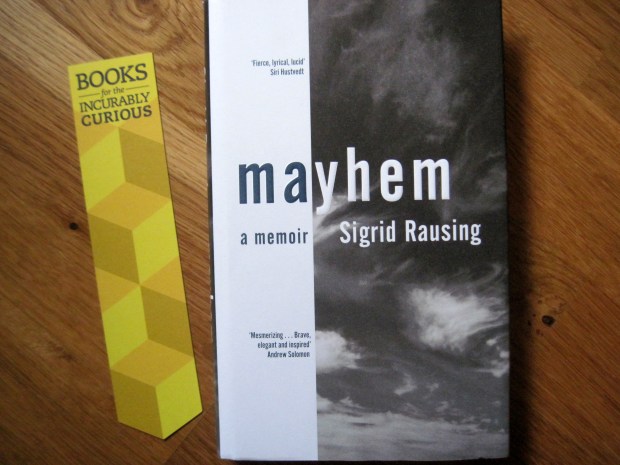
- Library books that are due in early May and requested after me.
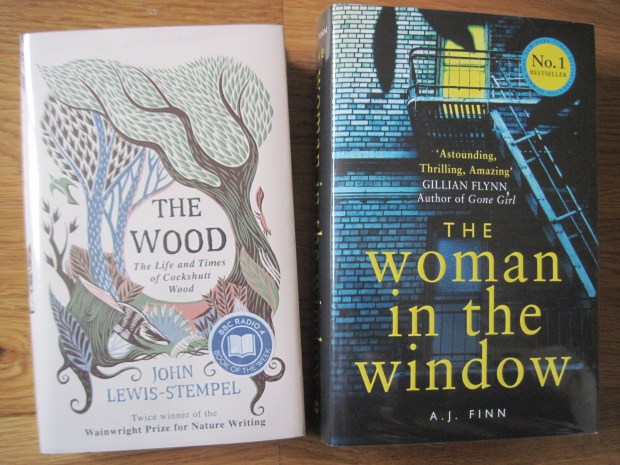
- Books I’ve requested for a blog review, in release date order. I feel so behind that you can expect some doubled-up reviews or mini-reviews in roundup form.
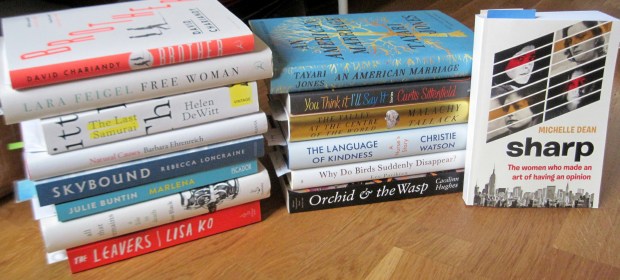
- Books I’ve agreed to review for another outlet, even if that’s just Goodreads.

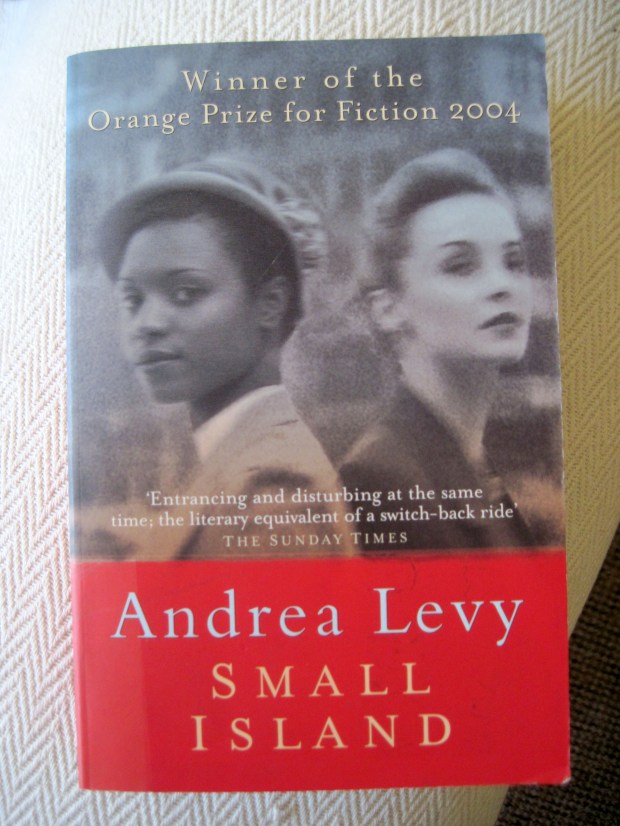
- My first-ever buddy read: Small Island with Buried in Print and Consumed by Ink, arranged months ago. Join us!
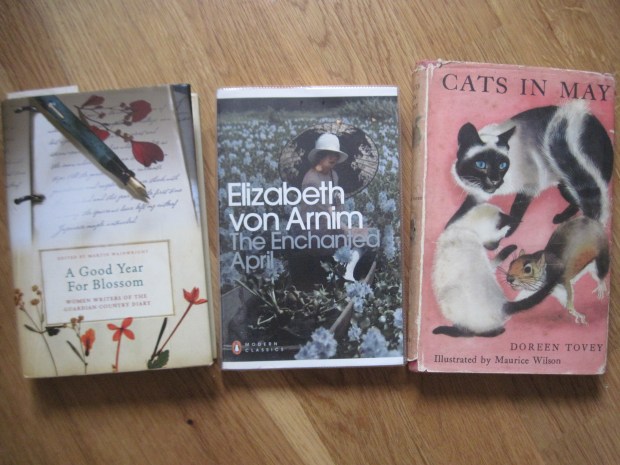
- Month- or season-specific reads.
- Public library books with no current renewal issues.
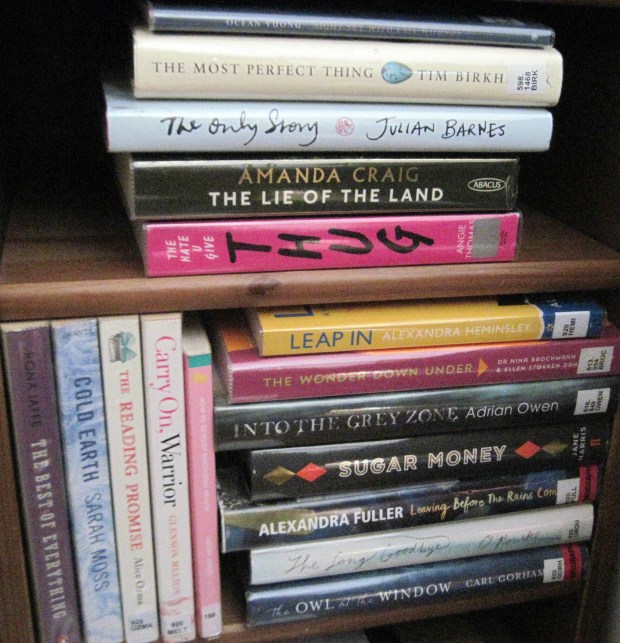
- Booker Prize winners for the 50th anniversary this summer – I’ll at least review the Coetzee for Shiny New Books, and perhaps a few more on the blog if I get the time.

- Three more Iris Murdoch novels to read as part of Liz’s #IMReadalong later on in the year, starting in June.

- Bibliotherapy prescriptions.

- Books I’ve set aside temporarily, generally because I have enthusiastically started too many at once and had to put some down to pick up more time-sensitive review books. Many of these I was enjoying very much and could see turning out to be 4- or even 5-star reads (especially Brooks, Frame and Matthiessen); others I might end up abandoning.

- University library books, which can be renewed pretty much indefinitely.

- Every other book I own, even if I had it eyed up for a particular challenge. My vague resolution to read lots of travel books and biographies has pretty much gone by the wayside so far. I also have barely managed a single classic. Sigh! There’s still two-thirds of the year left, but I certainly won’t be managing the one a month from these genres that I proposed.
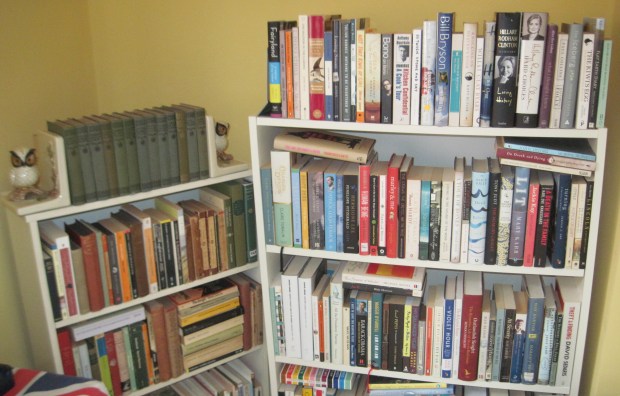
What’s your book triage situation like?
Snow-y Reads
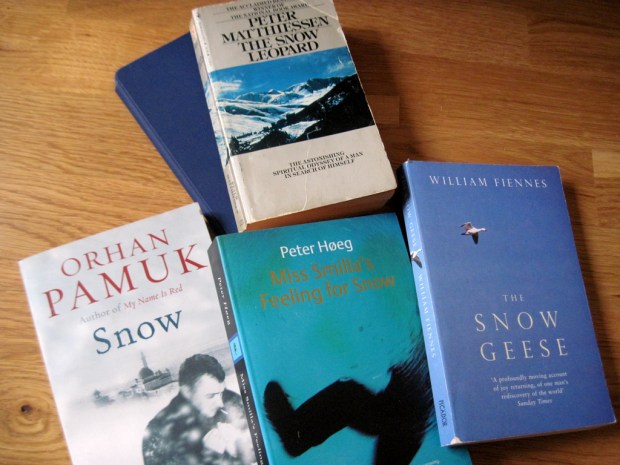
It’s been a frigid start to March here in Europe. Even though it only amounted to a few inches in total, this is still the most snow we’ve seen in years. We were without heating for 46 hours during the coldest couple of days due to an inaccessible frozen pipe, so I’m grateful that things have now thawed and spring is looking more likely. During winter’s last gasp, though, I’ve been dipping into a few appropriately snow-themed books. I had more success with some than with others. I’ll start with the one that stood out.


Miss Smilla’s Feeling for Snow by Peter Høeg (1992)
[trans. from the Danish by Felicity David]
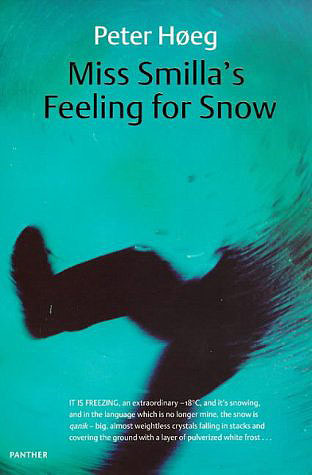 Nordic noir avant la lettre? I bought this rather by accident; had I realized it was a murder mystery, I never would have taken a chance on this international bestseller. That would have been too bad, as it’s much more interesting than your average crime thriller. The narrator/detective is Smilla Jaspersen: a 37-year-old mathematician and former Arctic navigator with a Danish father and Greenlander mother, she’s a stylish dresser and a shrewd, bold questioner who makes herself unpopular by nosing about where she doesn’t belong.
Isaiah, a little Greenlander boy, has fallen to his death from the roof of the Copenhagen apartment complex where Smilla also lives, and she’s convinced foul play was involved. In Part I she enlists the help of a mechanic neighbor (and love interest), a translator, an Arctic medicine specialist, and a mining corporation secretary to investigate Isaiah’s father’s death on a 1991 Arctic expedition and how it might be connected to Isaiah’s murder. In Part II she tests her theories by setting sail on the Greenland-bound Kronos as a stewardess. At every turn her snooping puts her in danger – there are some pretty violent scenes.
I read this fairly slowly, over the course of a month (alongside lots of other books); it’s absorbing but in a literary style, so not as pacey or full of cliffhangers as you’d expect from a suspense novel. I got myself confused over all the minor characters and the revelations about the expeditions, so made pencil notes inside the front cover to keep things straight. Setting aside the plot, which gets a bit silly towards the end, I valued this most for Smilla’s self-knowledge and insights into what it’s like to be a Greenlander in Denmark. I read this straight after Gretel Ehrlich’s travel book about Greenland, This Cold Heaven – an excellent pairing I’d recommend to anyone who wants to spend time vicariously traveling in the far north.
Favorite wintry passage:
“I’m not perfect. I think more highly of snow and ice than of love. It’s easier for me to be interested in mathematics than to have affection for my fellow human beings.”
My rating:
One that I left unfinished:
Snow by Orhan Pamuk (2002)
[trans. from the Turkish by Maureen Freely]
 This novel seems to be based around an elaborate play on words: it’s set in Kars, a Turkish town where the protagonist, a poet known by the initials Ka, becomes stranded by the snow (Kar in Turkish). After 12 years in political exile in Germany, Ka is back in Turkey for his mother’s funeral. While he’s here, he decides to investigate a recent spate of female suicides, keep tabs on the upcoming election, and see if he can win the love of divorcée Ipek, daughter of the owner of the Snow Palace Hotel, where he’s staying. There’s a hint of magic realism to the novel: the newspaper covers Ka’s reading of a poem called “Snow” before he’s even written it. He and Ipek witness the shooting of the director of the Institute of Education. The attempted assassination is revenge for him banning girls who wear headscarves from schools.
As in Elif Shafak’s Three Daughters of Eve, the emphasis is on Turkey’s split personality: a choice between fundamentalism (= East, poverty) and secularism (= West, wealth). Pamuk is pretty heavy-handed with these rival ideologies and with the symbolism of the snow. By the time I reached page 165, having skimmed maybe two chapters’ worth along the way, I couldn’t bear to keep going. However, if I get a recommendation of a shorter and subtler Pamuk novel I would give him another try. I did enjoy the various nice quotes about snow (reminiscent of Joyce’s “The Dead”) – it really was atmospheric for this time of year.
Favorite wintry passage:
“That’s why snow drew people together. It was as if snow cast a veil over hatreds, greed and wrath and made everyone feel close to one another.”
My rating:
One that I only skimmed:
The Snow Geese by William Fiennes (2002)
 Having recovered from an illness that hit at age 25 while he was studying for a doctorate, Fiennes set off to track the migration route of the snow goose, which starts in the Gulf of Mexico and goes to the Arctic territories of Canada. He was inspired by his father’s love of birdwatching and Paul Gallico’s The Snow Goose (which I haven’t read). I thought this couldn’t fail to be great, what with its themes of travel, birds, illness and identity. However, Fiennes gets bogged down in details. When he stays with friendly Americans in Texas he gives you every detail of their home décor, meals and way of speaking; when he takes a Greyhound bus ride he recounts every conversation he had with his random seatmates. This is too much about the grind of travel and not enough about the natural spectacles he was searching for. And then when he gets up to the far north he eats snow goose. So I ended up just skimming this one for the birdwatching bits. I did like Fiennes’s writing, just not what he chose to focus on, so I’ll read his other memoir, The Music Room.
My rating:
 Considered but quickly abandoned: In the Midst of Winter by Isabel Allende
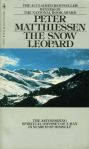
Would like to read soon: The Snow Leopard by Peter Matthiessen – my husband recently rated this 5 stars and calls it a spiritual quest memoir, with elements of nature and travel writing.
 Bookish Beck = Rebecca Foster. American transplant to England. Freelance proofreader and book reviewer.
 Bookish Beck