20 Books of Summer, 1–3: Paul Auster, David Baker, Helen Ellis
I took the three of these on the plane to the States with me — I’ve been away for just over a week for my nephew’s high school graduation and a family party — and they proved to be undemanding and reasonably diverting company. All: 
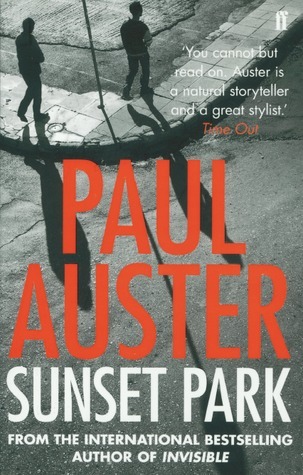
Sunset Park by Paul Auster (2010)
After reading Siri Hustvedt’s Ghost Stories, I found myself hankering to try more by her late husband. This is a fairly good novel about sexual boundaries and the ongoing impact of secrets on families. Miles Heller is living in Florida, clearing out abandoned houses. He’s 29 and has been estranged from his parents — actress mother Mary-Lee, publisher father Morris — for seven years, moving from place to place and doing odd jobs but never letting anyone know where he’s living. He’s never told anyone that he believes his stepbrother Bobby’s death was his fault. When he falls in love with a Cuban American high school student named Pilar Sanchez, one of the girl’s older sisters threatens to call the police on him for sleeping with someone underage unless he steals them stuff from the foreclosed houses. To escape potential consequences, he joins his old friend Bing Nathan at a squat in Sunset Park, Brooklyn, right across from Green-Wood cemetery. What he doesn’t know is that Bing has been reporting on his movements to his parents all along.
 The omniscient narration moves between Miles, his parents, and the three other residents of the squat, with no speech marks throughout and one section in the second person. The prose is so fluid that the pages turn incredibly quickly, but even when he’s inhabiting women’s perspectives you feel a male presence in Auster’s work. There can be something a little distasteful in his writing about sex. If being charitable, I would say that all these examples (the underage girlfriend, having anal sex to avoid pregnancy, infidelity, housemate Ellen’s pornographic drawings, a man being in love with his male best friend) are a way of exploring the lines we draw around sex and whether they are fundamental or arbitrary. But when you’re reading it, it just feels prurient.
Auster’s pet loves of baseball (Hustvedt in Ghost Stories: “Year-round, Paul yakked to me about the Mets”) and film are here through Miles’s and Morris’s shared passion for baseball and housemate Alice’s dissertation work on The Best Years of Our Lives, a charming (or should that be sentimental?) postwar movie I watched back when I was working my way through the American Film Institute’s top 100 list in my high school and college years. Between that, the glimpse of the publishing industry through Morris and Alice’s work for PEN trying to get justice for an exiled Chinese writer, there are a number of appealing elements, but they don’t all come together in any particularly meaningful way. Definitely second-tier work from him. I know I have a lot of better ones still to come. (Secondhand — Community Furniture Project, Newbury)
Whale Fall by David Baker (2022)
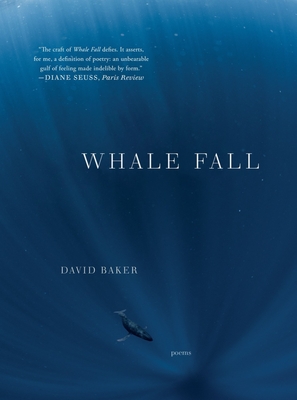 I’d never heard of Baker, even though he’s a prolific and well-respected American practitioner of eco-poetry. Nature poetry is usually right up my street, so I was keen to give this a try. The long title sequence intersperses statistics about whale journeys and ocean plastics with the poet’s memories of Cold War alarmism and current chronic health issues. There are descriptions of riverside and forest scenes, worries about an ageing father, references to Turner’s paintings of clouds, concerns about wildfires, and so on. I quite liked “Storm Psalm” and “Middle Devonian,” but there are not many other standouts overall. The stanza and line arrangements vary a good bit, with most poems ranging across several pages in numbered sections or parts separated by asterisks. Apart from a bit of alliteration, I didn’t notice a lot in the way of technique. I feel almost churlish for not appreciating this more, but it didn’t speak to me, and there were some sentimental tics, as in the brief poem below. (Secondhand — hospital book sale)
“Extinction”
When you are gone they will read your footprints,
if they still read, as they might a poem about love—
wandering in circles, here and there obscured,
washed out in places by weather, sudden landslide.
Keep walking, pilgrim. This is your great tale.
Southern Lady Code by Helen Ellis (2012)
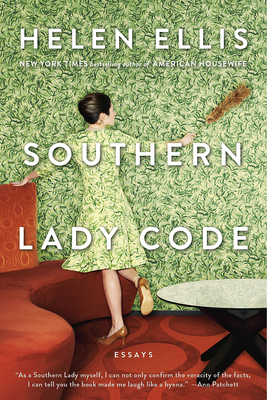 That I read the whole thing on the flight tells you that this collection of 23 micro-essays was addictive in a popcorn sort of way. Ellis is more sassy than introspective when writing about her Alabama upbringing versus her married, childfree adulthood in New York City and the etiquette that she espouses. She quotes her mother’s dictums and gives translations of phrases one might use when trying to be polite: “I’m put together. ‘Put together’ is Southern Lady Code for you can take me to church or Red Lobster and I’ll fit in fine.” She writes about reality TV, reporting pornography on Twitter (but not before enjoying it privately), her belief in ghosts, and her beauty routines for an ageing body — her debt to Nora Ephron is clearest in “Seven Things I’m Doing Instead of a Neck Lift.” I especially enjoyed one essay about her affinity for gay men (I was reminded of Beard by Kelly Foster Lundquist). The best sequence of three pieces covers making kitschy 1970s finger food for her annual holiday party, tips for how to be a good guest, and the art of the thank-you note.
But, often, I found the book quite shallow, and mentions of how much she spends on outfits rubbed me the wrong way. (I’d somehow encountered the essay on accidentally switching another woman’s Burberry coat for her own before.) “Serious Women” is the least fluffy with its account of a sordid murder trial she attended because her friend was the assistant district attorney. There were other little mentions of incidents I wished she’d had the courage to take on in full, such as her rape and her and her husband’s collective loss of parents and a brother. Still, I liked Ellis’s writing enough that I’d definitely read her short story collection, American Housewife. (Secondhand — Community Furniture Project, Newbury)
So none of these were stellar books, but I’m pleased to have read them because they were all “just-because” books from my shelves. No challenge or deadline drove me to them; I picked them up simply because I felt like reading them. Which is what I think summer reading is supposed to be about.
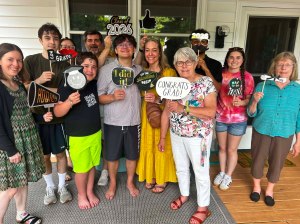
Graduation and party pics:

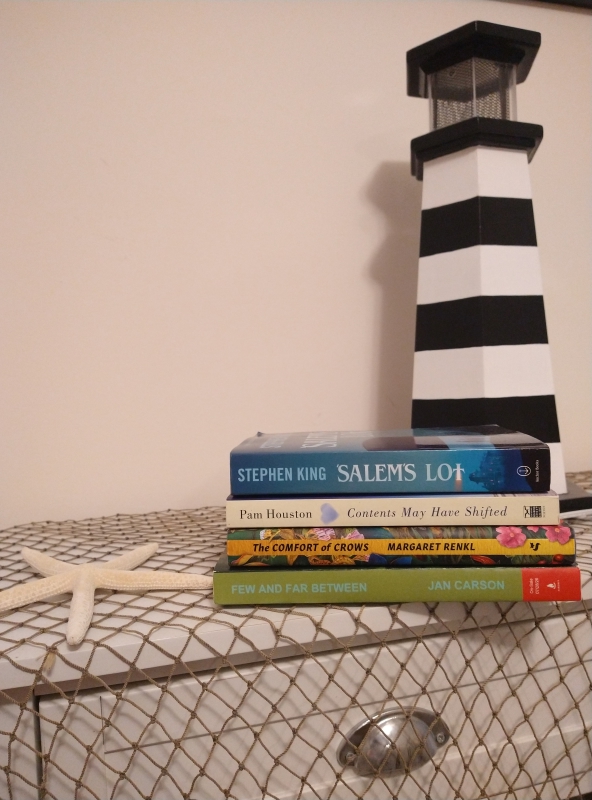
My U.S. book haul (the Houston is signed; the Carson is a review copy, out at the end of July):
I couldn’t figure out how to log in to WordPress from the laptop I borrowed from my sister while I was away, so I’ll be catching up on blogs and comments the rest of this week. I read most of two other books during my trip and will write those up soon.
20 Books of Summer, 1–3: Chimamanda Ngozi Adichie, Daisy Johnson & Ruth Padel
It’s been a slow start to #20BooksofSummer2025 for me, but I’ll hope to do some catching up during our Scotland holiday and then once we’re home in July. So far, I’m sticking to the list I chose last month. These first few were slightly disappointing, to be honest, but I have no doubt I’ll find some gems among my original selections.
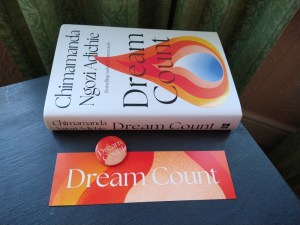
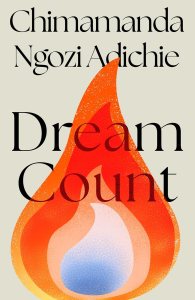
Dream Count by Chimamanda Ngozi Adichie (2025)
This was one of my Most Anticipated books of the year and had a lot to live up to as Adichie’s first novel since the amazing Americanah. When I first attempted to read it, I was dismayed by how much it felt like a rehashing of Americanah, with Chia (a travel writer in Maryland) and her cousin Omelogor (a feminist blogger) together reminiscent of Ifemelu. It did get more readable and somewhat more interesting as it went on. But instead of finding the narration and structure natural, I ended up full of questions about what Adichie intended.
 Why four main characters? Why is it the one non-Nigerian who’s poor, victimized, and less proficient in English? (That Kadiatou is based on a real person doesn’t explain enough. Her plight does at least provide what plot there is.) Why are the other three, to varying extents, rich and pretentious? Why are two narratives in the first person and two in the third person? Why in such long chunks instead of switching the POV more often? Why so many men, all of them more or less useless? (All these heterosexual relationships – so boring!) Why bring Covid into it apart from for verisimilitude? But why is the point in time important? What point is she trying to convey about pornography, the subject of Omelogor’s research?
It’s Adichie, so of course she writes solid prose with engaging characters, convincing dialogue, and provocative ideas. There’s a focus here on women’s experiences of attempted or actual motherhood (e.g., PMDD, fibroids, single parenthood or pressure to adopt), and, as per usual, a bit about race (specifically colorism, ethnic prejudice, and code-switching). But the characters’ connections seem weak, their coverage of the range of women’s experiences narrow. The title is, I suppose, the best clue to what Adichie wanted to do with the novel. Everyone dreams of finding, or preserving, love and family. Chia yearns for someone who will truly know her, and because she’s convinced this will be a romantic bond she devotes lockdown to a mental inventory of past relationships. Kadiatou dreams of peace more than of justice, and only in that she gets what she wants is there a happy ending of sorts. I wish I could be more positive, but this was a slog for me. (New purchase – Hungerford Bookshop)
The Hotel by Daisy Johnson (2024)
I’d really enjoyed Johnson’s two novels, Everything Under and Sisters, and have a copy of her previous short story collection, Fen, on the shelf. This completely passed my notice last year. I liked the idea of eerie linked short stories, but I wish I’d known this was originally written for radio as I think it accounts for how simplistic and insubstantial the 15 tales are.
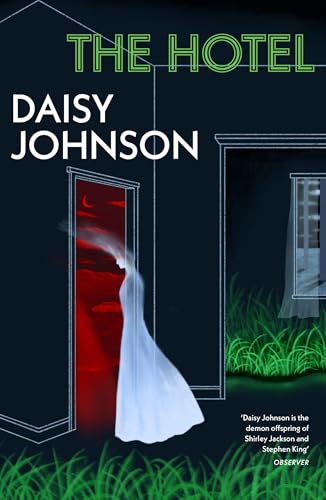 The Hotel is a fenland folly, built on the site of a pond where a suspected witch was drowned. Ever after, it is a cursed place. Those who build the hotel and stay in it are subject to violence, fear, and eruptions of the unexplained – especially if they go in Room 63. Anyone who visits once seems doomed to return. Most of the stories are in the first person, which makes sense for dramatic monologues. The speakers are guests, employees, and monsters. Some are BIPOC or queer, as if to tick off demographic boxes. Just before the Hotel burns down in 2019, it becomes the subject of an amateur student film like The Blair Witch Project.
Scary books don’t tend to work for me because I am often too aware of how they are constructed and so fail to give myself over to the reading experience and take them seriously. I can’t summon much enthusiasm for these stories, though I suppose the setting is rather atmospheric. My favourite was “Infestation,” about two girls – the one (not randomly) named Shirley – who think they discover something down in the laundry room in 1968. Only one of them makes it out alive. Okay, this one was creepy, but the rest left me unmoved. (Gift – purchased with Hungerford Bookshop with Christmas token) 
Girl by Ruth Padel (2024)
Padel is one of my favourite poets and a repeat appearance on my summer reading list; I reviewed her Emerald in 2021. I’ve read 12 of her books now. This collection is about girlhood, by way of personal history and myth.
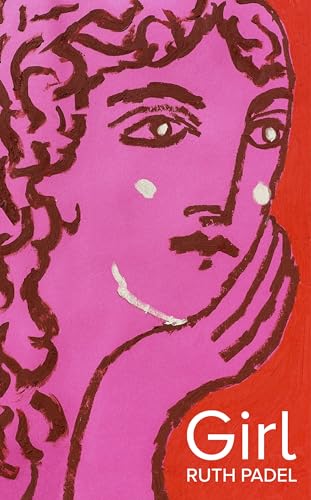 The first section, “When the Angel Comes for You,” is about the Virgin Mary, its 15 poems corresponding to the 15 Mysteries of the Rosary (as Padel explains in a note at the end; had she not, that would have gone over my head). The opening poem about the Annunciation is the most memorable its contemporary imagery emphasizing Mary’s youth and naivete: “a flood of real fear / and your heart / in the cowl-neck T-shirt from Primark / suddenly convulsed. But your old life // now seems dry as a stubbed / cigarette.” The third section, “Lady of the Labyrinth,” is about Ariadne, inspired by the snake goddess figurines in a museum on Crete. The message here is the same: “there is always the question of power / and girl is a trajectory / of learning how to deal with it”.
But the only poems that truly stood out to me are in the central autobiographical section arising from Padel’s own girlhood as well as her observations of her daughter and grandchild (setting up a Maiden–Mother–Crone triad). “Girl in a Forest” and “Tomboy and Panther” draw on the lure of the jungle to depict a wild child who chooses trousers over skirts. I loved “Fair Verona” for its traveler’s nostalgia but also for the hint of menace: so many tourists fondled the breast on a statue of Juliet that it had to be replaced. “How much touching // does it take for a bronze breast to crack?” the poet asks.
There’s some good alliteration throughout, and I warmed to the vision of girlhood as a time of promise and possibility: “the wonder / the where shall I go what new thing / will this day bring of being a girl.” Overall, though, I didn’t think the book had a lot of substance to convey about its theme. (Gift – purchased with Hungerford Bookshop with Christmas token) 
Off to Scotland today. I’ve packed Ice Cream by Helen Dunmore and Pet Sematary by Stephen King from my 20 Books list, plus other books I may substitute in. I’m scheduling a few posts for while we’re away; forgive me if I don’t reply to comments until July.
 Bookish Beck = Rebecca Foster. American transplant to England. Freelance proofreader and book reviewer.
