Love Your Library: June 2026
Thanks to Eleanor, Marcie and Skai for posting about their recent library reads!
I went to a very different sort of library early this month: Liquid Library, a cocktail bar and restaurant in Westminster, Maryland. Their cocktail menu is extensive and the prices reasonable – heaven! I had two gin-based drinks – a Lychee Fizz and a 1920s classic, Aviation (violet and maraschino liqueurs) – and my sister, for whose 50th birthday it was a belated celebration, had two vodka ones. The Prohibition theme was stronger than the library motif, but it was still fun. We’ll have to go back next time I’m visiting so I can try more!


My local library system was the key to my being able to follow the Jhalak Poetry Prize (for writers of colour) and the Women’s Prize for Fiction this year. I heartily agree with the judges’ selections of I Sing to the Greenhearts and The Correspondent! I’ve also read the Queen’s Knickers Prize nominees (that’s the Society of Authors’ prize for picture books!) that happened to be available in my library and liked the runner-up, The Tour at School, but not as much as the Bently (below).
My library use over the last month:
(links are to any book reviews not already featured on the blog)
READ
- Lost Lambs by Madeline Cash

- The Correspondent by Virginia Evans (Women’s Prize for Fiction winner)

- I Sing to the Greenhearts by Maggie Harris (Jhalak Prize winner)
- Kingfisher by Rozie Kelly (Women’s Prize for Fiction shortlist)

- A Hymn to Life: Shame Has to Change Sides by Gisèle Pelicot

- Saving Graces: Images of Women in European Cemeteries by David Robinson

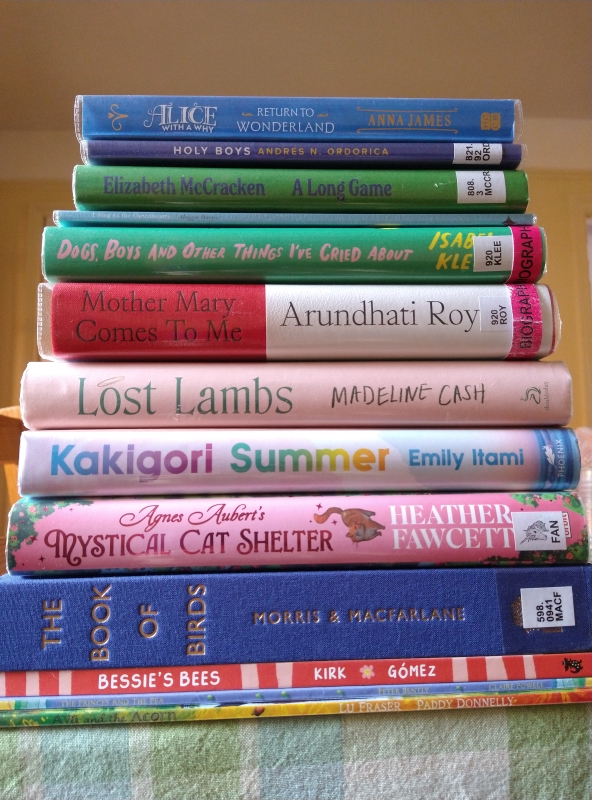
Also a few children’s picture books (which don’t count towards my year totals) from the Queen’s Knickers shortlist:
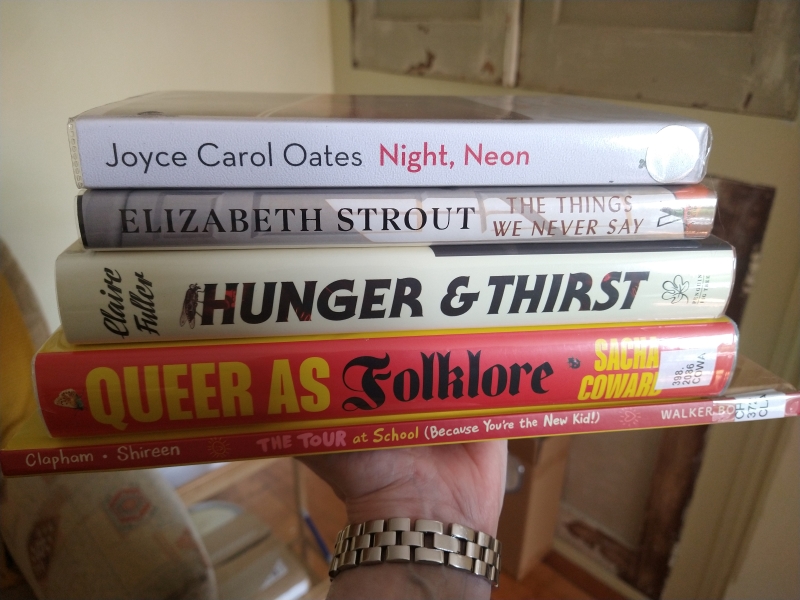
- The Tour at School by Katie Clapham; illus. by Nadia Shireen – About being the new kid in school. Good diversity rep.
- Ava and the Acorn by Paddy Donnelly – About the changing of seasons and the ageing and inevitable death of all things human and natural – though there’s hope of new life yet. Mawkish but well-meaning.
- Bessie’s Bees by George Kirk; illus. by Ana Gómez – About making the most of ADHD rather than seeing it as a problem. Cute.
Plus my brief thoughts on a few queer books I happened to experience during Pride Month:
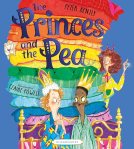 The Princes and the Pea by Peter Bently; illus. by Claire Powell (Queen’s Knickers Prize shortlist) – A perfect kids’ book for Pride Month! Prince Fredwin is about to turn 21 and knows he’s supposed to find a princess to marry, even though he prefers spending his time with his BFF Prince Zac. When Princess Ardwenna stumbles in sopping wet from a hike, she overhears the pair about to set up the old pea test for her and decides to play a trick back on them. The message about following your heart comes through loud and clear in this fabulous rainbow-hued page-turner.
Queer as Folklore: The Hidden Queer History of Myths and Monsters by Sacha Coward – We saw Coward give a talk at the second annual Queer Folk Festival at Cecil Sharp House at the end of May. (Also enjoyed fantastic music by Amit Chadda, Bailey and Keely, and Belinda O’Hooley.) His whistlestop rundown of mermaids (starting with his childhood fascination with Disney’s The Little Mermaid, especially Ursula the drag queen-esque Sea Witch), werewolves, witches and vampires and their historical overlap with ‘aberrant’ sexualities was very engaging, but I failed to get into his book-length account and just gave it a quick skim. He comes to the material as a museum professional. The simplified highlights for the lecture were as much as I needed. I appreciated his theory that queer people have always felt like Others or in-betweeners, buoyed by magic, storytelling, and weirdness.
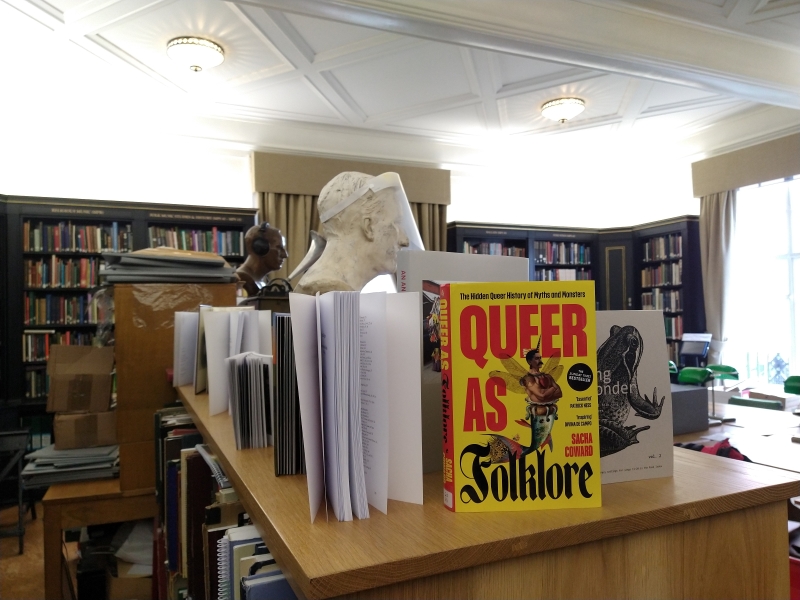
The Cecil Sharp House Library
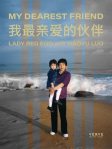 My Dearest Friend by Lady Red Ego (Jhalak Prize shortlist) – This is the pseudonym of a Chinese Scottish lesbian writer. She wrote these poems for her mother, who had cancer for six years before her death in 2025. It’s a dual-language edition, with her mother Xiaoyu Luo’s translations following each poem plus an introductory letter from mother to daughter and a closing one from daughter to mother. Childhood, adjusting to a new country, mourning … there’s nothing ground-breaking here, but the poems are very readable. Lines I liked: “Grief is so clean, it rearranges / the parts of me I can’t see / like surgery.”
 Holy Boys by Andrés N. Ordorica (Jhalak Prize shortlist) – His poetry is SO much better than his fiction (How We Named the Stars was a massive disappointment). He writes about his Mexican upbringing, visions of masculinity, his growing awareness of his sexuality, and his travels. Often, he incorporates Spanish phrases and biblical language and imagery.
SKIMMED
- The Book of Birds by Robert Macfarlane and Jackie Morris
CURRENTLY READING
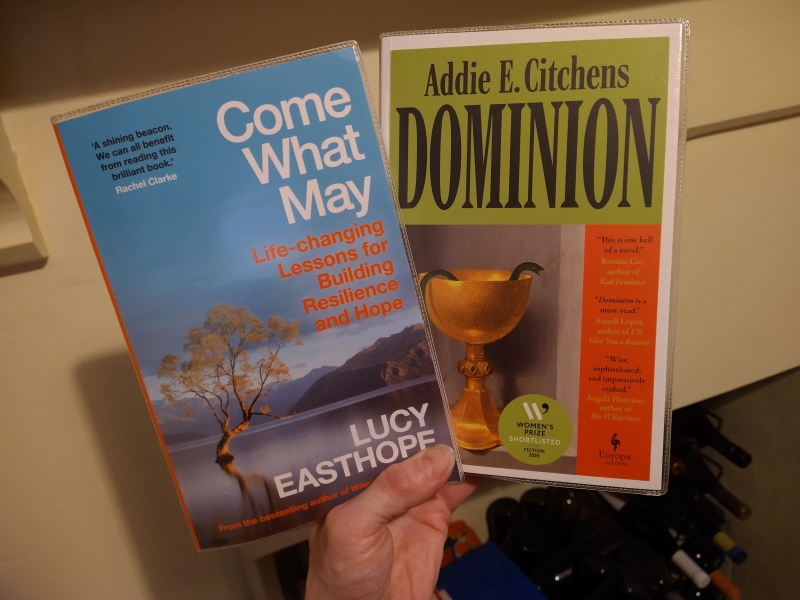
- Dominion by Addie E. Citchens (Women’s Prize for Fiction shortlist)
- Hunger and Thirst by Claire Fuller
- Kakigori Summer by Emily Itami
- The New Carthaginians by Nick Makoha (Jhalak Prize shortlist)
- A Long Game: How to Write Fiction by Elizabeth McCracken
- Night, Neon and Other Stories of Suspense by Joyce Carol Oates
- Mother Mary Comes to Me by Arundhati Roy (Women’s Prize for Non-Fiction shortlist)
- The Things We Never Say by Elizabeth Strout
- The Queen’s Gambit by Walter S. Tevis
CHECKED OUT, TO BE READ
- Come What May: Life-Changing Lessons for Coping with Crisis by Lucy Easthope
- Crossing the Water by Sylvia Plath
ON HOLD, TO BE COLLECTED
- Receipts from the Bookshop: A Bookseller’s Year by Katie Clapham
- The Typing Lady and Other Fictions by Ruth Ozeki
- Hum by Helen Phillips
- The Saltwater: A Midsummer Ghost Story by E.S. Thomson
IN THE RESERVATION QUEUE
- Honour & Other People’s Children by Helen Garner
- The Shock of the Light by Lori Inglis Hall
- Why I Am Not a Bus Driver by Ashley Hickson-Lovence
- Country People by Daniel Mason
- Land by Maggie O’Farrell
- Persepolis by Marjane Satrapi (to reread)
- Original by Nell Stevens
RETURNED UNFINISHED
- Pathfinding: On Walking, Motherhood and Freedom by Kerri Andrews – Requested off of me before I could get further than the introduction. I’ll borrow it again another time.
- Agnes Aubert’s Mystical Cat Shelter by Heather Fawcett – Even the first couple of pages were so twee I knew this wasn’t going to happen for me.
- Greenwild by Pari Thomson – I was enjoying this well enough but felt no need to keep going after 30-some pages. I’m not in a middle grade phase at the moment.
RETURNED UNREAD
- Yesteryear by Caro Claire Burke – I’d read too many middling responses to bother with this buzzy novel.
- Alice with a Why by Anna James – I read one of her series but it really tapered off in quality towards the end, so I’ve decided against reading more from her.
- Dogs, Boys and Other Things I’ve Cried About by Isabel Klee – I guess I requested this for the title? It looks kinda dumb.
What have you been reading or reviewing from the library recently?

Share a link to your own post in the comments. Feel free to use the above image. The hashtag is #LoveYourLibrary.
The 2025 McKitterick Prize Winner & SoA Awards Ceremony
Yesterday the Society of Authors’ awards were announced and the prizes handed out at a ceremony in London. As a McKitterick Prize judge, I was asked last month to give a 50-word blurb on the shortlist as a whole—
Each of these six novels has a fully realized style. So confident and inviting are they that it’s hard to believe they are debuts. With nuanced characters and authentic settings and dilemmas, they engage the mind and delight the emotions. I will be following these authors’ careers with keen interest.
—and on each individual shortlisted title:
 Etymology and Shakespeare studies are the keys to solving a cold case in Susie Dent’s clever, engrossing mystery, Guilty by Definition.
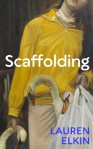 Psychoanalysis, motherhood, and violence against women are resounding themes in Lauren Elkin’s Scaffolding. As history repeats itself one sweltering Paris summer, the personal and political structures undergirding the protagonists’ parallel lives come into question. This fearless, sophisticated work ponders what to salvage from the past—and what to tear down.
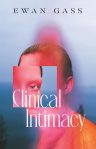 Clinical Intimacy’s mysterious antihero comes to life through interviews with his family, friends and clients. The brilliant oral history format builds a picture of isolation among vulnerable populations, only alleviated by care and touch—especially during Covid-19. Ewan Gass’s intricate story reminds us of the ultimate unknowability of other people.
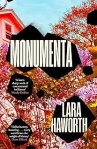
In Monumenta, Lara Haworth braids satire, magic realism, and metafiction into a compact and surprising meditation on how we seek to memorialise the tragedies of history.
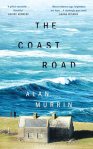
Set in small-town Ireland, The Coast Road is a subtle, compassionate novel in which the characters learn to write their own stories rather than bow to convention and fate. Alan Murrin is a must-read author for fans of Claire Keegan, Louise Kennedy, and Colm Tóibín.
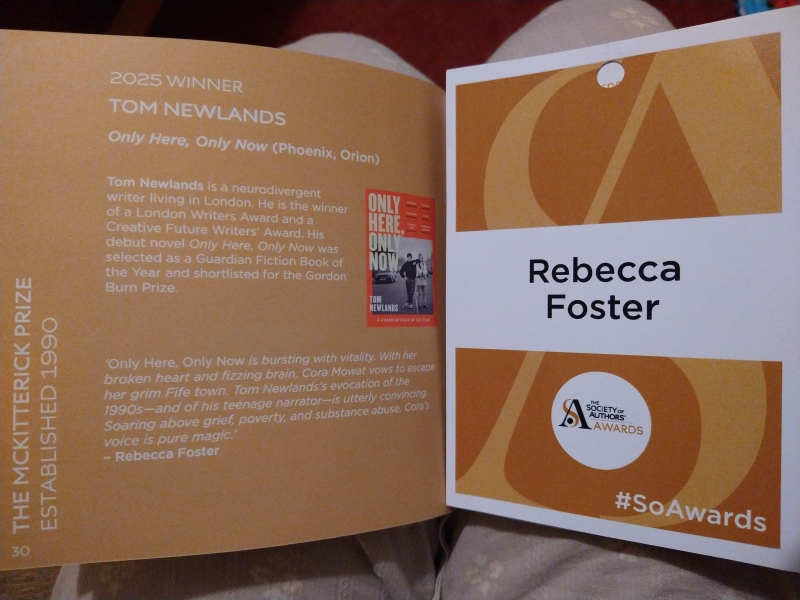
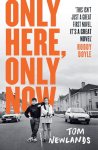 Only Here, Only Now is bursting with vitality. With her broken heart and fizzing brain, Cora Mowat vows to escape her grim Fife town. Tom Newlands’s evocation of the 1990s—and of his teenage narrator—is utterly convincing. Soaring above grief, poverty, and substance abuse, Cora’s voice is pure magic.
Our winner was Tom Newlands for Only Here, Only Now and our runner-up was Lauren Elkin for Scaffolding. (What an honour to have my blurb for the former used in the winners press release, the ceremony programme, and social media publicity.)


Newlands was also a runner-up for the ADCI Literary Prize “for a disabled or chronically ill writer, for an outstanding novel containing a disabled or chronically ill character or characters.” Here’s an excerpt from his statement for the press release:
To have my debut novel recognised in these two categories is particularly meaningful for me because they are linked by my experience. I didn’t start writing until the age of 40, in large part because growing up neurodivergent I didn’t feel my thought processes or methods of working were compatible with the production of a novel. There were no role models out there publishing stories like mine, and in the end, I wrote Only Here, Only Now because I couldn’t find the novel I wanted to read – a warm, vivid and funny story that examined poverty, disability and belonging, and that featured characters rarely found in British fiction.
Looking back to early on in this prize journey (which started back in November) … here was some of my early reading:
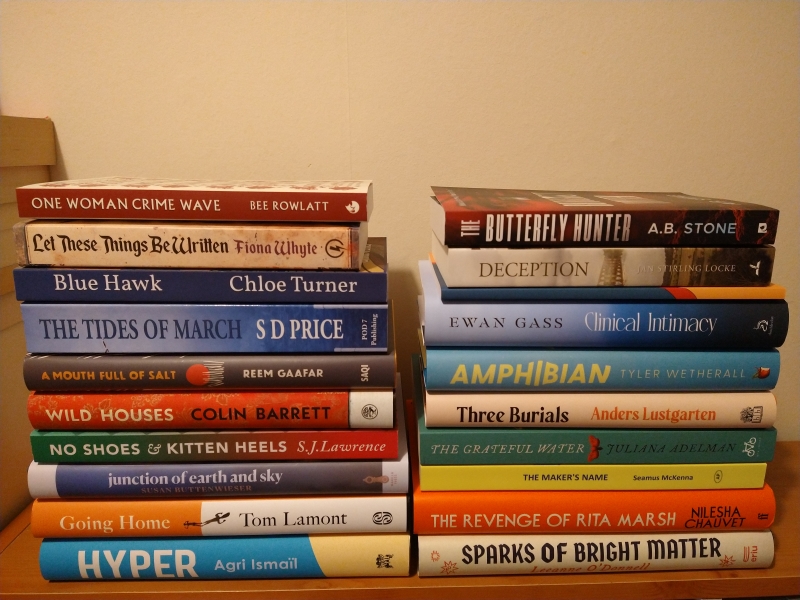
And our longlist:
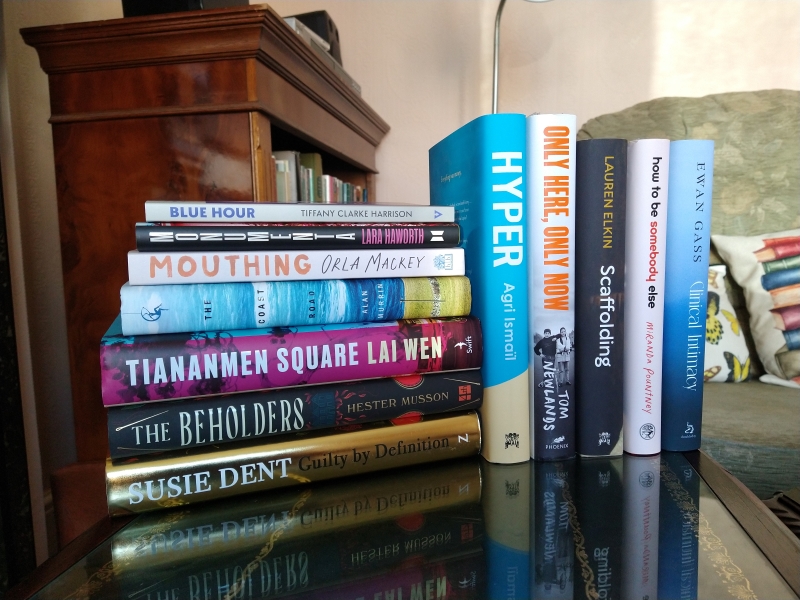
A couple of my favourite books from my reading that didn’t make the shortlist were:
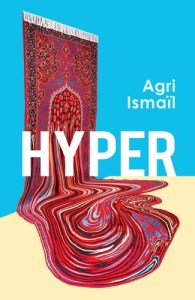 Hyper by Agri Ismaïl [I longlisted it – and then shortlisted it – but was outvoted]
Following a Kurdish family across several decades, this is a zeitgeist-y story that examines questions of national and personal autonomy. With its Dubai, Baghdad, London, and New York settings, it sets the second generation’s luxury, high finance, and fully online worlds against their parents’ bitter experience of exile after a failed independence movement. With its themes of dysfunction and failures and the long view of how we got here from there, it reminded me of Jonathan Franzen’s body of work.
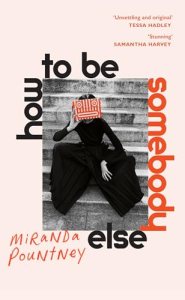 How to Be Somebody Else by Miranda Pountney [It had two votes to make the shortlist, but because it was so similar to Scaffolding in its basics (a thirtysomething woman in a big city, the question of motherhood, and pregnancy loss) we decided to cut it.]
This is the addictively readable story of Dylan, a late-thirties English woman who gives up her New York City advertising job and ponders authorship and motherhood while house-sitting an acquaintance’s apartment—and carrying on an affair with the married downstairs neighbour. As we see her interact with family and friends, we come to appreciate her not as some stereotypical ‘sad girl’ or ‘disaster woman’, but as an Everywoman seeking the time and space to become herself. It’s a sharp and witty novel for fans of Sally Rooney.
For the first time, I got to attend the SoA Awards ceremony in person yesterday. It was a hot day to be travelling in London, and after the oven of the Bakerloo line I was grateful to escape into the cool of Southwark Cathedral and its grounds. It was such a juxtaposition between the sleek City architecture and the ancient refuge of a church.
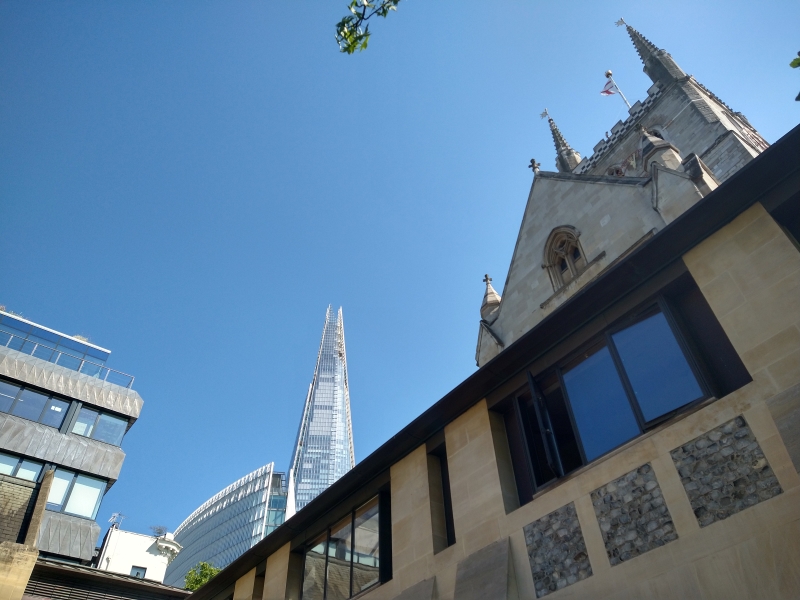
I worried that on such a warm and then busy day Hodge the cathedral cat wouldn’t show himself, but as I picked up my name badge he was asking to be let inside from the courtyard. He didn’t seem interested in strokes so I followed him at a respectful distance and let him settle in for a watchful rest.


Nominated authors and judges were treated to an exceptional afternoon tea, followed by the ceremony and drinks reception. It was lovely to meet my fellow judges Anietie Isong and Kathy O’Shaughnessy (author of the fantastic In Love with George Eliot, which won the SoA’s Paul Torday Memorial Prize) in the flesh as I’d only met them on Zoom before. We chatted a good bit with Lara Haworth, one of our shortlistees, and with Anne Booth, one of the Queen’s Knickers Award (children’s books) nominees, and also got to briefly meet Tom Newlands when he arrived for the ceremony. I always look out for literary ‘celebrities’ at such events and yesterday spotted Naomi Alderman, Caroline Bird, Joanne Harris and Alice Jolly.
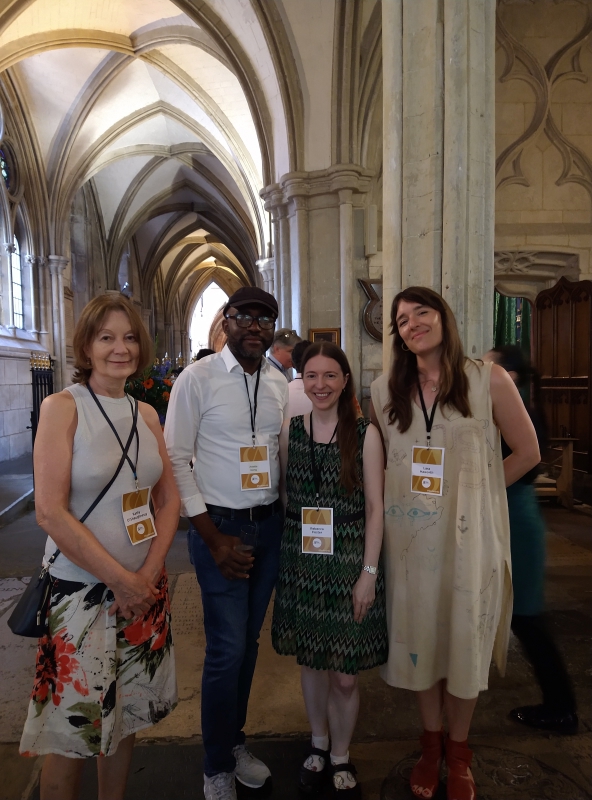


Dean Rev. Mark Oakley gave a welcome address via video, praising authors for bringing “resonance” rather than just “relevance.” He exhorted us, in the words of David Copperfield, to “read as if for life.” Joseph Coelho then gave a terrific keynote speech celebrating words written by humans (as opposed to an inaccurate AI-written bio of himself that he once encountered) and encouraging shortlistees, especially, to take time to bask in their achievement. Rejection is an ongoing, annual thing for him even at this stage of his career – he still remembers the £50 poetry gigs, changing in library toilets and school staff rooms; and the 12 years he spent trying to get published – even after he became the youngest-ever children’s laureate in 2022. “Wait for no one,” he challenged us: no one is going to give you permission or come save you, so go out there and do what you’re meant to do.
What an all-round fantastic experience this was! I’m so grateful to the Society of Authors for the opportunity.
Other notable winners announced yesterday included:
- Ashani Lewis (the only double winner): the Betty Trask Prize and Somerset Maugham award for Winter Animals
- Hisham Matar & Elif Shafak: the Gordon Bowker Volcano Prize (for a novel focusing on the experience of travel away from home), joint winners for My Friends and There Are Rivers in the Sky
 Bookish Beck = Rebecca Foster. American transplant to England. Freelance proofreader and book reviewer.
