20 Books of Summer: Bourdain, Ozeki and More
Over halfway through the summer and my numbers are looking poor. It’s not that I’m not reading a ton – in general, I am – it’s just that I’m having trouble finishing any foodie books. I’m in the middle of two food-related memoirs plus Cakes and Ale by W. Somerset Maugham, and have recently started buddy-reading Mother’s Milk by Edward St Aubyn with Annabel, so more reviews will be along eventually, but I predict August will be a scramble.
Today I review an in-your-face tell-all about the life of a chef, and a novel set between Japan and the United States that exposes the seamy side of meat production. A lite road trip and an iffy California classic follow as bonuses.
Kitchen Confidential: Adventures in the Culinary Underbelly by Anthony Bourdain (2000)
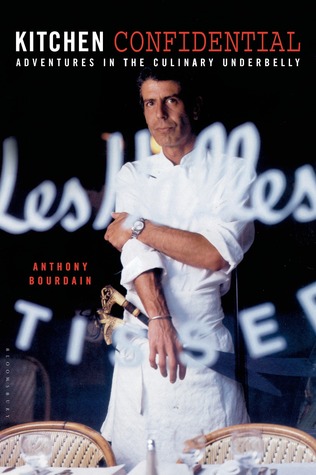 (20 Books of Summer, #5) “Get that dried crap away from my bird!” That random line about herbs is one my husband and I remember from a Bourdain TV program and occasionally quote to each other. It’s a mild curse compared to the standard fare in this flashy memoir about what really goes on in restaurant kitchens. His is a macho, vulgar world of sex and drugs. In the “wilderness years” before he opened his Les Halles restaurant, Bourdain worked in kitchens in Baltimore and New York City and was addicted to heroin and cocaine. Although he eventually cleaned up his act, he would always rely on cigarettes and alcohol to get through ridiculously long days on his feet.
From “Appetizer” to “Coffee and a Cigarette,” the book is organized like a luxury meal. Bourdain charts his development as a chef, starting with a childhood summer in France during which he ate vichyssoise and oysters for the first time and learned that food “could be important … an event” and describing his first cooking job in Provincetown and his time at the Culinary Institute of America. He also discusses restaurant practices and hierarchy, and home cook cheats and essentials. (I learned that you should never order fish in a restaurant on a Monday – it’ll be left over from Thursday’s order.) The pen portraits of his crazy sous-chef and baker are particularly amusing; other subjects include a three-star chef he envies and the dedicated Latino immigrants who are the mainstay of his kitchen staff.
My dad is not a reader but he is a foodie, and he has read Bourdain’s nonfiction (and watched all his shows), so I felt like I was continuing a family tradition in reading this. I loved my first taste of Bourdain’s writing: he’s brash, passionate, and hilariously scornful of celebrity chefs and vegetarianism (“the enemy of everything good and decent in the human spirit, an affront to all I stand for, the pure enjoyment of food”). Being in charge of a restaurant sounds manic, yet you can see why some would find it addictive. How ironic, though, to find a whole seven references to suicide in this book. Sometimes he’s joking; sometimes he’s talking about chefs he’s heard about who couldn’t take the pressure. Eighteen years after this came out, he, too, would kill himself.
(See also this article about rereading Bourdain in the 20th anniversary year of Kitchen Confidential.)
Source: Local swap shop (free)
My rating: 
(These two are linked by a late chapter in the Bourdain, “Mission to Tokyo,” in which he advises on a new Les Halles offshoot in Japan and gorges himself on seafood delights.)
My Year of Meats by Ruth Ozeki (1998)
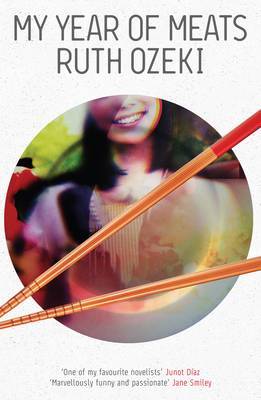 (20 Books of Summer, #6) I don’t know what took me so long to read another novel by Ruth Ozeki after A Tale for the Time Being, one of my favorite books of 2013. This is nearly as fresh, vibrant and strange. Set in 1991, it focuses on the making of a Japanese documentary series, My American Wife, sponsored by a beef marketing firm. Japanese American filmmaker Jane Takagi-Little is tasked with finding all-American families and capturing their daily lives – and best meat recipes. The traditional values and virtues of her two countries are in stark contrast, as are Main Street/Ye Olde America and the burgeoning Walmart culture.
There is a clear message here about cheapness and commodification, but Ozeki filters it through the wrenching stories of two women with fertility problems: Jane, whose reproductive system was damaged by DES, a synthetic estrogen her mother took during pregnancy to prevent a miscarriage; and Akiko, the wife of Jane’s boss, who struggles with an eating disorder and domestic violence.
Jane starts sneaking controversial subjects into her shoots: a lesbian couple, a family formed by interracial adoption, and a five-year-old who has already undergone puberty due to the hormones used on her family’s cattle feedlot. What is “natural,” and what gets branded alien or invasive? From the kudzu that strangles the South to a murdered Japanese exchange student, Ozeki probes the related issues of nativism and racism. Her two protagonists’ stories – one in the first person; the other in the third person – come together in a surprising manner as Jane decides that she has a more pressing obligation than creating a diverting television show.
This is a bold if at times discomforting novel. At first it brought to mind the exaggerated comedy of Julian Barnes’s England, England and Jane Smiley’s Moo, but as it grew darker it reminded me more of Han Kang’s The Vegetarian. It’s tricky, when a work of fiction tackles ethical or environmental matters, to balance storytelling and consciousness-raising, but Ozeki pulls it off with style. The only aspect that didn’t mean much to me, perhaps simply because of my unfamiliarity, was the excerpts from The Pillow Book of Shōnagon. How sad to think that I only have one more Ozeki awaiting me, All Over Creation. She averages a book every 5‒10 years; we can only hope that another is on the way soon.
Source: Charity shop
My rating: 
I picked up another two food-adjacent books that didn’t work for me, though I ended up skimming them to the end.
America Unchained: A Freewheeling Roadtrip in Search of Non-Corporate USA by Dave Gorman (2008)
 (20 Books of Summer, #7) I read the first couple of chapters, in which he plans his adventure, and then started skimming. I expected this to be a breezy read I would race through, but the voice was neither inviting nor funny. I also hoped to find more about non-chain supermarkets and restaurants – that’s why I put this on the pile for my foodie challenge in the first place – but, from a skim, it mostly seemed to be about car trouble, gas stations and fleabag motels. The only food-related moments are when Gorman (a vegetarian) downs three fast food burgers and orders of fries in 10 minutes and, predictably, vomits them all back up; and when he stops at an old-fashioned soda fountain for breakfast.
Source: Free bookshop
Tortilla Flat by John Steinbeck (1935)
 (20 Books of Summer, #8) I read the first 25 pages and then started skimming. This is a story of a group of friends – paisanos, of mixed Mexican, Native American and Caucasian blood – in Monterey, California. During World War I, Danny serves as a mule driver and Pilon is in the infantry. When discharged from the Army, they return to Tortilla Flat, where Danny has inherited two houses. He lives in one and Pilon is his tenant in the other (though Danny will never see a penny in rent). They’re a pair of loveable scamps, like Huck Finn all grown up, stealing wine and chickens left and right.
Steinbeck novels seem to fall into two camps for me. This is one of his inconsequential, largely unlikable novellas (like The Pearl and The Red Pony, which I studied in school – I’m lucky they didn’t put me off Steinbeck forever), whereas The Grapes of Wrath and East of Eden are masterful. It may also have something to do with the slight air of condescension towards characters of a different race: Steinbeck renders their speech with “thee” and “thou,” trying to imitate a Romance language’s informal pronouns, but it feels dated and alienating.
Source: Free bookshop
Recent Writing for BookBrowse, Shiny New Books and the TLS
A peek at the bylines I’ve had elsewhere so far this year.
BookBrowse
 A Good Neighborhood by Therese Anne Fowler: In Fowler’s sixth novel, issues of race and privilege undermine a teen romance and lead to tragedy in a seemingly idyllic North Carolina neighborhood. A Good Neighborhood is an up-to-the-minute story packed with complex issues including celebrity culture, casual racism, sexual exploitation, and environmental degradation. It is narrated in a first-person plural voice, much like the Greek chorus of a classical tragedy. If you loved Tayari Jones’s An American Marriage, this needs to be next on your to-read list. It is a book that will make you think, and a book that will make you angry; I recommend it to socially engaged readers and book clubs alike.
 Pew by Catherine Lacey: Lacey’s third novel is a mysterious fable about a stranger showing up in a Southern town in the week before an annual ritual. Pew’s narrator, homeless, mute and amnesiac, wakes up one Sunday in the middle of a church service, observing everything like an alien anthropologist. The stranger’s gender, race, and age are entirely unclear, so the Reverend suggests the name “Pew”. The drama over deciphering Pew’s identity plays out against the preparations for the enigmatic Forgiveness Festival and increasing unrest over racially motivated disappearances. Troubling but strangely compelling; recommended to fans of Shirley Jackson and Flannery O’Connor. [U.S. publication pushed back to July 21st]
Shiny New Books
 Losing Eden: Why Our Minds Need the Wild by Lucy Jones: While nature’s positive effect on human mental health is something we know intuitively and can explain anecdotally, Jones was determined to investigate the scientific mechanism behind it. She set out to make an empirical enquiry and discovered plenty of evidence in the scientific literature, but also attests to the personal benefits that nature has for her and explores the spiritual connection that many have found. Losing Eden is full of both common sense and passion, cramming masses of information into 200 pages yet never losing sight of the big picture. Just as Silent Spring led to real societal change, let’s hope Jones’s work inspires steps in the right direction.
[+ Reviews of 4 more Wainwright Prize (for nature writing) longlistees on the way!]
 The Bass Rock by Evie Wyld: While it ranges across the centuries, the novel always sticks close to the title location. Just as the louring rock is inescapable in the distance if you look out from the Edinburgh hills, there’s no avoiding violence for the women and children of the novel. It’s a sobering theme, certainly, but Wyld convinced me that hers is an accurate vision and a necessary mission. The novel cycles through its three strands in an ebb and flow pattern that seems appropriate to the coastal setting and creates a sense of time’s fluidity. The best 2020 novel I’ve read, memorable for its elegant, time-blending structure as well as its unrelenting course – and set against that perfect backdrop of an indifferent monolith.
Times Literary Supplement
 I Am an Island by Tamsin Calidas: A record of a demoralizing journey into extreme loneliness on a Scottish island, this offers slivers of hope that mystical connection with the natural world can restore a sense of self. In places the narrative is a litany of tragedies and bad news. The story’s cathartic potential relies on its audience’s willingness to stick with a book that can be – to be blunt –depressing. The writing often tends towards the poetic, but is occasionally marred by platitudes and New Age sentiments. As with Educated, it’s impossible not to marvel at all the author has survived. Admiring Calidas’s toughness, though, doesn’t preclude relief at reaching the final page. (Full review in May 29th issue.)
 We Swim to the Shark: Overcoming fear one fish at a time by Georgie Codd: Codd’s offbeat debut memoir chronicles her quest to conquer a phobia of sea creatures. Inspired by a friend’s experience of cognitive behavioral therapy to cure arachnophobia, she crafted a program of controlled exposure. She learned to scuba dive before a trip to New Zealand, returning via Thailand with an ultimate challenge in mind: her quarry was the whale shark, a creature even Jacques Cousteau only managed to sight twice. The book has a jolly, self-deprecating tone despite its exploration of danger and dread. A more directionless second half leads to diminished curiosity about whether that elusive whale shark will make an appearance. (Full review in a forthcoming issue.)
 Dottoressa: An American Doctor in Rome by Susan Levenstein: In the late 1970s, Levenstein moved from New York City to Rome with her Italian husband and set up a private medical practice catering to English-speaking expatriates. Her light-hearted yet trenchant memoir highlights the myriad contrasts between the United States and Italy revealed by their health care systems. Italy has a generous national health service, but it is perennially underfunded and plagued by corruption and inefficiency. The tone is conversational and even-handed. In the pandemic aftermath, though, Italian sloppiness and shortages no longer seem like harmless matters to shake one’s head over. (Full review coming up in June 19th issue.)
Do any of these books (all by women, coincidentally) interest you?
Nonfiction Recommendations from Carolyn Oliver
I ‘met’ poet Carolyn Oliver through her much-missed blog, Rosemary & Reading Glasses. (She’s on Twitter as @CarolynROliver and Instagram as @carolynroliver.) Back in 2017 I asked for her top fiction picks; this year she’s contributed another guest blog listing the best nonfiction she’s read this year. It’s a fascinating selection of memoirs, essays, science and nature, and current events. I scurried to add the ones I hadn’t already heard of to my TBR. Which ones tempt you?
My favorite nonfiction reads from this year (though many are backlist):
 The Butchering Art, Lindsey Fitzharris: Fascinating medical history of Lister’s antiseptic breakthrough.
 Braiding Sweetgrass, Robin Wall Kimmerer: Reflective ecology from the perspective of a Native botanist. Probably my favorite essay collection of the decade.
 The Book of Delights, Ross Gay: Just as the title says. Mini-essays on myriad topics. When you’ve finished, pick up his Catalog of Unabashed Gratitude (poems).
 Atlas of Poetic Botany, Francis Halle: Bite-sized excursions into the worlds of unusual flora, with drawings. Meant for adults, I think, but a huge hit with my eight-year-old.
 Stamped from the Beginning: The Definitive History of Racist Ideas in America, Ibram X. Kendi: Just as the title says. Incisive, eye-opening, necessary.
 The Art Detective, Philip Mould: A romp through the art world with an enthusiastic, knowledgeable guide (Mould is the co-host of the BBC’s Fake or Fortune).
 How We Fight for Our Lives, Saeed Jones: The bildungsroman America needs. Beautiful writing.
 In the Dream House, Carmen Maria Machado: The most formally inventive memoir I’ve ever read. Brilliant and necessary.
 Coventry, Rachel Cusk: I was entranced by Cusk’s voice, even when I didn’t share her conclusions; reading this collection (with the exception of the book reviews added at the end), I felt I was witnessing the writer’s mind in the act of thinking.
And the Winner Is…
In case you haven’t already heard, the winner of the Man Booker Prize 2016 is
The Sellout by Paul Beatty
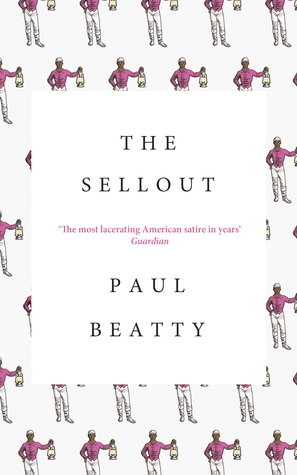 He’s the first American winner of the Booker Prize, for which I must express a modicum of pride. Yet I’m gobsmacked by the judges’ decision. Do you know that lovely bit of British slang? It means, roughly, astounded. You see, I would have placed The Sellout fifth out of six in terms of its likelihood of winning (ahead of only Eileen).
When I reviewed it for Shiny New Books back in early June, I expressed my doubts that this outrageous racial satire would strike a chord in Britain as it had in the States. It’s a zany, irreverent take on racial politics in America today, crammed with old stereotypes of African-Americans. For me, the satire wore thin and I yearned for more of an introspective Bildungsroman. But it’s clear that, with police shootings of black men in America a seemingly daily news phenomenon, the Booker judges chose a timely and incisive winner.
Here’s a taste of the sort of audacious lines the book is chock-full of:
“I understand now that the only time black people don’t feel guilty is when we’ve actually done something wrong, because that relieves us of the cognitive dissonance of being black and innocent, and in a way the prospect of going to jail becomes a relief.”
“When a white bitch got problems, she’s a damsel in distress! When a black bitch got problems, she’s a welfare cheat and a burden on society. How come you never see any black damsels? Rapunzel, Rapunzel, let down your weave!”
Amid the laughs, you still get a sense of how important it is to Beatty that race remain a topic for public discussion. An exchange the narrator has with a police officer could just as easily describe the author’s purpose:
“It’s illegal to yell ‘Fire’ in a crowded theatre, right?”
“It is.”
“Well, I’ve whispered ‘Racism’ in a post-racial world.”
No whisper, this, but a brazen shout.
 Bookish Beck = Rebecca Foster. American transplant to England. Freelance proofreader and book reviewer.
 Bookish Beck