Book Serendipity, October to December 2023
I call it “Book Serendipity” when two or more books that I read at the same time or in quick succession have something in common – the more bizarre, the better. This is a regular feature of mine every couple of months. Because I usually have 20–30 books on the go at once, I suppose I’m more prone to such incidents. The following are in roughly chronological order.
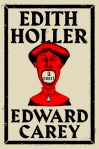
- A woman turns into a spider in Edith Holler by Edward Carey and The Human Origins of Beatrice Porter and Other Essential Ghosts by Soraya Palmer.

- Expulsion from Eden scenes (one literal, after the Masaccio painting; another more figurative by association) in Conversation Among Stones by Willie Lin and North Woods by Daniel Mason.
- Reading my second 2023 release featuring a theatre fire (after The House Is on Fire by Rachel Beanland, which I actually read last year): Edith Holler by Edward Carey.
- The protagonist cuts their foot in The Rituals by Rebecca Roberts and The Last House on Needless Street by Catriona Ward.


- On the same evening, I started two novels where the protagonist’s parents both died in a car crash: The Witches by Roald Dahl and Family Meal by Bryan Washington. This is something I encounter ALL THE TIME in fiction (versus extremely rarely in life) and it’s one of my major pet peeves. I can excuse it more in the children’s book as the orphan trope allows for adventures, but for the most part it just seems lazy to me. The author has decided they don’t want to delve into a relationship with parents at all, so they cut it out in the quickest and easiest possible way.
- A presumed honour killing in Behind You Is the Sea by Susan Muaddi Darraj and The Hundred and Ninety-Nine Steps by Michel Faber.


- A Houston, Texas setting in The Only Way Through Is Out by Suzette Mullen and Family Meal by Bryan Washington.
- Daniel Clowes, whose graphic novel Monica I was also in the middle of at the time, was mentioned in Robin Ince’s Bibliomaniac.
- The author/speaker warns the squeamish reader to look away for a paragraph in Robin Ince’s Bibliomaniac (recounting details of a gross-out horror plot) and one chapter of Daniel Mason’s North Woods.


- A mentally ill man who lives at the end of a lane in Daniel Mason’s North Woods and The Last House on Needless Street by Catriona Ward.
- Reading Last House before the Mountain by Monika Helfer and The Last House on Needless Street by Catriona Ward at the same time.
- The Daedalus myth (via Aeschylus or Brueghel, or just in general) is mentioned in Last House before the Mountain by Monika Helfer, The Ghost Orchid by Michael Longley, and Absolutely and Forever by Rose Tremain.
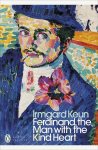
- A character goes to live with their aunt and uncle in Western Lane by Chetna Maroo and The House of Doors by Tan Twan Eng (both Booker-longlisted), but also The Woman in Black by Susan Hill, Train Dreams by Denis Johnson, and The Story Girl by L.M. Montgomery. I came across all five instances within a few days! Later I also encountered a brief mention of this in Ferdinand by Irmgard Keun. How can this situation be so uncommon in life but so common in fiction?!


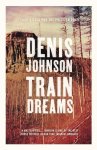

- The outdated terms “Chinaman” and “coolie” appear frequently in Train Dreams by Denis Johnson and The House of Doors by Tan Twan Eng.
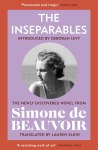
- A 15-year-old declares true love in The Inseparables by Simone de Beauvoir and Absolutely and Forever by Rose Tremain.
- A French character named Pascal in The Inseparables by Simone de Beauvoir and The Garrick Year by Margaret Drabble.

- A minor character called Mrs Biggs in Harriet Said… by Beryl Bainbridge and The House of Doors by Tan Twan Eng.
- The Chinese zither (guzheng) is mentioned in Dear Chrysanthemums by Fiona Sze-Lorrain, which I read earlier in the year, and The House of Doors by Tan Twan Eng.
- Oscar Wilde’s trial is mentioned in The House of Doors by Tan Twan Eng, as it was in The New Life by Tom Crewe, which I read earlier in the year – in both it was a cautionary case for older homosexual characters (based on real people: W. Somerset Maugham vs. John Addington Symonds) who were married to women but had a live-in male secretary generally known to be their lover. At the same time as I was reading The House of Doors, I was rereading Wilde’s De Profundis, which was written from prison.


- In Fifty Days of Solitude Doris Grumbach mentions reading Bear by Marian Engel. I read both during Novellas in November.
- Living funerals are mentioned in Ferdinand by Irmgard Keun and The Ritual Effect by Michael Norton.
- A character insists that lilac not be included in a bouquet in In the Sweep of the Bay by Cath Barton and Bright Young Women by Jessica Knoll.


- A woman has a lover named Frances in Bright Young Women by Jessica Knoll and The Cancer Journals by Audre Lorde.
- The final word of the Fanny Howe poem in Raised by Wolves (the forthcoming 50th anniversary poetry anthology from Graywolf Press) is “theophanies.” At the same time, I was reading the upcoming poetry collection Theophanies by Sarah Ghazal Ali.


- The Cancer Journals by Audre Lorde, which I’d read the month before, was a major influence on the cancer memoir All In by Caitlin Breedlove.
- Two foodie memoirs I read during our city break, A Waiter in Paris by Edward Chisholm and The Sweet Life in Paris by David Lebovitz, both likened a group of young men to a Dolce & Gabbana ad. (Chisholm initially lived at Porte des Lilas, the next Metro stop up from where we stayed in Mairie des Lilas.)
- A French slang term for penis, “verge,” is mentioned in both The Sweet Life in Paris by David Lebovitz and Learning to Drive by Katha Pollitt.


What’s the weirdest reading coincidence you’ve had lately?
Nonfiction November Book Pairings: Hardy’s Wives, Rituals, and Romcoms
Liz is hosting this week of Nonfiction November. For this prompt, the idea is to choose a nonfiction book and pair it with a fiction title with which it has something in common.
I came up with three based on my recent reading:
Thomas Hardy’s Wives
On my pile for Novellas in November was a tiny book I’ve owned for nearly two decades but not read until now. It contains some of the backstory for an excellent historical novel I reviewed earlier in the year.
Some Recollections by Emma Hardy
&
The Chosen by Elizabeth Lowry


The manuscript of Some Recollections is one of the documents Thomas Hardy found among his first wife’s things after her death in 1912. It is a brief (15,000-word) memoir of her early life from childhood up to her marriage – “My life’s romance now began.” Her middle-class family lived in Plymouth and moved to Cornwall when finances were tight. (Like the Bennets in Pride and Prejudice, you look at the house they lived in, and read about the servants they still employed, and think, “impoverished,” seriously?!) “Though trifling as they may seem to others all these memories are dear to me,” she writes. It’s true that most of these details seem inconsequential, of folk historical value but not particularly illuminating about the individual.
An exception is her account of her dealings with fortune tellers, who often went out of their way to give her good – and accurate – predictions, such as that she would marry a writer. It’s interesting to set this occult belief against the traditional Christian faith she espouses in her concluding paragraph, in which she insists an “Unseen Power of great benevolence directs my ways.” The other point of interest is her description of her first meeting with Hardy, who was sent to St. Juliot, where she was living with her parson brother-in-law and sister, as an architect’s assistant to begin repairs on the church. “I thought him much older than he was,” she wrote. As editor Robert Gittings notes, Hardy made corrections to the manuscript and in some places also changed the sense. Here Hardy gave proof of an old man’s continued vanity by adding “he being tired” after that line … but then partially rubbing it out. (Secondhand, Books for Amnesty, Reading, 2004) [64 pages] 
The Chosen contrasts Emma’s idyllic mini memoir with her bitterly honest journals – Hardy read but then burned these, so Lowry had to recreate their entries based on letters and tone. But Some Recollections went on to influence his own autobiography, and to be published in a stand-alone volume by Oxford University Press. Gittings introduces the manuscript (complete with Emma’s misspellings and missing punctuation) and appends a selection of Hardy’s late poems based on his first marriage – this verse, too, is central to The Chosen.
Another recent nonfiction release on this subject matter that I learned about from a Shiny New Books review is Woman Much Missed: Thomas Hardy, Emma Hardy and Poetry by Mark Ford. I’d also like to read the forthcoming Hardy Women: Mother, Sisters, Wives, Muses by Paula Byrne (1 February 2024, William Collins).
Rituals
The Ritual Effect by Michael Norton
&
The Rituals by Rebecca Roberts


Last month I reviewed this lovely Welsh novel about a woman who is an independent celebrant, helping people celebrate landmark events in their lives or cope with devastating losses by commemorating them through secular rituals.
Coming out in April 2024, The Ritual Effect is a Harvard Business School behavioral scientist’s wide-ranging study of how rituals differ from habits in that they are emotionally charged and lift everyday life into something special. Some of his topics are rites of passage in different cultures; musicians’ and sportspeople’s pre-performance routines; and the rituals we develop around food and drink, especially at the holidays. I’m just over halfway through this for an early Shelf Awareness review and I have been finding it fascinating.
Romantic Comedy
(As also featured in my August Six Degrees post)
What I Was Doing While You Were Breeding by Kristin Newman
&
Romantic Comedy by Curtis Sittenfeld


Romantic Comedy is probably still the most fun reading experience I’ve had this year. Sittenfeld’s protagonist, Sally Milz, writes TV comedy, as does Kristin Newman (That ’70s Show, How I Met Your Mother, etc.). What I Was Doing While You Were Breeding is a lighthearted record of her sexual conquests in Amsterdam, Paris, Russia, Argentina, etc. (Newman even has a passage that reminds me of Sally’s “Danny Horst Rule”: “I looked like a thirty-year-old writer. Not like a twenty-year-old model or actress or epically legged songstress, which is a category into which an alarmingly high percentage of Angelenas fall. And, because the city is so lousy with these leggy aliens, regular- to below-average-looking guys with reasonable employment levels can actually get one, another maddening aspect of being a woman in this city.”) Unfortunately, it got repetitive and raunchy. It was one of my 20 Books of Summer but I DNFed it halfway.
The Rituals by Rebecca Roberts (Blog Tour)
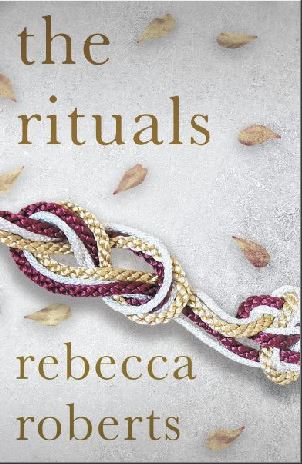
Rebecca Roberts adapted her 2022 Welsh-language novel Y Defodau, her ninth, into The Rituals, which draws on her time working as a non-religious celebrant. Her protagonist, Gwawr Efa Taylor, is a freelance celebrant, too. The novel is presented as her notebook, containing diary entries as well as the text of some of the secular ceremonies she performs to mark rites of passage. We open on a funeral for a 39-year-old woman, then swiftly move on to a Bridezilla celebrity’s wedding that sours in a way that threatens to derail Gwawr’s entire career. A victim of sabotage, she’s doubly punished by gossip.
As she tries to piece her life back together, Gwawr finds support from many quarters, such as her beloved grandfather (Taid), a friend who invites her along on a writing retreat, her Welsh-language book club, a high school acquaintance, other customers and a sweet dog. She and the widower from the first funeral make a pact to start counselling at the same time to work through their grief – we know early on that she has experienced the devastating loss of Huw, but the details aren’t revealed until later. A couple of romantic prospects emerge for the 37-year-old, but also some uncomfortable reminders of past scandal.
There are heavy issues here, like alcoholism, infant loss and suicide, but they reflect the range of human experience and allow compassionate connections to form. Gwawr’s empathy is motivated by her bereavement: “That’s what keeps me going – knowing that I’ve turned the worst time of my life into something that helps other people. Taking the good from the bad.” You can see that attitude infusing her naming ceremonies and funerals. I’ll say no more about the plot, just that it prioritizes moments of high emotion and is both absorbing and touching.
I think this is only the second Welsh-language book I have read in translation (the first was The Life of Rebecca Jones by Angharad Price). It’s whetted my appetite for heading back to Wales for the first time since 2020 – we’re off to Hay-on-Wye on Friday. The Rituals is a tear-jerker for sure, but also sweet, romantic and realistic. I enjoyed it in much the same way I did The Collected Regrets of Clover by Mikki Brammer, and was pleased to try something from a small press that champions women’s writing.
With thanks to Random Things Tours and Honno Welsh Women’s Press for the proof copy for review.
Buy The Rituals from Bookshop.org [affiliate link]
I was delighted to be part of the blog tour for The Rituals. See below for details of where other reviews have appeared or will be appearing soon.

 Bookish Beck = Rebecca Foster. American transplant to England. Freelance proofreader and book reviewer.
 Bookish Beck