Landmark Books from My Early Life
I initially wanted to title this post “Books that Changed My Life,” but soon realized it would probably be more accurate to speak about them as the books that have shaped my life as a keen reader and meant the most to me as the years have passed.
In making this list I was inspired by a book I recently finished, Kate Gross’s memoir Late Fragments, which finishes with a bibliography of books that influenced her during different periods of her life. Gross, who died of colon cancer at age 36 in 2014, divides her reading life into five distinct, whimsically named eras: “With my back to the radiator” (childhood), “The grub years” (adolescence), “Emerging from the cocoon” (early adulthood), “The woman in the arena” (career life) and “End of life book club.”
I’ll do a follow-up post on the key books from my twenties next month, but for now I want to focus on the books that defined my growing-up and teen years.
What Bewick’s Birds was for Jane Eyre, my parents’ book on flower arranging was for me. I couldn’t tell you the title or author, but I think this green fabric covered tome with its glossy pages and lush full-color photographs was the origin of my love of books as physical objects. I must have spent hours paging through the illustrations and breathing in the new-book aroma. I’ve been a book sniffer ever since.
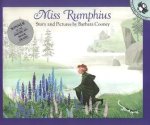 I can’t recall many of the individual picture books my mother read with me when I was little, but one that does stand out in my memory is Miss Rumphius by Barbara Cooney, about an eccentric woman who goes about planting lupines. Again, it’s a gorgeous book filled with flowers – you’d think I might have become a botanist!
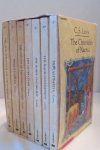 C.S. Lewis’s The Chronicles of Narnia were the first books I ever read by myself, starting at age five. It took me years to get to the allegory-heavy The Last Battle, but I read the other volumes over and over, even after the PBS television movies came out. The Silver Chair was always my favorite, but I’m sure I must have read the first three books 10 or 20 times each.
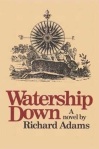 Richard Adams’s Watership Down was the first book I ever borrowed from the adult section of the public library, at age nine. Crossing the big open lobby of the Silver Spring, Maryland library from the children’s room to the imposing stacks of Adult Fiction was like a rite of passage; when I emerged clutching the fat plastic-covered hardback I felt a little bit like a rebel but mostly just pretty darn proud of myself. I inhaled the several hundred pages of this bunny epic and for years afterwards considered it my favorite book.
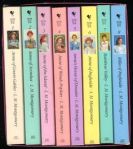 Nowadays I don’t like to commit to series, but as a kid I couldn’t get enough of them: after Narnia, I devoured the Babysitter’s Club and Saddle Club books, the Anastasia Krupnik books, and so on. Whenever I found an author I loved I dutifully read everything they’d written. The Anne of Green Gables series by L.M. Montgomery, in particular, accompanied me through my early teen years. I think I saw the CBC/PBS television miniseries starring Megan Follows first and read the books afterwards. Bereft once the eight-book cycle was over, I read the much darker Emily trilogy, but it just couldn’t live up to the Anne books.
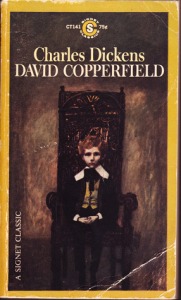 My first foray into the realm of heavy-duty classics was Charles Dickens’s David Copperfield at age 14. I bought a battered secondhand paperback from a library sale and was immediately entranced, from the first line onwards: “Whether I shall turn out to be the hero of my own life, or whether that station will be held by anybody else, these pages must show.” No doubt the idea of discovering my own potential heroism was what drew me in, but I loved everything about this novel: the rich panorama of nineteenth-century life, the vibrant secondary characters, the under-the-surface humor you had to work a little bit to understand, and the sweet second-chance romance. This was the start of my love affair with Victorian literature. I’ve read it three times since then. If ever asked for my favorite book, this is what I name.
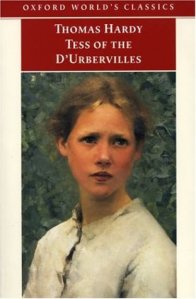 It wasn’t my first Hardy novel (that was Far from the Madding Crowd, another all-time favorite), but Tess of the D’Urbervilles is most memorable for the circumstances in which I read it. At age 19 I accompanied my sister, who’d won a singing contest on local radio, to the Season 2 finale of American Idol in Hollywood. If you were a loyal viewer, you might recall that this was the showdown between Ruben Studdard and Clay Aiken, on whom I had a hopeless crush – it later emerged that he’s gay. I read Tess on the flight to Los Angeles. Stranger pairings have been known, I’m sure, but I’ll never forget that disconnect between bleak England (where I hadn’t yet been at that point) and the sunny entertainment capital.
What are some of the books that meant the most to you in your early years?
Reviews Roundup, August–September
One of my goals with this blog is to have one convenient place where I can gather together all my writing that has appeared in disparate online locations. To that end, once a month I’ll provide links to all the book reviews I’ve published elsewhere, with a rating (below each description) and a short taster so you can decide whether to click to read more. A couple of exceptions: I won’t point out my Kirkus Indie or BlueInk reviews since I don’t get a byline.
The Bookbag
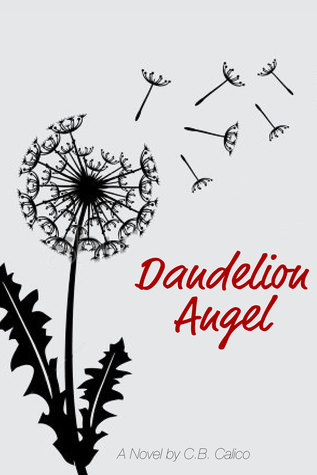 Dandelion Angel by C.B. Calico (& interview): This was inspired by a non-fiction work, Understanding the Borderline Mother by Christine Ann Lawson. The four mother/daughter relationships in this Germany-set novel – all marked to some extent by dysfunction, physical and/or verbal abuse, and borderline personality disorder – are based on Lawson’s metaphorical classifications: the hermit, the queen, the waif, and the witch. Looping back through her four storylines in three complete cycles, Calico shows how mental illness is rooted in childhood experiences and can go on to affect a whole family.

The Last Pilot by Benjamin Johncock: Cinematic descriptions of the California desert setting plus excellent characters and dialogue enliven this debut novel about a fictional test pilot and his family troubles during America’s Space Race. Johncock is British, but you can tell he’s taken inspiration from stories about the dawn of the astronaut age. If I allowed myself small points of criticism, I would say that it’s a challenge to accept the passage of time in the final 50 pages, and that a keen interest in astronauts is probably a boon to keep readers going through the test flight portions, which to me were less compelling than the domestic drama of Jim, Grace and Florence.
 Home Is Burning by Dan Marshall: At age 25, Dan Marshall went home to Salt Lake City to care for a father with ALS and a mother with leukemia. He and his four hapless siblings (a Sedaris-like clan) approached caregiving with sarcasm and dirty humor. Gleefully foul-mouthed, his memoir lacks introspective depth. He hardly ventures deeper than initial descriptions like “My gay brother, Greg” and “My adopted Native American sister, Michelle.” And even when his sentiments about his father are sincere, they are conveyed via what sound like clichés: “I wanted my poor dad to get better, not worse.” But to my surprise, Marshall made me cry in the end.

Of Orcas and Men by David Neiwert: Inspired by personal sightings near his home in Seattle, Neiwert set out to learn everything he could about orcas. The result is a thorough study of whales’ behavior and interactions with humanity from native mythology through modern-day aquarium shows. Some specialist interest would probably be helpful to those attempting this book, although there are plenty of black-and-white photographs to keep even casual readers interested. “Recovering our humanity may be the real gift of the orcas, what they can teach us. It’s our choice whether to listen.”

BookBrowse
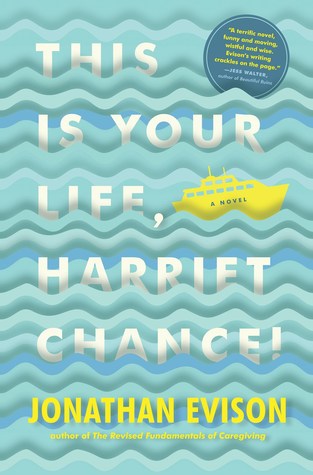 This Is Your Life, Harriet Chance! by Jonathan Evison [a subscription service, but an excerpt is available for free]: A widow in her seventies relives the ups and downs of her life while on an Alaskan cruise to scatter her husband’s ashes. Chapters alternate between a third-person account of the cruise and a second-person survey of Harriet’s past, delivered in the format of TV’s This Is Your Life. The narration is fresh and effective because the gradual revelations undermine Harriet’s elderly persona in such surprising ways. She is an out-of-the-ordinary but believable protagonist who, like all of us, has a mixture of victories and disappointments behind her. This is a charming novel about learning to reckon with the past.
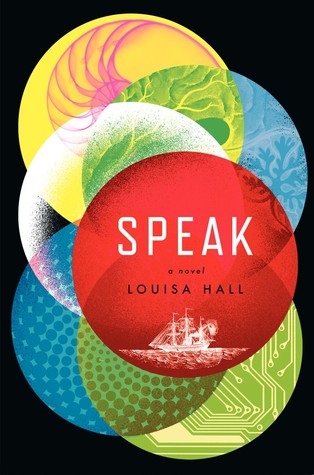 Speak by Louisa Hall [subscription service, but the full text of my review will be available for free during the week starting September 25th as part of Editor’s Choice]: Hall interweaves disparate time periods and voices to track the development of artificial intelligence. The fact that all six narratives are in different documentary formats – memoirs, letters, the transcript of a dialogue, a diary, and so on – means they are easy to distinguish. One might argue that two of them (Alan Turing’s letters and Mary’s shipboard diary) are unnecessary, and yet these are by far the most enjoyable. They prove Hall has an aptitude for historical fiction, a genre she might choose to pursue in the future. A remarkable book interrogating how the languages we converse in and the stories we tell make us human.
BookTrib
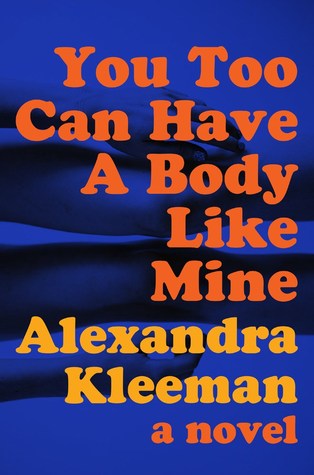 You Too Can Have a Body Like Mine by Alexandra Kleeman: Think of Alexandra Kleeman as an heir to Dave Eggers and Douglas Coupland, with a hefty dollop of Margaret Atwood thrown in. Her first novel is a full-on postmodern satire bursting with biting commentary on consumerism and conformity. Television and shopping are the twin symbolic pillars of a book about the commodification of the body. In a culture of self-alienation where we buy things we don’t need, have no idea where food comes from and desperately keep up the façade of normalcy, Kleeman’s is a fresh voice advocating the true sanity of individuality. Don’t miss her incredible debut.

Foreword Reviews
Conflict Communication by Rory Miller: Based on “ConCom,” the police verbal de-escalation program Miller developed with Marc MacYoung, this book aims to introduce readers to more conscious methods of verbal communication that will sidestep instinctive reactions and promote peaceful solutions. The advice is practical and intuitive, yet picks up on tiny details that most people would not notice. Concise, helpful, and well-organized, this is strongly recommended for readers interested in the psychology of violence and improving communication skills.
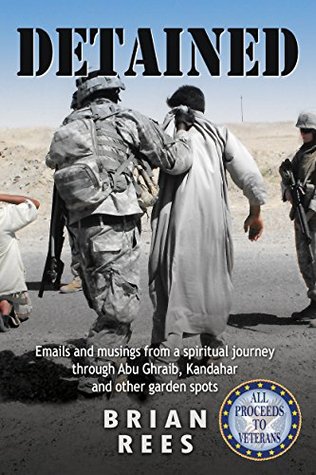 Detained by Brian Rees: Rees intersperses witty e-mail updates from his tours of Iraq and Afghanistan with clued-in commentary about war tactics, terrorism, Islam, and the benefits of transcendental meditation (TM) for soldiers with PTSD. The mixture of formats and topics generally works well, though the spiritual material deserves its own book. There’s no denying Rees’s expertise, and his fluid writing keeps the pages turning. This could make a fascinating companion volume for fans of recent war fiction such as The Yellow Birds, Redeployment, and War of the Encyclopaedists.
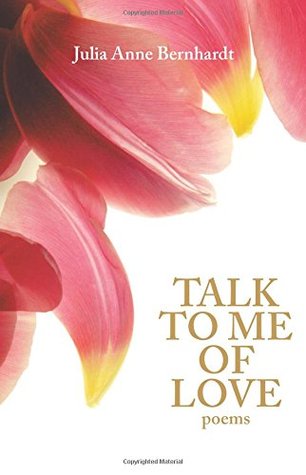 Talk to Me of Love by Julia Anne Bernhardt: The poems in Bernhardt’s first collection range from erotic to spiritual as they investigate love in all its forms. Repetition, rhyme, and mantras produce hypnotic sonic effects and support the central message of the epigraph: “God is in the detail.” The everyday and the eternal mix here. This well-structured collection celebrates different types of love through meditative verse. The themes’ strength is enough to recommend it to readers of Jo Shapcott and Julia Copus.
The Hidden Treasure of Dutch Buffalo Creek by Jackson Badgenoone: Otherworldly ghost writers (the “Neverborn”) compose biographies for ordinary people in this playfully metafictional novel. James is a strong central character whose memories from the 1950s through the present give a sense of history’s sweep, while vivid descriptive language enlivens the settings. Although well written, the book as a whole is an unusual amalgam of spiritualism, historical nostalgia, and technology. James’s story might have been better told as a simple coming-of-age novel with flashbacks.
Nudge
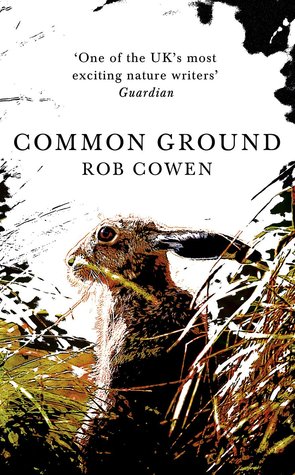 Common Ground by Rob Cowen: An unassuming patch of edge-land outside Harrogate is Cowen’s nature paradise, providing him with wildlife encounters and imaginative scenarios. Essentially, what Cowen does is give profiles of the edge-land’s inhabitants: animal and human, himself included. For instance, he creates an account of the life and death of a fox; elsewhere, he crafts a first-person narrative by a deer being hunted in medieval times. These fictions emulating Watership Down or Tarka the Otter, though well written, are out of place. When the book avoids melodramatic anthropomorphizing, it is very beautiful indeed.
We Love This Book
 Where My Heart Used to Beat by Sebastian Faulks: In Faulks’s thirteenth novel, his trademark themes of war, love and memory coalesce through the story of a middle-aged psychiatrist discovering the truth about his father’s death. Reminiscent of Birdsong as well as John Fowles’s The Magus and Ernest Hemingway’s A Farewell to Arms, this does not have the power of Faulks’s previous work but is a capable study of how war stories and love stories translate into personal history. [A few extra thoughts at Goodreads.]

I also post reviews of most of my casual reading and skimming on Goodreads.
 How to Write a Novel by Melanie Sumner: Our would-be novelist is Aris (short for Aristotle) Thibodeau, 12.5 years old and as precocious as Flavia de Luce. Diane is her single mother, and Max her downright weird younger brother. Using Write a Novel in 30 Days!, Aris is turning her family’s life story into fiction. In some ways they are very out of place here in Kanuga, Georgia. The child’s wry look at family dysfunction reminded me of Sue Townsend’s The Secret Diary of Adrian Mole, Aged 13 ¾. I would probably read something else from Sumner, so long as it wasn’t quite as silly and YA geared as this.
The Art of Memoir by Mary Karr: I would recommend this to anyone who reads and/or secretly wants to write memoirs; for the latter group, there is a wealth of practical advice here, on topics such as choosing the right carnal details (not sexual – or not only sexual – but physicality generally), correcting your facts and misconceptions, figuring out a structure, and settling on your voice. Along the way Karr discusses a number of favorite memoirs in detail, sometimes even line by line: Wild by Cheryl Strayed, Stop-Time by Pat Conroy, A Childhood by Harry Crews, Maya Angelou’s books, Speak, Memory by Nabokov, and so on.

Emblems of the Passing World: Poems after Photographs by August Sander by Adam Kirsch: A charming mix of historical photographs (1910s–1950s Germany) and poems. Kirsch uses his poetry to bring these one-dimensional figures to life, imagining the stories behind their generic titles (“Office Worker” or “Farming Family”) and sometimes slyly questioning the political and status connotations of such designations. One of my favorites was “Student of Philosophy.” This book could draw people whose interests usually run more to nonfiction – especially social history – into giving poetry a try. Releases November 17th.
 Browsings by Michael Dirda: Dirda wrote this pleasant set of bibliophilic essays for the American Scholar website in 2012–13. He’s the American equivalent of the UK’s John Sutherland: an extremely well-read doyen of the classics with a special love for Victorian and Edwardian genre fiction, often as revived by small presses and specialist societies. At times Dirda’s interests can be a bit obscure for the average reader, and some of the essays feel redundant. Still, it’s easy to relate to his addictive book purchasing and hoarding.
The Communist Manifesto by Karl Marx and Friedrich Engels: I read this on the train to Manchester, appropriate reading when approaching one of the UK’s biggest centers of Victorian industry and the place where Marx and Engels met to discuss ideas in the mid-1840s. Like Darwin’s Origin of Species, another seminal Victorian text, this has so many familiar lines and wonderful metaphors that have entered into common discourse that I simply assumed it was composed in English. My eyes glaze over at politics or economics, so I valued this more for its language than for its ideas. Part II, “Proletarians and Communists,” is the most focused part if you want to sample it.
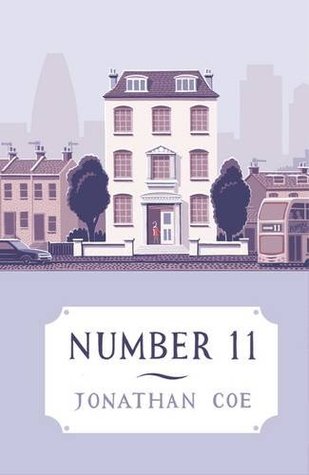 Number 11 by Jonathan Coe: This is a funny and mildly disturbing state-of-England and coming-of-age novel. I’d only read one previous book by Coe, Expo 58; this is a better example of his usual pattern: multiple, loosely linked storylines. Here the theme is the absurdity of modern culture, encompassing many aspects: unjust wars, the excesses of the uber-rich, the obsession with celebrity, and suspicion and exclusion of those who are different from us. The number 11 keeps popping up, too. My favorite parts were a Survivor-type reality television show and a laughably over-the-top prize ceremony banquet. Releases November 11th.
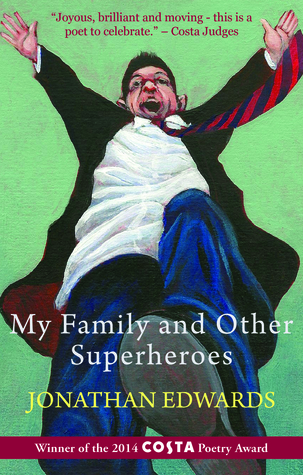 My Family and Other Superheroes by Jonathan Edwards: Edwards displays his proud Welsh heritage with poems reflecting on his family tree and the country’s landscape. One of my favorites was “View of Valleys Village from a Hill,” in which the narrator, with a God’s-eye view of his family, envisions messing around with them. The witty “In John F. Kennedy International Airport” imagines that Wales has been abolished and recreated in miniature in a small Kansas museum (a bit like Julian Barnes’s England, England).
The Whole & Rain-domed Universe by Colette Bryce: Many of these poems are about the author’s Irish family inheritance, both literal and figurative, as in “Heritance”: “From her? Resilience. Generosity. / A teacher’s gravitas. / Irish stew. A sense / of the ridiculous. High ceilings.” I loved the first line of “Signature” – “When I finally gave up and became my mother.” It’s particularly nice how enjambment often makes the thought go just that one line beyond what you expect. I’d read more from Bryce.
Recommended Easter Reading
Unlike Christmas, Easter is a holiday that might not lend itself so easily to reading lists. December is the perfect time to be reading cozy books with wintry scenes of snow and hearth, or old-time favorites like Charles Dickens. Christmas-themed books and short stories are a whole industry, it seems. Lent and Advent both prize special foods, traditions and symbols, but beyond devotional reading there doesn’t seem to be an Easter book scene. Nonetheless, I have a handful of books I’d like to recommend for the run-up to Easter, whether for this year or the future.
 Easter, Michael Arditti
I hadn’t heard of Michael Arditti until I reviewed his novel The Breath of Night – a taut, Heart of Darkness-inspired thriller about a young man searching for a missing priest in the Philippines – for Third Way magazine in late 2013. He deserves to be better known. Easter (2000), his third novel, earned him comparisons to Iris Murdoch and Barbara Pym. His nuanced picture of modern Christianity, especially the Anglican Church, is spot-on.
I’ve just finished Part One, which traces the week between Palm Sunday and Easter Sunday in a fictional London parish, St Mary-in-the-Vale, Hampstead. Structured around the services of Holy Week and punctuated with bits of liturgy, the novel moves between the close third-person perspectives of various clergy and parishioners. Huxley Grieve, the vicar, is – rather inconveniently – experiencing serious doubts in this week of all weeks. And this at a time when the new Bishop of London, Ted Bishop (“Bishop by name, bishop by calling,” he quips), has announced his mission to root out the poison of liberalism from the Church.
So far I’m reminded of a cross between Susan Howatch and David Lodge (especially in How Far Can You Go?), with a dash of the BBC comedy Rev thrown in. Reverend Grieve’s sermons may be achingly earnest, but the novel is also very funny indeed. Here’s a passage, almost like a set of stage directions, from the Palm Sunday service: “The procession moves up the nave. The Curate leads the donkey around the church. It takes fright at the cloud of incense and defecates by the font.”
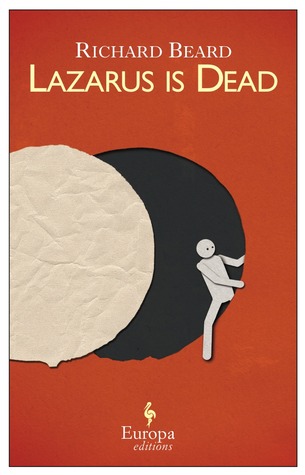 Lazarus Is Dead, Richard Beard
In this peculiar novel-cum-biography, Beard attempts to piece together everything that has ever been said, written and thought about the biblical character of Lazarus. The best sections have Beard ferreting out the many diseases from which Lazarus may have been suffering, and imagining what his stench – both in life and in death – must have been like. (“He stinketh,” as the Book of John pithily puts it.)
Alongside these reasonable conjectures is a strange, invented backstory for Jesus and Lazarus: when they were children Jesus failed to save Lazarus’ younger brother from drowning and Lazarus has borne a lifelong grudge. A Roman official is able to temporarily convince Lazarus that he needs to take up the mantle of the Messiah because he came back to life: he has the miracle to prove the position, whether he wants it or not. The end of the novel follows the strand of the Passion Week, though in a disconnected and halfhearted fashion.
Beard’s interest is not that of a religious devotee or a scriptural scholar, but of a skeptical postmodern reader. Lazarus is a vehicle for questions of textual accuracy, imagination, and the creation of a narrative of life and death. His unprecedented second life must make him irresistible to experimental novelists. Beard’s follow-up novel, Acts of the Assassins, is also Bible-themed; it’s a thriller that imagines the Roman Empire still in charge today.
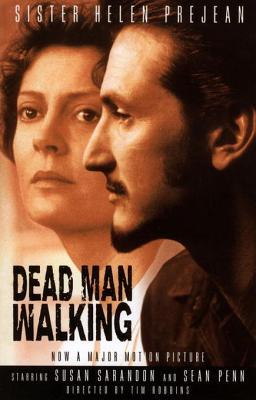 Dead Man Walking, Sister Helen Prejean
No matter your current thoughts on the death penalty, you owe it to yourself to read this book with an open mind. I read it in the run-up to Easter 2007, and would recommend it as perfect reading for the season. As I truly engaged with themes of guilt and retribution, I felt the reality of death row was brought home to me for the first time. Many of the men Prejean deals with in this book we would tend to dismiss as monsters, yet Jesus is the God who comes for the lost and the discounted, the God who faces execution himself.
The film version, which conflates some of the characters and events of the book, is equally affecting. I saw it first, but it does not ruin the reading experience in any way.
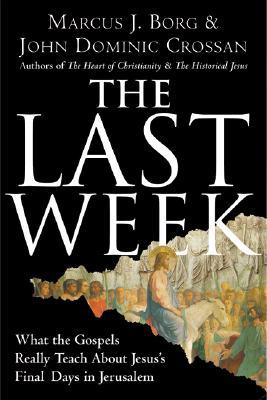 The Last Week: What the Gospels Really Teach about Jesus’s Final Days in Jerusalem, Marcus J. Borg and John Dominic Crossan
Marcus Borg, who just died on January 21st, has been one of the most important theologians in my continuing journey with Christianity. His Reading the Bible Again for the First Time and The Heart of Christianity are essential reading for anyone who’s about to give up on the faith. In this day-by-day account, mostly referencing the Gospel of Mark, Borg and Crossan convey all that is known about the historical Jesus’ last week and death. They collaborated on a second book, The First Christmas, which does the same for Jesus’ birth.
And now for two more unusual, secular selections…
 Bellman & Black, Diane Setterfield
Call me morbid, but I love English graveyards. My most enduring Easter memory is of dawn services at the country church in my husband’s hometown. In the weak half-light, with churchyard rooks croaking a near-deafening chorus, the overwhelming sense was of rampant wildness. The congregation huddled around a bonfire while a black-cloaked vicar intoned the story of scripture, from creation to the coming of Christ, as loudly as possible over the rooks – trying to win mastery over the night, and score a point for civilization in the meantime.
This anecdote goes some way toward explaining why I rather enjoyed Bellman and Black – but why many others won’t. Setterfield’s second novel is a peculiar beast, a bit like a classic suspense story but also an English country fable. Protagonist William Bellman is part Job and part Faustus. At age ten, he makes a catapult that kills a rook. Thereafter, his life is plagued by death, despite his successful career as an entrepreneur at a cloth mill. Can he make a deal with the Devil – or, rather, the sinister Mr. Black – that will stop the cycle of deaths?
Bellman’s daughter Dora is a wonderful character, and because I love birds anyway and have strong, visceral memories involving rooks in particular, I enjoyed Setterfield’s symbolic use of them. However, many will be bored to tears by details of cloth-making and dyeing in early nineteenth-century England. Setterfield evokes her time period cannily, but in such a painstaking manner that the setting does not feel entirely natural. Here’s hoping for a return to form with Setterfield’s third novel.
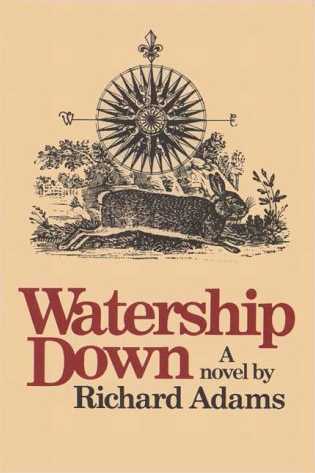 Watership Down, Richard Adams
This was the first book I ever borrowed from the Adult Fiction section of the public library, when I was eight years old. It quickly became a favorite, and though I didn’t reread it over and over like I did the Chronicles of Narnia, it still has a strong place in my childhood memories. Why have I chosen it for this list? Well, it’s about rabbits: a warren comes under threat from English countryside development and human interference.
I loved a little story Rachel Joyce inserts in her novel The Love Song of Miss Queenie Hennessy. Taking over from another nun, a young, air-headed nurse at Queenie’s hospice resumes reading Watership Down to a patient. At the end the patient cries, “Oh, it’s so sad, those poor rabbits” and the nurse replies, “What rabbits?” (You’d think the cover might have given it away!) It’s a good laugh, but also reflects how carefully Adams characterizes – one might say anthropomorphizes – each rabbit; you might forget they’re actually animals.
Do you have any favorite books to read or reread at particular holidays?
Happy spring reading!
 Bookish Beck = Rebecca Foster. American transplant to England. Freelance proofreader and book reviewer.
 Bookish Beck