Hay-on-Wye Trip and Book Haul
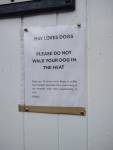 We got back yesterday evening from our tenth trip to Hay-on-Wye, Wales. Our town-centre Airbnb flat was a little shabby and poky, but I can’t deny it was convenient to be able to drop in for lunch or a cup of tea in between bookshops and other activities. It was definitely looking greener in Wales than in our part of England, though a sign about dog-walking indicated that they’d had the heat waves here, too.
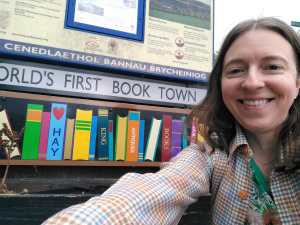
We didn’t begrudge the multiple spells of drizzle over the weekend, even when they coincided with walks to Cusop and The Warren. We’ve been coming to Hay since 2004 and can remember when it was struggle to find a decent evening meal. Good coffee? Forget it. Now one is spoilt for choice for eateries, though we kept costs down a bit by bringing packet curries to cover two nights’ dinners.
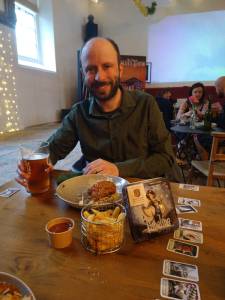 The Globe, an arts venue with café and restaurant, was like our home away from home. We went there on the first evening for a burgers and board games night in partnership with Herefordshire Board Gamers. We played a couple quick hands of card game Timeline (Music and Cinema, then British History) before our food came, then invited another couple to join us for Ticket to Ride Europe, where you have to construct several simultaneous train journeys. The HBG rep acted as a coach, reminding us of the rules – we have a copy but haven’t played it for many years – and advising players about their next move if they asked for help. What a great initiative! He was going to be at the Castle on Saturday afternoon, too.
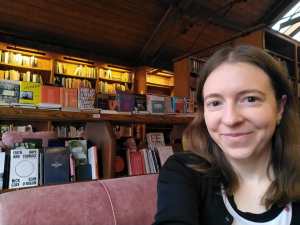
We returned to The Globe on Friday for an hour of its open mic night, which featured a mix of folk and blues acts of various abilities; and again on Saturday morning. We didn’t realize when we booked our stay that we would be in the town for Hay Music Festival. We browsed the programme and plumped for a concert by a wind quintet (flute, oboe, bassoon, French horn and clarinet, with piano accompaniment on some numbers) of young musicians from Sinfonia Cymru. Their repertoire ranged from the familiar (Mozart and sea shanties) to the obscure (Samuel Barber’s “Summer Music” and a Ludwig Thuille piece). I also appreciated the spotlight on two female composers, Mel Bonis and Louise Farrenc. It was a phenomenal performance, and how civilized that the ticket price included coffee and cake from the café.
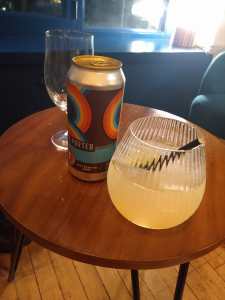
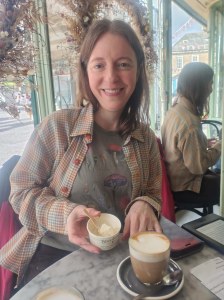
 Hay Distillery and Shepherds ice cream parlour got two visits apiece. I was particularly delighted with my “Campfire Mule” concoction of Dr Beaky’s gin (which has a fascinating smoky flavour), maple syrup and ginger beer; and my scoop of gooseberry and elderflower sheep’s milk ice cream. Appropriately, my main reading for the weekend was Maggie Armstrong’s linked short story collection Old Romantics, which has cocktails on the cover.
Often, if we haven’t visited in a while, we’ll see that a few bookshops and other independent businesses have closed. So what a pleasant surprise to find that four new shops have opened since our last visit: Christie & Doyle – a classic crime extension to Murder & Mayhem, Hay Comics, Bookshop 451 for science fiction and fantasy, and A Shop Called Alice, which appears to be exclusively Alice in Wonderland- and Lewis Carroll-related books and memorabilia. (And a favourite coffee spot, The Bean Box, that we thought had closed has reopened; perhaps we just missed their seasonal hours last spring.) All in all, there are about 20 places in the town to shop for books, and we browsed most of them.
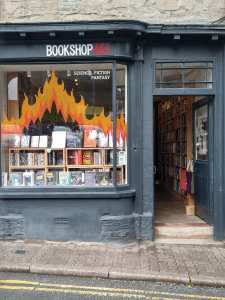
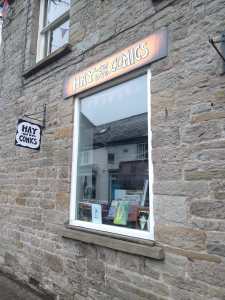
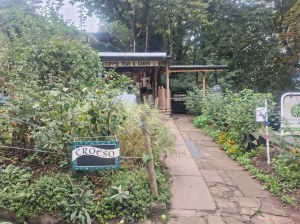
Here’s my haul of 16 books from 8 shops, which included a few by favourite authors, some that I’ve wanted to get hold of for ages, and others that I’d seen mentioned by fellow bloggers. I was especially pleased to locate The Victorian Chaise-Longue, one of my bibliotherapy prescriptions from way back in 2018, in Addymans’ outdoor Book Passage for £1. A couple of purchases that I’ll try to read right away are Gloria Naylor’s novel-in-stories, The Women of Brewster Place, at Booths (for Short Story September); and a remainder copy of Octavia E. Butler’s Fledgling at Hay Cinema Bookshop (for R.I.P.). A slightly pricier haul for me this time, with a few remainder copies plus rarer secondhand finds, but the total of £46.42 still works out to an average of less than £3/book. Mr F’s different foci – nature writing, collectible Observer books, bird field guides and New Zealand-set novels in advance of his trip there in November–December – meant he supported several additional shops.
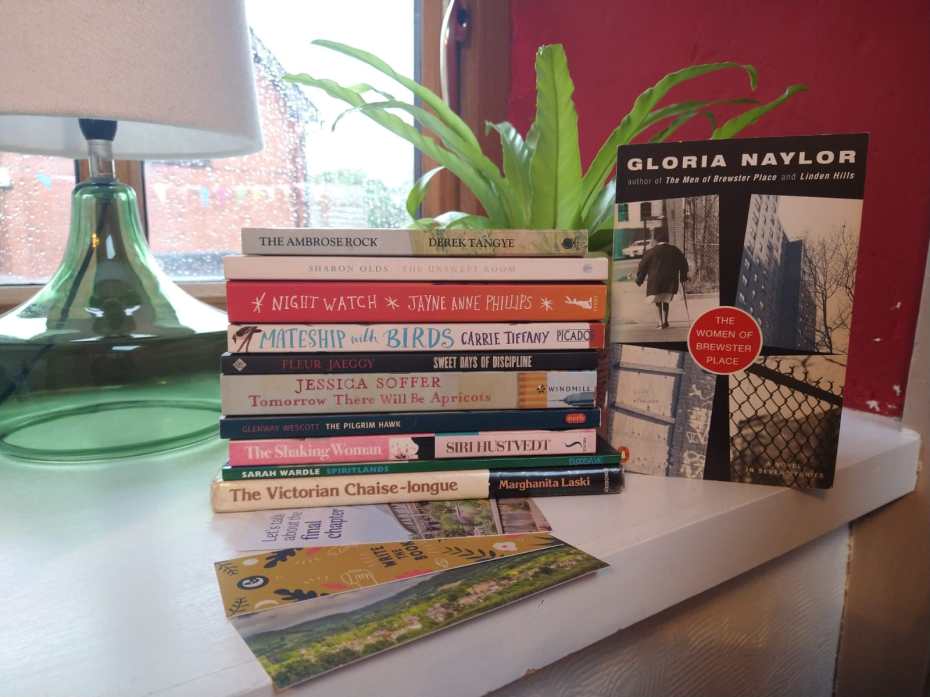
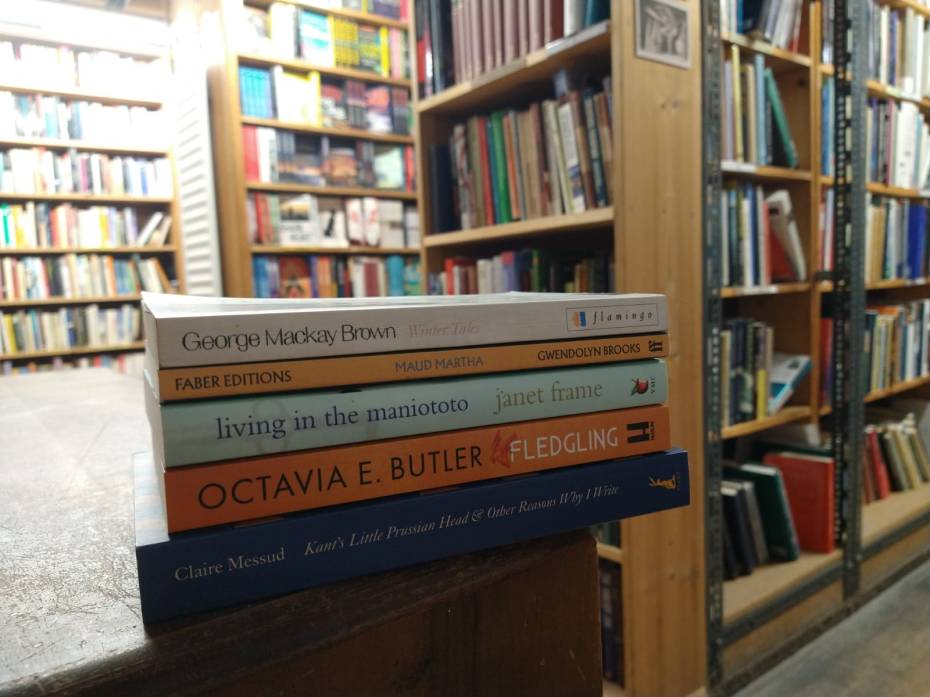
The Naylor was the only specific book that was on the paper wish list I brought with me (which also including Butler generally), while the Hustvedt and Wescott titles were on my Goodreads “priority to find” shelf. Weirdly, as I browsed I kept coming across copies of Michèle Roberts’ During Mother’s Absence and books by Janette Turner Hospital, an Australian author I hadn’t knowingly encountered before.
We often ask ourselves what Richard Booth, the Book Town founder and self-proclaimed “King of Hay,” would think about the town’s gentrification. He was not a fan of the Festival, for instance, and his stack-’em-high-sell-’em-cheap philosophy (“He once said he would much rather sell a million books for one pound than one book for a million pounds”) – which softened over the years as mentors helped him identify and price antiquarian material appropriately – seems rather at odds with the bougie boutiques and hipster cafes. But it’s by attracting a wider and younger clientele that Hay has retained its independent spirit. So I hope rather than turning in his grave he would be grateful to those who have kept the place alive.
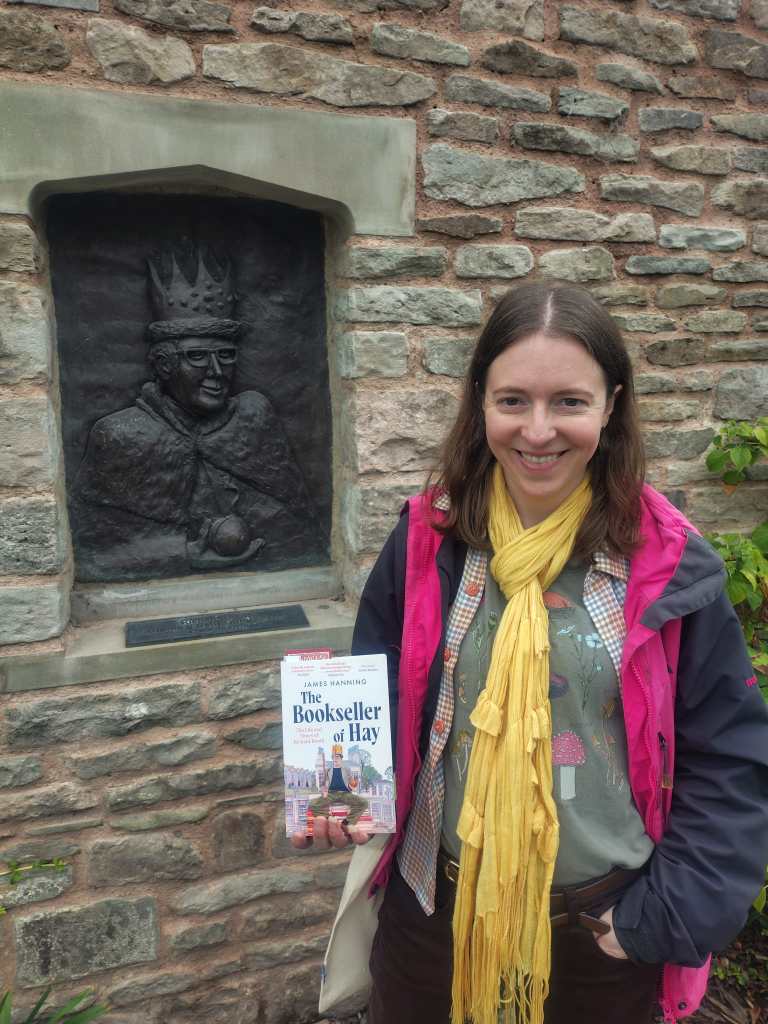
I read nearly the first third of the recent biography of Booth, The Bookseller of Hay, while there. James Hanning makes a good case for Booth being that biographical cliché, the bundle of contradictions: privileged but happy to be one of the common men; passionate about his ventures but sometimes sloppy and misguided; with great capacity for compassion but also thoughtlessness. I didn’t know that in 1964 he was responsible for the death of a passenger due to reckless and probably drunk driving. Hanning believes this haunted him for the rest of his life. It’s intriguing to see the different people he interacted with, e.g. Margaret Drabble visited the town with a boyfriend and was dismissive: “Did he ever read books? The books themselves were just the product. I don’t think Richard was interested in literature.” Hanning depicts Booth as an eccentric who would today be considered on the spectrum. I’ll finish reading this to try to keep the Hay spirit alive a bit longer, and might follow it up with a reread of Sixpence House, Paul Collins’s memoir of living and working in Hay.
Though we were sad to leave – mostly because we know we’re facing a long, busy term and the inevitable slide into winter – we know we’ll be back, sooner rather than later.
Making Plans for a Return to Hay-on-Wye & A Book “Overhaul”
In mid-September we’ll make our TENTH trip to Hay-on-Wye, the Book Town of Wales; it’s obviously one of our favourite places. We’ve concluded that 18 months is an ideal interval between visits for there to be adequate turnover in the bookshops and (hopefully) pleasant changes around the town. Last time we spent four nights in a holiday cottage in Cusop. This time we found an Airbnb flat in the town centre, where we’ve never stayed before. Towards the end of a wretched summer, we fear we’ll see the effects of drought even in Wales, where we usually enjoy walks through green sheep-dotted fields. Our Thursday to Sunday trip will cover market day and, incidentally, the annual music festival. We’ve booked tickets for a Saturday morning classical concert (with coffee and cake) at The Globe and will also go there on Thursday evening for burger and board game night after cocktails at Hay Distillery. There will be plenty of book shopping in between!
An Overhaul of Last Trip’s Book Purchases
Simon of Stuck in a Book has a regular blog feature he calls “The Overhaul,” where he revisits a book haul from some time ago and takes stock of what he’s read, what he still owns, etc. (here’s the most recent one). With his permission, I occasionally borrow the title and format to look back at what I’ve bought. Previous overhaul posts have covered pre-2020 Hay-on-Wye purchases, birthdays, the much-lamented Bookbarn International, and Northumberland. It’s been a good way of holding myself accountable for what I’ve purchased and reminding myself to read more from my shelves.
Here’s a look back at the 13 new (remainder) and secondhand books I bought in April 2025. I’ve done remarkably well on this haul in that I’ll soon have read 9! I’d call that a triumph.

Had already read (but wanted to own and eventually reread): 2
- Small Victories by Anne Lamott
- The Bridge of San Luis Rey by Thornton Wilder
Read (links to reviews): 6
- My Animals and Other Family by Julia Blackburn [passed on to a book club friend]
- Mittens for Kittens and Other Rhymes about Cats, ed. Lenore Blegvad
- Fountainville by Tishani Doshi [resold]
- Au Revoir, Tristesse by Viv Groskop
- A Rough Guide to the Heart by Pam Houston
- Tsi-Tsa by George Mikes
Currently reading: 1
- Kiss in the Hotel Joseph Conrad by Howard Norman
Still unread: 4
- What I Don’t Know about Animals by Jenny Diski
- Electricity by Victoria Glendinning
- Chaotic Angels by Gwyneth Lewis
- Charming Billy by Alice McDermott
Total still owned: 11
 I’ll take the four unread books above – two novels, a collection by a Welsh poet, and autobiographical essays – with me to read in the car and while I’m in Hay. I also plan to purchase James Hanning’s recent biography, The Bookseller of Hay (about Richard Booth, Book Town founder and self-proclaimed “King of Hay”) in paperback to take with me. And I don’t think I’ll be able to resist yet another reread of Sixpence House, Paul Collins’s memoir about finding a temporary home and work among the bookshops of Hay, which is one of my favourite and most-read books of all time.
Now, if I go back a step and look again at the 16 books I bought in October 2023, the picture is not as encouraging. I’ve barely made any progress since my previous overhaul post except for reading one more poetry collection, The Return of the Cranes by John Heath-Stubbs. So I’ve also added the novels The Last Hope of Girls by Susie Boyt, The Tie that Binds by Kent Haruf, and How to Make an American Quilt by Whitney Otto; and the poetry volume From the Virgil Caverns by Peter Redgrove to the stack to take with me. “Taking books to Hay” could well be a saying epitomizing superfluity, just like “coals to Newcastle” and “tea to China,” but no matter. I always read a lot while I’m in such a bookish place.
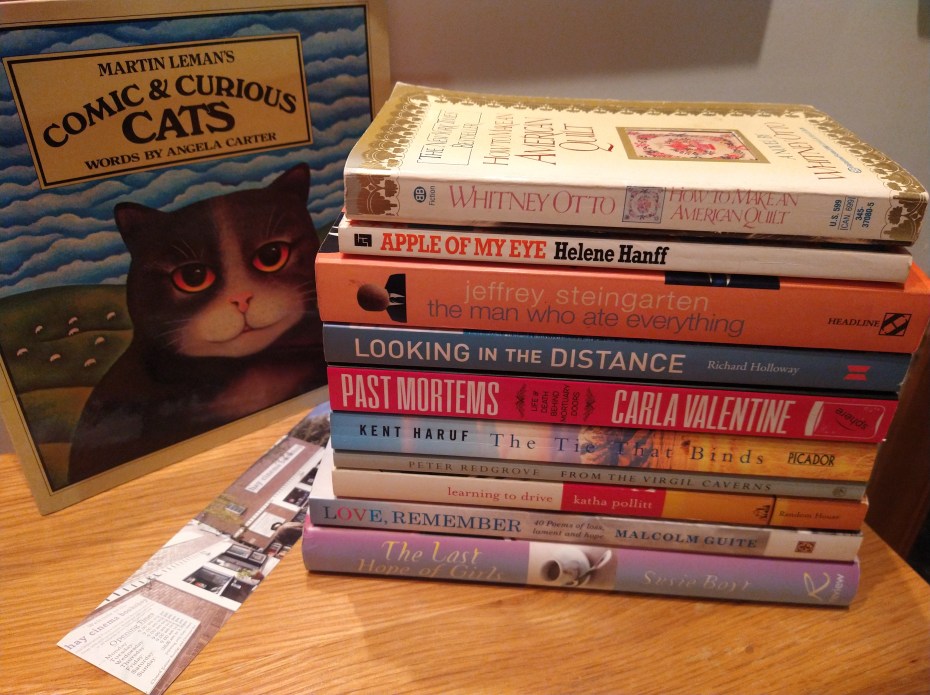
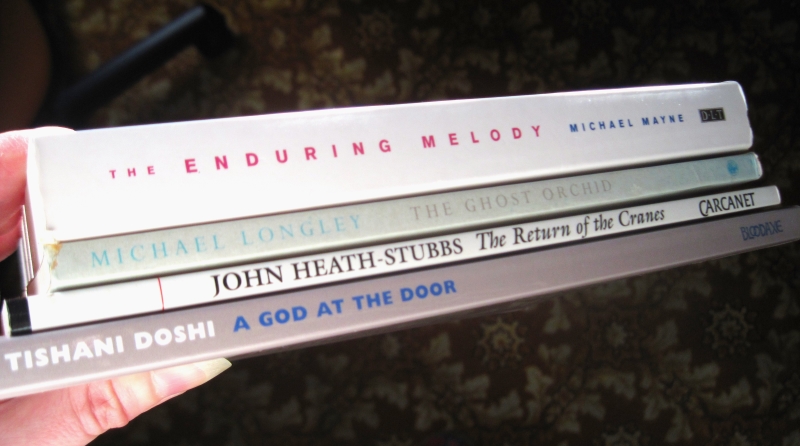
(Going back even further, to our September 2020 trip, I note that I still have 13 of my 26 purchases to read. Yikes! I think I’ll ignore those for now…)
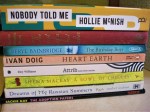
Hay-on-Wye Trip & Book Haul
Our previous trip to Hay was in September 2020, when Covid restrictions meant some shops were closed and most eateries only offered takeaway or outdoor dining. At the end of my write-up, I vowed to go back before I turned 40. I stayed true to my word and we arrived in town the day before my 40th birthday. (Not only that, but I’ve completed the Triple Crown of British Book Towns in a year, what with visits to Wigtown in June and Sedbergh in August. My hauls were comparable in all three and my spending in Hay (£37.95 for 15 books) was somewhere between Sedbergh’s low (£24.50 for 13) and Wigtown’s high (£44 for 16).)
Every time we visit, we find some businesses have closed but others have opened. There’s still a core of 12 bookshops, but as in Sedbergh, there are other establishments with a few shelves of books, so there are 15–20 places in town where you can browse books. That’s plenty for anyone to be getting on with in a long weekend.
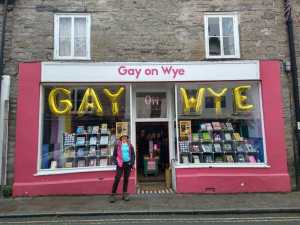
I had an action plan for our three days that moved from cheapest (honesty shelves below the castle, £1 area outside Cinema; Oxfam and British Red Cross charity shops; Hay-on-Wye Booksellers; Clock Tower Books) through mid-price (Addyman Books, Cinema) to the more expensive options (Green Ink, Booths). The town’s newest shop, as pictured in my birthday post, is Gay on Wye, which, with North Books, replaced Pembertons as sellers of new stock. (Booth’s, the Castle and the Old Electric Shop also sell curated selections of new books.)
New to us on this trip:
- The Bean Box, a terrific and reasonably priced mini coffee bar run out of a horse box by the river. They have a nice garden and a secondhand book selection, and you can sit on their patio or at tables and chairs closer to the river view.
 Felin Fach Griffin, a country pub about a 20-minute drive from Hay, where we booked a table for my birthday lunch. Excellent food and a cosy atmosphere, with hill views from the windows.
- Hay Castle, which has had scaffolding up and been half-derelict ever since our first visit in 2004. At various points it has had books for sale. In 2022, it opened to the public as a visitor attraction. A projected animation gives a jaunty historical overview from the Middle Ages to the present day. We especially liked the room of Richard Booth and Book Town memorabilia and the viewing platform at the top. Booth himself was the last to live in the castle. On our earliest trips we would occasionally see him around town – a loud, shuffling (after his stroke) eccentric.

- Hay Distillery, where I had a delicious gin cocktail on my birthday evening.
“It is obviously impossible to catalogue over one million books and these listings therefore represent only a very small selection of the books that we have in stock in Hay. We would point out that one of the chief services of the secondhand bookshop is to provide the customer the opportunity to find the book he did not know existed.”
~Richard Booth, “Books for Sale” periodical (1981?)
“The new book is for the ego; the second-hand book is for the intellect.”
~Richard Booth, quoted on the castle exhibit wall
When we arrived at our Airbnb, we found it had not been cleaned; no linen, etc. A cleaner belatedly came to sort it out, but the owner gave us a full refund, so a minor inconvenience got us back more than enough to pay for the rest of the weekend.
After the final day’s shopping, this was my final book haul. We had particularly good luck in the Addyman’s alleyway, where all books are £1 – we got a bunch for presents (not pictured).


I also opened a first set of birthday books. (My husband and I are having a joint birthday party later this month; I daresay there may be more book parcels to open after.)
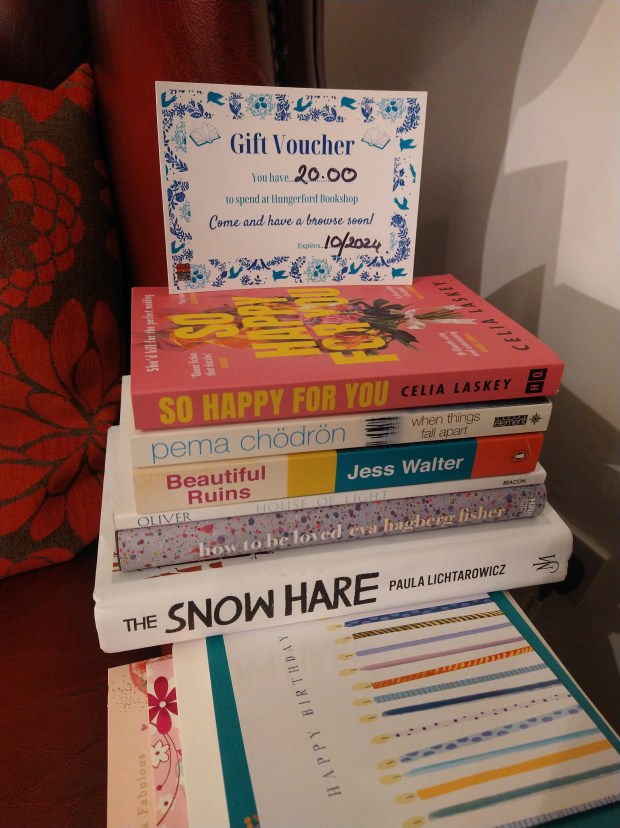
Hay is gentrified and hipster now in ways that would probably have Booth turning in his grave. While we slightly miss its dusty, ramshackle past, it’s the new businesses and the Festival that have helped it survive.
If you’ve never been to Hay, I’d certainly recommend it. I possibly slightly prefer Wigtown for its community atmosphere, but it’s more than twice as far away and has fewer book shopping opportunities, which for many of us is the main draw, as well as measly food options. Depending on where you live or are traveling in from, Hay is also likely to be the easiest of the three UK book towns to get to, including by public transport.
Hay-on-Wye Trip & Sixpence House Reread
We found Hay-on-Wye fairly bustling on an early September weekend. Not all of the bookshops are operational or have reliable opening hours, so we missed our chance to go in a few of them this time. Still, nine was plenty to be getting on with. The castle currently has scaffolding up for necessary renovations, and many eateries were offering little or no indoor table service. Masks are not actually compulsory in Wales, but we wore ours inside shops anyway, and half or more of the other customers and booksellers were doing the same.


Day 1: Drive there; Clock Tower Books, Oxfam, a great haul from the honesty shelves by the Castle (everything’s £1); ice cream cones from Shepherds; dinner at The Globe.

Day 2: A walk up Hay Bluff; roast lunch at the Three Tuns pub; Broad Street Book Centre, Hay Cinema Bookshop.
Day 3: Cinema outdoor area, Booth’s, British Red Cross shop, back to Oxfam, back to Clock Tower Books, Green Ink Booksellers; ice cream cones from Shepherds (again); drive home.
“To look for a specific book in Hay is a hopeless task; you can only find the books that are looking for you, the ones you didn’t even know to ask for in the first place. … What you mean to find matters less than what you do find.”
~Sixpence House: Lost in a Town of Books, Paul Collins (see below)


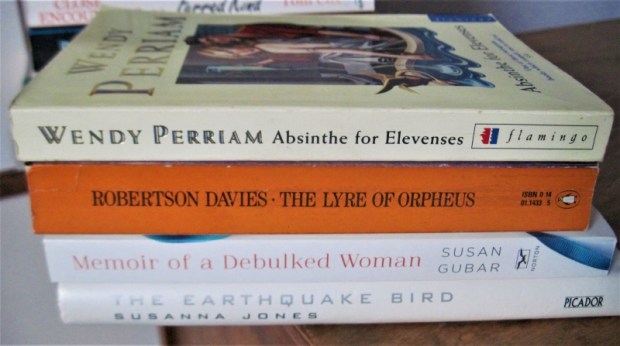
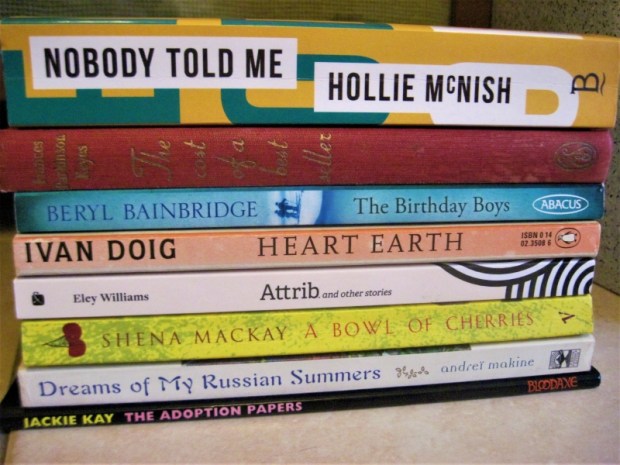
I bought 26 books in total (though one is an omnibus, so you could call it 28), at an average spend of £1.81 per volume. (My husband bought 10 nature books. We also found a gift for my father-in-law’s birthday next week – whew!) I’m particularly pleased with the Robertson Davies novels and the memoirs, some of which have been on my wish list for a long time. My interests in animals plus foodie and medical themes come through clearly. Some authors here I’ve never tried but have been meaning to; others are familiar names I was interested to read more by. I only noticed later on that Ghosts, the John Fuller poetry book, is a signed copy.
What I read
From last year’s book haul: The first 30 or so pages in Ingenious Pain by Andrew Miller and Jesus Land by Julia Scheeres. I’ll probably only skim the Spowers travel book (another one I only just noticed is signed). I have to read a different Dunmore first, towards my Women’s Prize reading project, as it’s requested after me at the library, but I’ll try to get to Talking to the Dead before too much longer.
I got through another 90 pages in Mike Parker’s On the Red Hill, about life in the house he and his partner inherited in the Welsh countryside from another gay couple. I also read about half of Tilly and the Lost Fairy Tales, Anna James’s second middle-grade novel about a girl who disappears into books and interacts with the characters, and the remainder of A.N. Wilson’s The Tabitha Stories, a cute chapter book with illustrations about a kitten learning how to be a cat.
Mostly, I focused on rereading the whole of Paul Collins’s memoir Sixpence House. I’ve listed this as one of the landmark books in my life because, as I was getting ready for my year abroad in England in the late summer of 2003, it was one of the books that whetted my appetite for traveling, and particularly for visiting Hay-on-Wye. (We first went in 2004; this was our seventh trip.)

In 2000 Collins moved from San Francisco to Hay with his wife and toddler son, hoping to make a life there. His parents were British and he’d enjoyed trips to the Book Town before, so it wasn’t a completely random choice. The place suited his interest in the oddities and obscure figures of literature and history. In fact, he’d just finished writing Banvard’s Folly, a fun book containing 13 profiles of thinkers and inventors whose great ideas flopped. (I should reread it, too.)
As he edits his manuscript and hunts for the perfect cover and title, he is also unexpectedly drawn into working for Richard Booth, the eccentric bookseller who was responsible for creating the world’s first book town and crowned himself King of Hay. Booth hired him to sort out the American Studies section – but if you ever went in the pre-2007 Booth’s you’ll know how impossible it would have been to make order out of its chaos. He comes across lots of interesting books time has forgotten, though (I first learned about W.N.P. Barbellion’s The Journal of a Disappointed Man from this book; why have I still not read it?!), and muses on counterfeiting, cover designs, bookbinding, and the sadness of the remainders bin.
Renting an apartment above Pembertons, which no longer exists but was at that time the town’s only new bookshop, Collins and his wife look at various properties and fall in love with a former pub. But when the survey comes back, they realize fixing all the damp and rot would nearly double its £125,000 price tag. (That sure looks good these days! The B&B next to the Airbnb flat where we stayed was for sale for over £700,000. Cusop Dingle is full of large, posh houses – Collins’s landlady referred to it as the “Beverly Hills of Hay.”) Buying one of the new-build houses on the edge of town just isn’t their dream.
In the end, after six months or so in Hay, they admit defeat and move back to the States. So in a sense this is – just like Banvard’s Folly, the book being shepherded into publication within it – a book about an experiment that turned out to be a noble failure. It’s warm, funny in a Bryson-esque way, and nostalgic for a place that still exists but a time that never will again. I loved spotting familiar landmarks, even if the shops have changed hands or are no longer there. This was probably my fourth read, but it all still felt fresh. An enduring favorite of mine. 
I’d be intrigued to know what Collins would make of Hay 20 years later. In 2000 it had 40 bookshops; now it’s only 12, with online sellers, book-related businesses, and shops further afield pushing the listings in the annual leaflet to 26. Whereas then Collins felt they were the only young family in town, it’s very much a hipster place now and we saw many groups of teens and twentysomethings. A tapas bar, boutique stores, turmeric chai lattes … it’s not just a musty antiquarian book lover’s paradise anymore, and that might sadden some like Collins. Yet gentrification and the Festival may be the only things that have kept the town alive. Richard Booth died last year, but the book town vision should live on.


I miss Hay already. I hate to think of all the time that might pass before I can get there again, and what will (or won’t) have changed by then. A few years can seem to go by in an instant these days. My vow is to go again before I turn 40.
 Bookish Beck = Rebecca Foster. American transplant to England. Freelance proofreader and book reviewer.
