Book Serendipity, August to September
From Jennifer Croft’s superb Notes on Postcards (forthcoming in November):
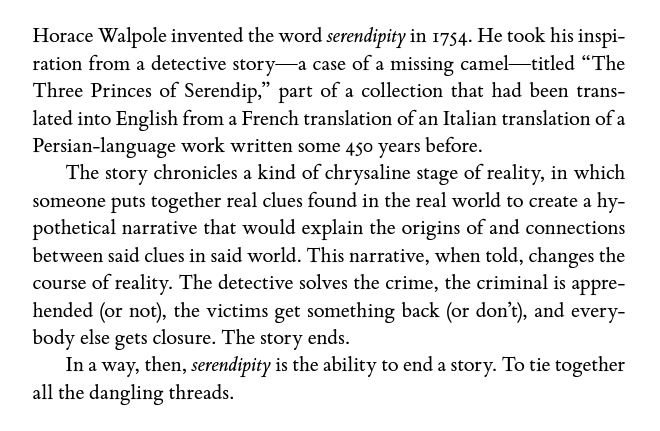
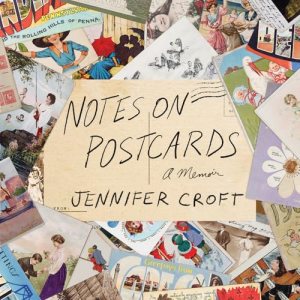
I’d heard that story of Horace Walpole and the etymology of “serendipity” before. Tying together dangling threads is a good description of what I try to do with these posts, which arise from my reading.
I call it “Book Serendipity” when two or more books that I have read at the same time or in quick succession have something in common – the more bizarre, the better. This is a regular feature of mine every couple of months. Because I usually have 20–30 books on the go at once, I suppose I’m more prone to such incidents. People frequently ask how I remember all of these coincidences. The answer is: I jot them down on scraps of paper or input them immediately into a file on my PC desktop; otherwise, they would flit away!
 The more accurate keyword would probably be “synchronicity,” which according to Carl Jung, who “believed in a universe of mysterious connections,” is “a meaningful coincidence in which an internal mental state somehow attracts a real-world parallel” (quotes from The Spirituality Gap by Ali Millar). An intriguing idea, that: somehow, by thinking about these ideas or details, I might be … luring repeat incidents to me?!
The following are in roughly chronological order.
What’s in a name?
- Girlfriends named Maddie (in Year of the Drought by Roland Buti) and Mattie (Tom’s in Pardon Our French by Alex Durand and Tom Carles); plus a granddaughter (in The Typing Lady and Other Fictions by Ruth Ozeki) and niece (in The Land and Its People by David Sedaris) named Maddy.
- A character named Hattie in Leaving the Yellow House by Saul Bellow and The Correspondent by Virginia Evans.
- A character named India in Leaving the Yellow House by Saul Bellow and Family Family by Laurie Frankel (our second The Marriage Plot/Literary Wives club read this year in which the protagonist was named India, after Mrs. Bridge by Evan S. Connell).
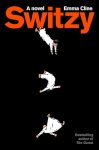
 A daughter named Rebecca in Switzy by Emma Cline and Family Family by Laurie Frankel (where she’s known as Bex); and sisters named Rebecca (known as Becks) in one story of The Rental Heart and Other Fairytales by Kirsty Logan and The Long Road to Holy Island by Austin Suggs. Those are both nicknames I’ve had, by the way. The one nickname I detest is Becky.
- A mother named Monica in The Summerhouse Trilogy by Alice Thomas Ellis and Apt Pupil by Stephen King.
- A Hilda in The Given World by Melissa Harrison and one story of Self-Help by Lorrie Moore.
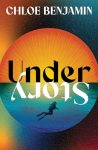
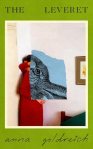
- A Clare in Under Story by Chloe Benjamin, The Leveret by Anna Goldreich and The Given World by Melissa Harrison.
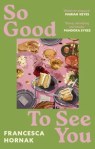
- A Sergio in Old Romantics by Maggie Armstrong and a Serge in So Good to See You by Francesca Hornak.
- A son named Silas in Under Story by Chloe Benjamin and So Good to See You by Francesca Hornak.
- Compensation for run-over chickens in Year of the Drought by Roland Buti and Don’t Let’s Go to the Dogs Tonight by Alexandra Fuller.
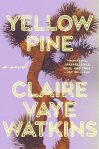
- “Enough is enough” is a slogan in The Land and Its People by David Sedaris (where it’s also an essay title) and Yellow Pine by Claire Vaye Watkins.
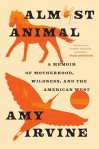
 Telluride, Colorado features as a setting in Almost Animal by Amy Irvine and in one essay of The Land and Its People by David Sedaris.
- A trip from Paris to see Chartres Cathedral in The Magician by W. Somerset Maugham and Shadow of a Man by May Sarton.
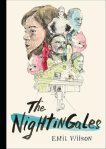
- Fleeting references to the Donner Party in Yellow Pine by Claire Vaye Watkins and The Nightingales by Emil Wilson.
- An essay about an Icelandic sheep ram, and the idea that one should ride geldings because they’re calmer and more reliable than mares, in Animals Taught Me Everything by Pam Houston and The Land and Its People by David Sedaris.
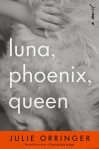
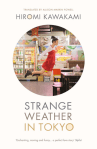
- The protagonist’s work performance declining due to dementia, and a tweed jacket, in Switzy by Emma Cline and Luna, Phoenix, Queen by Julie Orringer. (There’s also a tweed jacket mentioned in Strange Weather in Tokyo by Hiromi Kawakami.)
- German artist Käthe Kollwitz is mentioned in Seed Corn Must Not Be Ground (the title is from one of her works) by Pat Browne and The Book of Mating by Laksmi Pamuntjak.
- Child brides and incestuous rape are mentioned/feature in Almost Animal by Amy Irvine and The Book of Mating by Laksmi Pamuntjak, both of which I was reading early for Foreword Reviews.
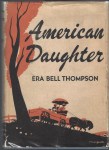
- The keeping of goats in Almost Animal by Amy Irvine and American Daughter by Era Bell Thompson, both of which I was reading early for Foreword Reviews.
- In August I unwittingly started rereading two books that I’d first read in April 2013 (is 13+ years the ideal interval?!): I Feel Bad about My Neck by Nora Ephron and Flush by Virginia Woolf.
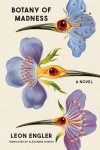
- Men by the name of Christmas: the narrator’s parents wanted to name him Noel (but the German state didn’t allow it?!) in Botany of Madness by Leon Engler; and a main character is named Joe Christmas in Light in August by William Faulkner.
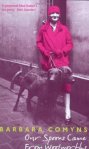
- To the narrator’s question of whether something awful has happened / they’ve done something wrong, a reply of “it very likely had but she hadn’t heard about it yet” in Our Spoons Came from Woolworths by Barbara Comyns and “Most likely. You know that better than I do” in Botany of Madness by Leon Engler.
- The idea that human–animal communication/connection is deeper than that between humans because it is beyond language plays a major role in three books I read around the same time: Animals Taught Me Everything by Pam Houston, Mitz by Sigrid Nunez, and Luna, Phoenix, Queen by Julie Orringer. (The Houston and Orringer both publish on 13 October and I was reviewing them early for Shelf Awareness.)
- The fact that children of alcoholics feel they have to make everything perfect to avoid conflict appears in Botany of Madness by Leon Engler and Animals Taught Me Everything by Pam Houston.
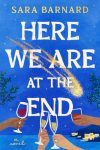 I encountered lines from the song “Closing Time” by Semisonic in Here We Are at the End by Sara Barnard (a specific reference to the pop song accompanied “Every new beginning comes from some other beginning’s end” – which I was amused to learn is actually a quote from Seneca!) and Family Family by Laurie Frankel (“You don’t have to go home. But you can’t stay here.” – not attributed, but I can’t but think she had the song in mind.)
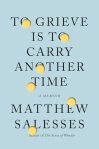
- The stereotype of overachieving Asian Americans is mentioned or discussed in Family Family by Laurie Frankel, Miracle Creek by Angie Kim, and To Grieve Is to Carry Another Time by Matthew Salesses. There are Korean Americans in all three, and Korean children adopted into a white family in the Frankel and Salesses.
- A young woman is aghast at her mother getting rid of loved pet(s) in Nightjar by Emily Ruskovich and The Nightingales by Emil Wilson (both titled after birds!)
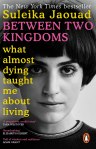
- A mention of the practice of buying single cigarettes from a city corner shop for 50 cents in Between Two Kingdoms by Suleika Jaouad and Miracle Creek by Angie Kim.
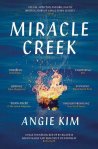
- Saving turtles from the road in Yellow Pine by Claire Vaye Watkins and then a mention of someone else doing so in To Grieve Is to Carry Another Time by Matthew Salesses.
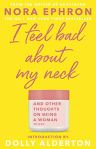 The lines “Leave as soon as you think to yourself, ‘This is a great party. I’m having a wonderful time’” from Nora Ephron’s I Feel Bad About My Neck are echoed in Emma Cline’s Switzy.
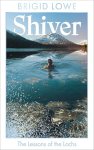
- A holy well is mentioned in The Given World by Melissa Harrison and Shiver by Brigid Lowe.
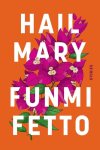
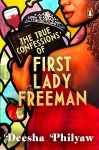
- A sexy pastor’s wife features in one story of Hail Mary by Funmi Fetto and The True Confessions of First Lady Freeman by Deesha Philyaw.
- A flawed pearl is mentioned in Apt Pupil by Stephen King and A Desert between Two Seas by A. Muia.
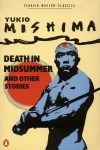
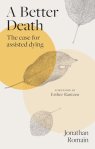
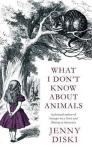
- A mention of hara-kiri (literal) in Death in Midsummer by Yukio Mishima and A Better Death by Jonathan Romain; and as a metaphor in What I Don’t Know about Animals by Jenny Diski.
- Camel cigarettes appear in Miracle Creek by Angie Kim and Apt Pupil by Stephen King.
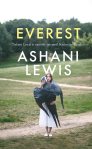
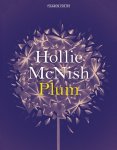
- A woman remembers being nicknamed an “ice queen” in one story of Everest by Ashani Lewis and Plum by Hollie McNish.
- A woman has to have a bowel movement in the labour ward in Old Romantics by Maggie Armstrong and Natural Disaster by Lisa Owens.
- The challenge of being a mother in the film industry is discussed in Family Family by Laurie Frankel and So Good to See You by Francesca Hornak.
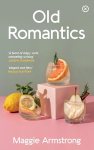 A three-year-old gets their own cereal breakfast in Old Romantics by Maggie Armstrong and So Good to See You by Francesca Hornak.
- A woman feels guilty of neglect due to her eight-year-old son’s death in a lake in Under Story by Cloe Benjamin and The Correspondent by Virginia Evans.
- A viral scandal where photographs/video footage are misconstrued to make a woman look bad in Hum by Helen Phillips and The True Confessions of First Lady Freeman by Deesha Philyaw.
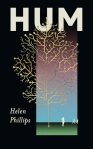
- A misunderstanding causes a mother to be investigated for child neglect in one story of Old Romantics by Maggie Armstrong and Hum by Helen Phillips.
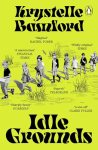 Shirley Temples (the non-alcoholic cocktail) are mentioned in Idle Grounds by Krystelle Bamford and The True Confessions of First Lady Freeman by Deesha Philyaw.
- A woman impulsively takes a dishwashing job in Under Story by Cloe Benjamin and Exit Party by Emily St. John Mandel.

- A scene of putting out sandbags in Rattlebone by Maxine Clair and The Long Road to Holy Island by Austin Suggs.
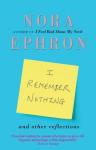 An unwanted mince pie in Idle Grounds by Krystelle Bamford and I Remember Nothing by Nora Ephron.
- A child in hospital with acute appendicitis in one story of Don’t Go to Sleep in the Dark by Celia Fremlin and Natural Disaster by Lisa Owens (and with suspected appendicitis in Shiver by Brigid Lowe).
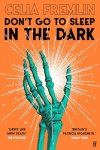
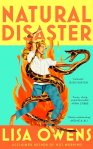
- The Tennyson poem “The Charge of the Light Brigade” is mentioned in Idle Grounds by Krystelle Bamford and Peck & Peck by Bonnie Garmus.
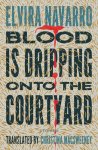
- Having to get off an elevator at the previous floor because it doesn’t go up to the destination in Exit Party by Emily St. John Mandel and Blood Is Dripping onto the Courtyard by Elvira Navarro.
- Realizing one’s bed is unmade in one story of Everest by Ashani Lewis and A Very British Midlife Crisis by Rob Temple.
- Confusion over the name of a possibly abused dog (with special powers!) adopted from a shelter in Peck & Peck by Bonnie Garmus and Luna, Phoenix, Queen by Julie Orringer.
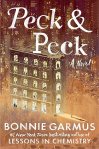
- I encountered the phrase “She’s not worth it” in both Peck & Peck by Bonnie Garmus and The True Confessions of First Lady Freeman by Deesha Philyaw within 10 minutes!
 Someone being pulled back into the womb in Under Story by Chloe Benjamin and Nightmares and Daydreams: A.C. 2020 by Mirko Ilić.
- An apple orchard as a setting in Under Story by Chloe Benjamin and one story of Apple and Palm by Patricia Henley.

- “Little Nemo in Slumberland” as an image and metaphor in Switzy by Emma Cline and Nightmares and Daydreams: A.C. 2020 by Mirko Ilić.
- A lost twin sibling – lost at birth in Peck & Peck by Bonnie Garmus and H Is for Hawk by Helen Macdonald; lost later on in one story of The Rental Heart and Other Fairytales by Kirsty Logan.


- A portal to another timeline, and characters who are doubles of each other, in Under Story by Chloe Benjamin and Exit Party by Emily St. John Mandel.
- A lesbian couple moves to a new house and the one woman feels isolated and sad because she’s recently had a miscarriage in the debut novels The New People by Andrea Uptmor (reviewed for BookBrowse) and then The Leveret by Anna Goldreich.

- Nagging a woman to use lotion on her hands as they’re the first place to show signs of ageing in Hum by Helen Phillips and one story of Moderate to Poor, Occasionally Good by Eley Williams.
A couple of visual ones:
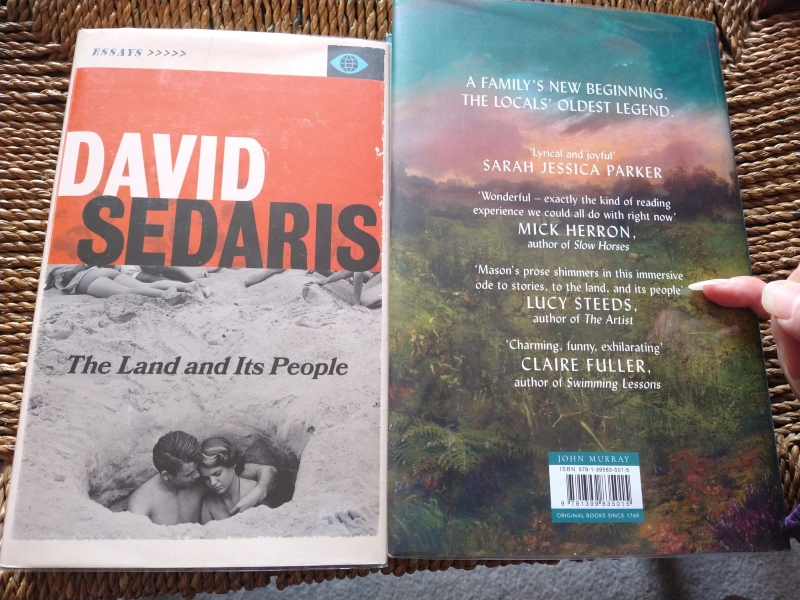
- I was reading The Land and Its People by David Sedaris at the same time as Country People by Daniel Mason, one of whose blurbs happens to borrow Sedaris’s title phrase.
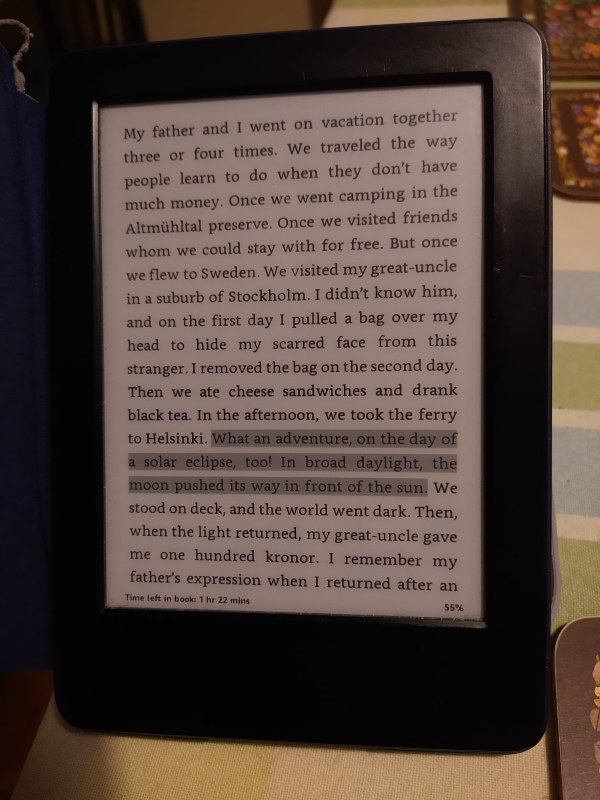
- I was reading Botany of Madness by Leon Engler and encountered this passage on the day of the solar eclipse in Europe (12 August):
What’s the weirdest reading coincidence you’ve had lately?
#ShortStorySeptember: Old Romantics by Maggie Armstrong (2024)
Linked short story collections are among my favourites: it’s so satisfying to spot connections between characters and storylines. It took me embarrassingly long to work out that these dozen Dublin-set stories are linked, and that they are likely to be autofiction. The penny finally dropped when I realised that the protagonist of multiple stories in a row had been named Margaret, while the autobiographical nature was clinched for me when I read the acknowledgements. Armstrong highlights various slivers of Margaret’s experience in third- and first-person narratives that initially seem to skip around in time but eventually settle into chronological order as she becomes a wife and mother.

The first seven stories are hilarious and awful at once, depicting a string of her narcissistic boyfriends. (“Number One” makes it clear who these immature, selfish, sometimes mentally ill young men are looking out for.) The title story is probably the best, recalling an ill-fated trip to the USA she took with Walls, who vacillated between pettiness and largesse. The fact that she gets an infected wound from stepping on an American flag cocktail stick [toothpick] is a sly symbol of how the trip reveals what’s gone wrong between them. In the second half of the book, she has an affair with Sergio, an Italian émigré with an ill wife and two daughters. “Trouble” proceeds week by week through her first pregnancy via headings (along with “Those Weeks,” “Any Given Week,” etc.); “Trouble Again” chronicles the second, which is complicated by marital problems and her father’s cancer.
Margaret’s (lack of) vocation is another thread. When she’s a young woman, her father gets her a corporate catering job. The building is overstaffed and she’s clearly superfluous, but she still manages one coup in her time. In “My Mistake,” Sergio gets her a first post-maternity leave job with his company that involves navigating bewildering computer systems and writing reports on information she doesn’t understand. All along, she’s been composing pieces about her life and trying to get them published. These stories are wry and well observed, documenting a woman’s shifting preoccupations and search for meaningful connection. This is Maggie Armstrong’s debut and it’s a promise of great things to come.
With thanks to Biblioasis for the free e-copy for review.
Hay-on-Wye Trip and Book Haul
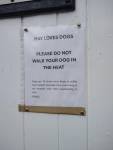 We got back yesterday evening from our tenth trip to Hay-on-Wye, Wales. Our town-centre Airbnb flat was a little shabby and poky, but I can’t deny it was convenient to be able to drop in for lunch or a cup of tea in between bookshops and other activities. It was definitely looking greener in Wales than in our part of England, though a sign about dog-walking indicated that they’d had the heat waves here, too.
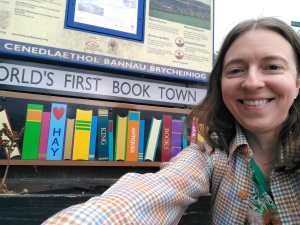
We didn’t begrudge the multiple spells of drizzle over the weekend, even when they coincided with walks to Cusop and The Warren. We’ve been coming to Hay since 2004 and can remember when it was struggle to find a decent evening meal. Good coffee? Forget it. Now one is spoilt for choice for eateries, though we kept costs down a bit by bringing packet curries to cover two nights’ dinners.
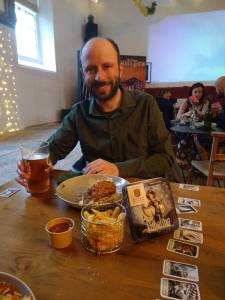 The Globe, an arts venue with café and restaurant, was like our home away from home. We went there on the first evening for a burgers and board games night in partnership with Herefordshire Board Gamers. We played a couple quick hands of card game Timeline (Music and Cinema, then British History) before our food came, then invited another couple to join us for Ticket to Ride Europe, where you have to construct several simultaneous train journeys. The HBG rep acted as a coach, reminding us of the rules – we have a copy but haven’t played it for many years – and advising players about their next move if they asked for help. What a great initiative! He was going to be at the Castle on Saturday afternoon, too.
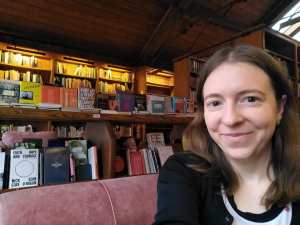
We returned to The Globe on Friday for an hour of its open mic night, which featured a mix of folk and blues acts of various abilities; and again on Saturday morning. We didn’t realize when we booked our stay that we would be in the town for Hay Music Festival. We browsed the programme and plumped for a concert by a wind quintet (flute, oboe, bassoon, French horn and clarinet, with piano accompaniment on some numbers) of young musicians from Sinfonia Cymru. Their repertoire ranged from the familiar (Mozart and sea shanties) to the obscure (Samuel Barber’s “Summer Music” and a Ludwig Thuille piece). I also appreciated the spotlight on two female composers, Mel Bonis and Louise Farrenc. It was a phenomenal performance, and how civilized that the ticket price included coffee and cake from the café.
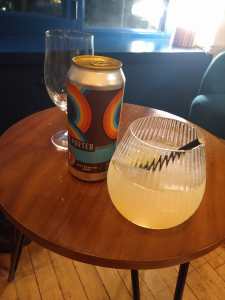
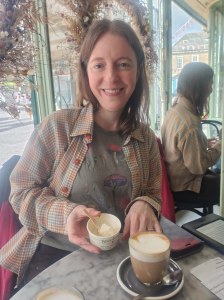
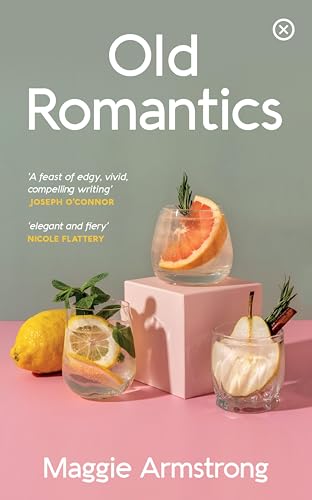
Hay Distillery and Shepherds ice cream parlour got two visits apiece. I was particularly delighted with my “Campfire Mule” concoction of Dr Beaky’s gin (which has a fascinating smoky flavour), maple syrup and ginger beer; and my scoop of gooseberry and elderflower sheep’s milk ice cream. Appropriately, my main reading for the weekend was Maggie Armstrong’s linked short story collection Old Romantics, which has cocktails on the cover.
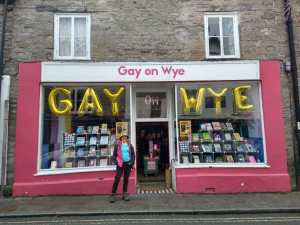
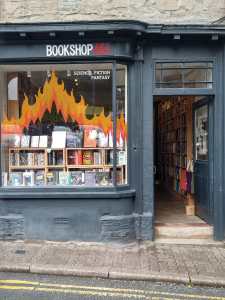
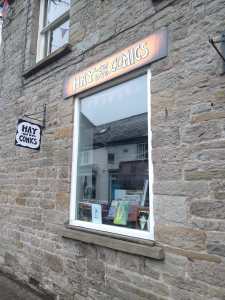
Often, if we haven’t visited in a while, we’ll see that a few bookshops and other independent businesses have closed. So what a pleasant surprise to find that four new shops have opened since our last visit: Christie & Doyle – a classic crime extension to Murder & Mayhem, Hay Comics, Bookshop 451 for science fiction and fantasy, and A Shop Called Alice, which appears to be exclusively Alice in Wonderland- and Lewis Carroll-related books and memorabilia. (And a favourite coffee spot, The Bean Box, that we thought had closed has reopened; perhaps we just missed their seasonal hours last spring.) All in all, there are about 20 places in the town to shop for books, and we browsed most of them.
Here’s my haul of 16 books from 8 shops, which included a few by favourite authors, some that I’ve wanted to get hold of for ages, and others that I’d seen mentioned by fellow bloggers. I was especially pleased to locate The Victorian Chaise-Longue, one of my bibliotherapy prescriptions from way back in 2018, in Addymans’ outdoor Book Passage for £1. A couple of purchases that I’ll try to read right away are Gloria Naylor’s novel-in-stories, The Women of Brewster Place, at Booths (for Short Story September); and a remainder copy of Octavia E. Butler’s Fledgling at Hay Cinema Bookshop (for R.I.P.). A slightly pricier haul for me this time, with a few remainder copies plus rarer secondhand finds, but the total of £46.42 still works out to an average of less than £3/book. Mr F’s different foci – nature writing, collectible Observer books, bird field guides and New Zealand-set novels in advance of his trip there in November–December – meant he supported several additional shops.
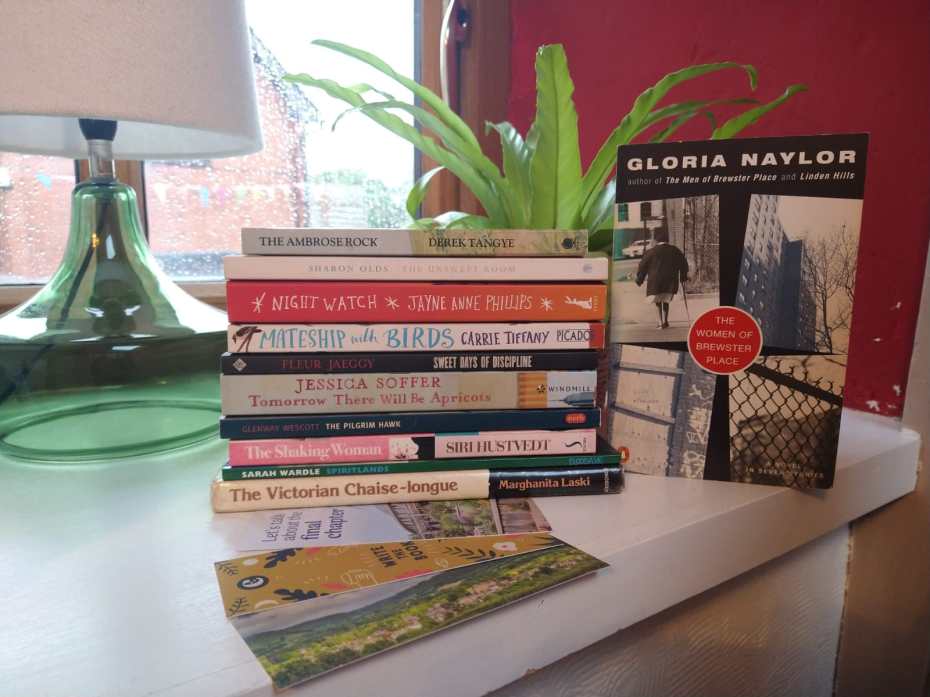
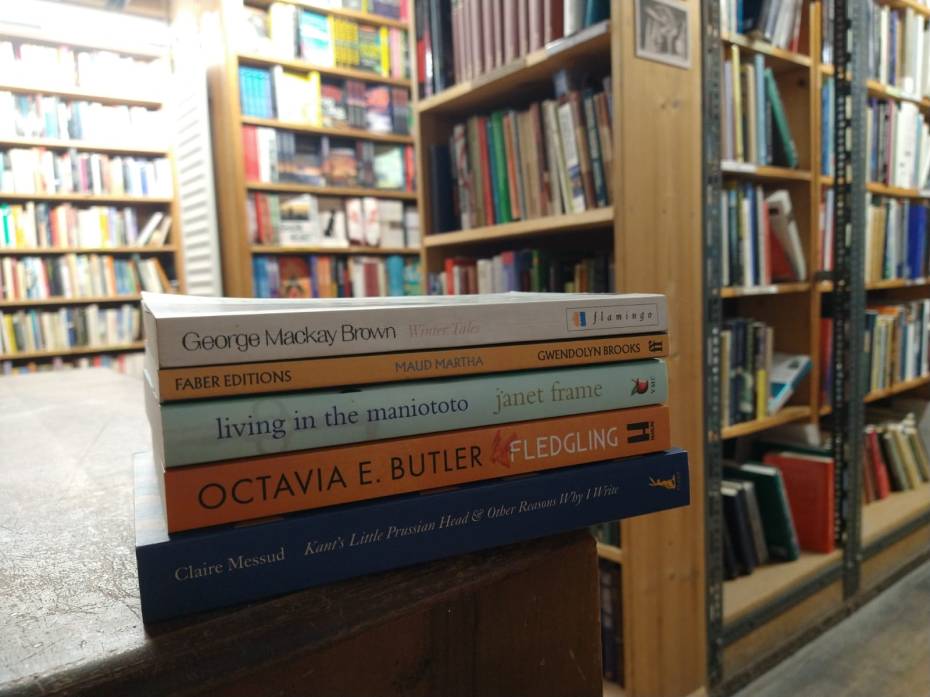
The Naylor was the only specific book that was on the paper wish list I brought with me (which also including Butler generally), while the Hustvedt and Wescott titles were on my Goodreads “priority to find” shelf. Weirdly, as I browsed I kept coming across copies of Michèle Roberts’ During Mother’s Absence and books by Janette Turner Hospital, an Australian author I hadn’t knowingly encountered before.
We often ask ourselves what Richard Booth, the Book Town founder and self-proclaimed “King of Hay,” would think about the town’s gentrification. He was not a fan of the Festival, for instance, and his stack-’em-high-sell-’em-cheap philosophy (“He once said he would much rather sell a million books for one pound than one book for a million pounds”) – which softened over the years as mentors helped him identify and price antiquarian material appropriately – seems rather at odds with the bougie boutiques and hipster cafes. But it’s by attracting a wider and younger clientele that Hay has retained its independent spirit. So I hope rather than turning in his grave he would be grateful to those who have kept the place alive.
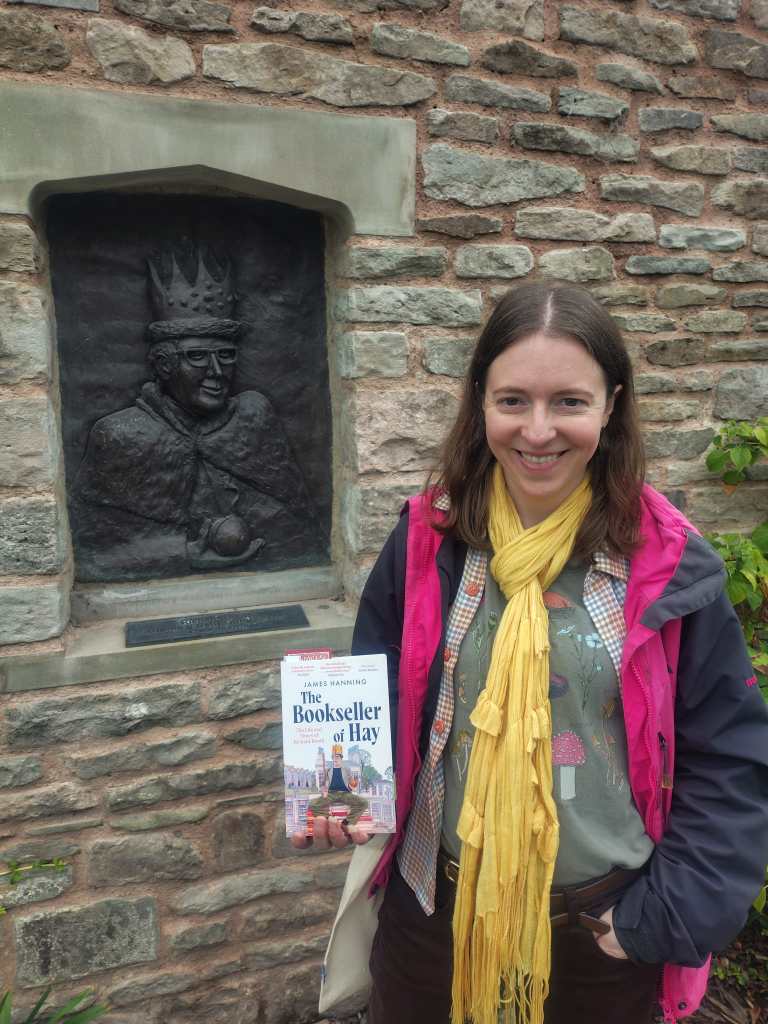
I read nearly the first third of the recent biography of Booth, The Bookseller of Hay, while there. James Hanning makes a good case for Booth being that biographical cliché, the bundle of contradictions: privileged but happy to be one of the common men; passionate about his ventures but sometimes sloppy and misguided; with great capacity for compassion but also thoughtlessness. I didn’t know that in 1964 he was responsible for the death of a passenger due to reckless and probably drunk driving. Hanning believes this haunted him for the rest of his life. It’s intriguing to see the different people he interacted with, e.g. Margaret Drabble visited the town with a boyfriend and was dismissive: “Did he ever read books? The books themselves were just the product. I don’t think Richard was interested in literature.” Hanning depicts Booth as an eccentric who would today be considered on the spectrum. I’ll finish reading this to try to keep the Hay spirit alive a bit longer, and might follow it up with a reread of Sixpence House, Paul Collins’s memoir of living and working in Hay.
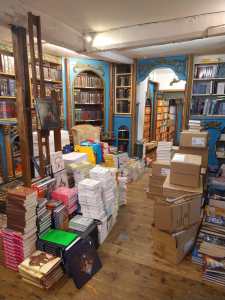
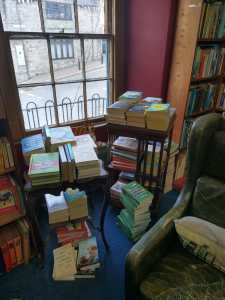
Though we were sad to leave – mostly because we know we’re facing a long, busy term and the inevitable slide into winter – we know we’ll be back, sooner rather than later.
 Bookish Beck = Rebecca Foster. American transplant to England. Freelance proofreader and book reviewer.

