December Releases by Anita Felicelli, Lise Goett, Brooke Randel & Weike Wang
December isn’t a big month for new releases, but here are excerpts from a few I happened to review early for U.S. publications BookBrowse, Foreword Reviews, and Shelf Awareness: Speculative short stories, loss-tinged poetry, a family memoir based on Holocaust history, and a satirical short novel about racial microaggressions and class divides in contemporary America.
How We Know Our Time Travelers by Anita Felicelli
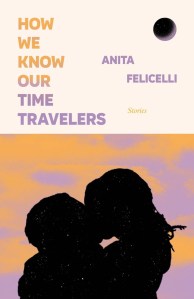 These linked speculative stories, set in near-future California, are marked by environmental anxiety. Many of their characters have South Asian backgrounds. A nascent queer romance between co-op grocery colleagues defies an impending tsunami. A painter welcomes a studio visitor who could be her estranged husband traveling from the past. Mysterious “fog catchers” recur in multiple stories. Memory bridges the human and the artificial, as in “The Glitch,” wherein a coder, bereaved by wildfires, lives alongside holograms of her wife and children. But technology, though a potential means of connecting with the dead, is not an unmitigated good. Creative reinterpretations of traditional stories and figures include urban legends, a locked room mystery, a poltergeist, and a golem. In these grief- and regret-tinged stories, heartbroken people can’t alter their pasts, so they’ll mold the future instead. (See my full Foreword review.)
The Radiant by Lise Goett
 In the 25 poems of Goett’s luminous third poetry collection, nature’s beauty and ancient wisdom sustain the fragile and bereaved. The speaker in “Difficult Body” references a cancer experience and imagines escaping the flesh to diffuse into the cosmos. Goett explores liminal moments and ponders what survives a loss. The use of “terminal” in “Free Fall” denotes mortality while also bringing up fond memories of her late father picking her up from an airport. Mythical allusions, religious imagery, and Buddhist philosophy weave through to shine ancient perspective on current struggles. The book luxuriates in abstruse vocabulary and sensual descriptions of snow, trees, and color. (Tupelo Press, 24 December. Review forthcoming at Shelf Awareness)
Also Here: Love, Literacy, and the Legacy of the Holocaust by Brooke Randel
 Randel’s debut is a poised, tender family memoir capturing her Holocaust survivor grandmother’s recollections of the Holocaust. Golda (“Bubbie”) spoke multiple languages but was functionally illiterate. In her mid-80s, she asked her granddaughter to tell her story. Randel flew to south Florida to conduct interviews. The oral history that emerges is fragmentary and frenetic. The structure of the book makes up for it, though. Interview snippets are interspersed with narrative chapters based on follow-up research. Golda, born in 1930, grew up in Romania. When the Nazis came, her older brothers were conscripted into forced labor; her mother and younger siblings were killed in a concentration camp. At every turn, Golda’s survival (through Auschwitz, Christianstadt, and Bergen-Belsen) was nothing short of miraculous. This concise, touching memoir bears witness to a whole remarkable life as well as the bond between grandmother and granddaughter. (See my full Shelf Awareness review.)
Rental House by Weike Wang
 Their interactions with family and strangers alike on two vacations – Cape Cod and the Catskills, five years apart – put interracial couple Keru and Nate’s choices into perspective as they near age 40. Although some might find their situation (childfree, with a “fur baby”) stereotypical, it does reflect that of a growing number of aging millennials. Wang portrays them sympathetically, but there is also a note of gentle satire here. The way that identity politics comes into the novel is not exactly subtle, but it does feel true to life. And it is very clever how the novel examines the matters of race, class, ambition, and parenthood through the lens of vacations. Like a two-act play, the framework is simple and concise, yet revealing about contemporary American society. (See my full BookBrowse review.)
Women’s Prize 2019: Longlist Review Excerpts and Shortlist Thoughts
There’s a reason I could never wholeheartedly shadow the Women’s Prize: although each year the prize introduces me one or two great novels I might never have heard of otherwise, inevitably there are also some I don’t care for, or have zero interest in reading. Here’s how I fared this year, in categories from best to worst, with excerpts and links to any I’ve reviewed in full:
Loved! (5)
- The Pisces by Melissa Broder: This starts off as a funny but somewhat insubstantial novel about a thirtysomething stuck with a life she isn’t sure she wants, morphs into a crass sex comedy (featuring a merman), but ultimately becomes a profound exploration of possession, vulnerability and the fluidity of gender roles. It’s about the prison of the body, and choosing which of the many different siren voices calling us we’ll decide to listen to. It’s a Marmite book, but perfect Women’s Prize material.

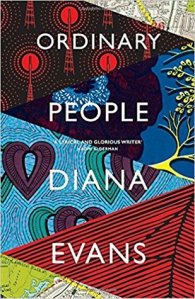 Ordinary People by Diana Evans: Reminds me of On Beauty by Zadie Smith, one of my favorite novels of this millennium. It focuses on two Black couples in South London and the suburbs who, in the wake of Obama’s election, are reassessing their relationships. Their problems are familiar middle-class ones, but Evans captures them so candidly that many passages made me wince. The chapter in which two characters experience mental instability is a standout, and the Black slang and pop music references a nice touch.
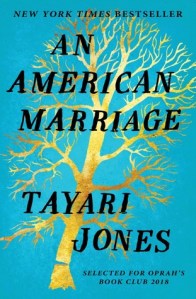
- An American Marriage by Tayari Jones: Roy and Celestial only get a year of happy marriage before he’s falsely accused of rape and sentenced to 12 years in prison in Louisiana. I ached for all three main characters: It’s an impossible situation. There’s a lot to probe about the characters’ personalities and motivations, and about how they reveal or disguise themselves through their narration. I found it remarkable how the letters, which together make up not even one-fifth of the text, enhance the raw honesty of the book.
- Ghost Wall by Sarah Moss: It’s the late 1980s and teenager Silvie Hampton and her parents have joined a university-run residential archaeology course in the North of England, near the bogs where human sacrifice once took place. Nationalism, racism, casual misogyny – there are lots of issues brewing under the surface here. Women’s bodies and what can be done to them is central; as the climax approaches, the tricksy matter of consent arises. I ended up impressed by how much Moss conveys in so few pages. Another one custom-made for the Women’s Prize.
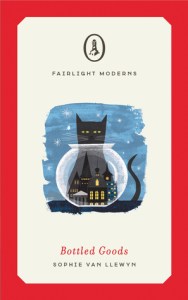 Bottled Goods by Sophie van Llewyn: I just finished this the other day. It’s a terrific hybrid work that manages to combine several of my favorite forms: a novella, flash fiction and linked short stories. The content is also an intriguing blend, of the horrific and the magical. After her brother-in-law’s defection, Alina and her husband Liviu come under extra scrutiny in Communist Romania. Bursts of magic realism and a delightful mixture of narrative styles (lists and letters; alternating between the first and third person) make all this material bearable.
Did not particularly enjoy (2)
- Freshwater by Akwaeke Emezi: Magic realism and mental illness fuel a swirl of disorienting but lyrical prose. Much of the story is told by the ọgbanje (an Igbo term for evil spirits) inhabiting Ada’s head. The conflation of the abstract and the concrete didn’t quite work for me, and the whole is pretty melodramatic. Although I didn’t enjoy this as much as some other inside-madness tales I’ve read, I can admire the attempt to convey the reality of mental illness in a creative way.

 Normal People by Sally Rooney: This book’s runaway success continues to baffle me. I kept waiting for more to happen, skimming ahead to see if there would be anything more to it than drunken college parties and frank sex scenes. It is appealing to see into these characters’ heads and compare what they think of themselves and each other with their awareness of what others think. But page to page it is pretty tedious, and fairly unsubtle.
Attempted but couldn’t get through (3)
- Remembered by Yvonne Battle-Felton: A historical novel marked by the presence of ghosts, this is reminiscent of the work of Cynthia Bond, Toni Morrison and Jesmyn Ward. It’s the closest thing to last year’s Sing, Unburied, Sing. I only read the first 36 pages as neither the characters nor the prose struck me as anything special.
 Swan Song by Kelleigh Greenberg-Jephcott: Full of glitzy atmosphere contrasted with washed-up torpor. I have no doubt the author’s picture of Truman Capote is accurate, and there are great glimpses into the private lives of his catty circle. I always enjoy first person plural narration, too. However, I quickly realized I don’t have sufficient interest in the figures or time period to sustain me through nearly 500 pages. I read the first 18 pages and skimmed to p. 35.
- Number One Chinese Restaurant by Lilian Li: Vague The Nest vibes, but the prose felt flat and the characters little more than clichés (especially scheming ‘Uncle’ Pang). I grew up in Silver Spring, Maryland so was expecting there to be more local interest for me, but this could be taking place anywhere. Reviews from trusted Goodreads friends suggested that the plot and characterization don’t significantly improve as the book goes on, so I gave up after the first two chapters.
Not interested (6)
(Don’t you go trying to change my mind!)

- The Silence of the Girls by Pat Barker: Updated Greek classics are so not my bag.
- My Sister, the Serial Killer by Oyinkan Braithwaite: Meh.
- Milkman by Anna Burns: Nah.
- Lost Children Archive by Valeria Luiselli: I’ll try something else by Luiselli.
- Praise Song for the Butterflies by Bernice L. McFadden: The setting of a fictional African country and that title already have me groaning.
- Circe by Madeline Miller: See the note on Barker above.
The shortlist will be announced on Monday the 29th. Broder and Moss will most likely make the cut. I’d love to see the van Llewyn make it through, as it’s my favorite of what I’ve read from the longlist, but I think it will probably be edged out by more high-profile releases. Either Evans or Jones will advance; Jones probably has the edge with more of an issues book. One of the Greek myth updates is likely to succeed. Luiselli is awfully fashionable right now. Emezi’s is an interesting book and the Prize is making a statement by supporting a non-binary author. Rooney has already won or been nominated for every prize going, so I don’t think she needs the recognition. Same for Burns, having won the Booker.
So, quickly pulling a combination of wanted and expected titles out of the air would give this predicted shortlist:
 The Silence of the Girls by Pat Barker
The Pisces by Melissa Broder
Freshwater by Akwaeke Emezi
An American Marriage by Tayari Jones
Lost Children Archive by Valeria Luiselli
Ghost Wall by Sarah Moss
Eleanor, Eric, Laura and Rachel have been posting lots of reviews and thoughts related to the Women’s Prize. Have a look at their blogs!
 Bookish Beck = Rebecca Foster. American transplant to England. Freelance proofreader and book reviewer.
 Bookish Beck