Book Serendipity, August to September 2023
I call it “Book Serendipity” when two or more books that I read at the same time or in quick succession have something in common – the more bizarre, the better.
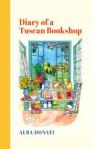
In Diary of a Tuscan Bookshop, Alba Donati remarks on this phenomenon: “Jung called these coincidences ‘synchronicities’, postulating that the universe possessed its own form of intelligence, which generated harmonies. A universe that detects and brings together the elements it feels are seeking each other in the endless swirl of life. Chance be damned.”
This is a regular feature of mine every couple of months. Because I usually have 20–30 books on the go at once, I suppose I’m more prone to such incidents. The following are in roughly chronological order.
- A memoir that opens with a little girl being injured in a bicycle accident: Some of Us Just Fall by Polly Atkin and Pharmakon by Almudena Sánchez.
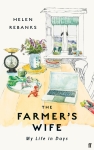
- Telling stories through embroidery in Cross-Stitch by Jazmina Barrera and The Farmer’s Wife by Helen Rebanks.

- A small boy nicknamed “Willmouse” (real name: William) in Mary and the Birth of Frankenstein by Anne Eekhout and The Greengage Summer by Rumer Godden.
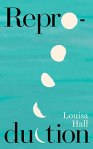
- An account of a routine sonogram that ends with the technician leaving the doctor to deliver bad news in Reproduction by Louisa Hall and The Unfamiliar by Kirsty Logan.
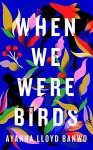
- Black dreadlocks/braid/ponytail being cut off in When We Were Birds by Ayanna Lloyd Banwo, The Wren, The Wren by Anne Enright, and Rebecca, Not Becky by Christine Platt and Catherine Wigginton Greene.

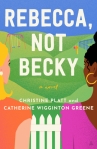
- Wondering how to arm a Black daughter against racist microaggressions in Rebecca, Not Becky by Christine Platt and Catherine Wigginton Greene and Ordinary Notes by Christina Sharpe.
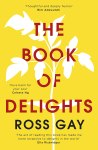
- Countering the commodification or romanticization of Black suffering in The Book of Delights by Ross Gay and Ordinary Notes by Christina Sharpe.

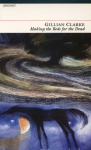
- An account of how the foot and mouth disease outbreak of 2001 affected the UK, especially northwest England, in Making the Beds for the Dead by Gillian Clarke and The Farmer’s Wife by Helen Rebanks.
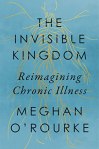
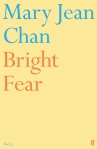
- I encountered the quote from Elaine Scarry’s The Body in Pain about pain being inexpressible in Reproduction by Louisa Hall and The Invisible Kingdom by Meghan O’Rourke on the same day. It’s also referenced in Mary Jean Chan’s Bright Fear.
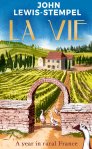
- A mention of eating frogs’ legs in The Book of Delights by Ross Gay and La Vie by John Lewis-Stempel.
- I read about the effects of heavy metal pollution on the body in The Invisible Kingdom by Meghan O’Rourke and Windswept by Annie Worsley in the same evening.
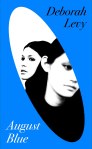
- Composer Erik Satie is mentioned in Making the Beds for the Dead by Gillian Clarke and August Blue by Deborah Levy.
- Stendhal syndrome and Florence are mentioned in The Wren, The Wren by Anne Enright and Pharmakon by Almudena Sánchez.
- Swallows nesting in an old Continental building in Diary of a Tuscan Bookshop by Alba Donati and La Vie by John Lewis-Stempel.
- France being all about the rules and a “Putain de merde” exclamation to bad news in Dirt by Bill Buford and La Vie by John Lewis-Stempel.

- A character named Nomi in Friends and Strangers by J. Courtney Sullivan and one called Noemi in Diary of a Tuscan Bookshop by Alba Donati.
- Epigenetics (trauma literally determining the genetic traits that are passed on) is discussed in The Invisible Kingdom by Meghan O’Rourke and Pharmakon by Almudena Sánchez.
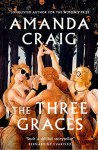
- Women of a certain age in Tuscany in The Three Graces by Amanda Craig and Diary of a Tuscan Bookshop by Alba Donati.
- Audre Lorde is quoted in Tremor by Teju Cole, Bibliomaniac by Robin Ince, The Invisible Kingdom by Meghan O’Rourke, Alone by Daniel Schreiber, and Ordinary Notes by Christina Sharpe.
- A Galway Kinnell poem is mentioned/quoted in The Dead Peasant’s Handbook by Brian Turner and Otherwise by Julie Marie Wade.
- The Bamiyan Buddhas are mentioned in Tremor by Teju Cole and The Dead Peasant’s Handbook by Brian Turner.


- Both The Three Graces by Amanda Craig and The Story of Lucy Gault by William Trevor open with a man shooting someone from his bedroom window.
- Linked short story collections about two children’s relationship with their Jamaican father, and mention of a devastating hurricane, in If I Survive You by Jonathan Escoffery and The Human Origins of Beatrice Porter and Other Essential Ghosts by Soraya Palmer. (Dual review coming up tomorrow!)
- Characters named Ben and Mara in The Whispers by Ashley Audrain and one story in Kate Doyle’s I Meant It Once.
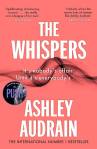
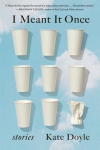
- Occasional uncut pages in my copies of I Meant It Once by Kate Doyle and The Unfamiliar by Kirsty Logan.
- A Florida setting and mention of the Publix supermarket chain in If I Survive You by Jonathan Escoffery and Arms and Legs by Chloe Lane.
- A down-at-heel English seaside town near Scarborough features in The Seaside by Madeleine Bunting and Penance by Eliza Clark.
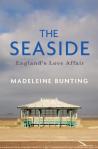

- A fictional northern town with “Crow” in the name: Crow-on-Sea in Penance by Eliza Clark and Crows Bank in Weyward by Emilia Hart.
- Claw-machine toys are mentioned in Penance by Eliza Clark and Directions to Myself by Heidi Julavits.
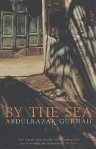
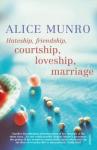
- Reading books by two Nobel Prize winners at the same time: Abdulrazak Gurnah (By the Sea) and Alice Munro (Hateship, Friendship, Courtship, Loveship, Marriage).
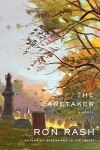
- Reading my second 2023 release featuring North Carolina ghost lights (after All of Us Together in the End by Matthew Vollmer, which I actually read last year): The Caretaker by Ron Rash.
- Reading my second 2023 release featuring a cat named Virginia Woolf (after Tell the Rest by Lucy Jane Bledsoe, which I actually read last year): one of the short stories in I Meant It Once by Kate Doyle.
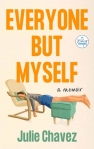
- A character named Shay in Everyone but Myself by Julie Chavez, The Human Origins of Beatrice Porter and Other Essential Ghosts by Soraya Palmer and The Caretaker by Ron Rash.

What’s the weirdest reading coincidence you’ve had lately?
20 Books of Summer, 11–12: Gillian Clarke Poetry and Ross Gay Essays
It might not look like I’ll finish the 20 Books of Summer challenge in time, but I’ve got it all planned out and should be reviewing the last few on the final day! My initial foodie idea has turned into a micro-theme that joins only about six of the titles in total. I’ve swapped in various other things along the way, such as a couple of poetry collections and novellas (note to self: always include at least a few very short books!), but the focus has been on getting through stuff from my own shelves, especially recent acquisitions and work by women.
Today I have an excellent poetry collection infused with the language of gardening and geology and reflecting on two crises of the early 2000s, and a book of mini-essays about noticing the small pleasures that make life worth living.
Making the Beds for the Dead by Gillian Clarke (2004)
 I look out for black-and-white Carcanet spines whenever I’m scanning the poetry section in a secondhand bookshop. Clarke’s was a new name for me (the National Poet of Wales from 2008 to 2016, she’s now 86) but the blurb attracted me and this ended up being exactly the sort of poetry I love: full of colours and nature imagery, profuse with alliteration and slant rhymes, relishing its specialist terminology, and taking on the serious subject matter of manmade disasters. Several medium-length sequences are devoted to gardening (“The Middleton Poems” and “Nine Green Gardens”) and geology (“The Stone Poems”); some earlier pieces are ekphrastic, or dedicated to particular poets.
Clarke remembers the delight she took as a child in the unfamiliar vocabulary of the Bible, “a narrative of spells / in difficult columns on those moth-thin pages, / words to thrill the heart with a strange music.” The book teems with animals – though, alas, many of them are dead (as in “Adders” and “Taxidermy”). The title sequence, indeed is about the foot and mouth disease outbreak that decimated the UK livestock population in 2001. Farmers were forced to cull their flocks and news footage showed mountains of carcasses burning. She hovers over the catastrophe, imagining herself into the minds of family farmers, gossiping onlookers, and a traumatized vet. Just as one crisis was coming to an end, September 11 came – another unforgettable tragedy, commemorated with “The Fall.” A very affecting collection, all told. I’ll be sure to read more by Clarke. (Secondhand – Bridport Old Books, 2023) 
A favourite passage, from “The Yew Tunnel in Winter”:
Listen to sap rise, unstoppable flood,
for all the centuries as the tap-roots grew,
pumping through branches to the stirring bud
from deepest earth. In graveyards they say a yew
sends a root into the mouths of all the dead.
Here, sense all that power snowed in and still,
shut in the dream of winter and history
at the end of a muffled lane
The Book of Delights by Ross Gay (2019)
“Perhaps delight is like after the great cosmic finger has pointed at something, and that something … appears.”
Gay is better known as a poet, with several collections to his name, and teaches at Indiana University. This book project started as a challenge to self to write a daily essay about something that was good in his life, quickly and longhand. He started on his 42nd birthday (August 1) and continued for a full year; there are 102 micro-essays here, so he managed one every few days. They are about everything or nothing much, depending on how you look at it: an adored foodstuff or piece of music, a dream, a surprise encounter with a stranger, what was growing in his garden at the time, etc.
 One essay is titled “The Jenky,” about the crooked and makeshift. Gay watches the birds enjoying a dead tree in his (deliberately neglected) yard, and notes a sign reading “Caution: Bees on Bridge” and thereby making space for nature. A few of the more memorable incidents involve plane travel. One time he flies with a tomato seedling in his lap and finds that people treat him more kindly. He gets an unexpectedly enthusiastic response from a security guard when he mentions that he’s on his way to read poems and realizes later that, by some quirk of regional American accents, the man thought he’d said “reading palms.”
Although I enjoyed the book more as I went along, something held me back from loving it. There weren’t enough sentiments that I recognized, and the loose, informal style wasn’t always for me. While you get glimpses into his upbringing and travels, I tend to prefer a memoir. It may also be that Gay and I are just different personalities. The delight he takes in other people’s oddities suggests he might be an extrovert; he truly enjoys being spoken to, or even touched (on the shoulder, for instance), by strangers, whereas I don’t particularly. Part of this is about minority group bonding for him: he writes of the “Negreeting” exchanged between Black people passing each other on a street. There were also a few too many mentions of him peeing into bottles or in his car.
So I liked this, but maybe not enough to try more by Gay, though I should probably see what his verse is like. I was glad to have read it, especially when I realized I can only think of about 20 books I’ve read by Black men. Ever. Yikes. (New – Christmas gift, 2022) 
20 Books of Summer, 14–16: Barba, Bersweden and Solnit
I’m all about flowers today: American wildflowers in poetry and prose, a year of hunting down the flora of the British Isles, and a discursive account of a famous English author’s life and times through the prism of his rose garden.
American Wildflowers: A Literary Field Guide, ed. Susan Barba; illus. Leanne Shapton (2022)
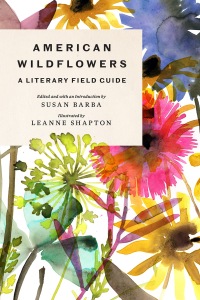 This comes out from Abrams Press in the USA on 8 November and I’ll be reviewing it for Shelf Awareness, so I’ll just give a few brief thoughts for now. Barba is a poet and senior editor for New York Review Books. She has collected pieces from a wide range of American literature, including essays, letters and early travel writings as well as poetry, which dominates.
Apart from a closing section on various/anonymous wildflowers, where particular species are named they are grouped into families, which are arranged alphabetically. The Asteraceae section is particularly strong, with poems on dandelions and sunflowers, a typically prophetic Aldo Leopold fragment about the decline of native flora, and “Asters and Goldenrod,” an extract from Robin Wall Kimmerer’s Braiding Sweetgrass (itself one of my 20 Books of Summer – review to come in the week) that I think was also excerpted in This Book Is a Plant.
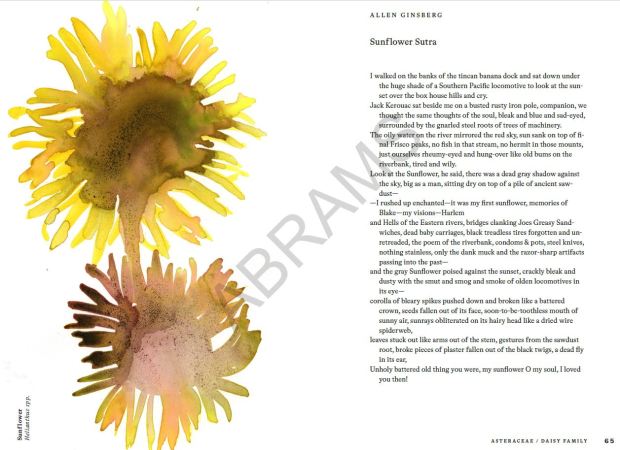
Sample two-page spread with a Leanne Shapton watercolor and part of an Allen Ginsberg poem.
In general, I engaged more with the poetry than with the prose. Barba has ensured a real variety of styles, with good representation for BIPOC. What draws it all together into a beautiful whole I wish I could see as a physical object is Leanne Shapton’s watercolor illustrations, painted from pressed flowers. “What a gift to stare at flowers—these ephemeral miracles of color and synthesis and botany,” she writes in an opening note. This would be a perfect coffee table book for any gardener or nature lover. (E-review copy)
Where the Wildflowers Grow: My Botanical Journey through Britain and Ireland by Leif Bersweden (2022)
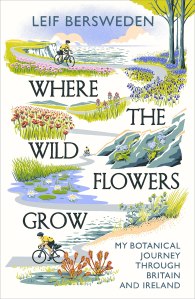 A good case of nominative determinism – the author’s name is pronounced “leaf” – and fun connections abound: during the course of his year-long odyssey, he spends time plant-hunting with Jon Dunn and Sophie Pavelle, whose books featured earlier in my flora-themed summer reading: Orchid Summer and Forget Me Not. With Dunn on Unst, Shetland, he sees not only rare flowers but close-up orcas. Like Pavelle, who he meets up with in Cornwall, he has an eye to how species will be affected by climate change and commits to doing his hunting by train and bike; there’s only so much you can see when zooming by in a car. Bersweden makes a case for spending time with plants – after all, they don’t move, so once you’ve found them you can commune in a way you can’t during, say, a fleeting mammal encounter.
He starts 2021 with a New Year Plant Hunt in central London with his mother – more is in bloom in January than ever before, at least in part due to climate warming. Even when the weather is foul on his travels, there is plenty to be seen. Everywhere he goes, he meets up with fellow experts and plant enthusiasts to marvel at bluebell woodlands or ancient pine forests, alpine or bog species. The floral circuit (documented in full on the book’s website through chapter-by-chapter photographs; there are two small sections of colour plates in the hardback) is also a chance to tour the British Isles, from Kent to Cork, coast to mountaintop.
Bersweden has been in love with plants ever since childhood; he believes they have nostalgia value for many people, and can be an easy way into appreciation of nature. “A wildflower growing from a crack in the wall is an everyday miracle.” His casual writing style and clear zeal for his subject – his author photo is of him hugging a tree, and another has such a cute caption: “Being given the opportunity to hold a Greater Bladderwort (Utricularia vulgaris) was one of the best things that’s ever happened to me!” – make this a pleasure even though it’s a bit overlong at points. (Public library)
Orwell’s Roses by Rebecca Solnit (2021)
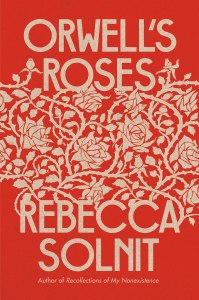 I was fascinated by the concept behind this one. “In the spring of 1936 a writer planted roses” is Solnit’s refrain; from there sprawls a book that’s somehow about everything: botany, geology, history, politics and war – as well as, of course, George Orwell’s life and works (with significant overlap with the graphic novel biography of him that I read last year). On a trip to England with a friend who is a documentary filmmaker, Solnit had the impulse to go find what might be left of Orwell’s garden. When she arrived in the Hertfordshire village of Wallington, the current owners of his home kindly showed her round. His fruit trees had long since been cut down, but the rosebushes were still going strong some 80 years later.
This goes down as a skim for me: though I read the first 30%, after that I just browsed to the end. Some side tracks lost me, e.g. Tina Modotti’s presentation of roses in her photographs; Orwell’s interest in mining, which leads Solnit to investigate how coal is formed; much history; and a week spent observing the rose-growing industry in Colombia. I most enjoyed the book when it stayed close to Orwell’s biography and writings, positing gardening as his way of grounding his ideas in the domestic and practical. “Pursuits like that can bring you back to earth from the ether and the abstractions.” I also liked – briefly, at least – thinking about the metaphorical associations of roses, and flowers in general.
If you’ve read Solnit before, you’ll know that her prose is exquisite, but I think this was the stuff of a long article rather than a full book. As it is, it’s a pretty indulgent project. (Kaggsy reviewed this recently and came to somewhat similar conclusions.) (NetGalley)
Nonfiction Recommendations from Carolyn Oliver
I ‘met’ poet Carolyn Oliver through her much-missed blog, Rosemary & Reading Glasses. (She’s on Twitter as @CarolynROliver and Instagram as @carolynroliver.) Back in 2017 I asked for her top fiction picks; this year she’s contributed another guest blog listing the best nonfiction she’s read this year. It’s a fascinating selection of memoirs, essays, science and nature, and current events. I scurried to add the ones I hadn’t already heard of to my TBR. Which ones tempt you?
My favorite nonfiction reads from this year (though many are backlist):
 The Butchering Art, Lindsey Fitzharris: Fascinating medical history of Lister’s antiseptic breakthrough.
 Braiding Sweetgrass, Robin Wall Kimmerer: Reflective ecology from the perspective of a Native botanist. Probably my favorite essay collection of the decade.
 The Book of Delights, Ross Gay: Just as the title says. Mini-essays on myriad topics. When you’ve finished, pick up his Catalog of Unabashed Gratitude (poems).
 Atlas of Poetic Botany, Francis Halle: Bite-sized excursions into the worlds of unusual flora, with drawings. Meant for adults, I think, but a huge hit with my eight-year-old.
 Stamped from the Beginning: The Definitive History of Racist Ideas in America, Ibram X. Kendi: Just as the title says. Incisive, eye-opening, necessary.
 The Art Detective, Philip Mould: A romp through the art world with an enthusiastic, knowledgeable guide (Mould is the co-host of the BBC’s Fake or Fortune).
 How We Fight for Our Lives, Saeed Jones: The bildungsroman America needs. Beautiful writing.
 In the Dream House, Carmen Maria Machado: The most formally inventive memoir I’ve ever read. Brilliant and necessary.
 Coventry, Rachel Cusk: I was entranced by Cusk’s voice, even when I didn’t share her conclusions; reading this collection (with the exception of the book reviews added at the end), I felt I was witnessing the writer’s mind in the act of thinking.
 Bookish Beck = Rebecca Foster. American transplant to England. Freelance proofreader and book reviewer.
 Bookish Beck