Book Serendipity, Mid-December 2024 to Mid-February 2025
I call it “Book Serendipity” when two or more books that I read at the same time or in quick succession have something in common – the more bizarre, the better. This is a regular feature of mine every couple of months. Because I usually have 20–30 books on the go at once, I suppose I’m more prone to such incidents. People frequently ask how I remember all of these coincidences. The answer is: I jot them down on scraps of paper or input them immediately into a file on my PC desktop; otherwise, they would flit away!
The following are in roughly chronological order.
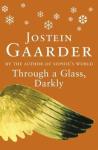
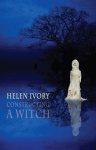
- The angel Ariel appears in Through a Glass Darkly by Jostein Gaarder and Constructing a Witch by Helen Ivory.
- The protagonist’s surname is English in Wild Houses by Colin Barrett and The Cannibal Owl by Aaron Gwyn.
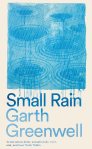
- I read scenes of grief over a tree being cut down / falling next to one’s house in Dispersals by Jessica J. Lee and Small Rain by Garth Greenwell, one right after the other.
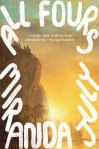
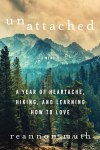
- A mother who does kundalini yoga in All Fours by Miranda July and Unattached by Reannon Muth.
- The idea that happiness (unlike anxiety and sorrow) leaves no trace in writing or in life appeared for me on the same day in Memorial Days by Geraldine Brooks and Small Rain by Garth Greenwell.
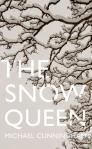
- Someone considers suicide by falling but realizes that at the current height they would injure themself but not die in Wild Houses by Colin Barrett, The Snow Queen by Michael Cunningham, and The Courage Consort by Michel Faber.
- The homosexual “bear” stereotype appears in The Snow Queen by Michael Cunningham and Small Rain by Garth Greenwell.
- A William Blake epigraph in Open, Heaven by Seán Hewitt and one of the poems included in Poetry Unbound by Pádraig Ó Tuama.
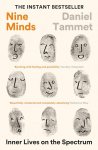
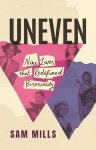
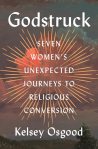
- A group biography including nine pen portraits (plus the author): Nine Minds by Daniel Tammet, followed in quick succession by Uneven by Sam Mills. (Similar, but with just seven subjects, is a book I’m currently reading about women’s religious conversions, Godstruck by Kelsey Osgood.)
- A book–life serendipity moment: in All Fours by Miranda July there is mention of an elderly cat named Alfie who needs to be given medication several times a day. Snap!
- By chance, I started reading Myself and Other Animals, a posthumous collection of short autobiographical pieces by Gerald Durrell, on his centenary (7 January 2025).
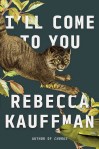
- Guilt over destroying a bird’s nest in The Book of George by Kate Greathead and I’ll Come to You by Rebecca Kauffman.
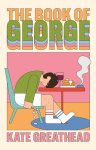
- The main female character has a birthmark in The Book of George by Kate Greathead and The Blindfold by Siri Hustvedt.
- Reading two novels at the same time that open with a new family having to be found for a little boy because his mentally ill mother is presumed to have died by suicide: Unexpected Lessons in Love by Bernardine Bishop and Going Home by Tom Lamont.
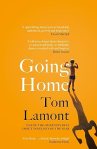 The protagonist is mistaken for a two-year-old boy’s father in The Book of George by Kate Greathead and Going Home by Tom Lamont.
- The mother is named Ellen in The Book of George by Kate Greathead and I’ll Come to You by Rebecca Kauffman.
- An ailing elderly father named Vic in Going Home by Tom Lamont and The God of the Woods by Liz Moore.
- A mother is sent to a mental hospital after the loss of her young son in Invisible by Paul Auster and The God of the Woods by Liz Moore.
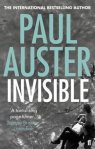
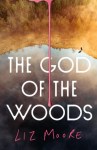
- A brother and sister share a New York City apartment in Invisible by Paul Auster and The Book of George by Kate Greathead.
- A mention of the Japanese artist Hokusai in While the Earth Holds Its Breath by Helen Moat and The Secret Life of Snow by Giles Whittell.
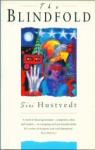 Adults dressing up for Halloween in The Blindfold by Siri Hustvedt and I’ll Come to You by Rebecca Kauffman.
- A second husband named Tim in Unexpected Lessons in Love by Bernardine Bishop and Because We Must by Tracy Youngblom.
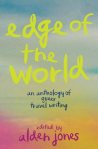
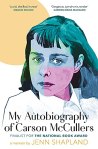
- The idea that ‘queers find each other’ in Edge of the World: An Anthology of Queer Travel Writing edited by Alden Jones and My Autobiography of Carson McCullers by Jenn Shapland.
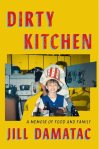
- Experiencing 9/11 as a freshman in college (just like me!) in Dirty Kitchen by Jill Damatac and The Book of George by Kate Greathead. (There is also a 9/11 section in Confessions by Catherine Airey.)
- An intense poker game in I’ll Come to You by Rebecca Kauffman and Going Home by Tom Lamont.
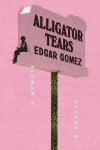 The main character is expelled on false drug possession charges in Invisible by Paul Auster and Alligator Tears by Edgar Gomez.
- Missing the chance to say goodbye before a father’s death, and a parent wondering aloud to their son whether they’ve been a good parent in The Book of George by Kate Greathead and The Remains of the Day by Kazuo Ishiguro.
- Someone departs suddenly, leaving her clothes and books behind, in Invisible by Paul Auster and My Autobiography of Carson McCullers by Jenn Shapland.
- Mentions of DACA (Deferred Action for Childhood Arrivals, an Obama-era U.S. immigration policy) and “Two-Buck Chuck” (a nickname for the Charles Shaw bargain wine sold at Trader Joe’s) in Dirty Kitchen by Jill Damatac and Alligator Tears by Edgar Gomez.
- A City Hall wedding in New York City in Baumgartner by Paul Auster and Dirty Kitchen by Jill Damatac.
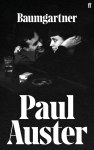
- Polish Jewish heritage and a parent who died of pancreatic cancer in Baumgartner by Paul Auster and The History of Love by Nicole Krauss.
- In Because We Must by Tracy Youngblom, she reads The Tale of Despereaux by Kate DiCamillo aloud to her son while he is recovering in hospital. I was reading Despereaux at the same time! (Also, in real-life serendipity, Youngblom and I both have a sister named Trish.)
- A code of 1–3 knocks is used in Confessions by Catherine Airey and The History of Love by Nicole Krauss.
 A scene of a teacup breaking in Junction of Earth and Sky by Susan Buttenwieser and The Möbius Book by Catherine Lacey.
What’s the weirdest reading coincidence you’ve had lately?
January Releases: Greathead, Kauffman, Mills & Watts (#ReadIndies)
I feel out of practice writing reviews after the endless period of sluggish and slightly lackluster reading that was January. Here we are at the start of Kaggsy and Lizzy Siddal’s Reading Independent Publishers Month challenge and I’m happy to make this my first tie-in post as these four books all happen to be from independent publishers. The first two are American novels (that could arguably be called linked short story collections) very much in my wheelhouse for their focus on dysfunctional families and disappointing characters. I also have a group biography aiming to illuminate bisexuality, and a poetry collection about girlhood/womanhood and nature.
The Book of George by Kate Greathead
The marketing for this novel courts relatability: you probably know a George – you might have dated one (women read the most litfic). Each chapter dates to a different period in George’s life, adolescence to late thirties. From the fact that 9/11 happened when he was a college freshman, I know he’s my exact contemporary, and I could indeed see bits of myself in this Everyman schmuck: indecisive, lazy, underachieving, privileged but never living up to his own or others’ expectations. Life keeps happening around him, but you wonder if he’ll ever make something happen for himself. Two gags are revealing: In college he is known for his impression of a clinically depressed penis going through airport security, and later he has 15 minutes of fame for appearing in a hidden-camera Super Bowl commercial. He’s been writing fiction for years – first a Stoner rip-off, then a Kerouac homage – but by the time he gets a short story collection together, it’s the height of #MeToo and he’s missed his moment to publish. Meanwhile, his cohort is doing great things, winning awards for documentaries (his pal Jeremiah) or becoming pro bono lawyers (his longsuffering girlfriend Jenny).
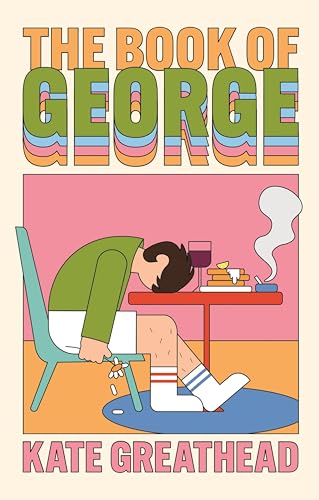 If you need to like a protagonist, expect frustration. Some of George’s behaviour is downright maddening, as when he obsessively plays his old Gameboy while his mother and Jenny pack up his childhood room. Tracing his relationships with his mother, his sister Cressida, and Jenny is rewarding. Sometimes they confront him over his shortcomings; other times they enable him. The novel is very funny, but it’s a biting, ironic humour, and there’s plenty of pathos as well. There are a few particular gut-punches, one relating to George’s father and others surrounding nice things he tries to do that backfire horribly. I thought of George as a rejoinder to all those ‘So-and-So Is Not Okay at All’ type of books featuring a face-planting woman on the cover. Greathead’s portrait is incisive but also loving. And yes, there is that hint of George, c’est moi recognition. His failings are all too common: the mildest of first-world tragedies but still enough to knock your confidence and make you question your purpose. For me this had something of the old-school charm of Jennifer Egan and Jonathan Safran Foer novels I read in the Naughties. I’ll seek out the author’s debut, Laura & Emma.
With thanks to Atlantic Books for the free copy for review. (Published in the USA by Henry Holt and Co. in 2024.)
I’ll Come to You by Rebecca Kauffman
Is 30 years long enough ago to count as historical fiction? In any case, this takes us through the whole of 1995, proceeding month by month and rotating through the close third-person perspectives of the members of one extended family as they navigate illnesses, break-ups and fraught parenting journeys. Corinne and Paul are trying to get pregnant; Paul’s mother, Ellen (again!), is still smarting from her husband leaving with no explanation; Corinne’s father, Bruce, has dementia but his wife, Janet, is doing her best to keep his cognitive deficiencies from the rest of the family. Son Rob is bitter about his ex-wife moving on so quickly, but both he and Ellen will have new romantic prospects before the end.
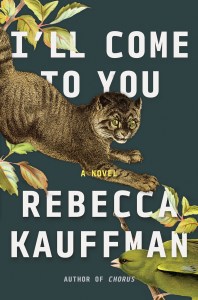 The family’s lies and secrets – also involving a Christmas run-in with Bruce’s shell-shocked brother decades ago – lead to everything coming to a head in a snowstorm. (As best I can tell, the 1995 setting was important mostly so there wouldn’t be cell phones during this crisis.) As with The Book of George, the episodic nature of the narrative means that particular moments are memorable but the whole maybe less so, and the interactions between characters stand out more than the people themselves. I’ll Come to You, named after a throwaway line in the text, is poorly served by both its cover and title, which give no sense of the contents. However, it’s a sweet, offbeat portrait of genuine, if generic, Americans; I was most reminded of J. Ryan Stradal’s work. Although I DNFed Kauffman’s The Gunners some years back, I’d be interested in trying her again with Chorus, which sounds like another linked story collection.
With thanks to Counterpoint (USA) for the advanced e-copy for review.
Uneven: Nine Lives that Redefined Bisexuality by Sam Mills
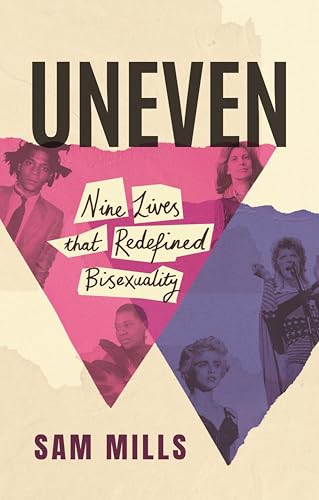
Back in 2022 I reviewed Julia Shaw’s Bi: The hidden culture, history and science of bisexuality, which took a social sciences approach. By contrast, this is a group biography of nine bisexuals – make that 10, as there are plenty of short memoir-ish passages from Mills, too. Oscar Wilde, Colette, Marlene Dietrich, Anaïs Nin, Susan Sontag: more or less familiar names, though not all of them are necessarily known for their sexuality. The chapters deliver standard potted biographies of the individuals’ work and relationships, probably containing little that couldn’t be found elsewhere in recent scholarship and not really living up to the revolutionary promise of the subtitle. However, it was worthwhile for Mills to recover Wilde as a bisexual rather than a closeted homosexual. A final trilogy of chapters comes more up to date with David Bowie, Jean-Michel Basquiat and Madonna. The closer to the present day, the more satisfying connections there are between figures. For instance, Madonna looked to both Dietrich and Bowie as role models and fashion icons, and she and Basquiat were lovers.
 Mills and Shaw consider the same fundamental issues: bi erasure, with bisexuality the least understood and most easily overlooked element of LGBT and many passing as straight if in heterosexual marriages; and the stereotype of bis as hypersexual or promiscuous. Mills is keen to stress that bisexuals have very different trajectories and phases. Like Wilde, they might have a heterosexual era of happy marriage and parenthood followed by a homosexual spree. Or they might have simultaneous lovers of multiple genders. Some might never even act on strong same-sex desires. (Late last year I encountered a similar unity-in-diversity approach in Daniel Tamet’s Nine Minds, a group biography about autistic people.)
The 1890s to 1980s window allows for a record of changing mores yet means that the book seems rather dated. Were it written by an author of a later generation (Mills, who I knew for The Fragments of My Father, is around 50), the point of view and terminology would likely be quite different. Also, including a section on Bessie Smith within a chapter mostly on Colette felt tokenistic. (Though later considering Basquiat separately does add a BIPOC view.) Ultimately, though, my problem with Uneven was that I don’t want to know about behaviour – which is all that a biography can usually document – so much as the internal, soul stuff. Even from Mills, whose accounts of her long-term relationships and flings (including, yes, a threesome) can be titillating but not very enlightening, I didn’t get a sense of what it feels like. So neither the Shaw nor the Mills gave me precisely what I was looking for, which means that the perfect book on bisexuality either doesn’t exist or is out there but I haven’t found it yet. Any suggestions?
With thanks to Atlantic Books for the free copy for review.
The Face in the Well by Rebecca Watts
 I’ve also read Watts’ The Met Office Advises Caution and Red Gloves; this is her third collection. The Suffolk and Cambridgeshire scenery of her early and adult lives weaves all through, sometimes as an idyll that blurs the lines between humans and nature (“Private No Access”) but other times provoking anxiety about common or gendered dangers, as in the title poem or “The Old Mill” (“What happened there, / down by the old mill, / they never tell. // Something about / a man and a girl / is the most you’ll hear.”). “Woman Seeks” is a tongue-in-cheek advert for the perfect man. Animals – a dolphin, a shark, rodents, a wandering albatross, a robin – recur, as do women poets, especially Emily Brontë, and Victorian death culture (“Victoriana” and “Baroque”). Adulthood brings routine whereas childhood stands out for minor miracles, such as a free soda from a vending machine.
The format and tone vary a lot, so the book is more of a grab bag than a cohesive statement. I noted slant rhymes and alliteration, always a favourite technique of mine. I especially liked “Entropy,” about finding a slice of cake in the freezer labeled by someone who is now dead (“Nothing ever // really dies: all the pieces of you / persist, riven and reconfigured / in infinite unknowable ways”) and “Personal Effects,” about the artefacts from her childhood that her mother guards under the bed (“twists of my hair, my teeth, / my bracelet from the hospital.”).
With thanks to Carcanet Press for the advanced e-copy for review.
Which of these appeal to you? What indie publishers have you been reading from recently?
Reading Snapshot for Mid-January
As I said in my last post, I’m in the middle of a bunch of books but hardly finishing anything, so consider this another placeholder until my Love Your Library and January releases posts next week. People often ask how I read so much. One of the answers is that I generally read 20–30 books at once, bouncing between them as the mood takes me and making steady progress in most. A frequent follow-up question is how I keep so many books straight in my head. I maintain a variety of genres and topics in the stack and alternate between fiction, nonfiction and poetry in any reading session. If I’m going to be reviewing something, particularly for pay, I tend to make notes. Here’s a peek at my current stacks, with a line or two on each book and why I’m reading it.

- Myself & Other Animals by Gerald Durrell [public library] – This is a posthumous collection of excerpts from his published work, including newspaper articles, plus mini essays that he wrote towards an autobiography. We own/have read most of his animal-collecting and zoo-keeping memoirs and this is just as delightful, even in unconnected pieces. His conservationist zeal was ahead of his time.
- The God of the Woods by Liz Moore [public library] – It’s rare for me to borrow something from the Crime section, but this came highly lauded by Laila. Set in upstate New York in 1975, it’s a page-turning missing-girl mystery with a literary focus on character backstory, and it’s reminding me of Bright Young Women by Jessica Knoll and When the Stars Go Dark by Paula McLain.
- Gold by Elaine Feinstein [secondhand purchase] – I’ve enjoyed Feinstein’s poetry before so snapped this up on our second trip to Bridport. The first long poem was a monologue from the perspective of a collaborator of Mozart; I think I’ll engage more with the discrete poems to follow.
- Understorey by Anna Chapman Parker [review copy] – Catching up on one I was sent last year. It’s a one-year diary through ‘weeds’ (wild plants!) she observes and sketches near her home of Berwick upon Tweed, where we vacationed in September. I am enjoying reading a few peaceful entries per sitting.
- A God at the Door by Tishani Doshi [secondhand purchase] – Her Girls Are Coming out of the Woods was a favourite of mine a few years ago when I reviewed it for Wasafiri literary magazine. I found this on my last trip to Hay-on-Wye, and it is just as rich in long, forthright, feminist and political poems.
- The Secret Life of Snow by Giles Whittell [secondhand purchase] – I picked up a few snowy titles when we got a dusting the other week, in case it was the only snow of the year. This is so much like The Snow Tourist by Charlie English it’s uncanny; to my memory it’s more meteorological, though still accessible. The science is interspersed with travels and fun trivia about Norway’s Olympic skiers and so on.
- Moon of the Crusted Snow by Waubgeshig Rice [gift] – Probably my first book by an Indigenous Canadian, which was reason enough to read it. I’m about 50 pages in and so far it’s a plodding story of mysterious power outages which could just be part of the onset of winter but I suspect will turn out to be sinister and dystopian instead.
- Knead to Know by Neil Buttery [review copy] – Another 2024 book to catch up on. It’s a history of baking via mini-essays on loads of different breads, cakes, pies and pastries, many of them traditional English ones that you will never have heard of but will now want to cram. Lots of intriguing titbits.
- Invisible by Paul Auster [secondhand purchase] – Getting ready for Annabel’s second Paul Auster Reading Week in early February. A young (and Auster-like) would-be poet gets entangled with a thirtysomething professor who wants to fund a start-up literary magazine – and his French girlfriend. Highly readable and sure to get weirder.
- While the Earth Holds Its Breath by Helen Moat [review copy] – Yet another 2024 book to catch up on. Authors are still jumping on the Wintering bandwagon. This is composed of short autobiographical pieces about winter walks near home or further afield, many of them samey; the trip to Lapland has been a highlight so far.
- The Blindfold by Siri Hustvedt [review copy] – Also part of my preparation for Paul Auster Reading Week, and boy can you see his influence on her first novel! Iris Vegan is employed by Mr. Morning to record audio descriptions of relics left behind by a possibly murdered woman. Odd and enticing.
- Uneven by Sam Mills [review copy] – A group biography of nine bisexuals – make that 10, as there’s plenty of memoir fragments from Mills, too. I’ve read the chapters on Oscar Wilde, Colette & Bessie Smith, and Marlene Dietrich so far. It is particularly enlightening to think of Wilde as bi rather than a closeted homosexual.
- Unexpected Lessons in Love by Bernardine Bishop [secondhand purchase] – Every year I pick up at least a few “love” or “heart” titles in advance of Valentine’s Day. Bishop was one of my top discoveries last year (via The Street) and this Costa Award-nominated posthumous novel is equally engaging, even after just 50 pages.
- My Judy Garland Life by Susie Boyt [secondhand purchase] – After Loved and Missed, I was keen to try more from Boyt and this Ackerley Prize-shortlisted memoir sounded fascinating. I love The Wizard of Oz as much as the next person. Boyt, however, is a Garland mega-fan and blends biography and memoir as she writes about addiction, mental health, celebrity and the search for love.
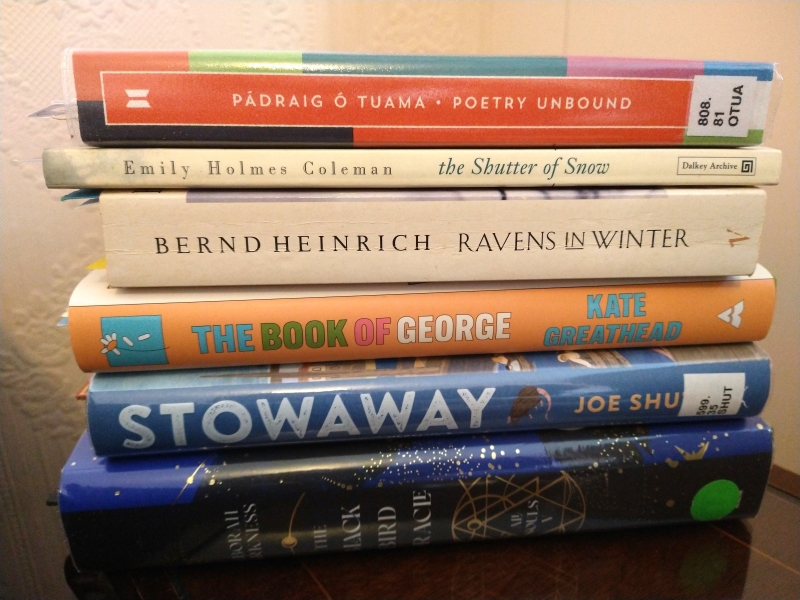
- Poetry Unbound by Pádraig Ó Tuama [public library] – I’m gradually making my way through this set of 50 poems and his critical/personal responses to them. Most of the poets have been unfamiliar to me. Marie Howe has been my top discovery.
- The Shutter of Snow by Emily Holmes Coleman [secondhand purchase] – Another incidental ‘snow’ title; this is autofiction about postpartum psychosis, written in a stream-of-consciousness style with no speech marks or apostrophes. It’s hard to believe it was written in the 1930s because it feels like it could have been yesterday.
- Ravens in Winter by Bernd Heinrich [secondhand purchase] – I’ve long meant to read more by Heinrich, who’s better known in the USA, after Winter World. This was a lucky find at Regent Books in Wantage. It’s a granular scientific study of bird behaviour, so I will likely read it very slowly, maybe even over two winters.
- The Book of George by Kate Greathead [review copy] – Linked short stories about an Everyman schmuck (and my exact contemporary) from adolescence up to today. He’s indecisive, lazy, an underachiever. Life keeps happening around him; will he make something happen? (George, c’est moi?) The deadpan tone is great.
- Stowaway by Joe Shute [public library] – I’ve been reading this off and on since, er, June, which is not to say that it’s not interesting but that it’s never been a priority. Like his book on ravens, it’s intended to rehabilitate the reputation of a species often considered to be a pest. He gets pet rats, too!
- The Black Bird Oracle by Deborah Harkness [public library] – It’s even rarer for me to borrow from the Science Fiction & Fantasy section of the library, but I’ve been following the series since A Discovery of Witches came out in 2011. I’m halfway through and enjoying Diana’s embrace of her witch heritage in the Salem area.
That’s not all, folks! There’s also the e-books.

- Dirty Kitchen by Jill Damatac [Edelweiss] – I’ll be reviewing this May release early for Shelf Awareness. The author’s Filipino family were undocumented immigrants in the USA and as a child she was occasionally abandoned and frequently physically abused. Recipes and legends offer a break from the tough subject matter (reminiscent of Educated or What My Bones Know).
- My Marriage Sabbatical by Leah Fisher [from publicist] – She Writes Press is a reliable source of women’s life writing. I’ve only just started this but will try to review it this month. Fisher, a psychotherapist, was sick of her psychiatrist husband’s workaholism and wanted to try living differently, starting with a house share.
- I’ll Come to You by Rebecca Kauffman [from publicist] – Another American linked short story collection, moving month by month through 1995 (does that count as historical fiction?!), cycling through the members of an extended family as they navigate illnesses and fraught parenting journeys. I’m getting J. Ryan Stradal vibes.
- Constructing a Witch by Helen Ivory [Edelweiss] – This feminist take on the historical persecution and stereotypes of witches is a good match for the Harkness! I just keep forgetting to open it up on my Kindle.
According to Goodreads, I’m reading 28 books at the moment, so I haven’t even covered all of them. (The rest include library books that would more honestly be classified as “set aside.”)
Whew. It somehow seems like even more when I write them all up like this…
Back to the reading!
Three on a Theme (and #ReadIndies): Nonfiction I Sponsored Last Year
Here in the UK we’re hunkering down against the high winds of Storm Eunice. We’ve already watched two trees come down in a neighbour’s garden (and they’re currently out there trying to shore up the fence!), and had news on the community Facebook page of a huge conifer down by the canal. Very sad. I hope you’re all safe and well and tucked up at home.
Today I’m looking back at several 2021 nonfiction releases I helped come into existence. The first and third I sponsored via Unbound, and the second through Dodo Ink. Supporting small publishers also ties this post into Karen and Lizzy’s February Read Indies initiative. All: 

This Party’s Dead: Grief, Joy and Spilled Rum at the World’s Death Festivals by Erica Buist
A death tourism book? I’m there! This is actually the third I’ve read in recent years, after From Here to Eternity by Caitlin Doughty and Near the Exit by Lori Erickson. Buist’s journey was sparked off by the sudden death of her fiancé Dion’s father, Chris – he was dead for a week before his cleaner raised the alarm – and her burden of guilt. It’s an act of atonement for what happened to Chris and the fact that she and Dion, who used to lodge with him, weren’t there when he really needed it. It’s also her way of discovering a sense of the sacred around death, instead of simply fearing and hiding from it.
 This takes place in roughly 2018. The author travelled to eight festivals in seven countries, starting with Mexico for the Day of the Dead and later for an exploration of Santa Muerte, a hero of the working class. Other destinations included Nepal, Sicily (“bones of the dead” biscotti), Madagascar (the “turning of the bones” ceremony – a days-long, extravagant party for a whole village), Thailand and Kyoto. The New Orleans chapter was a standout for me. It’s a city where the dead outnumber the living 10 to 1 (and did so even before Katrina), and graveyard and ghost tours are a common tourist activity.
Buist is an entertaining writer, snappy and upbeat without ever seeming flippant as she discusses heavy topics. The mix of experience and research, the everyday and the momentous, is spot on and she recreates dialogue very well. I appreciated the earnest seeking here, and would happily read a book of hers on pretty much any subject. (New purchase from Unbound)
Trauma: Essays on Art and Mental Health, ed. Thom Cuell & Sam Mills
I’ll never learn: I left it nearly 10 months between finishing this and writing it up. And took no notes. So it’s nearly impossible to recreate the reading experience. What I do recall, however, is how wide-ranging and surprising I found this book. At first I had my doubts, thinking it was overkill to describe sad events like a break-up or loss as “traumatic”. But an essay midway through (which intriguingly trades off autobiographical text by Kirsty Logan and Freudian interpretation by Paul McQuade) set me straight: trauma cannot be quantified or compared; it’s all about the “unpreparedness of the subject. A traumatic event overwhelms all the defences laid out in advance against the encroachment of negative experience.”
 The pieces can be straightforward memoir fragments or playful, experimental narratives more like autofiction. (Alex Pheby’s is in the second person, for instance.) Within those broad branches, though, the topics vary widely. James Miller writes about the collective horror at the Trump presidency. Emma Jane Unsworth recounts a traumatic delivery – I loved getting this taste of her autobiographical writing but, unfortunately, it outshone her full-length memoir, After the Storm, which I read later in the year. Susanna Crossman tells of dressing up as a clown for her clinical therapy work. Naomi Frisby (the much-admired blogger behind The Writes of Womxn) uses food metaphors to describe how she coped with the end of a bad relationship with a narcissist.
As is inevitable with a collection this long, there are some essays that quickly fade in the memory and could have been omitted without weakening the book as a whole. But it’s not gracious to name names, and, anyway, it’s likely that different pieces will stand out for other readers based on their own experiences. (New purchase from Dodo Ink)
Four favourites:
- “Inheritance” by Christiana Spens (about investigating her grandparents’ lives through screen prints and writing after her father’s death and her son’s birth)
- “Blank Spaces” by Yvonna Conza (about the lure of suicide)
- “The Fish Bowl” by Monique Roffey (about everyday sexual harassment and an assault she underwent as a teenager; I enjoyed this so much more than her latest novel)
- “Thanks, I’ll Take the Chair” by Jude Cook, about being in therapy.
Women on Nature: 100+ Voices on Place, Landscape & the Natural World, ed. Katharine Norbury
It was over three years between when I pledged support and held the finished book in my hands; I can only imagine what a mammoth job compiling it was for Katharine Norbury (author of The Fish Ladder). The subtitle on the title page explains the limits she set: “An anthology of women’s writing about the natural world in the east Atlantic archipelago.” So, broadly, British and Irish writers, but within that there’s a lot of scope for variety: fragments of fiction (e.g., a passage from Jane Eyre), plenty of poetry, but mostly nonfiction narratives – some work in autobiographical reflection; others are straightforward nature or travel writing. Excerpts from previously published works trade off with essays produced specifically for this volume. So I encountered snippets of works I’d read by the likes of Miriam Darlington, Melissa Harrison, Sara Maitland, Polly Samson and Nan Shepherd. The timeline stretches from medieval mystics to today’s Guardian Country Diarists and BIPOC nature writers.
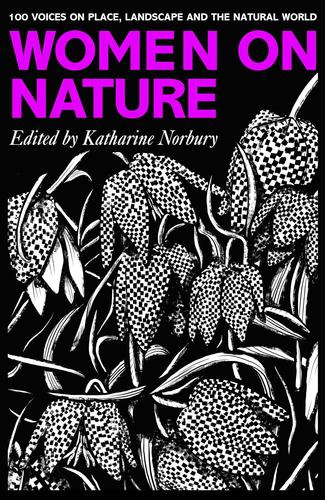 For most of the last seven months of 2021, I kept this as a bedside book, reading one or two pieces on most nights. It wasn’t until early this year that I brought it downstairs and started working it into my regular daily stacks so that I would see more progress. At first I quibbled (internally) with the decision to structure the book alphabetically by author. I wondered if more might have been done to group the pieces by region or theme. But besides being an unwieldy task, that might have made the contents seem overly determined. Instead, you get the serendipity of different works conversing with each other. So, for example, Katrina Porteous’s dialect poem about a Northumberland fisherman is followed immediately by Jini Reddy’s account of a trip to Lindisfarne; Margaret Cavendish’s 1653 dialogue in verse between an oak tree and the man cutting him down leads perfectly into an excerpt from Nicola Chester’s On Gallows Down describing a confrontation with tree fellers.
I’d highly recommend this for those who are fairly new to the UK nature writing scene and/or would like to read more by women. Keep it as a coffee table book or a bedside read and pick it up between other things. You’ll soon find your own favourites. (New purchase from Unbound)
Five favourites:
- “Caravan” by Sally Goldsmith (a Sheffield tree defender)
- “Enlli: The Living Island” by Pippa Marland (about the small Welsh island of Bardsey)
- “An Affinity with Bees” by Elizabeth Rose Murray (about beekeeping, and her difficult mother, who called herself “the queen bee”)
- “An Island Ecology” by Sarah Thomas (about witnessing a whale hunt on the Faroe Islands)
- My overall favourite: “Arboreal” by Jean McNeil (about living in Antarctica for a winter and the contrast between that treeless continent and Canada, where she grew up, and England, where she lives now)
“It occurred to me that trees were part of the grammar of one’s life, as much as any spoken language. … To see trees every day and to be seen by them is a privilege.”
Stay strong, trees!
Sponsored any books, or read any from indie publishers, recently?
Three June Releases: Allen-Paisant, Cowen and Mosse
Two poetry offerings and a short memoir this month. A similar strategy is at work in both verse volumes: Jason Allen-Paisant contrasts Jamaica and England via the medium of trees, and Rob Cowen comments on current events through the prism of the natural world. In Kate Mosse’s first nonfiction book, she reflects on bereavement and caregiving.
Thinking with Trees by Jason Allen-Paisant
 Allen-Paisant, from Jamaica and now based in Leeds, describes walking in the forest as an act of “reclamation.” For people of colour whose ancestors were perhaps sent on forced marches, hiking may seem strange, purposeless (the subject of “Black Walking”). Back in Jamaica, the forest was a place of utility rather than recreation:
In Porus life was un-
pastoral
The woodland was there
not for living in going for walks
or thinking
Trees were answers to our needs
not objects of desire
woodfire
But “I give myself permission / to go outside,” he writes, to notice the turning of the seasons, to commune with trees and birds, even if “there is nobody else like me / around here”. Explicitly calling into question Wordsworth’s model of privileged wandering, he injects a hint of threat into his interactions with nature. Most often this is symbolized by the presence of dogs. Even the most idyllic of scenes harbours the possibility of danger.
beware of spring
believe you are
a sprout of grass
and love all you see
but come out of the woods
before the white boys
with pitbulls
come
The poet cites George Floyd and Christian Cooper, the Central Park birder a white woman called the police on, as proof that being Black outdoors is inherently risky. There’s no denying this is an important topic, but I found the poems repetitive, especially the references to dogs. These felt like overkill. While there is some interesting enjambment, as in the first extended quote above, as well as internal and half-rhymes, I tend to prefer more formal poetry that uses more sonic techniques and punctuation. Still, I would be likely to direct fans of Kei Miller’s work to this collection.
With thanks to Carcanet Press for the free copy for review.
The Heeding by Rob Cowen
This poetry and art collaboration arose out of a “pact to pay attention” during a year of lockdown in the UK and record observations of nature, current events, and everyday life. Cowen is drawn to the moors near his home in Yorkshire, but also yearns to spend time with his friends again. He watches hawks and blue tits, notices the insects that fill his garden, and celebrates the way that allotment gardening brings together all sorts of people.
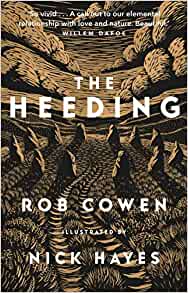 The emotional scope of the poems is broad: the author fondly remembers his brick-making ancestors and his honeymoon; he sombrely imagines the last moments of an old man dying in a hospital; he expresses guilt over accidentally dismembering an ant, yet divulges that he then destroyed the ants’ nest deliberately. There are even a couple of cheeky, carnal poems, one about a couple of teenagers he caught copulating in the street and one, “The Hottest Day of the Year,” about a longing for touch. “Matter,” in ABAB stanzas, is on the theme of racial justice by way of the Black Lives Matter movement.
My two favourites were “Sunday School,” about the rules for life he’s lived by since leaving religion behind, and “The End of This (Drinking Poem),” which serves as a good-riddance farewell to 2020: “Let me shake off / this year the way the otter / slips out of fast, rising water / and makes the holt just in time … / Let me rid my days of caution and fear, / these protocols and tiers / and Zoom funerals for people I love / and will never see again.” The book is worth the price of admission for the latter alone, and Nick Hayes’s black-and-white woodcut-style engravings are a plus.
However, in general I felt that the balance of current events and nature was off, especially compared to books like The Consolation of Nature, and ultimately I was not convinced that this needed to be in verse at all. “Starling,” especially, feels like a straight knockoff of Robert Macfarlane’s The Lost Words (“We forget that you once shimmered through frozen air, ripple bird. / Shape-shifter, dusk-dancer. Murmurer, sky-writer”). Judging from Cowen’s Common Ground, this would have been more successful as a book of short prose diary entries with a few poems dotted through.
With thanks to Elliott & Thompson for the proof copy for review.
An Extra Pair of Hands: A Story of Caring, Ageing and Everyday Acts of Love by Kate Mosse
Mosse’s parents and mother-in-law all moved in to live with her and her husband in their Chichester home when they reached old age. Her father had Parkinson’s and died in 2011, her mother survived him by a few years, and Granny Rosie is still going (reasonably) strong at the age of 90. This is a compact and relatable account of a daughter’s experiences of caregiving and grief, especially with the recent added complications of a pandemic.
 What came through particularly clearly for me was the older generation’s determination to not be a burden: living through the Second World War gave them a sense of perspective, such that they mostly did not complain about their physical ailments and did not expect heroic measures to be made to help them. (Her father knew his condition was “becoming too much” to deal with, and Granny Rosie would sometimes say, “I’ve had enough of me.”) In her father’s case, this was because he held out hope of an afterlife. Although Mosse does not share his religious beliefs, she is glad that he had them as a comfort.
The author recognizes the ways in which she has been lucky: as a full-time writer, she works from home and has the time and energy to devote to caring for elderly parents, whereas for many – generally middle-aged women, who may still have children at home – it is a huge struggle to balance caregiving with the rest of life. What is more, money is no issue for her. Repeating some of the statistics from Madeleine Bunting’s Labours of Love, she acknowledges that the situation is much more challenging for the average person.
I can see how this could serve as a great introduction for someone who hasn’t previously read much about bereavement, caregiving or old age, and I imagine it will especially appeal to existing fans of Mosse’s writing, whereas I was new to her work. I’ve read so much around these topics, including most of the works included in the bibliography, that the book did not offer me anything new, though it was a perfectly pleasant read.
Readalikes I have reviewed:
Notes on Grief by Chimamanda Ngozi Adichie
Be With by Mike Barnes
All Things Consoled by Elizabeth Hay
The Fragments of My Father by Sam Mills
With thanks to Profile Books/Wellcome Collection for the free copy for review.
What recent releases can you recommend?
Book Serendipity, Early 2021
I call it Book Serendipity when two or more books that I read at the same time or in quick succession have something pretty bizarre in common. Because I have so many books on the go at once (usually 20‒30), I suppose I’m more prone to such incidents.
Josh Cohen’s How to Live. What to Do, a therapist’s guide to literature, explains why this might happen:
More than one writer – the French poet Stéphane Mallarmé, the Argentinian writer Jorge Luis Borges – has advanced the exhilarating idea that each book is an infinitesimally small piece of one single, endless Book. I’ve always felt that this idea, unlikely as it might sound, makes perfect sense if you read enough novels [also nonfiction, for me]. The incidents, descriptions, phrases and images in the book you’re reading will always recall the incidents in another, and those in turn will call up the incidents in another, so that even as you’re reading one book, you’re reading countless others.
The following are in roughly chronological order.
- Mother‒baby swimming sessions in Some Body to Love by Alexandra Heminsley and The Still Point of the Turning World by Emily Rapp.


- [I think it would be a spoiler to even name them, but two novels I read simultaneously in January featured 1) a marriage / close relationship between a man and a woman – even though the man is gay; and 2) a character who beat his wife and then died in a convenient ‘accident’. One was published in 1997 and the other in 2020.]
- Stomas appeared in Dazzling Darkness by Rachel Mann and First Time Ever by Peggy Seeger late in my 2020 reading, and then in early 2021 in Pain: The Science of the Feeling Brain by Abdul-Ghaaliq Lalkhen and Love’s Work by Gillian Rose.
- An account of the author’s experience of ovarian hyperstimulation syndrome in Hormonal by Eleanor Morgan and I Miss You when I Blink by Mary Laura Philpott.
- Salmon fishing takes place in Snow Falling on Cedars by David Guterson and Kings of the Yukon by Adam Weymouth.


- The medical motto “see one, do one, teach one” appears in Breathtaking by Rachel Clarke and Complications by Atul Gawande.
- Filipino medical staff feature in America Is Not the Heart by Elaine Castillo and Breathtaking by Rachel Clarke.
- Twin Peaks is mentioned in The Fragments of My Father by Sam Mills and the anthology Trauma: Essays on Art and Mental Health; a different essay in the latter talks about Virginia Woolf’s mental health struggle, which is a strand in the former.
- St. Teresa of Ávila is mentioned in Heart by Gail Godwin and Sanatorium by Abi Palmer.

- The same Rachel Long poem appears in her debut collection, My Darling from the Lions, and The Emma Press Anthology of Love – but under different titles (“Portent” vs. “Delayed Gratification”).
- There’s a matriarch named Dot in Unsettled Ground by Claire Fuller and The Magician’s Assistant by Ann Patchett.
- There’s an Alaska setting in The Quality of Silence by Rosamund Lupton and Kings of the Yukon by Adam Weymouth.
- Becoming a mother is described as a baptism in Sanctuary by Emily Rapp Black and The Fragments of My Father by Sam Mills.


- While reading America Is Not the Heart by Elaine Castillo, I saw Castillo mentioned in the Acknowledgements of My Darling from the Lions by Rachel Long.
- Polar explorers’ demise is discussed in Ex Libris by Anne Fadiman and The Still Point by Amy Sackville.
- “Butterfingers” / “butter-fingered” is used in America Is Not the Heart by Elaine Castillo and The Clock Winder by Anne Tyler.
- There’s a mention of someone eating paper torn from books (the horror!) in Ex Libris by Anne Fadiman and The Clock Winder by Anne Tyler.
- I was reading three pre-releases at once, each of 288 pages: Milk Fed by Melissa Broder, Unsettled Ground by Claire Fuller, and A Town Called Solace by Mary Lawson.
- The Jewish golem myth is the overarching metaphor of Milk Fed by Melissa Broder and Golem Girl by Riva Lehrer.
- There’s a ceremony to pay respects to those who donated their bodies for medical school dissection in Maybe You Should Talk to Someone by Lori Gottlieb and Golem Girl by Riva Lehrer.
- An old woman with dementia features in The Living Sea of Waking Dreams by Richard Flanagan, Keeper by Andrea Gillies, and The Clock Winder by Anne Tyler.


- A mother dies of cancer on Christmas Day in This Party’s Dead by Erica Buist and The Fragments of My Father by Sam Mills.
- The main character does stand-up comedy in Milk Fed by Melissa Broder and This Party’s Dead by Erica Buist.
- Winning a goldfish at a carnival in The Air Year by Caroline Bird, A Feather on the Breath of God by Sigrid Nunez, and Anna Vaught’s essay in the Trauma anthology.
- ECT (electroconvulsive therapy) is mentioned in Adventures in Human Being by Gavin Francis and Woman on the Edge of Time by Marge Piercy.


- There’s a father who is non-medical hospital staff in The Push by Ashley Audrain (a cleaner) and A Feather on the Breath of God by Sigrid Nunez (a kitchen worker).
- There’s a character named Hart in The Wild Laughter by Caoilinn Hughes and The Birth House by Ami McKay.
- Cannibalism is a point of reference, a major metaphor, or a (surreal) reality in Mother for Dinner by Shalom Auslander, Eat or We Both Starve by Victoria Kennefick, and Light Perpetual by Francis Spufford.
- Infertility and caring for animals were two big themes shared by Brood by Jackie Polzin and Catalogue Baby by Myriam Steinberg. This became clearer when I interviewed both authors in February. Also, both women have shocks of pink hair in their publicity photos!


- A young woman works at a hotel in The Distance between Us by Maggie O’Farrell and My Dark Vanessa by Kate Elizabeth Russell (and The Glass Hotel by Emily St. John Mandel, which I read late last year).
What’s the weirdest reading coincidence you’ve had lately?
The Barbellion Prize 2020 Winner
It has been a pleasure following the Barbellion Prize race this year. In case you haven’t already seen the news, the winner of the inaugural award is Golem Girl by Riva Lehrer (my review).

It’s not often that my favourite from a literary prize list is also the judges’ pick, so I’m particularly pleased that my prediction came true. The full announcement is here. Here’s what two of the judges had to say:
Assistant Professor of Literature Dr Shahd Alshammari: “Golem Girl is a memoir that is infused with art, life, discrimination, love, self-love, and what it means to be vulnerable. Disability is on every page—and that is the type of literature we need.”
Cat Mitchell, Lecturer and Programme Leader of the Writing and Publishing degree at the University of Derby: “Golem Girl is a powerful and wide-reaching account of a life lived with disability. By interweaving her writing and art, Riva explores queerness, community, society’s fear of difference, and the often problematic representation of disabled bodies in art and medicine.”
Professor Tom Shakespeare FBA, Professor of Disability Research at London School of Hygiene and Tropical Medicine, and an advisor to the Prize, added: “From Pope to Stevenson, Woolf to Plath, writers have lived with illness and disability for centuries. Now here comes exactly the right prize at the right time: disabled writers have been locked down far longer, and deserve far more recognition than they get. The Barbellion Prize deserves to succeed, and Riva Lehrer’s Golem Girl will put it on the map.”
To recap, the other three on the shortlist were:
- The Fragments of My Father by Sam Mills
- Sanatorium by Abi Palmer
- Kika & Me by Dr Amit Patel
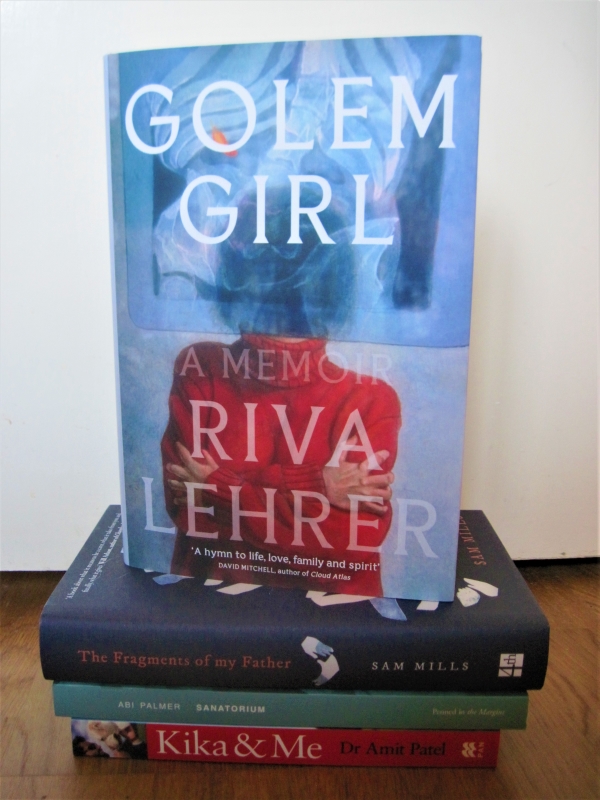
It’s been quite the whirlwind reading and reviewing all four books as the first two review copies only arrived on the 28th of January. Most of my reviews got bunched up right in the 36 or so hours before the announcement, but I was relieved that I managed to get them all up in advance. The Prize basically has no budget, so when I approached Cat (who used to work in publicity at Penguin) and asked if I and a handful of other bloggers could get involved, I wasn’t sure if it would be a possibility. I was really grateful to the four publishers for being willing to supply review copies. I hope we have helped to get the word out there.
The Barbellion Prize is already accepting entries for the 2021 award (submissions close on 31 October; see the website for more information). On my wish list thus far are two excellent memoirs, Sanctuary by Emily Rapp Black, who has a prosthetic leg and lost her son to Tay-Sachs disease, and A Still Life by Josie George, who lives joyfully with chronic illness.
Other relevant 2021 releases I’m interested in getting hold of are: The Invention of Miracles: language, power, and Alexander Graham Bell’s quest to end deafness by Katie Booth, Places I’ve Taken My Body by Molly McCully Brown, What Doesn’t Kill You: A Life with Chronic Illness – Lessons from a Body in Revolt by Tessa Miller, and Waiting for Superman: One Family’s Struggle to Survive – and Cure – Chronic Fatigue Syndrome by Tracie White.
Have you been inspired to read any of the shortlisted books?
Finishing Off the Barbellion Prize Shortlist: Sam Mills and Dr Amit Patel
The Barbellion Prize 2020 will be awarded tomorrow “to an author whose work has best represented the experience of chronic illness and/or disability.” (See also my reviews of Golem Girl by Riva Lehrer and Sanatorium by Abi Palmer.)
These two memoirs, though very different outwardly, both draw attention to the practical and emotional challenges of life with disability or a mental illness, and call for compassion from individuals and a commitment to help from governing bodies.
The Fragments of My Father: A memoir of madness, love and being a carer by Sam Mills
One in eight people in the UK cares for an ill or disabled relative. Sam Mills has been a carer for a parent – not once, but twice. The first time was for her mother, who had kidney cancer that spread to her lungs and died one Christmas. A few years later, Mills’s father, Edward, who has paranoid schizophrenia, started having catatonic episodes, as with the incident she opens her memoir on. In 2016, on what would have been her mother’s 70th birthday, Edward locked himself in the toilet of the family home in Surrey. Her brother had to break in with a screwdriver and ambulance staff took him away to a hospital. It wasn’t the first time he’d been institutionalized for a mental health crisis, nor would it be the last. It was always excruciating to decide whether he was better off at home or sectioned on a ward.
Mills darts between past and present as she contrasts her father’s recent condition with earlier points in their family life. She only learned about his diagnosis from her mother when, at age 14, she saw him walk down the stairs naked and then cry when he burned the chips. While schizophrenia can have a genetic element, relatives of a schizophrenic are also more likely to be high achievers. So, although Mills went through a time of suicidal depression as a teenager, meditation got her through and she exhibits more of the positive traits: An author of six books and founder of the small press Dodo Ink, she is creative and driven. Still, being her father’s full-time carer with few breaks often leaves her exhausted and overwhelmed.
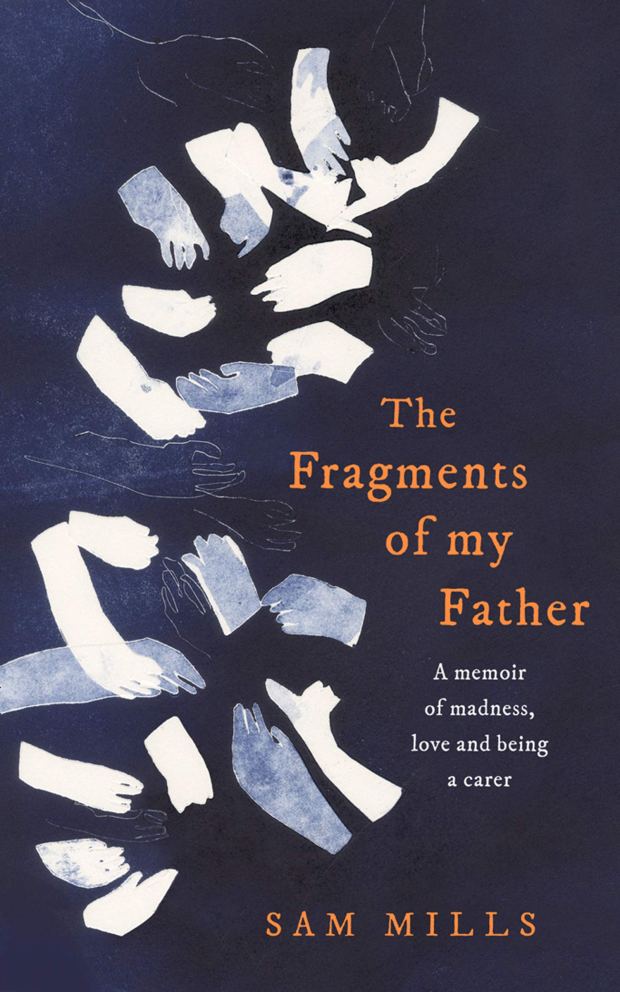
The book’s two main points of reference are Leonard Woolf and F. Scott Fitzgerald, who cared for mentally ill wives and had to make difficult choices about their treatment and housing. In a nutshell, Mills concludes that Woolf was a good carer while Fitzgerald was a terrible one. Leonard was excused World War I service due to his nervous exhaustion from being a carer, and he gave up on the idea of children when doctors said that motherhood would be disastrous for Virginia. Virginia herself absolved Leonard in her suicide note, reassuring him that no couple could have been happier and that no one could have looked after her better. Scott, on the other hand, couldn’t cope with Zelda’s unpredictable behaviour – not least because of his own alcoholism – so had her locked up in expensive yet neglectful institutions and censored her work when it came too close to overlapping with his own plots.
The Fragments of My Father brings together a lot of my favourite topics to read about: grief, physical and mental illness, and literary biography. It had already been on my wish list since I first heard about it last year, but I’m glad the Barbellion Prize shortlisting gave me a chance to read it. It helps to have an interest in the Fitzgeralds and Woolfs – though in my case I had read a bit too extensively about them for this strand to feel fully fresh. (I also had a ‘TMI’ response to some revelations about the author’s relationships and sex life.)
Ultimately, I most appreciated the information on being a carer, including the mental burden and the financial and social resources available. (Although there is a government allowance for carers, Mills wasn’t eligible because of her freelance earnings, so she had to apply for Society of Authors grants instead.) With caring so common, especially for women, we need a safety net in place for all whose earnings and relationships will be affected by family duties. I read this with an eye to the future, knowing there’s every possibility that one day I’ll be a carer for a parent(-in-law) or spouse.
Readalikes I have also reviewed:
- Labours of Love: The Crisis of Care by Madeleine Bunting
- All the Lives We Ever Lived: Seeking Solace in Virginia Woolf by Katharine Smyth
Favorite lines:
“had I ever made a conscious choice? Caring felt like something that was happening to me, as though my father’s illness had been an eruption that had flowed like lava over my life. … I can’t think of any other job where someone defines your role by conferring its title on you, as though they are holding out a mould that you must fill.”
“caring is rarely simple because its nature is not static. It creates routines, crafts the days into set shapes, lulls you into states of false security, and then mutates, slaps you with fresh challenges, leaves you lost just when you feel you have gained wisdom.”
With thanks to Fourth Estate for the free copy for review.
Kika & Me: How one extraordinary guide dog changed my world by Dr Amit Patel with Chris Manby
Dr Patel grew up in Guildford, studied medicine at Cambridge, and specialised in trauma medicine as a junior doctor in London. Diagnosed with keratocornus, which changes the shape of the cornea (it affects 1 in 450), he required first special contact lenses and then a series of cornea transplants. By the time of his eighth transplant, he’d remortgaged his house to pay an American specialist. Meeting and marrying Seema was a time of brightness before, in November 2013, he completely lost his vision within 36 hours. Blindness meant that he could no longer do his job, and constant eye pain and inactivity exacerbated his depression. While white cane and Braille training, plus the Royal National Institute of Blind People’s “Living with Sight Loss” course, started to boost his independence, it was being paired with his guide dog, Kika the Labrador, in 2015 that truly gave Patel his life back.
Trying out guide dogs sounds a little bit like speed dating. The Guide Dogs for the Blind Association (founded in the UK in 1931) warned that Kika was a “Marmite dog,” moody and likely to push boundaries; there was no guarantee she and Patel would get along. But from the start Kika was just right for him. More than once, what seemed like her pure stubbornness – lying on his feet and refusing to move – kept him from dangerous situations, like getting trapped between a busy road and a building site on an unfamiliar route. After a 10-day core skills training course, during which man and dog stayed at a hotel together, Kika was ready to join them at home. In the days to come, she would learn all Patel’s usual routes around their neighbourhood and into the City – with the help of smears of mackerel pâté.
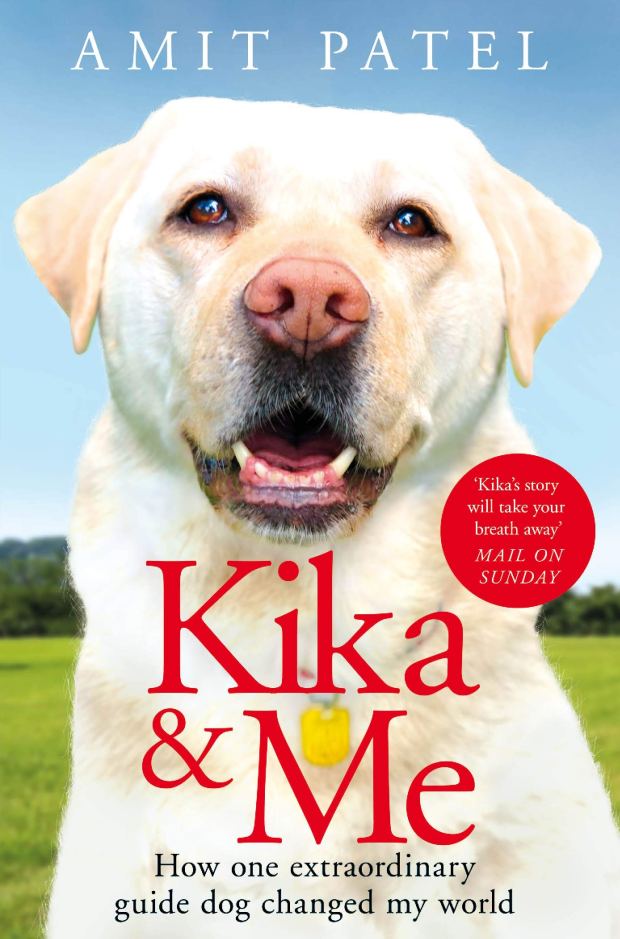
If you’re like me, you’ll be most curious to learn about the nitty-gritty of life for a visually impaired person. I loved hearing about how Patel practiced his Braille letters with an egg container and ping pong balls. Since he went blind, he and his wife have had two children, and with Kika’s help manoeuvring a baby buggy is no problem. Guide dogs are trained to be predictable, e.g., doing their business in the same spot at the same times so it’s much easier to find and clean up. Some dog training tricks also worked for children, like putting a bell on a Labrador or a toddler to know when they wandered off!
Patel has had some unfortunate experiences since he went blind, particularly on the London Underground: teenagers picking him up and spinning him around on a train platform, busy commuters barging past him and Kika on an escalator, and an impatient woman hitting Kika with her handbag. While Patel doesn’t like being negative on social media, he finds that posting video clips of these incidents raises awareness of the challenges VIPs face. Every time he hits a setback, he uses it as an opportunity. For instance, one Diwali he was excited to visit Neasden Temple, only to be dismayed that they wouldn’t allow Kika inside. Since then, he has worked with temples around the world to improve disability services. He is also involved in London’s “Transport for All” work, and advises companies on access issues.
More so than the rest of the shortlist, Kika & Me is illuminating about daily life with a disability and has a campaigning focus. It’s an easy read, and not just for animal lovers. Judging the book by the cover, I might not have picked it up otherwise, so I’m grateful that the Barbellion put it on my radar. I’m deeply impressed by what Patel has achieved and the positive attitude he maintains. (Kika has her own Twitter account! @Kika_GuideDog)
With thanks to Pan Macmillan for the free copy for review.
(Fellow bloggers John Fish and Jackie Law have also been reading along with the Barbellion Prize shortlist. See their reviews thus far: John—Mills and Palmer; Jackie—Mills and Palmer.)
Next year the Barbellion Prize hopes to award more money, including to all nominated authors. They are accepting submissions for 2021, and are grateful for any Paypal donations via their website (see the page footer). I’ve donated to the cause. Can you help, too?
Introducing the Barbellion Prize & A Review of Sanatorium by Abi Palmer
New this year, the Barbellion Prize will be awarded annually “to an author whose work has best represented the experience of chronic illness and/or disability.” It’s named after W.N.P. Barbellion (the pen name of Bruce Frederick Cummings), the English author of The Journal of a Disappointed Man, which he started writing at 13. A self-taught naturalist, he specialized in lice when he worked for the British Museum’s department of natural history in London. He was rejected for war service in 1915 after a doctor found him to have multiple sclerosis. At that time, the diagnosis was like a death sentence; indeed, Cummings died at age 30 in 1919, though by then he had managed to produce two volumes of memoirs as well as a daughter.
Here’s some more information on the prize criteria from the website: “Eligibility for the prize is predicated on the author’s presentation of life with a long-term chronic illness or disability, whether that be in the form of blindness, MS, cystic fibrosis, dwarfism, or another comparable condition that may substantially define one’s life. Authors – such as those in a carer’s capacity – who themselves are not ill may be considered for the prize if their work is truly exceptional as an articulation of life with illness, but authors who themselves deal personally with illness or disability will take priority in any selection for the prize.”


Especially in the absence of the Wellcome Book Prize, which has been on hiatus since the announcement of the 2019 winner, I’m delighted that there is a new prize with a health slant, particularly one that will lead to greater visibility for disabled writers and their stories. From a longlist of eight, in January the Barbellion Prize judges chose a shortlist of four titles: three memoirs and a work of autofiction. The publishers kindly agreed to send me the shortlist for review. Two have arrived so far (there have been postal delays in the UK, as in many places).

I have already read one of the nominees and will do my best to review the rest before the £1000 prize is awarded on the 12th. The others are:
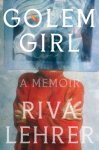
- Golem Girl by Riva Lehrer – An illustrated memoir by a visual artist born with spina bifida.
- The Fragments of My Father by Sam Mills – A memoir of being a carer for her father, who has paranoid schizophrenia; also includes musings on Leonard Woolf and F. Scott Fitzgerald, who cared for mentally ill wives. I’m currently reading this one.
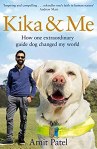 Kika & Me by Amit Patel – Patel was a trauma doctor and lost his sight within 36 hours due to a rare condition. He was paired with his guide dog, Kika, in 2015.
Sanatorium by Abi Palmer (2020)
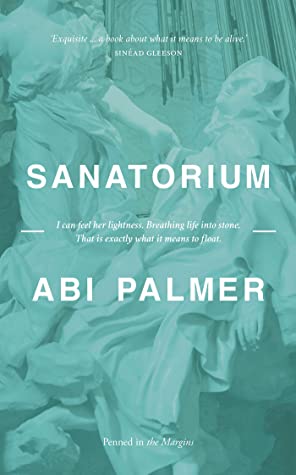 Water is a source of comfort and delight for Abi, the narrator of Sanatorium (whose experiences may or may not be those of the author; always tricky to tell with autofiction). Floating is like dreaming for her – an intermediate state between the solid world where she’s in pain and the prospect of vanishing into the air. In 2017 she spends a few weeks at a sanatorium in Budapest for water therapy; when she returns to London she buys a big inflatable plastic bathtub to keep up the exercises as she tries to wean herself off of opiates.
Abi feels fragile due to a whole host of body issues, some in her past but most continuing into the present: an autoimmune connective tissue disorder, psoriatic arthritis, Crohn’s disease, and sexual assaults. Her knee is most immediately problematic, leading her to use a mobility scooter. As her health waxes and wanes, other people – unable to appreciate any internal or incremental changes – judge her by whether or not she is able to walk well.
 The book is in snippets, often of just a paragraph or even one sentence, and cycles through its several strands: Abi’s time in Budapest and how she captures it in an audio diary; ongoing therapy at her London flat, custom-designed for disabled tenants (except “I was the only cripple who could afford it”); the haunted house she grew up in in Surrey; and notes on plus prayers to St. Teresa of Ávila, accompanied by diagrams of a female figure in yoga poses.
Locations are given in small letters in the top corner of the page, apart from for the more dreamlike segments that can’t be pinned down to any one place. For instance, I was reminded of a George Saunders story by the surreal interlude in which Abi imagines Van Gogh’s Starry Night reproduced in the hair on a detached pair of legs mounted on a wall as a work of art.
The different formats and short chunks of prose generally keep the voice from becoming monotonous, though I did wonder if occasional use of the third person (and some more second person) could have been effective, too. Far from a straightforward memoir, the book incorporates passages that are closer to fantasy and poetry, and the visual elements and fertile imagery attest to Palmer’s background as a mixed-media artist.
Sanatorium is a fascinating work – matter-of-fact, playful and sensual – that vividly conveys the reality of life with a chronic illness. It was already on my wish list, but I’m so glad that this shortlisting gave me a chance to read it. Though I haven’t read the other nominees yet, the passages below are proof that this would be a deserving Barbellion Prize winner.
You go through life as a chronically ill person with so many different people who have so many different opinions about how your treatment should be. They’re not always useful or right. You have to build your own narrative and your own sense of what feels appropriate. You have to learn to trust your body to tell you what’s working. But that’s hard too, when your body keeps changing the rules.
I am one of the more privileged ones and still I’m screaming. God, it would be so nice just to dissolve into nothing and wash up onto a lonely beach.
I wonder if what I’ve learned about chronic illness, more than anything, is that it’s a constant cycle. You fall apart, then you try your best to rebuild again. I wonder what would happen if I stopped trying.
Readalikes I have also reviewed:
- Heal Me by Julia Buckley
- Bodies of Water by V. H. Leslie
- My Year of Rest and Relaxation by Ottessa Moshfegh
With thanks to Penned in the Margins for the free copy for review.
Most Anticipated Releases of the Second Half of 2020
Although over 100 books from the second half of the year are already on my radar, I’ve limited myself here to the 15 July to November releases that I’m most excited about.
The modest number is a cheat in that I’ve already read seven books from this period in advance (plus I’m currently reading another three), and I haven’t listed any that I already have access to via proofs, promised finished copies, NetGalley, Edelweiss, or library preorders. Some of these that I intend to read are A Traveler at the Gates of Wisdom by John Boyne, D (A Tale of Two Worlds): A Modern-Day Dickensian Fable by Michel Faber, Bringing Back the Beaver by Derek Gow, Just Like You by Nick Hornby, How to Fly (poems) by Barbara Kingsolver, Vesper Flights by Helen Macdonald, Utopia Avenue by David Mitchell, Summerwater by Sarah Moss, Lake Life by David James Poissant, Dear Reader by Cathy Rentzenbrink, Jack by Marilynne Robinson and The Wild Silence by Raynor Winn.

(Meanwhile, two of my overall most anticipated 2020 releases have been pushed back to 2021, at least in the UK: Transcendent Kingdom by Yaa Gyasi and The Anthill by Julianne Pachico.)


The following are in release date order, within sections by genre; the quoted descriptions are from the publisher blurbs on Goodreads. For most I’ve added a note on why I want to read it. Nonfiction dominates: this seems to be the way of 2020 for me. Lots of flora and fauna on the covers and in the themes. Look out for antlers x 2.
Fiction

I love the U.S. cover.
Artifact by Arlene Heyman [July 9, Bloomsbury] “A sweeping debut novel about love, sex, motherhood, and ambition that follows a gifted and subversive scientist’s struggle to reach beyond cultural constraints for the life she wants. … Artifact is an intimate and propulsive portrait of a whole woman.” Susan of A life in books put me onto this one; here’s her review.

I love the U.S. cover.
Sisters by Daisy Johnson [Aug. 13, Jonathan Cape / Aug. 25, Riverhead] “After a serious case of school bullying becomes too much to bear, sisters July and September move across the country with their mother to a long-abandoned family home. … With its roots in psychological horror, Sisters is a taut, powerful and deeply moving account of sibling love.” I loved Johnson’s Booker-shortlisted debut, Everything Under.
 Piranesi by Susanna Clarke [Sept. 15, Bloomsbury] “Piranesi’s house is no ordinary building: its rooms are infinite, its corridors endless. … For readers of Neil Gaiman’s The Ocean at the End of the Lane … Piranesi introduces an astonishing new world.” It feels like forever since we had a book from Clarke. I remember devouring Jonathan Strange & Mr Norrell during a boating holiday on the Norfolk Broads in 2006. But whew: this one is only 272 pages.
 The Swallowed Man by Edward Carey [Nov. 5, Gallic / Oct. 27, Riverhead] “A beautiful and haunting imagining of the years Geppetto spends within the belly of a sea beast. Drawing upon the Pinocchio story while creating something entirely his own, Carey tells an unforgettable tale of fatherly love and loss, pride and regret, and of the sustaining power of art and imagination.” His Little was one of my favorite novels of 2018.
Poetry
 Dearly: New Poems by Margaret Atwood [Nov. 10, Chatto & Windus / Ecco / McClelland & Stewart] “By turns moving, playful and wise, the poems … are about absences and endings, ageing and retrospection, but also about gifts and renewals. They explore bodies and minds in transition … Werewolves, sirens and dreams make their appearance, as do various forms of animal life and fragments of our damaged environment.”
Nonfiction
 Bright Precious Thing: A Memoir by Gail Caldwell [July 7, Random House] “In a voice as candid as it is evocative, Gail Caldwell traces a path from her west Texas girlhood through her emergence as a young daredevil, then as a feminist.” I’ve enjoyed two of Caldwell’s previous books, especially Let’s Take the Long Way Home. Also, I’ve been reading a lot of childhood memoirs and I like comparing them to see how authors capture that time of life.
 The Fragments of My Father by Sam Mills [July 9, Fourth Estate] A memoir of being the primary caregiver for her father, who had schizophrenia; with references to F. Scott Fitzgerald and Leonard Woolf, who also found themselves caring for people struggling with mental illness. “A powerful and poignant memoir about parents and children, freedom and responsibility, madness and creativity and what it means to be a carer.”
 Avoid the Day: A New Nonfiction in Two Movements by Jay Kirk [July 28, Harper Perennial] Transylvania, Béla Bartók’s folk songs, an eco-tourist cruise in the Arctic … “Avoid the Day is part detective story, part memoir, and part meditation on the meaning of life—all told with a dark pulse of existential horror.” It was Helen Macdonald’s testimonial that drew me to this: it “truly seems to me to push nonfiction memoir as far as it can go.”
 World of Wonders: In Praise of Fireflies, Whale Sharks, and Other Astonishments by Aimee Nezhukumatathil [Aug. 3, Milkweed Editions] “From beloved, award-winning poet Aimee Nezhukumatathil comes a debut work of nonfiction—a collection of essays about the natural world, and the way its inhabitants can teach, support, and inspire us. … Even in the strange and the unlovely, Nezhukumatathil finds beauty and kinship.” Who could resist that title or cover?
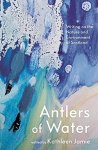 Antlers of Water: Writing on the Nature and Environment of Scotland, edited by Kathleen Jamie [Aug. 6, Canongate] Contributors include Amy Liptrot, musician Karine Polwart and Malachy Tallack. “Featuring prose, poetry and photography, this inspiring collection takes us from walking to wild swimming, from red deer to pigeons and wasps, from remote islands to back gardens … writing which is by turns celebratory, radical and political.”
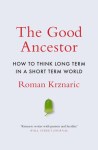 The Good Ancestor: How to Think Long Term in a Short-Term World by Roman Krznaric [Aug. 27, W.H. Allen] “Drawing on radical solutions from around the world, Krznaric celebrates the innovators who are reinventing democracy, culture and economics so that we all have the chance to become good ancestors and create a better tomorrow.” I’ve been reading a fair bit around this topic. I got a sneak preview of this one from Krznaric’s Hay Festival talk.
 Eat the Buddha: The Story of Modern Tibet through the People of One Town by Barbara Demick [Sept. 3, Granta / July 28, Random House] “Illuminating a culture that has long been romanticized by Westerners as deeply spiritual and peaceful, Demick reveals what it is really like to be a Tibetan in the twenty-first century, trying to preserve one’s culture, faith, and language.” I read her book on North Korea and found it eye-opening. I’ve read a few books about Tibet over the years; it is fascinating.
 Entangled Life: How Fungi Make Our Worlds, Change Our Minds and Shape Our Futures by Merlin Sheldrake [Sept. 3, Bodley Head / May 12, Random House] “Entangled Life is a mind-altering journey into this hidden kingdom of life, and shows that fungi are key to understanding the planet on which we live, and the ways we think, feel and behave.” I like spotting fungi. Yes, yes, the title and cover are amazing, but also the author’s name!! – how could you not want to read this?
 Between Light and Storm: How We Live with Other Species by Esther Woolfson [Sept. 3, Granta] “Woolfson considers prehistoric human‒animal interaction and traces the millennia-long evolution of conceptions of the soul and conscience in relation to the animal kingdom, and the consequences of our belief in human superiority.” I’ve read two previous nature books by Woolfson and have done some recent reading around deep time concepts. This is sure to be a thoughtful and nuanced take.
 The Stubborn Light of Things: A Nature Diary by Melissa Harrison [Nov. 5, Faber & Faber] “Moving from scrappy city verges to ancient, rural Suffolk, where Harrison eventually relocates, this diary—compiled from her beloved “Nature Notebook” column in The Times—maps her joyful engagement with the natural world and demonstrates how we must first learn to see, and then act to preserve, the beauty we have on our doorsteps.” I love seeing her nature finds on Twitter. I think her writing will suit this format.
 Bookish Beck = Rebecca Foster. American transplant to England. Freelance proofreader and book reviewer.
 Bookish Beck