20 Books of Summer, 7–9: Furies, The Earthquake Bird, and Greta & Valdin
It might seem that I’m very behind on 20 Books of Summer, and I am, but that’s mostly because I’ve done my usual trick of starting loads of books at once so that I’m currently in the middle of another nine with no prospect of finishing any particularly soon. I will eventually review more, but probably all in a rush and on the later side. It doesn’t help that quite a few happen to be lacklustre reads, such that I have to push myself through them instead of enjoying spending time with the stack. For today, though, I have a pretty readable trio made up of feminist short stories, a mild Japan-set mystery, and a highly random queer dysfunctional family novel that rose from indie obscurity in New Zealand. (Also a DNF.)
Furies: Stories of the Wicked, Wild and Untamed (2023)
It was my second attempt at this Virago anthology; I borrowed it from the library last year but never opened it, as far as I can remember. Each story is named after a synonym for “virago,” so the focus is on strong and unconventional women, but given that brief there is huge variety, including memoir (Ali Smith’s “Spitfire,” about her late mother’s WAAF service), historical research (CN Lester on sexology and early trans figures, Emma Donoghue on early-twentieth-century activist and lesbian Kathlyn Oliver, Stella Duffy on menopause) and even one graphic short, the mother–daughter horror story “She-Devil” by comics artist Eleanor Crewes.
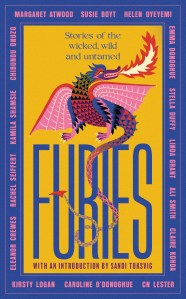 As with any anthology, some pieces stand out more than others. Caroline O’Donoghue, Helen Oyeyemi and Kamila Shamsie’s contributions were unlikely to convert me into a fan. Margaret Atwood is ever sly and accessible, with “Siren” opening with the line “Today’s Liminal Beings Knitting Circle will now be called to order.” I was surprised to get on really well with Kirsty Logan’s “Wench,” about girls ostracized by their religious community because of their desire for each other – I’ll have to read Now She Is Witch, as it’s set in the same fictional world – and Chibundu Onuzo’s “Warrior,” about Deborah, an Israelite leader in the book of Judges. And while I doubt I need to read a whole novel by Rachel Seiffert, I did enjoy “Fury,” about a group of Polish women who fended off Nazi invaders.
A few of my favourites were “Harridan” by Linda Grant, about an older woman who frightens the young couple who share her flat’s garden during lockdown (“this old lady, this hag she sees, this bitter travesty of her celestial youth and beauty is not her. Inside she’s a flame, she’s a pistol”); “Muckraker” by Susie Boyt, in which a woman makes conquests of breast cancer widowers; and “Tygress” by Claire Kohda, where the stereotype of the Asian ‘tiger mother’ turns literal. Duffy’s “Dragon” closes the collection with a very interesting blend of autofiction, interviews and medical reportage about different experiences of objectification in youth and invisibility in ageing. It brings the whole together nicely: “Tell me your tale and, in the telling, feel it all drop away. You are, and you are not, your story. Keep what serves you now, make space for new maybes.” (Free from a neighbour) 
The Earthquake Bird: A Novel of Mystery by Susanna Jones (2001)
 Susanna Jones’s When Nights Are Cold is one of my favourite novels that no one else has ever heard of, so I jumped at the chance to buy a bargain copy of her debut back in 2020. Lucy Fly has lived in Tokyo for ten years, working as a translator of machinery manuals. She wanted to get as far away as possible from her conventional family of six brothers, so she’s less than thrilled to meet fellow Yorkshire lass Lily Bridges, a nurse new to the country and looking for someone to help her find an apartment and learn some basic Japanese. Lucy is a prickly loner with only a few friends – and a lover, photographer Teiji – but she reluctantly agrees to be Lily’s guide.
We know from the start that Lucy is in custody being questioned about events leading up to Lily’s murder. She refuses to tell the police anything, but what we are reading is her confession, in which she does eventually tell all. We learn that there have already been three accidental deaths among her family and acquaintances – she seems cursed to attract them – and that her feelings about Lily changed over the months she showed the woman around. This short and reasonably compelling book gives glimpses of mountain scenery, noodle bars, and spartan apartments. Perhaps inevitably, it reminded me a bit of Murakami. It’s hard to resist an unreliable narrator. However, I felt Jones’s habit of having Lucy speak of herself in the third person was overdone. (Secondhand – Broad Street Book Centre, Hay-on-Wye) 
Greta & Valdin by Rebecca K Reilly (2021; 2024)
 The title characters are a brother and sister in their late twenties who share a flat and a tendency to sabotage romantic relationships. Both are matter-of-factly queer and biracial (Māori/Russian). The novel flips back and forth between their present-tense first-person narration with each short chapter. It takes quite a while to pick up on who is who in the extended Vladisavljevic clan and their New Zealand university milieu (their father is a science professor and Greta an English department PhD and tutor), so I was glad of the character list at the start.
I was expecting a breezy, snarky read and to an extent that’s what I got. Not a whole lot happens; situations advance infinitesimally through quirky dialogue thick with pop culture references. There are some quite funny one-liners, but the plot is so meandering and the voices so deadpan that I struggled to remain engaged. (On her website, Reilly, who is Māori, ascribes the book’s randomness to her neurodivergence.)
The protagonists seem so affectedly cynical that when they exhibit strong feelings for new partners, you’re a bit taken aback. Really, Reilly can do serious? One of the siblings is reunited with a former partner and starts to think about settling down and even adopting a child. This is the last novel I would have expected to end with a wedding, but so it does. If you’re a big fan of Elif Batuman and Naoise Dolan, this might be up your street. Below are some sample lines that should help you make up your mind (quotes unattributed to minimize spoilers).
I don’t really feel like anything these days, just a beautiful husk filled with opinions about globalism and a strong desire to go out for dinner.
I don’t think you’re the weirdest person I’ve ever met even though you do sometimes talk like a philosophical narrator in an independent film.
I’m trying to write my wedding speech, so I don’t go off on a tangent and start listing my favourite Arnold Schwarzenegger movies. I was thinking I could write an acrostic poem, but I’ve made the foolish decision of marrying someone whose name begins with X.
With thanks to Hutchinson Heinemann (Penguin Random House) for the free copy for review.
And a DNF:
 The Lost Love Songs of Boysie Singh by Ingrid Persaud – I thought Persaud’s debut novel, Love after Love, was fantastic, but I was right to be daunted by the length of this follow-up. The strategy is similar to that in Mrs. Hemingway by Naomi Wood: giving sideways looks at a famous man through the women he collected around him. John Boysie Singh was a real-life Trinidadian gangster who was hanged for his crimes in 1957 (as the article reprinted on the first page reveals). The major problem here is that all four of the dialect voices sound much the same, so I couldn’t tell them apart. Each time I opened the book, I had to look back at the blurb to be reminded that Popo was his prostitute mistress while Mana Lala was the mother of his son Chunksee. In the 103 pages I read (less than one-fifth of the total), there were so few chapters by Doris and Rosie that I never got a handle on who they were. Nor did I come to understand, or care about, Boysie. The editor needed to make drastic changes to this to ensure widespread readability. (Signed copy won in a Faber Instagram giveaway)
Women’s Prize Shadowing & Men Reading Books by Women
Back in April I announced that my book club was one of six selected to shadow this year’s Women’s Prize shortlist by reading and discussing one of the finalists. Our assigned title was one I’d already read, but I skimmed back through it before our meet-up and enjoyed getting reacquainted with Martha Friel. Here’s our group’s review:

Sorrow and Bliss by Meg Mason
Readability: 5/5
Characters: 5/5
Storyline: 4/5
Can’t Put It Down: 4.5/5
Total = 18.5/20
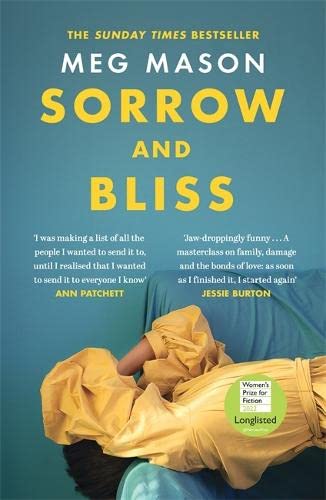 Our joint highest rating, and one of our best discussions – taking in mental illness and its diagnosis and treatment, marriage, childlessness, alcoholism, sisterhood, creativity, neglect, unreliable narrators and loneliness. For several of us, these issues hit close to home due to personal or family experience. We particularly noted the way that Mason sets up parallels between pairs of characters, accurately reflecting how family dynamics can be replicated in later generations.
Even the minor characters are fully rounded, and although Martha is not always pleasant to spend time with, her voice is impressively rendered. The picture of mental illness from the inside feels authentic, including the fact that Martha uses it as an excuse for her bad behaviour, becoming self-absorbed and not seeing how she is affecting others around her. Our main point of disagreement was about Mason’s decision not to name the mental illness Martha is suffering from. It seemed clear to several of us that it was meant to be bipolar disorder, so we wondered if it was a copout not to identify it as such.
We also thought about the meaning of the term “literary fiction”, and whether this has the qualities of a prize winner and will stand the test of time.
We had to fill out a feedback questionnaire about our experience of shadowing, and most of us sent in individual blurbs in response to the book. Some ended up in the final Reading Agency article. Here was mine:
“This deceptively light novel was a perfect book club selection, eliciting deep discussion about mental illness, family relationships and parenthood. Martha’s (unreliable) narration is a delight, wry and deadpan but also with moments of wrenching emotion. Mason masterfully controls the tone to create something that is witty and poignant all at once.”
Probably the main reason we were chosen for this opportunity is that we have a man – my husband, that is! – who attends regularly. This year the prize has been particularly keen to get more men reading books by women (see more below). So, he was responsible for giving The Male Response to the novel. No pressure, right? Luckily, he enjoyed it just as much as the rest of us. From the cover and blurb, it didn’t necessarily seem like the sort of book that he would pick up to read for himself, but he was fully engaged with the themes of mental illness, family relationships, and the question of whether or not to have children, and was so compelled that he read over half of it in a day.
I’m not sure who I expect to be awarded the Women’s Prize tomorrow. We of West Fields Readers would be delighted if it went to Meg Mason for Sorrow and Bliss, but I’d also be happy with a win for Louise Erdrich or Ruth Ozeki – though I wasn’t taken with their latest works compared with earlier ones I’ve read, they are excellent authors who deserve recognition. I don’t think The Bread the Devil Knead has a chance; I’d be disappointed in a win by Elif Shafak in that I would feel obligated to try her novel – the kind that gives magic realism a bad name – again; and, while I’m a Maggie Shipstead fan in general and admire the ambition of Great Circle, it would be galling for a book I DNFed twice to take the title!
Who are you rooting for/predicting?
I’d like to mock you with that thought,
jeer at the man
who won’t read novels
written by women –
at least not if they’re still alive
~from The Poet by Louisa Reid
Maybe you’ve seen on social media that the Women’s Prize has been canvassing opinion on the books by women that all men should read. This was prompted by some shocking statistics suggesting that even bestselling female authors can only attract a 20% male readership, whereas the best-known male authors are almost equally popular with men and women. They solicited 60 nominations from big names and ran a public poll. I voted for these 10:
Half of a Yellow Sun (Chimamanda Ngozi Adichie)
Possession (A.S. Byatt)
Homegoing (Yaa Gyasi)
The Poisonwood Bible (Barbara Kingsolver)
The Sea, The Sea (Iris Murdoch)
The Stone Diaries (Carol Shields)
We Need to Talk about Kevin (Lionel Shriver)
Olive Kitteridge (Elizabeth Strout)
The Goldfinch (Donna Tartt)
Orlando (Virginia Woolf)
*If I could have added to that list, though, my top recommendations for all men to read would be Station Eleven by Emily St. John Mandel and Bring Up the Bodies by Hilary Mantel (and probably a different Octavia E. Butler novel from the one nominated).


Three of my selections were among the 10 essential reads announced on the WP website. Their list was headed by Margaret Atwood’s The Handmaid’s Tale, though of her works I’d be more likely to direct men to Oryx and Crake.
I’ve seen discussions on Twitter about why men don’t read novels (at all, prioritizing nonfiction), or specifically not ones by women. Do you have any theories?
What one book by a woman do you think all men should read?
The Blind Assassin Reread for #MARM, and Other Doorstoppers
It’s the fourth annual Margaret Atwood Reading Month (#MARM), hosted by Canadian blogger extraordinaire Marcie of Buried in Print. In previous years, I’ve read Surfacing and The Edible Woman, The Robber Bride and Moral Disorder, and Wilderness Tips. This year Laila at Big Reading Life and I did a buddy reread of The Blind Assassin, which was historically my favourite Atwood novel. I’d picked up a free paperback the last time I was at The Book Thing of Baltimore. Below are some quick thoughts based on what I shared with Laila as I was reading.

The Blind Assassin (2000)
Winner of the Booker Prize and Hammett Prize; shortlisted for the Orange Prize
I must have first read this about 13 years ago. The only thing I remembered before I started my reread was that there is a science fiction book-within-the-book. I couldn’t recall anything else about the setup before I read in the blurb about the suspicious circumstances of Laura’s death in 1945. Indeed, the opening line, which deserves to be famous, is “Ten days after the war ended, my sister Laura drove a car off a bridge.”
I always love novels about sisters, and Iris is a terrific narrator. Now a cantankerous elderly woman, she takes us back through her family history: her father’s button factory and his clashes with organizing workers, her mother’s early death, and her enduring relationship with their housekeeper, Reenie. Iris and Laura met a young man named Alex Thomas, a war orphan with radical views, at the factory’s Labour Day picnic, and it was clear early on that Laura was smitten, while Iris went on to marry Richard Griffen, a nouveau riche industrialist.

Interspersed with Iris’s recollections are newspaper articles that give a sense that the Chase family might be cursed, and excerpts from The Blind Assassin, Laura’s posthumously published novel. Daring for its time in terms of both explicit content and literary form (e.g., no speech marks), it has a storyline rather similar to 1984, with an upper-crust woman having trysts with a working-class man in his squalid lodgings. During their time snatched together, he also tells her a story inspired by the pulp sci-fi of the time. I was less engaged by the story-within-the-story(-within-the-story) this time around compared to Iris’s current life and flashbacks.
In the back of my mind, I had a vague notion that there was a twist coming, and in my impatience to see if I was right I ended up skimming much of the second half of the novel. My hunch was proven correct, but I was disappointed with myself that I wasn’t able to enjoy the journey more a second time around. Overall, this didn’t wow me on a reread, but then again, I am less dazzled by literary “tricks” these days. At the sentence level, however, the writing was fantastic, including descriptions of places, seasons and characters’ psychology. It’s intriguing to think about whether we can ever truly know Laura given Iris’s guardianship of her literary legacy.
If you haven’t read this before, find a time when you can give it your full attention and sink right in. It’s so wise on family secrets and the workings of memory and celebrity, and the weaving in of storylines in preparation for the big reveal is masterful.
Some favourite passages:
“What fabrications they are, mothers. Scarecrows, wax dolls for us to stick pins into, crude diagrams. We deny them an existence of their own, we make them up to suit ourselves – our own hungers, our own wishes, our own deficiencies.”
“Beginnings are sudden, but also insidious. They creep up on you sideways, they keep to the shadows, they lurk unrecognized. Then, later, they spring.”
“The only way you can write the truth is to assume that what you set down will never be read. Not by any other person, and not even by yourself at some later date. Otherwise you begin excusing yourself. You must see the writing as emerging like a long scroll of ink from the index finger of your right hand; you must see your left hand erasing it. Impossible, of course.”
My original rating (c. 2008): 
My rating now: 
What to read for #MARM next year, I wonder??
In general, I have been struggling mightily with doorstoppers this year. I just don’t seem to have the necessary concentration, so Novellas in November has been a boon. I’ve been battling with Ruth Ozeki’s latest novel for months, and another attempted buddy read of 460 pages has also gone by the wayside. I’ll write a bit more on this for #LoveYourLibrary on Monday, including a couple of recent DNFs. The Blind Assassin was only my third successful doorstopper of the year so far. After The Absolute Book, the other one was:
The Lincoln Highway by Amor Towles
 In Towles’ third novel – a big, old-fashioned dose of Americana – brothers and pals set out from Nebraska on road and rail adventures to find a fortune in 1950s New York. The book features some fantastic characters. Precocious Billy steals every scene he appears in. Duchess is a delightfully flamboyant bounder, peppering his speech with malapropisms and Shakespeare quotes. However, Emmett is a dull protagonist, and it’s disappointing that Sally, one of just two main female characters, plays such a minor role. A danger with an episodic narrative is that random events and encounters pile up but don’t do much to further the plot. At nearly 200 pages in, I realized little of consequence had happened yet. A long road, then, with some ups and downs along the way, but Towles’ fans will certainly want to sign up for the ride.
See my full review for BookBrowse; see also my related article on Studebaker cars.
With thanks to Hutchinson for the free copy for review.
Anything by Atwood, or any doorstoppers, on your pile recently?
R.I.P. Reads for Halloween: Ashworth, Bazterrica, Hill, Machado & More
I don’t often read anything that could be classed as suspense or horror, so the R.I.P. challenge is a fun excuse to dip a toe into these genres each year. This year I have an eerie relationship study, a dystopian scenario where cannibalism has become the norm, some traditional ghost stories old and new, and a bonus story encountered in an unrelated anthology.

Ghosted: A Love Story by Jenn Ashworth (2021)
Laurie’s life is thrown off kilter when, after they’ve been together 15 years, her husband Mark disappears one day, taking nothing with him. She continues in her job as a cleaner on a university campus in northwest England. After work she visits her father, who is suffering from dementia, and his Ukrainian carer Olena. In general, she pretends that nothing has happened, caring little how odd it will appear that she didn’t call the police until Mark had been gone for five weeks. Despite her obsession with true crime podcasts, she can’t seem to imagine that anything untoward has happened to him. What happened to Mark, and what’s with that spooky spare room in their flat that Laurie won’t let anyone enter?
 If you find unreliable narrators delicious, you’re in the right place. The mood is confessional, yet Laurie is anything but confiding. Occasionally she apologizes for her behaviour: “I realise this does not sound very sane” is one of her concessions to readers’ rationality. So her drinking problem doesn’t become evident until nearly halfway through, and a bombshell is still to come. It’s the key to understanding our protagonist and why she’s acted this way.
Ghosted wasn’t what I expected. Its air of supernatural menace mellows; what is to be feared is much more ordinary. The subtitle should have been more of a clue for me. I appreciated the working class, northern setting (not often represented; Ashworth is up for this year’s Portico Prize) and the unusual relationships Laurie has with Olena, as well as with co-worker Eddie and neighbour Katrina. Reminiscent of Jo Baker’s The Body Lies and Sue Miller’s Monogamy, this story of a storm-tossed marriage was a solid introduction to Ashworth’s fiction – this is her fifth novel – but I’m not sure the payoff lived up to that amazing cover.
With thanks to Sceptre for the free copy for review.
Tender Is the Flesh by Agustina Bazterrica (2017; 2020)
[Translated from the Spanish by Sarah Moses]
 This sledgehammer of a short Argentinian novel has a simple premise: not long ago, animals were found to be infected with a virus that made them toxic to humans. During the euphemistic “Transition,” all domesticated and herd animals were killed and the roles they once held began to be filled by humans – hunted, sacrificed, butchered, scavenged, cooked and eaten. A whole gastronomic culture quickly developed around cannibalism.
Marcos is our guide to this horrific near-future world. Although he works in a slaughterhouse, he’s still uneasy with some aspects of the arrangement. The standard terminology is an attempt at dispassion: the “heads” are “processed” for their “meat.” Smarting from the loss of his baby son and with his father in a nursing home, Marcos still has enough compassion that when he’s gifted a high-quality female he views her as a person rather than potential cuts of flesh. His decisions from here on will call into question his loyalty to the new system.
I wondered if there would come a point where I was no longer physically able to keep reading. But it’s fiendishly clever how the book beckons you into analogical situations and then forces you to face up to cold truths. It’s impossible to avoid the animal-rights message (in a book full of gruesome scenes, the one that involves animals somehow hits hardest), but I also thought a lot about how human castes might work – dooming some to muteness, breeding and commodification, while others are the privileged overseers granted peaceful ends. Bazterrica also conflates sex and death in uncomfortable ways. In one sense, this was not easy to read. But in another, I was morbidly compelled to turn the pages. Brutal but brilliant stuff. (Public library/Edelweiss)
Fear: Tales of Terror and Suspense, selected by Roald Dahl (2017)
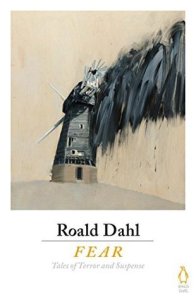 I reviewed the five female-penned ghost stories for R.I.P. back in 2019. This year I picked out another five, leaving a final four for another year. (Review copy)
“W.S.” by L.P. Hartley: The only thing I’ve read of Hartley’s besides The Go-Between. Novelist Walter Streeter is confronted by one of his characters, to whom he gave the same initials. What’s real and what’s only going on in his head? Perfectly plotted and delicious.
“In the Tube” by E.F. Benson: The concept of time is called into question when someone witnesses a suicide on the London Underground some days before it could actually have happened. All recounted as a retrospective tale. Believably uncanny.
“Elias and the Draug” by Jonas Lie: A sea monster and ghost ship plague Norwegian fishermen.
“The Ghost of a Hand” by J. Sheridan Le Fanu: A disembodied hand wreaks havoc in an eighteenth-century household.
“On the Brighton Road” by Richard Middleton: A tramp meets an ill boy on a road in the Sussex Downs. A classic ghost story that pivots on its final line.
The Small Hand: A Ghost Story by Susan Hill (2010)
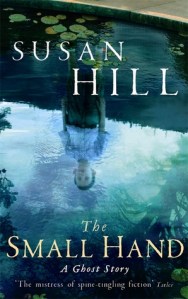 This was my fourth of Hill’s classic ghost stories, after The Woman in Black, The Man in the Picture and Dolly. They’re always concise and so fluently written that the storytelling voice feels effortless. I wondered if this one might have been inspired by “The Ghost of a Hand” (above). It doesn’t feature a disembodied hand, per se, but the presence of a young boy who slips his hand into antiquarian book dealer Adam Snow’s when he stops at an abandoned house in the English countryside, and again when he goes to a French monastery to purchase a Shakespeare First Folio. Each time, Adam feels the ghost is pulling him to throw himself into a pond. When Adam confides in the monks and in his brother, he gets different advice. A pleasant and very quick read, if a little predictable. (Free from a neighbour)
And a bonus story:
 Carmen Maria Machado’s “The Lost Performance of the High Priestess of the Temple of Horror” appears in Kink (2021), a short story anthology edited by Garth Greenwell and R.O. Kwon. (I requested it from NetGalley just so I could read the stories by Machado and Brandon Taylor.) It opens “I would never forget the night I saw Maxa decompose before me.” A seamstress, obsessed with an actress, becomes her dresser. Set in the 19th-century Parisian theatre world, this pairs queer desire and early special effects and is over-the-top sensual in the vein of Angela Carter, with hints of the sadomasochism that got it a place here.
Sample lines: “Women seep because they occupy the filmy gauze between the world of the living and the dead.” & “Her body blotted out the moon. She was an ambulatory garden, a beacon in a dead season, life where life should not grow.”
Also counting the short stories by Octavia E. Butler and Bradley Sides, I did some great R.I.P. reading this year! I think the book that will stick with me the most is Tender Is the Flesh.
Two Novels of Ambivalent Parenthood: The Push & A Lie Someone Told You About Yourself
These 2021 releases I read from the library stood out to me for daring to suggest that sometimes children aren’t little angels and parenthood isn’t all it’s cracked up to be.
The Push by Ashley Audrain
“Do you wish you weren’t a mother?”
“Sometimes I wish I were a different kind of person.”
 A cracking psychological thriller with an unreliable narrator, this is in the same vein as The Woman in the Window, Gone Girl, and A Good Enough Mother. I hardly ever pick up novels that fit into this genre, but these were all well worth making an exception for. The Push feels closer to literary fiction than to crime. Blythe Connor, living alone with her memories, ponders what went wrong with her seemingly perfect family: a handsome architect husband, Fox, and their daughter Violet and baby son Sam. Now reduced to being a stalker and an impersonator, Blythe vows to write everything down as evidence, taking care to note when she first had cause to question whether Violet was normal. A daddy’s girl from the start, Violet never bonded with Blythe and admitted to deliberately hurting other children in her preschool. But how much of what happened next was because of Violet’s nature, and how much was Blythe’s fault for failing to be the mother the girl needed?
The inkblot design of the cover cleverly evokes classical psychological concepts and experiments. A key topic the novel explores is how trauma is passed down through the generations: Blythe had worried that she wasn’t cut out for motherhood, chiefly because her mother and her grandmother both abandoned their daughters. “Blythe, the women in this family, we’re different. You’ll see,” her mother had warned. The exchange between Blythe and her mother that opens my review reiterates her suspicion: some people just aren’t cut out for parenting. Blythe can’t dismiss her daughter as evil because she knows how much guilt rests on her own shoulders, and because she doubts that she saw what she thought she saw. Moreover, the fact that her experience with Sam was completely different makes her feel ambivalent about motherhood: she’s seen how wonderful it can be, but also how it can turn bad. The nuance sets the book apart from run-of-the-mill thrillers. Yet it’s in short, page-turning chapters, so it reads very quickly and would make a great book club selection.
My rating:
A Lie Someone Told You About Yourself by Peter Ho Davies
At its best, autofiction is an intriguing blend of memoir and fiction, all of it true and universal in appeal. Davies’ minimalist approach – short sections skating over the months and years, wryly pulling out representative moments here and there, all in a mere 180 pages – could hardly be more different from Karl Ove Knausgaard’s, but both are equally dedicated to the unique alchemy of crystallizing fatherhood by illuminating its daily heartaches and joys.
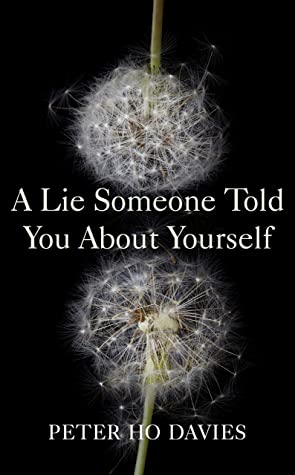 Years ago, “the writer” and his wife were presented with a choice. When genetic tests indicated mosaicism, they terminated their first pregnancy. Instead of a little girl, they later had a baby boy who presented his own challenges, including delayed development and possible ASD. Years later, the abortion still haunts “the father.” He attempts to exorcise his shame (the title = how Anaïs Nin defined it) by volunteering at an abortion clinic. Escorting patients to and from their cars, ignoring the taunts of protestors, he lives out his conviction that you can never fully know what others are going through and why they make the decisions they do.
Davies gets the tone just right in this novella, showing both sides of parenthood and voicing the things you aren’t allowed to think, or at least not to admit to – starting with abortion, which would-be fathers aren’t expected to have strong feelings about. Soon after the writer’s son is born: “He feels about himself for love, the way he might pat his pockets for his wallet and keys. Do I love him yet? Is this love?” As the boy grows into a figure of pathos: “All the things they’ve imagined him growing up to be: A basketball player, a fireman, a chef. [vs. what he actually seems to be] Allergic, friendless, autistic.” Davies also has a gift for zinging phrases, like “the deification of babies” and “the baby-industrial complex” of Babies R Us.
But what I most loved was the rumination on the role that chance plays in a life. “All the coin flips. All the what ifs. Like the litany of prompts he uses in writing class. Heads and tales.” The writer has a background in physics (as Davies himself does), so often brings up Schrödinger’s cat as a metaphor – in any situation, things might have gone either way. Now that the possibilities have narrowed to one and the path has been started, what will you do? The treatment of luck, in particular, led me to think of this as a cross between Larry’s Party by Carol Shields and What Are You Going Through by Sigrid Nunez. The style is similar to Jenny Offill’s; another similar and nearly contemporaneous release is Brood by Jackie Polzin.
I know I read The Fortunes back in 2016 but I retain virtually no memory of it. Davies’s prose, themes, and voice stood out much more for me here. I’ll try his novel The Welsh Girl, too, maybe even for book club later this year. This is an early entry on my Best of 2021 list.
Favorite lines:
“this is also what the internet is for, he thinks. If online porn universalizes shame, social media universalizes judgment. Both exercises in self-gratification.”
“An older colleague told him once cats were baby substitutes. ‘They weigh the same, they sleep on you, they roll around on their backs kicking their legs in the air. They mewl.’”
For more on abortion from a male perspective: The Cider House Rules by John Irving and Ars Botanica by Tim Taranto.
My rating:
 Bookish Beck = Rebecca Foster. American transplant to England. Freelance proofreader and book reviewer.
 Bookish Beck