Best Books of 2024: My Top 20
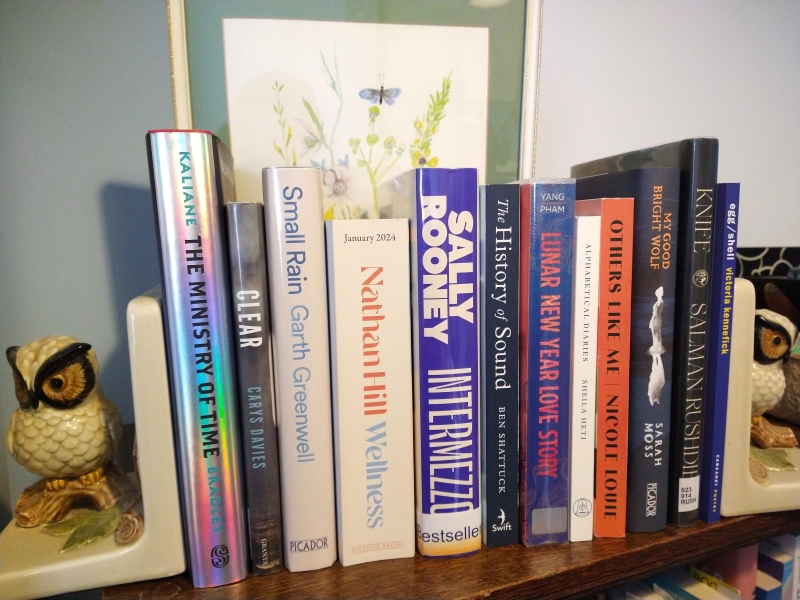
I’m keeping it simple again this year with one post covering all genres: these are the 20 current-year releases that stood out the most for me. (No rankings.) Those that aren’t repeated from my Best Books from the First Half of 2024 post didn’t quite make the cut but should be considered as runners-up well worth your time. Unsurprisingly, health is a common theme across many of my selections, especially as it touches women’s lives. Pictured below are the books I read in print; the others were all electronic copies. Links are to my full reviews where available.
Fiction
 The Worst Journey in the World, Volume 1: Making Our Easting Down: The Graphic Novel by Sarah Airriess: The thrilling opening to a cinematically vivid adaptation of Apsley Cherry-Garrard’s 1922 memoir. He was an assistant zoologist on Robert Falcon Scott’s perilous 1910-13 Terra Nova expedition to the South Pole. The book resembles a full-color storyboard for a Disney-style maritime adventure film. There is jolly camaraderie as the men sing sea shanties to boost morale. The next volume can’t arrive soon enough.
 The Ministry of Time by Kaliane Bradley: This nuanced debut alternately goes along with and flouts the tropes of spy fiction and time travel sci-fi, making clever observations about how we frame stories of empire and progress. The narrator is a “bridge” helping to resettle a Victorian polar explorer in near-future London. You just have to suspend disbelief and go with it. Bradley’s descriptive prose is memorable but never quirky for the sake of it. I haven’t had so much fun with a book since Romantic Comedy. A witty, sexy, off-kilter gem.
 Behind You Is the Sea by Susan Muaddi Darraj: Darraj’s novel-in-stories is a shimmering composite portrait of a Palestinian American community in Baltimore. Across nine stellar linked stories, she explores the complex relationships between characters divided by—or connected despite—class, language, and traditional values. Each of the stories (four in the first person, five in the third person) spotlights a particular character. The book depicts the variety of immigrant and second-generation experience, especially women’s.
 Clear by Carys Davies: Depicts the Highland Clearances in microcosm though Ivar, last resident of a remote Scottish island between Shetland and Norway. John is a minister sent by the landowner to remove Ivar. Mary, John’s wife, journeys from the mainland to rescue him. Davies writes striking scenes that bring the island scenery to life. Her deceptively simple prose captures the slow building of emotion and moments that change everything. For a trio that seemed on course for tragedy, there is the grace of a happier ending.
 Small Rain by Garth Greenwell: A poet and academic (who both is and is not Greenwell) endures a Covid-era medical crisis that takes him to the brink of mortality and the boundary of survivable pain. Over two weeks, we become intimately acquainted with his every test, intervention, setback and fear. Experience is clarified precisely into fluent language that also flies far above a hospital bed, into a vibrant past, a poetic sensibility, a hoped-for normality. I’ve never read so remarkable an account of what it is to be a mind in a fragile body.
 Wellness by Nathan Hill: A state-of-the-nation story filtered through one Chicago family experiencing midlife and marital crises: underperforming academic Jack; his wife Elizabeth, a placebo researcher at Wellness; and their YouTube-obsessed son Toby. They’ve recently invested their life savings in a new condo. The addictive and spot-on novel asks questions about authenticity, purpose, and nurture. Is love itself a placebo? Hill is clearly fascinated with psychological experimentation but also questions it to humorous effect.
 Intermezzo by Sally Rooney: Twenty- and thirtysomethings having lots of sex, yes, but now a solemn tone: Characters’ suffering and failures have deepened their thinking, sense of self, and ability to feel for others. Peter and Ivan lost their father to cancer; Sylvia is in chronic pain after an accident; Naomi is evicted and aimless; Margaret is ashamed of having an estranged alcoholic husband. Chess is a clever metaphor for their interactions; the depiction of grief rings true. A stylistic leap forward, too. Her best, most mature work by a mile.
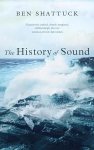 The History of Sound by Ben Shattuck: A dozen stories form a “hook-and-chain” formation of five couplets, bookended by a first and last story related to each other. Links are satisfyingly overt: A pair takes place in the same New England house in different centuries; a companion piece fills in the history of the characters from the previous. All are historically convincing, and the very human themes of lust, parenthood, sorrow and frustrated ambition resonate across centuries and state lines. Really beautiful (and better than North Woods).
 Lunar New Year Love Story by Gene Luen Yang (illus. LeUyen Pham): A super-cute teen graphic novel with gorgeous illustrations prioritizing pink and red to suit the theme. We follow Vietnamese American Valentina through high school as she plays host to an internal debate between cynicism and romanticism. Ever since her mother left, she’s longed to believe in romance but feared that love is a doomed prospect for her family. The Asian community of Oakland, California and a new hobby of lion dancing provide engrossing cultural detail.
Nonfiction
 Grief Is for People by Sloane Crosley: A bereavement memoir like no other. Heart-wrenching yet witty, it bears a unique structure and offers fascinating glimpses into the New York City publishing world. Crosley’s Manhattan apartment was burgled exactly a month before the suicide of her best friend and former boss, Russell. Throughout, the whereabouts of her family jewelry is as much of a mystery as the reason for Russell’s death, and investigating the stolen goods in parallel serves as a displacement activity for her.
 Alphabetical Diaries by Sheila Heti: Heti put 10 years of diary contents into a spreadsheet, alphabetizing each sentence, and then ruthlessly culled the results. The recurring topics are familiar from the rest of her oeuvre: obsessive cogitating about relationships, art and identity, but also the practicalities of trying to make a living as a woman in a creative profession. Heti transcends the quotidian by exploding chronology. Amazingly, the collage approach produces a genuine, crystalline vision of the self. A sui generis work of life writing.
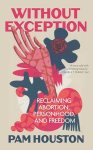 Without Exception: Reclaiming Abortion, Personhood, and Freedom by Pam Houston: If you’re going to read a polemic, make sure it’s as elegantly written and expertly argued as this one. Houston responds to the overturning of Roe v. Wade with 60 micro-essays – one for each full year of her life – about what it means to be in a female body in a country that seeks to control and systematically devalue women. The cycling of topics makes for an exquisite structure. Houston is among my recommendations for top-notch authors you might not know.
 The Body Alone: A Lyrical Articulation of Chronic Pain by Nina Lohman: Chronic Daily Headaches: Having a clinical term for extreme pain did nothing to solve it; no treatment Lohman has tried over a decade has helped much either. Medical professionals and friends alike downplay her experience because she is able to pass as well and raise two children. The fragmentary pieces read like poems. Bodily realities defy language, yet she employs words exquisitely. The tone flows from enraged to resigned to cynical and back.
 Others Like Me: The Lives of Women without Children by Nicole Louie: This impassioned auto/biographical collage combines the strengths of oral history, group biography and a fragmented memoir. “Motherhood as the epicentre of women’s lives was all I’d ever witnessed” via her mother and grandmother, Louie writes, so finding examples of women living differently was key. As readers, we watch her life, her thinking and the book all take shape. It’s warm and empathetic, with layers of stories that reflect diversity of experience.
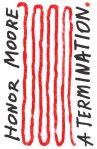 A Termination by Honor Moore: A fascinatingly discursive memoir that circles a 1969 abortion and contrasts societal mores across her lifetime. Moore was a 23-year-old drama student; the termination was “my first autonomous decision,” she insists, a way of saying, “I want this life, not that life.” Family and social factors put her life into perspective. The concise text is composed of crystalline fragments, incorporating occasional second- and third-person narration. The kaleidoscopic yet fluid approach is stunning.
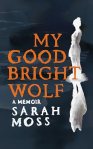 My Good Bright Wolf by Sarah Moss: Moss effectively contrasts the would-be happily ever after of generally getting better after eight years of disordered eating with her anorexia returning with a vengeance at age 46. The mood shifts so that what threatens to be slightly cloying in the childhood section turns academically curious and then, somehow, despite distancing pronouns (mostly second- but also some third-person narration), intimate. Shape-shifting, devastating, staunchly pragmatic; a unique model for converting life into art.
 Knife: Meditations after an Attempted Murder by Salman Rushdie: I’ve not had much success with Rushdie’s fiction, but this is excellent, with intriguing side tendrils and many quotable lines. It traces lead-up and aftermath; unexpected echoes, symbolism and ironies. Although Rushdie goes into some medical detail about his recovery, you get the sense of him more as an unchanging mind and a resolute will. The most noteworthy section imagines dialogues he might have with the imprisoned assailant, probing his beliefs and motivations.
Poetry
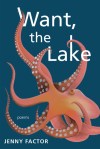 Want, the Lake by Jenny Factor: Factor’s long, intricate poetry collection showcases the tension between past and present and envisions womanhood as a tug of war between desire and constraint. “Elegy for a Younger Self” poems string together vivid reminiscences. In “Sapphics on Nursing” and elsewhere, romantic friendships edge toward homoeroticism; heterosexual marriage and motherhood represent either delightful intimacy or a snare. Allusion and experience, slant rhymes and wordplay craft a lavish tapestry.
 Inconsolable Objects by Nancy Miller Gomez: This debut collection recalls a Midwest girlhood of fairground rides and lake swimming, tornadoes and cicadas. But her Kansas isn’t all rose-tinted nostalgia; there’s an edge of sadness and danger. “Missing History” notes how women’s stories, such as her grandmother’s, are lost to time. In “Tilt-A-Whirl,” her older sister’s harmless flirtation with a ride operator becomes sinister. She also takes inspiration from headlines. The alliteration and slant rhymes are to die for.
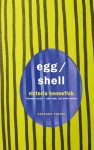 Egg/Shell by Victoria Kennefick: Motherhood and the body are overarching themes. The speaker has multiple miscarriages and names her lost children after plants. Becoming a mother is a metamorphosis all its own, while another long section is about her husband’s transition. Bird metaphors are inescapable. The structure varies throughout: columns, stanzas; a list, a recipe. Amid the sadness, there is dark humour and one-line rejoinders. If you’re wondering how life can be captured in achingly beautiful poetry, look no further.
If I had to choose just one of each? This trio trying out complementary strategies for transmuting life into literature: Small Rain, Alphabetical Diaries and Egg/Shell.


Have you read any of these? Or might you now, based on my recommendation?
The Best Books from the First Half of 2024
Hard to believe, but it’s that time of year already! It’s the eighth year in a row that I’ve been making a first-half superlatives list. It remains to be seen how many of these will make it onto my overall best-of year rundown, but for now, these are my 18 favourite 2024 releases that I’ve read so far (representing the top 20% of my current-year reading). One is a bonus in that it won’t actually be published until August; six happen to be books I reviewed for Shelf Awareness. Pictured below are the ones I read in print; all the others were e-copies. Links are to my full reviews where available.


Fiction
The Ministry of Time by Kaliane Bradley: This nuanced debut novel alternately goes along with and flouts the tropes of spy fiction and time travel sci-fi, making clever observations about how we frame stories of empire and progress. The narrator is a “bridge” helping to resettle a Victorian polar explorer in near-future London. You just have to suspend disbelief and go with it. Bradley’s descriptive prose is memorable but never quirky for the sake of it. I haven’t had so much fun with a book since Romantic Comedy. A witty, sexy, off-kilter gem.
Behind You Is the Sea by Susan Muaddi Darraj: Darraj’s second novel-in-stories is a shimmering composite portrait of a Palestinian American community in Baltimore. Across nine stellar linked stories, she explores the complex relationships between characters divided by—or connected despite—class, language, and traditional values. Each of the stories (four in the first person, five in the third person) spotlights a particular character. The book depicts the variety of immigrant and second-generation experience, especially women’s.
 Piglet by Lottie Hazell: The protagonist works for a cookbook publisher, loves to cook, and has a history of overeating during psychological distress. When her fiancé blindsides her with a confession 13 days before their wedding, she returns to binge eating, dress fittings be damned. Food is also a sign of her education and class pretensions. Uncomfortable themes, but I kept reading in fascinated horror because Hazell writes absolutely incredible scenes. This is also about what women are allowed to want, and how they are expected to settle.
Wellness by Nathan Hill: A state-of-the-nation novel filtered through one Chicago family experiencing midlife and marital crises: underperforming academic Jack; his wife Elizabeth, a placebo researcher at Wellness; and their YouTube-obsessed son Toby. They’ve recently invested their life savings in a new condo. The addictive and spot-on novel asks questions about authenticity, purpose, and nurture. Is love itself a placebo? Hill is clearly fascinated with psychological experimentation but also turns it to humorous effect.
 Happiness Falls by Angie Kim: Over 2.5 days in June 2020, a Korean American family (mother Hannah and 20-year-old twins Mia and John, home from college for the lockdown) investigates, on their own and with the help of police and tip-offs, what happened to the father, Adam, who’d been at River Falls Park with the severely disabled 14-year-old son, Eugene, who is autistic and has mosaic Angelman syndrome. Mia narrates, and it’s a pleasure spending time with her quick, systematic brain as she considers each theory and red herring.
 Company by Shannon Sanders: This energetic debut novel in 13 linked stories traces several generations of the Collins clan, whose experiences at once exemplify African American gentrification and evoke timeless patterns of parental legacy and sibling jealousy. Sisters Cassandra, Fay, Lee and Suzette grew up at their parents’ Atlantic City jazz club before going their separate ways. We revisit relatives at different points in their lives, mostly between the 1990s and the present day. Celebration scenes make for memorable moments.
Lunar New Year Love Story by Gene Luen Yang (illus. LeUyen Pham): A super-cute teen story with gorgeous illustrations, including lots of pink and red to suit the theme. We follow Vietnamese-American Valentina through high school as she plays host to an internal debate between cynicism and romanticism. Ever since her mother left, she’s longed to believe in romance but feared that love is a doomed prospect for her family. The Asian community of Oakland, California and a new hobby of lion dancing provide engrossing cultural detail.
Nonfiction
 Intervals by Marianne Brooker: An extended essay about her mother’s protracted death with multiple sclerosis and the issues it brought up around disability, poverty, and inequality of access to medical care and services. Brooker decries the injustice of the wealthy having the option of travelling to Dignitas in Switzerland for an assisted death, whereas her single mother had so such relief in sight. Brooker’s description of the vigil of the last days, like her account of her vivacious mother’s life, is both tender and unflinching.
Grief Is for People by Sloane Crosley: A bereavement memoir like no other. Heart-wrenching yet witty, it bears a unique structure and offers fascinating glimpses into the New York City publishing world. Crosley’s Manhattan apartment was burgled exactly a month before the suicide of her best friend and former boss, Russell. Throughout the book, the whereabouts of her family jewelry is as much of a mystery as the reason for Russell’s death, and investigating the stolen goods in parallel serves as a displacement activity for her.
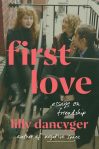 First Love: Essays on Friendship by Lilly Dancyger: Poignant interlocking essays about female friendship. Love and death coexist here. Dancyger’s first best friend was her cousin Sabina, who was raped and murdered at age 20. “Sad Girls” takes on Sylvia Plath fandom. Dancyger also maps her bisexuality and ponders whether to have a child. She is nostalgic for the freedom of being young and unsupervised in New York City and Europe. A sensitive interrogation of women’s relationships, perfect for fans of Melissa Febos and Emma Straub.
Alphabetical Diaries by Sheila Heti: Heti put 10 years of diary contents into a spreadsheet, alphabetizing each sentence, and then ruthlessly culled the results. The recurring topics are familiar from the rest of her oeuvre: obsessive cogitating about relationships, art and identity, but also the practicalities of trying to make a living as a woman in a creative profession. Heti transcends the quotidian by exploding chronology. Remarkably, the collage approach produces a genuine, crystalline vision of the self. A sui generis work of life writing.
Others Like Me: The Lives of Women without Children by Nicole Louie: This impassioned auto/biographical collage combines the strengths of oral history, group biography and a fragmented memoir. “Motherhood as the epicentre of women’s lives was all I’d ever witnessed” via her mother and grandmother, Louie writes, so finding examples of women living differently was key. As readers, we watch her life, her thinking and the book all take shape. It’s intimate and empathetic, with layers of stories that reflect diversity of experience.
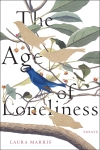 The Age of Loneliness: Essays by Laura Marris: A perceptive, moving collection of nine braided essays linking personal experience of loss with the climate crisis. “Cancerine” is a strong example. Cancer, the sign of the crab, was her father’s cause of death; horseshoe crabs were ground into fertilizer in the 19th century, and their blood is still harvested for biomedical testing. Driven by curiosity and environmental conscience, these reflective pieces reminiscent of Helen Macdonald’s longform journalism ponder human responsibility and resilience. [Graywolf Press, 6 August]
Knife: Meditations after an Attempted Murder by Salman Rushdie: I’ve not had much success with Rushdie’s fiction, but this is excellent, with intriguing side tendrils and lots of quotable lines. It traces lead-up and aftermath; unexpected echoes, symbolism and ironies. Although Rushdie goes into some medical detail about his recovery, you get the sense of him more as an unchanging mind and a resolute will. The most remarkable section imagines dialogues between him and his imprisoned assailant, probing his beliefs and motivations.
Poetry
 Theophanies by Sarah Ghazal Ali: In this poised debut collection by a Muslim poet, spiritual enlightenment is a female, embodied experience, mediated by the matriarchs of the Abrahamic faiths. Ali’s poems hymn women’s bodies, desire, and motherhood. She blurs the line between human and divine with her allusions to the Quran. Ambivalence towards faith is clear in the alliteration-laden verse that recalls Kaveh Akbar’s. Wordplay, floral metaphors, and multiple ghazals make for dazzling language.
 Baby Schema by Isabel Galleymore: A slant-wise look at environmental crisis and an impending decision about motherhood. The title comes from Konrad Lorenz’s identification of features that invite nurture. Galleymore edges towards the satirical fantasies of Caroline Bird or Patricia Lockwood as she imagines alternative scenarios of caregiving. What is worthy of maternal concern? Does cuteness merit survival? Extinction and eco-grief on the one hand, yes, but the implacability of biological cycles on the other. Sardonic yet humane.
Inconsolable Objects by Nancy Miller Gomez: This debut collection recalls a Midwest girlhood of fairground rides and lake swimming, tornadoes and cicadas. But her Kansas isn’t all rose-tinted nostalgia; there’s an edge of sadness and danger. “Missing History” notes how women’s stories, such as her grandmother’s, are lost to time. In “Tilt-A-Whirl,” her older sister’s harmless flirtation with a ride operator turns sinister. She also takes inspiration from headlines. The alliteration and slant rhymes are to die for. (Full review to come.)
Egg/Shell by Victoria Kennefick: Motherhood and the body are overarching themes. The speaker experiences multiple miscarriages and names her lost children after plants. Becoming a mother is a metamorphosis all its own, while the second long section is about her husband transitioning. Bird metaphors are inescapable. The structure varies throughout: columns, stanzas; a list, a recipe. Amid the sadness, there is dark humour and one-line rejoinders. If you’re wondering how life can be captured in achingly beautiful poetry, look no further.
Two of the novels above were among my Most Anticipated books of the year. I’ve now read 10 of the 12 on that list and DNFed another (the Sarah Perry), which just leaves Memory Piece by Lisa Ko to find – though others’ responses make me think it might not be worthwhile to do so. I sometimes wonder if designating a book as anticipated or a priority is a kiss of death, as I was at least somewhat disappointed with over half of my choices this time.
In the second part of the year, I’m looking forward to new releases from Rachel Clarke, Sarah Manguso, Charlotte Mendelson, Richard Powers, Sally Rooney, Elizabeth Strout and Evie Wyld.
What 2024 releases should I catch up on? What’s in your sights for the rest of the year?
Book Serendipity, January to February 2024
I call it “Book Serendipity” when two or more books that I read at the same time or in quick succession have something in common – the more bizarre, the better. This is a regular feature of mine every couple of months. Because I usually have 20–30 books on the go at once, I suppose I’m more prone to such incidents. The following are in roughly chronological order.
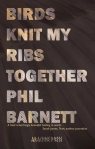
- I finished two poetry collections by a man with the surname Barnett within four days in January: Murmur by Cameron Barnett and Birds Knit My Ribs Together by Phil Barnett.

- I came across the person or place name Courtland in The Optimist’s Daughter by Eudora Welty, then Cortland in a story from The Orange Fish by Carol Shields, then Cotland (but where? I couldn’t locate it again! Was it in Elizabeth Is Missing by Emma Healey?).
- The Manet painting Olympia is mentioned in Christmas Holiday by W. Somerset Maugham and The Paris Novel by Ruth Reichl (both of which are set in Paris).


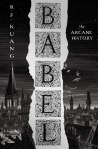
- There’s an “Interlude” section in Babel by R.F. Kuang and The Vulnerables by Sigrid Nunez.
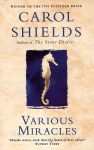
- The Morris (Minor) car is mentioned in Elizabeth Is Missing by Emma Healey and Various Miracles by Carol Shields.
- The “flour/flower” homophone is mentioned in Babel by R.F. Kuang and Various Miracles by Carol Shields.
- A chimney swift flies into the house in Cat and Bird by Kyoko Mori and The Optimist’s Daughter by Eudora Welty.
- A character named Cornelius in The Fruit Cure by Jacqueline Alnes and Wellness by Nathan Hill.
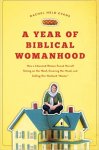
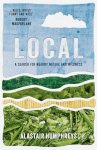
- Reading two year challenge books at the same time, A Year of Biblical Womanhood by Rachel Held Evans and Local by Alastair Humphreys, both of which are illustrated with frequent black-and-white photos by and of the author.
- A woman uses a bell to summon children in one story of Universally Adored and Other One Dollar Stories by Elizabeth Bruce and The Optimist’s Daughter by Eudora Welty.
- Apple turnovers get a mention in A Year of Biblical Womanhood by Rachel Held Evans and Wellness by Nathan Hill.
- A description of rolling out pie crust in A Year of Biblical Womanhood by Rachel Held Evans and Cat and Bird by Kyoko Mori.

- The idea of a house giving off good or bad vibrations in Wellness by Nathan Hill and a story from Various Miracles by Carol Shields.

- Emergency C-sections described or at least mentioned in Brother Do You Love Me by Manni Coe, The Unfamiliar by Kirsty Logan, Wellness by Nathan Hill, and lots more.
- Frustration with a toddler’s fussy eating habits, talk of “gentle parenting” methods, and mention of sea squirts in Wellness by Nathan Hill and Matrescence by Lucy Jones.
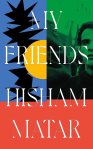
- The nickname “Poet” in The Tidal Year by Freya Bromley and My Friends by Hisham Matar.
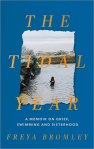
- A comment about seeing chicken bones on the streets of London in The Tidal Year by Freya Bromley and Went to London, Took the Dog by Nina Stibbe.
- Swans in poetry in The Tidal Year by Freya Bromley and Egg/Shell by Victoria Kennefick.
- A mention or image of Captcha technology in Egg/Shell by Victoria Kennefick and Went to London, Took the Dog by Nina Stibbe.

- An animal automaton in Loot by Tania James and Egg/Shell by Victoria Kennefick.
- A mention of Donna Tartt in The Tidal Year by Freya Bromley, Looking in the Distance by Richard Holloway, and Matrescence by Lucy Jones.
- Cathy Rentzenbrink appears in The Tidal Year by Freya Bromley and Went to London, Took the Dog by Nina Stibbe.
 Dialogue is given in italics in the memoirs The Tidal Year by Freya Bromley and The Unfamiliar by Kirsty Logan.
- An account of a man being forced to marry the sister of his beloved in A Year of Biblical Womanhood by Rachel Held Evans, Wellness by Nathan Hill, and The Tiger’s Wife by Téa Obreht.
- Saying that one doesn’t want to remember the loved one as ill (but really, not wanting to face death) so not saying goodbye (in Cat and Bird by Kyoko Mori) or having a closed coffin (Wellness by Nathan Hill).
- An unhappy, religious mother who becomes a hoarder in Wellness by Nathan Hill and I’m Glad My Mom Died by Jennette McCurdy.
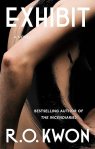
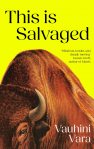
- Characters called Lidija and Jin in Exhibit by R. O. Kwon and Lydia and Jing in the first story of This Is Salvaged by Vauhini Vara.
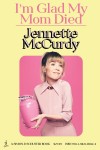
- Distress at developing breasts in Cactus Country by Zoë Bossiere and I’m Glad My Mom Died by Jennette McCurdy.
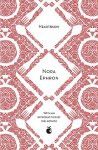
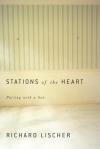
- I came across mentions of American sportscaster Howard Cosell in Heartburn by Nora Ephron and Stations of the Heart by Richard Lischer (two heart books I was planning on reviewing together) on the same evening. So random!
- Girls kissing and flirting with each other (but it’s clear one partner is serious about it whereas the other is only playing or considers it practice for being with boys) in Cactus Country by Zoë Bossiere and Winter’s Bone by Daniel Woodrell.
- A conversion to Catholicism in Places I’ve Taken My Body by Molly McCully Brown and Stations of the Heart by Richard Lischer.
- A zookeeper is attacked by a tiger when s/he goes into the enclosure (maybe not the greatest idea!!) in Tiger by Polly Clark and The Tiger’s Wife by Téa Obreht.

- The nickname Frodo appears in Tiger by Polly Clark and Brother Do You Love Me by Manni Coe.
- Opening scene of a parent in a coma, California setting, and striking pink and yellow cover to Death Valley by Melissa Broder and I’m Glad My Mom Died by Jennette McCurdy.

- An Englishman goes to Nigeria in Howards End by E.M. Forster and Immanuel by Matthew McNaught.
 The Russian practice of whipping people with branches at a spa in Tiger by Polly Clark and Fight Night by Miriam Toews.
- A mother continues washing her daughter’s hair until she is a teenager old enough to leave home in Mrs. March by Virginia Feito and I’m Glad My Mom Died by Jennette McCurdy.
- Section 28 (a British law prohibiting the “promotion of homosexuality” in schools) is mentioned in A Bookshop of One’s Own by Jane Cholmeley, Some Kids I Taught and What They Taught Me by Kate Clanchy, and Brother Do You Love Me by Manni Coe.
- Characters named Gord (in one story from Various Miracles by Carol Shields, and in Fight Night by Miriam Toews), Gordy (in The Absolutely True Diary of a Part-Time Indian by Sherman Alexie), and Gordo (in Blood Red by Gabriela Ponce).

- Montessori and Waldorf schools are mentioned in Cactus Country by Zoë Bossiere and When Fragments Make a Whole by Lory Widmer Hess.
- A trailer burns down in The Absolutely True Diary of a Part-Time Indian by Sherman Alexie and Cactus Country by Zoë Bossiere.
What’s the weirdest reading coincidence you’ve had lately?
New Poetry Releases by Phil Barnett, Victoria Kennefick and Rachel Mann
I was slow off the mark this month, but finally managed to finish a first batch of review copies. The rest from January will be coming up soon.
Birds link the first and second poetry collections below, and the trans experience the second and third. Other themes include chronic illness, miscarriage, motherhood, history, prayer and praise.
Birds Knit My Ribs Together by Phil Barnett
What an evocative title – reminiscent of last year’s You Bury the Birds in My Pelvis by Kelly Weber – and powerful image of how nature has bolstered the author through chronic illness.

The title phrase comes from the poem “Trepanning,” which imagines different species keeping him company in pain. If they’re sometimes held figuratively responsible, they’re also part of the solution; openness to experience means vulnerability, but also solidarity:
a woodpecker bored my skull
in trepanation
drummed a hole and wasps flew out
goldcrests’ needle-calls put punctures
all along the kidney’s line
swallow’s flightlines skywrote my ill
when thrushes sang it out loud
I appreciated the alliteration, the out-of-the-ordinary verbs, and the everyday metaphors. When spring finds Barnett unable to go further than his garden, the birds come to him, inviting him into “a prosecco world, still all winter / stirred in March, shaken in April”. There is highly visual and aural language throughout the book. In “Unsprung,” a dead heron becomes, in an echo of T.S. Eliot, the “still point at the centre of a wheeling world”. Though a pretty niche collection, it’s a lovely little one that nature-lovers should take a chance on.
With thanks to Arachne Press for the free copy for review.
Carcanet have set the bar high for 2024 poetry with these next two releases:
Egg/Shell by Victoria Kennefick
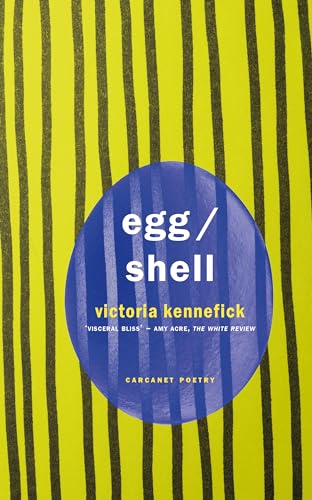 I was blown away by Kennefick’s 2021 debut, Eat or We Both Starve, which I described as “audacious,” “fleshly,” and “pleasingly morbid.” Her sophomore collection is just as strong, with motherhood and the body continuing as overarching themes. The speaker is, by turns, pregnant and mother to a daughter. She experiences multiple miscarriages and names her lost children after plants. Becoming a mother is a metamorphosis all its own (see my recent post on matrescence), while the second long section is about her husband transitioning. This is not actually the first book I’ve read about the changes in a marriage precipitated by a spouse transitioning, and the welter of emotions that it provokes; there’s also Some Body to Love by Alexandra Heminsley in memoir and Cataloguing Pain by Allison Blevins in poetry.
As in Barnett’s collection, bird metaphors are inescapable. “The Wild Swans at the Wetland Centre” must be a nod to W.B. Yeats (his were at Coole). Here, the recurring chickens and swans are the poet’s familiars, and their eggs her totems – ideal vessels, but so easily broken. The same is true of “Cup,” whose lines form the shape of a teacup perched on a saucer. The structure varies throughout: columns, stanzas; a list, a recipe. Amid the sadness, there is a lot of self-deprecation and dark humour in the poem titles (“Victoria Re-Enacts the Stations of the Cross,” falling and spilling coffee all over herself) and one-line poems that act as rejoinders. (“Orientation: A Tragedy” reads “I am so straight I give myself paper cuts.”)
If you’re wondering how life can be captured in achingly beautiful poetry, look no further. I doubt I’ll come across a better collection this year.
More favourite lines:
I get sad as earth becomes sea. I get sad
that in showing you this sinking world
I teach you how to say goodbye.
(from “On Being Two in the Anthropocene”)
I want people
to know me, and to hide.
(from “Le Cygne, My Spirit Animal”)
I want to write down the names of all my dead relatives.
How are they not here anymore? How are yours absent too?
What do we do with them, their names? Is there a box for grief?
(from “Census Night Poem”)
With thanks to Carcanet Press for the free copy for review. Coming out on 29 February.
Eleanor Among the Saints by Rachel Mann
 This is Mann’s second collection, after A Kingdom of Love. In reviewing that book I remarked on the psalm-like cadence, the anatomical and allusive language, and the contrast of past and present. All are elements here as well. The first long section was inspired by Eleanor/John Rykener, a 14th-century seamstress and sex worker whom some have claimed as a trans pioneer. Little is known about her life or self-identification, so Mann does not attempt biography here, but rather is thinking alongside the character. “Construct me weird and kind, leave it to me / To strip off when I’m ready. I shall run wild, / Naked as I dare, out into sober streets.”
Three later poems share the title “A Charm to Change Sex,” each numbered and in two columns – you have a choice of whether to read them across or down the page. Either way, they land somewhere between a spell and a prayer (and there are many other prayers in the table of contents): “Hidden: transfix / Invisible made visible … oh so holy, words lead everywhere / inside become out”. Bodies are as provisional as speech (“All text is stitched, / Body too only subset of making, a stored magic”), and inescapably frail, as evidenced by a father’s illness and death, the subject of several poems.
Repetition and wordplay (“razed/raised”) sometimes tail off into faltering phrases – “#TDOR” is most notable for this. And “Seven Proof Texts on a Transitioned Body” is, by itself, worth buying the book for, with alliteration and slang pushing back at medical and scriptural vocabulary. Mann is an incredibly versatile writer: I’ve read a memoir, a work of literary appreciation, and an academic thriller by her as well as her published poetry. And while I found less that resonated in this collection, I still admired its rigorous engagement with history, theology, and the facts of a life.
With thanks to Carcanet Press for the free copy for review.
Best Books of 2021: Fiction and Poetry
I’ve chosen my 15 fiction and 15 nonfiction favourites (coming up tomorrow) from 2021, along with a few poetry selections at the end of this post. Two of my picks are graphic novels!
 Under the Blue by Oana Aristide: Fans of Station Eleven, this one’s for you: the best dystopian novel I’ve read since Mandel’s. Aristide started writing in 2017, and unknowingly predicted a much worse pandemic than Covid-19. In July 2020, Harry and sisters Ash and Jessie are among mere thousands of survivors worldwide. Their plan is to flee England for Uganda, out of range of Europe’s at-risk nuclear reactors. An epic road trip ensues. A propulsive cautionary tale that also reminded me of work by Louisa Hall and Maja Lunde.
 The Push by Ashley Audrain: Blythe Connor, living alone with her memories, ponders what went wrong with her seemingly perfect family: a handsome architect husband, Fox, and their daughter Violet and baby son Sam. How much of what happened was because of Violet’s nature, and how much was Blythe’s fault for failing to be the mother the girl needed? The fact that her experience with Sam was completely different makes her feel ambivalent about motherhood. A cracking psychological thriller with an unreliable narrator.
 Site Fidelity by Claire Boyles: A love for their Colorado homeland inspires women’s environmental activism in a linked short story collection. Hope and perseverance are watchwords for Boyles’s characters, many of whom are single mothers or unmarried women. Nearly half of the stories center on a trio of feisty sisters. This reminded me most of Love Medicine by Louise Erdrich, as well as Barbara Kingsolver’s early fiction set in the Southwest. It got me eagerly awaiting whatever Boyles writes next.
 A Lie Someone Told You About Yourself by Peter Ho Davies: Davies’ minimalist approach – short sections skating over the months and years, wryly pulling out representative moment – crystallizes fatherhood, illuminating its daily heartaches and joys. The tone is just right in this novella, showing both sides of parenthood and voicing things you aren’t allowed to think, or at least not to admit to, starting with abortion, which would-be fathers aren’t expected to have strong feelings about. I loved the rumination on the role that chance plays in a life.
 The Living Sea of Waking Dreams by Richard Flanagan: Extinction, personal and global, is at the heart of this timely and enchanting story. It starts off as a family drama. Francie, the 86-year-old matriarch, is in a Tasmanian hospital after a brain bleed. Her three middle-aged children can’t bear to let her go. In an Australia blighted by bushfires, species loss mirrors Francie’s physical and mental crumbling. Smartphone addiction threatens meaningful connection. And then characters start to literally disappear, part by part…
 Mrs Death Misses Death by Salena Godden: Grief Is the Thing with Feathers meets Girl, Woman, Other would be my marketing shorthand for this one. Poet Salena Godden’s debut novel is a fresh and fizzing work, passionate about exposing injustice but also about celebrating simple joys, and in the end it’s wholly life-affirming despite a narrative stuffed full of deaths real and imagined. The novel balances the cosmic and the personal through Wolf’s family story. Unusual, musical, and a real pleasure to read.
 Early Morning Riser by Katherine Heiny: This tickled my funny bone. A cross between Kitchens of the Great Midwest and Olive Kitteridge, it’s built of five extended episodes, crossing nearly two decades in the lives of Jane and Duncan and lovingly portraying the hangers-on who compose their unusual family constellation in Boyne City, Michigan. All the characters are incorrigible but wonderful. Bad things happen, but there’s a core of love as Heiny explores marriage and parenting. A good-natured book that feels wise and bittersweet.
 No One Is Talking About This by Patricia Lockwood: This starts as a flippant skewering of modern life. A woman who became a social media star by tweeting quips like “Can a dog be twins?” reflects on life on “the portal” and under “the dictator.” Midway through the book, she gets a wake-up call when her mother summons her back to the Midwest for a family emergency. It’s the about-face that makes this novel, forcing readers to question the value of a digital existence based on glib pretence. Funny, but with an ache behind it.
 When the Stars Go Dark by Paula McLain: I almost never pick up a thriller, but my love for McLain’s earlier fiction attracted me and I ended up loving this. Really, I can’t imagine a better take on the genre. Anna Hart is a detective who, fleeing tragedies from her past, throws herself into the linked mystery of three missing girls in California. The book is rich in atmosphere: McLain’s love of the coast and forests is clear, and the fact that the book is set in 1993 means that Anna has to rely on old-fashioned policework rather than technology.
 In by Will McPhail: Alternately laugh-out-loud funny and gentle. This debut graphic novel is a spot-on picture of modern life in a generic city. Nick never knows the right thing to say. The bachelor artist’s well-intentioned thoughts remain unvoiced; all he can manage is small talk. That starts to change when he meets Wren, a Black doctor who sees past his pretence. If only he can find the magic words that elicit honesty, he might make real connections with other human beings. A good old-fashioned story, with a wide emotional range.
 Heartstopper, Volume 4 by Alice Oseman: This super-cute series was my summer crush. I liked this best of the first four. I admired how Oseman works in serious issues teens might face but has still created something so full of queer joy. While Charlie has been figuring out when to tell Nick he loves him, Nick has been working out how to confront Charlie about his anorexia. They learn that love doesn’t solve everything, but that a friend or boyfriend can be there to listen. Oseman really brings out the supporting cast in this volume, too.
 Detransition, Baby by Torrey Peters: A sparkling, sexy comedy with a tender heart beneath the zingers. Peters has set herself up as the Jane Austen of the trans community, tracing the ins and outs of relationships with verve and nuance. For me this was a valuable book simply for normalizing trans sexuality. The themes are universal, after all: figuring out who you are and what the shape of your life will be. I admire when authors don’t pander to readers by making things easy for those who are unfamiliar with a culture. Great lines abound.
 Brood by Jackie Polzin: Polzin’s debut is a quietly touching story of a woman in the Midwest raising chickens and coming to terms with the shape of her life. The unnamed narrator is Everywoman and no one at the same time. At one point she reveals, with no fanfare, that she miscarried four months into pregnancy in the bathroom of one of the houses she cleans. There is a bittersweet tone to this short work. It’s a low-key, genuine portrait of life in the in-between stages and how it can be affected by fate or by other people’s decisions.
 Bewilderment by Richard Powers: As environmentally aware as The Overstory, but with a more intimate scope, focusing on a father and son who journey together in memory and imagination as well as in real life. Neurodivergent Robin is a scientific marvel and an environmental activist. Theo studies other planets that rival an ailing Earth, and another state allows Robin to reconnect with his late mother. When I came to the end, I felt despondent and overwhelmed. But as time has passed, the book’s feral beauty has stuck with me.

In the Company of Men: The Ebola Tales by Véronique Tadjo: This creative and compassionate work takes on various personae to plot the course of the Ebola outbreak in West Africa in 2014–16. The suffering is immense, and there are ironic situations that only compound the tragedy. Tadjo flows freely between all the first-person voices, even including non-human narrators such as baobab trees and a fruit bat. Local legends and songs, along with a few of her own poems, also enter into the text.
If I had to pick my novel of the year, it would be The Living Sea of Waking Dreams.

Books not pictured were from the library or read electronically.
Poetry
 Pilgrim Bell by Kaveh Akbar: An Iranian American poet imparts the experience of being torn between cultures and languages, as well as between religion and doubt, in this gorgeous collection of confessional verse. Food, plants, animals, and the body supply the book’s imagery. Wordplay and startling juxtapositions lend lightness to a wistful, intimate collection that seeks belonging and belief. (Reviewed for Shelf Awareness.)
 Field Requiem by Sheri Benning: Benning employs religious language to structure her solemn meditations on the degraded landscape of Saskatchewan, a place where old ways have been replaced by impersonal, industrial-scale farming. You can hear the rhythms of psalms and the echoes of the requiem mass. Alliteration pops out from lists of crops and the prairie species their cultivation has pushed to the edge of extinction. This is deeply place based writing. With its ecological conscience and liturgical sound, it’s just my kind of poetry.
 Eat or We Both Starve by Victoria Kennefick: In this audacious debut collection, the body is presented as a battleground: for the brain cancer that takes the poet’s father; for disordered eating that entwines with mummy issues; for the restructuring of pregnancy. Families break apart and fuse into new formations. Cannibalism and famine metaphors dredge up emotional states and religious doctrines. There’s a pleasingly morbid cast to the book, but it also has its lighter moments. Rich with imagery and alliteration, this is also just my kind of poetry.
What are some of the best books you’ve read so far this year?
What 2021 releases do I need to catch up on right away?
The Best Books from the First Half of 2021
Hard to believe we’ve already crossed the midpoint of the year. My top 20 releases of 2021 thus far, in alphabetical order within genre (fiction is dominating this year!), are below. I link to those I’ve already reviewed in full here or on Goodreads:
Fiction
Under the Blue by Oana Aristide: Fans of Station Eleven, this one’s for you: the best dystopian novel I’ve read since Mandel’s. Aristide started writing in 2017, and unknowingly predicted a much worse pandemic than Covid-19. In July 2020, Harry and sisters Ash and Jessie are among mere thousands of survivors worldwide. Their plan is to flee England for Uganda, out of range of Europe’s at-risk nuclear reactors. An epic road trip ensues. A propulsive cautionary tale that also reminded me of work by Louisa Hall and Maja Lunde.
The Push by Ashley Audrain: Blythe Connor, living alone with her memories, ponders what went wrong with her seemingly perfect family: a handsome architect husband, Fox, and their daughter Violet and baby son Sam. How much of what happened was because of Violet’s nature, and how much was Blythe’s fault for failing to be the mother the girl needed? The fact that her experience with Sam was completely different makes her feel ambivalent about motherhood. A cracking psychological thriller with an unreliable narrator.
A Lie Someone Told You About Yourself by Peter Ho Davies: Davies’ minimalist approach – short sections skating over the months and years, wryly pulling out representative moment – crystallizes fatherhood, illuminating its daily heartaches and joys. The tone is just right in this novella, showing both sides of parenthood and voicing things you aren’t allowed to think, or at least not to admit to, starting with abortion, which would-be fathers aren’t expected to have strong feelings about. I loved the rumination on the role that chance plays in a life.
The Living Sea of Waking Dreams by Richard Flanagan: Extinction, personal and global, is at the heart of this timely and enchanting story. It starts off as a family drama. Francie, the 86-year-old matriarch, is in a Tasmanian hospital after a brain bleed. Her three middle-aged children can’t bear to let her go. In an Australia blighted by bushfires, species loss mirrors Francie’s physical and mental crumbling. Smartphone addiction threatens meaningful connection. And then characters start to literally disappear, part by part…
Mrs Death Misses Death by Salena Godden: Grief Is the Thing with Feathers meets Girl, Woman, Other would be my marketing shorthand for this one. Poet Salena Godden’s debut novel is a fresh and fizzing work, passionate about exposing injustice but also about celebrating simple joys, and in the end it’s wholly life-affirming despite a narrative stuffed full of deaths real and imagined. The novel balances the cosmic and the personal through Wolf’s family story. Unusual, musical, and a real pleasure to read.
Early Morning Riser by Katherine Heiny: This tickled my funny bone. A cross between Kitchens of the Great Midwest and Olive Kitteridge, it’s built of five extended episodes, crossing nearly two decades in the lives of Jane and Duncan and lovingly portraying the hangers-on who compose their unusual family constellation in Boyne City, Michigan. All the characters are incorrigible but wonderful. Bad things happen, but there’s a core of love as Heiny explores marriage and parenting. A good-natured book that feels wise and bittersweet.
No One Is Talking About This by Patricia Lockwood: This starts as a flippant skewering of modern life. A woman who became a social media star by tweeting quips like “Can a dog be twins?” reflects on life on “the portal” and under “the dictator.” Midway through the book, she gets a wake-up call when her mother summons her back to the Midwest for a family emergency. It’s the about-face that makes this novel, forcing readers to question the value of a digital existence based on glib pretence. Funny, but with an ache behind it.
In by Will McPhail: Alternately laugh-out-loud funny and gentle. This debut graphic novel is a spot-on picture of modern life in a generic city. Nick never knows the right thing to say. The bachelor artist’s well-intentioned thoughts remain unvoiced; all he can manage is small talk. That starts to change when he meets Wren, a Black doctor who sees past his pretence. If only he can find the magic words that elicit honesty, he might make real connections with other human beings. A good old-fashioned story, with a wide emotional range.
Detransition, Baby by Torrey Peters: A sparkling, sexy comedy with a tender heart beneath the zingers. Peters has set herself up as the Jane Austen of the trans community, tracing the ins and outs of relationships with verve and nuance. For me this was a valuable book simply for normalizing trans sexuality. The themes are universal, after all: figuring out who you are and what the shape of your life will be. I admire when authors don’t pander to readers by making things easy for those who are unfamiliar with a culture. Great lines abound.
Brood by Jackie Polzin: Polzin’s debut is a quietly touching story of a woman in the Midwest raising chickens and coming to terms with the shape of her life. The unnamed narrator is Everywoman and no one at the same time. At one point she reveals, with no fanfare, that she miscarried four months into pregnancy in the bathroom of one of the houses she cleans. There is a bittersweet tone to this short work. It’s a low-key, genuine portrait of life in the in-between stages and how it can be affected by fate or by other people’s decisions.
Nonfiction
 The Circling Sky by Neil Ansell: Hoping to reclaim an ancestral connection, Ansell visited the New Forest some 30 times between January 2019 and January 2020, observing the unfolding seasons and the many uncommon and endemic species its miles house. He weaves together his personal story, the shocking history of forced Gypsy relocation into forest compounds starting in the 1920s, and the unfairness of land ownership in Britain. The New Forest is a model of both wildlife-friendly land management and freedom of human access.
 The Inevitable by Katie Engelhart: Engelhart spends time with doctors and patients who are caught up in the assisted dying argument, chiefly in Western Europe and the United States. Each case is given its own long chapter, like an extended magazine profile. The stories are wrenching, but compassionately told. The author explores the nuances of each situation, crafting expert portraits of suffering people and the medical professionals who seek to help them, and adding much in the way of valuable context. A voice of reason and empathy.
 The Screaming Sky by Charles Foster: A Renaissance man as well versed in law and theology as he is in natural history, Foster is obsessed with swifts and ashamed of his own species: for looking down at their feet when they could be watching the skies; for the “pathological tidiness” that leaves birds and other creatures no place to live. He delivers heaps of information on the birds but refuses to stick to a just-the-facts approach. The book quotes frequently from poetry and the prose is full of sharp turns of phrase and whimsy.
 Intensive Care by Gavin Francis: Francis, an Edinburgh physician, reflects on “the most intense months I have known in my twenty-year career.” He journeys back through 2020, from the January day when he received a bulletin about a “novel Wuhan coronavirus” to November, when he learned of promising vaccine trials but also a rumored third wave and winter lockdown. An absorbing first-hand account of a medical crisis, it compassionately bridges the gap between experts and laymen. The best Covid chronicle so far.
 A Still Life by Josie George: Over a year of lockdowns, many of us became accustomed to spending most of the time at home. But for Josie George, social isolation is nothing new. Chronic illness long ago reduced her territory to her home and garden. The magic of A Still Life is in how she finds joy and purpose despite extreme limitations. Opening on New Year’s Day and travelling from one winter to the next, the book is a window onto George’s quiet existence as well as the turning of the seasons. (Reviewed for TLS.)
 Dusk, Night, Dawn by Anne Lamott: Lamott’s best new essays in nearly a decade. The central theme is how to have hope in God and in other people even when the news – Trump, Covid, and climate breakdown – only heralds the worst. One key thing that has changed for her is getting married for the first time, in her mid-sixties, to a Buddhist. In thinking of marriage, she writes about friendship, constancy, and forgiveness, none of which comes easy. Opportunities for maintaining quiet faith in spite of the circumstances arise all the time.
 A Braided Heart by Brenda Miller: Miller, a professor of creative writing, delivers a master class on the composition and appreciation of autobiographical essays. In 18 concise pieces, she tracks her development as a writer and discusses the “lyric essay”—a form as old as Seneca that prioritizes imagery over narrative. These innovative and introspective essays, ideal for fans of Anne Fadiman, showcase the interplay of structure and content. (Coming out on July 13th from the University of Michigan Press. My first review for Shelf Awareness.)
 Sanctuary by Emily Rapp Black: A continuation of The Still Point of the Turning World, about the author’s son Ronan, who died of Tay-Sachs disease at age three. In the months surrounding his death, she split from her husband and raced into another relationship that led to her daughter, Charlie. Rapp Black questions the sorts of words she got branded with: “brave,” “resilient.” Sanctuary is full of allusions and flashbacks, threading life’s disparate parts into a chaotic tapestry. It’s measured and wrought, taming fire into light and warmth.
Poetry
Pilgrim Bell by Kaveh Akbar: An Iranian American poet imparts the experience of being torn between cultures and languages, as well as between religion and doubt, in this gorgeous collection of confessional verse. Food, plants, animals, and the body supply the book’s imagery. Wordplay and startling juxtapositions lend lightness to a wistful, intimate collection that seeks belonging and belief. (Coming out on August 3rd from Graywolf Press. Reviewed for Shelf Awareness.)
Eat or We Both Starve by Victoria Kennefick: In this audacious debut collection, the body is presented as a battleground: for the brain cancer that takes the poet’s father; for disordered eating that entwines with mummy issues; for the restructuring of pregnancy. Families break apart and fuse into new formations. Cannibalism and famine metaphors dredge up emotional states and religious doctrines. There’s a pleasingly morbid cast to the book, but it also has its lighter moments. Rich with imagery and alliteration, this is just my kind of poetry.
What are some of the best books you’ve read so far this year?
What 2021 releases do I need to catch up on right away?
Reading Ireland Month: Baume, Kennefick, Ní Ghríofa, O’Farrell
Reading Ireland Month is hosted each March by Cathy of 746 Books. This year I read works by four Irish women: a meditation on birds and craft, hard-hitting poems about body issues, autofiction that incorporates biography and translation to consider the shape of women’s lives across the centuries, and a novel that jets between Hong Kong and Scotland. Two of these were sent to me as part of the Rathbones Folio Prize shortlist. I have some Irish music lined up to listen to (Hallow by Duke Special, At Swim by Lisa Hannigan, Chop Chop by Bell X1, Magnetic North by Iain Archer) and I’m ready to tell you all about these four books.

handiwork by Sara Baume (2020)
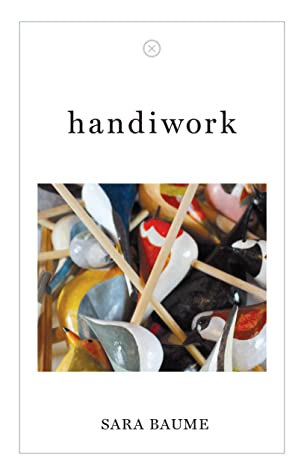 Back in February 2016, I reviewed Baume’s debut novel, Spill Simmer Falter Wither, for Third Way magazine. A dark story of a middle-aged loner and his adopted dog setting off on a peculiar road trip, it was full of careful nature imagery. “I’ve always noticed the smallest, quietest things,” the narrator, Ray, states. The same might be said of Baume, who is a visual artist as well as an author and put together this gently illuminating book over the course of 2018, at the same time as she was working on several sculptural installations. In short sections of a paragraph or two, or sometimes no more than a line, she describes her daily routines in her home workspaces: in the morning she listens to barely audible talk radio as she writes, while the afternoons are for carving and painting.
Working with her hands is a family tradition passed down from her grandfather and father, who died in the recent past – of lung cancer from particles he was exposed to at the sandstone quarry where he worked. Baume has a sense of responsibility for how she spends her time and materials. Concern about waste is at odds with a drive for perfection: she discarded her first 100 plaster birds before she was happy with the series used to illustrate this volume. Snippets of craft theory, family memories, and trivia about bird migration and behaviour are interspersed with musings on what she makes. The joy of holding a physical object in the hand somehow outweighs that of having committed virtual words to a hard drive.
Despite the occasional lovely line, this scattered set of reflections doesn’t hang together. The bird facts, in particular, feel shoehorned in for symbolism, as in Colum McCann’s Apeirogon. It’s a shame, as from the blurb I thought this book couldn’t be better suited to my tastes. Ultimately, as with Spill, Baume’s prose doesn’t spark much for me. 
Favorite lines:
“Most of the time spent making is spent, in fact, in the approach.”
“I must stop once the boredom becomes intolerable, knowing that if I plunge on past this point I will risk arriving at resentment”
“What we all shared – me, my dad, his dad – was a suspicion of modern life, a loathing of fashion, a disappointment with the new technologies and a preference for the ad hoc contraptions of the past”
“The glorious, crushing, ridiculous repetition of life.”
With thanks to Tramp Press and FMcM Associates for the free copy for review. handiwork is on the Rathbones Folio Prize shortlist.
Eat or We Both Starve by Victoria Kennefick (2021)
 This audacious debut collection of fleshly poems is the best I’ve come across so far this year. The body is presented as a battleground: for the brain cancer that takes the poet’s father; for disordered eating that entwines with mummy issues; for the restructuring of pregnancy. Families break apart and fuse into new formations. Cannibalism and famine metaphors dredge up emotional states and religious doctrines.
Where did I start?
Yes, with the heart, enlarged,
its chambers stretched through caring.
[…]
Oh is it in defiance or defeat, I don’t know,
I eat it anyway, raw, still warm.
The size of my fist, I love it.
(from the opening poem, “Learning to Eat My Mother, where My Mother Is the Teacher”)
Meat avoidance goes beyond principled vegetarianism to become a phobia. Like the female saints, the speaker will deny herself until she achieves spiritual enlightenment.
The therapist taps my shoulders, my head, my knees,
tells me I was a nun once, very strict.
This makes sense; I know how cleanly I like
to punish myself.
(from “Alternative Medicine”)
The title phrase comes from “Open Your Mouth,” in which the god Krishna, as a toddler, nourishes his mother with clay. A child feeding its mother reverses the expected situation, which is described in one of the book’s most striking poems, “Researching the Irish Famine.” The site of an old workhouse divulges buried horrors: “Mothers exhausted their own bodies / to produce milk. […] The starving / human / literally / consumes / itself.”
Corpses and meals; body odour and graves. There’s a pleasingly morbid cast to this collection, but it also has its lighter moments: the sexy “Paris Syndrome,” the low-stakes anxiety over pleasing one’s mother in “Guest Room,” and the playful closer, “Prayer to Audrey Hepburn” (“O Blessed Audrey of the feline eye-flick, jutting / bones, slim-hipped androgyny of war-time rationing”). Rich with imagery and alliteration, this is just my kind of poetry. Verse readalikes would include The Air Year by Caroline Bird, Flèche by Mary Jean Chan, and Tongues of Fire by Seán Hewitt, while in prose I was also reminded of Milk Fed by Melissa Broder (review coming soon) and Sanatorium by Abi Palmer. 
With thanks to Carcanet Press for the free copy for review. This comes out on the 25th.
A Ghost in the Throat by Doireann Ní Ghríofa (2020)
 “This is a female text.” In an elegant loop, Ní Ghríofa begins and ends with this line, and uses it as a refrain throughout. What is the text? It is this book, yes, as well as the 18th-century Irish-language poem that becomes an obsession for the author/narrator, “The Keen for Art Ó Laoghaire” by Eibhlín Dubh Ní Chonaill; however, it is also the female body, its milk and blood just as significant for storytelling as any ink.
Because the protagonist’s name is the same as the author’s, I took her experiences at face value. As the narrative opens in 2012, Ní Ghríofa and her husband have three young sons and life for her is a list of repetitive household tasks that must be completed each day. She donates pumped breast milk for premature babies as a karmic contribution to the universe: something she can control when so much around her she feels she can’t, like frequent evictions and another pregnancy. Reading Eibhlín Dubh’s lament for her murdered husband, contemplating a new translation of it, and recreating her life from paltry archival fragments: these tasks broaden her life and give an intellectual component to complement the bodily one.
My weeks are decanted between the twin forces of milk and text, weeks that soon pour into months, and then into years. I make myself a life in which whenever I let myself sit, it is to emit pale syllables of milk, while sipping my own dark sustenance from ink. […] I skitter through chaotic mornings of laundry and lunchboxes and immunisations, always anticipating my next session at the breast-pump, because this is as close as I get to a rest. To sit and read while bound to my insatiable machine is to leave my lists behind and stroll instead through doors opened by Eibhlín Dubh.
Ní Ghríofa remembers other times in her life in an impressionistic stream: starting a premed course at university, bad behaviour that culminated in suicidal ideation, a near-collision on a highway, her daughter’s birth by emergency C-section, finally buying a house and making it a home by adopting a stray kitten and planting a bee-friendly garden. You can tell from the precision of her words that Ní Ghríofa started off as a poet, and I loved how she writes about her own life. I had little interest in Eibhlín Dubh’s story, but maybe it’s enough for her to be an example of women “cast once more in the periphery of men’s lives.” It’s a book about women’s labour – physical and emotional – and the traces of it that remain. I recommend it alongside I Am, I Am, I Am by Maggie O’Farrell and Mother Ship by Francesca Segal. 
With thanks to Tramp Press and FMcM Associates for the free copy for review. A Ghost in the Throat is on the Rathbones Folio Prize shortlist.
The Distance Between Us by Maggie O’Farrell (2004)
 This is the earliest work of O’Farrell’s that I’ve read – it was her third novel, following After You’d Gone and My Lover’s Lover (I finally found those two at a charity shop last year and I’m saving them for a rainy day). It took me a long time to get into this one. It’s delivered in bitty sections that race between characters and situations, not generally in chronological order. It’s not until nearly the halfway point that you get a sense of how it all fits together.
Although there are many secondary characters, the two main strands belong to Jake, a young white filmmaker raised in Hong Kong by a bohemian mother, and Stella, a Scottish-Italian radio broadcaster. When a Chinese New Year celebration turns into a stampede, Jake and his girlfriend narrowly escape disaster and rush into a commitment he’s not ready for. In the meantime, Stella gets spooked by a traumatic flash from her childhood and flees London for a remote Scottish hotel. She’s very close to her older sister, Nina, who was deathly ill as a child (O’Farrell inserts a scene I was familiar with from I Am, I Am, I Am, when she heard a nurse outside her room chiding a noisy visitor, “There’s a little girl dying in there”), but now it’s Nina who will have to convince Stella to take the chance at happiness that life is offering.
In the end, this felt like a rehearsal for This Must Be the Place; it has the myriad settings (e.g., here, Italy, Wales and New Zealand are also mentioned) but not the emotional heft. With a setup like this, you sort of know where things are going, don’t you? Despite Stella’s awful secret, she is as flat a character as Jake. Simple boy-meets-girl story lines don’t hold a lot of appeal for me now, if they ever did. Still, the second half was a great ride.
Also, I’ve tried twice over the past year, but couldn’t get further than page 80 in The Wild Laughter by Caoilinn Hughes (2020), a black comedy about two brothers whose farmer father goes bankrupt and gets a terminal diagnosis. It’s a strangely masculine book (though in some particulars very similar to Scenes of a Graphic Nature) and I found little to latch on to. This was a disappointment as I’d very much enjoyed Hughes’s debut, Orchid & the Wasp, and this second novel is now on the Dylan Thomas Prize longlist.
What have you been picking up for Reading Ireland Month?

Book Serendipity, Early 2021
I call it Book Serendipity when two or more books that I read at the same time or in quick succession have something pretty bizarre in common. Because I have so many books on the go at once (usually 20‒30), I suppose I’m more prone to such incidents.
Josh Cohen’s How to Live. What to Do, a therapist’s guide to literature, explains why this might happen:
More than one writer – the French poet Stéphane Mallarmé, the Argentinian writer Jorge Luis Borges – has advanced the exhilarating idea that each book is an infinitesimally small piece of one single, endless Book. I’ve always felt that this idea, unlikely as it might sound, makes perfect sense if you read enough novels [also nonfiction, for me]. The incidents, descriptions, phrases and images in the book you’re reading will always recall the incidents in another, and those in turn will call up the incidents in another, so that even as you’re reading one book, you’re reading countless others.
The following are in roughly chronological order.
- Mother‒baby swimming sessions in Some Body to Love by Alexandra Heminsley and The Still Point of the Turning World by Emily Rapp.


- [I think it would be a spoiler to even name them, but two novels I read simultaneously in January featured 1) a marriage / close relationship between a man and a woman – even though the man is gay; and 2) a character who beat his wife and then died in a convenient ‘accident’. One was published in 1997 and the other in 2020.]
- Stomas appeared in Dazzling Darkness by Rachel Mann and First Time Ever by Peggy Seeger late in my 2020 reading, and then in early 2021 in Pain: The Science of the Feeling Brain by Abdul-Ghaaliq Lalkhen and Love’s Work by Gillian Rose.
- An account of the author’s experience of ovarian hyperstimulation syndrome in Hormonal by Eleanor Morgan and I Miss You when I Blink by Mary Laura Philpott.
- Salmon fishing takes place in Snow Falling on Cedars by David Guterson and Kings of the Yukon by Adam Weymouth.


- The medical motto “see one, do one, teach one” appears in Breathtaking by Rachel Clarke and Complications by Atul Gawande.
- Filipino medical staff feature in America Is Not the Heart by Elaine Castillo and Breathtaking by Rachel Clarke.
- Twin Peaks is mentioned in The Fragments of My Father by Sam Mills and the anthology Trauma: Essays on Art and Mental Health; a different essay in the latter talks about Virginia Woolf’s mental health struggle, which is a strand in the former.
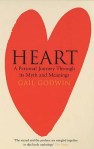
- St. Teresa of Ávila is mentioned in Heart by Gail Godwin and Sanatorium by Abi Palmer.

- The same Rachel Long poem appears in her debut collection, My Darling from the Lions, and The Emma Press Anthology of Love – but under different titles (“Portent” vs. “Delayed Gratification”).
- There’s a matriarch named Dot in Unsettled Ground by Claire Fuller and The Magician’s Assistant by Ann Patchett.
- There’s an Alaska setting in The Quality of Silence by Rosamund Lupton and Kings of the Yukon by Adam Weymouth.
- Becoming a mother is described as a baptism in Sanctuary by Emily Rapp Black and The Fragments of My Father by Sam Mills.


- While reading America Is Not the Heart by Elaine Castillo, I saw Castillo mentioned in the Acknowledgements of My Darling from the Lions by Rachel Long.
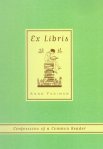
- Polar explorers’ demise is discussed in Ex Libris by Anne Fadiman and The Still Point by Amy Sackville.
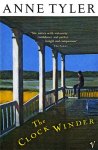
- “Butterfingers” / “butter-fingered” is used in America Is Not the Heart by Elaine Castillo and The Clock Winder by Anne Tyler.
- There’s a mention of someone eating paper torn from books (the horror!) in Ex Libris by Anne Fadiman and The Clock Winder by Anne Tyler.
- I was reading three pre-releases at once, each of 288 pages: Milk Fed by Melissa Broder, Unsettled Ground by Claire Fuller, and A Town Called Solace by Mary Lawson.
- The Jewish golem myth is the overarching metaphor of Milk Fed by Melissa Broder and Golem Girl by Riva Lehrer.
- There’s a ceremony to pay respects to those who donated their bodies for medical school dissection in Maybe You Should Talk to Someone by Lori Gottlieb and Golem Girl by Riva Lehrer.
- An old woman with dementia features in The Living Sea of Waking Dreams by Richard Flanagan, Keeper by Andrea Gillies, and The Clock Winder by Anne Tyler.


- A mother dies of cancer on Christmas Day in This Party’s Dead by Erica Buist and The Fragments of My Father by Sam Mills.
- The main character does stand-up comedy in Milk Fed by Melissa Broder and This Party’s Dead by Erica Buist.
- Winning a goldfish at a carnival in The Air Year by Caroline Bird, A Feather on the Breath of God by Sigrid Nunez, and Anna Vaught’s essay in the Trauma anthology.
- ECT (electroconvulsive therapy) is mentioned in Adventures in Human Being by Gavin Francis and Woman on the Edge of Time by Marge Piercy.


- There’s a father who is non-medical hospital staff in The Push by Ashley Audrain (a cleaner) and A Feather on the Breath of God by Sigrid Nunez (a kitchen worker).
- There’s a character named Hart in The Wild Laughter by Caoilinn Hughes and The Birth House by Ami McKay.
- Cannibalism is a point of reference, a major metaphor, or a (surreal) reality in Mother for Dinner by Shalom Auslander, Eat or We Both Starve by Victoria Kennefick, and Light Perpetual by Francis Spufford.
- Infertility and caring for animals were two big themes shared by Brood by Jackie Polzin and Catalogue Baby by Myriam Steinberg. This became clearer when I interviewed both authors in February. Also, both women have shocks of pink hair in their publicity photos!


- A young woman works at a hotel in The Distance between Us by Maggie O’Farrell and My Dark Vanessa by Kate Elizabeth Russell (and The Glass Hotel by Emily St. John Mandel, which I read late last year).
 Bookish Beck = Rebecca Foster. American transplant to England. Freelance proofreader and book reviewer.
 Bookish Beck