Three on a Theme of Sylvia Plath (The Slicks by Maggie Nelson for #NonfictionNovember & #NovNov25; The Bell Jar and Ariel)
A review copy of Maggie Nelson’s brand-new biographical essay on Sylvia Plath (and Taylor Swift) was the excuse I needed to finally finish a long-neglected paperback of The Bell Jar and also get a taste of Plath’s poetry through the posthumous collection Ariel, which is celebrating its 60th anniversary. These are the sorts of works it’s hard to believe ever didn’t exist; they feel so fully formed and part of the zeitgeist. It also boggles the mind how much Plath accomplished before her death by suicide at age 30. What I previously knew of her life mostly came from hearsay and was reinforced by Euphoria by Elin Cullhed. For the mixture of nonfiction, fiction and poetry represented below, I’m counting this towards Nonfiction November’s Book Pairings week.
The Slicks: On Sylvia Plath and Taylor Swift by Maggie Nelson (2025)
 Can young women embrace fame amidst the other cultural expectations of them? Nelson attempts to answer this question by comparing two figures who turn(ed) life into art. The link between them was strengthened by Swift titling her 2024 album The Tortured Poets Department. “Plath … serves as a metonym – as does Swift – for a woman who makes art about a broken heart,” Nelson writes. “When women make the personal public, the charge of whorishness always lurks nearby.” What women are allowed to say and do has always, it seems, attracted public commentary, and “anyone who puts their work into the world, at any level, must learn to navigate between self-protectiveness and risk, becoming harder and staying soft.”
Nelson acknowledges a major tonal difference between Plath and Swift, however. Plath longed for fame but didn’t get the chance to enjoy it; she’s the patron saint of sad-girl poetry and makes frequent reference to death, whereas Swift spotlights joy and female empowerment. It’s a shame this was out of date before it went to print; my advanced copy, at least, isn’t able to comment on Swift’s engagement and the baby rumour mill sure to follow. It would be illuminating to have an afterword in which Nelson discusses the effect of spouses’ competing fame and speculates on how motherhood might change Swift’s art.
Full confession: I’ve only ever knowingly heard one Taylor Swift song, “Anti-Hero,” on the radio in the States. (My assessment was: wordy, angsty, reasonably catchy.) Undoubtedly, I would have gotten more out of this essay were I equally familiar with the two subjects. Nonetheless, it’s fluid and well argued, and I was engaged throughout. If you’re a Swiftie as well as a literary type, you need to read this.


[66 pages]
With thanks to Vintage (Penguin) for the advanced e-copy for review.
The Bell Jar by Sylvia Plath (1963)
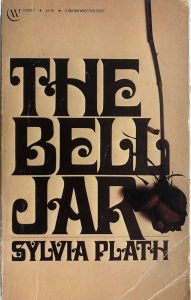 Given my love of mental hospital accounts and women’s autofiction, it’s a wonder I’d not read this before my forties. It was first published under the pseudonym “Victoria Lucas” because Plath thought it immature, “an autobiographical apprentice work which I had to write in order to free myself from the past.” Esther Greenwood is the stand-in for Plath: a talented college student who, after working in New York City during the remarkable summer of 1953, plunges into mental ill health. Chapter 13 is amazing and awful at the same time as Esther attempts suicide thrice in one day, toying with a silk bathrobe cord and ocean waves before taking 50 pills and walling herself into a corner of the cellar. She bounces between various institutional settings, undergoing electroshock therapy – the first time it’s horrible, but later, under a kind female doctor, it’s more like it’s ‘supposed’ to be: a calming reset.
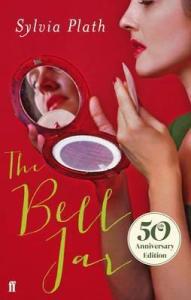 The 19-year-old is obsessed with the notion of purity. She has a couple of boyfriends but decides to look for someone else to take her virginity. Beforehand, the asylum doctor prescribes her a fitting for a diaphragm. A defiant claim to the right to contraception despite being unmarried is a way of resisting the bell jar – the rarefied prison – of motherhood. Still, Esther feels guilty about prioritizing her work over what seems like feminine duty: “Why was I so maternal and apart? Why couldn’t I dream of devoting myself to baby after fat puling baby? … I was my own woman.” Plath never reconciled parenthood with poetry. Whether that’s the fault of Ted Hughes, or the times they lived in, who can say. For her and for Esther, the hospital is a prison as well – but not so hermetic as the turmoil of her own mind. How ironic to read “I took a deep breath and listened to the old brag of my heart. I am, I am, I am” knowing that this was published just a few weeks before this literary genius ceased to be.
Apart from an unfortunate portrayal of a “negro” worker at the hospital, this was an enduringly relevant and absorbing read, a classic to sit alongside Emily Holmes Coleman’s The Shutter of Snow and Janet Frame’s Faces in the Water.
(Secondhand – it’s been in my collection so long I can’t remember where it’s from, but I’d guess a Bowie Library book sale or Wonder Book & Video / Public library – I was struggling with the small type so switched to a recent paperback and found it more readable)
Ariel by Sylvia Plath (1965)
Impossible not to read this looking for clues of her death to come:
Dying
Is an art, like everything else.
I do it exceptionally well.
(from “Lady Lazarus”)
Eternity bores me,
I never wanted it.
(from “Years”)
The woman is perfected.
Her dead
Body wears the smile of accomplishment
(from “Edge”)
 I feel incapable of saying anything fresh about this collection, which takes no prisoners. The images and vocabulary are razor-sharp. First and last lines or stanzas are particularly memorable. (“Morning Song” starts “Love set you going like a fat gold watch”; “Lady Lazarus” ends “Out of the ash / I rise with my red hair / And I eat men like air.”) Words and phrases repeat and gather power as they go. “The Applicant” mocks the obligations of a wife: “A living doll … / It can sew, it can cook. It can talk, talk, talk. … // … My boy, it’s your last resort. / Will you marry it, marry it, marry it.” I don’t know a lot about Plath’s family life, only that her father was a Polish immigrant and died after a long illness when she was eight, but there must have been some daddy issues there – after all, “Daddy” includes the barbs “Daddy, I have had to kill you” and “If I’ve killed one man, I’ve killed two— / The vampire who said he was you / And drank my blood for a year, / Seven years, if you want to know.” It ends, “Daddy, daddy, you bastard, I’m through.” Several later poems in a row, including “Stings,” incorporate bee-related imagery, and Plath’s father was an international bee expert. I can see myself reading this again and again in future, and finding her other collections, too – all but one of them posthumous. (Secondhand – RSPCA charity shop, Newbury)
Novellas in November, Part 1
This is my second year of joining Laura (Reading in Bed) and others in reading mostly novellas in November. I’ve trawled my shelves and my current library pile for short books, limiting myself to ones of around 150 pages or fewer. First up: four short works of fiction. (I’m at work on various ‘nonfiction novellas’, too.) For the first two I give longer reviews as I got the books from the publishers; the other two are true minis.

Swallowing Mercury by Wioletta Greg
(translated from the Polish by Eliza Marciniak)
[146 pages]
I heard about this one via the Man Booker International Prize longlist. Quirkiness is particularly common in indie and translated books, I find, and while it’s often off-putting for me, I loved it here. Greg achieves an impressive balance between grim subject matter and simple enjoyment of remembered childhood activities. Her novella is, after all, set in Poland in the 1980s, the last decade of it being a Communist state in the Soviet Union.
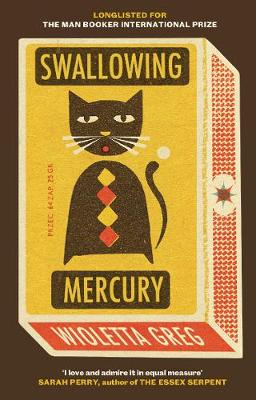 The narrator (and autobiographical stand-in?) is Wiolka Rogalówna, who lives with her parents in a moldering house in the fictional town of Hektary. Her father, one of the most striking characters, was arrested for deserting from the army two weeks before she was born, and now works for a paper mill and zealously pursues his hobbies of hunting, fishing, and taxidermy. The signs of their deprivation – really the whole country’s poverty – are subtle: Wiolka has to go selling hand-picked sour cherries with her grandmother at the market even though she’s embarrassed to run into her classmates; she goes out collecting scrap metal with a gang of boys; and she ties up her hair with a rubber band she cut from an inner tube.
Catholicism plays a major role in these characters’ lives: Wiolka wins a blessed figure in a church raffle, the Pope is rumored to be on his way, and a picture of the Black Madonna visits the town. A striking contrast is set up between the threat of molestation – Wiolka is always fending off unwanted advances, it seems – and lighthearted antics like school competitions and going to great lengths to get rare matchbox labels for her collection. This almost madcap element balances out some of the difficulty of her upbringing.
What I most appreciated was the way Greg depicts some universalities of childhood and adolescence, such as catching bugs, having eerie experiences in the dark, and getting one’s first period. This is a book of titled vignettes of just five to 10 pages, but it feels much more expansive than that, capturing the whole of early life. The Polish title translates as “Unripe,” which better reflects the coming-of-age theme; the English translator has gone for that quirk instead. 
A favorite passage:
“Then I sat at the table, which was set with plates full of pasta, laid my head down on the surface and felt the pulsating of the wood. In its cracks and knots, christenings, wakes and name-day celebrations were in full swing, and woodworms were playing dodgeball using poppy seeds that had fallen from the crusts of freshly baked bread.”
Thanks to Portobello Books for the free copy for review.
A Field Guide to the North American Family by Garth Risk Hallberg
[126 pages]
 Written somewhat in the style of a bird field guide, this is essentially a set of flash fiction stories you have to put together in your mind to figure out what happens to two seemingly conventional middle-class families: the Harrisons and the Hungates, neighbors on Long Island. Frank Harrison dies suddenly in 2008, and the Hungates divorce soon after. Their son Gabe devotes much of his high school years to drug-taking before an accident lands him in a burn unit. Here he’s visited by his girlfriend, Lacey Harrison. Her little brother, Tommy, is a compulsive liar but knows a big secret his late father was keeping from his wife.
The chapters, each just a paragraph or two, are given alphabetical, cross-referenced headings and an apparently thematic photograph. For example, “Entertainment,” one of my favorite stand-alone pieces, opens “In the beginning was the Television. And the Television was large and paneled in plastic made to look like wood. It dwelled in a dim corner of the living room and came on for national news, Cosby, Saturday cartoons, and football.”
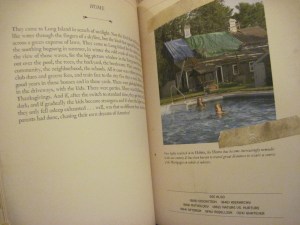 This is a Franzen-esque take on family dysfunction and, like City on Fire, is best devoured in large chunks at a time so you don’t lose momentum: as short as this is, I found it easy to forget who the characters were and had to keep referring to the (handy) family tree at the start. Ultimately I found the mixed-media format just a little silly, and the photos often seem to bear little relation to the text. It’s interesting to see how this idea evolved into the mixed-media sections of City on Fire, which is as epic as this is minimalist, though the story line of this novella is so thin as to be almost incidental.
Favorite lines:
“Depending on parent genotype, the crossbreeding of a Bad Habit and Boredom will result in either Chemistry or Entertainment.”
“Though hardly the most visible member of its kingdom, Love has never been as endangered as conservationists would have us believe, for without it, the Family would cease to function.”
Thanks to Vintage Books for the free copy for review.
The Comfort of Strangers by Ian McEwan
[100 pages]
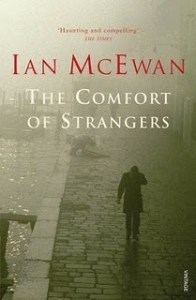 This is the earliest McEwan work I’ve read (1981). I could see the seeds of some of his classic themes: obsession, sexual and otherwise; the slow building of suspense and awareness until an inevitable short burst of violence. Mary and Colin are a vacationing couple in Venice. One evening they’ve spent so long in bed that by the time they get out all the local restaurants have shut, but a bar-owner takes pity and gives them sustenance, then a place to rest and wash when they get lost and fail to locate their hotel. Soon neighborly solicitude turns into a creepy level of attention. McEwan has a knack for presenting situations that are just odd enough to stand out but not odd enough to provoke an instant recoil, so along with the characters we keep thinking all will turn out benignly. This reminded me of Death in Venice and The Talented Mr. Ripley.
First Love by Gwendoline Riley
[167 pages – on the long side, but I had a library copy to read anyway]
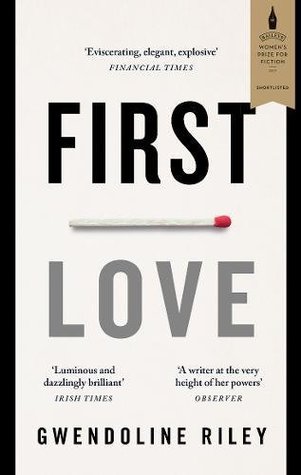 Neve tells us about her testy marriage with Edwyn, a Jekyll & Hyde type who sometimes earns our sympathy for his health problems and other times seems like a verbally abusive misogynist. But she also tells us about her past: her excess drinking, her unpleasant father, her moves between various cities in the north of England and Scotland, a previous relationship that broke down, her mother’s failed marriages, and so on. There’s a lot of very good dialogue in this book – I was reminded of Conversations with Friends – and Neve’s needy mum is a great character, but I wasn’t sure what this all amounts to. As best I can make out, we are meant to question Neve’s self-destructive habits, with Edwyn being just the latest example of a poor, masochistic decision. Every once in a while you get Riley waxing lyrical in a way that suggests she’s a really great author who got stuck with a somber, limited subject: “Outside the sunset abetted one last queer revival of light, so the outlook was torched; wet bus stop, wet shutters, all deep-dyed.”
Other favorite lines:
“An illusion of freedom: snap-twist getaways with no plans: nothing real. I’d given my freedom away. Time and again. As if I had contempt for it. Or was it hopelessness I felt, that I was so negligent? Or did it hardly matter, in fact? … Could I trust myself? Not to make my life a lair.”
 Bookish Beck = Rebecca Foster. American transplant to England. Freelance proofreader and book reviewer.
 Bookish Beck