Some 2024 Reading Superlatives
Longest book read this year: The Bee Sting by Paul Murray

Shortest books read this year: The Wood at Midwinter by Susanna Clarke – a standalone short story (unfortunately, it was kinda crap); After the Rites and Sandwiches by Kathy Pimlott – a poetry pamphlet
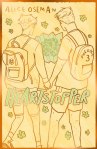 Authors I read the most by this year: Alice Oseman (5 rereads), Carol Shields (3 rereads); Margaret Atwood, Rachel Cusk, Pam Houston, T. Kingfisher, Sarah Manguso, Maggie O’Farrell, and Susan Allen Toth (2 each)
Publishers I read the most from: (Besides the ubiquitous Penguin Random House and its myriad imprints,) Carcanet (15), Bloomsbury & Faber (12 each), Alice James Books & Picador/Pan Macmillan (9 each)
My top author ‘discoveries’ of the year: Sherman Alexie and Bernardine Bishop

Proudest bookish achievements: Reading almost the entire Carol Shields Prize longlist; seeing The Bookshop Band on their huge Emerge, Return tour and not just getting my photo with them but having it published on both the Foreword Reviews and Shelf Awareness websites

Most pinching-myself bookish moment: Getting a chance to judge published debut novels for the McKitterick Prize
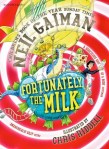
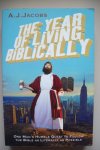
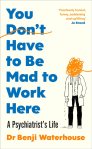
Books that made me laugh: Lots, but particularly Fortunately, the Milk… by Neil Gaiman, The Year of Living Biblically by A.J. Jacobs, and You Don’t Have to Be Mad to Work Here by Benji Waterhouse
Books that made me cry: On Chesil Beach by Ian McEwan, My Good Bright Wolf by Sarah Moss
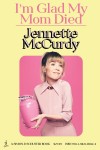 Two books that hit the laughing-and-crying-at-the-same-time sweet spot: The Absolutely True Diary of a Part-Time Indian by Sherman Alexie and I’m Glad My Mom Died by Jennette McCurdy
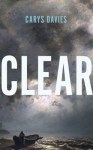
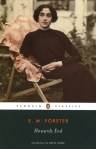
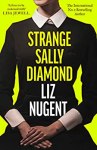
Best book club selections: Clear by Carys Davies, Howards End by E.M. Forster, Strange Sally Diamond by Liz Nugent
Best first lines encountered this year:
- From Cocktail by Lisa Alward: “The problem with parties, my mother says, is people don’t drink enough.”
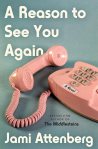
- From A Reason to See You Again by Jami Attenberg: “Oh, the games families play with each other.”
- From The Snow Queen by Michael Cunningham: “A celestial light appeared to Barrett Meeks in the sky over Central Park, four days after Barrett had been mauled, once again, by love.”

Best last lines encountered this year:
 From The Ministry of Time by Kaliane Bradley: “Forgiveness and hope are miracles. They let you change your life. They are time-travel.”
- From Mammoth by Eva Baltasar: “May I know to be alert when, at the stroke of midnight, life sends me its cavalry.”
- From Private Rites by Julia Armfield: “For now, they stay where they are and listen to the unwonted quiet, the hush in place of rainfall unfamiliar, the silence like a final snuffing out.”
- From Come to the Window by Howard Norman: “Wherever you sit, so sit all the insistences of fate. Still, the moment held promise of a full life.”
- From Intermezzo by Sally Rooney: “It doesn’t always work, but I do my best. See what happens. Go on in any case living.”
- From Barrowbeck by Andrew Michael Hurley: “And she thought of those Victorian paintings of deathbed scenes: the soul rising vaporously out of a spent and supine body and into a starry beam of light; all tears wiped away, all the frailty and grossness of a human life transfigured and forgiven at last.”
- From Small Rain by Garth Greenwell: “Pure life.”

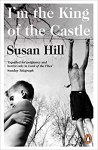
Books that put a song in my head every time I picked them up: I’m the King of the Castle by Susan Hill (“Crash” by Dave Matthews Band); Y2K by Colette Shade (“All Star” by Smashmouth)
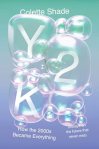
Shortest book titles encountered: Feh (Shalom Auslander) and Y2K (Colette Shade), followed by Keep (Jenny Haysom)
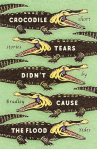 Best 2024 book titles: And I Will Make of You a Vowel Sound, I Can Outdance Jesus, Zombie Vomit Mad Libs, Crocodile Tears Didn’t Cause the Flood, This Is Why We Can’t Have Nice Things
Best book titles from other years: Recipe for a Perfect Wife, Tripping over Clouds, Waltzing the Cat, Dressing Up for the Carnival, The Met Office Advises Caution
Favourite title and cover combo of the year: I’m Mostly Here to Enjoy Myself by Glynnis MacNicol

Best punning title (and nominative determinism): Knead to Know: A History of Baking by Dr Neil Buttery
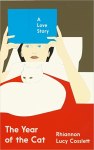 Biggest disappointments: The Glassmaker by Tracy Chevalier (I didn’t get past the first chapter because of all the info dumping from her research); The Year of the Cat by Rhiannon Lucy Cosslett; milk and honey by Rupi Kaur (that … ain’t poetry); 2 from the Observer’s 10 best new novelists feature (here and here)
A couple of 2024 books that everyone was reading but I decided not to: Creation Lake by Rachel Kushner, You Are Here by David Nicholls
 The worst books I read this year: Mammoth by Eva Baltasar, A Spy in the House of Love by Anaïs Nin
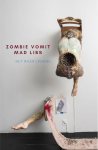
The downright strangest books I read this year: Zombie Vomit Mad Libs, followed by The Peculiar Life of a Lonely Postman. All Fours by Miranda July (I am at 44% now) is pretty weird, too.

Short Stories in September, II: Willie Davis, Gerald Durrell, Sue Mell and Lore Segal
Four more collections down. Two of them blend fictional and autobiographical modes. Two are set primarily in New York City, with another hanging out in Kentucky and the fourth touring Europe. Three of the authors were new to me and one is an old favourite. I’m borrowing Marcie’s five-sentence review format to keep things simple.
I Can Outdance Jesus by Willie Davis (2024)
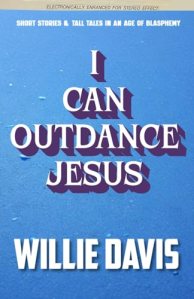 I don’t often take a look at unsolicited review copies, but I couldn’t resist the title of this and I’m glad I gave it a try. Davis’s 10 stories, several of flash length, take place in small-town Kentucky and feature a lovable cast of pranksters, drunks, and spinners of tall tales. The title phrase comes from one of the controversial songs the devil-may-care narrator of “Battle Hymn” writes. My two favourites were “Kid in a Well,” about one-upmanship and storytelling in a local bar, and “The Peddlers,” which has two rogues masquerading as Mormon missionaries. I got vague Denis Johnson vibes from this sassy, gritty but funny collection; Davis is a talent!
Published by Cowboy Jamboree Press. With thanks to publicist Lori Hettler for the free e-copy for review.
The Picnic and Suchlike Pandemonium by Gerald Durrell (1979)
 If you’ve read his autobiographical trilogy or seen The Durrells, you’ll be familiar with the quirky, chaotic family atmosphere that reigns in the first two pieces: “The Picnic,” about a luckless excursion in Dorset, and “The Maiden Voyage,” set on a similarly disastrous sailing in Greece (“Basically, the rule in Greece is to expect everything to go wrong and to try to enjoy it whether it does or not”). No doubt there’s some comic exaggeration at work here, especially in “The Public School Education,” about running into a malapropism-prone ex-girlfriend in Venice, and “The Havoc of Havelock,” in which Durrell, like an agony uncle, lends volumes of the sexologist’s work to curious hotel staff in Bournemouth. The final two France-set stories, however, feel like pure fiction even though they involve the factual framing device of hearing a story from a restaurateur or reading a historical manuscript that friends inherited from a French doctor. “The Michelin Man” is a cheeky foodie one with a surprisingly gruesome ending; “The Entrance” is a full-on dose of horror worthy of R.I.P. I wouldn’t say this is essential reading for Durrell fans, but it was a pleasant way of passing the time. (Secondhand – Lions Bookshop, Alnwick, 2021)
A New Day by Sue Mell (2024)
 Three suites of linked stories focus on young women whose choices in the 1980s have ramifications decades later. Chance meetings, addictions, ill-considered affairs, and random events all take their toll. Emma house-sits and waitresses while hoping in vain for her acting career to take off; “all she felt was a low-grade mourning for what she’d lost and hadn’t attained.” My favourite pair was about Nina, who is a photographer’s assistant in “Single Lens Reflex” and 13 years later, in “Photo Finish,” bumps into the photographer again in Central Park. With wistful character studies and nostalgic snapshots of changing cities, this is a stylish and accomplished collection.
Published by She Writes Press on September 3. With thanks to publicist Caitlin Hamilton Summie for the free e-copy for review.
Ladies’ Lunch and Other Stories by Lore Segal (2023)
 The first section contains nine linked stories about a group of five elderly female friends. Bessie jokes that “wakes and funerals are the cocktail parties of the old,” and Ruth indeed mistakes a shivah for a party and meets a potential beau who never quite successfully invites her on a date. One of their members leaves the City for a nursing home; “Sans Teeth, Sans Taste” is a good example of the morbid sense of humour. A few unrelated stories draw on Segal’s experience being evacuated from Vienna to London by Kindertransport; “Pneumonia Chronicles” is one of several autobiographical essays that bring events right up to the Covid era – closing with the bonus story “Ladies’ Zoom.” The ladies’ stories are quite amusing, but the book as a whole feels like an assortment of minor scraps; it was published when Segal, a New Yorker contributor, was 95. (Secondhand – National Trust bookshop, 2023)
Postscript: Segal died on 7 October 2024, aged 96.
I’ll have a couple more reviews roundups between now and early October.
Currently reading: The Lone-Ranger and Tonto Fistfight in Heaven by Sherman Alexie, The Skeleton in the Cupboard by Lilija Berzinska; The Woman Who Gave Birth to Rabbits by Emma Donoghue; The Best Short Stories 2023: The O. Henry Prize Winners, ed. Lauren Groff; Waltzing the Cat by Pam Houston; Dreams of Dead Women’s Handbags by Shena Mackay; How to Disappear by Tara Masih; The Souvenir Museum by Elizabeth McCracken; Like Life by Lorrie Moore; The Long Swim by Teresa Svoboda; In Love and Trouble by Alice Walker
 Bookish Beck = Rebecca Foster. American transplant to England. Freelance proofreader and book reviewer.
 Bookish Beck