When I posted for the first day of spring, I noted that it was already like early summer in the UK. Today it feels like summer is here to stay. After an April with just 18% of normal rainfall, our pond is looking half-empty. It was a surprisingly chilly mid-May, but really hot weather (low 30s C / high 80s F) is moving in just in time for the bank holiday weekend. Myriad insects find a haven in our lush, unmowed garden full of trees, wildflowers and so-called weeds. Benny is closely supervised on his three or four daily walks in this garden jungle. I love to see swifts wheeling through the sky, but I’d happily sacrifice the sun to get some more rain.
My three selections for this batch of seasonal reading are an excellent forthcoming novel about Sylvia Plath, a historical novella that’s become well known through the movie version, and obscure Russian classics about infatuations that end in heartbreak.
The Daffodil Days by Helen Bain
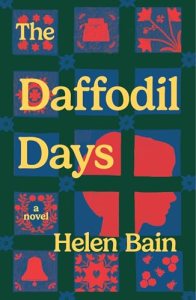 (A quick preview as my full review will be published on Shelf Awareness next month.) A bit of background: Ted Hughes and Sylvia Plath moved from London to Court Green, a thatched house with two and a half acres of land in North Tawton, Devon (southwest England) in August 1961. They had separated and each moved into lodgings in London – her with their two children – by December 1962, with Plath vowing to return to her beloved house and garden in the spring. Instead, she died by suicide in February 1963. This debut novel covers much of the last 18 months of Plath’s life, but in an inventive way: 16 linked short stories – each from the perspective of a different writer friend, family member, or local acquaintance – illuminate Plath’s personality and state of mind through the interactions they have with her. It’s everyone from her midwife to a washing machine salesman. We learn not just about Plath but also the norms of the time, e.g. through young women she meets at a dress shop and in a BBC recording studio. There are also glimpses into her literary milieu through a visit from Al Alvarez and reminiscences from the Kanes and Merwins. The title refers to her garden’s daffodils, so bountiful that she sells them, which strikes her neighbours as a typically American act of crass gumption. The really genius thing about this structure is that the vignettes go backward in time, so we aren’t approaching her inevitable end but anticipating her prime. Bain’s prose reminds me of Tessa Hadley and Andrew Miller. (Edelweiss)
Rita Hayworth and Shawshank Redemption by Stephen King (1982)
 This novella was published in Different Seasons under the heading “Hope Springs Eternal.” You probably know the story better through the 1994 film The Shawshank Redemption.
“They found him guilty, and brother, if Maine had the death penalty, he would have done the airdance before that spring’s crocuses poked their heads out of the dirt.”
Andy Dufresne was wrongfully imprisoned for the murder of his wife and her lover in 1947. While he bides his time until the workings of justice or his own spectacular efforts can get him free, he makes himself useful as the prison librarian and an unofficial financial advisor (he was a banker back in the real world). He fights back against attempted sexual assaults, too. The narrator, Red, can get anyone anything on the black market, and Andy has made two very specific requests over the years: a rock hammer to continue his geology hobby, and a poster of Rita Hayworth to hang in his cell – replaced in turn, as years stretch into nearly three decades, by Marilyn Monroe, Jayne Mansfield, Raquel Welch, and Linda Ronstadt. All along, the hope of there being a life away from this place keeps Andy, and Red, going. Even though I knew what happened thanks to the movie, this was a quick, amusing, and heartening read. I’ll probably go on to read the other three in the omnibus. (Little Free Library) 
The Torrents of Spring (& First Love & “Mumu”) by Ivan Turgenev (1871; 1860; 1854)
[Translated from Russian by Constance Garnett]
 I’ve found Turgenev to be a particularly readable Russian master whose novels are short and accessible enough as to not be daunting (unlike Dostoevsky, Tolstoy and the like, who I’ve never attempted). I had a bit of confusion over this on, not realising my download included the novella First Love and the short story “Mumu” as well, so The Torrents of Spring ended sooner than I expected. It’s said to be highly autobiographical, but I haven’t looked into the links with Turgenev’s life. Twenty-two-year-old landowner Dimitri Sanin is in Frankfurt as part of a world tour. By chance, he rescues young Emil from a swoon and meets his family of Italian confectioners. Captivated by Emil’s sister Gemma’s simple beauty, he fights a duel to defend her honour and gets her to give up her tedious German fiancé for him. His plan is to stay and remotely sell his estate (complete with serfs) to a fellow Russian abroad – the wife of Polozov, a man he happens to know from childhood. But, as in Dangerous Liaisons, Maria Nikolaevna is a seductive schemer who steals his gaze away from Gemma just because she can. This was a gently Hardyesque tragicomedy about what’s fated versus the decisions and weaknesses that change everything. Turgenev explores what happens when money, love and lust don’t align, and leaves us with the aura of inevitable regret.
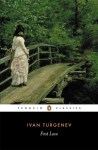 The other two stories share that theme of capricious women. In First Love, sixteen-year-old Vladimir Petrovich is one of many suitors vying for the affections of his next-door neighbour, the young princess Zinaïda. He’s so smitten that when she says jump, he basically asks how high (and it ends up being 15 feet down from a wall). There’s an unexpected twist in this one that makes you question the young man’s family dynamic. The message can be summed up by the advice he’s given by another suitor: “The great thing is to lead a normal life, and not be the slave of your passions.” I was interested to note in both novellas that French is spoken as a marker of the upper classes.
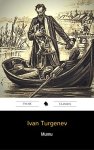 “Mumu” started off promising, but I should know by now that when an animal is a central character in a classic work, it’s not going to go well. Mumu is a spaniel rescued by Gerasim, a giant deaf-mute man who labours on an old woman’s estate. His mistress observes that he’s sweet on Tatiana the laundress and quashes that budding relationship, at which point Mumu enters his life as a sort of replacement. Mumu is utterly devoted to him and suspicious of anyone else – including the mistress, who soon makes it her mission to silence the barking dog. It’s all disappointingly conventional and I wished it could have been otherwise, but I guess Turgenev, like so many other 19th-century authors – Dickens, Flaubert – felt duty-bound to keep women and peasants in their place.
  (Project Gutenberg)
 Bookish Beck = Rebecca Foster. American transplant to England. Freelance proofreader and book reviewer.

Hi Rebecca
We like Turgenev. King’s ‘Shawshank Redemption’ is not King’s best, actually, quite boring.
The Fab Four of Cley
🙂 🙂 🙂 🙂
LikeLiked by 1 person
Turgenev is underrated, I think.
At novella length Shawshank Redemption is basically a long short story and doesn’t outstay its welcome.
LikeLiked by 1 person
I’m someone who struggles with Russian literature. But I’ve never tried Turgenev. Thanks for the hint! Mind you, I’m still recovering from War and Peace, which I made myself read during Lockdown.
LikeLiked by 1 person
I’ve never attempted a longer Tolstoy. Do give Turgenev a try. I’m enjoying Viv Groskop’s essays on Russian literature alongside.
LikeLiked by 1 person
👍
LikeLike
Turgenev rules, but I’ve never read these ones! Excellent tip – though I think I’d prioritise The Torrents of Spring and First Love over Mumu.
LikeLiked by 1 person
I have On the Eve in print, but realizing they were all available via Project Gutenberg was a game changer!
LikeLike
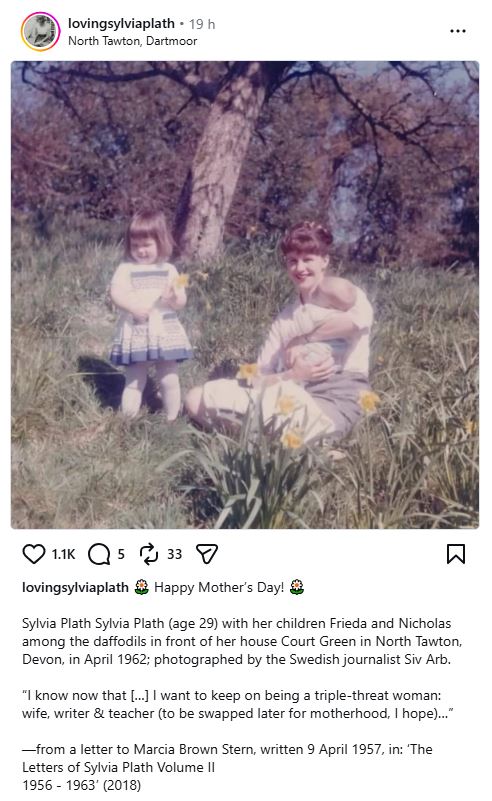
Lovely photo of Sylvia P…but her life was in turmoil at the stage.
I read her biography “The Red Comet” and it was unforgettable …as is Slyvia!
LikeLiked by 1 person
That Instagram account was recommended for me and I have really enjoyed seeing some more obscure photos of her. I don’t think I had ever seen ones of her with her children. She looks so lovely and calm, you would never know what was going on, or that she had so little time left.
I’d like to read a biography of Plath. My library owns that one, so I will give it a try sometime. Thank you for the recommendation.
LikeLike
Your review reminds me how excellent The Shawshank Redemption movie is. I haven’t seen it in ages. And then like the old fogey I am I reflected, movies just aren’t as good as they used to be… 😂😂
LikeLiked by 1 person
I haven’t seen a movie in years! I used to be about equally interested in movies and books and consume a similar number.
LikeLiked by 1 person
The linked stories in Daffodil Days sound very interesting (even though I don’t particularly gravitate towards Plath-ish stuff). When I read George Saunders’ book about reading/writing/life, with Bill one summer, there was a Turgenev story that had a very intriguing ending. Bill and Bron (who read the stories GS discussed) liked that one best, and what you have to say about these make me think I should read more of him too (I did also read Fathers and Sons many years ago). Tolstoy’s animals don’t seem to fare well either. And I don’t know what to do about spring; on the calendar it’s nearly summer, but we had another night down to zero on the weekend, and there are only a few hyacinths and a couple tulips in bloom (the lilacs are still leaf-ing). Your King omnibus is probably the same one I read; I don’t think there’s a weak King story, only stories that don’t suit some readers as well as some others.
LikeLiked by 1 person
I’ve become more interested in Plath since finally reading The Bell Jar and Ariel last year, but I don’t think you have to be a fan to enjoy The Daffodil Days. It’s fascinating to see the composite portrait that builds through other people’s observations of her.
Fathers and Sons was my first by Turgenev and a great introduction.
Goodness. It was 32 C here yesterday! Luckily, it’s going back down into the low to mid 20s by the weekend, which will be more bearable. Spring flowers are long gone and our roses are all in full bloom.
LikeLike
I bought Daffodil Days last week and am really looking forward to it.
LikeLiked by 1 person
Enjoy! (I don’t love the UK cover.)
LikeLiked by 1 person
I’m planning to get to Turgenev’s Fathers and Sons later in the year, after I’m through with Tolstoy’s Anna Karenina and all the Nikolai Gogol I’m reading. I’ve actually been surprised about how accessible Anna Karenina is. It’s long and there are many characters, but the chapters are short and the characters feel very human to me.
LikeLiked by 1 person
Fathers and Sons is a great intro to Turgenev. One day I’ll tackle Tolstoy properly! (I’ve only read The Death of Ivan Ilych.) I’m very much enjoying Viv Groskop’s book on Russian literature.
LikeLiked by 1 person
[…] The Daffodil Days by Helen Bain: A remarkable debut novel about the last years of Sylvia Plath’s life. I’ve already discussed it here. […]
LikeLike
[…] and dogs was harder to read about than the murders of unhoused people. A neat connection back to Rita Hayworth and Shawshank Redemption, which I read back in the spring: Dussander mentions that “The banker who bought [the stocks] for […]
LikeLike