Marlborough Lit Fest Event: Debut Authors Helen Bain and Sara Bayat
On Sunday morning I attended my first Marlborough Literature Fest event in four years (after the Patrick Gale keynote in 2022). It paired two debut authors whose recent novels incorporate multiple points-of-view to give a rounded picture of an English village. I already knew Helen Bain’s The Daffodil Days, one of my favourites from 2026, but was unfamiliar with Sara Bayat’s Hesket and looked forward to hearing more about it. The event took place in St Peter’s Church, at the bottom of the high street, and was chaired by Dr Nicola Presley of Bath Spa University – but mostly ran itself because the two authors had read each other’s books and asked each other their own insightful, leading questions along the way.
‘Syliva’ in the programme listing!
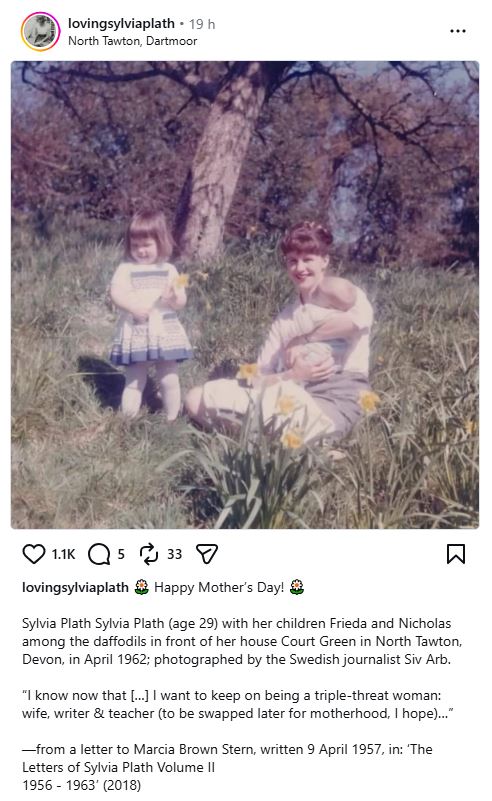
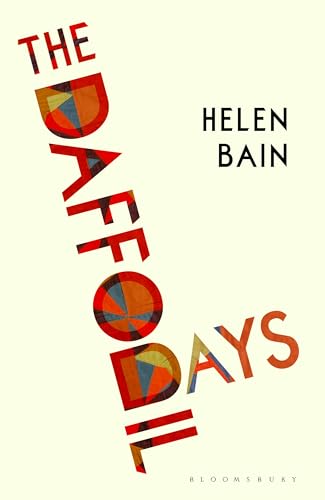 Bain’s focus on 16 ancillary characters was her way, she said, of countering the two-dimensional representation of Sylvia Plath that mostly relates to the nature of her death. It also allowed her to depict social change more broadly – David Kynaston’s history books covering 1962 were helpful, she said. Plath was a 28-year-old American dropped into the Devon village of North Tawton – an incomer, but she was gregarious and talked to anyone. Bain can see so much of Devon in her poems, and Dartmoor is visible from the house (which Ted Hughes kept for the rest of his life, though Plath only spent about 15 months there).
“Would it be possible to see her differently” from the poetry icon? Bain asked herself, and so “splintered her” into the 16 viewpoints. She opened the event by reading from the chapter in which the Bendix man visits to show Plath how to do a load of laundry; she gets agitated with him but he remains calm. Bain said she felt a heavy sense of historical responsibility. She spent a lot of time interviewing North Tawton residents about their childhood and let people review chapters that included their parents. All in all, she said, she approached the research as if she was writing a biography, but then looked for the gaps where only fiction can go.
Hesket is about a semi-rural village in Norfolk marked by the trauma of historical witch trials. A housing development disturbs the ground and strange things start happening. Bayat, who was heavily pregnant, read a passage from the early pages in which a swarm of bees lands in a baby’s crib. All of the major characters are othered in some way. The structure of multiple POVs was right for the novel because it encompassed the entirety of the village, Bayat said; she used the metaphors of mycorrhizal fungi and a beehive. “Uncanny” was the descriptor she employed most often, so I’m expecting the touches of horror to be subtle, but still plan on reading this next month for R.I.P. (I have a new copy on the way, bought with a voucher).
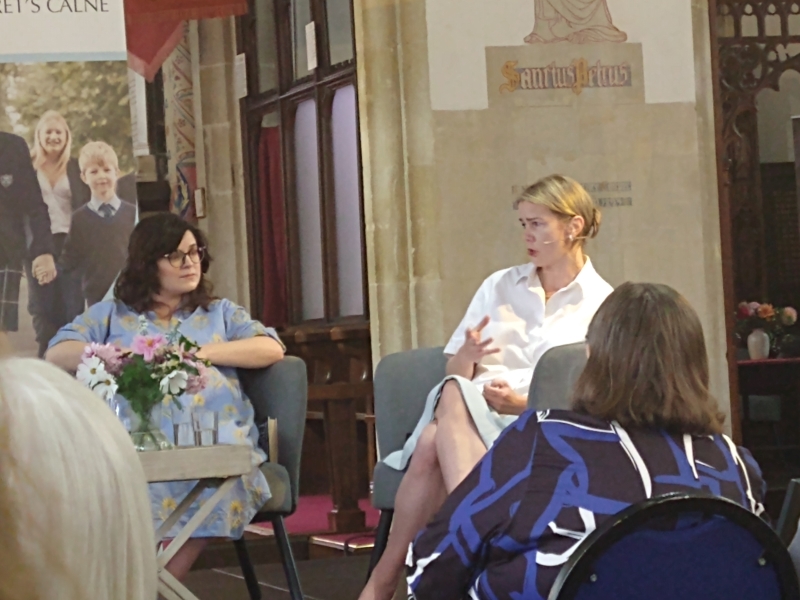
Bayat (L); Bain (R)
In terms of the connections between the two novels, Presley suggested that they are each haunted – The Daffodil Days by Plath’s death but also perhaps by Ted Hughes, who stays on the fringes – and that the landscape is of great importance. Bayat was influenced by local protests over the Western Link, her walks in the flatlands of Norfolk, and an inescapable awareness of drought and flooding. For both authors, maintaining a throughline while also revealing connections between the characters and across time was challenging (even more so for Bain due to her reverse chronology), but it was in the redrafting that everything came together. A question raised in one chapter might be answered in another, and so on.
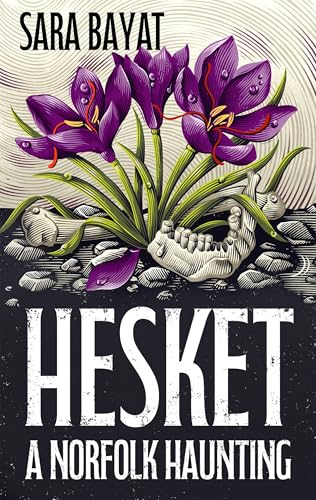 One of the audience questions was of the dreaded ‘where do you get your ideas?’ variety, but Bayat actually had a good answer. Roald Dahl’s The Witches was her favourite book growing up, and she was obsessed with Arthur C. Clarke’s Mysterious World and its tales of the uncanny in everyday life. She also remembers once, having a coffee in Norwich overlooking the polluted river through the centre, thinking that she saw movement under the surface. That, plus there’s a nearby bridge where the witches were led to their death. Bayat mentioned borrowing some details from her father-in-law’s allotment cronies, too. Bain chimed in: people-watching inspires her, and she sees writers as magpies pulling bits from here and there. The works were a long time in the making: Bayat started in 2019, while Bain’s took 4–5 years.
There were any number of events on the Festival programme that interested me, but given that a trip to Marlborough requires my husband to give me a ride 40 minutes away (there’s no train station in the town, alas), I felt I had to be selective. This was a great choice!
(Fun literary connections: Benjamin Wood was signing copies of Seascraper at the back of the church as I arrived – his was the previous event. And the owner of Hungerford Bookshop, my local indie, was in the audience and asked a question!)
My Year in Short Stories (#ShortStorySeptember)
The Short Story September link-up is open (see my pinned post). At the start of the month, I’m inviting you to tell about the short stories you’ve already read this year, especially any that you’ve particularly enjoyed.

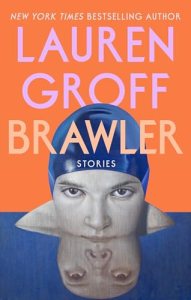
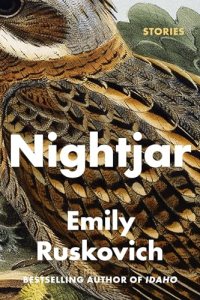
I don’t consider myself a great short story reader, so I was surprised to look back and find that I’ve already read 17 collections this year. I include in that four books that I consider to be linked short story collections, even though they were all published as novels rather than stories. (I’m sure Susan is right when she theorizes that this is about marketing – what’s expected to sell.) The best have been Brawler by Lauren Groff and Nightjar by Emily Ruskovich, which are actually quite similar.
Some other favourites were:
 The Daffodil Days by Helen Bain: A slantwise biographical portrait of Sylvia Plath through her interactions in the last years of her life. The 16 chapters adopt the points-of-view of various secondary characters (e.g., Plath’s housekeeper, riding teacher, and brother), but the kernel of each is an encounter with Plath that illuminates her personality and state of mind. (Reviewed for Shelf Awareness)
Strange Weather in Tokyo by Hiromi Kawakami: Tsukiko is a lonely barfly in her late thirties when she bumps into a secondary school teacher again. She calls him “Sensei,” and they start meeting up for low-key adventures. Kawakami infuses the book with attention to the seasons’ changes and everyday sensual pleasures like food. A lovely, subtle romance.
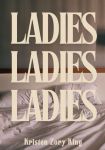 Ladies, Ladies, Ladies by Kristen Zory King: A “chapbook” containing 18 flash stories. It’s remarkable how much is packed into a few pages: a voice, a character, a setting and situation, an incident, a salient backstory, and some kind of epiphany or resolution. Fifteen of the pieces focus on one named character. Each story is distinctive, with no words wasted.
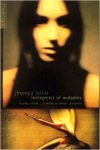 Interpreter of Maladies by Jhumpa Lahiri: Lahiri won the Pulitzer for this debut. Her characters tend to be Indian or Bengali immigrants in New England. Relationship studies trade off with accounts of encounters with strangers across generations and/or cultures. Often, food is a reminder of home. An overall theme is denying or affirming common humanity.
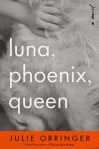 Luna, Phoenix, Queen by Julie Orringer: In Orringer’s wonderful third novel, the secrets between two literature professors and the adoption of a remarkable dog fuel an absorbing story of love, memory, and connection beyond words. Chapters take on different characters’ perspectives. (Review forthcoming for Shelf Awareness)
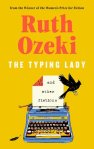 The Typing Lady and Other Fictions by Ruth Ozeki: Ozeki is up to her usual auto/metafiction tricks here, blurring the lines between fact and fiction, life and death. Themes include memory, creativity, language, ageing and cross-generation connections. The stories are playful without being twee, and represent a real return to form.
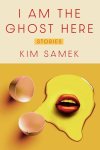 I Am the Ghost Here by Kim Samek: The television producer’s inventive debut recalls Ed Park and George Saunders with its focus on the mixed blessing of technology. Her speculative short stories’ protagonists deal with grief or new motherhood, often while also struggling with their health. Samek sets up unusual situations with knock-out first lines. (Reviewed for BookBrowse)
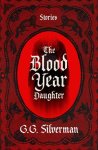 The Blood Year Daughter by G.G. Silverman: A remarkable collection that mixes feminist horror and twisted fairy tales into potent concoctions. Women’s bodies are imperiled by sadistic men and acts of self-sacrifice. Blood is a symbol of desire or power. Motherhood and sisterhood are vital bonds. Among bleak storylines come flashes of morbid humor. (Reviewed for Foreword Reviews)
All by women!
And the rest:
- Love Invents Us by Amy Bloom
- Baby in a Box by Sarah Braunstein (Reviewed for BookBrowse)
- A Calendar of Love and Other Stories by George Mackay Brown
- Museum Visits by Éric Chevillard
- Lesser Known Monsters of the 21st Century by Kim Fu
- It Will Come Back to You: Collected Stories by Sigrid Nunez
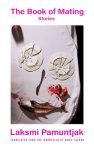
- The Book of Mating by Laksmi Pamuntjak [trans. from Indonesian by Annie Tucker] (Review forthcoming for Foreword Reviews)
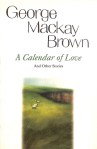
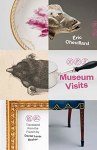
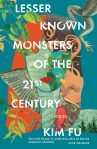
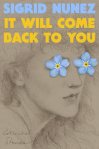
(All but two by women!)
What are some of your recent favorite experiences with short fiction?
20 Books of Summer, 17–20: Jaouad, Kim, Merwin, Piñeiro (#WITMonth)
It’s time to draw a line under 20 Books of Summer so I can focus on hosting Short Story September. I’m technically not quite finished with these first two I’m technically not quite finished with these first two [70 pages to go in the Jaouad and 46 in the Kim], but I’ve read enough to form an opinion and will pop back later to add in final thoughts and ratings. My final four are a memoir of cancer in young adulthood; a page-turning courtroom drama about experimental autism treatment gone wrong; gorgeous nature poems; and a novella in translation that comments on disability, motherhood and mental health issues. Skip to the end for my one DNF of the challenge and a look back at some stats plus my most successful reads.
Between Two Kingdoms: What Almost Dying Taught Me about Living by Suleika Jaouad (2021)
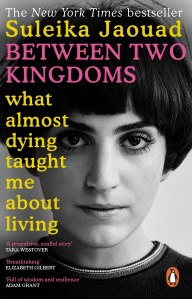
{Updated on 7 September} Jaouad wrote a New York Times column about going through leukaemia treatment in her early twenties and what came next. After months of itching and fatigue, she fell properly ill while working her first postgraduate job in Paris and her blood test results were so bad that she flew home to New York. She would be in and out of hospital for the next five years, enduring multiple rounds of chemo and a bone marrow transplant from her brother. It’s a terrific granular account of the physical and emotional rigours of illness, as well as the strain it put on her relationships – being her primary caregiver was too much for her boyfriend, Will. But she also found a community of young cancer patients, many (like Max Ritvo) now dead. After 60% of the book’s length, as the title – its metaphor taken from Susan Sontag – suggests, the new challenge for Jaouad was resuming life. “I’ve spent the past fifteen hundred days working tirelessly toward a single goal—survival. And now that I’ve survived, I’m realizing I don’t know how to live.” She decides to undertake a cross-country road trip punctuated by visits to people who wrote to her through her column: fellow cancer survivors, a mother who lost a son to suicide, a man on death row in Texas. At first I thought this content felt tacked on and should have been a sequel, but ultimately it illustrates why she wouldn’t edit out her illness if she had it all to do again. I hadn’t heard of Jaouad before I stumbled on this book; from Instagram, I learned she’s now (at age 38) weathered cancer three times. (Little Free Library) 
Miracle Creek by Angie Kim (2019)
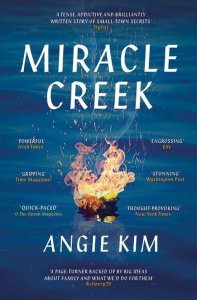
{Updated on 7 September} After enjoying Happiness Falls so much, I wanted to go back to Kim’s debut, for which she won an Edgar Award. (There’s an autistic boy and discussion of therapies in that second book as well.) The bulk of the novel is set during the four days of an August 2009 trial. It’s been a year since a horrific accident at Pak Yoo’s “Miracle Submarine,” a rural Virginia hyperbaric oxygen chamber where regulars came for twice-daily treatment of autism, cerebral palsy, and infertility. Meanwhile, protesters gathered outside to draw attention to what they believed to be a dangerous and unproven technique, the equivalent of child abuse. Someone with Camel cigarettes and matches from a local 7-11 set a small fire under an oxygen tank; the resulting explosion killed two and seriously injured two more. The mother of one of the autistic boys was arrested for suspected arson and attempted murder, but as the trial goes on suspicion seems to shift to members of the Korean American family who ran the HBOT operation. There’s a lot to sink the teeth into here. Each character has secrets, and little revelations are emerging all the time, such that the prosecutor and defence lawyer are always having to adjust their approach. Like I’ve experienced with Kim before, this was intelligent, thought-provoking, and absorbing. It’s just the sort of crime-adjacent fiction I like. An author Q&A at the end reveals a couple of autobiographical inspirations: working in her immigrant parents’ convenience store near Baltimore as a teenager, and taking one of her sons, who had neurological deafness and chronic illnesses, for HBOT. (Gift from my wish list)
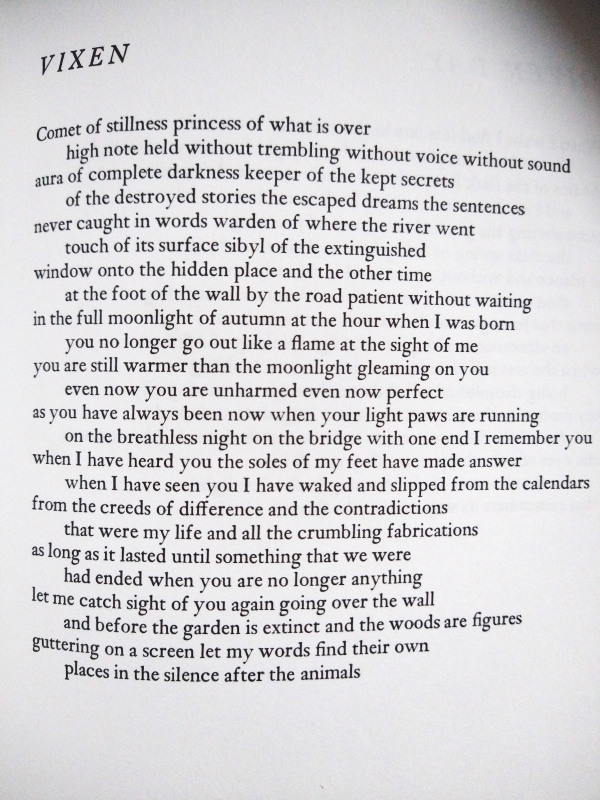
The Vixen by W.S. Merwin (1996)
it seems that the world is made of a single
summer as it always has been (from “Entry”)
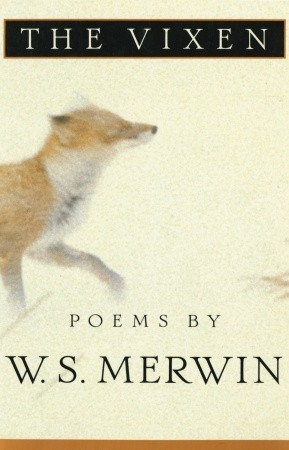 I took this off the shelf because Merwin was one of the POV characters in The Daffodil Days, Helen Bain’s excellent novel about Sylvia Plath’s final years. I had no idea what to expect, and it took me a while to get used to his entirely unpunctuated verse. Only by reading aloud or in my head was I able to split the text blocks into meaning-rich phrases. The fox is a revenant flitting through many of these poems as they pinpoint natural rhythms and human traces across the seasons and centuries. A lot reference summer, in particular, so this was a perfect choice for the challenge. There are a few historical portraits but most of the pieces feel timeless, evoking a countryside locale where the speaker returns to find derelict dwellings given over to birds and trees. Mostly it feels like this could be England, but sometimes a dry aridity suggests the Mediterranean. There is a strong sense of temporality, especially of afterness – the close of a day, the tail end of a season, the still-resonant emptiness after life has left or activity has finished. But there is also the hint of an eternal present:
Seen from afterward the time appears to have been
all of a piece which of course it was but how seldom
it seemed that way when it was still happening (from “Completion”)
In a long book (~65 pieces), there were only a few poems that washed over me without making any impression. The run-on pace, alliteration, and close attention to the natural world made this utterly mesmerizing. I’ll be sure to read more by Merwin. (Secondhand – Bridport Old Books) 
Elena Knows by Claudia Piñeiro (2007; 2021)
[Translated from Spanish by Frances Riddle]
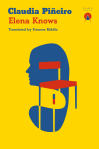
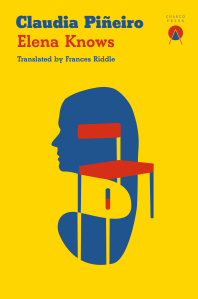 Piñeiro is an Argentinian author known for infusing her detective novels with a political conscience. Elena Knows is a mystery of sorts, in which the title character devotes herself to investigating her daughter’s death (Rita was found hanging in the belfry of a church). But several elements make this atypical for crime fiction: Elena has Parkinson’s disease – “that f—ing whore illness,” she calls it; refuses to accept the police’s conclusion that Rita died by suicide – she would never have gone there in the rain, she insists; and drags her uncooperative body across Buenos Aires to confront an acquaintance she thinks might be able to shed some light. It’s a circadian narrative, divided into sections by Elena’s pill schedule, but expands its timeline through flashbacks to consider the complications of the mother–daughter relationship as Elena became more physically dependent. The eventual encounter with Isabel presents a contrast in the form of a woman who didn’t want to become a mother but had to because of a prohibition on abortion, which was only legalized in Argentina in 2020. While the approach and themes were appealing, I found this repetitive and the long blocks of dialogue in italics were challenging to read. This was shortlisted for the International Booker Prize, though I thought it had a better chance in that year’s Barbellion Prize race (returning this year!). (Gift from my wish list)
And a DNF:
Blonde by Joyce Carol Oates (2000)
Her problem wasn’t she was a dumb blonde, it was she wasn’t a blonde and she wasn’t dumb.
Sigh. Between February and July I read about 200 pages, then skimmed another 100 or so, then finally gave up. (My third Oates DNF. I don’t think she and I are meant to be, though I seem to have better luck with her short stories and own another couple of her books to try.) I engaged most with the early pages about her childhood with a vain, neglectful mother who ends up in a mental hospital; and then with her teenage marriage to Bucky Glazer and involvement in the war effort.
She was a sweet kid but so emotional. Wanting love all the time. She was immature and unreliable and I guess so was I; we were too young. If she’d been a better cook and not so emotional, it might’ve worked out.
Except that people were dying and being injured and the world filling up with smoldering rubble, Norma Jeane liked the War. The War was as steady and reliable as hunger or sleep. Always, the War was there.
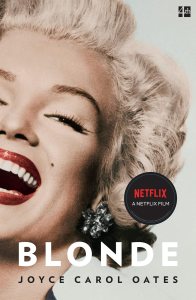 In the part that I skimmed, she is starting to become known in Hollywood, with a nude photo shoot (for which she only earned $50), bit parts in films, and her famous stage name.
In the introductory Author’s Note, Oates writes, “for all its length, synecdoche is the principle of appropriation.” So, for instance, instead of multiple foster families, we just get one. Always, there was unwanted male attention, including molestation. I was surprised to find that the pick-and-choose, fact–fiction hybrid approach became a problem for me. I wanted to know if she really married a man named Bucky and wrote poetry. Yet I didn’t want to have to be verifying every fact either.
Oates’s kitchen-sink style involves imagined scenes and dialogue plus retrospective commentary and knowing asides; long, looping sentences and short ones; direct and indirect speech; lots of exclamation points. Lots of everything. The repetition will be deliberate, for effect, but I kept longing for a streamlined version that cut, say, three of every five sentences.
Anyway, this was certainly a project worth undertaking for Oates; you can see why it was irresistible to unearth the reality behind a legend. Norma Jeane is intriguing for her simultaneous childlike innocence and cultivated sensuality. (Secondhand – Awesomebooks.com)
20 Books Statistics:
14 fiction
4 nonfiction
2 poetry
7 by BIPOC
3 towards WIT Month (for which I reviewed 8 in total, with library reads and Foreword reviews)
3 rereads
I’ve learned this year that it’s important, momentum-wise, to build in a number of shorter books (6 of novella length + 2 poetry collections) and best to avoid doorstoppers. I was wise to pick some addictive, undemanding novels that tread the line between popular and literary fiction (Kim, Mantel, O’Farrell, Reid, Sullivan); anything that feels like hard work (Oates!) is definitely not a summer read.
I only read a risible 4 of the specific books I set out as options in my planning post, plus 1 of my additional ideas. (It’s ironic that I struggled to finish this set of 20 when I could have labelled anything from my shelves part of the challenge – in total, I read 39 of my own books this summer.)
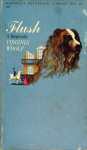
My favourites of the 20 were Strange Weather in Tokyo, Prodigal Summer & The Vanishing Act of Esme Lennox (both rereads), and The Vixen. But What Belongs to You, Miracle Creek, Mitz, The Employees, Commencement, and Flush were also great reads. To be able to single out half of the books equals a huge success!
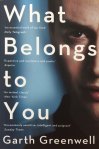
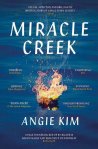
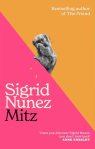

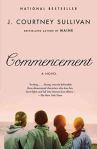
I also completed a 4-book diagonal on the Bingo card!
- Summer in the title (PRODIGAL SUMMER)
- A classic you’ve been meaning to (RE-)read (FLUSH)
- Features a family holiday (MITZ)
- Published in summer (ELENA KNOWS – July 2021)
The Best Books from the First Half of 2026
Hard to believe it, but it’s that time of year already. For a decade now, I’ve been making a first-half superlatives list. It remains to be seen how many of these will make it onto my overall best-of year rundown, but for now, these are my 15 favourite current-year releases that I’ve read so far (representing the top 23% of the 2026 releases I’ve read this year; or the top 10% of my overall reading so far). It’s been a brilliant year for fiction! Links are to my full reviews where available.
Fiction
Daffodil Days by Helen Bain: Bain’s remarkable debut novel builds a slantwise biographical portrait of Sylvia Plath through her interactions with friends and acquaintances in the last years of her life. It’s everyone from her midwife to her brother to a washing machine salesman. The vignettes proceed backward through the book’s 17-month span: a determined metaphorical move from resignation to optimism. The focus is therefore not on the end of Plath’s life but on the full flow of her genius.
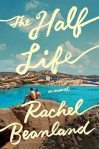 The Half Life by Rachel Beanland: In Beanland’s enchanting third novel, a young Navy wife has a sexual awakening and discovers her scientific vocation while stationed on an Italian island. The title cleverly suggests both nuclear fallout and how secrets constrain people. Beanland adeptly depicts grief, homesickness, and culture shock, and illuminates American and Italian politics. Sensual and intriguing, this belated-coming-of-age story reminiscent of Beautiful Ruins and The Atomic Weight of Love is an absorbing summer read. [Forthcoming from Simon & Schuster on July 14.]
 Brawler by Lauren Groff: The nine short stories in Groff’s exceptional eighth book profile women in states of desperation and probe legacies of loss and violence. Themes of midlife reinvention and latent queerness recur. There’s also a startling Jamesian fable; a 1950s Southern gothic black comedy that would do Flannery O’Connor proud; and the masterful novella-length examination of privilege and obsession. The prose is stellar and the endings breathtaking. Groff is a first-rate novelist, but her short stories are truly peerless.
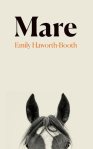 Mare by Emily Haworth-Booth: This work of autofiction circles the question of becoming a mother and posits the writing life and other relationships as partial substitutes for parenthood. The narrator spends three days a week riding at a local stable and tending to a black and white mare. Haworth-Booth makes caring for an animal analogous with motherhood, but doesn’t stop at easy symbolism. Cultivating bodily bonds with other creatures is part of how we find purpose when life is threatened by chronic illness and climate breakdown.
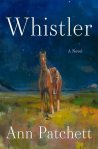 Whistler by Ann Patchett: Patchett is a master on the subject of family dysfunction, and her 10th novel, a stepdaughter-stepfather love story, is as wise as ever on secrets, traumatic memories, and storytelling. The bittersweet tone is perfectly judged. Daphne’s banter with her loved ones is a delight. The plot whisks along, its satisfying full circle returning to the Metropolitan Museum of Art, where she saw Eddie Triplett for the first time in 40 years, and incorporates a clever metanarrative twist. Quiet but surprising, witty yet heartrending.
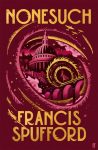 Nonesuch by Francis Spufford: A grown-up fantasy book for those of us who were Narnia-obsessed children. It’s a rollicking blend of realistic WWII-set fiction and alternative history, with some magical and time travel elements. I was impressed that Spufford voices a young woman as protagonist and takes her ambitions and sexual desire seriously. There are witty turns of phrase throughout yet never an inappropriate levity. This parallel world is cleverly imagined and carefully reasoned, and the whole is shot through with a clear love of London.
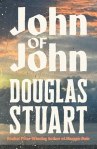 John of John by Douglas Stuart: In Stuart’s superb third novel, set on the Isle of Harris in the 1990s, Cal seeks to reconcile his sexuality and artistic goals with his family’s expectations and his devout upbringing. An absorbing, deliciously melodramatic story is built around the contrast between modernity and the old ways. The characters’ power plays and acts of desperation are heartrending, but mischief and love of colour and crafts lend lightness. Stuart’s every observation is profound; the simplest phrase is memorable for its beauty.
Nonfiction
 The Irish Goodbye: Micro-Memoirs by Beth Ann Fennelly: Fennelly takes the same approach as in flash fiction: some of these 45 pieces are as short as one sentence, remarking on life’s irony, poignancy or brevity. Again and again, she loops back to her sister’s untimely death; other topics are her mother’s worsening dementia, her happy marriage, her continuing 28-year friendships with her college roommates, the pandemic, and her ageing body. One of the most in-depth pieces revisits a lonely stint teaching in Czechoslovakia in the early 1990s.
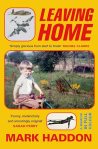 Leaving Home by Mark Haddon: Eighty-seven nonchronological vignettes range across Haddon’s life and his parents’. Most are awful: his cold, invalid mother; his father’s adultery; cruel treatment at boarding school; medical crises. Impressive that he’s a functional person given the lack of love and empathy in his early life, and that he’s so honest about mental health. Haddon is also an artist and there’s a wealth of comics, portraits and family photographs here (plus cynical captions on stock photos to puncture any potential nostalgia).
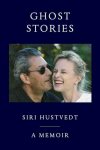 Ghost Stories by Siri Hustvedt: Paul Auster died of non-small cell lung cancer on April 30, 2024. “I’m living in a haunted house,” his widow writes. This isn’t a straightforward bereavement memoir but moves back and forth between past and present and incorporates various documents, such as e-mail updates she sent to friends and family during Paul’s illness. It’s particularly interesting to learn about their mutual influence on each other’s work. Recommended to fans of either or both authors, as well as those interested in grief stories.
 Vessel: The Shape of Absent Bodies by Dani Netherclift: One scorching afternoon in 1993, the author’s father and brother drowned while swimming in an irrigation channel near their Australia home. A joint closed-casket funeral took place six days later. Eighteen at the time, Netherclift witnessed her relatives’ disappearance but didn’t see their bodies. Must one see the corpse to have closure? she wonders. “The presence of absence” is an overarching paradox. The contradictions and ironies of the situation defy resolution.
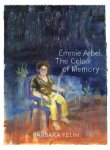 Emmie Arbel: The Colour of Memory by Barbara Yelin: An illustrated biography of a child Holocaust survivor based on interviews. Survival is not a one-time event because trauma is complex and ongoing. In Emmie’s case, her foster father (himself a Holocaust survivor) molested her for years. The colour palette is appropriately sombre. And yet there is vibrant colour in the depiction of Emmie’s home and garden in Israel. This is a work of real courage, of speaking out in spite of a suspicion that all is bleak and meaningless.
Poetry
 Visitations by Julia Alvarez: Like a miniature autobiography in verse, Alvarez’s radiant fifth collection offers snapshots from her life: a childhood in the Dominican Republic, immigration to 1960s New York City, the vicissitudes of adulthood, and the bittersweetness of later-life love. In a prose afterword, she calls the poems “visitations from selves of the past and present.” With its vivid scenes and alliterative phrasing, this gorgeous collection presents food and family, memory and companionship, as talismans to hold against the darkness.
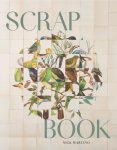 Scrap Book by Nick Martino: Martino’s debut poetry collection draws on his mother’s journals and 1980s Polaroids to capture a family dynamic overshadowed by divorce and his father’s incarceration. The imagery spotlights Midwest farm country. Love and meaning are salvaged from family wreckage in the same way one might “look/ for fugitive beauty in the bulldozed” orchard. Free verse alternates with forms: an unrhymed sonnet, an aubade, and a “duplex.” Alliteration and assonance sparkle, and two poems employ anaphoric rhetoric.
 The Way the Water Held Me by Catherine Redford: Redford was 35 with a young child when her wife died of cancer. We don’t hear so much about being widowed early, or in a same-sex partnership. Redford interrogates the expectations of widowhood through biographical poems about Mary Shelley. I loved the archival vocabulary of “Obituary” and how belongings left behind take on outsize significance. The alliteration and nature imagery are just right. From the hardest of circumstances came something tender and lovely.
Have you read any of these, or might you now based on my recommendation? What other 2026 releases should I catch up on?
Book Serendipity, March to May
I call it “Book Serendipity” when two or more books that I read at the same time or in quick succession have something in common – the more bizarre, the better. This is a regular feature of mine every couple of months. Because I usually have 20–30 books on the go at once, I suppose I’m more prone to such incidents. People frequently ask how I remember all of these coincidences. The answer is: I jot them down on scraps of paper or input them immediately into a file on my PC desktop; otherwise, they would flit away! Feel free to join in with your own.
The following are in roughly chronological order.
- A sister named Fiona in The Forgotten Waltz by Anne Enright and Leaving Home by Mark Haddon.
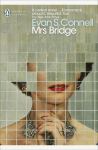
- A parent burns a dirty magazine in Mrs. Bridge by Evan S. Connell and The Blood Year Daughter by G.G. Silverman.
- Sabbath chains, Gaelic sermons, and psalm singing on the very pious Isle of Lewis in John of John by Douglas Stuart (set in the 1990s), then Findings by Kathleen Jamie (essay from the early 2000s). I doubt any of the above can still be found there, though we did note “Respect the Sabbath” signs on playground equipment on our 2022 trip.
- A single mother who won’t answer the phone because she’s afraid of who/what it might be in Blonde by Joyce Carol Oates and The First Day of Spring by Nancy Tucker.
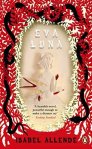
- An orphaned narrator named (Eva) Luna in Eva Luna by Isabel Allende and Fountainville by Tishani Doshi. Then I came across a dog named Luna in Transcription by Ben Lerner! And the main character in one story of Baby in a Box by Sarah Braunstein starts going by her nickname, Luna.
- There’s a Muriel Rukeyser poem in the anthology Night Feeds and Morning Songs (ed. Ana Sampson) and Rukeyser is a character in Sophie Ward’s Our Better Natures, which I was also reading at the time.
- Eating boiled ham in Ordinary Saints by Niamh Ni Mhaoileoin and I Capture the Castle by Dodie Smith (and boiled turkey in The First Day of Spring by Nancy Tucker).
 Checking a hotel room for bedbugs in Transcription by Ben Lerner and Half His Age by Jennette McCurdy.
- A young person writing in shorthand in I Capture the Castle by Dodie Smith and First Class Murder by Robin Stevens.
- A character named Emmie in Transcription by Ben Lerner and (no surprise here) Emmie Arbel: The Colour of Memory by Barbara Yelin.
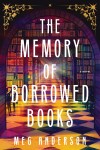
- Noting that roses are not suited to a particular climate in The Memory of Borrowed Books by Meg Anderson and Late Migrations by Margaret Renkl.

- A Welsh character named Owain in Fountainville by Tishani Doshi and Bog Child by Siobhan Dowd.
- The Secret Garden is discussed/mentioned in Reading My Mother Back by Timothy C. Baker and Mare by Emily Haworth-Booth, and mentioned in The Memory of Borrowed Books by Meg Anderson.
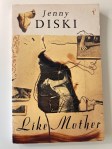
- The protagonist is emotionless at their mother’s deathbed in Like Mother by Jenny Diski and Leaving Home by Mark Haddon.
- (Apologies: this one is grim.) A young woman is sexually assaulted with a bottle in The Benefactors by Wendy Erskine and The Truth about Ruby Cooper by Liz Nugent (both Irish novelists).
- A husband is involved in a deliberate (suicidal) crash in Show Me Where It Hurts by Claire Gleeson and one story of I Am the Ghost Here by Kim Samek.
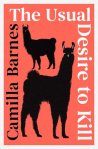
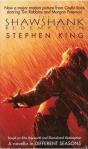
- Ali Baba’s cave is used as a metaphor in The Usual Desire to Kill by Camilla Barnes and Rita Hayworth and Shawshank Redemption by Stephen King.
- A brother- and sister-in-law have an affair in the two Portuguese novels I read on my Portugal holiday, The Migrant Painter of Birds by Lídia Jorge and The Piano Cemetery by José Luís Peixoto.
- A woman describes her discovery of orgasm in The Half Life by Rachel Beanland and The High Mountains of Portugal by Yann Martel.
- ‘There are two kinds of people…’ thinking in The Mighty Red by Louise Erdrich and one story of It Will Come Back to You by Sigrid Nunez.
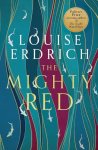
- Money is hidden behind a boiler in The Mighty Red by Louise Erdrich and The Murderer’s Ape by Jakob Wegelius.
- The surname Callaway in The Half Life by Rachel Beanland and Calloway in The Watersmith by Yance Wyatt.
- Louise Erdrich, whose The Mighty Red I was reading at the time, is mentioned in The Madman’s Guide to Stamp Collecting by Robert Irwin.
- A minor character named Genevieve appears in Our Numbered Bones by Katya Balen and The Watersmith by Yance Wyatt.
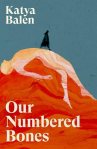
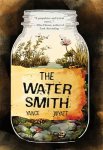
- The Mighty Red by Louise Erdrich is the second novel I’ve read within eight months (after The Wedding People by Alison Espach) in which a reluctant bride is saddled with a groom named Gary.
- A mountain lion sighting in The Mighty Red by Louise Erdrich and Learning from Silence by Pico Iyer.
- A character has a love of Agatha Christie novels in The High Mountains of Portugal by Yann Martel and Buckeye by Patrick Ryan.
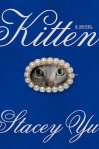
- A character with the nickname Kitten in Nonesuch by Francis Spufford (particularly funny because it’s for a thug) and Kitten by Stacey Yu.
- Reading two queer novels with an academic writing course setting at the same time: Almost Life by Kiran Millwood Hargrave and Kingfisher by Rozie Kelly.
- A remark about the rare beauty of black hair with blue eyes in Kingfisher by Rozie Kelly and My Year in Paris with Gertrude Stein by Deborah Levy.
- An STD is evidence of a husband’s infidelity in The Daffodil Days by Helen Bain and A Beautiful Loan by Mary Costello.
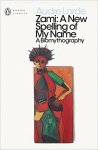
- Bottles being used to hold picnic meals / foraged blackberries (noted because these days it would be plastic pots for everything) in Zami by Audre Lorde (the 1940s) and The Daffodil Days by Helen Bain (the 1960s).
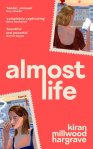 Kismet is a character name in The Mighty Red by Louise Erdrich, so I was primed to notice the word being used in Almost Life by Kiran Millwood Hargrave (it’s a synonym for fate).
- A writer who faces the wall to work in The Daffodil Days by Helen Bain (Ted Hughes, that is) and The Autobiography of Alice B. Toklas by Gertrude Stein (referring to Alice B. Toklas!).
- A painting of an Arctic tern features in The Migrant Painter of Birds by Lídia Jorge (on the cover) and Kingfisher by Rozie Kelly.
- Hot milk is drunk in The Memory of Borrowed Books by Meg Anderson, Kingfisher by Rozie Kelly (with Ovaltine), Nonesuch by Francis Spufford, and Kitten by Stacey Yu.
- William James is mentioned in My Year in Paris with Gertrude Stein by Deborah Levy and Wise by Frank Tallis.
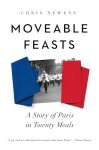 Algerian Muslim men appear in A Beautiful Loan by Mary Costello and Moveable Feasts by Chris Newens.
- A pet cat was found on the shore in The Memory of Borrowed Books by Meg Anderson and Kitten by Stacey Yu.
- Bringing cherries to an invalid in Almost Life by Kiran Millwood Hargrave and Kingfisher by Rozie Kelly.
- Sex with a woman who has a mastectomy scar in Kingfisher by Rozie Kelly and Zami by Audre Lorde.
- A sighting of a kingfisher as auspicious in Kingfisher by Rozie Kelly and Transcription by Ben Lerner.
- The idea that former lovers leave a mark on people in Almost Life by Kiran Millwood Hargrave and Zami by Audre Lorde.
- Pet cat(s) do themselves a mischief by getting into paint supplies in Zami by Audre Lorde and Kitten by Stacey Yu.
- A Sandymount, Dublin setting in A Beautiful Loan by Mary Costello and Hood by Emma Donoghue.
- An Irish family where the mother and one daughter move to the USA and the father and other daughter stay behind in Hood by Emma Donoghue and The Truth about Ruby Cooper by Liz Nugent (both Irish novelists).
- The concept of a “funeral cake” in The Mighty Red by Louise Erdrich and Kingfisher by Rozie Kelly.
- A character regrets wearing eye makeup on an emotional occasion in The Memory of Borrowed Books by Meg Anderson and Kingfisher by Rozie Kelly.
 My second Irish novel of the year that takes place over one week: Hood by Emma Donoghue (after One by One in the Dark by Deirdre Madden).
- A cat of confusing gender: Grace is male in Hood by Emma Donoghue and Bob is always referred to as “it” in My Year in Paris with Gertrude Stein by Deborah Levy.
- The idea that it’s rare for a woman to a) be a good storyteller (in The Torrents of Spring by Ivan Turgenev) or b) tell a punchline with a straight face (in The Correspondent by Virginia Evans – at least the man gets called out on his sexist opinion in this case). I also noticed the use of the word “caprice” in both books (and also in Turgenev’s First Love) because it’s unusual and I like it.
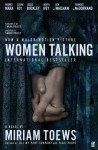
- Another grim, grim one: reading two books at the same time in which a woman is / women are drugged and raped while unconscious (A Hymn to Life by Gisèle Pelicot and Women Talking by Miriam Toews).
- I read two short stories in quick succession about a peasant porter who carries a broom: “A Real Durwan” by Jhumpa Lahiri (from Interpreter of Maladies) followed by “Mumu” by Ivan Turgenev.
- An older woman insists that she still is/has a little girl inside in The Correspondent by Virginia Evans and A Hymn to Life by Gisèle Pelicot.
- The number 7 has magical significance for the author in Ghost Stories by Siri Hustvedt and A Hymn to Life by Gisèle Pelicot.
- A couple meets when they see each other reading the same book in an outdoor location: A Lover’s Discourse by Roland Barthes in Almost Life by Kiran Millwood Hargrave; and The Great Gatsby in Sunset Park by Paul Auster.
- Alison Bechdel’s Dykes to Watch Out For is mentioned in Hood by Emma Donoghue; I was reading a Bechdel book, The Secret of Superhuman Strength, at the same time.
- Gnats are irksome in Sunset Park by Paul Auster and Lost Lambs by Madeline Cash.
What’s the weirdest reading coincidence you’ve had lately?
Spring Reading, Part II: Helen Bain, Stephen King & Ivan Turgenev
When I posted for the first day of spring, I noted that it was already like early summer in the UK. Today it feels like summer is here to stay. After an April with just 18% of normal rainfall, our pond is looking half-empty. It was a surprisingly chilly mid-May, but really hot weather (low 30s C / high 80s F) is moving in just in time for the bank holiday weekend. Myriad insects find a haven in our lush, unmowed garden full of trees, wildflowers and so-called weeds. Benny is closely supervised on his three or four daily walks in this garden jungle. I love to see swifts wheeling through the sky, but I’d happily sacrifice the sun to get some more rain.
My three selections for this batch of seasonal reading are an excellent forthcoming novel about Sylvia Plath, a historical novella that’s become well known through the movie version, and obscure Russian classics about infatuations that end in heartbreak.
The Daffodil Days by Helen Bain
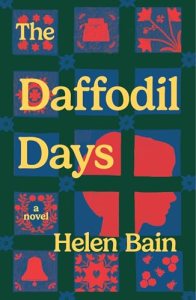 (A quick preview as my full review will be published on Shelf Awareness next month.) A bit of background: Ted Hughes and Sylvia Plath moved from London to Court Green, a thatched house with two and a half acres of land in North Tawton, Devon (southwest England) in August 1961. They had separated and each moved into lodgings in London – her with their two children – by December 1962, with Plath vowing to return to her beloved house and garden in the spring. Instead, she died by suicide in February 1963. This debut novel covers much of the last 18 months of Plath’s life, but in an inventive way: 16 linked short stories – each from the perspective of a different writer friend, family member, or local acquaintance – illuminate Plath’s personality and state of mind through the interactions they have with her. It’s everyone from her midwife to a washing machine salesman. We learn not just about Plath but also the norms of the time, e.g. through young women she meets at a dress shop and in a BBC recording studio. There are also glimpses into her literary milieu through a visit from Al Alvarez and reminiscences from the Kanes and Merwins. The title refers to her garden’s daffodils, so bountiful that she sells them, which strikes her neighbours as a typically American act of crass gumption. The really genius thing about this structure is that the vignettes go backward in time, so we aren’t approaching her inevitable end but anticipating her prime. Bain’s prose reminds me of Tessa Hadley and Andrew Miller. (Edelweiss)
Rita Hayworth and Shawshank Redemption by Stephen King (1982)
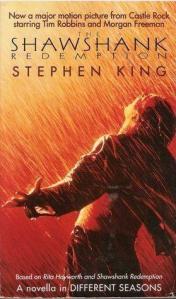 This novella was published in Different Seasons under the heading “Hope Springs Eternal.” You probably know the story better through the 1994 film The Shawshank Redemption.
“They found him guilty, and brother, if Maine had the death penalty, he would have done the airdance before that spring’s crocuses poked their heads out of the dirt.”
Andy Dufresne was wrongfully imprisoned for the murder of his wife and her lover in 1947. While he bides his time until the workings of justice or his own spectacular efforts can get him free, he makes himself useful as the prison librarian and an unofficial financial advisor (he was a banker back in the real world). He fights back against attempted sexual assaults, too. The narrator, Red, can get anyone anything on the black market, and Andy has made two very specific requests over the years: a rock hammer to continue his geology hobby, and a poster of Rita Hayworth to hang in his cell – replaced in turn, as years stretch into nearly three decades, by Marilyn Monroe, Jayne Mansfield, Raquel Welch, and Linda Ronstadt. All along, the hope of there being a life away from this place keeps Andy, and Red, going. Even though I knew what happened thanks to the movie, this was a quick, amusing, and heartening read. I’ll probably go on to read the other three in the omnibus. (Little Free Library) 
The Torrents of Spring (& First Love & “Mumu”) by Ivan Turgenev (1871; 1860; 1854)
[Translated from Russian by Constance Garnett]
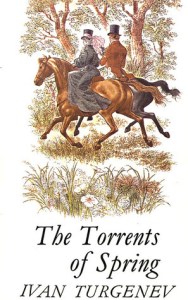 I’ve found Turgenev to be a particularly readable Russian master whose novels are short and accessible enough as to not be daunting (unlike Dostoevsky, Tolstoy and the like, who I’ve never attempted). I had a bit of confusion over this on, not realising my download included the novella First Love and the short story “Mumu” as well, so The Torrents of Spring ended sooner than I expected. It’s said to be highly autobiographical, but I haven’t looked into the links with Turgenev’s life. Twenty-two-year-old landowner Dimitri Sanin is in Frankfurt as part of a world tour. By chance, he rescues young Emil from a swoon and meets his family of Italian confectioners. Captivated by Emil’s sister Gemma’s simple beauty, he fights a duel to defend her honour and gets her to give up her tedious German fiancé for him. His plan is to stay and remotely sell his estate (complete with serfs) to a fellow Russian abroad – the wife of Polozov, a man he happens to know from childhood. But, as in Dangerous Liaisons, Maria Nikolaevna is a seductive schemer who steals his gaze away from Gemma just because she can. This was a gently Hardyesque tragicomedy about what’s fated versus the decisions and weaknesses that change everything. Turgenev explores what happens when money, love and lust don’t align, and leaves us with the aura of inevitable regret.
 The other two stories share that theme of capricious women. In First Love, sixteen-year-old Vladimir Petrovich is one of many suitors vying for the affections of his next-door neighbour, the young princess Zinaïda. He’s so smitten that when she says jump, he basically asks how high (and it ends up being 15 feet down from a wall). There’s an unexpected twist in this one that makes you question the young man’s family dynamic. The message can be summed up by the advice he’s given by another suitor: “The great thing is to lead a normal life, and not be the slave of your passions.” I was interested to note in both novellas that French is spoken as a marker of the upper classes.
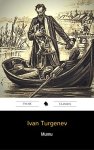 “Mumu” started off promising, but I should know by now that when an animal is a central character in a classic work, it’s not going to go well. Mumu is a spaniel rescued by Gerasim, a giant deaf-mute man who labours on an old woman’s estate. His mistress observes that he’s sweet on Tatiana the laundress and quashes that budding relationship, at which point Mumu enters his life as a sort of replacement. Mumu is utterly devoted to him and suspicious of anyone else – including the mistress, who soon makes it her mission to silence the barking dog. It’s all disappointingly conventional and I wished it could have been otherwise, but I guess Turgenev, like so many other 19th-century authors – Dickens, Flaubert – felt duty-bound to keep women and peasants in their place.
  (Project Gutenberg)
 Bookish Beck = Rebecca Foster. American transplant to England. Freelance proofreader and book reviewer.
