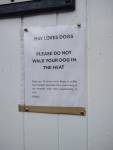
 We got back yesterday evening from our tenth trip to Hay-on-Wye, Wales. Our town-centre Airbnb flat was a little shabby and poky, but I can’t deny it was convenient to be able to drop in for lunch or a cup of tea in between bookshops and other activities. It was definitely looking greener in Wales than in our part of England, though a sign about dog-walking indicated that they’d had the heat waves here, too.
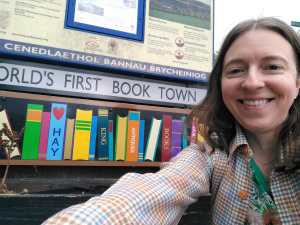
We didn’t begrudge the multiple spells of drizzle over the weekend, even when they coincided with walks to Cusop and The Warren. We’ve been coming to Hay since 2004 and can remember when it was struggle to find a decent evening meal. Good coffee? Forget it. Now one is spoilt for choice for eateries, though we kept costs down a bit by bringing packet curries to cover two nights’ dinners.
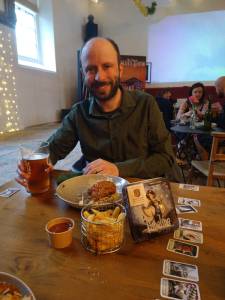 The Globe, an arts venue with café and restaurant, was like our home away from home. We went there on the first evening for a burgers and board games night in partnership with Herefordshire Board Gamers. We played a couple quick hands of card game Timeline (Music and Cinema, then British History) before our food came, then invited another couple to join us for Ticket to Ride Europe, where you have to construct several simultaneous train journeys. The HBG rep acted as a coach, reminding us of the rules – we have a copy but haven’t played it for many years – and advising players about their next move if they asked for help. What a great initiative! He was going to be at the Castle on Saturday afternoon, too.
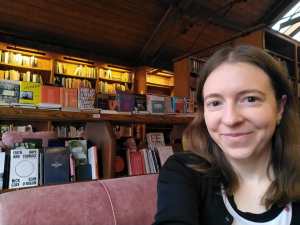
We returned to The Globe on Friday for an hour of its open mic night, which featured a mix of folk and blues acts of various abilities; and again on Saturday morning. We didn’t realize when we booked our stay that we would be in the town for Hay Music Festival. We browsed the programme and plumped for a concert by a wind quintet (flute, oboe, bassoon, French horn and clarinet, with piano accompaniment on some numbers) of young musicians from Sinfonia Cymru. Their repertoire ranged from the familiar (Mozart and sea shanties) to the obscure (Samuel Barber’s “Summer Music” and a Ludwig Thuille piece). I also appreciated the spotlight on two female composers, Mel Bonis and Louise Farrenc. It was a phenomenal performance, and how civilized that the ticket price included coffee and cake from the café.
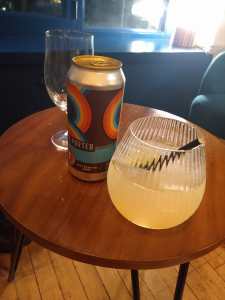
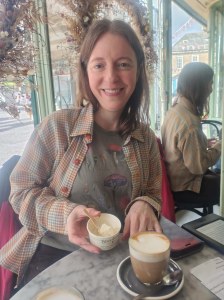
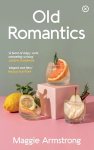 Hay Distillery and Shepherds ice cream parlour got two visits apiece. I was particularly delighted with my “Campfire Mule” concoction of Dr Beaky’s gin (which has a fascinating smoky flavour), maple syrup and ginger beer; and my scoop of gooseberry and elderflower sheep’s milk ice cream. Appropriately, my main reading for the weekend was Maggie Armstrong’s linked short story collection Old Romantics, which has cocktails on the cover.
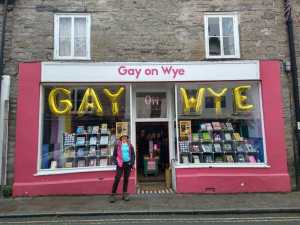
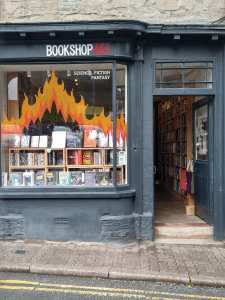
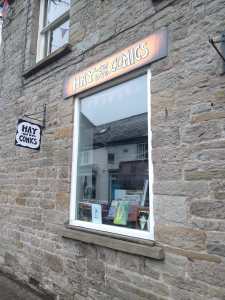
Often, if we haven’t visited in a while, we’ll see that a few bookshops and other independent businesses have closed. So what a pleasant surprise to find that four new shops have opened since our last visit: Christie & Doyle – a classic crime extension to Murder & Mayhem, Hay Comics, Bookshop 451 for science fiction and fantasy, and A Shop Called Alice, which appears to be exclusively Alice in Wonderland- and Lewis Carroll-related books and memorabilia. (And a favourite coffee spot, The Bean Box, that we thought had closed has reopened; perhaps we just missed their seasonal hours last spring.) All in all, there are about 20 places in the town to shop for books, and we browsed most of them.
Here’s my haul of 16 books from 8 shops, which included a few by favourite authors, some that I’ve wanted to get hold of for ages, and others that I’d seen mentioned by fellow bloggers. I was especially pleased to locate The Victorian Chaise-Longue, one of my bibliotherapy prescriptions from way back in 2018, in Addymans’ outdoor Book Passage for £1. A couple of purchases that I’ll try to read right away are Gloria Naylor’s novel-in-stories, The Women of Brewster Place, at Booths (for Short Story September); and a remainder copy of Octavia E. Butler’s Fledgling at Hay Cinema Bookshop (for R.I.P.). A slightly pricier haul for me this time, with a few remainder copies plus rarer secondhand finds, but the total of £46.42 still works out to an average of less than £3/book. Mr F’s different foci – nature writing, collectible Observer books, bird field guides and New Zealand-set novels in advance of his trip there in November–December – meant he supported several additional shops.
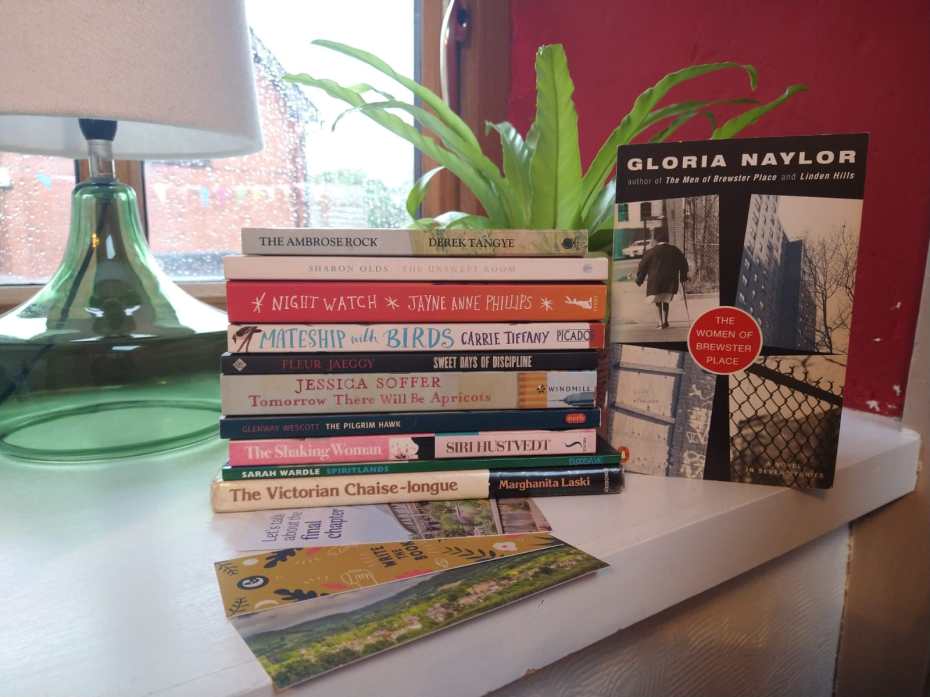
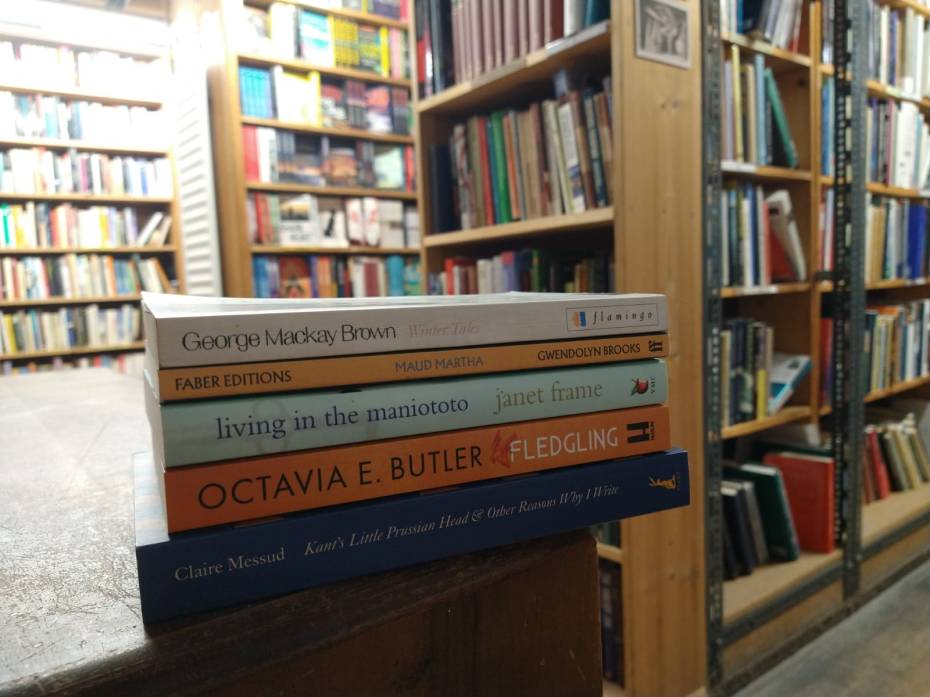
The Naylor was the only book that was on the paper wish list I brought with me, while the Wescott was on my Goodreads “priority to find” shelf. Weirdly, as I browsed I kept coming across copies of Michèle Roberts’ During Mother’s Absence and books by Janette Turner Hospital, an Australian author I hadn’t knowingly encountered before.
We often ask ourselves what Richard Booth, the Book Town founder and self-proclaimed “King of Hay,” would think about the town’s gentrification. He was not a fan of the Festival, for instance, and his stack-’em-high-sell-’em-cheap philosophy (“He once said he would much rather sell a million books for one pound than one book for a million pounds”) – which softened over the years as mentors helped him identify and price antiquarian material appropriately – seems rather at odds with the bougie boutiques and hipster cafes. But it’s by attracting a wider and younger clientele that Hay has retained its independent spirit. So I hope rather than turning in his grave he would be grateful to those who have kept the place alive.
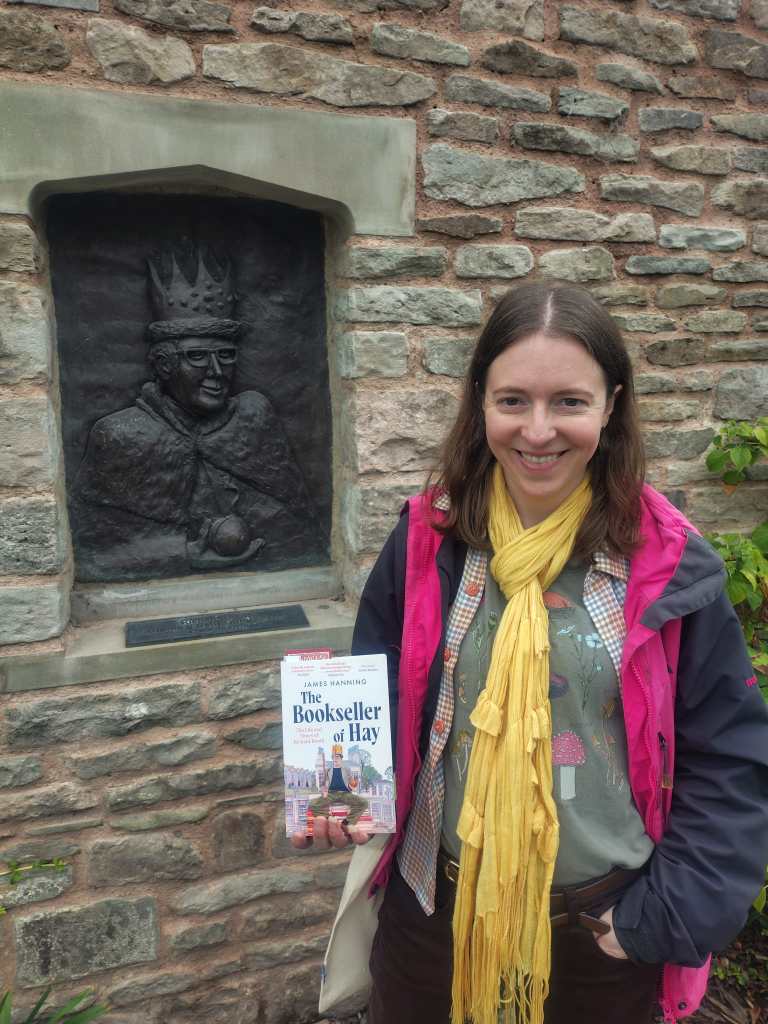
I read nearly the first third of the recent biography of Booth, The Bookseller of Hay, while there. James Hanning makes a good case for Booth being that biographical cliché, the bundle of contradictions: privileged but happy to be one of the common men; passionate about his ventures but sometimes sloppy and misguided; with great capacity for compassion but also thoughtlessness. I didn’t know that in 1964 he was responsible for the death of a passenger due to reckless and probably drunk driving. Hanning believes this haunted him for the rest of his life. It’s intriguing to see the different people he interacted with, e.g. Margaret Drabble visited the town with a boyfriend and was dismissive: “Did he ever read books? The books themselves were just the product. I don’t think Richard was interested in literature.” Hanning depicts Booth as an eccentric who would today be considered on the spectrum. I’ll finish reading this to try to keep the Hay spirit alive a bit longer, and might follow it up with a reread of Sixpence House, Paul Collins’s memoir of living and working in Hay.
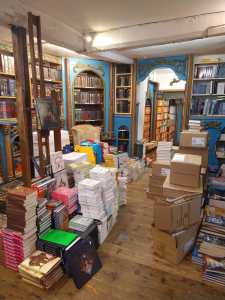
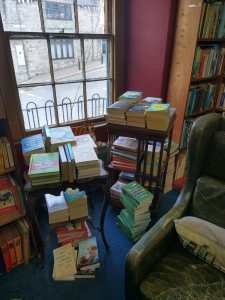
Though we were sad to leave – mostly because we know we’re facing a long, busy term and the inevitable slide into winter – we know we’ll be back, sooner rather than later.
 Bookish Beck = Rebecca Foster. American transplant to England. Freelance proofreader and book reviewer.
 Bookish Beck
Instantly jealous. Thanks for sharing!
LikeLiked by 1 person