Simon and Karen’s classics reading weeks are always a good excuse to pick up an older book or two. The mistake I sometimes make is to have just one option lined up; if I don’t get on with it, I can’t participate. I read the first 20 pages of Yukio Mishima’s Confessions of a Mask, which promised to be a psychologically astute picture of awakening to homosexuality in a repressive culture (“in this house it was tacitly required that I act like a boy. The reluctant masquerade had begun”) but also had the makings of a queer tragedy, which I couldn’t bear just now. Then I found a nearly new copy of The Parent Trap in the Little Free Library a few days ago and spotted that the twins share my birthday! Of course, I could have reviewed it for German Literature Month and Novellas in November, as I did with Kästner’s Emil and the Detectives last year, but instead I treated myself to the delightfully cosy, if far-fetched, story.
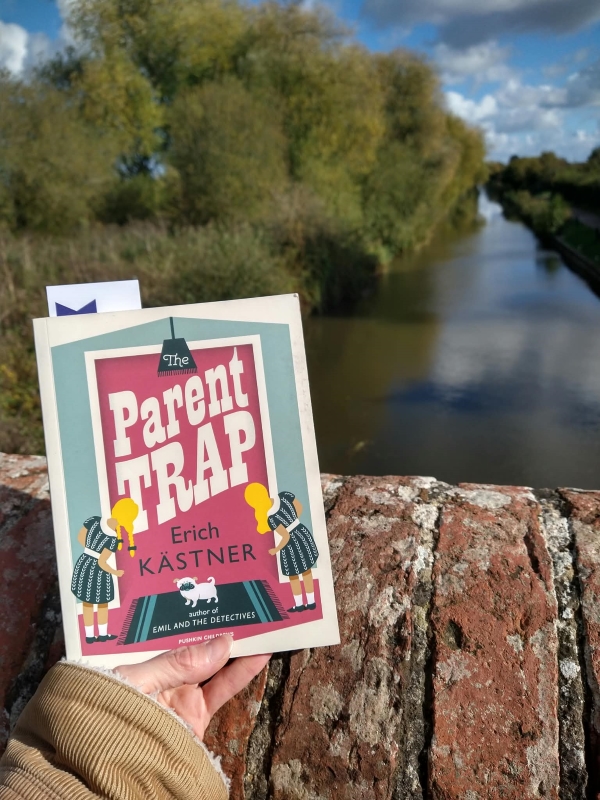
You likely know the story from a film adaptation starring Hayley Mills or Lindsay Lohan. I don’t think I’ve seen either, though they are culturally familiar to me. In Kästner’s original, separated twins are rejoined by chance at a summer camp in Austria. Luise Palfy has come here from Vienna, where she lives with her single father, a music director. One day an additional group of 20 little girls arrives from Germany, including Lottie Körner, who resides in Munich with her single mother, a journalist. It’s immediately evident that the two nine-year-olds are identical twins – same birthdate and -place – but with different hairstyles and their own personalities. They decide to switch places, partly as a trick to teach their parents a lesson, but partly to regain a long-lost and much-missed mother / father.
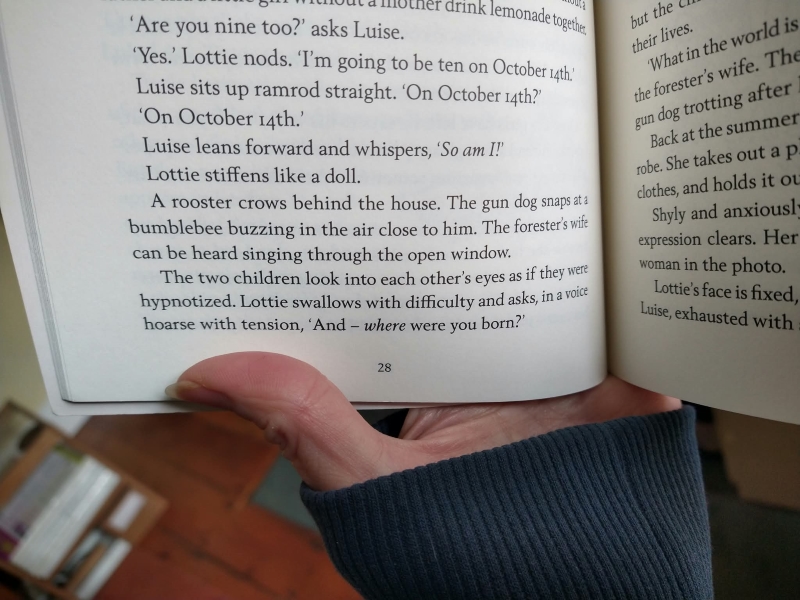
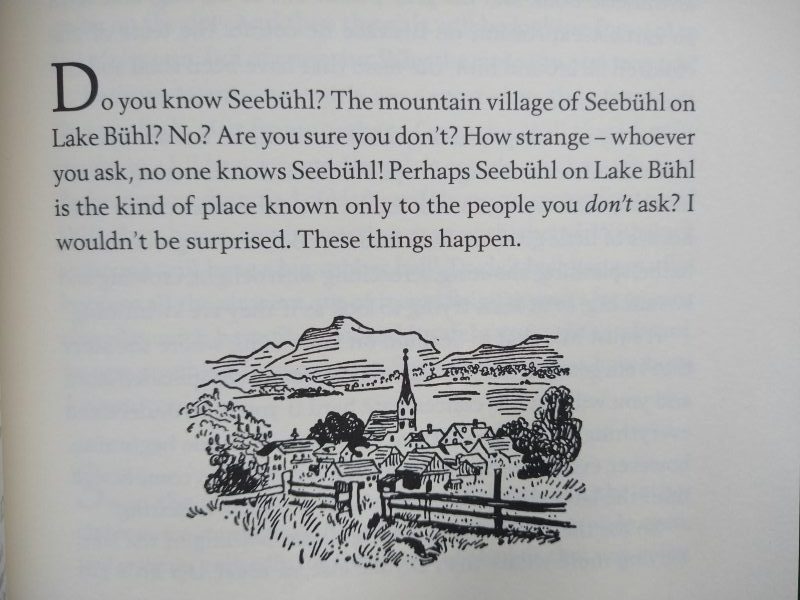
The girls have to be quick studies to cover up that ‘Lottie’ has ‘forgotten’ how to cook and that ‘Luise’ has suffered a horrendous decline in her handwriting and schoolwork. But there’s no fooling some, such as the doctor’s pug, Peperl, who is suspicious of a blonde stranger pretending to be an old friend. The girls are canny and stubborn, envisioning a new future and then doing whatever it takes to achieve it, but the emotional strain starts to show. I found myself upset with the parents’ Solomonic decision to split up their twins at their divorce. It’s just cruel; who would do such a thing?! In a sense, the whole premise of the novel is as hard to believe as the fantasy ending (“Catching up with lost happiness as if it were a missed lesson at school”), yet I gave myself over to it. Kästner’s tone is just right, shrewd and playful, and Walter Trier’s illustrations are charming. I recommend reading something middle grade every once in a while as an antidote to the awfulness of adulting and the occasionally depressing nature of modern literature. [Translated from German by Anthea Bell] (Little Free Library) 
(The whole Pushkin Children’s classics range is brilliant – see also From the Mixed-Up Files of Mrs. Basil E. Frankweiler by E.L. Konigsberg and The Murderer’s Ape by Jakob Wegelius.)
Here are other famous 1949 titles that I’ve read (just 3 of the top 20 on the Goodreads list of the most popular books published that year):
- The Hero with a Thousand Faces by Joseph Campbell
- A Sand County Almanac by Aldo Leopold
- 1984 by George Orwell
I’ve previously participated in the 1920 Club, 1956 Club, 1936 Club, 1976 Club, 1954 Club, 1929 Club, 1940 Club, 1937 Club, 1970 Club, 1952 Club, 1925 Club, and 1961 Club.
 Bookish Beck = Rebecca Foster. American transplant to England. Freelance proofreader and book reviewer.

I read this one for 1949 too and enjoyed it thoroughly–much less dramatic than the film versions (I think I’ve only seen the Lindsay Lohan and a 60s version in Hindi), and quite sweet! Emil was a book I very much enjoyed as a child and again more recently as a grown up–now for the Three Twins.
LikeLike