The Ones that Got Away: 2021’s DNFs, Most Anticipated Reads & More
I’ve not been great about keeping track of my abandoned books this year, nor have I been consistent about writing justifications. I’m particularly wary about casting aspersions on books that I know others have loved (such as the latest novels by Jonathan Franzen, Lauren Groff and Elizabeth Strout). I don’t like to belabour the matter, but every time I list my DNFs I do find that the posts are absurdly popular, so if this is the permission you need to drop that book you’ve been struggling with for months, take it! If for any reason a book isn’t connecting with you, move onto something else; you can always try it again another time.
For most I’ve given the usual (horribly reductive and unfair) two-word summaries, with longer reactions then given to the DNFs that were on my “most anticipated” list. In rough chronological order:
The Dickens Boy by Thomas Keneally: Too dull.
A Fire in My Head: Poems for the Dawn by Ben Okri: Too unsubtle.
Nobody Told Me: Poetry and Parenthood by Hollie McNish: Too long.
A Burning by Megha Majumdar: Too amateurish.
A Crooked Tree by Una Mannion: Too 1980s.
The Lamplighters by Emma Stonex: Too suspense-less.
The Art of Falling by Danielle McLaughlin: Too slow.
Escape Routes by Naomi Ishiguro: Too undistinctive.
You Exist Too Much by Zaina Arafat: Too Creative-Writing-MA-alum.
The Last Migration by Charlotte McConaghy: Too overwrought.
Of Women and Salt by Gabriela Garcia: Too dispersed.
Bewilderness by Karen Tucker: Too Marlena-wannabe.
Drowning Ruth by Christina Schwarz: Too early-2000s-Oprah’s-book-club.
Will This House Last Forever? by Xanthi Barker: Too Featherhood-lite.
The Union of Synchronised Swimmers by Cristina Sandu: Too vague.
The Cape Doctor by E. J. Levy: Too plodding.
Fathoms by Rebecca Giggs: Too dense.
Crossroads by Jonathan Franzen: Too wordy.
Fox and I: An Uncommon Friendship by Catherine Raven: Too lyrical.
Oh William! by Elizabeth Strout: Too scatter-brained.
Dark Tourist: Essays by Hasanthika Sirisena: Too unfocused.
Darwin’s Dragons by Lindsay Galvin: Too non-Darwin.
Something Out of Place: Women and Disgust by Eimear McBride: Too researched.
The Art of Reassembly by Peg Conway: Too homespun.
Coming Clean: A true story of love, addiction and recovery by Liz Fraser: Too soon.
Beautiful Country: A Memoir by Qian Julie Wang: Too child-POV.
Deadheading and Other Stories by Beth Gilstrap: Too drifting-to-nowhere.
Malibu Rising by Taylor Jenkins Reid: Too soapy.
Philomath: Poems by Devon Walker-Figueroa: Too weird.
Taste: My Life through Food by Stanley Tucci: Too celebrity-rather-than-author.
Somewhere between 30 and 40 DNFs is not too bad for me, representing around 10% of the books I started this year, rather than my standard 15%.
In January, I highlighted the 20 releases that I was most looking forward to reading in 2021. Here’s how I did:
Read and loved: 7 (4 will be on my Best-of lists for the year)
Read and found disappointing (i.e., rated 3.5 stars or below): 4
Still have a review copy to read: 1
Haven’t managed to find yet: 3
DNFs: 5 (oh so poor! – is my “most anticipated” designation actually a kiss of death?)
These were:
Libertie by Kaitlyn Greenidge – I was a big fan of Greenidge’s debut novel, We Love You, Charlie Freeman, but this Reconstruction-era story of an African American doctor and her daughter/protégée bored me stiff. After two attempts I could barely get past page 30.
Matrix by Lauren Groff – It’s as if Groff set herself the challenge of applying the most modern style possible (present tense, no speech marks, pared-back prose, sexual frankness) to a medieval setting. The result is readable, which is more than I can say for most of what’s set in that time period, but I waited 75 pages for something to happen. All we’d had thus far was people commenting on how unsuitable ungainly six-foot Marie is to be an abbess and lots of detail about the privations of life at that time unless you have money as a cushion.
Hot Stew by Fiona Mozley – I read the first 110 pages and felt a bit puzzled by Mozley’s change in direction: This is the sort of state-of-the-nation (via London) novel that male authors were writing a decade ago, in the Dickensian mode of broad characterization and coincidental connection. The omniscient, present-tense narration does too much skating over the surface and not enough digging into characters’ individuality and motivation.
An Ordinary Wonder by Buki Papillon – I read 25 pages or so. Adebayo/Adichie vibes but not the writing chops or the interesting story. Too bad, as I was interested in another intersex narrative to compare with Middlesex et al.
Great Circle by Maggie Shipstead – I tried this twice and found it bloated and slow; such a disappointment. Perhaps I’ll find the right moment in the future. In the meantime, I look forward to reading Shipstead’s first short story collection next year instead. Here’s hoping that her short-form storytelling will work out better for me!
Not a great showing, then, but I can’t seem to resist getting my hopes up each year. (My Most Anticipated Books of 2022 post will be coming up early in January!)
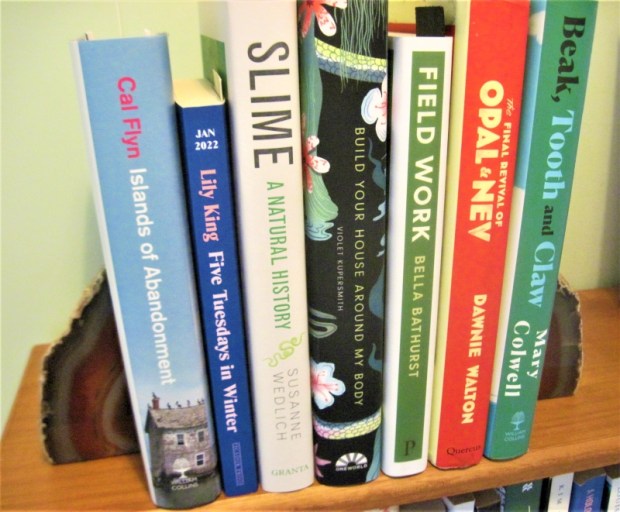
I regret running out of time in 2021 to finish The Final Revival of Opal and Nev by Dawnie Walton or read my review copy of Build Your House Around My Body by Violet Kupersmith. The other 2021 releases I’m most keen to get hold of are Radiant Fugitives by Nawaaz Ahmed, The Secret to Superhuman Strength by Alison Bechdel, Seeing Ghosts by Kat Chow, The War for Gloria by Atticus Lish, What Doesn’t Kill You by Tessa Miller, On Freedom by Maggie Nelson, Names of the Women by Jeet Thayil and O Beautiful by Jung Yun.
What are some of the ‘ones that got away’ from you this year?
December Reading Plans
Blogging, and especially hosting Novellas in November – which was a roaring success, for which I am grateful! – has felt like a full-time job at points over the past month.
It was a record-breaking month in terms of my reading total, and I also wrote 24 blog posts. What with all the novellas, a focus on nonfiction review books, and a few rereads, I was able to contribute to several challenges in addition to #NovNov, such as Nonfiction November, German Literature Month, and Margaret Atwood Reading Month.
November was extra stressful for me because of trying to buy a house, starting my McKitterick Prize judging, and my mother being in and out of hospital since September. I know I’m not the only one feeling burnt out after a busy month. I now need to focus on paid work so I can take my upcoming two weeks in the USA off.
So, for December’s reading, the plan is mostly to finish a good number of 2021 releases and review copies currently on the go. Here’s my planned set:
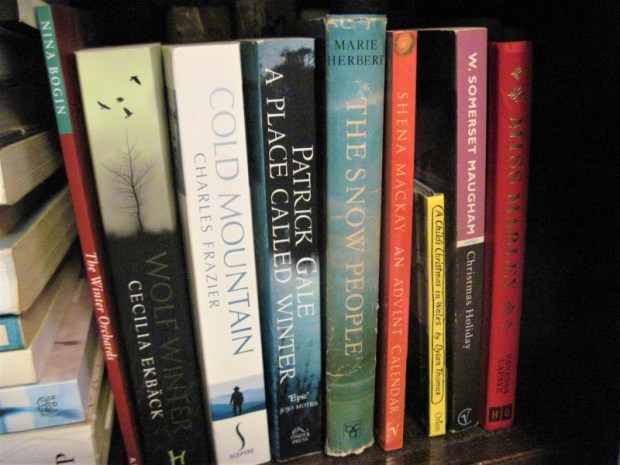
I will also likely slip in a few novella-length Christmas or winter books; my first is An Advent Calendar by Shena Mackay.
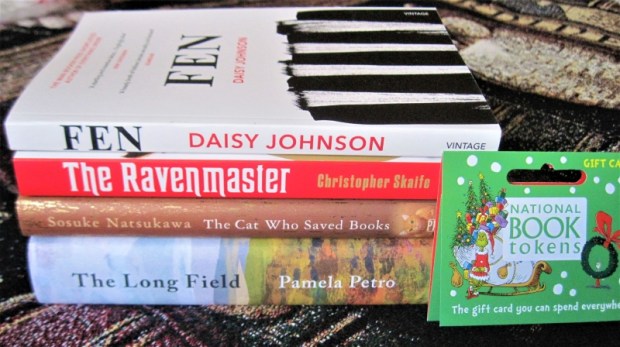
Meanwhile, the books keep coming in. This was my belated birthday and early Christmas haul from a holiday get-together with family over here:
I actually contemplated taking a complete break from blogging in December, but I still have a number of review copies I owe feedback on, as well as other ideas for themed posts that I want to fit in. Plus drawing up the Best-of lists and statistics is my favourite task of the blogging year, so I wouldn’t want to miss out on the fun. But I will definitely be scaling back this month, especially during our time in the States.
In other news, today it’s off to London for my first time since December 2019 (and only my second time on a train since then). We will have a nice chilly walk along the river from Richmond to Ham House and then grab a meal at a vegan diner before at last getting to go to our several-times-delayed Bell X1 gig at Union Chapel.
Lots of other good stuff coming up in the next week and a half, too, including a few Christmas concerts, a book club get-together, and the Barbellion Prize longlist, which is due out on the 13th.
Happy December reading!
Love Your Library, November 2021
It’s the second month of the new Love Your Library feature.

I’d like to start out by thanking all those who have taken part since last month’s post:
Adrian shared lovely stories about the libraries he’s used in Ireland, from childhood onwards.
Laila, Lori and Margaret highlighted their recent loans and reads.
Laura sent a photo of her shiny new library copy of Sally Rooney’s latest novel.

Finally, Marcie contributed this TikTok video of her library stacks!
As for my recent library experiences…
A stand-out read:
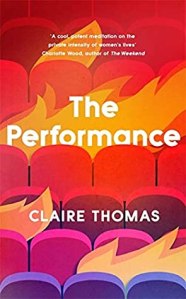 The Performance by Claire Thomas: What a terrific setup: three women are in a Melbourne theatre watching a performance of Samuel Beckett’s Happy Days. Margot is a veteran professor whose husband is developing dementia. Ivy is a new mother whose wealth hardly makes up for the devastating losses of her earlier life. Summer is a mixed-race usher concerned about her girlfriend during the fires rampaging outside the city. In rotating close third person sections, Thomas takes us into these characters’ inner worlds, contrasting their personal worries with wider issues of women’s and indigenous people’s rights and the environmental crisis, as well as with the increasingly claustrophobic scene on stage. In “The Interval,” written as a script, the main characters interact with each other, with the “forced intimacy between strangers” creating opportunities for chance meetings and fateful decisions.
Doorstoppers: A problem
Aware that I’m heading to the States for Christmas on the 14th of December (only a couple of weeks from now!), I’ve started culling my library stacks, returning any books that I’m not super-keen to read before the end of the year. A few I’ll borrow another time, but most I decided weren’t actually for me, even if raved about elsewhere.
I mentioned in a post last week that I’ve had a hard time finding the concentration for doorstoppers lately, which is ironic giving how many high-profile ones there have been this year – or even just this autumn. (For example, seven of BookPage’s top 20 fiction releases of 2021 are over 450 pages.) I gave up twice on Great Circle by Maggie Shipstead, swiftly abandoned Cloud Cuckoo Land by Anthony Doerr (a silly bookish attempt at something like Cloud Atlas), didn’t have time to attempt Tenderness by Alison Macleod and The Magician by Colm Tóibín, and recently returned The Morning Star by Karl Ove Knausgaard unread.
Why so many chunky reads this year, and this season in particular? I’ve wondered if it has had something to do with the lockdown mentality – for authors or readers, or both. It can be awfully cozy, especially as winter advances (in this hemisphere), to sink into a big book. But I find that I’m always looking for an excuse to not engage with a doorstopper.
 I generally enjoy the scope, detail and moral commentary of Jonathan Franzen’s novels; his previous two, Freedom and Purity, which also numbered 500+ pages, were fantastic. But Crossroads wasn’t happening for me, at least not right now. I only got to page 23 on this attempt. The Chicago setting was promising, and I’m there for the doubt and hypocrisy of church-bound characters. But with text this dense, it feels like it takes SO MANY WORDS to convey just one scene or conversation. I was finding the prose a little obnoxious, too, e.g.
Of Santa the Hildebrandts had always said, Bah, humbug. And yet somehow, long past the age of understanding that presents don’t just buy and wrap themselves, he’d accepted their sudden annual appearance as, if not a miraculous provision, then a phenomenon like his bladder filling with urine, part of the normal course of things. How had he not grasped at nine a truth so obvious to him at ten? The epistemological disjunction was absolute.
Problems here: How many extra words do you need to say “He stopped believing in Santa at age 10”? When is the phrase “epistemological disjunction” ever anything other than showing off? And why did micturition present itself as an apt metaphor?
But anyway, I’ve hardly given this a fair shake yet. I daresay I’ll read it another time; it’ll be my eighth book by Franzen.
Do share a link to your own post in the comments, and feel free to use the above image. I’ve co-opted a hashtag that is already popular on Twitter and Instagram: #LoveYourLibrary.
Here’s a reminder of my ideas of what you might choose to post (this list will stay up on the project page):
- Photos or a list of your latest library book haul
- An account of a visit to a new-to-you library
- Full-length or mini reviews of some recent library reads
- A description of a particular feature of your local library
- A screenshot of the state of play of your online account
- An opinion piece about library policies (e.g. Covid procedures or fines amnesties)
- A write-up of a library event you attended, such as an author reading or book club.
If it’s related to libraries, I want to hear about it!
Book Serendipity, September to October 2021
I call it Book Serendipity when two or more books that I read at the same time or in quick succession have something pretty bizarre in common. Because I have so many books on the go at once (usually 20–30), I suppose I’m more prone to such incidents. I’ve realized that, of course, synchronicity is really the more apt word, but this branding has stuck. This used to be a quarterly feature, but to keep the lists from getting too unwieldy I’ve shifted to bimonthly.
The following are in roughly chronological order.
- Young people studying An Inspector Calls in Somebody Loves You by Mona Arshi and Heartstoppers, Volume 4 by Alice Oseman.
- China Room (Sunjeev Sahota) was immediately followed by The China Factory (Mary Costello).


- A mention of acorn production being connected to the weather earlier in the year in Light Rains Sometimes Fall by Lev Parikian and Noah’s Compass by Anne Tyler.
- The experience of being lost and disoriented in Amsterdam features in Flesh & Blood by N. West Moss and Yearbook by Seth Rogen.
- Reading a book about ravens (A Shadow Above by Joe Shute) and one by a Raven (Fox & I by Catherine Raven) at the same time.


- Speaking of ravens, they’re also mentioned in The Elements by Kat Lister, and the Edgar Allan Poe poem “The Raven” was referred to and/or quoted in both of those books plus 100 Poets by John Carey.
- A trip to Mexico as a way to come to terms with the death of a loved one in This Party’s Dead by Erica Buist (read back in February–March) and The Elements by Kat Lister.
- Reading from two Carcanet Press releases that are Covid-19 diaries and have plague masks on the cover at the same time: Year of Plagues by Fred D’Aguiar and 100 Days by Gabriel Josipovici. (Reviews of both coming up soon.)


- Descriptions of whaling and whale processing and a summary of the Jonah and the Whale story in Fathoms by Rebecca Giggs and The Woodcock by Richard Smyth.
 An Irish short story featuring an elderly mother with dementia AND a particular mention of her slippers in The China Factory by Mary Costello and Blank Pages and Other Stories by Bernard MacLaverty.
- After having read two whole nature memoirs set in England’s New Forest (Goshawk Summer by James Aldred and The Circling Sky by Neil Ansell), I encountered it again in one chapter of A Shadow Above by Joe Shute.
- Cranford is mentioned in Corduroy by Adrian Bell and Cut Out by Michèle Roberts.
- Kenneth Grahame’s life story and The Wind in the Willows are discussed in On Gallows Down by Nicola Chester and The Elements by Kat Lister.


- Reading two books by a Jenn at the same time: Ghosted by Jenn Ashworth and The Other Mothers by Jenn Berney.
- A metaphor of nature giving a V sign (that’s equivalent to the middle finger for you American readers) in On Gallows Down by Nicola Chester and Light Rains Sometimes Fall by Lev Parikian.
- Quince preserves are mentioned in The Book of Difficult Fruit by Kate Lebo and Light Rains Sometimes Fall by Lev Parikian.
- There’s a gooseberry pie in Talking to the Dead by Helen Dunmore and The Book of Difficult Fruit by Kate Lebo.


- The ominous taste of herbicide in the throat post-spraying shows up in On Gallows Down by Nicola Chester and Damnation Spring by Ash Davidson.
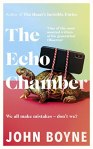
- People’s rude questioning about gay dads and surrogacy turns up in The Echo Chamber by John Boyne and the DAD anthology from Music.Football.Fatherhood.
- A young woman dresses in unattractive secondhand clothes in The Echo Chamber by John Boyne and Beautiful World, Where Are You by Sally Rooney.

- A mention of the bounty placed on crop-eating birds in medieval England in Orchard by Benedict Macdonald and Nicholas Gates and A Shadow Above by Joe Shute.
- Hedgerows being decimated, and an account of how mistletoe is spread, in On Gallows Down by Nicola Chester and Orchard by Benedict Macdonald and Nicholas Gates.
 Ukrainian secondary characters in Ghosted by Jenn Ashworth and The Echo Chamber by John Boyne; minor characters named Aidan in the Boyne and Beautiful World, Where Are You by Sally Rooney.
- Listening to a dual-language presentation and observing that the people who know the original language laugh before the rest of the audience in The Book of Difficult Fruit by Kate Lebo and Beautiful World, Where Are You by Sally Rooney.
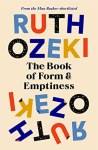
- A character imagines his heart being taken out of his chest in Tender Is the Flesh by Agustina Bazterrica and The Book of Form and Emptiness by Ruth Ozeki.

- A younger sister named Nina in Talking to the Dead by Helen Dunmore and Sex Cult Nun by Faith Jones.
- Adulatory words about George H.W. Bush in The Echo Chamber by John Boyne and Thinking Again by Jan Morris.
- Reading three novels by Australian women at the same time (and it’s rare for me to read even one – availability in the UK can be an issue): Sorrow and Bliss by Meg Mason, The Performance by Claire Thomas, and The Weekend by Charlotte Wood.


- There’s a couple who met as family friends as teenagers and are still (on again, off again) together in Sorrow and Bliss by Meg Mason and Beautiful World, Where Are You by Sally Rooney.
- The Performance by Claire Thomas is set during a performance of the Samuel Beckett play Happy Days, which is mentioned in 100 Days by Gabriel Josipovici.
 Human ashes are dumped and a funerary urn refilled with dirt in Tender Is the Flesh by Agustina Bazterrica and Public Library and Other Stories by Ali Smith.
- Nicholas Royle (whose White Spines I was also reading at the time) turns up on a Zoom session in 100 Days by Gabriel Josipovici.
- Richard Brautigan is mentioned in both The Mystery of Henri Pick by David Foenkinos and White Spines by Nicholas Royle.


- The Wizard of Oz and The Railway Children are part of the plot in The Book Smugglers (Pages & Co., #4) by Anna James and mentioned in Public Library and Other Stories by Ali Smith.
What’s the weirdest reading coincidence you’ve had lately?
Love Your Library Begins: October 2021
It’s the opening month of my new Love Your Library meme! I hope some of you will join me in writing about the libraries you use and what you’ve borrowed from them recently. I plan to treat these monthly posts as a sort of miscellany.
Although I likely won’t do thorough Library Checkout rundowns anymore, I’ll show photos of what I’ve borrowed, give links to reviews of a few recent reads, and then feature something random, such as a reading theme or library policy or display.
Do share a link to your own post in the comments, and feel free to use the above image. I’m co-opting a hashtag that is already popular on Twitter and Instagram: #LoveYourLibrary.
Here’s a reminder of my ideas of what you might choose to post (this list will stay up on the project page):
- Photos or a list of your latest library book haul
- An account of a visit to a new-to-you library
- Full-length or mini reviews of some recent library reads
- A description of a particular feature of your local library
- A screenshot of the state of play of your online account
- An opinion piece about library policies (e.g. Covid procedures or fines amnesties)
- A write-up of a library event you attended, such as an author reading or book club.
If it’s related to libraries, I want to hear about it!
Recently borrowed


Stand-out reads
The Echo Chamber by John Boyne
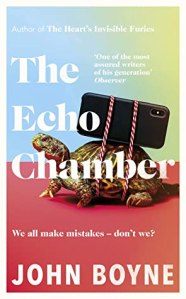 John Boyne is such a literary chameleon. He’s been John Irving (The Heart’s Invisible Furies), Patricia Highsmith (A Ladder to the Sky) and David Mitchell (A Traveller at the Gates of Wisdom). Now, with this Internet-age state-of-the-nation satire featuring variously abhorrent characters, he’s channelling the likes of Jamie Attenberg, Jonathan Coe, Patricia Lockwood, Lionel Shriver and Emma Straub. Every member of the Cleverley family is a morally compromised fake. Boyne gives his characters amusing tics, and there are also some tremendously funny set pieces, such as Nelson’s speed dating escapade and George’s public outbursts. He links several storylines through the Ukrainian dancer Pylyp, who’s slept with almost every character in the book and has Beverley petsit for his tortoise.
What is Boyne spoofing here? Mostly smartphone addiction, but also cancel culture. I imagined George as Hugh Bonneville throughout; indeed, the novel would lend itself very well to screen adaptation. And I loved how Beverley’s new ghostwriter, never given any name beyond “the ghost,” feels like the most real and perceptive character of all. Surely one of the funniest books I will read this year. (Full review).
Beautiful World, Where Are You by Sally Rooney
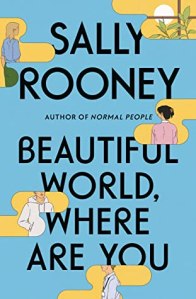 I was one of those rare readers who didn’t think so much of Normal People, so to me this felt like a return to form. Conversations with Friends was a surprise hit with me back in 2017 when I read it as part of the Sunday Times Young Writer of the Year Award shadow panel the year she won. The themes here are much the same: friendship, nostalgia, sex, communication and the search for meaning. BWWAY is that little bit more existential: through the long-form e-mail correspondence between two friends from college, novelist Alice and literary magazine editor Eileen, we imbibe a lot of philosophizing about history, aesthetics and culture, and musings on the purpose of an individual life against the backdrop of the potential extinction of the species.
Through their relationships with Felix (a rough-around-the-edges warehouse worker) and Simon (slightly older and involved in politics), Rooney explores the question of whether lasting bonds can be formed despite perceived differences of class and intelligence. The background of Alice’s nervous breakdown and Simon’s Catholicism also bring in sensitive treatments of mental illness and faith. (Full review).
This month’s feature
I spotted a few of these during my volunteer shelving and then sought out a couple more. All five are picture books composed by authors not known for their writing for children.
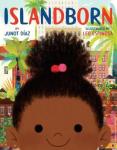 Islandborn by Junot Díaz (illus. Leo Espinosa): “Every kid in Lola’s school was from somewhere else.” When the teacher asks them all to draw a picture of the country they came from, plucky Lola doesn’t know how to depict the Island. Since she left as a baby, she has to interview relatives and neighbours for their lasting impressions. For one man it’s mangoes so sweet they make you cry; for her grandmother it’s dolphins near the beach. She gathers the memories into a vibrant booklet. The 2D cut-paper style reminded me of Ezra Jack Keats.
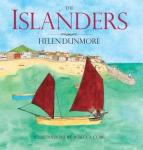 The Islanders by Helen Dunmore (illus. Rebecca Cobb): Robbie and his family are back in Cornwall to visit Tamsin and her family. These two are the best of friends and explore along the beach together, creating their own little island by digging a channel and making a dam. As the week’s holiday comes toward an end, a magical night-time journey makes them wonder if their wish to make their island life their real life forever could come true. The brightly coloured paint and crayon illustrations are a little bit Charlie and Lola and very cute.
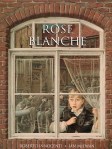 Rose Blanche by Ian McEwan (illus. Roberto Innocenti): Patriotism is assumed for the title character and her mother as they cheer German soldiers heading off to war. There’s dramatic irony in Rose being our innocent witness to deprivations and abductions. One day she follows a truck out of town and past barriers and fences and stumbles onto a concentration camp. Seeing hungry children’s suffering, she starts bringing them food. Unfortunately, this gets pretty mawkish and, while I liked some of the tableau scenes – reminiscent of Brueghel or Stanley Spencer – the faces are awful. (Based on a story by Christophe Gallaz.)
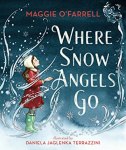 Where Snow Angels Go by Maggie O’Farrell (illus. Daniela Jaglenka Terrazzini): The snow angel Sylvie made last winter comes back to her to serve as her guardian angel, saving her from illness and accident risks. If you’re familiar with O’Farrell’s memoir I Am, I Am, I Am, this presents a similar catalogue of near-misses. For a picture book, it has a lot of words – several paragraphs’ worth on most of its 70 pages – so I imagine it’s more suitable for ages seven and up. I loved the fairy tale atmosphere, touches of humour, and drawing style.
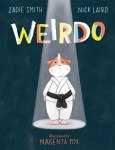 Weirdo by Zadie Smith and Nick Laird (illus. Magenta Fox): Kit’s birthday present is Maud, a guinea pig in a judo uniform. None of the other household pets – Derrick the cockatoo, Dora the cat, and Bob the pug – know what to make of her. Like in The Secret Life of Pets, the pets take over, interacting while everyone’s out at school and work. At first Maud tries making herself like the others, but after she spends an afternoon with an eccentric neighbour she realizes all she needs to be is herself. It’s not the first time married couple Smith and Laird have published an in-joke (their 2018 releases – an essay collection and a book of poems, respectively – are both entitled Feel Free): Kit is their daughter’s name and Maud is their pug’s. But this was cute enough to let them off.
Planning My Reading Stacks for Novellas in November 2021
Not much more than a week until Novellas in November (#NovNov) begins! I gathered up all of my potential reads for a photo shoot. Review copies are stood upright and library loans are toggled in a separate pile on top; all the rest are from my shelves.
Week One: Contemporary Fiction

Week Two: Short Nonfiction

Week Three: Novellas in Translation
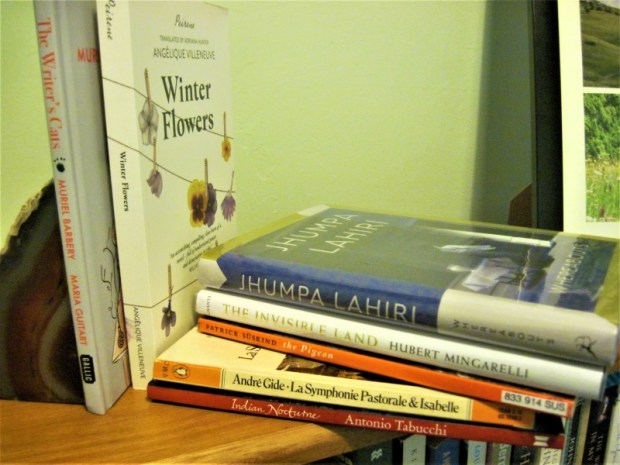
A rather pathetic little pile there, but I also have a copy of that week’s buddy read, Territory of Light by Yuko Tsushima, on the way. (The Pigeon by Patrick Süskind would be my token contribution to German Literature Month.)
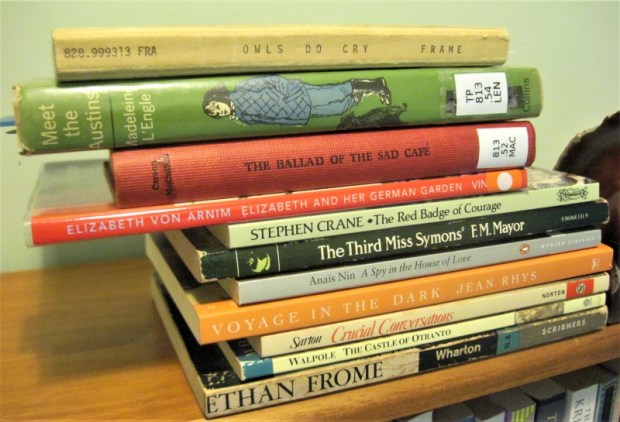
Week Four: Short Classics
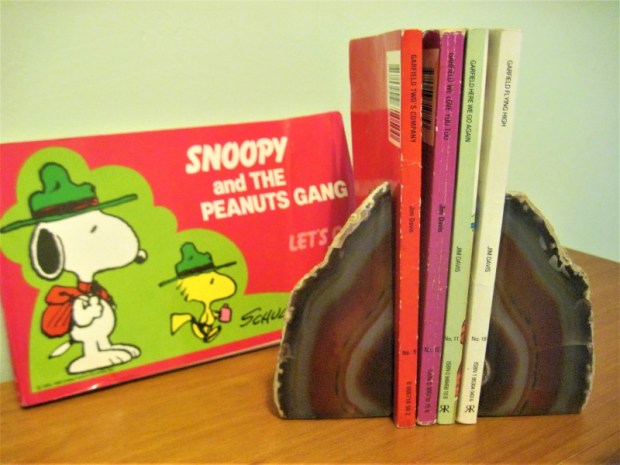
Last but not least, some comics collections that don’t seem to fit in one of the other categories. Of course, some books fit into two or more categories, and contemporary vs. classic feels like a fluid division – I haven’t checked rigorously for our suggested 1980 cut-off date, so some older stuff might have made it into different piles.
 Also available on my Kindle: The Therapist by Nial Giacomelli, Record of a Night too Brief by Hiromi Kawakami, Childhood: Two Novellas by Gerard Reve, and Milton in Purgatory by Edward Vass. As an additional review copy on my Nook, I have Frida Kahlo and My Left Leg by Emily Rapp Black, which is 140-some pages.
 Plus … I recently placed an order for some new and secondhand books with my birthday money (and then some), and it should arrive before the end of the month. On the way and of novella length are Who Was Changed and Who Was Dead by Barbara Comyns, Bear by Marian Engel, The Cost of Living by Deborah Levy, and In the Company of Men by Véronique Tadjo.
I also recently requested review copies of Small Things Like These by Claire Keegan (128 pages; coming out from Faber today) and The Fell by Sarah Moss (160 pages; coming out from Picador on November 11th), so hope to have those in hand soon.
Remember that this year we have chosen a buddy read for each week. I’m again looking after short nonfiction in the second week of the month and short classics in the final week. We plan to post our reviews on the Thursday or Friday of the week in question. Feel free to publish yours at any time in the month and we’ll round up the links on our review posts.
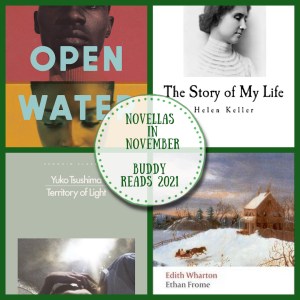

Superman Simon is thinking of reading a novella a day in November! Taken together, I’d have enough novellas here for TWO per day. But my record thus far (in 2018) is 26; since then, I’ve managed 16 per year.
I have no specific number in mind this time. Considering I also plan to read one or two books for Margaret Atwood Reading Month (and perhaps one for AusReading Month) and have a blog tour date, as well as other review books to catch up on and in-demand library books to keep on top of, I can’t devote my full attention to novellas.
If I can read all the review copies, mop up the 4–5 set-aside titles on the pile (the ones with bookmarks in), maybe manage two rereads (the Wharton plus Conundrum), make a dent in my owned copies, and get to one or more from the library, I’ll be happy.
Karen, Kate and Margaret have already come up with their lists of possible titles. Cathy’s has gone up today, too.
Do you have any novellas in mind to read next month?
Coming Soon … A New “Love Your Library” Meme
I know that lots of my readers are dedicated library users. Some of you even work or volunteer in a library, too. Whether or not you blog about books yourself, you’re welcome to join in this simple meme designed to celebrate libraries. Use ’em or lose ’em, after all.
This challenge is entirely open-ended, but here are some things you might consider posting on your blog or to social media:
- Photos or a list of your latest library book haul
- An account of a visit to a new-to-you library
- Full-length or mini reviews of some recent library reads
- A description of a particular feature of your local library
- A screenshot of the state of play of your online account
- An opinion piece about library policies (e.g. Covid procedures or fines amnesties)
- A write-up of a library event you attended, such as an author reading or book club.
(Image by StockSnap from Pixabay)
If it’s related to libraries, I want to hear about it. I’ll post on the last Monday of each month (unless a holiday interferes), but feel free to post whenever you wish. Do share a link to your own post in the comments of my latest one, and use the above image, too. I’m co-opting a hashtag that is already popular on Twitter and Instagram: #LoveYourLibrary.
Get thinking about what you might want to post on Monday the 25th!
Love Your Library has grown out of the monthly “Library Checkout” meme – created by Shannon of River City Reading and previously hosted by Charleen of It’s a Portable Magic, I then hosted it for four years starting in October 2017. Here’s an archive of my past posts.
If you want to continue using this framework to keep track of your library borrowing, the categories are Library Books Read; Currently Reading; Checked Out, To Be Read; On Hold; and Returned Unread. I sometimes added Skimmed Only and Returned Unfinished. I usually gave star ratings and links to reviews of any books I managed to read.
October Reading Plans and Books to Catch Up On
My plans for this month’s reading include:
Autumn-appropriate titles & R.I.P. selections, pictured below.


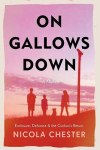 October releases, including some poetry and the debut memoir by local nature writer Nicola Chester – some of us are going on a book club field trip to see her speak about it in Hungerford on Saturday.
A review book backlog dating back to July. Something like 18 books, I think? A number of them also fall into the set-aside category, below.
An alarming number of doorstoppers:
- Damnation Spring by Ash Davidson (a buddy read underway with Marcie of Buried in Print; technically it’s 442 pages, but the print is so danged small that I’m calling it a doorstopper even though my usual minimum is 500 pages)
- The Book of Form and Emptiness by Ruth Ozeki (in progress for blog review)
- Great Circle by Maggie Shipstead (a library hold on its way to me to try again now that it’s on the Booker Prize shortlist)
- The Lincoln Highway by Amor Towles (in progress for BookBrowse review)
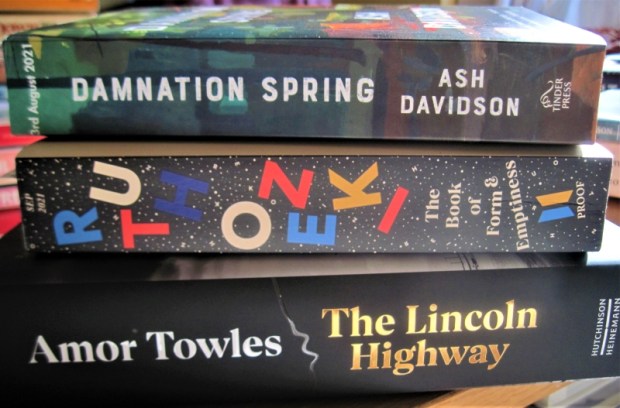
Also, I’m aware that we’re now into the last quarter of the year, and my “set aside temporarily” shelf – which is the literal top shelf of my dining room bookcase, as well as a virtual Goodreads shelf – is groaning with books that I started earlier in the year (or, in some cases, even late last year) and for whatever reason haven’t finished yet.
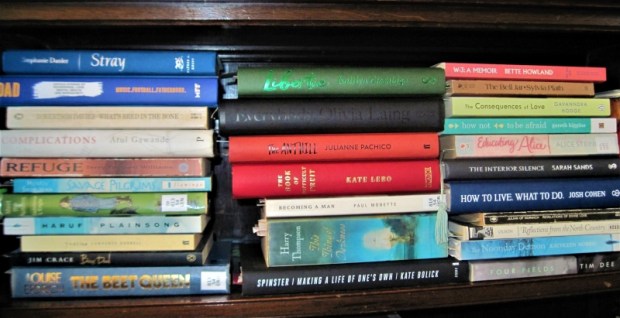
Setting books aside is a dangerous habit of mine, because new arrivals, such as from the library or from publishers, and more timely-seeming books always edge them out. The only way I have a hope of finishing these before the end of the year is to a) include them in challenges wherever possible (so a few long-languishing books have gone up to join my novella stacks in advance of November) and b) reintroduce a certain number to my current stacks at regular intervals. With just 13 weeks or so remaining, two per week seems like the necessary rate.
Do you have realistic reading goals for the final quarter of the year? (Or no goals at all?)
Library Checkout, September 2021
My library has been closed for a few weeks while a new lighting system is being installed, so I’ve had fewer opportunities to pick out books at random while shelving. Still, I have quite a stockpile at home – a lot of the books are being saved for Novellas in November – so I can’t complain. Meanwhile, I’m awaiting my holds on some of the biggest releases of the year.
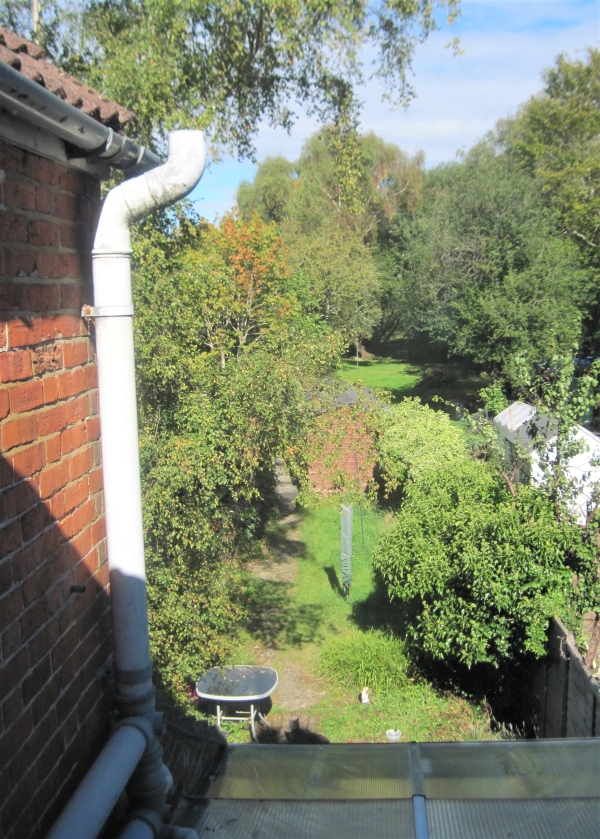
This will most likely be our last September in our current rental place as we’ve started house-hunting in the neighbourhood, so I’m trying to appreciate the view from my study window while I can. I’m taking one photo per day to compare. The first hints of autumn leaves are coming through. (Look carefully to the right of the table and you’ll see our cat!)
As always, I give links to reviews of books not already featured, as well as ratings. I would be delighted to have other bloggers – not just book bloggers – join in with this meme. Feel free to use the image below and leave a link to your blog in the comments if you’ve taken part in Library Checkout (on the last Monday of each month), or tag me on Twitter and Instagram: @bookishbeck / #TheLibraryCheckout & #LoveYourLibraries.

READ
- Medusa’s Ankles: Selected Stories by A.S. Byatt
- Tales from Moominvalley by Tove Jansson
- Everyone Is Still Alive by Cathy Rentzenbrink

- September 11: A Testimony (Reuters)
- Pumpkinheads by Rainbow Rowell [graphic novel]
- Lena Finkle’s Magic Barrel by Anya Ulinich [graphic novel]
SKIMMED
- The Easternmost Sky: Adapting to Change in the 21st Century by Juliet Blaxland
- Gardening for Bumblebees: A Practical Guide to Creating a Paradise for Pollinators by Dave Goulson
- An Eye on the Hebrides: An Illustrated Journey by Mairi Hedderwick
- A Walk from the Wild Edge by Jake Tyler
CURRENTLY READING
- Bloodchild and Other Stories by Octavia E. Butler
- Darwin’s Dragons by Lindsay Galvin
- Fathoms: The World in the Whale by Rebecca Giggs
- Anarchipelago by Jay Griffiths
- The Cure for Good Intentions: A Doctor’s Story by Sophie Harrison
- Picnic at Hanging Rock by Joan Lindsay
- Fox and I: An Uncommon Friendship by Catherine Raven
- Cut Out by Michèle Roberts
- Yearbook by Seth Rogen
- A Shadow Above: The Fall and Rise of the Raven by Joe Shute
- The Interestings by Meg Wolitzer
CURRENTLY SKIMMING
- The Sea Is Not Made of Water: Life between the Tides by Adam Nicolson
CHECKED OUT, TO BE READ
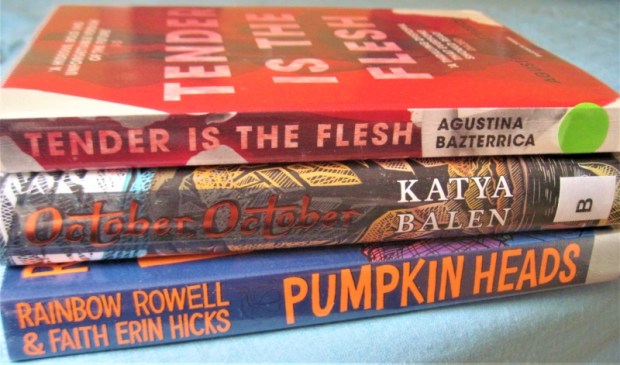
- October, October by Katya Balen
- Winter Story by Jill Barklem
- Tender Is the Flesh by Agustina Bazterrica
- The Tragic Death of Eleanor Marx by Tara Bergin
- Barn Owl by Jim Crumley
- Kingfisher by Jim Crumley
- Otter by Jim Crumley
- Victory: Two Novellas by James Lasdun
- Jilted City by Patrick McGuinness
- His Only Wife by Peace Adzo Medie
- Conundrum by Jan Morris [to reread]
- The State of the Prisons by Sinéad Morrissey
- Fox and I: An Uncommon Friendship by Catherine Raven
- Before Everything by Victoria Redel
- The Performance by Claire Thomas
- Elizabeth and Her German Garden by Elizabeth von Arnim
Plus a modest new pile from the university library:
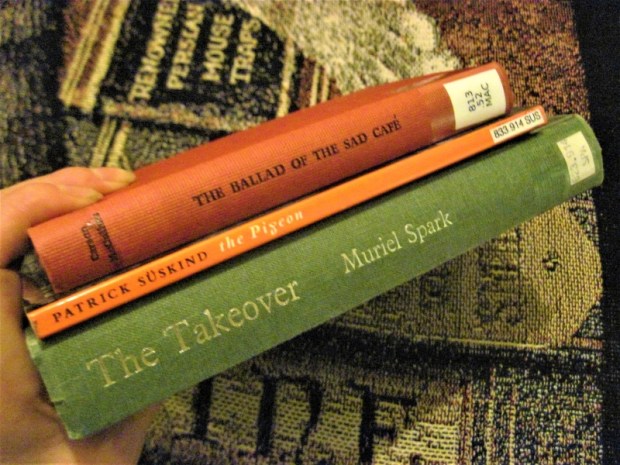
- The Ballad of the Sad Café by Carson McCullers
- The Takeover by Muriel Spark (for 1976 Club)
- The Pigeon by Patrick Süskind
ON HOLD, TO BE PICKED UP
- The Echo Chamber by John Boyne
- The Blind Light by Stuart Evers
- Mayflies by Andrew O’Hagan
IN THE RESERVATION QUEUE
- Four Thousand Weeks: Time and How to Use It by Oliver Burkeman
- Cloud Cuckoo Land by Anthony Doerr
- Manifesto by Bernardine Evaristo
- Spike: The Virus vs. the People – The Inside Story by Jeremy Farrar
- Mrs March by Virginia Feito
- Crossroads by Jonathan Franzen
- Matrix by Lauren Groff
- Julia and the Shark by Kiran Millwood Hargrave
- Standard Deviation by Katherine Heiny
- The Paper Palace by Miranda Cowley Heller
- The Book Smugglers (Pages & Co., #4) by Anna James
- The Morning Star by Karl Ove Knausgaard
- The Premonition: A Pandemic Story by Michael Lewis
- Metamorphosis: Selected Stories by Penelope Lively
- Listen: How to Find the Words for Tender Conversations by Kathryn Mannix
- Sorrow and Bliss by Meg Mason
- Beautiful World, Where Are You by Sally Rooney
- Great Circle by Maggie Shipstead
- Oh William! By Elizabeth Strout
- Liv’s Alone by Liv Thorne
- Sheets by Brenna Thummler
- The Magician by Colm Tóibín
- Still Life by Sarah Winman (to try again)
RETURNED UNFINISHED
- Something out of Place: Women & Disgust by Eimear McBride – I hadn’t gotten on with her fiction so thought I’d try this short nonfiction work, especially as it was released by the Wellcome Collection and based on research she did at the Wellcome Library. However, it was very dull and just seemed like a string of quotes from other people.
- 12 Bytes: How We Got Here. Where We Might Go Next by Jeanette Winterson – I looked at the first essay to consider reviewing this one, but Winterson’s musings on technology and Mary Shelly feel very familiar – from her previous work as well as others’.
RETURNED UNREAD
- I Give It to You by Valerie Martin – I’ll get this suspenseful Tuscany-set novel out again next summer instead.
- Fall and Rise: The Story of 9/11 by Mitchell Zuckoff – I ran out of time to read this before the twentieth anniversary of 9/11, but I wouldn’t rule out reading it in the future.
What appeals from my stacks?
Book Serendipity, July to August 2021
I call it Book Serendipity when two or more books that I read at the same time or in quick succession have something pretty bizarre in common. Because I have so many books on the go at once (usually 20–30), I suppose I’m more prone to such incidents. I’ve realized that, of course, synchronicity is really the more apt word, but this branding has stuck. This used to be a quarterly feature, but to keep the lists from getting too unwieldy I’ve shifted to bimonthly.
The following are in roughly chronological order.
- I read two novels about the disappearance of a 15-year-old girl at the same time: Heatstroke by Hazel Barkworth and When the Stars Go Dark by Paula McLain.
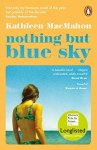
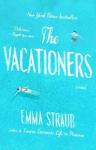
- Two novels in a row were set on a holiday in Spain: Nothing but Blue Sky by Kathleen MacMahon and The Vacationers by Emma Straub.
- I encountered mentions of the removal of the Edward Colston statue in God Is Not a White Man by Chine McDonald and I Belong Here by Anita Sethi on the same evening.
- Characters have the habit of making up names and backstories for strangers in Ruby by Ann Hood and Nothing but Blue Sky by Kathleen MacMahon.
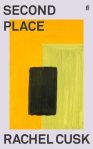
- The main female character says she works out what she thinks by talking in Second Place by Rachel Cusk and The Amateur Marriage by Anne Tyler.

- A passive mother is bullied by her controlling husband in Nothing but Blue Sky by Kathleen MacMahon and Female Friends by Fay Weldon.
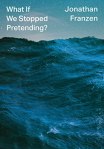
- Two reads in a row were a slim volume on the necessity of giving up denial: What White People Can Do Next by Emma Dabiri (re: racism) and What If We Stopped Pretending by Jonathan Franzen (re: climate change).

- Expressions of a strange sense of relief at disaster in Forecast by Joe Shute (re: flooding) and The Amateur Marriage by Anne Tyler (re: a car accident).
- The biomass ratios of livestock to humans to other mammals are cited in Silent Earth by Dave Goulson, The Anthropocene Reviewed by John Green, and Bewilderment by Richard Powers.
- Two Booker nominees referencing china crockery: An Island by Karen Jennings and China Room by Sunjeev Sahota (yep, it’s talking about the plates rather than the country).

- Teens sneak vodka in Heartstopper, Volume 3 by Alice Oseman and The Interestings by Meg Wolitzer.
- Robert FitzRoy appears in The Glitter in the Green by Jon Dunn and Forecast by Joe Shute, and is the main subject of This Thing of Darkness by Harry Thompson, a doorstopper that has been languishing on my set-aside pile.
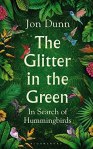

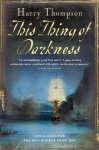
- Dave Goulson’s bumblebee research is mentioned in The Glitter in the Green by Jon Dunn, which I was reading at the same time as Goulson’s new book, Silent Earth.
- Reading two cancer memoirs that mention bucket lists at the same time: No Cure for Being Human by Kate Bowler and Year of Plagues by Fred D’Aguiar.


- Mentions of the damaging practice of clearing forest to plant eucalyptus in The Glitter in the Green by Jon Dunn and Forecast by Joe Shute.
- Mentions of mosquito coils being used (in Borneo or Australia) in Small Bodies of Water by Nina Mingya Powles and The Weekend by Charlotte Wood.

- Different words to the tune of Leonard Cohen’s “Hallelujah” in In Every Mirror She’s Black by Lola Akinmade Åkerström and How We Do Family by Trystan Reese.
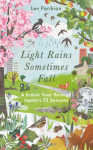 A brief mention of China and Japan’s 72 mini-seasons in Small Bodies of Water by Nina Mingya Powles: this will then be the setup for Light Rains Sometimes Fall by Lev Parikian, which I’ll be reading later in September.
- Beached whales feature in Fathoms by Rebecca Giggs and Small Bodies of Water by Nina Mingya Powles.
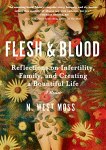
- A chapter in No Cure for Being Human by Kate Bowler is entitled “Flesh & Blood,” which is the title of the whole memoir by N. West Moss that I picked up next – and both are for Shelf Awareness reviews.
- A description of a sonogram appointment where the nurse calls the doctor in to interpret the results and they know right away that means the pregnancy is unviable, followed by an account of a miscarriage, in Flesh & Blood by N. West Moss and How We Do Family by Trystan Reese.

- Robin Wall Kimmerer and Robert Macfarlane quoted in Church of the Wild by Victoria Loorz and Small Bodies of Water by Nina Mingya Powles.
 Bookish Beck = Rebecca Foster. American transplant to England. Freelance proofreader and book reviewer.
 Bookish Beck