Book Serendipity, March to April 2024
I call it “Book Serendipity” when two or more books that I read at the same time or in quick succession have something in common – the more bizarre, the better. This is a regular feature of mine every couple of months. Because I usually have 20–30 books on the go at once, I suppose I’m more prone to such incidents. The following are in roughly chronological order.
- I encountered quotes from “The Second Coming” by W.B. Yeats on the same day in Immanuel by Matthew McNaught and Waiting for the Monsoon by Rod Nordland. A week or so later, I found another allusion to it – a “rough _________ slouching toward ________” – in Mothership by Greg Wrenn.
- Reading my second memoir this year in which the author’s mother bathed them until they were age 17 (in other words, way past when it ceased to be appropriate): I’m Glad My Mom Died by Jennette McCurdy was followed by Mothership by Greg Wrenn.
- Quoting a poem with the word “riven” in it (by Christian Wiman) in Places I’ve Taken My Body by Molly McCully Brown and (by a character in the novel) in Bright and Tender Dark by Joanna Pearson. The word “riven” (which is really not a very common one, is it?) also showed up in Sleepless by Annabel Abbs. And then “riving” in one of the poems in The Intimacy of Spoons by Jim Minick.
- East Timor as a destination in Waiting for the Monsoon by Rod Nordland and Mothership by Greg Wrenn.
- Quoting John Donne in Places I’ve Taken My Body by Molly McCully Brown and The Bee Sting by Paul Murray (to which a Donne line is the epigraph); mimicking Donne in one poem of Fields Away by Sarah Wardle.
- “Who do you think you are?” as a question an abusive adult asks of a child in The Beggar Maid (aka Who Do You Think You Are?) by Alice Munro and Mothership by Greg Wrenn.
- Sylvia Plath is mentioned in Sleepless by Annabel Abbs and The Bee Sting by Paul Murray … and Katherine Mansfield in Sleepless by Annabel Abbs and The Beggar Maid by Alice Munro.
- Mosquitoes are mentioned in a poem in Rapture’s Road by Seán Hewitt and Divisible by Itself and One by Kae Tempest.

- Reading two memoirs that quote a Rumi poem (and that released on 9 April and that I reviewed for Shelf Awareness): Fi: A Memoir of My Son by Alexandra Fuller and Somehow: Thoughts on Love by Anne Lamott. (Rumi was also quoted as an epigraph in Viv Fogel’s poetry collection Imperfect Beginnings.)
- Bereavement memoirs that seek significance in eagle sightings (i.e. as visitations from the dead): Sleepless by Annabel Abbs and Fi: A Memoir of My Son by Alexandra Fuller.
- Snyder’s pretzels as a snack in Somehow: Thoughts on Love by Anne Lamott and Come and Get It by Kiley Reid.

- Reading two C-PTSD memoirs at the same time: A Flat Place by Noreen Masud and Mothership by Greg Wrenn.
 Information about coral reefs dying in Martyr! by Kaveh Akbar and Mothership by Greg Wrenn.
- The gay slang term “twink” appears in The Bee Sting by Paul Murray and Mothership by Greg Wrenn.
- Assisting a mother who reads tarot cards in Intervals by Marianne Brooker and The Year of the Cat by Rhiannon Lucy Cosslett. (Tarot is also read in First Love by Lilly Dancyger and The Future by Catherine Leroux.)

- An Asian American character who plays poker in a graphic novel: Advocate by Eddie Ahn and Lunar New Year Love Story by Gene Luen Yang.
- Vivian Gornick’s Fierce Attachments, which I was also reading at the time, is mentioned in Intervals by Marianne Brooker.
 An Uncle Frank in an Irish novel with no speech marks: Trespasses by Louise Kennedy and The Bee Sting by Paul Murray.
- Martin Luther King’s “I Have a Dream” speech is quoted in Some Kids I Taught & What They Taught Me by Kate Clanchy and How to Raise a Viking by Helen Russell.
- Using quarters for laundry in Come and Get It by Kiley Reid and one story from Dressing Up for the Carnival by Carol Shields.

- A scene of someone watching from a lawn chair as someone else splits wood in Martyr! by Kaveh Akbar and Becoming Little Shell by Chris La Tray.
 Quotes from cultural theorist Sara Ahmed in Intervals by Marianne Brooker and A Flat Place by Noreen Masud.
- I read about windows being blocked up because of high taxes on the same evening in Trespasses by Louise Kennedy and one story from Dressing Up for the Carnival by Carol Shields.
- I saw Quink ink mentioned in The Silence by Gillian Clarke and Trespasses by Louise Kennedy on the same evening.
- The song “It’s a Long Way to Tipperary” is mentioned in You’re on Your Own, Snoopy by Charles M. Schulz and Welcome to Glorious Tuga by Francesca Segal.
- A pet magpie in George by Frieda Hughes and A Council of Dolls by Mona Susan Power.

- A character tests to see what will happen (will God strike them down?) when they mess with the Host (by stealing the ciborium or dropping a wafer on the floor, respectively) in A Council of Dolls by Mona Susan Power and one story from Dressing Up for the Carnival by Carol Shields.
- Marrying the ‘wrong’ brother in The Bee Sting by Paul Murray and A Council of Dolls by Mona Susan Power.
 Indigenous author, Native versus Catholic religion, and descriptions of abuse and cultural suppression at residential schools in Becoming Little Shell by Chris La Tray and A Council of Dolls by Mona Susan Power.
- Teen girls obsessed with ‘sad girl’ poetry, especially by Sylvia Plath, in First Love by Lilly Dancyger and The Bee Sting by Paul Murray.
- “Hyacinth” is a poem in Solutions for the Problem of Bodies in Space by Catherine Barnett, and “Hyacinth Girl” a story in Cocktail by Lisa Alward. (Hyacinths are also mentioned in a poem in The Iron Bridge by Rebecca Hurst.)


- A character named Sissy in A Council of Dolls by Mona Susan Power and Stone Yard Devotional by Charlotte Wood.
- Harming amphibians, whether deliberately or accidentally, in a story in Barcelona by Mary Costello, a poem in Baby Schema by Isabel Galleymore, and Mothership by Greg Wrenn.
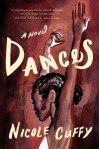
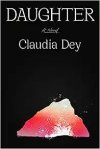
- A significant character called Paul in Dances by Nicole Cuffy, Daughter by Claudia Dey (those two were both longlisted for the Carol Shields Prize), and Moral Injuries by Christie Watson.

- Out of Africa (the film and then the book), which I was looking through for the #1937Club, is mentioned in The Whole Staggering Mystery by Sylvia Brownrigg – her writer grandfather lived in Nairobi’s “Happy Valley” in the 1930s.
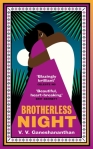
- Reading two novels at the same time in which a teen girl’s plans to study medicine are derailed by war: Brotherless Night by V.V. Ganeshananthan and The Snow Hare by Paula Lichtarowicz.

What’s the weirdest reading coincidence you’ve had lately?
Love Your Library, March 2024
Thanks to Eleanor, Laila, Laura and Naomi for posting about their recent library reads! Everyone is welcome to join in with this meme that runs on the last Monday of the month.
My library system’s delivery van has been unreliable recently, so the branch transfers have really stacked up. Last week I had to stay nearly an hour longer than usual for my volunteering to get through all the requests. Some of my holds had been stuck in transit and arrived all at once, so I will have a bunch to pick up tomorrow, including Land of Milk and Honey by C. Pam Zhang for the Carol Shields Prize longlist. I’ve been dipping into other prize lists as well, as I recounted in Saturday’s post.
Since last month:
READ
- Sleepless: Discovering the Power of the Night Self by Annabel Abbs

- Self-Portrait as Othello by Jason Allen-Paisant

- The Home Child by Liz Berry

- Mrs March by Virginia Feito
- Howards End by E.M. Forster (a reread for book club)

SKIMMED
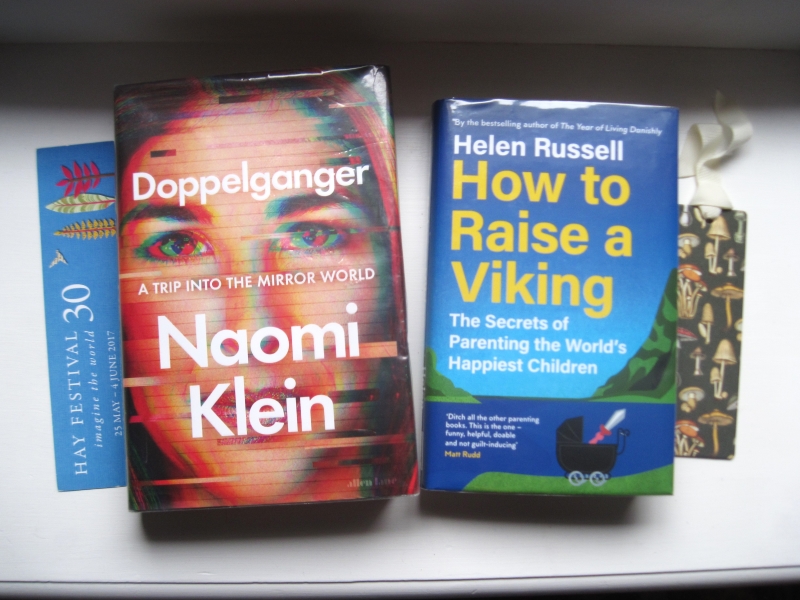
- Doppelganger by Naomi Klein

CURRENTLY READING
- The Paris Wife by Paula McLain (rereading for book club)
- The Bee Sting by Paul Murray
- The Song of the Whole Wide World: On Grief, Motherhood and Poetry by Tamarin Norwood
- Come and Get It by Kiley Reid
- How to Raise a Viking: The Secrets of Parenting the World’s Happiest Children by Helen Russell
- The Collected Stories of Carol Shields
- Before the Light Fades by Natasha Walter
- Lunar New Year Love Story by Gene Luen Yang
CURRENTLY READING-ISH
(set aside temporarily)
- Death Valley by Melissa Broder
- The Year of the Cat by Rhiannon Lucy Cosslett
- King by Jonathan Eig
- Babel by R.F. Kuang
CHECKED OUT, TO BE READ
- After Dark by Haruki Murakami
- Jungle House by Julianne Pachico
RETURNED UNFINISHED
- A Sign of Her Own by Sarah Marsh: I was intrigued enough by the premise – the story of a deaf pupil of Alexander Graham Bell’s – and the fact that the author is surgeon Henry Marsh’s daughter to put this on my Women’s Prize wish list. However, the writing just wasn’t there in the first chapter, when it’s imperative to draw a reader in, nor has Marsh been well served by her publisher, who allowed this to go to press with three glaring errors within the first 10 pages: a missing period at the end of a sentence on p. 5, “he’ll being saying” [for he’ll be saying] on p. 6, and “tthere” on p. 8.
RETURNED UNREAD
- Peach Blossom Spring by Melissa Fu
What have you been reading or reviewing from the library recently?

Share a link to your own post in the comments. Feel free to use the above image. The hashtag is #LoveYourLibrary.
Love Your Library, February 2024
Thanks to Eleanor, Jana, and Laura for posting about their recent library reads. Everyone is welcome to join in with this meme that runs on the last Monday of the month.
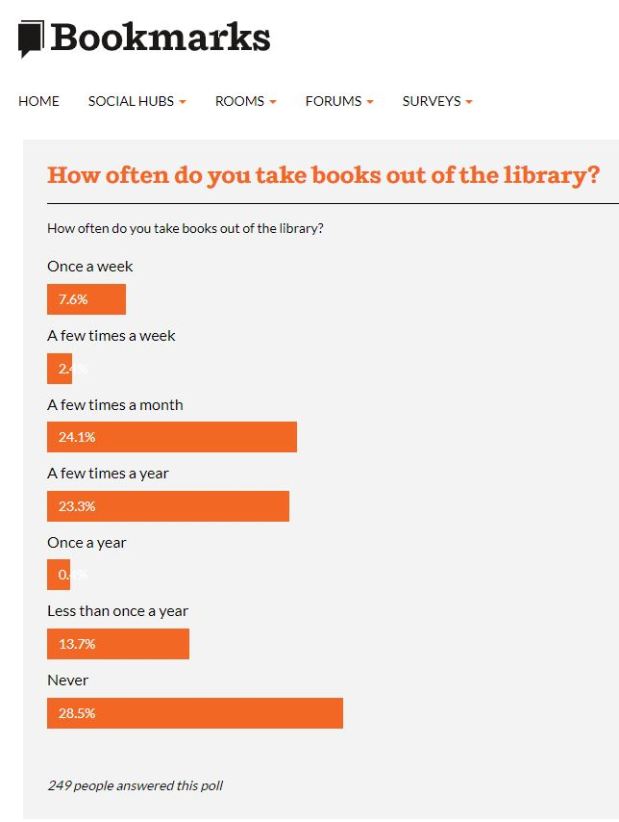
This statistic popped up on a poll I answered. Considering that this is a Penguin forum for people who consider themselves to be dedicated readers, I was appalled by the ‘Never’ figure (and the total of the bottom four bars). Do so many really buy every single book they read?! (I answered ‘Once a week’, of course.)
Literary prize season is heating up, with recent longlist announcements for the inaugural Women’s Prize for Non-Fiction and the Walter Scott Prize for historical fiction. Coming up in early March, we’ll be able to compare the Carol Shields Prize and Women’s Prize longlists. For all of these nominees and more, my first port of call is always the library. It’s especially handy when a book can do double duty for multiple lists: I’m awaiting holds of Doppelganger by Naomi Klein, which is nominated for both the Women’s Prize for Non-Fiction and the Writers’ Prize; and The Bee Sting by Paul Murray, which was on the Booker Prize shortlist, is currently shortlisted for the Writers’ Prize, and won a Nero Award.
Since last month:
READ
- The Absolutely True Diary of a Part-Time Indian by Sherman Alexie

- Brother Do You Love Me? by Manni Coe

- I’m Glad My Mom Died by Jennette McCurdy

- The Tiger’s Wife by Téa Obreht (reread for book club)

- Went to London, Took the Dog by Nina Stibbe
- The Winter Wife by Claire Tomalin


CURRENTLY READING
- Sleepless: Discovering the Power of the Night Self by Annabel Abbs
- The Home Child by Liz Berry
- Death Valley by Melissa Broder
- King by Jonathan Eig
- Mrs March by Virginia Feito (for Literary Wives)
- Howards End by E.M. Forster (rereading for book club)
- Babel by R.F. Kuang
- The Collected Stories of Carol Shields
- Before the Light Fades by Natasha Walter
CHECKED OUT, TO BE READ
- Blood by Dr Jen Gunter
- Groundbreakers: The Return of Britain’s Wild Boar by Chantal Lyons
- After Dark by Haruki Murakami
- Jungle House by Julianne Pachico
RETURNED UNFINISHED
- A Thread of Violence by Mark O’Connell – I loved To Be a Machine and Notes from an Apocalypse and so thought I could happily read O’Connell on any subject, but a crime I’d never heard about and learned the basics of within the first 20 pages was never going to engage me for the length of a whole book.

RETURNED UNREAD
- None of the Above by Travis Alabanza
- Godkiller by Hannah Kaner
- Cahokia Jazz by Francis Spufford
Others of you have loved those books, but I couldn’t get anywhere with them; forgive me!
- Day by Michael Cunningham
- Wasteland by Oliver Franklin-Wallis
- Tell Me Good Things by James Runcie
- Reasons to Be Cheerful by Nina Stibbe
- Night Side of the River by Jeanette Winterson
And maybe another time for these.
What have you been reading or reviewing from the library recently?

Share a link to your own post in the comments. Feel free to use the above image. The hashtag is #LoveYourLibrary.
The Orange Fish by Carol Shields (Buddy Reread)
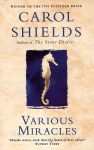
Marcie of Buried in Print and I are rereading Shields’s short stories for the first quarter of 2024: one volume per month from the Collected Stories. My review of the first one, Various Miracles (1985), is here. The Orange Fish followed four years later. It’s a shorter book – 12 stories rather than 21 – but again opens with the title story, which features a gentle slide into absurdity. The members of a select group think their possession of an orange fish lithograph makes them special, and the sense of being chosen enlivens and rejuvenates them. But when the artwork becomes widely available, it devalues their joy in it. This reminded me of a statistic I’ve often heard: experiments show that people don’t want to be earning a particular amount of money; they want to be earning comfortably relative to others.
 “Today Is the Day” stands out for its fable-like setup: “Today is the day the women of our village go out along the highway planting blisterlilies.” With the ritualistic activity and the arcane language, it seems borne out of women’s secret history; if it weren’t for mentions of a few modern things like a basketball court, it could have taken place in medieval times.
European settings recur in a few stories, and there are more third-person POVs than first-. And surprise! A character from Various Miracles is back: Meershank, the writer from “Flitting Behaviour,” stars in “Block Out.” Here Shields inverts the fear of writer’s block: for this prolific scribbler it’s a welcome break. “The suffering of the throttled was his, and he felt appropriately shriven, haunted, beset and blessed.”
In both “Collision” and “Family Secrets,” Shields muses on the biographer’s art, asking what passes into the historical record. The former involves a brief encounter between Martä and Malcolm, a visiting consultant, in Eastern Europe. I loved the mischievous personification: “Biography, that old buzzard, is having a field day, running along behind them picking up all the bits and pieces.” In “Family Secrets,” the narrator remembers that, before marriage, her mother took a year off teaching for “sickness,” and wonders if it was actually a pregnancy, hidden as assiduously as two amputations in the family. “Lies, secrets, casual misrepresentations and small failures of memory, all these things are useful in their way. History gobbles everything up willy-nilly”. Ernest Hemingway also makes a fun cameo appearance in this one.
I had three favourites: 1) “Hinterland” has a married couple visiting Paris at a time of terrorist activity. (There’s a fantastic list of the random things Roy might have thought of while fleeing the bomb threat, but didn’t.) The combination of that and a museum setting of course made me think of The Goldfinch. But it seems like the greater threats here are ageing and potential breakdowns within the family. “Milk Bread Beer Ice,” the last story in the collection, is also travel-based and contrasts the wife’s love of words with this marriage’s fundamental failure of communication. 2) “Hazel,” one I mistakenly read last month, is an example of Shields’s abiding interest in happenstance and how it changes a life’s direction.
 And my overall favourite, 3) “Fuel for the Fire,” a lovely festive-season story that gets beyond the everything-going-wrong-on-a-holiday stereotypes, even though the oven does play up as the narrator is trying to cook a New Year’s Day goose. The things her widowed father brings along to burn on their open fire – a shed he demolished, lilac bushes he took out because they reminded him of his late wife, bowling pins from a derelict alley – are comical yet sad at base, like so much of the story. “Other people might see something nostalgic or sad, but he took a look and saw fuel.” Fire is a force that, like time, will swallow everything.
Being a significantly shorter collection than Various Miracles, The Orange Fish seems to contain less filler and so struck me as stronger overall. There were only maybe one or two stories that I was less engaged with, and the themes of art, biography, coincidence, marriages and writers reminded me of works by some of my favourite authors, Julian Barnes, A.S. Byatt and David Lodge.
My original rating (c. 2008):
My rating now: 
Book Serendipity, January to February 2024
I call it “Book Serendipity” when two or more books that I read at the same time or in quick succession have something in common – the more bizarre, the better. This is a regular feature of mine every couple of months. Because I usually have 20–30 books on the go at once, I suppose I’m more prone to such incidents. The following are in roughly chronological order.
- I finished two poetry collections by a man with the surname Barnett within four days in January: Murmur by Cameron Barnett and Birds Knit My Ribs Together by Phil Barnett.

- I came across the person or place name Courtland in The Optimist’s Daughter by Eudora Welty, then Cortland in a story from The Orange Fish by Carol Shields, then Cotland (but where? I couldn’t locate it again! Was it in Elizabeth Is Missing by Emma Healey?).
- The Manet painting Olympia is mentioned in Christmas Holiday by W. Somerset Maugham and The Paris Novel by Ruth Reichl (both of which are set in Paris).


- There’s an “Interlude” section in Babel by R.F. Kuang and The Vulnerables by Sigrid Nunez.
- The Morris (Minor) car is mentioned in Elizabeth Is Missing by Emma Healey and Various Miracles by Carol Shields.
- The “flour/flower” homophone is mentioned in Babel by R.F. Kuang and Various Miracles by Carol Shields.
- A chimney swift flies into the house in Cat and Bird by Kyoko Mori and The Optimist’s Daughter by Eudora Welty.
- A character named Cornelius in The Fruit Cure by Jacqueline Alnes and Wellness by Nathan Hill.
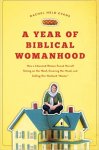
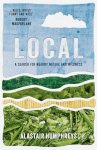
- Reading two year challenge books at the same time, A Year of Biblical Womanhood by Rachel Held Evans and Local by Alastair Humphreys, both of which are illustrated with frequent black-and-white photos by and of the author.
- A woman uses a bell to summon children in one story of Universally Adored and Other One Dollar Stories by Elizabeth Bruce and The Optimist’s Daughter by Eudora Welty.
- Apple turnovers get a mention in A Year of Biblical Womanhood by Rachel Held Evans and Wellness by Nathan Hill.
- A description of rolling out pie crust in A Year of Biblical Womanhood by Rachel Held Evans and Cat and Bird by Kyoko Mori.

- The idea of a house giving off good or bad vibrations in Wellness by Nathan Hill and a story from Various Miracles by Carol Shields.

- Emergency C-sections described or at least mentioned in Brother Do You Love Me by Manni Coe, The Unfamiliar by Kirsty Logan, Wellness by Nathan Hill, and lots more.
- Frustration with a toddler’s fussy eating habits, talk of “gentle parenting” methods, and mention of sea squirts in Wellness by Nathan Hill and Matrescence by Lucy Jones.
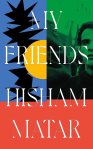
- The nickname “Poet” in The Tidal Year by Freya Bromley and My Friends by Hisham Matar.
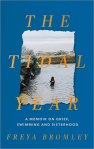
- A comment about seeing chicken bones on the streets of London in The Tidal Year by Freya Bromley and Went to London, Took the Dog by Nina Stibbe.
- Swans in poetry in The Tidal Year by Freya Bromley and Egg/Shell by Victoria Kennefick.
- A mention or image of Captcha technology in Egg/Shell by Victoria Kennefick and Went to London, Took the Dog by Nina Stibbe.
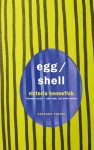

- An animal automaton in Loot by Tania James and Egg/Shell by Victoria Kennefick.
- A mention of Donna Tartt in The Tidal Year by Freya Bromley, Looking in the Distance by Richard Holloway, and Matrescence by Lucy Jones.
- Cathy Rentzenbrink appears in The Tidal Year by Freya Bromley and Went to London, Took the Dog by Nina Stibbe.
 Dialogue is given in italics in the memoirs The Tidal Year by Freya Bromley and The Unfamiliar by Kirsty Logan.
- An account of a man being forced to marry the sister of his beloved in A Year of Biblical Womanhood by Rachel Held Evans, Wellness by Nathan Hill, and The Tiger’s Wife by Téa Obreht.
- Saying that one doesn’t want to remember the loved one as ill (but really, not wanting to face death) so not saying goodbye (in Cat and Bird by Kyoko Mori) or having a closed coffin (Wellness by Nathan Hill).
- An unhappy, religious mother who becomes a hoarder in Wellness by Nathan Hill and I’m Glad My Mom Died by Jennette McCurdy.
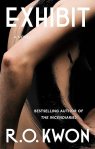
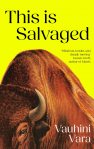
- Characters called Lidija and Jin in Exhibit by R. O. Kwon and Lydia and Jing in the first story of This Is Salvaged by Vauhini Vara.
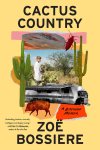
- Distress at developing breasts in Cactus Country by Zoë Bossiere and I’m Glad My Mom Died by Jennette McCurdy.
- I came across mentions of American sportscaster Howard Cosell in Heartburn by Nora Ephron and Stations of the Heart by Richard Lischer (two heart books I was planning on reviewing together) on the same evening. So random!
- Girls kissing and flirting with each other (but it’s clear one partner is serious about it whereas the other is only playing or considers it practice for being with boys) in Cactus Country by Zoë Bossiere and Winter’s Bone by Daniel Woodrell.
- A conversion to Catholicism in Places I’ve Taken My Body by Molly McCully Brown and Stations of the Heart by Richard Lischer.
- A zookeeper is attacked by a tiger when s/he goes into the enclosure (maybe not the greatest idea!!) in Tiger by Polly Clark and The Tiger’s Wife by Téa Obreht.

- The nickname Frodo appears in Tiger by Polly Clark and Brother Do You Love Me by Manni Coe.
- Opening scene of a parent in a coma, California setting, and striking pink and yellow cover to Death Valley by Melissa Broder and I’m Glad My Mom Died by Jennette McCurdy.

- An Englishman goes to Nigeria in Howards End by E.M. Forster and Immanuel by Matthew McNaught.
 The Russian practice of whipping people with branches at a spa in Tiger by Polly Clark and Fight Night by Miriam Toews.
- A mother continues washing her daughter’s hair until she is a teenager old enough to leave home in Mrs. March by Virginia Feito and I’m Glad My Mom Died by Jennette McCurdy.
- Section 28 (a British law prohibiting the “promotion of homosexuality” in schools) is mentioned in A Bookshop of One’s Own by Jane Cholmeley, Some Kids I Taught and What They Taught Me by Kate Clanchy, and Brother Do You Love Me by Manni Coe.
- Characters named Gord (in one story from Various Miracles by Carol Shields, and in Fight Night by Miriam Toews), Gordy (in The Absolutely True Diary of a Part-Time Indian by Sherman Alexie), and Gordo (in Blood Red by Gabriela Ponce).

- Montessori and Waldorf schools are mentioned in Cactus Country by Zoë Bossiere and When Fragments Make a Whole by Lory Widmer Hess.
- A trailer burns down in The Absolutely True Diary of a Part-Time Indian by Sherman Alexie and Cactus Country by Zoë Bossiere.
What’s the weirdest reading coincidence you’ve had lately?
Love Your Library, January 2024
It feels like sooooo much longer than five weeks (the week before Christmas) since I last posted one of these round-ups. The turn of the calendar to February will be a welcome milestone. My thanks, as always, go to Eleanor for her faithful participation in this monthly meme, and to Marcie for spotlighting her recent library reads.
Since last month:
READ
- Reproduction by Louisa Hall
- Flight by Lynne Seger Strong

CURRENTLY READING
- King by Jonathan Eig
- Babel by R.F. Kuang
- I’m Glad My Mom Died by Jennette McCurdy
- The Tiger’s Wife by Téa Obreht (rereading for book club)
- A Thread of Violence by Mark O’Connell
- Went to London, Took the Dog by Nina Stibbe
- Before the Light Fades by Natasha Walter
CHECKED OUT, TO BE READ
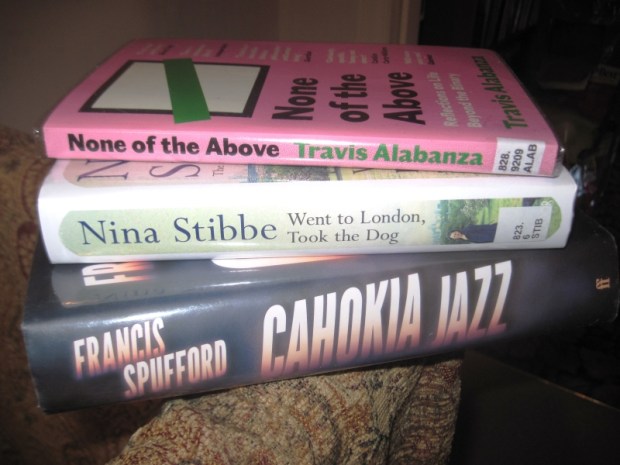
- None of the Above by Travis Alabanza
- Death Valley by Melissa Broder
- Brother Do You Love Me? by Manni Coe
- Jungle House by Julianne Pachico
- Cahokia Jazz by Francis Spufford
RETURNED UNFINISHED
- Undercurrent by Natasha Carthew
RETURNED UNREAD
- Stories for Christmas and the Festive Season
What have you been reading or reviewing from the library recently?
Share a link to your own post in the comments. Feel free to use the above image. The hashtag is #LoveYourLibrary.
Various Miracles by Carol Shields: The Start of a Buddy Rereading Project
In 2020, Marcie of Buried in Print and I did a buddy read (reread in some cases for me) of six Carol Shields novels and found it very rewarding – my write-up is here. For the first quarter of this year, we’re rereading Shields’s short stories: one volume per month from the Collected Stories. I believe it was 2008–10 when I first binged on Shields’s work from Surrey Libraries – that was my modus operandi at the time, finding a reliable author and devouring everything I could find by them (Curtis Sittenfeld was another of my prized finds) – and I know I did get hold of her complete stories even though I was no great story reader, but I’ve retained no memory of them. Now that I’ve read so much more by Shields, sometimes twice, I’m better able to track her themes across the body of work.
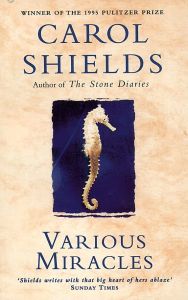 Various Miracles was published in 1985, when Shields was 50. She was still a decade from finding success for her best-known works, The Stone Diaries and Larry’s Party, and so far had published poetry, criticism and several novels. The title story’s string of coincidences and the final story, sharing a title with one of her poetry volumes (“Others”), neatly express the book’s concerns with chance and how we relate to other people and imagine their lives. I was disoriented by first starting the UK paperback (Fourth Estate, 1994). I had no idea it’s a selection; a number of the stories appear in the Collected volume under her next title, The Orange Fish. Before I realized that, I’d read two interlopers, including “Hazel,” which also spotlights the theme of coincidence. “Everything is an accident, Hazel would be willing to say if asked. Her whole life is an accident, and by accident she has blundered into the heart of it,” stumbling into a sales career during her widowhood.
The third story, indeed, is explicitly called “Accidents,” and “Scenes” echoes the opening story by presenting Frances’ life as a process of arbitrary accretion. “There are people who think such scenes are ornaments suspended from lives that are otherwise busy and useful. Frances knows perfectly well that they are what a life is made of, one fitting against the next like English paving-stones.” I asked myself whether such a vision of life rang true for me, comparing with two comedians’ diaries I’m reading at the moment (A Carnival of Snackery by David Sedaris and Went to London, Took the Dog by Nina Stibbe) and with my mother’s journals, and pondering what’s more important: Random happenings and encounters? (That’s mostly where those authors locate humour.) Or what one does, thinks and feels? I prefer self-reflection on who one is becoming, but the recording of one’s life and times is also valuable. There’s a balance to be struck there somewhere; I’m still working on it in my own journal.
I noted a few other recurring elements in the stories: travel, especially to France (4 stories); male narrators or main characters (5 stories); and an obsession with language. The irony to “The Metaphor Is Dead—Pass It On” is that the professor’s diatribe is full of figurative language. The writer antihero of “Flitting Behaviour,” Meershank, is insufferable with his puns and lavish prose, but learns the worth of simple phrases as he and his loved ones compare their hearing of his wife’s last words. “Words” started out like a climate fable, but I decided it’s more of an allegorical satire about words as so much hot air. Such flash fictions, also including “Pardon” (a spate of apologies), “Invitations” (a feast-or-famine social calendar), and “Purple Blooms” (everyone’s reading the same Mexican poet), felt slight. In a book of 21 stories, some are always bound to pale.
By contrast, my favourites went deep with a few characters, or reflected on the writer’s craft. “Fragility” has a couple moving from Toronto to Vancouver, starting a new life and looking for a house that gives off good vibrations (not “a divorce house”). The slow reveal of the catalyzing incident with their son is devastating. With “Others,” Shields (or editors) saved the best for last. On honeymoon in France, Robert and Lila help a fellow English-speaking couple by cashing a check for them. Every year thereafter, Nigel and Jane send them a Christmas card, winging its way from England to Canada. Robert and Lila romanticize these people they met all of once. The plot turns on what is in those pithy 1–2-sentence annual updates versus what remains unspoken. “Love so Fleeting, Love so Fine,” too, involves filling in an entire backstory for an unknown character. Another favourite was “Poaching,” about friends touring England and picking up hitchhikers, whose stories they appropriate.
This doesn’t always feel like a cohesive collection; I think it could stand to lose a good 5–6 stories and perhaps group the others more effectively. But for the way her central subjects were starting to coalesce, and for a handful of very powerful stories, I’d rate it more highly than I originally did, and can recommend that Shields fans seek it out.
My original rating (c. 2008):
My rating now:
This and That (The January Blahs)
The January blahs have well and truly arrived. The last few months of 2023 (December in particular) were too full: I had so much going on that I was always rushing from one thing to the next and worrying I didn’t have the time to adequately appreciate any of it. Now my problem is the opposite: very little to do, work or otherwise; not much on the calendar to look forward to; and the weather and house so cold I struggle to get up each morning and push past the brain fog to settle to any task. As I kept thinking to myself all autumn, there has to be a middle ground between manic busyness and boredom. That’s the head space where I’d like to be living, instead of having to choose between hibernation and having no time to myself.
At least these frigid January days are good for being buried in books. Unusually for me, I’m in the middle of seven doorstoppers, including King by Jonathan Eig (perfect timing as Monday is Martin Luther King Jr. Day), Wellness by Nathan Hill, and Babel by R.F. Kuang (a nominal buddy read with my husband).
Another is Carol Shields’s Collected Short Stories for a buddy rereading project with Marcie of Buried in Print. We’re partway through the first volume, Various Miracles, after a hiccup when we realized my UK edition had a different story order and, in fact, different contents – it must have been released as a best-of. We’ll read one volume per month in January–March. I also plan to join Heaven Ali in reading at least one Margaret Drabble book this year. I have The Waterfall lined up, and her Arnold Bennett biography lurking. Meanwhile, the Read Indies challenge, hosted by Karen and Lizzy in February, will be a great excuse to catch up on some review books from independent publishers.
Literary prize season will be heating up soon. I put all of the Women’s Prize (fiction and nonfiction!) dates on my calendar and I have a running list, in a file on my desktop, of all the novels I’ve come across that would be eligible for this year’s race. I’m currently reading two memoirs from the Nero Book Awards nonfiction shortlist. Last year it looked like the Folio Prize was set to replace the Costa Awards, giving category prizes and choosing an overall winner. But then another coffee chain, Caffè Nero, came along and picked up the mantle.
This year the Folio has been rebranded as The Writers’ Prize, again with three categories, which don’t quite overlap with the Costa/Nero ones. The Writers’ Prize shortlists just came out on Tuesday. I happen to have read one of the poetry nominees (Chan) and one of the fiction (Enright). I’m going to have a go at reading the others that I can source via the library. I’ll even try The Bee Sting given it’s on both the Nero and Writers’ shortlists (ditto the Booker) and I have a newfound tolerance of doorstoppers.
As for my own literary prize involvement, my McKitterick Prize manuscript longlist is due on the 31st. I think I have it finalized. Out of 80 manuscripts, I’ve chosen 5. The first 3 stood out by a mile, but deciding on the other 2 was really tricky. We judges are meeting up online next week.
I’m listening to my second-ever audiobook, an Audible book I was sent as a birthday gift: There Plant Eyes by M. Leona Godin. My routine is to find a relatively mindless data entry task to do and put on a chapter at a time.
There are a handful of authors I follow on Substack to keep up with what they’re doing in between books: Susan Cain, Jean Hannah Edelstein, Catherine Newman, Anne Boyd Rioux, Nell Stevens (who seems to have gone dormant?), Emma Straub and Molly Wizenberg. So far I haven’t gone for the paid option on any of the subscriptions, so sometimes I don’t get to read the whole post, or can only see selected posts. But it’s still so nice to ‘hear’ these women’s voices occasionally, right in my inbox.
My current earworms are from Belle and Sebastian’s Late Developers album, which I was given for Christmas. These lyrics from the title track – saved, refreshingly, for last; it’s a great strategy to end on a peppy song (an uplifting anthem with gospel choir and horn section!) instead of tailing off – feel particularly apt:
Live inside your head
Get out of your bed
Brush the cobwebs off
I feel most awake and alive when I’m on my daily walk by the canal. It’s such a joy to hear the birdsong and see whatever is out there to be seen. The other day there was a red kite zooming up from a field and over the houses, the sun turning his tail into a burnished chestnut. And on the opposite bank, a cuboid rump that turned out to belong to a muntjac deer. Poetry fragments from two of my bedside books resonated with me.
This is the earnest work. Each of us is given
only so many mornings to do it—
to look around and love
the oily fur of our lives,
the hoof and the grass-stained muzzle.
Days I don’t do this
I feel the terror of idleness
like a red thirst.
That is from “The Deer,” from Mary Oliver’s House of Light, and reminds me that it’s always worthwhile to get outside and just look. Even if what you’re looking at doesn’t seem to be extraordinary in any way…
Importance leaves me cold,
as does all the information that is classed as ‘news’.
I like those events that the centre ignores:
small branches falling, the slow decay
of wood into humus, how a puddle’s eye
silts up slowly, till, eventually,
the birds can’t bathe there. I admire the edge;
the sides of roads where the ragwort blooms
low but exotic in the traffic fumes;
the scruffy ponies in a scrubland field
like bits of a jigsaw you can’t complete;
the colour of rubbish in a stagnant leat.
There are rarest enjoyments, for connoisseurs
of blankness, an acquired taste,
once recognised, it’s impossible to shake,
this thirst for the lovely commonplace.
(from “Six Poems on Nothing,” III by Gwyneth Lewis, in Parables & Faxes)
This was basically a placeholder post because who knows when I’ll next finish any books and write about them … probably not until later in the month. But I hope you’ve found at least one interesting nugget!
What ‘lovely commonplace’ things are keeping you going this month?
Final Reading Statistics for 2023
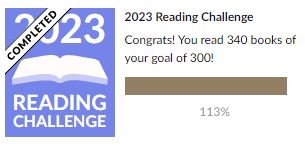
In 2022 my reading total dipped to 300, whereas in 2023 I was back up to what seems to be my natural limit of 340 books (as 2019–21 also proved).
The statistics
Fiction: 52.1%
Nonfiction: 31.2%
Poetry: 16.8%
(Poetry is up by nearly 3% and fiction and nonfiction down by a percent or so each compared to last year. I attribute this to specializing in poetry reviews for Shelf Awareness.)
Female author: 69.7%
Male author: 27.6%
Nonbinary author: 2.1%
Multiple genders (anthologies): 0.6%
(I always read more from women than from men, but was surprised to see that the percentage by men rose by 4.6% last year.)
BIPOC author: 22.4%
(The third time I have specifically tracked this figure. I’m pleased that it’s increased year on year: 18.5%, then 20.7%. I will continue to aim at 25% or more.)
LGBTQ: 18.2%
(This is a new category for me. I define it by the identity of the author and/or a major theme in the work; just having a secondary character who is gay wouldn’t count. I retrospectively looked at 2021 and 2022, which would have been at 11.8% and 8.8%.)
Work in translation: 10.6%!
(I’m delighted with this figure because the past two years were at just 5% and 8.7% and my aim was to be close to 10%. Most popular languages: Spanish (10), French (9) and Swedish (4); German (3), Italian (3), Danish (2), Dutch (2), Korean (1), Polish (1) and Welsh (1) were also represented.)
Backlist: 55.3%
2023 (or 2024 pre-release) books: 44.7%
(This is not too bad, although 17.9% of the ‘backlist’ stuff was from 2021 or 2022, so fairly recent releases I was catching up on from review copies, the library or in e-book form. My oldest reads were both from 1897, Liza of Lambeth by W. Somerset Maugham and De Profundis by Oscar Wilde.)
E-books: 27.4%
Print books: 72.6%
(On par with last year. I almost exclusively read e-books for BookBrowse, Foreword and Shelf Awareness reviews.)
Rereads: 9
(Compared to 12 each of the past two years; at least one per month would be a good aim.)
Where my books came from for the whole year, compared to last year:
- Free print or e-copy from publisher: 43.5% (↑1.5%)
- Public library: 24.1% (↓5.9%)
- Secondhand purchase: 10% (↑3.3%)
- Downloaded from NetGalley or Edelweiss: 6.8% (↓0.2%)
- Free (giveaways, Little Free Library/free bookshop, from friends or neighbours): 5.9% (↑3.3%)
- Gifts: 4.1% (↑0.1%)
- University library: 3.2% (↑0.9%)
- New purchase (often at a bargain price): 2.1% (↓2.6%)
- Borrowed: 0.3% (↓0.4%)
So nearly a quarter of my reading (22.1%) was from my own shelves. I’d like to make it more like 33–50%, achieved by a drop in review copies rather than library borrowing.
Additional statistics courtesy of Goodreads:
73,861 pages read
Average book length: 217 pages (down from 225 last year; thank you, novellas and poetry)
Average rating for 2022: 3.6 (identical to last year)
Some 2023 Reading Superlatives
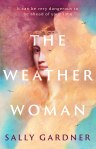 Longest book read this year: The Weather Woman by Sally Gardner (457 pages) – not very impressive compared to last year’s 720-page To Paradise. That means I didn’t get through a single doorstopper this year. D’oh!
Shortest book read this year: Pitch Black by Youme Landowne and Anthony Horton (40 pages)
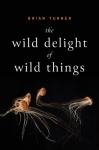
Authors I read the most by this year: Margaret Atwood, Deborah Levy and Brian Turner (3 books each); Amy Bloom, Simone de Beauvoir, Tove Jansson, John Lewis-Stempel, W. Somerset Maugham, L.M. Montgomery and Maggie O’Farrell (2 books each)


Publishers I read the most from: (Setting aside the ubiquitous Penguin and its many imprints) Carcanet (11 books) and Picador/Pan Macmillan (also 11), followed by Canongate (7).
My top author discoveries of the year: Michelle Huneven and Julie Marie Wade
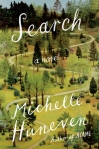
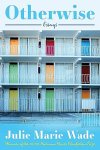
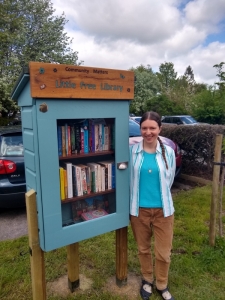
My proudest bookish accomplishment: Helping to launch the Little Free Library in my neighbourhood in May, and curating it through the rest of the year (nearly daily tidying; occasional culling; requesting book donations)
Most pinching-myself bookish moments: Attending the Booker Prize ceremony; interviewing Lydia Davis and Anne Enright over e-mail; singing carols after-hours at Shakespeare and Company in Paris

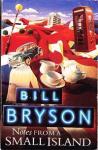
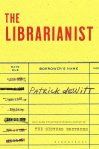
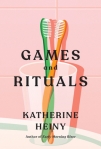
Books that made me laugh: Notes from a Small Island by Bill Bryson, The Librarianist by Patrick deWitt, two by Katherine Heiny, Motherland Fatherland Homelandsexuals by Patricia Lockwood
Books that made me cry: A Heart that Works by Rob Delaney, Lucy by the Sea by Elizabeth Strout, Family Meal by Bryan Washington
 The book that was the most fun to read: Romantic Comedy by Curtis Sittenfeld
Best book club selections: By the Sea by Abdulrazak Gurnah and The Woman in Black by Susan Hill
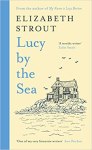 Best last lines encountered this year: “And I stood there holding on to this man as though he were the very last person left on this sweet sad place that we call Earth.” (Lucy by the Sea, Elizabeth Strout)
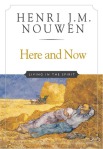 A book that put a song in my head every time I picked it up: Here and Now by Henri Nouwen (Aqualung song here)
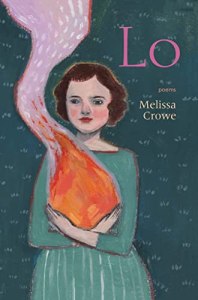
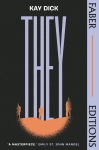
Shortest book title encountered: Lo (the poetry collection by Melissa Crowe), followed by Bear, Dirt, Milk and They



Best 2023 book titles: These Envoys of Beauty and You Bury the Birds in My Pelvis
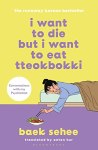 Best book titles from other years: I Want to Die but I Want to Eat Tteokbokki, Before You Suffocate Your Own Fool Self, A Down Home Meal for These Difficult Times, The Cats We Meet Along the Way, We All Want Impossible Things
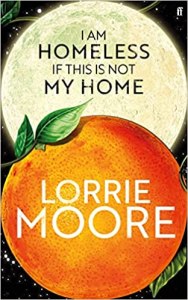
Favourite title and cover combo of the year: I Am Homeless If This Is Not My Home by Lorrie Moore (shame the contents didn’t live up to it!)
Biggest disappointment: Speak to Me by Paula Cocozza
A 2023 book that everyone was reading but I decided not to: Prophet Song by Paul Lynch

The worst books I read this year: Monica by Daniel Clowes, They by Kay Dick, Swallowing Geography by Deborah Levy and Self-Portrait in Green by Marie Ndiaye (1-star ratings are extremely rare for me; these were this year’s four)
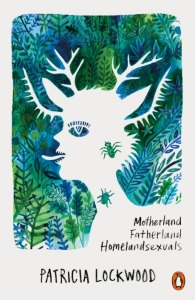
The downright strangest book I read this year: Motherland Fatherland Homelandsexuals by Patricia Lockwood
 Bookish Beck = Rebecca Foster. American transplant to England. Freelance proofreader and book reviewer.
 Bookish Beck