20 Books of Summer Plan
It’s my seventh year in a row participating in Cathy’s 20 Books of Summer challenge, which starts on 1 June and runs through the 1st of September.

In most previous years I have chosen a theme.
2018: Books by women
2019: Fauna
2020: Food
2021: Colours
2022: Flora
Last year was a grab bag, but about a third of my choices were foodie again. I love picking the books for a themed challenge, but when it comes to actually reading them, I often get bored reading around the same topic, even if I had ensured a variety of fiction/nonfiction, author style, etc.
So this year the plan is simply to read hardback books that I own. I have at least 80–100 options, across genres and of all lengths; review copies, set-aside books and rereads are all possible. I fancy curating a blend of recent acquisitions and long-time shelf sitters. By the end of August I can decide whether they’re keepers or I want to pass them along to make room for others; the width of 20 hardbacks should be significant!
You’ll see options on shelves dotted all around the house:
-
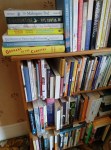
- Miscellaneous on bedroom shelves
-

- Biographies
-

- Bedside table
-

- Classics (mix of read/unread)
-
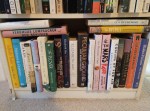
- Shelf of unread hardbacks
-

- Foodie lit shelf with a few options
-
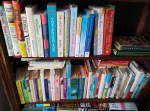
- Three shelves: review copies; set-aside; to reread
-
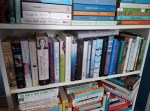
- Life writing case with one shelf of unread hardbacks
Here’s a tentative list of 20 hardbacks that are catching my eye right now – but I reserve the right to change my mind and ditch any or all of them in favour of other books that appeal more at the time!
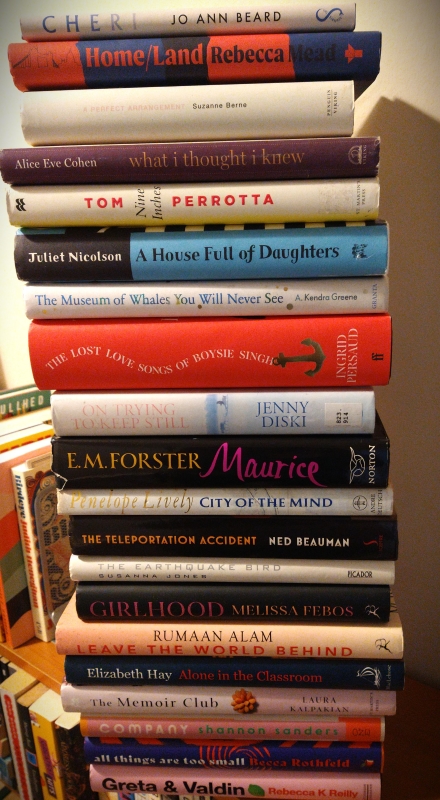
Leave the World Behind by Rumaan Alam (Free from a neighbour) – There was a lot of buzz about this a few years ago and I intended to read it right away but didn’t for whatever reason. My impression is of a literary novel that turns into a domestic thriller.
Cheri by Jo Ann Beard (New, Hungerford Bookshop with birthday voucher last year) – Cathy spoke very highly of this during Novellas in November. I daresay I’ll be grateful for one very short option over the summer. I wish more of my hardbacks were so slender!
The Teleportation Accident by Ned Beauman (Secondhand, Awesomebooks.com) – This would be my one reread of the challenge. I’ve read all but one of Beauman’s novels and this is the one I remember most fondly. Zany historical fiction with a fantasy twist.
A Perfect Arrangement by Suzanne Berne (Secondhand, Community Furniture Project) – I don’t know anything about this but I’m expecting it to be, like her Women’s Prize winner, A Crime in the Neighborhood, light yet substantial and quietly gripping.
What I Thought I Knew by Alice Eve Cohen (Secondhand, Amazon with gift money) – I loved her 2015 memoir, The Year My Mother Came Back, so much that I sought out her previous one … but it has sat on the shelf unread for years.
On Trying to Keep Still by Jenny Diski (Secondhand, Awesomebooks.com) – I’ve loved everything I’ve read by Diski so far. This is a book of travel essays.
Girlhood by Melissa Febos (New, Christmas gift last year) – I was so impressed by her latest essay collection, Body Work, that I knew I had to read everything else she’s written. This previous collection mixes memoir and feminist social history.
Maurice by E.M. Forster (Secondhand, Wonder Book and Video?) – I’ve owned this for so long that I can’t remember when and where I got it, but I’m guessing it came from the used bookstore where I worked in college. My only major Forster work still unread.
The Museum of Whales You Will Never See by A. Kendra Greene (Secondhand, Bas Books & Home) – More essays to slake the desire for armchair travel. This one’s set entirely in Iceland and is all about quirky museum collections.
Alone in the Classroom by Elizabeth Hay (Secondhand, Christmas gift last year) – I’ll read anything Hay writes. This will be my third novel from her.
The Earthquake Bird by Susanna Jones (Secondhand, Hay-on-Wye in 2020) – Doesn’t feel like I bought it ages ago, but nearly four years have passed. I thought her When Nights Were Cold (historical fiction about women’s mountaineering) was fantastic in 2013.
The Memoir Club by Laura Kalpakian (Secondhand, 2nd & Charles) – I’ve long wanted to try this author and finally found one of her books on a clearance shelf in December. I’m expecting slightly fluffy fun à la Elizabeth Berg et al., perfect for summer.
City of the Mind by Penelope Lively (Secondhand, French LFL) – My most recent acquisition; why not get to it right away? Besides, Lively is one of four authors on this list (the others are Diski, Forster and Hay) by whom I own two or more unread books.
Home/Land by Rebecca Mead (Review copy) – An Anglo-American memoir should be right up my street. I don’t know why I’ve let this one sit around for ages.
A House Full of Daughters by Juliet Nicolson (Free from a neighbour) – A family memoir about Vita Sackville-West’s clan. I don’t often read biographical stuff (as opposed to straight autobiographies), so this is a good excuse.
Nine Inches by Tom Perrotta (Free from a neighbour) – Short stories of blue-collar America. I used to love Perrotta and have read most of his books. Maybe I’ll find him a little macho these days, though.
The Lost Love Songs of Boysie Singh by Ingrid Persaud (Signed copy won in a Faber Instagram giveaway) – I loved her debut novel, Love after Love, but have been daunted by the length of this follow-up, which I know to contain multiple POVs and patois.
Greta & Valdin by Rebecca K. Reilly (Review copy) – A quirky novel about queer siblings and their oddball family in New Zealand. I started it in April but haven’t made much of a dent, so this is my strategy for getting back into it.
All Things Are Too Small by Becca Rothfeld (Review copy) – Cultural criticism from the Washington Post’s in-house nonfiction book reviewer, a philosophy PhD candidate. I’ve sampled the first few pages so far.
Company by Shannon Sanders (Review copy) – Linked short stories about the members of one extended Black family. I got partway through one story earlier in the month but it’s time to get back into it in earnest.
What do you make of my list? See any other hardback options in the photos that I should prioritize instead?
Love Your Library, May 2024
Thanks to Eleanor (here and here) and Marcie for posting about their recent library reads! Everyone is welcome to join in with this meme that runs on the last Monday of the month.
Earlier in the month I had an all-volunteering Tuesday where I went from 1) a busy morning library volunteering session straight to 2) a coffee meeting with the local repair café coordinator to discuss publicity, then 3) caught up on receipts and accounts for the suite of community gardening projects for which I’m treasurer and 4) went out to one of the garden sites to help fill newly constructed raised beds with compost, wood chip and veg plants. And of course, as I do every day when I’m not on holiday, I 5) stopped by the neighbourhood Little Free Library I curate to tidy the shelves and check whether any new stock was needed.
Ever since I was invited to become a local school governor last year (I declined) and a trustee of the neighbourhood nonprofit arts venue where I attend gigs and sometimes volunteer tending bar (earlier this year; I’m still thinking about it), I’ve had the feeling that others view me almost like a retiree. I postulate two main reasons. One, as an underemployed freelancer, I don’t appear to have a proper career. I don’t mind people thinking this as it feels true for me much of the time. Secondly, I don’t have children, a major commitment for many women of my age bracket. As Sheila Heti wrote in Motherhood, “There is something threatening about a woman who is not occupied with children. There is something at-loose-ends feeling about such a woman. What is she going to do instead? What sort of trouble will she make?”
I’m not particularly ambitious professionally; I wish I was in a financial situation to be the full-time volunteer that some perceive me to be – after all, my unpaid roles are, in many cases, less annoying and more rewarding than much of what I do for money. Maybe I’ll work out the right balance sometime in the near future. It’s important to feel productive and valued. In the meantime, it is gratifying that my skills are appreciated in my charitable work.
My library use over the last month:
(Links to reviews of books I have not already covered on the site)
READ
- Blossomise by Simon Armitage

- All the Beauty in the World: A Museum Guard’s Adventures in Life, Loss and Art by Patrick Bringley

- Cloistered: My Years as a Nun by Catherine Coldstream

- The Year of the Cat by Rhiannon Lucy Cosslett

- Enter Ghost by Isabella Hammad
- The Door-to-Door Bookstore by Carsten Henn
- Jungle House by Julianne Pachico

- Lunar New Year Love Story by Gene Luen Yang


SKIMMED
- Beautiful Trauma by Rebecca Fogg
- Second Helpings by Sue Quinn (a leftovers cookbook; we’re intrigued by the coffee grounds cookies!)
CURRENTLY READING
- Death Valley by Melissa Broder
- Restless Dolly Maunder by Kate Grenville
- Kay’s Incredible Inventions by Adam Kay
- After Dark by Haruki Murakami
- Excellent Women by Barbara Pym
- The Invention of Hugo Cabret by Brian Selznick
CHECKED OUT, TO BE READ
(The rest of what is pictured in the three photos!)

ON HOLD, TO BE COLLECTED
- Piglet by Lottie Hazell
- Languishing by Corey Keyes
- You Are Here by David Nicholls – The other week when I took this screenshot I thought there were a lot of holds on this one, more than I have seen since Lessons in Chemistry first came out. I looked again yesterday and I am now 1st out of 53. All waiting for one copy!

- Knife by Salman Rushdie
- The Spoiled Heart by Sunjeev Sahota
RETURNED UNFINISHED
- Mona of the Manor by Armistead Maupin – I read the first 30 pages. It seemed fun enough, if edgy for the sake of it (every main character is queer; crass speech). I encountered many more typos than I expected for a published book, including missing articles and quotation marks. Ultimately, I think you have to be invested in this series and its characters, whereas I had only ever read the first book, Tales of the City, and it didn’t captivate me.

RETURNED UNREAD
- Have a Little Faith by Kate Bottley – I admire her as a person but the first few pages made me think she’s not cut out for being a writer. This promised to be generic and twee.
- Learning to Think by Tracy King – Requested after me. Will try another time.
- The Half Bird by Susan Smillie – Did not enjoy the writing style at all.
- Help Wanted by Adelle Waldman – Requested after me. Might try another time.
What have you been reading or reviewing from the library recently?

Share a link to your own post in the comments. Feel free to use the above image. The hashtag is #LoveYourLibrary.
Love Your Library, April 2024
Thanks to Laila, Laura, Marcie (the middle and right-hand images below), and Naomi (here and here) for posting about their recent library reading! Everyone is welcome to join in with this meme that runs on the last Monday of the month.


It was National Library Week in the USA the week of the 7th, and I enjoyed Gretchen Rubin’s post about the libraries that have been special to her over the years. I can think of so many that have meant something to me, mostly back home in Maryland: the Silver Spring, Bowie and Frederick public libraries, and the Hood College library. And in England, the University of Reading library, the University of Leeds Brotherton library, the King’s College Maughan Library, Senate House Library, and all the county branch libraries I’ve been a member of, up through Newbury Library now. How about for you?

I’ve read some great stuff over the past month! I link to my reviews of anything I haven’t already covered on the blog.
READ
- Barcelona by Mary Costello

- Life in the Balance: A Doctor’s Stories of Intensive Care by Jim Down
- The Paris Wife by Paula McLain (a reread for book club)
- The Bee Sting by Paul Murray
- Come and Get It by Kiley Reid
- The Collected Stories of Carol Shields
- Of Mice and Men by John Steinbeck (a reread)
- Moral Injuries by Christie Watson
- Stone Yard Devotional by Charlotte Wood
- Land of Milk and Honey by C Pam Zhang
SKIMMED
- Brotherless Night by V.V. Ganeshananthan
- Blood: The Science, Medicine, and Mythology of Menstruation by Dr Jen Gunter

- How to Raise a Viking: The Secrets of Parenting the World’s Happiest Children by Helen Russell
- Before the Light Fades: A Memoir of Grief and Resistance by Natasha Walter
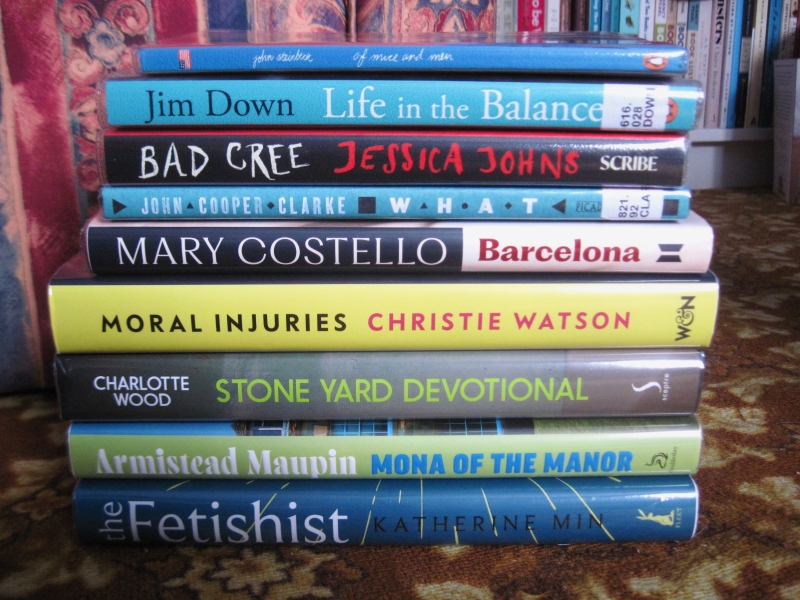
CURRENTLY READING
- Cloistered: My Years as a Nun by Catherine Coldstream
- Enter Ghost by Isabella Hammad
- The Door-to-Door Bookstore by Carsten Henn
- Kay’s Incredible Inventions by Adam Kay
- Mona of the Manor by Armistead Maupin
- After Dark by Haruki Murakami
- Lunar New Year Love Story by Gene Luen Yang
CHECKED OUT, TO BE READ
- Jungle House by Julianne Pachico
& the rest of what is pictured above and below:
What have you been reading or reviewing from the library recently?
Share a link to your own post in the comments. Feel free to use the above image. The hashtag is #LoveYourLibrary.
Rereading Of Mice and Men for #1937Club
A year club hosted by Karen and Simon is always a great excuse to read more classics. Between my shelves and the library, I had six options for 1937. But I started reading too late, and had too many books on the go, to finish more than one – a reread. No matter; it was a good one I was glad to revisit, and I’ll continue with the other reread at my own pace.
Of Mice and Men by John Steinbeck
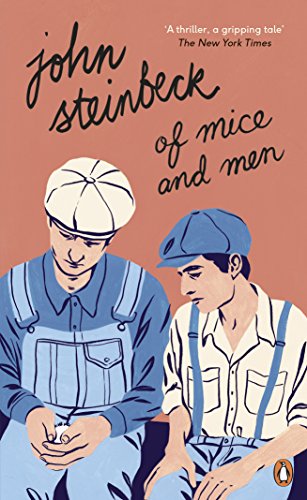 Are teenagers doomed to dislike the books they read in school? I think this must have been on the curriculum for 11th grade English. It was my third Steinbeck novella after The Red Pony and The Pearl, so to me it confirmed that he wrote contrived, depressing stuff with lots of human and animal suffering. Not until I read The Grapes of Wrath in college and East of Eden (THE Great American Novel) five years ago did I truly recognize Steinbeck’s greatness.
George and Lennie are itinerant farm workers in Salinas Valley, California. Lennie is a gentle giant, intellectually disabled and aware of his own strength when hauling sacks of barley but not when stroking mice and puppies. George looks after Lennie as a favour to Aunt Clara and they’re saving up to buy their own smallholding. This dream is repeated to the point of legend, somewhere between a bedtime story and scripture:
‘Someday—we’re gonna get the jack together and we’re gonna have a little house and a couple of acres an’ a cow and some pigs and—’ ‘An’ live off the fatta the lan’,’ Lennie shouted. ‘And have rabbits.’
They quickly settle in alongside the other ranch-hands and even convert two to their idyllic picture of independence. But the foreman, Curley, is a hothead and his bored would-be-starlet wife won’t stop roaming into the men’s quarters. No matter how much George tells Lennie to stay away from both of them, something is set in motion – an inevitable repeat of an incident from their previous employment that forced them to move on.
I remembered the main contours here but not the ultimate ending, and this time I appreciated the deliberate echoes and heavy foreshadowing (all that symbolism to write formulaic school essays about!): this is Shakespearean tragedy with the signs and stakes writ large against a limited background. Bar some paragraphs of scene-setting descriptions, it is like a play; no surprise it’s been filmed several times. (I wish I didn’t have danged John Malkovich in my head as Lennie; I can’t think of anyone else in that role, whereas Gary Sinise doesn’t necessarily epitomize George for me.) The characterization of the one Black character, Crooks, and the one woman are uncomfortably of their time. However, Crooks is given the dubious honour of conveying the bleak vision: “Nobody never gets to heaven, and nobody gets no land. It’s just in their head.” Like Hardy, Steinbeck knows what happens when the lower classes make the mistake of wanting too much. It’s a timeless tale of grit and desperation, the kind one can’t imagine not existing. (Public library)
Apposite listening: “The Great Defector” by Bell X1 (known for their quirky lyrics):
You’ve been teasing us farm boys
’til we start talking ’bout those rabbits, George
oh, won’t you tell us ’bout those rabbits, George?
Original rating (1999?):
My rating now:


Currently rereading: The Hobbit by J.R.R. Tolkien – My father gave me this for Christmas when I was 10. I think I finally read it sometime in my later teens, about when the Lord of the Rings films were coming out. I’m on page 70 now. I’d forgotten just how funny Tolkien is about the set-in-his-ways Bilbo and his devotion to a cosy, quiet life. When he’s roped into a quest to reclaim a mountain hoard of treasure from a dragon – along with 13 dwarves and Gandalf the wizard – he realizes he has much discomfort and many a missed meal ahead of him.


 DNFed: Journey by Moonlight by Antal Szerb – My second attempt with Hungarian literature, and I found it curiously similar to the other novel I’d read (Embers by Sandor Márai) in that much of it, at least the 50 pages I read, is a long story told by one character to another. In this case, Mihály, on his Italian honeymoon, tells his wife about his childhood best friends, a brother and sister. I wondered if I was meant to sense homoerotic attachment between Mihály and Tamás, which would appear to doom this marriage right at its outset. (Secondhand – Edinburgh charity shop, 2018)
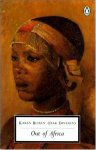 Skimmed: Out of Africa by Karen Blixen – I enjoyed the prose style but could tell I’d need a long time to wade through the detail of her life on a coffee farm in Kenya, and would probably have to turn a blind eye to the expected racism of the anthropological observation of the natives. (Secondhand – Way’s in Henley, 2015)
Here’s hoping for a better showing next time!
(I’ve previously participated in the 1920 Club, 1956 Club, 1936 Club, 1976 Club, 1954 Club, 1929 Club, and 1940 Club.)
Book Serendipity, March to April 2024
I call it “Book Serendipity” when two or more books that I read at the same time or in quick succession have something in common – the more bizarre, the better. This is a regular feature of mine every couple of months. Because I usually have 20–30 books on the go at once, I suppose I’m more prone to such incidents. The following are in roughly chronological order.
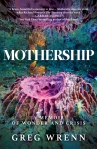
- I encountered quotes from “The Second Coming” by W.B. Yeats on the same day in Immanuel by Matthew McNaught and Waiting for the Monsoon by Rod Nordland. A week or so later, I found another allusion to it – a “rough _________ slouching toward ________” – in Mothership by Greg Wrenn.
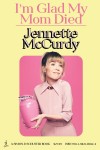
- Reading my second memoir this year in which the author’s mother bathed them until they were age 17 (in other words, way past when it ceased to be appropriate): I’m Glad My Mom Died by Jennette McCurdy was followed by Mothership by Greg Wrenn.
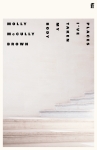
- Quoting a poem with the word “riven” in it (by Christian Wiman) in Places I’ve Taken My Body by Molly McCully Brown and (by a character in the novel) in Bright and Tender Dark by Joanna Pearson. The word “riven” (which is really not a very common one, is it?) also showed up in Sleepless by Annabel Abbs. And then “riving” in one of the poems in The Intimacy of Spoons by Jim Minick.
- East Timor as a destination in Waiting for the Monsoon by Rod Nordland and Mothership by Greg Wrenn.
- Quoting John Donne in Places I’ve Taken My Body by Molly McCully Brown and The Bee Sting by Paul Murray (to which a Donne line is the epigraph); mimicking Donne in one poem of Fields Away by Sarah Wardle.
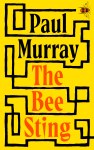
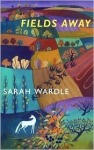
- “Who do you think you are?” as a question an abusive adult asks of a child in The Beggar Maid (aka Who Do You Think You Are?) by Alice Munro and Mothership by Greg Wrenn.
- Sylvia Plath is mentioned in Sleepless by Annabel Abbs and The Bee Sting by Paul Murray … and Katherine Mansfield in Sleepless by Annabel Abbs and The Beggar Maid by Alice Munro.
- Mosquitoes are mentioned in a poem in Rapture’s Road by Seán Hewitt and Divisible by Itself and One by Kae Tempest.

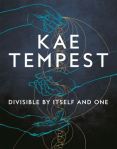
- Reading two memoirs that quote a Rumi poem (and that released on 9 April and that I reviewed for Shelf Awareness): Fi: A Memoir of My Son by Alexandra Fuller and Somehow: Thoughts on Love by Anne Lamott. (Rumi was also quoted as an epigraph in Viv Fogel’s poetry collection Imperfect Beginnings.)
- Bereavement memoirs that seek significance in eagle sightings (i.e. as visitations from the dead): Sleepless by Annabel Abbs and Fi: A Memoir of My Son by Alexandra Fuller.
- Snyder’s pretzels as a snack in Somehow: Thoughts on Love by Anne Lamott and Come and Get It by Kiley Reid.
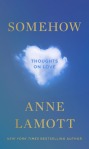

- Reading two C-PTSD memoirs at the same time: A Flat Place by Noreen Masud and Mothership by Greg Wrenn.
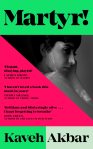 Information about coral reefs dying in Martyr! by Kaveh Akbar and Mothership by Greg Wrenn.
- The gay slang term “twink” appears in The Bee Sting by Paul Murray and Mothership by Greg Wrenn.
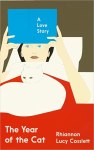
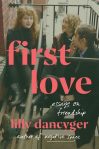
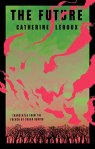
- Assisting a mother who reads tarot cards in Intervals by Marianne Brooker and The Year of the Cat by Rhiannon Lucy Cosslett. (Tarot is also read in First Love by Lilly Dancyger and The Future by Catherine Leroux.)

- An Asian American character who plays poker in a graphic novel: Advocate by Eddie Ahn and Lunar New Year Love Story by Gene Luen Yang.
- Vivian Gornick’s Fierce Attachments, which I was also reading at the time, is mentioned in Intervals by Marianne Brooker.
 An Uncle Frank in an Irish novel with no speech marks: Trespasses by Louise Kennedy and The Bee Sting by Paul Murray.
- Martin Luther King’s “I Have a Dream” speech is quoted in Some Kids I Taught & What They Taught Me by Kate Clanchy and How to Raise a Viking by Helen Russell.
- Using quarters for laundry in Come and Get It by Kiley Reid and one story from Dressing Up for the Carnival by Carol Shields.

- A scene of someone watching from a lawn chair as someone else splits wood in Martyr! by Kaveh Akbar and Becoming Little Shell by Chris La Tray.
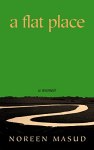 Quotes from cultural theorist Sara Ahmed in Intervals by Marianne Brooker and A Flat Place by Noreen Masud.
- I read about windows being blocked up because of high taxes on the same evening in Trespasses by Louise Kennedy and one story from Dressing Up for the Carnival by Carol Shields.
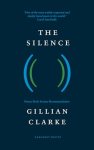
- I saw Quink ink mentioned in The Silence by Gillian Clarke and Trespasses by Louise Kennedy on the same evening.
- The song “It’s a Long Way to Tipperary” is mentioned in You’re on Your Own, Snoopy by Charles M. Schulz and Welcome to Glorious Tuga by Francesca Segal.
- A pet magpie in George by Frieda Hughes and A Council of Dolls by Mona Susan Power.

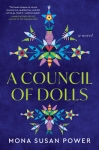
- A character tests to see what will happen (will God strike them down?) when they mess with the Host (by stealing the ciborium or dropping a wafer on the floor, respectively) in A Council of Dolls by Mona Susan Power and one story from Dressing Up for the Carnival by Carol Shields.
- Marrying the ‘wrong’ brother in The Bee Sting by Paul Murray and A Council of Dolls by Mona Susan Power.
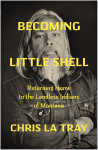 Indigenous author, Native versus Catholic religion, and descriptions of abuse and cultural suppression at residential schools in Becoming Little Shell by Chris La Tray and A Council of Dolls by Mona Susan Power.
- Teen girls obsessed with ‘sad girl’ poetry, especially by Sylvia Plath, in First Love by Lilly Dancyger and The Bee Sting by Paul Murray.
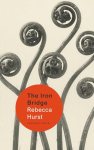
- “Hyacinth” is a poem in Solutions for the Problem of Bodies in Space by Catherine Barnett, and “Hyacinth Girl” a story in Cocktail by Lisa Alward. (Hyacinths are also mentioned in a poem in The Iron Bridge by Rebecca Hurst.)


- A character named Sissy in A Council of Dolls by Mona Susan Power and Stone Yard Devotional by Charlotte Wood.
- Harming amphibians, whether deliberately or accidentally, in a story in Barcelona by Mary Costello, a poem in Baby Schema by Isabel Galleymore, and Mothership by Greg Wrenn.
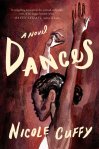
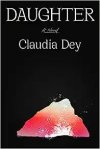
- A significant character called Paul in Dances by Nicole Cuffy, Daughter by Claudia Dey (those two were both longlisted for the Carol Shields Prize), and Moral Injuries by Christie Watson.

- Out of Africa (the film and then the book), which I was looking through for the #1937Club, is mentioned in The Whole Staggering Mystery by Sylvia Brownrigg – her writer grandfather lived in Nairobi’s “Happy Valley” in the 1930s.
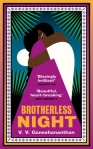
- Reading two novels at the same time in which a teen girl’s plans to study medicine are derailed by war: Brotherless Night by V.V. Ganeshananthan and The Snow Hare by Paula Lichtarowicz.

What’s the weirdest reading coincidence you’ve had lately?
Love Your Library, March 2024
Thanks to Eleanor, Laila, Laura and Naomi for posting about their recent library reads! Everyone is welcome to join in with this meme that runs on the last Monday of the month.
My library system’s delivery van has been unreliable recently, so the branch transfers have really stacked up. Last week I had to stay nearly an hour longer than usual for my volunteering to get through all the requests. Some of my holds had been stuck in transit and arrived all at once, so I will have a bunch to pick up tomorrow, including Land of Milk and Honey by C. Pam Zhang for the Carol Shields Prize longlist. I’ve been dipping into other prize lists as well, as I recounted in Saturday’s post.
Since last month:
READ
- Sleepless: Discovering the Power of the Night Self by Annabel Abbs
- Self-Portrait as Othello by Jason Allen-Paisant
- The Home Child by Liz Berry
- Mrs March by Virginia Feito
- Howards End by E.M. Forster (a reread for book club)

SKIMMED
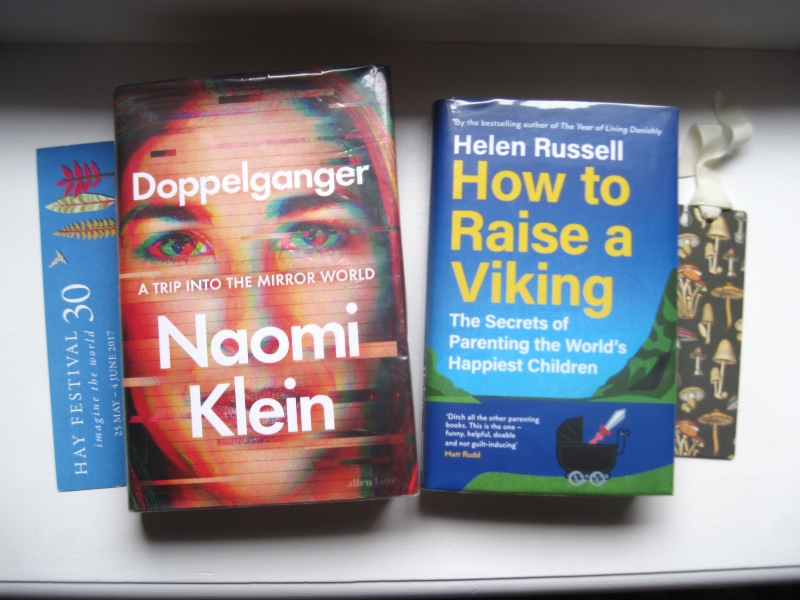
- Doppelganger by Naomi Klein

CURRENTLY READING
- The Paris Wife by Paula McLain (rereading for book club)
- The Bee Sting by Paul Murray
- The Song of the Whole Wide World: On Grief, Motherhood and Poetry by Tamarin Norwood
- Come and Get It by Kiley Reid
- How to Raise a Viking: The Secrets of Parenting the World’s Happiest Children by Helen Russell
- The Collected Stories of Carol Shields
- Before the Light Fades by Natasha Walter
- Lunar New Year Love Story by Gene Luen Yang
CURRENTLY READING-ISH
(set aside temporarily)
- Death Valley by Melissa Broder
- The Year of the Cat by Rhiannon Lucy Cosslett
- King by Jonathan Eig
- Babel by R.F. Kuang
CHECKED OUT, TO BE READ
- After Dark by Haruki Murakami
- Jungle House by Julianne Pachico
RETURNED UNFINISHED
- A Sign of Her Own by Sarah Marsh: I was intrigued enough by the premise – the story of a deaf pupil of Alexander Graham Bell’s – and the fact that the author is surgeon Henry Marsh’s daughter to put this on my Women’s Prize wish list. However, the writing just wasn’t there in the first chapter, when it’s imperative to draw a reader in, nor has Marsh been well served by her publisher, who allowed this to go to press with three glaring errors within the first 10 pages: a missing period at the end of a sentence on p. 5, “he’ll being saying” [for he’ll be saying] on p. 6, and “tthere” on p. 8.
RETURNED UNREAD
- Peach Blossom Spring by Melissa Fu
What have you been reading or reviewing from the library recently?
Share a link to your own post in the comments. Feel free to use the above image. The hashtag is #LoveYourLibrary.
Love Your Library, February 2024
Thanks to Eleanor, Jana, and Laura for posting about their recent library reads. Everyone is welcome to join in with this meme that runs on the last Monday of the month.
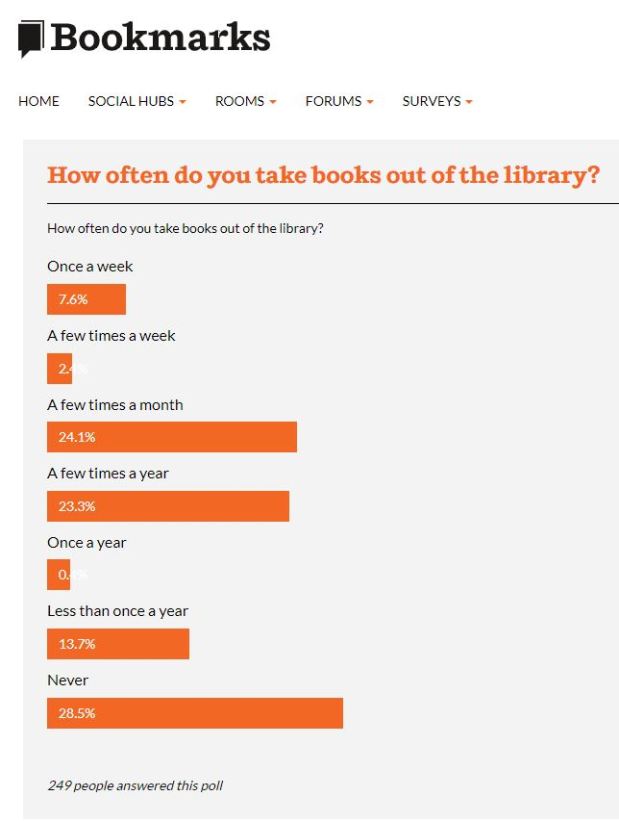
This statistic popped up on a poll I answered. Considering that this is a Penguin forum for people who consider themselves to be dedicated readers, I was appalled by the ‘Never’ figure (and the total of the bottom four bars). Do so many really buy every single book they read?! (I answered ‘Once a week’, of course.)
Literary prize season is heating up, with recent longlist announcements for the inaugural Women’s Prize for Non-Fiction and the Walter Scott Prize for historical fiction. Coming up in early March, we’ll be able to compare the Carol Shields Prize and Women’s Prize longlists. For all of these nominees and more, my first port of call is always the library. It’s especially handy when a book can do double duty for multiple lists: I’m awaiting holds of Doppelganger by Naomi Klein, which is nominated for both the Women’s Prize for Non-Fiction and the Writers’ Prize; and The Bee Sting by Paul Murray, which was on the Booker Prize shortlist, is currently shortlisted for the Writers’ Prize, and won a Nero Award.
Since last month:
READ
- The Absolutely True Diary of a Part-Time Indian by Sherman Alexie

- Brother Do You Love Me? by Manni Coe

- I’m Glad My Mom Died by Jennette McCurdy

- The Tiger’s Wife by Téa Obreht (reread for book club)

- Went to London, Took the Dog by Nina Stibbe
- The Winter Wife by Claire Tomalin


CURRENTLY READING
- Sleepless: Discovering the Power of the Night Self by Annabel Abbs
- The Home Child by Liz Berry
- Death Valley by Melissa Broder
- King by Jonathan Eig
- Mrs March by Virginia Feito (for Literary Wives)
- Howards End by E.M. Forster (rereading for book club)
- Babel by R.F. Kuang
- The Collected Stories of Carol Shields
- Before the Light Fades by Natasha Walter
CHECKED OUT, TO BE READ
- Blood by Dr Jen Gunter
- Groundbreakers: The Return of Britain’s Wild Boar by Chantal Lyons
- After Dark by Haruki Murakami
- Jungle House by Julianne Pachico
RETURNED UNFINISHED
- A Thread of Violence by Mark O’Connell – I loved To Be a Machine and Notes from an Apocalypse and so thought I could happily read O’Connell on any subject, but a crime I’d never heard about and learned the basics of within the first 20 pages was never going to engage me for the length of a whole book.

RETURNED UNREAD
- None of the Above by Travis Alabanza
- Godkiller by Hannah Kaner
- Cahokia Jazz by Francis Spufford
Others of you have loved those books, but I couldn’t get anywhere with them; forgive me!
- Day by Michael Cunningham
- Wasteland by Oliver Franklin-Wallis
- Tell Me Good Things by James Runcie
- Reasons to Be Cheerful by Nina Stibbe
- Night Side of the River by Jeanette Winterson
And maybe another time for these.
What have you been reading or reviewing from the library recently?

Share a link to your own post in the comments. Feel free to use the above image. The hashtag is #LoveYourLibrary.
The Orange Fish by Carol Shields (Buddy Reread)
Marcie of Buried in Print and I are rereading Shields’s short stories for the first quarter of 2024: one volume per month from the Collected Stories. My review of the first one, Various Miracles (1985), is here. The Orange Fish followed four years later. It’s a shorter book – 12 stories rather than 21 – but again opens with the title story, which features a gentle slide into absurdity. The members of a select group think their possession of an orange fish lithograph makes them special, and the sense of being chosen enlivens and rejuvenates them. But when the artwork becomes widely available, it devalues their joy in it. This reminded me of a statistic I’ve often heard: experiments show that people don’t want to be earning a particular amount of money; they want to be earning comfortably relative to others.
 “Today Is the Day” stands out for its fable-like setup: “Today is the day the women of our village go out along the highway planting blisterlilies.” With the ritualistic activity and the arcane language, it seems borne out of women’s secret history; if it weren’t for mentions of a few modern things like a basketball court, it could have taken place in medieval times.
European settings recur in a few stories, and there are more third-person POVs than first-. And surprise! A character from Various Miracles is back: Meershank, the writer from “Flitting Behaviour,” stars in “Block Out.” Here Shields inverts the fear of writer’s block: for this prolific scribbler it’s a welcome break. “The suffering of the throttled was his, and he felt appropriately shriven, haunted, beset and blessed.”
In both “Collision” and “Family Secrets,” Shields muses on the biographer’s art, asking what passes into the historical record. The former involves a brief encounter between Martä and Malcolm, a visiting consultant, in Eastern Europe. I loved the mischievous personification: “Biography, that old buzzard, is having a field day, running along behind them picking up all the bits and pieces.” In “Family Secrets,” the narrator remembers that, before marriage, her mother took a year off teaching for “sickness,” and wonders if it was actually a pregnancy, hidden as assiduously as two amputations in the family. “Lies, secrets, casual misrepresentations and small failures of memory, all these things are useful in their way. History gobbles everything up willy-nilly”. Ernest Hemingway also makes a fun cameo appearance in this one.
I had three favourites: 1) “Hinterland” has a married couple visiting Paris at a time of terrorist activity. (There’s a fantastic list of the random things Roy might have thought of while fleeing the bomb threat, but didn’t.) The combination of that and a museum setting of course made me think of The Goldfinch. But it seems like the greater threats here are ageing and potential breakdowns within the family. “Milk Bread Beer Ice,” the last story in the collection, is also travel-based and contrasts the wife’s love of words with this marriage’s fundamental failure of communication. 2) “Hazel,” one I mistakenly read last month, is an example of Shields’s abiding interest in happenstance and how it changes a life’s direction.
 And my overall favourite, 3) “Fuel for the Fire,” a lovely festive-season story that gets beyond the everything-going-wrong-on-a-holiday stereotypes, even though the oven does play up as the narrator is trying to cook a New Year’s Day goose. The things her widowed father brings along to burn on their open fire – a shed he demolished, lilac bushes he took out because they reminded him of his late wife, bowling pins from a derelict alley – are comical yet sad at base, like so much of the story. “Other people might see something nostalgic or sad, but he took a look and saw fuel.” Fire is a force that, like time, will swallow everything.
Being a significantly shorter collection than Various Miracles, The Orange Fish seems to contain less filler and so struck me as stronger overall. There were only maybe one or two stories that I was less engaged with, and the themes of art, biography, coincidence, marriages and writers reminded me of works by some of my favourite authors, Julian Barnes, A.S. Byatt and David Lodge.
My original rating (c. 2008):
My rating now: 
Book Serendipity, January to February 2024
I call it “Book Serendipity” when two or more books that I read at the same time or in quick succession have something in common – the more bizarre, the better. This is a regular feature of mine every couple of months. Because I usually have 20–30 books on the go at once, I suppose I’m more prone to such incidents. The following are in roughly chronological order.
- I finished two poetry collections by a man with the surname Barnett within four days in January: Murmur by Cameron Barnett and Birds Knit My Ribs Together by Phil Barnett.

- I came across the person or place name Courtland in The Optimist’s Daughter by Eudora Welty, then Cortland in a story from The Orange Fish by Carol Shields, then Cotland (but where? I couldn’t locate it again! Was it in Elizabeth Is Missing by Emma Healey?).
- The Manet painting Olympia is mentioned in Christmas Holiday by W. Somerset Maugham and The Paris Novel by Ruth Reichl (both of which are set in Paris).


- There’s an “Interlude” section in Babel by R.F. Kuang and The Vulnerables by Sigrid Nunez.
- The Morris (Minor) car is mentioned in Elizabeth Is Missing by Emma Healey and Various Miracles by Carol Shields.
- The “flour/flower” homophone is mentioned in Babel by R.F. Kuang and Various Miracles by Carol Shields.
- A chimney swift flies into the house in Cat and Bird by Kyoko Mori and The Optimist’s Daughter by Eudora Welty.
- A character named Cornelius in The Fruit Cure by Jacqueline Alnes and Wellness by Nathan Hill.
- Reading two year challenge books at the same time, A Year of Biblical Womanhood by Rachel Held Evans and Local by Alastair Humphreys, both of which are illustrated with frequent black-and-white photos by and of the author.
- A woman uses a bell to summon children in one story of Universally Adored and Other One Dollar Stories by Elizabeth Bruce and The Optimist’s Daughter by Eudora Welty.
- Apple turnovers get a mention in A Year of Biblical Womanhood by Rachel Held Evans and Wellness by Nathan Hill.
- A description of rolling out pie crust in A Year of Biblical Womanhood by Rachel Held Evans and Cat and Bird by Kyoko Mori.

- The idea of a house giving off good or bad vibrations in Wellness by Nathan Hill and a story from Various Miracles by Carol Shields.

- Emergency C-sections described or at least mentioned in Brother Do You Love Me by Manni Coe, The Unfamiliar by Kirsty Logan, Wellness by Nathan Hill, and lots more.
- Frustration with a toddler’s fussy eating habits, talk of “gentle parenting” methods, and mention of sea squirts in Wellness by Nathan Hill and Matrescence by Lucy Jones.
- The nickname “Poet” in The Tidal Year by Freya Bromley and My Friends by Hisham Matar.
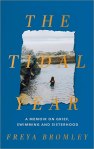
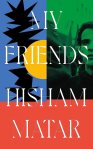
- A comment about seeing chicken bones on the streets of London in The Tidal Year by Freya Bromley and Went to London, Took the Dog by Nina Stibbe.
- Swans in poetry in The Tidal Year by Freya Bromley and Egg/Shell by Victoria Kennefick.
- A mention or image of Captcha technology in Egg/Shell by Victoria Kennefick and Went to London, Took the Dog by Nina Stibbe.
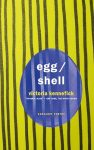

- An animal automaton in Loot by Tania James and Egg/Shell by Victoria Kennefick.
- A mention of Donna Tartt in The Tidal Year by Freya Bromley, Looking in the Distance by Richard Holloway, and Matrescence by Lucy Jones.
- Cathy Rentzenbrink appears in The Tidal Year by Freya Bromley and Went to London, Took the Dog by Nina Stibbe.
 Dialogue is given in italics in the memoirs The Tidal Year by Freya Bromley and The Unfamiliar by Kirsty Logan.
- An account of a man being forced to marry the sister of his beloved in A Year of Biblical Womanhood by Rachel Held Evans, Wellness by Nathan Hill, and The Tiger’s Wife by Téa Obreht.
- Saying that one doesn’t want to remember the loved one as ill (but really, not wanting to face death) so not saying goodbye (in Cat and Bird by Kyoko Mori) or having a closed coffin (Wellness by Nathan Hill).
- An unhappy, religious mother who becomes a hoarder in Wellness by Nathan Hill and I’m Glad My Mom Died by Jennette McCurdy.
- Characters called Lidija and Jin in Exhibit by R. O. Kwon and Lydia and Jing in the first story of This Is Salvaged by Vauhini Vara.
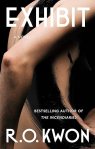
- Distress at developing breasts in Cactus Country by Zoë Bossiere and I’m Glad My Mom Died by Jennette McCurdy.
- I came across mentions of American sportscaster Howard Cosell in Heartburn by Nora Ephron and Stations of the Heart by Richard Lischer (two heart books I was planning on reviewing together) on the same evening. So random!
- Girls kissing and flirting with each other (but it’s clear one partner is serious about it whereas the other is only playing or considers it practice for being with boys) in Cactus Country by Zoë Bossiere and Winter’s Bone by Daniel Woodrell.
- A conversion to Catholicism in Places I’ve Taken My Body by Molly McCully Brown and Stations of the Heart by Richard Lischer.
- A zookeeper is attacked by a tiger when s/he goes into the enclosure (maybe not the greatest idea!!) in Tiger by Polly Clark and The Tiger’s Wife by Téa Obreht.

- The nickname Frodo appears in Tiger by Polly Clark and Brother Do You Love Me by Manni Coe.
- Opening scene of a parent in a coma, California setting, and striking pink and yellow cover to Death Valley by Melissa Broder and I’m Glad My Mom Died by Jennette McCurdy.

- An Englishman goes to Nigeria in Howards End by E.M. Forster and Immanuel by Matthew McNaught.
 The Russian practice of whipping people with branches at a spa in Tiger by Polly Clark and Fight Night by Miriam Toews.
- A mother continues washing her daughter’s hair until she is a teenager old enough to leave home in Mrs. March by Virginia Feito and I’m Glad My Mom Died by Jennette McCurdy.
- Section 28 (a British law prohibiting the “promotion of homosexuality” in schools) is mentioned in A Bookshop of One’s Own by Jane Cholmeley, Some Kids I Taught and What They Taught Me by Kate Clanchy, and Brother Do You Love Me by Manni Coe.
- Characters named Gord (in one story from Various Miracles by Carol Shields, and in Fight Night by Miriam Toews), Gordy (in The Absolutely True Diary of a Part-Time Indian by Sherman Alexie), and Gordo (in Blood Red by Gabriela Ponce).

- Montessori and Waldorf schools are mentioned in Cactus Country by Zoë Bossiere and When Fragments Make a Whole by Lory Widmer Hess.
- A trailer burns down in The Absolutely True Diary of a Part-Time Indian by Sherman Alexie and Cactus Country by Zoë Bossiere.
What’s the weirdest reading coincidence you’ve had lately?
Love Your Library, January 2024
It feels like sooooo much longer than five weeks (the week before Christmas) since I last posted one of these round-ups. The turn of the calendar to February will be a welcome milestone. My thanks, as always, go to Eleanor for her faithful participation in this monthly meme, and to Marcie for spotlighting her recent library reads.
Since last month:
READ
- Reproduction by Louisa Hall
- Flight by Lynne Seger Strong

CURRENTLY READING
- King by Jonathan Eig
- Babel by R.F. Kuang
- I’m Glad My Mom Died by Jennette McCurdy
- The Tiger’s Wife by Téa Obreht (rereading for book club)
- A Thread of Violence by Mark O’Connell
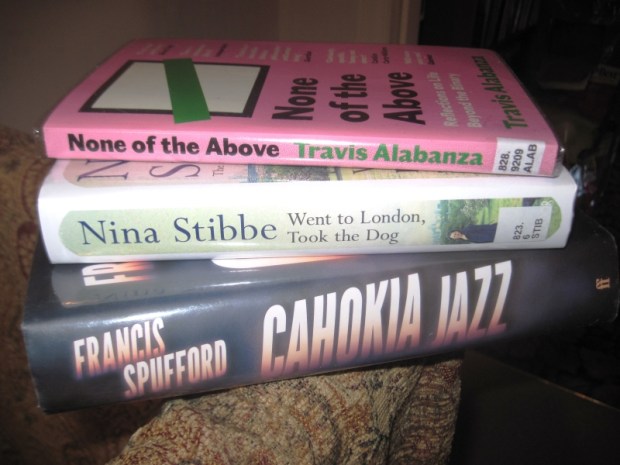
- Went to London, Took the Dog by Nina Stibbe
- Before the Light Fades by Natasha Walter
CHECKED OUT, TO BE READ
- None of the Above by Travis Alabanza
- Death Valley by Melissa Broder
- Brother Do You Love Me? by Manni Coe
- Jungle House by Julianne Pachico
- Cahokia Jazz by Francis Spufford
RETURNED UNFINISHED
- Undercurrent by Natasha Carthew
RETURNED UNREAD
- Stories for Christmas and the Festive Season
What have you been reading or reviewing from the library recently?
Share a link to your own post in the comments. Feel free to use the above image. The hashtag is #LoveYourLibrary.
 Bookish Beck = Rebecca Foster. American transplant to England. Freelance proofreader and book reviewer.

