Short Nonfiction Series for Novellas in November + Nonfiction November
Most Novellas in November participants focus on fiction, which is understandable and totally fine; I also like to incorporate works of short nonfiction during the month, which is a great opportunity to combine challenges with Nonfiction November.
Building on this list I wrote in 2021 (all the recommendations stand, but I’d update it by adding Weatherglass Books to the list of UK publishers), here are some nonfiction series that publish brief, intriguing works:
404 Ink’s Inklings series bears the tagline “big ideas to carry in your pocket.”
 I have reviewed Happy Death Club.
Biteback Publishing’s Provocations series “is a groundbreaking new series of short polemics composed by some of the most intriguing voices in contemporary culture.”
- I have reviewed Last Rights. I spied a pair of books by John Sutherland on youth and ageing at my library.

Bloomsbury’s Object Lessons series “is a series of concise, collectable, beautifully designed books about the hidden lives of ordinary things.”
- I have reviewed Doctor, Dust, Grave, Pregnancy Test, and Recipe.
Bloomsbury’s 33 1/3 is “a series of short books about popular music.”
- I have reviewed Jesus Freak.
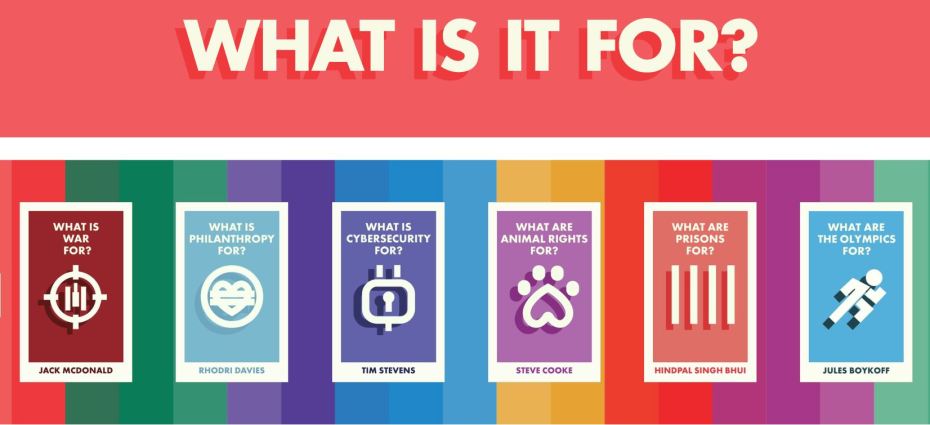
Bristol University Press’s What Is It For series is edited by George Miller, creator of the OUP Very Short Introductions (see below). Miller believes “short, affordable books can, and should, be intelligent and thought-provoking”; he hopes these will “be an agent for positive change,” addressing “tough questions about purpose and fitness for purpose: what has to change for the future to be better?”
A number of Fitzcarraldo Editions’ Essays are significantly under 200 pages.
 I have reviewed Intervals, A Very Easy Death, Happening, I Remain in Darkness, A Woman’s Story, and Alphabetical Diaries (plus others that are longer).
[Edited:] Thanks so much to Liz for letting me know about Jacaranda Books’ A Quick Ting On series, “the first ever non-fiction book series dedicated to Black British culture,” with books on plantains, Grime music, Black hair, and more.
[Edited:] There are three books so far in the Leaping Hare Press Find Your Path self-help series. I have just downloaded Find Your Path through Imposter Syndrome from Edelweiss.
Little Toller Books publishes mostly short nature and travel monographs and reprints.
- I have reviewed Deer Island, Aurochs and Auks, Orison for a Curlew, Herbaceous, The Ash Tree, and Snow.

From the Little Toller website
[Edited:] Thanks so much to Annabel for making me aware of Melville House’s The FUTURES series, which gives “imaginative future visions on a wide range of subjects, written by experts, academics, journalists and leading pop-culture figures.”
MIT Press’s Essential Knowledge series “offers accessible, concise, beautifully produced books on topics of current interest.” I spotted the Plastics book at my library.
Oxford University Press’s Very Short Introductions now cover a whopping 867 subjects!
- I had a couple of them assigned in my college days, including Judaism.
Penguin’s 100-book Great Ideas series reprints essays that introduce readers to “history’s most important and game-changing theories, philosophies and discoveries in accessible, concise editions.”
A number of Profile’s health-themed Wellcome Collection Books are well under 200 pages.
- I have reviewed Recovery, Free for All, Chasing the Sun, An Extra Pair of Hands, and After the Storm (plus others that are longer).


Saraband’s In the Moment series contains “portable, accessible books … exploring the role of both mind and body in movement, purpose, and reflection, finding ways of being fully present in our activities and environment.”
- I’m interested in Writing Landscape by Linda Cracknell and On Community by Casey Plett.
 Most of the original School of Life books are around 150 pages long. Their newer Essential Ideas series of three titles also promises “pocket books.”
- I have reviewed How to Develop Emotional Health, How to Age, How to Be Alone, and How to Think about Exercise.
Why not see if your local library has any selections from one or more of these series? #LoveYourLibrary

If you’re a reluctant nonfiction reader, choosing a short book could be a great way to engage with a topic that interests you – without a major time commitment. #NonfictionNovember
Keep in touch via X (@bookishbeck / @cathy746books) and Instagram (@bookishbeck / @cathy_746books). Add any related posts to the link-up. Don’t forget the hashtag #NovNov24.
Any suitable short nonfiction on your shelves?
Novellas in November Possibility Piles! (#NovNov24)
Less than two weeks to go now until Novellas in November (#NovNov24) begins! Cathy and I are getting geared up and making plans for what we’re going to read. As I mentioned in my announcement post, this year it’s my challenge to self to read mostly books of 150 pages or under. I gathered all my potential reads at home and in the library for photo shoots. Although we’re not having the below as themes this year, I’ve grouped my options in rough categories:
Short Classics (pre-1980)
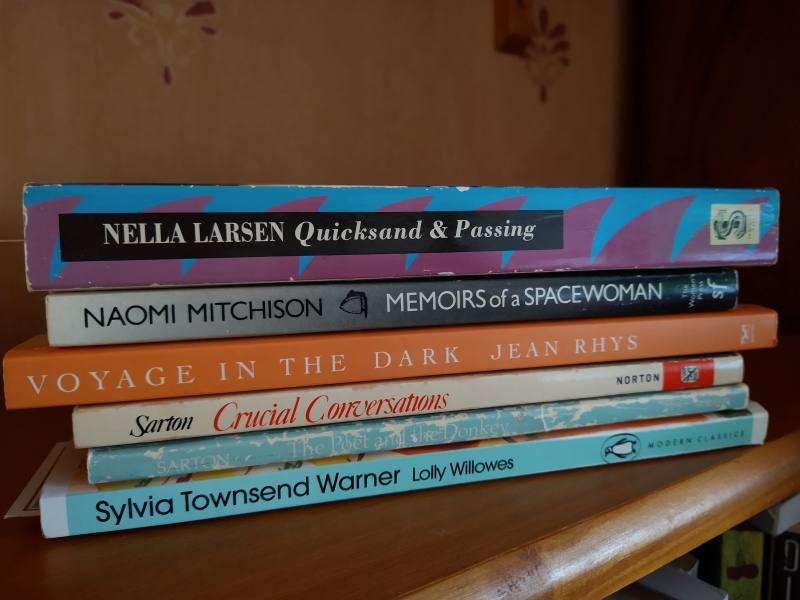
*Memoirs of a Spacewoman would do double duty for SciFi Month. I have already read Passing, so would just be reading Quicksand from the Nella Larsen omnibus.
Novellas in Translation
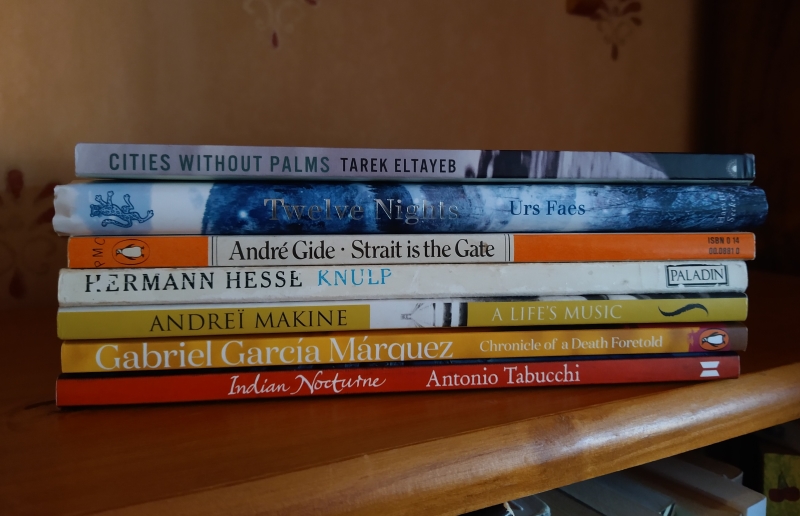
*Knulp, from the Little Free Library, would do double duty for German Literature Month.
Contemporary Novellas
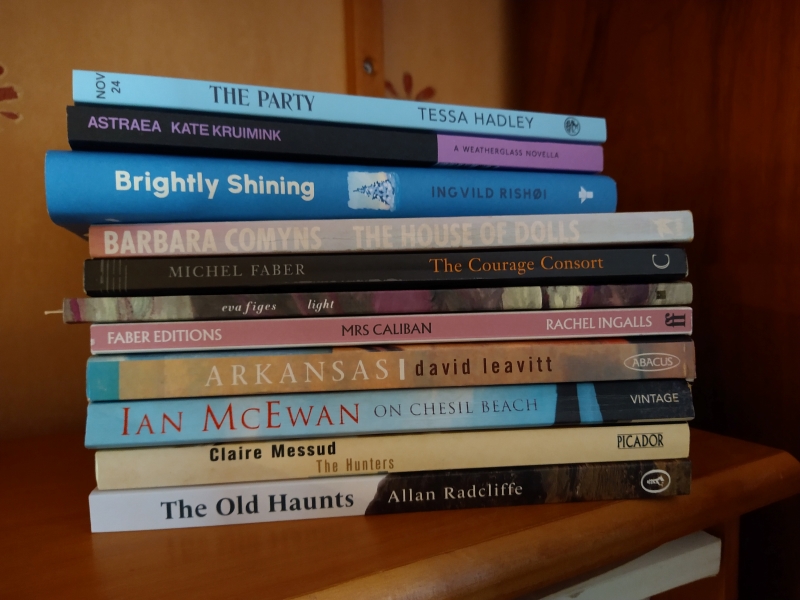
(With three review copies perched on the top.)
Library Haul


I can’t wait to get started on our buddy read, Orbital by Samantha Harvey!
Short Nonfiction
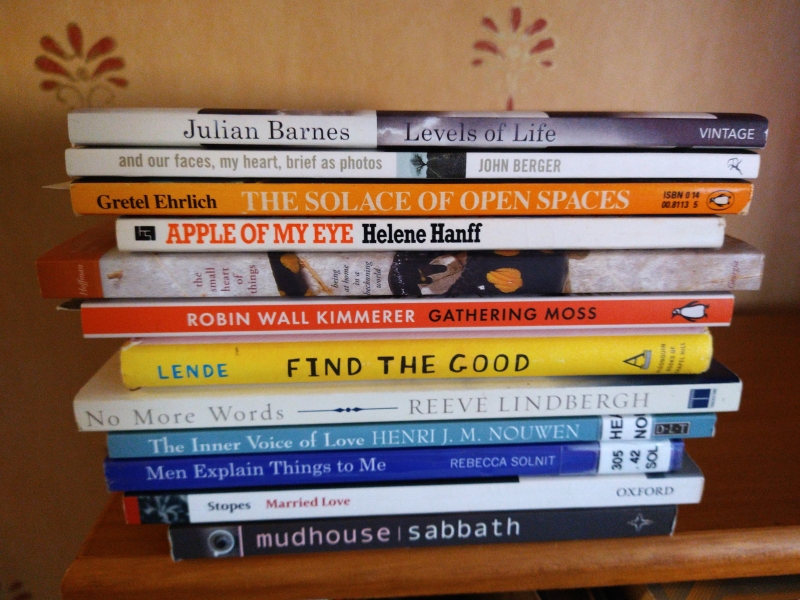
(And the right-hand Library Haul photo above.) On Wednesday I’ll post some ideas for how to link Novellas in November with Nonfiction November – there are various great series that only publish short nonfiction.
In 2021–2023, I read 29, 24 and 27 novellas, respectively. I wonder how many I’ll manage this year… Maybe I’ll aim for 30+, or an average of 1+ per day!
Spy any favourites or a particularly appealing title in my piles? Give me a recommendation for what I should be sure to try to get to.
The link-up is now open for you to share your planning posts!
Thanks to Cathy of What Cathy Read Next for starting us off.

Have any novellas lined up to read next month?
Love Your Library, September 2024
Thanks to Eleanor, Laura (here, here and here & Happy birthday!), Marcie and Naomi (here and here) for posting about their recent library reading!
On our holiday I popped into the Dunbar library (East Lothian, Scotland) while my husband was touring a nearby brewery. It seemed like a sweet and useful community centre, and I enjoyed the kid-friendly book returns box.


Last week my library removed its Perspex screens from around the three enquiry desks, nearly four years on from when they were put up during Covid.
I’m dipping into the Booker and Wainwright Prize shortlists through my library borrowing, and stocking up for R.I.P.
I appreciated this passage about libraries from Home Is Where We Start by Susanna Crossman:
Every week, from the age of seven, I walk the twenty minutes to the local library, and I borrow four books. My path takes me past the greengrocer’s, the newsagent’s, the butcher’s, the baker’s, the bank, the post office, and across the town square … Inside the library, high walls are lined with books, and when I’ve read all the Children’s section, the librarian lets me take the Adult books, but only the Classics. Back in my room at the community, I read for hours. Reading is one of my forms of resistance. … Books are my home, and when you turn the cover, you close one door and open another, moving to imagined worlds.
My library use over the last month:
(links to reviews not already featured on the blog)
READ
- One Garden against the World: In Search of Hope in a Changing Climate by Kate Bradbury
- Clear by Carys Davies
- Moominpappa at Sea by Tove Jansson
- The Song of the Whole Wide World: On Motherhood, Grief, and Poetry by Tamarin Norwood
- Strange Sally Diamond by Liz Nugent
- Heartstopper: Volume 1 by Alice Oseman (reread)
- Heartstopper: Volume 2 by Alice Oseman (reread)
- Heartstopper: Volume 3 by Alice Oseman (reread)
- Lumberjanes: Campfire Songs by Shannon Watters
- The Echoes by Evie Wyld

SKIMMED
- The Garden against Time: In Search of a Common Paradise by Olivia Laing
- The Accidental Garden: The Plot Thickens by Richard Mabey
CURRENTLY READING
- The Lone-Ranger and Tonto Fistfight in Heaven by Sherman Alexie
CURRENTLY READING-ish (more accurately, set aside temporarily)
- Death Valley by Melissa Broder
- The Tale of Despereaux by Kate DiCamillo
- Learning to Think: A Memoir about Faith, Demons, and the Courage to Ask Questions by Tracy King
- Groundbreakers: The Return of Britain’s Wild Boar by Chantal Lyons
- Unearthing: A Story of Tangled Love and Family Secrets by Kyo Maclear
- Late Light: Finding Home in the West Country by Michael Malay
- Mrs Gulliver by Valerie Martin
- After Dark by Haruki Murakami
- Stowaway: The Disreputable Exploits of the Rat by Joe Shute

CHECKED OUT, TO BE READ
- A Haunting on the Hill by Elizabeth Hand
- Dispersals: On Plants, Borders and Belonging by Jessica J. Lee
- Now She Is Witch by Kirsty Logan
- Held by Anne Michaels
- Heartstopper: Volume 4 by Alice Oseman (reread)
- It’s Not Just You: How to Navigate Eco-Anxiety and the Climate Crisis by Tori Tsui
IN THE RESERVATION QUEUE
- Orbital by Samantha Harvey
- Bothy: In Search of Simple Shelter by Kat Hill
- The Painter’s Daughters by Emily Howes
- Playground by Richard Powers
- The Place of Tides by James Rebanks

ON HOLD, TO BE PICKED UP
- The Glassmaker by Tracy Chevalier
- James by Percival Everett
- Small Rain by Garth Greenwell
- Intermezzo by Sally Rooney
RETURNED UNREAD
- Wasteland: The Dirty Truth about What We Throw Away, Where It Goes, and Why It Matters by Oliver Franklin-Wallis – Twice I’ve had this out and failed to actually open it. I think I’m worried it will depress me.
- This Is My Sea by Miriam Mulcahy – A bereavement memoir with a swimming theme was sure to attract me, but the writing was blah. In fact, I think I may have borrowed this when it first came out in hardback and DNFed it then, too. Whoops!
RETURNED UNFINISHED
- The Forester’s Daughter by Claire Keegan (a standalone Faber short) – This didn’t seem very interesting, and I figure there is no point reading just one story from a whole unread collection.
- The Burial Plot by Elizabeth Macneal – I actually read 109 pages, then left it alone for weeks before it was requested off me. It was perfectly readable stuff but I kept feeling like I’d encountered this story before. It reminded me most of The Shadow Hour by Kate Riordan but was also trying for the edginess of early Sarah Waters. Now that I’ve DNFed Macneal’s two latest novels, I think it’s time to stop trying her.
What have you been reading or reviewing from the library recently?

Share a link to your own post in the comments. Feel free to use the above image. The hashtag is #LoveYourLibrary.
Summer Reading, Part II: Beanland, Watters; O’Farrell, Oseman Rereads
Apparently the UK summer officially extends to the 22nd – though you’d never believe it from the autumnal cold snap we’re having just now – so that’s my excuse for not posting about the rest of my summery reading until today. I have a tender ancestry-inspired story of a Jewish family’s response to grief, a bizarre YA fantasy comic, and two rereads, one a family story from one of my favourite contemporary authors and the other the middle instalment in a super-cute graphic novel series.
Florence Adler Swims Forever by Rachel Beanland (2020)
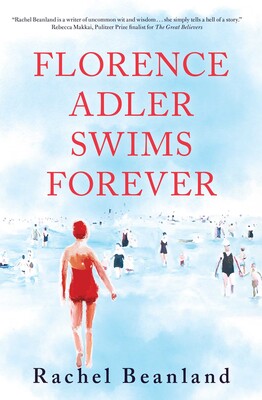 After reviewing Beanland’s second novel, The House Is on Fire, I wanted to catch up on her debut. Both are historical and give a broad but detailed view of a particular milieu and tragic event through the use of multiple POVs. It’s the summer of 1934 in Atlantic City, New Jersey. Florence, a plucky college student who intends to swim the English Channel, drowns on one of her practice swims. This happens in the first chapter (and is announced in the blurb), so the rest is aftermath. The Adlers make the unusual decision to keep Florence’s death from her sister, Fannie, who is on hospital bedrest during her third pregnancy because she lost a premature baby last year. Fannie’s seven-year-old daughter, Gussie, is sworn to silence about her aunt – with Stuart, the lifeguard who loved Florence, and Anna, a German refugee the Adlers have sponsored, turning it into a game for her by creating the top-secret “Florence Adler Swims Forever Society” with its own language.
The particulars can be chalked up to family history: this really happened; the Gussie character was Beanland’s grandmother, and the author believes her great-great-aunt Florence died of hypertrophic cardiomyopathy. It’s intriguing to get glimpses of Jewish ritual, U.S. anti-Semitism and early concern over Nazism, but I was less engaged with other subplots such as Fannie’s husband Isaac’s land speculation in Florida. There’s a satisfying queer soupcon, and Beanland capably inhabits all of the perspectives and the bereaved mindset. (Secondhand – Awesomebooks.com) 
Lumberjanes: Campfire Songs by Shannon Watters et al. (2020)
 This comics series created by a Boom! Studios editor ran from 2014 to 2020 and stretched to 75 issues that have been collected in 20+ volumes. Watters wanted to create a girl-centric comic and roped in various writers who together decided on the summer scout camp setting. I didn’t really know what I was getting into with this set of six stand-alone stories, each illustrated by a different artist. The characters are recognizably the same across the stories, but the variation in style meant I didn’t know what they’re “supposed” to look like. All are female or nonbinary, including queer and trans characters. I guess I expected queer coming-of-age stuff, but this is more about friendship and fantastical adventures. Other worlds are just a few steps away. They watch the Northern Lights with a pair of yeti, attend a dinner party cooked by a ghost chef, and play with green kittens and giant animate pumpkins. My favourite individual story was “A Midsummer Night’s Scheme,” in which Puck the fairy interferes with preparations for a masquerade ball. I won’t bother reading other installments. (Public library)
And the rereads:
Instructions for a Heatwave by Maggie O’Farrell (2013)
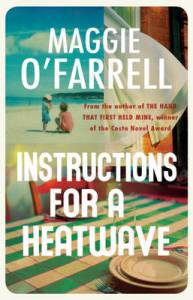 I read this when it first came out (original review here) and saw O’Farrell speak on it, in conversation with Julie Cohen, at a West Berkshire Libraries event – several years before I lived in the county. I expected it to be a little more atmospheric about the infamous UK drought of summer 1976. All I’d remembered otherwise was that one character is hiding illiteracy and another has an affair while leading a residential field trip. The novel opens, Harold Fry-like, with Robert Riordan disappearing from his suburban home. Gretta phones each of her adult children to express concern, but she’s so focussed on details like how she’ll get into the shed without Robert’s key that she fails to convey the gravity of the situation. Eventually the three descend on her from London, Gloucestershire and New York and travel to Ireland together to find him, but much of the novel is a patient filling-in of backstory: why Monica and Aoife are estranged, what went wrong in Michael Francis’s marriage, and so on.
I had forgotten the two major reveals, but this time they didn’t seem as important as the overall sense of decisions with unforeseen consequences. O’Farrell was using extreme weather as a metaphor for risk and cause-and-effect (“a heatwave will act upon people. It lays them bare, it wears down their guard. They start behaving not unusually but unguardedly”), and it mostly works. But this wasn’t a top-tier O’Farrell on a reread. (Little Free Library)
My original rating (2013): 
My rating now:
Average:
Heartstopper: Volume 3 by Alice Oseman (2020)
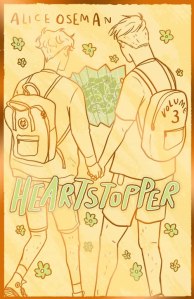 Heartstopper was my summer crush back in 2021, and I couldn’t resist rereading the series in the hardback reissue. That I started with the middle volume (original review here) is an accident of when my library holds arrived for me, but it turned out to be an apt read for the Olympics summer because it mostly takes place during a one-week school trip to Paris, full of tourism, ice cream, hijinks and romance. Nick and Charlie are dating but still not out to everyone in their circle. This is particularly true for Nick, who is a jock and passes as straight but is actually bisexual. Charlie experienced a lot of bullying at his boys’ school before his coming-out, so he’s nervous for Nick, and the psychological effects persist in his disordered eating. Oseman deals sensitively with mental health issues here, and has fun adding more queer stories into the background: Darcy and Tara, Tao and Elle (trans), and even the two male trip chaperones. It’s adorable how everything flirtation-related is so dramatic and the characters are always blushing and second-guessing. Lucky teens who get to read this at the right time. (Public library)
Any final “heat” or “summer” books for you this year?
Making Plans for a Return to Northumberland & A Book “Overhaul”
It’s just over three years since our terrific trip to Northumberland. We enjoyed ourselves so much that, when casting around for somewhere within the country to spend a week in September before the university term starts for my husband, we decided to go back later this week. This time we’re renting a holiday cottage in Berwick and travelling by train and bus instead of car – a decision that has already been complicated by rail replacement buses, but we’re making it work. The plan is to explore Berwick and Bamburgh; revisit Alnwick, the Farne Islands, and Lindisfarne (Holy Island); and venture into Scotland for a day trip. We’ll also stay with friends in York on the way up and back and attend York’s annual beer festival with them.
An Overhaul of Last Trip’s Book Purchases
Simon of Stuck in a Book runs a regular blog feature he calls “The Overhaul,” where he revisits a book haul from some time ago and takes stock of what he’s read, what he still owns, etc. (here’s the most recent one). With his permission, I occasionally borrow the title and format to look back at what I’ve bought. Previous overhaul posts have covered Hay-on-Wye, birthdays, and the much-missed Bookbarn International. It’s a good way of holding myself accountable for what I’ve purchased and reminding myself to read more from my shelves.
So, earlier this summer, I took a look back at the whopping 33 new and secondhand books I acquired in Northumberland (and en route) in July 2021; they are all pictured in my trip write-up post.
Had already read: 2
- How Far Can You Go by David Lodge
- Leaving Church by Barbara Brown Taylor – It’s on my shelf for rereading.

Have read since then: 22 – I cannot tell you how proud I am of this number! A full 2/3!
- Until the Real Thing Comes Along by Elizabeth Berg (see below)
- The Girl Aquarium by Jen Campbell
- The Waterfall by Margaret Drabble
- Home Life by Alice Thomas Ellis
- Talking to the Dead by Elaine Feinstein
- Islands of Abandonment by Cal Flyn
- The End We Start From by Megan Hunter
- The Story of My Life by Helen Keller
- Spring by Karl Ove Knausgaard
- No Time to Spare by Ursula K. Le Guin
- The Facebook of the Dead by Valerie Laws
- An Advent Calendar by Shena Mackay
- Christmas Holiday by W. Somerset Maugham
- Birds of America by Lorrie Moore
- Thinking Again by Jan Morris
- Emerald by Ruth Padel
- Dear George by Helen Simpson
- Intimations by Zadie Smith
- Filthy Animals by Brandon Taylor
- North with the Spring by Edwin Way Teale
- Female Friends by Fay Weldon
- Kitchen by Banana Yoshimoto
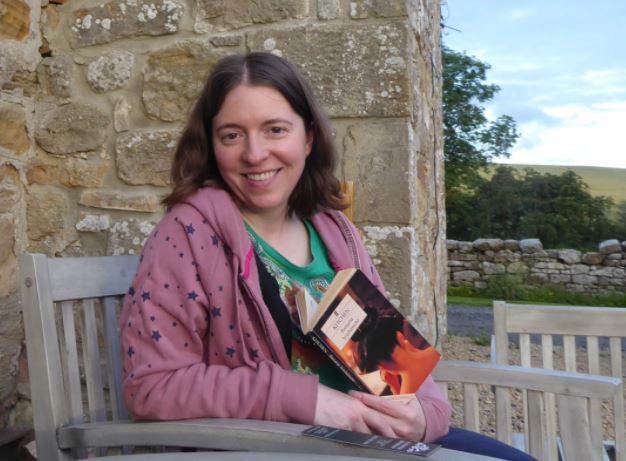
Plus…
Partially read: 4
- A Keeper of Sheep by William Carpenter
- Nature Cure by Richard Mabey
- Vida by Marge Piercy
- The Truants by Kate Weinberg
Skimmed: 1 (A Childhood in Scotland by Christian Miller)
Gave away unread: 1 (Wolf Winter by Cecilia Ekback)
Total still unread: 7
Total no longer owned: 11 (resold, gifted or donated to the Little Free Library) – Getting rid of at least 1/3 of what I read seems like a pretty solid ratio.
I surveyed the pile of books still unread or only partly read and picked up a few to read beforehand or on the way back to Northumberland. I managed to finish one:
Until the Real Thing Comes Along by Elizabeth Berg (1999)
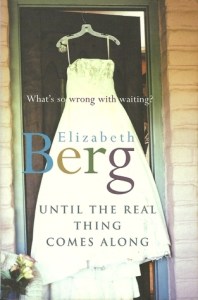 I think of Berg as Anne Tyler lite, likely to appeal to readers of Sue Miller, Catherine Newman, and Maggie O’Farrell. I’d read five of her novels and they are all at least moderately enjoyable, with Talk Before Sleep the best and Open House and The Pull of the Moon in a second tier. But this was pretty annoying and cliched. The plot is straight out of that Rupert Everett–Madonna movie The Next Best Thing. Patty is madly in love with her friend Ethan but, darn it, he’s gay. She’s also 36 and desperate for a baby. She can’t see another way to get one, so Ethan agrees to impregnate her. Works first time! Everything goes perfectly with the pregnancy, and he says he’ll try to act straight so they can move to Minneapolis to raise the baby. Reality does set in, but only very late on. My main problem was Patty: always complaining, putting no effort into her real estate career, and oblivious to when her parents are struggling. Ethan’s experience losing friends to AIDS is shoehorned in through one histrionic paragraph. This got better as it went on, but certainly wasn’t what I’d call fresh and convincing.
and am partway through another:
Sorry to Disrupt the Peace by Patrick [Patty Yumi at the time of publication] Cottrell – An unusual voice-driven novel about a Korean adoptee mourning her brother’s death by suicide. I’m not sure I’ll stay the course.
I’m packing for the train:
The Picnic and Suchlike Pandemonium by Gerald Durrell
A House Unlocked by Penelope Lively
Vida by Marge Piercy
…along with plenty of other books in progress!
Short Stories in September (and R.I.P.): The Secret Life of Insects by Bernardo Esquinca
For the ninth year in a row, I’m making a special effort to read short stories in September; otherwise, short fiction volumes tend to languish on my shelves (and e-readers) unread. In the past few years, I’ve managed to read 11 or 12 collections during the month of September.
I don’t consider myself a great short story fan, so I was surprised to see I’ve already read 20 collections this year. Several were via a spring rereading of Carol Shields’s complete stories with Marcie (Buried in Print). Some other highlights: Cocktail by Lisa Alward, longlisted for the Carol Shields Prize; Barcelona by Mary Costello; The Beggar Maid by Alice Munro; and a speculative trio: There Is a Rio Grande in Heaven by Ruben Reyes Jr. (reviewed for BookBrowse), The Man in the Banana Trees by Marguerite Sheffer (University of Iowa Press, 5 November; reviewed for Shelf Awareness), and How We Know Our Time Travelers by Anita Felicelli (WTAW Press, 3 December; forthcoming for Foreword Reviews).
First of my dedicated reviews for the month is a set of Mexican horror stories that happens to tie into R.I.P. (I always think that’s only in October, but it technically starts on 1 September):

The Secret Life of Insects by Bernardo Esquinca (2023)
[Translated from the Spanish by James D. Jenkins]
Esquinca channels classic horror authors such as H.P. Lovecraft and Edgar Allan Poe in these 14 creepy stories drawn from across his career. The settings include caves, forests and abandoned apartments; and octopi, cursed dolls and dreams are among the subjects. These characters are obsessed – or possessed. As in classic ghost stories, the protagonists tend to be researchers or writers whose absolute faith in logic is shaken by encounters with the supernatural. For instance, the narrator of the title story is a forensic entomologist who makes contact with his murdered wife; the undead feature in a couple of other stories, too.
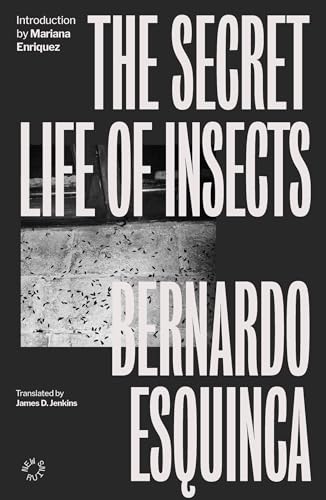 Mysterious manuscripts and therapy appointments also recur – there’s a scholarly Freudianism at play here. In the novella-length “Demoness,” friends at a twentieth high school reunion recount traumatic experiences from adolescence (not your average campfire fare). “Our traumas define us much more than our happy moments, [Ignacio, a Jesuit priest] thought. They’re the real revelations about ourselves.” Masturbation features heavily in this and in “Pan’s Noontide,” which has both of Arturo’s wives disappear in connection with an ecoterrorism cult. I occasionally found the content a bit macho and gross-out, and wished the women could be more than just sexualized supporting figures in male fantasies.
My favourite story was “Señor Ligotti” (no doubt in homage to American horror writer Thomas Ligotti), in which a struggling novelist unwittingly signs away more than he intended when the title character offers him an apartment and then a publishing deal. The Gothic black-and-white illustrations by Luis Perez Ochando are surreal or grotesque, and recall Bosch, Dalí and Hogarth. There is an introduction by Mariana Enriquez, whose stories I found more memorable in general, and I was also reminded slightly of Agustina Bazterrica. I’m by no means a regular horror reader yet found this book consistently engaging, though I concluded it had more style than soul.
With thanks to New Ruins (Dead Ink) for the free copy for review.
Currently reading: I Can Outdance Jesus by Willie Davis, The Woman Who Gave Birth to Rabbits by Emma Donoghue, The Forester’s Daughter by Claire Keegan, The Souvenir Museum by Elizabeth McCracken, A New Day by Sue Mell, Ladies’ Lunch by Lore Segal
Resuming soon: The Secrets of a Fire King by Kim Edwards, The Best Short Stories 2023: The O. Henry Prize Winners (ed. Lauren Groff)
Up next: The Lone Ranger and Tonto Fistfight in Heaven by Sherman Alexie, The End of the World is a Cul de Sac by Louise Kennedy, Sinking Bell by Bojan Louis, Light Box by K.J. Orr, The Forgetters by Greg Sarris, The Long Swim by Terese Svoboda
Are you a short story fan? Read any good ones recently?
20 Books of Summer 2024 Retrospective
That’s a wrap! It was my seventh year in a row participating. I managed to read and review all 20 books by yesterday. Only eight of the books I earmarked in my plans (plus two more that were DNFs) made it into my final stacks, but I don’t really consider that a problem.

With what I substituted in, I ended up achieving 1 reread and getting through 7 review copies, 3 of which had been languishing in my set-aside piles for a long time. I stuck to my pledge to read only a) books that I owned in hardback and b) books by women. I read roughly half and half fiction and non- (11 vs. 9).
Unfortunately, a lot of my selections this year happened to be lackluster: there were 5 books that I rated at 2.5 stars or below, and another 6 that merited 3 stars. Those 11 make for a pretty low average rating across the 20.
By contrast, I had a few 4-star highlights: Company by Shannon Sanders, Sleeping with Cats by Marge Piercy, and My Good Bright Wolf by Sarah Moss (if anyone in the UK would like my proof copy of this last one, let me know and I’ll post it to you).
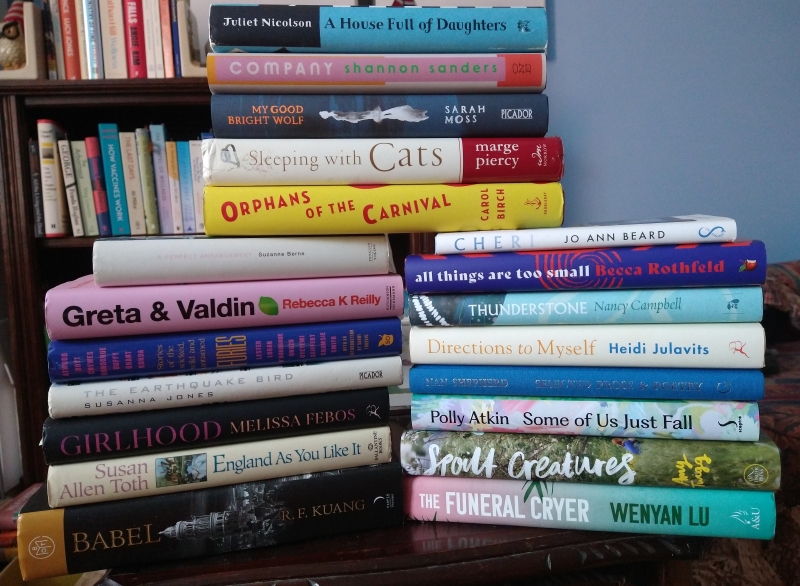
It was also fun tying into the Reading the Meow week and connecting reviews with events such as an online conference about Vita Sackville-West and the new album by the Bookshop Band.
I’ve cleared 16 of 23 (including the several DNFs) books from my shelves by reselling them or donating them to my neighbourhood Little Free Library. I’ll surely appreciate that extra space to accommodate the constant stream of incomers.
Next year I think I need to make the challenge even more open, because it seems that as soon as I ‘assign’ myself 20 books, I lose interest in most of them. Again, I want to limit myself to books from my shelves, but I won’t specify anything else. I’ll just let myself pick up whatever interests me at the time – bearing in mind that in the summers I like to indulge in juicy fiction that’s toward the popular end of literary.
How did your summer reading go?
Love Your Library, August 2024
It’s a Bank Holiday today here in the UK – if you have the day off, I hope you’re spending it a fun way. We’re on a day trip to Windsor Castle with friends who got free tickets through her work. Otherwise, there’s no way we would ever have gone: it’s very expensive, plus down with the monarchy and all that.
Thanks so much to Eleanor (here, here and here), Laura (the two images below) and Marcie for posting about their recent library reading!


Marina Sofia has posted a couple of relevant blogs, one a review of an Alberto Manguel book about his home library and the other a series of tempting photos of world libraries.
In the media: I loved this anti-censorship George Bernard Shaw quote posted by Book Riot on Instagram…

…and my heart was warmed by the story of Minnesota governor and current vice-presidential candidate Tim Walz installing a Little Free Library in the state capitol earlier this year. He gets my vote!
One volunteering day, a staff member told the strange-but-true story of an e-mail just received to the general libraries account. A solicitor presiding over an estate clearance let us know about a West Berkshire Libraries book found among their client’s effects, borrowed in early 1969 and never returned. Did we want it back? The consensus was that, as we’ve been doing fine without this book since BEFORE THE MOON LANDING, we will drop the issue.
Not exactly library related, but in other fun book news, I took a couple of online quizzes and got intriguing results:


My suggestion (for Angie Kim’s Happiness Falls) featured in the recent Faber Members’ summer reading recommendation round-up. And here’s that blog post I wrote for Foreword Reviews about the Bookshop Band’s new album and tour.
I’m hosting book club a week on Wednesday. Although it’s felt for a while like it might be doomed, the group has had a stay of execution at least until January. We took a break for the summer and at our July social everyone made enthusiastic noises about joining in with the four autumn and winter reads we voted on – plus we have two prospective new members who we hope will join us for the September meeting. So we’ll see how it goes.
My library use over the last month:
READ
- Private Rites by Julia Armfield
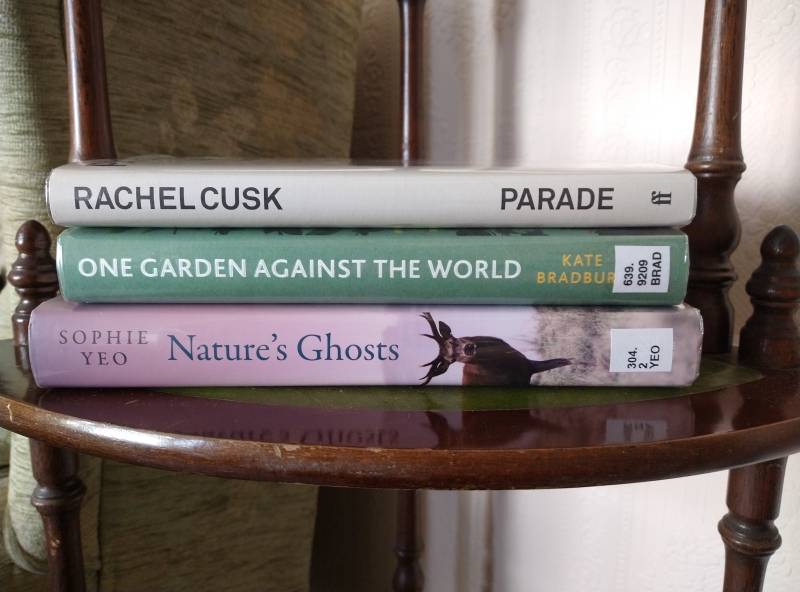
- Parade by Rachel Cusk
SKIMMED
- Nature’s Ghosts: A History – and Future – of the Natural World by Sophie Yeo
CURRENTLY READING
- One Garden against the World: In Search of Hope in a Changing Climate by Kate Bradbury
- Clear by Carys Davies (for September book club)
- Moominpappa at Sea by Tove Jansson
- The Garden against Time: In Search of a Common Paradise by Olivia Laing
- The Burial Plot by Elizabeth Macneal
- Late Light: Finding Home in the West Country by Michael Malay
- The Song of the Whole Wide World: On Motherhood, Grief, and Poetry by Tamarin Norwood
- The Echoes by Evie Wyld
CHECKED OUT, TO BE READ
- Wasteland: The Dirty Truth about What We Throw Away, Where It Goes, and Why It Matters by Oliver Franklin-Wallis
- This Is My Sea by Miriam Mulcahy
IN THE RESERVATION QUEUE
- The Glassmaker by Tracy Chevalier
- James by Percival Everett
- Small Rain by Garth Greenwell
- Bothy: In Search of Simple Shelter by Kat Hill
- The Painter’s Daughters by Emily Howes
- Dispersals: On Plants, Borders and Belonging by Jessica J. Lee
- Held by Anne Michaels
- Playground by Richard Powers
- Intermezzo by Sally Rooney
ON HOLD, TO BE PICKED UP
- The Accidental Garden: The Plot Thickens by Richard Mabey
RETURNED UNFINISHED
- The Cove: A Cornish Haunting by Beth Lynch – I enjoyed her previous memoir, and her writing is evocative, but this memoir about her return to the beloved site of childhood holidays lacks narrative drive. If you’re more familiar with the specific places, or can read it on location, you might be tempted to read the whole thing. I read 30 pages.
What have you been reading or reviewing from the library recently?
Share a link to your own post in the comments. Feel free to use the above image. The hashtag is #LoveYourLibrary.
Book Serendipity, June to Mid-August 2024
I call it “Book Serendipity” when two or more books that I read at the same time or in quick succession have something in common – the more bizarre, the better. This is a regular feature of mine every couple of months. Because I usually have 20–30 books on the go at once, I suppose I’m more prone to such incidents. People frequently ask how I remember all of these coincidences. The answer is: I jot them on scraps of paper or input them immediately into a file on my PC desktop; otherwise, they would flit away!
The following are in roughly chronological order.
- A self-induced abortion scene in Recipe for a Perfect Wife by Karma Brown and Sleeping with Cats by Marge Piercy.
- A woman who cleans buildings after hours, and a character named Tova who lives in the Seattle area in A Reason to See You Again by Jami Attenberg and Remarkably Bright Creatures by Shelby Van Pelt.
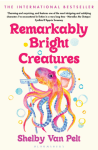
- Flirting with a surf shop employee in Sandwich by Catherine Newman and Remarkably Bright Creatures by Shelby Van Pelt.
- Living in Paris and keeping ticket stubs from all films seen in Paris Trance by Geoff Dyer and The Invention of Hugo Cabret by Brian Selznick.
- A schefflera (umbrella tree) is mentioned in Cheri by Jo Ann Beard and Company by Shannon Sanders.

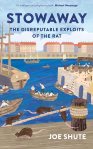
- The Plague by Albert Camus is mentioned in Knife by Salman Rushdie and Stowaway by Joe Shute.
- Making egg salad sandwiches is mentioned in Cheri by Jo Ann Beard and Sandwich by Catherine Newman.
- Pet rats in Stowaway by Joe Shute and Happy Death Club by Naomi Westerman. Rats are also mentioned in Mammoth by Eva Baltasar, The Tale of Despereaux by Kate DiCamillo, and The Colour by Rose Tremain.
- Eels feature in Our Narrow Hiding Places by Kristopher Jansma, Late Light by Michael Malay, and The Colour by Rose Tremain.
- Atlantic City, New Jersey is a location in Florence Adler Swims Forever by Rachel Beanland and Company by Shannon Sanders.
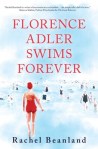 The father is a baker in Florence Adler Swims Forever by Rachel Beanland and Our Narrow Hiding Places by Kristopher Jansma.
- A New Zealand setting (but very different time periods) in Greta & Valdin by Rebecca K Reilly and The Colour by Rose Tremain.
- A mention of Melanie Griffith’s role in Working Girl in I’m Mostly Here to Enjoy Myself by Glynnis MacNicol and Happy Death Club by Naomi Westerman.
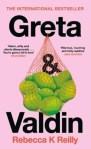 Ermentrude/Ermyntrude as an imagined alternate name in Greta & Valdin by Rebecca K Reilly and a pet’s name in Stowaway by Joe Shute.
- A poet with a collection that was published on 6 August mentions a constant ringing in the ears: Joshua Jennifer Espinoza (I Don’t Want to Be Understood) and Keith Taylor (What Can the Matter Be?).
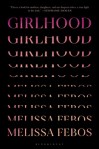
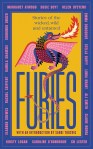
- A discussion of the original meaning of “slut” (a slovenly housekeeper) vs. its current sexualized meaning in Girlhood by Melissa Febos and Sandi Toksvig’s introduction to the story anthology Furies.
- An odalisque (a concubine in a harem, often depicted in art) is mentioned in I’m Mostly Here to Enjoy Myself by Glynnis MacNicol and The Shark Nursery by Mary O’Malley.
- Reading my second historical novel of the year in which there’s a disintegrating beached whale in the background of the story: first was Whale Fall by Elizabeth O’Connor, then Come to the Window by Howard Norman.
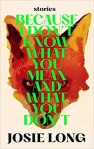 A short story in which a woman gets a job in online trolling in Because I Don’t Know What You Mean and What You Don’t by Josie Long and in the Virago Furies anthology (Helen Oyeyemi’s story).
- Her partner, a lawyer, is working long hours and often missing dinner, leading the protagonist to assume that he’s having an affair with a female colleague, in Recipe for a Perfect Wife by Karma Brown and Summer Fridays by Suzanne Rindell.
- A fierce boss named Jo(h)anna in Summer Fridays by Suzanne Rindell and Test Kitchen by Neil D.A. Stewart.
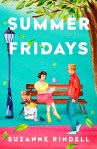
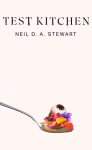
- An OTT rendering of a Scottish accent in Greta & Valdin by Rebecca K Reilly and Test Kitchen by Neil D.A. Stewart.
- A Padstow setting and a mention of Puffin Island (Cornwall) in The Cove by Beth Lynch and England as You Like It by Susan Allen Toth.
- A mention of the Big and Little Dipper (U.S. names for constellations) in Directions to Myself by Heidi Julavits and How We Named the Stars by Andrés N. Ordorica.
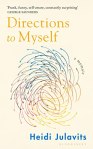
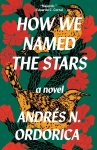
- A mention of Binghamton, New York and its university in We Are Animals by Jennifer Case and We Would Never by Tova Mirvis.
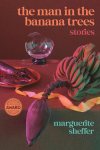
- A character accidentally drinks a soapy liquid in We Would Never by Tova Mirvis and one story of The Man in the Banana Trees by Marguerite Sheffer.
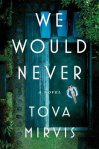 The mother (of the bride or groom) takes over the wedding planning in We Would Never by Tova Mirvis and Summer Fridays by Suzanne Rindell.
- The ex-husband’s name is Jonah in The Mourner’s Bestiary by Eiren Caffall and We Would Never by Tova Mirvis.
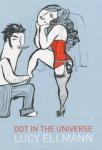
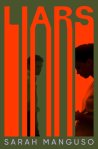
- The husband’s name is John in Dot in the Universe by Lucy Ellmann and Liars by Sarah Manguso.
- An affair is discovered through restaurant receipts in Summer Fridays by Suzanne Rindell and Test Kitchen by Neil D.A. Stewart.
- A mention of eating fermented shark in The Museum of Whales You Will Never See by A. Kendra Greene and Test Kitchen by Neil D.A. Stewart.
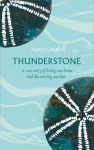
- A mention of using one’s own urine as a remedy in Thunderstone by Nancy Campbell and Terminal Maladies by Okwudili Nebeolisa.

- The main character tries to get pregnant by a man even though one of the partners is gay in Mammoth by Eva Baltasar and Until the Real Thing Comes Along by Elizabeth Berg.
- Motherhood is for women what war is for men: this analogy is presented in We Are Animals by Jennifer Case, Parade by Rachel Cusk, and Want, the Lake by Jenny Factor.
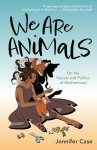 Childcare is presented as a lifesaver for new mothers in We Are Animals by Jennifer Case and Liars by Sarah Manguso.
- A woman bakes bread for the first time in Mammoth by Eva Baltasar and A Year of Biblical Womanhood by Rachel Held Evans.
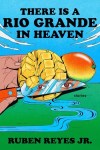
- A gay couple adopts a Latino boy in Greta & Valdin by Rebecca K Reilly and one story of There Is a Rio Grande in Heaven by Ruben Reyes, Jr.
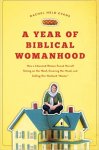 A husband who works on film projects in A Year of Biblical Womanhood by Rachel Held Evans and Liars by Sarah Manguso.
- A man is haunted by things his father said to him years ago in Parade by Rachel Cusk and one story in There Is a Rio Grande in Heaven by Ruben Reyes, Jr.
- Two short story collections in a row in which a character is a puppet (thank you, magic realism!): The Man in the Banana Trees by Marguerite Sheffer, followed by There Is a Rio Grande in Heaven by Ruben Reyes, Jr.
- A farm is described as having woodworm in Mammoth by Eva Baltasar and Parade by Rachel Cusk.
- Sebastian as a proposed or actual name for a baby in Signs, Music by Raymond Antrobus and Birdeye by Judith Heneghan.
What’s the weirdest reading coincidence you’ve had lately?
Love Your Library, July 2024
Thanks so much to Eleanor, Laura and Marcie for posting about their recent library reads! It’s been a light library reading month for me, but I’m awaiting many holds of recent releases, including a coincidental gardening-themed trio that I fancy reviewing together if the timing works out.
Marcie also gifted me a New York Times article so that I could go through their list of the 100 Best Books of the 21st Century so far and see how many I have read. The answer is 53 (+ 6 DNFs), with another 23 on my TBR. I pulled some awardees off my shelves and might try reading them later this year (below right) – let me know if you’d like to buddy read any of them with me. I was pleased to see that the article first encouraged readers to reserve books from their local library before giving links to places where they can be bought.


It was fun to find libraries mentioned in a couple of library books I’ve been reading recently:
- Thanked in the Acknowledgements to Soldier Sailor by Claire Kilroy: “The librarians of Howth and Baldoyle who are part of the village that raises the child”.
- From Late Light by Michael Malay:
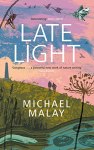 [When I was] a boy in Australia, my mother often took me to a library near our house, a small concrete building that stood across the road from a chicken shop and a video rental store. … the front door was slightly warped, making it difficult to pull open, while the carpet had been worn bare by years of footfall – and yet, to my fourteen- or fifteen-year-old self, it was a kind of palace. I would go there once or twice a week, roam the shelves on my own, gather all the books that appealed to me, and then take home as many titles as our library account would allow. I don’t think the books I chose were ever to my mother’s taste – at that time, I was obsessed with comics and fantasy novels – but she encouraged my enthusiasm anyway. … looking back now, I see that these books did other things for me – that they fed my curiosity, made time move in different ways, and opened up portals to other worlds. In all those years, I can’t remember my mother ever encouraging me to read more ‘serious’ or ‘literary’ books, and I continue to love her for that.
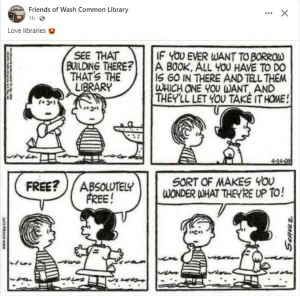
I’ve seen this Peanuts comic before and I love it. Isn’t library borrowing a brilliant concept?! All the more astounding when you step back to think about it anew. This was shared on Facebook by the library in the village where we go to church. Threatened with closure, it went independent. It has a building on peppercorn rent from the council and is run by volunteers. I don’t borrow books there because I can rarely visit during their limited opening hours (and I have plenty of other library books on my plate), but I do try to get to their book sales at least once or twice a year – particularly useful for stocking up on 3/£1 books for the book swapping game I run at our book club holiday social each year.
Tomorrow at 2 p.m. (if you’re in the UK, that is), the Booker Prize longlist will be announced. No doubt I’ll be baffled at all the books I’ve never heard of, or read. It happens every year. Perhaps I’ll be tempted enough by two or three nominees to place library holds on them right away.
My library use over the last month:
READ
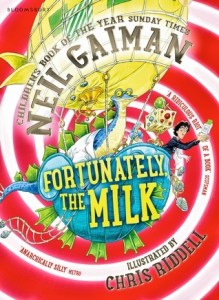
- Fortunately, The Milk… by Neil Gaiman
 SKIMMED
- Rites of Passage: Death and Mourning in Victorian Britain by Judith Flanders
CURRENTLY READING
 The Cove: A Cornish Haunting by Beth Lynch (I enjoyed her previous memoir)
- Groundbreakers: The Return of Britain’s Wild Boar by Chantal Lyons (Wainwright Prize longlist)
- Late Light: Finding Home in the West Country by Michael Malay (Wainwright Prize longlist)
- The Song of the Whole Wide World: On Motherhood, Grief, and Poetry by Tamarin Norwood (resuming this after it went out to fulfil an interlibrary loan)
CURRENTLY READING-ish (more accurately, set aside temporarily)
- Death Valley by Melissa Broder
- The Tale of Despereaux by Kate DiCamillo
- King: A Life by Jonathan Eig
- Mother’s Boy by Patrick Gale
- Learning to Think: A Memoir about Faith, Demons, and the Courage to Ask Questions by Tracy King
- Unearthing: A Story of Tangled Love and Family Secrets by Kyo Maclear
- Late Light: Finding Home in the West Country by Michael Malay
- Mrs Gulliver by Valerie Martin
- After Dark by Haruki Murakami
- Excellent Women by Barbara Pym
- Stowaway: The Disreputable Exploits of the Rat by Joe Shute
- Mrs Hemingway by Naomi Wood
CHECKED OUT, TO BE READ
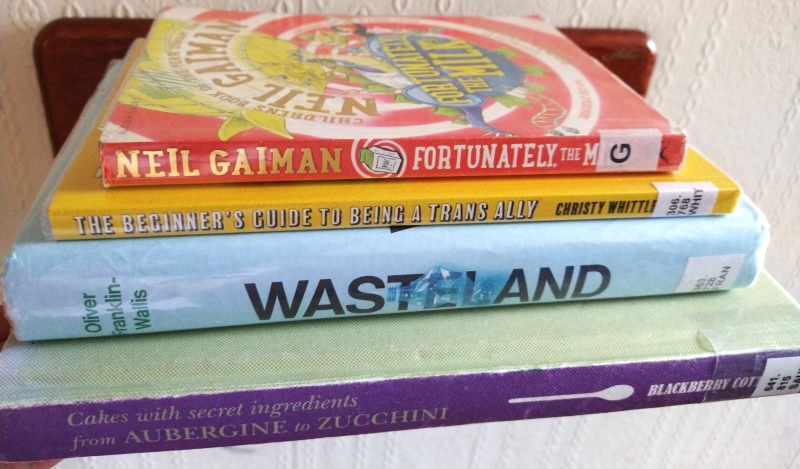
- Wasteland: The Dirty Truth about What We Throw Away, Where It Goes, and Why It Matters by Oliver Franklin-Wallis
IN THE RESERVATION QUEUE
- Private Rites by Julia Armfield (I read 43% on Kindle and stalled so I’ll try again in print)
- One Garden against the World: In Search of Hope in a Changing Climate by Kate Bradbury
- The Painter’s Daughters by Emily Howes
- The Garden against Time: In Search of a Common Paradise by Olivia Laing
- The Accidental Garden: The Plot Thickens by Richard Mabey
- The Burial Plot by Elizabeth Macneal
- This Is My Sea by Miriam Mulcahy
- The Echoes by Evie Wyld
ON HOLD, TO BE PICKED UP
- Parade by Rachel Cusk
- Nature’s Ghosts: A History – and Future – of the Natural World by Sophie Yeo
RETURNED UNREAD
- Hungry Ghosts by Kevin Jared Hosein – A glance at the first few pages was enough to put me off.
What have you been reading or reviewing from the library recently?
This meme runs every month, on the final Monday. Share a link to your own post in the comments. Feel free to use the above image. The hashtag is #LoveYourLibrary.
 Bookish Beck = Rebecca Foster. American transplant to England. Freelance proofreader and book reviewer.
