Rereading Of Mice and Men for #1937Club
A year club hosted by Karen and Simon is always a great excuse to read more classics. Between my shelves and the library, I had six options for 1937. But I started reading too late, and had too many books on the go, to finish more than one – a reread. No matter; it was a good one I was glad to revisit, and I’ll continue with the other reread at my own pace.
Of Mice and Men by John Steinbeck
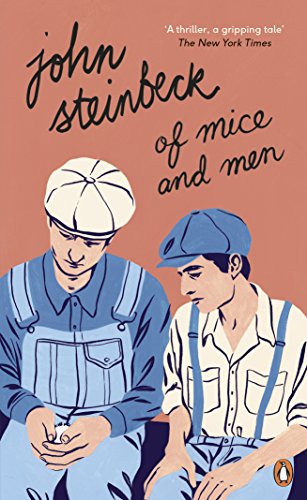 Are teenagers doomed to dislike the books they read in school? I think this must have been on the curriculum for 11th grade English. It was my third Steinbeck novella after The Red Pony and The Pearl, so to me it confirmed that he wrote contrived, depressing stuff with lots of human and animal suffering. Not until I read The Grapes of Wrath in college and East of Eden (THE Great American Novel) five years ago did I truly recognize Steinbeck’s greatness.
George and Lennie are itinerant farm workers in Salinas Valley, California. Lennie is a gentle giant, intellectually disabled and aware of his own strength when hauling sacks of barley but not when stroking mice and puppies. George looks after Lennie as a favour to Aunt Clara and they’re saving up to buy their own smallholding. This dream is repeated to the point of legend, somewhere between a bedtime story and scripture:
‘Someday—we’re gonna get the jack together and we’re gonna have a little house and a couple of acres an’ a cow and some pigs and—’ ‘An’ live off the fatta the lan’,’ Lennie shouted. ‘And have rabbits.’
They quickly settle in alongside the other ranch-hands and even convert two to their idyllic picture of independence. But the foreman, Curley, is a hothead and his bored would-be-starlet wife won’t stop roaming into the men’s quarters. No matter how much George tells Lennie to stay away from both of them, something is set in motion – an inevitable repeat of an incident from their previous employment that forced them to move on.
I remembered the main contours here but not the ultimate ending, and this time I appreciated the deliberate echoes and heavy foreshadowing (all that symbolism to write formulaic school essays about!): this is Shakespearean tragedy with the signs and stakes writ large against a limited background. Bar some paragraphs of scene-setting descriptions, it is like a play; no surprise it’s been filmed several times. (I wish I didn’t have danged John Malkovich in my head as Lennie; I can’t think of anyone else in that role, whereas Gary Sinise doesn’t necessarily epitomize George for me.) The characterization of the one Black character, Crooks, and the one woman are uncomfortably of their time. However, Crooks is given the dubious honour of conveying the bleak vision: “Nobody never gets to heaven, and nobody gets no land. It’s just in their head.” Like Hardy, Steinbeck knows what happens when the lower classes make the mistake of wanting too much. It’s a timeless tale of grit and desperation, the kind one can’t imagine not existing. (Public library)
Apposite listening: “The Great Defector” by Bell X1 (known for their quirky lyrics):
You’ve been teasing us farm boys
’til we start talking ’bout those rabbits, George
oh, won’t you tell us ’bout those rabbits, George?
Original rating (1999?): 
My rating now: 


Currently rereading: The Hobbit by J.R.R. Tolkien – My father gave me this for Christmas when I was 10. I think I finally read it sometime in my later teens, about when the Lord of the Rings films were coming out. I’m on page 70 now. I’d forgotten just how funny Tolkien is about the set-in-his-ways Bilbo and his devotion to a cosy, quiet life. When he’s roped into a quest to reclaim a mountain hoard of treasure from a dragon – along with 13 dwarves and Gandalf the wizard – he realizes he has much discomfort and many a missed meal ahead of him.


 DNFed: Journey by Moonlight by Antal Szerb – My second attempt with Hungarian literature, and I found it curiously similar to the other novel I’d read (Embers by Sandor Márai) in that much of it, at least the 50 pages I read, is a long story told by one character to another. In this case, Mihály, on his Italian honeymoon, tells his wife about his childhood best friends, a brother and sister. I wondered if I was meant to sense homoerotic attachment between Mihály and Tamás, which would appear to doom this marriage right at its outset. (Secondhand – Edinburgh charity shop, 2018)
 Skimmed: Out of Africa by Karen Blixen – I enjoyed the prose style but could tell I’d need a long time to wade through the detail of her life on a coffee farm in Kenya, and would probably have to turn a blind eye to the expected racism of the anthropological observation of the natives. (Secondhand – Way’s in Henley, 2015)
Here’s hoping for a better showing next time!
(I’ve previously participated in the 1920 Club, 1956 Club, 1936 Club, 1976 Club, 1954 Club, 1929 Club, and 1940 Club.)
The Story Girl by L. M. Montgomery (1911) #ReadingStoryGirl
Six months after the Jane of Lantern Hill readalong, Canadian bloggers Naomi (Consumed by Ink) and Sarah Emsley have chosen an earlier work by Lucy Maud Montgomery, The Story Girl, and its sequel The Golden Road, for November buddy reading.
The book opens one May as brothers Felix and Beverley King are sent from Toronto to Prince Edward Island to stay with an aunt and uncle while their father is away on business. Beverley tells us about their thrilling six months of running half-wild with their cousins Cecily, Dan, Felicity, and Sara Stanley – better known by her nickname of the Story Girl, also to differentiate her from another Sara – and the hired boy, Peter. This line gives a sense of the group’s dynamic: “Felicity to look at—the Story Girl to tell us tales of wonder—Cecily to admire us—Dan and Peter to play with—what more could reasonable fellows want?”
Felicity is pretty and domestically inclined; Sara knows it would be better to be useful like Felicity, but all she has is her storytelling ability. Some are fantasy (“The Wedding Veil of the Proud Princess”); some are local tales that have passed into folk memory (“How Betty Sherman Won a Husband”). Beverley is in raptures over the Story Girl’s orations: “if voices had colour, hers would have been like a rainbow. It made words live. … we had listened entranced. I have written down the bare words of the story, as she told it; but I can never reproduce the charm and colour and spirit she infused into it. It lived for us.”

The cousins’ adventures are gently amusing and quite tame. They all write down their dreams in notebooks. Peter debates which church denomination to join and the boys engage in a sermon competition. Pat the cat has to be rescued from bewitching, and receives a dose of medicine in lard he licks off his paws and fur. The Story Girl makes a pudding with sawdust instead of cornmeal (reminding me of Anne Shirley and the dead mouse in the plum pudding). Life consistently teaches lessons in humility, as when they are all duped by Billy Robinson and his magic seeds, which he says will change whatever each one most resents – straight hair, plumpness, height; and there is a false alarm about the end of the world.
I found the novel fairly twee and realized at a certain point that I was skimming over more than I was reading. As was my complaint about Jane of Lantern Hill, there is a predictable near-death illness towards the end. The descriptions of Felicity and the Story Girl are purple (“when the Story Girl wreathed her nut-brown tresses with crimson leaves it seemed, as Peter said, that they grow on her—as if the gold and flame of her spirit had broken out in a coronal”); I had to remind myself that this reflects on Beverley more so than on Montgomery. From Naomi’s review of The Golden Road, I think that would be more to my taste because it has a clear plot rather than just stringing together pleasant but mostly forgettable anecdotes.
Still, it’s been fun to discover some of L. M. Montgomery’s lesser-known work, and there are sweet words about cats and the seasons:
“I am very good friends with all cats. They are so sleek and comfortable and dignified. And it is so easy to make them happy.”
“The beauty of winter is that it makes you appreciate spring.”
This effectively captures the long, magical summer days of childhood. I thought about when I was a kid and loved trips up to my mother’s hometown in upstate New York, where her brothers still lived. I was in awe of the Judd cousins’ big house, acres of lawn and untold luxuries such as Nintendo and a swimming pool. I guess I was as star-struck as Beverley. (University library) 
Jane of Lantern Hill by L.M. Montgomery (1937) #ReadingLanternHill
I’m grateful to Canadian bloggers Naomi (Consumed by Ink) and Sarah for hosting the readalong: It’s been a pure pleasure to discover this lesser-known work by Lucy Maud Montgomery.
{SOME SPOILERS IN THE FOLLOWING}
Like Anne of Green Gables, this is a cosy novel about finding a home and a family. Fairytale-like in its ultimate optimism, it nevertheless does not avoid negative feelings. It also seemed to me ahead of its time in how it depicts parental separation.
Jane Victoria Stuart lives with her beautiful, flibbertigibbet mother and strict grandmother in a “shabby genteel” mansion on the ironically named Gay Street in Toronto. Grandmother calls her Victoria and makes her read the Bible to the family every night, a ritual Jane hates. Jane is an indifferent student, though she loves writing, and her best friend is Jody, an orphan who is in service next door. Her mother is a socialite breezing out each evening, but she doesn’t seem jolly despite all the parties. Jane has always assumed her father is dead, so it is a shock when a girl at school shares the rumour that her father is alive and living on Prince Edward Island. Apparently, divorce was difficult in Canada at that time and would have required a trip to the USA, so for nearly a decade the couple have been estranged.
It’s not just Jane who feels imprisoned on Gay Street: her mother and Jody are both suffering in their own ways, and long to live unencumbered by others’ strictures. For Jane, freedom comes when her father requests custody of her for the summer. Grandmother is of a mind to ignore the summons, but the wider family advise her to heed it. Initially apprehensive, Jane falls in love with PEI and feels like she’s known her father, a jocular writer, all the time. They’re both romantics and go hunting for a house that will feel like theirs right away. Lantern Hill fits the bill, and Jane delights in playing the housekeeper and teaching herself to cook and garden. Returning to Toronto in the autumn is a wrench, but she knows she’ll be back every summer. It’s an idyll precisely because it’s only part time; it’s a retreat.
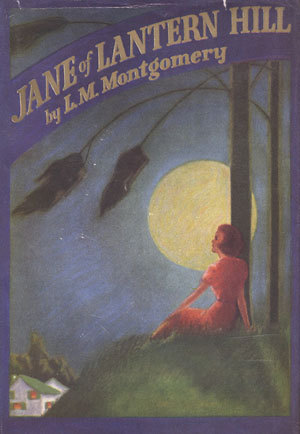
Jane is an appealing heroine with her can-do attitude. Her everyday adventures are sweet – sheltering in a barn when the car breaks down, getting a reward and her photo in the paper for containing an escaped circus lion – but I was less enamoured with the depiction of the quirky locals. The names alone point to country bumpkin stereotypes: Shingle Snowbeam, Ding-dong, the Jimmy Johns. I did love Little Aunt Em, however, with her “I smack my lips over life” outlook. Meddlesome Aunt Irene could have been less one-dimensional; Jody’s adoption by the Titus sisters is contrived (and closest in plot to Anne); and Jane’s late illness felt unnecessary. While frequent ellipses threatened to drive me mad, Montgomery has sprightly turns of phrase: “A dog of her acquaintance stopped to speak to her, but Jane ignored him.”
Could this have been one of the earliest stories of a child who shuttles back and forth between separated or divorced parents? I wondered if it was considered edgy subject matter for Montgomery. There is, however, an indulging of the stereotypical broken-home-child fantasy of the parents still being in love and reuniting. If this is a fairytale setup, Grandmother is the evil ogre who keeps the princess(es) locked up in a gloomy castle until the noble prince’s rescue. I’m sure both Toronto and PEI are lovely in their own way – alas, I’ve never been to Canada – and by the end Montgomery offers Jane a bright future in both.
Small qualms aside, I loved reading Jane of Lantern Hill and would recommend it to anyone who enjoyed the Anne books. It’s full of the magic of childhood. What struck me most, and will stick with me, is the exploration of how the feeling of being at home (not just having a house to live in) is essential to happiness. (University library) 
#ReadingLanternHill
Buy Jane of Lantern Hill from Bookshop.org [affiliate link]
Sapphira and the Slave Girl & Portrait of the Artist as a Young Dog (#1940Club)
(I was disgusted by the ad-ridden appearance of my blog, and defeated by the task of culling my media library, so I’ve upgraded to a paid plan for a trial year. I had until now vowed not to spend any money on the site since I don’t make any money from it, but WordPress hooked me in with a 30% off deal, and I’ll appreciate the no ads and extra storage space. I hope it looks better now!)

A year club hosted by Karen and Simon is always a great excuse to read more classics. One of these was a winner, if peculiar; the other was so-so, but helped clarify for me what a particular literary prize is looking for.
Sapphira and the Slave Girl by Willa Cather
{SPOILERS IN THIS ONE}
I was surprised to find that this was my seventh book by Cather, so I’ve actually read over half of her novels now. I think all her other works I know were set on the prairies of the Midwest (or in Santa Fe in the case of Death Comes for the Archbishop), so Sapphira and the Slave Girl feels like an odd one out not just for its antebellum historical subject matter but also for its setting in Cather’s hometown of Winchester, Virginia.
In 1856, the Colberts’ is a house divided: Henry, a miller from Quaker stock, disapproves of slavery; his wife, Sapphira, grew up with slaves and treats them severely. While the other Colbert brothers’ meddling with Black women is an open secret – one of them is assumed to have fathered Henry and Sapphira’s mixed-race teenage slave, Nancy – Henry looks fondly on Nancy and thinks of her almost like a second daughter. Sapphira resents that attention. When her Colbert nephew, Martin, a known cad, comes to visit, she arranges, or at least allows, convenient opportunities for Martin to be alone with Nancy.
 Nancy appeals to the Colberts’ adult daughter, Rachel Blake, to accompany her on her walks so that Martin will not “overtake” her in the woods. Although none of the white characters take the repeated threat of attempted rape seriously enough, Henry and Rachel do eventually help Nancy escape to Canada via the Underground Railroad. When Sapphira realizes her ‘property’ has been taken from her, she informs Rachel she is now persona non grata, but changes her mind when illness brings tragedy into Rachel’s household.
Had this been written 40–80 years later, it would have been completely different: first of all, I would expect it to much more graphically recount Black suffering, rather than depicting generally happy “darkies” with folksy accents and quirky character traits; secondly, there would be either a redemptive or a punitive plot arc for Sapphira. Instead, Cather paints her as a flawed human being who accepts the status quo but is also graceful in disability (she has dropsy and is in a wheelchair) and accepting of the approach of death.
I wish I remembered from the Hermione Lee biography more about the immediate inspiration for this novel, and its reception. Simply taking an interest in Black characters must have set it apart. For instance, there is a whole chapter on Nancy’s grandmother, Aunt Jezebel, the first generation kidnapped from Africa; and the final section has Nancy, now a sophisticated Montreal housekeeper dressed in silk and fur, visiting her mother 20 years after the Civil War. That Cather’s characterization otherwise doesn’t rise above cheerful mammy stereotypes can hardly be counted against her given the time period, right? It was good to experience a lesser-known American classic that I can imagine appealing to fans of Thomas Hardy and Edith Wharton as well. (From a Little Free Library in Queen Camel, Somerset; April 2021)
Portrait of the Artist as a Young Dog by Dylan Thomas
 Published when Thomas was in his mid-twenties, this is a series of 10 sketches, some of which are more explicitly autobiographical (as in first person, with a narrator named Dylan Thomas) than others. There is a rough chronological trajectory to the stories, with the main character a mischievous boy, then a grandstanding teenager, then a young journalist in his first job. The countryside and seaside towns of South Wales recur as settings, and – as will be no surprise to readers of Under Milk Wood – banter-filled dialogue is the priority. I most enjoyed the childhood japes in the first two pieces, “The Peaches” and “A Visit to Grandpa’s.” The rest failed to hold my attention, but I marked out two long passages that to me represent the voice and scene-setting that the Dylan Thomas Prize is looking for. The latter is the ending of the book and reminds me of the close of James Joyce’s “The Dead.” (University library)
I was a lonely night-walker and a steady stander-at-corners. I liked to walk through the wet town after midnight, when the streets were deserted and the window lights out, alone and alive on the glistening tram-lines in dead and empty High Street under the moon, gigantically sad in the damp streets by ghostly Ebenezer Chapel. And I never felt more a part of the remote and overpressing world, or more full of love and arrogance and pity and humility, not for myself alone, but for the living earth I suffered on… [etc.]
For a long time he waited on the stairs, though there was no love now to wait for and no bed but his own too many miles away to lie in, and only the approaching day to remember his discovery. All around him the disturbed inhabitants of the house were falling back into sleep. Then he walked out of the house on to the waste space and under the leaning cranes and ladders. The light of the one weak lamp in a rusty circle fell across the brick-heaps and the broken wood and the dust that had been houses once, where the small and hardly known and never-to-be-forgotten people of the dirty town had lived and loved and died and, always, lost.
(I’ve previously participated in the 1920 Club, 1956 Club, 1936 Club, 1976 Club, 1954 Club and 1929 Club.)
Chase of the Wild Goose by Mary Louisa Gordon: A Lurid Editions Reprint
 Chase of the Wild Goose, a playful, offbeat biographical novel about the Ladies of Llangollen, was first published by Leonard and Virginia Woolf’s Hogarth Press in 1936. I was delighted to be invited to take part in an informal blog tour celebrating the book’s return to print (today, 1 February) as the inaugural publication of Lurid Editions, which will focus on reprinting lesser-known and trailblazing 20th-century classics.
Mary Louisa Gordon was a medical doctor and early graduate of the London School of Medicine for Women. She also served as a prison inspector and had a special concern for the plight of female prisoners; another of her works was Penal Discipline (1922). Chase of the Wild Goose was published when she was 75. She underwrote the book to keep it in print until her death in 1941. A word-of-mouth success, it sold reasonably well in those first years.
I’d encountered the Ladies of Llangollen a couple of times before, in nonfiction: in The Art of the Wasted Day by Patricia Hampl, where they are among her exemplars of solitary, introspective living; and in Sign Here If You Exist and Other Essays by Jill Sisson Quinn, where, in the way that they blur the lines between romance and friendship, they presage her experience with an intimate female friend. This was a different way to explore their story.

Portrait of The Rt. Honble. Lady Eleanor Butler & Miss Ponsonby ‘The Ladies of Llangollen’. By James Henry Lynch, Public domain, via Wikimedia Commons. (Wearing their customary plain riding habits and top hats.)
“The two heroines of this story, the Lady Eleanor Butler and Miss Sarah Ponsonby, have a remarkable history. They achieved fame at a stroke. They made a noise in the world which has never since died out, and which we, their spiritual descendants, continue to echo.”
These are the opening lines of what, in its first half, is a fairly straightforward chronological account of the protagonists’ lives, from their first meeting to when they flee to Wales to set up house together at Plas Newydd. They grow up in Ireland and, although their prospects differ – EB has a wealthy upbringing at Kilkenny Castle, whereas teenage SP has recently lost her mother and is being passed around relatives and acquaintances – both are often told that marriage is the only viable option. The eccentric spinster stereotype is an unkind one, but one EB is willing to risk. In one terrific scene, she shames her archbishop great-uncle for being just like everyone else and threatening to sell her to the highest bidder in matrimony. Still, the notion persists that if only the right man comes courting, they’ll change their tune.
At their first meeting EB and SP engage in an intense discussion of the possibilities for women, and within two weeks they’re already pledging to be together forever: “I think that nothing cheap, or second-rate, or faute de mieux, will ever do for you or me … We think—you and I—that we want something strange and exceptional, but something different may be ordained for us,” Eleanor says to Sarah. “From now onwards I… won’t you keep me… in your heart?” Sarah asks in parting. Eleanor replies, “I think you have been in it since before we were born.”
The strength of that romantic conviction that they are fated for each other keeps them going despite difficulties – EB’s father disowns her and cuts her off, which has inevitable financial implications, though she had already bought Plas Newydd outright; and for both of them, leaving Ireland is a wrench because they feel certain that they can never go back.

Plas Newydd. Photo by Wolfgang Sauber, CC BY-SA 3.0 , via Wikimedia Commons.
By Part II, the erstwhile fugitives, settled into local life in North Wales, enter into a sedate middle age of visitors and correspondence. Much of the material for this section is drawn from the journal EB kept. Part III is where things get really interesting: in a metafictional twist, Gordon herself enters the narrative as she meets and converses with the long-dead Ladies at their house, reflecting on the social changes that have occurred since their time.
As the Afterword by Dr Nicola Wilson notes, Chase of the Wild Goose is creative nonfiction in the same vein as Orlando, building on real-life figures and relationships in a way that must have seemed ahead of its age, not least for how it looks back to venerate queer foremothers. Although there are long stretches of the book that are tedious with biographical detail and melodramatic speeches, there is enough in the way of convincing dialogue and scenes to make up for that. While I feel the novel probably has more to offer to academics and those with a particular interest in its subjects than to general readers, I was pleased to be able to experience a rediscovered classic. I marvelled every time I reminded myself that this largely takes place in the late eighteenth to early nineteenth century. Gordon ably reproduces the diction and mores of the Ladies’ time, but her modernist intrusion takes it beyond pastiche.
As for the title, I’m most accustomed to the wild goose as a metaphor for the Holy Spirit in Celtic Christian iconography, but of course it is also a pun on the proverbial wild-goose chase. Gordon nods to both connotations; the phrase appears several times in the text and is the protagonists’ private term for their search for a life together – for liberty and for love. You have to cheer for them, achieving what so few could in their time. Here’s to you, Ladies!
With thanks to D-M Withers and Lurid Editions for the free copy for review.
A first read for Karen and Lizzys #ReadIndies challenge. I will hope to add many more before the end of the month!

Liz has also reviewed the novel.
For more information, do also read this fascinating Guardian article.
Up at the Villa by W. Somerset Maugham (#NovNov22 Short Classics Week)
This was just what I want from a one-sitting read: surprising and satisfying, and in this case with enough suspense to keep the pages turning. When beautiful 30-year-old widow Mary Panton, staying in a villa in the hills overlooking Florence, receives two marriage proposals within the first 33 pages, I worried I was in for a boring, conventional story.
 However, things soon get much more interesting. Her suitors are Sir Edgar Swift of the Indian Civil Service, 24 years her senior and just offered a job as the governor of Bengal; and Rowley Flint, a notorious lady’s man. Edgar has to go away on business and will ask for her answer when he’s back in several days. He leaves her with a revolver to take with her if she goes out in the car. A Chekhov’s gun? Absolutely. And it’ll be up to Mary and Rowley to deal with the consequences.
I’ll avoid further details; it’s too much fun to discover those for yourself. I’ll just mention that some intriguing issues get brought in, such as political dissidence in the early days of WWII, charity vs. pity, and the double standard of promiscuity in men vs. women.
Compared to something like Of Human Bondage, sure, this 1941 novella is a minor work, but I found it hugely enjoyable and would recommend it to anyone looking for a short classic or wanting to try Maugham (from here advance to The Painted Veil and The Moon and Sixpence before trying one of the chunksters).
Some plot points are curiously similar to Downton Abbey seasons 1–3, leading me to wonder if this was actually a conscious or unconscious influence on Julian Fellowes. Mostly, though, this reminded me of The Talented Mr. Ripley. It’s a deliciously twisted little book where you find yourself rooting for people you might not sympathize with in real life.
And how’s this for a last line? “Darling, that’s what life’s for – to take risks.”
(See also Simon’s review.)
[120 pages] (Public library)

The #1929Club: Passing and Letters to a Young Poet
A year club hosted by Karen and Simon is always a great excuse to read more classics. I appear to be getting in training for Novellas in November – both of these were notably short at under 100 pages, particularly the Rilke, which is little more than a pamphlet. (Both: )

Passing by Nella Larsen
By the time of her death in 1964, this Harlem Renaissance author had mostly fallen into obscurity, but she has received renewed attention in recent decades. I learned about Passing in connection to Brit Bennett’s The Vanishing Half, which it partially inspired.
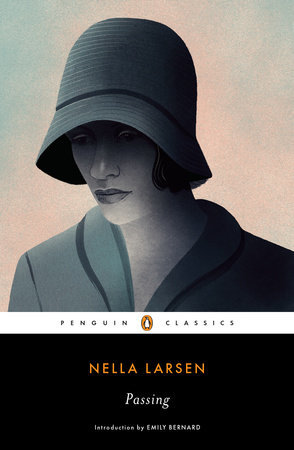 Irene Redfield and Clare Kendry grew up together in Chicago. Both are light-skinned African American women, their features described as “olive” or “golden.” Irene has remained within the Black community, marrying a doctor named Brian and living a comfortable life in Harlem. However, she is able to pass as white in certain circumstances, such as when she and Clare meet for tea in a high-end establishment. Clare, on the other hand, is hiding her ancestry from her white husband, Jack Bellew, who spews hatred for Black people. “It’s such a frightfully easy thing to do. If one’s the type, all that’s needed is a little nerve,” she insists.
Clare and Irene’s relationship could be characterized as that of frenemies, though critics have posited repressed homoeroticism based on how Larsen describes Clare’s beauty from Irene’s perspective. This is very subtle – I only spotted potential infatuation in the letter from Clare that Irene reads in the opening pages. Most of the time, Irene appears to disapprove of Clare for her recklessness, knowing that there could be dire consequences if Jack discovers her deception. She also starts to suspect that Clare is having an affair with Brian, and for these reasons, as well as her own discomfort and guilt, she avoids Clare as much as possible.
The trouble with Clare was, not only that she wanted to have her cake and eat it too, but that she wanted to nibble at the cakes of other folk as well.
Things come to a head in the final six pages, turning what had for much of its length been an ambling read into something of a shocker. Apparently scholars feel that Larsen flubs her endings, but I thought this one was fantastic, giving a Gatsby-esque tragic weight. Comparing Black women’s strategies of coping with a white world was also fascinating. My experience with African American classics is limited, so I was happy to increase my repertoire.
My secondhand copy – a dual volume with Quicksand, which I’ll plan on reading next November – came from the much-mourned Bookbarn International.
Letters to a Young Poet by Rainer Maria Rilke
[Translated from the German by Charlie Louth]
 I’d long wanted to read this and couldn’t find it through a library, so bought a copy as part of a Foyles order funded by last year’s Christmas money. I’m not clear on whether the Penguin Little Black Classics edition is abridged, but the 1929 preface by Franz Xaver Kappus, Rilke’s correspondent, only mentions 10 letters, which is how many are printed here, so I have at least gotten the gist. Most of the letters were sent in 1903–4, with a final one dated 1908, from various locations on Rilke’s European travels.
Kappus sent Rilke his early poetic efforts and received in reply a frank letdown – “the poems are not yet anything in themselves” – but also much kind, general advice about creativity, confidence, post-faith life, and thriving in spite of suffering. Even so tiny a book is almost endlessly quotable, with many self-help-oriented phrases I’d read in other contexts and found wonderfully reassuring:
Go into yourself. Examine the reason that bids you to write; check whether it reaches its roots into the deepest region of your heart, admit to yourself whether you would die if it should be denied you to write.
To be an artist means: not to calculate and count; to grow and ripen like a tree which does not hurry the flow of its sap and stands at ease in the spring gales without fearing that no summer may follow. But it comes only to those who are patient, who are simply there in their vast, quiet tranquillity, as if eternity lay before them.
be patient towards all that is unresolved in your heart and … try to love the questions themselves
I also got this 1929 autobiography out from the library. While I much admire the tone in the first paragraph and final pages (especially that last word!), I find I don’t have enough interest in the WWI poets to read what’s in between. It put a Sufjan Stevens song in my head, though.


I’ve previously participated in: 1920 Club, 1956 Club, 1936 Club, 1976 Club and 1954 Club.
The #1954Club: Pictures from an Institution by Randall Jarrell
A quick follow-up to Friday’s post with one more read from 1954, plus a skim. The one is a series of comic portraits set on a women’s college campus, and the other is the story of a preacher’s son in 1930s Harlem. (Both: University library;  )
)

Pictures from an Institution by Randall Jarrell
 I have a real soft spot for novels set on college campuses. Any time I’ve looked through lists of options, Jarrell’s has been there. Still, it took the 1954 Club for me to finally pick up a copy. For about the first half, I was fully engaged with this academic comedy even though it doesn’t have a plot as such. The stage is Benton women’s college; the cast includes various eccentric professors and other staff, from President Robbins on down. Gertrude Johnson, a visiting writer, is writing a novel about Benton. The problem for her – and for us as readers – is two-fold: the characters are almost too eccentric to be believed, and nothing happens here.
The narrator, a poetry professor at Benton, knew Gertrude socially back in New York City. His descriptions of his fellow faculty are often hilarious. For instance, here’s his picture of Flo Whittaker:
Mostly she wore, in the daytime in the winter, a tweed skirt, a sweater-set, and a necklace. The skirt looked as if a horse had left her its second-best blanket; the sweaters looked as if an old buffalo, sitting by a fire of peat, had knitted them for her from its coat of the winter before
The Whittakers’ house is so full of kitschy knick-knacks that “Jeremy Bentham’s stuffed body would not have been ill at ease.” And then there’s the Robbinses’ ill-behaved pair of Afghan hounds, and Dr. Rosenbaum the music professor, whose German accent is rendered over-the-top.
Funny as parts of the novel can be, the humour can feel dated and sometimes relies on niche cultural references. The very first line, for example: “Half the campus was designed by Bottom the Weaver, half by Ludwig Mies van der Rohe”. However, elsewhere Jarrell mocks the pretentiousness of modern art and of the Benton set, who also seem woke avant la lettre:
Most of the people of Benton would have swallowed a porcupine, if you had dyed its quills and called it Modern Art; they longed for men to be discovered on the moon, so that they could show that they weren’t prejudiced towards moon men; and they were so liberal and selfless, politically
Amusing pen portraits and witty lines made this pleasant to spend time with, but not a read that will stick with me.
As usual for any reading challenge, I bit off more than I could chew and started a fourth book but couldn’t get through it in time and, in all honesty, wasn’t finding it compelling. I’ll have to give it a better try on another occasion.
Go Tell It on the Mountain by James Baldwin
 I’ve enjoyed Baldwin’s work before (The Fire Next Time, Giovanni’s Room), but didn’t make it much past page 30 of this novel about John Grimes, a preacher’s son in Harlem, before starting to skim. The central section contains long flashbacks to the backstory of three secondary characters, whereas I was more interested in John’s story (semi-autobiographical for Baldwin, apparently). Mostly I thought of how the content and narrative style must have influenced the following generations of African American writers, including Toni Morrison and Catherine Adel West – both of whom I was reading at the same time.
The #1954Club: Moominsummer Madness and Under Milk Wood
A year club hosted by Karen and Simon is always a great excuse to read more classics. The play’s the thing for this installment of the 1954 Club: Tove Jansson’s delightfully odd creatures end up in a floating theatre and rise to the occasion, and I’ve finally read Dylan Thomas’s famous play for voices. I’ll try to manage another couple of write-ups this weekend, too. (Both: University library;  )
)
Moominsummer Madness by Tove Jansson
[Translated from the Swedish by Thomas Warburton]
 One never knows what magic or mischief will bubble up at Midsummer. For Moomintroll’s family, it all starts with the eruption of a volcano, which leads to a flood. Moominmamma does her best to uphold comforting routines in their inundated home, but eventually they leave it for a better-appointed house that floats by. One with thick velvet curtains, doors to nowhere, and cupboards full of dresses. I wearied ever so slightly of the dramatic irony that this is clearly a theatre but the characters don’t know what one is and have to be enlightened by Emma the stage rat. Meanwhile, Snufkin becomes accidental father to two dozen “woodies” and Moomintroll and the Snork Maiden are arrested for burning officious signs.
The teasing commentary on the pretensions of the theatre is sweet: Moominpappa decides to write a tragic play with a lion in; Emma tells him it simply must be in blank verse, so he obliges, but no one in the audience can understand a word until the actors speak normally. As usual with Jansson, there is separation and longing, disaster mitigated, disorientation navigated with pluck or resignation. While I didn’t enjoy this as much as some of her others, I appreciated the focus this time on bending the rules of how things must be done. My favourite quotes were about the overwhelming nature of choice and the value of a good cry:
(The Snork Maiden on the dresses in the costume closet) “They were far too many, don’t you see. I couldn’t ever have had them all or even choose the prettiest. They nearly made me afraid! If there’d been only two instead!”
(Misabel) “I’m taking the chance to have a cry over a lot of things now when there’s a good reason.”
Under Milk Wood by Dylan Thomas
 I discovered A Child’s Christmas in Wales just last year and delighted in the language and the flights of fancy. Under Milk Wood is a short play completed just a month before Thomas’s death at the age of 39. It features a chorus of voices as the inhabitants of Llaregyb, a made-up coastal Welsh town, journey from one night through to the next. Gossipy neighbours, bickering spouses, flirtatious lovers; a preacher, a retired sea captain, fishermen; and much more. Some of the character names are jokes in and of themselves, like “Nogood Boyo” and “Willy Nilly,” and others sound so silly they might as well be rhyming slang.
The dead feel as vibrant as the living. The musicality of the prose sometimes made me feel I was reading poetry instead (indeed, a number of songs and rhymes are performed), and there is a bawdy charm to the whole thing. What might be stage directions in another play are read aloud here by “First Voice” and “Second Voice,” who trade off narration.
Maybe it was too much to hope that there could have been a plot somewhere in there as well? No matter. I could see how Thomas influenced the likes of Max Porter and George Saunders (Lincoln in the Bardo, anyway). I’m sorry I missed the chance to see this performed locally last month.
A favourite passage:
“It is spring, moonless night in the small town, starless and bible-black, the cobblestreets silent and the hunched, courters’-and-rabbits’ wood limping invisible down to the sloeblack, slow, black, crowblack, fishingboat-bobbing sea.”
(I’ve also participated in the 1920 Club, 1956 Club, 1936 Club, and 1976 Club.)
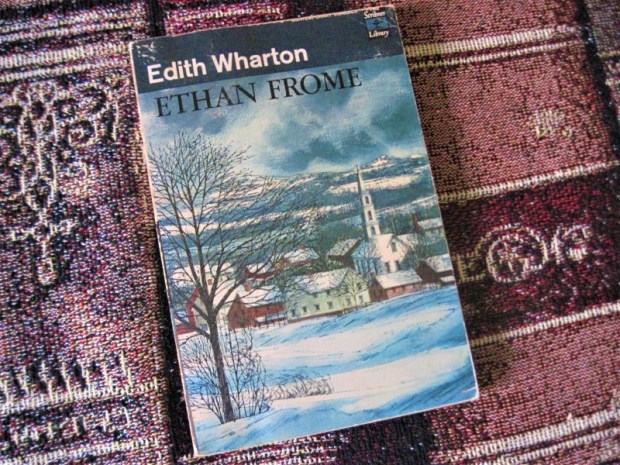
Ethan Frome by Edith Wharton (#NovNov Classics Week Buddy Read)
For the short classics week of Novellas in November, our buddy read is Ethan Frome by Edith Wharton (1911). You can download the book for free from Project Gutenberg here if you’d still like to join in.
Did you have to read Ethan Frome in school? For American readers, it’s likely that it was an assigned text in high school English. I didn’t happen to read it during my school days, but caught up in 2006 or 2008, I think, and was impressed with this condensed tragedy and the ambiance of a harsh New England winter. It struck me even more on a reread as a flawless parable of a man imprisoned by circumstance and punished for wanting more.
I had forgotten that the novella is presented as a part-imagined reconstruction of the sad events of Ethan Frome’s earlier life. A quarter-century later, the unnamed narrator is in Wharton’s fictional Starkfield, Massachusetts on business, and hears the bare bones of Ethan’s story from various villagers before meeting the man himself. Ethan, who owns a struggling sawmill, picks up extra money from odd jobs. He agrees to chauffeur the narrator to engineering projects in his sleigh, and can’t conceal his jealousy at a technical career full of travel – a reminder of what could have been had he been able to continue his own scientific studies. A blizzard forces the narrator to stay overnight in Ethan’s home, and the step over the threshold sends readers back in time to when Ethan was a young man of 28.
*There are SPOILERS in the following.*
Ethan’s household contains two very different women: his invalid wife, Zeena, eight years his elder; and her cousin, Mattie Silver, who serves as her companion and housekeeper. Mattie is dreamy and scatter-brained – not the practical sort you’d want in a carer role, but she had nowhere else to go after her parents’ death. She has become the light of Ethan’s life. By contrast, Zeena is shrewish, selfish, lazy and gluttonous. Wharton portrays her as either pretending or exaggerating about her chronic illness. Zeena has noticed that Ethan has taken extra pains with his appearance in the year since Mattie came to live with them, and conspires to get rid of Mattie by getting a new doctor to ‘prescribe’ her a full-time servant.
The plot turns on an amusing prop, “Aunt Philura Maple’s pickle-dish.” While Zeena is away for her consultation with Dr. Buck, Ethan and Mattie get one evening alone together. Mattie lays the table nicely with Zeena’s best dishes from the china cabinet, but at the end of their meal the naughty cat gets onto the table and knocks the red glass pickle dish to the floor, where it smashes. Before Ethan can obtain glue to repair it in secret, Zeena notices and acts as if this never-used dish was her most prized possession. She and Ethan are both to have what they most love taken away from them – but at least Ethan’s is a human being.
I had remembered that Ethan fell in love with a cousin (though I thought it was his cousin) and that there is a dramatic sledding accident. What I did not remember, however, was that the crash is deliberate: knowing they can never act on their love for each other, Mattie begs Ethan to steer them straight into the elm tree mentioned twice earlier. He dutifully does so. I thought I recalled that Mattie dies, while he has to live out his grief ever more. I was gearing myself up to rail against the lingering Victorian mores of the time that required the would-be sexually transgressing female to face the greatest penalty. Instead, in the last handful of pages, Wharton delivers a surprise. When the narrator enters the Frome household, he meets two women. One is chair-bound and sour; the other, tall and capable, bustles about getting dinner ready. The big reveal, and horrible irony, is that the disabled woman is Mattie, made bitter by suffering, while Zeena rose to the challenges of caregiving.
Ethan is a Job-like figure who lost everything that mattered most to him, including his hopes for the future. Unlike the biblical character, though, he finds no later reward. “Sickness and trouble: that’s what Ethan’s had his plate full up with, ever since the very first helping,” as one of the villagers tells the narrator. “He looks as if he was dead and in hell now!” the narrator observes. This man of sorrow is somehow still admirable: he and Zeena did the right thing in taking Mattie in again, and even when at his most desperate Ethan refused to swindle his customers to fund an escape with Mattie. In the end, Mattie’s situation is almost the hardest to bear: she only ever represented sweetness and love, and has the toughest lot. In some world literature, e.g. the Russian masters, suicide might be rendered noble, but here its attempt warrants punishment.
{END OF SPOILERS.}
I can see why some readers, especially if encountering this in a classroom setting, would be turned off by the bleak picture of how the universe works. But I love me a good classical tragedy, and admired this one for its neat construction, its clever use of foreshadowing and dread, its exploration of ironies, and its use of a rustic New England setting – so much more accessible than Wharton’s usual New York City high society. The cozy wintry atmosphere of Little Women cedes to something darker and more oppressive; “Guess he’s been in Starkfield too many winters,” a neighbor observes of Ethan. I could see a straight line from Jude the Obscure through Ethan Frome to The Great Gatsby: three stories of an ordinary, poor man who pays the price for grasping for more. I reread this in two sittings yesterday morning and it felt to me like a perfect example of how literature can encapsulate the human condition.
(Secondhand purchase) [181 pages]
My original rating (c. 2008):
My rating now: 
Keep in touch via Twitter (@bookishbeck / @cathy746books) and Instagram (@bookishbeck / @cathy_746books), using the hashtag #NovNov. We’ll add any of your review links in to our master posts.
 Bookish Beck = Rebecca Foster. American transplant to England. Freelance proofreader and book reviewer.
