The Book of Longings by Sue Monk Kidd (& Audiobook Blog Tour)
~This review contains plot spoilers.~
Sue Monk Kidd’s bold fourth novel started as a what-if question: What if Jesus had a wife? Church tradition has always insisted that he remained unmarried, but she felt that, given the cultural norms of the Middle East at that time, it would have been highly unusual for him not to marry. Musing on the motivation for airbrushing a spouse out of the picture, on the last page of the novel Kidd asks, “Did [early Christians] believe making him celibate rendered him more spiritual?” Or “Was it because women were so often invisible?” Although The Book of Longings retells biblical events, it is chiefly an attempt to illuminate women’s lives in the 1st century CE and to chart the female contribution to sacred literature and spirituality.
Fourteen-year-old Ana is a headstrong young woman with a forthright voice and a determination to choose her own life. Privilege and luck are on her side: her father is the head scribe to Herod Antipas, the ruler of Galilee; and the repulsive widower to whom she’s been betrothed dies, freeing her to marry Jesus, a travelling craftsman who caught her eye at the market. Ana’s aunt, Yaltha from Alexandria, is a major influence in her life. She had a rare chance at education and encourages her niece in her writing. Ana knows several ancient languages and fills every papyrus scroll she can get her hands on with stories of the women in the Bible. Yaltha also gives her an incantation bowl in which to write her deeply held prayers.
If you’re familiar with Kidd’s other work (such as The Secret Life of Bees and Traveling with Pomegranates), you know that she often explores the divine feminine and matriarchal units. Historically, Christianity has a poor record of acknowledging its patriarchal tendencies and redressing the balance. But Kidd imagines that, right at the beginning, Jesus valued women and was open to them having a life beyond domestic chores and childrearing. He involves Ana in his discussions about God and the nature of the Kingdom; they both see and take compassion on people’s suffering; together they are baptized by John the Baptist. And when Ana tells Jesus she doesn’t believe she is meant to be a mother – her mother and aunt took herbal potions and have passed on their contraceptive knowledge to her – he accepts her choice, even though childlessness could bring shame on both of them.

I appreciated this picture of a woman who opts for writing and the spiritual life over motherhood. However, Kidd portrays a whole range of women’s experiences: Jesus’s mother and sister-in-law submit to the drudgery of keeping a household going; Ana’s friend is raped and has her tongue cut out in an attempt to silence her, yet finds new ways to express herself; and another major character is a servant involved in the healing rituals at a temple to Isis. A practicing Jew, Ana finds meaning in other religious traditions rather than dismissing them as idolatry. She also participates in wider intellectual life, such as by reading The Odyssey.
Some descriptions make this novel sound like alternative history. If you’re expecting Ana to save the day and change the course of history, you will be disappointed. Ana is simply an observer of the events documented in the Bible. While she recounts the inspirations for some parables and healing incidents, during two years in exile with her aunt she only hears secondhand accounts of Jesus’s ministry. Her brother, a Zealot, disagrees with Jesus on how to usher in the Kingdom of God. By the time Ana returns to Jerusalem, the events leading to the crucifixion have already been set in motion; she can only bear witness. For her, life will continue after Jesus’s death, in a women-led spiritual community. From avoiding motherhood to choosing a monastic-type life, Ana has a lot of freedom. Some readers may be skeptical about how realistic this life course is, but the key, I think, is to consider Ana as an outlier.
Kidd has made wise decisions here: for the most part she makes her story line parallel or tangential to the biblical record, rather than repeating material many will find overly familiar. She takes Jewish teaching as a starting point but builds a picture of a more all-encompassing spirituality drawn from multiple traditions. Her Jesus is recognizable and deeply human; Ana calls him “a peacemaker and a provocateur in equal measures” and remembers him telling her what it was like growing up with the stigma of his illegitimate birth. The novel is rooted in historical detail but the research into the time and place never takes over. Engrossing and convincing, this is a story of women’s intuition and yearning, and of the parts of history that often get overlooked. It wouldn’t be out of place on next year’s Women’s Prize longlist.
My rating: 
The Book of Longings was released on Tuesday the 21st. My thanks to Tinder Press for the proof copy for review.
I’m the last stop on a small blog tour for the audiobook release: if you’re interested in listening to the first hour of The Book of Longings, visit the blogs below and follow the links. Each one is hosting a 10-minute excerpt. The final one is available here.
The Not the Wellcome Prize Blog Tour: Francesca Segal and Ian Williams
It’s my stop on the “Not the Wellcome Prize” blog tour. With two dozen reviews of health-themed 2019 books to choose from, I decided to nominate these two for the longlist because they’re under the radar compared to some other medical releases, plus they showcase the breadth of the books that the Prize recognizes: from a heartfelt memoir of a mother welcoming premature babies to a laugh-out-loud graphic novel about a doctor practicing in a small town in Wales. (The Prize website says “picture-led books are not eligible,” so in fact it is likely that graphic novels have never been considered, but we’ve been flexible with the rules for this unofficial blog tour.)
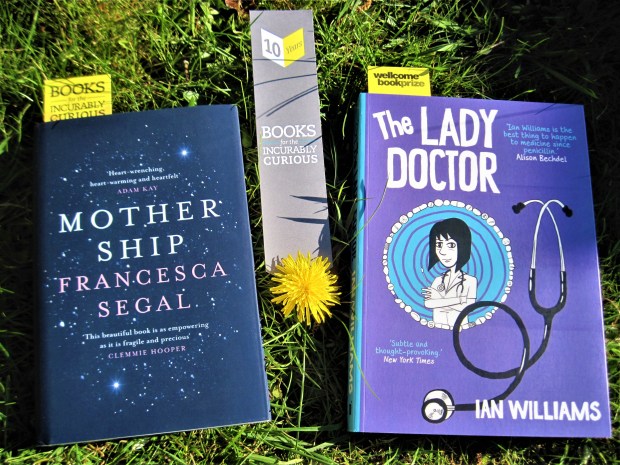
Mother Ship by Francesca Segal
 This first work of nonfiction from the author of the exquisite The Innocents is a visceral diary of the first eight weeks in the lives of her twin daughters, who were born by Caesarean section at 29 weeks in October 2015 and spent the next two months in the NICU, “an extremely well-funded prison or perhaps more accurately a high-tech zoo.” In Mother Ship, she strives to come to terms with this unnatural start to motherhood. “Taking my unready daughters from within me felt not like a birth but an evisceration,” she writes. “My children do not appear to require mothering. Instead they need sophisticated medical intervention.”
Segal describes with tender precision the feeling of being torn: between the second novel she’d been in the middle of writing and the all-consuming nature of early parenthood; and between her two girls (known for much of the book as “A-lette” and “B-lette”), who are at one point separated in different hospitals. Her attitude towards the NHS is pure gratitude.
As well as portraying her own state of mind, she crafts twinkly pen portraits of the others she encountered in the NICU, including the staff but especially her fellow preemie mums, who met in a “milking shed” where they pumped breast milk for the babies they were so afraid of losing that they resisted naming. (Though it was touch and go for a while, A-lette and B-lette finally earned the names Raffaella and Celeste and came home safely.) Female friendship is thus a subsidiary theme in this exploration of desperate love and helplessness.
The Lady Doctor by Ian Williams
 This sequel to 2014’s The Bad Doctor returns to a medical practice in small-town Wales. This time, though, the focus is on Iwan James’s colleague, Dr. Lois Pritchard, who also puts in two days a week treating embarrassing ailments at the local hospital’s genitourinary medicine clinic. At nearly 40, Lois is a divorcee with no children; just a dog. She enjoys her nights out drinking with her best friend, Geeta, but her carefree life is soon beset by various complications: she has to decide whether she wants to join the health centre as a full partner, a tryst with her new fella goes horribly wrong, and her estranged mother suddenly reappears in her life, hoping that Lois will give her a liver transplant. And that’s not to mention all the drug addicts and VD-ridden lotharios hanging about.
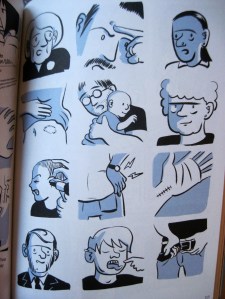 Williams was a GP in North Wales for 20 years, and no doubt his experiences have inspired his comics. His tone is wonderfully balanced: there are plenty of hilarious, somewhat raunchy scenes, but also touching moments where Lois learns that a doctor is never completely off duty and has no idea what medical or personal challenge will crop up next. The drawing style reminded me most of Alison Bechdel’s or Posy Simmonds’, with single shades from rose to olive alternating as the background. I especially loved the pages where each panel depicts a different patient to show the range of people and complaints a doctor might see in a day. Myriad Editions have a whole “Graphic Medicine” series that I’m keen to explore.
See below for details of the blogs where other reviews have appeared or will be appearing soon.
The shadow panel will choose a shortlist of six titles to be announced on 4 May. We will then vote to choose a winner, with the results of a Twitter poll serving as one additional vote. The Not the Wellcome Prize winner will be announced on 11 May.
Spring Reading 2020, Part I
What a beautiful spring we’ve been having here. And, as usual, I’ve been reading with the seasons: some nature books about birdsong, flowers, etc., as well as a few books with “Spring” in the title. I have several more on the go that I’ll write up next month.
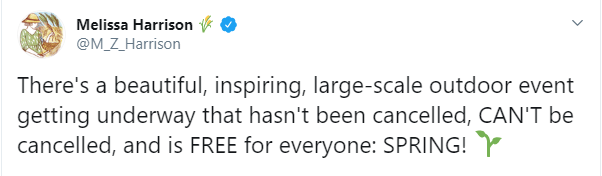
A Cold Spring by Elizabeth Bishop (1955)
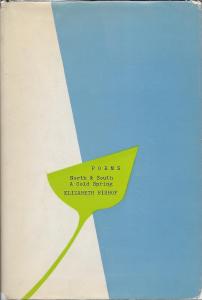 The second of Bishop’s four published collections, this mostly dwells on contrasts between city (e.g. “View of the Capitol from the Library of Congress,” “Varick Street” and “Letter to N.Y.”) and coastal locations (e.g. “The Bight,” “At the Fishhouses” and “Cape Breton”). The three most memorable poems for me were the title one, which opens the book; “The Prodigal,” a retelling of the Prodigal Son parable; and “Invitation to Miss Marianne Moore” (“From Brooklyn, over the Brooklyn Bridge, on this fine morning, please come flying,” with those last three words recurring at the end of each successive stanza; also note the sandpipers – one of her most famous poems was “Sandpiper,” from 1965’s Questions of Travel). I find that I love particular lines or images from Bishop’s poetry but not her overall style.
Favorite lines:
A cold spring:
the violet was flawed on the lawn.
For two weeks or more the trees hesitated;
the little leaves waited
(from “A Cold Spring”)
Spring: A Folio Anthology, edited by Sue Bradbury (2017)
 As a seasonal anthology, this falls short by comparison to the Wildlife Trust’s Spring. There are too many letters or journal entries that only happen to be set in March to May and don’t in any way evoke the season. The selection of poems and passages is fairly predictable, and closing with an ominous extract from Rachel Carson’s Silent Spring (see below) makes for rather a downbeat conclusion. Highlights: the preface by Paul Evans, Parson Woodforde’s pigs getting drunk on the dregs of some beer (1778), Elizabeth David rhapsodizing about a wild asparagus risotto she had in Italy, and Angus Buchanan coming upon an idyllic setting in Wildlife in Canada. The gorgeous cover, the slightly ornate font that liaises s or c with t, and the three two-page green-dominated illustrations somewhat make up for the lackluster contents.
Silent Spring by Rachel Carson (1962)
 When I saw Lucy Jones speak at an event in Hungerford in support of her new book, Losing Eden, early last month, I was intrigued to hear her say that her work was consciously patterned on Silent Spring – right down to the same number of chapters. This prompted me to finally pick up the copy of Carson’s classic that I got free during a cull at the library where I used to work and have a skim through.
Both books are forthright explications of the environmental problems we face, backed up by volumes of irrefutable evidence, and suggest some potential solutions. Both open, though, with a dystopian scene: Carson’s first chapter imagines an American town where things die because nature stops working as it should. Her main target was insecticides that were known to kill birds and had presumed negative effects on human health through the food chain and environmental exposure. Although the details may feel dated, the literary style and the general cautions against submitting nature to a “chemical barrage” remain potent.
A Country Year: Living the Questions by Sue Hubbell (1986)
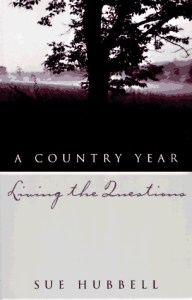 A seasonal diary that runs from one spring to the next, this is a peaceful book about living alone yet finding community with wildlife and fellow country folk. I took nine months over reading it, keeping it as a bedside book.
At her farm in southern Missouri’s Ozark Mountains, Hubbell had a small beekeeping and honey production business, “a shaky, marginal sort of affair that never quite leaves me free of money worries but which allows me to live in these hills that I love.” After her 30-year marriage ended, she found herself alone in “the afternoon of my life,” facing “the work of building a new kind of order, a structure on which a fifty-year-old woman can live”. In few-page essays she reflects on the weather, her interactions with wildlife (from bats and black rat snakes to a fawn caught in a fence), and country events like a hog roast.
I love introspective books like this one that balance solitude with nature and company and that showcase older women’s wisdom (Joan Anderson, May Sarton and Barbara J. Scot also write/wrote in this vein). Hubbell, who died at age 83 in late 2018, wrote broader scientific narratives about evolution and genetic engineering, as well as detailed books about bees and other insects. I’ll look out for more of her work.
A Sweet, Wild Note: What We Hear when the Birds Sing by Richard Smyth (2017)
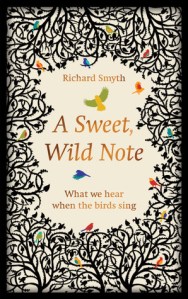 Despite being a birdwatcher since childhood, Smyth had always been ambivalent about birdsong. He certainly wasn’t one of those whizzes who can identify any bird by its call; in fact, he needed convincing that bird vocalizations are inherently beautiful. So he set off to answer a few questions: Why do birds sing? How can we recognize them by their songs? And how have these songs played into the human‒bird relationship throughout history? Ranging from bird anatomy to poetry, his historical survey is lighthearted reading that was perfect for the early days of spring. There are also chapters on captive birds, the use of birdsong in classical music, and the contribution birds make to the British soundscape. A final section, more subdued and premonitory in the vein of Silent Spring, imagines a world without birdsong and “the diminution that we all suffer. … Our lives become less rich.” (The title phrase is how Gilbert White described the blackcap’s song, Smyth’s favorite.)
Favorite lines:
when everything around you seems to be moving at a gallop, a bird’s song reminds you that some things stay the same … that you really can go home again.
in many ways the whole point of birdsong is that it’s beyond our grasp. It’s fleeting, evanescent; you might as well try to take a fistful of morning mist. But that hasn’t stopped us trying.
Have you been reading anything particularly appropriate for spring this year?
#1920Club Classics of the Month: Agatha Christie and F. Scott Fitzgerald
I’m sneaking in a couple of quick reviews on the final day to join in with Simon and Karen’s latest reading week, The 1920 Club. Speaking of books that were published a century ago, I happened to review Chéri by Colette as one of my monthly classics last year, and I’m currently reading The Age of Innocence by Edith Wharton in advance of our May book club meeting.

The Mysterious Affair at Styles by Agatha Christie
 I don’t think I’ve read an Agatha Christie mystery since I was about … 13? (It was And Then There Were None.) But over the years I’ve watched countless Poirot and Miss Marple cases on TV with my mother. This was Poirot’s first outing, and it’s narrated by Hastings, the slightly dim Watson to the Belgian detective’s Sherlock Holmes.
One July, invalided home from the war at age 30, Hastings goes to visit old family friends at Styles, their Essex manor house: brothers John and Lawrence Cavendish and their elderly stepmother, who has recently (and somewhat shockingly) remarried. When old Mrs. Cavendish is found dead of strychnine poisoning, Poirot is brought in to sort through the potential suspects. Coffee and cocoa cups, a fragment of a charred will, a fake beard, a candle wax stain and a bolted door will be among his major clues.
Like Hastings, we as readers are quick to point to the obvious: hey, that foreigner who happens to be an expert on poisons, it’s him, right?! But as Poirot carefully explains, again and again, “If the fact will not fit the theory, let the theory go. … Real evidence is usually vague and unsatisfactory. It has to be examined, sifted. But here the whole thing is cut and dried.”
I rarely pick up a mystery novel, though when I can get stuck in I do tend to enjoy them. This was a super-quick read and I found myself turning to it more often than to other books on my stack that felt weightier in subject matter. In the end I find crime novels inconsequential, so can’t imagine needing to try another Poirot or Marple for another 20 years or so. But if you’re struggling to read in a time of anxiety, you could certainly do worse than a Christie novel.
My rating:
This Side of Paradise by F. Scott Fitzgerald
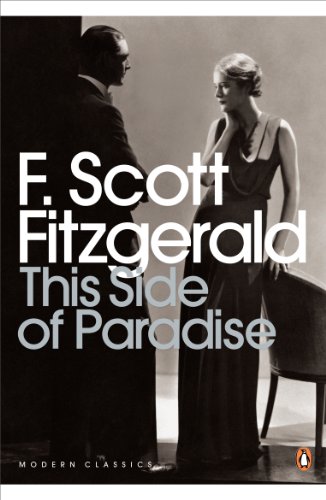 Fitzgerald has long been one of my literary blind spots. The Great Gatsby is a masterpiece, sure: I studied it in school and have read it another couple of times since, as well as lots of background nonfiction and some contemporary novels that riff on the story line. But everything else of his that I’ve tried (Tender Is the Night was the other one) has felt aimless and more stylish than substantive.
Amory Blaine is a wealthy Midwesterner who goes from boarding school to Princeton and has literary ambitions and various love affairs. He’s convinced he’s a “boy marked for glory.” But Monsignor Darcy, his guru, encourages the young man to focus on developing his character more than his dashing personality.
Hugely popular at its first release, this debut novel won Fitzgerald his literary reputation – as well as Zelda Sayre’s hand in marriage. What with the slang (“Oh my Lord, I’m going to cast a kitten”), it felt very much like a period piece to me, most impressive for its experimentation with structure: parts are written like a film script or Q&A, and there are also some poems and lists. This novelty may well be a result of the author cobbling together drafts and unpublished odds and ends, but still struck me as daring.
In a strange way, though, the novel is deliberately ahistorical in that it glosses over world events with a flippancy that I find typical of Fitzgerald. Even though Amory is called up to serve, his general reaction to the First World War is dispatched in a paragraph; Prohibition doesn’t get much more of a look-in.
I understand that the book is fairly autobiographical and in its original form was written in the first person, which I might have preferred if it led to greater sincerity. I could admire some of the witty banter and the general coming-of-age arc, but mostly felt indifferent to this one.
My rating:
Women’s Prize Longlist 2020 Thoughts & Other Prize Reading Projects
Next Wednesday the 22nd, the Women’s Prize shortlist will be revealed. However, the winner announcement has been delayed until September 9th, so we all get extra time to read the finalists (which is handy since the 900-page Hilary Mantel is a shoo-in). I happen to have gotten through half of the longlist so far. There were some books I cared for more than others. Of the remainder, I plan to pick up a few more once my library reopens.
Here’s how I’ve fared this year, in categories from best to worst, with excerpts and links to any I’ve reviewed in full:
Loved! (5)
 Dominicana by Angie Cruz: In 1965, 15-year-old Ana Canción, married off to an older man, leaves the Dominican Republic for New York City. With not a word of English, she feels trapped in her apartment and in this abusive relationship. Yet Ana is such a plucky and confiding narrator that you’re drawn into her world and cheer for her as she figures out what she wants from her life. This compassionate novel is proof that not all the immigration stories have been told yet.
 Girl, Woman, Other by Bernardine Evaristo: A terrific linked short story collection about 12 black women in twentieth-century and contemporary Britain balancing external and internal expectations and different interpretations of feminism to build lives of their own. The prose is more like poetry: a wry, radical stream of consciousness. A warm, spirited book, it never turns strident. It’s timely and elegantly constructed – and, it goes without saying, a worthy Booker Prize winner. To win the Women’s Prize too would be unprecedented, I think? But no surprise.
 Weather by Jenny Offill: Could there be a more perfect book for 2020? It’s a blunt, unromanticized but wickedly funny novel about how eco-anxiety permeates everyday life. Set either side of Trump’s election, it amplifies many voices prophesying doom, from environmentalists to Bible-thumpers. Lizzie’s sardonic narration is an ideal way of capturing relatable feelings of anger and helplessness. Don’t expect to come away with your worries soothed, though there is some comfort to be found in the feeling that we’re all in this together.
 The Dutch House by Ann Patchett: A memorable exploration of family secrets and memories. Maeve and Danny Conroy are an inseparable brother-and-sister pair. When their father dies, they become like Hansel and Gretel: cast out into the wilds by an evil stepmother who takes possession of the only home they’ve ever known, a suburban Philadelphia mansion built on the proceeds of the VanHoebeek cigarette empire. Patchett always captures the psychology of complicated families, and her sharp prose never fails to hit the nail on the head.
 Red at the Bone by Jacqueline Woodson: Like a family saga in miniature, this short novel stretches backward from Melody’s 16th birthday party, held in Brooklyn in 2001, to explore previous generations of the African American experience. Chapters alternate between first- and third-person narration, highlighting the perspectives of all the major family members. I raced through to see who would follow in family footsteps, or not. The title is apt: the book is sometimes raw and sometimes tender. It’s an emotionally engaging story of loss and memory.
Currently skimming (1)
 The Mirror and the Light by Hilary Mantel: I’ve stalled around page 200. I’ll be totally engrossed for a few pages of exposition and Cromwell one-liners, but then everything gets talky or plotty and I skim for 20‒30 pages and put it down. My constant moving between 10‒20 books and the sudden loss of a deadline have not served me well: I feel overwhelmed by the level of detail and the cast of characters, and haven’t built up momentum. Still, I can objectively recognize the prose as top-notch.
Did not particularly enjoy (3)
 Fleishman Is in Trouble by Taffy Brodesser-Akner: To me this didn’t stand out at all from the sea of fiction about crumbling marriages and upper-middle-class angst.
- Actress by Anne Enright: A slow-burning backstory of trauma and mental illness. I found I wasn’t warming to the voice or main characters and mostly skimmed this.
- Hamnet by Maggie O’Farrell: In comparison with other historical fiction, this fell short. Overall, I found the prose flat and repetitive, which diluted the portrait of grief.

Attempted but couldn’t get through (1)
 Djinn Patrol on the Purple Line by Deepa Anappara – I’m wary of child narrators anyway, and the voice didn’t grab me within the first few pages.
Still plan to read (3)
 Queenie by Candice Carty-Williams
- How We Disappeared by Jing-Jing Lee
- The Most Fun We Ever Had by Claire Lombardo
Not interested (3)
 Nightingale Point by Luan Goldie: Sounds subpar.
- A Thousand Ships by Natalie Haynes: Say no to updated Greek classics.
- Girl by Edna O’Brien: I don’t care for O’Brien’s writing. Though this was well received by the critics, it’s not finding much love among my trusted bloggers. (Plus there’s the cultural appropriation issue.)
My ideal shortlist
(A wishlist based on my reading and what I want to read)
 Dominicana by Angie Cruz
Girl, Woman, Other by Bernardine Evaristo
How We Disappeared by Jing-Jing Lee
The Mirror and the Light by Hilary Mantel
Weather by Jenny Offill
The Dutch House by Ann Patchett
vs.
My predicted shortlist
 Queenie by Candice Carty-Williams
Actress by Anne Enright
Girl, Woman, Other by Bernardine Evaristo
The Mirror and the Light by Hilary Mantel
Girl by Edna O’Brien OR Hamnet by Maggie O’Farrell
The Dutch House by Ann Patchett
Callum, Eric, Laura and Rachel have been posting lots of reviews and thoughts related to the Women’s Prize. Have a look at their blogs!
In this 25th anniversary year of the Women’s Prize, readers are also being encouraged to catch up on previous winners.
- I’ve read 13 so far (and am currently rereading On Beauty by Zadie Smith).
 I already had Half of a Yellow Sun by Chimamanda Ngozi Adichie and The Idea of Perfection by Kate Grenville on my shelves, plus The Song of Achilles by Madeline Miller on my Nook.
- I recently found a copy of A Crime in the Neighborhood by Suzanne Berne at the free bookshop where I volunteer.
- On my current library stack are When I Lived in Modern Times by Linda Grant, Property by Valerie Martin and Fugitive Pieces by Anne Michaels.
I can’t promise to be a completist about this project because the prospect of reading A Girl Is a Half-formed Thing and The Glorious Heresies fills me with dread, but we’ll see…
Other Prize Reading Projects
 I’d been trying to make my way through some previous Wellcome Book Prize winners and nominees, but have been scuppered by my library’s closure. At the moment I have Adam Rutherford’s A Brief History of Everyone Who Ever Lived (2017 longlist; passed on from my father-in-law) and Steve Silberman’s Neurotribes (2016 shortlist; from the library) on my pile to read or, more likely, skim.
 I also had the idea to read all the Bellwether Prize winners because I loved The Leavers so much. (Known in full as the PEN/Bellwether Prize for Socially Engaged Fiction, it is a biennial award given by PEN America and Barbara Kingsolver, who created and funds the prize, “to a U.S. citizen for a previously unpublished work of fiction that address issues of social justice.”) This project did not start particularly well as I DNFed Running the Rift by Naomi Benaron. However, I own copies of Mudbound by Hillary Jordan and The Girl Who Fell from the Sky by Heidi W. Durrow and hope I’ll have better luck with them.
What prize lists or other reading projects are keeping you busy?
Polio and the Plague: Epidemics in Fiction
Back in January I had the idea to catch up as much as I can on previous Wellcome Book Prize long- and shortlists while the Prize is on hiatus. I decided to start with a pair of novels about polio from my public library system: The Golden Age by Joan London and Nemesis by Philip Roth. The latter, especially, has taken on new significance due to its evocation of a time of panic over a public health crisis (see this article, but beware spoilers). On a fellow book reviewer’s recommendation, I also took Year of Wonders by Geraldine Brooks off the shelf and read it at the same time as the Roth.
The Golden Age by Joan London (2014)
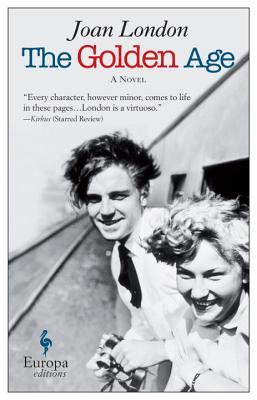 [First published in the UK in 2016; on the Wellcome Book Prize 2017 longlist]
The Golden Age was a real children’s polio hospital in Western Australia, but London has peopled it with her own fictional cast. In 1953–4, Frank Gold and Elsa Briggs, polio patients aged 12 going on 13, fall in love in the most improbable of circumstances: “The backs of their hands brushed as they walked side by side on their crutches. Their bloodstreams recharged by exercise and fresh air, they experienced a fiery burst of pleasure.”
Frank is much the more vibrant character thanks to his family’s wartime past in Hungary and his budding vocation as a poet, which was spurred on by his friendship with Sullivan, a fellow inmate at his previous rehabilitation center. The narrative spends time with the nurses, parents and other patients but keeps coming back to Frank and Elsa. However, Chapter 7, with Frank and his mother Ida still back in Budapest, was my favorite.
I was reminded of Tracy Farr’s work (The Life and Loves of Lena Gaunt), especially the look back from decades later. This has a strong premise and some great lines, but for me there was something slightly lacking in the execution.
Favorite lines:
There was beauty everywhere, strange beauty, even—especially?—in a children’s polio hospital.
Polio is like love, Frank says … Years later, when you think you have recovered, it comes back.
My rating:
Nemesis by Philip Roth (2010)
[On the Wellcome Book Prize 2011 shortlist]
 In the summer of 1944 Newark, New Jersey is hit hard by polio. As a local playground director, 23-year-old Bucky Cantor is distressed when several of his charges become ill; a couple of them even die within a matter of days.
At first Bucky, whose poor eyesight kept him out of the War, sees his job as his own field of duty, but gradually fear and helplessness drive him away. He escapes to the Pocono Mountains to join his fiancée, Marcia, as a summer camp counselor, but soon realizes the futility of trying to outrun a virus. Unable to accept the randomness of bad luck, he blames God – and himself – for the epidemic’s spread.
Despite our better general understanding of epidemiology today, there were still many passages in this novel that rang true for me as they picture life proceeding as normal until paranoia starts to take hold:
Despite polio’s striking in the neighborhood, the store-lined main street was full of people out doing their Saturday grocery shopping…
(Bucky) Look, you mustn’t be eaten up with worry … What’s important is not to infect the children with the germ of fear. We’ll come through this, believe me. We’ll all do our bit and stay calm and do everything we can to protect the children, and we’ll all come through this together.
The important thing, he said, was always to wash your hands after you handled paper money or coins. What about the mail, someone else said … What are you going to do, somebody retorted, suspend delivering the mail? The whole city would come to a halt. Six or seven weeks ago they would have been talking about the war news.
Roth really captures the atmosphere of alarm and confusion, but doesn’t always convey historical and medical information naturally, sometimes resorting to paragraphs of context and representative conversations like in the last quote above. I also wasn’t sure about the use of a minor character (revealed on page 108 to be one of Bucky’s playground kids and a polio patient) as the narrator. This seemed to me to make Bucky more of a symbolic hero than a genuine character. Still, this was a timely and riveting read.
My rating:

A period warning about polio reprinted at the back of Paul Auster’s Report from the Interior.
Year of Wonders by Geraldine Brooks (2001)
 In 1665, with the Derbyshire village of Eyam in the grip of the Plague, the drastic decision was made to quarantine it. A benevolent landowner arranged for regular deliveries of food and other supplies to just outside the parish boundaries. The villagers made an oath that no one would leave until the pestilence was eradicated. One year later, two-thirds of its residents were dead. Brooks imagines that the “plague seeds” came to the village in a bolt of cloth that was delivered from London to the tailor George Viccars, who lodged with widow Anna Frith. Viccars is the first victim and the disease quickly spreads outward from Anna’s home.
Anna barely has time to grieve her own losses before she’s called into service: along with the minister’s wife, Elinor Mompellion, she steps in as a midwife, herbal healer and even a miner. The village succumbs to several sobering trajectories. Suspicion of women’s traditional wisdom leads some to take vigilante action against presumed witches. Unscrupulous characters like Anna’s father, who sets up as a gravedigger, try to make a profit out of others’ suffering. Frustration with the minister’s apparent ineffectuality attracts others to forms of religious extremism. Like Bucky, people cannot help but see the hand of God here.
Perhaps what I was most missing in the London and Roth novels (and in Hamnet, which bears such striking thematic similarities to Year of Wonders) was intimate first-person narration, which is just what you get here from Anna. The voice and the historical recreation are flawless, and again there were so many passages that felt apt:
Stay here, in the place that you know, and in the place where you are known. … Stay here, and here we will be for one another.
the current times did seem to ask us all for every kind of sacrifice
(once they start meeting for church in a meadow) We placed ourselves so that some three yards separated each family group, believing this to be sufficient distance to avoid the passing of infection.
Yet it is a good day, for the simple fact that no one died upon it. We are brought to a sorry state, that we measure what is good by such a shortened yardstick.
I’ve docked a half-star only because of a far-fetched ending that reminded me of that to The Wonder by Emma Donoghue. Apart from that, this is just what I want from my historical fiction.
My rating: 
Are you doing any reading about epidemics?
A Theatre for Dreamers by Polly Samson (Blog Tour Review)
In the 1950s the Greek island of Hydra became a magnet for artists and writers, including Lawrence Durrell, Patrick Leigh Fermor and Henry Miller. Polly Samson’s fifth work of fiction, set in this makeshift artists’ colony in 1960, zeroes in on the married Australian authors Charmian Clift and George Johnston, Norwegian novelist Axel Jensen, his wife Marianne Ihlen, and an unknown young poet from Canada named Leonard Cohen.
We see all of these real-life characters from the perspective of our starry-eyed narrator, Erica, a seventeen-year-old outsider. In a framing story set c. late 2016, after she hears of Leonard’s death, Erica has returned to Hydra as an old woman. Yet that first gold summer is still intensely alive in her memory. She decided to decamp to Hydra just before Easter in 1960, with her boyfriend Jimmy and her brother Bobby, because Charmian was once their late mother’s closest friend back in London. Erica’s inheritance would go far here: “people like us … can live for a year in the sun on what it’d cost us for a month in a dingy bedsit at home.”

Love triangles abound and emotions run high on Hydra. Gradually Erica learns that just about everyone has slept with, or is currently sneaking around with, someone they aren’t married to. Meanwhile, Bobby and friends sleep late and paint, then party well into the night. While Erica is the responsible mother hen at their villa, seeing that everyone gets fed, she indulges her hedonistic side, too – going to every bash and spending half the day in bed with Jimmy.
Charmian becomes a kind of surrogate mother to Erica, but remains spiky due to her jealousy over George’s greater literary success while she has to care for the children and act as his amanuensis. “They’re the closest thing I have to a family,” Erica writes of Charmian and George and the wider expatriate circle. “I love them all: their banter and moods and tears and wild laughter, all of it, every chaotic bit of it.” But there’s a sense that the idyll can’t last.
This is a novel simply dripping with atmosphere. You can feel the Mediterranean heat soaking up through your sandals; see the piercing sunlight reflecting off white-washed buildings; smell the ripening fruit and herbs and fresh-caught fish. There are dozens of evocative passages I could quote from, but here is part of one of my favourites:
The port throbs with tourists and the street cats grow fat. The cicadas are busy breaking a hundred hearts with their songs. We pull our mattresses out to the terrace and sleep beneath the stars, wake with the sun … We pick over platters of fish at taverna tables, or drift from courtyard to courtyard with our records and poems, or take bottles of beer and eat bread and meatballs beneath the tumbling vines of the outdoor cinema … We have all become leaner, our legs muscled from the steps, Bobby and Jimmy’s shoulders almost amphibian from swimming. Sometimes we take a bag of peaches and a flask of coffee to the cave and grab a dip before the port is fully awake, other times we swim late at night and lie naked between the moon and the tide on the still-warm rocks.
If you’re getting cabin fever and are hankering for some armchair travelling, I can’t recommend a trip to 1960 Hydra enough. There are two prizes that specifically recognize literature with a strong sense of place: The Royal Society of Literature’s Ondaatje Prize is “for a distinguished work of fiction, non-fiction or poetry, evoking the spirit of a place,” as is the Cicerone (fiction) prize, part of the Edward Stanford Travel Writing Awards. I’d be willing to bet that A Theatre for Dreamers will be shortlisted for one or both of those next year.
My thanks to Bloomsbury Circus for the free copy for review.
Hamnet by Maggie O’Farrell (Blog Tour Review)

I’ve been a huge admirer of Maggie O’Farrell’s work ever since I read The Hand that First Held Mine, which won the Costa Novel Award, in 2011. I was intrigued by the premise of her new book, in which she delves further back into history than she has before to imagine the context of the death of William Shakespeare’s son Hamnet and the effect it had on the playwright’s work – including, four years later, Hamlet.
Curiously, O’Farrell has decided never to mention Shakespeare by name in her novel, so he remains a passive, shadowy figure seen only in relation to his wife and children – he’s referred to as “the father,” “the Latin tutor” or “her husband.” Instead, the key characters are his wife Agnes (most will know her as Anne, but Agnes was the name her father, Richard Hathaway, used for her in his will) and Hamnet himself.

As the novel opens, 11-year-old Hamnet is alone in his grandfather’s glove workshop. His twin sister Judith has a fever and lumps at her neck and he is frantically trying to find an adult. But with his father in London, his mother off tending her bees and his grandfather’s indifference all too ready to shade into violence, there is no one to help. Although it’s Judith who appears to be ill with the Plague, readers know from the scant historical record that it is Hamnet who dies. Somehow, even though we see this coming, it’s still a heavy blow. Hamnet is a story of the moments that change everything, of regrets that last forever: Agnes will ever after be afflicted with a sense of having neglected her children just when they needed her.
Short chapters set in that summer of 1596 alternate with longer ones from 15 years before, when WS was engaged as a Latin tutor to the sons of a sheep farmer to pay off his father’s debts. Soon he became captivated by a young woman with a kestrel whom he assumed to be the family’s maid but learned was actually the unconventional daughter of the household, Agnes. She had a reputation as a herbal healer and was known to have second sight – just by holding someone’s hand, she could see into their past or predict their future.
There are some wonderfully vivid scenes in this earlier story line, including a tryst in the apple shed and Agnes going off alone into the forest to give birth to their first child, Susanna. My favourite chapter of all, though, is the central one that traces the journey of the pestilence from a glassmaker’s studio in Italy to the small Warwickshire village. The medical subplot of Hamnet has taken on a new significance that O’Farrell surely never predicted when she was immersing herself in the time period by undertaking falconry and mudlarking.
Although I remain a big fan, Hamnet is the least successful of the six books of O’Farrell’s that I’ve read. Her trademark third person omniscient voice and present tense narration, which elsewhere exude confidence and immediacy, here create detachment and even vagueness (“A boy is coming down a flight of stairs”; “Look. Agnes is pouring water into a pan”). The strategy for evoking the 16th century seems to be to throw in the occasional period prop, but the dialogue and vocabulary can feel anachronistic, as in “Boys! Stop that this instant! Or I’ll come up there and give you something to wail about”.
In comparison with historical fiction I’ve read recently by Geraldine Brooks and Hilary Mantel, this fell short. Overall, I found the prose flat and repetitive, which diluted the portrait of grief. My reaction was lukewarm, but this should not deter readers from trying this wonderful writer – if not this book, then any one of her previous five.
My thanks to Midas PR and Tinder Press for the free copy for review.
Recommended March Releases: Magnusson, May, Moor and More
March has been a huge month for new releases. With so many authors feeling let down about book tours and events being cancelled, it’s a great time for bloggers to step in and help. I attended two virtual book launches on Twitter on the 19th and have another one coming up on the 31st. I also have three more March releases on order from my local indie bookstore: Greenery by Tim Dee, tracking the arrival of spring; Footprints by David Farrier, about the fossil traces modern humans will leave behind; and The Bass Rock by Evie Wyld, a novel about violence against women set on the Scottish coast in three different time periods.
Today I have short reviews of five March releases I recommend (plus a bonus one now out in paperback): a Victorian pastiche infused with Scottish folklore, an essay collection about disparate experiences of motherhood, a thriller about victims of domestic violence, poems in graphic novel form, a novel about natural and personal disasters in Australia, and a lovely story of friendship and literature changing a young man’s life forever. All:
The Ninth Child by Sally Magnusson
(Published by Two Roads on the 19th)
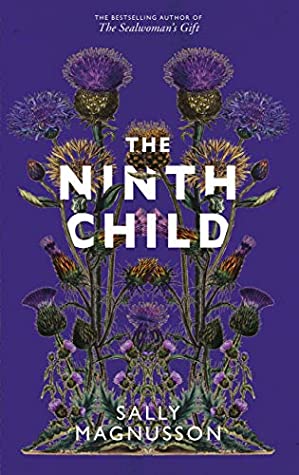 Like Hannah Kent’s The Good People and Sarah Perry’s The Essex Serpent, this is an intense, convincing work of fiction that balances historical realism with magical elements. In mid-1850s Britain, in the wake of a cholera epidemic, there is a drive to ensure clean water. Alexander Aird, hired as the on-site physician for the Glasgow waterworks, moves to the Loch Katrine environs with his wife, Isabel, who has had eight miscarriages or stillbirths. With no living babies requiring her care, Isabel spends her days wandering the hills and meets a strange scarecrow of a man, Reverend Robert Kirke … who died in 1692.
A real-life Episcopalian minister, Kirke wrote a book about fairies and other Celtic supernatural beings and, legend has it (as recounted by Sir Walter Scott and others), was taken into the faery realm after his death and continued to walk the earth looking for rest. It takes a while for Isabel to learn the truth about Kirke – though her servant, Kirsty McEchern, immediately intuits that something isn’t right about the man – and longer still to understand that he wants something from her. “Whatever else, Robert Kirke could be relied on to ruffle this mind of hers that was slowly opening to experience again, and to thinking, and to life.”
This was a rollicking read that drew me in for its medical elements (premature birth, a visit to Joseph Lister, interest in Florence Nightingale’s nursing methods) as well as the plot. It often breaks from the omniscient third-person voice to give testimonies from Kirsty and from Kirke himself. There are also amusing glimpses into the Royal household when Victoria and Albert stay at Balmoral and return to open the waterworks during the “heaviest, windiest, most umbrella-savaging, face-slashing deluge that Scotland had experienced in twenty years.” Best of all, it gives a very different picture of women’s lives in the Victorian period.
My thanks to the publisher for the proof copy for review.
The Best Most Awful Job: Twenty Writers Talk Honestly about Motherhood, edited by Katherine May
(Published by Elliott & Thompson on the 19th)
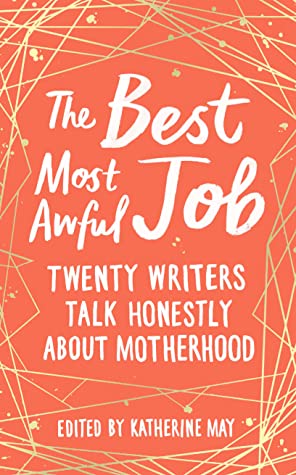 These are essays for everyone who has had a mother – not just everyone who has been a mother. I enjoyed every piece separately, but together they form a vibrant collage of women’s experiences. Care has been taken to represent a wide range of situations and attitudes. The reflections are honest about physical as well as emotional changes, with midwife Leah Hazard (author of Hard Pushed) kicking off with an eye-opening rundown of the intimate scarring some mothers will have for the rest of their lives. We hear from a mother of six who’s “addicted” to pregnancy (Jodi Bartle), but also from a woman who, after an ectopic pregnancy, realized “there are lots of ways to mother, even if your body won’t let you” (Peggy Riley, in one of my two favorite pieces in the book).
Women from BAME communities recount some special challenges related to cultural and family expectations, but others that are universal. An autistic mother (Joanne Limburg) has to work out how to parent a neurotypical child; queer parents (including author Michelle Tea) wonder how to raise a son at a time of toxic masculinity. There are also several single mothers, one of them disabled (Josie George – hers was my other favorite essay; do follow her on Twitter via @porridgebrain if you don’t already).
What I most appreciated is that these authors aren’t saying what they think they should say about motherhood; they’re willing to admit to boredom, disappointment and rage: “motherhood is an infinite, relentless slog from which there is no rest or recuperation … a ceaseless labour, often devoid of acknowledgment, recognition and appreciation” (Javaria Akbar); “I step barefoot on a rogue piece of Lego and it’s game over. I scream” (Saima Mir). These are punchy, distinctive slices of life writing perfectly timed for Mother’s Day. I plan to pass the book around my book club; mothers or not, I know everyone will appreciate it.
My thanks to the publisher for the proof copy for review.
Keeper by Jessica Moor
(Published by Viking/Penguin on the 19th)
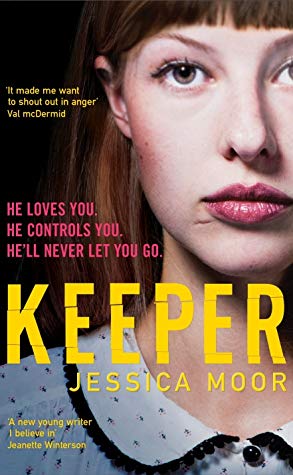 Val McDermid and Jeanette Winterson are among the fans of this, Penguin’s lead debut title of 2020. When a young woman is found drowned at a popular suicide site in the Manchester area, the police plan to dismiss the case as an open-and-shut suicide. But the others at the women’s shelter where Katie Straw worked aren’t convinced, and for nearly the whole span of this taut psychological thriller readers are left to wonder if it was suicide or murder.
The novel alternates between chapters marked “Then” and “Now”: in the latter story line, we follow the police investigation and meet the women of the refuge; in the former, we dive into Katie’s own experience of an abusive relationship back in London. While her mother was dying of cancer she found it comforting to have a boyfriend who was so attentive to her needs, but eventually Jamie’s obsessive love became confining.
I almost never pick up a mystery, but this one was well worth making an exception for. I started suspecting the twist at maybe the two-thirds point, but that didn’t detract from my enjoyment. Based on Moor’s year working in the violence against women sector, it’s a gripping and grimly fascinating story of why women stay with their abusers and what finally drives them to leave.
I picked up a proof copy at a Penguin Influencers event.
 Poems to See by: A Comic Artist Interprets Great Poetry by Julian Peters
(To be published by Plough Publishing House on the 31st)
Peters is a comics artist based in Montreal. Here he has chosen 24 reasonably well-known poems by the likes of e.e. cummings, Emily Dickinson, Robert Frost, Seamus Heaney, Langston Hughes, Edgar Allan Poe, Christina Rossetti and W.B. Yeats and illustrated each one in a markedly different fashion. From black-and-white manga to a riot of color and music, from minimalist calligraphy-like Japanese watercolor to imitations of Brueghel, there is such a diversity of style here that at first I presumed there were multiple artists involved (as in one of my favorite graphic novels of last year, ABC of Typography, where the text was written by one author but each chapter had a different illustrator). But no, this is all Peters’ work; I was impressed by his versatility.
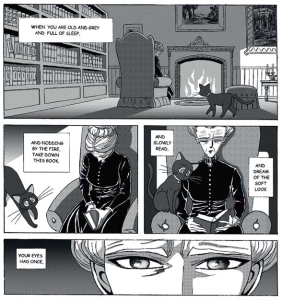
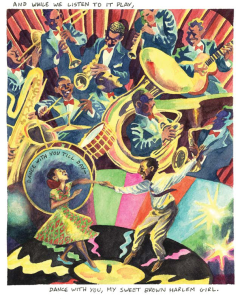
The illustrations range from realistic to abstract, with some more obviously cartoon-like. A couple of sequences reminded me of the style of Raymond Briggs. For “Caged Bird” by Maya Angelou, lines are inlaid on the squares of a painted patchwork quilt. Other sets look to have been done via wood engraving, or with old-fashioned crayons. You could quibble with the more obvious poetry selections, but I encountered a few that were new to me, including “Buffalo Dusk” by Carl Sandburg and “Conscientious Objector” by Edna St. Vincent Millay. Peters has grouped them into six thematic categories: self, others, art, nature, time and death. Teenagers, especially, will enjoy the introduction to a variety of poets and comics styles.
I read an e-copy via NetGalley.
The Inland Sea by Madeleine Watts
(Published by ONE/Pushkin on the 5th)
 “Emergency police fire, or ambulance?” The young female narrator of this debut novel lives in Sydney and works for Australia’s emergency call service. Over her phone headset she gets appalling glimpses into people’s worst moments: a woman cowers from her abusive partner; a teen watches his body-boarding friend being attacked by a shark. Although she strives for detachment, her job can’t fail to add to her anxiety – already soaring due to the country’s flooding and bush fires.
Against that backdrop of natural disasters, a series of minor personal catastrophes play out. The narrator is obsessed with a rape/murder case that’s dominating the television news, and narrowly escapes sexual assault herself. She drinks to excess, keeps hooking up with her ex-boyfriend, Lachlan, even after he gets a new girlfriend, and seems to think abortion and the morning after pill are suitable methods of birth control. Irresponsible to the point of self-sabotage, she’s planning a move to London but in the meantime is drifting through life, resigned to the fact that there is no unassailable shelter and no surefire way to avoid risk.
The title comes from the quest of John Oxley (presented here as the narrator’s ancestor), who in 1817 searched for a water body in the Australian interior. Quotations from his journals and discussions of the work of Patrick White, the subject of Lachlan’s PhD thesis, speak to the search for an Australian identity. But the inland sea is also the individual psyche, contradictory and ultimately unknowable. Like a more melancholy version of Jenny Offill’s Weather or a more cosmic autofiction than Yara Rodrigues Fowler’s Stubborn Archivist, this is a timely, quietly forceful story of how women cope with concrete and existential threats.
My thanks to the publisher for the PDF copy for review.
And a bonus…
The Offing by Benjamin Myers (2019)
(Paperback published by Bloomsbury on the 5th)
 With the Second World War only recently ended and nothing awaiting him apart from the coal mine where his father works, sixteen-year-old Robert Appleyard sets out on a journey. From his home in County Durham, he walks southeast, doing odd jobs along the way in exchange for food and lodgings. One day he wanders down a lane near Robin Hood’s Bay and gets a surprisingly warm welcome from a cottage owner, middle-aged Dulcie Piper, who invites him in for tea and elicits his story. Almost accidentally, he ends up staying for the rest of the summer, clearing scrub and renovating her garden studio.
Dulcie is tall, outspoken and unconventional – I pictured her as (Meryl Streep as) Julia Child in the movie Julie & Julia. She introduces Robert to whole new ways of thinking: that not everyone believes in God, that Germans might not be all bad, that life can be about adventure and pleasure instead of duty. “The offing” is a term for the horizon, as well as the title of a set of poems Robert finds in the dilapidated studio, and both literature and ambition change his life forever. Bright, languid and unpredictable, the novel delights in everyday sensual pleasures like long walks with a dog, dips in the ocean and an abundance of good food. I can’t think of another book I’ve read that’s quite like it – how refreshing is that?
I pre-ordered the paperback using a Waterstones voucher I got for Christmas.
What recent releases can you recommend?
Classics of the Month: Cold Comfort Farm and Crossing to Safety
These were terrific reads. A comic novel set on a Sussex farm and a look back at banner years in the friendship of two couples. Both:
Cold Comfort Farm by Stella Gibbons (1932)
 I’d heard so much about this over the years. It was one I had to be in just the right mood for, though – I’d picked up my secondhand copy and read the first few pages on four different occasions before it finally took. If you recognize the phrase “something nasty in the woodshed” or know of a fictional plant called sukebind, you’ll appreciate the extent to which the story has entered into popular culture.
When Flora Poste’s parents die of the “influenza or Spanish Plague” (oh dear), she’s left an orphan at age 20. Her best option seems to be moving in with relatives she’s never met: Aunt Ada Doom and the Starkadder cousins of Cold Comfort Farm in Howling, Sussex. They’re a delightful collection of eccentrics: mad Aunt Ada shut away in her room; her son Amos, a fire-and-brimstone preacher; cousin Seth, with his movie star looks and multiple children by the servant girl; cousin Elfine, a fey innocent in a secret relationship with the local landowner’s son, who’s dumb but rich; and so on.
Relying on her London sophistication and indomitable optimism, Flora sets out to improve everything and everyone at the crumbling farm. The blurb calls this a “parody of the melodramatic rural novels of the time,” but I thought of it more as a skewering of Victorian stereotypes, not least in that the farming folk speak like Thomas Hardy’s rustics (Reuben: “‘I ha’ scranleted two hundred furrows come five o’clock down i’ the bute.’ It was a difficult remark, Flora felt, to which to reply. Was it a complaint?”). Meanwhile, Mr. Mybug, with his obsession with sex, is a caricature of a D.H. Lawrence protagonist.
It may take a little while to adjust to the book’s sense of humor, which struck me as surprisingly edgy for its time. Gibbons expresses no great outrage about Seth’s illegitimate offspring, for instance; instead, the babies’ grandmother has the enterprising idea of training them up to be a jazz band. There is also plenty of pure silliness, like the cows being named Graceless, Pointless, Feckless and Aimless and one of them spontaneously losing legs. I especially liked that Flora’s London friend Mrs. Smiling collects brassieres and that Flora always samples novels to make sure they don’t contain a childbirth scene. This non sequitur also amused me at the same time as it puzzled me: Flora “liked Victorian novels. They were the only kind of novel you could read while you were eating an apple.”
Crossing to Safety by Wallace Stegner (1987)
 (A buddy read with Laila of Big Reading Life for her Classics Club challenge.) Right from the start, I was thoroughly invested in this lovely, bittersweet story of two faculty couples, Larry and Sally Morgan and Sid and Charity Lang. Much of the action is split between Wisconsin in the 1930s and Vermont in the 1970s, the novel’s present day. Larry, the narrator, had a brief academic career in Madison but moved on to write novels. Sid longed to be a poet but didn’t have the skill, so remained in academia despite a tiny publication record.
Charity is the quartet’s stubborn mother hen, organizing everyone and tailoring everything to her own plans (don’t we all have a friend like that?). The Langs have wealth and class on their side, whereas the Morgans are described as having the intellect and talent. I found it odd that Stegner gave Charity such an obviously metaphorical name – starting with a big dinner party, the Langs lavish gifts and money on the Morgans in the name of friendship.
The novel sets up various counterparts and doubles, so Sally’s polio in the 1930s finds a parallel in the 1970s story line, when a terminally ill Charity is orchestrating her grand farewell. For all its challenges, Larry describes that first year in Madison as an idyllic time with “Two Adams and two Eves, an improvement on God’s plan.” Later on they all take a glorious sabbatical year together in Florence, too. New England, the Midwest and Italy make for an attractive trio of settings. There are also some great sequences that happen to reveal a lot about the friends’ dynamic, including an ill-fated sailboat outing and a hiking trip.
Nostalgic and psychologically rich, this is a quiet, beautifully written character study that would suit fans of Elizabeth Hay and May Sarton (though she was writing a decade and more earlier, this reminded me a lot of her small-town novel Kinds of Love and, eventually, A Reckoning). I’ll try more by Stegner.
Favorite lines:
“a chilly Octoberish smell of cured leaves rose from the ground, the indescribable smell of fall and football weather and the new term that is the same almost everywhere in America.”
Sid and Charity as “the people who above any other two on earth made us feel good, wanted, loved, important, and happy.”
“she was the same old Charity. She saw objectives, not obstacles, and she did not let her uncomplicated confidence get clouded by other people’s doubts, or other people’s facts, or even other people’s feelings.”
See also Susan’s review.
 Bookish Beck = Rebecca Foster. American transplant to England. Freelance proofreader and book reviewer.
 Bookish Beck